Ingredients and steps on one page. Print it, or choose “Save as PDF” in the print dialog.
Sekai Gohan
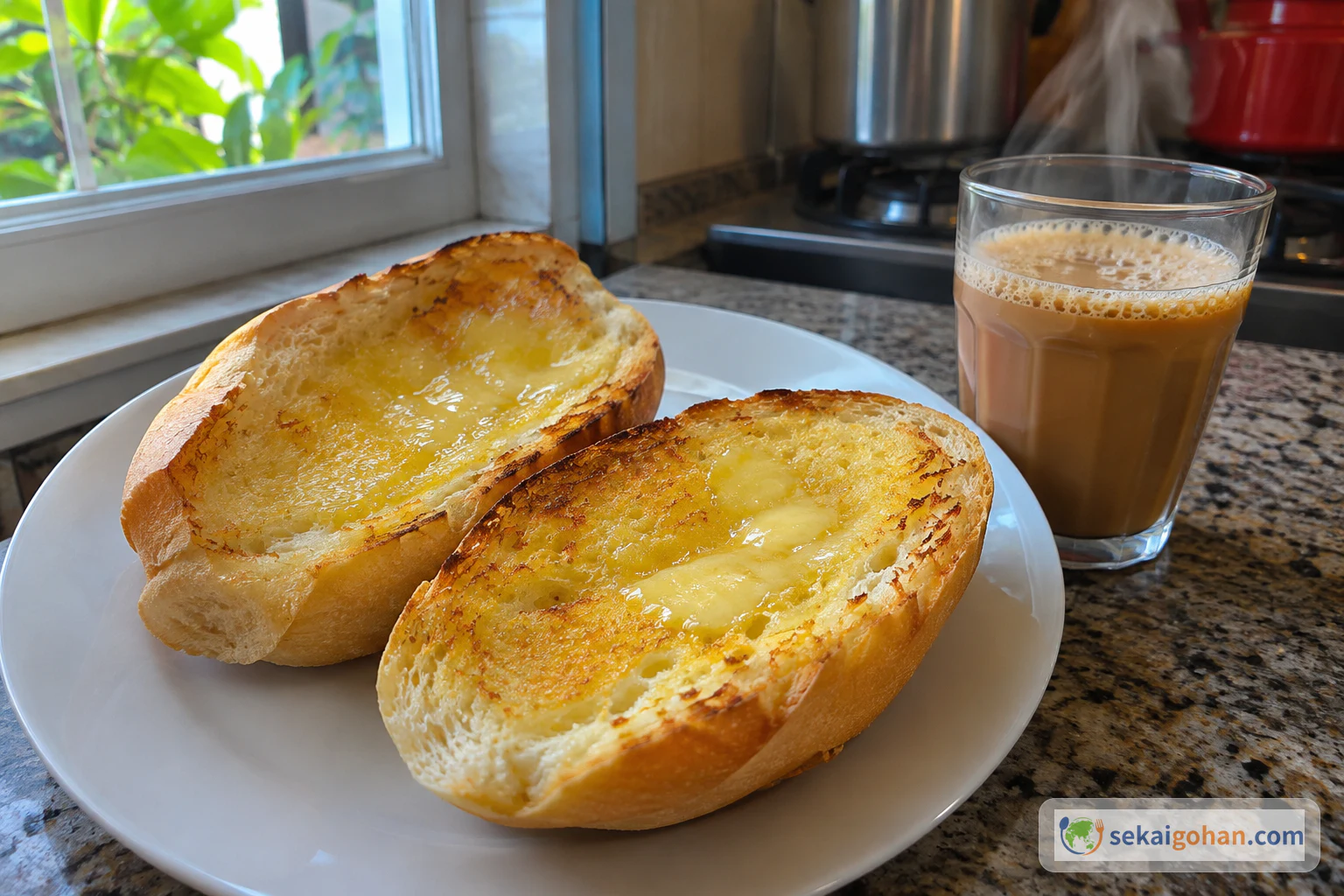
Pão na Chapa: Brazilian Bakery Roll Toasted in Butter on a Griddle
Ingredients
| Ingredient | Amount | Role |
|---|---|---|
| Pão francês (pão de sal) | 1 roll | The whole dish: a thin crisp crust and a soft, airy crumb |
| Salted butter (manteiga com sal) | 1 level dessert spoon (colher de sobremesa) | Flavor and the golden, crisp color of the cut faces |
Steps
1Split the roll with a serrated knife
Lay the pão francês on a board and hold it flat with your palm. Cut it horizontally into two halves with a serrated bread knife, using long, light sawing strokes and no pressing down. Leave the crumb in. Do not scoop out the soft middle. The halves are ready when both cut faces are flat and even, the white crumb whole and not squashed.
2Spread soft butter over both cut faces
The butter should be at room temperature and soft enough to dent with a fingertip. Divide the dessert spoon of butter between the two halves. Spread it over the crumb with the back of a spoon or a small spatula, all the way to the crust. Work in light strokes so the crumb does not pull up. The faces are ready when they look evenly glossy, with no bare white patches and no torn crumb.
Cold butter tears the breadHard butter drags across the crumb and rips it, and the torn bits burn in the pan. If the butter will not glide, let it sit a little longer. Do not press harder.
3Toast the halves cut side down
Heat a heavy skillet or griddle over medium to medium-high heat with no fat in it. The butter on the bread is all the fat it needs. Lay both halves in the pan buttered side down. You will hear a gentle sizzle as the butter meets the metal. Leave them still for about 1 minute, until the edges where crumb meets crust start to turn golden.
Heat sets the styleStronger medium heat gives a crisp, deeply colored face with a soft middle. Low heat gives a paler, softer toast. For the bakery version, keep the pan hot enough that the bread sizzles the moment it touches down.
4Check the color and lift
Slide a spatula under one half and lift it enough to see the face. It is done when the whole face is deep golden, crisp to the touch and shiny with butter. If the center is still pale, lay it back down for a little longer and check again. When both halves have color, lift them out and turn them golden side up.
5Serve straight from the pan
Put the halves on a plate right away, side by side or pressed back together. Serve while the butter is still glossy and the crust crackles when you press it. Pour the coffee, coffee with milk or juice before the bread goes into the pan so it is ready on the table. The toast is at its best in the first minutes, while the crisp face and soft middle are both still warm.