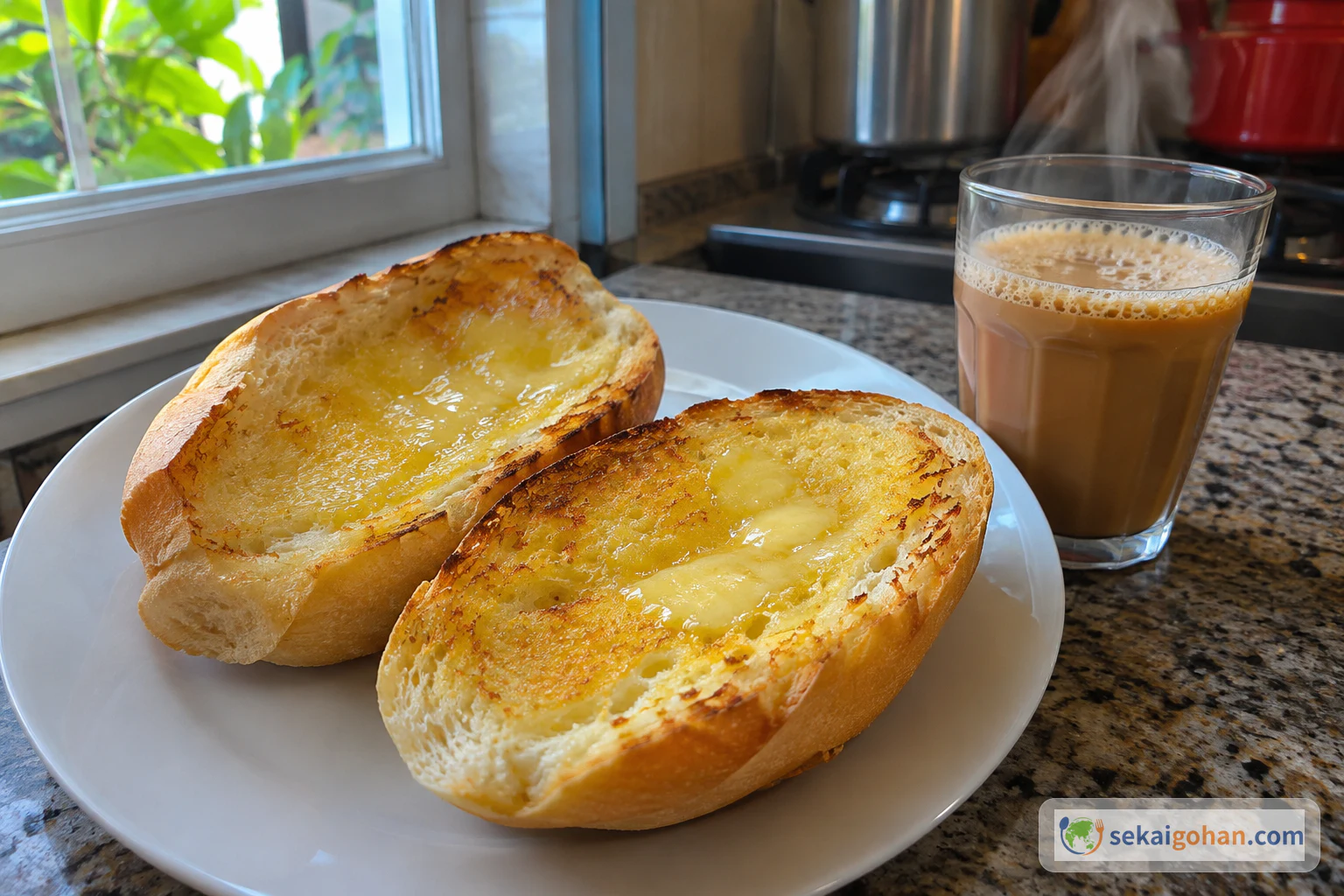
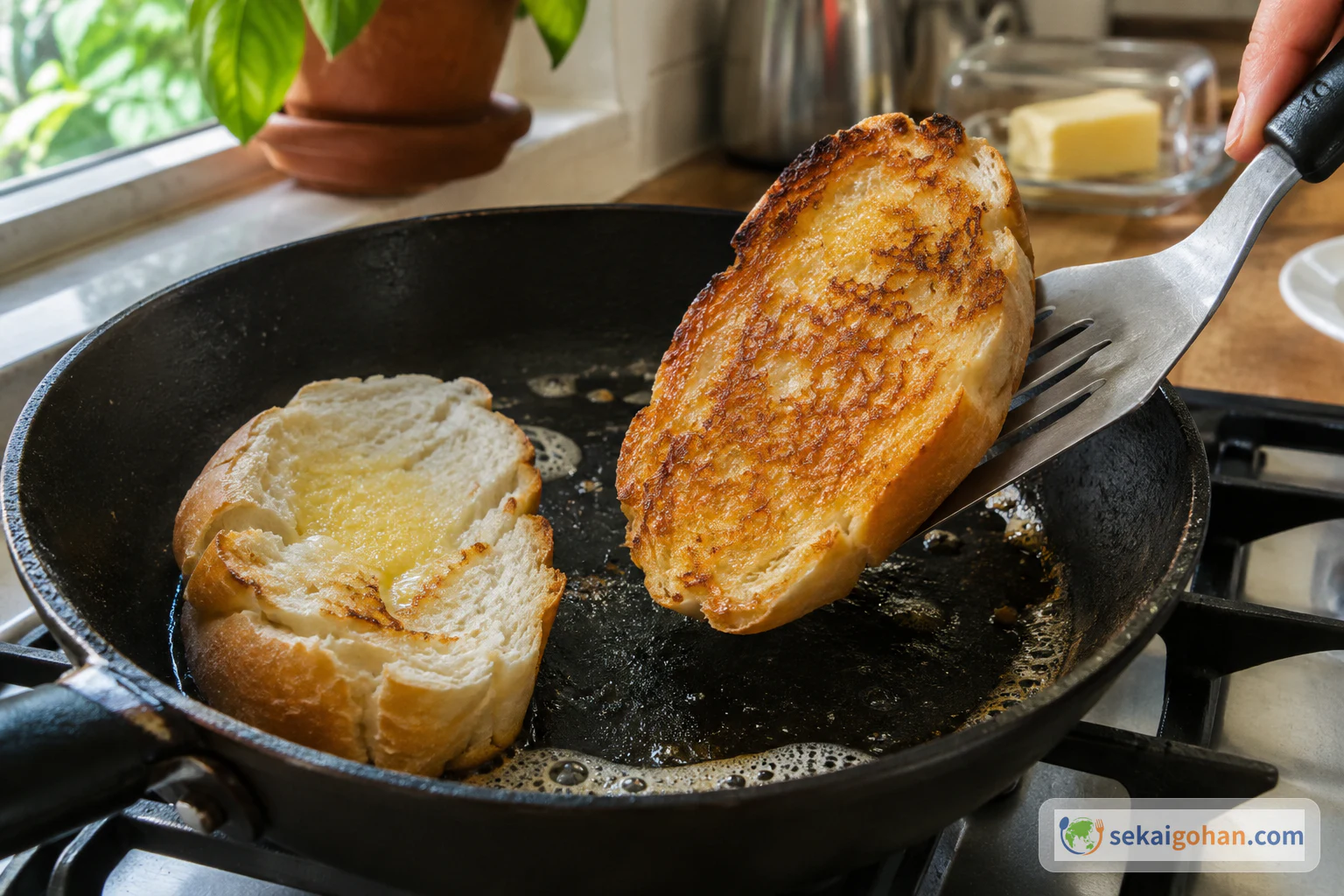
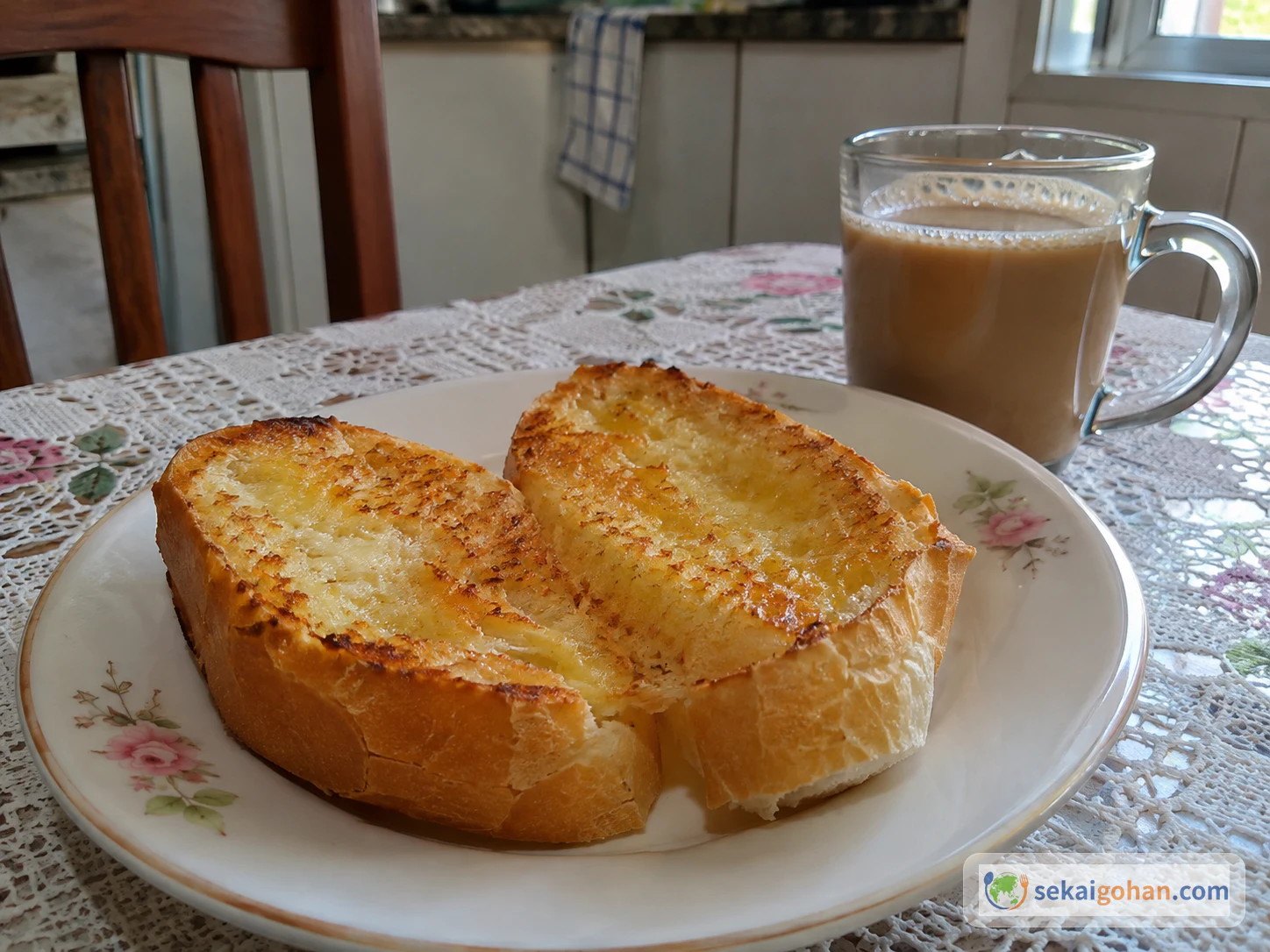
At a Brazilian padaria counter you order it and watch it happen. A small crusty roll is split in two, both cut faces are spread with butter, and the halves go face-down on the hot flat-top. About a minute later they come back up golden and shining. Pão na chapa is just bread, butter and heat. It tastes of browned butter on a thin, crackling crust, with a soft white crumb underneath that is still warm when you bite in.
A Bakery Breakfast That Lasts Into the Afternoon
Pão na chapa is one of the standard breakfasts in Brazil, and it is the kind of thing people order at the padaria, the neighborhood bakery, rather than fuss over at home. It also comes back later in the day as an afternoon snack, with a coffee or a juice. Where and when the habit began is not settled, and the dish needs no backstory. It works because the bread it is made from is already good.
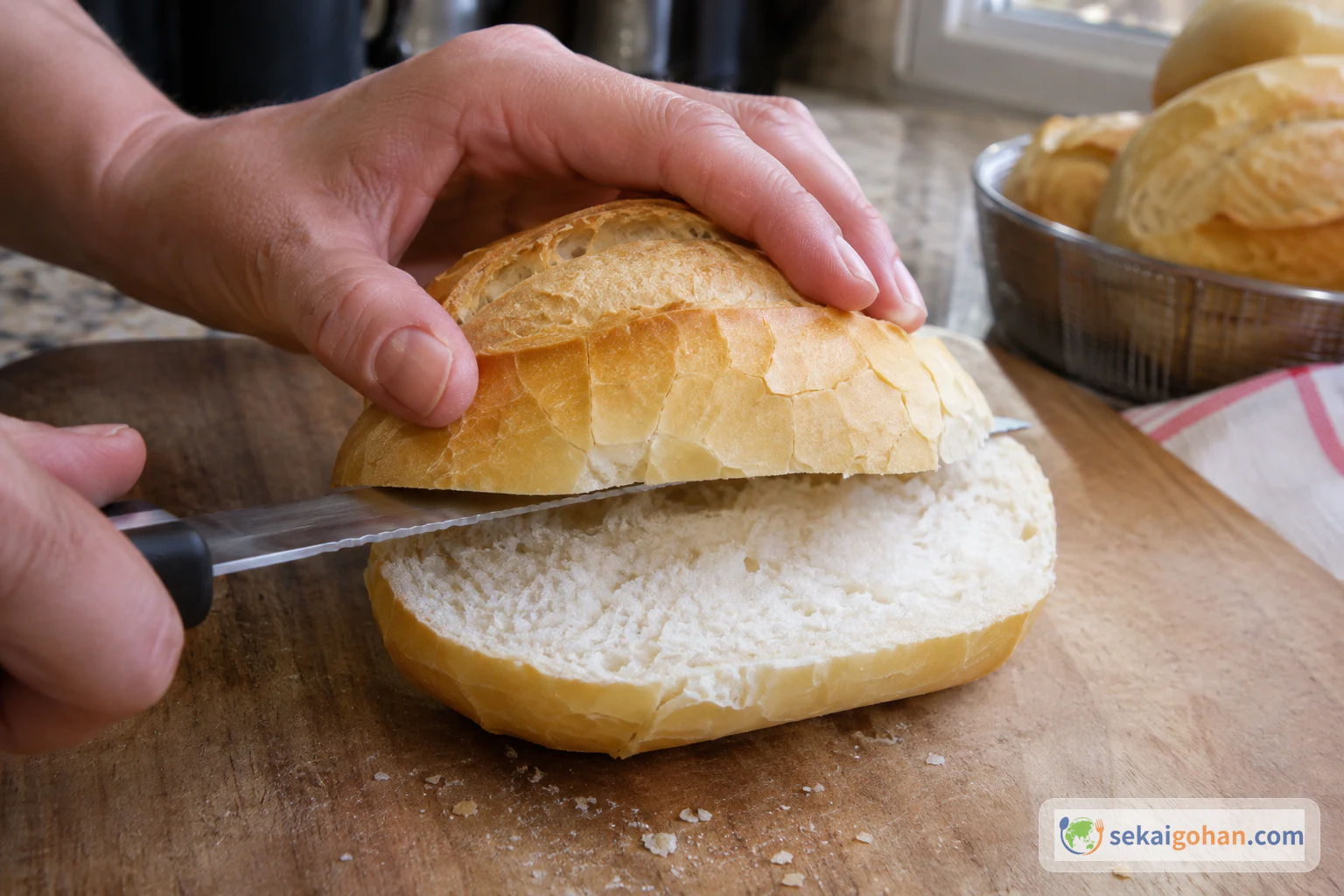
That bread is pão francês, the small, light roll with a slit across its top that Brazilian bakeries bake all day. Its crust is thin and shatters easily. The inside is airy and white. On the chapa the buttered cut faces fry and turn crisp, the crust warms through, and the soft middle stays soft. Every decision in this recipe protects that contrast: a fresh roll, a clean cut, butter soft enough to spread without tearing the crumb, and heat strong enough to color the bread quickly.
Keep it apart from pão de queijo, the chewy cheese bread made with cassava flour. That is a different dough and a different snack, though both turn up at the same bakery counters. For more of the country's cooking, see Brazil.
Na chapa means "on the griddle", the flat hot plate of a bakery or snack bar. The roll itself, pão francês, is also called pão de sal. If you ask for a "pão francês na chapa", you will get exactly this.
Ingredients (serves 1)
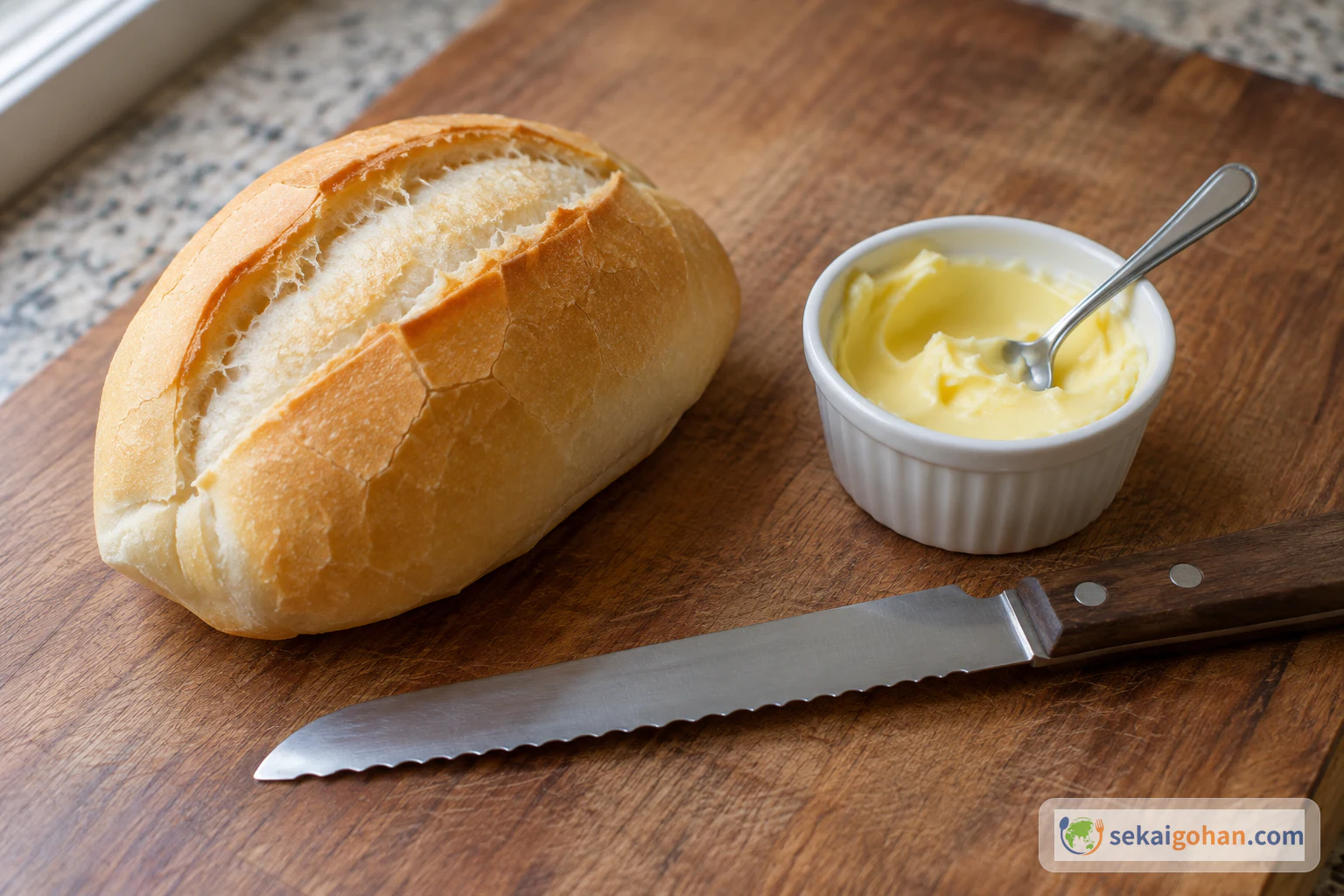
Nothing else goes into the classic version: no oil, no extra salt. For more people, use one roll and one spoon of butter per person.
Pão na chapa contains wheat (the bread) and milk (the butter). Margarine can also contain milk, so check the label. The requeijão variation below adds more dairy.
Equipment
- Serrated bread knife
- Heavy-bottomed skillet, griddle or flat-top
- Spoon or small offset spatula, for spreading
- Spatula, for lifting the bread
- Plate
Choosing the Bread and Butter
The roll decides the result. Outside Brazil, a real pão francês is hard to find. The closest stand-ins are a small bâtard or mini baguette, or a crusty hard roll. Each one gives you buttery toast with a crisp edge, but the texture is not the same. A baguette-style crust is thicker and chewier, and the crumb is denser and less cottony. Choose the smallest, lightest-crusted roll the bakery has, and buy it the day you cook. A warm roll is best of all.
For the butter, salted is the taste of the bakery version. With unsalted butter, add a pinch of salt over the buttered faces. Margarine also works and is common at Brazilian counters. It browns well but tastes less of butter.
| Swap | What changes |
|---|---|
| Mini baguette or bâtard for pão francês | Thicker, chewier crust; denser crumb |
| Crusty hard roll for pão francês | Close in size; crust and crumb a little heavier |
| Unsalted butter plus a pinch of salt | Same flavor if you salt it; nothing else changes |
| Margarine for butter | Same color and crunch, less dairy flavor |
A roll from that morning, or one still warm from the oven, gives the thin, brittle crust that makes pão na chapa. A day-old roll toasts hard and dry all the way through. No amount of butter fixes that.
Method
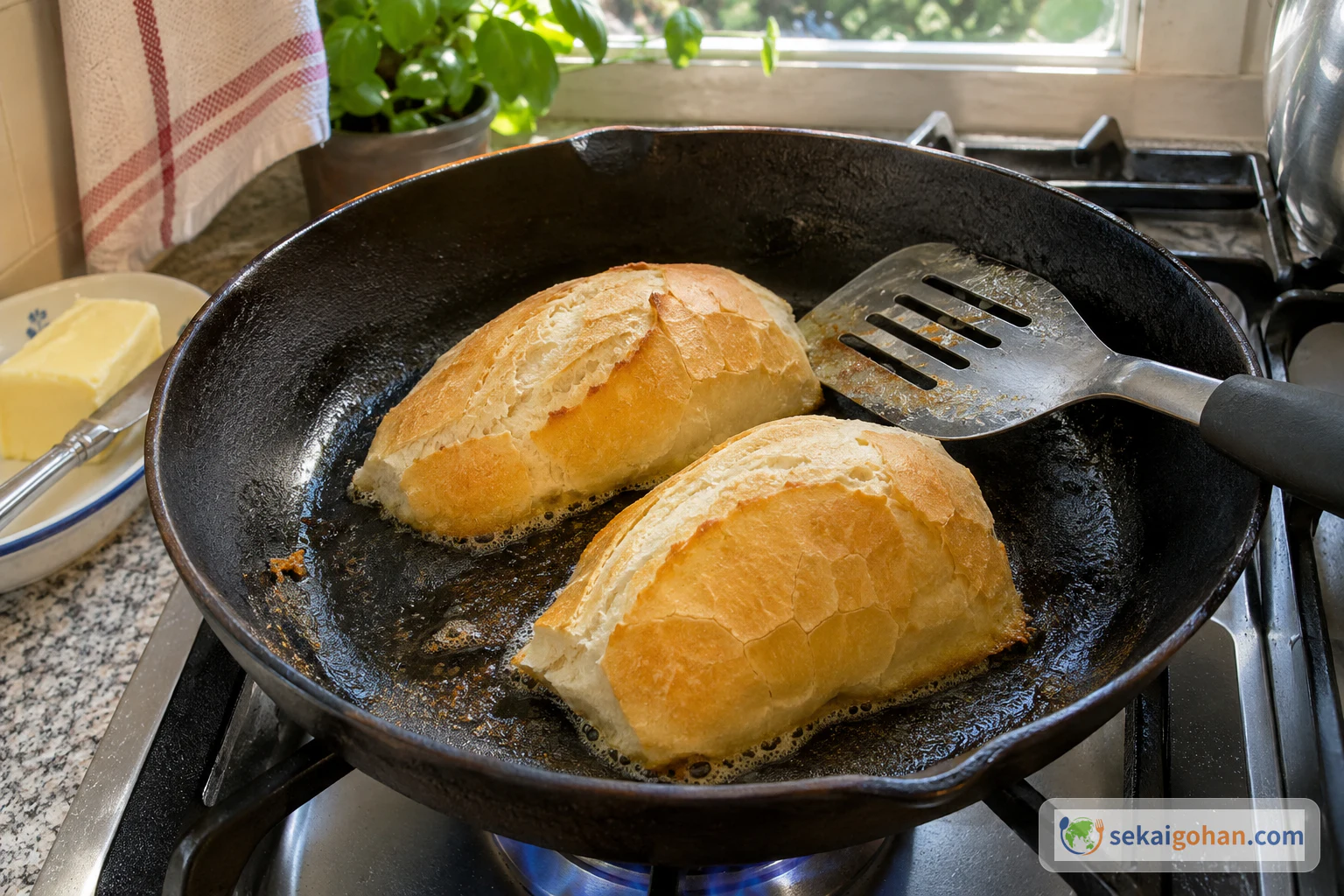
Everything here happens in a few minutes, so put the butter out to soften first. While it softens, set the pan on the stove. The cutting and spreading take less time than the pan needs to heat. Once the bread is in the pan, stay at the stove. About a minute per half is all it gets.
When It Goes Wrong
| What you see | Why | What to do |
|---|---|---|
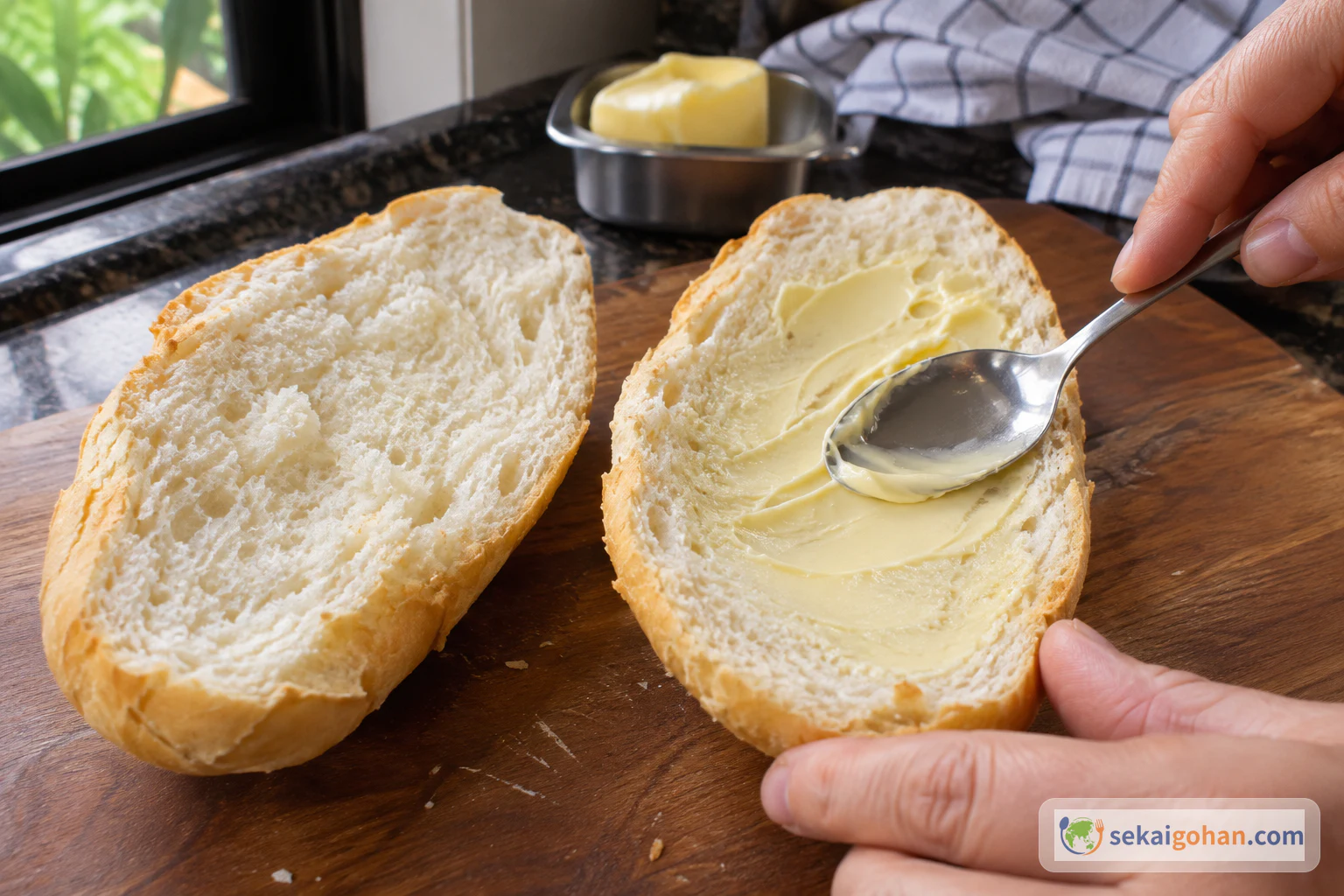
| The crumb tears while you spread | The butter is too cold | Let the butter soften at room temperature and spread with the back of a spoon |
| The cut faces are squashed and dense | Pressing down with a straight knife | Use a serrated knife with light sawing strokes |
| Dark or burnt before the center colors | The heat is too high | Lower the heat slightly; the bread should brown evenly, not blacken at the rim |
| Pale and soft, no crunch | The heat is too low or the pan was not hot yet | Heat the pan fully before the bread goes in and keep it at medium to medium-high |
| Hard and dry all the way through | The roll was stale | Start with a fresh roll, warm if possible |
Serving and Variations
At the table
Pão na chapa is breakfast or the afternoon break. It goes with a coffee or coffee with milk, or with fruit juice. It is often eaten with cheese or with jelly. Make one roll per person and toast it just before eating, since it waits for no one.
Press it or cover it
Press the halves down in the pan with another pan to make them flatter and crisper. Rest a plate on top instead and they come out softer and fluffier inside.
Toast dry, then butter
Some cooks toast the halves dry in a heavy pan first. When they have colored, they spread butter on both sides, turn off the heat and put the bread back in the hot pan. The butter melts into the hot toast instead of frying on the surface. Use one method or the other. Do not combine them.
Pão com requeijão na chapa
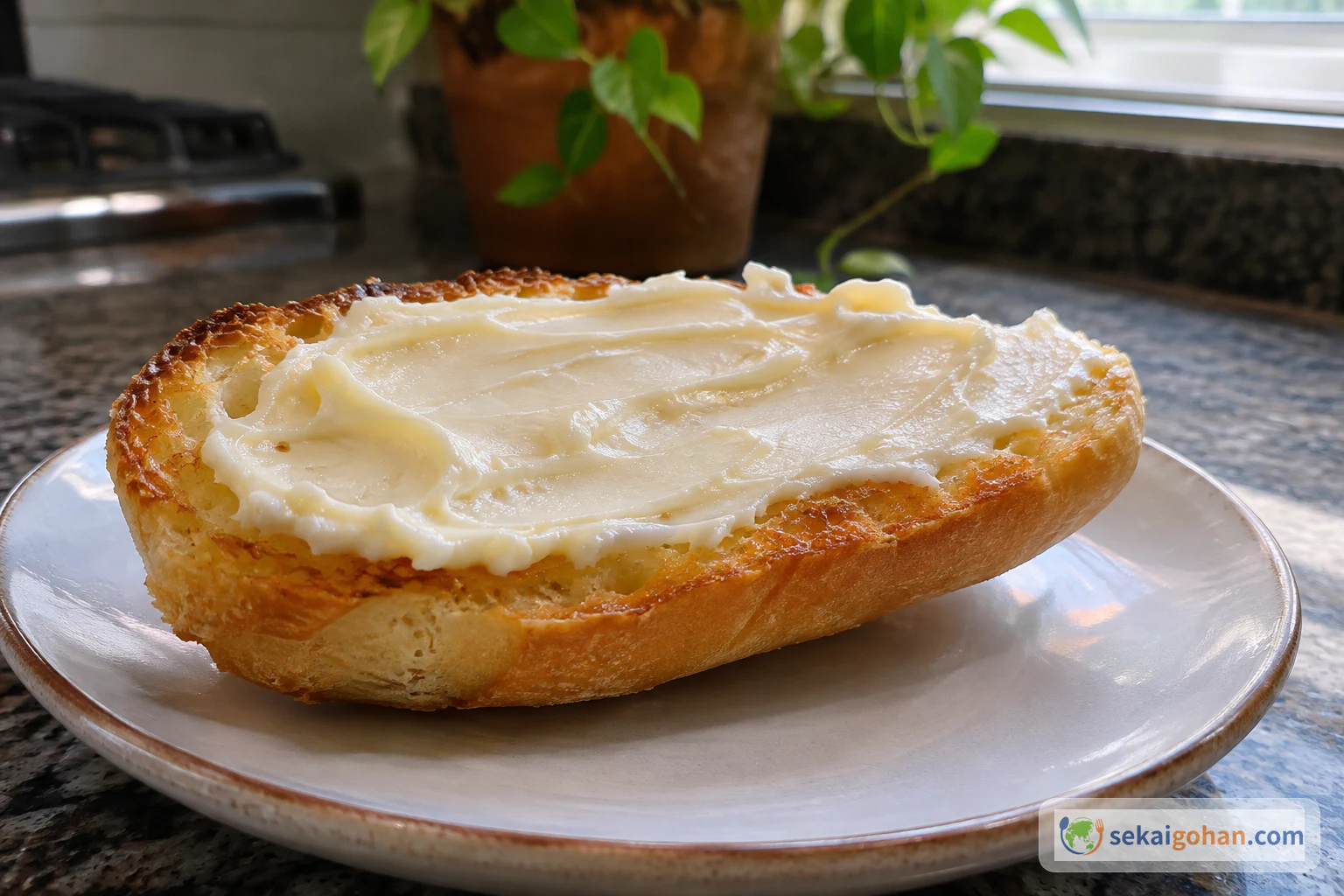
This is a different recipe. Cut the roll horizontally and take out the crumb to make room. Fill the hollow with requeijão, the soft, spreadable Brazilian cream cheese. Toast the halves filling side down, then turn them and give them another minute. The result is creamy and molten where the butter version is crisp and light. Serve it the same way, with coffee or juice.
Storage
Pão na chapa is made to be eaten hot from the pan, so toast only what will be eaten. If a half cools down, warm it briefly in a hot dry pan. Long reheating dries the crumb.
Frequently asked questions
Can I use margarine instead of butter?
Yes. Margarine is a common choice at Brazilian counters, and it spreads and browns the same way. The toast has the same crunch and less dairy flavor.
Why leave the soft middle in the roll?
The crumb is half the pleasure. The buttered face fries crisp while the crumb behind it stays airy and warm, and that contrast is the dish. Only the requeijão version hollows the roll, because the cheese needs the space.
Should I butter the crust too?
You can. Some cooks spread butter over the outside as well as the cut faces, so the whole roll comes out glossy. The classic bakery version needs only the cut faces buttered.
How do I make it for several people?
Use one roll and one dessert spoon of butter per person. Toast as many halves at once as fit flat in the pan without touching. Work in batches rather than crowding the pan, so every half gets the same contact with the hot metal.