Ingredients and steps on one page. Print it, or choose “Save as PDF” in the print dialog.
Sekai Gohan
Paraense Caldeirada: Pará Fish Stew in Tucupi and Jambu
Ingredients
| Ingredient | Amount | Role |
|---|---|---|
| White fish fillet (filé de pescada amarela) | 15 oz (420 g) | The one fish of the pot |
| Shrimp (camarão) | 7 oz (200 g) | Sweetness and colour, added at the end |
| Eggs (ovos) | 2 | Boiled separately, then added to the pot |
| Tomato (tomate) | 1 | Peeled after a quick dip in boiling water |
| Onion (cebola) | 1 | Cooked in a separate pot |
| Cabbage (repolho) | ¼ small head | Cooked in a separate pot |
| Jambu | 5½ oz (150 g) | Green flavour and the tingle |
| Fish stock (fundo de peixe) | ¾ cup plus 1 tbsp (200 ml) | Body of the broth |
| Commercially cooked tucupi | 1¼ cups (300 ml) | Sourness and colour of the broth |
| Garlic (alho) | 2½ oz (70 g) | Aromatic base, cooked in oil |
| Chicória | to taste | Seasoning herb for the fish |
| Alfavaca | to taste | Seasoning herb for the fish |
| Limão (lime or lemon) | as needed | Juice to season the fish |
| Salt (sal) | to taste | Seasoning |
| Black pepper (pimenta-do-reino) | to taste | Seasoning |
| Olive oil (azeite) | as needed | For the garlic and for finishing |
| Coriander (coentro) | a little | Finishing herb |
Steps
1Season the fish
Lay the fish fillets in a bowl and sprinkle them with salt, black pepper, alfavaca and chicória. Squeeze limão juice over the top. Turn each piece once so the herbs and juice reach both sides. The fish is ready when every piece glistens with juice and herb flecks cling to both sides.
2Cook the garlic, boil the broth and add the fish
Heat a little olive oil in the wide pot and add the garlic. Stir until it smells fragrant, without letting it brown. Pour in the fish stock and tucupi and bring them to a full rolling boil. Lower the fish into the broth in one layer and keep the broth at a gentle simmer while you prepare the vegetables and eggs.
Gentle heat for the garlicThat much garlic burns quickly. Keep the heat gentle and pull the pot off the heat for a moment if the edges darken; browned garlic turns the whole broth bitter.
3Peel the tomato
Cut a shallow X in the base of the tomato. Lower it into boiling water and lift it out as soon as the skin begins to curl back from the cut. Peel off the loosened skin and set the tomato aside. Add it with the vegetables in step 5 if you want its softness in the broth; left out, the broth stays a clear gold. It is done when the skin slips away in sheets and the flesh underneath stays firm.
4Cook the onion, cabbage and eggs separately
Cut the onion and cabbage into pieces and cook them in the second pot until both are soft. Lift them out with a slotted spoon. Boil the eggs in their own pan, then cool and peel them. The vegetables are ready when the onion is soft and translucent and the cabbage is limp and tender, and the eggs are ready when they are peeled and cool enough to handle.
5Bring everything together with the shrimp and jambu
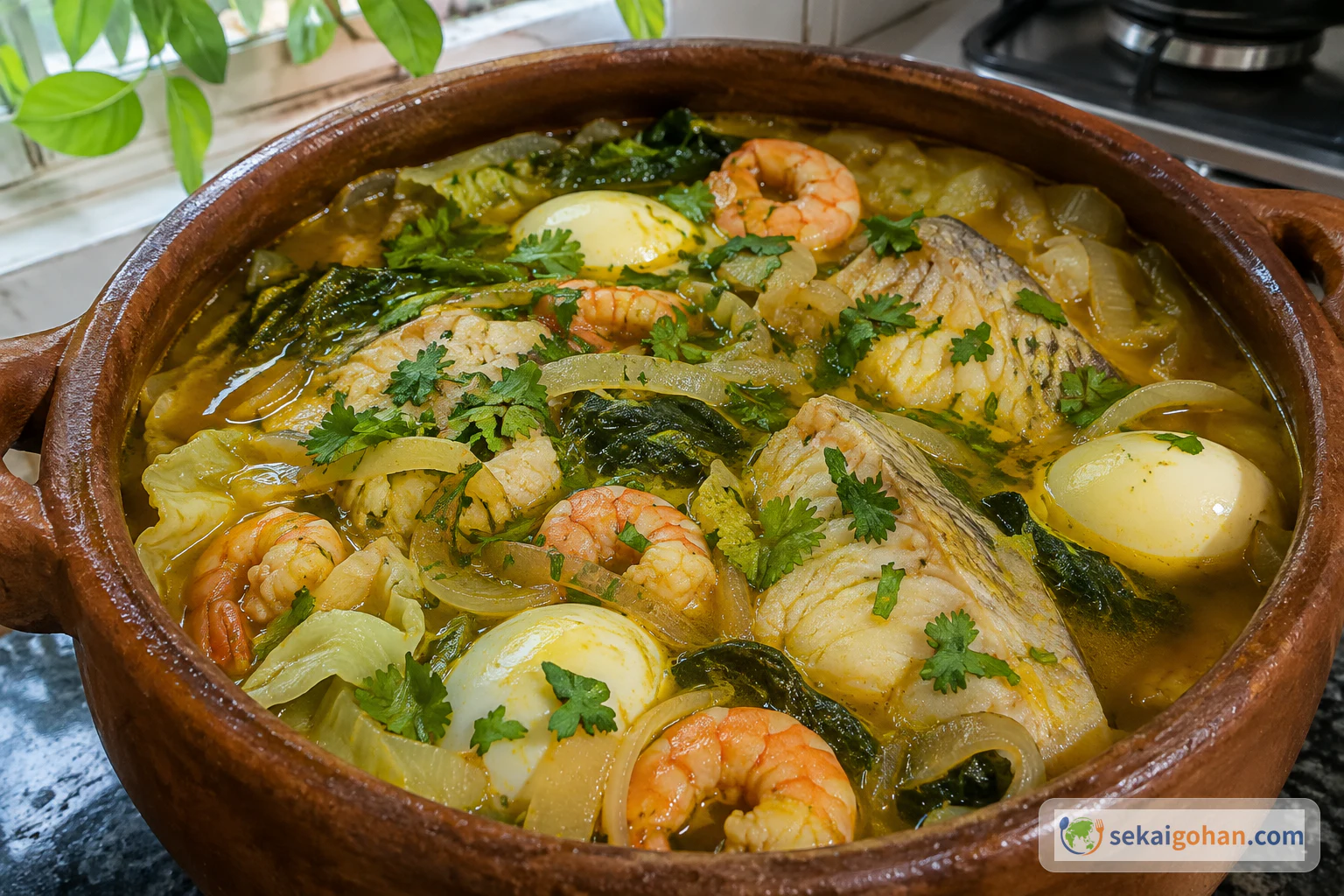
Check the fish: it is cooked when it is opaque to the centre. Add the onion, cabbage, eggs, shrimp and jambu around the fish. Push them gently under the broth and keep it at a simmer. Cook until the shrimp turn red and are cooked through to the centre and the jambu has wilted dark green.
Move the pot, not the fishOnce the fish is cooked, stirring breaks it apart. Shake the pot gently to settle new ingredients, and use a spoon only to push the shrimp under the broth.
6Finish with coriander and olive oil
Take the pot off the heat. Taste the broth and add salt if it needs it. Scatter coriander over the top, then pour a thin stream of olive oil across the surface. It is ready when the oil beads in a sheen on the broth and the coriander smells fresh in the steam.