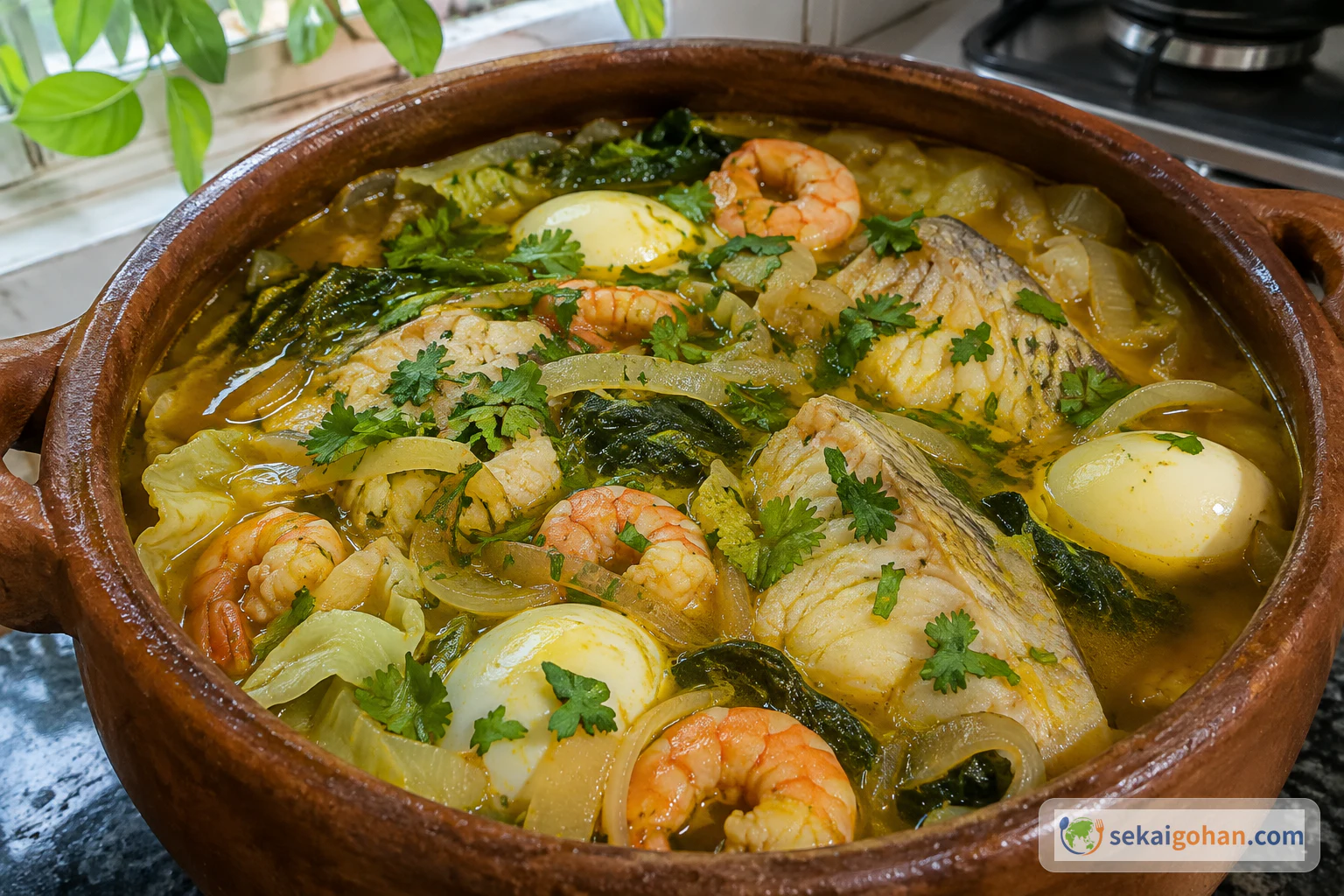
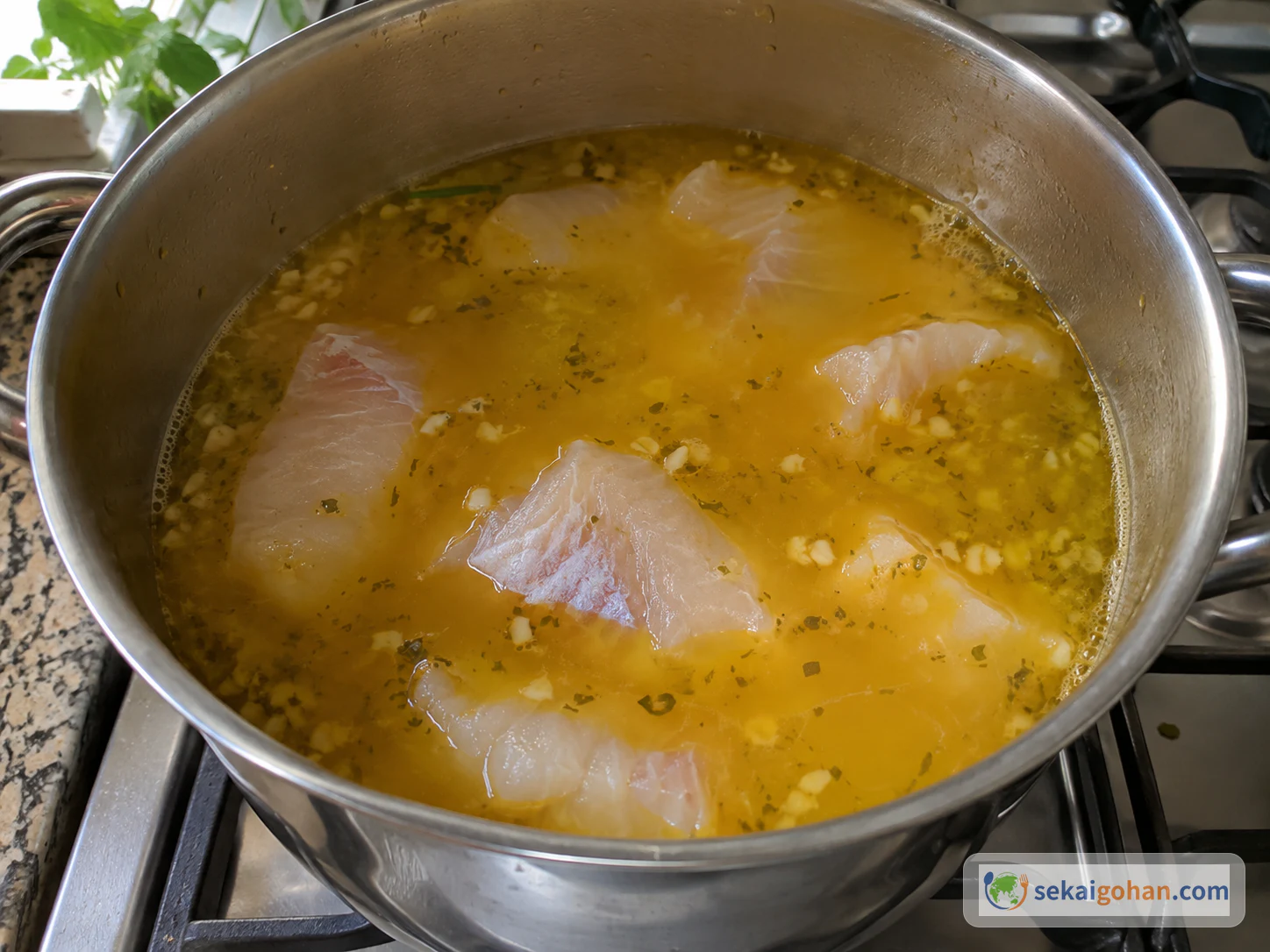
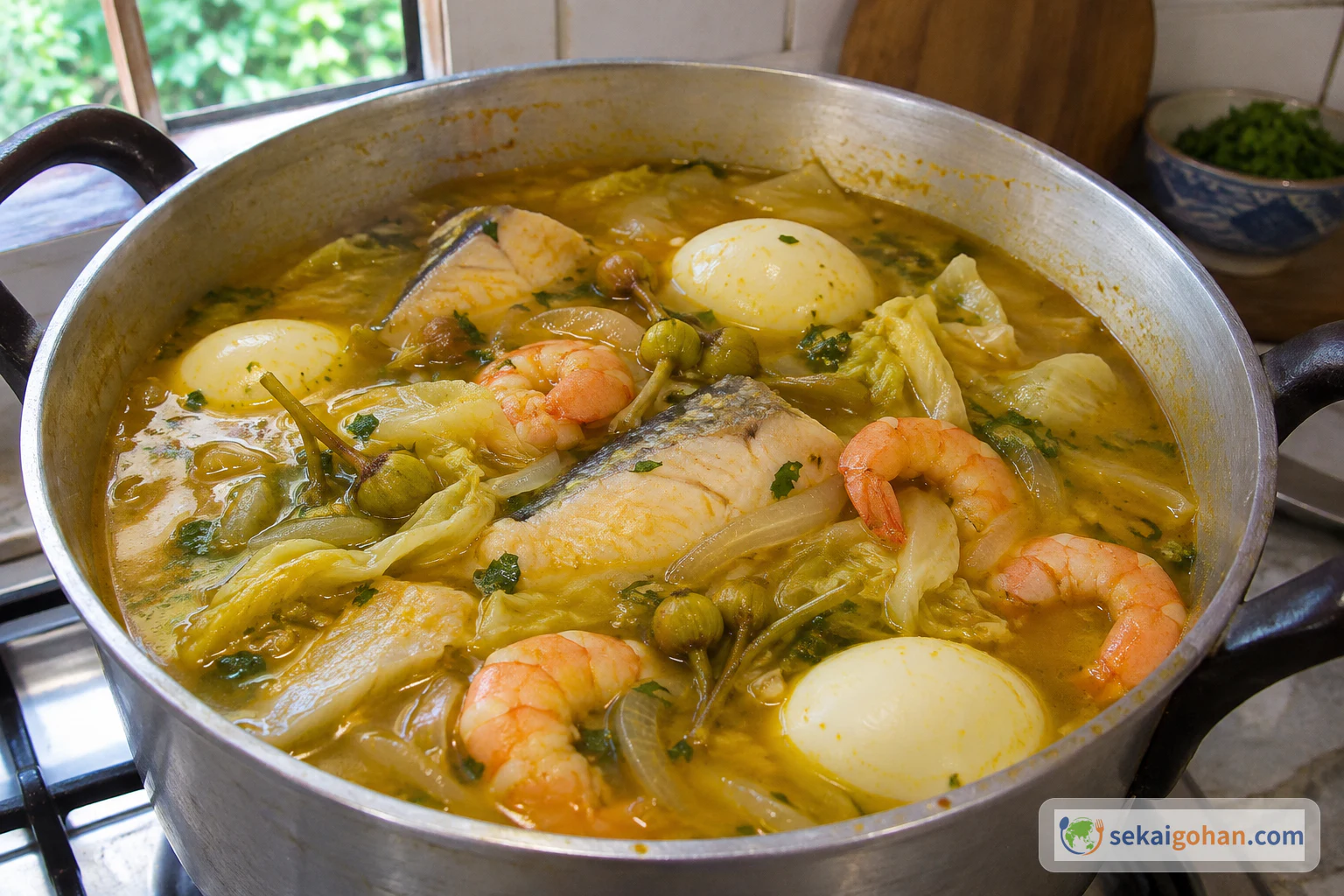
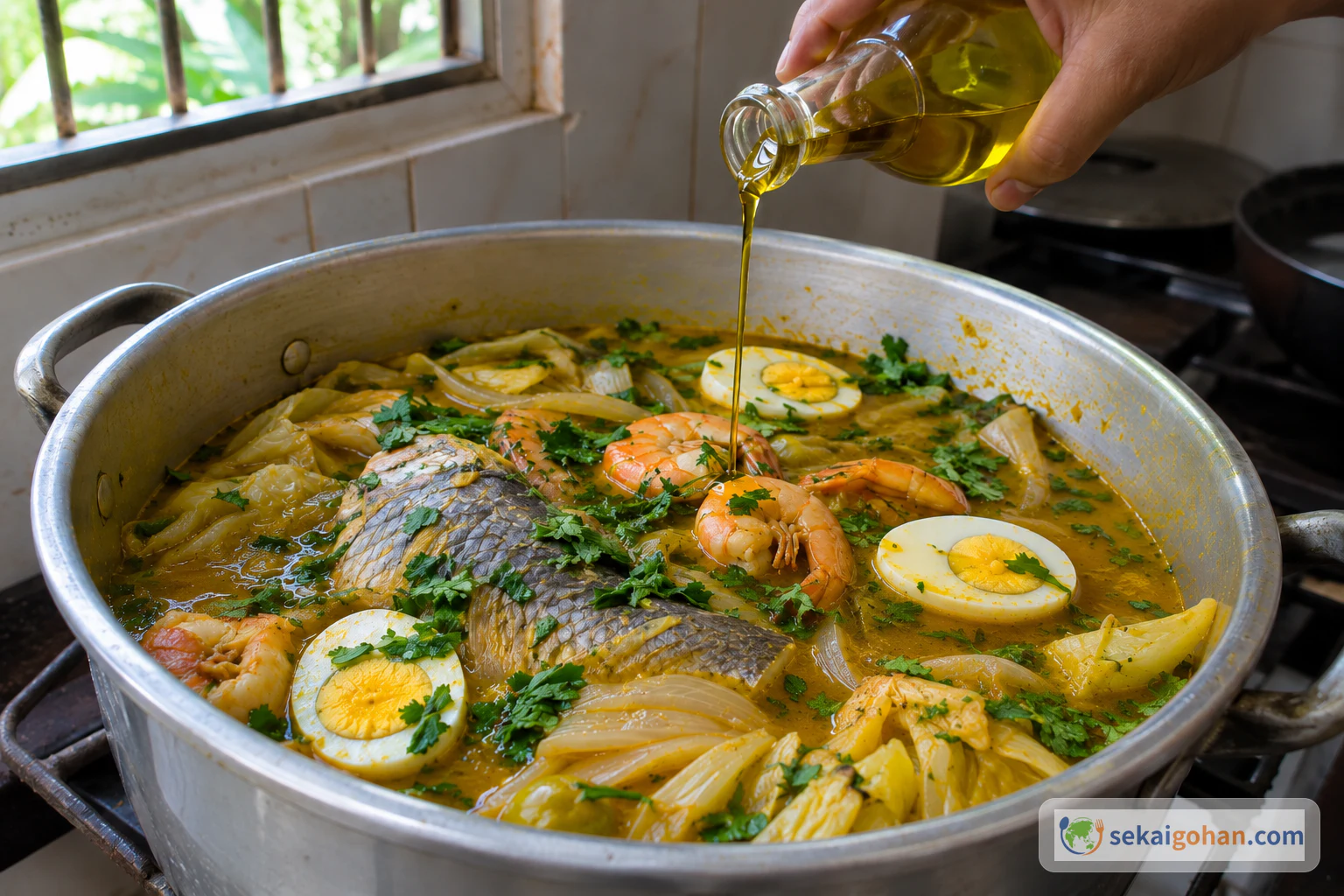
The garlic hisses in olive oil, and then the tucupi goes in, a thin golden liquid that smells sour and faintly fermented as it comes to the boil with the fish stock. White fish slides into it, and near the end a tangle of dark jambu leaves wilts into the broth while the shrimp curl and turn red. The first spoonful is bright and sharp. A moment later your lips and tongue start to tingle. This is caldeirada paraense, the fish pot of Pará in Brazil's north: one white fish, shrimp, boiled eggs, soft cabbage and onion, all in a broth that tastes of the Amazon rather than of the sea.
From a Portuguese fish pot to the rivers of Pará
Caldeirada is a Portuguese name for a fish stew, and in Pará it was taken up and rebuilt with northern fish and northern ingredients. Before that name reached the region, there were already older ways of cooking with the same flavours. Indigenous cooks made quinhapira, and the ribeirinhos, the people who live along the rivers, ate their fish with tucupi and jambu. The Paraense pot grew out of that meeting.
In its modern form, caldeirada paraense is built around a single kind of fish. Pescada amarela, a white fish, is the classic choice, and filhote and tucunaré go into the pot too. The restaurant-style pot cooked here adds shrimp, tucupi and jambu, which is what moves it furthest from its Portuguese namesake.
Elsewhere in Brazil, the word covers different stews. A tucunaré caldeirada made without tucupi or jambu is a separate pot with its own logic, and one version is served with pirão, potatoes and boiled eggs. Moqueca baiana, from Bahia, gets its colour and body from dendê oil and coconut milk, and none of that belongs in a Pará caldeirada. For more of the country's regional cooking, see the Brazil page.
In Pará the name points to a stew of one kind of fish. Mixing several species moves it toward the coastal caldeiradas of Portugal and Brazil's port towns.
Three tastes that make it Paraense
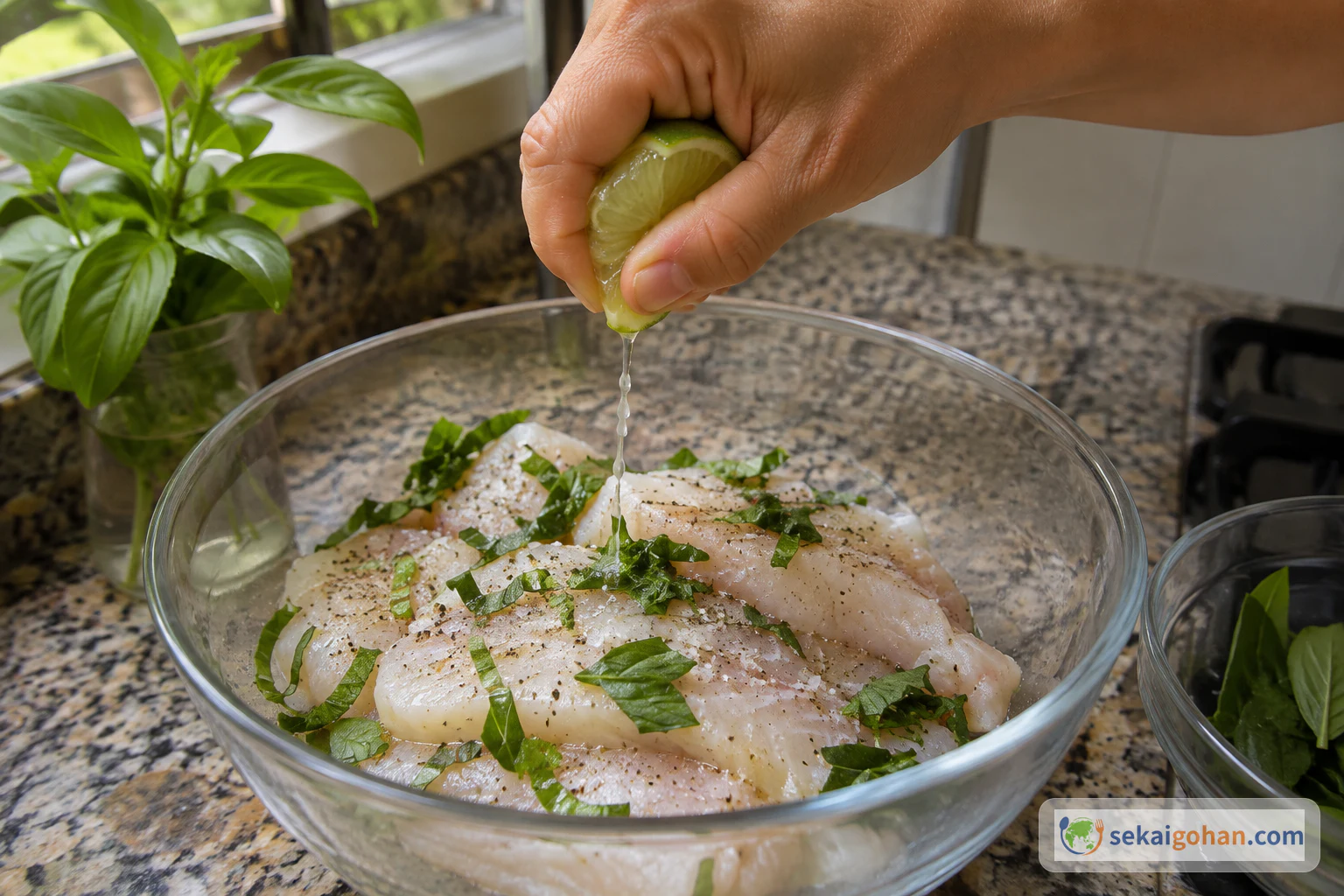
Tucupi is the yellow juice pressed from cassava, fermented, seasoned with aromatics and then boiled to drive off the hydrogen cyanide that the raw juice carries. What you buy is sour, savoury and lightly funky, and it gives the broth its colour and its edge. Jambu is a leafy green used all over Pará's kitchens; its leaves and flower heads make the mouth buzz and go slightly numb. Alfavaca and chicória, two herbs that go on the raw fish with limão, salt and pepper, lay a green, perfumed note under the sourness.
Ingredients
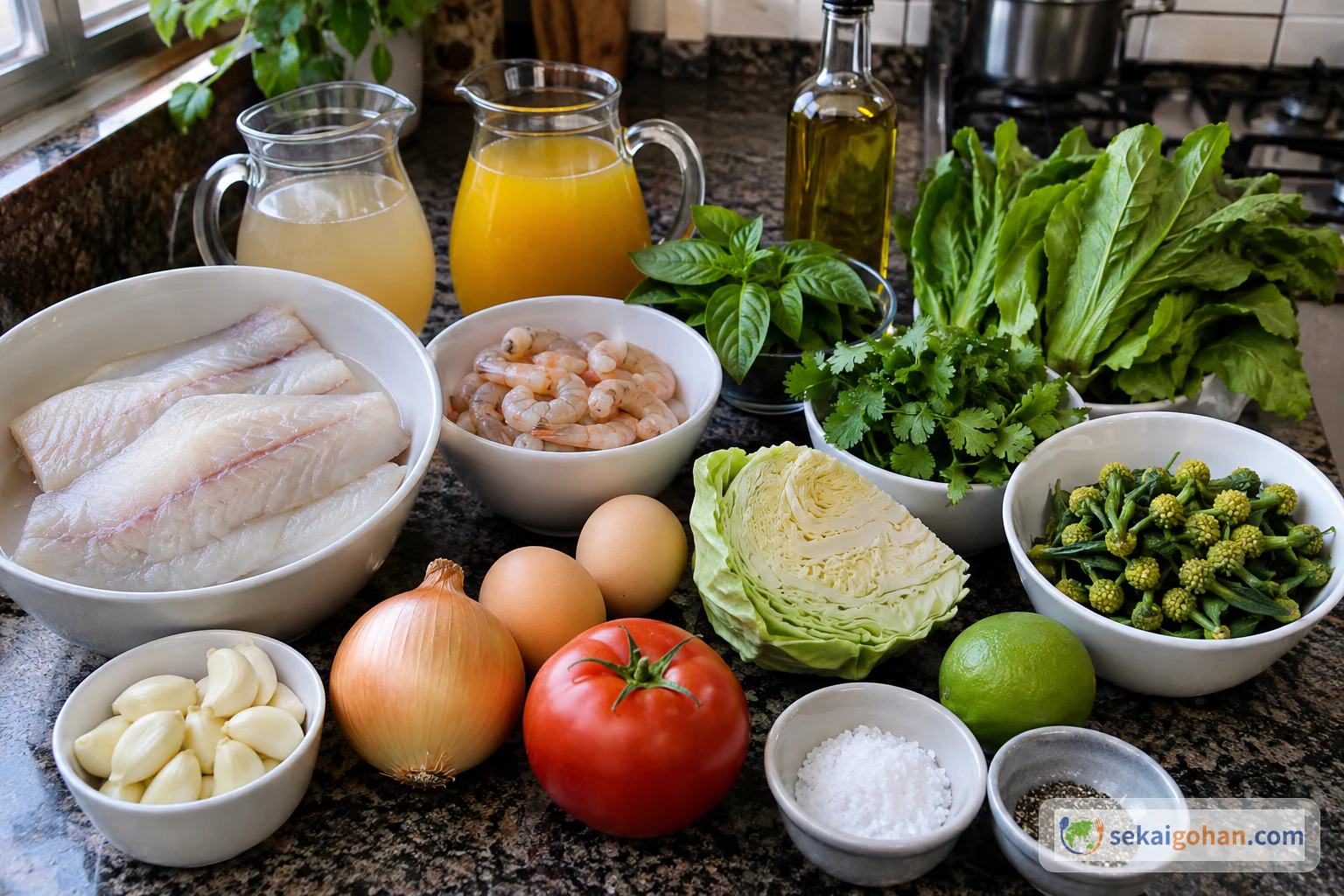
This dish contains fish, shrimp (crustacean shellfish) and egg. Read the labels on commercial fish stock and tucupi for any other allergens and for shared-facility statements.
Equipment
- A wide pot for the broth and fish
- A second pot for the onion and cabbage
- A small pan of boiling water and a bowl for the tomato
- A small pan for boiling the eggs
- A bowl for seasoning the fish
- A slotted spoon
- A clay pot (panela de barro) for serving, if you have one
Choosing and substituting
Tucupi decides whether this is caldeirada paraense at all. Look for it at Brazilian grocers or online, and buy only bottles or packs labelled as cooked or heat-treated. Without tucupi you are cooking a different fish stew, closer to the tucupi-free tucunaré pot.
Use only commercially cooked, heat-treated tucupi, and bring it to a full boil in the pot before the fish goes in. Never use raw tucupi, and never make or ferment it at home. A golden colour or a rolling boil in your pot does not tell you the cyanide is gone; the label does.
Jambu is harder to find than tucupi. Buy it wherever a Brazilian shop carries it. When you cannot find any, cook the pot without it: the broth keeps its sour depth and loses the tingle and the dark-green bite.
| What to buy | If you can't find it | What changes |
|---|---|---|
| Pescada amarela | Any firm white fish fillet that holds together in simmering liquid | Mild fish keeps the tucupi in front; soft, flaky fish breaks up |
| Shrimp | Shell-on or peeled both work | Shell-on looks dramatic in the pot; peeled is easier at the table |
| Fish stock | A low-salt commercial stock | A salty stock can push the broth past the sourness of the tucupi |
| Alfavaca and chicória | Keep them if you can find them | Without them the fish tastes plainer and the broth loses its green perfume |
| Coriander | Fresh coriander leaves | The finishing herb, easy to find anywhere |
Method
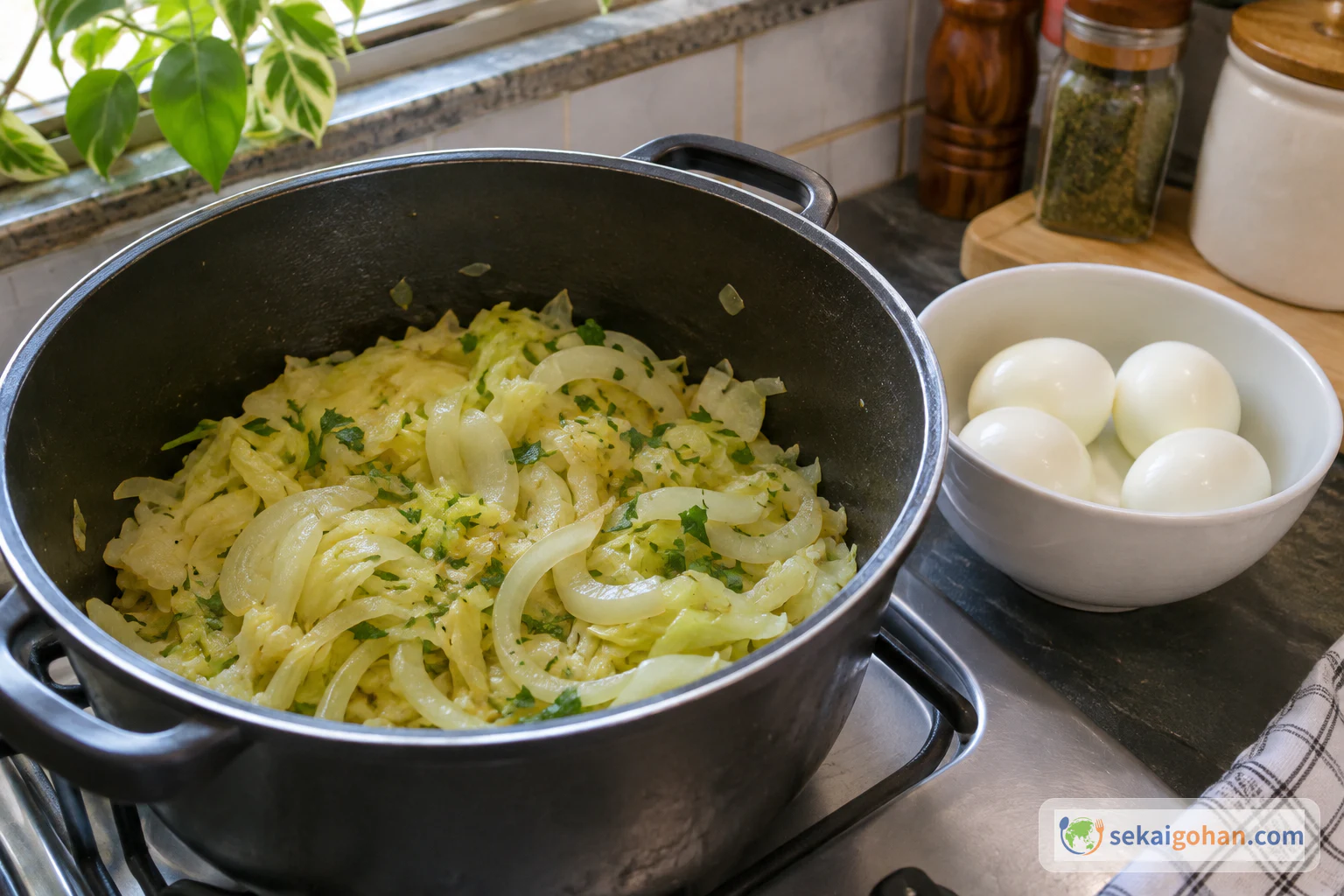
The fish seasons while you start the broth, and from the moment it goes into the pot, everything else happens in other pans. Cut the onion and cabbage and set the tomato water and egg pan on the stove before the fish goes in, so the vegetables and eggs are ready by the time the fish is cooked through.
Shrimp go from tender to tough fast. Add them only once the fish is cooked, and take the pot off the heat as soon as they are red and cooked through.
When it goes wrong
| What you see | Why | What to do |
|---|---|---|
| The broth tastes bitter | The garlic browned | Start the garlic again in fresh oil if it burnt; over gentle heat it stays pale |
| The fish falls into flakes | Too much stirring, or a soft fish | Shake the pot instead of stirring; next time choose a firmer fillet |
| The shrimp are rubbery | They cooked too long | Add them last and take the pot off the heat once they are red and cooked through |
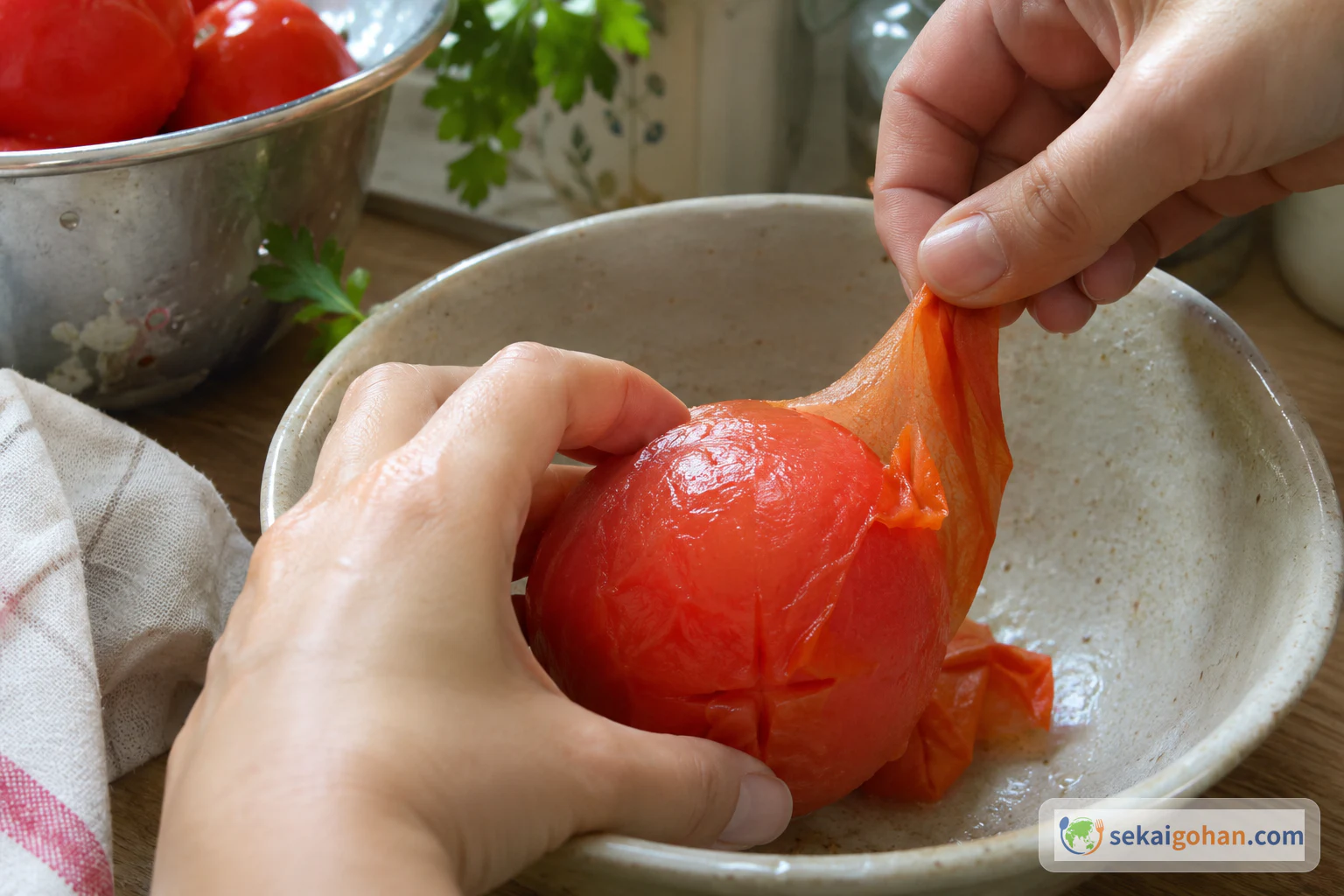
| The tomato skin won't come off | It was out of the water too soon | Dip it back into the boiling water briefly and try again |
| The broth is too salty | A salty commercial stock | Use low-salt stock next time and salt only at the end |
Serving and variations
Bring the caldeirada to the table in its pot, ideally a clay panela de barro, and serve it with white rice. In Pará it often comes with pirão and a hot pepper sauce (molho de pimenta); boiled potatoes are also served alongside in some versions. Each person takes a piece of fish, a shrimp or two, an egg and some cabbage, with a ladle of broth over the rice.
Jambu makes the lips and tongue tingle and go slightly numb. Warn first-timers and children before they take a bite. Fish and shrimp must be fully cooked through; serve nothing raw.
Variations
- Filhote or tucunaré instead of pescada amarela. Both are Pará fish used in caldeirada. Filhote gives larger, meatier pieces; keep to one species in the pot.
- With the tomato in the broth. Adding the peeled tomato in step 5 is optional and turns the broth slightly cloudier and redder.
- Served like a tucunaré caldeirada. Put boiled potatoes and pirão beside the pot for a heavier meal; the stew itself stays the same.
Making ahead
Cook caldeirada on the day you serve it and finish it at that meal. The shrimp and jambu are at their best straight from the pot.
Frequently asked questions
Should the shrimp be shell-on or peeled?
Either works. Shell-on shrimp give the broth a little more sweetness and look striking in the pot, but they are messier to eat. Peeled shrimp make the bowl easier for guests.
Is that much garlic right?
Yes. The garlic forms the base of the broth, and cooked gently in oil it turns sweet rather than sharp. With less garlic, the broth leans more toward the sourness of the tucupi.
How much olive oil do I need?
Use enough to coat the base of the pot for the garlic, so every piece sizzles in a thin layer. At the end, a single thin thread across the surface is enough to give the broth its sheen.
Do the eggs go in whole?
Add them peeled and whole, so they warm through in the broth without falling apart. Halve them at the table so each bowl gets a piece with yolk soaked in the golden broth.