Ingredients and steps on one page. Print it, or choose “Save as PDF” in the print dialog.
Sekai Gohan
Brazilian Tapioca (Beiju): Chewy Pan-Cooked Rounds Made from Cassava Starch
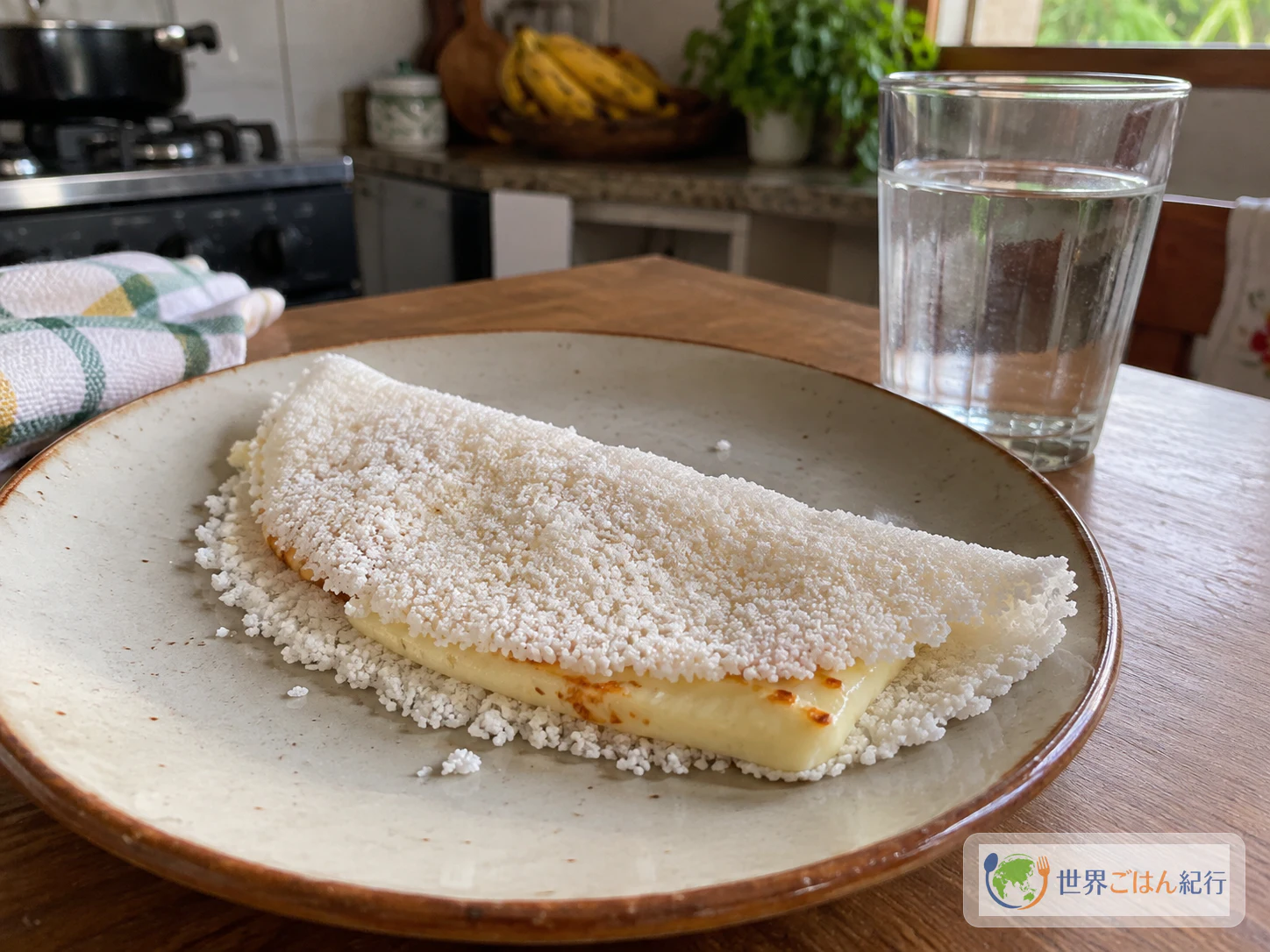
Ingredients
Tapioca dough
| Ingredient | Amount | Role and how to choose |
|---|---|---|
| Cassava starch (polvilho doce, sweet cassava starch) | 1 lb (500 g) | The whole body of the dough. Not tapioca pearls, cassava meal or sour polvilho azedo |
| Salt | 10 g | Seasons the dough. Ordinary fine table salt can be weighed as is |
| Water | 1¼ cups (300 ml) | Moistens the dry starch into grains. Add it a little at a time |
Optional filling
| Ingredient | Amount | Notes |
|---|---|---|
| Queijo coalho or another filling | Optional; no set amount | Use a modest amount |
Steps
1Mix the starch and salt
Put 1 lb (500 g) cassava starch and 10 g salt in a bowl and mix with your hand until the salt is evenly spread through the dry powder. At this stage everything is still completely dry.
2Add the water a little at a time
Add the 1¼ cups (300 ml) water in several additions, working it into the starch with your fingertips after each one. Don't pour it all in at once; let each addition spread through the powder before adding the next. You are aiming for damp, irregular clumps, never a smooth, pourable batter.
The recipe calls for all 1¼ cups (300 ml). Starches differ from product to product, so if you hold back some water, note how much you used.
3Break up the clumps and let it rest
Rub the larger clumps between your fingertips until the whole bowl looks like fine, damp crumbs. Then leave it to rest for a few minutes.
4Sift the damp starch
Press the damp starch through a fine-mesh sieve into a bowl. If firm clumps stay on top, rub them through with your fingers. What falls through should be small, even, slightly moist grains. Keep them in that grainy state; don't press them back together.
5Spread the grains in a dry pan
Heat a dry frying pan, with no oil. Scatter the sifted grains over it with a spoon and spread them into a thin, even round. Don't press down hard; just fill any gaps and level any thick mounds. At first you will still see individual pale grains.
6Cook until the grains join and the edge lifts
Leave the round alone while the heat joins the grains into a continuous, pale white sheet. It is ready when the grains have fused and the edge has lifted slightly from the pan. Use a thin spatula to check the edge. You are not trying to brown it.
You can also turn the round over at this point, then add the filling and fold. This recipe folds once the edge lifts. To flip, wait until the edge has lifted and use a thin spatula, since a round turned too early tears easily.
7Add the filling and fold
If you are using a filling, place a modest amount on one half of the round and fold it over into a half-moon. Let it sit in the pan for a few seconds so the filling warms. If you are making it plain, simply fold it.
8Serve right away
Slide the tapioca onto a plate straight away and eat it while it is warm. Repeat with the remaining grains to make 8 in all, adjusting the heat after the first if needed.