Ingredients and steps on one page. Print it, or choose “Save as PDF” in the print dialog.
Sekai Gohan
Jilapi: Bangladeshi Fried Yogurt-Batter Spirals in Saffron Syrup
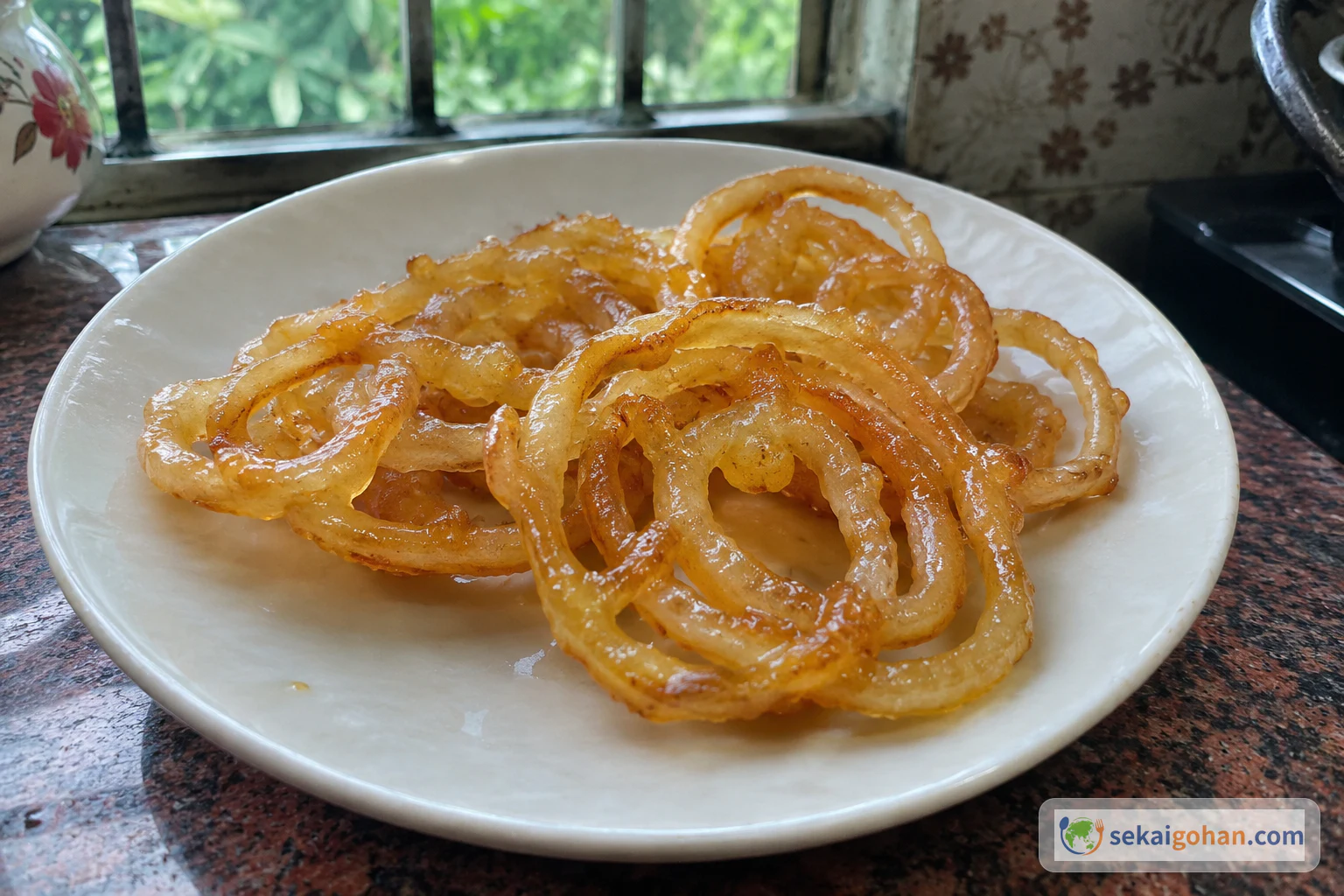
Ingredients
| Ingredient | Amount | Role |
|---|---|---|
| Refined wheat flour (maida) | ½ cup | The body of the batter |
| Plain unsweetened yogurt (doi) | ¼ cup (60 ml) | Moisture and the start of fermentation |
| Water, for the batter | as needed | Loosens a stiff batter to a dropping consistency |
| Sugar | 1 cup | The syrup |
| Water, for the syrup | 1 cup | The syrup |
| Saffron | ½ tsp | Colour and aroma in the syrup |
| Neutral frying oil | as needed | For frying in a shallow pan |
Steps
1Mix the flour and yogurt
Put the maida and yogurt in a clean bowl. Stir with a spoon, pressing any lumps against the side of the bowl. The mixture starts out thick and rough. Keep stirring until no dry flour shows and the paste looks smooth.
2Bring the batter to a dropping consistency
Lift a spoonful and watch how it falls. If it clings in a stiff lump, add water a little at a time and stir well after each addition. Stop as soon as the batter moves freely off the spoon. It is right when it is thick and smooth and drops back into the bowl in a heavy fall rather than pouring in a thin stream.
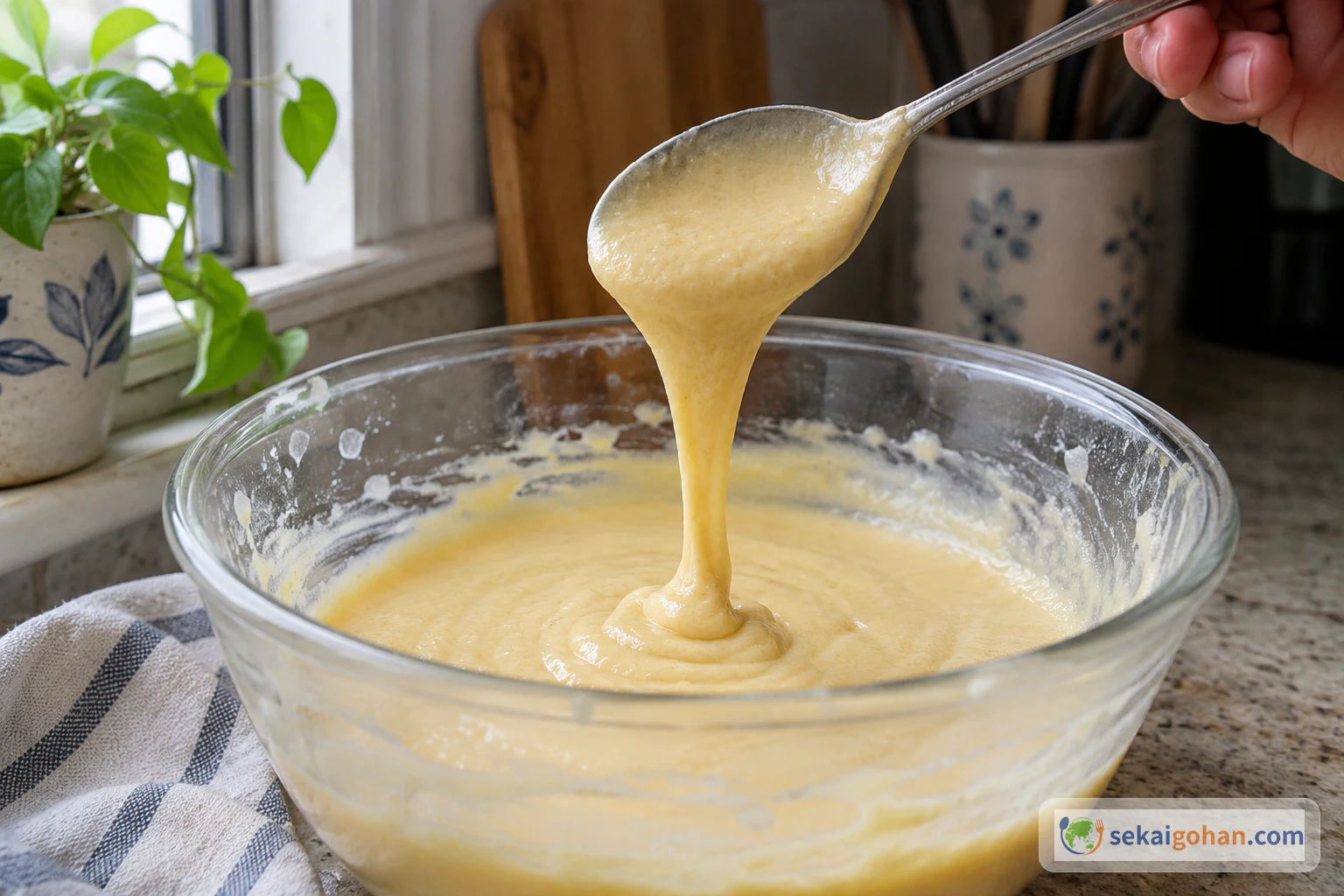
The batter falls from the spoon in a thick, smooth drop and settles back slowly 3Leave the batter to ferment
Leave the batter in its clean bowl for 6 to 7 hours. The weather sets the pace, so the exact moment it is ready changes from day to day. The bowl needs nothing from you while it rests. Toward the end of the rest, small bubbles begin to show on the surface.
4Check that the batter has fermented
Look at the top of the batter. Small bubbles cover the surface, and the batter looks spongy rather than dense. The smell is pleasantly sour. That is the batter you fry.
5Dissolve the sugar and saffron
Put the sugar, the syrup water and the saffron in a small saucepan over low heat. Stir gently while the sugar dissolves and the saffron threads release their colour. Keep the heat low through this stage so the sugar melts evenly. The syrup is ready to reduce when it looks clear and golden and the spoon finds no grains on the bottom of the pan.
6Reduce the syrup to a thread
Turn the heat up to high and let the syrup boil so it reduces slightly. Stir once or twice so it heats evenly. Lift the spoon above the pan and let the syrup run back. When it falls in a thin, smooth thread, the syrup is done.
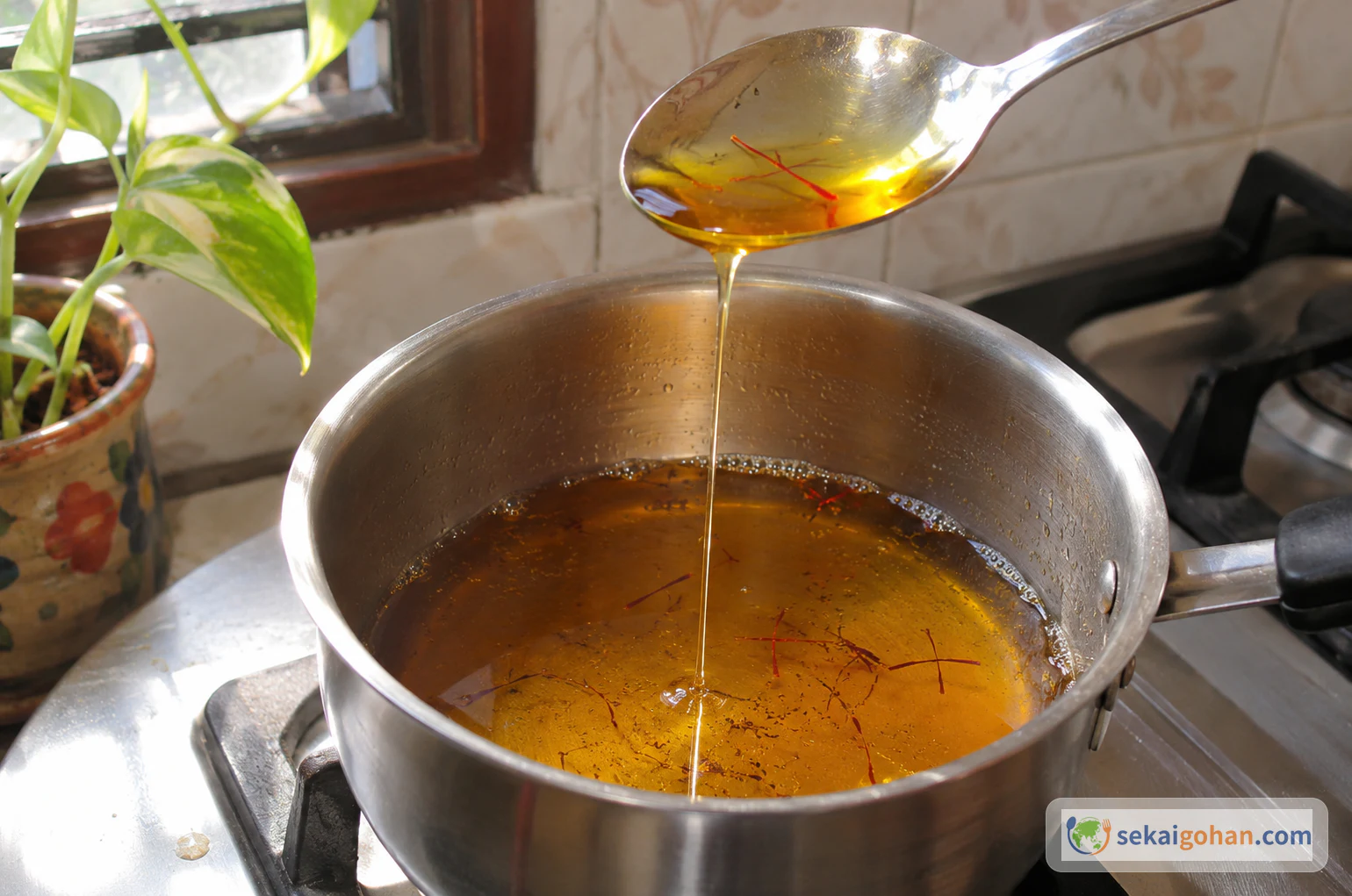
One unbroken thread from the spoon, with no separate drops 7Keep the syrup warm and heat the oil
Set the syrup aside in its pan, keeping it warm. Pour neutral oil into the shallow, heavy pan, leaving plenty of room below the rim, and heat it. Drop a small bit of batter into the oil to test it. When the drop rises to the surface at once, the oil is ready.
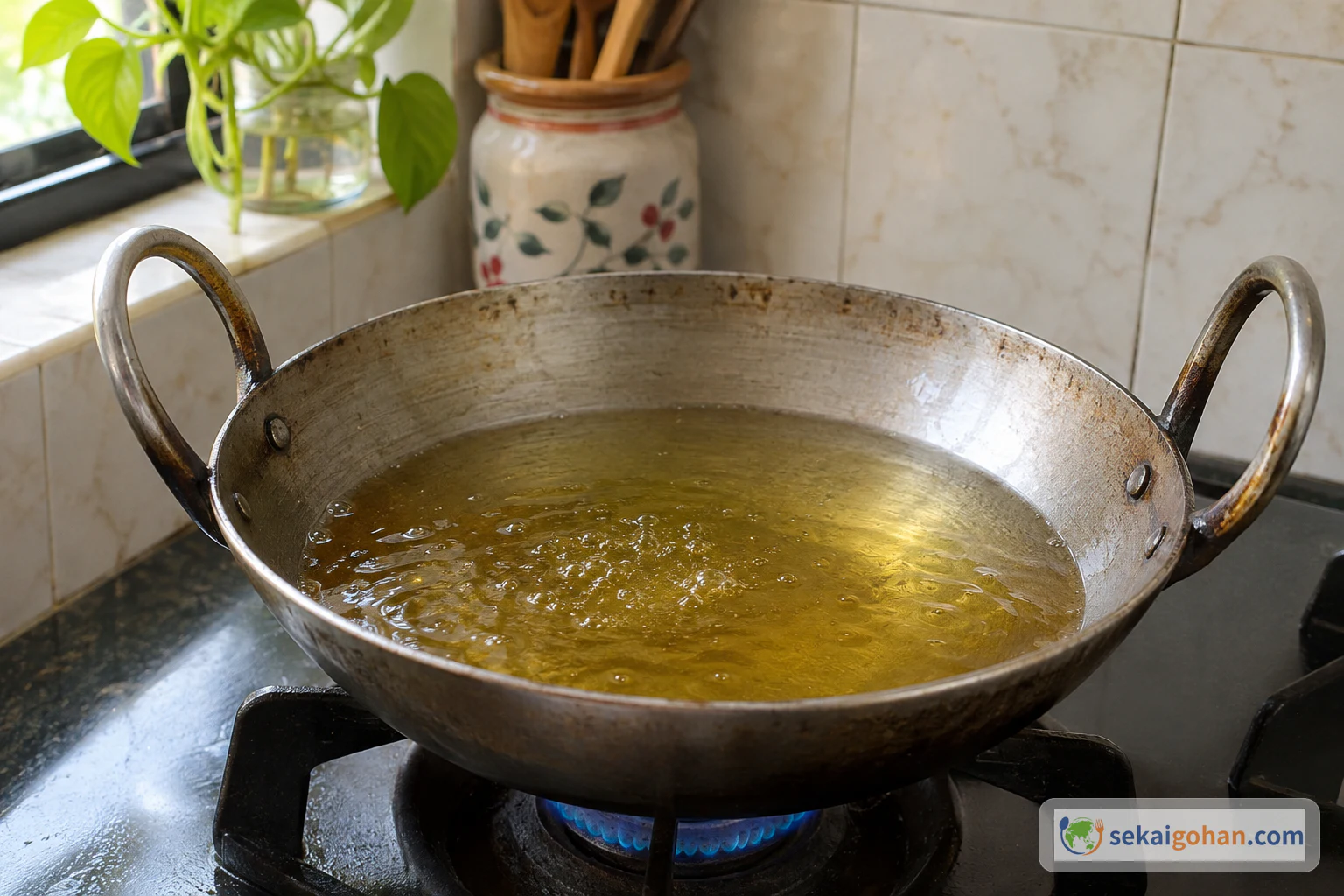
The oil sits well below the rim of the pan 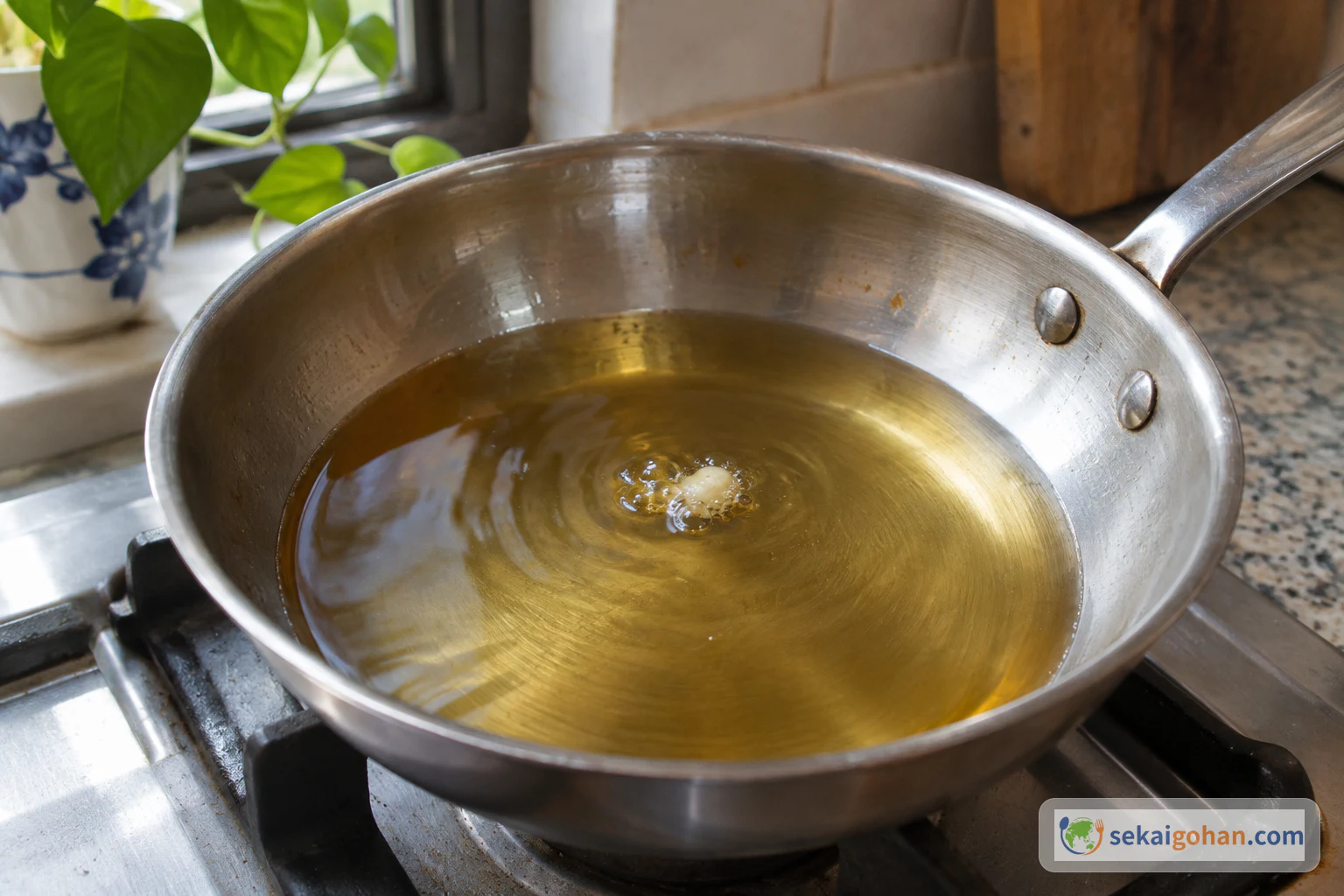
The test drop bubbles lightly as it floats; a drop that sinks and stays means the oil needs more heat 8Fill, twist and snip the bag
Stand the bag in a clean, deep vessel on the counter, away from the stove, and spoon the batter in. Twist the top of the bag closed so the batter is pushed down toward the point. Snip one small lower corner with scissors. The bag is ready when it feels firm in your hand and the batter sits right at the hole.
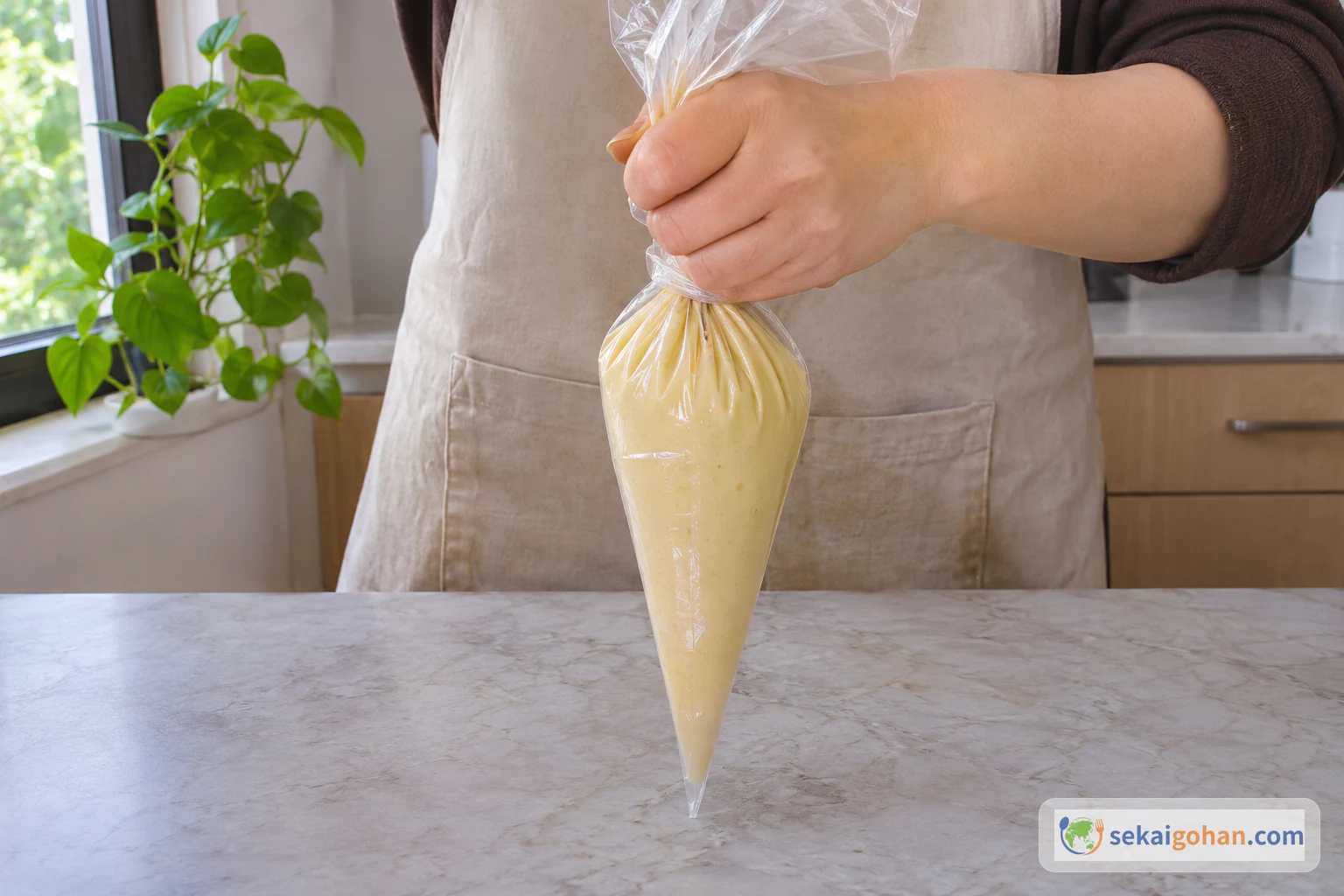
The point stays sealed while you twist; the hole comes last 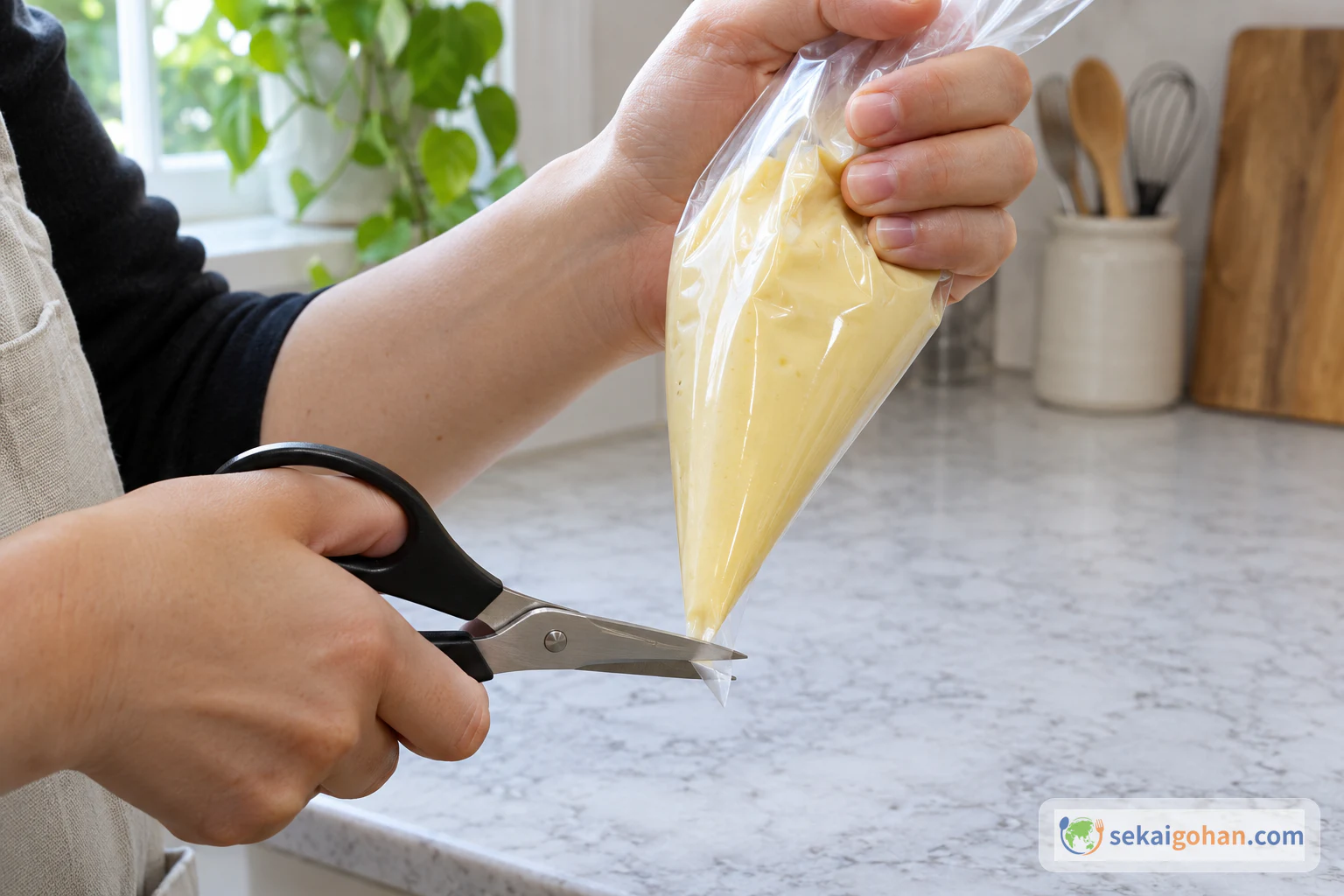
Cut only the very tip of the corner 9Pipe the spirals into the oil
Hold the bag above the hot oil with your hands well clear of it. Squeeze steadily and pipe a loose spiral, round and round from the centre outward. Leave space so no spiral touches the next, and pipe only as many as the pan holds with room around each. The strands set in the oil almost at once and the spiral holds together.
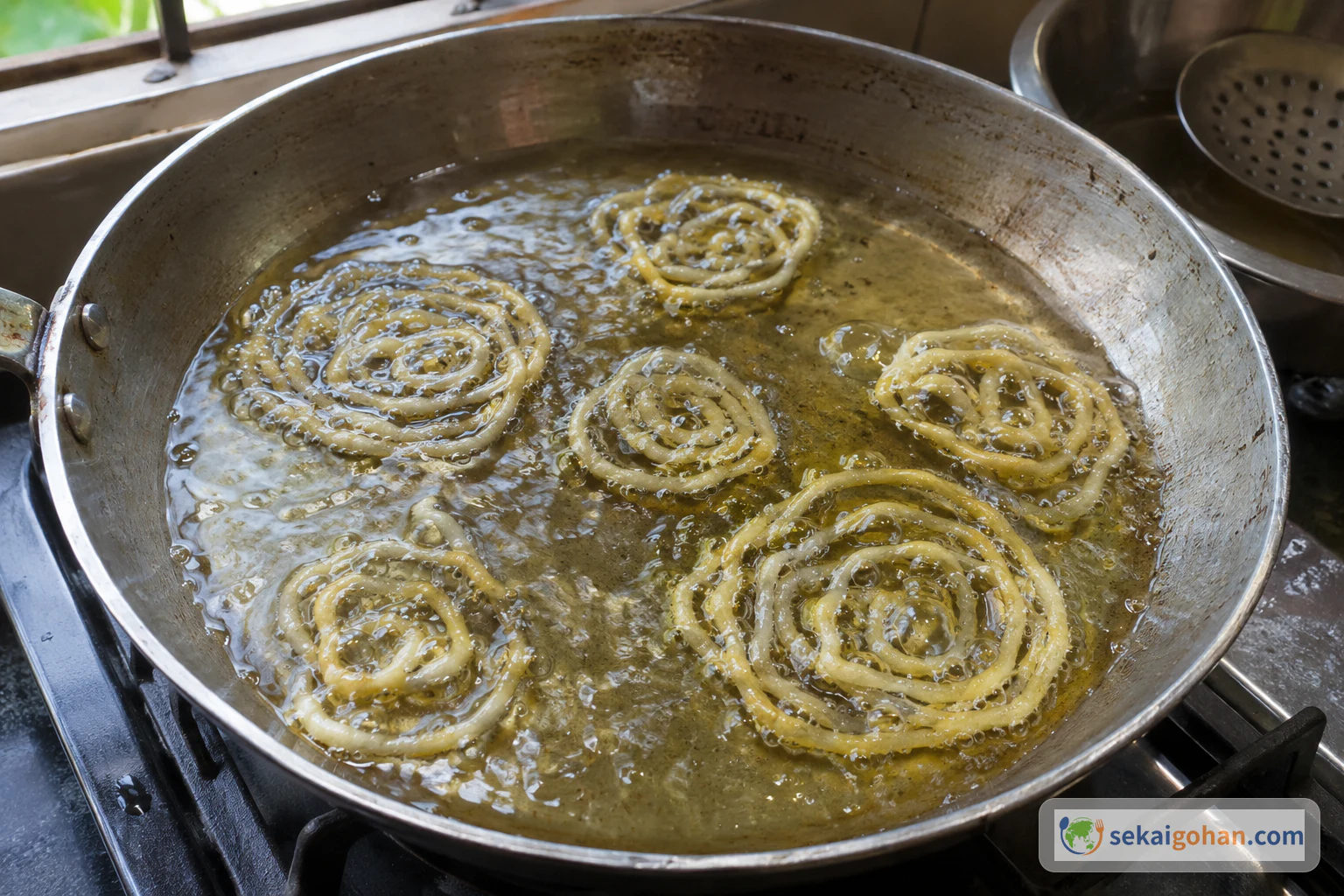
Open oil around every spiral keeps them from fusing into one piece 10Lower the heat and turn
Once the spirals are in, turn the heat down to medium. Let the underside fry while the top stays pale. Slide the slotted spoon under each spiral and turn it over in one movement. The side that comes up is light brown.
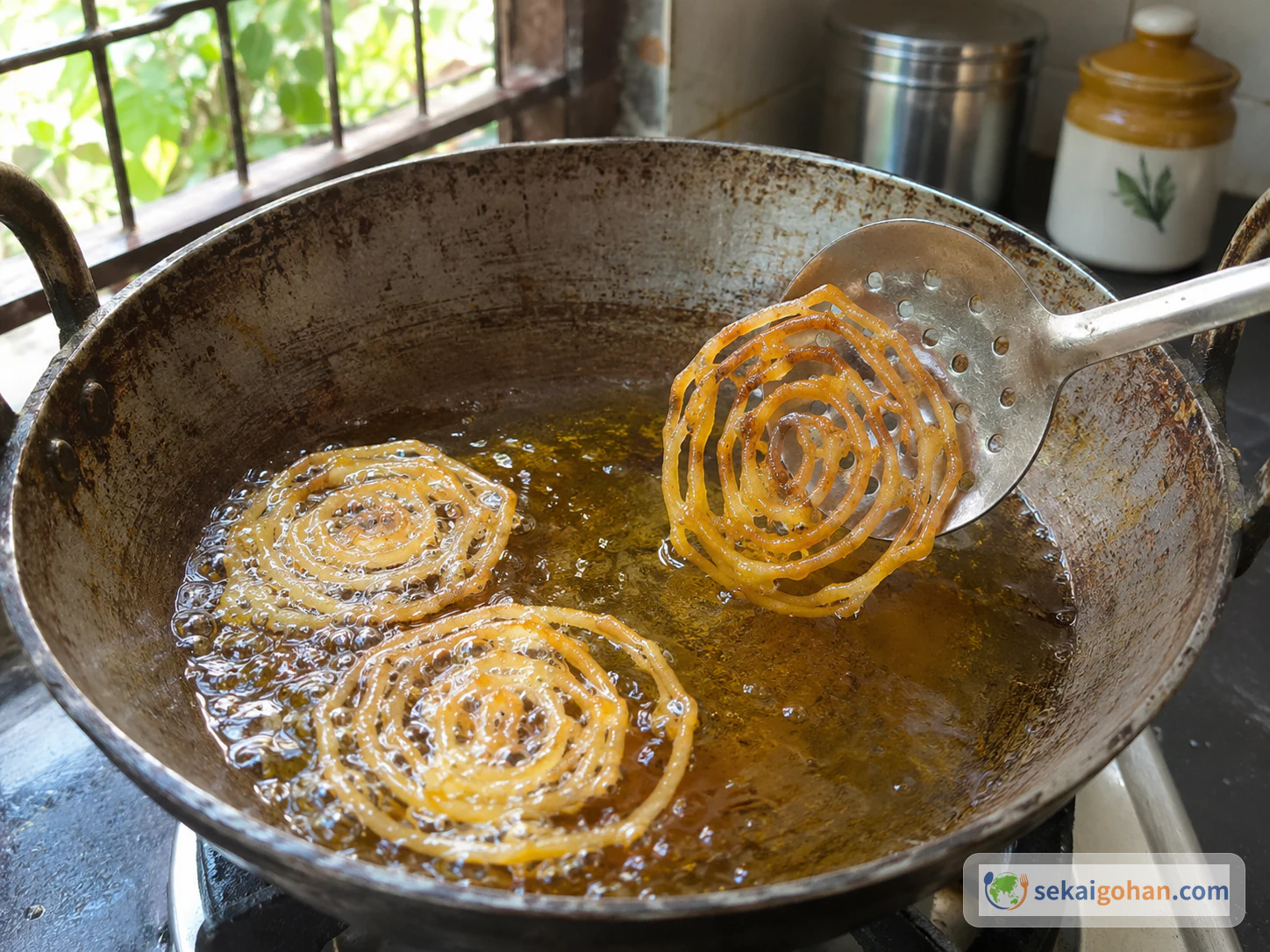
Lift from underneath so the coil stays whole 11Fry both sides light brown and lift out
Fry the second side until it matches the first. Watch the colour rather than the clock. When both sides are an even light brown with no dark patches, lift each spiral out of the oil with the slotted spoon.
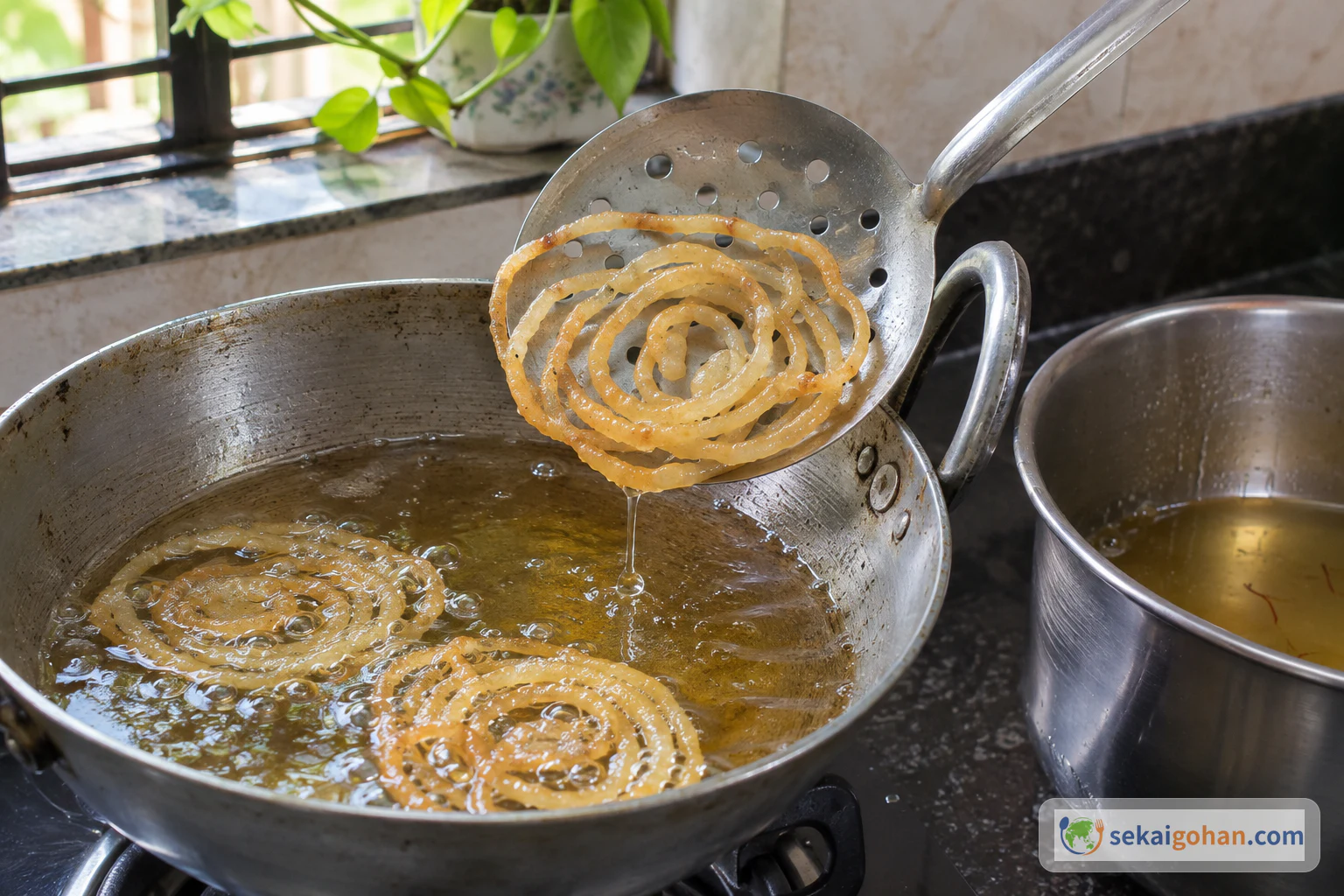
Keep the syrup pan close but separate from the frying pan 12Drain the oil and lower into the syrup
Hold the spiral on the slotted spoon above the frying pan and let the oil drip back. Wait until the dripping slows to almost nothing. Lower the spiral into the warm syrup. It is in properly when syrup surrounds and wets the strands.
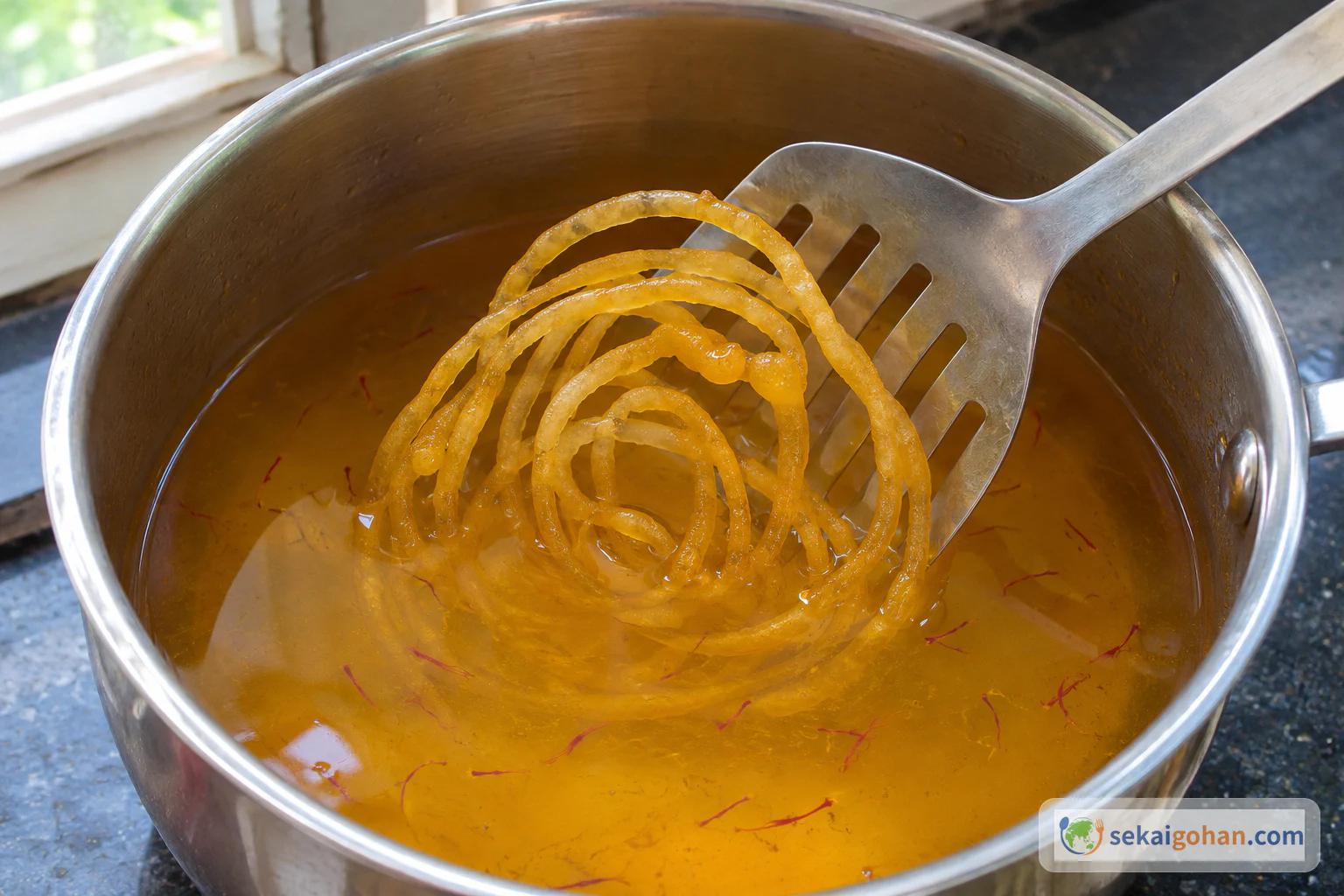
The lower strands disappear under the syrup first 13Soak for about a minute and lift
Leave the spirals in the warm syrup for about 1 minute. Fry the next batch while they soak if your pan and hands allow it. Lift each spiral out with the slotted spoon. It comes up glossy all over.
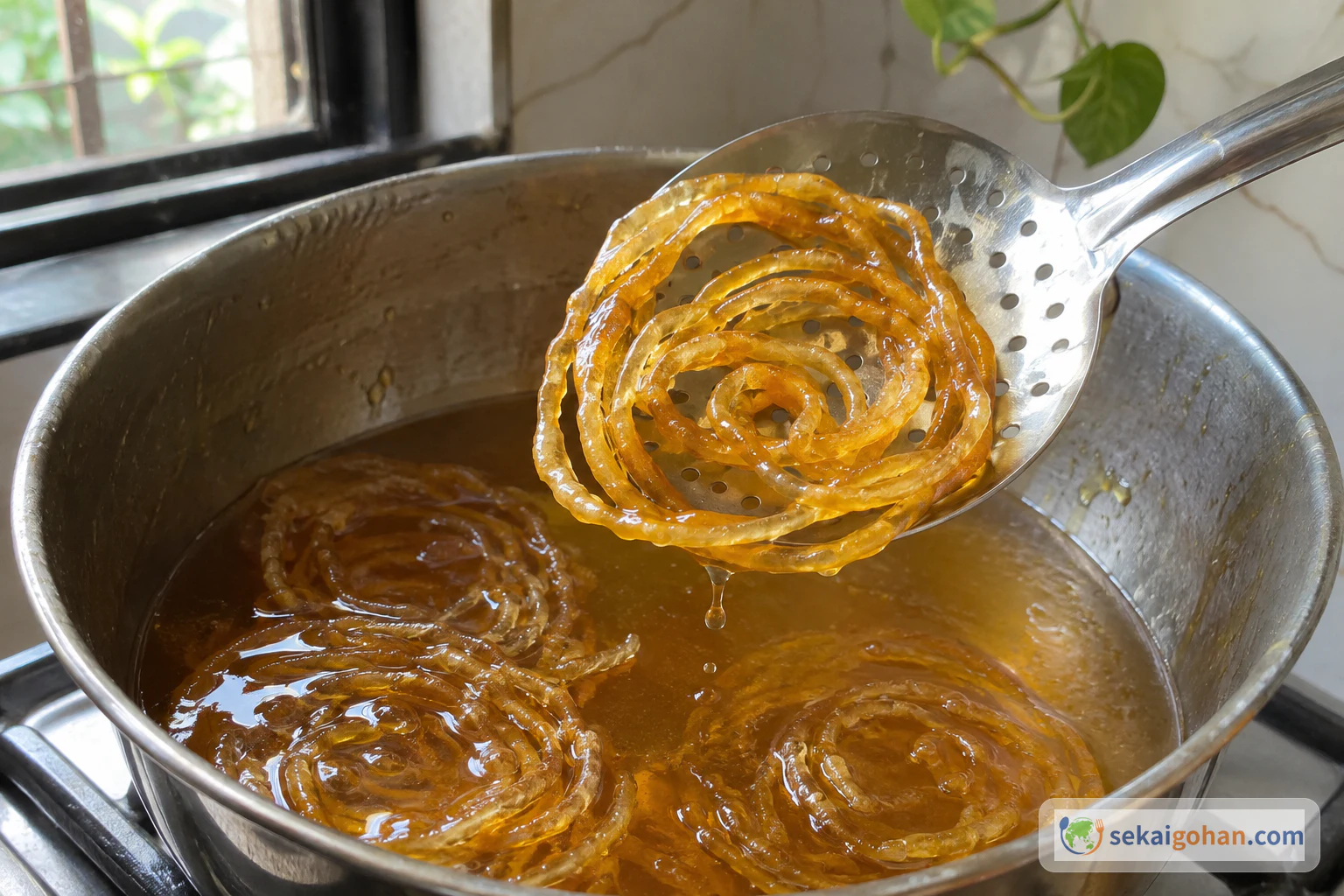
A shine across the whole coil means the syrup has reached every strand 14Drip off the extra syrup and serve warm
Hold the spiral above the syrup pan and let the extra syrup run back. When the stream turns to slow drops, move it to a plain plate. Serve the jilapi while they are still warm. Go back to step 9 for the next batch until the batter is used up.
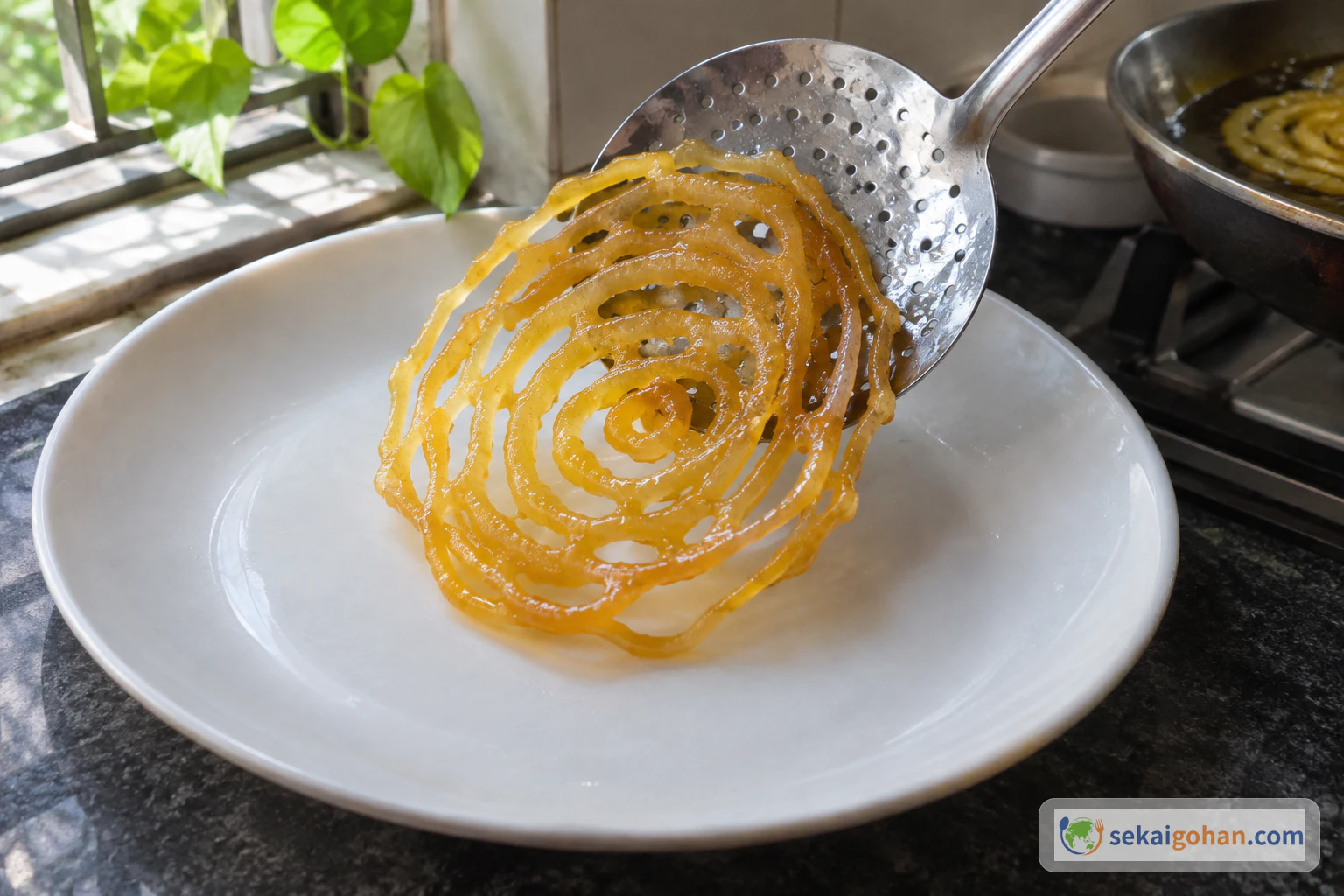
Plate each spiral flat so the coils keep their shape