Ingredients and steps on one page. Print it, or choose “Save as PDF” in the print dialog.
Sekai Gohan
Madhubhat: Chattogram Sweet Rice Sweetened with Sprouted Paddy
Ingredients
| Ingredient | Amount | Role |
|---|---|---|
| Bini rice (বিন্নি চাল) | about 2¼ lb (1 kg) | The sticky body of the dish |
| Atap rice (আতপ চাল), white, not parboiled | about 1 lb 2 oz (500 g) | The second rice in the gruel |
| Jala rice flour (জালা চালের গুঁড়া), coarse sprouted-paddy flour | about 7 oz (200 g), about 3 cups | Sweetens and thickens the rice overnight |
| Cow's milk | about 2¼ lb (1 kg) | Richness, in households that add it |
| Sugar | about 2¼ lb (1 kg) | Extra sweetness, in households that add it |
| Coconut (নারকেল), freshly grated | to taste | Topping |
| Bay leaves | a few | Aroma at serving |
| Salt | a little | Balances the sweetness |
| Raisins or nuts | as needed, optional | Topping |
Steps
1Make the jala flour
Soak the paddy in water until small shoots appear. Spread the sprouted grain on a tray and dry it fully. Keep it covered for 10 to 15 days, then grind it coarse. The flour is ready when it is beige and gritty, with visible specks.
2Cook the rice to a thin gruel
Put the bini and atap rice in the large pot with plenty of water. Bring it to a boil, then simmer, stirring now and then with the wooden paddle so the sticky rice does not catch on the bottom. Stop when the grains are completely soft and the pot moves like a loose, thin porridge, not a set pot of rice.
3Stir in the jala flour while hot
Take the pot off the heat and work straight away while the rice is hot. Scatter the jala flour over the whole surface instead of dropping it in one heap. Stir with the wooden paddle, lifting from the bottom, until no dry patches or pockets of flour remain. The mixture turns an even, faint beige.
Heat matters hereThe flour must meet hot rice.
4Add sugar and milk, if using
If you are making the version with sugar and milk, add the sugar and pour in the milk now. Stir slowly and steadily until the sugar dissolves and the mixture is smooth. When it is done, it looks creamy and off-white, and the paddle shows no grit from undissolved sugar. Skip this step for the version sweetened only by the flour.
5Seal the pot overnight
Cover the mouth of the pot with a clean cloth or plastic sheet and tie it tight around the rim. Set the lid on top so no steam escapes. Leave it undisturbed for 10 to 12 hours, overnight.
6Uncover in the morning and check the texture
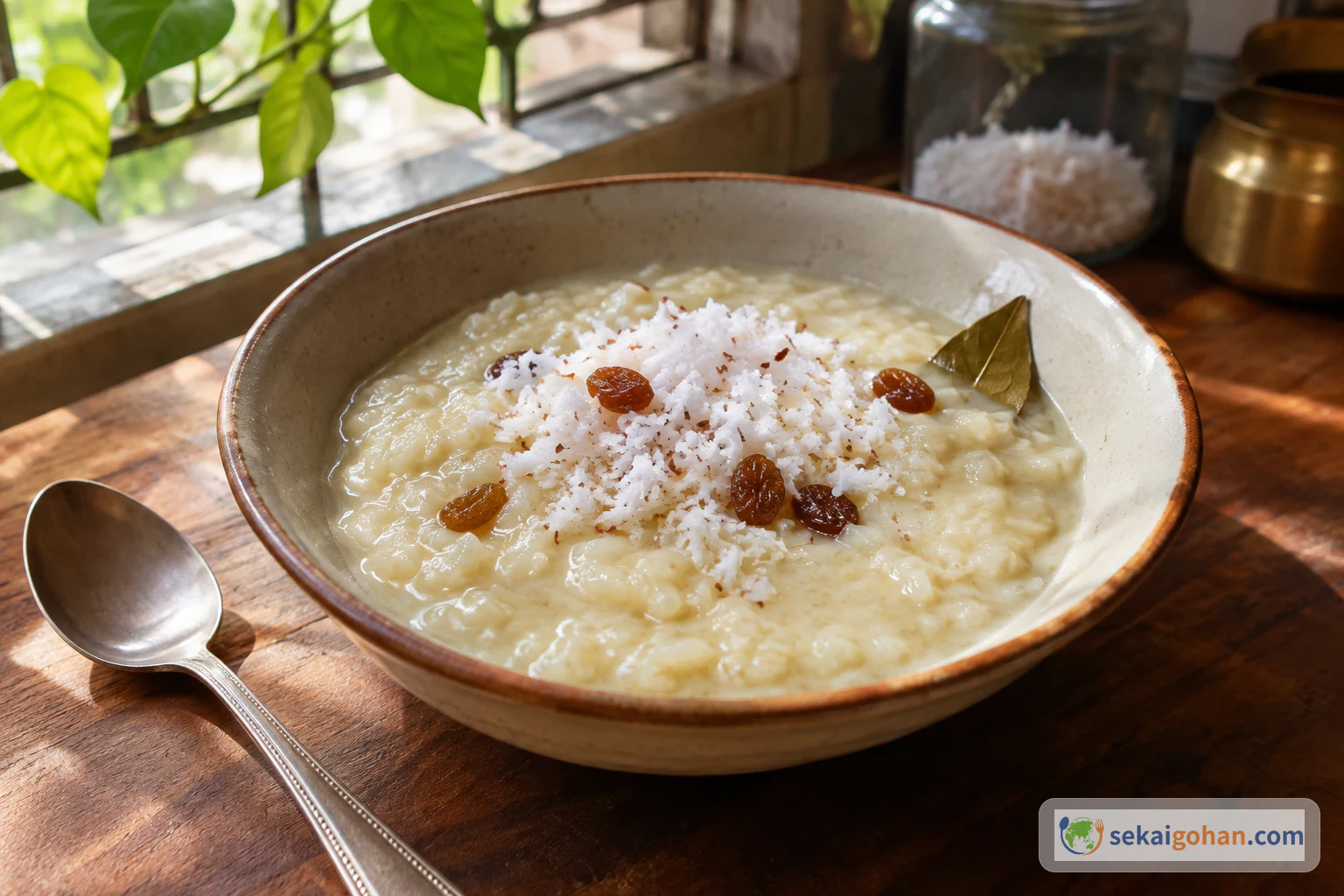
Untie the cloth in the morning and look at the surface. Lift a spoonful and watch it fall back. Good madhubhat is thick like payesh or firni, glossy, and drips slowly. It smells sweet and clean. A sharp sour smell or taste means it has turned.
7Garnish and serve
Ladle the rice into bowls. Scatter freshly grated coconut and raisins over each bowl, add nuts if you like, and tuck in a bay leaf. Taste and add a little salt if the sweetness feels flat. Serve right away, while the coconut is still crisp and white against the rice.
The two-hour windowOnce the pot is open, eat the madhubhat within about two hours. After that it starts to sour.