Madhubhat: Chattogram Sweet Rice Sweetened with Sprouted Paddy

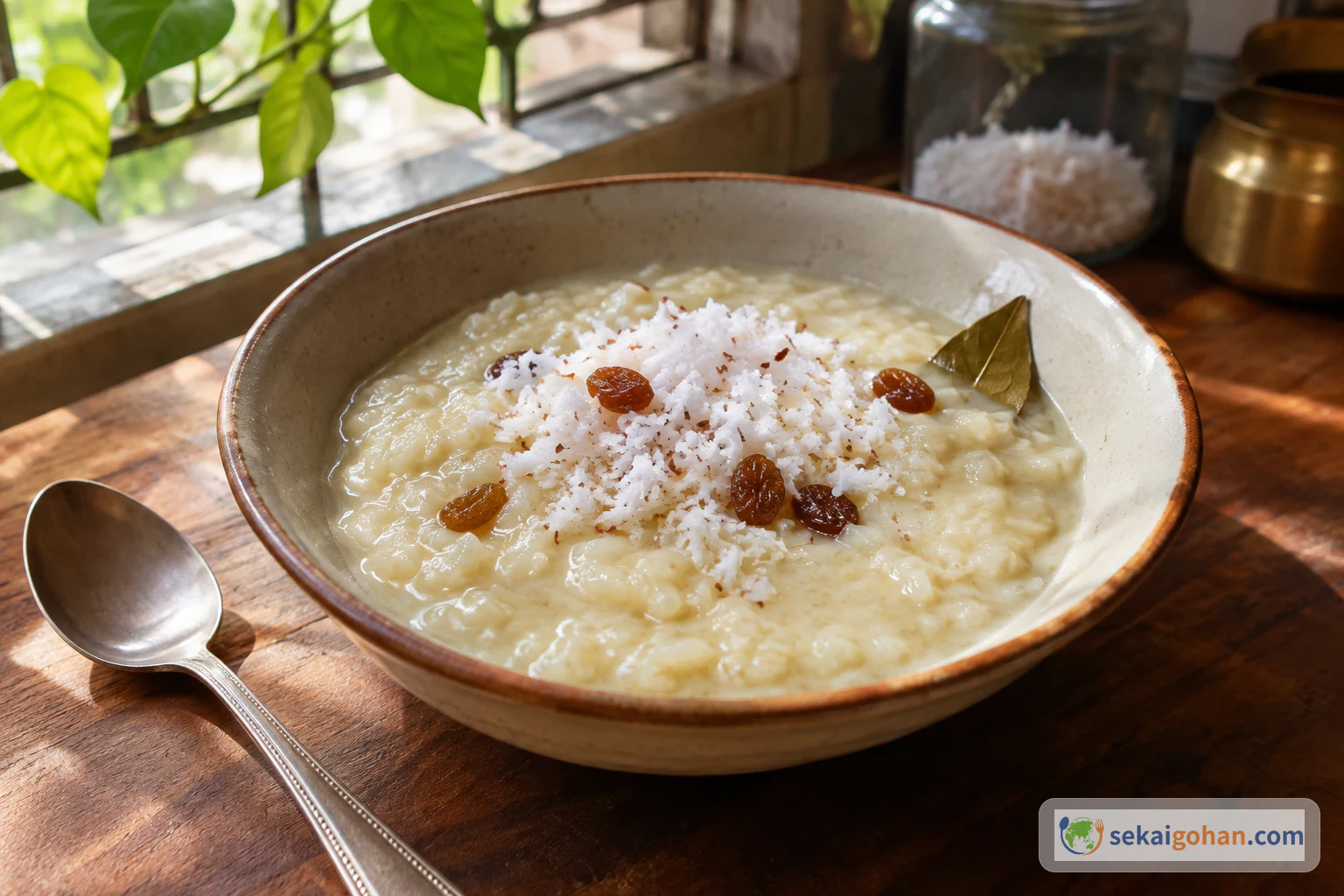
Finished madhubhat in a shallow bowl, thick and pale like rice pudding, topped with grated coconut, raisins and a bay leaf on a morning table
Level
Advanced
Cuisine
Bangladeshi

Madhubhat is Chattogram's sweet rice, sweetened by sprouted-paddy jala flour, not honey. Learn the overnight rest, the payesh-like cue and its safety limits.

Cooking flow

Cooking steps

STEP 11 / 7

Make the jala flour

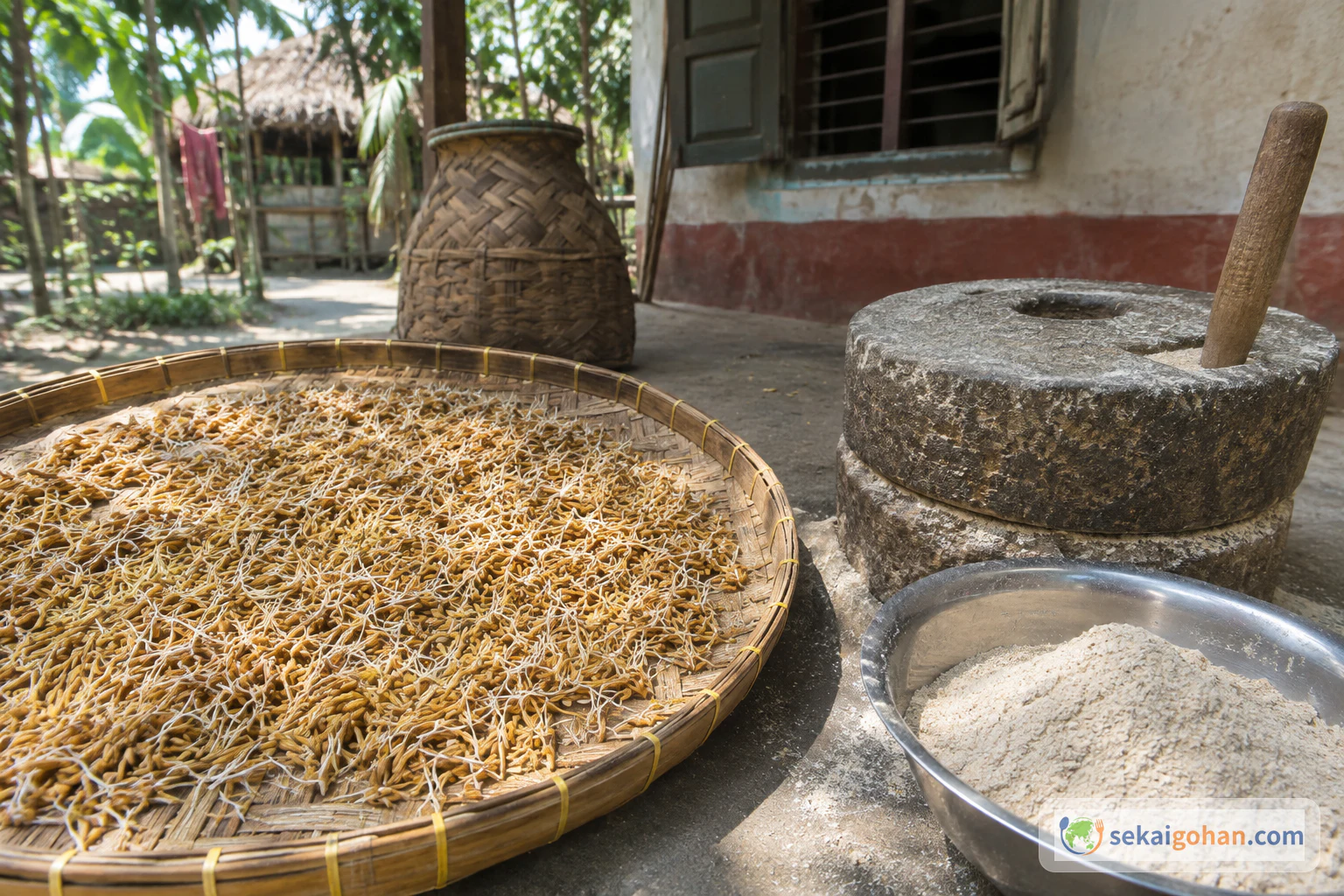
Making jala flour: sprouted paddy drying on a bamboo tray beside a stone grinder and coarse flour
The shoots stay short.

Soak the paddy in water until small shoots appear. Spread the sprouted grain on a tray and dry it fully. Keep it covered for 10 to 15 days, then grind it coarse. The flour is ready when it is beige and gritty, with visible specks.

STEP 22 / 7

Cook the rice to a thin gruel

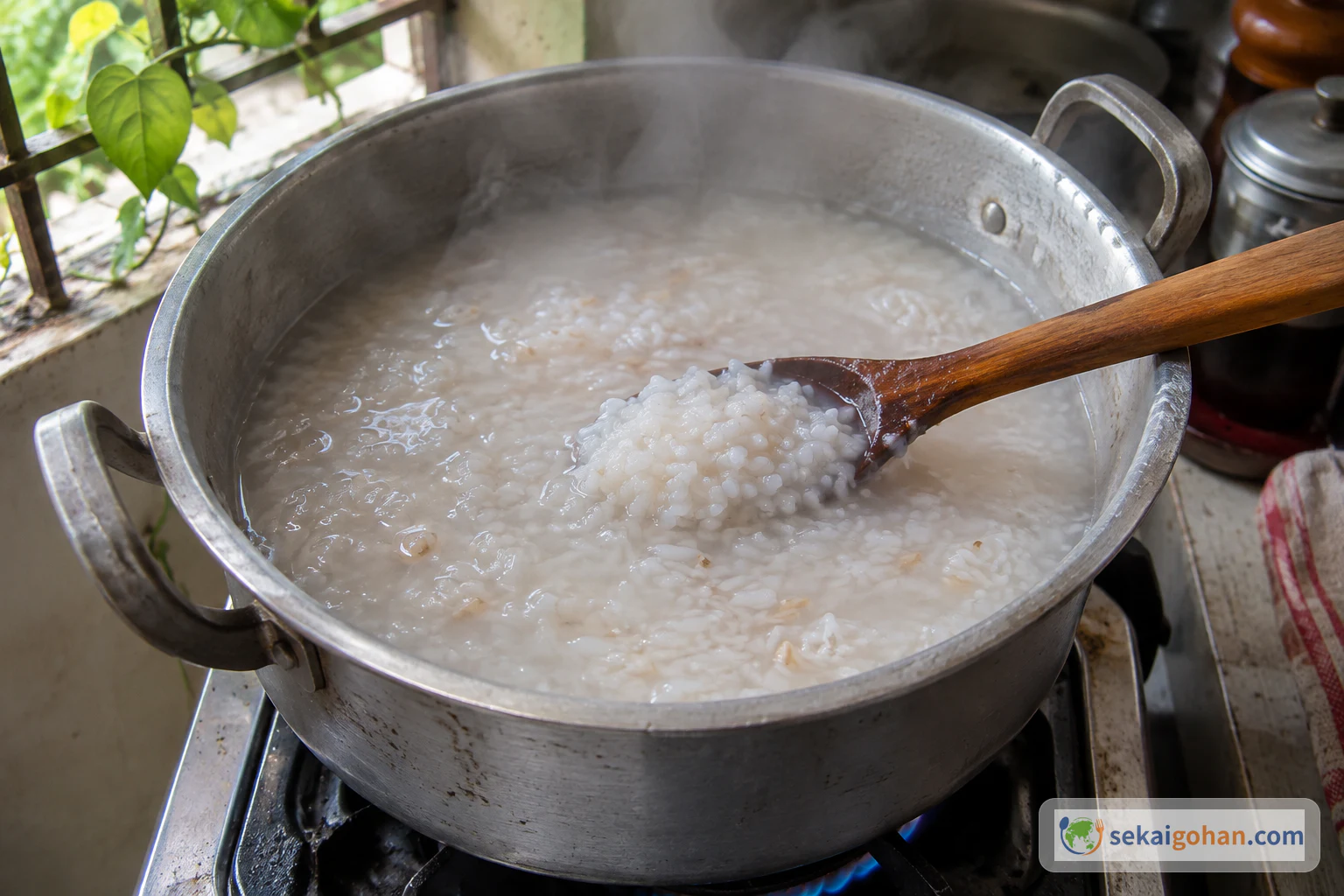
Bini and atap rice simmering in plenty of water to a thin gruel
There should still be free liquid moving between the grains when you take it off the heat

Put the bini and atap rice in the large pot with plenty of water. Bring it to a boil, then simmer, stirring now and then with the wooden paddle so the sticky rice does not catch on the bottom. Stop when the grains are completely soft and the pot moves like a loose, thin porridge, not a set pot of rice.

STEP 33 / 7

Stir in the jala flour while hot

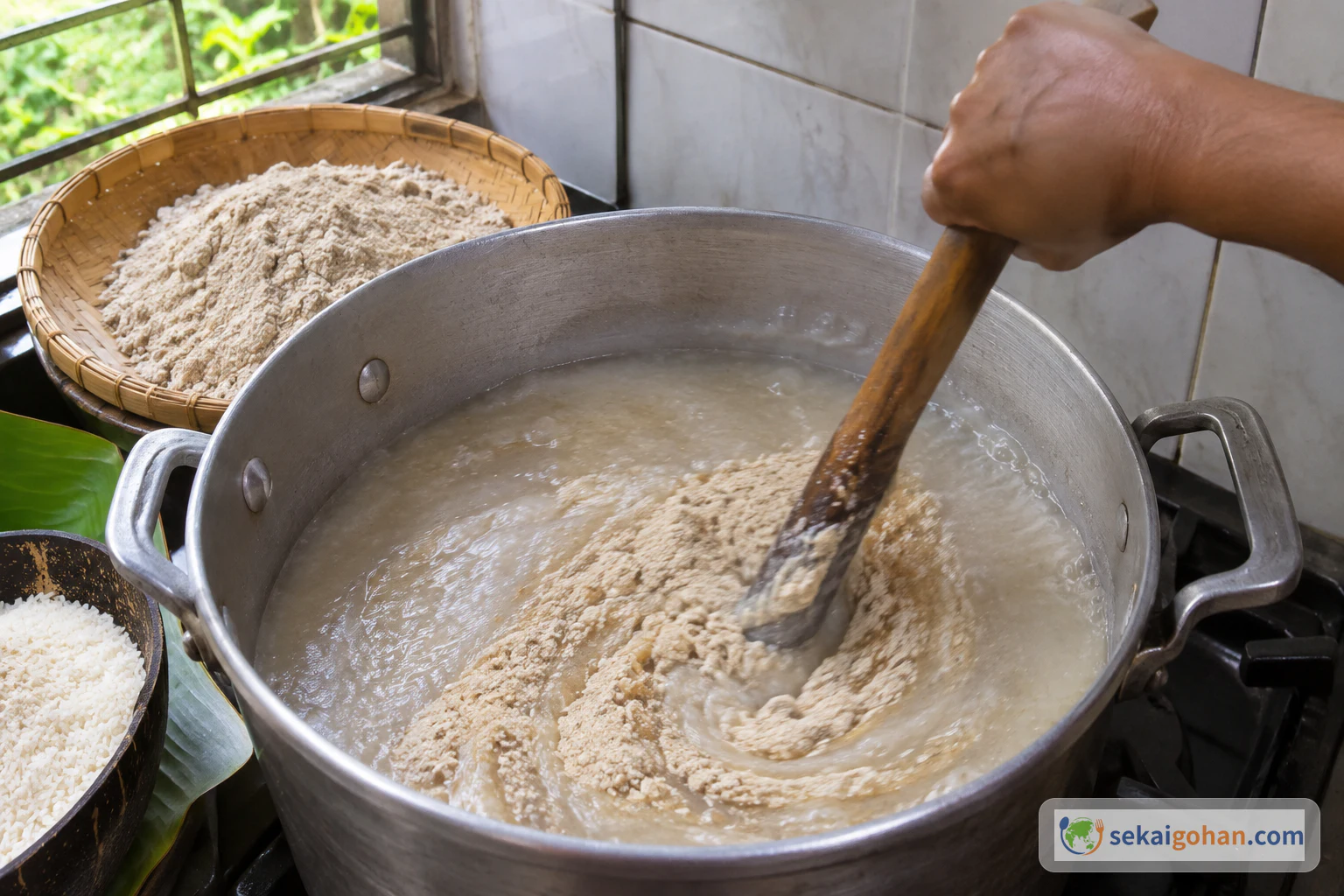
Stirring coarse jala rice flour into hot thin rice gruel with a wooden paddle
The gruel swirls freely around the paddle.

Take the pot off the heat and work straight away while the rice is hot. Scatter the jala flour over the whole surface instead of dropping it in one heap. Stir with the wooden paddle, lifting from the bottom, until no dry patches or pockets of flour remain. The mixture turns an even, faint beige.

Heat matters here

The flour must meet hot rice.

STEP 44 / 7

Add sugar and milk, if using

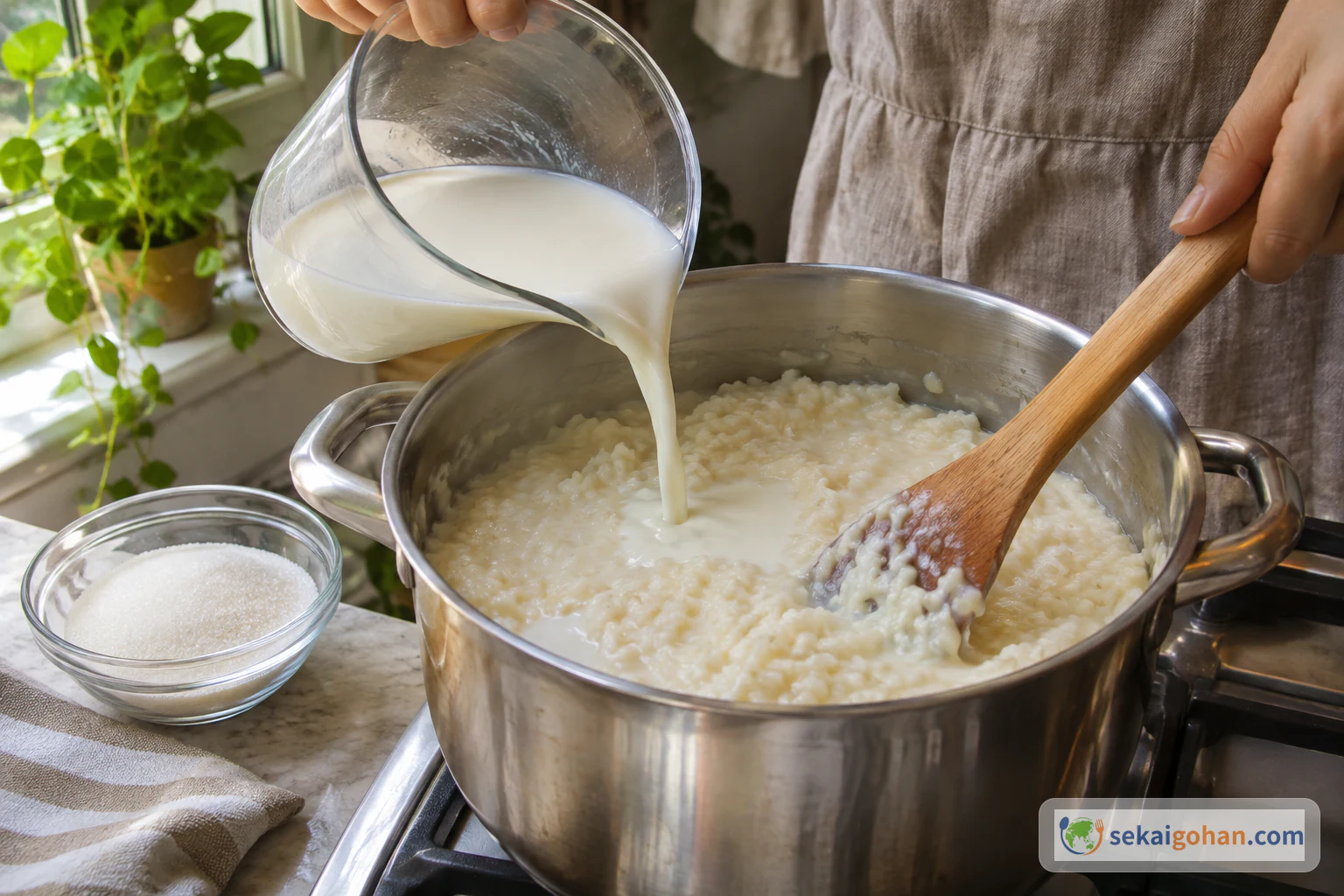
Milk poured into the rice mixture with sugar in a bowl beside it
Stir while the milk goes in so it blends into the rice

If you are making the version with sugar and milk, add the sugar and pour in the milk now. Stir slowly and steadily until the sugar dissolves and the mixture is smooth. When it is done, it looks creamy and off-white, and the paddle shows no grit from undissolved sugar. Skip this step for the version sweetened only by the flour.

STEP 55 / 7

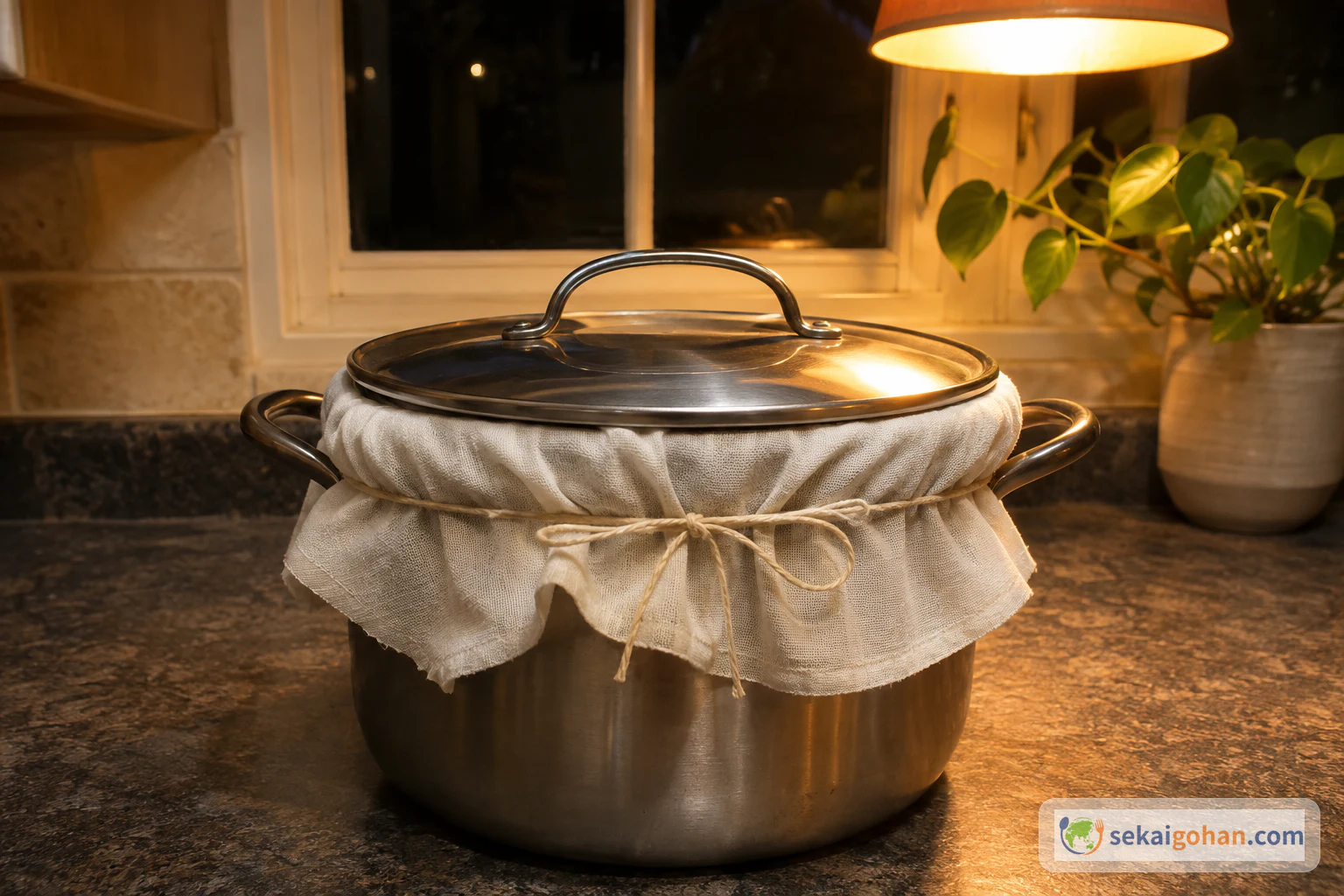
Seal the pot overnight

The pot sealed with a cloth tied around the rim and the lid on, resting overnight
Tie the cloth before the lid goes on

Cover the mouth of the pot with a clean cloth or plastic sheet and tie it tight around the rim. Set the lid on top so no steam escapes. Leave it undisturbed for 10 to 12 hours, overnight.

STEP 66 / 7

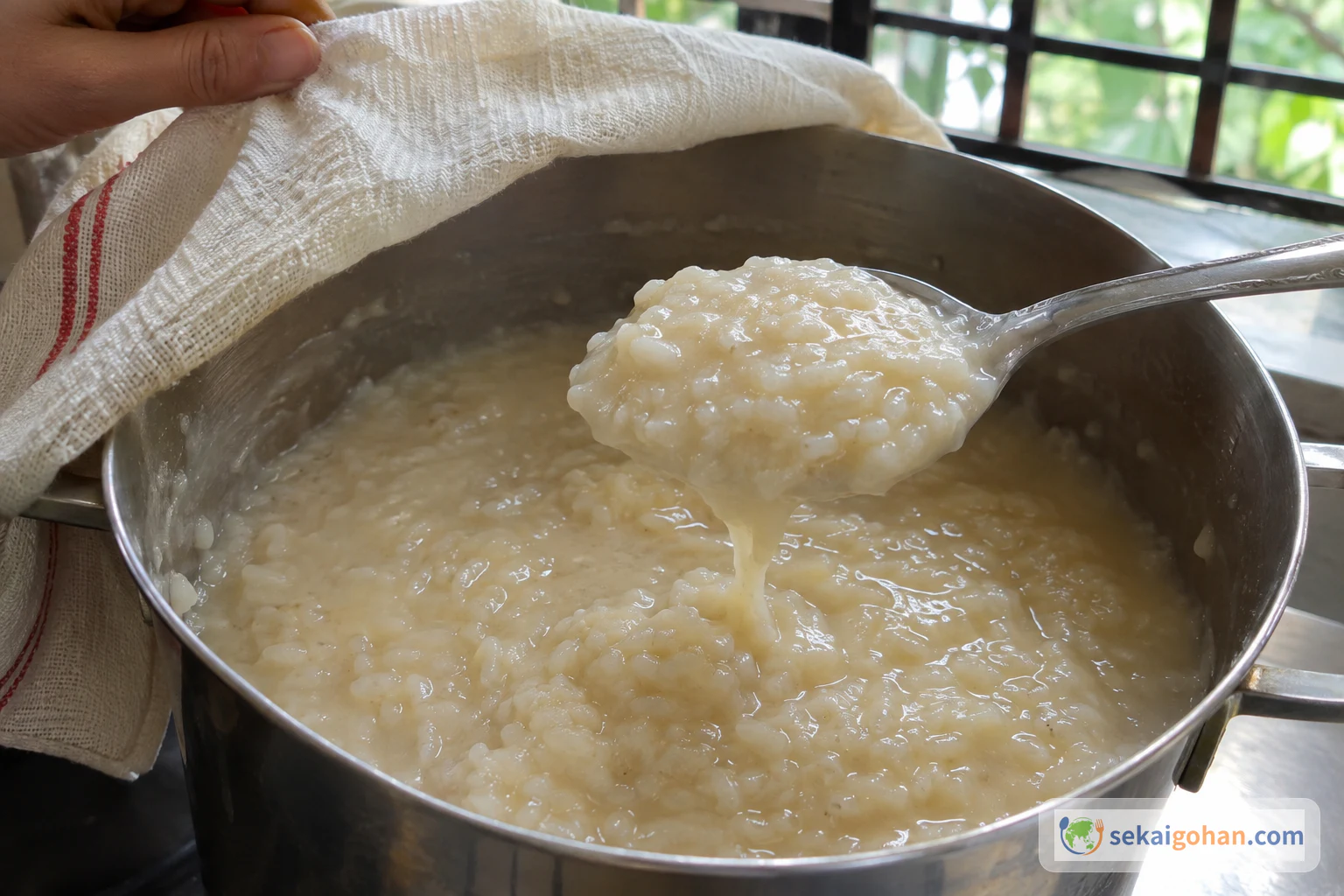
Uncover in the morning and check the texture

Morning: the cloth lifted to show glossy, thickened pale rice dripping slowly from a spoon
You can still see some grain texture in the spoonful. It should not be a smooth cream

Untie the cloth in the morning and look at the surface. Lift a spoonful and watch it fall back. Good madhubhat is thick like payesh or firni, glossy, and drips slowly. It smells sweet and clean. A sharp sour smell or taste means it has turned.

STEP 77 / 7

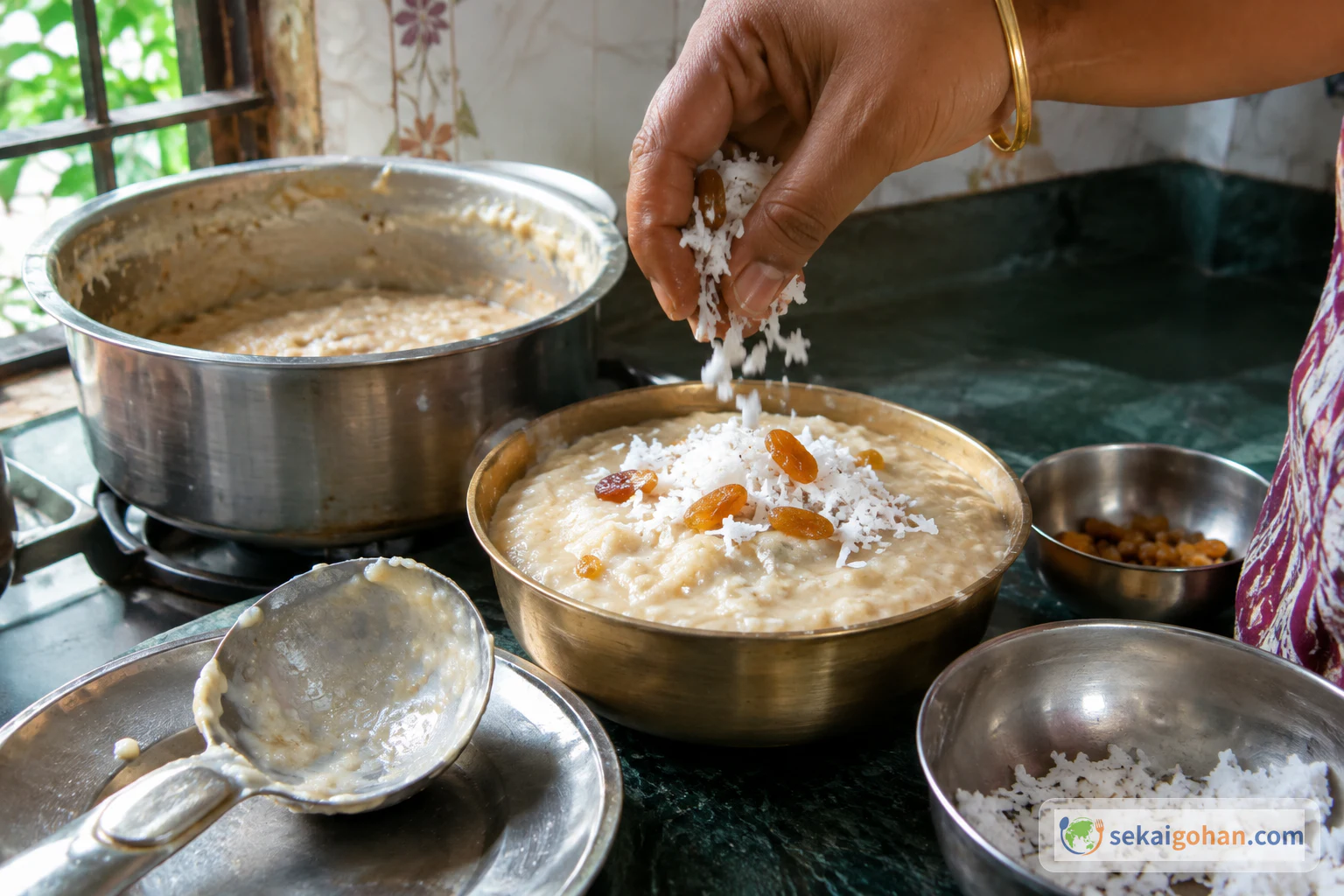
Garnish and serve

Ladling madhubhat into a bowl while a hand scatters grated coconut over the raisins
Add the coconut at the last moment so it does not soak up moisture and go limp

Ladle the rice into bowls. Scatter freshly grated coconut and raisins over each bowl, add nuts if you like, and tuck in a bay leaf. Taste and add a little salt if the sweetness feels flat. Serve right away, while the coconut is still crisp and white against the rice.

The two-hour window

Once the pot is open, eat the madhubhat within about two hours. After that it starts to sour.

0 / 0
Ingredients

Ingredients

1 / 1

Ingredients

Ingredient Amount Role
Bini rice (বিন্নি চাল) about 2¼ lb (1 kg) The sticky body of the dish
Atap rice (আতপ চাল), white, not parboiled about 1 lb 2 oz (500 g) The second rice in the gruel
Jala rice flour (জালা চালের গুঁড়া), coarse sprouted-paddy flour about 7 oz (200 g), about 3 cups Sweetens and thickens the rice overnight
Cow's milk about 2¼ lb (1 kg) Richness, in households that add it
Sugar about 2¼ lb (1 kg) Extra sweetness, in households that add it
Coconut (নারকেল), freshly grated to taste Topping
Bay leaves a few Aroma at serving
Salt a little Balances the sweetness
Raisins or nuts as needed, optional Topping
0 / 0

In the morning the cloth comes off the pot, and the thin rice gruel from the night before has thickened. It is now glossy, pale and slow to drip from the spoon, and it is sweet. Madhubhat comes from Chattogram, in southeastern Bangladesh. Its name sounds like "honey rice", but no honey goes into it. The sweetness comes from jala flour, a coarse meal ground from sprouted paddy. Stirred into hot rice and left overnight, the flour turns the rice soft and sweet, close to payesh or firni. People eat it in the morning with freshly grated coconut and a few raisins.

Honey Rice Without Honey: A Chattogram Summer Dish

The whole dish depends on jala flour, and without it there is no madhubhat. Paddy (rice still in its husk) is soaked until it sprouts, dried, kept covered for days and then ground coarse. That flour does the work honey would do in a dish named for honey. Whether anything else should sweeten the pot is an open question. Some Chattogram kitchens add sugar and milk along with the flour. Others add no sugar at all and let the sprouted grain carry all the sweetness.

The name

Madhu means honey and bhat means rice, so the name reads as "honey rice". No honey goes into the sprouted-flour version. A richer festive dish is also described under the name Modhu Vaat, made with coconut milk, ghee, cinnamon, cardamom and date-palm jaggery or honey. This article follows the sprouted-flour madhubhat.

The season and the gift

Madhubhat belongs to the wet months, Asharh through Bhadra, roughly June to September. It is said to taste sweetest in Bhadra. It also travels as a gift. In the first year of a marriage, a pot of madhubhat goes to the in-laws. One belief says it should be cooked quietly at night. The custom is fading, and fewer households now go through the days of sprouting and drying the paddy.

Where the dish began is not settled. It has been linked to Sufi traditions and to the Arakan period, but neither link is documented. You can learn more about the country's food on the Bangladesh page.


Ingredients
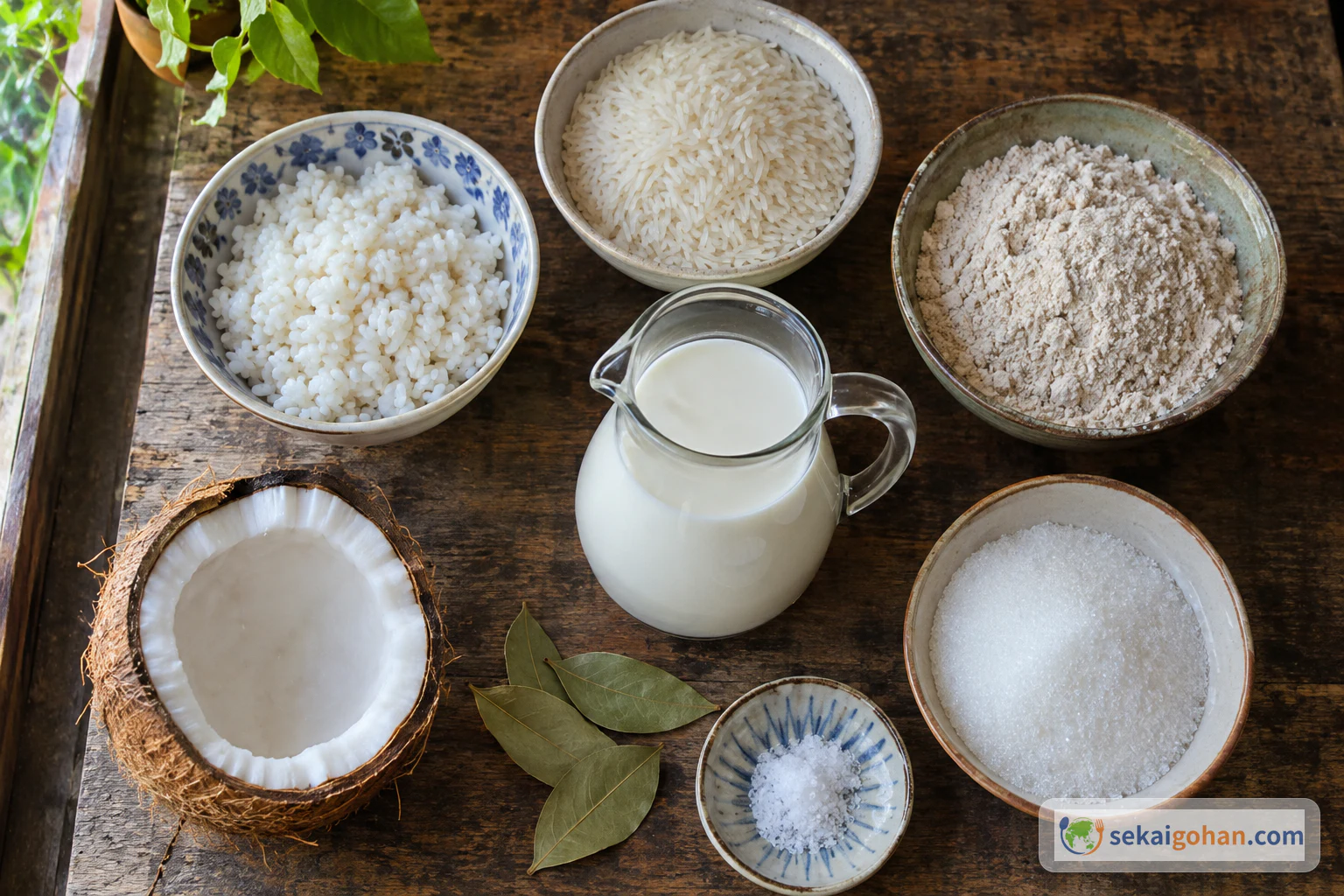
The ingredients laid out: bini rice, atap rice, jala rice flour, milk, sugar, coconut, bay leaves and salt
Jala flour is the beige, coarse bowl. It should feel gritty between your fingers, not powdery

These amounts make one large batch. Leave out the milk and sugar if you are making the version sweetened only by the flour.

Allergen information

This dish can contain milk (when added), coconut and, if used as a topping, nuts.

Equipment

  • A large, deep pot with a lid
  • A wooden paddle or long wooden spoon
  • A clean cloth or plastic sheet, plus string to tie it around the rim
  • A flat tray (bamboo is traditional) for drying the sprouted paddy
  • A stone grinder or mill that grinds coarse

Choosing the Rice and the Flour

Jala flour has no replacement. Rice koji and malt powder are different products. Do not treat either one as the same thing. The flour is made from sprouted paddy as described in step 1. Without it the dish is not madhubhat.

Bini is a sticky rice, and it gives the dish its clinging texture. When bini is hard to find, fragrant new-crop atap rice takes its place. Atap is raw white rice that has not been parboiled. Do not use parboiled rice. Grate the coconut fresh on the morning you serve. Its clean, milky crunch is the contrast the soft rice needs.

Grind coarse

Stop grinding while the jala flour is still gritty. Do not grind it too fine.


Method

The work happens over days. The jala flour is made well ahead: the paddy sprouts, dries and then sits covered for 10 to 15 days before you grind it. On cooking day the rice is boiled to a thin gruel in the evening. The flour goes in while the rice is hot, and the pot is sealed overnight. Serving happens in the morning, and the clock starts once the pot is opened.

Food safety: the overnight rest

Sealing cooked rice in a pot at room temperature for 10 to 12 hours carries a risk that bacteria such as Bacillus cereus grow in the warm rice. Steps 5 and 6 describe how madhubhat is made in Chattogram. Do not use them as a home method to copy.

When It Goes Wrong

What you see Why What to do
Sour taste The pot sat open too long, or the batch has turned Serve it soon after opening. Discard any pot that smells sharp and sour when you uncover it

Serving and Keeping

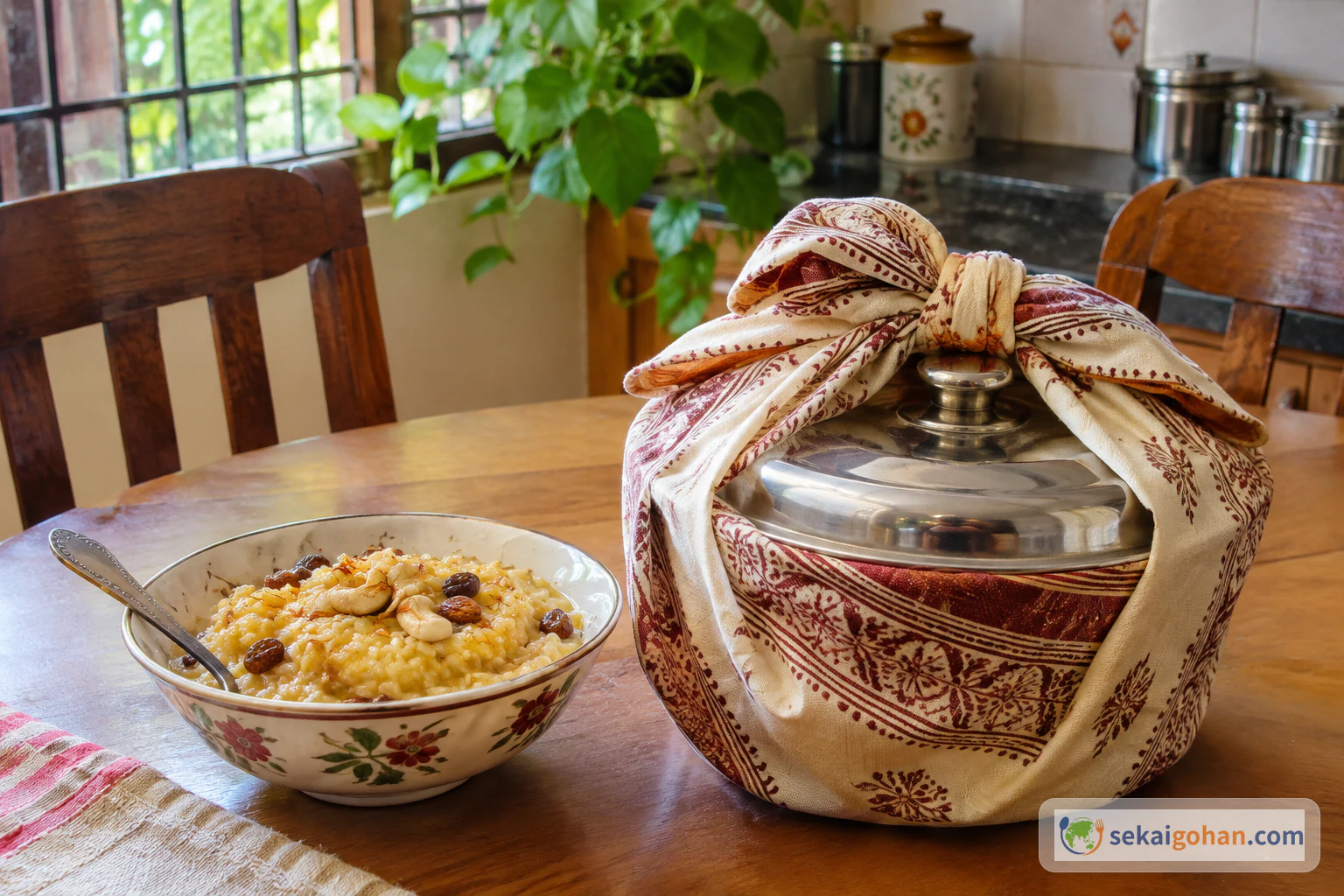
A breakfast bowl of madhubhat next to a lidded pot wrapped in cloth, ready to take to relatives
A warm bowl for the family and a wrapped pot for the in-laws

Madhubhat is a morning dish. It comes to the table as breakfast, in the bowl with coconut, raisins and bay leaf. In the first year of a marriage, a second pot goes out wrapped in cloth as a gift to the in-laws.

Variations

  • Flour only, no sugar or milk. The sweetness comes from the sprouted grain alone. The rice tastes cleaner and more of grain, and the colour stays paler.
  • With sugar and milk. The pot is richer and sweeter, and closer to a milk pudding.
  • Festive Modhu Vaat. Rice cooked with coconut milk, ghee, cinnamon, cardamom and date-palm jaggery or honey, with nuts and raisins. This is a different description of the name, not the sprouted-flour method used here.

Keeping

Serve what you need once the pot is open. Put any leftovers in a covered container and refrigerate them promptly.

Frequently asked questions

Should madhubhat be eaten warm or cold?

It is traditionally eaten warm, straight from the pot in the morning. Many people now chill it and eat it cold. Either way, it is the same dish.

Can I use rice koji or malt powder instead of jala flour?

No. Neither is jala flour, and the dish depends on that coarse sprouted-paddy meal. Make or buy the real flour.

Can I add sugar at the table?

Yes. In households that cook it without sugar, some people stir a little into their bowl as they eat. This lets each person choose how sweet their bowl is, while the pot keeps its grain sweetness.
Sources

  • Prothom Alo (opinion), "হারিয়ে যাচ্ছে রসনা জৌলুশে অনন্য চাটগাঁইয়া মধুভাত." Chattogram's payesh-like sweet rice and its Asharh–Bhadra season; jala flour as essential, and how it is made; batch amounts and method; eating within about two hours of opening; the gift to in-laws; origin undocumented. https://www.prothomalo.com/opinion/nzj3znuz50
  • The Business Standard (TBS News Bangla), "মধুভাত." No honey and no sugar in the pot, with sweetness from jala flour; bini or fragrant new atap rice; the method of stirring flour into hot rice and sealing overnight; warm or chilled serving; cooking at night and gifting. https://www.tbsnews.net/bangla/feature/news-details-338781
  • The Financial Express (Bangladesh), "Chatgaiyya dishes that you should try this monsoon." The festive Modhu Vaat made with coconut milk, ghee, spices and jaggery or honey. https://thefinancialexpress.com.bd/lifestyle/food/chatgaiyya-dishes-that-you-should-try-this-monsoon