Ingredients and steps on one page. Print it, or choose “Save as PDF” in the print dialog.
Sekai Gohan
Paravannam: Andhra Jaggery Rice Pudding Simmered in Milk
Ingredients
| Ingredient | Amount | Role |
|---|---|---|
| Whole milk | 4 cups (960 ml) | The body of the pudding and its milky flavor |
| Rice | ½ cup (120 ml) | Cooked very soft so it thickens the milk |
| Jaggery (bellam), grated | ¾ to 1 cup (180 to 240 ml) | The sweetness and the deep, caramel-like flavor |
| Water, for the syrup | ½ cup (120 ml) | Dissolves the jaggery into a syrup |
| Ground cardamom | ½ tsp (or about 4 green cardamom pods) | The fragrance |
| Ghee | 2 tbsp | Fries the nuts and raisins and perfumes the top |
| Cashews | 10 to 15 | Toasty crunch |
| Raisins | 1 to 2 tbsp | Soft, sweet bursts |
Steps
1Soak the rice and start the milk
Rinse the rice in several changes of water until the water runs clearer, then cover it with fresh water and leave it to soak. Rinse the heavy-bottomed pot, pour in the milk and set it over medium heat. Keep the rice soaking for the whole time the milk takes to come up to a boil. When small bubbles crowd the edges and the milk starts to rise, you are close.
2Cook the jaggery syrup and let it cool
While the milk heats, put the grated jaggery and the ½ cup (120 ml) water in a small saucepan over medium heat. Stir until the jaggery dissolves, then let it simmer until the syrup thickens slightly and feels a little sticky. Stop before it reaches string stage: lift some on a spoon and it should drip back, not pull into a thread. Take it off the heat and let it cool completely.
Hot syrupJaggery syrup is far hotter than boiling water and sticks to skin. Keep children away from the small pan, and never taste it from the spoon until it has cooled.
3Add the drained rice to the boiling milk
When the milk comes to a boil, drain the soaked rice in a sieve and tip it into the pot. Leave the lid off and keep the heat at medium. Every 4 to 5 minutes, stir with the wooden spoon right across the bottom, where the rice settles and catches. Keep going until the rice is very soft: a grain pressed between your fingers squashes flat with no hard core.
Stir the bottom, not the surfaceScorching starts as a thin brown layer on the base of the pot long before you smell it. Run the spoon flat along the bottom every time you stir, so the rice never sits still on the hottest spot.
4Mash a few grains and stop while it pours
Once the rice is very soft, press a few grains against the side of the pot with the back of a ladle and stir them back in. The crushed starch thickens the milk around the whole grains. Cook a little longer, until the pudding is slightly thick but still flows easily off the ladle, then turn off the heat. It thickens as it cools, so stop while it is still loose.
5Stir in the cardamom and the cooled syrup
With the heat still off, stir in the ground cardamom. Hold the fine-mesh strainer over the pot and pour about four-fifths of the cooled syrup through it, so any grit in the jaggery stays behind. Stir well, taste, and strain in the rest if you want it sweeter. The pudding turns an even pale caramel beige with no dark streaks.
Cold syrup, heat offJaggery can split hot milk. Adding the syrup completely cool, with the burner already off, keeps the pudding smooth.
6Fry the cashews and raisins in ghee
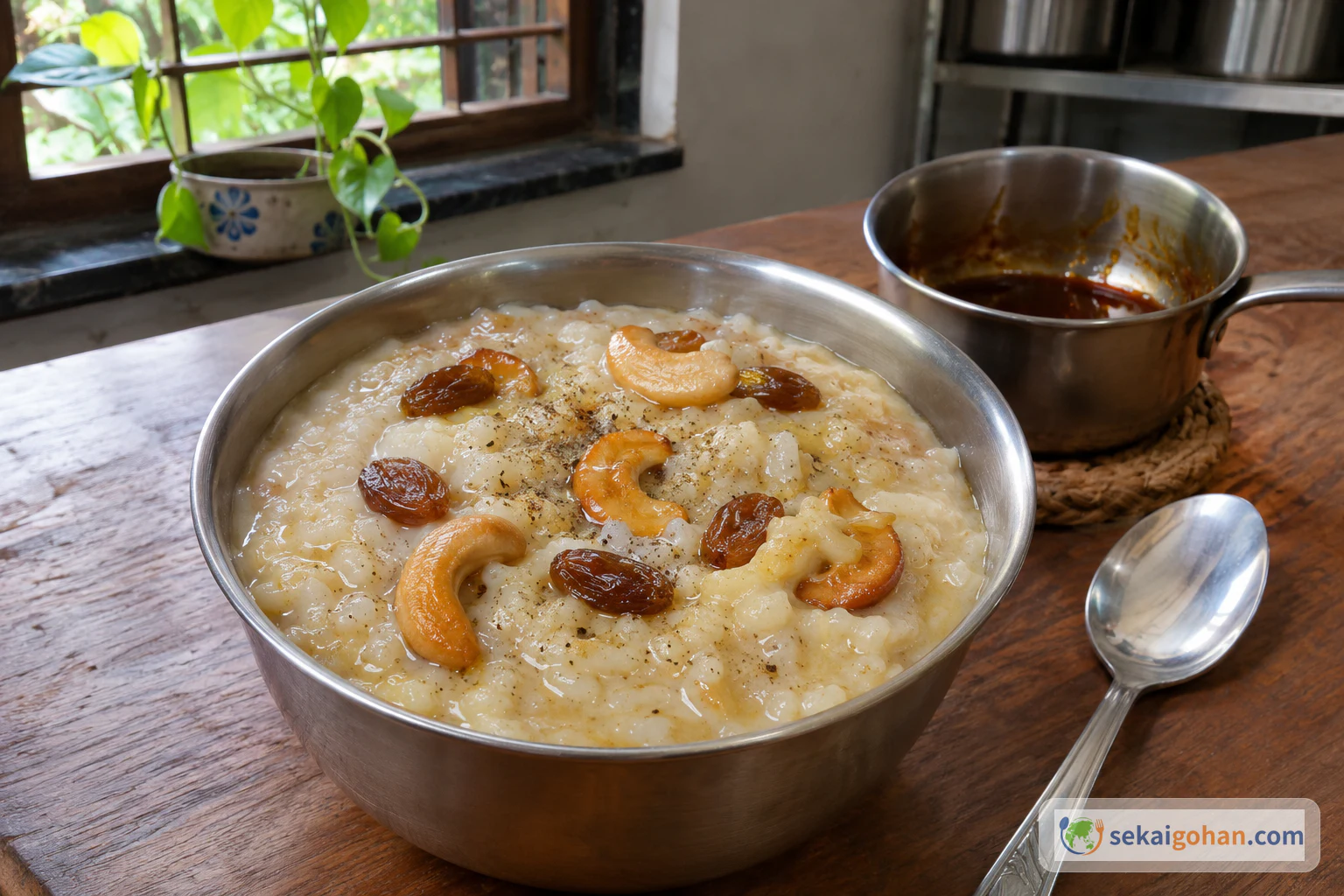
Warm the ghee in a small pan over medium heat and add the cashews. Stir them until they turn light golden, then add the raisins and keep stirring until they puff up round. Pour the ghee, nuts and raisins over the pudding straight away. You will hear a soft sizzle, and a few beads of ghee will float on the surface.
7Serve warm or cooled
Ladle the paravannam into bowls, with some nuts and raisins on each one. Serve it warm, when it is creamy and spoonable, or let it cool, when it sets thicker and the cardamom comes forward. If it has stiffened more than you like, stir in a little warm milk until it pours again. A good bowl holds soft whole grains suspended in a beige, silky liquid.