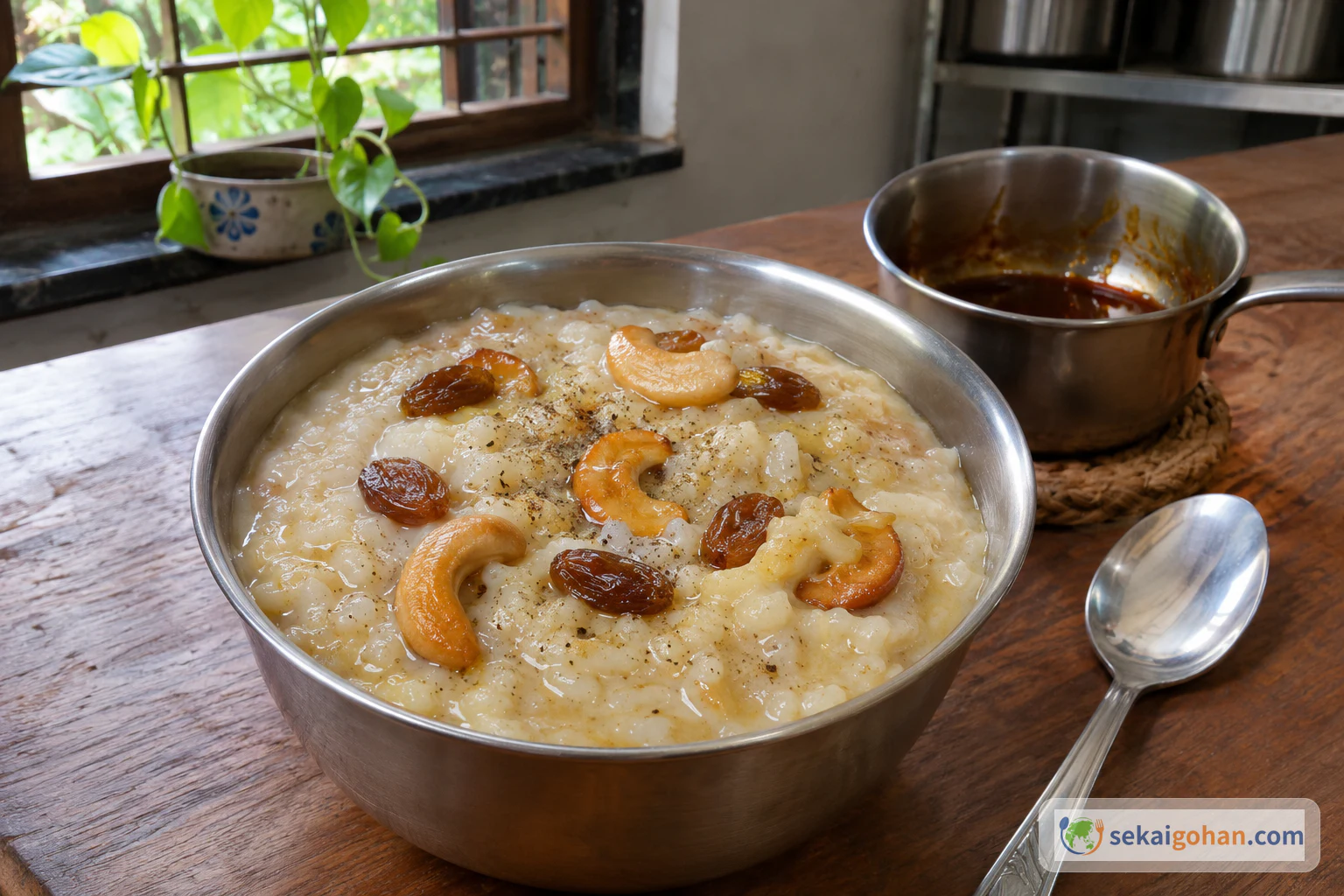
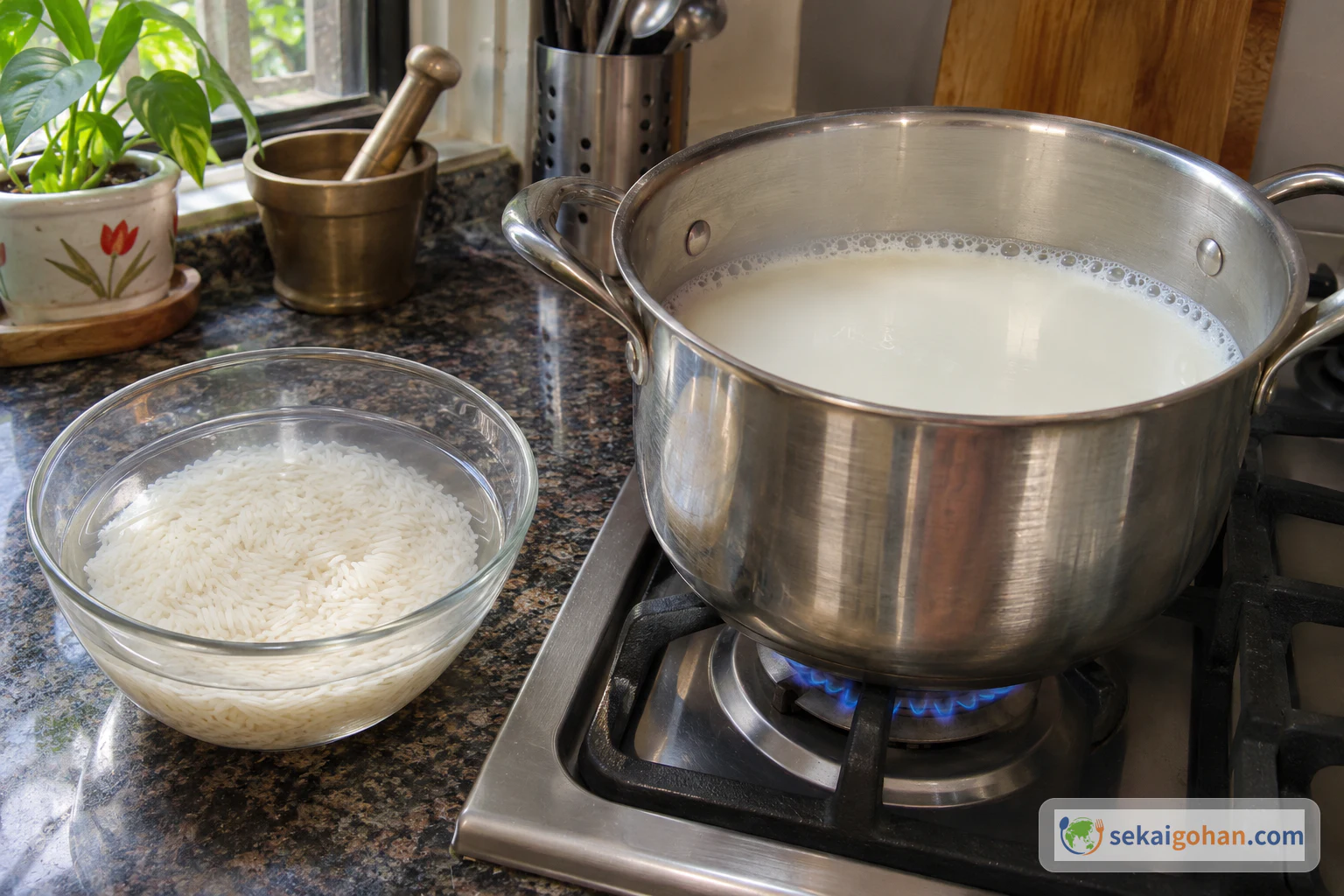
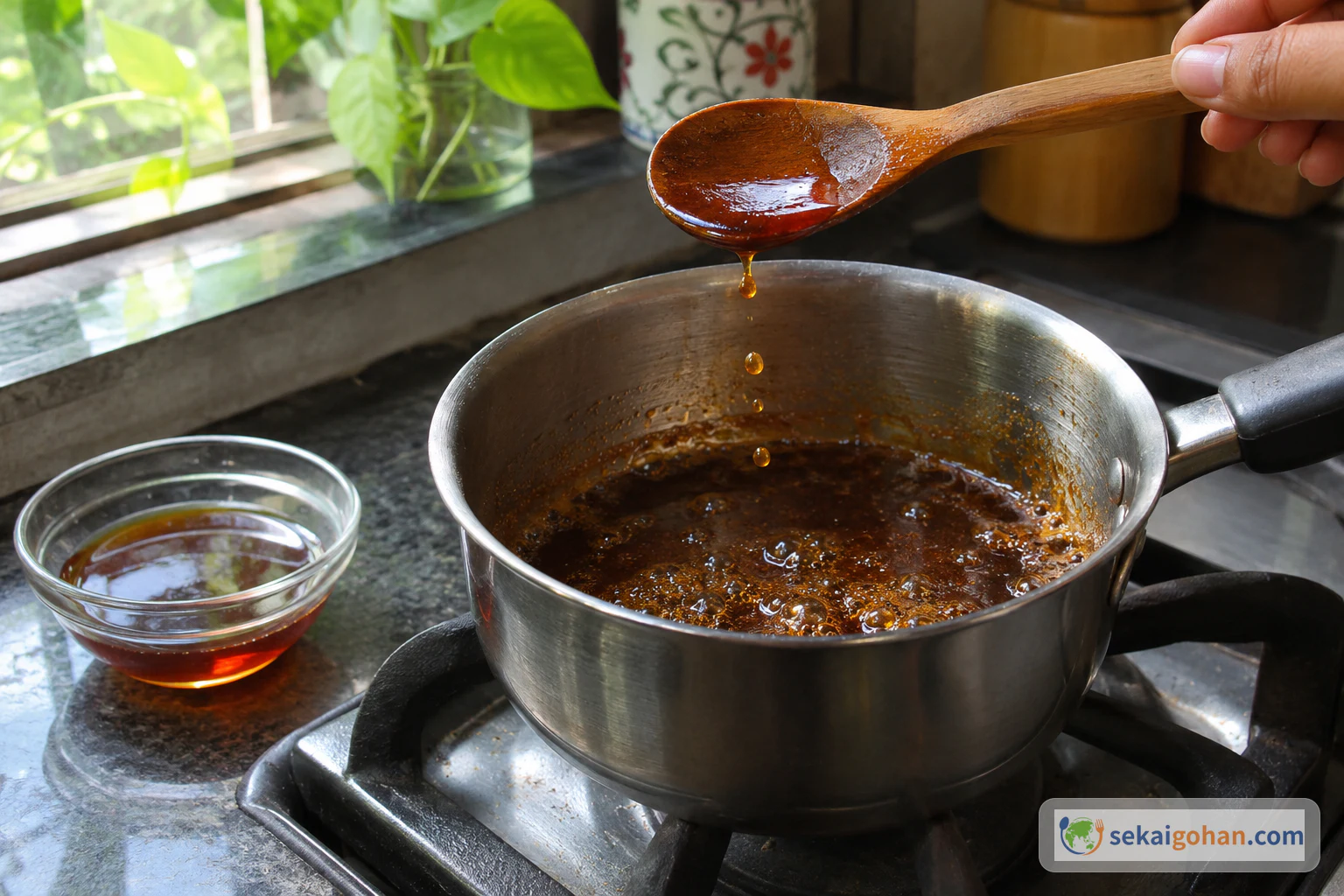
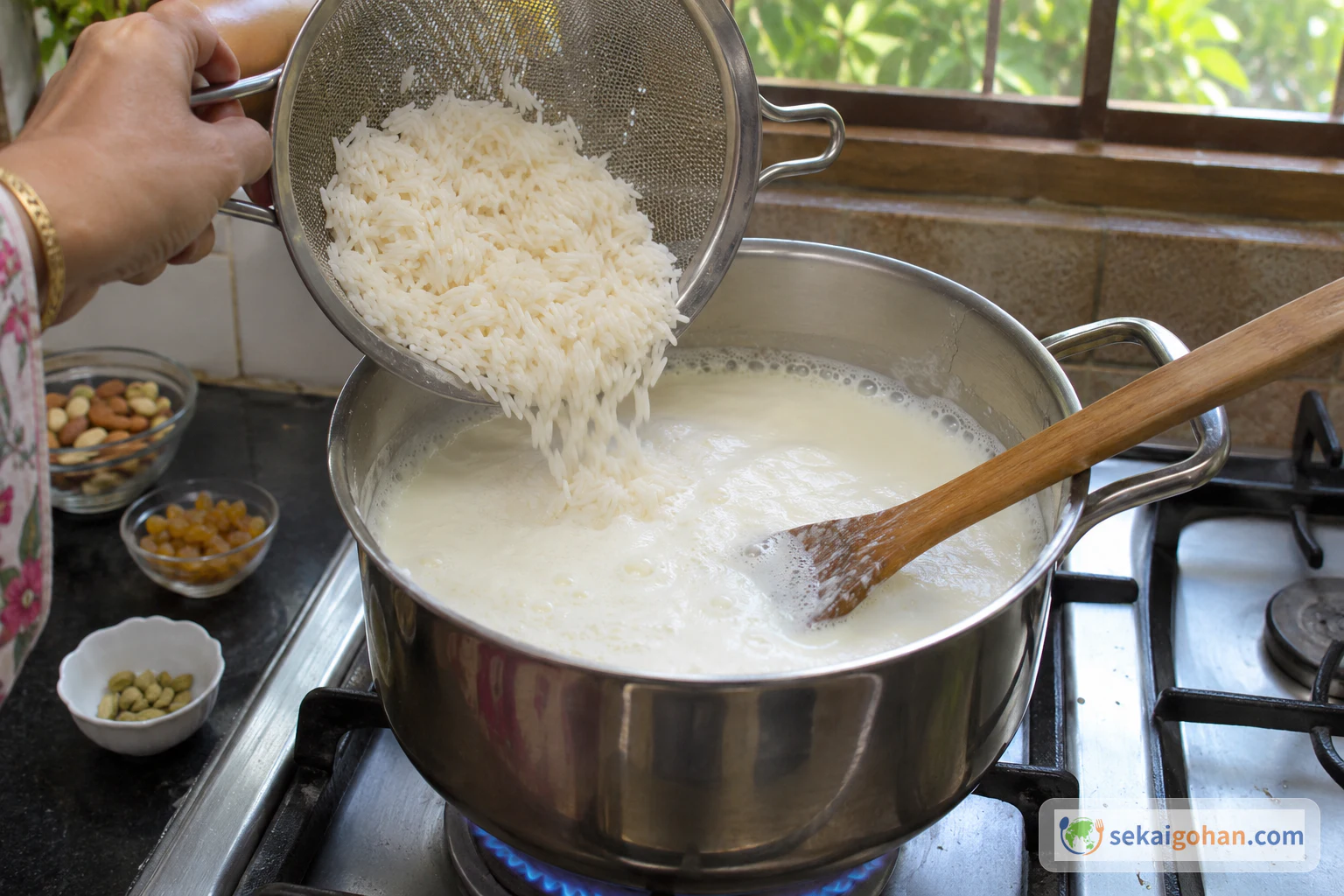
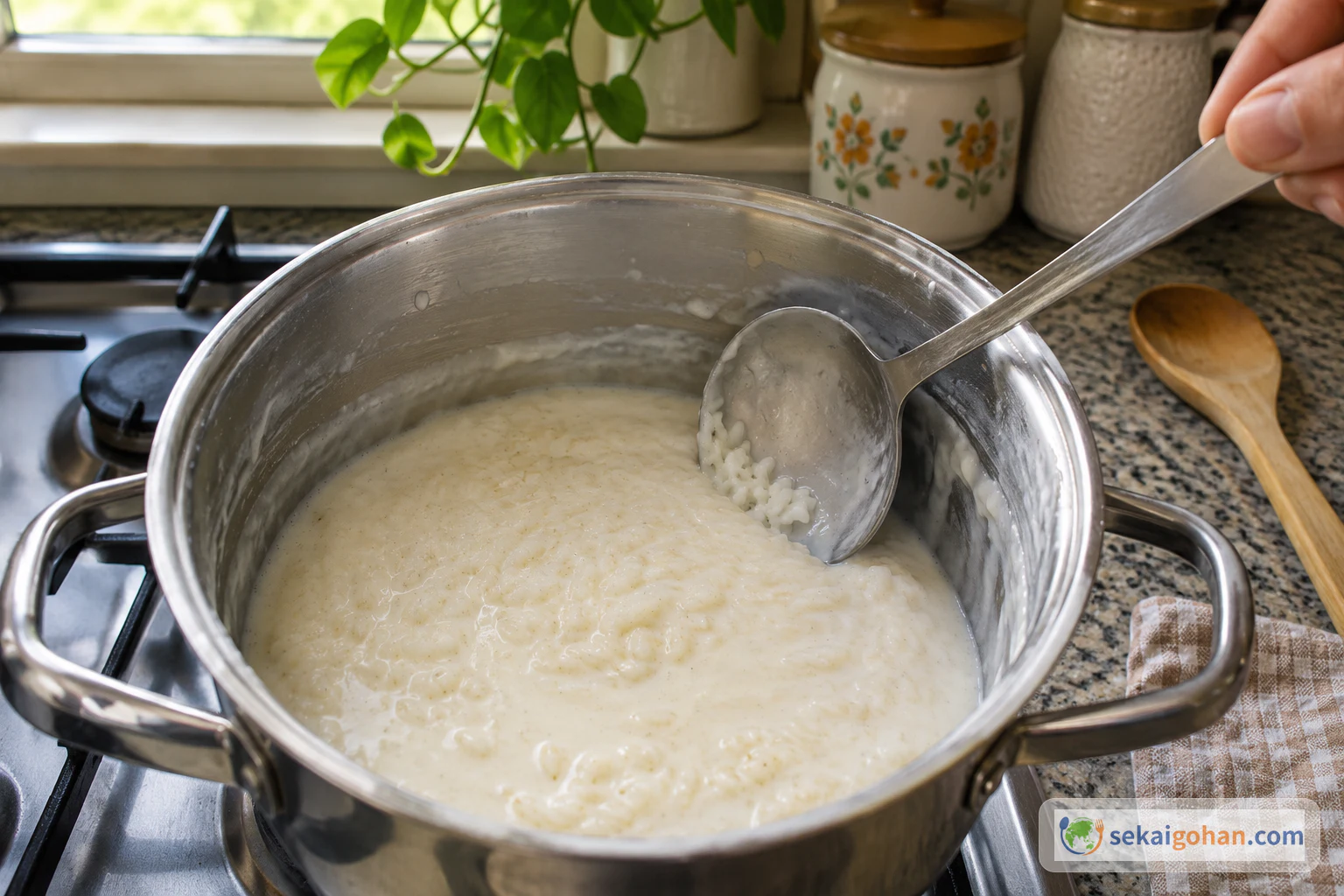
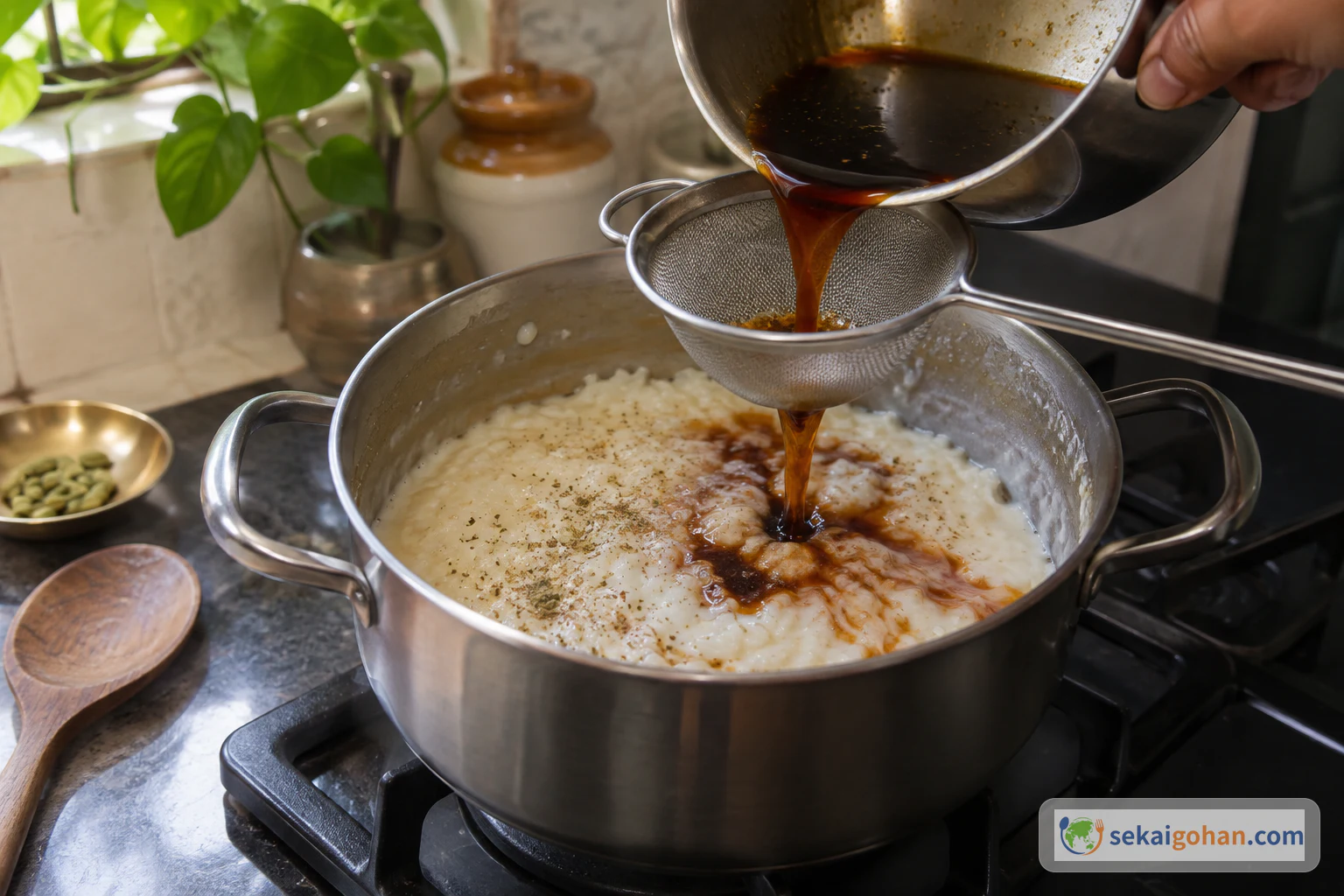
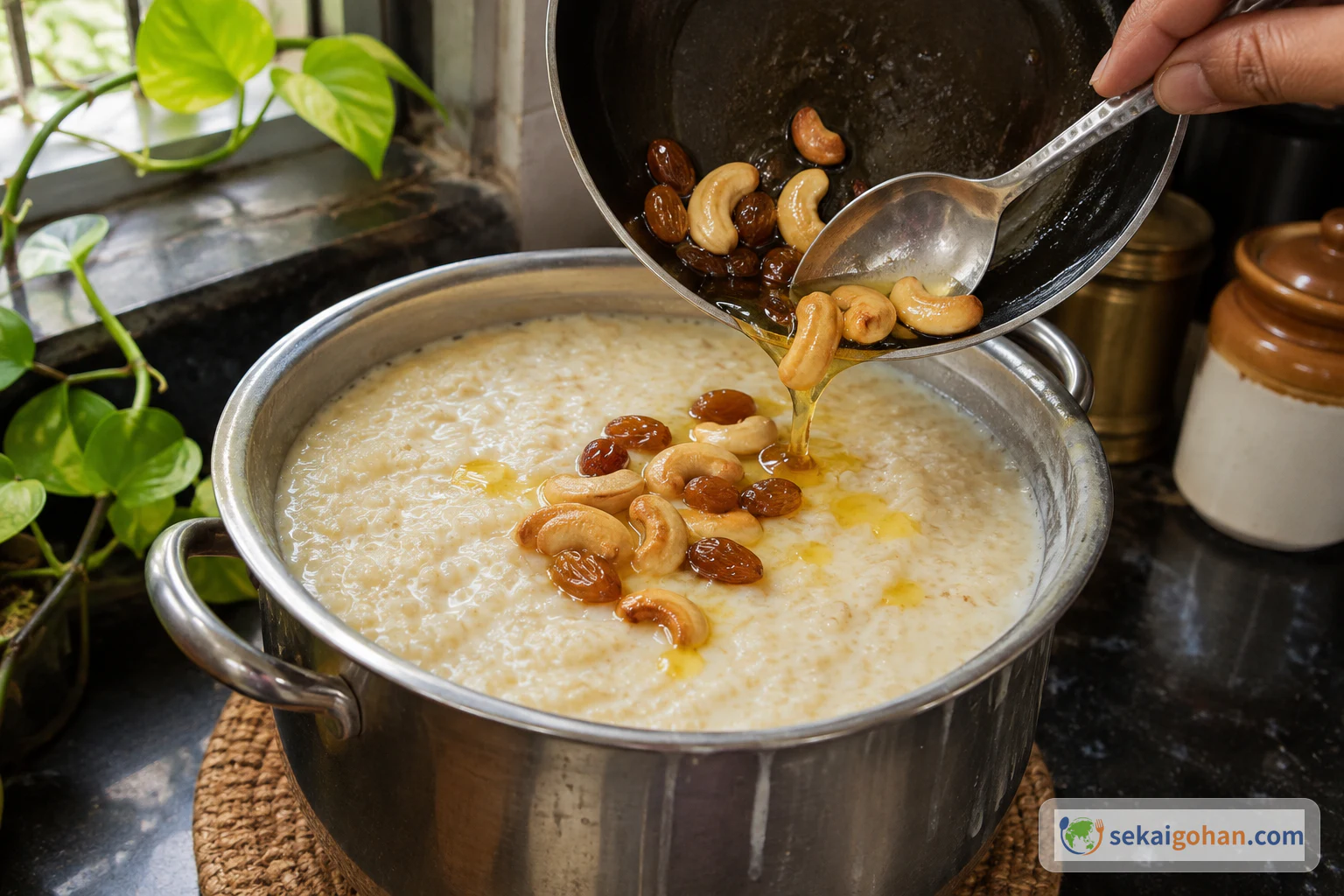
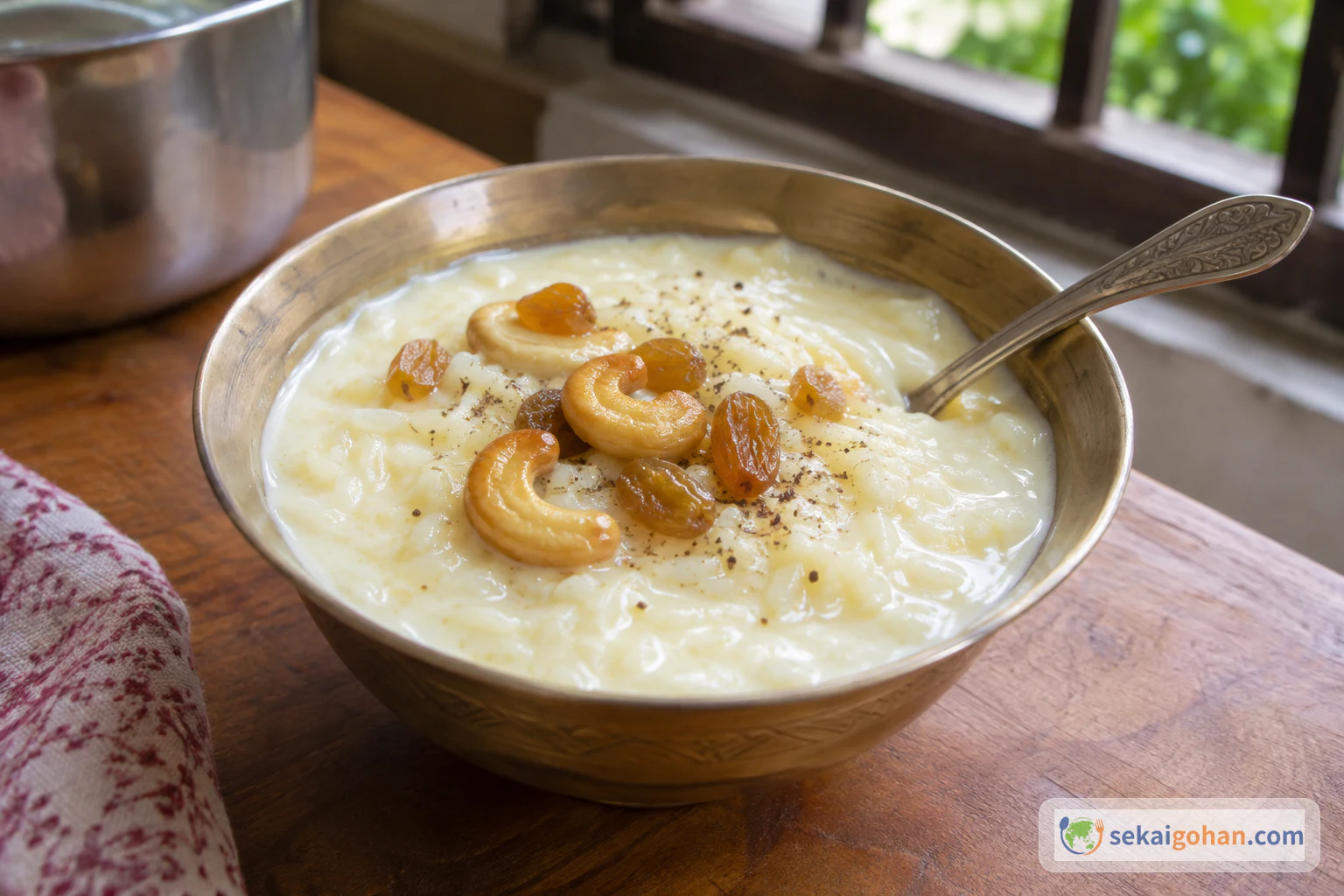
The rice has gone soft in the milk, and you press a few grains against the side of the pot with a ladle. The white liquid turns silky around them. Off the heat, a dark, cooled jaggery syrup runs through a strainer into the pot, and the pudding goes from white to a pale caramel beige. Then a spoonful of hot ghee goes over the top, carrying cashews fried light gold and raisins puffed round.
Paravannam is the rice-and-milk sweet of Andhra and Telangana kitchens. It is sweetened with jaggery instead of white sugar, which gives it a deep, almost molasses-like sweetness, and cardamom keeps it fragrant. It is served warm and still pourable, or cooled, when it sets into something closer to a soft pudding.
A Festival Sweet From Andhra and Telangana Kitchens
The dish goes by two spellings, Paravannam and Paramannam, and both names are used for the same pot of rice, milk and jaggery. Cooks in Andhra Pradesh and Telangana call it paravannam. In Tamil Nadu a sweet rice-and-milk dish more often goes by the general name pal payasam (paal payasam). When cooks set the two side by side, they say paravannam holds more rice and its milk is reduced less, so the grains stay at the center of the spoonful instead of melting into thickened milk.
It is a festival sweet of South India. You will find it at Sankranthi in Andhra homes, and it is cooked during Navaratri as naivedyam, the food offered at the household altar and then shared as prasadam. Jaggery is what sets the household version apart. Some cooks use white sugar for the offering pot, which gives a cleaner, paler sweetness; the pot below uses jaggery.
When paravannam is made as an offering, the milk and the ghee come from cows, and the pudding is cooled completely before it is offered.
How households make it differently
No two kitchens follow quite the same order. In some homes the rice is cooked very soft under pressure first, the nuts and raisins are fried at the start and set aside, and grated jaggery is stirred in at the very end with the heat already off. Other cooks add a spoonful of sago and reduce a large quantity of milk by about two-thirds before the rice goes in, which makes a heavier, more condensed pudding. The pot below is cooked on the stove from start to finish. The rice simmers in the milk until it collapses, and the jaggery goes in as a strained, cooled syrup.
Within India it sits among many milk-and-rice sweets. North Indian phirni grinds the rice first, which gives a smooth, set cream. Paravannam keeps whole grains, cooked until they give way. For more dishes from the same table, start at the India country page.
Ingredients (serves 4 to 6)
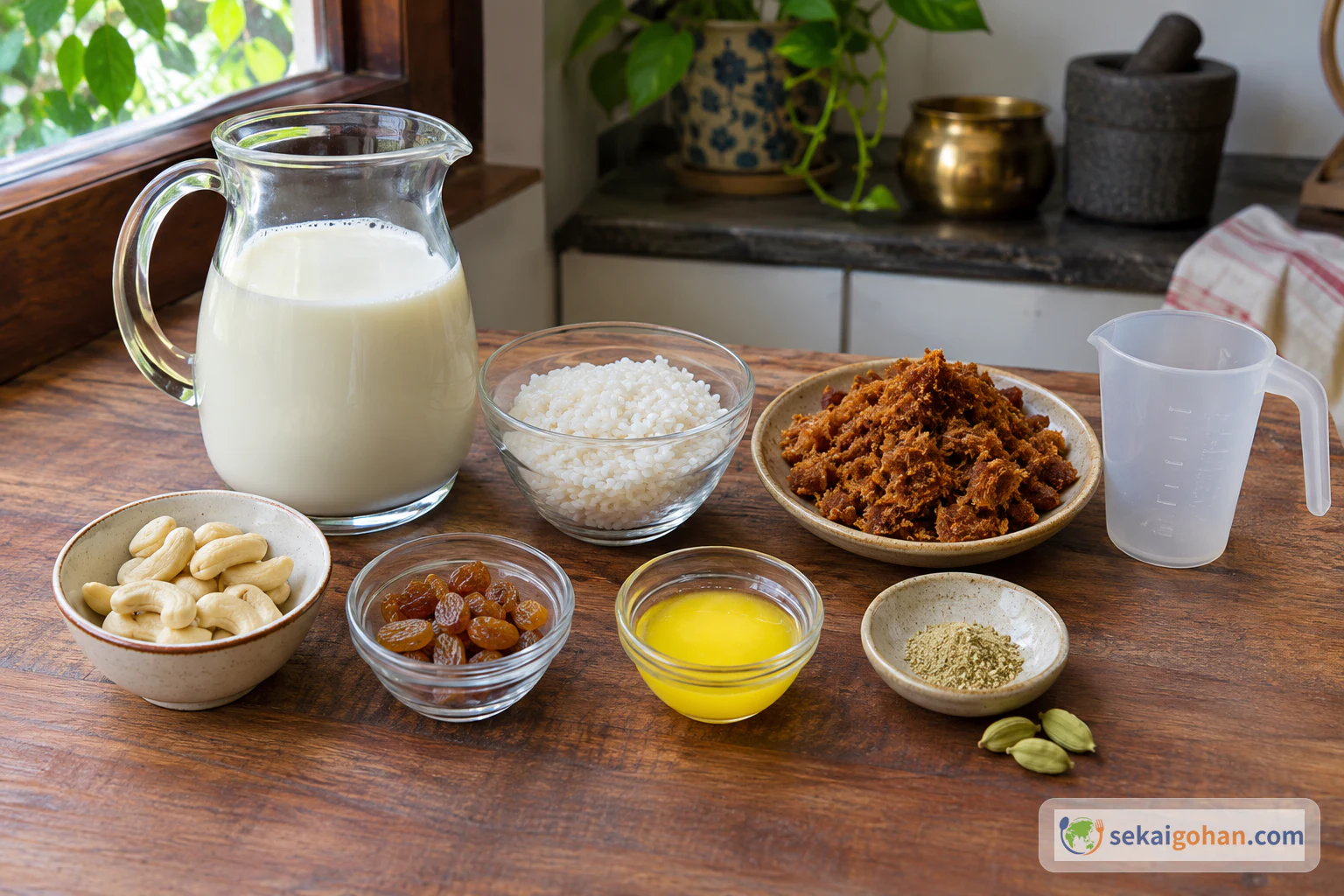
You will also need water for rinsing and soaking the rice.
Paravannam contains milk, both in the milk itself and in the ghee, and tree nuts (cashews). Check the label on the jaggery for anything added to it, and leave out the cashews for anyone with a nut allergy.
Equipment
- Heavy-bottomed pot for the milk
- Small saucepan for the jaggery syrup
- Bowl for soaking the rice, and a sieve to drain it
- Fine-mesh strainer for the syrup
- Ladle and wooden spoon
- Small pan for frying the nuts in ghee
Buying Jaggery, Rice and Ghee Outside India
Jaggery is the ingredient that makes this taste like home in Andhra, so it is worth a trip to an Indian grocer or an online order. It comes in solid blocks that you grate, or already powdered. Its color and sweetness differ from brand to brand: a dark jaggery gives a browner pudding and a stronger flavor. That is why the syrup goes in a little at a time.
Because jaggery varies so much, pour in about four-fifths of the syrup, stir and taste, and add the rest only if it needs it. You can always add more sweetness, but you cannot take it out.
| Ingredient | Keep it for the Andhra taste | Swap when abroad, and what changes |
|---|---|---|
| Jaggery | Yes, it decides the flavor | Dark brown sugar sweetens it but tastes flatter, without jaggery's earthy depth. White sugar gives the sugar version: paler, clean, with none of the caramel note |
| Rice | No, the variety is flexible | Sona Masoori works well. Any medium or long grain white rice works, and short-grain rice also works. Each cooks down differently, so judge by softness, not the clock |
| Milk | Whole milk gives the fullest body | 2% milk also works and makes a lighter pudding |
| Ghee | Yes, for the aroma on top | Butter fries the nuts too, but it browns faster and smells of butter, not ghee |
| Cardamom | Yes | Ground cardamom or about 4 green pods, crushed, give the same fragrance |
| Cashews and raisins | Pleasant, not essential | Leaving them out keeps the pudding smooth but loses the toasty crunch |
Method
The work runs on two burners at once. The rice soaks while the milk comes to a boil, and the jaggery syrup cooks and cools on the side, so it is cold by the time the rice is soft. The long, hands-off stretch is the rice simmering in the milk, and your only job then is to stir the bottom of the pot every few minutes. The nuts get fried at the very end, so they are still crisp when they go on top.
When Paravannam Goes Wrong
| What you see | Why | What to do |
|---|---|---|
| The milk looks grainy or split after the jaggery goes in | The syrup was still warm, or the milk was still on the heat | Next time, cool the syrup completely and add it only after the burner is off |
| A brown, bitter layer on the bottom of the pot | The rice sat on the base too long between stirs, or the pot is thin | Stir across the bottom every 4 to 5 minutes and use a heavy-bottomed pot. Pour the pudding into a clean bowl without scraping up the burnt layer |
| Stiff and gluey once cool | The heat went off too late | Loosen it with a little warm milk. Next time, stop while it still flows off the ladle |
| Gritty bits in the pudding | Impurities in the jaggery | Always pour the syrup through a fine strainer |
| Too sweet, or the jaggery taste is overpowering | All the syrup went in at once, or the jaggery is very dark | Next time, add four-fifths, taste, then decide. A splash of warm milk softens what is in the bowl |
| Hard centers in the rice | The pudding was thickened before the rice was fully soft | Keep simmering, stirring the bottom, until a grain squashes flat between your fingers |
Serving and Variations
Paravannam is a festival sweet, made for Sankranthi and offered at Navaratri. A small bowl per person is enough, because the jaggery and ghee make it rich. Serve it warm on the day, or chilled if your household likes it set.
Variations
- Sugar instead of jaggery. White sugar in place of the jaggery syrup gives a pale, cleanly sweet pudding without the caramel depth. This is the form some households cook for Navaratri offerings.
- Dark brown sugar. A close substitute when there is no jaggery. The color is right, but the flavor is flatter and sweeter, without jaggery's earthy notes.
- Nut-free. Fry only the raisins in the ghee. The top loses its crunch and toastiness, but the ghee and cardamom still carry the aroma.
- A different rice. Sona Masoori, a long grain or a short grain all work. Short grains give a starchier, thicker pot, and long grains stay more separate, so watch the pour, not the clock.
Frequently asked questions
Can I add the jaggery without making a syrup?
Yes. You can stir grated or powdered jaggery straight in, at the very end with the heat off, until it dissolves. The syrup brings out more of the jaggery's flavor, and straining it gets rid of any grit, so it is worth the small extra pan.
Can I cook the rice in a pressure cooker?
Some households cook the rice soft under pressure before it meets the milk. This stovetop pot needs no pressure cooker. The rice softens in the open pot of milk, and you can see and stir it the whole time.
Can I use 2% milk instead of whole?
Yes. Whole milk gives the fullest, creamiest body, and 2% milk makes a lighter pudding with the same method. Either way, stop cooking while it still pours.
How much cardamom if I only have whole pods?
About 4 green cardamom pods match ½ tsp ground cardamom. Crush them, discard the husks, and grind or finely crush the seeds before stirring them in.