Ingredients and steps on one page. Print it, or choose “Save as PDF” in the print dialog.
Sekai Gohan
Sevai: Steamed and Pressed South Indian Rice Noodles
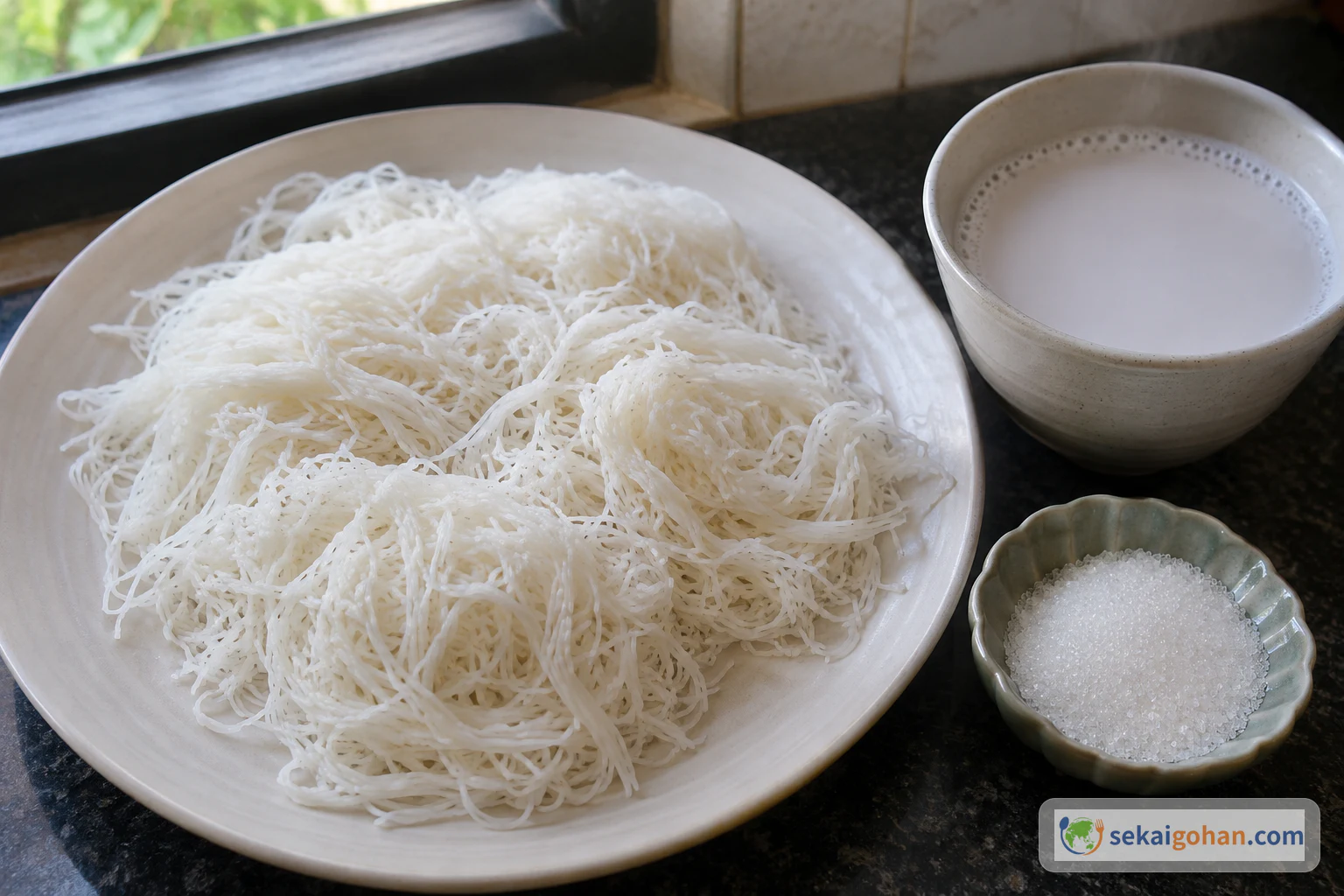
Ingredients
Noodles
| Ingredient | Amount | Role |
|---|---|---|
| Parboiled rice (sapadu puzhungal arisi, often sold as idli rice) | 1½ cups (360 ml) | The whole body of the noodle. Soaked and ground into the batter |
| Salt | 1 tsp | Seasons the dough all the way through |
| Cooking oil | 1 tbsp, plus a little for hands, idli plates and press | Cooks with the water into a smooth, glossy dough and keeps it from sticking |
| Water | 2 tbsp for the pan, plus a little for grinding and plenty for soaking | Brings the batter to idli-batter thickness and gathers it into a dough |
Lemon sevai seasoning
| Ingredient | Amount | Role |
|---|---|---|
| Sesame oil | 2 tbsp | Carries the tempering and its aroma |
| Black mustard seeds | 1 tsp | Popped in hot oil for a nutty bite |
| Peanuts | ¼ cup (60 ml) | Crunch against the soft noodles |
| Green chillies | 2, finely chopped | Heat |
| Ginger | 2-inch (5 cm) piece, finely chopped | Fresh, sharp warmth |
| Curry leaves | 2 sprigs | The fragrance of a South Indian tempering |
| Turmeric | ½ tsp | Turns the noodles yellow |
| Lemon juice | Juice of 2 lemons | The sour finish that holds it together |
| Salt | To taste | Final seasoning |
For serving sweet
| Ingredient | Amount | Role |
|---|---|---|
| Sugar | To taste | Sweetness |
| Coconut milk, warmed | As needed | Poured over or served alongside the plain noodles |
Steps
1Soak and grind the rice
Rinse 1½ cups (360 ml) parboiled rice and cover it with plenty of water. Leave it to soak for 3 hours. Drain it, put it in the blender with a little water, and grind it to a smooth paste about as thick as idli batter. Add water only a spoonful at a time, then stir in 1 tsp salt. Rub a drop between your fingers: when you feel no grit at all, the batter is ready.
2Cook the batter into a dough
Bring 1 tbsp oil and 2 tbsp water to a boil in a small heavy pan. Turn off the heat and add the batter a little at a time, stirring fast so it stays smooth. Put the pan back over low heat and keep stirring. It is done when the batter has gathered into one thick, glossy mass that moves as a single piece with the spoon.
3Knead and shape eight balls
Start heating the water in the steamer now. Turn the dough out onto a plate, rub a little oil on your hands, and knead it until smooth. Divide it into 8 equal pieces and roll each into a ball. The balls are ready when the surface is smooth and the edges show no cracks as you roll them.
4Steam the balls
Brush the idli plates with oil and set one ball in each. Put them in the steamer over boiling water, cover, and steam for 15 minutes. Keep the water boiling so steam rises steadily the whole time. The balls are done when they look glossy and slightly translucent and spring back when you press one with a fingertip.
5Press while hot
Rub a thin film of oil inside the press. Take out one hot ball, put it in the press and close it. Turn and push the handle over the large plate, moving the press so the strands fall in loose coils. Keep the remaining balls covered in the steamer so they stay hot. When a ball is warm enough, the strands come out in steady, unbroken threads.
6Spread and cool the noodles
Spread the pressed noodles loosely over the large plate and leave them to cool. Season them only once they are cool. For dinner, press them in the morning or afternoon and keep them plain until shortly before you eat. They are ready to season when the plate and the strands feel cool to the touch.
7Make the lemon tempering
Heat 2 tbsp sesame oil in a kadai and add 1 tsp black mustard seeds. When they pop and crackle, add the peanuts and fry them. Add the ginger, green chillies and curry leaves and stir for a few seconds. Sprinkle in ½ tsp turmeric. Once the turmeric is in, the tempering is ready for the noodles.
8Toss the noodles with lemon
Break the cooled noodles into shorter lengths with your fingers and add them to the kadai. Toss gently until every strand is evenly coated and yellow. Add the lemon juice a little at a time, then the salt, tossing and tasting as you go. It is ready when it tastes bright and sour, with peanuts and curry leaves spread all through.