Ingredients and steps on one page. Print it, or choose “Save as PDF” in the print dialog.
Sekai Gohan
Upma: South Indian Toasted Semolina with Mustard and Dal
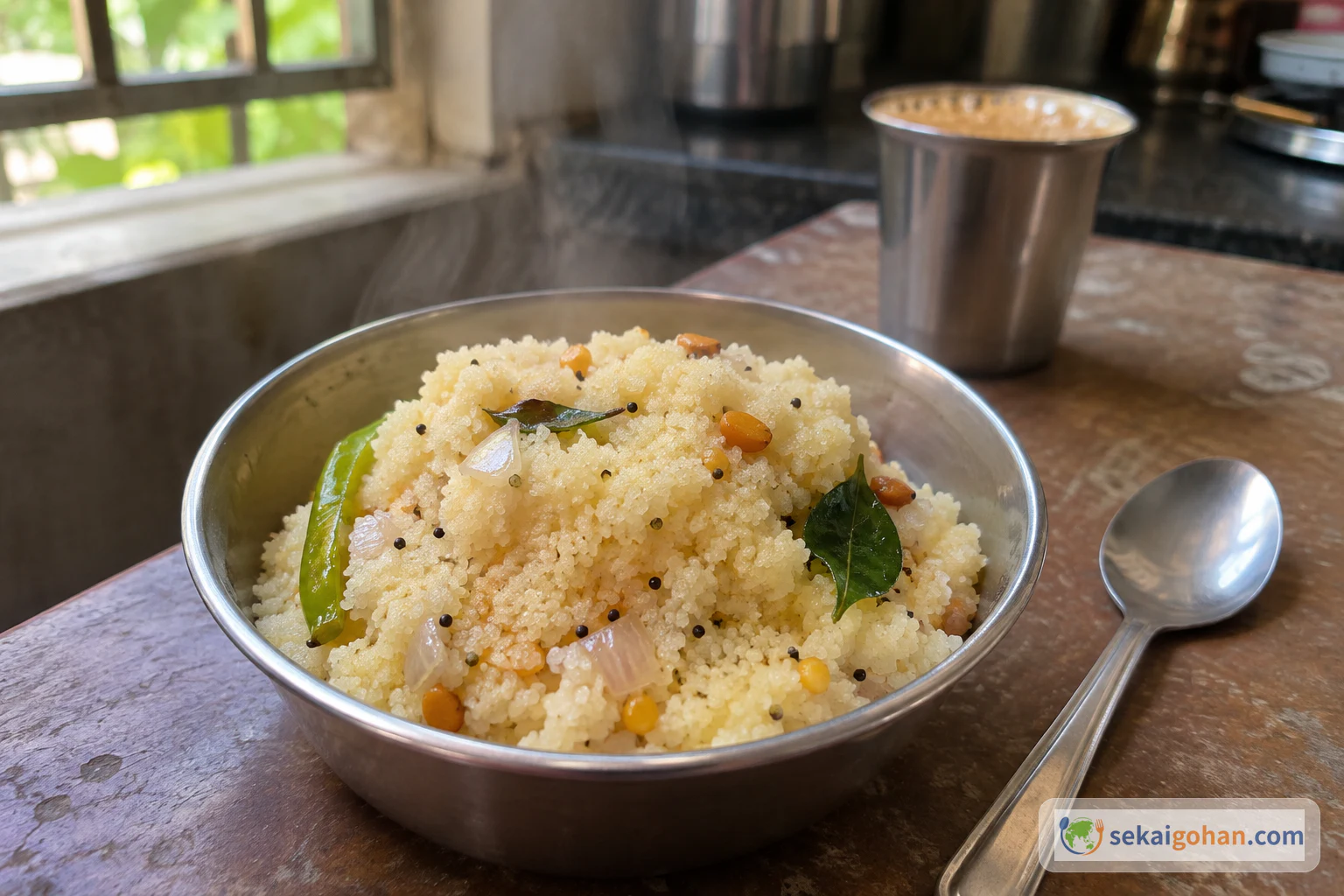
Ingredients
| Ingredient | Amount | Role |
|---|---|---|
| Semolina (rava / sooji), coarse | 1 cup | The body of the dish; toasted for aroma, then swells into soft grains |
| Water | 2½ cups | Cooks and swells the semolina; measure with the same cup as the rava |
| Salt | 1 tsp | The base seasoning; adjust after tasting |
| Green chilli | 1 | Gentle heat and a fresh green smell |
| Onion (optional), finely chopped | 1 | Sweetness, moisture and body; leave it out for a lighter upma |
| Oil or ghee | 2 tbsp | Carries the tempering; ghee gives a richer aroma |
| Mustard seeds | 1 tsp | The popping, pungent backbone of the flavor |
| Split urad dal | 1 tsp | Toasty flavor and a little crunch |
| Chana dal | 1 tbsp | Small nutty bites through the soft grain |
| Curry leaves | 1 sprig | The unmistakable South Indian aroma |
Steps
1Dry-roast the semolina
Set the heavy pan over medium heat and add the semolina with no oil. Stir constantly for 2 to 3 minutes so every grain moves and none sticks to the base. Keep the color the same: you want aroma, not browning. Tip the semolina into a bowl as soon as it smells toasty and the grains still look pale cream and run freely.
Roasting decides the grainRoasting dries the surface of each grain, so the grains swell separately in the boiling water and do not paste together. Grains that brown taste scorched. Take them off the heat at the first sign of color.
2Temper the mustard seeds and dals
Pour the oil or ghee into the same pan and heat it. Add the mustard seeds and wait for them to pop. Then add the urad dal, chana dal, curry leaves and green chilli. Keep stirring until the dals turn golden brown.
3Soften the onion
Add the chopped onion to the tempering and stir it through the oil. Fry until it turns translucent and soft, without letting it brown. This keeps the onion sweet and stops it breaking down into mush once the water goes in. Move on when the pieces are glossy and see-through at the edges.
4Bring the water to a rolling boil
Pour in the water and add the salt. Turn up the heat and let it come to a full boil, with no simmering yet. The rava needs water this hot so the grains start to cook the moment they touch it. You are ready when large bubbles rise from the base and break across the whole surface.
5Stream in the semolina while stirring
Turn the heat down to a simmer. Pour the roasted semolina in a slow, steady stream with one hand while the other stirs without stopping. Semolina dropped into boiling water forms lumps if it lands all at once, so keep it moving and keep the stream thin. Stop pouring when all the rava is in, no dry pockets float on top, and the mixture has thickened and pulls in the water.
Hot splatterBoiling water and thickening semolina spit. Lower the heat before you pour, add the rava little by little, stand close and keep your arm clear of the pan.
6Cover and rest on low heat
Once the water is absorbed, turn the heat to low and put the lid on. Leave it for 2 to 3 minutes so the steam finishes the centers of the grains. Lift the lid and turn the upma from the base with the spatula. If it still looks floury, keep it on the heat and stir until it comes together as one soft mass with no raw, powdery look.
7Fluff and serve
Turn the upma from the base a few times to loosen it into separate grains. Taste it and add a little salt if the wheat flavor dominates. Spoon it onto plates while it is steaming. It is ready when a spoonful holds soft, distinct grains with the mustard, dal and curry leaves spread through, and no lumps.