Ingredients and steps on one page. Print it, or choose “Save as PDF” in the print dialog.
Sekai Gohan
Thala Guli: Sri Lankan Sesame and Palm Jaggery Balls
Ingredients
| Ingredient | Amount | Role |
|---|---|---|
| White sesame seeds, raw (සුදු තල) | 5¼ oz (150 g) | Main body; releases the oil that binds the balls |
| Black sesame seeds, raw (කළු තල) | 5¼ oz (150 g) | Deeper roast and the mottled look |
| Unsweetened desiccated coconut, or freshly grated coconut (පොල්) | 3½ oz (100 g) | Lightness and a soft bed for the sweetness |
| Kithul jaggery (කිතුල් හකුරු), or palm sugar | 7 oz (200 g) | Sweetness and stickiness; the main binder |
| Salt (ලුණු) | a pinch | Sharpens the edge of the sweetness |
| Virgin coconut oil | a few drops, as needed | Helps a crumbly mixture bind; oils your palms |
| Cardamom powder | a pinch, optional | Aroma |
Steps
1Toast the coconut dry
Set a heavy frying pan over low to medium-low heat with no oil. Add the coconut and spread it thin. Stir constantly so it toasts evenly and nothing catches on the bottom. Desiccated coconut dries out quickly. Freshly grated coconut takes longer, and it must be toasted until all of its moisture is gone. The coconut is ready when it is dry and loose, falls freely from the spatula, and the edges show a faint gold.
2Add the sesame and listen for the pop
Tip the white and black sesame into the same pan with the coconut. Keep stirring without a break, bringing the seeds from the edges into the middle. Black seeds hide their colour, so watch the white ones turn pale gold and follow the smell. When you hear the seeds start to pop, switch off the heat and spread everything on a plate. The mixture is right when the white seeds are pale gold and nothing smells sharp or smoky.
Stop at the soundThe pop is the signal. Switch off the heat at the first pops and get the seeds out of the pan. Burnt sesame turns bitter, and no amount of jaggery covers it.
3Grate the jaggery and salt it
While the seeds cool a little, grate the jaggery into a bowl. If the block is too hard to grate, shave it thin with a sharp knife. Add the pinch of salt and mix it through with your fingers, rubbing out any clumps. Add the cardamom now if you are using it. The jaggery is ready when it lies in soft, even flakes with the salt mixed through.
4Crush coarsely in the processor
Put the still-warm seeds and coconut into the food processor with the salted jaggery. Pulse in short bursts, a few times only, and check after each round. How coarse you go is a matter of taste, but stop well before the mixture becomes a smooth paste. A paste releases too much oil and turns heavy and hard to shape. Stop when you can still see seed fragments, and the mixture looks damp with oil and clumps when you pinch it.
Pulse, look, pulseSeed fragments must still be visible. Underdone is easy to fix with one more pulse. A batch crushed into paste cannot be taken back.
5Squeeze to test the bind
Take a small handful and squeeze it firmly in your palm. If it holds its shape, it is ready to roll. If it crumbles, add a little more palm sugar and pulse briefly, or work in a few drops of coconut oil. Squeeze again after each addition. The mixture is right when the pressed lump keeps its shape and only a few loose grains stick to your fingers.
6Roll while warm
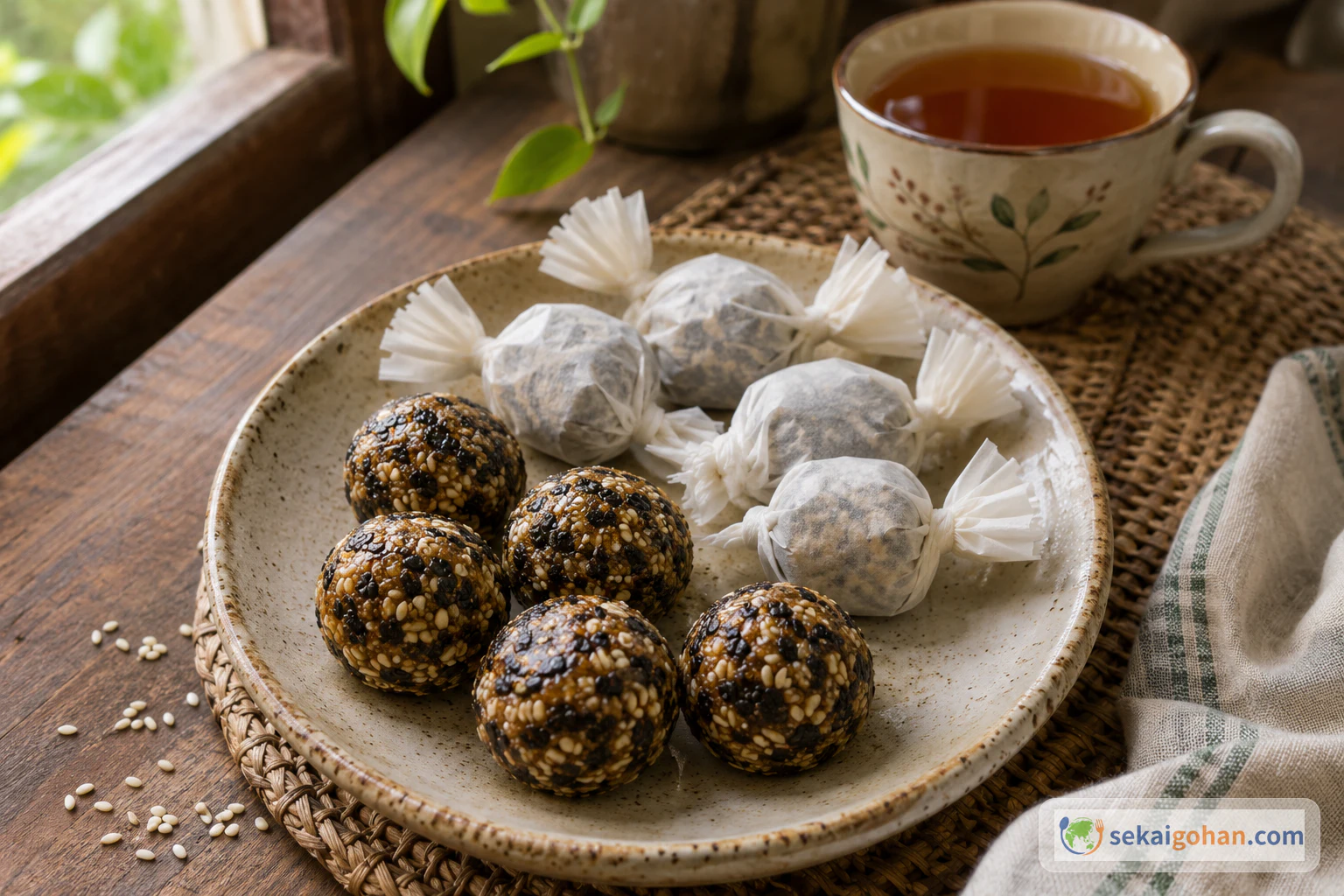
Rub your palms with a thin film of coconut oil. Take a small amount of the mixture, press it together, and roll it into a bite-size ball. If a ball cracks, keep rolling it between your palms until the surface closes. Work steadily, because the mixture hardens as it cools and becomes hard to shape. If the jaggery starts to melt and stick, cool your hands and work in smaller amounts. You should end up with 18 to 20 balls with closed surfaces and the seed texture still showing.
7Set, wrap and serve
Set the balls on parchment. If you like, wrap each one in a strip of white fringed paper and twist both ends shut. Put them on a small plate next to a pot of tea or coffee. They are ready to eat as soon as they are rolled.