Ingredients and steps on one page. Print it, or choose “Save as PDF” in the print dialog.
Sekai Gohan
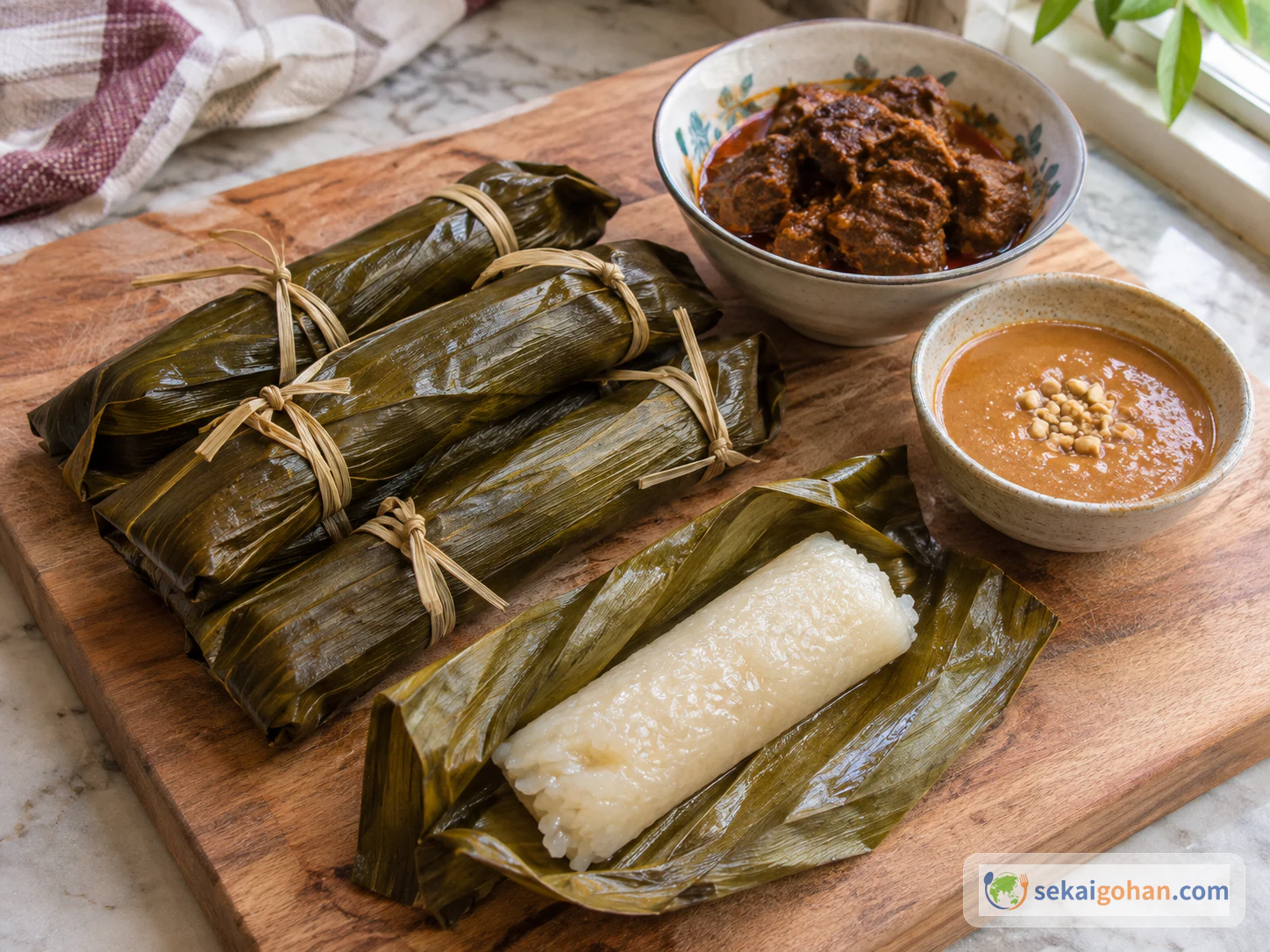
Kelupis: Bruneian Coconut Sticky Rice Steamed in Leaves
Ingredients
| Ingredient | Amount | Role |
|---|---|---|
| Glutinous rice (beras pulut) | 1 lb 2 oz (500 g) | The body of the roll; turns dense and glossy when steamed |
| Coconut milk (santan) | 4¼ cups (1 L) | Richness and most of the cooking liquid |
| Pandan leaves | 5 leaves, knotted | Fragrance cooked into the rice |
| Salt | ½ tbsp | Seasons the rice so it stands up to rich sauces |
| Water | as needed | Brings the rice up to the half-cooked stage |
| Wrapping leaves (nyirik / ngirik / irik) | 30 leaves | The wrapper; one roll per leaf |
Steps
1Combine the rice, coconut milk and pandan
Rinse the glutinous rice, then drain it. Put it in a wide pot with the coconut milk, salt and the knotted pandan leaves. Add water as needed. Stir once so the salt dissolves; the rice should sit submerged in a milky, pale pool.
2Cook to half-done over medium heat
Set the pot over medium heat. Stir gently and often, lifting from the bottom so the coconut milk does not catch. As the grains drink up the liquid, they swell and turn opaque. Stop when the rice is half-cooked and almost no liquid is left: the grains are plump but still firm at the centre, and the rice begins to hold together in one mass when you push it with the spoon.
Stop at half-doneThe rice finishes cooking inside the leaf. If you take it all the way in the pot, it turns too soft to roll and the bundles lose their shape. Bite a grain: a firm core means it is ready to wrap.
3Soften the wrapping leaves over low heat
Take the pot off the heat and lift out the pandan. Hold one wrapping leaf with tongs over low heat, or lay it in a dry pan, and pass it back and forth until it softens. The leaf turns slightly glossy and goes limp. Repeat with the remaining leaves and stack them as you go. A properly softened leaf folds without cracking.
Handling heatKeep the flame low and the leaf moving so it softens without scorching. Use tongs rather than fingers over the burner.
4Spoon the rice onto each leaf
Lay a softened leaf flat on a board. Spoon 2 to 3 tablespoons of the warm half-cooked rice into the centre. Press it lightly into a short log along the length of the leaf. Leave bare leaf on both sides and at both ends so you have room to wrap; the rice should sit in a neat, compact line.
5Roll, fold the ends and tie
Roll the leaf tightly around the rice into a slim cylinder. Fold both ends in firmly so the rice is sealed inside. If the roll springs open, tie it around the middle with raffia string. Set each finished bundle down; a good roll feels firm when you squeeze it gently and keeps its shape on the board.
Wrap tightThe rice swells as it steams. A loose roll opens in the steamer, and the rice spills out and turns soggy. Roll snugly and fold the ends hard.
6Steam until the rice is cooked through
Bring water to a boil in the base of the steamer. Arrange the bundles in the basket in a single layer or in stacked tiers so steam can reach every roll. Cover and steam for 40 minutes to 1 hour. They are done when the leaves have turned dark and wilted and the rice inside is cooked through and dense when you open a test roll.
Steam burnsLift the steamer lid away from you and let the first rush of steam escape before reaching in. Top up the base with boiling water if it runs low.
7Cool slightly and serve
Lift the bundles out with tongs onto a board or plate. Let them cool slightly so the rice firms up and the leaves can be handled. Unwrap one, or slice it straight through the leaf, and set the rolls out with rendang, curry or peanut sauce. The rice should hold a clean cut and feel dense and springy between your fingers.