Ingredients and steps on one page. Print it, or choose “Save as PDF” in the print dialog.
Sekai Gohan
Piaparan a Manok: Maranao Chicken with Palapa and Coconut Papar
Ingredients
| Ingredient | Amount | Role |
|---|---|---|
| Spring onion, white part, sliced (stands in for sakurab) | ½ cup | Palapa: fresh oniony bite |
| Ginger, chopped | ¼ cup | Palapa: warmth and sharpness |
| Bird's-eye chili | 1–2 | Palapa: heat. One for mild, two for hot |
| Chicken, cut into pieces, skin removed | 1 lb 2 oz (500 g) | The main ingredient, cooked in the soup and finished in papar |
| Onion, medium, sliced | 1 + 1 | Aromatics for the soup pot, then for the papar skillet |
| Garlic, crushed | 3 cloves + 3 cloves | Aromatics for the soup pot, then for the papar skillet |
| Tomato, medium, sliced | 1 + 1 | Aromatics and gentle acidity, in both pans |
| Bell pepper, sliced | as needed | Sweetness in both pans. Any color |
| Spring onion, green part | as needed | Finishes the soup and the papar. Rinse well under running water first |
| Turmeric powder | 1–2 tsp + ½ tsp | Yellow color for the soup, then for the papar |
| Freshly grated coconut | 3 cups + 1 cup | 3 cups pressed for cream and milk, 1 cup kept whole for papar |
| Water | 1½ cups (375 ml) + 2 cups (500 ml) | First pressing, then second pressing |
| Salt | to taste | Seasons the soup and the papar |
| Cooking oil | as needed | For sautéing in both pans |
| White rice, cooked | as needed | Served alongside |
Steps
1Pound the palapa coarsely
Put the sliced white spring onion, chopped ginger and 1–2 bird's-eye chilies in a food processor. Pulse for 1–2 seconds only, or pound them together in a mortar. Scrape the mixture into a bowl and split it into two equal heaps, one for the soup pot and one for the papar skillet. Stop when everything is chopped and pressed together into a coarse, damp mix. You should still see separate bits of onion, ginger and chili, with no smooth paste.
2Press the thick first cream
Measure out 1 cup of the grated coconut and set it aside untouched for the papar. Put the remaining 3 cups in a large bowl, add 1½ cups (375 ml) water and squeeze the coconut hard with your hands. Pour the mixture through a strainer into a clean bowl. Then press the solids in the strainer to force out the last of the liquid. You are done when one bowl holds thick, white cream and the squeezed solids sit in a bowl of their own.
Keep the solidsNothing gets thrown away after the first press. The same squeezed coconut gives the thin milk in the next step, and the chicken simmers in that milk. Put the solids in a bowl you will not confuse with the reserved cup.
3Press the thin second milk
Return the squeezed solids to a bowl and add 2 cups (500 ml) water. Squeeze again by hand, then strain into a separate bowl from the cream. Press the solids once more and discard them, because they are now spent. You should have two bowls side by side: thick cream in one, thinner milk in the other.
4Sauté half the aromatics and add half the palapa
Divide the onion, garlic, tomato and bell pepper into two equal sets and keep one set aside for the skillet. Heat oil in the pot and sauté the first set until the onion softens and the tomato starts to slump. Add one heap of palapa and stir it through. The pot should hold only half of everything, and the second set of vegetables and palapa should still be waiting on the board.
5Add the chicken and cook covered for 5 minutes
Lay the skinless chicken pieces straight from their plate into the pot, without rinsing them. Stir to coat the pieces in the aromatics, cover, and cook for 5 minutes. Lift the lid partway through and stir so nothing burns on the bottom. When the 5 minutes are up, the bottom should be clean and no coconut should be in the pot yet.
Raw chickenDo not wash raw chicken. Rinsing spreads germs around the sink and counter. Keep raw chicken on its own cutting board and plate, away from the coconut, palapa and anything served uncooked. Wash your hands, knife, board and counter after touching it.
6Add turmeric and thin milk and cook covered for 15 minutes
Sprinkle 1–2 teaspoons turmeric over the chicken and stir. Pour in the thin second milk, stir again and cover. Cook for 15 minutes and leave the thick cream in its bowl for now. The broth turns an even yellow, and the chicken pieces sit half-submerged in it.
7Add the thick cream, bring to a boil, then turn off the heat
Pour the thick first cream into the pot around the chicken. Stir gently and bring the soup up to a boil. As soon as it boils, turn off the heat. Your cue is bubbles breaking across the whole surface, followed by a still pot with the burner off.
Thin first, thick lastThe thin milk does the long cooking. The thick cream goes in only at the end, so it comes to a boil just once.
8Finish the soup off the heat with green onion and salt
With the heat still off, add the green part of the spring onion, rinsed well under running water, to the soup. Season with salt to taste and stir. Taste a spoonful of the broth and add salt a little at a time until it tastes rounded. Leave the burner off. The soup is ready when green flecks float through it and it tastes seasoned.
9Sauté the second set of aromatics with the remaining palapa
Set a separate skillet over the heat and add oil. Sauté the second set of onion, garlic, tomato and bell pepper until the onion softens. Add the second heap of palapa and stir it through. Leave the soup pot alone. The skillet now holds the other half of everything, and it should smell strongly of ginger and chili.
10Turn the reserved coconut into papar
Add the reserved 1 cup grated coconut to the skillet. Sprinkle in ½ teaspoon turmeric and salt to taste. Stir and toss until the coconut takes on the color all the way through. The papar is ready when the coconut is an even yellow with no white patches left.
11Check the chicken, then move it into the papar with a little soup
Before the first piece of chicken leaves the soup, push a food thermometer into the thickest part of a piece, keeping the probe off bone, fat and gristle. It must read 165°F (74°C). If it reads lower, keep cooking the chicken and test again before you move anything. This is a check for you to make with your own thermometer. Once it reads 165°F (74°C), move the chicken into the papar skillet and add about ¼ cup (60 ml) of the soup. Mix until every piece is coated and a little liquid shows at the bottom of the pan.
Only a splash of soupOnly about ¼ cup of soup goes into the papar. That small amount loosens the coconut so it grips the chicken. Keep the rest of the soup in the pot for the table.
12Cook until nearly dry, add green onion, and turn off the heat
Cook the chicken and papar together for about 1 minute, or until the pan is nearly dry. Toss the pieces so the coconut sticks on all sides. Add the green part of the spring onion, rinsed well under running water, then turn off the heat. The chicken is finished when almost no liquid is left on the bottom and the coconut clings to the meat.
13Serve the chicken, the soup and white rice
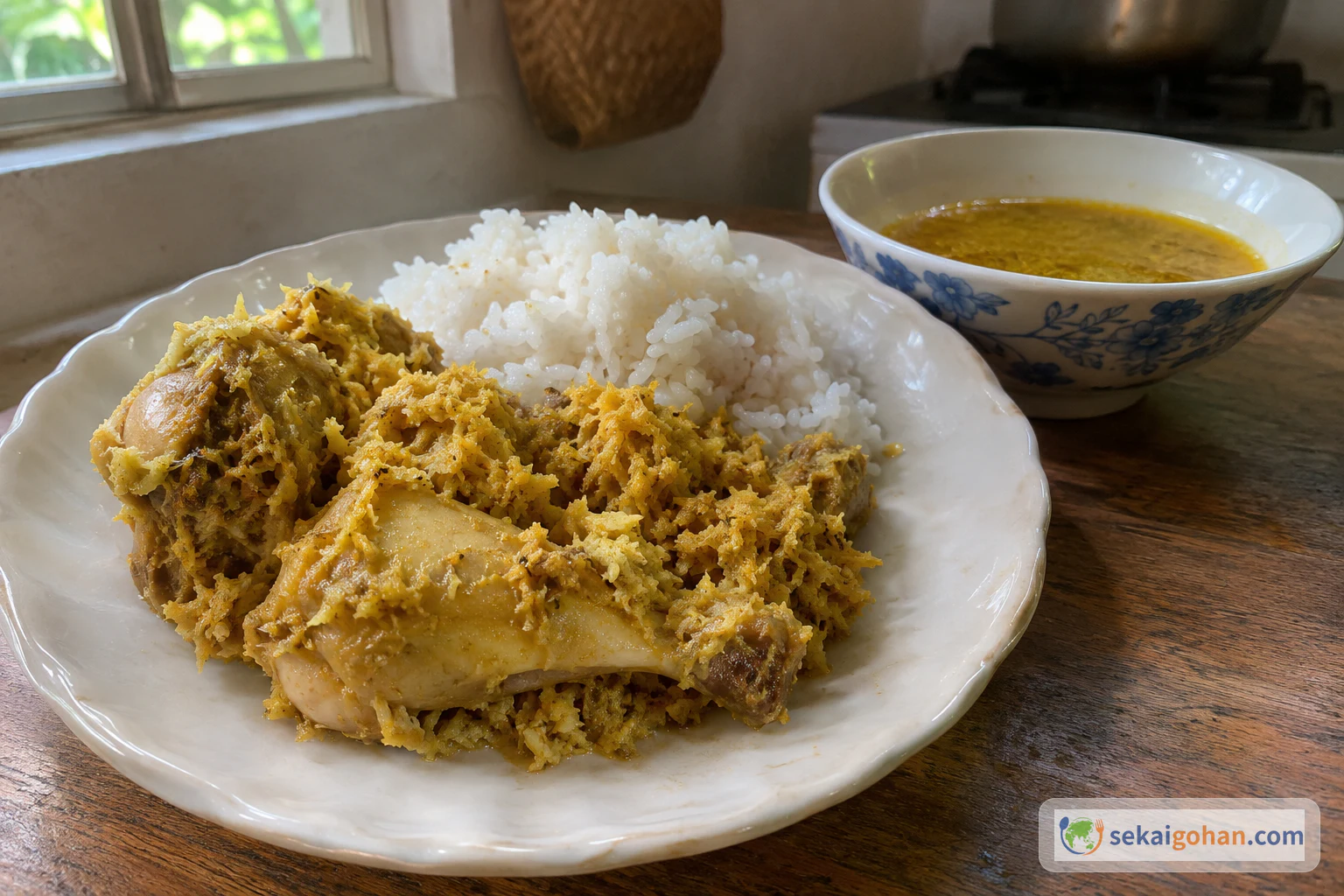
Pile the papar-coated chicken onto a serving plate, scraping in any coconut left in the pan. Ladle the remaining soup into a separate bowl. Bring both to the table with white rice. On the table you should see the dry, golden chicken on one plate and the green-flecked coconut soup in its own bowl.