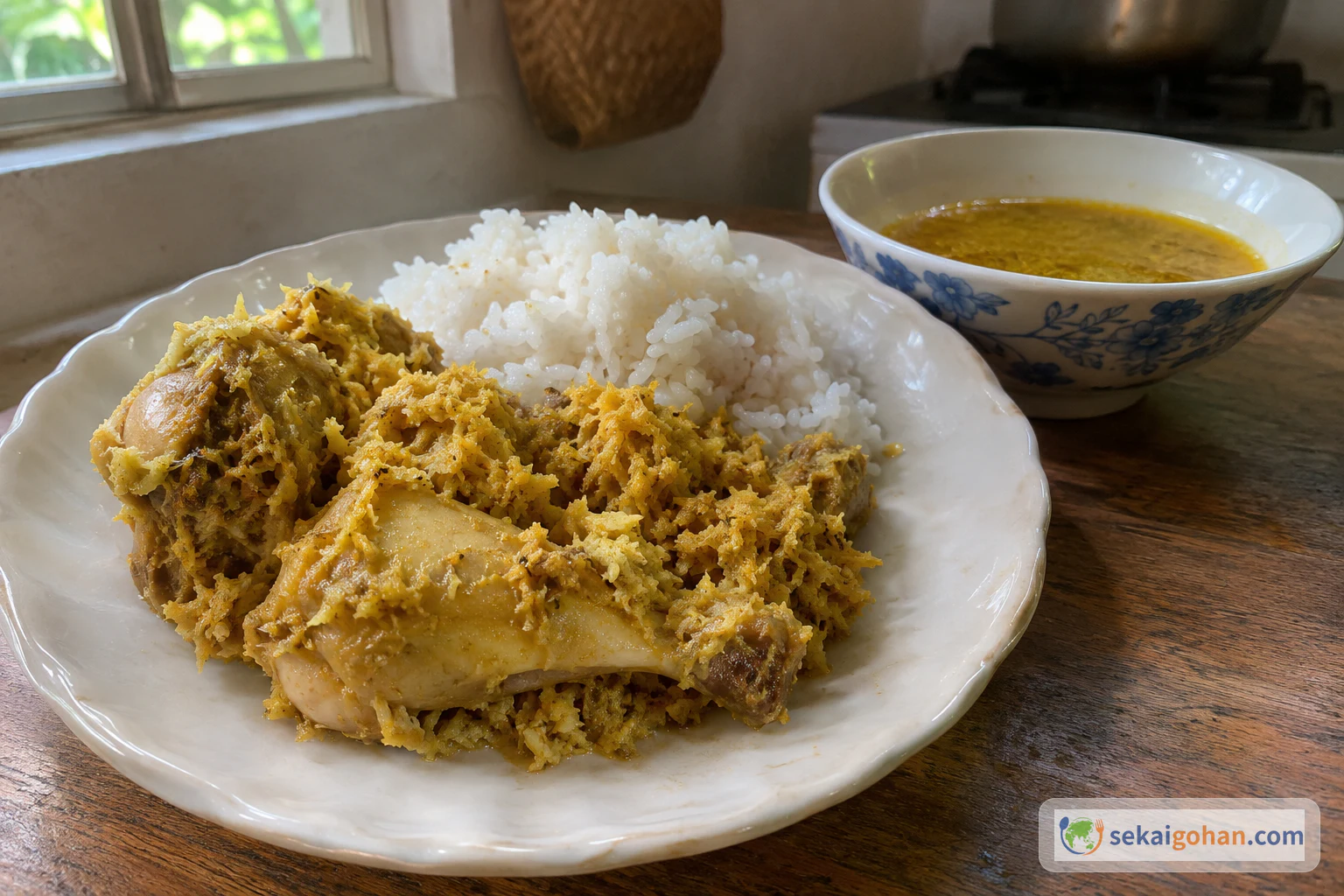
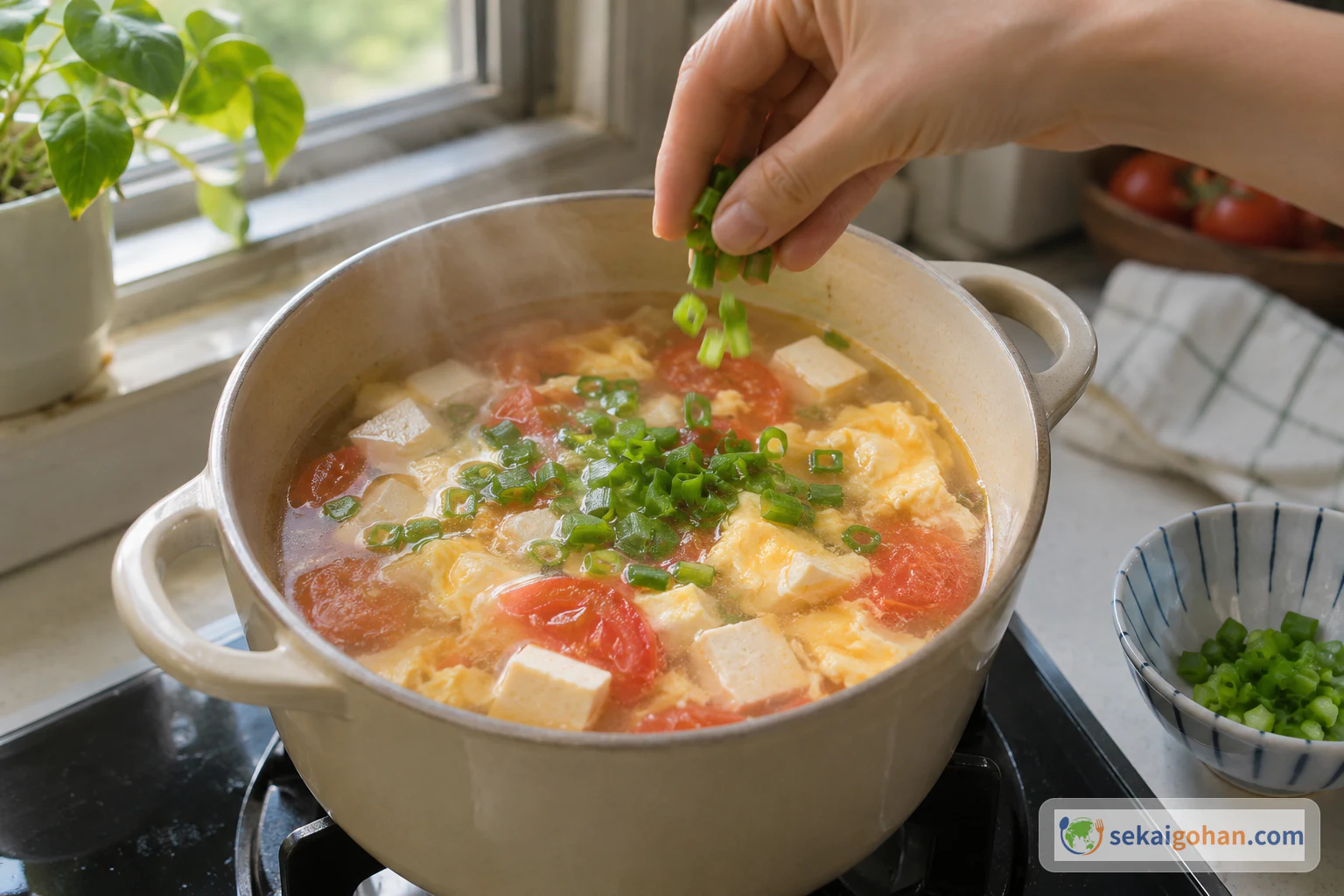
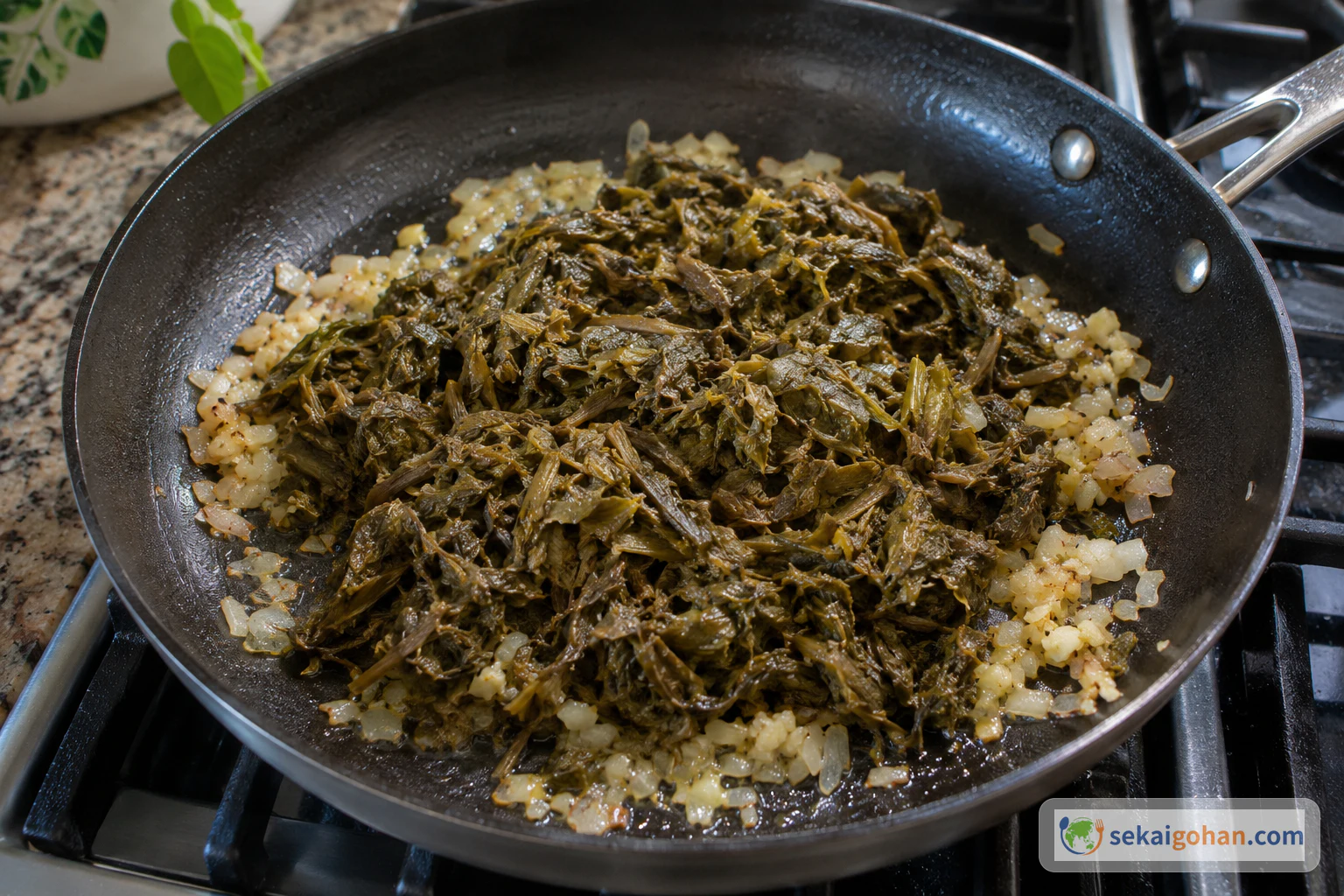
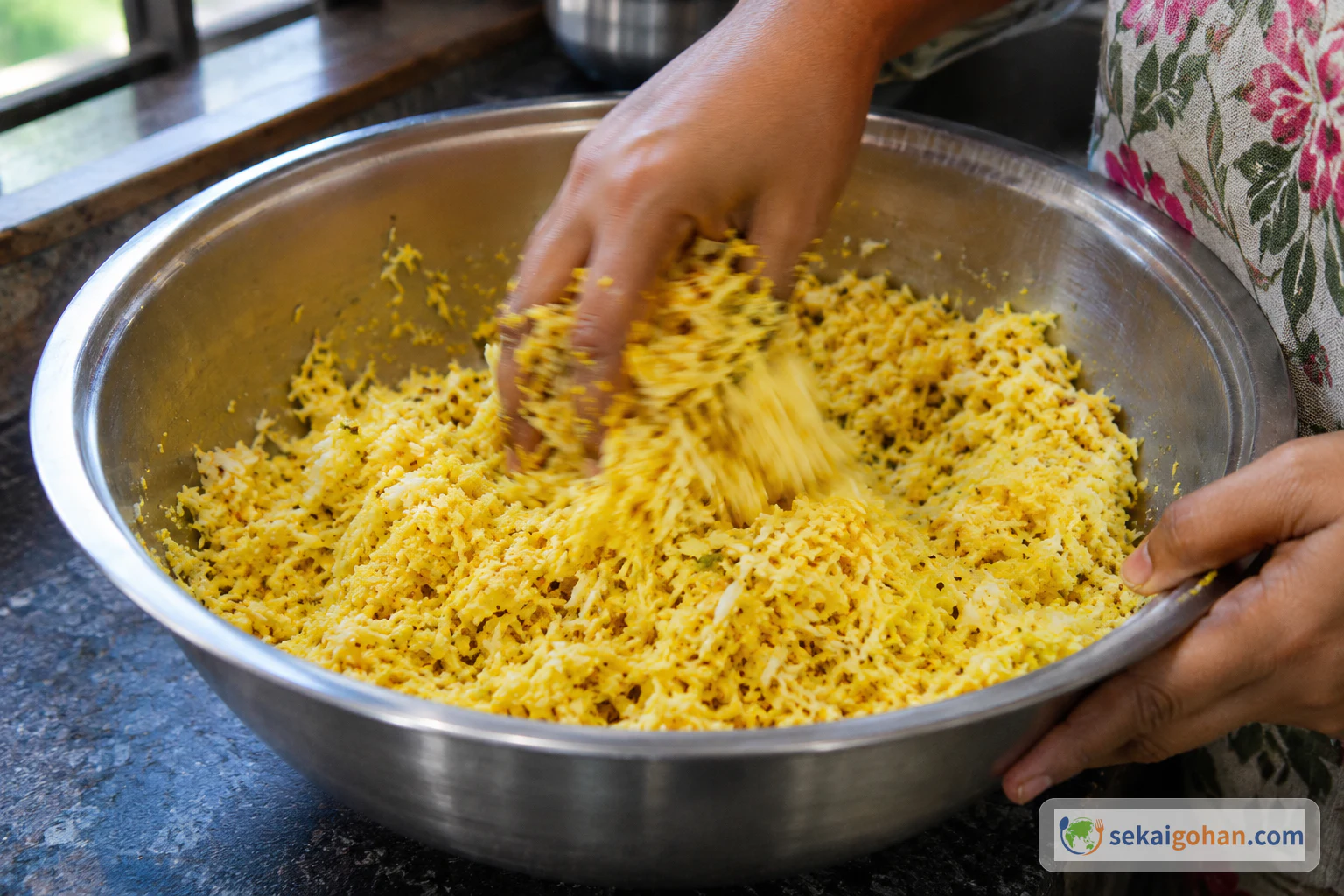
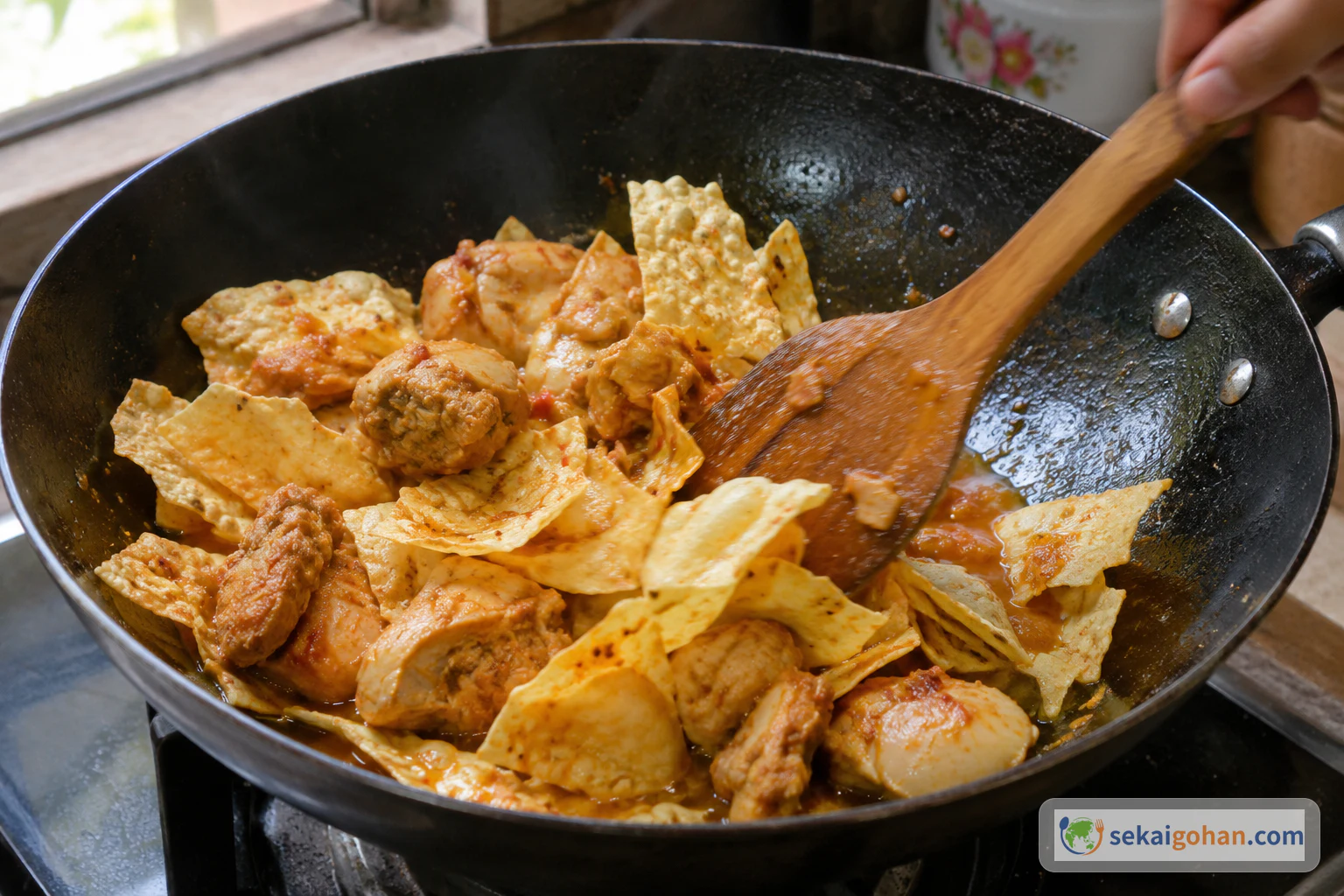
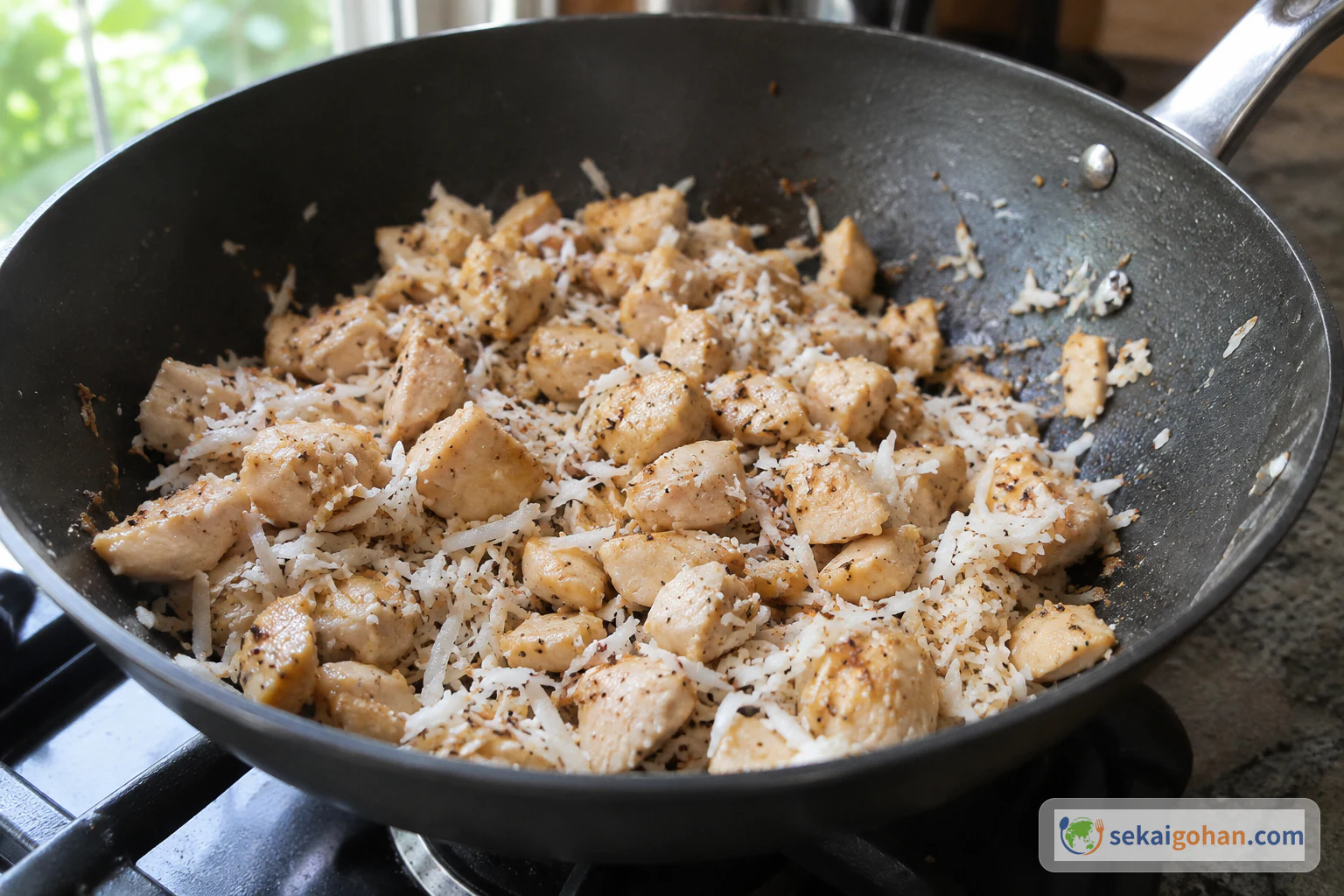
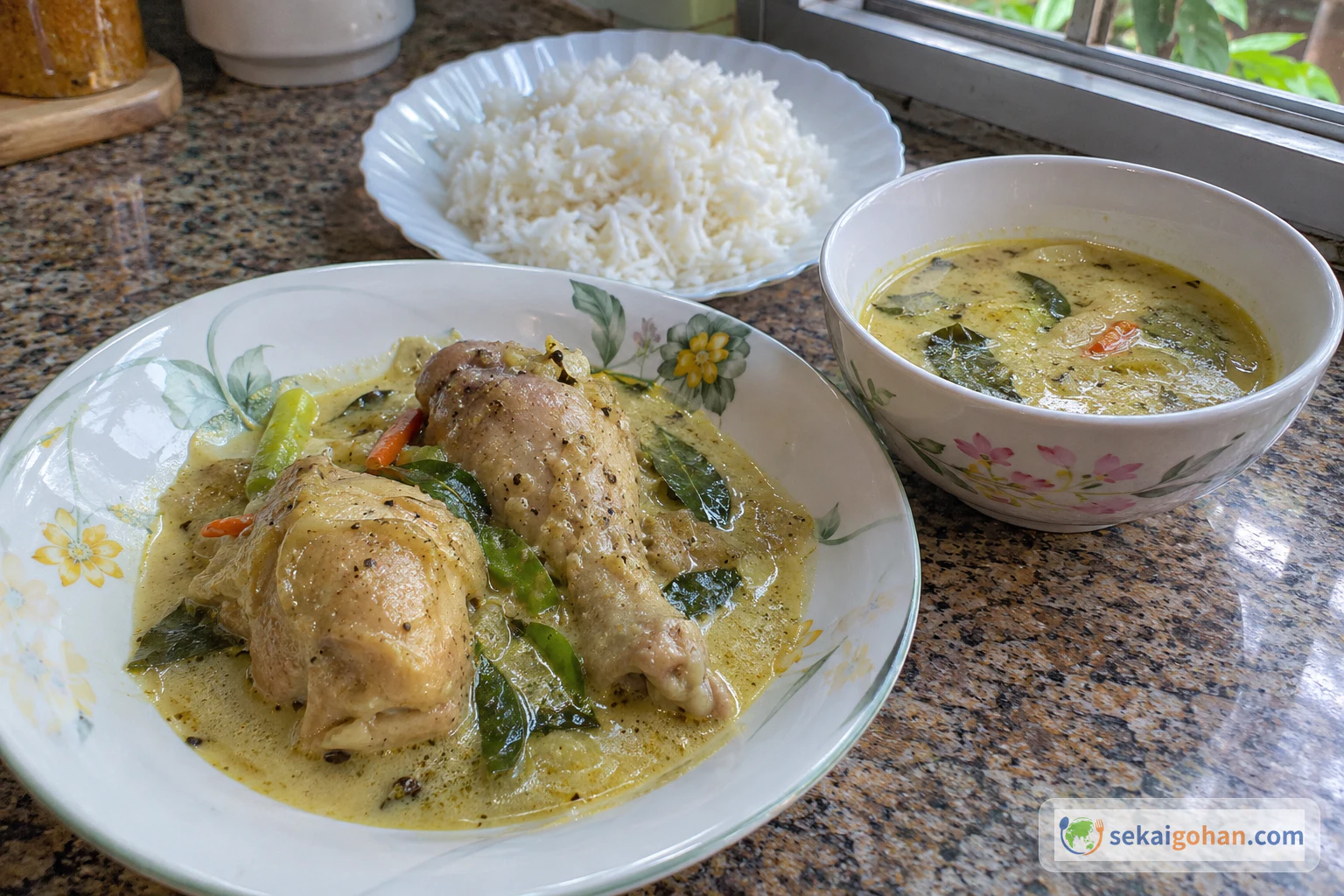
The last minute of piaparan happens in a skillet. Chicken comes out of a pot of yellow coconut soup and goes into a heap of freshly grated coconut stained gold with turmeric. A splash of the soup follows, and the pan hisses until the coconut clings to the meat and the bottom is almost dry. The rest of the soup is still waiting on the stove, green with spring onion, and it goes to the table in its own bowl next to the rice. Piaparan a manok is chicken cooked the Maranao way, from the Lake Lanao country of Mindanao: sweet with coconut, sharp with ginger, hot from bird's-eye chili, and finished with a coating of grated coconut you can feel between your teeth.
Palapa, Papar and a Pot of Coconut Soup
Three parts on one table
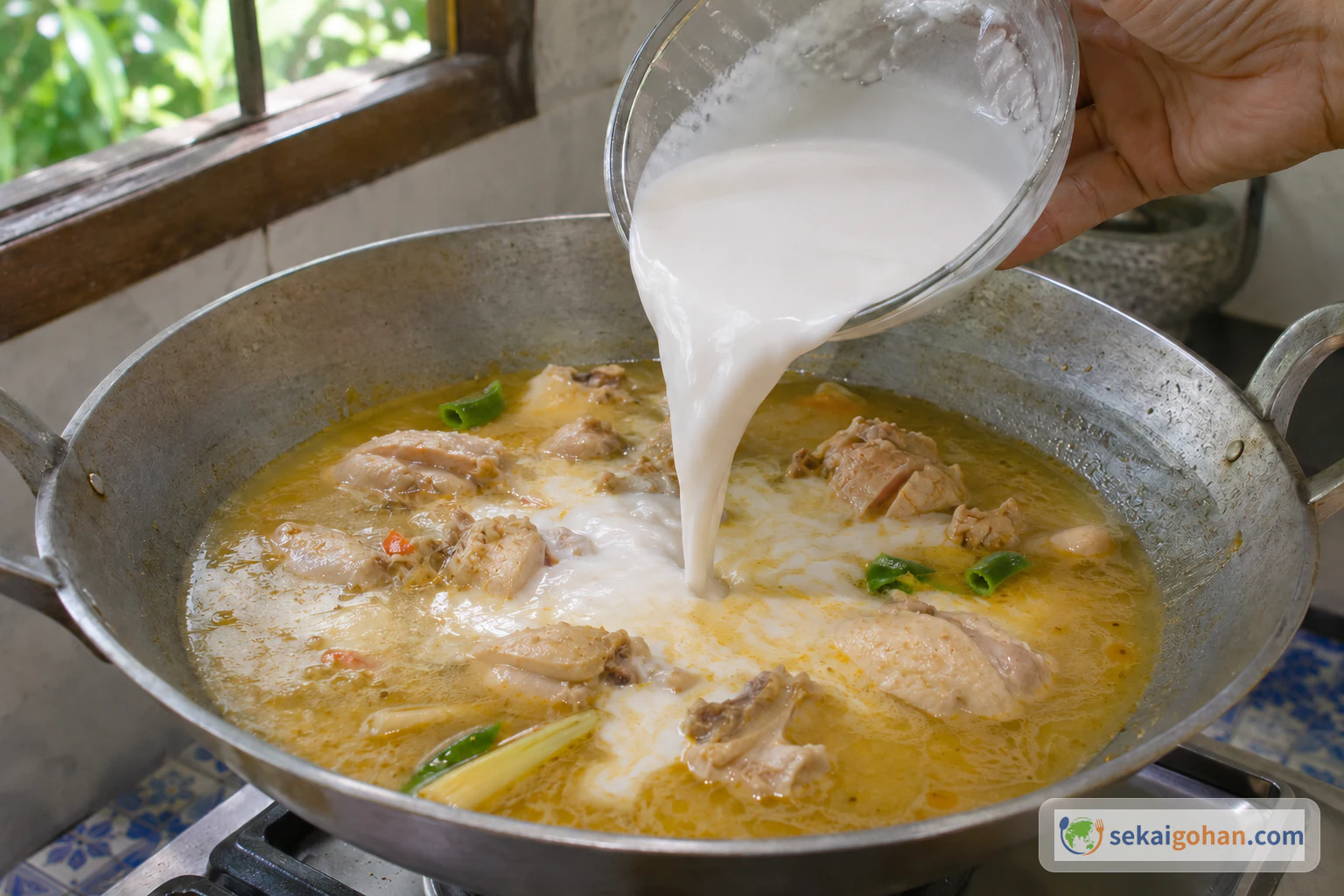
Piaparan is built from three parts. First comes palapa, the coarse pounded seasoning that Maranao cooking starts from. Then there is the chicken and its coconut soup, cooked first in thin coconut milk and finished with thick cream. Last comes papar, the grated coconut fried with turmeric and more palapa, which the chicken is tossed in at the end. The author of the main recipe reads the name as "with papar," after that last part. The chicken and the soup reach the table separately, so each person can keep the coated pieces dry or spoon soup over their rice.
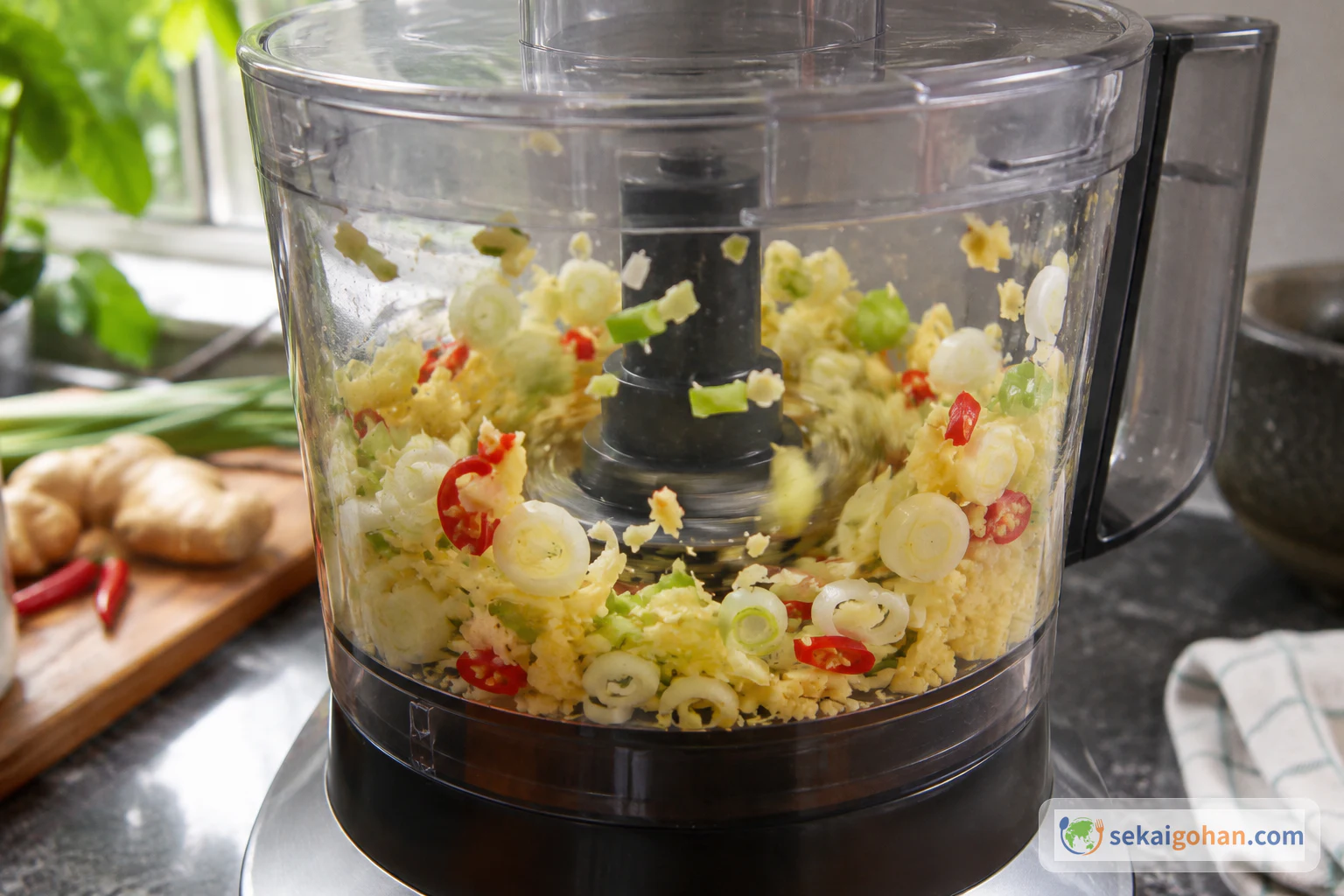
Palapa holds the taste of the dish together. In Maranao kitchens it is pounded from sakurab (also written sakhurab), a native scallion, with ginger and bird's-eye chili. This version uses the white part of an ordinary spring onion in place of the sakurab. It gives a fresh oniony bite, though it does not taste quite like the native scallion. The palapa goes in twice, once into the soup pot and once into the papar skillet, so the ginger and chili come through in both.
A home dish that changes from house to house
Piaparan is family cooking, and each household has its own way of making it. The author of the main recipe remembers this chicken piaparan on her family's Eid table. Other versions bring chicken cube or broth, bay leaf and bottled seasonings into the pot. The version here keeps to fresh coconut pressed by hand, two coconut extracts kept apart, and one cup of grated coconut held back for the papar. The split of turmeric between the soup (1–2 teaspoons) and the papar (½ teaspoon) is our own division of a single listed amount.
Piaparan is not like other Filipino coconut dishes. Laing simmers leaves in coconut milk until they collapse, and sinigang is a sour broth. Piaparan is closer to two dishes served together: a mild coconut soup, and chicken fried almost dry in spiced coconut. For more of the country's cooking, see Philippines.
Maranao hospitality has its own word for a feast laid out to honor guests and mark celebrations: pagana, or kapagana. It is a formal way of serving special food. The material on pagana is about Maranao hospitality in general and does not mention piaparan.
Ingredients
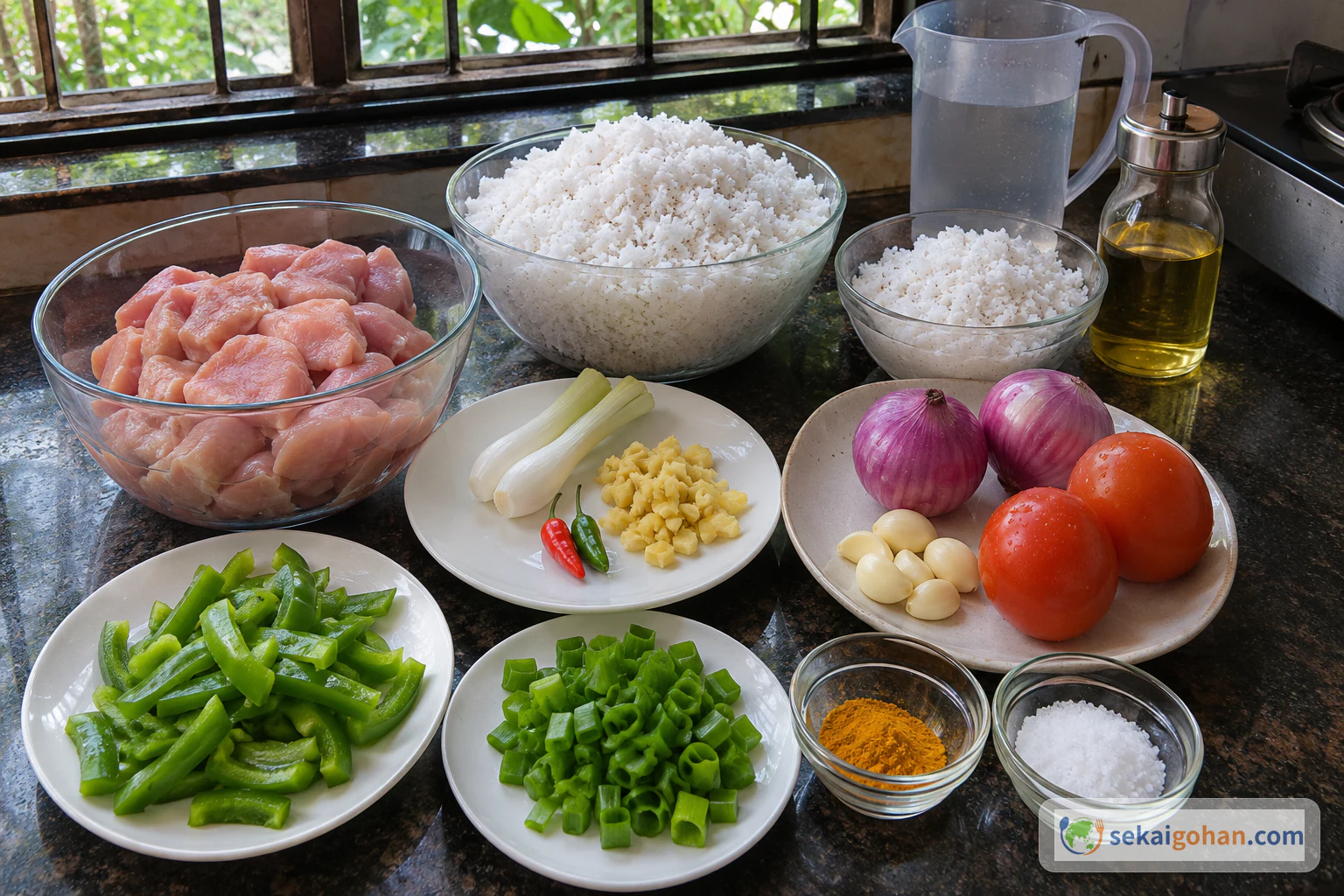
Several items are listed as two amounts joined by "+". The first goes into the soup pot and the second into the papar skillet. Keep the two sets apart from the start.
Coconut is the base of both the soup and the papar and cannot be left out. Fresh chilies are hot. Wash your hands after handling them and keep them away from your eyes. The green spring onion goes in at the end without further cooking, so rinse it well under running water before slicing, and rinse the other vegetables too.
Equipment
- Food processor, or a mortar and pestle
- Two or three large bowls and a sturdy fine strainer for pressing coconut
- A pot with a lid for the chicken and soup
- A separate skillet or frying pan for the papar
- A food thermometer
- A cutting board and plate used only for raw chicken
- A serving plate and a separate bowl for the soup
Choosing and Substituting
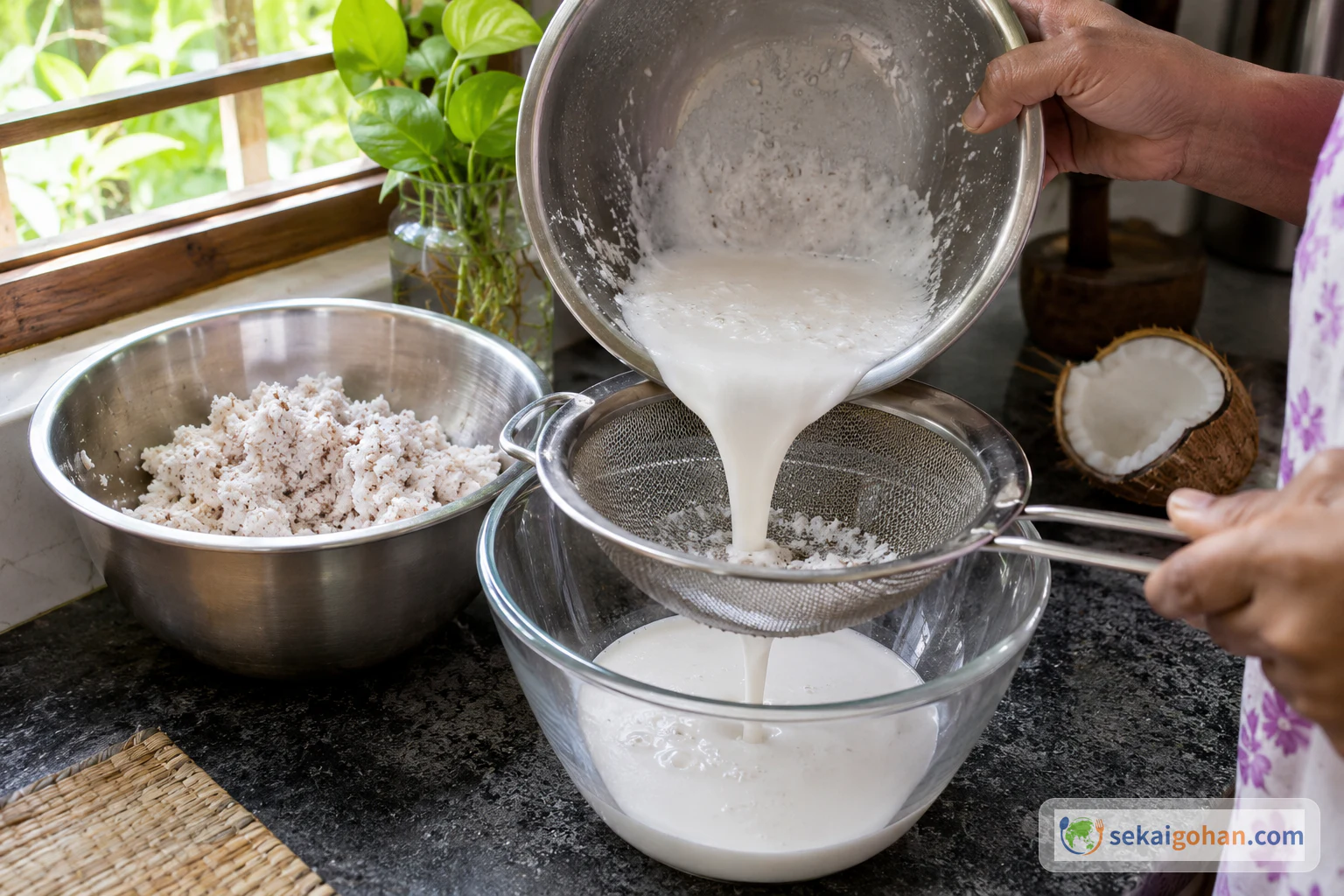
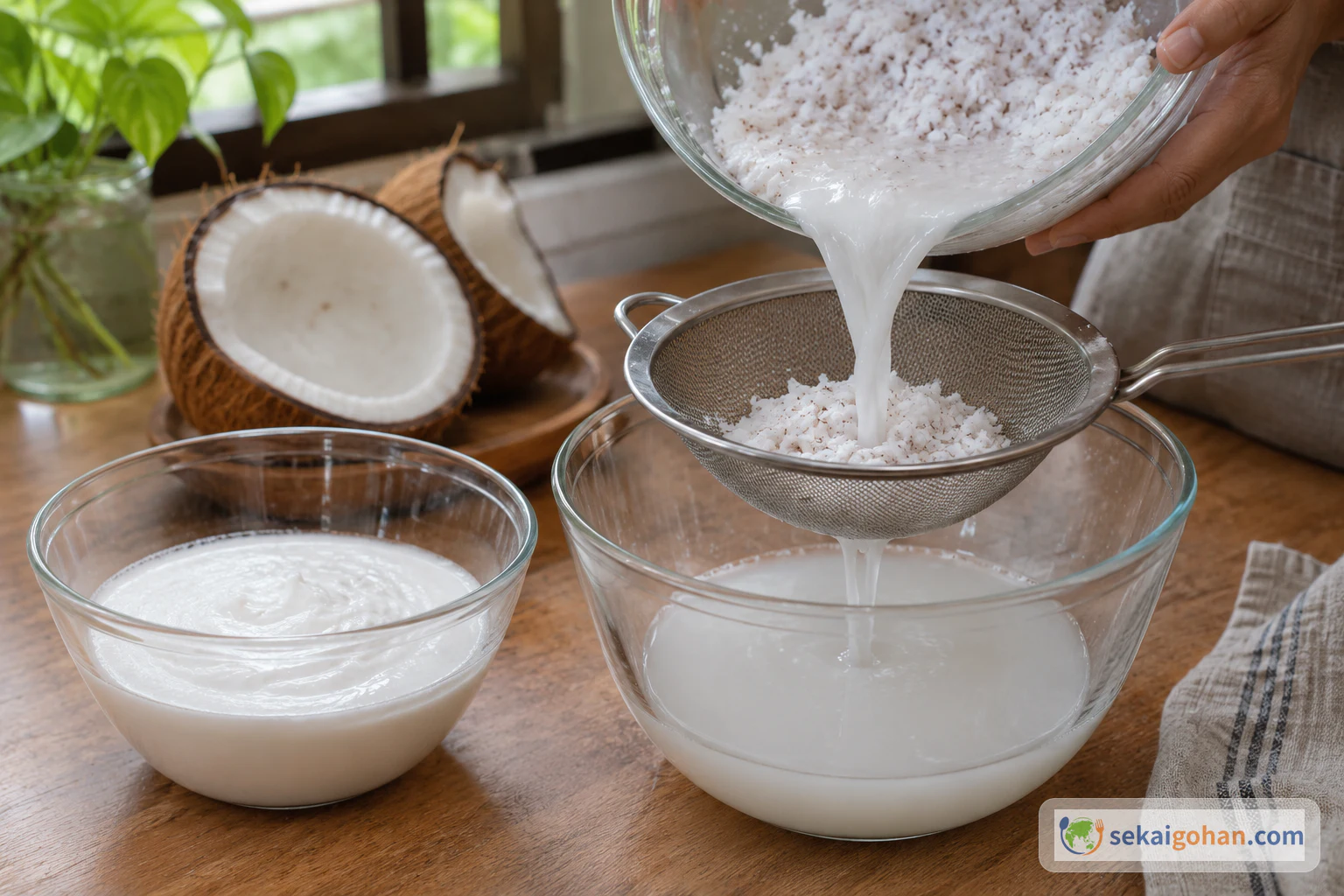
Fresh grated coconut is the one thing to keep. The thick cream, the thin milk and the papar all come from it. Canned coconut milk leaves you without solids for the papar. Dried coconut does not press the same way. Both take you to a different dish, so buy fresh grated coconut wherever it is sold and buy all four cups at once.
| Item | What works | What it changes |
|---|---|---|
| Sakurab | White part of spring onion | Keeps the fresh, sharp onion note in the palapa. It does not taste quite like the native scallion |
| Bird's-eye chili | One chili instead of two | Milder palapa in both pans. The ginger comes forward |
| Bell pepper | Any color | Green tastes a little sharper, red and yellow a little sweeter. The structure of the dish stays the same |
| Chicken | Bone-in or boneless pieces, skin removed | Check the thickest part with a thermometer either way, keeping the probe off bone |
The palapa does not need a special tool. Either a food processor pulsed briefly or a mortar will do, provided you stop while the pieces are still coarse.
Method
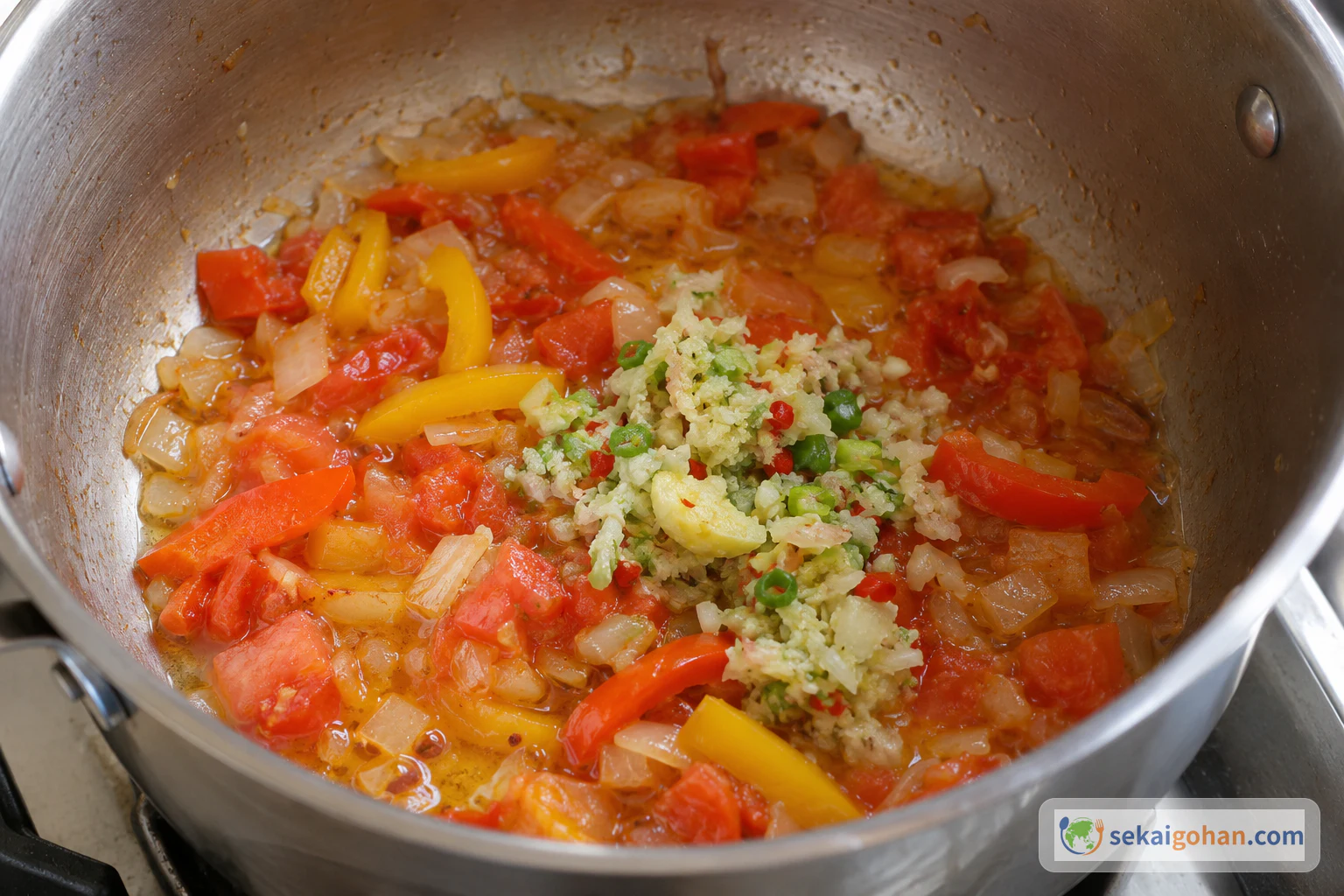
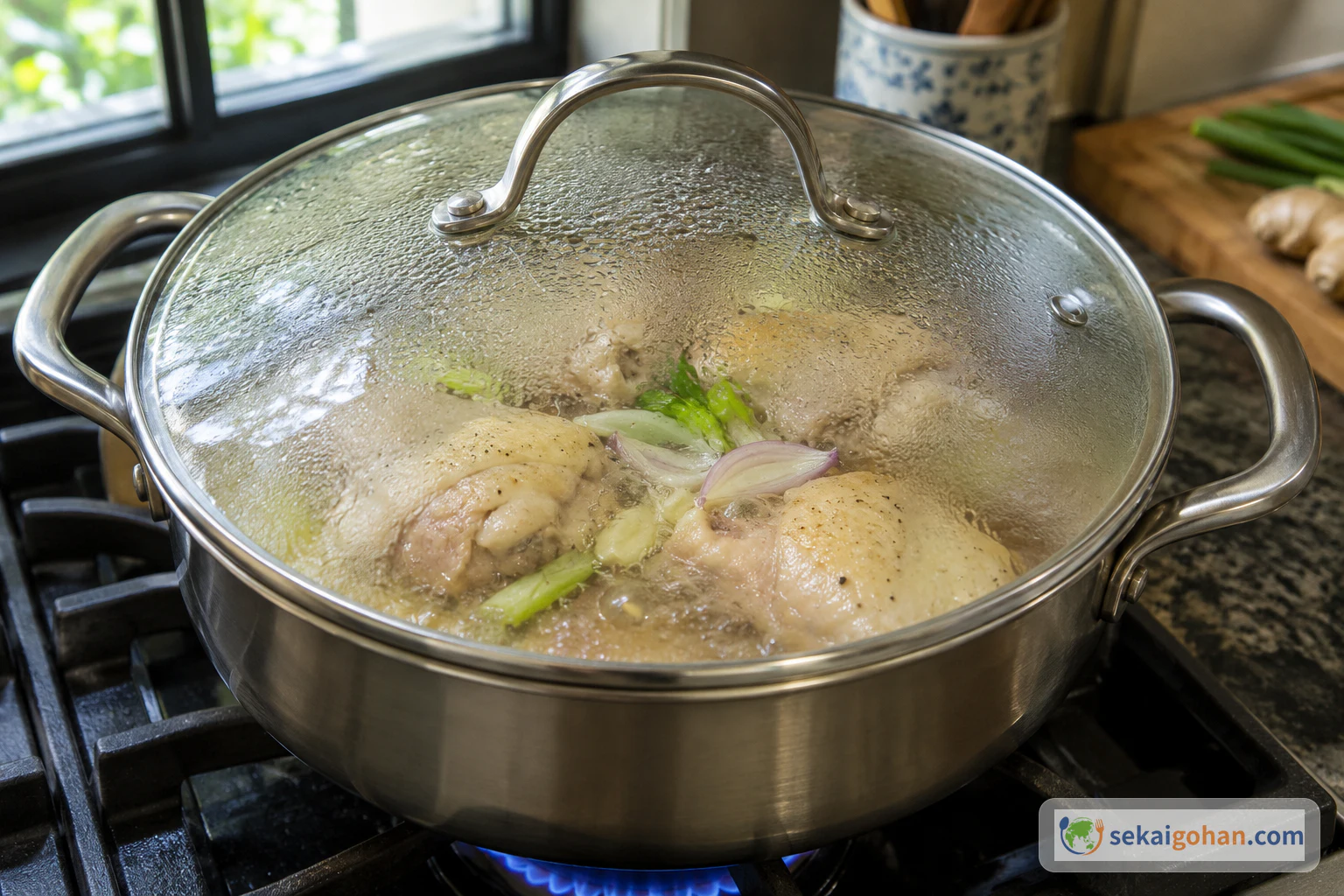
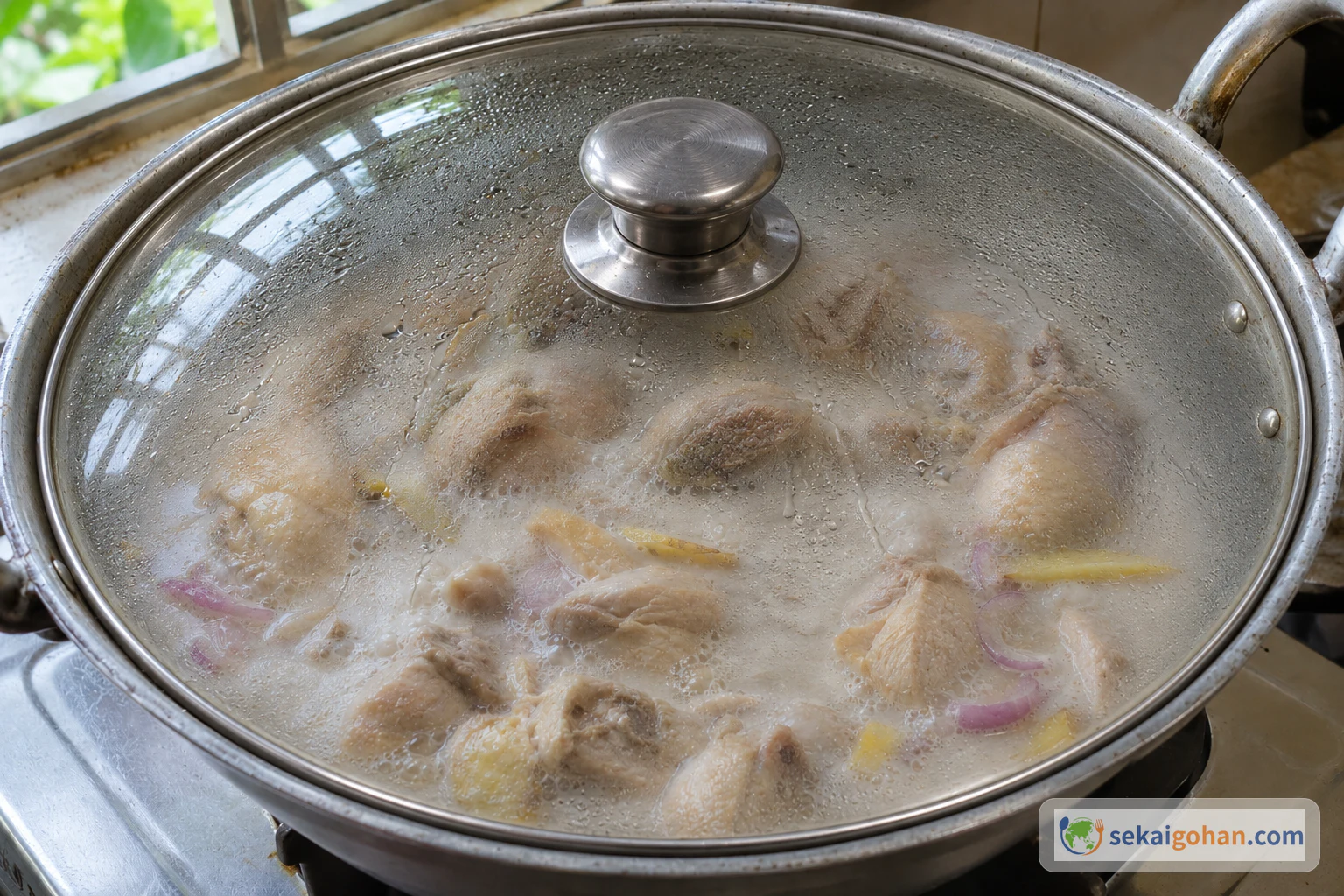
The work splits into three stretches. First the palapa and the two coconut pressings, all done by hand at the counter before any heat goes on. Then the soup pot, where most of the time is covered cooking: 5 minutes, then 15. Once the soup is off the heat, a second skillet takes the rest of the aromatics and the reserved coconut. Keep raw chicken on its own board and plate throughout.
When It Goes Wrong
| What you see | Why | What to do |
|---|---|---|
| There is nothing left to press a second time | The solids were thrown out after the first press | Put the squeezed solids in their own bowl before you deal with the cream. Without them there is no thin milk |
| No grated coconut is left for the papar | The reserved cup went into the pressing | Measure out 1 cup first, before any water touches the coconut |
| The skillet has no aromatics or palapa to start | Everything went into the soup pot | Divide the vegetables and palapa into two sets before the heat goes on |
| The pot bottom starts catching during the 5-minute cook | The pot is too dry, or the heat is too high | Lift the lid, stir and lower the heat. Keep checking until the thin milk goes in |
| The papar is wet and heavy | Too much soup went into the skillet | Keep cooking until the pan is nearly dry. Next time add only about ¼ cup of soup |
| The thermometer reads under 165°F (74°C) | The thickest pieces need more time | Keep cooking the chicken and check again. Move nothing into the papar until it reads 165°F (74°C) |
Serving, Variations and Storage
At the table
Piaparan goes to the table as two dishes and rice: the papar-coated chicken on a plate and the coconut soup in a bowl. Spoon some soup over the rice, take a piece of chicken with its coconut, and you get both textures in one mouthful. The soup is mild and creamy. The coating carries the heat and the ginger.
Variations
- Sakurab palapa. If you can find the native scallion, use it in place of the white spring onion for the palapa that Maranao cooking is built on.
- Hotter or milder. Use two bird's-eye chilies for real heat in both pans, or one for a gentler dish. Since the palapa is split evenly, the soup and the papar change heat together.
- Broth and bay leaf. Some versions cook the chicken with chicken cube or broth and bay leaf. That is a different recipe from the one here.
Storage
Cool leftovers and refrigerate them in shallow, covered containers within two hours of cooking. If the room is above 90°F (32°C), refrigerate them within one hour. Reheat leftovers to 165°F (74°C) before serving.
Frequently Asked Questions
Why does the soup go into the papar at all if it is served separately?
A small splash helps the coconut stick. Dry grated coconut does not cling to chicken. A little soup turns it tacky, and the minute of cooking drives the liquid off and sets the coating. The rest of the soup is there for the rice.
Can I make the palapa ahead?
This recipe makes it at the start, before any heat goes on, and a brief pulse takes only seconds. No make-ahead time is given, so pound it when you begin cooking.
Bone-in or boneless chicken?
Either works, as long as the skin is off. When you check the chicken, place the thermometer in the thickest meat, away from bone, fat and gristle.
Can I press the coconut in a blender instead of by hand?
Squeezing by hand lets you feel when the coconut has given up its cream. It also keeps the solids intact for the second press. Do the squeezing by hand and use the strainer to press out the last of the liquid.