Ingredients and steps on one page. Print it, or choose “Save as PDF” in the print dialog.
Sekai Gohan
Chanh Muối: Vietnamese Whole Limes Cured in Salt Brine
Ingredients
| Ingredient | Amount | Role |
|---|---|---|
| Small limes (chanh); small lemons as a swap | 20, all about the same size | The fruit that cures. Matching sizes cure at the same pace and pack evenly under the plate |
| Coarse salt (muối hạt) | 7 oz (200 g), weighed | The whole cure. All of it goes into the brine |
| Water | about 2 quarts (2 L) | Dissolves the salt into the brine that covers the fruit |
Steps
1Wash and rub the limes
Put the limes in a colander and rinse them well under running water. Rub each one lightly between your palms as you go, just enough to bring a little juice to the surface, so the skin takes the brine more easily. Move the rubbed fruit to a bowl, and set aside any lime with a deep cut or strong discoloration. Pat them dry with a clean towel. Each lime that goes in should feel firm, show no breaks in the skin and give slightly when you press it.
2Make the brine
Put the water and all 7 oz (200 g) of salt in a saucepan and heat it, stirring until the salt disappears. When it boils, lift off the gray foam that rises with a skimmer. Turn off the heat and let the brine cool on the stove. It is ready when it is clear, with no crystals left on the bottom, and cool to the touch.
3Sterilize the jar and pack the fruit
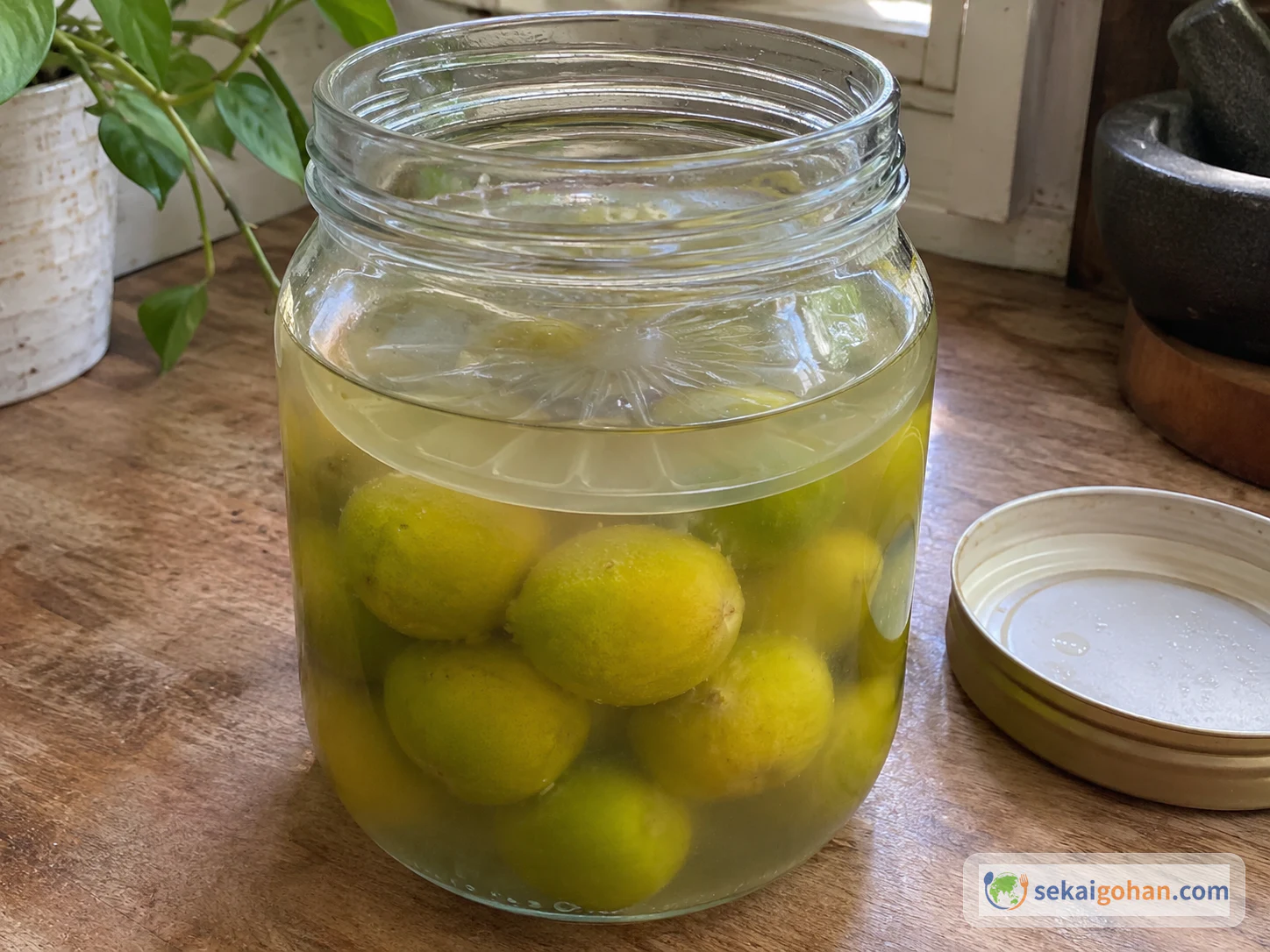
Wash the jar and lid, then boil them in a large pot of water for 10 minutes. Lift them out and let them air-dry upside down on a clean towel. Pack the limes snugly into the dry jar, filling the gaps so no fruit has room to float. Press the small plastic plate down on top. The plate should sit flat and hold the top layer of fruit firmly in place.
4Pour in the brine and cover with cloth
Pour the cooled brine through a fine strainer into the jar to catch any sediment. Stop when it covers the fruit by about ¾ inch (2 cm). Look through the side of the jar and check that the plate holds every lime under. Tie a clean, thin cloth over the mouth with a rubber band. You are done when brine stands above the plate and no fruit breaks the surface.
5Cure two weeks in a cool, dark cupboard
Set the jar inside a cupboard at room temperature, out of direct sunlight. Once a day, turn the jar gently so the salt spreads through the brine. Each time, check that no lime has worked its way above the surface. Over the two weeks the skins slowly fade paler. That is how it cures, but it tells you nothing about safety. The daily check that counts is brine over every fruit and no mold.
6Move to the fridge and take fruit out cleanly
After two weeks, take off the cloth, close the jar with its lid and move it to the refrigerator. When you want a lime, lift it out with clean, dry tongs or chopsticks, and put the lid back right away. Open the jar as few times as you can. Rinse the lime under water to wash off excess salt before you use it. Each time you open the jar, look and smell: no mold above the brine, no slime and no off smell.