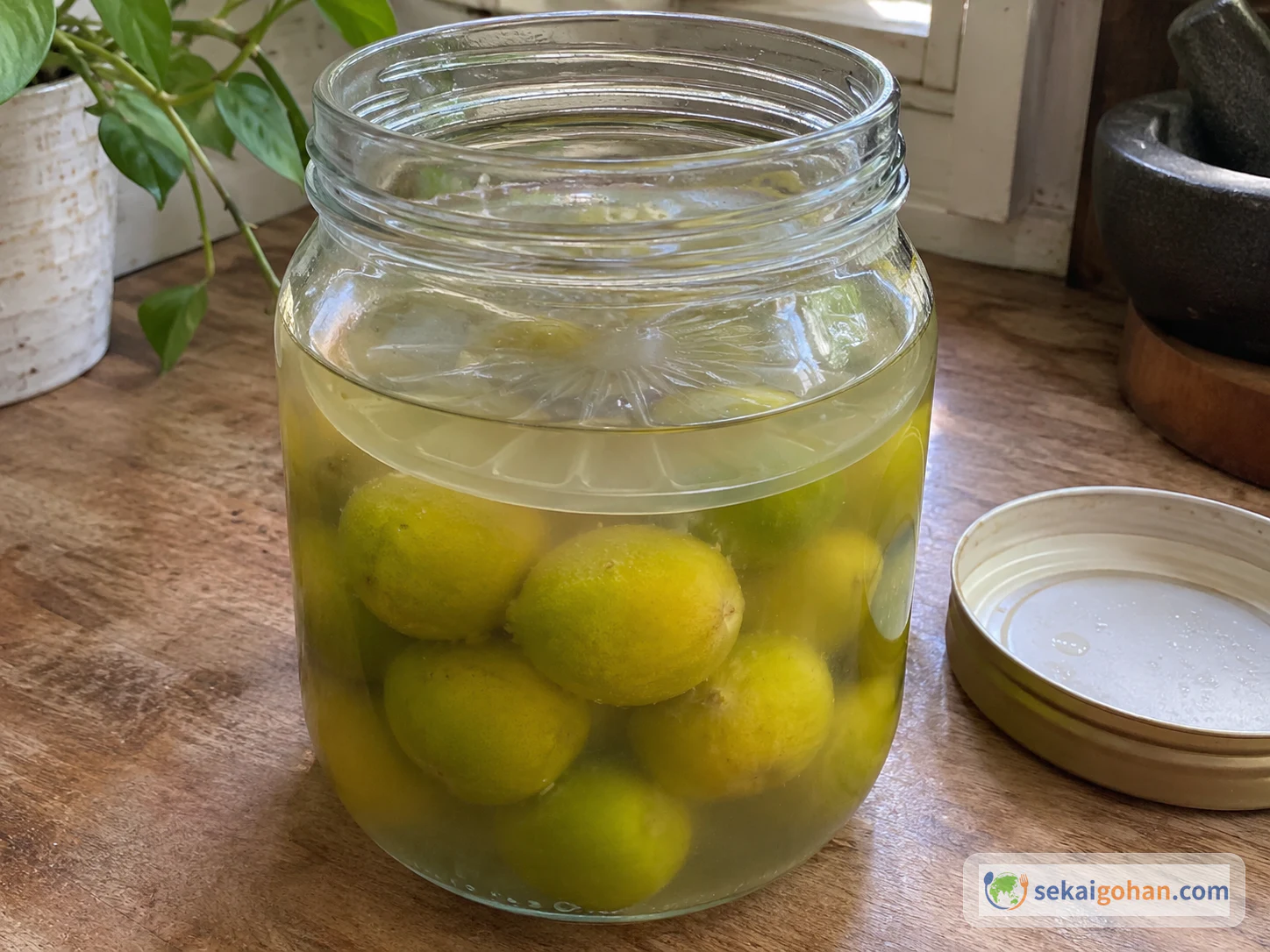
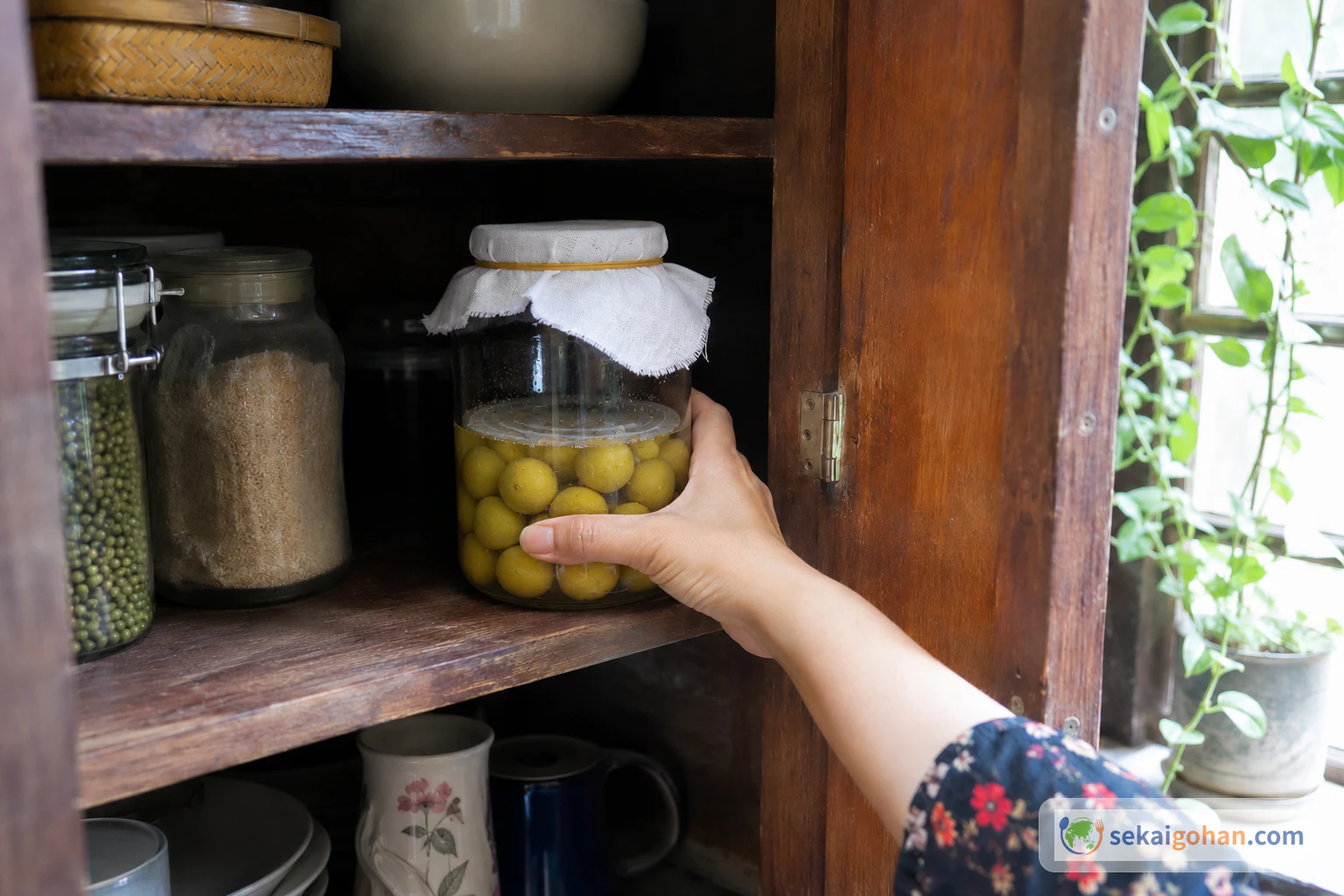
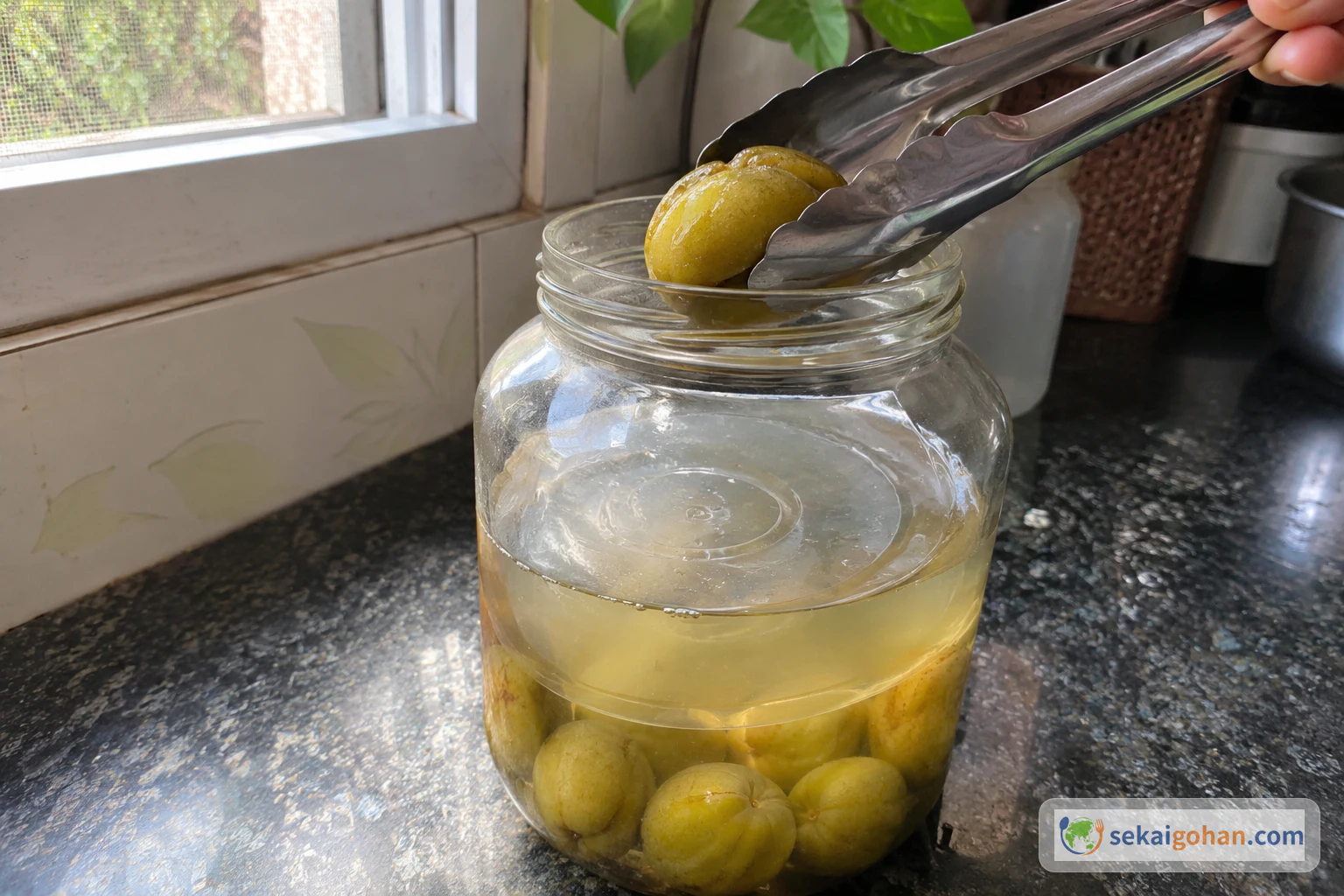
Through the glass you can see twenty small limes pressed under a plate, sunk in pale salt brine. Day by day their green skins fade a little toward yellow. This is chanh muối, Vietnam's salt-cured citrus, put up so there is a jar ready when the weather turns hot. Its best-known use is in a tall glass: half a preserved lime, ice, sugar and water. That glass is nước chanh muối, a lemonade that is salty, sour and sweet in the same sip, with a bitter note from the cured peel.
The jar itself is plain work. Weigh the salt, dissolve it in water, pack the fruit and keep every lime under the brine. Then you wait two weeks in a dark cupboard before the jar goes into the fridge.
The Jar Behind the Salty Lemonade
The name splits neatly. Chanh is the small citrus fruit and muối is salt, so chanh muối is the salted fruit in the jar. Put water, sugar and ice with it and you have nước chanh muối, the drink. People often use one name for both, but Vietnamese cooks keep them apart: one is a preserve you make once and dip into for weeks, the other is a glass you stir together in a minute. Club soda in place of still water gives you the fizzy version of the same drink.
Which fruit chanh means in the jar is not settled. The Vietnamese recipe behind this jar just says chanh and doesn't name a variety, and the limes and lemons sold in other countries are not always the same fruit. Small limes come closest. In Vietnamese communities on the US West Coast, cooks make chanh muối with lemons. That is a version from abroad and not necessarily the usual one in Vietnam.
Sun, cloth and a cupboard
In the Vietnamese recipe this jar follows, the fruit sits in the sun with a thin cloth tied over the mouth and is turned now and then until the skins go a creamy ivory. That recipe also blanches the fruit briefly in alum water before brining, which firms and pales the skin. This method skips both. The alum blanch is dropped, so all of the salt goes into the brine. The jar cures in a cool, dark cupboard, out of direct sunlight, for two weeks, and then moves to the refrigerator. The cloth cover stays.
The Vietnamese recipe calls for muối hạt, coarse granular salt, and gives it by weight. Weight is what makes the brine repeatable. Coarse salt packs differently from fine salt, so a cup of one is not a cup of the other.
The tart side of Vietnamese cooking turns up across the table. You find it in the sweet-sour dipping sauce of bún chả and in the sour fish soup canh chua cá. Chanh muối is the preserved form of that sourness, kept for the drink. To see more dishes from the same kitchen, start from Vietnam.
Ingredients
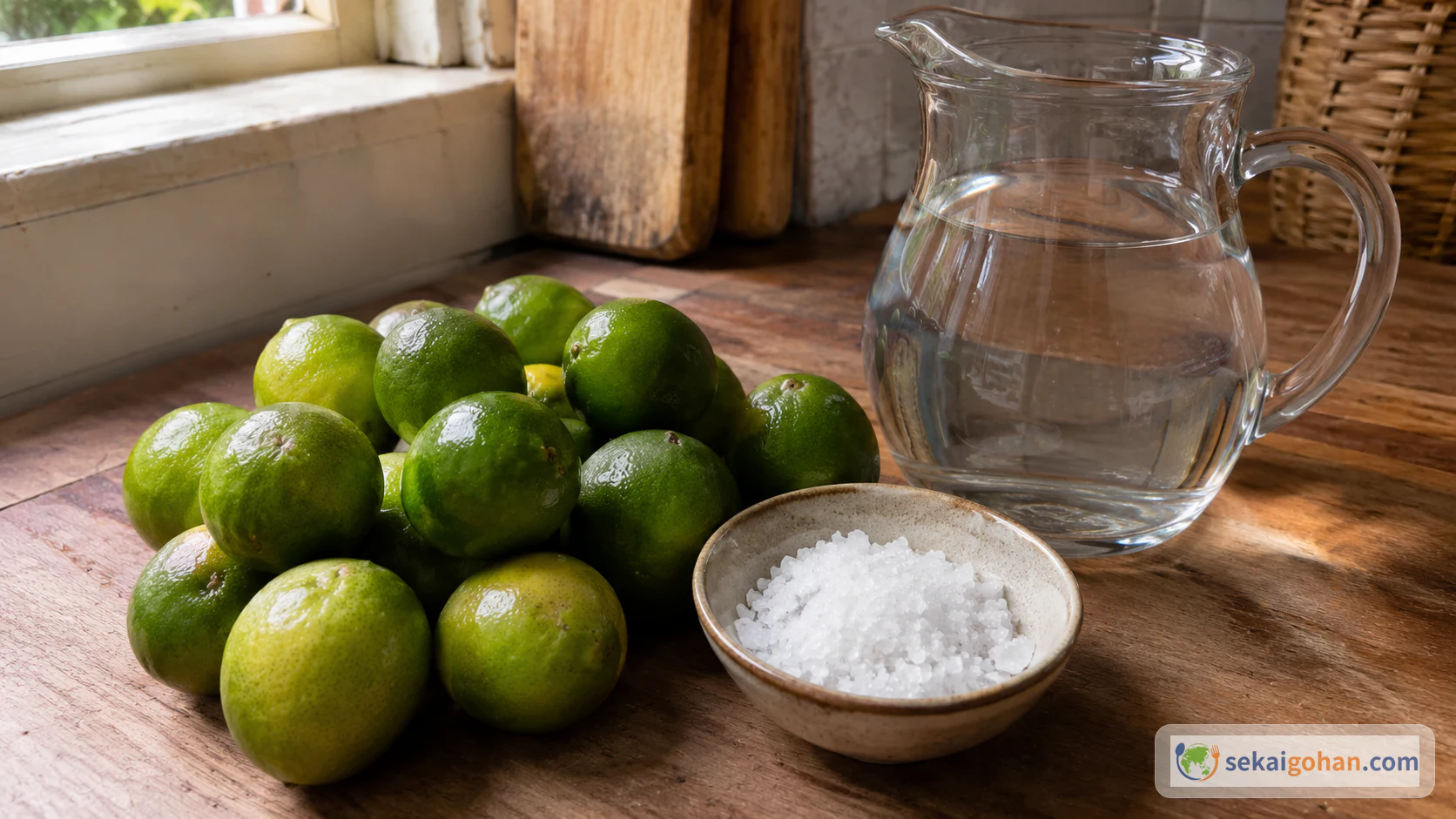
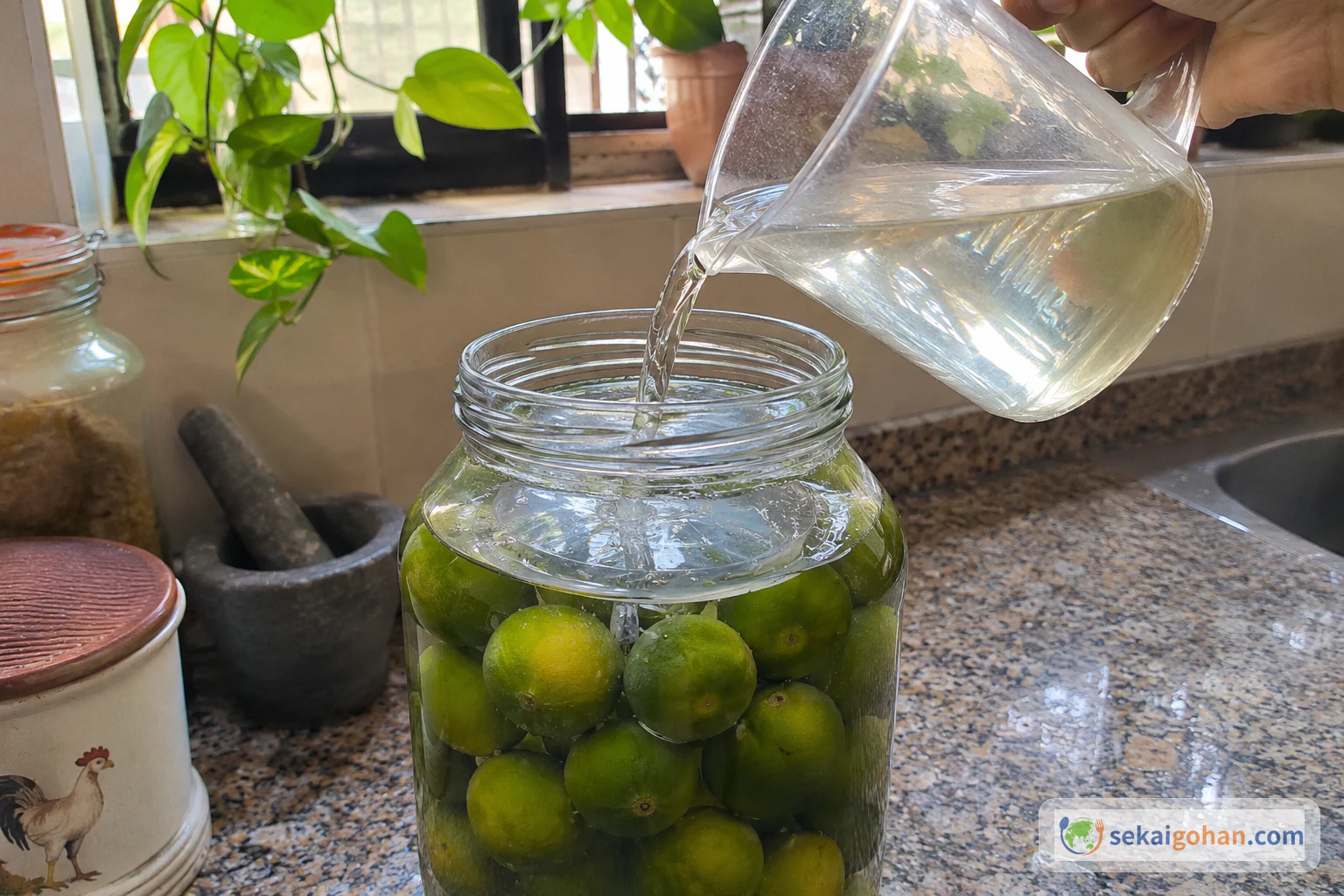
Put the pot on the scale and weigh 7 oz (200 g) of salt for about 2 quarts (2 L) of water. Keep that ratio whatever salt you buy. A different salt changes how the brine tastes. The ratio stays the same.
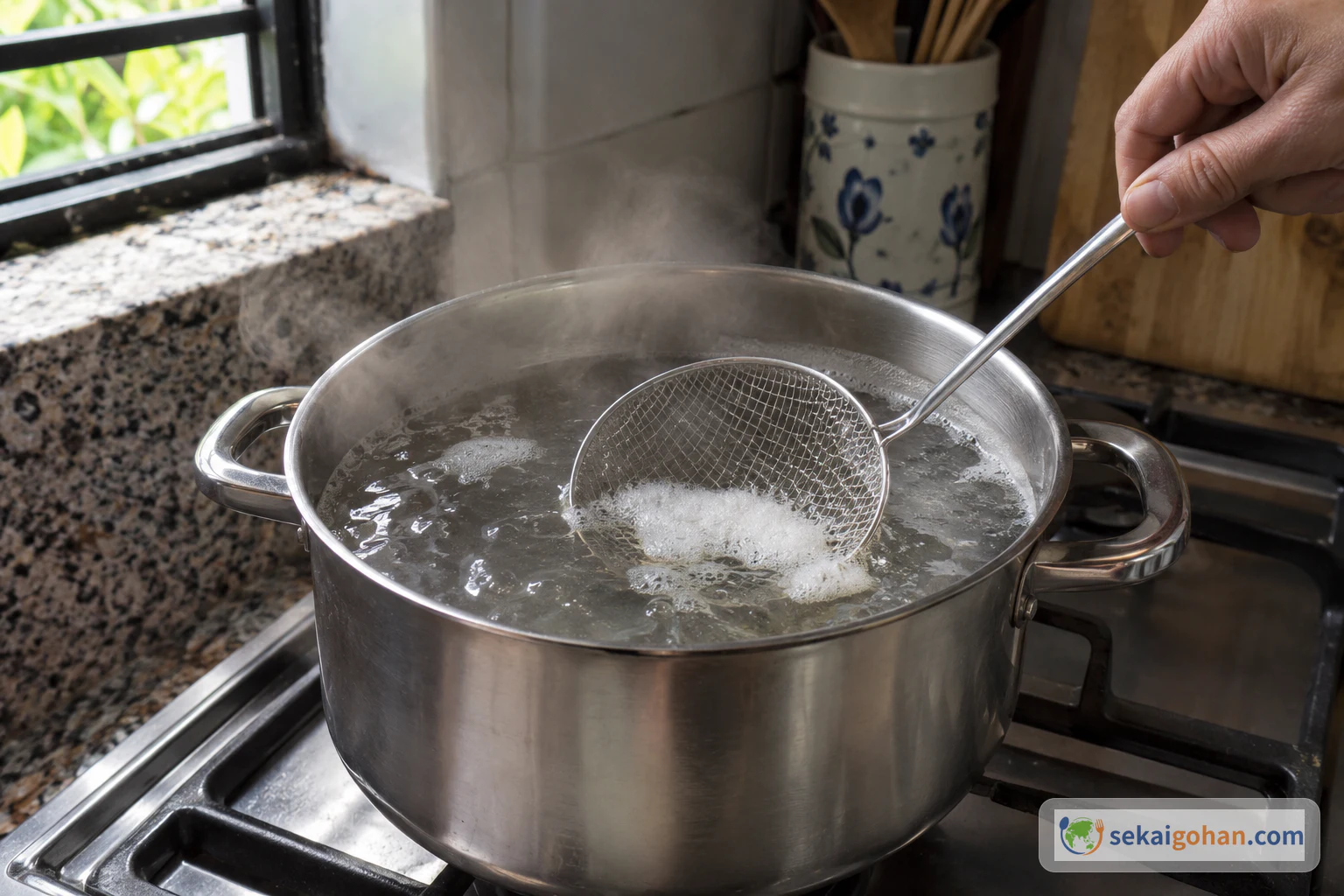
The preserve is limes, salt and water, with none of the common allergens. The brine comes to a boil and the jar is sterilized in boiling water, so use oven mitts or a jar lifter and set hot glass on a dry towel. Glass can crack on a cold, wet surface.
Equipment
- Wide-mouth glass jar with a lid, big enough for 20 limes plus brine over the top, and safe to boil (or two smaller jars)
- Large pot to sterilize the jar
- Saucepan for the brine
- Perforated skimmer
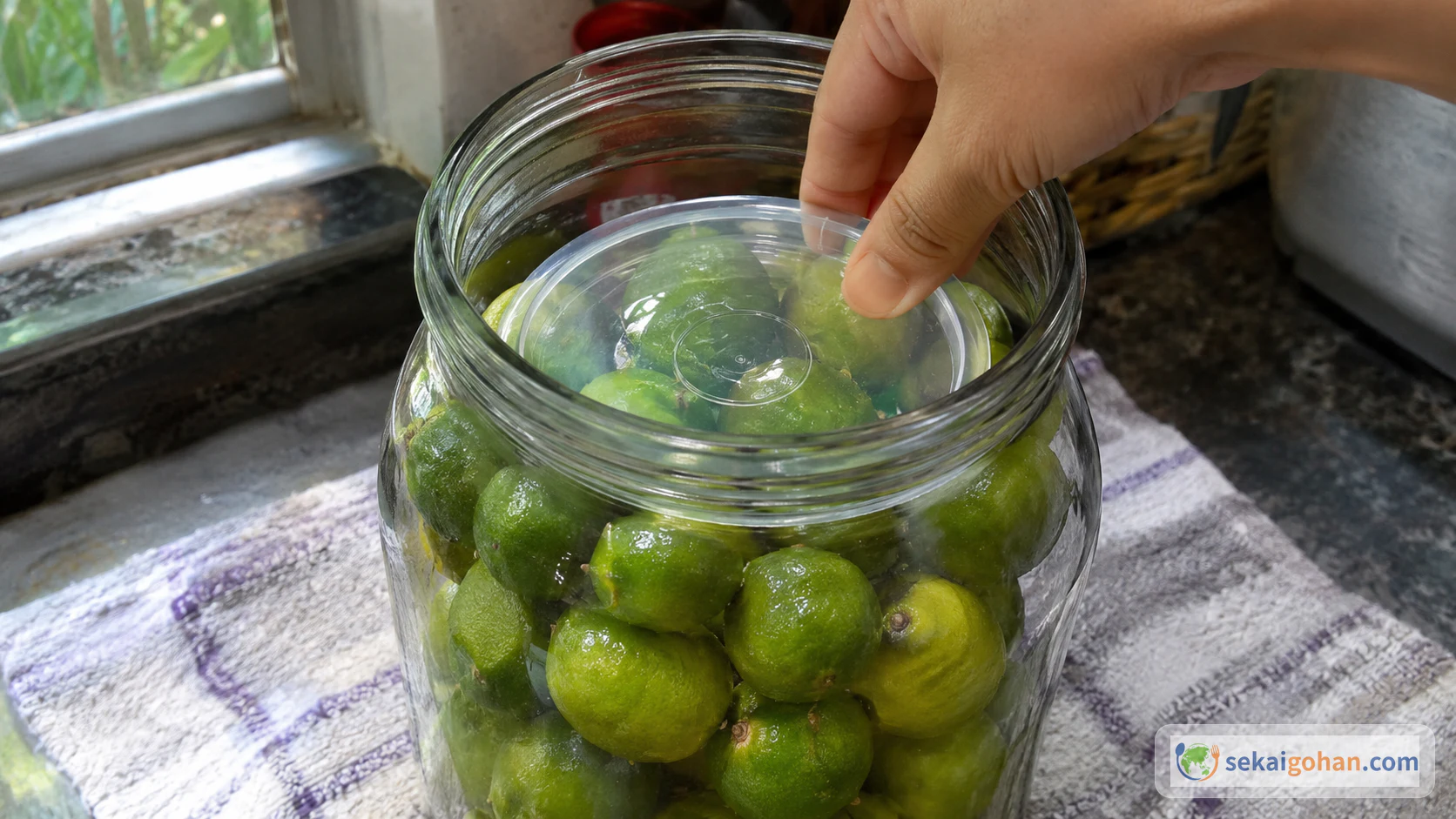
- Small plastic plate that fits inside the jar's mouth, used as a weight
- Thin, clean cloth and a rubber band
- Colander and a mixing bowl
- Fine-mesh strainer
- Digital kitchen scale that reads in 1 g steps
- Clean, dry tongs or chopsticks for taking fruit out
Choosing the Fruit and Salt
Small limes are the first choice. Buy them firm, unblemished and close in size. A bag where some are twice as big as others gives you fruit that rides up past the plate. Small lemons work and are the West Coast choice. Their thicker skin and different perfume give a fuller, more lemony peel in the glass. Large lemons change the pack and the fit under the plate, so stay with small fruit.
For salt, any coarse sea salt or unrefined salt will do. Switching brands changes the flavor of the brine a little. Keep the weight the same. Two things from the Vietnamese kitchen are left out. Alum is skipped. Rice liquor, which some cooks add to the jar when a film forms on top, is not used at all. A jar with a film on the brine gets judged for discard (see below) and is not fixed.
Method
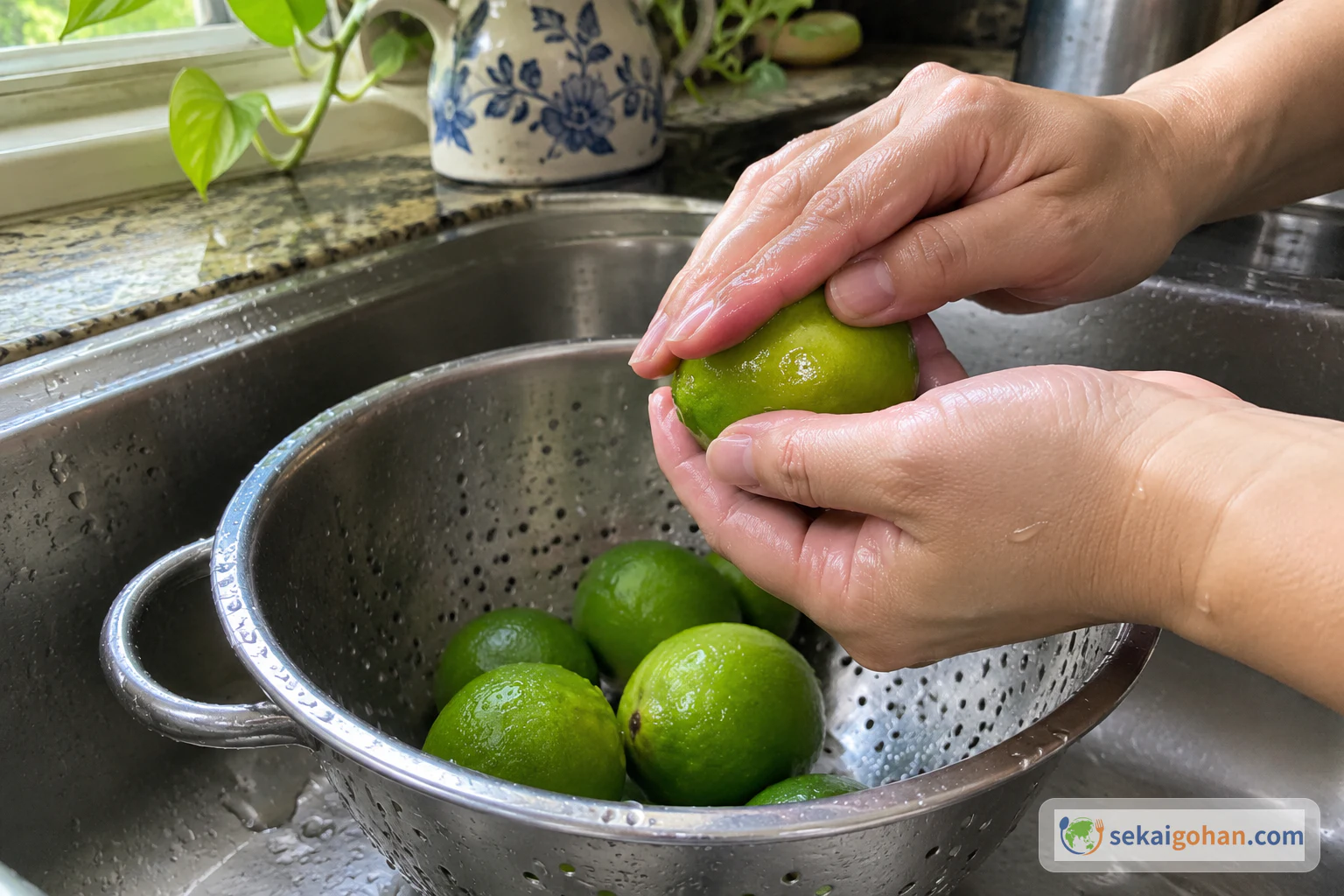
Most of the work happens on one evening. Wash the limes while the brine heats, and sterilize the jar while the brine cools. The jar then sits two weeks in the cupboard, where your only job is a daily turn and a look. After that it lives in the fridge. Everything below depends on one rule: every lime stays under the brine.
A lime that rides above the brine is where mold starts. If one keeps rising, the plate is too small or the pack is too loose. Fix the pack on the first day rather than on day ten.
If you see white mold, blue or black fuzzy mold, slime or an off smell on fruit above the brine, throw away the whole jar. Do not eat any of it. Even if all you see is a white film on the brine, when in doubt, discard. Do not skim it off and keep going. Any single lime that has sat above the brine also goes in the bin. Color and cloudiness never tell you a jar is safe.
When It Goes Wrong
| What you see | Why | What to do |
|---|---|---|
| A lime pokes above the brine | Plate too small, or loose gaps in the pack | Throw away that lime. Press the plate back down and check that the rest sit below the surface |
| Mold, slime or a bad smell on fruit above the brine | Fruit was exposed, or the jar or tools were not clean | Throw away the whole jar. Next time, sterilize the jar and use only clean, dry tongs |
| A white film on the brine | Usually a jar that was not fully clean, or something fell in | If in doubt, discard the jar. Do not skim it and do not add alcohol |
| Salt crystals left at the bottom of the pot | The brine was not heated long enough | Heat again and stir until the brine is clear before cooling |
| Skins going pale or brine turning cloudy | Normal changes during the cure | Neither one means ready or safe. Judge by submerged fruit, smell and mold |
Serving, Variations and Storage
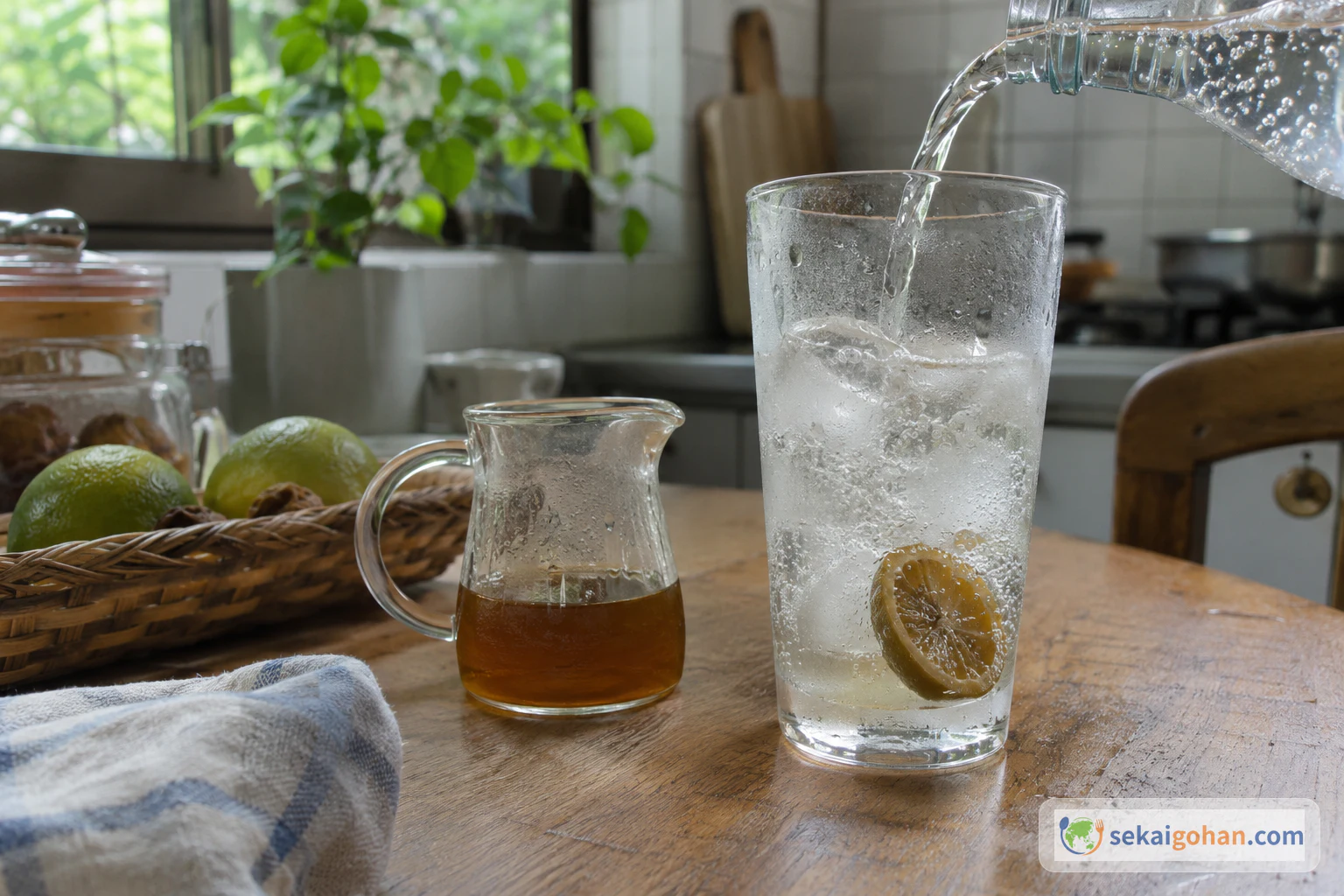
Nước chanh muối
The drink starts with a lime that has finished its two weeks and gone into the fridge. Rinse one preserved lime, cut it in half and pick out the seeds. Put it in a tall glass with 1 cup ice, 3 to 4 tsp sugar (or 2 tbsp simple syrup) and ¾ cup (180 ml) water. Press the lime against the glass with a spoon to release the salty juice and some peel, then stir. Add as much of the soft pulp as you like.
Variations
- Soda version: swap some or all of the water for club soda. The drink gets lighter and sharper, and the salt comes through more brightly.
- Lemon jar: cure small lemons the same way, as Vietnamese cooks on the US West Coast do. The peel is thicker and the drink tastes more of lemon.
- Sweetness: syrup mixes into a cold drink right away. Granulated sugar needs a longer stir, and 3 tsp leaves the salt and bitterness in front.
Storage
Keep the jar in the refrigerator with the lid closed, every lime under the brine, and use it up promptly. Use clean, dry tongs every time, open the jar as little as possible, and check for mold, slime and smell whenever you lift the lid.
Frequently asked questions
Can I use less salt?
No. Keep the full 7 oz (200 g) of salt to about 2 quarts (2 L) of water. The salt is the cure, and a weaker brine is a different preserve from this one. If the drink tastes too salty, rinse the lime longer or add more water and ice to the glass.
Can I water-bath can the jar and keep it on a shelf?
No. There is no science-based method for canning whole salt-preserved lemons or limes. Chanh muối made this way is a refrigerator preserve: two weeks in a dark cupboard, then the fridge.
Do I eat the pulp?
In the drink, yes: the halved lime goes into the glass with its pulp, seeds removed, and you add as much of it as you like. If you only want the peel, scrape out the pulp and membrane, then rinse the peel and pat it dry.
Do I need the floating rice-grain test?
No. Some Vietnamese cooks drop a grain of rice into the brine to judge the salt by whether it floats. Weighing the salt does the same job more exactly, so you can skip the test.