Ingredients and steps on one page. Print it, or choose “Save as PDF” in the print dialog.
Sekai Gohan
Thịt Kho Tàu: Southern Vietnamese Pork Belly and Eggs Braised in Coconut Water
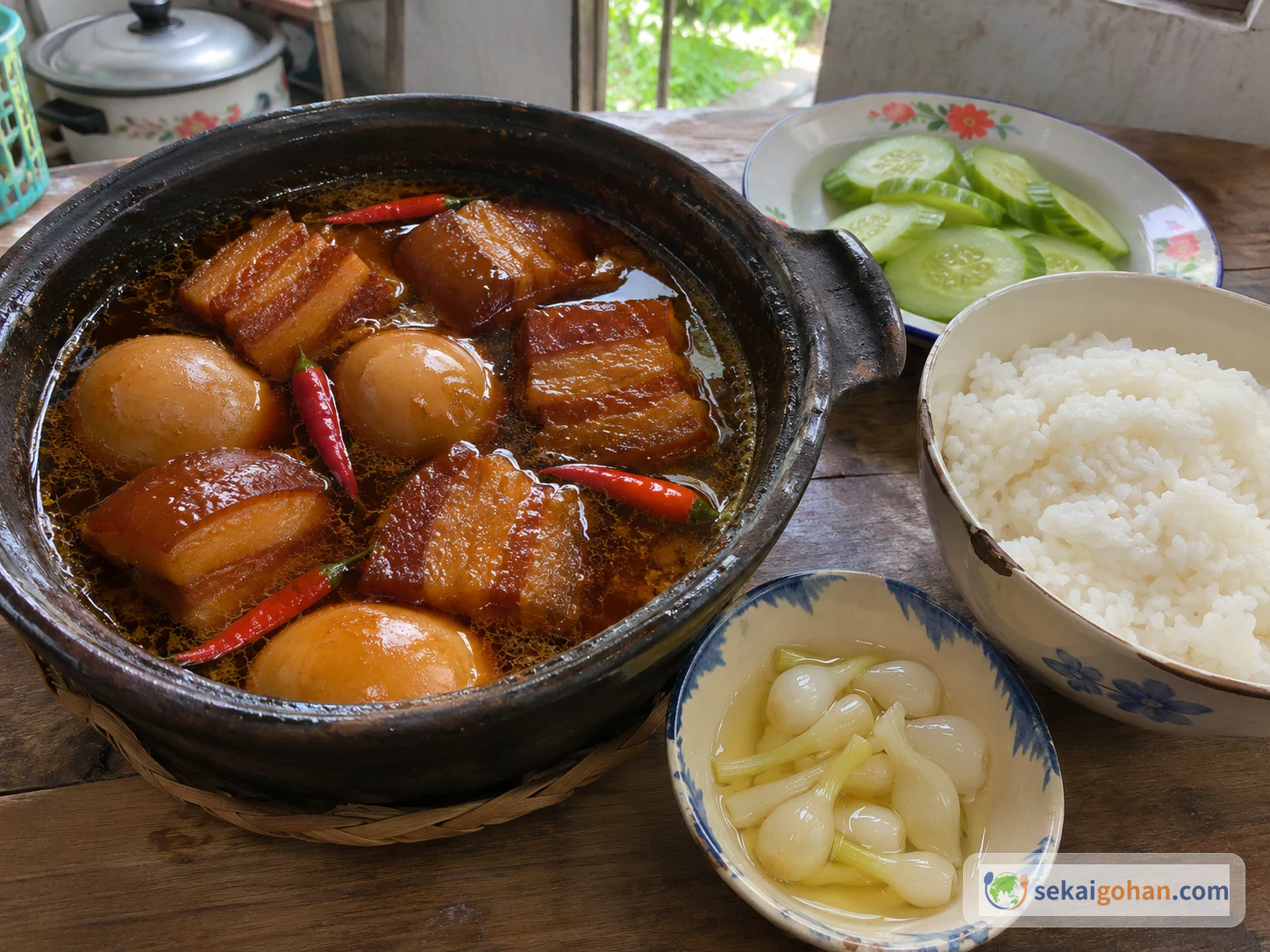
Ingredients
| Ingredient | Amount | Role |
|---|---|---|
| Pork belly, skin-on with its fat (or boneless pork leg with fat and skin) | 2.2 lb (1 kg), cut into 1-inch (2.5 cm) cubes | The centre of the dish. The skin turns soft and gives the liquid body |
| Round shallots, finely chopped | 3 | Sweetness and aroma in the seasoning |
| Garlic, finely chopped | 4–5 cloves | The base aroma |
| Sea salt | ½ tsp | Seasons the meat. This is the only salt added before the fish sauce |
| Black pepper, freshly ground | ½ tsp, plus more to finish | Gentle heat in the seasoning and at the end |
| Vegetable oil | 3 tbsp | The fat the caramel cooks in |
| Superfine (caster) sugar | 3 tbsp | The caramel. Most of the colour and the first layer of sweetness |
| Unsweetened coconut water (nước dừa) | 2½ cups (600 ml) | The braising liquid. Adds the second layer of sweetness and its own fragrance |
| Eggs | 4–6, or 12 quail eggs, or a mix | Hard-boiled, then braised until stained through |
| Bird's eye chillies | 4, stems removed, left whole | Fragrance and a mild heat |
| Fish sauce (nước mắm) | 5–6 tbsp | The main salt and savoury depth, added at the end |
| Coconut syrup or sugar | 1 tbsp | Final sweetness to balance the fish sauce |
Steps
1Cut the pork into even cubes
Cut the pork belly into 1-inch (2.5 cm) cubes. Keep the skin and fat on every piece. They melt and soften over the two hours, and they make the dish what it is. Try to keep the cubes the same size so they cook at the same rate. Smaller pieces fall apart during the braise, and bigger ones do not take in the flavour. You are done when you have a pile of near-cubes with the stripes of skin, fat and lean showing on each cut face.
2Season the pork with the aromatics
Put the cubes in a bowl and add the chopped shallots and garlic, the salt and the ½ tsp black pepper. Toss well with your hands so the seasoning gets into every side. Putting salt and aromatics on now keeps the flavour from tasting flat once the caramel coats the meat. Wash your hands and the board once the raw pork is done. The pork is ready when every cube is coated in flecks of shallot and garlic and looks glossy rather than wet.
3Make the caramel without stirring
Heat the oil in the heavy pot over medium heat, then scatter the sugar evenly over the surface. Do not stir. Leave it for 3½ to 4 minutes while it melts, bubbles finely and turns from the edges inward. Stirring clumps the sugar and makes it colour unevenly. When the caramel is golden and has just begun to darken a shade, add the pork straight away. If black smoke rises, it has gone too far.
The caramel decides the colourAll the colour in this pot comes from the caramel. Pull it too early and the pork stays pale and grey. Burn it and the whole braise turns bitter, and two hours of simmering will not take that away. If it smokes black, wipe out the pot and start again with fresh oil and sugar. That costs you a few minutes instead of the whole dish.
Hot sugarMolten caramel sticks to skin and burns deeply. Lower the pork in gently, keep your face back from the pot when it spits, and do not taste from the pan.
4Brown the pork in the caramel
Tip the seasoned pork into the caramel and spread it out. Leave it for 1 minute without touching it, then stir and turn the pieces. Repeat this, a minute still and then a stir, until every side has taken colour. Browning here gives the dish its roasted depth. Without it the finished pork looks dull. Move on when the cubes are brown on all faces and the caramel on the bottom of the pot has mostly moved onto the meat.
5Add the coconut water and skim
Pour in the coconut water, cover, and bring the pot to a gentle simmer, where the surface barely moves. A hard boil tightens the meat and makes it tough. Lift the lid now and then and skim off the grey-white scum that collects on top. Skimming keeps the liquid clear and its colour clean. The pot is ready for the eggs when the liquid has turned amber from the caramel and very little new scum rises.
6Hard-boil and peel the eggs
While the pork simmers, hard-boil the eggs in a small saucepan. Cool them, then peel them under running water so the whites stay smooth and unbroken. Do this on a clean surface with no raw pork nearby. Keep the eggs whole. They go into the pot as they are and take in colour from the outside. Each egg is ready when it is firm and fully peeled, with no tears in the white.
7Add the eggs and chillies and braise for at least 2 hours
Slide the peeled eggs into the pot one at a time with a spoon. Add the 4 whole chillies and a grind of black pepper. Cover and braise on low heat for at least 2 hours, stirring now and then. Scrape gently along the bottom and turn the eggs carefully so they do not split. Over that time the skin and fat go soft and the liquid works its way into the eggs. The braise is ready for seasoning when the liquid has cooked down, fat glistens on the surface and the eggs have turned brown.
Keep the chillies wholePull off only the stems. Whole chillies give the braise their fragrance and a gentle warmth without making it fiery. Cut chillies release much more heat. To change the heat, change the number of chillies, not how you cut them.
8Season with fish sauce and finish
Season with fish sauce, the coconut syrup or sugar and more black pepper, then simmer for a further 15 minutes. Start with 3 tbsp of fish sauce, taste, and add more until the liquid tastes salty and sweet in balance. Seasoning at this stage lets you match the salt to how far the liquid has reduced. The dish is done when the liquid is glossy, the pork is tender, and a spoon dipped in the pot comes out with a thin coating.
Fish sauce in stagesFish sauces differ a great deal in saltiness. If all 6 tablespoons go in at once and the bottle is a strong one, the pot is too salty and stays that way. Adding it in stages and tasting is the only reliable way to land on the salty-sweet balance the dish is named for.