Chocolate Chip Cookies: Toasty at the Edge, Tender in the Middle
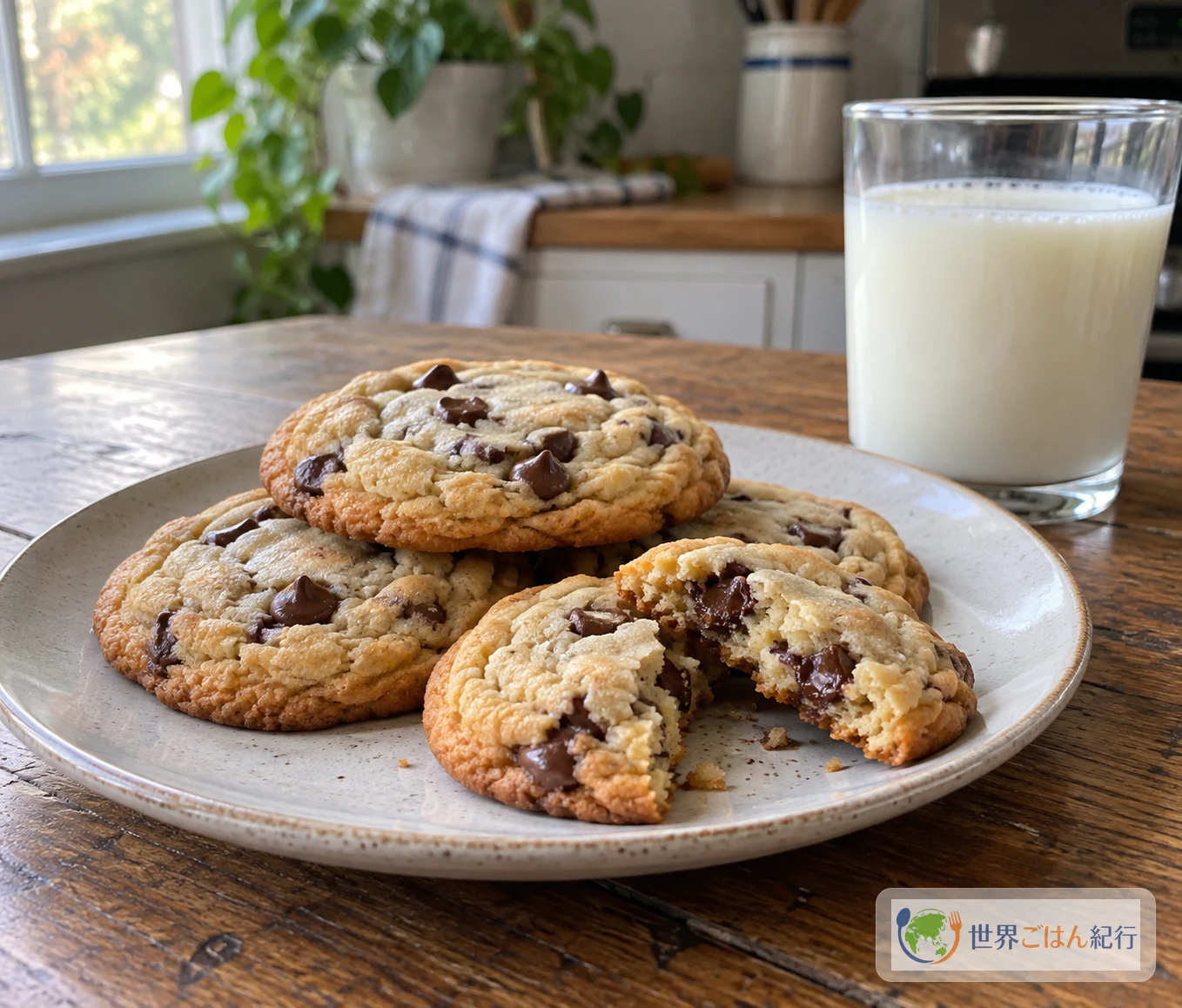
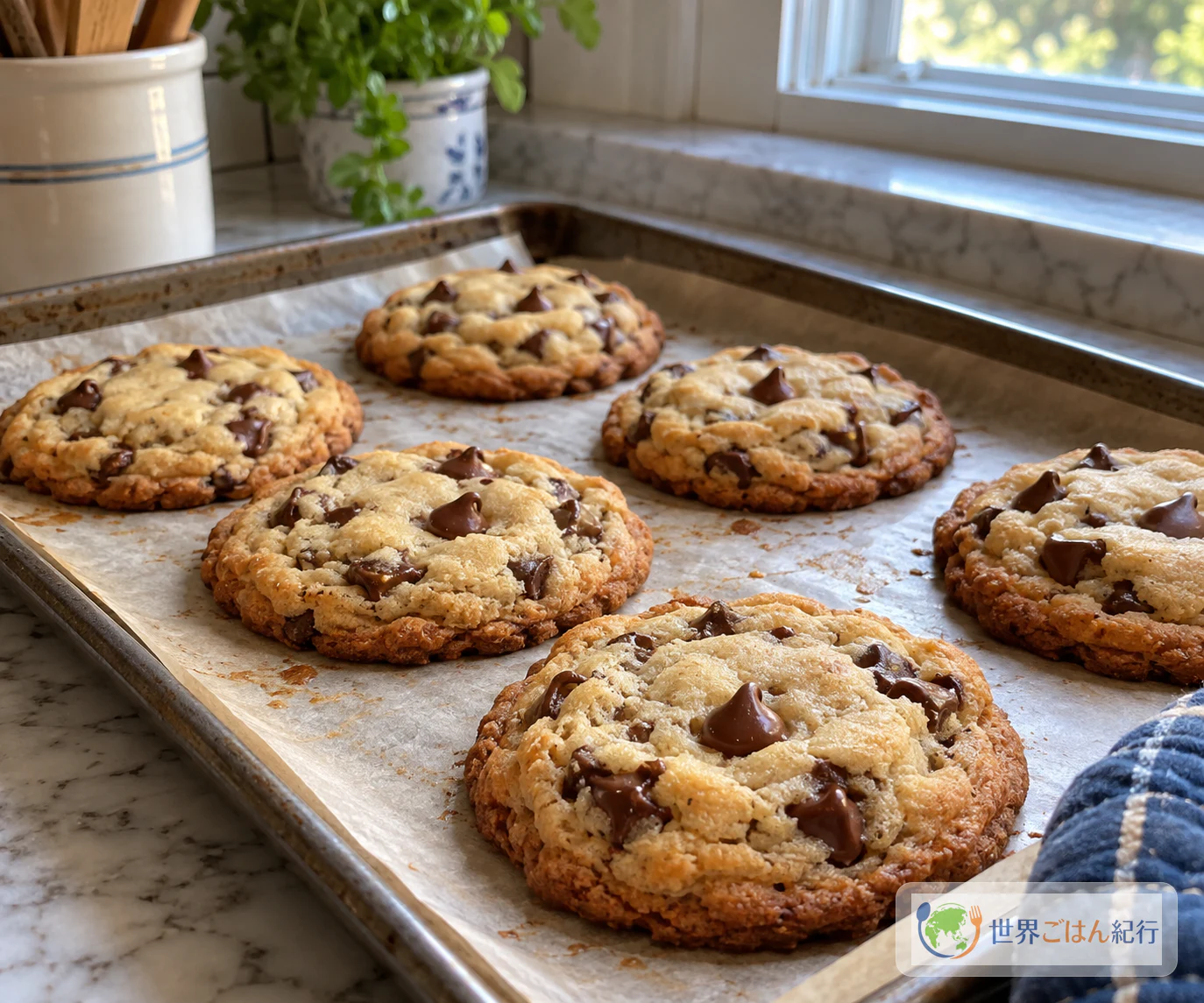
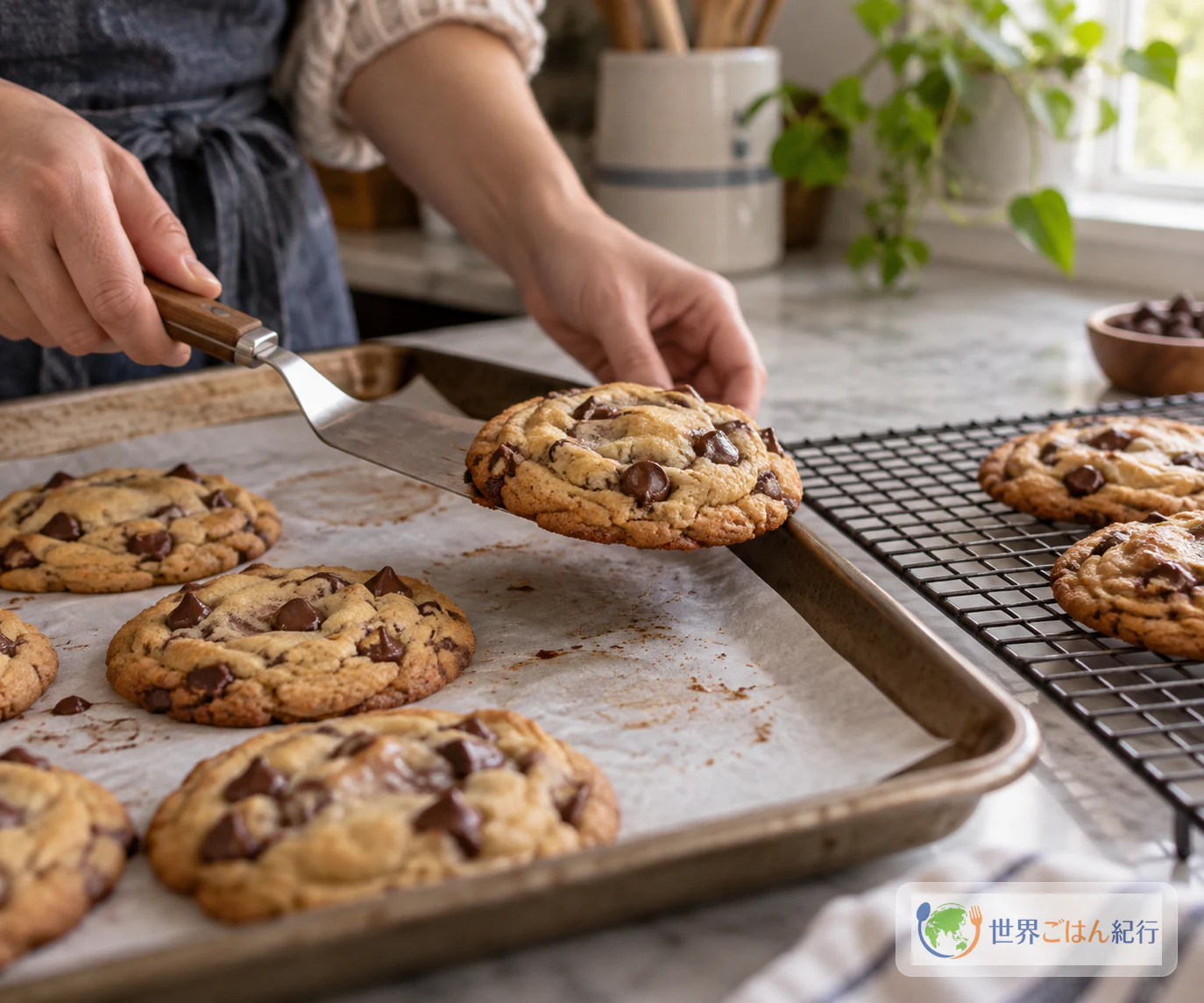
Take the cookies out when the edges are chestnut brown and the tops are still light golden. Let them finish setting on the warm baking sheet before you move them.
When a sheet of chocolate chip cookies comes out of a 375°F oven, the color tells you most of what you need to know. The rims have turned a deep chestnut brown, the tops are only lightly golden, and the centers still look a little soft. That contrast between a toasty edge and a tender middle is what this recipe aims for. King Arthur Baking's Classic Chocolate Chip Cookies uses the same color cues to judge doneness.
This version uses King Arthur's formula cut exactly in half. The original makes 36 cookies, so half should give about 18. That number is simple arithmetic, not a count from a test batch. The recipe uses butter for flavor, vegetable shortening to help the cookies hold their shape, light brown and granulated sugar, and semisweet chocolate chips. It is a contemporary recipe and is separate from the historical Toll House recipe of the 1930s and 1940s. You'll find that history further down.
"Toll House cookie" is closely tied to this cookie's history, but Toll House is also a commercial name. Here the general term "chocolate chip cookie" is used for the dish itself.
Ingredients: A Half Batch of a Classic Formula
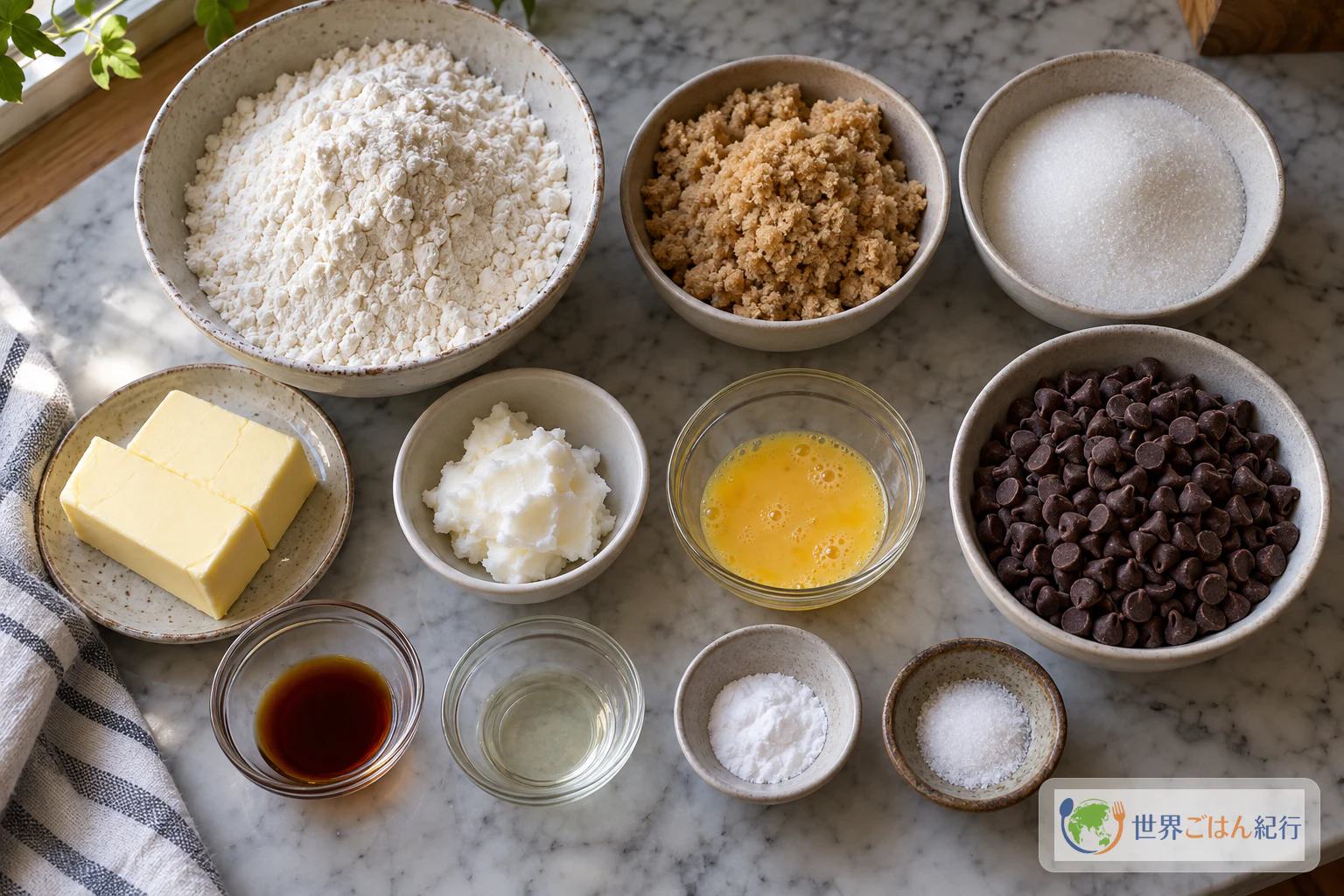
All amounts are exactly half of the King Arthur Baking recipe. Gram amounts are weighed. Teaspoon amounts stay in teaspoons because the source gives no gram weights for them. For the egg, beat one large egg and measure out half. About 25g is a practical measuring guide for doing that, not the weight of the source's egg, and egg sizes vary.
There are no nuts in this base recipe. The historical 1940 recipe included them, and leaving them out keeps the two recipes clearly separate.
Equipment
| Item | Why it helps |
|---|---|
| Digital kitchen scale | Lets you measure a half batch accurately, especially the egg and flour |
| Baking sheet | You bake one sheet at a time |
| Parchment paper | Makes the cookies easier to lift and helps prevent sticking |
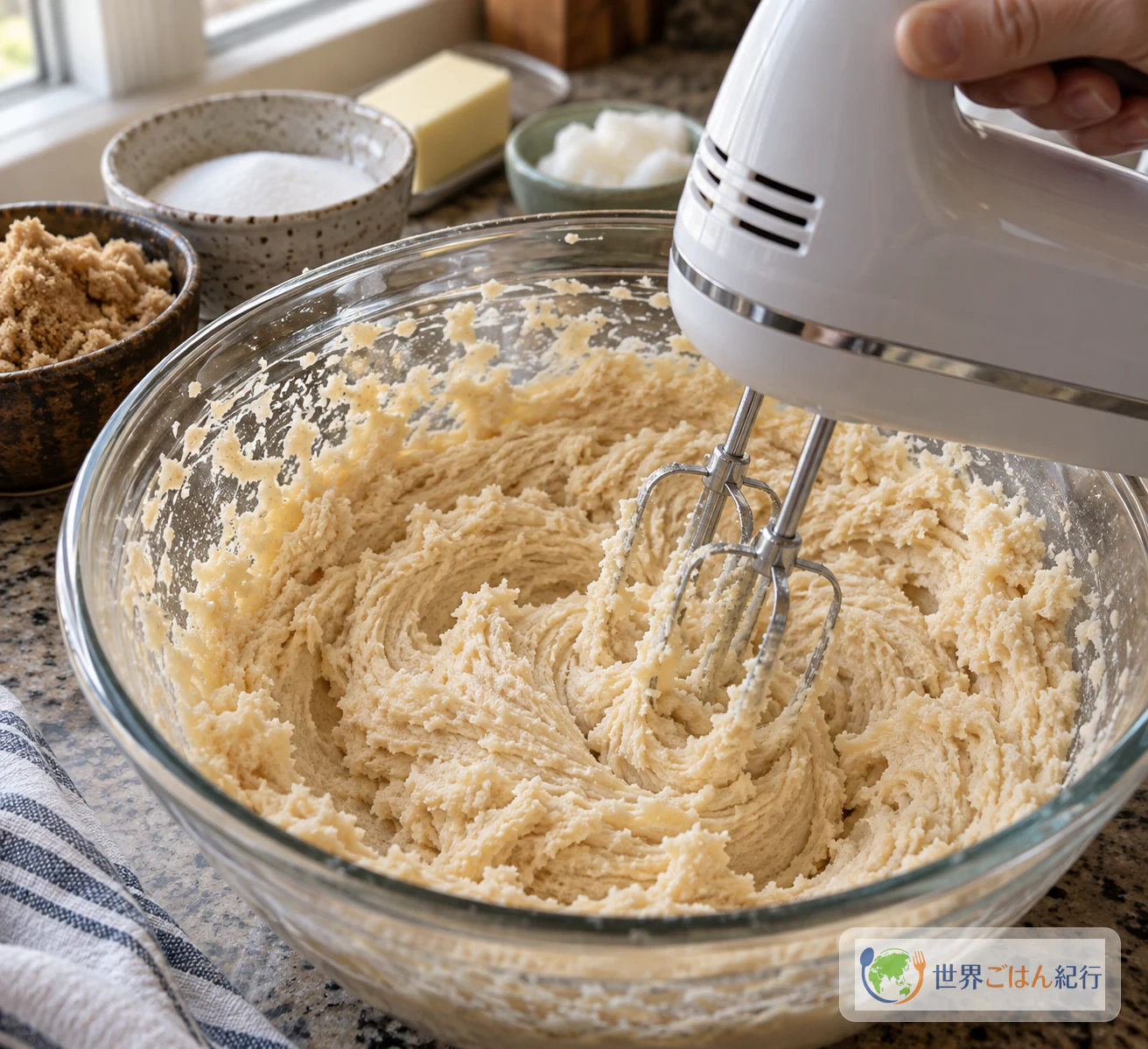
| Mixing bowl and hand mixer | For creaming the fats and sugars |
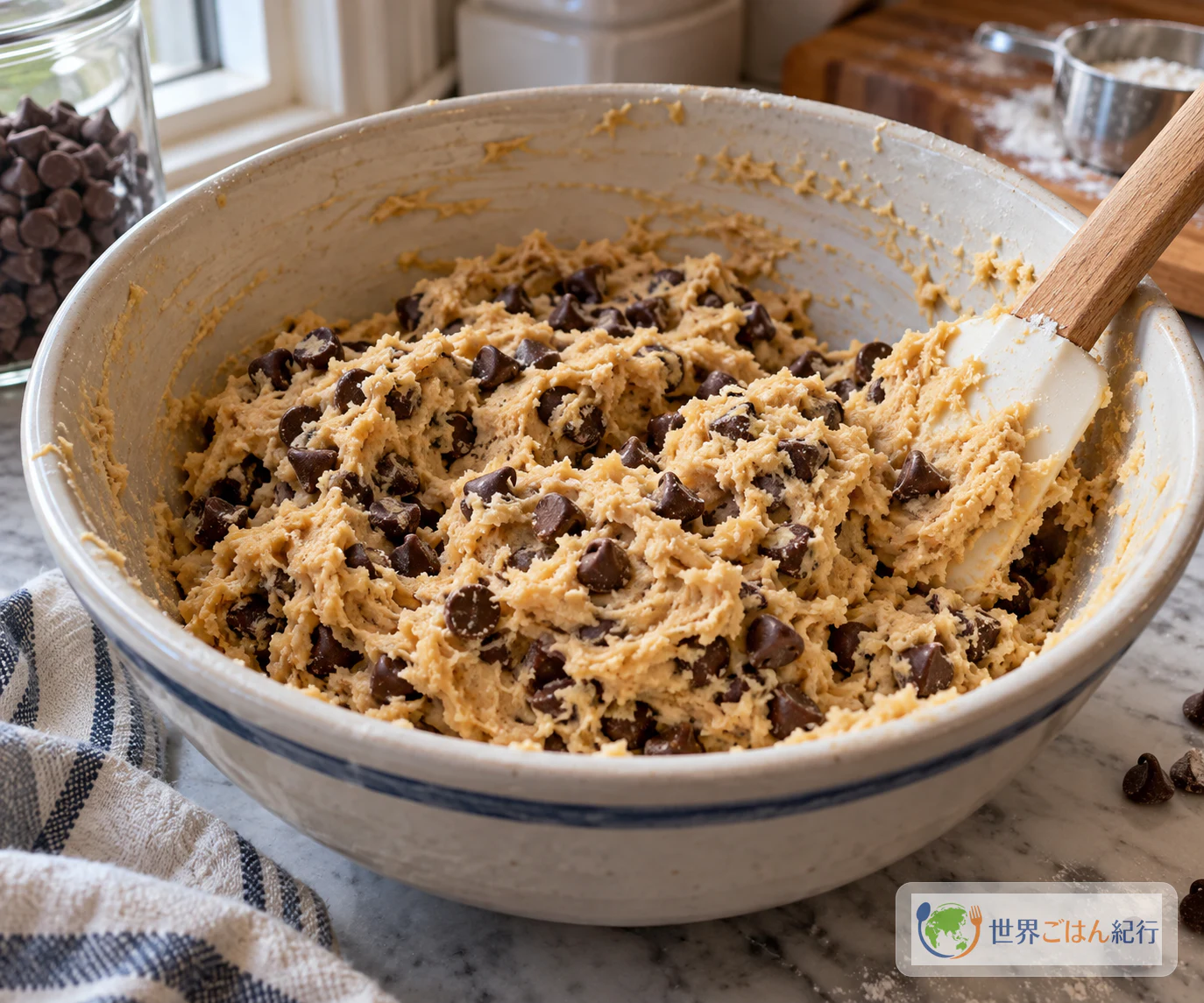
| Rubber spatula | For scraping the bowl and folding in the flour and chips |
| Thin spatula and wire rack | For moving the cookies once they have set |
This recipe contains egg, wheat and milk. Chocolate chips can also contain milk, soy or other allergens, so check the label of the product you buy. Do not eat the raw dough. A soft center after baking is part of the intended texture. It does not mean the unbaked dough is safe to eat.
Method: Cream, Add Egg, Fold, Portion, Bake, Cool
Before you start mixing, preheat the oven to 375°F (about 190°C) and line a baking sheet with parchment paper. Give the oven time to heat fully while you make the dough.
Troubleshooting
| Problem | Likely cause | What to do |
|---|---|---|
| Cookies spread too much | Butter melted during creaming, or the flour was under-measured | Keep the butter soft but not melted, and weigh the flour. Briefly chilling the shaped dough is an option, but its effect has not been tested for this half batch |
| Cookies turn out hard | Baked until fully browned | Take them out while the tops are still light golden. A soft center firms up as the cookies rest on the sheet |
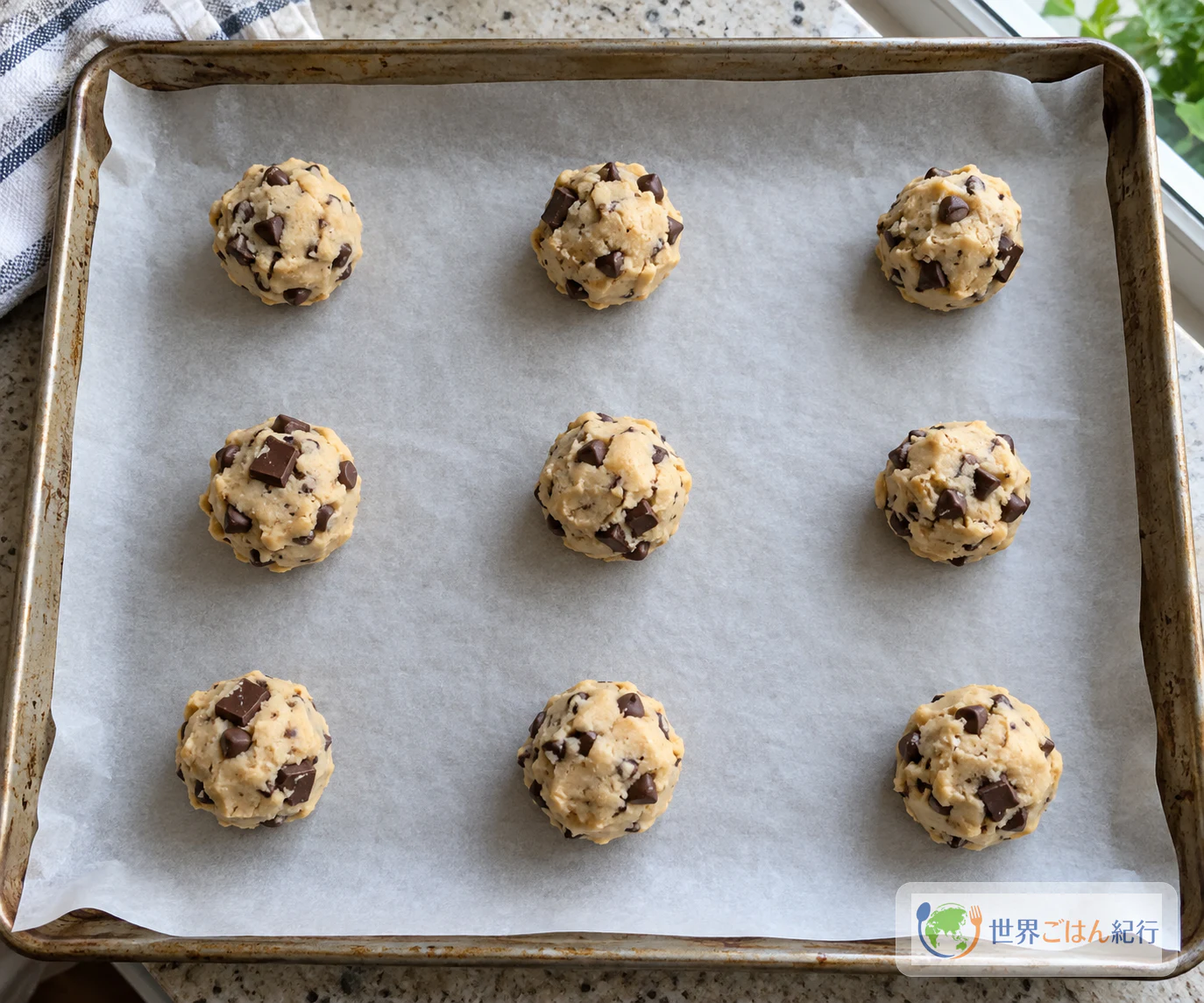
| Chocolate looks sparse on top | Chips sank into the dough | Press a few of the chips from the measured amount into the surface of each ball before baking. Don't add extra chocolate beyond the recipe |
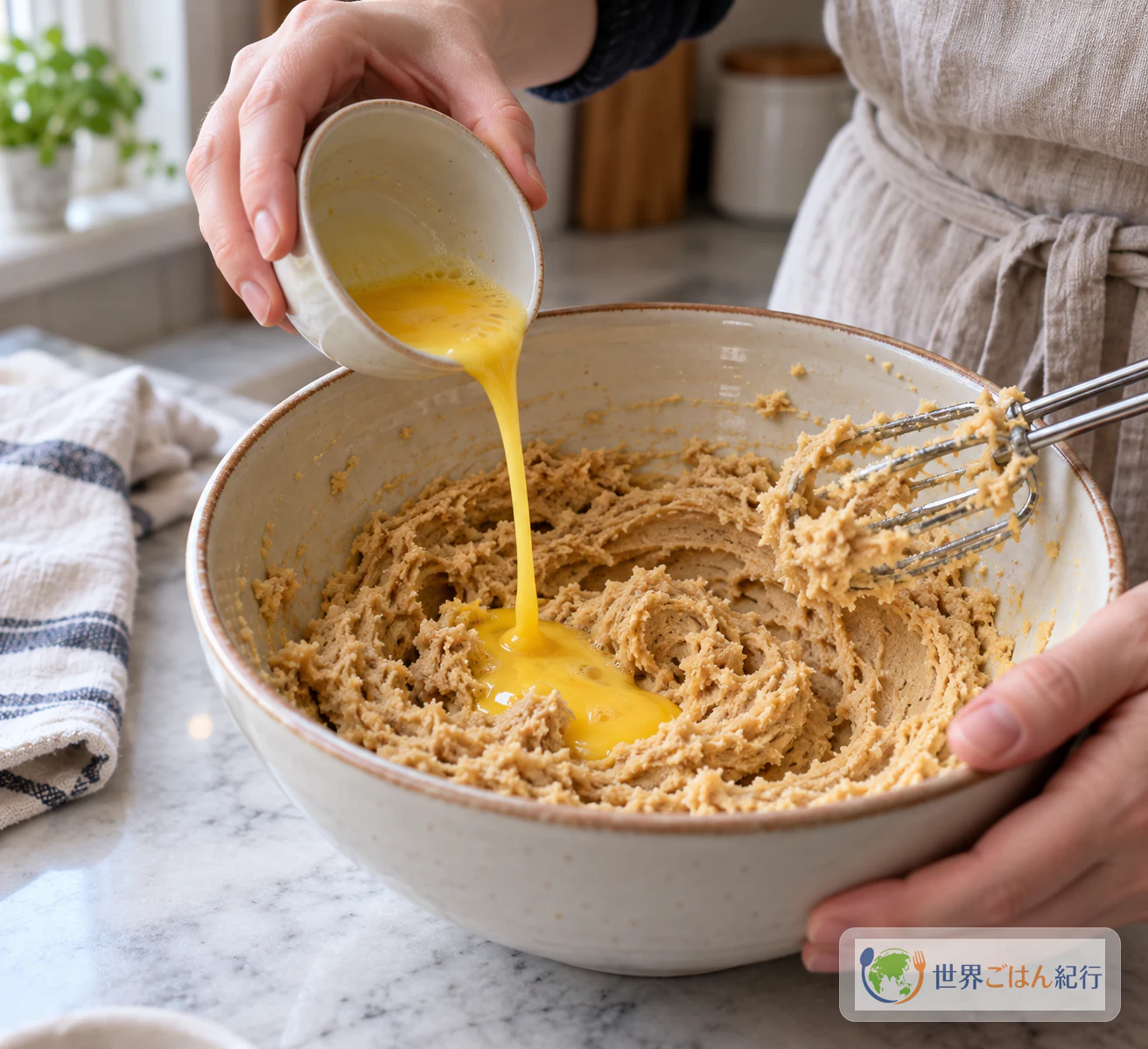
| Greasy streaks after adding egg | Not mixed long enough | Keep mixing and scrape the bowl until the base looks uniform |
| First sheet browned too fast or too slow | Dark sheet or oven variation | Adjust the time for the next sheet, judging by edge and top color |
Variations: Changing the Texture on Your Second Batch
Once you have baked the base recipe, you can push it in different directions. King Arthur Baking's cookie-science article explains that granulated sugar encourages spread and crispness, while brown sugar helps keep cookies moist and chewy. It also notes that small formula changes can make cookies crisper, chewier or more cake-like.
- Long chill for deeper flavor. King Arthur notes that refrigerating the dough for 24–48 hours deepens toffee and caramel notes. Cover the dough before chilling.
- Thinner and crisper. Increase the granulated sugar slightly. This changes the ratio, so no tested amount is given here.
- Moister and chewier. Increase the share of brown sugar. This also needs testing.
- Melted pools of chocolate. Replace some of the chips with chopped bar chocolate. Chopped chocolate melts into wider patches, so the cookies look and feel a little different.
- A salty contrast. Scatter a little sea salt over the dough just before baking.
From an Inn's Dessert to a Home Classic
The chocolate chip cookie is linked to the Toll House Inn in Whitman, Massachusetts, which Ruth Wakefield and her husband opened in 1930. According to the Library of Congress, Wakefield's 1938 cookbook included the recipe under the name Chocolate Crunch Cookie. The Library of Congress also transcribes the 1940 edition of the recipe. It calls for butter, two sugars, eggs, baking soda dissolved in hot water, flour, salt, semisweet chocolate bars chopped into small pieces, vanilla and nuts, baked at 375°F for 10–12 minutes. It makes about 100 small cookies. That historical recipe is a different formula from the chip-based contemporary recipe above, even though many ingredient names overlap.
You may have heard that the cookie was invented by accident, when chocolate failed to melt into the dough. The sources disagree on this. Lemelson-MIT's biography of Wakefield tells the accidental version. The Library of Congress points out that several origin stories circulate and reports that Wakefield later described the cookie as something she created on purpose. Given that conflict, it can't be said with confidence that the cookie came from a lucky mistake.
The spread of the recipe is better documented. Lemelson-MIT notes that the recipe became popular and was printed on Nestlé packaging by agreement, and that Nestlé later sold semisweet morsels. The Library of Congress notes that Nestlé had introduced scored chocolate bars by 1940. Through cookbooks and packaging, a dessert served at one inn became something people baked at home.
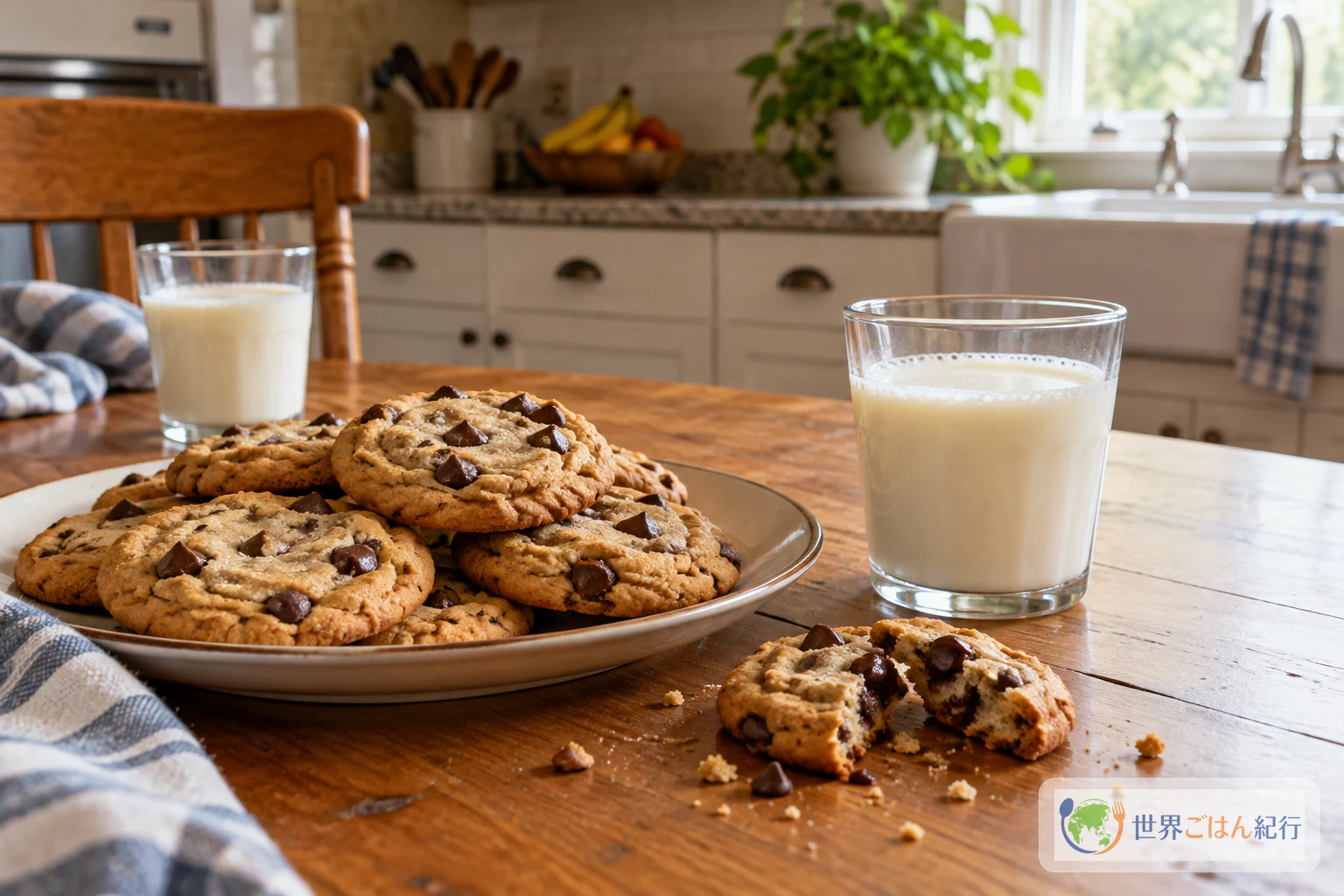
Today chocolate chip cookies are an everyday American bake, made as a home snack or for sharing. There is no single national standard for them. Some bakers spread them thin for a crisp snap, others chill the dough to keep them thick and chewy, and chocolate type and chopping style vary too. Serving them with a glass of milk, as in the photo, is a familiar suggestion rather than a custom in every home. For more dishes from the same country, see More recipes from the United States.
Storage
King Arthur Baking's recipe says the cookies keep in an airtight container at room temperature for up to 5 days and can be frozen for longer storage. Treat that as the source's upper guide, not a tested shelf life for this half batch. Heat, humidity and how well the cookies are sealed all affect how long they stay good. In hot or humid weather, eat them sooner.
Frequently Asked Questions
Can I use a chocolate bar instead of chips?
Yes, chopped bar chocolate works. It melts into wider patches than chips, so the cookies will look different and feel a little different to eat.
Can I replace the shortening with butter?
You can, but you'll get a different cookie. The flavor and spread change, so the baking time and final shape may not match this recipe. Treat it as a separate formula rather than a direct swap.
Do I have to chill the dough?
Not for the basic method. Chilling is an option if the dough is very soft or if you want more flavor. King Arthur's 24–48 hour refrigeration is meant to deepen the caramel notes. No short chilling time has been tested for this half batch.
Is it okay to take them out while the centers look soft?
Yes. Judge by the color of the edges and tops, then let the cookies rest on the sheet so the remaining heat sets the centers. This is about the texture of baked cookies. It doesn't mean the raw dough is safe to eat.
Why use only half an egg?
The source recipe uses one large egg for 36 cookies. Halving the recipe means half a beaten egg. About 25g is a practical measuring guide.
How long do they keep?
The source gives up to 5 days at room temperature in an airtight container, and suggests freezing for longer. Heat, humidity and storage conditions can shorten that.
Sources
- King Arthur Baking, "Classic Chocolate Chip Cookies." Base formula (halved here), yield of 36 cookies, 375°F for 11–12 minutes, edge and top color cues, spacing, room-temperature storage of up to 5 days, and 24–48 hour refrigeration for deeper flavor. https://www.kingarthurbaking.com/recipes/classic-chocolate-chip-cookies-recipe
- Library of Congress, Inside Adams, "Ruth Wakefield and Her Chocolate Crunch Cookie." The Toll House Inn's 1930 opening in Whitman, Massachusetts; the 1938 Chocolate Crunch Cookie recipe and the transcribed 1940 recipe; competing origin stories and Wakefield's later description of the cookie as intentional; Nestlé's scored bars by 1940. https://blogs.loc.gov/inside_adams/2025/12/ruthwakefield/?loclr=blogloc
- Lemelson-MIT, "Ruth Wakefield." The Wakefields' opening of the Toll House Inn in 1930; the recipe's appearance on Nestlé packaging by agreement; Nestlé's later semisweet morsels. Also the source of the accidental-invention account cited above. https://lemelson.mit.edu/resources/ruth-wakefield
- King Arthur Baking, "Cookie science: How to achieve your perfect chocolate chip cookie." How granulated and brown sugar affect spread, crispness, moisture and chew, and how small formula changes alter texture. https://www.kingarthurbaking.com/blog/2016/12/21/cookie-science?page=2