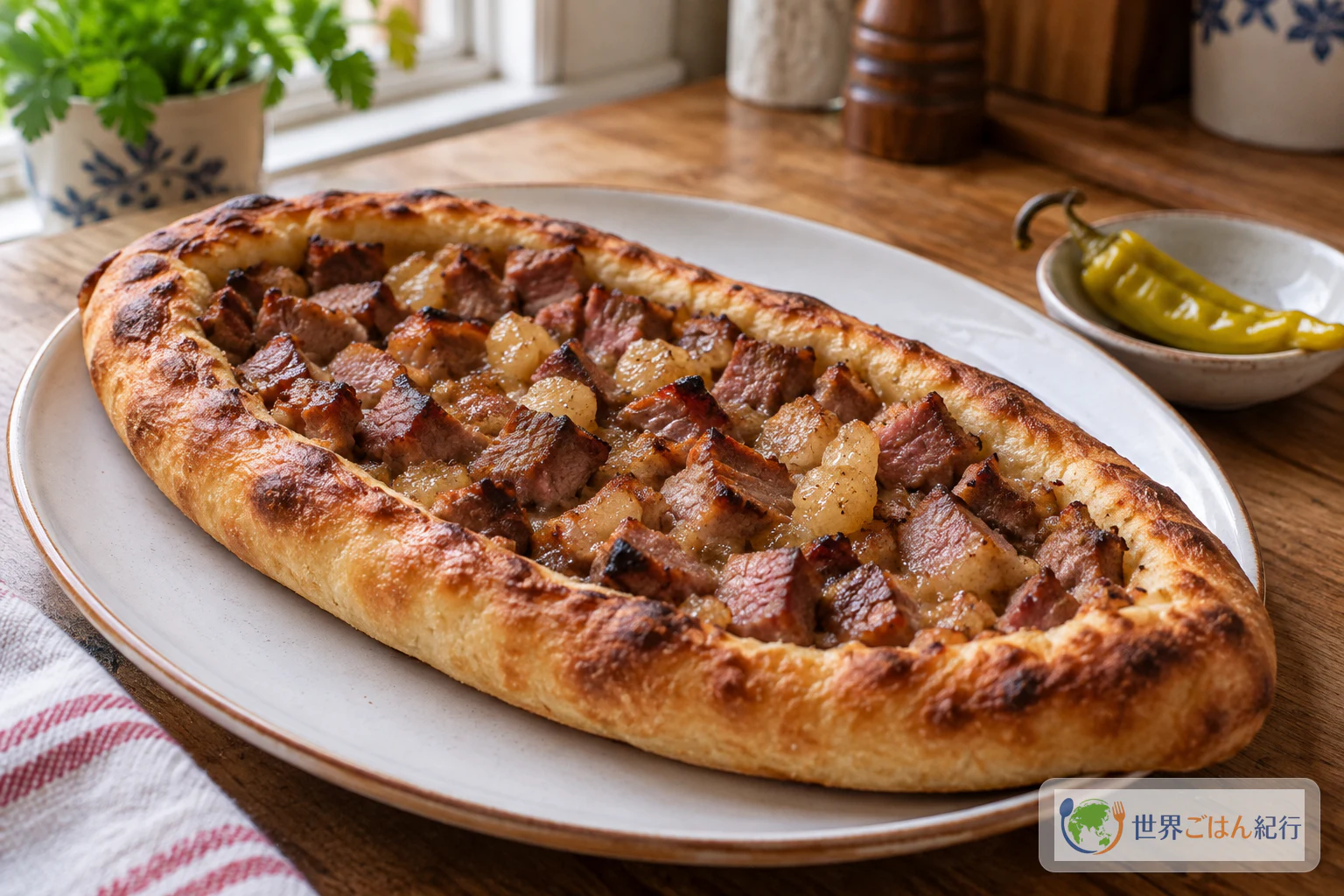
Pastrmajlija: Yeast Dough, Raised Edges and Paprika-Red Pork
Keep it simple: a soft yeast dough stretched into long boats, diced pork seasoned with salt and red paprika powder, pieces of lard among the meat, and a hot oven. This version has no egg and no cheese.
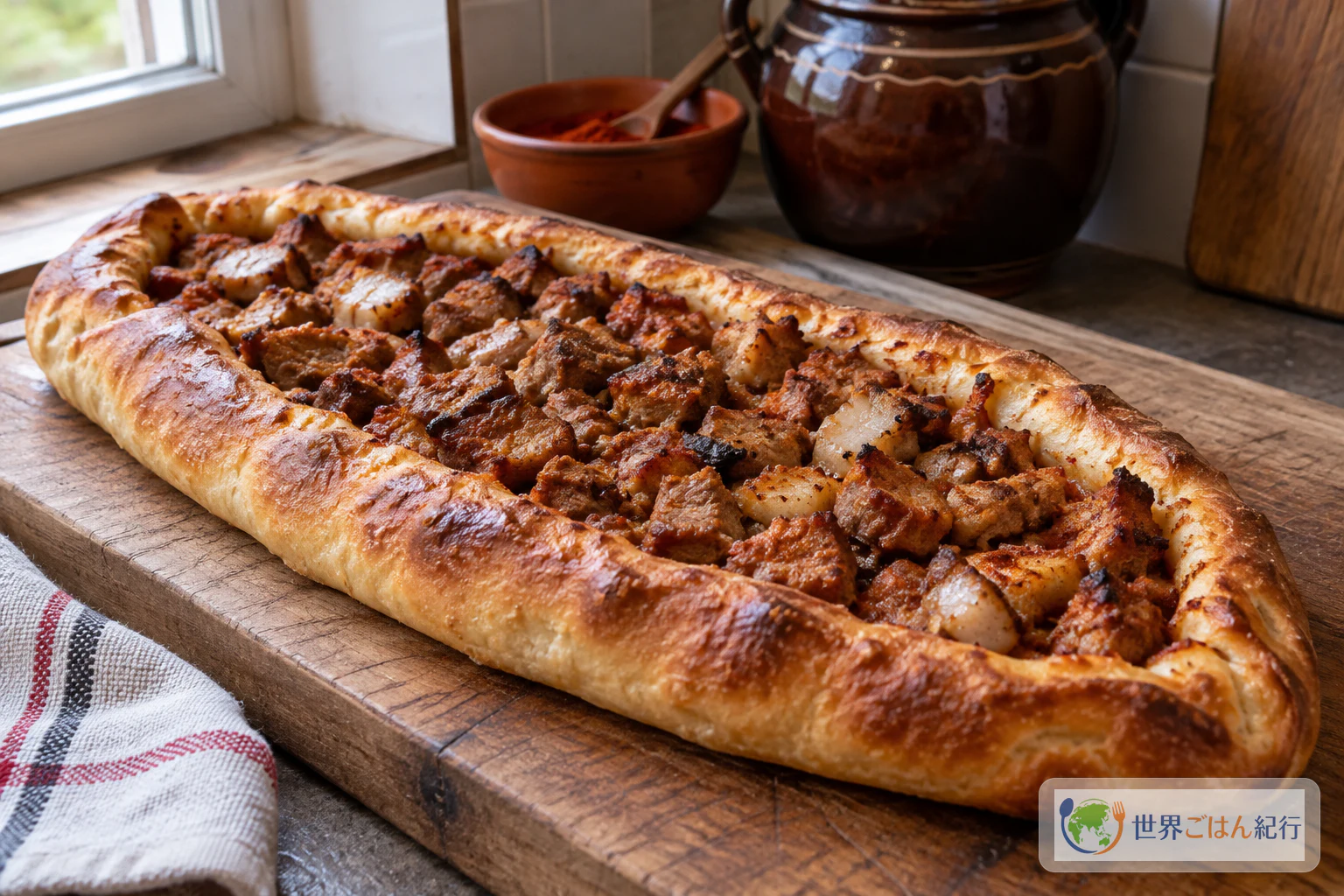
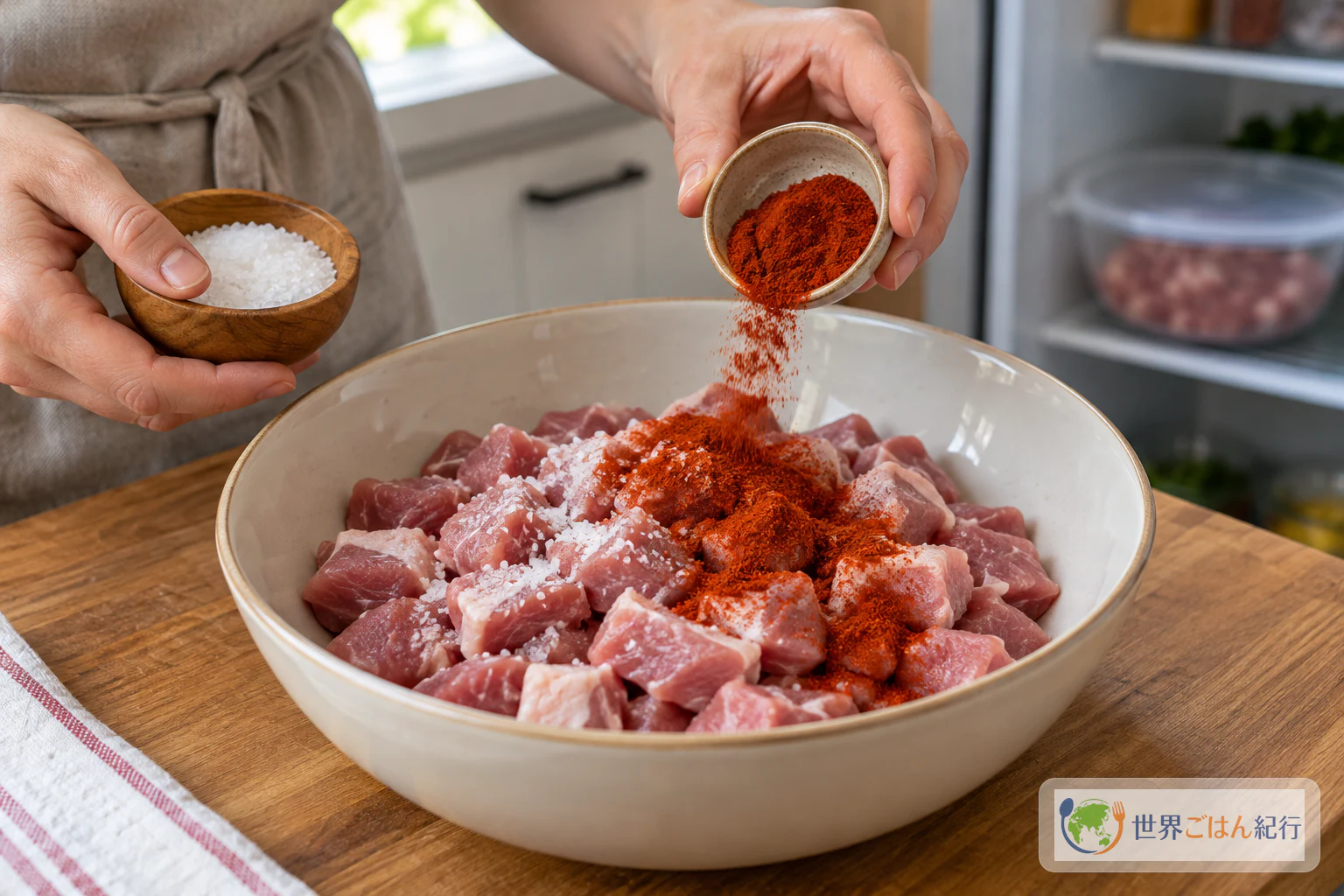
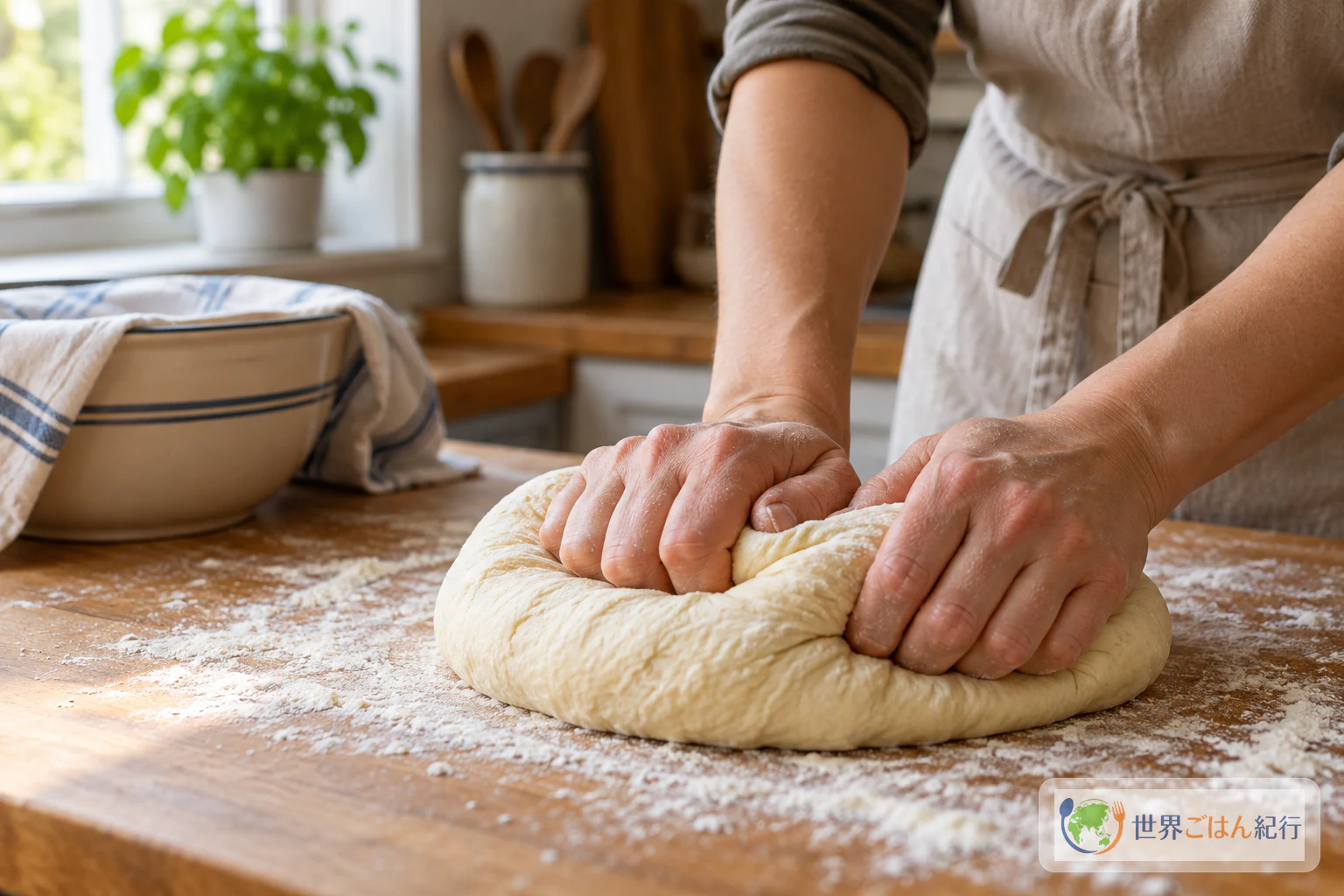
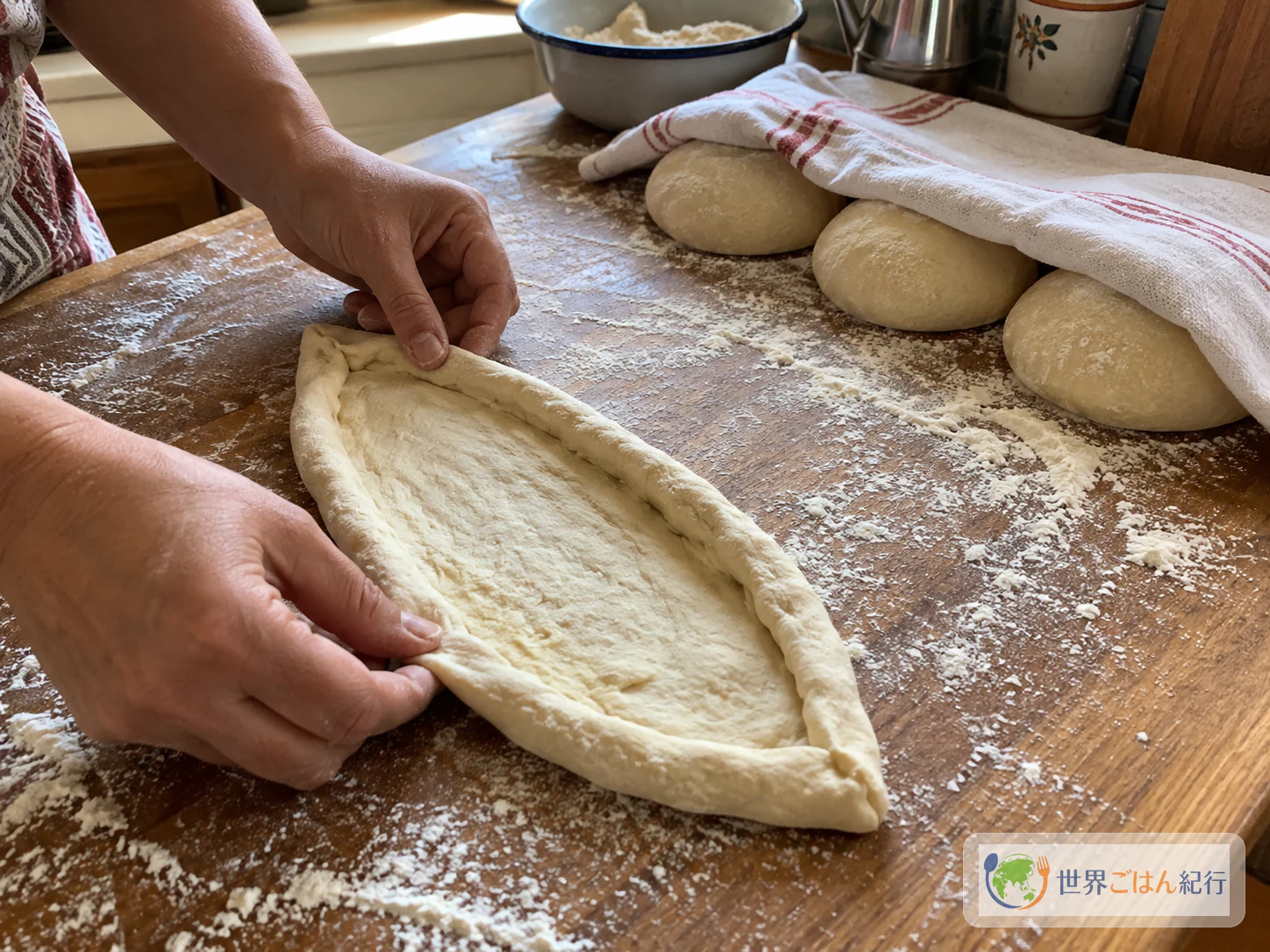
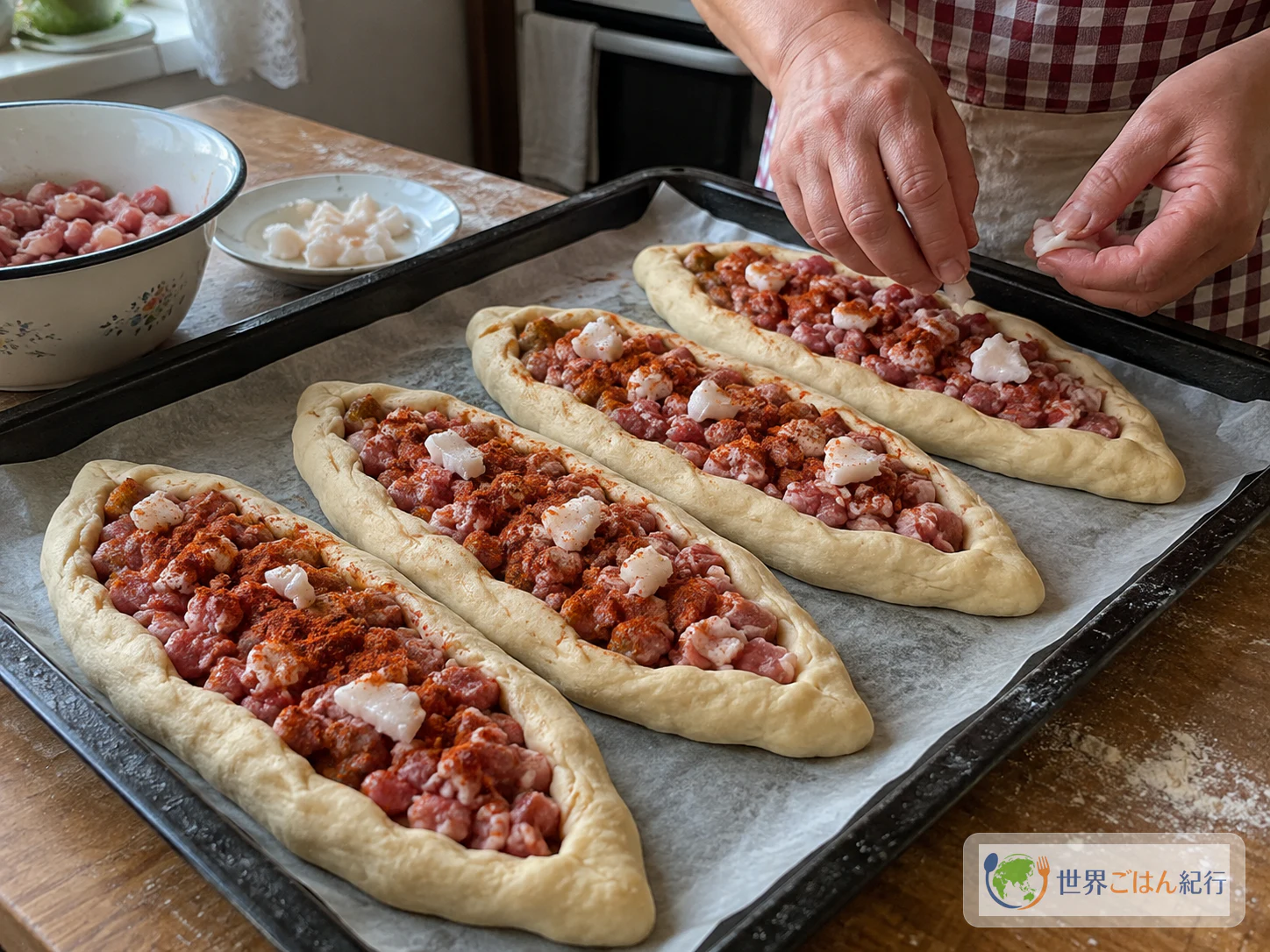
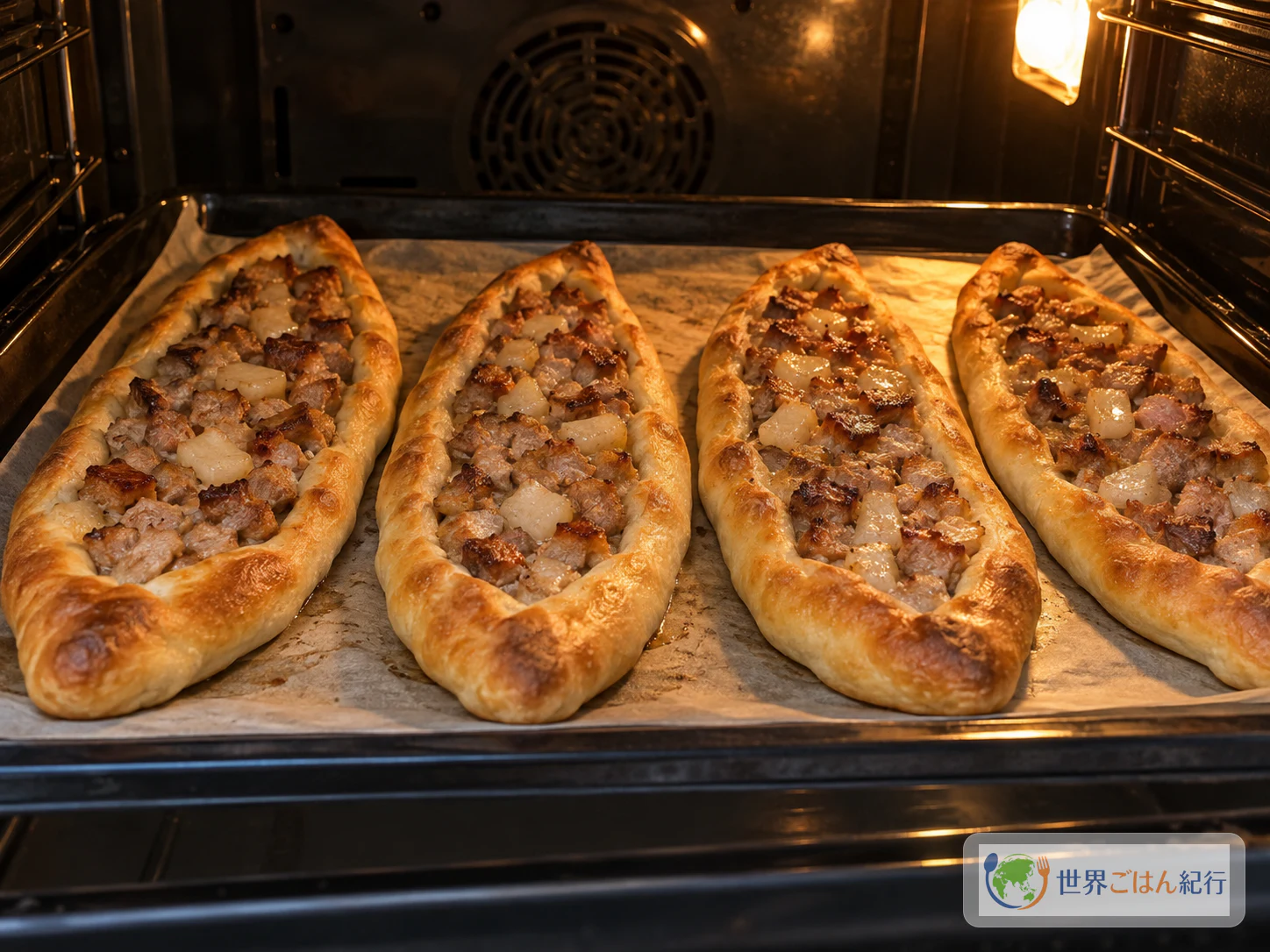
A soft dough that has rested more than once is stretched to suit the baking tray, and its edges are raised to form a long boat. Diced pork, red with paprika from its rest in the refrigerator, goes down the middle, with small pieces of lard among the meat. Then the tray goes into a 220°C oven. That is the home-kitchen picture of pastrmajlija (пастрмајлија), a North Macedonian dish of dough and meat baked together.
A bread with meat on top may bring pizza to mind, but the likeness goes no further than the look. The yeast dough, the boat shape and the pork topping are what define this dish.
The recipe here follows one home version from the Macedonian recipe site Moirecepti, which serves 4 and makes 4 pies. The site presents it as closest to the Štip style. Its amounts are kept as published and are not blended with other versions.
We have not test-cooked this recipe, so we can't vouch for the saltiness, the rise or the finished texture from our own kitchen. The 1 tbsp of salt on the pork is the amount Moirecepti gives, and it may taste strong. Adjust it to your own taste.
For more from the same table, see our North Macedonia page.
Ingredients: Serves 4, Makes 4 Boat-Shaped Pies
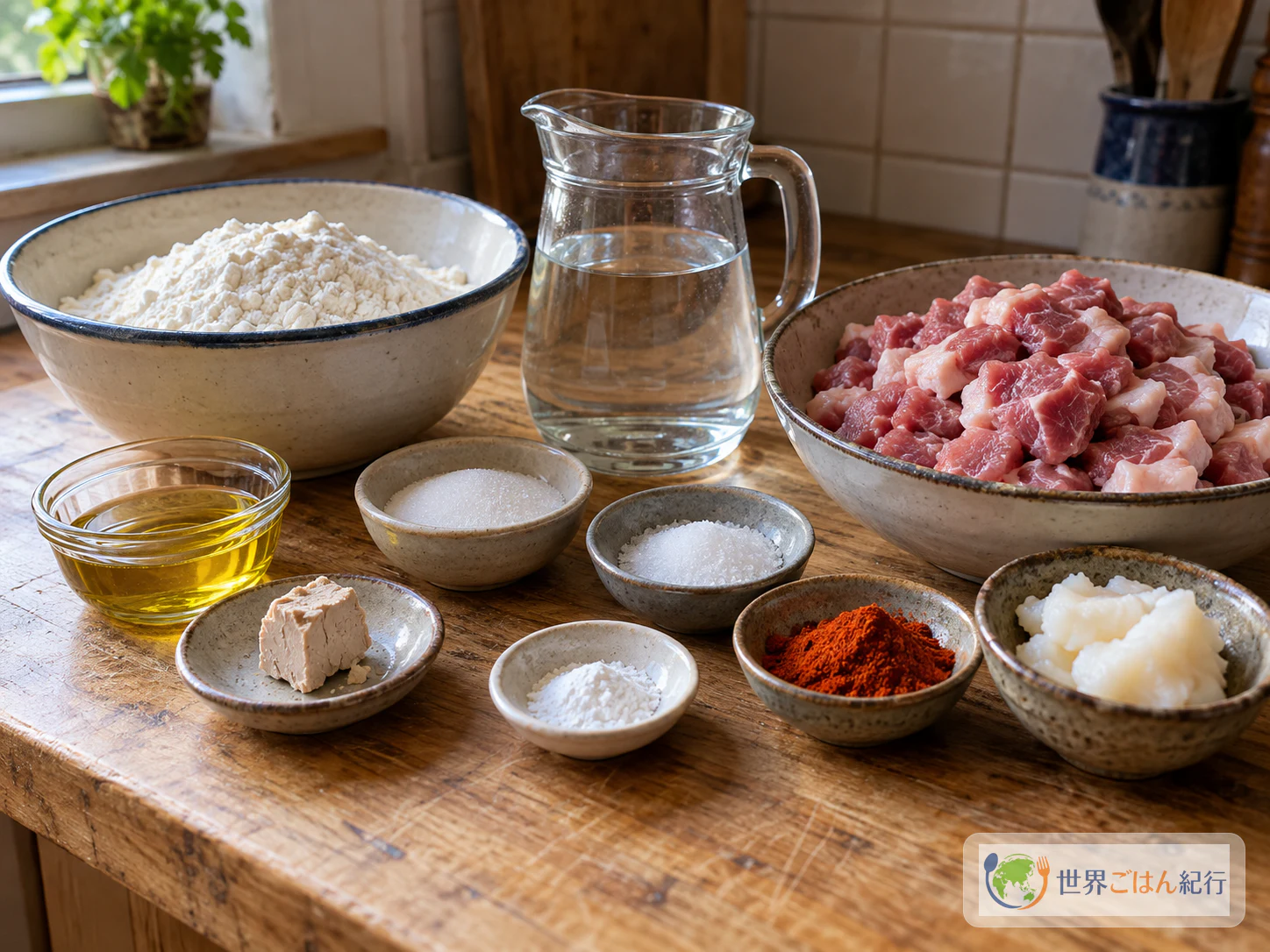
The salt on the pork can taste strong, and the grain of the salt and the size of your spoon both change how salty it turns out. Adjust to taste.
Equipment
- Kitchen scale and measuring spoons
- Knife and cutting board for the raw pork
- Bowl with a cover for seasoning the pork
- Small bowl for the yeast
- Large mixing bowl
- Clean cloth for covering the dough
- Baking tray
- Oven
- Separate utensils and a clean plate for the baked pies
Choosing Flour, Pork, Paprika and Lard
Flour. No particular type is required. Bread flour is an easy choice and is our editorial suggestion, not a local rule.
Pork. No cut is required either. A cut with some fat, such as shoulder, is our suggestion, but we have not tested it. Texture will change with the cut.
Red paprika powder. Powders range from sweet to hot, so check yours before using a full tablespoon. We suggest starting with sweet paprika and adding heat separately with chili. Don't treat ordinary paprika as identical to the red Bukovska pepper used in some home versions.
Yeast. We have no reliable fresh-to-dried conversion, so none is given here. Fresh yeast is what this recipe uses.
Baking powder. Sachet sizes differ by country and product, so check the size on your pack.
Lard. Lard is part of this recipe, and we have no tested substitute. Another fat would change the flavor and make it a different bake.
Method: Season the Meat, Rest the Dough, Shape and Bake
Keep the tools used for raw pork separate from those used for the baked pies, and wash your hands after handling raw meat. Cook the pork thoroughly. We give no target internal temperature, so follow your local food-safety guidance.
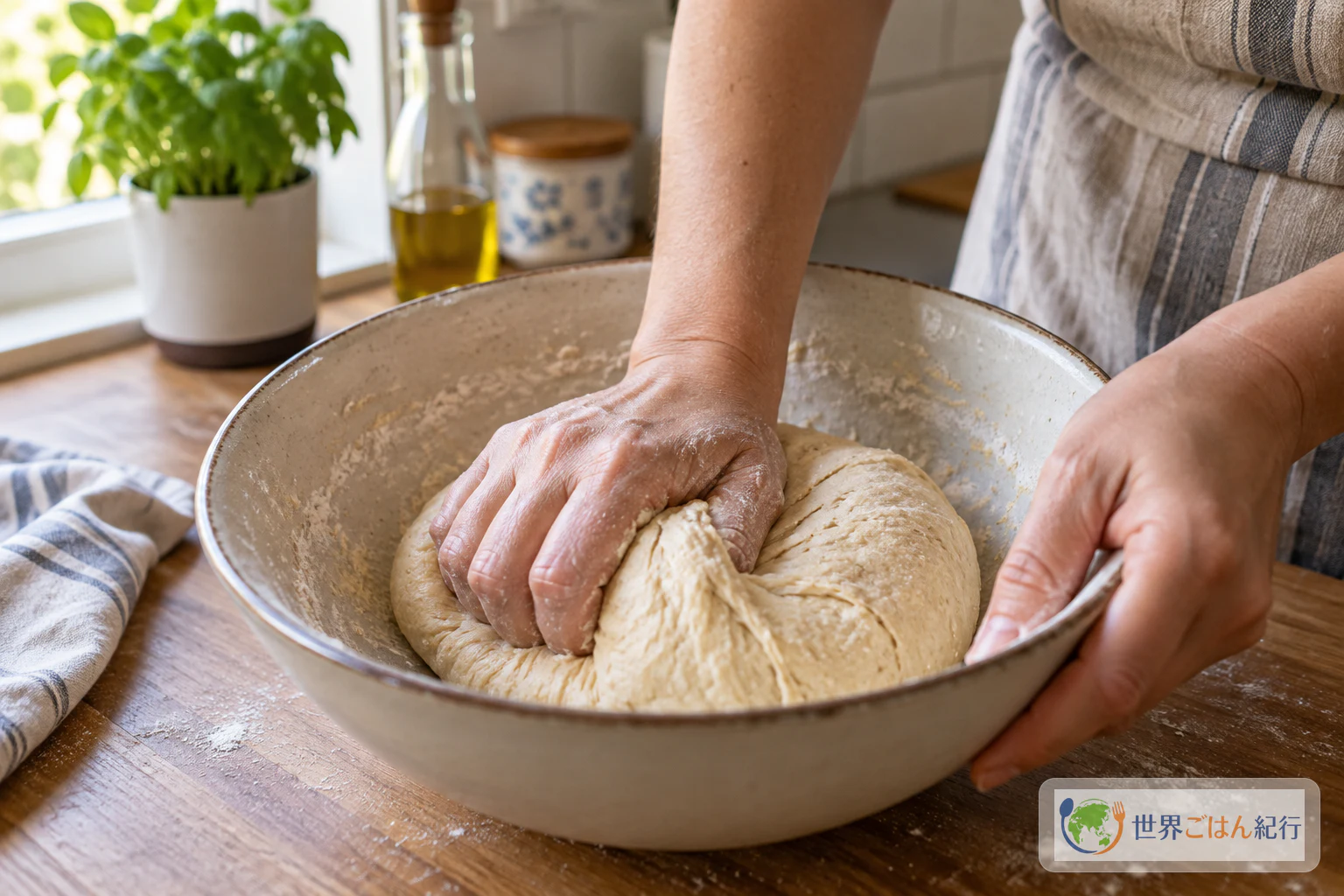
Season the pork the day before if you can. The dough then rests three times: about 1 hour, about 20 minutes, and once more after dividing.
Salty, Slow, Pale: What to Check
Since this recipe is untested, treat these as points to check rather than proven fixes.
| Condition | What to consider | What to do |
|---|---|---|
| The pork tastes too salty | Salt grain and spoon size change the result, and tastes differ | Use less salt on the pork next time |
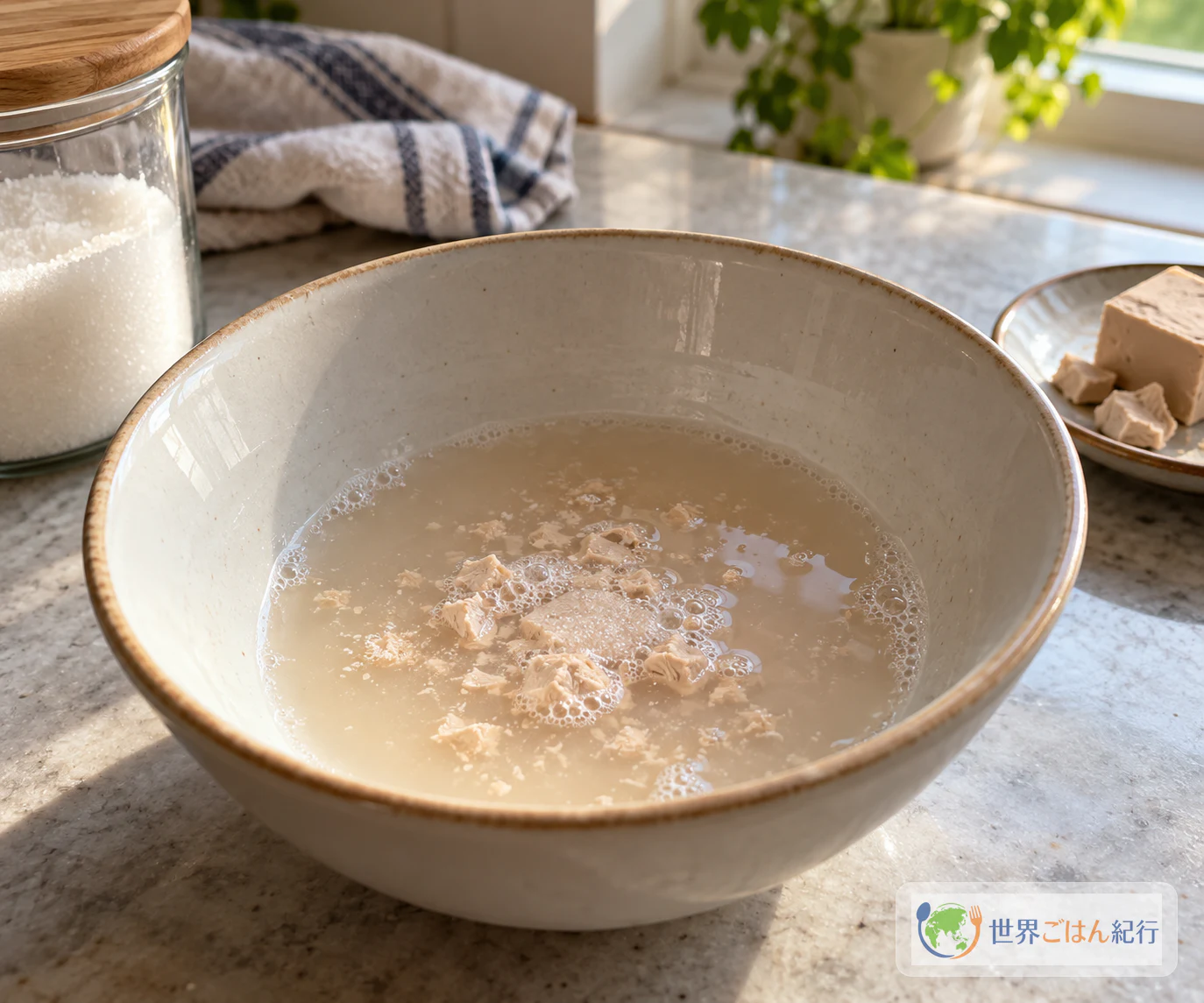
| The yeast mixture shows no bubbles | Water that is too hot can harm the yeast | Keep the water just lukewarm, and check that the yeast is fresh |
| The dough looks slow to rise | No rise temperature is fixed here, and kitchens differ | Keep it covered and judge by how the dough looks as well as by the clock, especially at the final rest |
| The surface of the dough dries out | It was left uncovered | Cover it during every rest |
| The crust is brown but the pork still looks raw | Ovens vary, and crust color says little about the meat | Keep baking until no raw red color remains |
| The topping sits close to the rim | The edges are too low or the meat spreads too far | Raise the edges again and keep the meat toward the center |
Štip Style, Egg and Cheese: How Versions Differ
There is no single fixed formula. Moirecepti describes its recipe as closest to the Štip style. Comments on that page also discuss whether egg belongs, which suggests the answer varies by household and place. Versions with egg or cheese exist, but this recipe uses neither, and we don't rank any version as the true one.
| Version | Dough base | Meat and fat | Egg | Oven |
|---|---|---|---|---|
| Moirecepti (this recipe) | 600g flour, 350ml water | 800g pork, 75g lard | None | 220°C, 20 minutes |
| Macedonian Cuisine | 800g flour, 250ml milk, water as needed | 1kg pork, oil, 100g lard | Not among its ingredients | 200°C, 20 minutes |
| Australian Macedonian Welfare & Wellbeing NSW | 1kg flour | 600g pork, 200g oil | 4 eggs, added before baking ends | Not given |
These are separate formulas, so if you want to try one of the others, follow it as a whole. Mixing them would change the balance in ways we can't vouch for.
The Name: Pastrma Is Not the Pork in This Recipe
The dish is written пастрмајлија in Macedonian. It also appears in English as pastrmajlija or pastrmalija. Gordana, the author of Macedonian Cuisine, explains pastrma as salted, dried mutton and notes that modern home versions may use pork or chicken.
That makes it worth separating the name from the shopping list. Pastrma is a cured, dried meat, while this recipe starts from fresh pork, seasoned the day before and baked on the dough. You don't need to look for dried meat to make it.
The sources we were able to read don't establish where or when the dish began, so we make no claim about its origin.
Frequently Asked Questions
Why so much salt on the pork?
Moirecepti gives 1 tbsp for 800g of pork. A separate home recipe on Macedonian Cuisine uses 1 tbsp for 1kg, so the amount is in the same range. It may still taste strong, and we have not test-cooked it, so adjust it to your taste.
Should I add black pepper or oil to the meat?
Moirecepti's method mentions pepper and adding oil to the meat, but its ingredient list has no pepper and gives no amount of oil for the meat. We left both out of this recipe. Don't use the 3 tbsp of dough oil on the meat.
How long does it take?
Moirecepti places the recipe in its 2–3 hour category. We read that as not including the overnight rest for the pork, so plan to start the day before if you want that rest. It gives no time for the final rest, and we haven't timed the recipe ourselves.
How should I divide the lard?
Moirecepti says to place pieces of lard among the meat but gives no amount per pie. Sharing the 75g evenly across all 4 is our own reading.
Can I add egg or cheese?
You can, but you will be making a different version. For an egg version with published amounts, see the Australian Macedonian Welfare & Wellbeing NSW recipe book listed below.
How do I know the pork is done?
Look for browned crust and pork with no raw red color. That is a visual aid, not a safety guarantee. We give no internal temperature because none is given in the recipes we used.
Sources
- Moirecepti (recipe by Vesna), "Видео рецепт: Пастрмајлија." The basis for this recipe: 4 servings, the 2–3 hour category, ingredient amounts, the rests, division into 4, baking at 220°C for 20 minutes, serving with hot peppers, and the description as closest to the Štip style. https://moirecepti.mk/post/pastrmajlija
- Macedonian Cuisine (Gordana), "Homemade Pastrmalija." Used for the author's explanation of pastrma, the note on pork and chicken in modern home versions, and comparison with a separate formula, including its salt amount. https://www.macedoniancuisine.com/2018/09/homemade-pastrmalija.html
- Australian Macedonian Welfare & Wellbeing NSW Inc., "Macedonian Recipe Book." Used only to show a separate version with egg, added before baking ends. https://amww.org.au/wp-content/uploads/2022/01/MacedonianRecipeBook2022.pdf