
The moment you see the red layer, conversation at the table begins
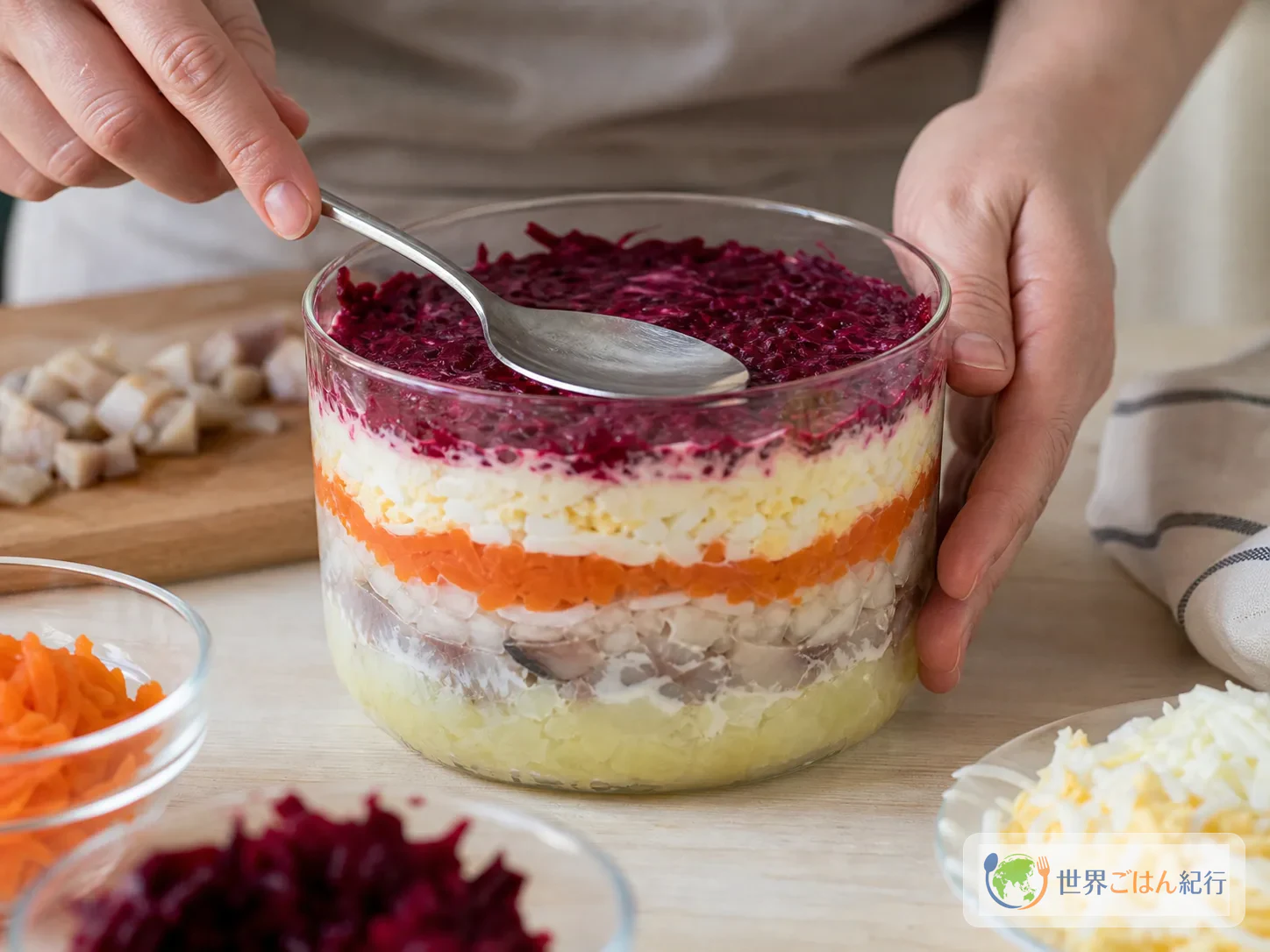
Picture it. On a white plate taken from the refrigerator you can see, in order, the pale yellow of potato, the orange of carrot, the white of egg and the deep red of beet. Put in a fork and out from underneath the beet comes salty herring and onion. Though it is a salad, the motion of cutting it is a little like cutting a cake.
The Russian селёдка под шубой (selyodka pod shuboy) literally means "herring under a fur coat." It is a cold layered salad in which salted or pickled herring is layered with boiled potato, carrot, beet, egg and so on, tied together with mayonnaise. In English it is called dressed herring or herring under a fur coat.
According to an explainer on Russia's culture portal, herring salads of similar construction existed in 19th-century Germany, Norway, Denmark and elsewhere, and in Russia during the Soviet era it became one of the dishes that symbolize the holiday table. In other words, rather than a dish suddenly made by one person, it is more natural to see it as the wisdom of combining preserved fish and root vegetables, changing form across regions and eras.
What trips you up when you make it is not the color of the beet. When the saltiness of the herring, the moisture of the root vegetables and the amount of mayonnaise add up, the taste goes blurry, or the layers slide the moment you cut. This is a dish for those who want to make it the day before and let the flavor settle, and who like the combination of sweet beet and salty fish. If you dislike the smell of fish and want a salad you can mix and eat right away, it is fine to skip it today.
This is not a dish that makes red beet the star; it is a dish that wraps salty herring in sweet layers.
Making it for 4, the hands-on work from prep to refrigeration is about an hour and a half, and it takes at least 4 hours until it is ready to eat. If you serve it at a holiday lunch, layer it in the morning; for dinner, by early afternoon. The beets can be boiled from raw or you can use store-bought cooked packs; either way, draining the moisture well is what protects the layers.
This dish also suits those who want to widen their uses for dill. It shares ingredients, potato and egg, with the cold Russian soup okroshka (in Japanese), but here no liquid is poured in and the flavor is sealed between the layers.
Ingredients (serves 4): first decide where the moisture goes
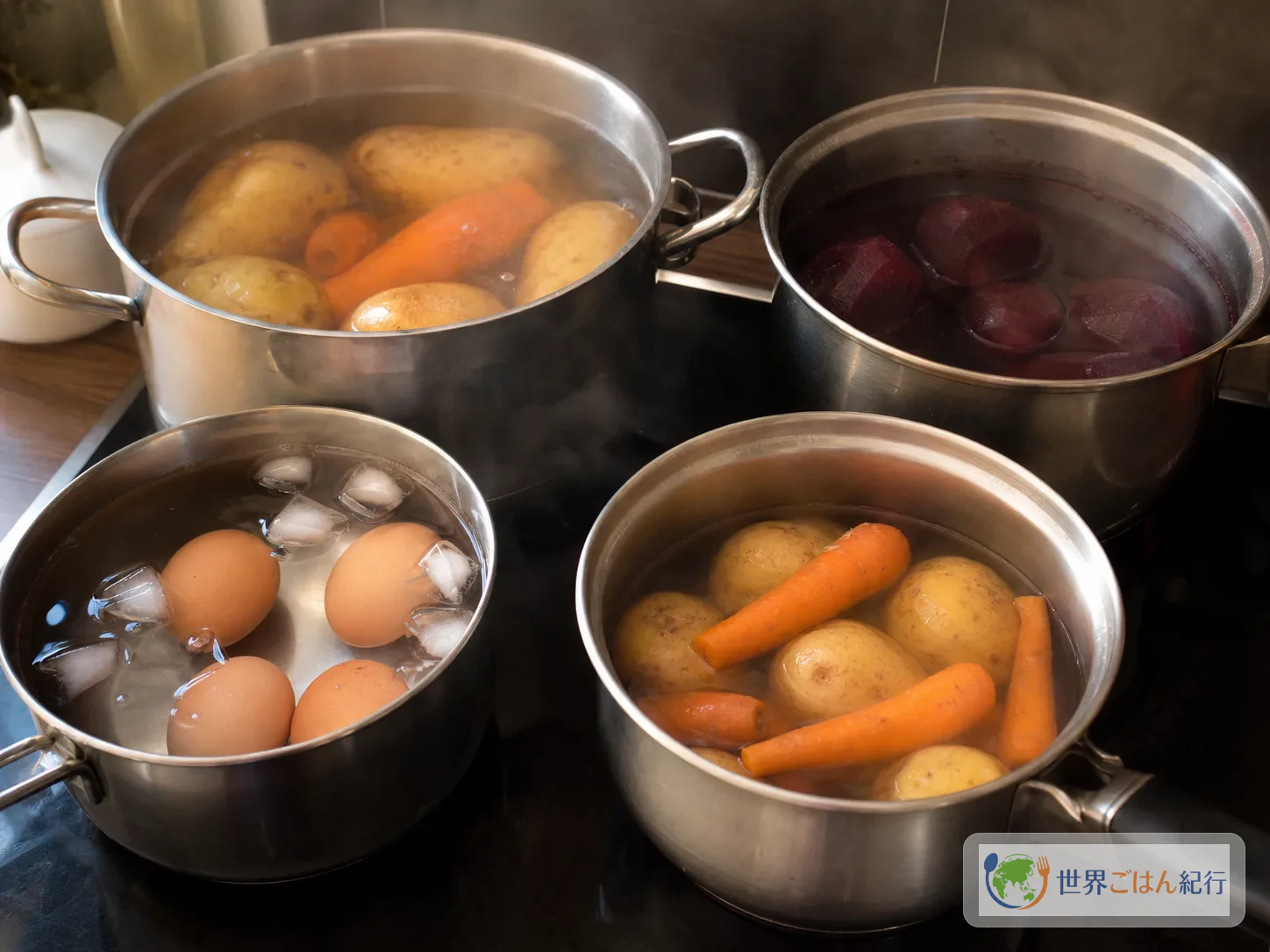
There seem to be many ingredients, but they have four roles. The herring gives saltiness and savor, the beet gives sweetness and color, the potato takes in the saltiness, and the carrot and egg round off the corners. Onion lightens the aftertaste of the fish, and dill adds a green aroma to the sweetness of the roots.
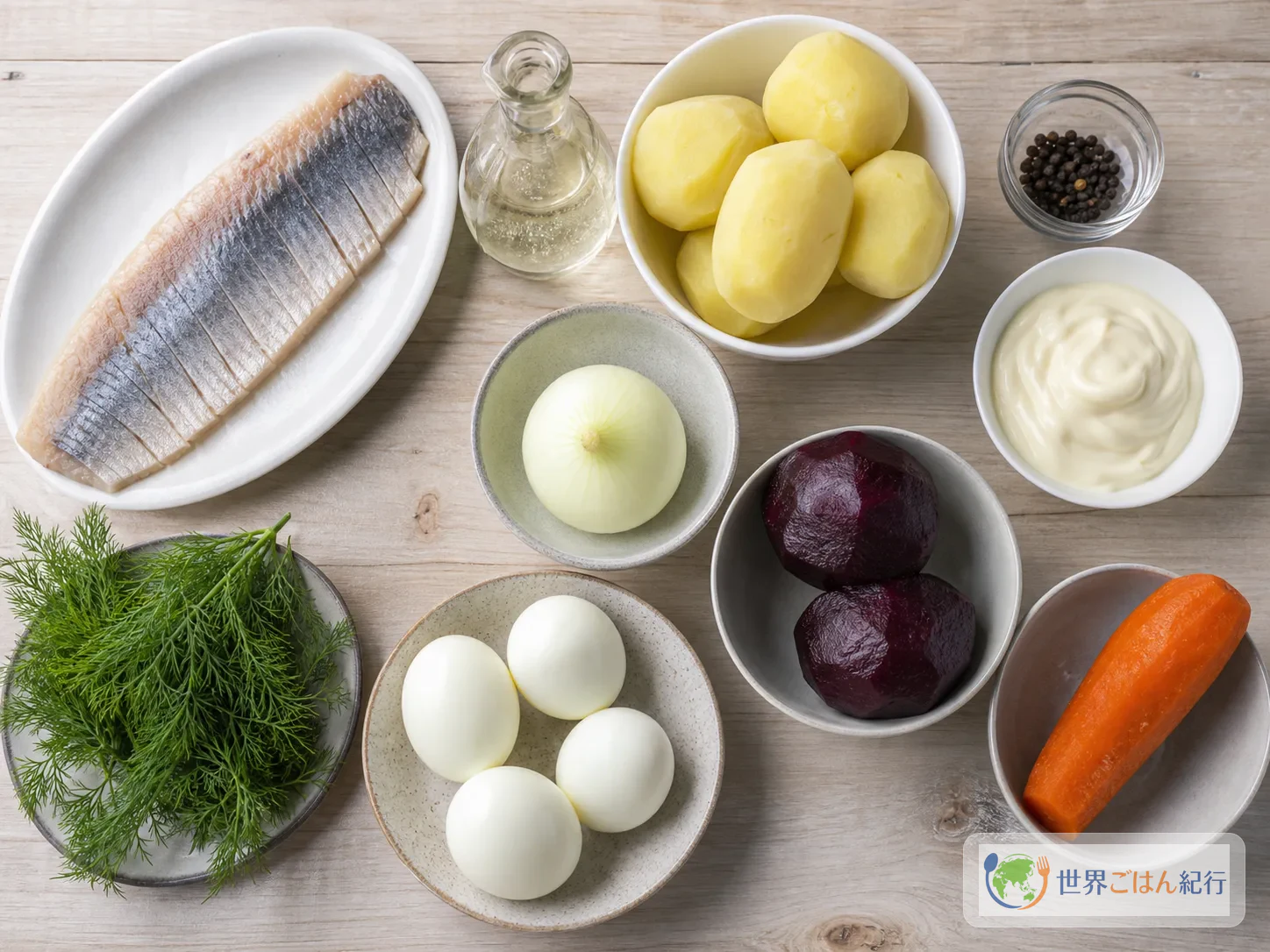
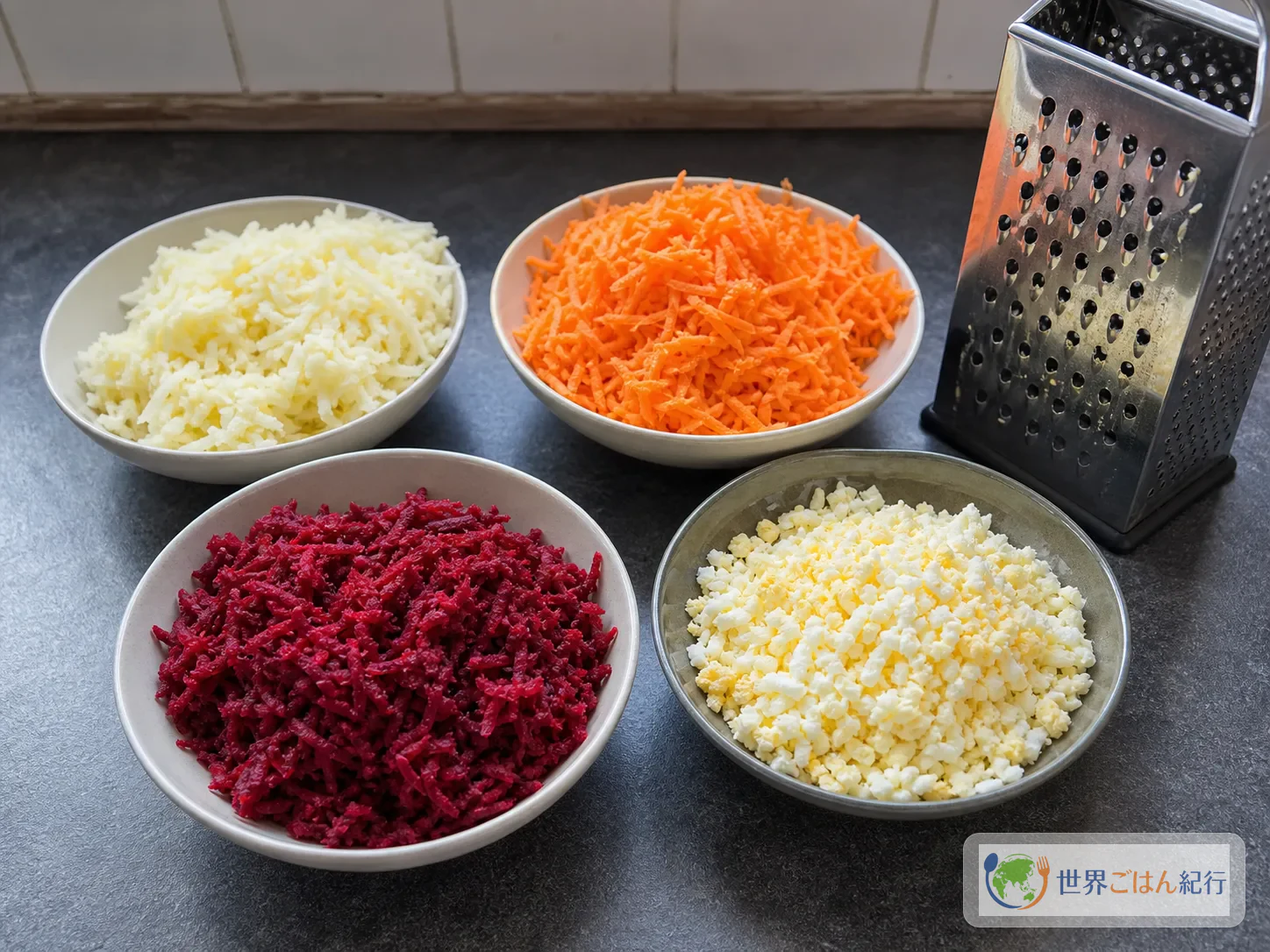
The first decision is to treat the beet not as "an ingredient that makes it red" but as the star that holds water. Store-bought cooked beets are convenient, but simply draining the liquid from the pack is not enough. Wrap them in paper towels and move the moisture out without crushing them. Even with raw beets, cool them after boiling and handle them the same way.
Even among products labeled "salted," herring varies. If you taste a small piece and the saltiness lingers on your tongue, after cutting pour a little cold water over it and wipe it dry at once. Soaking it long in water draws out the savor too, so keep it to adjusting the surface, not desalting. For pickled herring, use as is, and blot the surface with paper only if the vinegar smell is strong.
The reason to look for dill is not decoration but the aroma that loosens the weight of sweet roots and mayonnaise. On days you have fresh dill, chop 5 g; on days you cannot find it nearby, use a small amount of dried. If you do not want to buy fresh herbs once and let them go to waste, looking at freeze-dried first avoids that.
You can also choose not to buy dill. If you want only the saltiness of the fish and the sweetness of the beet to be clear, finish with black pepper only. Conversely, if you also use herbs in potato dishes and okroshka (in Japanese), it is easier to build a path for using up a 2.5 g packet.
Herring contains fish, and eggs and mayonnaise contain egg. Mayonnaise and processed herring may contain soy, wheat, milk and so on, so check the labels of what you buy. Do not leave even salted fish at room temperature; refrigerate right after buying and after preparing. Do not use fish that gives an unusual sting to the tongue or lips, as heating may not undo it.
Method: keep the red layers from getting heavy
For the container, use a ring mold about 12 cm across and 5 cm high, or a clear small bowl of similar depth. For the first time, making it in a small bowl removes the tension of turning it out of a mold. On days you want to show the layers, line the inside of the container with plastic wrap pressed close before layering, and after chilling you can turn it onto a plate.
Making one large platter feels like a holiday dish, but for the first time it is easier to manage the layers by putting the 4 servings into a container about 12 cm across. A clear container shows the cross-section, and even without unmolding the layering of the "fur coat" comes across.
Fixing watery, salty and collapsing separately
When it fails, you do not need to mix everything and turn it back into potato salad. Separating where the moisture or saltiness increased decides the next move.
Red liquid spreads across the plate
The most common causes are using beets straight from the pack, or layering hot root vegetables. If it is before layering, wrap the beet again in paper towel and leave 10 minutes in the refrigerator. If it is already finished, absorb only the liquid on the plate with the corner of a paper towel, without pressing the surface. Next time grate the beet last and wait for the juice to settle before using it.
The herring is too salty
If you notice just before eating, adding a little unsalted potato brings the taste back better than increasing the mayonnaise to hide it. If it is before making, rinse the cut herring briefly in cold water and wipe it well. A long soak weakens the fish's flavor too, so you do not need to bring the saltiness to zero.
The flavor is vague
Right after refrigeration the mayonnaise and the sweetness of the roots come forward. Add black pepper, dill and vinegar 1 or 2 drops at a time and taste each time. Add salt last. The saltiness of herring feels stronger once chilled, so deciding by salt before chilling tends to be too much the next day.
It will not come out of the mold
If the chilling has not reached 4 hours, first extend it by 30 to 60 minutes. If it still does not come out, do not slide a thin knife down the side; hold a warm cloth against the outside of the mold for 10 seconds. Even if it collapses, the taste does not change, so put it back in a small bowl and serve with plenty of dill.
Substitutes: protect aroma and moisture one at a time
You do not need to recreate in full the ingredients of a Russian home. When substituting, it matters not to replace the pillars of flavor with something else all at once.
If you cannot find salted herring, choose pickled herring. Smoked salmon also builds layers, but the smoke aroma comes forward and it becomes a different dish from the saltiness of selyodka pod shuboy's fish. If you use fish packed in oil, blot off the oil with paper and reduce the mayonnaise by 20 g from the start.
For beets, boiling raw gives a sweet aroma and deep red. Vacuum-packed cooked beets, on the other hand, save time. Do not put the liquid in the bag into the dish; press it off with paper. Red turnips and red cabbage can supply color, but not the earthy sweetness and creamy texture. Do not decide by cross-section color alone; use them only on a day you can accept the difference in taste.
Some mayonnaises have a strong egg aroma and sweetness. Layer with 100 g first, and if you want acidity after chilling, add a few drops of vinegar. Mixing in 20 g of sour cream or unsweetened yogurt makes it lighter, though it moves away from the classic richness. If you choose it as a lighter substitute, drain the yogurt once with paper so as not to put too much moisture between the layers.
Equipment: decide by whether the reason to buy continues
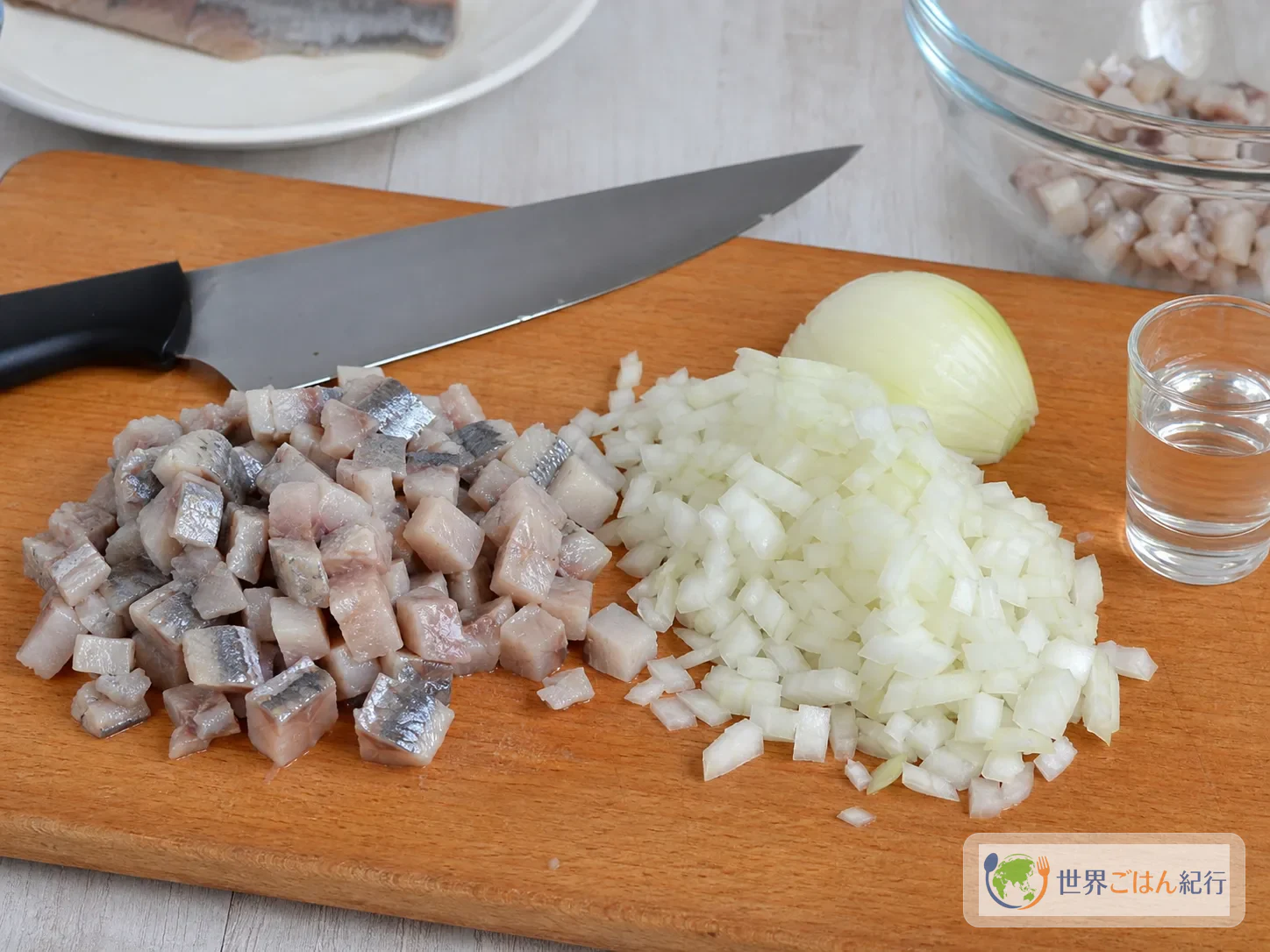
For this dish alone, a knife, a coarse grater, a bowl and a spoon are enough. If you use a food processor, limit it to pulsing the herring and onion toward 8 mm cubes, not grating the beet. Turning it too long makes the fish a paste, so stop every 2 to 3 seconds and check the pieces by eye.
For someone who prepares chopped vegetables and fish several times a week, it is worth checking capacity, storage space and ease of removing the blade on the product page. If you would buy one just to grate root vegetables coarsely for a one-time dish, skip it.
The role of layers on a holiday table
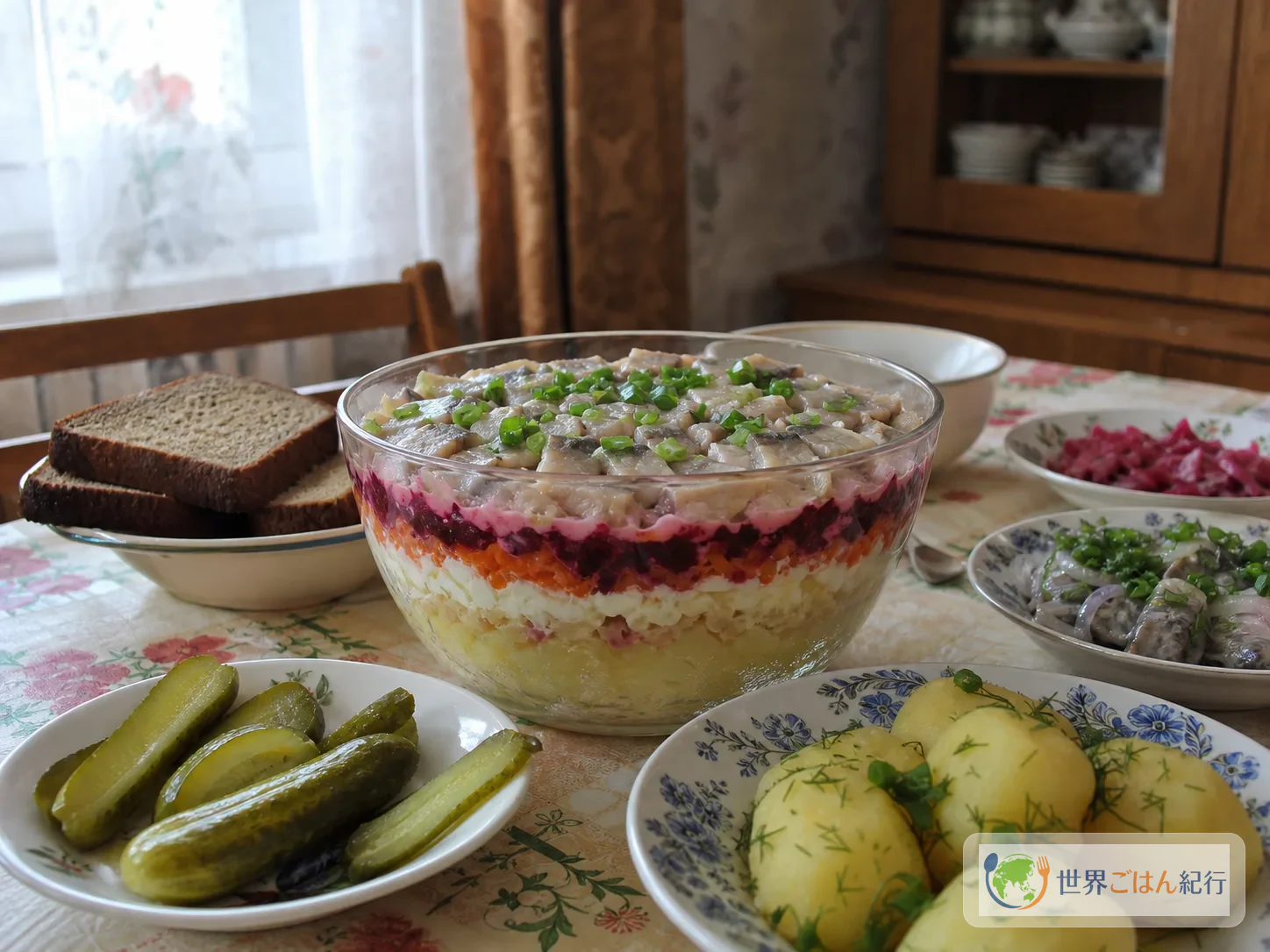
Russia's culture portal explains that similar herring salads existed in 19th-century Northern Europe and Germany, with combinations of fish, root vegetables, egg, apple and pickles varying by region. The present form of selyodka pod shuboy is layers of onion, potato, carrot and beet over salted herring, sometimes with egg added. Even if the order of layers and the presence of egg differ by cook, the idea of wrapping fish in vegetables and letting it settle chilled remains.
As for origin, a story is also widely told that in 1919 a Moscow shopkeeper devised a dish with a wordplay on "shuba." However, the science magazine «Наука и жизнь» (Science and Life) casts doubt on the explanation that a single cook invented it right after the Revolution, comparing its similarity to Norwegian herring salad and the period when it spread into Soviet homes. Leaving the interesting legend while not writing the inventor as established fact suits this dish.
Picture it. A red salad in the middle of a large platter, and when the first person serves themselves, another layer appears beneath the color of the surface. Without any explanation of the dish, the person next to you asks, "What's underneath?" The layers are not decoration; they are a device for carrying preserved fish and root vegetables to the mouth a little at a time.
Six variations to change the occasion
Add apple for acidity
Under the carrot, place 80 g peeled apple in 3 to 4 mm cubes. A crisp acidity enters the sweet beet and mayonnaise. It releases water easily, so blot it with paper after cutting and reduce the onion to 40 g. It suits a lunch when you want the saltiness of the fish to feel lighter.
Pickle the red onion
Cut 60 g onion into thin cubes and leave 10 minutes with 1 tsp vinegar and a pinch of sugar. When the color turns pale pink, drain it. It is easier for people who dislike onion's sharpness and ties to the red of the beet. The condition is not to put the pickling liquid into the layers.
More eggs to round the fish's edges
With 5 eggs, the richness of yolk increases and the herring aroma becomes gentler. Keep the mayonnaise at 120 g, and if the eggs seem watery, cool the boiled eggs fully before grating. The flavor becomes rounder, but more yellow shows in the cross-section, so on days you want red beet to be the star, stay with the basic 4.
Divide into individual small bowls
In small bowls about 8 cm across, divide the ingredients into 4 and layer in the same order. Three hours of refrigeration is enough, but the condition is not to mix when taking out. Rather than cutting a large platter, it suits a table where you want equal amounts of fish.
Lighten the mayonnaise
Mix 80 g mayonnaise with 40 g drained unsweetened yogurt. Spread it only thinly between the layers and use mayonnaise alone over the beet, and moisture is less likely to increase. To keep the traditional richness, return to the basic amount; choose this version when you prioritize lightness.
Change the fish and change the name
Smoked salmon or salted mackerel also build layers, but with stronger fat and aroma. When you change the fish, think of it as "a fur-coat-style layered dish" and it is less confusing not to expect it to taste like the herring dish. Follow the storage instructions on processed fish labels and use it early after opening.
Finally check storage, temperature and allergies
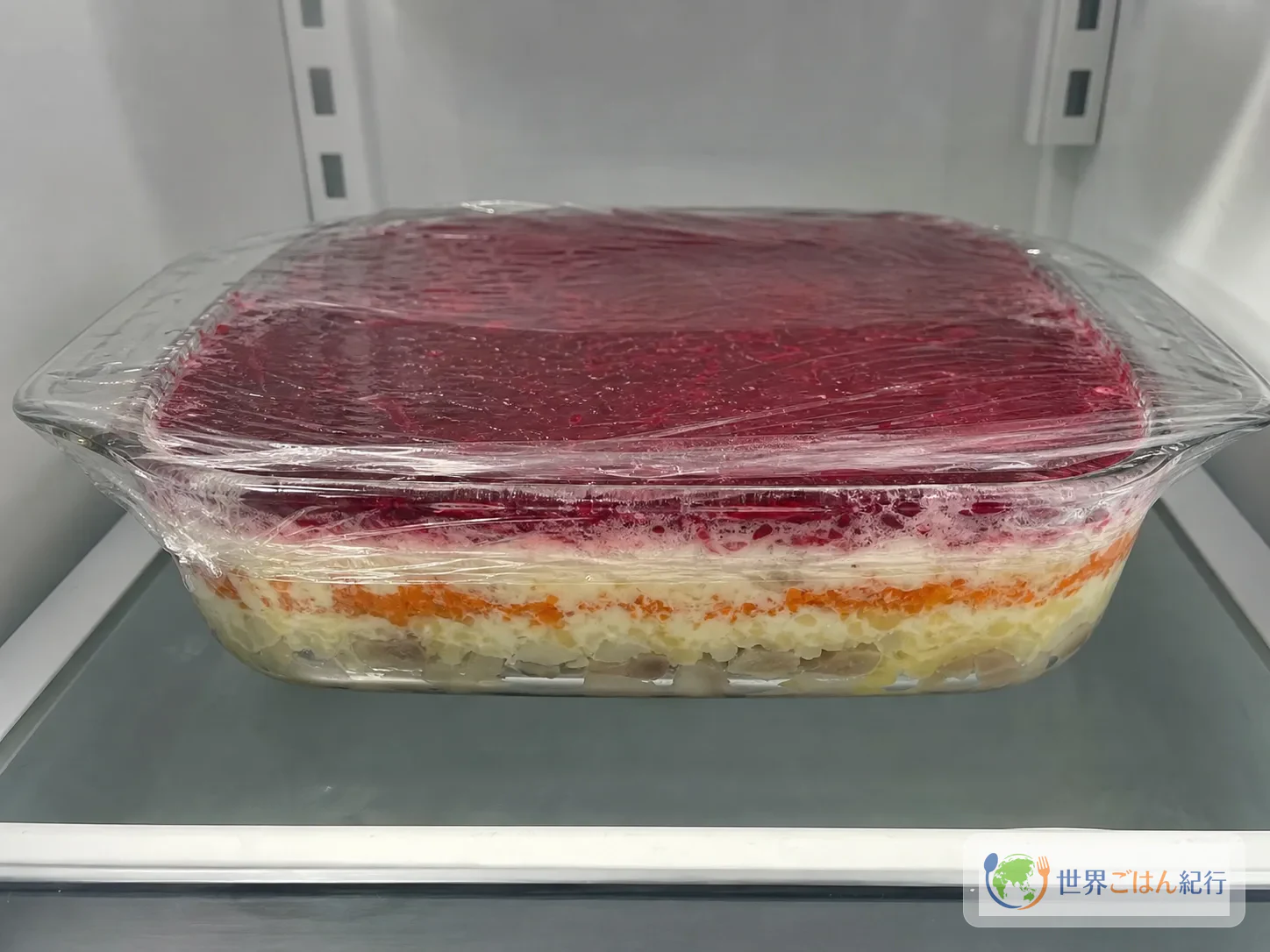
Keep the finished salad with plastic wrap pressed against it, on a flat place in the refrigerator. Take out only the amount you need right before eating, and do not move the rest in and out of room temperature repeatedly. Japan's Ministry of Health, Labour and Welfare advises not leaving fish and its processed products at room temperature, refrigerating promptly after purchase and keeping them cold. The same idea applies to what you make: keep cold dishes at 10°C or below and do not leave them long at room temperature.
For texture, it is at its best up to the next day. Potato and beet change texture when frozen and the mayonnaise tends to separate, so freezing is not suitable. If there is a sour smell, abnormal moisture on the surface or a change in the smell of the fish, discard it rather than judging by tasting.
For allergens, check fish and egg. Mayonnaise and processed herring may contain soy, wheat and milk depending on the product. Dill is a herb, but you do not need to increase other seasonings to add aroma. If the saltiness bothers you, first recheck the labels of the herring and mayonnaise used.
FAQ
Can I make it with canned or vacuum-packed beets?
Yes. Drain the liquid from the bag or can completely and press the surface with paper before using. If liquid remains, red juice runs to the bottom during refrigeration. Flavored beets have sweet vinegar or salt added, so use less herring and onion and layer while tasting.
Can I use salted mackerel instead of herring?
You can, but it has more fat and aroma than herring. Removing the skin and bones and using grilled, cooled flesh gives a layered dish different from the saltiness of preserved fish. For the first time aiming at the traditional taste, prioritize salted or pickled herring.
Which layer should go first?
It differs by household. In this method it is potato, herring and onion, potato, carrot, egg, beet in that order. The bottom potato takes up the fish's juices, and putting the herring early lets the saltiness pass to the root vegetables above. The beet goes last to keep the red color and sweetness at the surface.
Is it all right to make it the day before?
Layering and chilling the day before suits it. Leaving it 4 hours or more in the refrigerator, ideally overnight, lets the saltiness of the herring move into the potato and egg and makes it easier to cut. Keep plastic wrap pressed against it until just before eating, and do not leave it long at room temperature.
Can I make it without dill?
Yes. It holds together with black pepper alone, but the weight of root vegetables and mayonnaise tends to remain. Using parsley in place of dill adds a green aroma, but the pairing with herring goes in another direction. For the first time, use a small amount of dried dill and move up to fresh dill next time; that is realistic.
Can I not show the layers without a ring mold?
You do not need one. Layering in a clear small bowl shows the colors at the sides. If you want to unmold, use a round pan you already have and line the inside with plastic wrap. Rather than buy new equipment, first check whether the taste and chilling time of the dish suit your own table.
Nutrition guide
The following is an approximation when the listed ingredients are divided among 4 people. Because the saltiness of herring and the product differences in mayonnaise are large, give priority to the nutrition label on the package.
| Item | Guide per serving |
|---|---|
| Energy | about 460 kcal |
| Protein | about 18 g |
| Fat | about 34 g |
| Carbohydrates | about 23 g |
| Dietary fiber | about 4 g |
| Salt equivalent | about 1.6 g |
Sources
- Culture.ru, "Селёдка под шубой: история праздничного салата" (the dish's construction, theories of origin, its place at the holiday table. Accessed and checked 27 July 2026)
- Наука и жизнь, "Украшение новогоднего стола, селедка под шубой" (comparison with Norwegian herring salad; material for not asserting a single origin. Accessed and checked 27 July 2026)
- Food Network Kitchen, "Herring Under a Fur Coat" (layer structure, the idea of chilling to let flavors settle, comparison of amounts and nutrition labels. Accessed and checked 27 July 2026)
- Ministry of Health, Labour and Welfare (Japan), "On food poisoning from histamine" (cold storage of fish and processed products, caution against using fish that has lost freshness. Accessed and checked 27 July 2026)