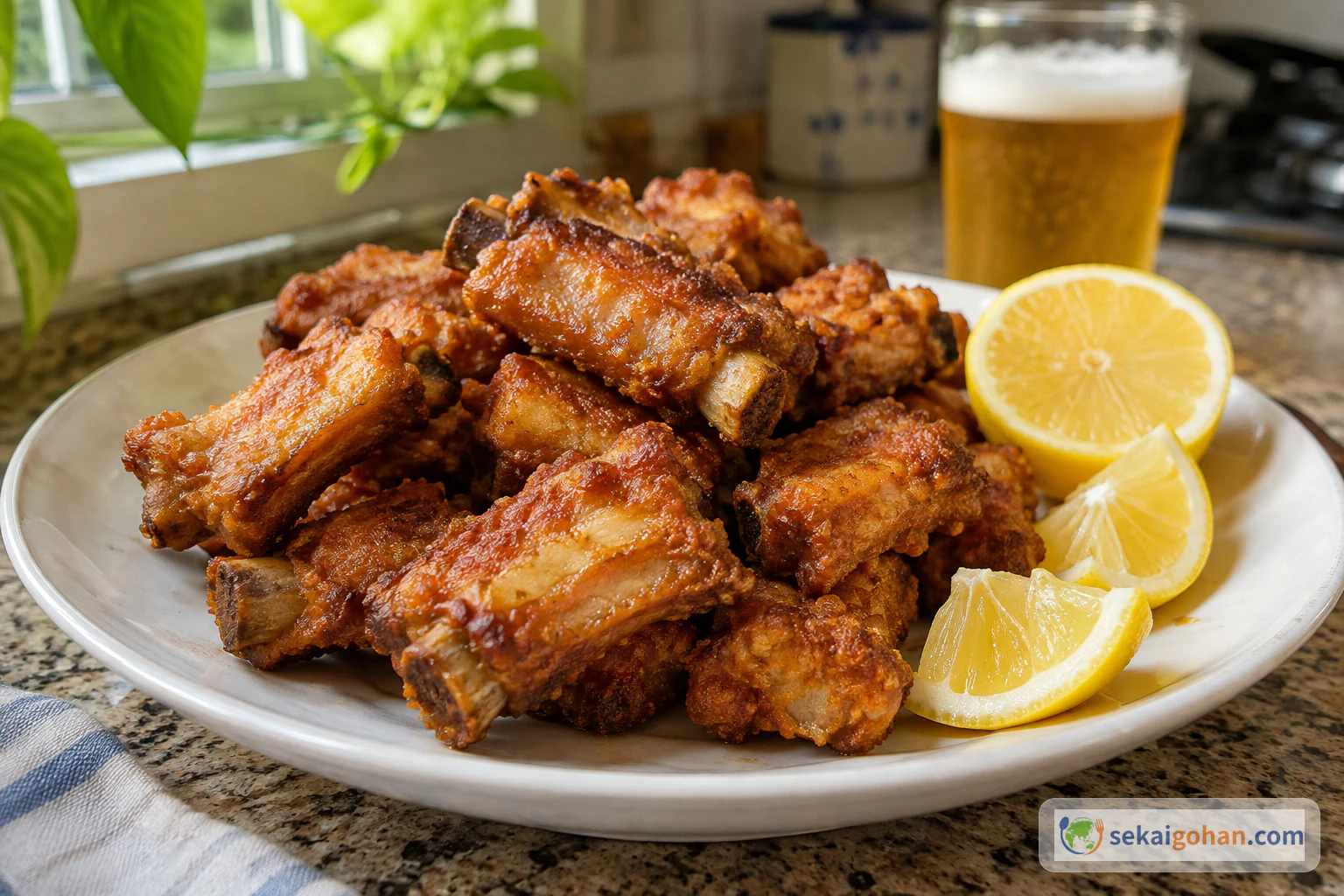
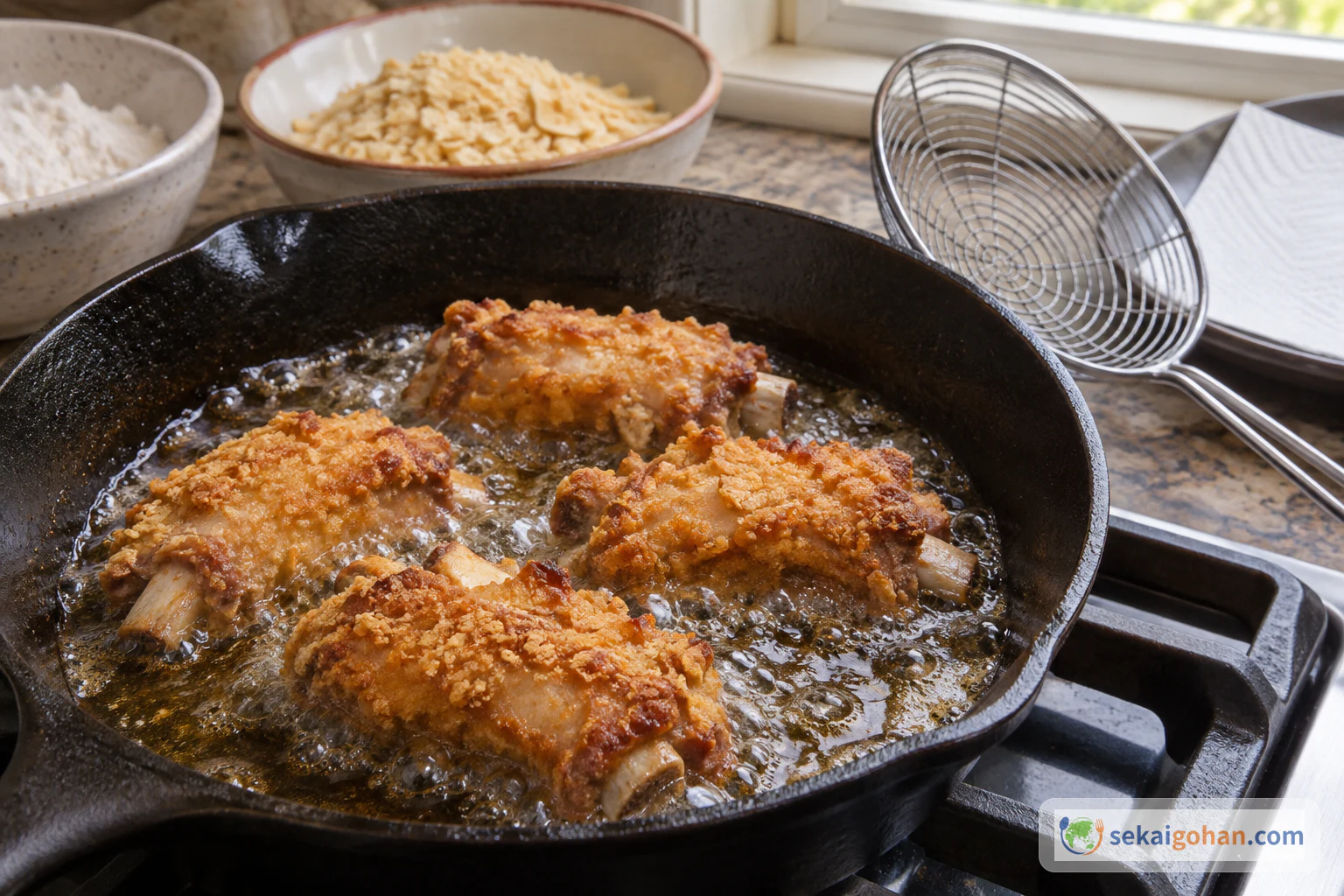
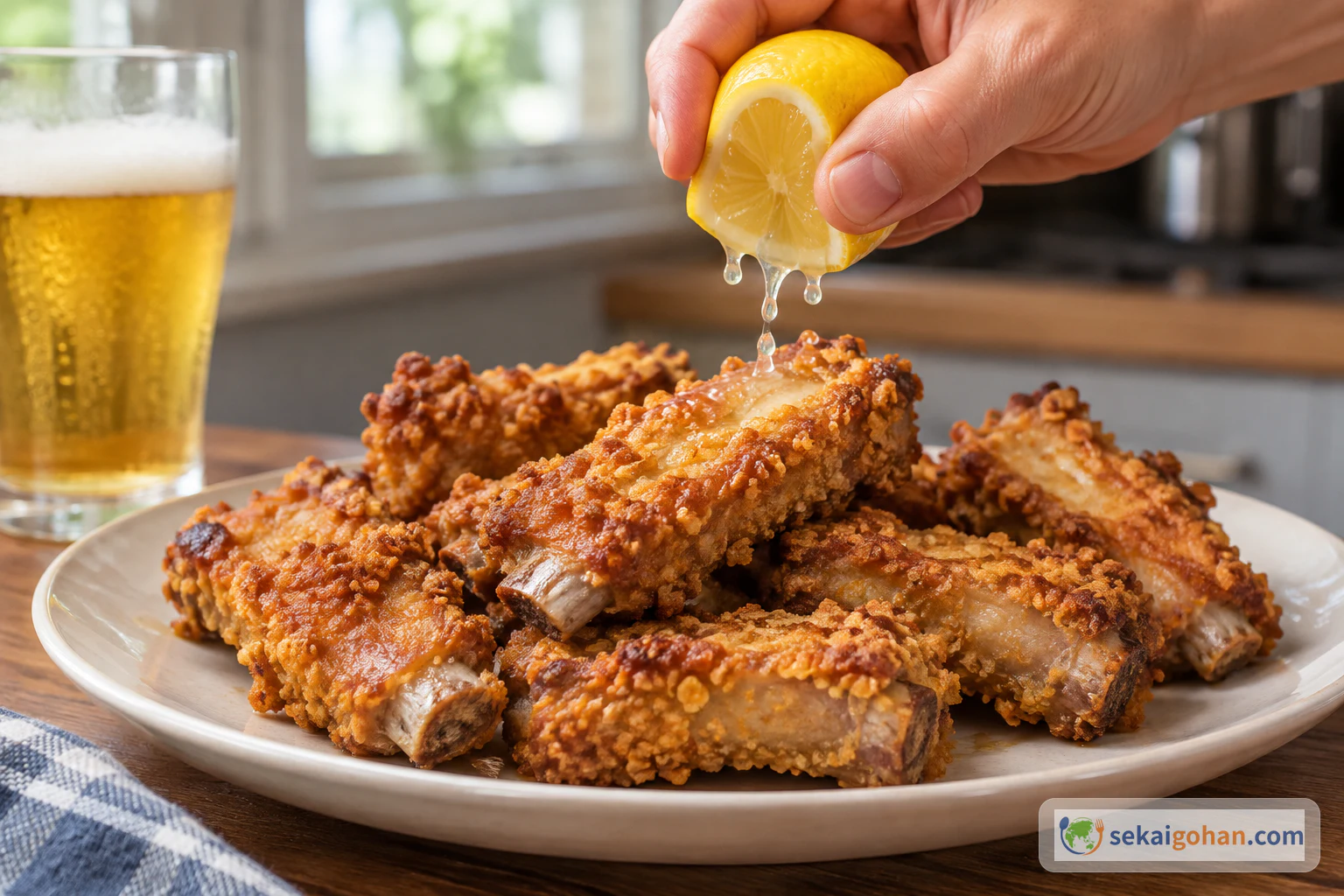
It is late, the beer is still going round, and a platter comes out of the kitchen piled with small pieces of pork rib, each about two inches long, each with its own bit of bone to hold. Someone squeezes lemon over the whole heap while the crust is still hot enough to hiss. These are Thunder Bay bon bons, the fried riblets of the Chinese restaurants in Thunder Bay, Ontario. The crust is thin and crisp from flour and crushed saltine crackers, the meat underneath carries soy, rice wine and Chinese five-spice, and the lemon cuts straight through the fat.
Bon Bons: Born at a House Party, Kept by a Whole Town
The story told in Thunder Bay puts the first batch in 1946 and gives the credit to Lam Pang. He came from Taishan, in Guangdong, and arrived in Canada as a boy. He learned to cook on ships, then opened his own place, Pang's. Alongside the restaurant he catered house parties, and that is where the bon bon took shape. The guests were drinking beer late into the night and needed something that could go out to them fast. Pang tried two-inch short ribs with a light coating, Chinese spices and a squeeze of lemon, and the dish stuck.
From those parties it moved onto the menus of the town's Chinese restaurants and became one of the fixtures of Thunder Bay's Canadian-Chinese cooking. Each kitchen makes it a little differently. The coating is where the versions part ways most clearly. Some kitchens use cornstarch, some use potato starch with breadcrumbs, and the version here uses flour with finely crushed saltines, which gives a crust that is crisp and lightly salty. Chinese spices and lemon run through the versions.
In the Pang family, the dish stayed a celebration food. Lam Pang's daughter, Gilda Pang-Allard, has kept making bon bons every New Year's Eve, and she has her own version that she serves with a ginger sauce. That sauce stays in the family. At home, lemon is the finish everyone recognises. For the wider picture of how this fits into the country's cooking, see our Canada page.
Bon bons here are pork riblets. The dish shares its name with the French sweet, and the two have nothing to do with each other; ask for bon bons in Thunder Bay and you get fried ribs and a lemon.
The Fort William Curling Club in Thunder Bay goes through about 150 lb of bon bons a week. They are the food of long evenings with a drink in hand, which is exactly the job they were invented for.
Ingredients
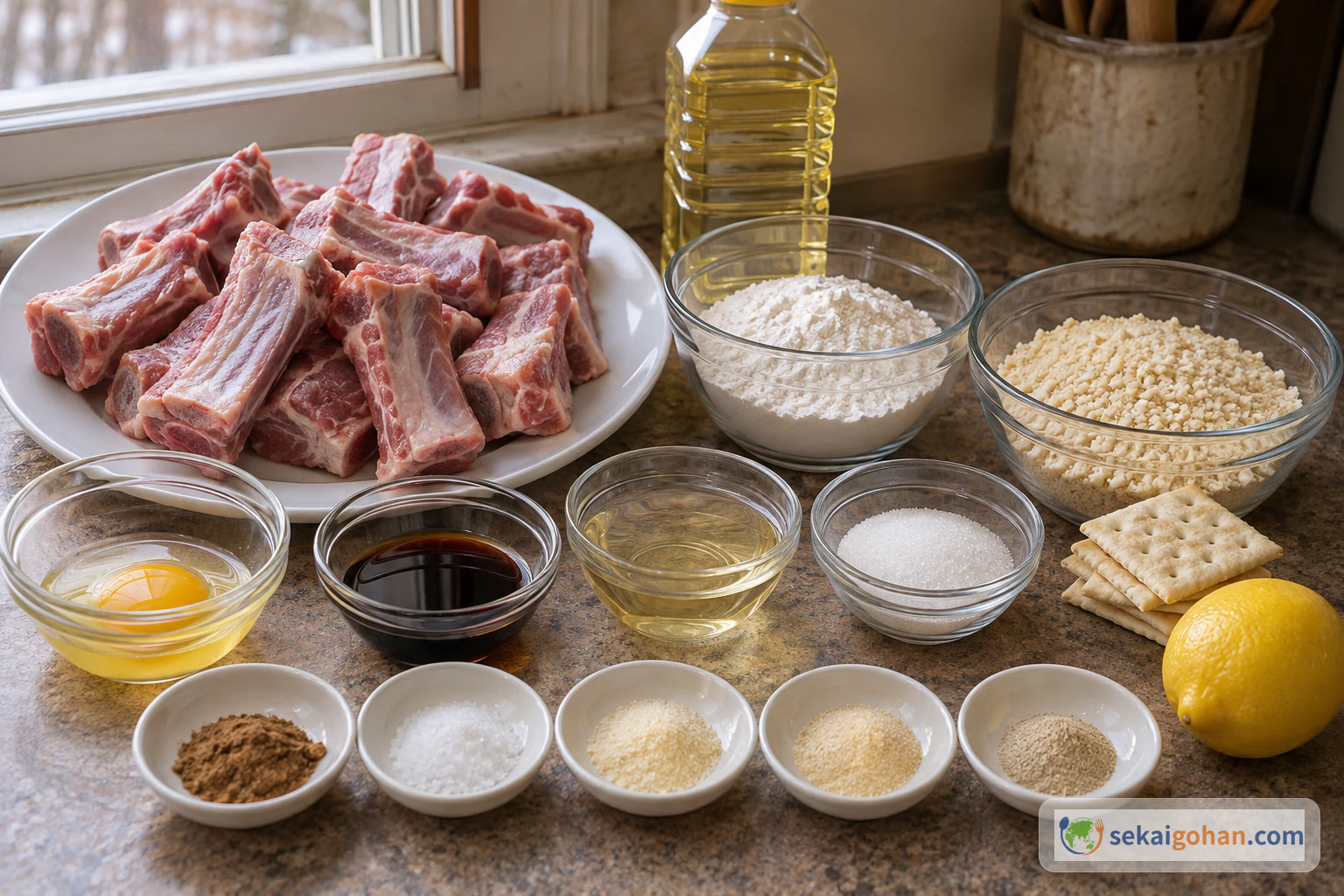
This dish contains egg, wheat and soy. Saltine crackers vary by brand and some contain milk or other allergens, so check the label of the crackers you buy. Five-spice blends also differ by brand; read the ingredient list if anyone at the table has a spice allergy.
Equipment
- A heavy, deep pot for frying
- A deep-fry thermometer for the oil
- An instant-read digital thermometer for the meat
- A large resealable plastic bag
- A shallow tray for the coating
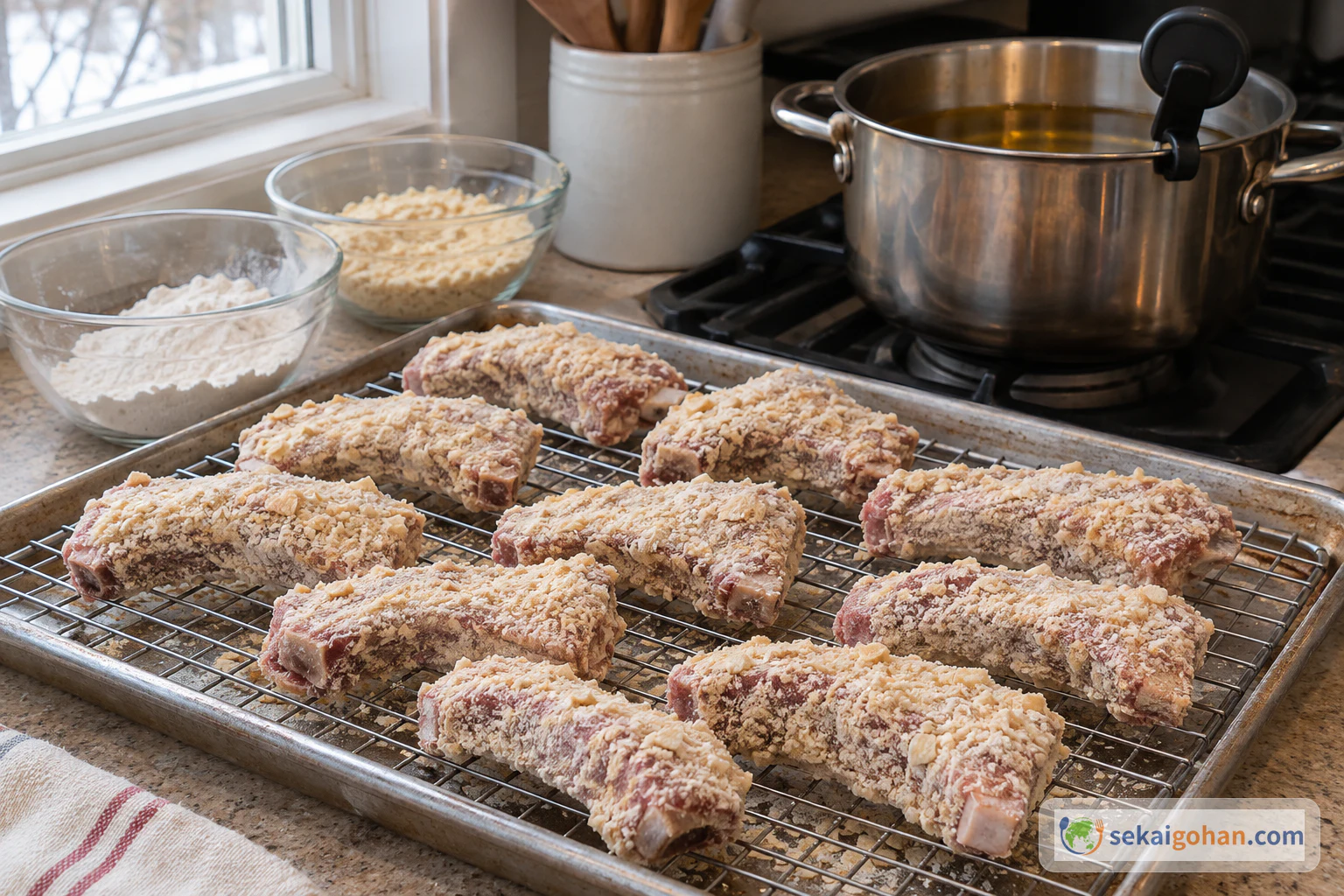
- A wire rack set over a tray
- A spider strainer or slotted spoon
- A heavy knife and a wooden board, if you separate the riblets yourself
Choosing and Substituting
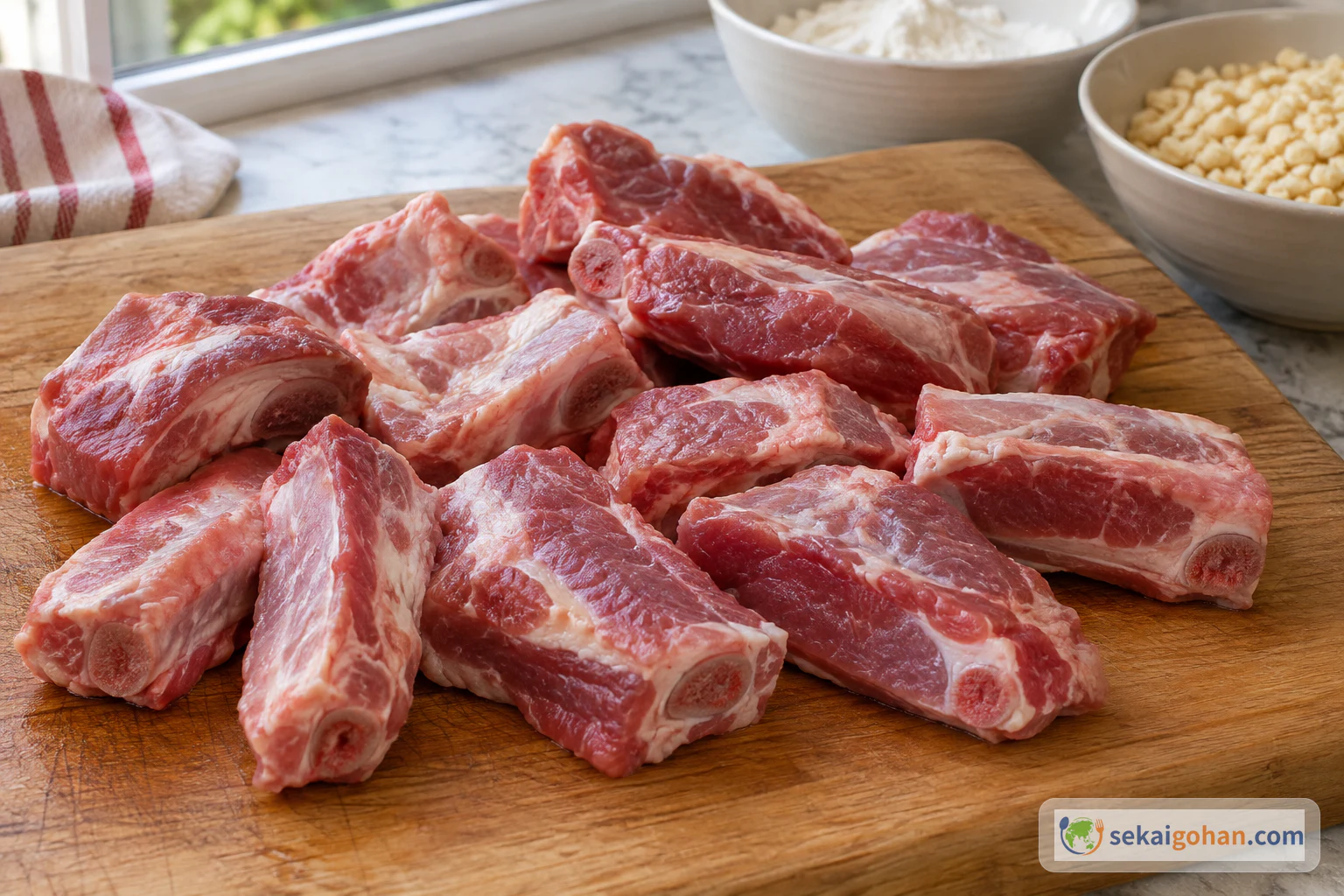
The rib cut matters most. Ask the butcher for pork back ribs in a sweet-and-sour cut: the rack sawn across the bones into halves or thirds, so each strip yields short riblets about 2 inches long. Pork spareribs cut the same way work too and give a fattier bite. Sawing through bone needs a bandsaw, so this is a job for the meat counter.
For the rice wine, Shaoxing wine is the closest match. Bottles labelled "cooking wine" usually carry added salt and taste flatter and saltier. Japanese sake and mirin are different drinks with different sweetness, and they move the flavour away from the dish. Use ordinary all-purpose soy sauce.
Plain saltine crackers are what give this version its crust. Other salted crackers work but bring their own butter or sweetness into the coating. Breadcrumbs make a coarser, crunchier crust that belongs to a different version of the dish (more on that below). Five-spice powder is sold in most supermarkets, though the balance of star anise, cinnamon and pepper changes from brand to brand; one jar you like is enough.
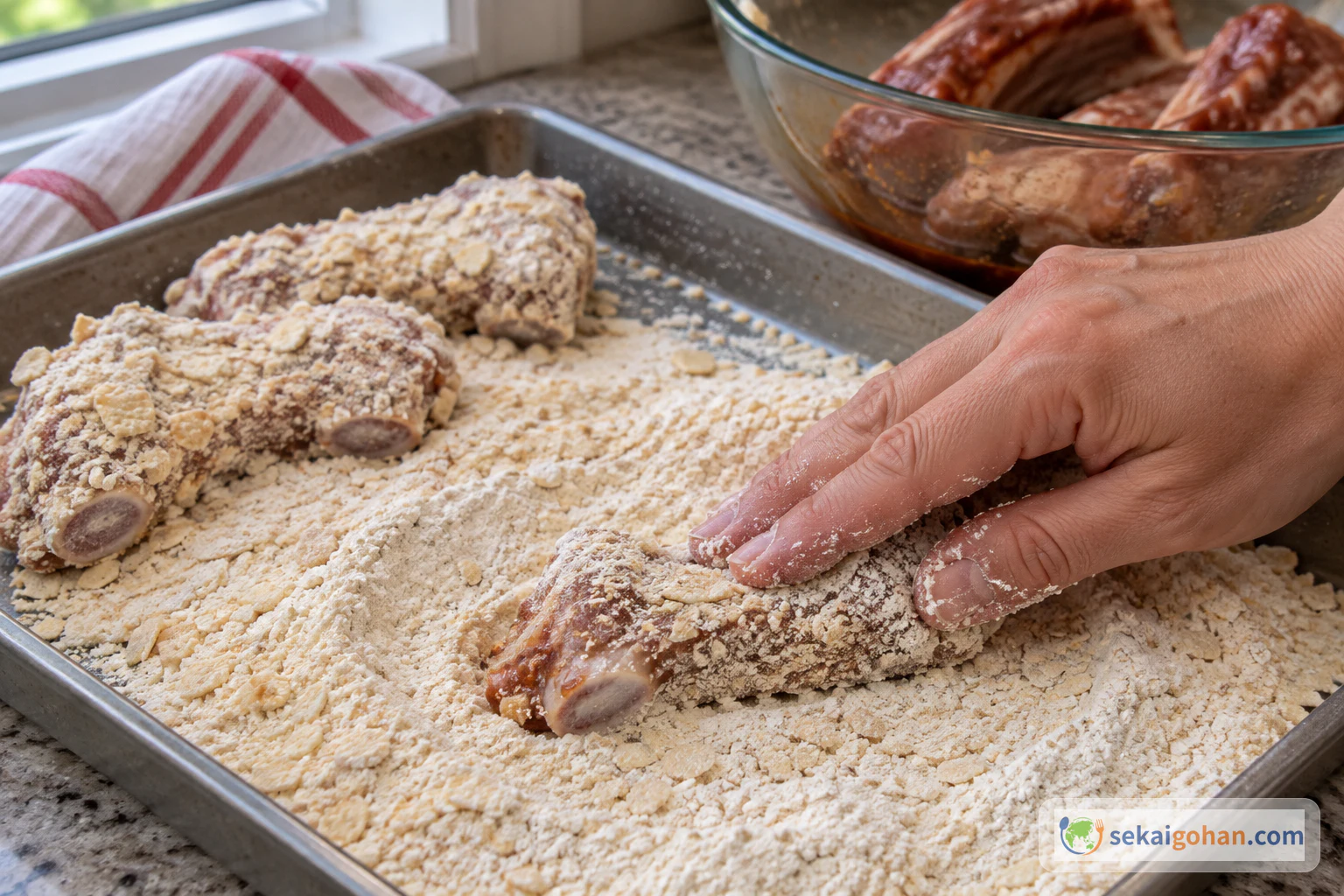
Fine crumbs press into a thin, even shell that clings to every corner of the rib. Coarse pieces fall off in the oil and leave bald patches. Seal the crackers in a bag and roll them with a rolling pin until they look like coarse flour, or pulse them in a food processor.
Method
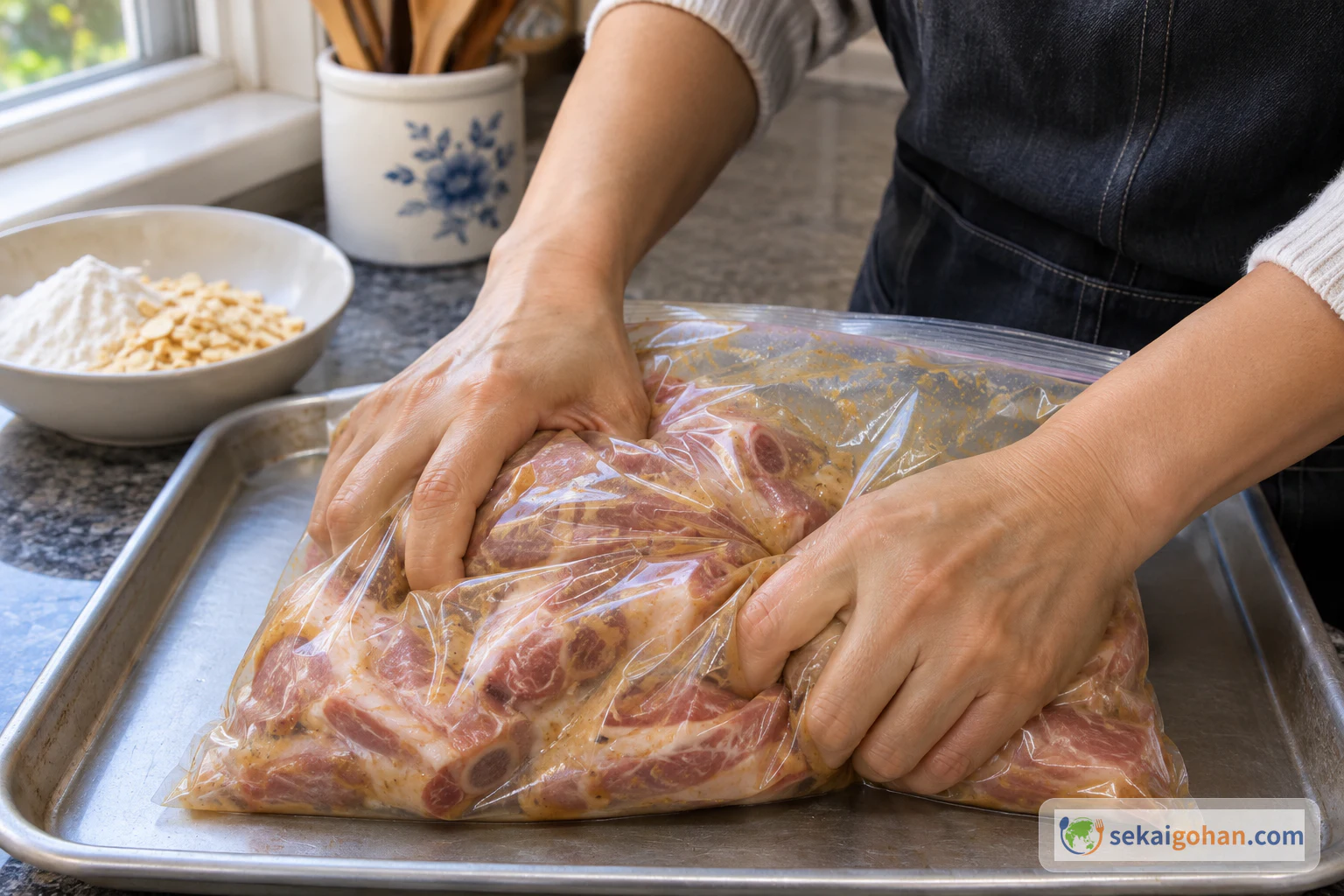
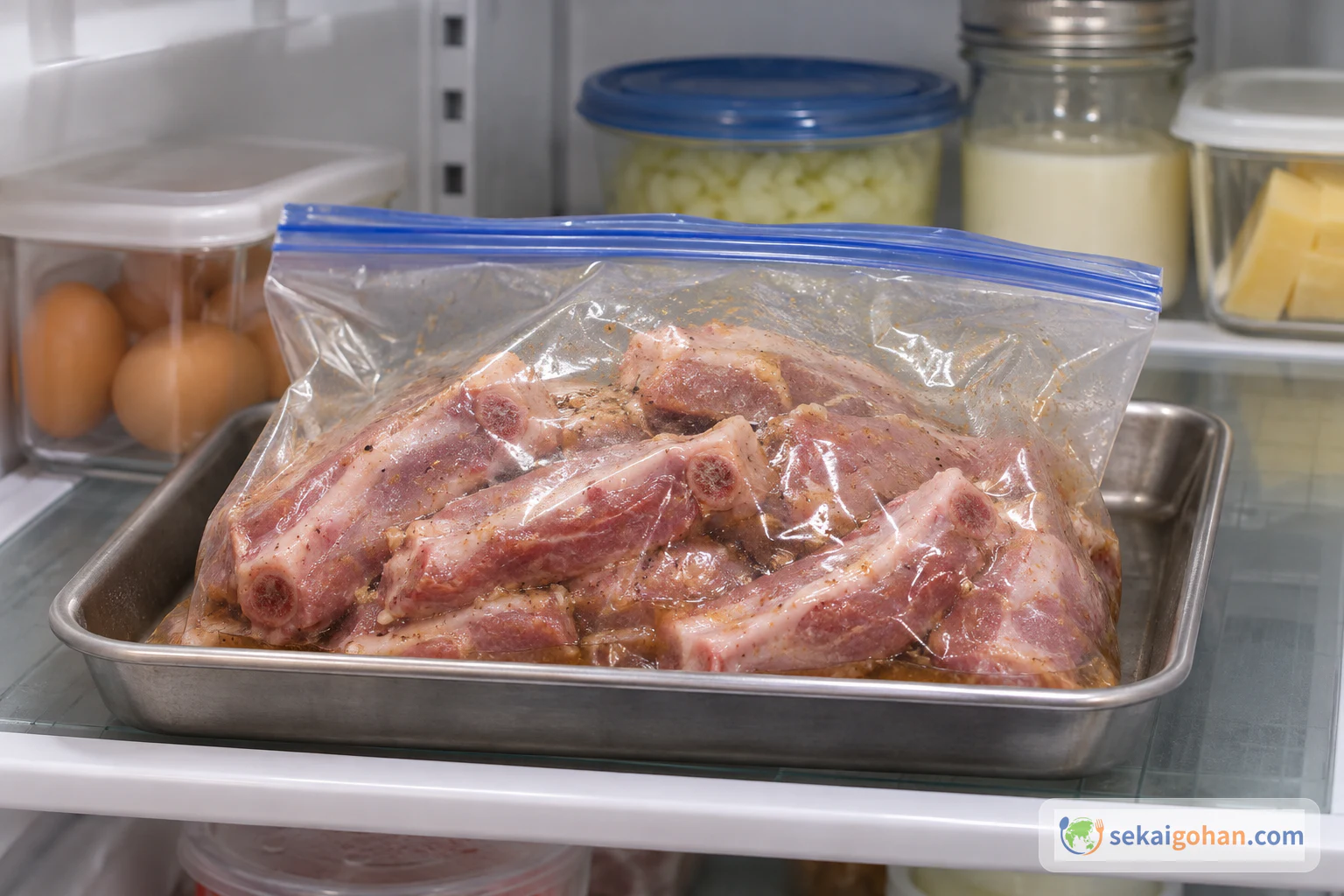
The work comes in two halves. First the riblets are cut and marinated, and then they go into the fridge for at least 2 hours, which is the hands-off part and the easiest place to plan ahead. After that, coating, frying and serving happen in one push, close to when people are ready to eat. Frying has no fixed clock; the thermometer in the meat decides when each batch is done.
The marinade holds raw egg and raw pork. Wash your hands, the board and the counter after handling them, and throw away the leftover marinade and the bag. When frying, lower the pieces into the oil gently, keep children and pets away from the stove, and never leave the pot unattended. Bone-in pork must reach 145°F (63°C) in the thickest part of the meat, followed by a 3-minute rest.
When It Goes Wrong
| What you see | Why | What to do |
|---|---|---|
| The crust is pale and greasy | Too many pieces went in at once and the oil dropped well below 350°F | Fry fewer pieces per batch and wait for the thermometer to return to 350°F before each one |
| The coating falls off in the oil | The marinade was not drained, or the crumbs were only rolled on | Let each piece drip, press the coating in firmly and let it settle on the rack before frying |
| The crust darkens before the meat is done | The oil is running too hot | Turn the heat down until the oil holds at 350°F, then keep frying until the meat reaches temperature |
| Golden outside, the meat reads below 145°F | Thick pieces need longer in the oil | Return them to the pot and check again; serve only once the thickest part reads 145°F (63°C) and has rested 3 minutes |
| Bald patches around the bone | Coarse crumbs or quick coating at the ends | Crush the crackers finer and press crumbs into the ends of each piece |
Serving and Variations
Bon bons are finger food. Put the platter in the middle of the table with lemon and a stack of napkins, and serve them as soon as they come out of the oil: as a snack with beer late in the evening, as an appetizer at a party, or on New Year's Eve the way the Pang family does. They want nothing more than lemon. Gilda Pang-Allard serves hers with a ginger sauce; the recipe is her family's own and is not shared.
Other coatings
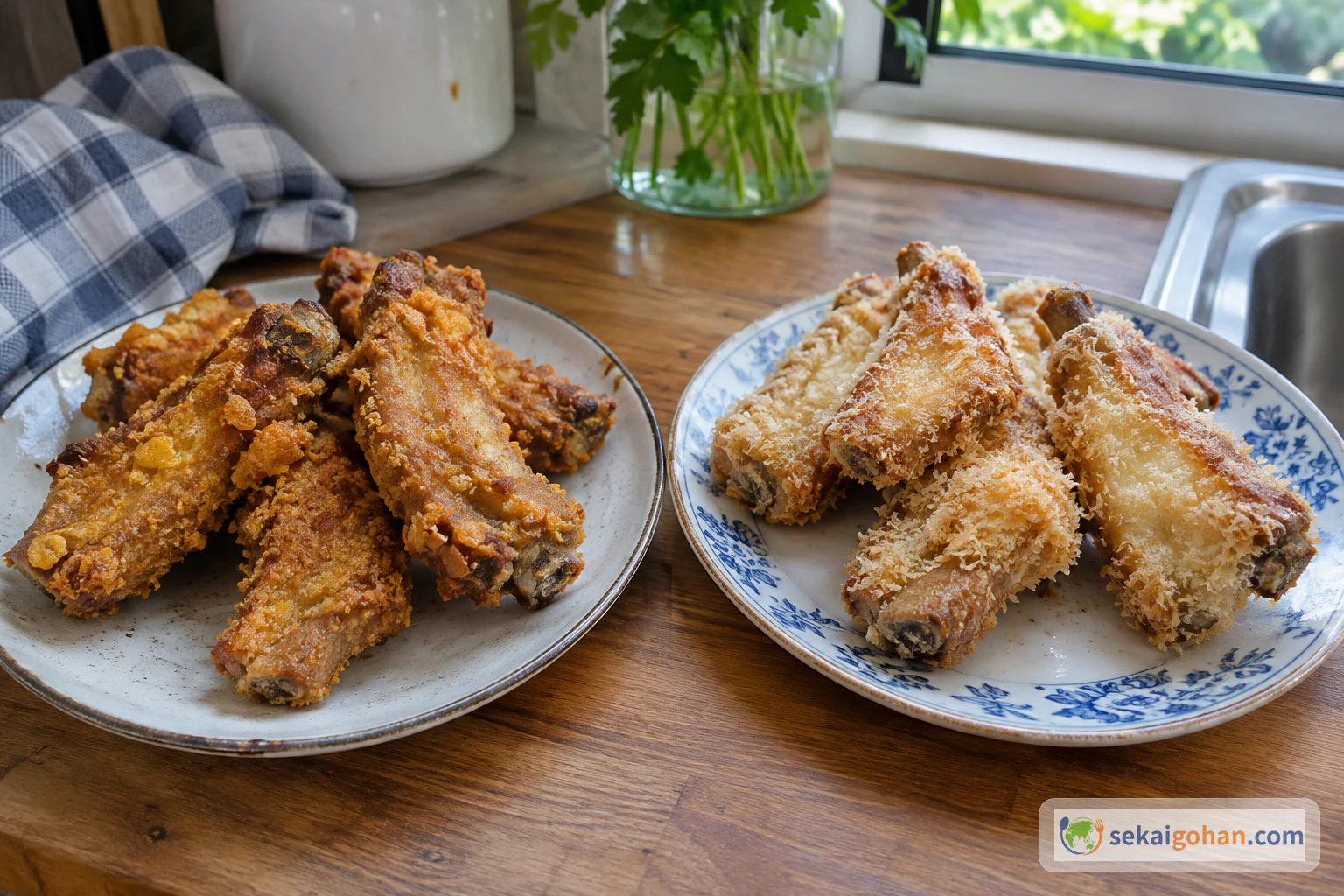
Every kitchen in Thunder Bay has its own version, and the coating is the easiest place to taste the difference.
- Cornstarch coating. A dusting of cornstarch with the five-spice and lemon gives a thinner, glassier crust that lets the meat and spice lead.
- Potato starch and breadcrumbs. This crust is chunkier and crunchier, with more texture against the teeth. That version marinates for 5 hours and fries at 375°F (190°C), so the crust browns faster; check the meat at 145°F (63°C) all the same.
- Ginger sauce on the side. Gilda Pang-Allard's version is served with a ginger sauce. Its recipe is not public, so it is not given here.
Frequently asked questions
Why is there no frying time?
Riblets vary in thickness and in how much meat sits on each bone, and the size of each batch changes how fast the oil recovers. A time that suits one batch leaves the next undercooked or overdone. The instant-read thermometer gives a clear answer for every batch, so trust it over the clock.
Can I marinate them the day before?
Yes. The riblets can stay in the marinade in the refrigerator overnight. Coat and fry them just before serving, so the crust is crisp when it reaches the table.
Can I use boneless pork?
The bone is part of the dish; it is the handle you eat from, and the meat around it stays juicy in the oil. Boneless pieces make a different snack and are outside this recipe. If you try them, still check the thickest part for 145°F (63°C) with a 3-minute rest.
What oil should I use?
Use a neutral vegetable oil that does not taste of anything, so the five-spice and lemon come through. Pour enough into a heavy pot to give at least 2 inches of depth, which leaves the riblets room to float and fry evenly.