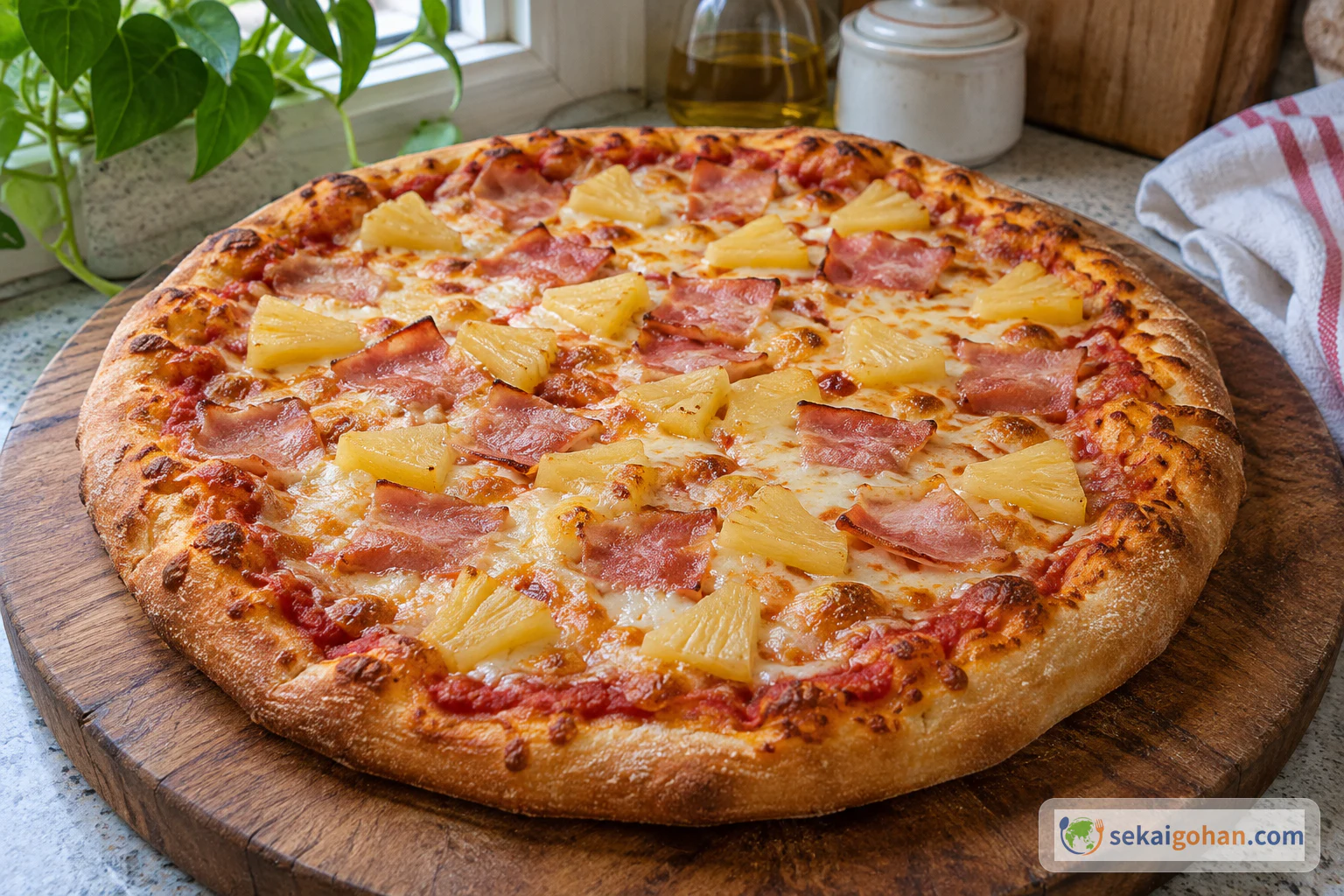
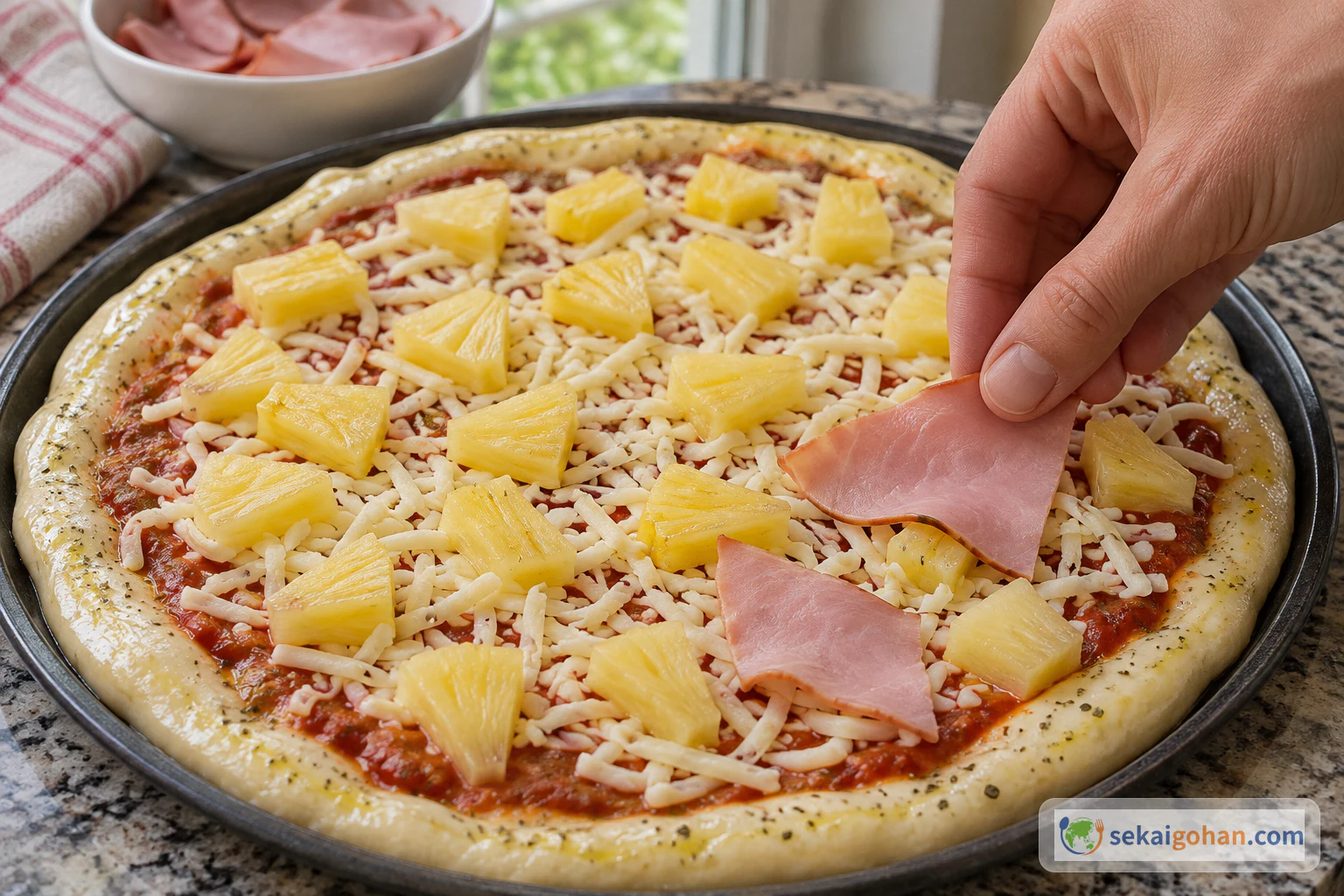
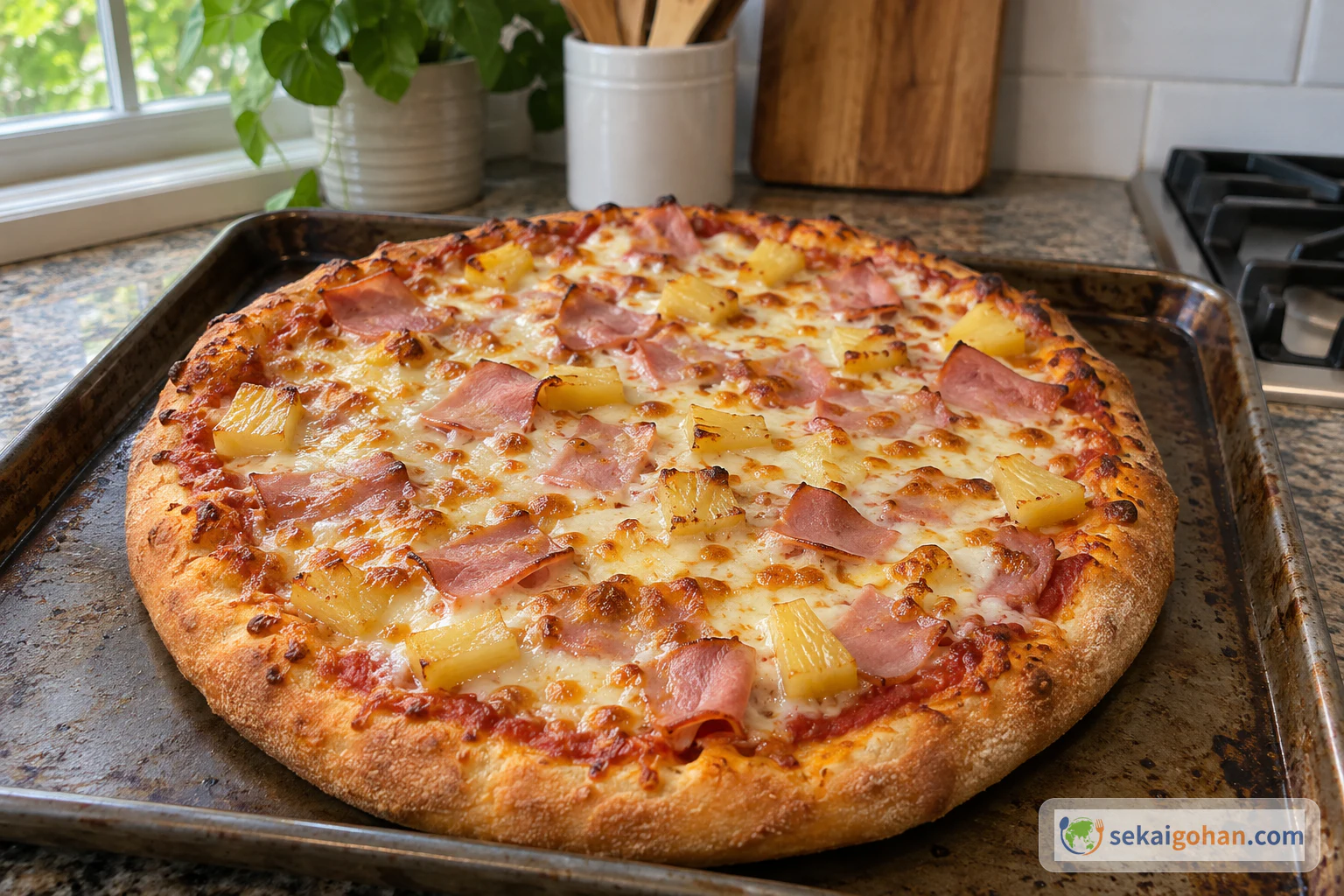
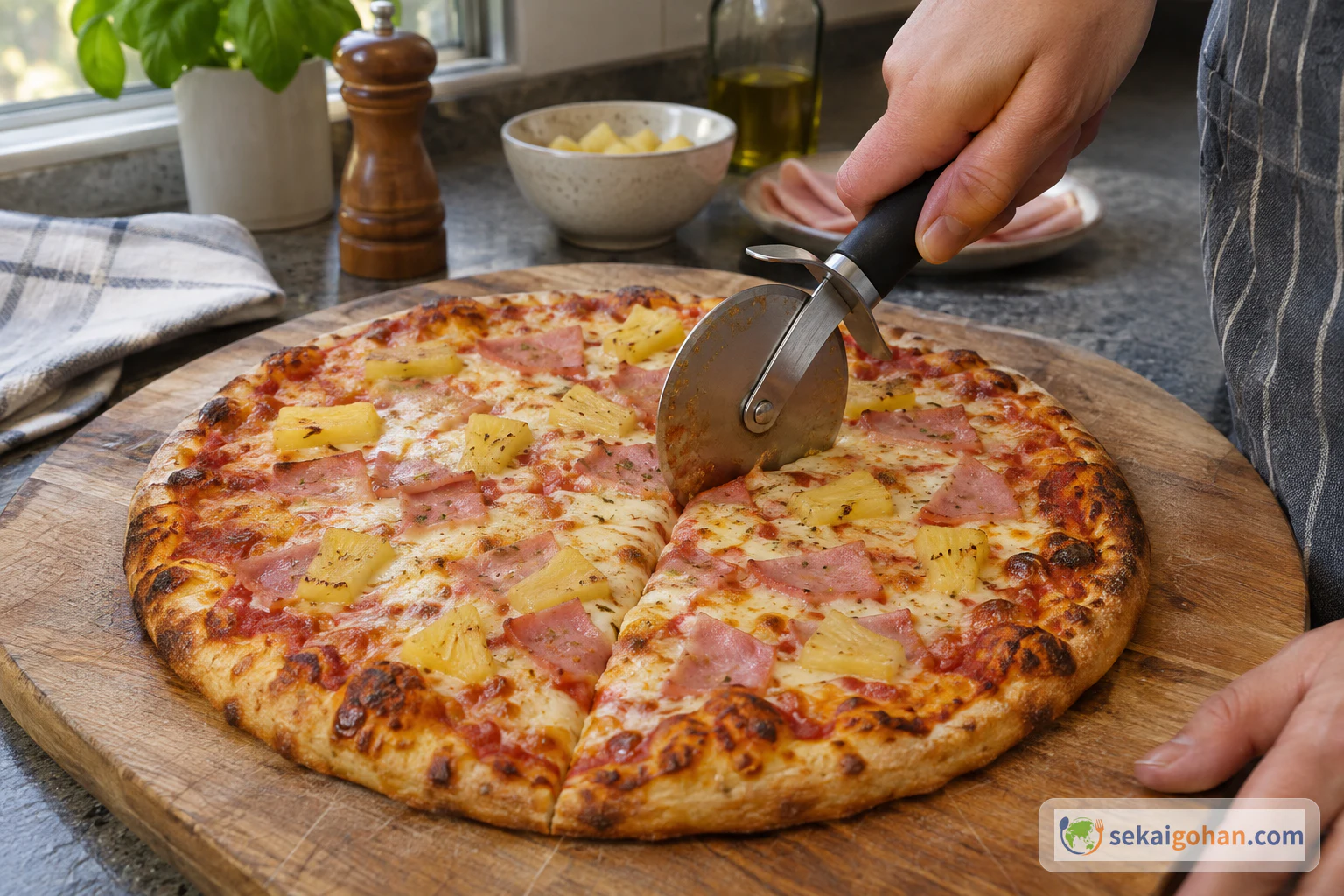
Through the oven door the rim turns golden and the mozzarella starts to blister and bubble around glossy chunks of pineapple. Pull the tray out and the smell is salt and toast and something close to caramel, the ham crisping at its edges where it touches the heat. That pairing of sweet fruit and salty pork on tomato and cheese is Hawaiian pizza. Despite the name, it is credited to Chatham, in southwestern Ontario, and every bite runs the same line between sweet, sour and salty that has had people arguing about it ever since.
A Chatham Pizza with a Hawaiian Name
Sotirios "Sam" Panopoulos was born in Vourvoura, Greece, in 1934 and came to Canada in 1954. In October 1962 he and his brother Nikitas opened the Satellite, a dining lounge at 145 King Street West in Chatham, Ontario. The ham-and-pineapple pizza is credited to that kitchen and to 1962, the year it went onto the menu. The menu already carried sweet-and-sour dishes from a Chinese cook, and Panopoulos had tried pizza on a trip to Windsor. He wondered whether canned pineapple would work as a topping, drained a can, and put the chunks on a pie with ham. "In those days people didn't mix the tastes like sweet and sour, except for Chinese food," he said later.
The pizza took its name from the brand on the pineapple can. Nothing about it comes from a Hawaiian kitchen tradition. Nobody liked it at first, and customers told him so. Then it started to sell, and it kept selling. Bacon joined the ham later. Panopoulos never took out a trademark or patent, and in 2010 he described the whole thing as an invention by accident.
The word on the menu came straight off the label of the canned pineapple in the Satellite's kitchen. The pizza's Canadian origin story and its island name have confused diners ever since, which is half the reason it starts conversations at the table.
Who was first, and the argument that followed
Whether Panopoulos was truly the first to put pineapple on pizza is not settled, and some question the claim. For decades his name was barely attached to it; an anonymous online encyclopedia edit on 15 July 2009 is what spread it widely. He later ran the Family Circle restaurant in London, Ontario, and died there on 8 June 2017. His birthday, 20 August, is now marked as International Hawaiian Pizza Day.
The pizza has never stopped being a fight. When Iceland's president joked about banning pineapple on pizza, Prime Minister Justin Trudeau answered by calling it "a delicious southwestern Ontario creation." On a Canadian table, that line sums up how people treat it: a local invention, defended with a grin.
Ingredients (serves 4)
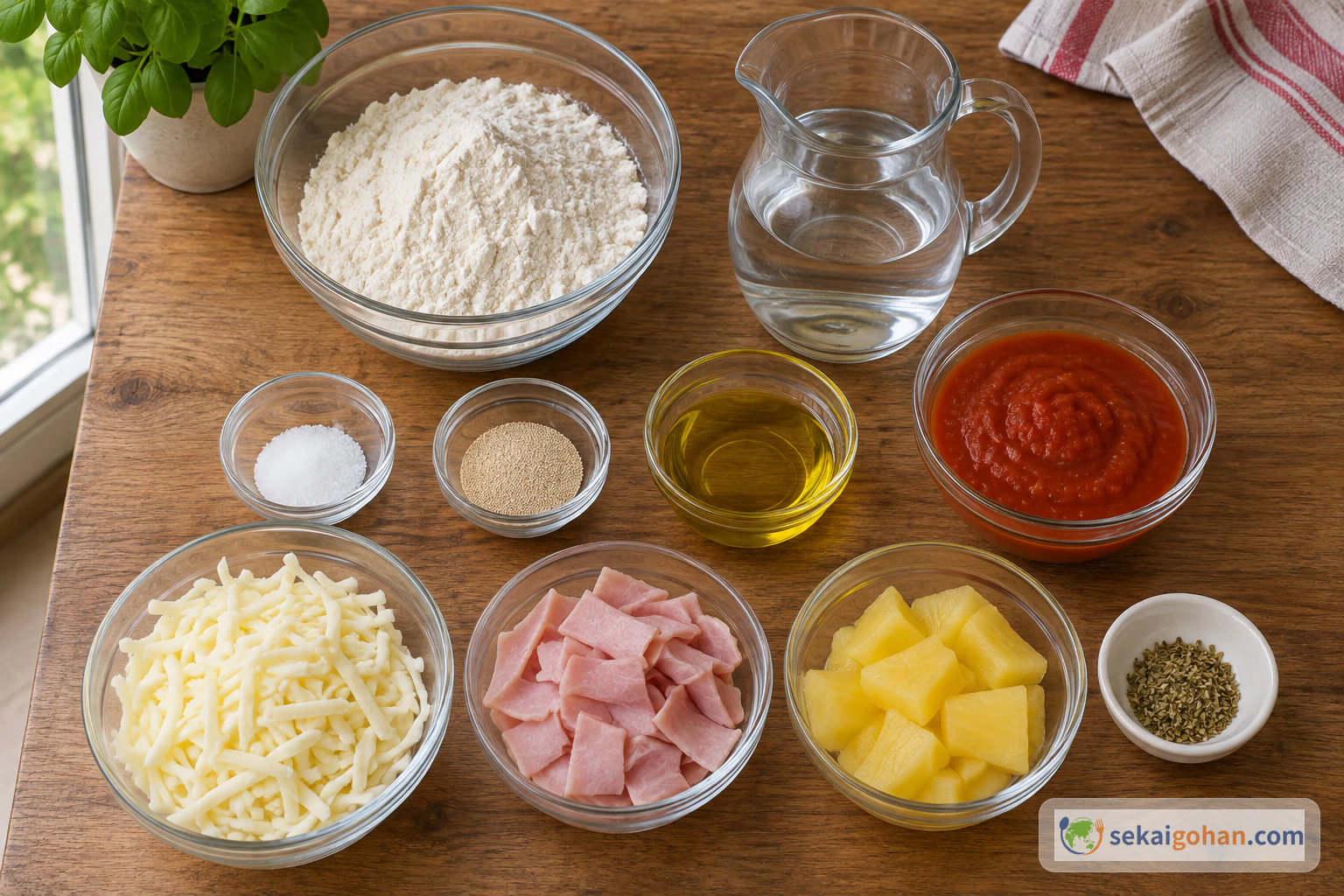
This makes one 12-inch (30 cm) pizza. The dough is a small batch you mix by hand; the topping goes on in minutes once the dough has risen.
Weigh the dough ingredients on a kitchen scale; the salt, oil and yeast are small amounts where a spoon guess throws the dough off.
Drain the pineapple, then pat it dry with paper towels. Wet fruit releases juice into the cheese in the oven and leaves a soggy middle.
This pizza contains wheat (flour), milk (mozzarella) and pork (ham). Check the label of store-bought tomato sauce for other allergens. Use cooked ham only; never put raw meat on the pizza. Move leftover pineapple out of the opened can into a separate container.
Equipment
- Kitchen scale
- Mixing bowl
- Damp kitchen towel
- Rolling pin
- Baking sheet or pizza stone
- Pastry brush
- Paper towels
- Pizza cutter
- Oven mitts
Choosing and Substituting
Everything here comes from an ordinary supermarket. The decisions that matter are the cheese, the pineapple and the flour, because each one changes how wet or crisp the pizza bakes.
Flour. Bread flour gives a chewier, springier crust. All-purpose flour bakes up a little crisper and more tender.
Cheese. Use bagged or block-shredded mozzarella for pizza. Fresh mozzarella releases water as it melts and floods the topping.
Pineapple. Canned chunks are the classic choice and the easiest to dry. Fresh pineapple works too; it tastes sharper and more acidic.
Ham. Canadian bacon or cooked bacon both work in place of ham. Bacon brings smoke and more fat to the pie.
Olive oil in the dough. A neutral vegetable oil works; the crust tastes plainer.
Oregano. Dried basil is an easy swap if that is what you have.
Method
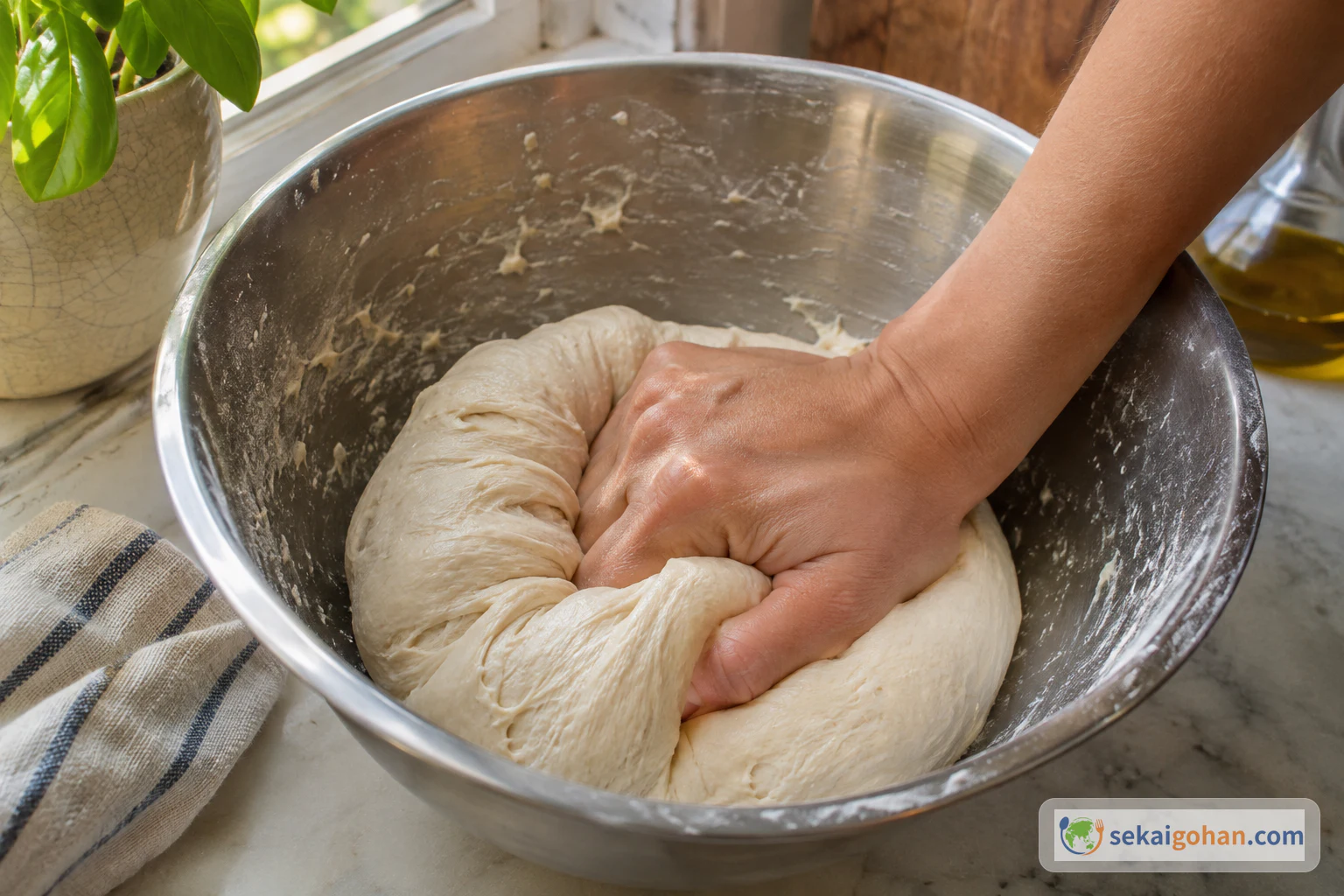
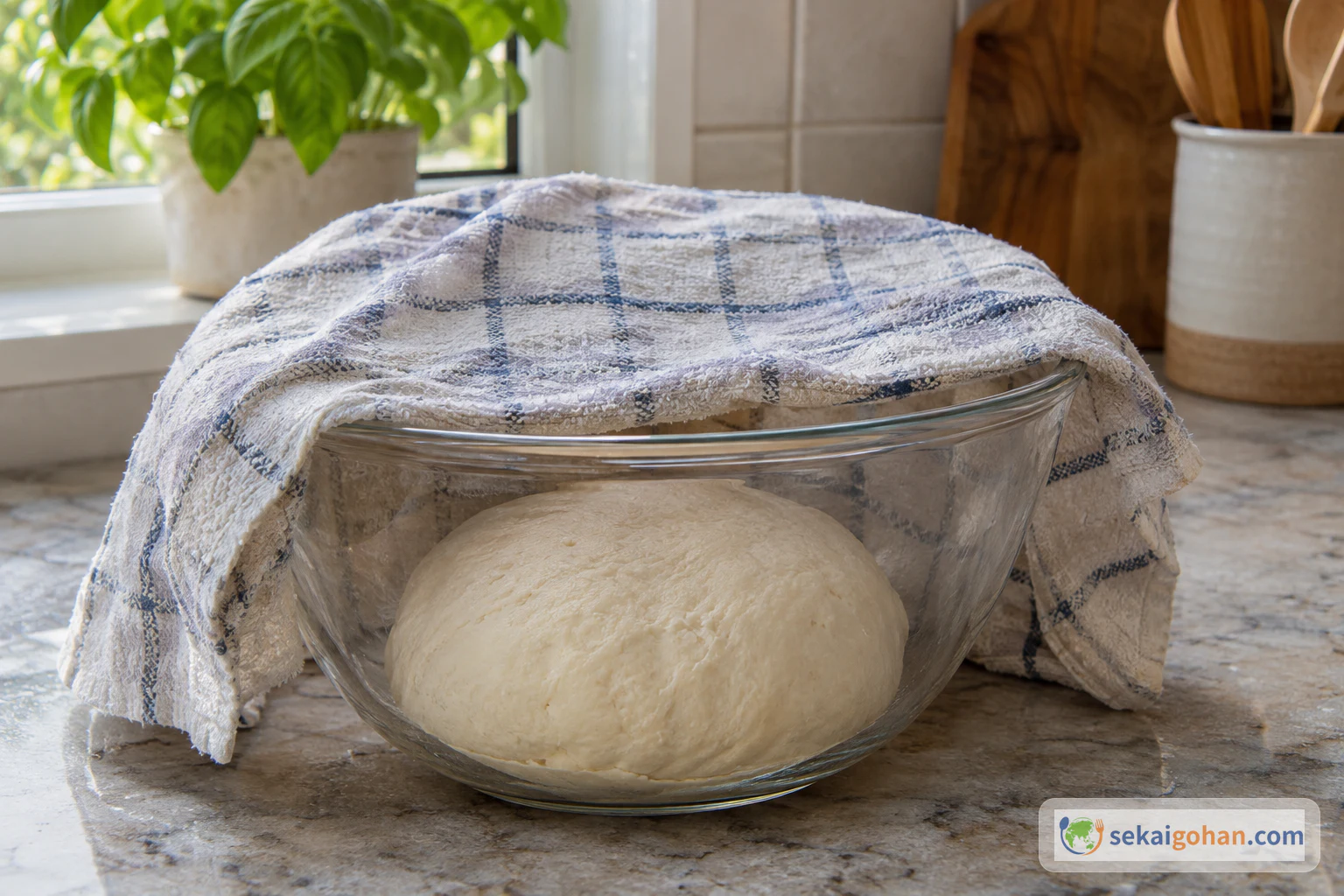
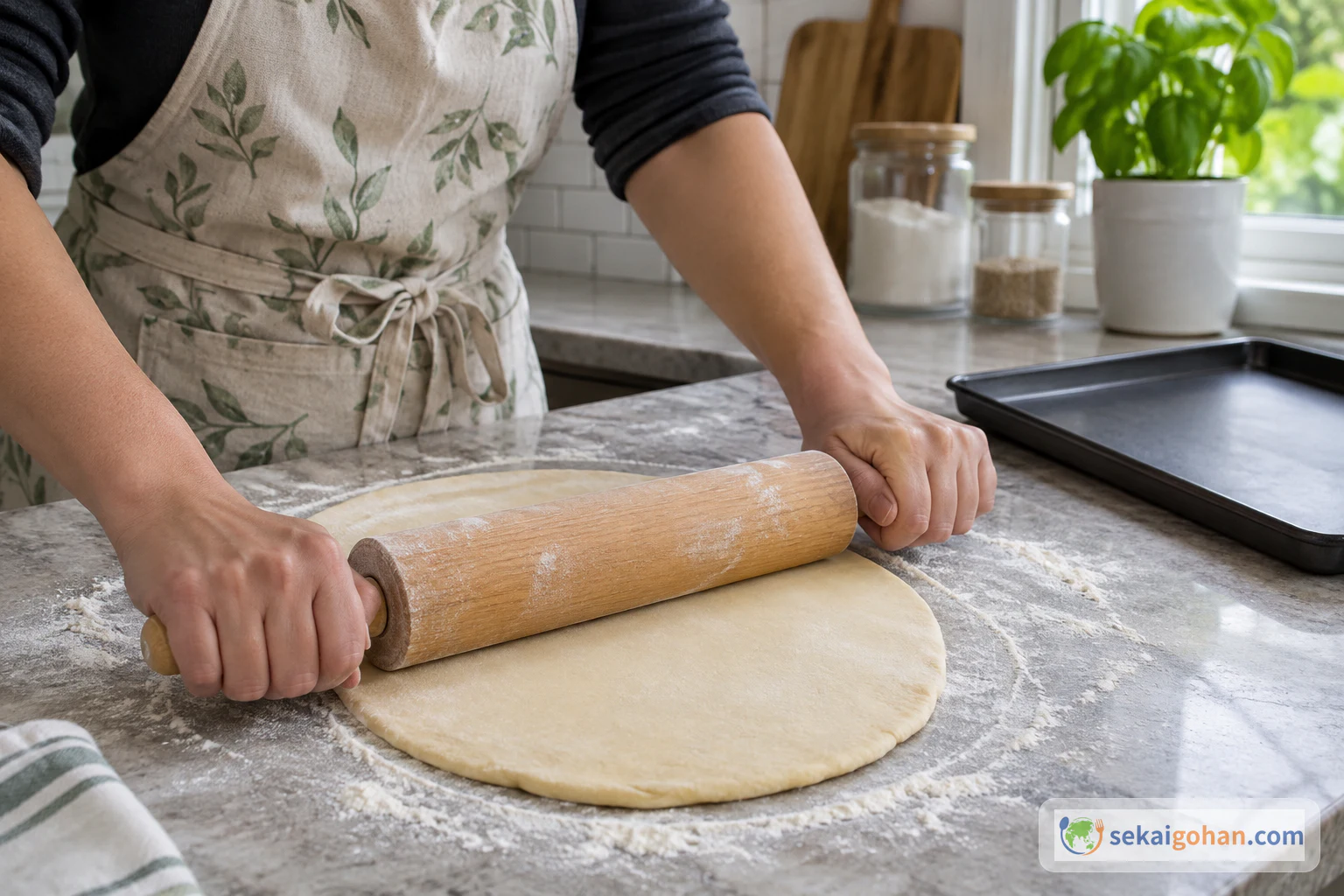
The dough comes first and does most of its work on its own: about ten minutes of kneading, then about two hours of rising and resting under a towel. Heat the oven while you roll, and the topping goes on fast. From the moment the pizza leaves the oven, give it a short rest before the cutter goes in.
When It Goes Wrong
| What you see | Why | What to do |
|---|---|---|
| A wet, soggy middle | Pineapple juice or too much topping | Drain and pat the pineapple dry, and keep the ham and pineapple to one layer |
| Pale, soft base under the topping | The base did not bake through before the topping weighed it down | Bake the bare dough briefly before saucing next time |
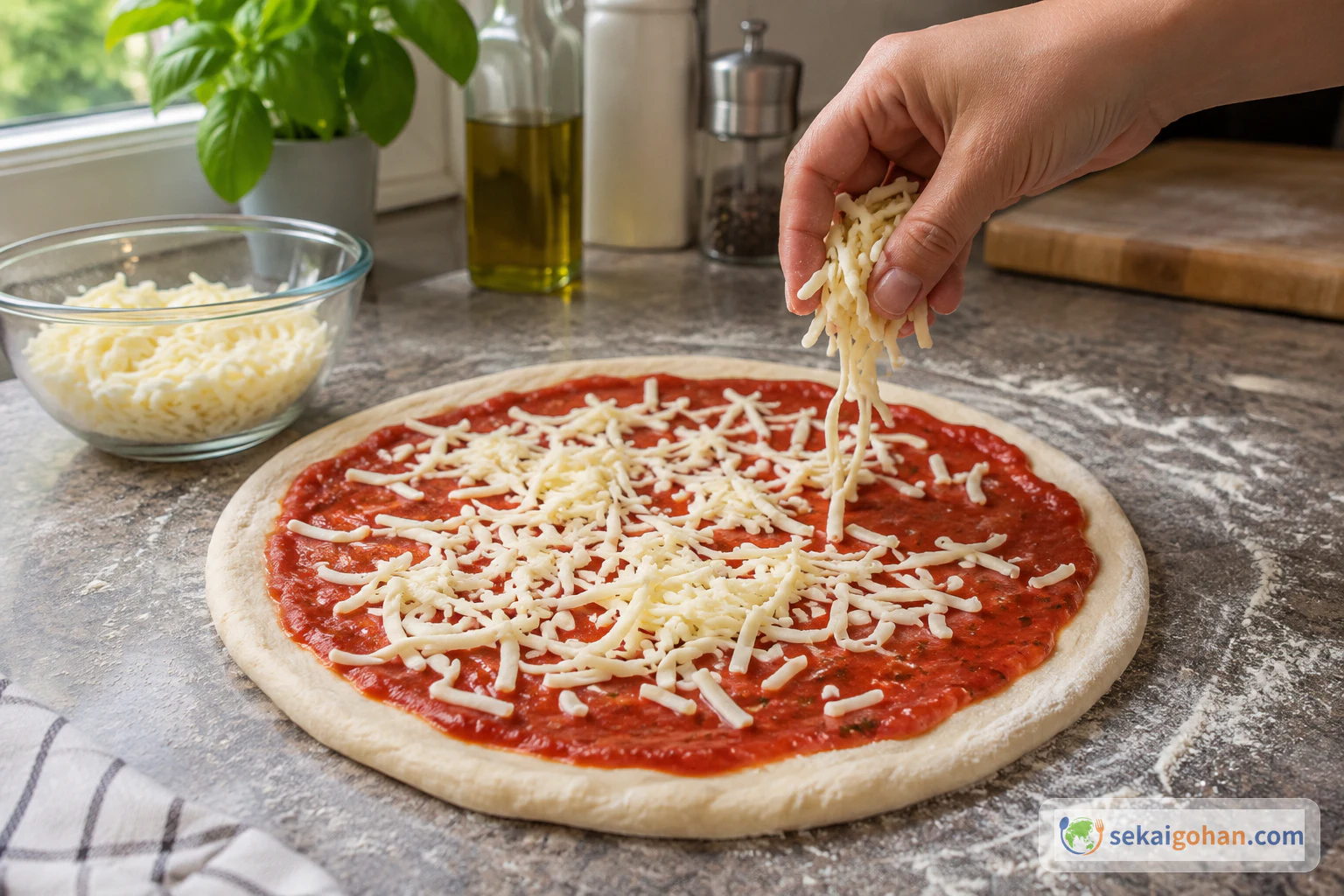
| Toppings slid and cheese bunched up | Ham and pineapple went onto the sauce before the cheese | Put the cheese down first, then the toppings |
| Cheese floating in water | Fresh mozzarella was used | Switch to shredded pizza mozzarella |
| Dough sticky and slack after kneading | Kneading stopped too soon | Keep kneading until it leaves the bowl clean and feels elastic |
| Cheese runs off when cut | Sliced straight from the oven | Give it a short rest so the cheese can set |
Serving and Variations
Hawaiian pizza goes on the table whole, cut into wedges, for people to pull apart with their hands. It suits a casual night in with friends who already have opinions about pineapple on pizza; put it next to a plainer pie and see which disappears first.
Variations
- Add bacon. Scatter cooked bacon alongside the ham. This is the later addition from the Satellite's own kitchen, and it pushes the pizza smokier and richer.
- BBQ sauce base. Swap the tomato sauce for BBQ sauce. The pizza turns sweeter and smokier, and the pineapple reads less sharp.
- Mix in cheddar. Replace some of the mozzarella with cheddar. The cheese layer gets saltier and tangier and browns faster.
- Fresh pineapple. Use fresh chunks for a brighter, more acidic bite; dry them as carefully as canned.
Frequently Asked Questions
Can I use store-bought pizza dough?
Yes. Use one dough for a single 12-inch (30 cm) pizza, roll it out as in step 4 and carry on from there. Bring it to room temperature first so it rolls without springing back.
Why do pineapple and ham work together?
The pineapple brings sweetness and acidity, the ham brings salt, and each makes the other taste stronger. It is the same sweet-and-sour play that sat on the Satellite's menu before the pizza did.
Do I need a pizza stone?
A baking sheet works. A stone holds more heat under the base, so the bottom crust browns and crisps more quickly. Either way, the oven needs to be fully heated before the pizza goes in.
Can I use other oils for brushing the rim?
Olive oil gives the rim its gloss and a little flavor. A neutral oil also browns the rim and keeps it shiny, with a plainer taste.