Cajeta: Reading the Bottom of the Pot, Not the Clock
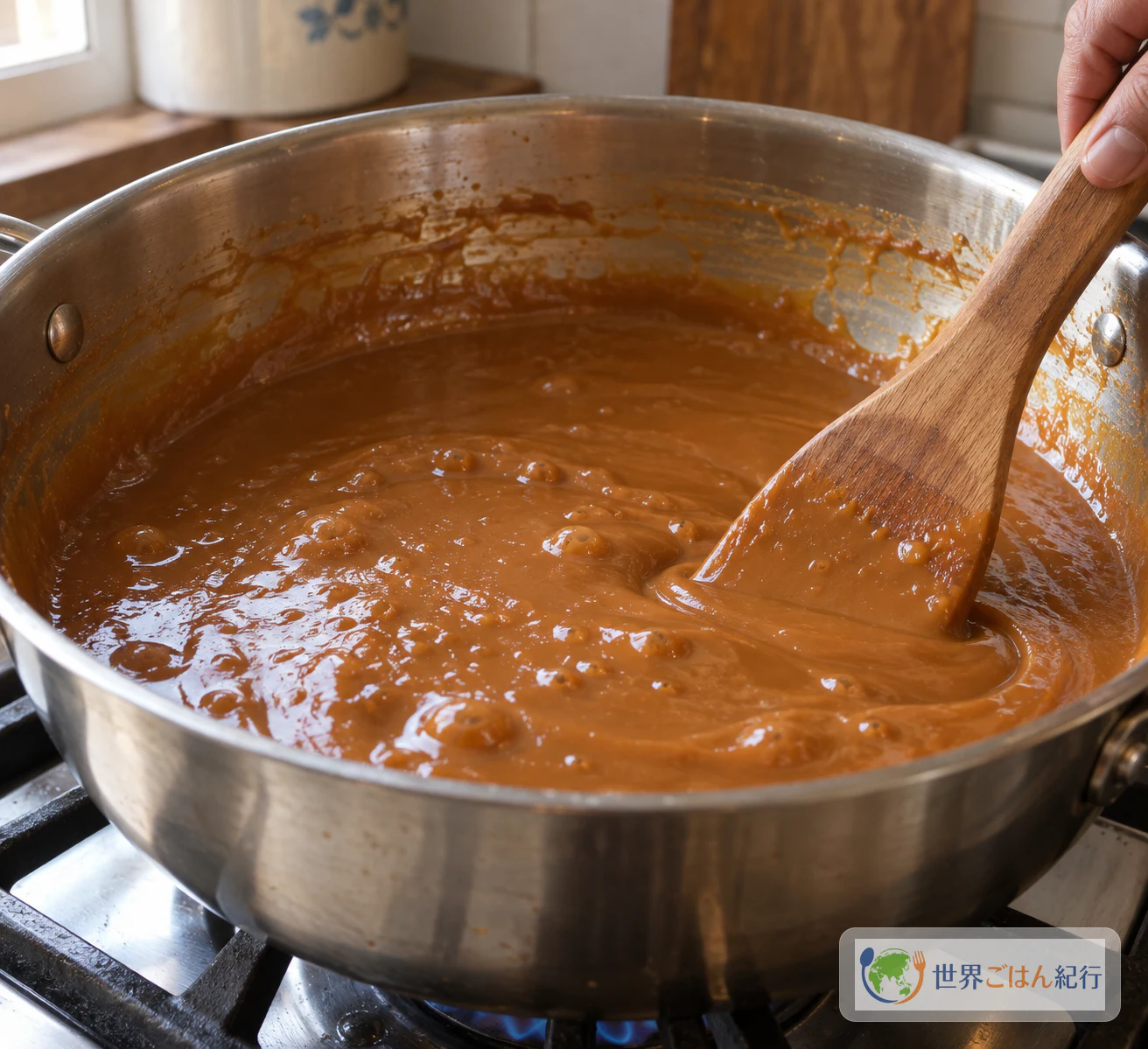
Four ingredients, one wide pot, and patience. Let the goat milk turn from pale to caramel brown, and stop when a spatula drawn across the bottom shows the pot for just a moment.
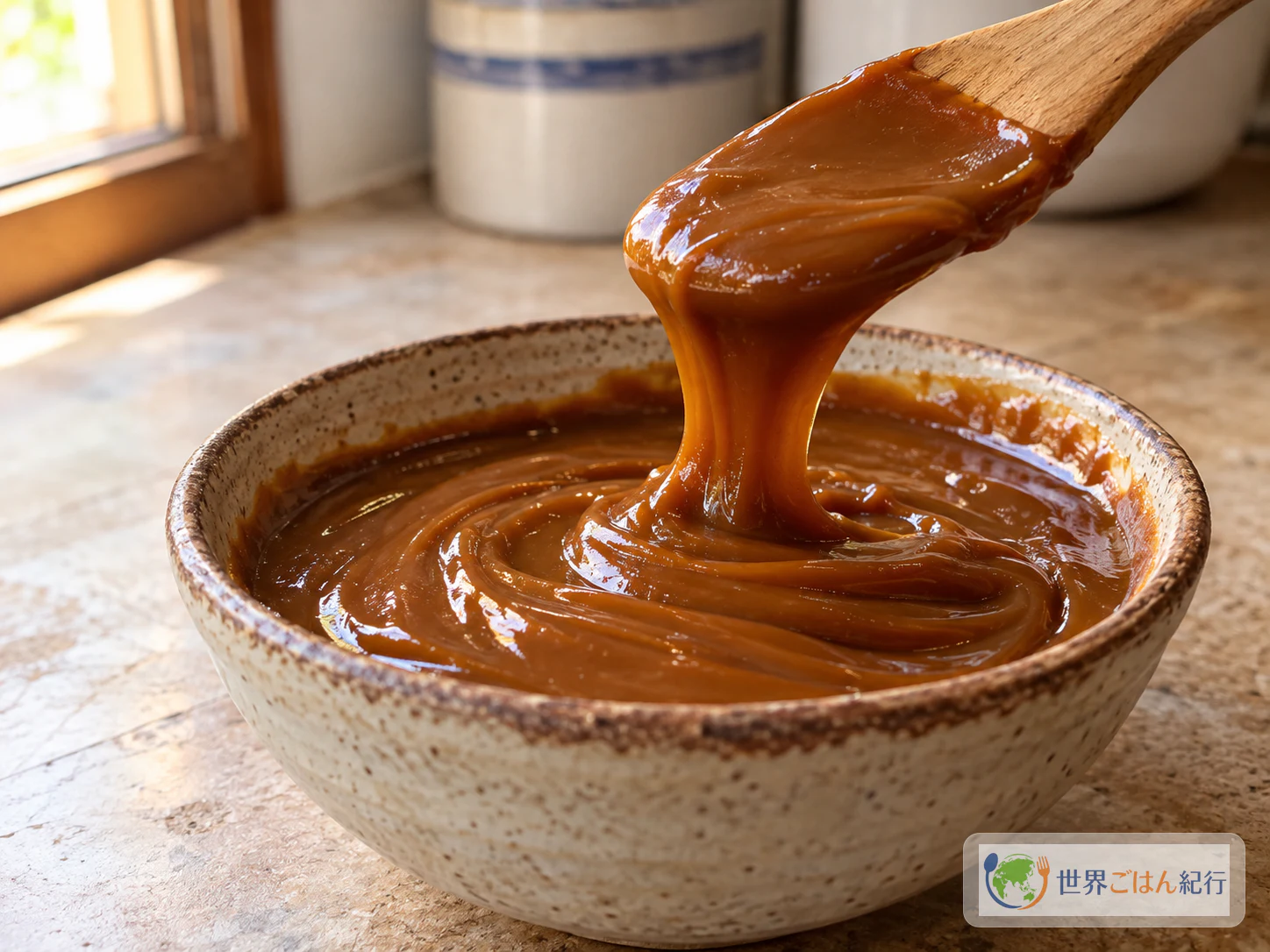
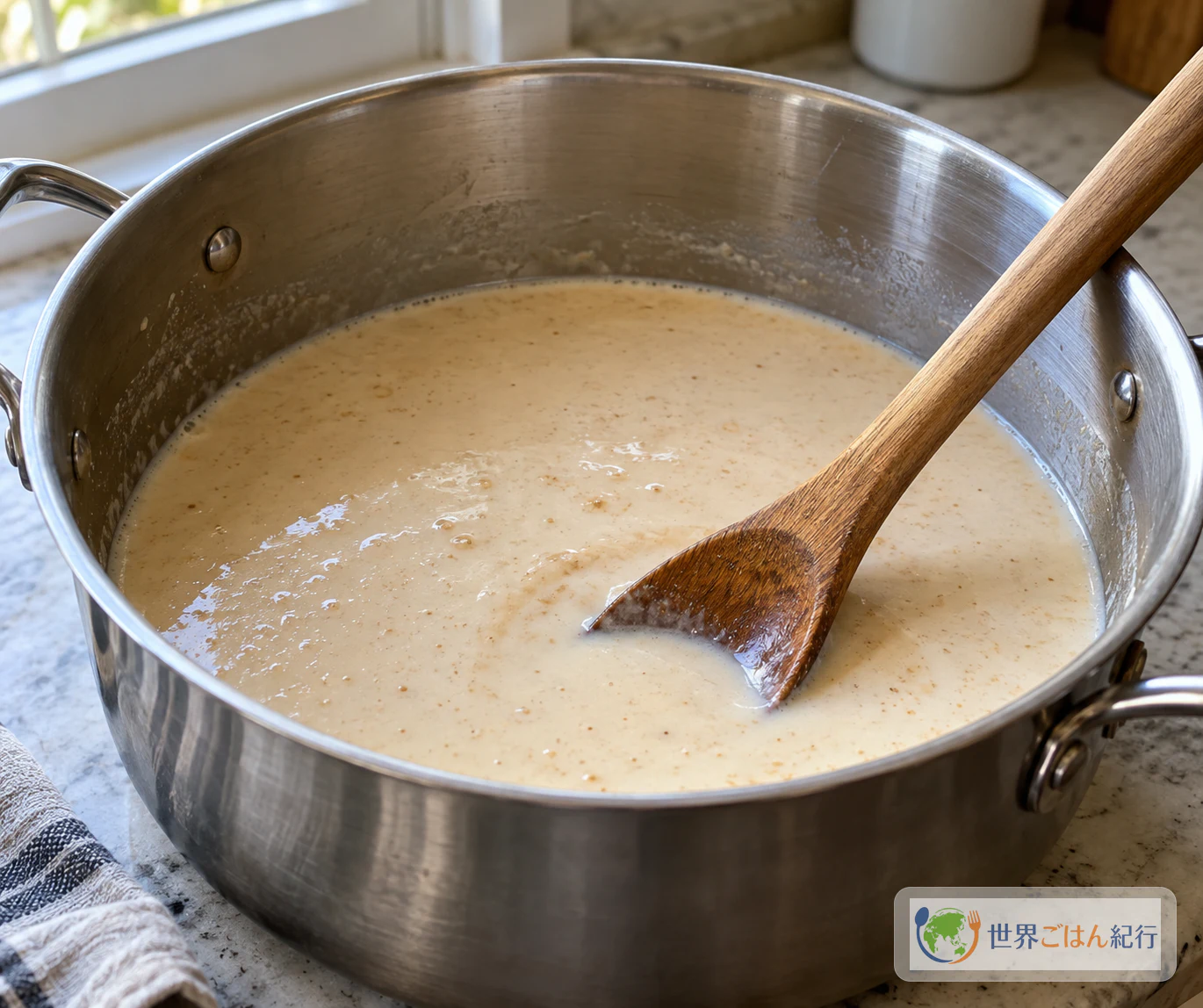
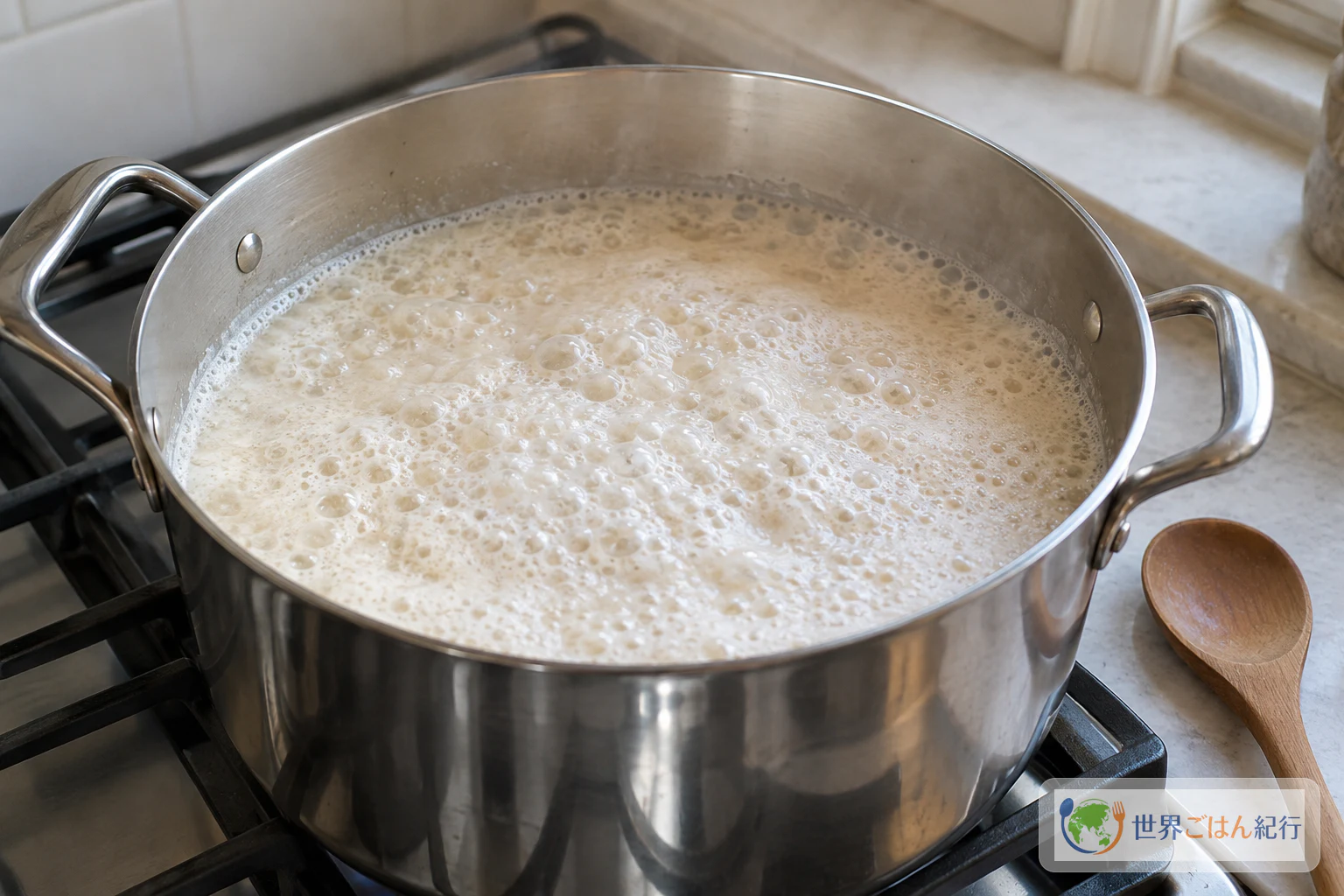
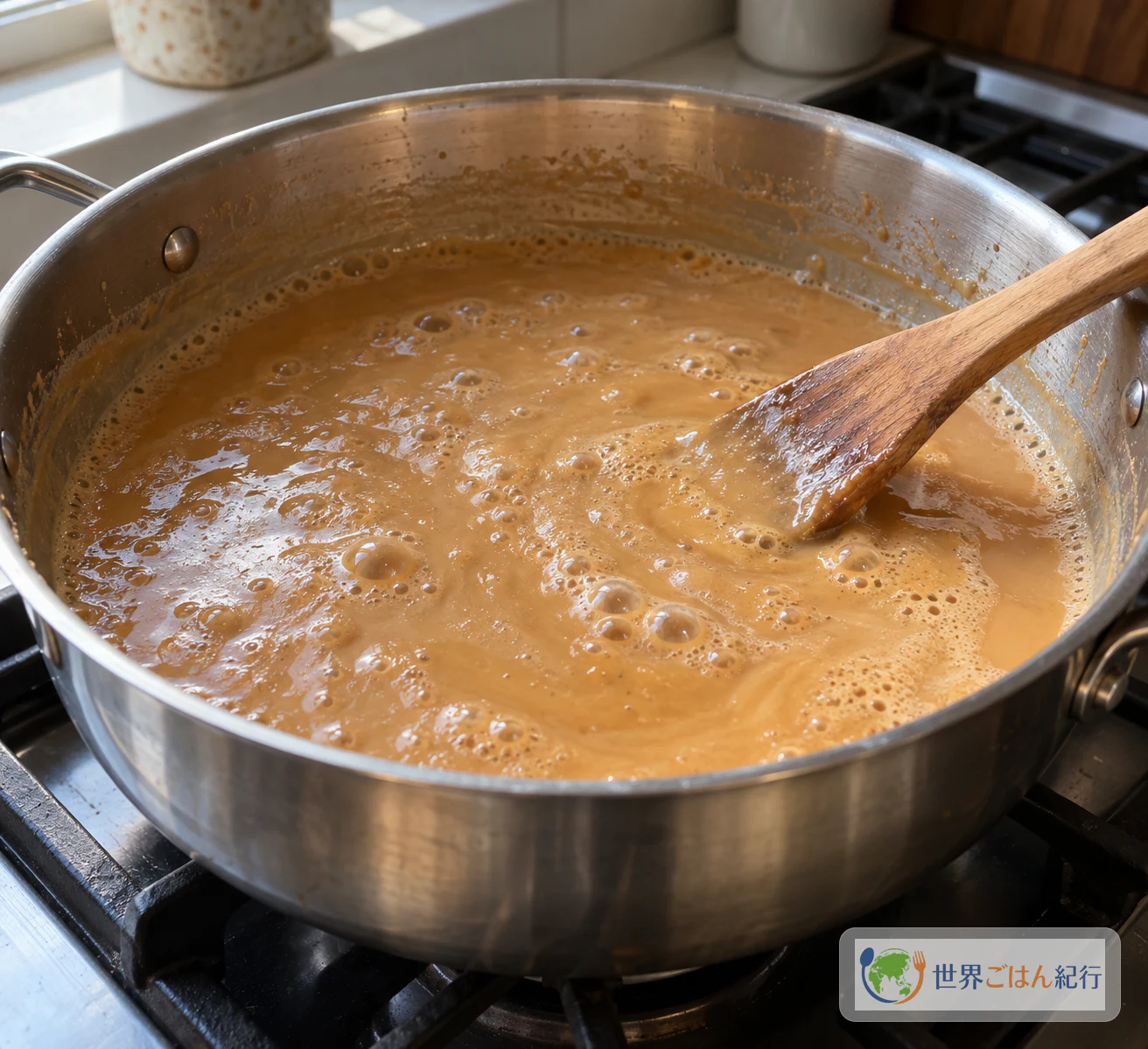
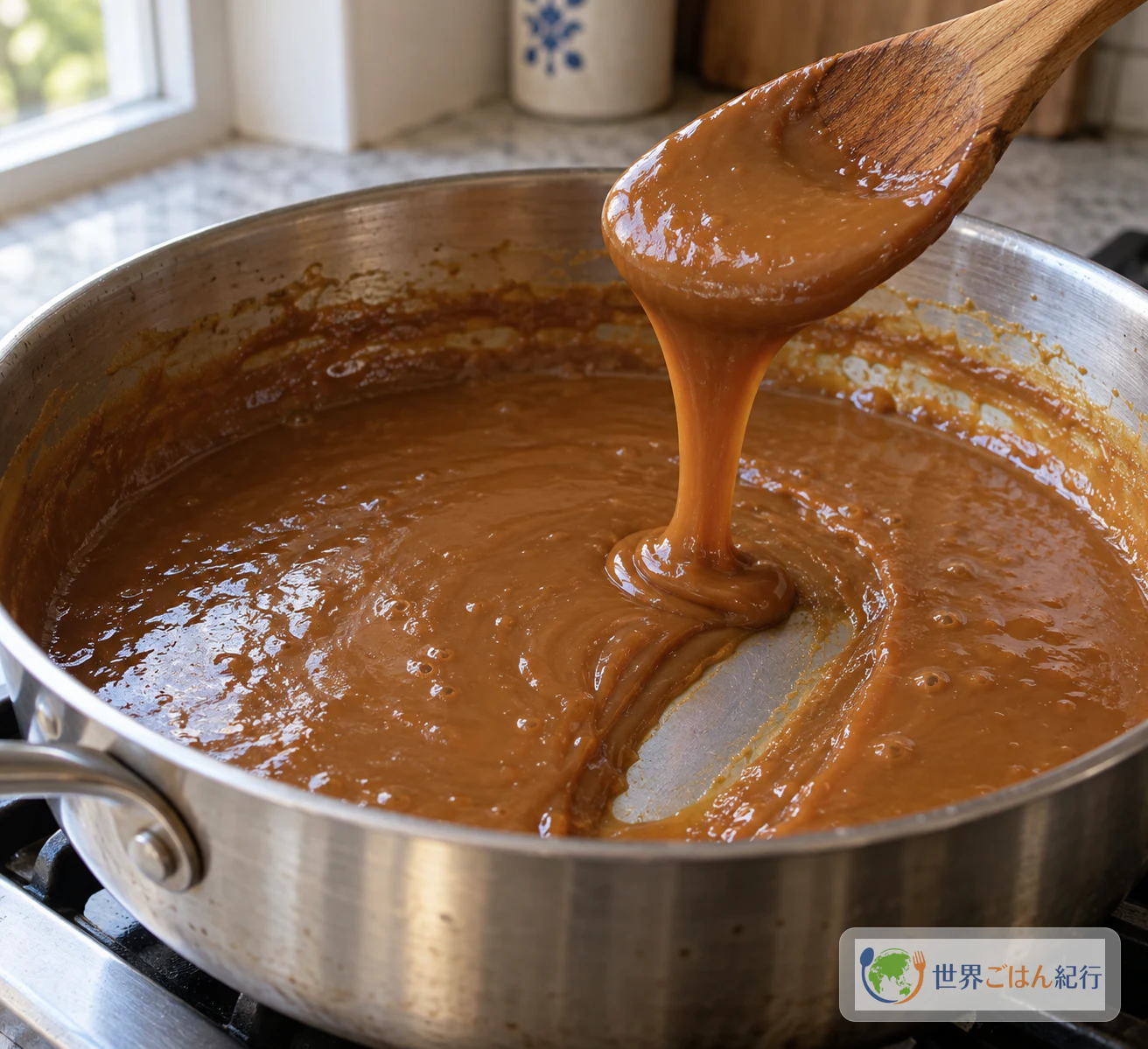
Goat milk goes into the pot almost as white as cow's milk. With brown sugar, a spoonful of vanilla and a pinch of baking soda, it comes to a boil, foams up, and then, over a long stretch of steady bubbling, slowly darkens: first a pale tan, then a deeper caramel. Near the end, when you pull a wooden spatula across the bottom of the pot, the thick syrup parts and closes again, and what lifts off the spatula falls back slowly instead of running off. That brief glimpse of the pot's bottom is the signal this whole recipe is built around.
Cajeta is a Mexican milk sweet made by cooking goat milk and sugar down to a thick, glossy caramel. Pati Jinich, whose home recipe is the basis for this article, describes goat milk as what gives cajeta its characteristic flavor, and ties the sweet to Celaya, in the state of Guanajuato. In Mexico, "Cajeta de Celaya" is also a protected geographical indication with a defined production area and specification. What you make in your own kitchen is a homemade cajeta, a Mexican-style goat milk caramel, and this article keeps the two clearly apart.
The recipe here follows Pati Jinich's household version: goat milk, brown sugar, vanilla extract and baking soda, all combined at the start. Our editors have not kitchen-tested it. There is no cinnamon, no salt and no extra sugar added later. For more dishes from the same country, see Mexico.
A Mexican public education resource (SEP, Nueva Escuela Mexicana) explains the name as coming from cajetes, wooden containers. This is a common explanation of the name rather than a settled etymology.
Ingredients: Four in the Pot, Fruit on the Side
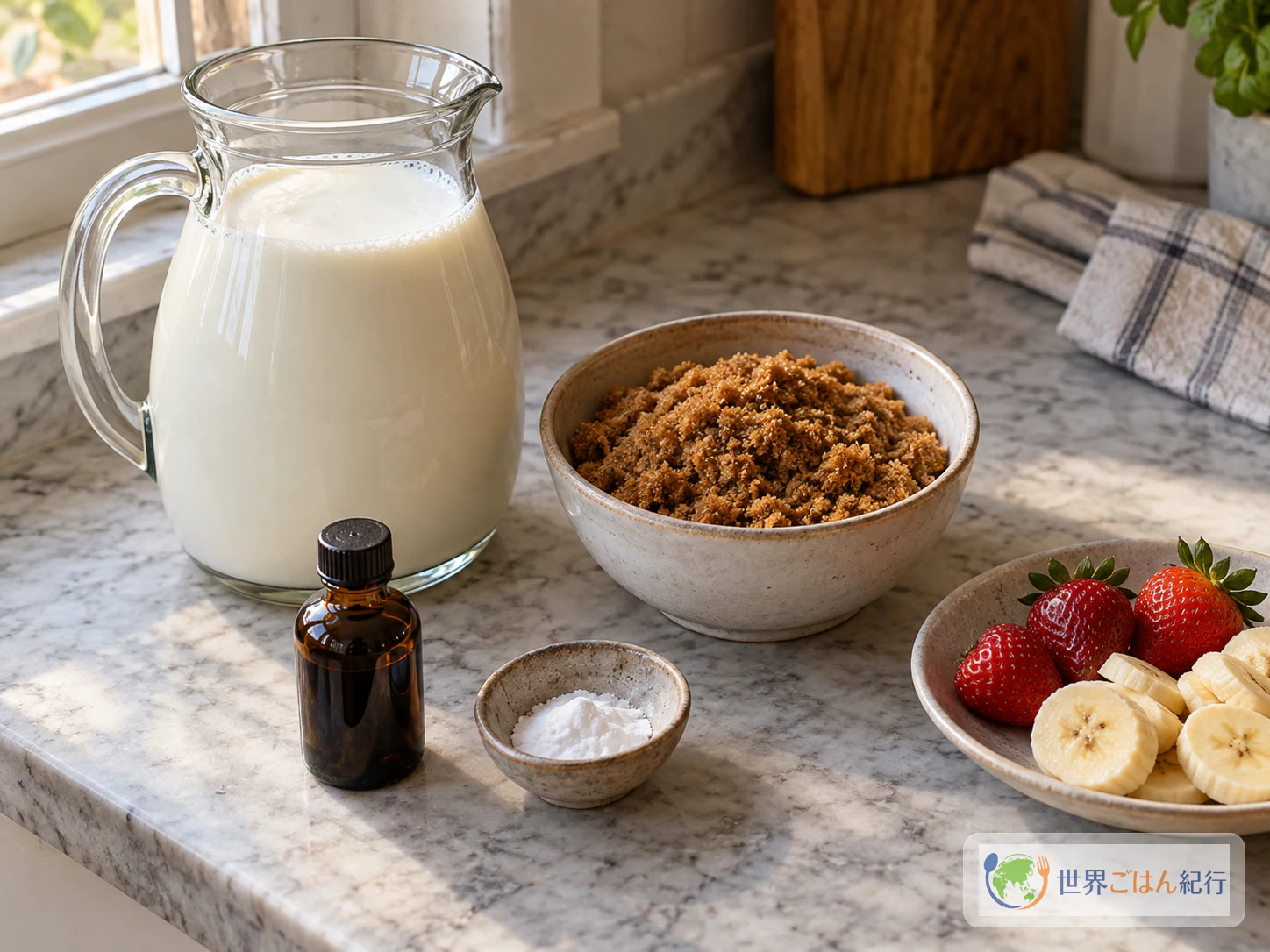
The recipe makes about 3 cups, though pot width and heat change how far the mixture reduces. The strawberries and banana are a separate serving suggestion and are not part of the cajeta itself.
Choosing and Measuring the Ingredients
Measuring. The goat milk is 8 cups (2 L), or 250 ml per cup. On that same basis, measure the brown sugar as 625 ml by volume, the vanilla with a 15 ml tablespoon and the baking soda with a 5 ml teaspoon. The sugar is deliberately not converted to grams: how tightly brown sugar packs into a cup varies, so no weight or final sweetness concentration is promised here.
Goat milk. This is the ingredient that makes the dish. Pati Jinich notes that you can mix it with cow's milk or use cow's milk alone, but the flavor changes, and a cow's-milk version moves away from what cajeta is known for. If you make it, call it a cow's-milk variation, not Cajeta de Celaya.
Sugar. This recipe uses ordinary granulated brown sugar. Mascabado or grated piloncillo in the same amount also work; these bring a different aroma, so a brown sugar batch should not be expected to taste the same as one made with piloncillo. Use one sugar, not a mixture.
Vanilla. Use vanilla extract. Vanilla essence and imitation flavorings differ in strength, so don't swap them in at the same amount.
Baking soda. Use baking soda, not baking powder. They are different products.
Cajeta is a milk product. Goat milk is milk: do not assume it is safe for someone with a cow's-milk allergy. Check the allergen labeling on every product you use, including the sugar and vanilla, and follow the labels on shared-facility or cross-contact statements.
Equipment
- A tall, wide-bottomed, heavy stainless steel pot with plenty of room above the milk for foaming
- A wooden spatula or wooden spoon that reaches the bottom of the pot
- Measuring cups and spoons
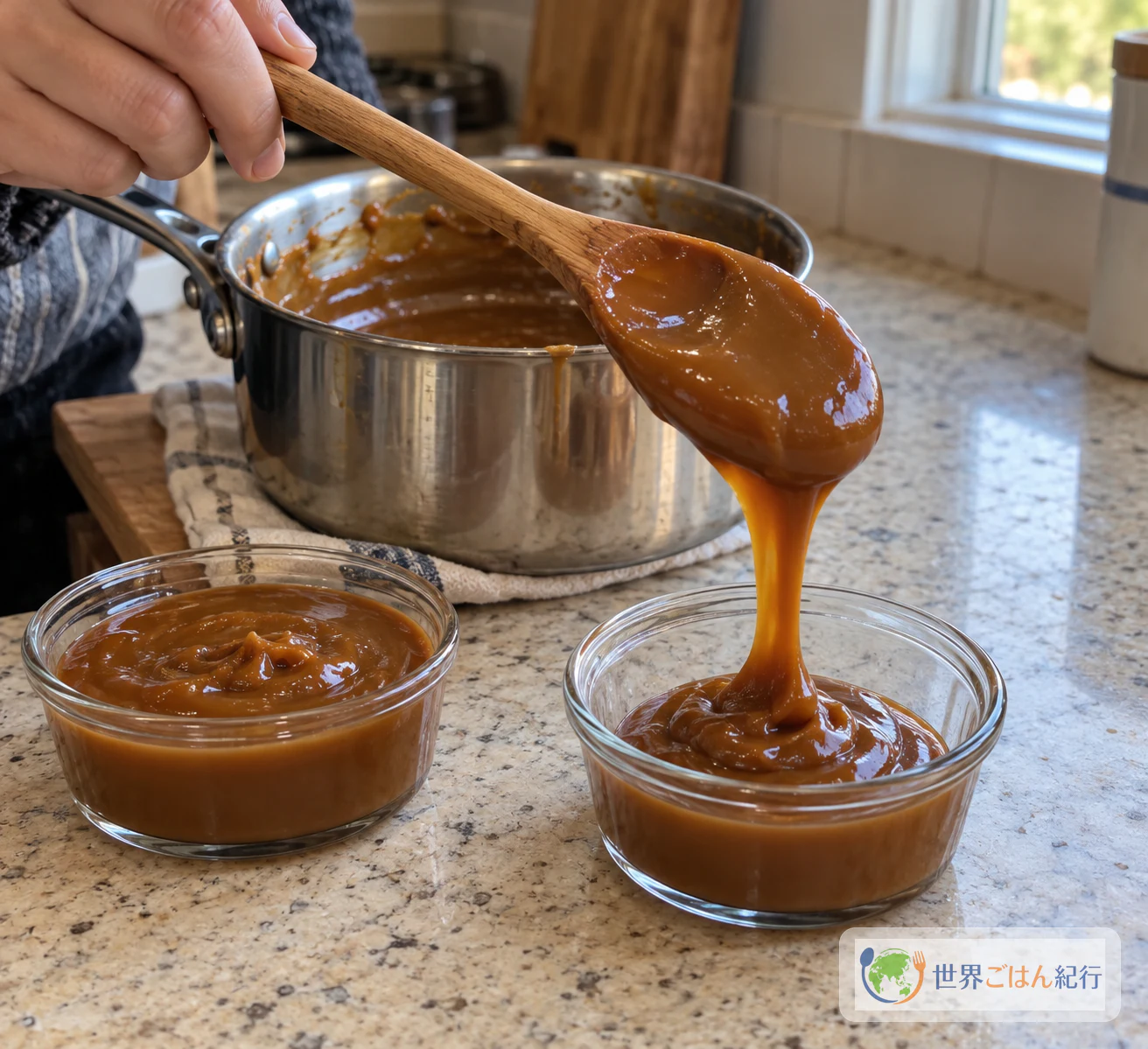
- Clean, dry, heat-safe storage containers, small and shallow rather than one deep jar
The mixture foams up strongly, especially after it first boils, so a shallow or small pot invites boil-overs. Celaya workshops are known for copper pots and wooden paddles, but a copper pot is not needed at home; a heavy stainless pot works for this recipe.
Method: From Pale Milk to Caramel
Allow about 1.5 hours of steady boiling before the heat is lowered. That time shifts with the width of your pot and the strength of your burner, so move from step to step by what you see.
All four ingredients go in at once; nothing is added later.
Do not keep cajeta at room temperature for long, and don't treat a homemade batch as a shelf-stable preserve. Flipping jars upside down or sealing them does not make it safe to store at room temperature, and its high sugar content is not a guarantee of safety.
Foaming, Scorching, Setting Too Firm: What to Watch For
| What you see | Likely reason | What to do |
|---|---|---|
| Foam climbs high soon after boiling | The milk mixture foams strongly once it boils | Use a tall pot with plenty of headroom and stay with it, especially right after it boils |
| A thick, dark layer forming on the bottom late in cooking | Heat too high for the concentrated mixture, or too little stirring | Lower to medium-low and stir more often, scraping the bottom. This recipe has no method for rescuing a scorched batch, so prevention is the point |
| Not yet caramel brown after about 1.5 hours | The time is a guide; pot width and heat vary | Continue at lowered heat, stirring often, until the color, spatula trail and slow fall all appear |
| Firmer than you wanted once cool | Cajeta sets considerably as it cools | Next time, stop when it looks slightly softer in the hot pot than your target |
Variations and How They Change the Result
These are separate options, not part of the main recipe. Each one changes the flavor, so make one change at a time.
| Variation | What changes | Note |
|---|---|---|
| Without vanilla | The browned milk and sugar come forward | An editorial option; the source's standard recipe includes vanilla |
| Mascabado or grated piloncillo instead of brown sugar | A different sugar aroma | Listed in the source recipe as alternatives; use one in place of the brown sugar, same volume |
| Cow's milk, alone or mixed with goat milk | The goat milk character weakens | Allowed by the source recipe, but call it a variation, not Cajeta de Celaya |
| Quemada and envinada | Darker cooking, or rum | Styles made by Celaya producers; not covered by this home recipe's steps |
Celaya and the Protected Name
In 2022, Mexico's Diario Oficial de la Federación published the declaration protecting the geographical indication Cajeta de Celaya, administered by the Mexican Institute of Industrial Property (IMPI). The protection covers cajeta produced in Celaya and four named municipalities of Guanajuato: Apaseo el Grande, Juventino Rosas, Cortázar and Villagrán. The declaration defines the product as a thick goat-milk confection made with sugar and baking soda, and its specification allows at most 50% cow's milk only in limited seasonal production contexts, with the premium classes requiring goat milk. It also describes a production process that runs through heating, adding sugar, cooking, inspection, filtering, sterilizing containers and packing.
That is why a homemade batch, even one made with exactly the same four ingredients, is not Cajeta de Celaya. The name belongs to product made in the designated area to the official specification; using goat milk, sugar and baking soda in your own kitchen does not meet it. Call yours homemade cajeta.
Pati Jinich's account also describes visits to cajeta workshops in Celaya, where it is cooked in copper pots and stirred with wooden paddles. She mentions vanilla cajeta, quemada, which is cooked further for a deeper, darker flavor, and envinada, which contains rum. The SEP educational resource likewise mentions goat milk, copper pots, and variations with vanilla, alcohol, or longer cooking. Workshop timing, equipment and bottling belong to that setting; the home recipe above keeps its own steps and does not borrow them.
Serving: A Little Goes a Long Way
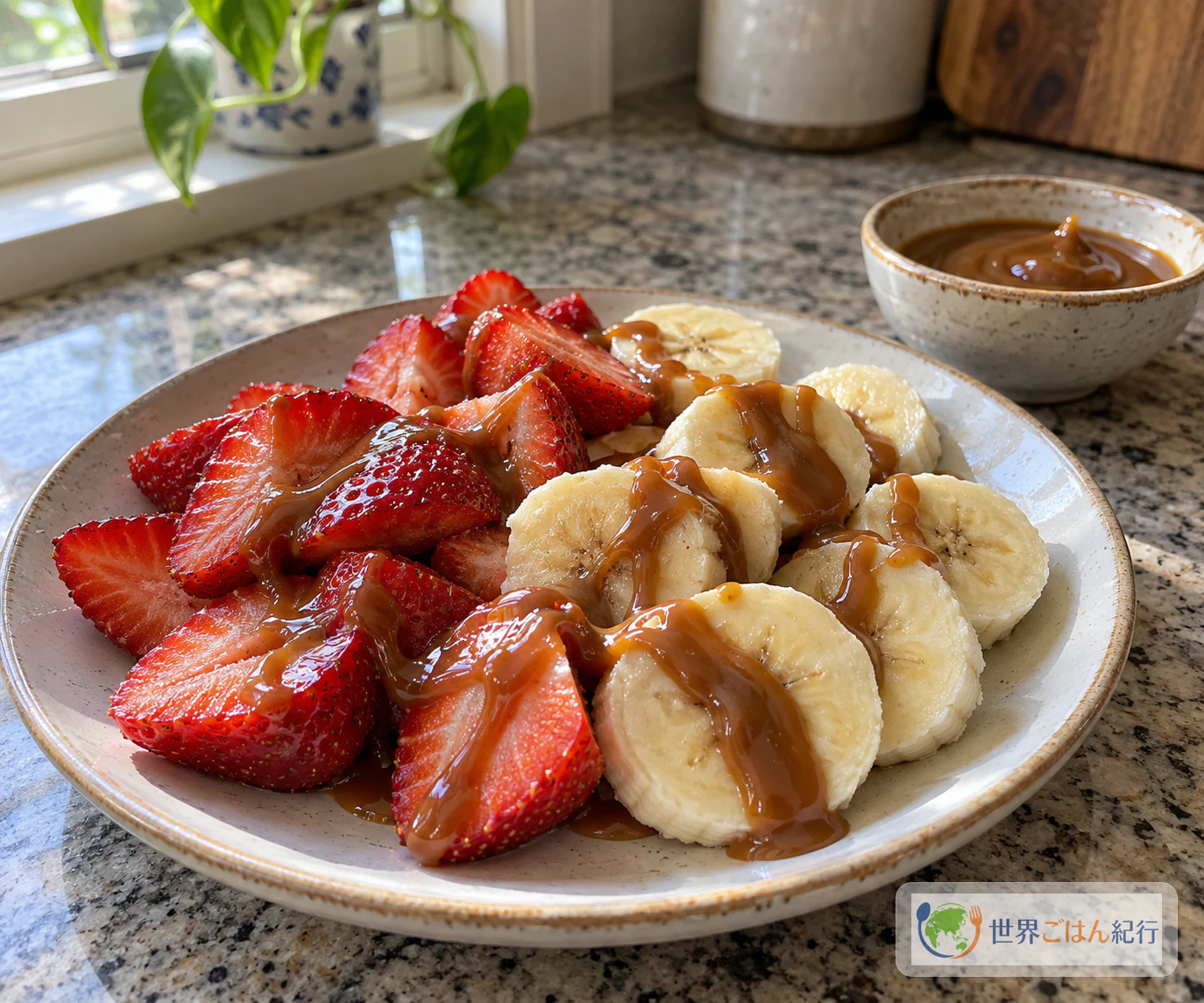
Cajeta is rich and very sweet, so think of it as a sauce or spread rather than a dessert on its own. Pati Jinich suggests it with crepes, fruit, in sandwiches, and over ice cream.
A simple plate: wash fresh strawberries well, peel and slice a banana, and spoon a small amount of cajeta over them, with a little extra in a separate dish. The fruit needs no added sugar, cinnamon or salt; its freshness and acidity balance the caramel. Take out only what you will use, and return the rest to the refrigerator rather than leaving the container out.
Frequently Asked Questions
What is cajeta?
A Mexican milk sweet made by cooking goat milk and sugar down to a thick caramel. It is closely tied to Celaya in Guanajuato, where Cajeta de Celaya is a protected geographical indication with its own area and specification.
Can I make it with cow's milk?
Pati Jinich allows cow's milk alone or mixed with goat milk, but the flavor will be different. A cow's-milk batch is a variation, and should not be called Cajeta de Celaya.
I can't find piloncillo. What should I use?
This recipe already uses ordinary brown sugar. Mascabado and grated piloncillo are the source recipe's alternatives, used in place of the brown sugar at the same volume, and each gives a somewhat different aroma.
How do I know when to turn off the heat?
Look for caramel brown color, a spatula trail across the bottom that briefly shows the pot, and syrup that falls slowly from the spatula. Because it firms as it cools, stop when it is still slightly softer than you want.
Can I keep cajeta at room temperature?
Not recommended. Cool it in small, shallow containers, refrigerate it and eat it soon. No storage period is given here, and room-temperature storage, sealed jars and high sugar content should not be relied on for safety.
Is goat milk cajeta safe for someone with a cow's-milk allergy?
No such assumption should be made. Goat milk is milk, and cajeta is a milk product. Check every product's allergen labeling.
Sources
- Pati Jinich, "Cajeta: hecha en casa." The household recipe used here: ingredients and amounts, the medium boil, the approximately 1.5-hour cooking with stirring every 15–20 minutes, the visual doneness cues, firming on cooling, goat milk as the characteristic flavor, the Celaya workshop context, the vanilla, quemada and envinada variants, and serving ideas. Its long refrigerated storage claim is not adopted. https://patijinich.com/es/cajeta-hecha-en-casa/
- Diario Oficial de la Federación / Instituto Mexicano de la Propiedad Industrial, "Declaración de protección de la Indicación Geográfica Cajeta de Celaya." The protected area of Celaya and four Guanajuato municipalities, the product definition, the limit on cow's milk, and the production process. It is an official standard, not a home recipe. https://sidof.segob.gob.mx/notas/docFuente/5656520
- Secretaría de Educación Pública, Nueva Escuela Mexicana Digital, "Cajeta de Celaya." The explanation of the name from cajete wooden containers, offered as a common explanation, along with goat milk, copper pots, and vanilla, alcohol and longer-cooked variants. https://nuevaescuelamexicana.sep.gob.mx/contenido/recurso/cajeta-de-celaya/
- Ministry of Health, Labour and Welfare (Japan), "家庭での食中毒予防" (Preventing food poisoning at home). General home guidance on dividing food into shallow portions to cool quickly and refrigerating it; not a storage test for cajeta. https://www.mhlw.go.jp/stf/seisakunitsuite/bunya/kenkou_iryou/shokuhin/syokuchu/01_00008.html