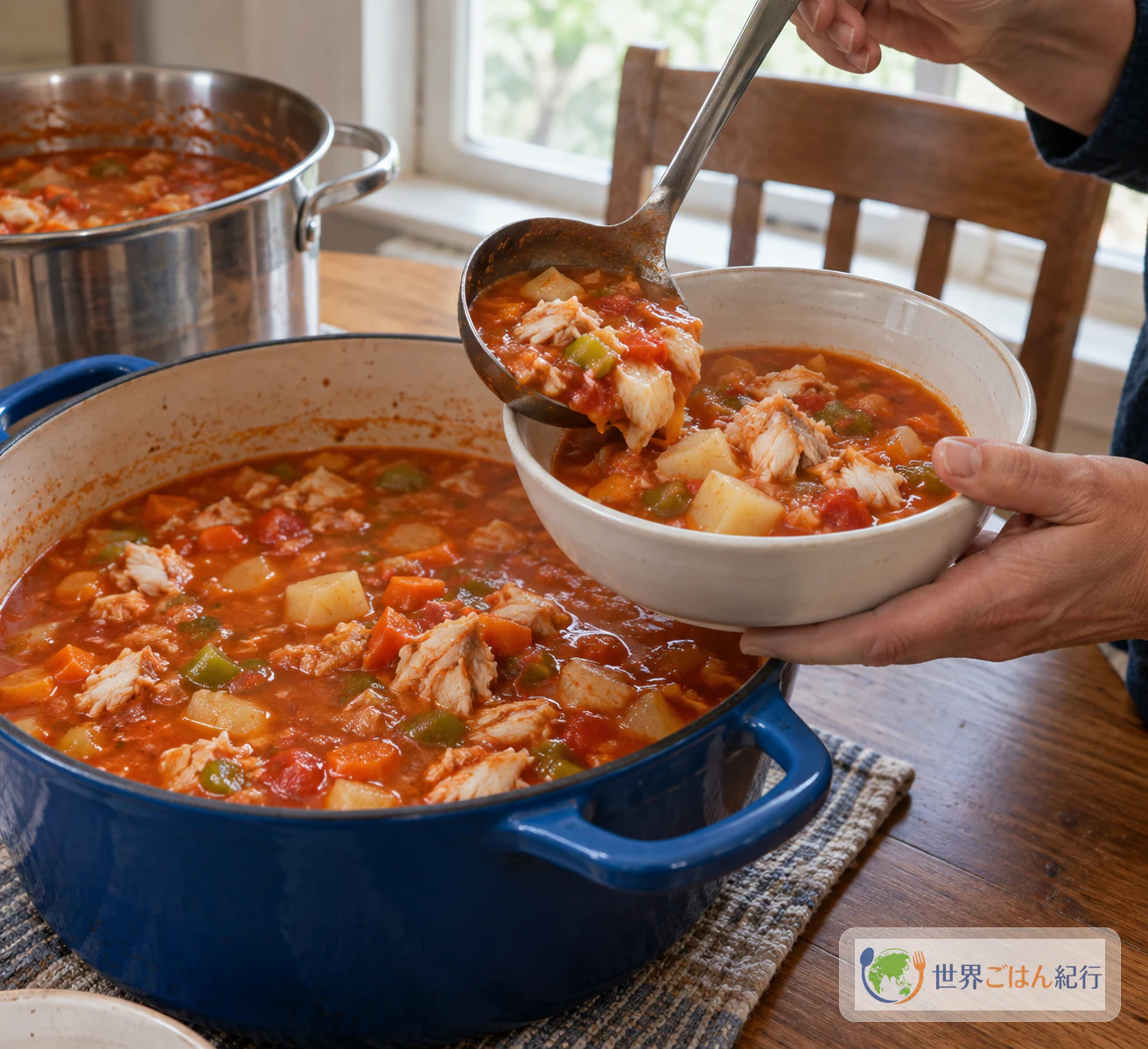
Bermuda Fish Chowder Is Tomato-Red, Finished with Rum and Peppery Sherry
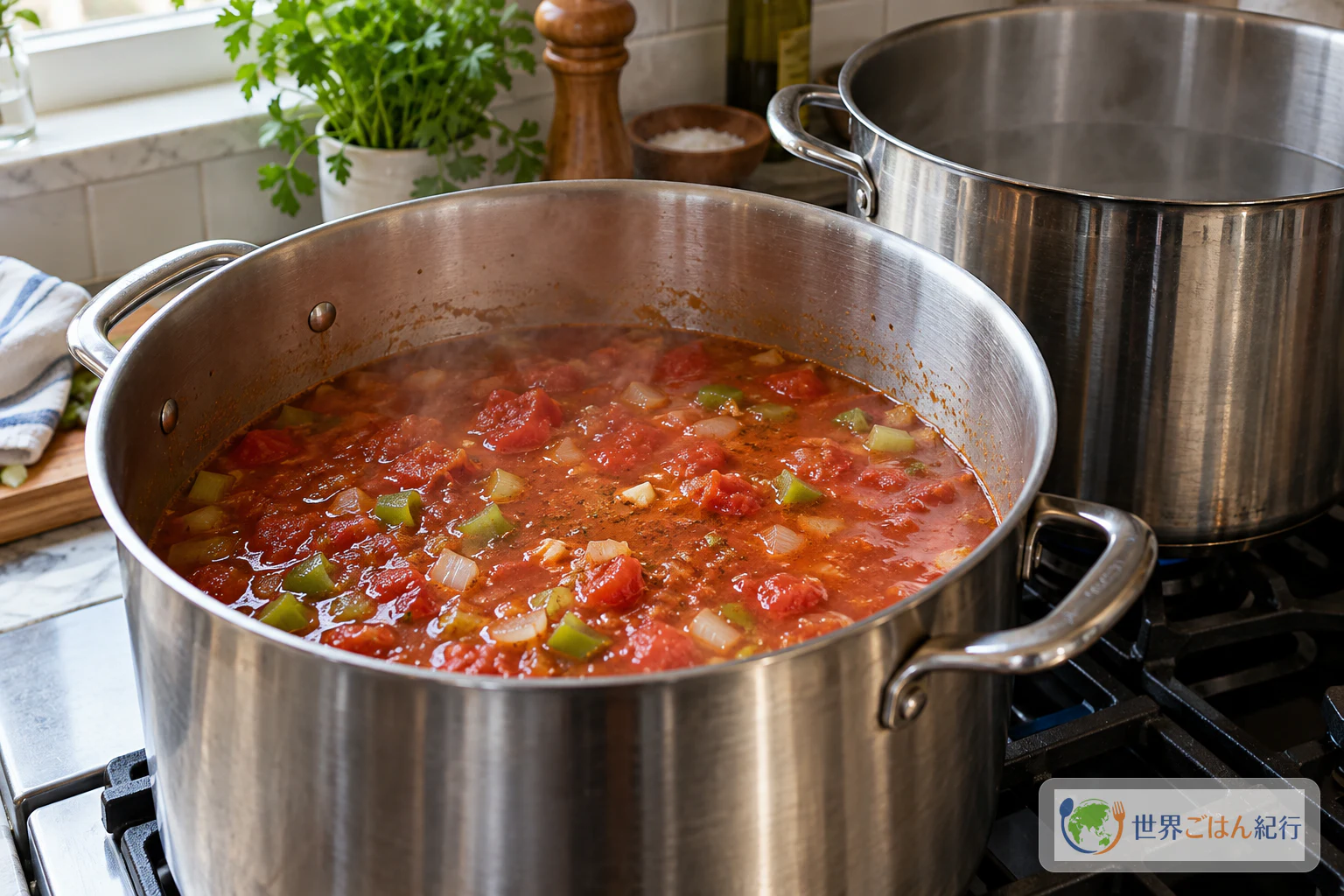
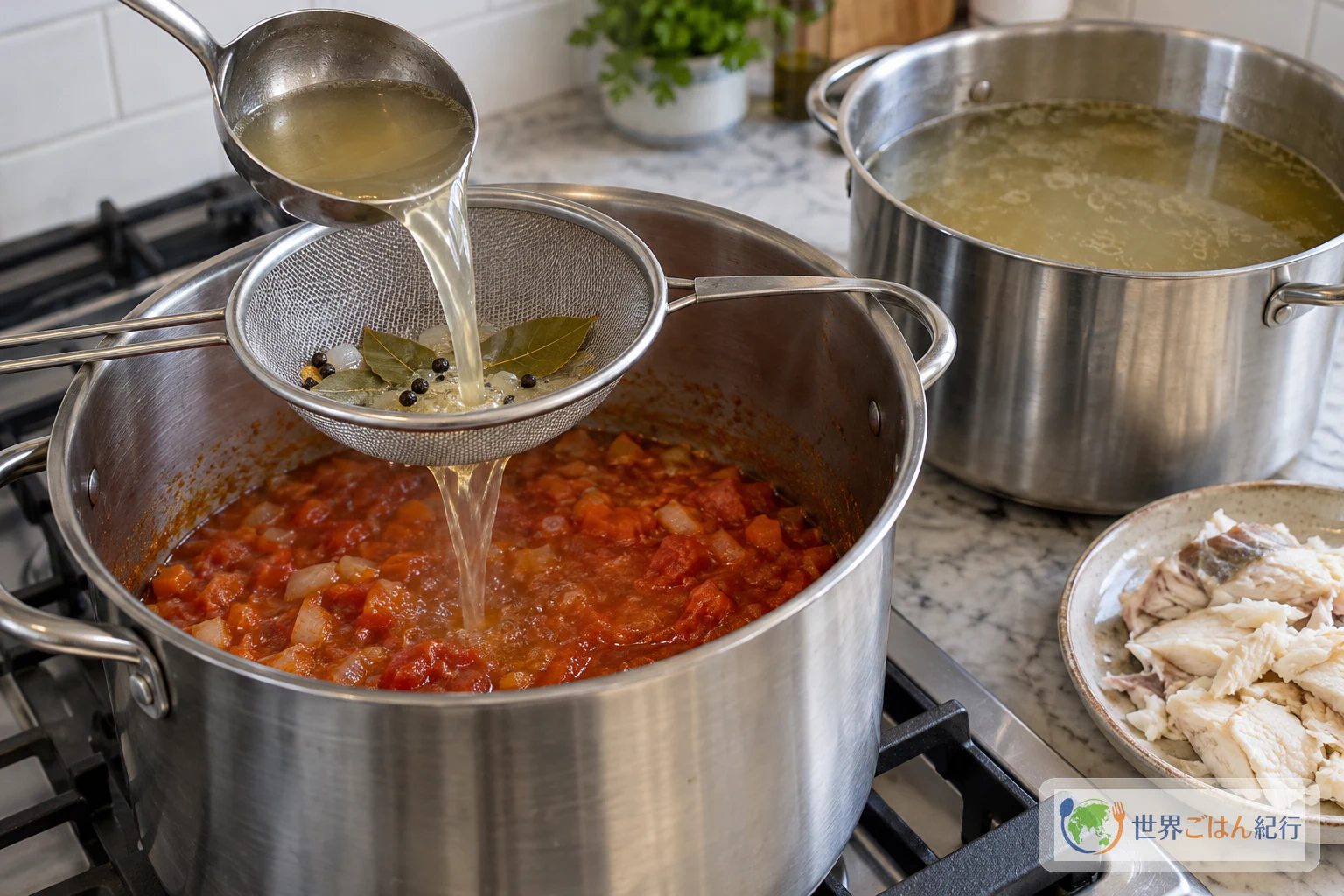
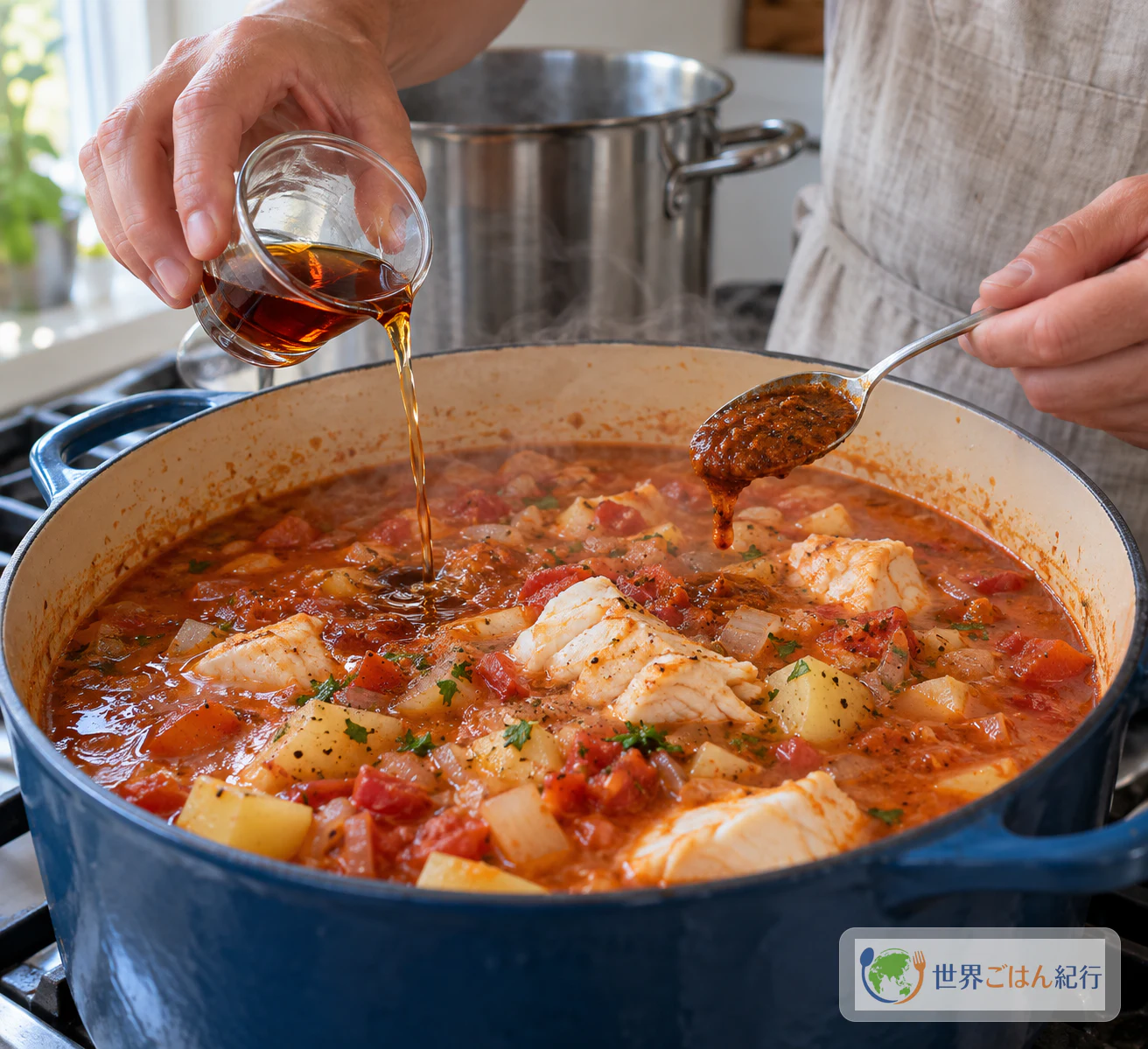
A clear-flavored fish stock, a tomato base built on onion, celery and green pepper, and root vegetables simmered until soft. The black rum and sherry pepper sauce go in at the very end, and they are what make it taste of Bermuda.
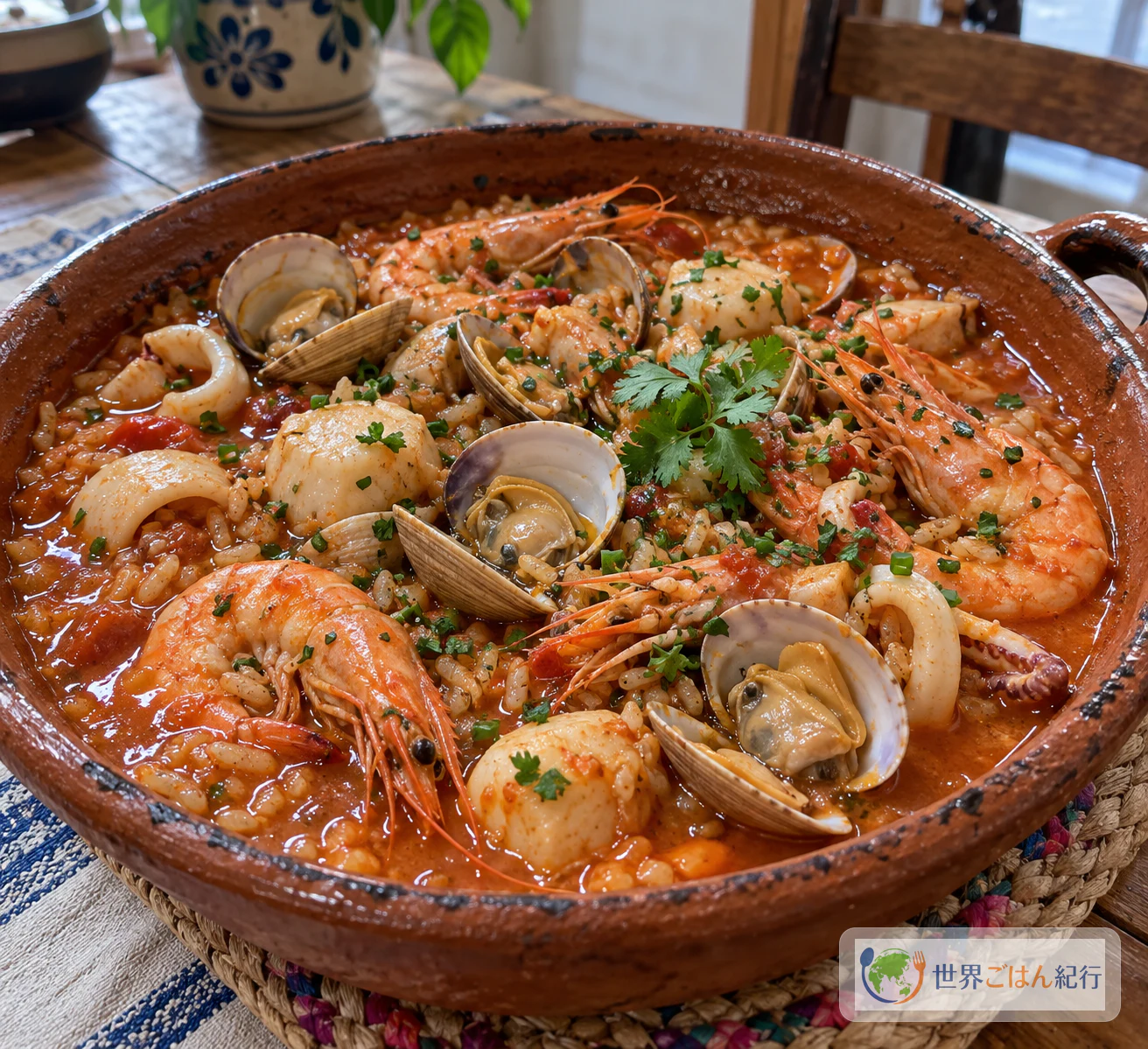
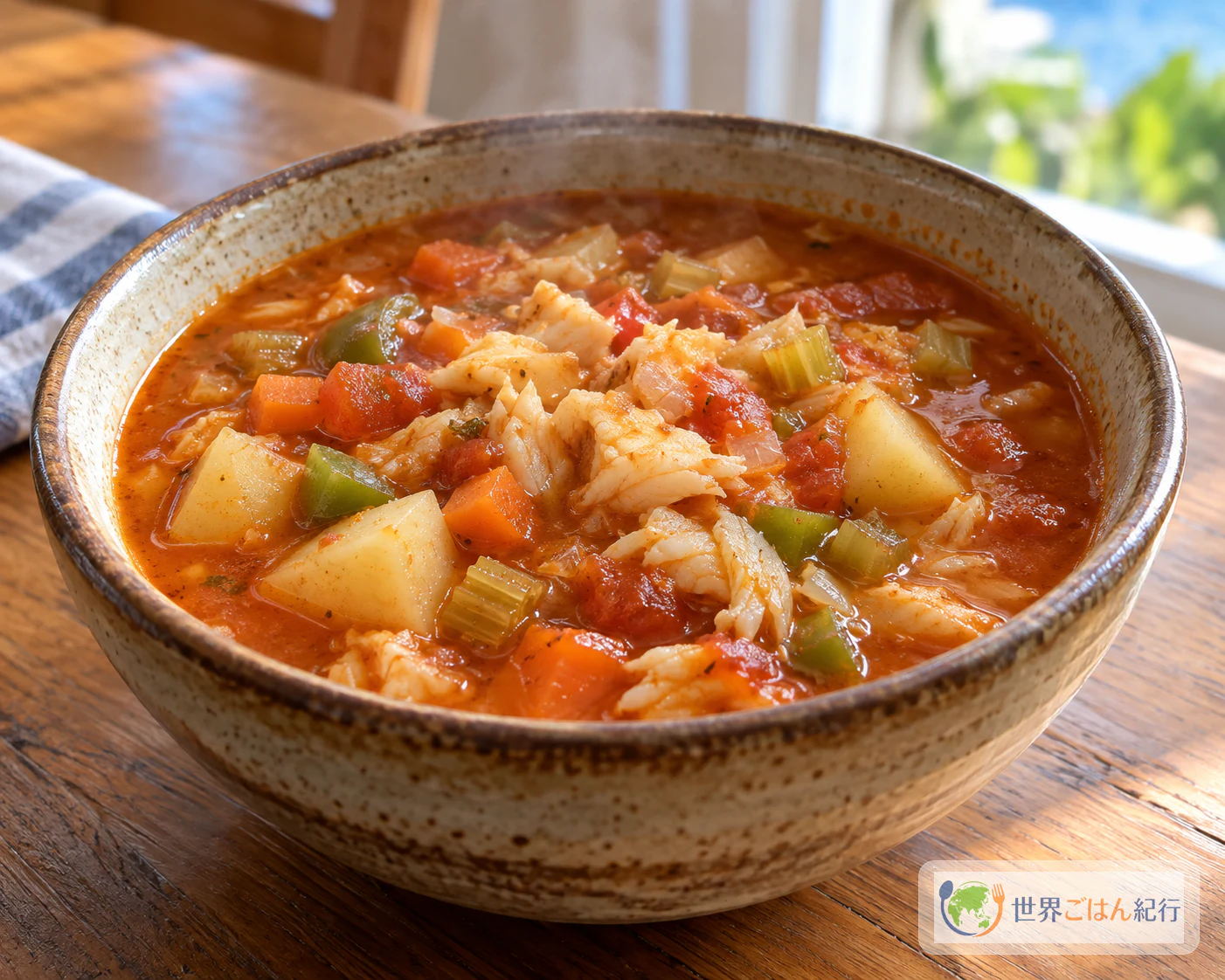
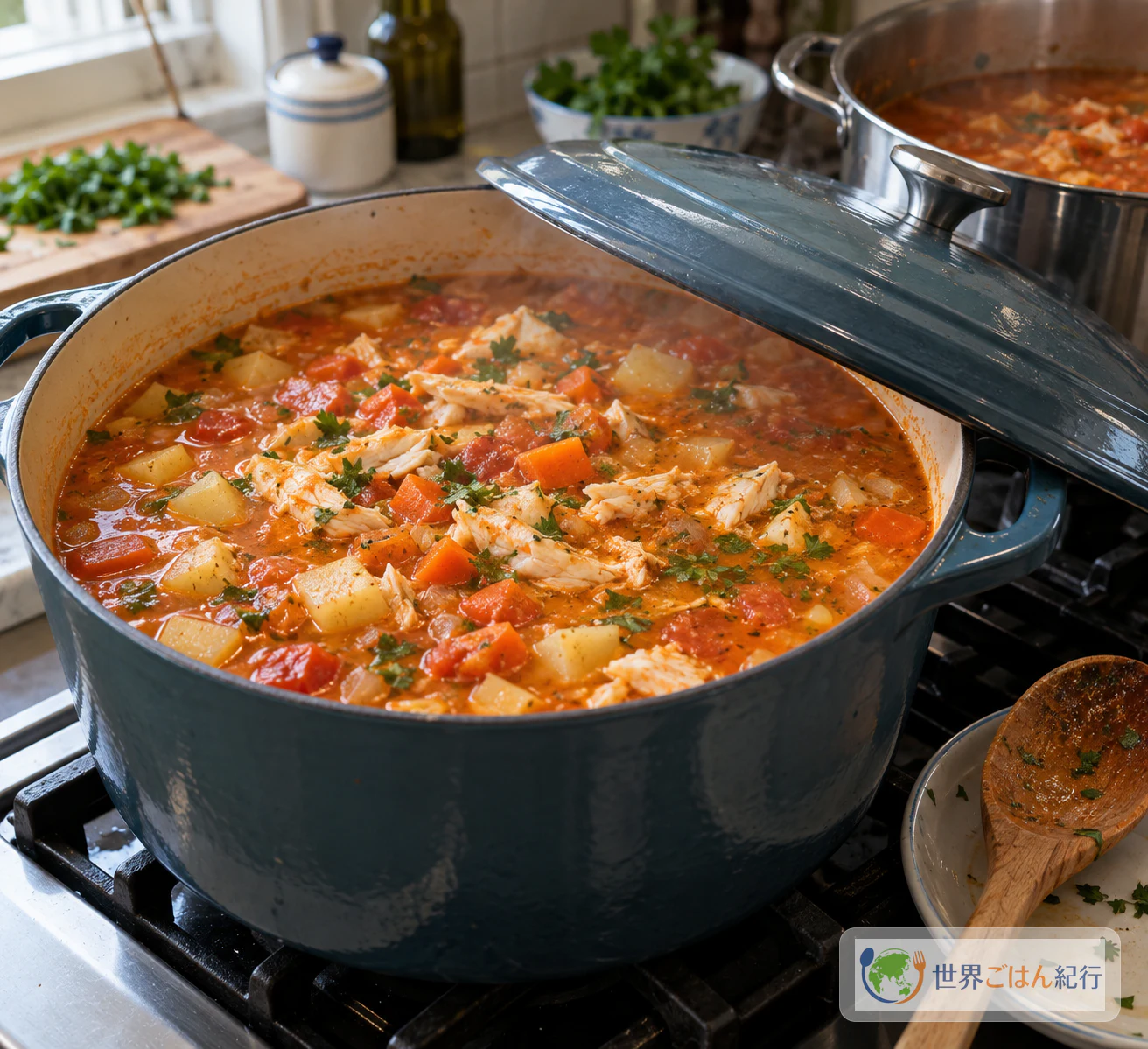
A red soup that has simmered for a long time, with flakes of white fish caught between cubes of potato and carrot, and the warmth of clove and bay underneath. Then, at the last moment, a pour of black rum and a few spoonfuls of sherry pepper sauce go into the pot, and the aroma changes. That final layer is what Bermuda's tourism authority singles out when it describes the island's fish chowder.
If the word "chowder" makes you think of a white, creamy soup, this one will surprise you. The Bermuda Tourism Authority presents fish chowder as a quintessential local dish, built on tomatoes with potatoes, onions, carrots, green peppers and celery. It also says plainly that every recipe is a little different, while naming two shared signature additions: Outerbridge's Original Sherry Peppers and black seal rum.
Because there is no single "correct" recipe, this article follows one published formula: the Bermuda fish chowder recipe from Goslings, the Bermuda rum producer. Its quantities are kept as published. It is a large-pot recipe, and it does not state a yield or any amount of salt.
This recipe has not been kitchen-tested for this article. The quantities and timings come from the Goslings recipe; the yield, the final pot size needed and the number of servings are not confirmed, so none are given here. Where the method below goes beyond the source (for example, skimming, checking for bones, or grouping the "remaining" ingredients), it is marked as an editorial suggestion.
Ingredients: One Large-Pot Batch from the Goslings Formula
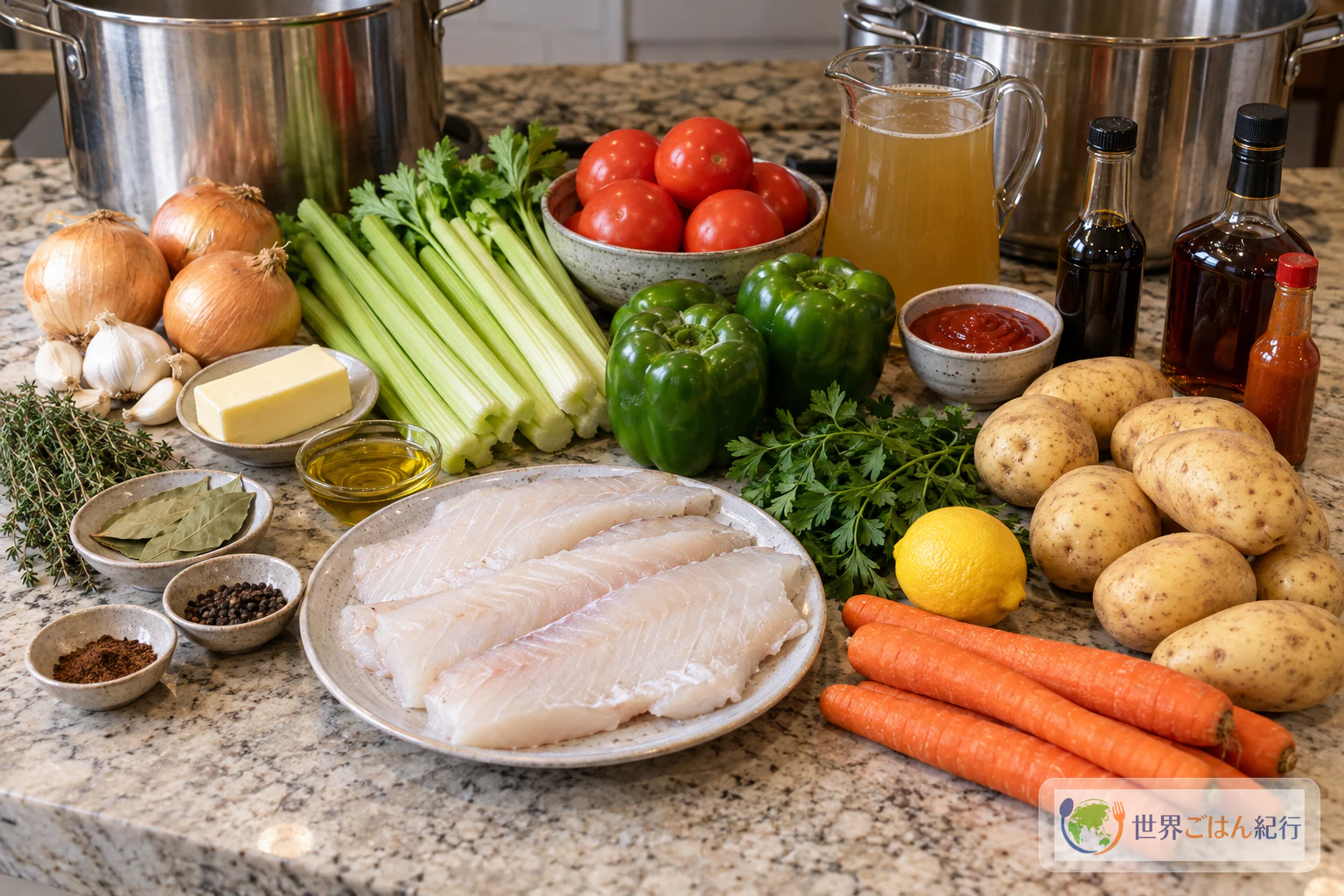
The amounts below are the source's own. The metric figures in parentheses read the source's quarts, cups and ounces as US measures; the recipe itself does not declare a unit system, so treat those conversions as an editorial reading. The tomato weight is the net weight of the can, not a liquid measure, and the weight after seeding will be less. Butter and herbs stay in spoons and cups.
The source lists no salt. Broth, ketchup, Worcestershire sauce and sherry pepper sauce all carry salt, so taste at the end before deciding whether to add any.
Equipment
- Two sufficiently large pots: one for the fish stock, one for the tomato base and the final simmer
- Fine-mesh strainer
- Ladle
- Cutting board and knife
- Measuring spoons and measuring cups
The water alone is close to 4 liters, and the second pot eventually has to hold the strained stock, the tomato base, the fish and a large amount of vegetables. A 6-liter pot cannot be assumed to be enough. Before you start, look at the actual volume of everything you have bought and choose pots that leave room for stirring and for the soup to boil without spilling over. Do not plan to receive the whole batch in a deep skillet.
Choosing Fish, Vegetables, Rum and Sauce
Fish. Goslings gives two routes: rockfish or sea bass fillets, or grouper heads. This article's base version uses skinless, boneless sea bass fillets. According to the tourism authority, "rockfish" in Bermuda refers to black grouper. Any mild white fish you buy elsewhere is a practical stand-in for cooking, not the same fish, and the flavor and richness of the stock will differ. If you choose fish heads instead, ask your fishmonger whether they can clean them, and plan to strain out every bone.
Onions. The source calls for Bermuda onions and gives no size or weight. Ordinary yellow onions are an editorial substitute; expect some difference in sharpness and sweetness.
Green peppers. Use two large green bell peppers. Small, thin-walled green peppers, such as Japanese piman, give a different amount and flavor, so two of them are not equivalent.
Celery. The source counts "1 stalk (8 ribs)": eight individual ribs, not one rib.
Tomatoes. The source uses a 28 oz can. Where cans come in other sizes, choose a total close to 794 g, or note to yourself that you have changed the amount.
Broth. Keep it chicken broth, as the source does; switching to fish or other stocks changes the recipe. If you dissolve a bouillon cube, check its salt.
Thyme. Fresh thyme is called for. Dried thyme is an editorial substitute only; there is no tested ratio, so add a small amount and judge by aroma.
Lemon. Fresh lemon juice is specified. Bottled juice has a different aroma.
Potatoes. No variety is specified. Potatoes that hold their shape will keep their cubes better, but that is an editorial choice.
Rum. Goslings Black Seal Rum is the named ingredient. Another dark rum is an editorial substitute, and its molasses and aged notes will differ.
Sherry pepper sauce. This is the signature Bermudian condiment; the tourism authority names Outerbridge's Original Sherry Peppers. It is not the same thing as an ordinary hot sauce, and chili-infused sherry or a homemade mix of chili and vinegar cannot be called an equivalent. No established substitute formula has been confirmed. If you can't find it, any replacement makes a different finish.
This chowder contains fish, celery and milk (butter). Store-bought Worcestershire sauce and broth may contain soy, wheat or other allergens, so check the labels.
The rum is added at the end, so alcohol may remain in the finished soup. Leaving out the rum alone does not guarantee an alcohol-free pot: sherry-based pepper sauces and similar products may also contain alcohol, so check their labels. No zero-alcohol result is guaranteed, and if you need to avoid alcohol entirely, the finished dish will taste different from the traditional finish.
Keep raw fish and its juices away from vegetables that won't be cooked further, and from boards and tools used for other foods. Japan's Ministry of Health, Labour and Welfare home food-poisoning guidance gives, as a general guide, heating the center of food to 75°C for at least 1 minute. The long simmer in this recipe is not, on its own, a guarantee of safe cooking or safe storage.
Method: Fish Stock, Tomato Base, a Long Simmer and a Last-Minute Finish
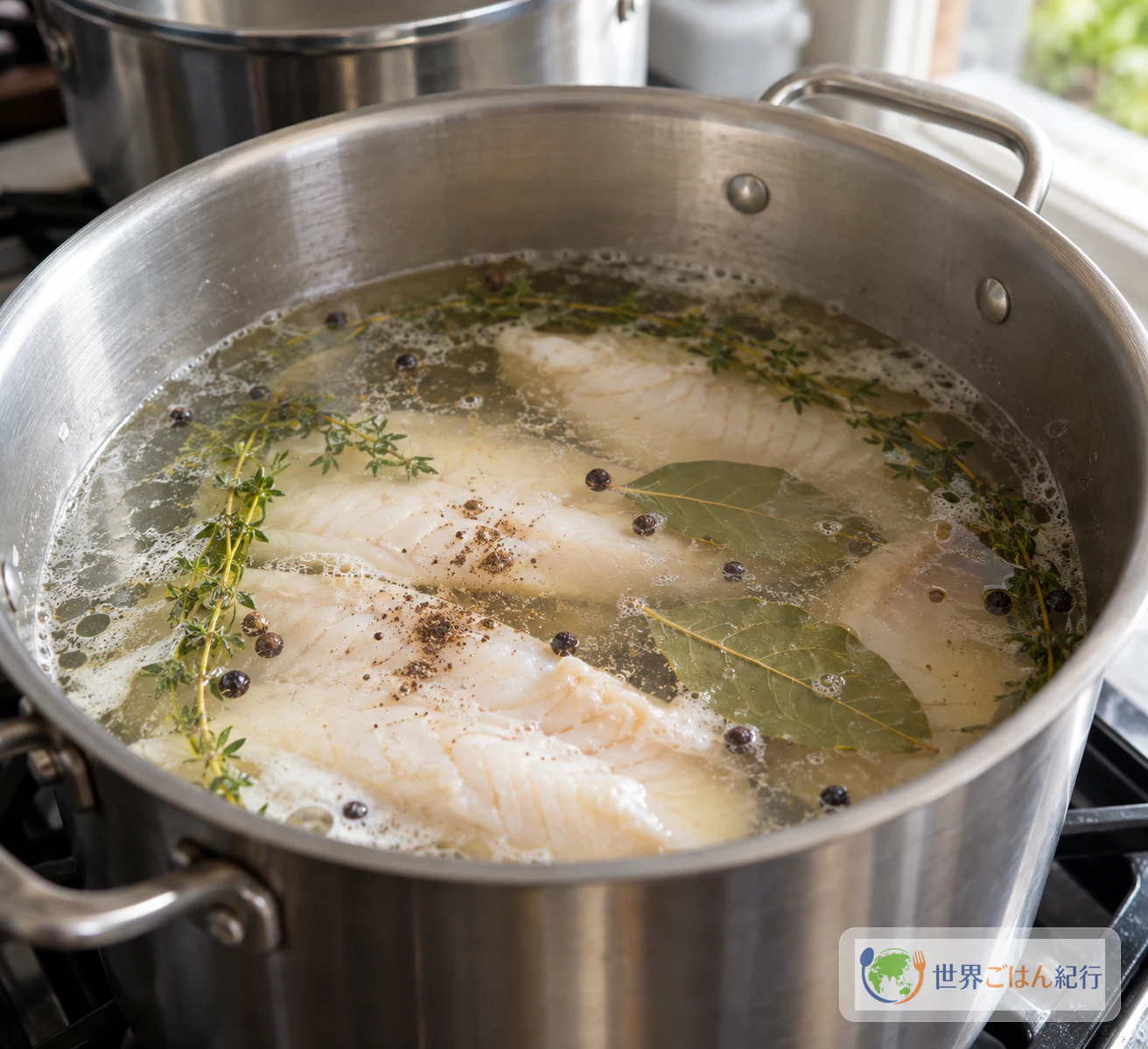
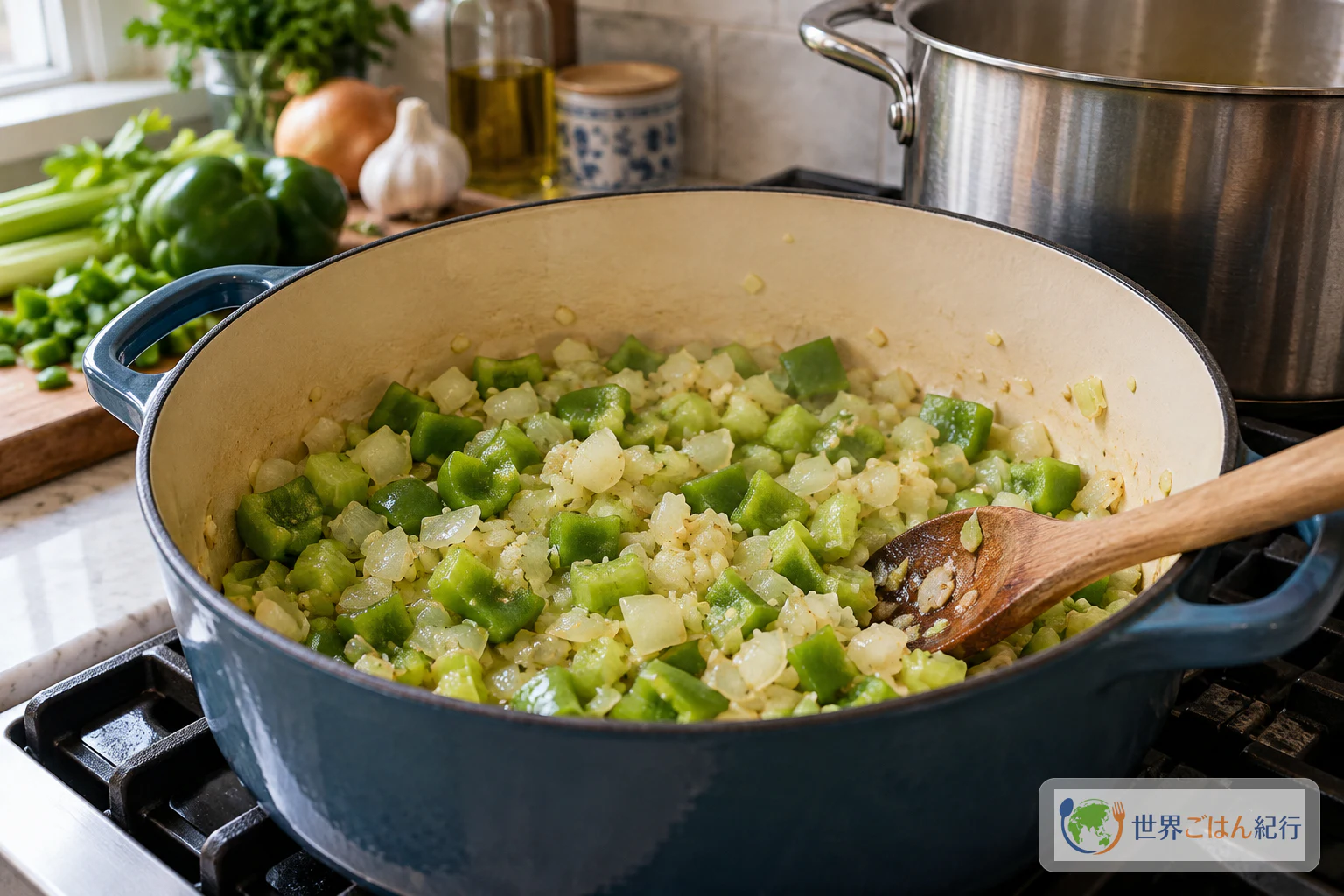
The fish stock and the tomato base are made in two separate pots, then combined. The source's times are 45 minutes for the stock, 30 minutes for the tomato base and about 2 hours for the combined simmer. Some of this overlaps, so these times are not a total.
When Things Go Wrong in the Pot
| Problem | Likely reason | What to do |
|---|---|---|
| The fish has fallen into flakes | 45 minutes in the stock plus about 2 hours of simmering | This is how this formula works. If you want visible pieces, see the shorter-cook arrangement under Variations, which is a separate recipe |
| The pot is too full to stir or keeps boiling over | The final pot is too small for the stock, tomato base, fish and vegetables | Move to a larger pot. Check the volume of all ingredients before you begin |
| Something is catching on the bottom | Heat too high during the long simmer, or not stirred | Lower the heat and stir from the bottom now and then |
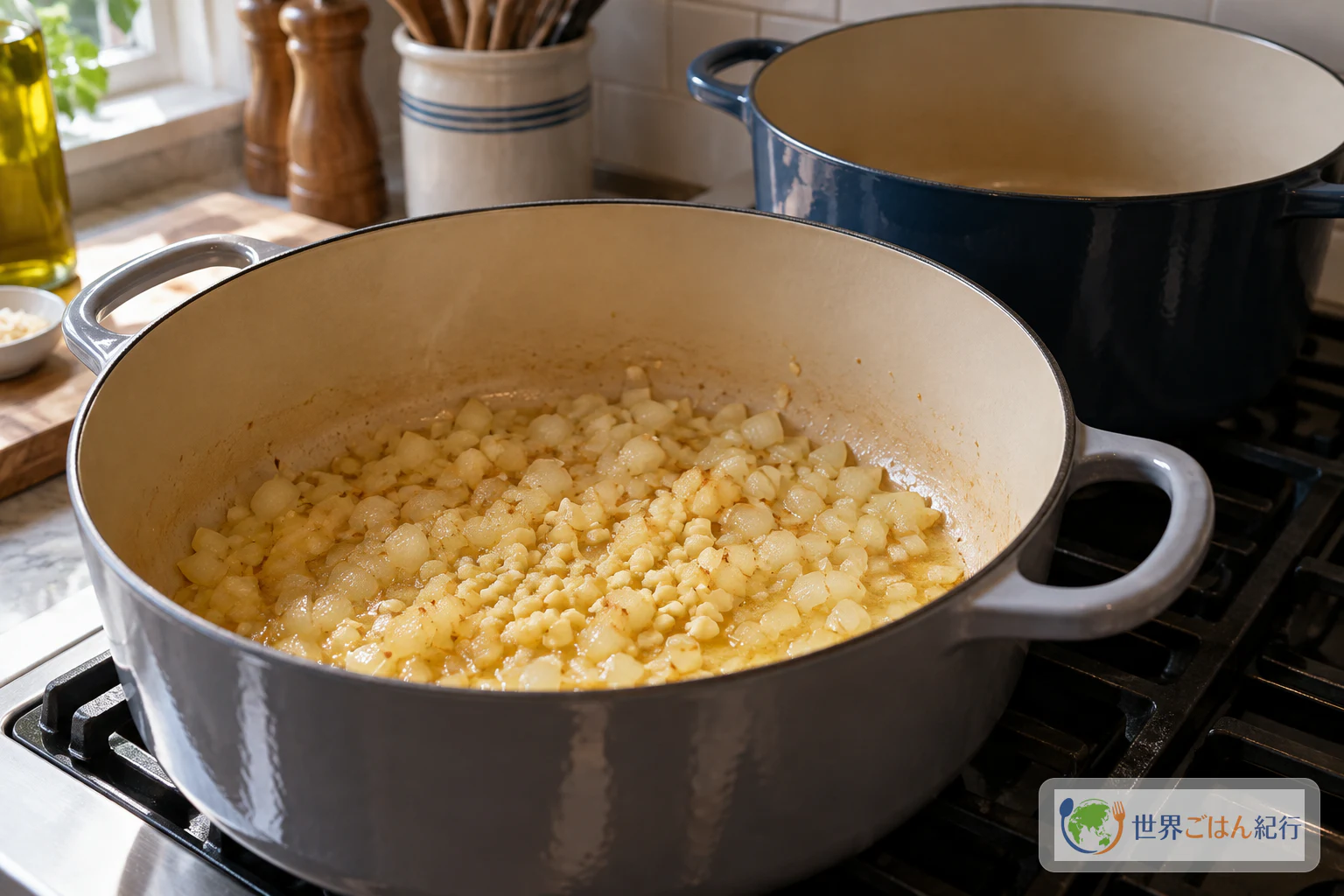
| The onions went dark before the celery and peppers | Heat too high in step 2 | Lower the heat; aim for golden, not brown |
| A bone turns up in the soup | Bones left on the fillets, or not strained from heads | Check the fish carefully before returning it in step 5 |
| The soup tastes too salty | Salt from broth, ketchup, Worcestershire and pepper sauce | Taste before adding any salt; next time check the salt in your broth or bouillon |
Storing and Reheating Leftovers
This is a large batch, so you may have leftovers. Following Japan's Ministry of Health, Labour and Welfare home food-poisoning guidance: divide leftovers into small portions in shallow containers and cool them quickly, and when reheating, heat thoroughly to 75°C or above as a guide. How many days the chowder keeps has not been established, so no storage period is given here.
Variations (Separate from the Base Formula)
These change the recipe; don't mix them into the base version without knowing what they alter.
- A different white fish. Within the source's options of rockfish or sea bass, the type of fish changes the stock and the texture of the flakes.
- Fish heads instead of fillets. The source's alternative is grouper heads, 5 lb (about 2.27 kg), in place of the 2 lb of fillets. Never combine the two. Heads require careful straining and bone removal.
- Sherry pepper sauce at the table only. Leaving the sauce out of the pot and letting each person add their own changes the standard formula, which puts it in the pot at the end.
- Without rum. For people avoiding alcohol, this removes one of the dish's two signature flavors, and it still does not guarantee an alcohol-free bowl if the pepper sauce contains alcohol.
- Potato texture. The source gives no variety or dice size. Potato variety and size will change how thick the soup becomes.
- Fish in visible pieces. Cooking the fish for a shorter time to keep pieces intact is an editorial arrangement, not this formula, which builds its flavor by simmering the fish into the stock.
Bermuda's Chowder: One Name, Many Pots
The Bermuda Tourism Authority describes Bermudian food as reflecting Caribbean, British, West African, Native American and Portuguese influences. That is a broad overview of the island's cooking; it does not trace any single ingredient of this chowder to a particular one of those influences, and the dish's origin, inventor and date are not established in the sources used here.
What the sources do agree on is variety. The tourism authority notes that every recipe differs, and The Bermudian Magazine says individual cooks have their own versions. The magazine has published a recipe by Yeaton Outerbridge that previously ran in April 1991. That version lists white fish, potatoes, carrots, celery, tomatoes, ketchup, consommé, Worcestershire sauce, rum and sherry pepper sauce, and it uses a similar rhythm: fish and spices simmered for 30–45 minutes, sautéed vegetables with tomato and consommé for 30 minutes, then the combined soup for 2 hours. Its quantities differ, so it is a useful comparison, not something to blend with the Goslings formula above.
Frequently Asked Questions
Is Bermuda fish chowder a white, creamy soup?
No. The version presented by Bermuda's tourism authority is tomato-based, with potatoes, onions, carrots, green peppers and celery, finished with sherry pepper sauce and black rum.
What fish should I use?
The Goslings recipe calls for rockfish or sea bass fillets, or grouper heads as an alternative. In Bermuda, rockfish refers to black grouper. A mild white fish from your local shop works for cooking but is not the same fish, and the stock will taste somewhat different.
What if I can't find sherry pepper sauce?
No equivalent substitute has been confirmed. It is not the same as an ordinary hot sauce, and chili-infused sherry is not considered identical. Any replacement gives a different finish from the Bermudian one.
How many people does this serve?
The source does not say, and the recipe has not been kitchen-tested, so no serving number is given. It is a large-pot batch.
How do I store and reheat leftovers?
Divide leftovers into small portions in shallow containers and cool them quickly; reheat thoroughly to 75°C or above as a guide. No storage period has been established for this chowder.
Sources
- Bermuda Tourism Authority (Go To Bermuda), "Bermuda Cuisine: Fish & Seafood." Fish chowder as a quintessential Bermudian dish; its common ingredients; recipe variation; Outerbridge's Original Sherry Peppers and black seal rum as signature additions; rockfish as black grouper; the broad overview of influences on Bermudian food. https://www.gotobermuda.com/plan/inspiration/article/bermuda-cuisine-fish-seafood
- Goslings, "Bermuda fish chowder." The recipe followed in this article: ingredients and measures, the 45-minute fish stock, the sauté sequence and 30-minute tomato and broth simmer, the partially covered simmer of about 2 hours, rum and sherry pepper sauce added at the end, and extra offered at the table. https://goslings.com/recipes/bermuda-fish-chowder/
- The Bermudian Magazine, "Bermuda Fish Chowder." Yeaton Outerbridge's recipe, previously run in April 1991, and the note that individual cooks have their own versions; used for comparison only. https://www.thebermudian.com/food-a-drink/recipes/bermuda-fish-chowder/
- Ministry of Health, Labour and Welfare (Japan), "家庭での食中毒予防" (Preventing food poisoning at home). General household guidance on heating food to 75°C at the center for at least 1 minute, preventing cross-contamination, cooling leftovers quickly in shallow small portions, and reheating to 75°C or above. https://www.mhlw.go.jp/stf/seisakunitsuite/bunya/kenkou_iryou/shokuhin/syokuchu/01_00008.html