
Bringing the aroma of the wok to your plate
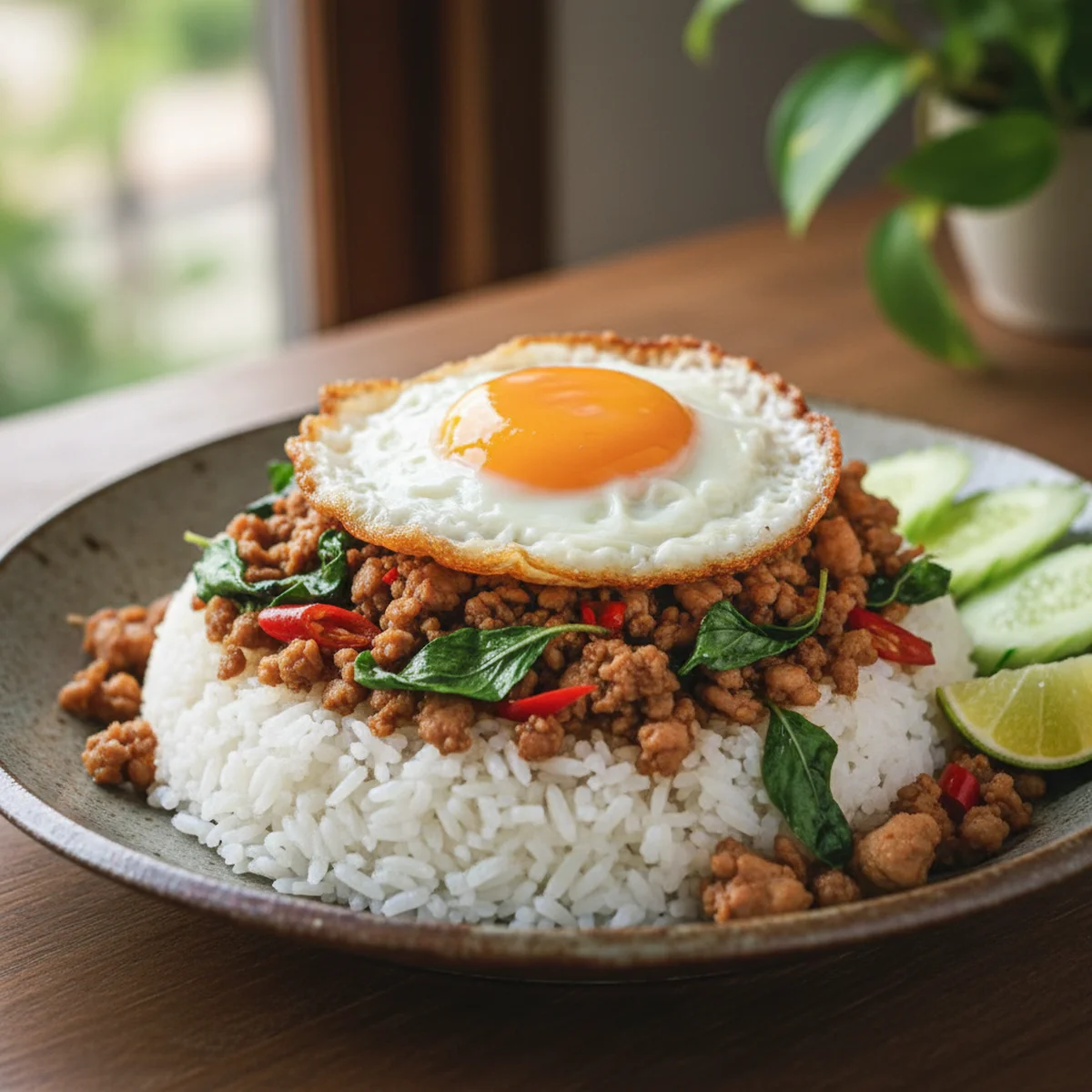
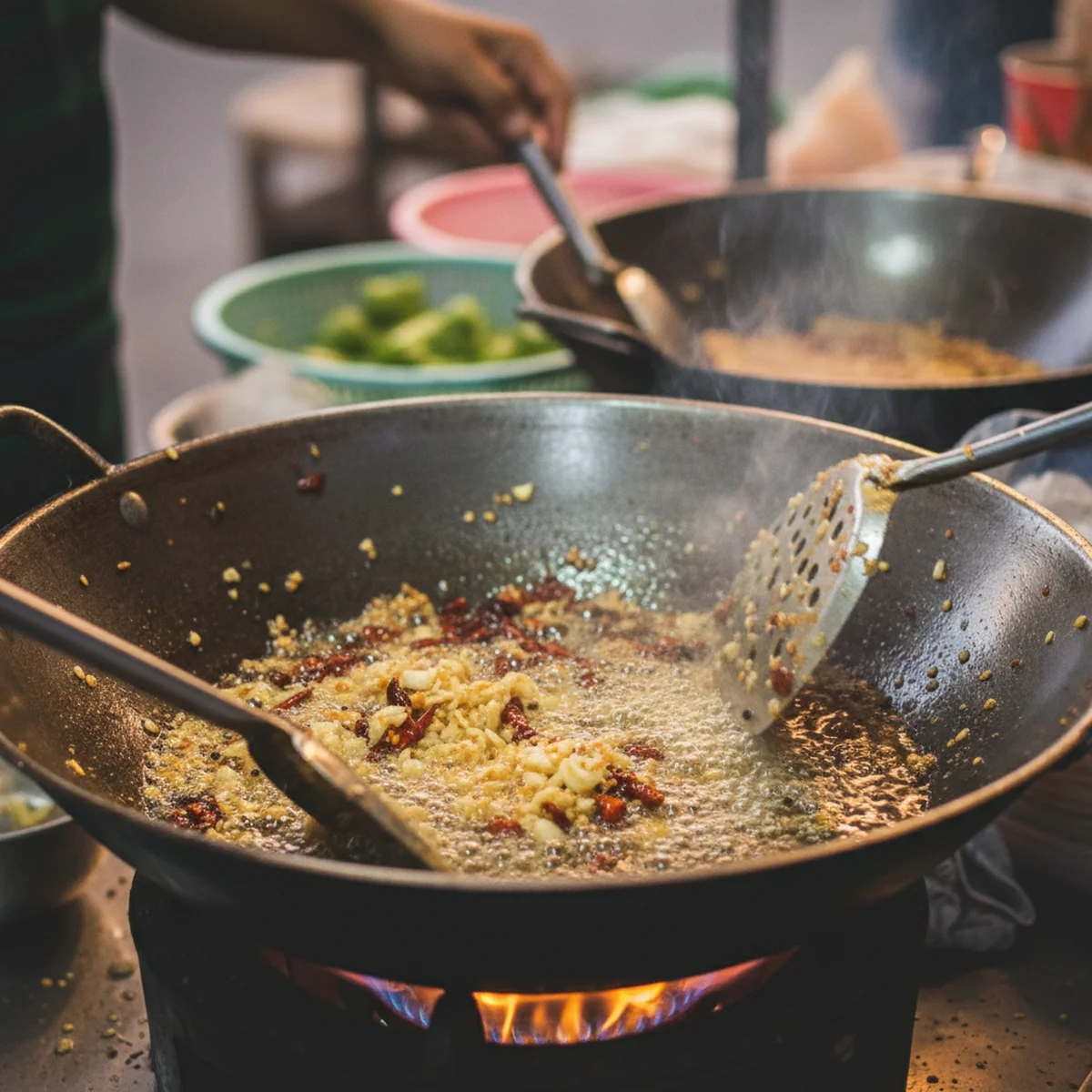
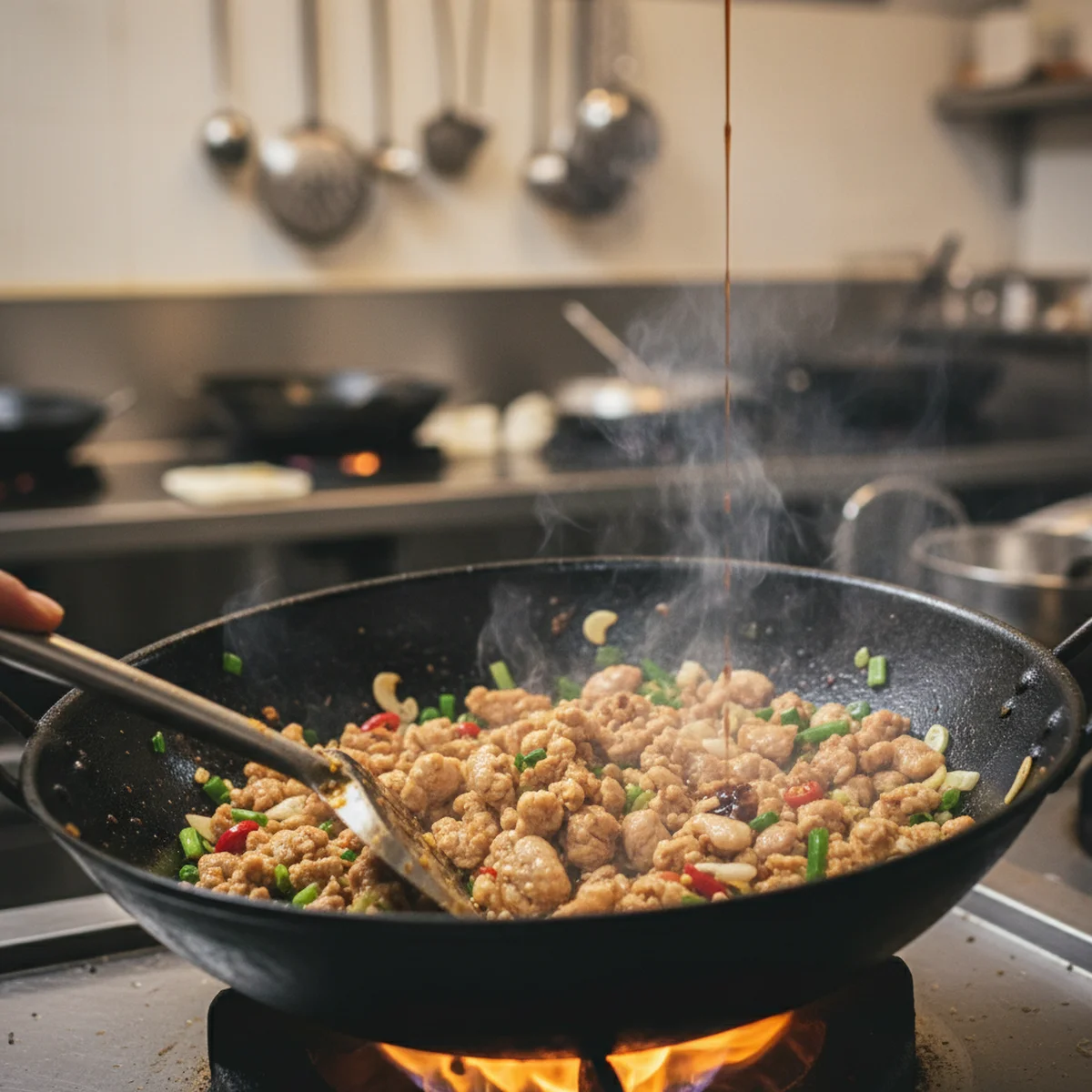
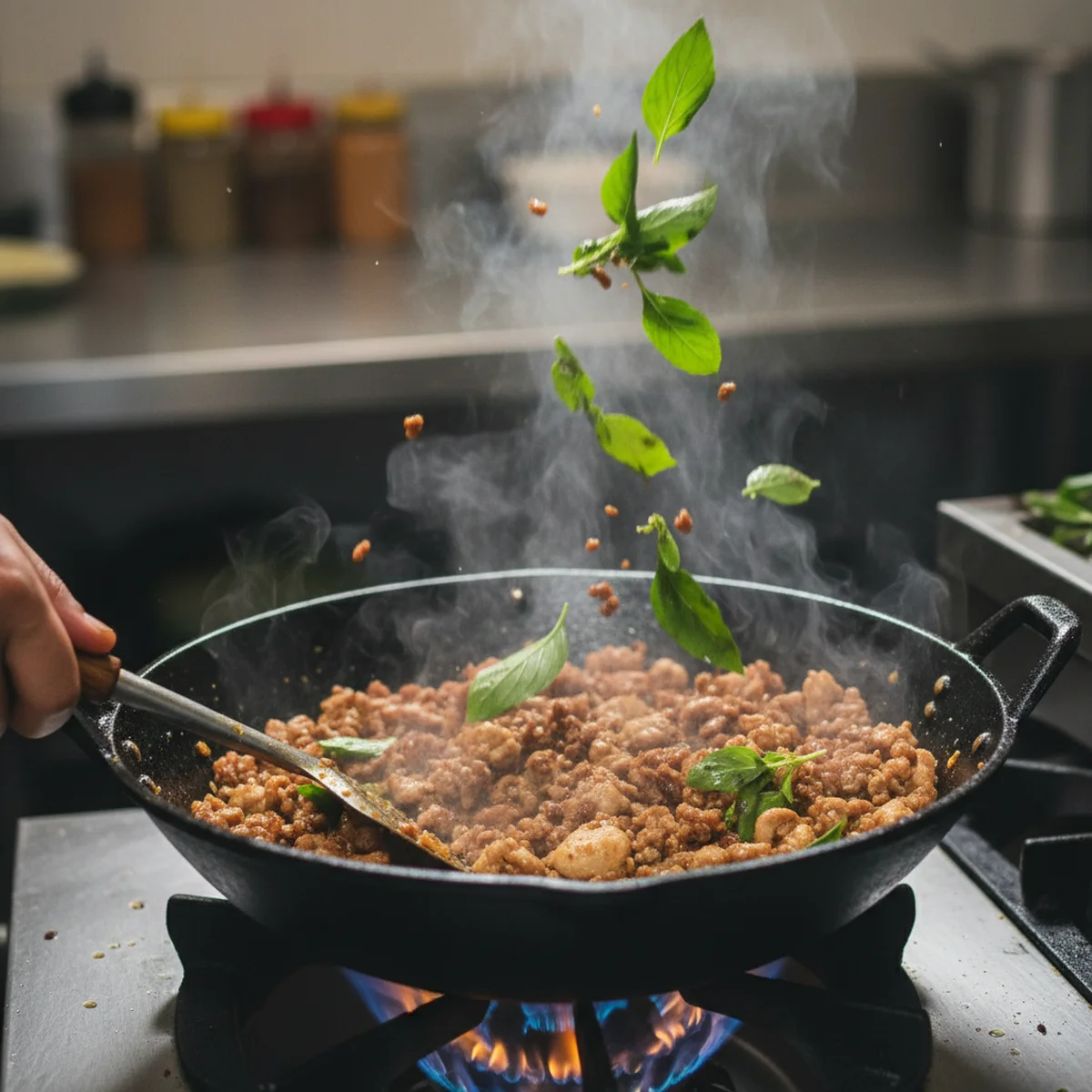
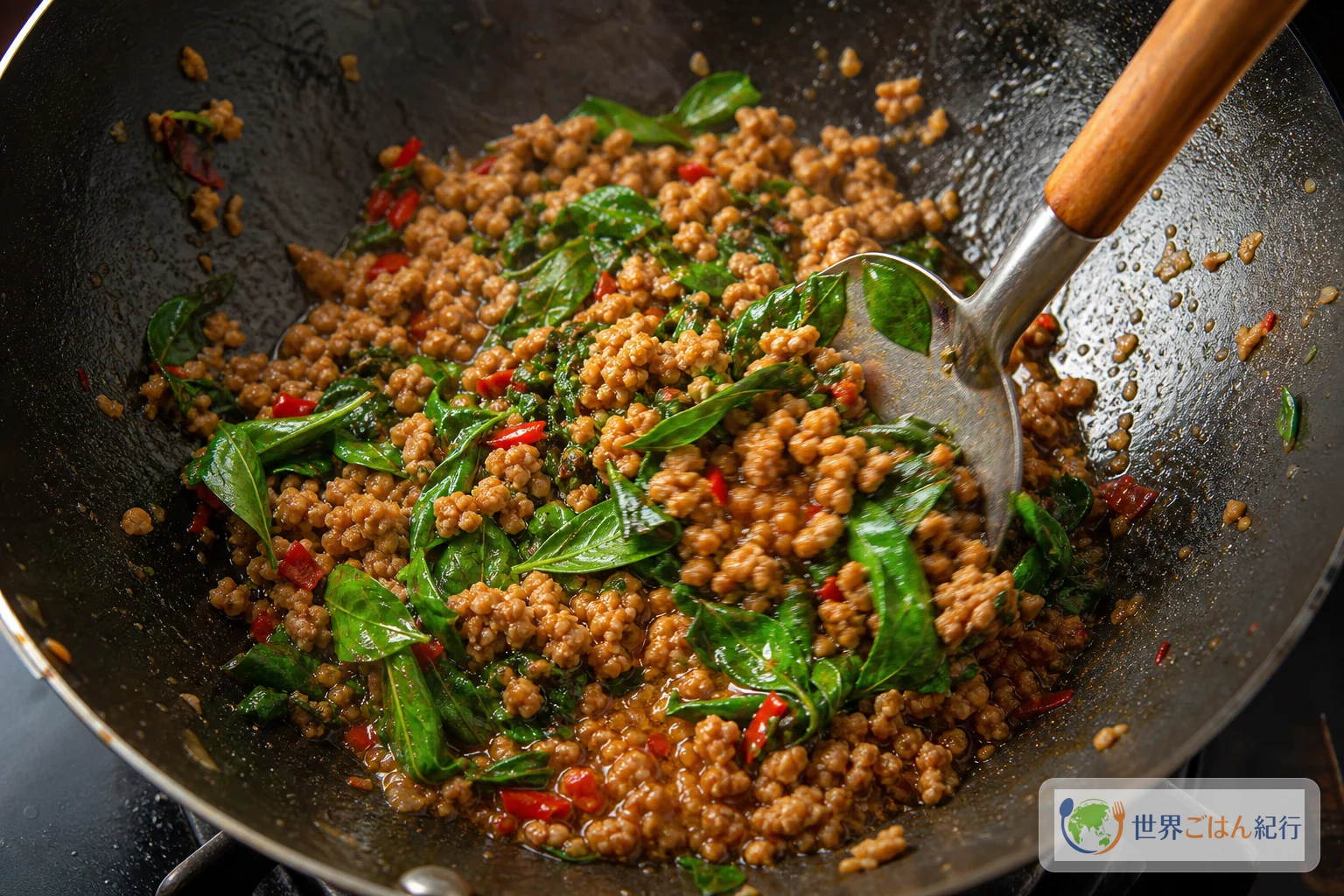
Oil sizzles finely at the edge of the pan, and crushed garlic and chiles give off one strong burst of fragrance. Spread the chicken mince and as the red disappears the juices come out. At the end add the green leaves, and when they wilt, turn off the heat. Gapao is not a dish where you build flavor by adding lots of ingredients. It is a dish about keeping the order in which the aroma is built.
The first thing that trips people up outside Thailand is buying leaves labeled "Thai basil" in the package and finding they smell sweetly of anise. The holy basil used in Thai gapao is called "Kra Prao" in materials from Thailand's Department of Agriculture, with the scientific name Ocimum tenuiflorum L. The sweet-basil type used in Thai cooking, horapha, has a different aroma. Thai Cookbook's ingredient guide also explains that the two should not be confused.
If you can get holy basil, the sharpness of the leaf and a medicinal, herbal fragrance come to the front. If you can't, you can make it with sweet basil, but it won't taste the same. Without being vague about this, you can draw a line between what to buy and what to substitute from what's at home.
On days when aroma comes first, choose holy basil and Thai-made fish sauce. On days when you want less heat, reduce the chiles but not the leaves. For the fried egg, use plenty of oil and set the edge of the white. Use chicken mince, cook it through to the center, then briefly reduce the seasoning.
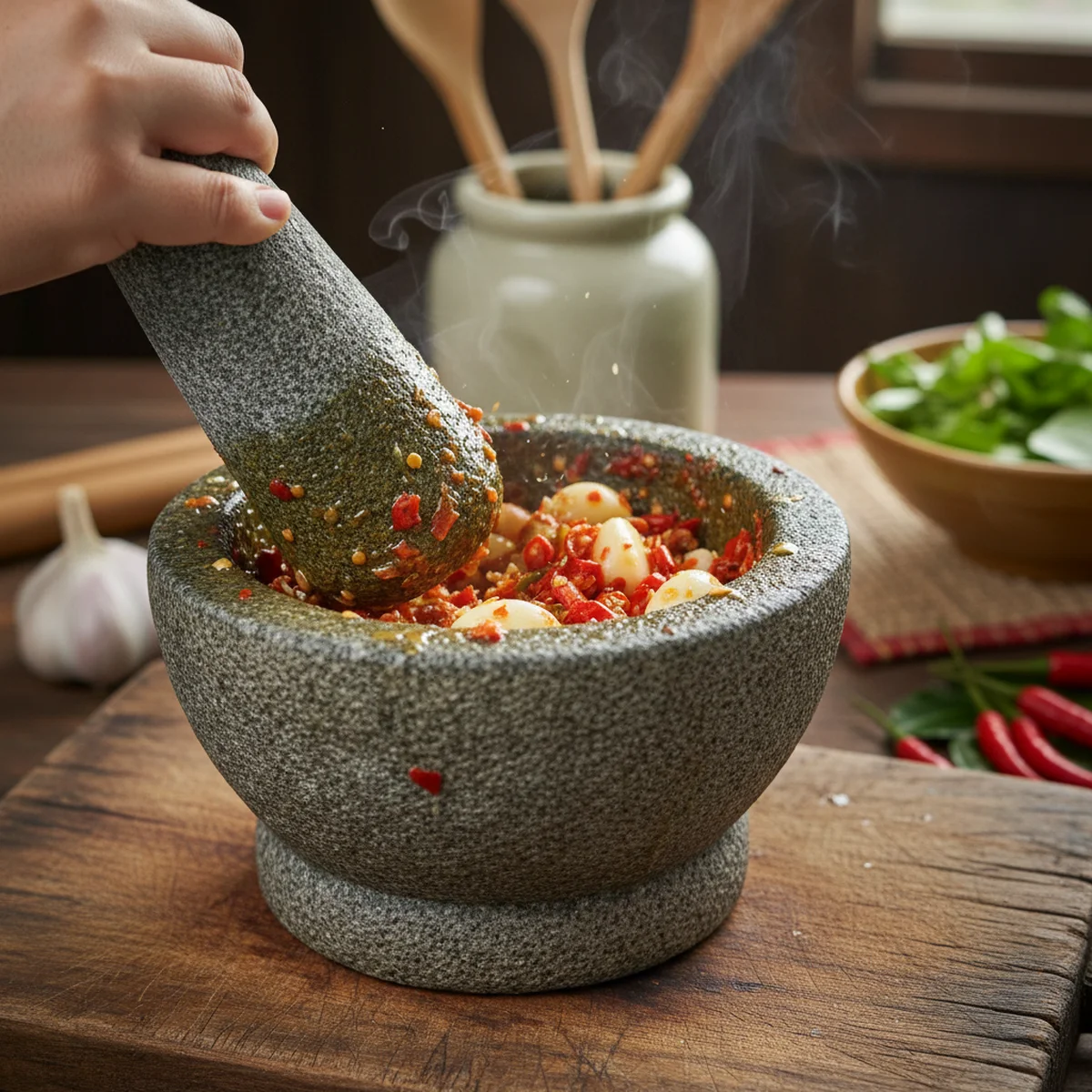
If you are interested in dishes that use coarsely crushed aromatics like som tam, the same mortar will do double duty. You don't need to add a tool just for gapao.
The origins of gapao, and what Thai tables and regional differences show
The name gapao comes from the word for holy basil. A public article from Thailand's Government Public Relations Department explains that while there are many kinds of gapao across the country, the basic form is meat, an aromatic paste and plenty of holy basil. Sugar and multiple sauces are treated not as a way to push the dish sweet but as a way to round off the edges of heat and saltiness. This order, as shown in the Government Public Relations Department's explanation, is useful when building a recipe elsewhere too.
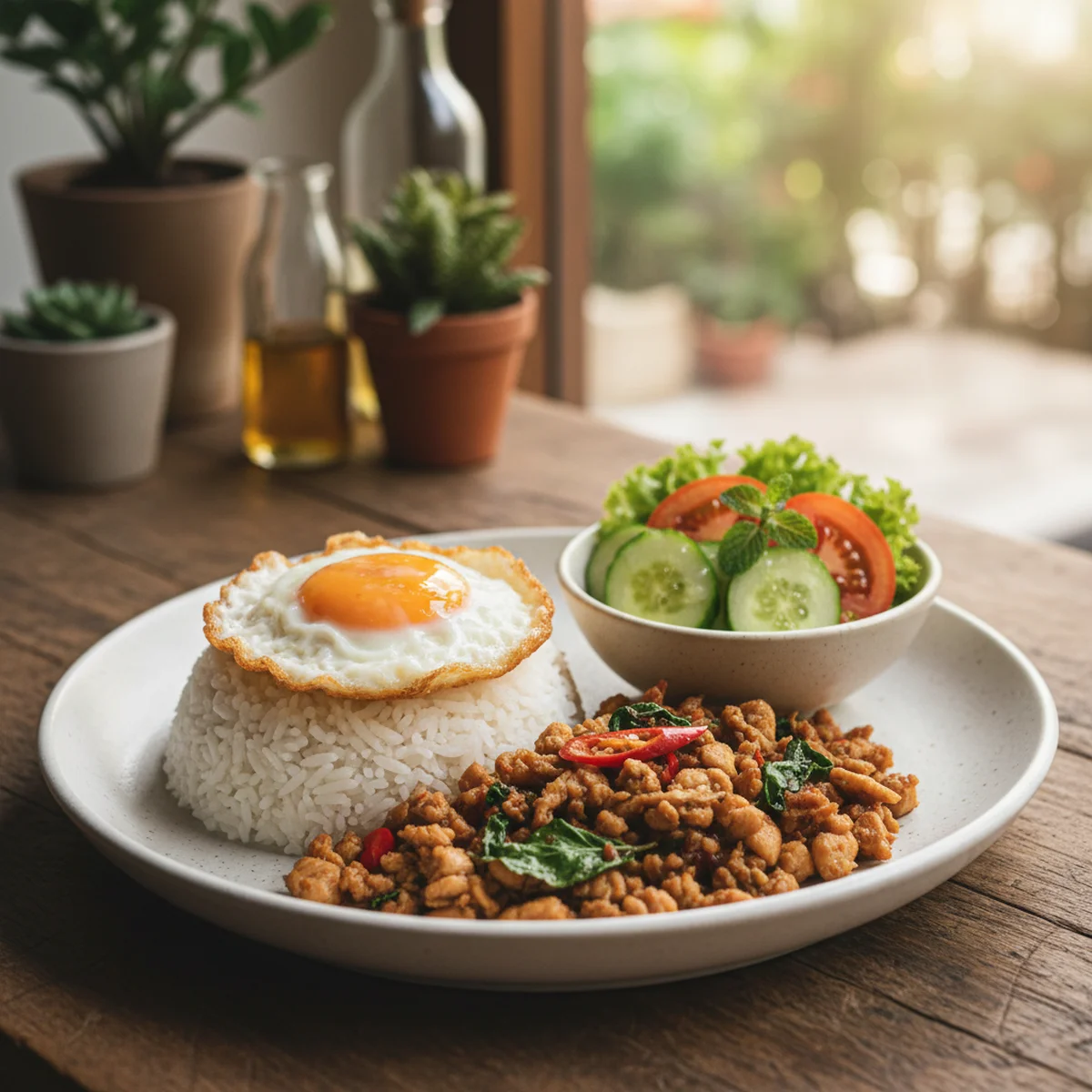
The Department's 2023 introduction to a gapao competition lists regional representatives competing, the restaurants serving the dish and the markets supplying ingredients. What you see is less a dish that reproduces one flavor nationwide than one where regions and restaurants vary the meat or seafood, the type of chile and the amount of leaf. The competition introduction also describes combining mince or seafood, garlic, chiles, holy basil and fish sauce, and serving it with rice and a fried egg.
It is also hard to pin the origin to a single year or inventor. A Thai PBS feature introduces the theory that it arose in the reign of King Rama VII and the theory that it spread through made-to-order shops during the Second World War, while also conveying, through the testimony of experts, why it's difficult to define "one traditional recipe." Some older recipes include yardlong beans and some don't, and the seasonings have changed over time. Going by Thai PBS ALTV's feature, reading it as a dish that has kept changing on local tables is closer to the reality than declaring an origin.
So adding bell pepper or beans does not instantly make it another dish. But the more vegetables you add, the more water comes out, and the aroma of the leaf and the scorched edges of the meat get thinner. This time vegetables are optional to stay close to the basic form. Cutting back on ingredients is not cutting corners, but a decision to leave room for the aroma.
Telling holy basil apart and knowing what substitutes differ
Thailand's Department of Agriculture materials say holy basil is green or red-green, is available year-round, and keeps for 5 days at 7°C and 80–85% relative humidity. At home, wash the leaves, wipe off the water, wrap them in dry paper towels and put them in a bag. Avoid the spot where cold air hits directly in the refrigerator, and use them before they blacken.
Holy basil is recognized by slightly serrated leaf tips, fine hairs on the stems and leaves, and a sharp aroma reminiscent of clove. Thai Cookbook's ingredient guide lists horapha and lemon basil as separate basils. Checking the smell, not just the name, helps you notice a mix-up at the store.
| Aroma you want | What to choose | Substitution at home |
|---|---|---|
| Sharp, medicinal aroma | Holy basil, gapao | No substitute; look for frozen or an import grocer |
| Sweet, cooling aroma | Sweet basil, horapha | Use 20 g. The dish leans toward a sweet aroma |
| Keep the aroma of fresh leaf | Fresh leaves | Dried basil won't give the same result |
| Adjust heat | Small chiles such as prik kee nu | Dried red chiles. Adjust with seeds and number |
On days without holy basil there is no need to force the same name. If you use sweet basil, increase the leaves a little to make up for aroma, and don't add sugar to push it sweeter. Shiso is not an aroma substitute but a Japanese-style alternative, so if you use it, go lighter on fish sauce and enjoy it as a different dish.
Ingredients (serves 2)
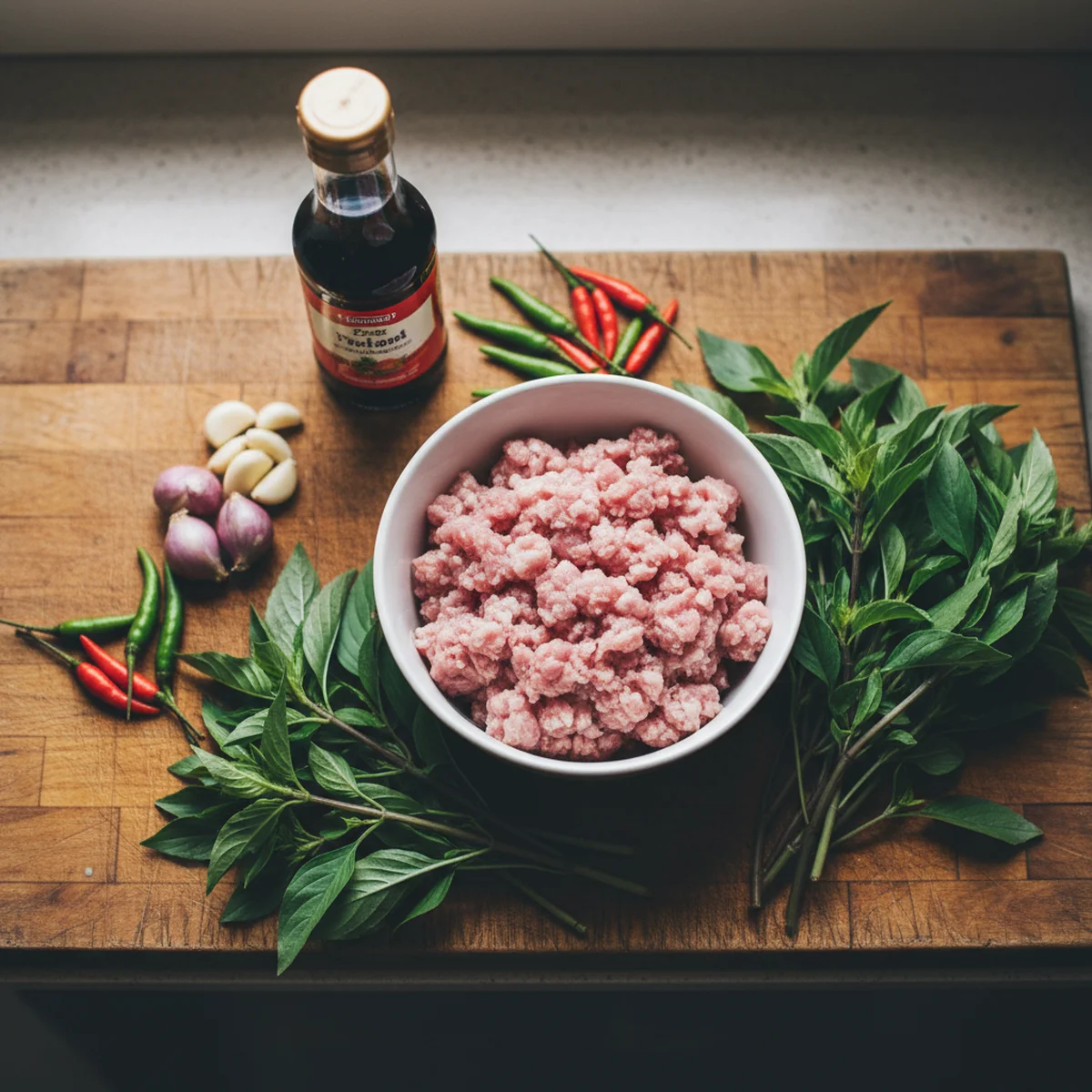
For the chicken mince, a mix of lean and fat works, not just thigh. With breast alone, moisture escapes easily, so don't overcook. Pick the holy basil leaves and remove hard stems. Since the garlic and chiles are crushed first, have a knife, a mortar or a suribachi ready.
Fish sauce is the seasoning that puts the umami of fermented fish into a short stir-fry, so the meat isn't seasoned by salt alone. 700 ml is more than one gapao will use up. If you also use it in fresh spring rolls, stir-fries and soups, there is a reason to buy a bottle. If you don't like the aroma of fish sauce and are making this only once, make it with light soy sauce and salt first and decide whether you need it afterward.
If you have allergies to fish, shrimp, soy, wheat or eggs, check the ingredient labels of the fish sauce, oyster sauce, soy sauce and eggs individually. Fish sauce and oyster sauce differ by brand in what they contain, so don't judge by the name of the product.
Choose the crushing tool by how often you use it
The Thai cooking tool krok hin is a stone vessel in which ingredients are pounded and ground with a stone pestle. A Japanese retailer's explanation of the product (Laugh Asia) also describes using it to make herb and spice pastes by pounding, crushing and grinding. A granite mortar and pestle set works as a stand-in for coarsely crushing garlic and chiles in a home kitchen.
You can also make it by simply chopping finely with a knife. If you make gapao, som tam and curry aromatics nearly every month, a heavy mortar doesn't slide around the bowl and leaves coarse bits easily. If you have no storage space and are making this just once, skip it and press with the flat of a knife on the cutting board, which is more sensible. Check that the set includes both bowl and pestle, that it is natural granite, and its size and weight.
Fry the khai dao first
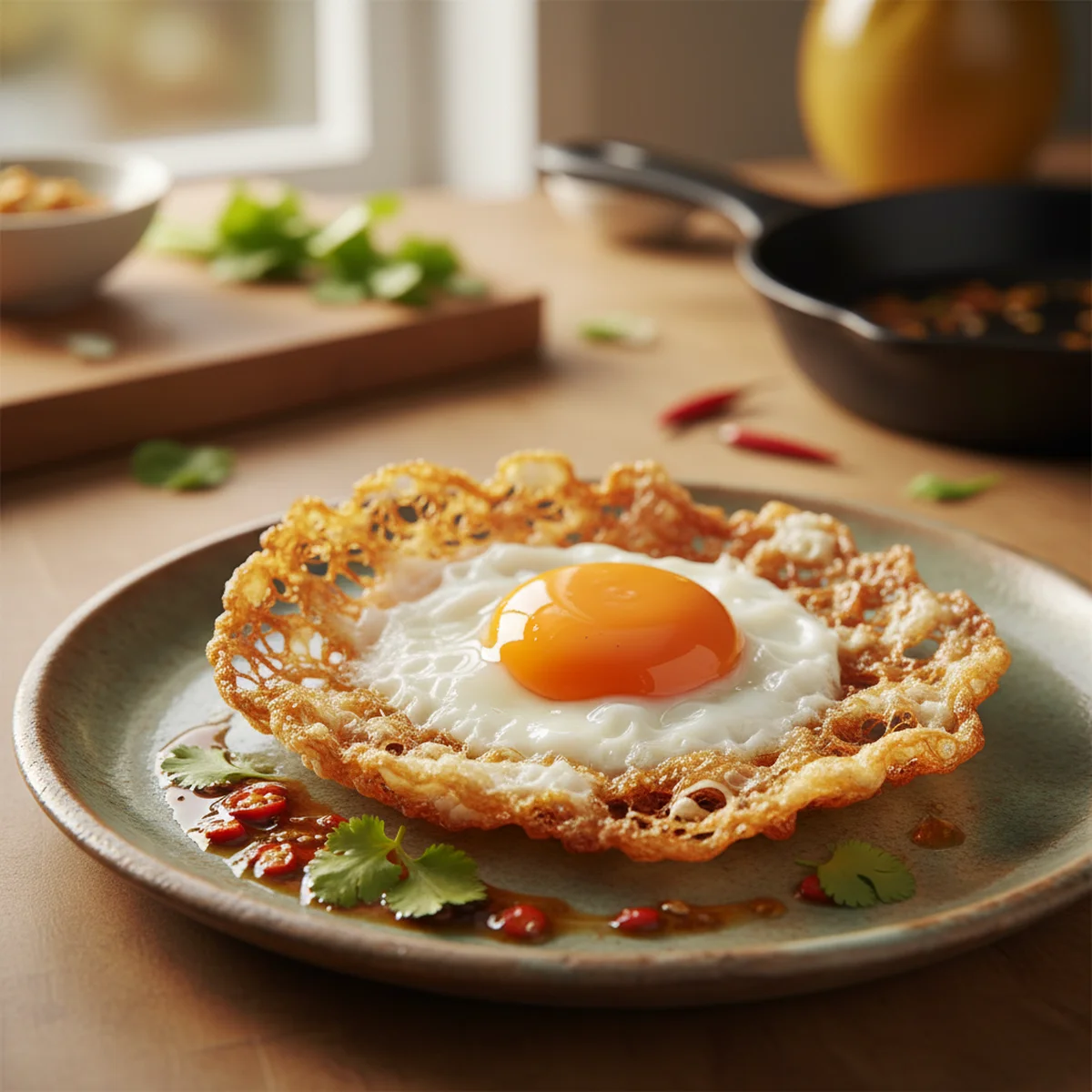
Khai dao is a Thai-style fried egg. With plenty of oil, the edge of the white is fried until it bubbles up like lace while the center of the white stays tender. Since you scoop the meat juices and yolk together, it is less disruptive to cook it first and let it wait at the edge of the plate than to fry it after waiting for the meat to finish.
Put 4 tbsp of oil for the egg in a small skillet and heat over medium to medium-high. The cue is when the surface of the oil shimmers and the moment you drop in the egg, the white bubbles up widely around the edge. Lower the egg in gently and cook 45 seconds to 1 minute, spooning oil over the edge of the white. Take it out when the edge is golden and the center of the white has set. If the oil stays quiet it's too cool; if it smokes, lower the heat.
Whether to keep the yolk runny or set it for eating right away is a matter of texture. But for lunch boxes, or if someone who needs thorough cooking is eating it, set the yolk and white. US food safety information also advises cooking eggs until the yolk and white are firm. To prevent splatter, wipe the moisture off the egg and keep water away from the pan.
Check the result and fix it
| What happened | What you see on the spot | How to fix it |
|---|---|---|
| The meat is watery | Liquid collects at the bottom and the meat is stewing | Without the basil, reduce the moisture over high heat 30 seconds at a time |
| Too salty | The saltiness comes first when you eat the meat alone | Add more unsalted rice. Stop adding soy sauce and fish sauce |
| Garlic is bitter | Cut faces past brown to black | If very bitter, make the aromatics again. Next time add the meat right away |
| Leaves are black | The leaves have shrunk and the aroma is weak | Next time add them after turning off the heat and move to the plate in 5 seconds |
| Too hot | The sting of chile lingers on the tongue | Combine the egg and rice first. Next time reduce seeds and number |
What you can change, and the order to keep
What you can change is the meat, the number of chiles and the type of rice. As the Government Public Relations Department explains, gapao has room to switch between meat and seafood. Swapping chicken for pork increases the sweetness of fat, and shrimp or squid gives a different texture that shouldn't be overcooked. Seafood releases water easily, so don't just double the meat recipe: once it's cooked, coat it in the seasoning and add the leaves right away.
What to keep is: let the garlic and chiles release aroma first, reduce the seasoning before adding the leaves, and stop the leaves at 5 seconds. Even when adding vegetables, keeping yardlong beans or peppers to about 50 g keeps the surface of the meat and the aroma of the basil from being buried. It works with short-grain rice too. The difference in flavor comes less from relying on the aroma of rice than from driving off the meat's moisture and not scorching the last leaves.
The first things worth buying are the hard-to-find holy basil and the fish sauce that decides the saltiness and umami. A mortar is for people who make other dishes with crushed aromatics, and a knife can stand in. You don't need all three at once.
Storage and reheating
The cooked topping is best eaten the same day you add the holy basil, whose aroma fades easily. If you keep leftovers, set the basil aside, transfer the topping to a shallow container, cool it and refrigerate. FoodSafety.gov's cold storage chart gives 3–4 days at 4°C or below for cooked meat and poultry. This varies with your refrigerator temperature, hygiene when serving and container cleanliness, so if there is any change in smell or appearance, don't eat it regardless of the number of days.
To reheat, heat it in a skillet until hot all the way through and add fresh basil at the end after turning off the heat. Refrigerating leftover rice together with the topping spreads moisture, so keep them separate if you can. Don't make fried eggs ahead; fry them on the day you eat. For a lunch box, cool the topping and rice well before packing, and cook the egg through to the yolk.
Frequently asked questions
Q. Is it not gapao without holy basil?
Holy basil is what the dish name is built on, so you can't get exactly the same aroma. With 20 g of sweet basil, it is still tasty as a fried rice dish with a sweet aroma. You could also learn the steps with a substitute the first time, then try frozen holy basil next.
Q. Can I make it without fish sauce?
You can make it with 1 tbsp light soy sauce and a little salt. The fermented aroma of fish sauce is reduced, but don't change the order of garlic, chiles and basil. Because saltiness varies by brand, you can also avoid adding all the seasoning at once and taste at the end to add more.
Q. Is there a way to make it not spicy?
Start with 1 chile and remove the seeds and pith. Removing the heat entirely also reduces the aroma, so don't cut back on the holy basil and garlic. Taking the heat with the egg and rice lets you adjust how strong the spiciness is within one plate.
Q. Can I replace the chicken with pork or seafood?
Yes. Pork mince releases more fat than chicken, so if there is a lot of oil after cooking, remove a little. Seafood cooks faster than meat, so add it after stir-frying the garlic and chiles, and once it changes color, coat it in the seasoning and add the leaves.
Q. Do I really need 4 tbsp of oil for the fried egg?
It's the amount needed to bubble up the edge of the white, but the dish still works with less oil and an ordinary fried egg. On days you want the crispy edge, spoon hot oil over the white after the egg goes in. If the oil smokes, lower the heat, and wipe the moisture off the egg well before adding it.
Q. Can I make it ahead and put it in a lunch box?
The topping can be made ahead, but the aroma stays if you add the holy basil just before eating. For a lunch box, cook the egg through to the yolk and cool the topping and rice before packing. The refrigerator guideline is 3–4 days for cooked chicken, but a lunch box adds carrying time and temperature, so eat it early.
Sources
- Thailand Government Public Relations Department, “PAD KRAPHRAO” (published 23 September 2023, accessed 30 July 2026 JST)
- Thailand Government Public Relations Department, “Kaphrao Thailand Grand Prix 2023” (published 18 August 2023, accessed 30 July 2026 JST)
- Thai PBS ALTV, “ผัดกะเพรา” (accessed 30 July 2026 JST; checked the theories of origin and regional differences in older recipes)
- Department of Agriculture, Thailand, “Holy Basil” (posted 15 May 2566 B.E.; accessed 30 July 2026 JST)
- Eating Thai Food, “Authentic Thai Basil Chicken Recipe” (accessed 30 July 2026 JST; checked the steps and fried egg)
- Thai Cookbook, “Holy Basil” (accessed 30 July 2026 JST; checked how to tell basils apart)
- Laugh Asia, “Krok Hin” (accessed 30 July 2026 JST; checked how the tool is used and its specifications)
- FoodSafety.gov, “Safe Minimum Internal Temperatures” (accessed 30 July 2026 JST; checked cooking standards for chicken mince and eggs)
- FoodSafety.gov, “Cold Food Storage Chart” (accessed 30 July 2026 JST; checked refrigerator guidance for cooked meat)



