Pljeskavica: Serbia's Broad, Flat Grilled Patty
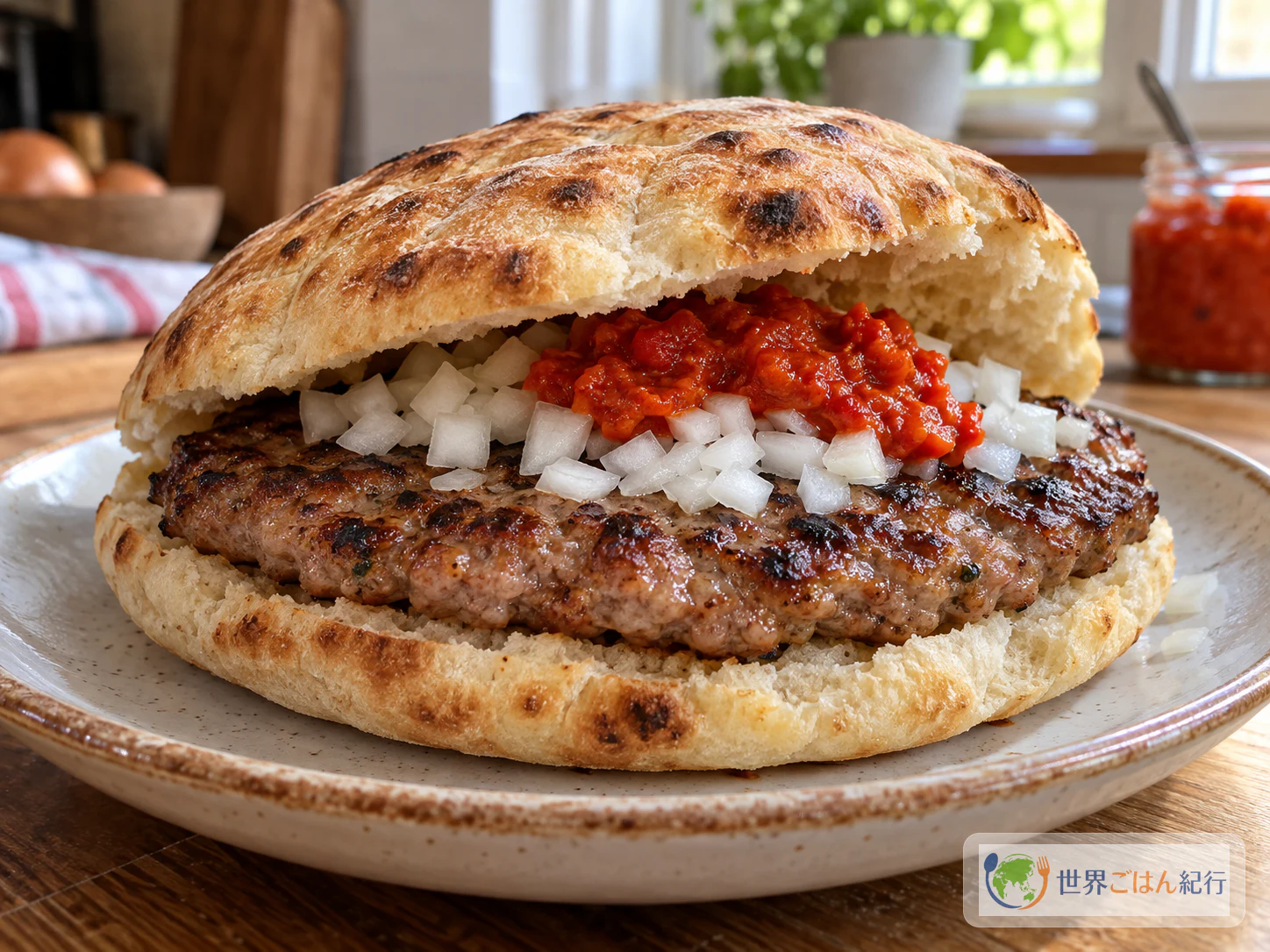
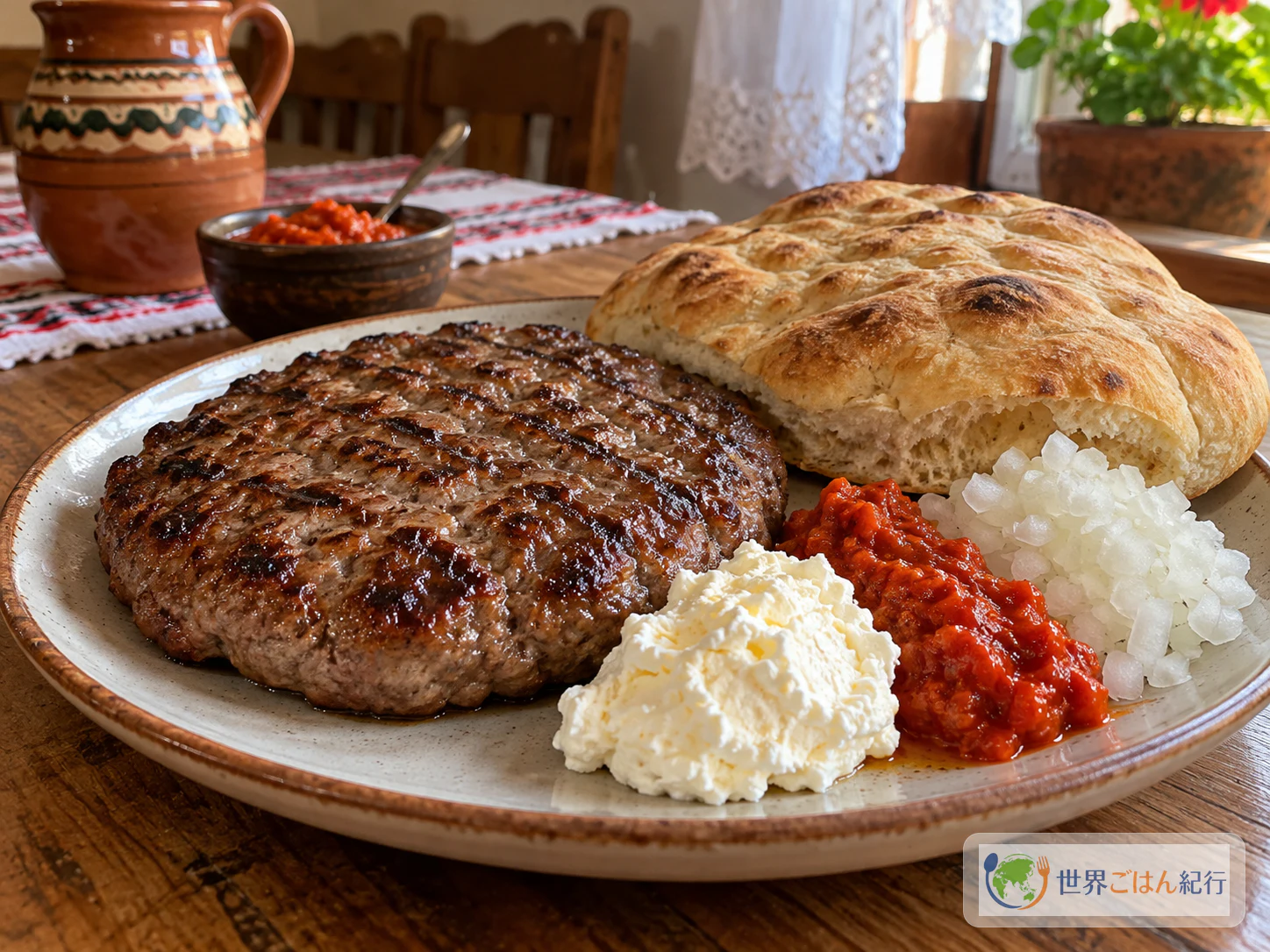
A wide, flat disc of seasoned beef and pork with a well-browned surface, cooked through to the center, and served with sharp raw onion. Everything else on the plate is optional.
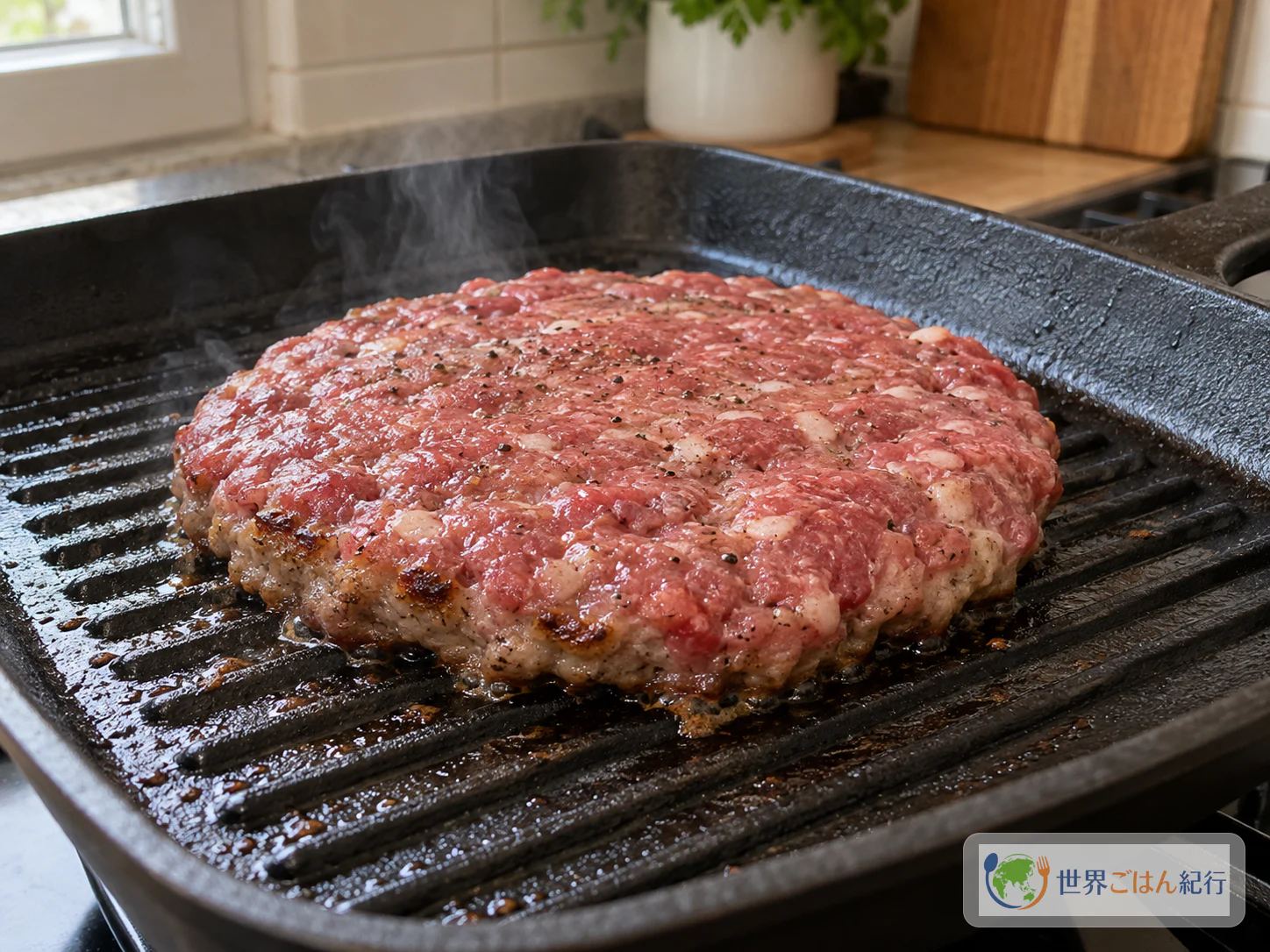
A wide round of ground meat goes onto a hot grill and starts to hiss. When the patty comes off it is folded into warm flatbread or set beside chopped raw onion and a spoonful of red pepper relish. That is the shape of pljeskavica (Serbian: пљескавица), the flat grilled meat patty that Serbia's national tourism organisation introduces in English as a "traditional Serbian burger."
In the tourism organisation's guide to eating in Serbia, pljeskavica appears in the context of the kafana, the traditional tavern, among the grilled mains made to local recipes, alongside a seasonal salad or pickles and ajvar. The same organisation's Serbian-language food page describes grilled dishes as something eaten on the street, at family lunches and at celebrations, so this is not only restaurant food. For more dishes from the same country, see our Serbia page.
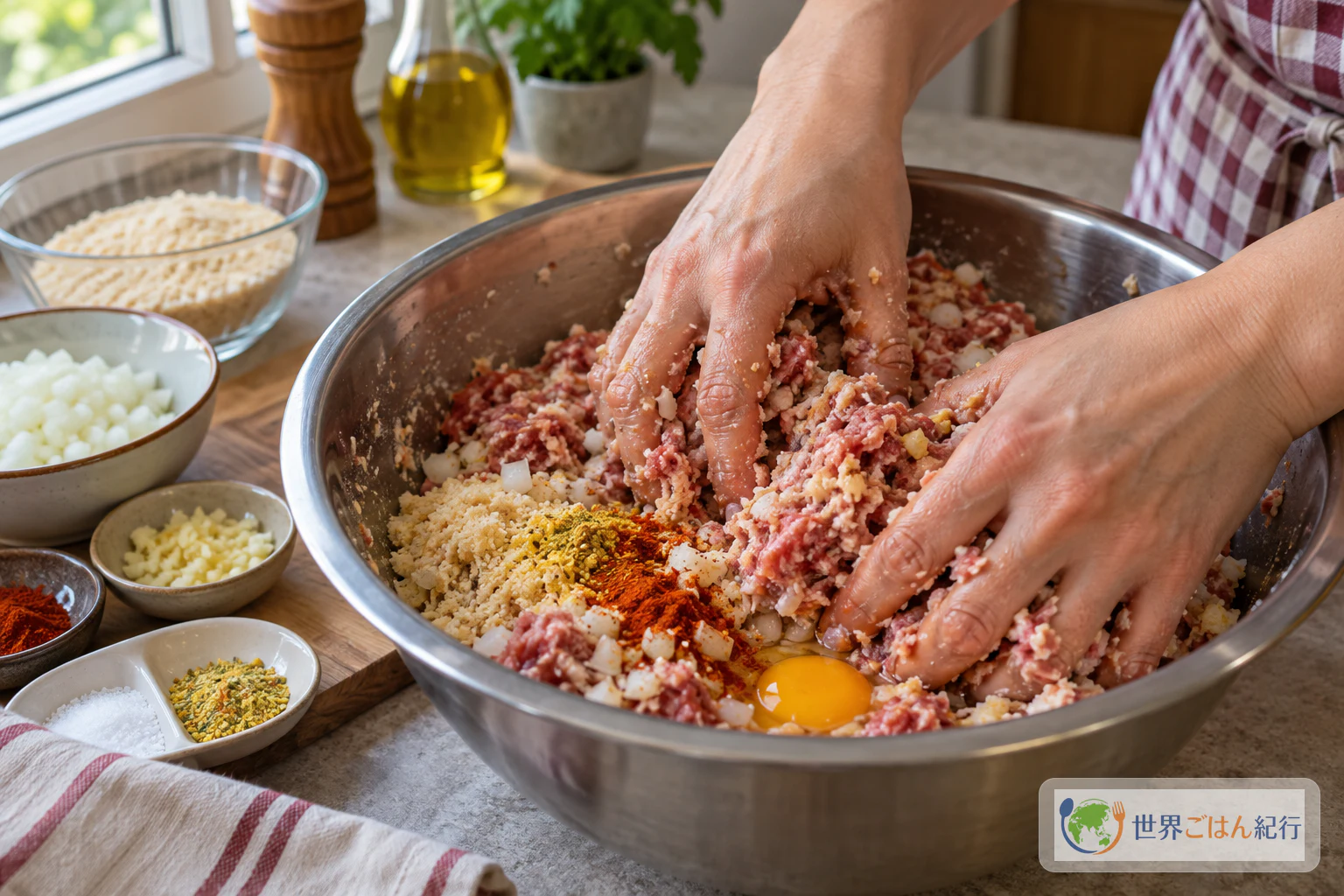
There is no single standard mix for pljeskavica. The recipe here follows one documented home-style version from a Serbian family recipe blog, made with ground beef and pork, onion, garlic, breadcrumbs, egg, salt, Vegeta and sweet paprika. It is one household's way, not the definitive form of the dish. This recipe has not been kitchen-tested by Sekai Gohan, and no yield or number of patties is given, so none is stated here.
In Serbian Latin script it is written pljeskavica, and in Cyrillic пљескавица. Searching with either spelling helps when looking for Serbian-language recipes.
Ingredients
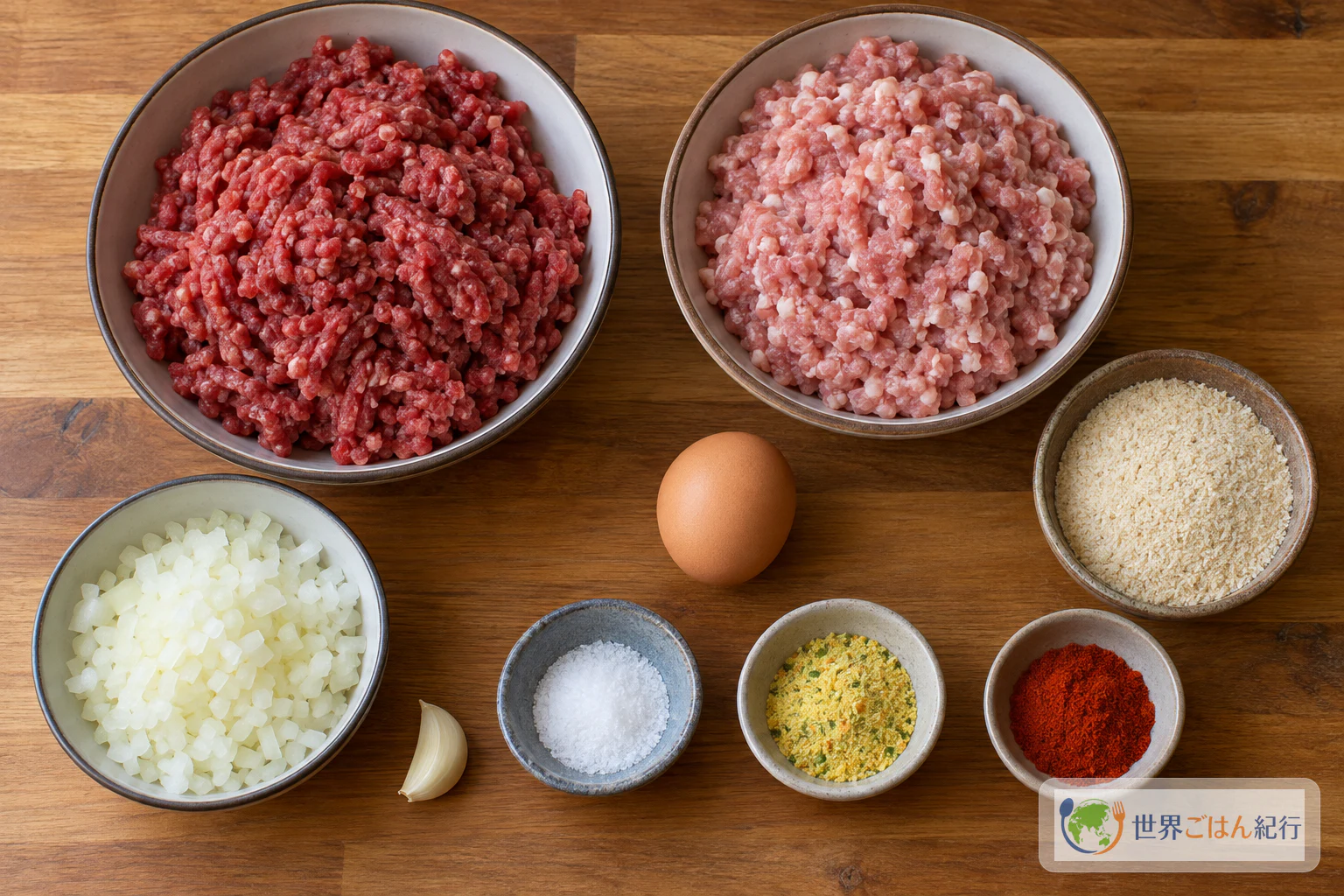
Allergens: this mixture contains wheat (breadcrumbs or cracker meal) and egg. Vegeta is a commercial product, so check the label of the one you buy.
Equipment
- A large mixing bowl
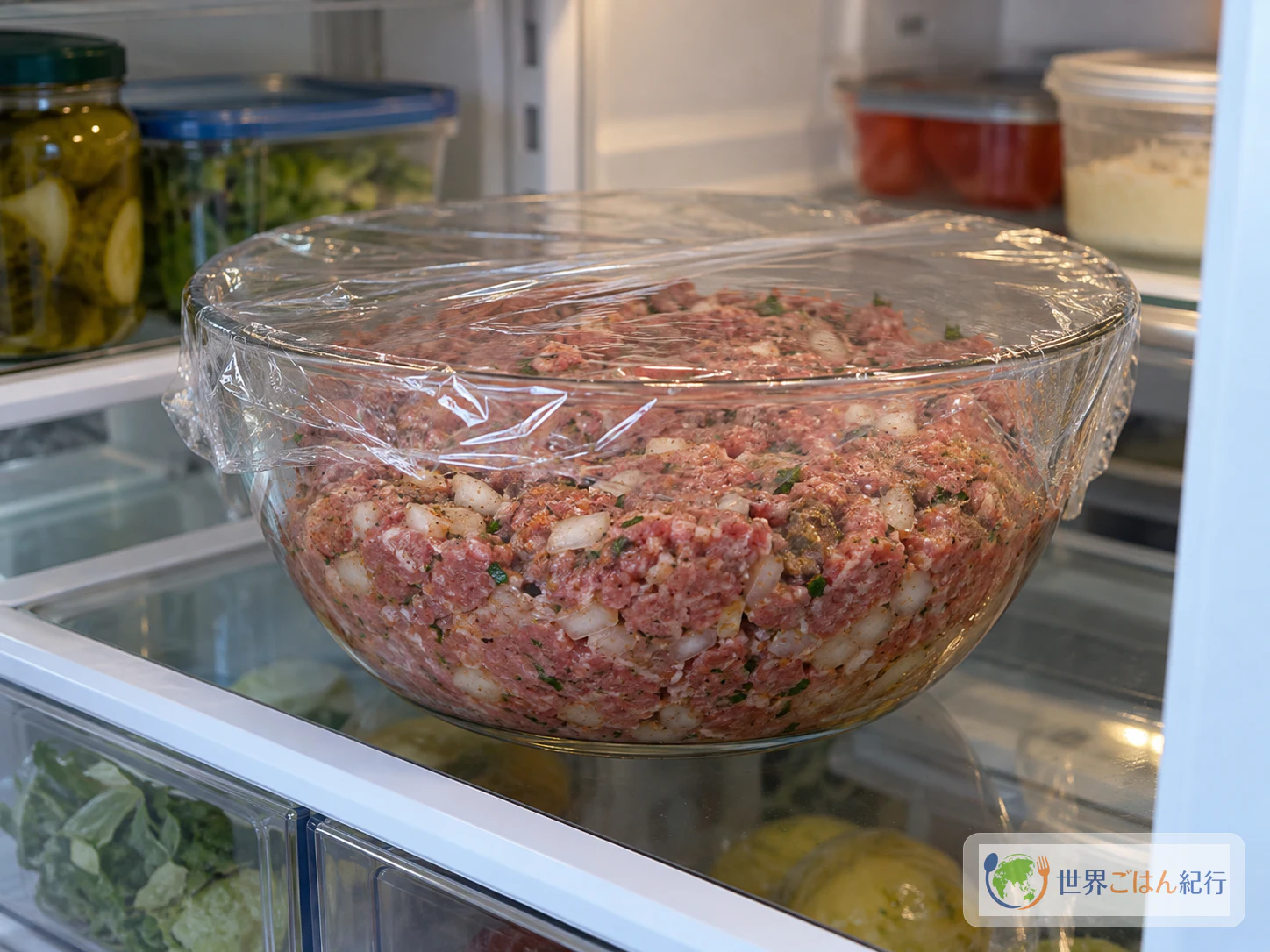
- A plate and plastic wrap for chilling
- A charcoal grill, an indoor electric grill, or a heavy skillet or grill pan
- A flat metal turner
- An instant-read thermometer
- A separate clean plate and tongs for the cooked patties
Choosing and Swapping Ingredients
Meat. Ordinary ground beef works for the chuck, and ordinary ground pork for the pork. If you change the beef-to-pork balance or swap in a different meat, treat it as a different mix rather than the same recipe.
Vegeta. You can leave out this seasoning blend if you can't find it, but the patty will taste less salty and less savory, and it won't be the same flavor. Don't assume a local stock powder is an exact match; if you adjust the salt, look at the salt content on the Vegeta label first.
Paprika. Use ordinary sweet paprika. Don't quietly switch to smoked paprika; the aroma becomes a different one.
Egg and breadcrumbs. Use both to bind the meat mixture.
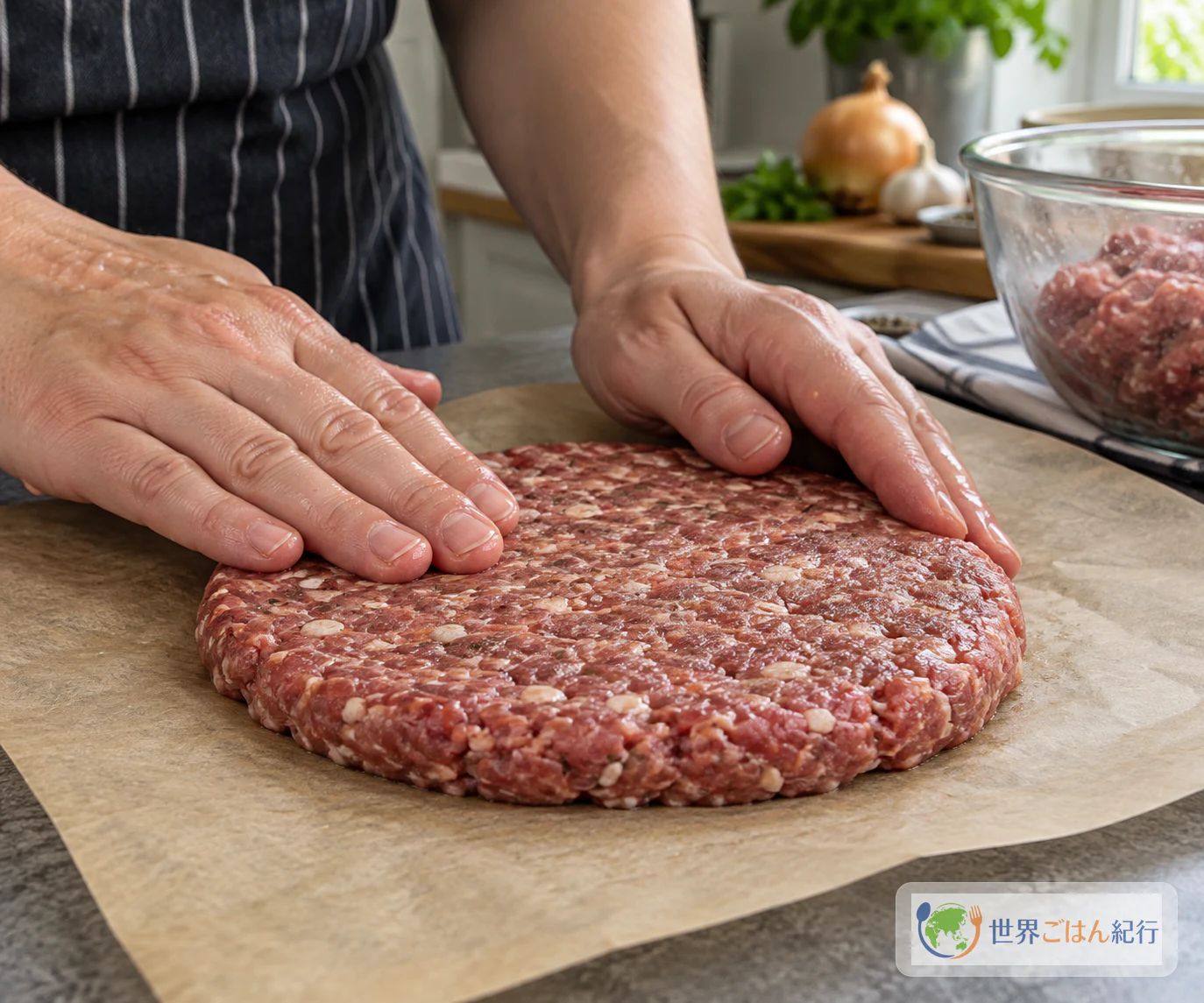
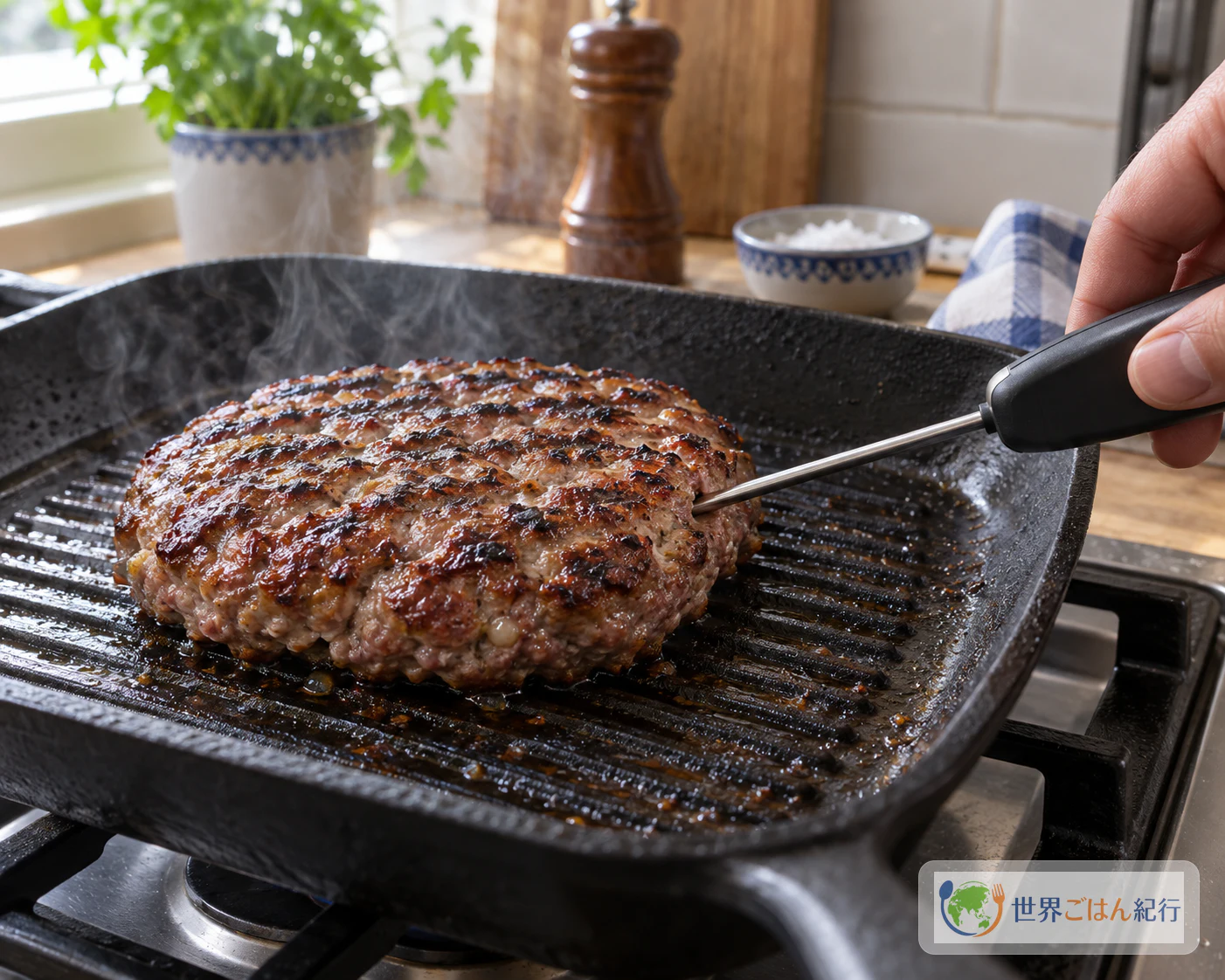
Method: Mix, Chill, Shape and Grill to the Center
Ground meat must be cooked until the center reaches 75°C and stays there for at least 1 minute. Grilling times and a browned surface are only a guide; check the center with a thermometer. Keep raw meat cold, and keep the hands, plates and tools that touched raw meat away from cooked meat and from the raw onion you serve.
When Things Go Wrong
| Problem | Likely cause | What to do |
|---|---|---|
| The patties crumble or crack | The mixture wasn't combined evenly, the onion was chopped too coarsely or was watery, or the chilling was cut short | Don't rescue it by adding more ingredients. Next time chop the onion finer, mix until even, chill for the full hour and shape with even thickness |
| The surface burns before the center is done | The patty is thick in places and the heat is very high | Shape with an even thickness. Keep cooking until the center reads 75°C for at least 1 minute, lowering the heat if the outside is getting too dark |
| Dry or tough | Cooked hard over high heat for too long | Use the thermometer to decide when to stop instead of adding extra time "just in case" |
| Undercooked in the middle | Times are only a guide and grills vary | Return to the heat and recheck the center. Don't judge by color or juices alone |
Variations Worth Trying
Each of these changes the dish away from the base recipe, so treat them as separate versions.
- Without Vegeta. Easier to shop for, but less savory and less salty. Check the salt content on the Vegeta label before adjusting the salt.
- A different beef-to-pork balance. Changing the beef-to-pork balance changes the fat, flavor and cooked texture. This becomes a different mix.
- Hot paprika instead of sweet. Adds heat and moves away from the sweet or Hungarian paprika of the base recipe. Check how hot your paprika is first. Serbia's tourism organisation also mentions hot versions of pljeskavica.
- Cracker meal instead of breadcrumbs. A swap this recipe allows. The saltiness and texture of crackers differ, so adjust the salt.
- Charcoal versus a grill pan or skillet. Indoors you still get a browned, savory surface, but the smoky aroma of charcoal won't be there.
- In lepinja with kajmak and ajvar. Serve it folded into warm flatbread, with kajmak and roasted-pepper ajvar on the side. Outside Serbia, look for a soft flatbread and a roasted red pepper relish, but don't assume a look-alike product is the same thing.
Pljeskavica on the Serbian Table
Serbia's national tourism organisation presents pljeskavica in its English food guide as a traditional Serbian burger and places it among the grilled mains of the kafana meal, served with seasonal salad or pickles and ajvar. On its Serbian-language food page, it describes grilled dishes as part of street food, family lunches and celebrations, and sums up pljeskavica as seasoned beef that looks like a burger, noting hot versions and a "gourmet" version with bacon.
Flat, not cylindrical. The easiest way to tell pljeskavica from ćevapi (ćevapčići) is shape: pljeskavica is a wide, flat patty, while ćevapi are small, elongated rolls of ground meat. The tourism organisation also points to this difference in form. The two are separate dishes, and this article does not borrow from ćevapi mixes.
No single recipe. Serbian sources describe quite different mixes, and they should not be blended into one ingredient list:
| Version | Meat | What sets it apart |
|---|---|---|
| Tourism organisation overview | Beef with seasoning | A brief description; mentions hot and bacon "gourmet" versions |
| 24Kitchen Serbia (Nenad Veljković) | 500g mixed minced meat | Salt, pepper, baking soda and 100ml sparkling mineral water; rested 24 hours, then onion, hot pepper and crushed paprika added; shaped from 150g portions into patties about 10cm wide and 1cm thick |
| A Serbian Kitchen family recipe (used here) | Ground chuck and ground pork | Egg, breadcrumbs, onion, garlic, salt, Vegeta and sweet paprika; chilled 1 hour; shaped about 6 inches wide |
The 24Kitchen version leaves out the amounts for the baking soda and spices, so it is shown here only for comparison. The recipe in this article comes from a personal family blog. It documents one home-style variant; it is not an official Serbian standard, and it does not give servings, a meat fat ratio or a safe internal temperature. The 75°C-for-1-minute check comes from Japan's Ministry of Health, Labour and Welfare guidance for home cooking. The origin and early history of the dish could not be confirmed from these sources, so they are not covered here.
Frequently Asked Questions
How is pljeskavica different from a hamburger patty?
It is a broad, flat grilled patty from Serbia, served with raw onion and, if you like, lepinja, kajmak and ajvar. This home version does use egg and breadcrumbs like many hamburger patties, but the difference lies in the wide, flat shape, the grilling and the way it is eaten.
How is it different from ćevapi?
Pljeskavica is a flat patty; ćevapi are small, elongated rolls. They are separate dishes with their own mixes.
Can I make it without a charcoal grill?
Yes. An indoor electric grill, a grill pan or a heavy skillet all work, cooked as in step 5. You will get a browned surface but not the smoky aroma of charcoal.
Do I need Vegeta?
This family recipe uses it, but you can leave it out. The flavor will be less savory and less salty, so it won't taste the same. Check the salt content on the label if you plan to adjust salt to make up for it.
How do I know it is cooked through?
Insert a thermometer from the side into the center of the thickest patty and confirm it reaches 75°C and holds for at least 1 minute. Cooking times and surface color alone are not enough.
What are kajmak and ajvar?
They are optional accompaniments that appear alongside grilled meats on the Serbian table; ajvar is a roasted red pepper relish, and kajmak is a dairy cream spread. Neither is required for the patty itself.
Sources
- National Tourism Organisation of Serbia, "Experience Serbia: Food." Pljeskavica as a traditional Serbian burger, and its place among grilled mains in the kafana meal with seasonal salad or pickles and ajvar. https://www.serbia.travel/wp-content/uploads/2025/01/Experience-Serbia.pdf
- Turistička organizacija Srbije (National Tourism Organisation of Serbia), "Gastronomija - Srbija." Grilled dishes on the street, at family lunches and at celebrations; pljeskavica as seasoned beef, burger-like in appearance, with hot and bacon "gourmet" versions. https://www.serbia.travel/sr/dozivi-srbiju/hrana-i-pice/hrana
- 24Kitchen Serbia, "Pljeskavica," recipe credited to Nenad Veljković. A separate version with mixed minced meat, sparkling water, baking soda and a 24-hour rest, used for comparison only. https://www.24kitchen.rs/recipe/pljeskavica
- A Serbian Kitchen, "Dad's Ćevapčići & Pljeskavica." The home-style beef-and-pork recipe used in this article: ingredients, 1-hour chill, shaping and grilling times. A personal family-recipe blog, not an official standard. https://cookingserbian.blogspot.com/2017/04/dads-cevapcici-pljeskavica.html
- Ministry of Health, Labour and Welfare (Japan), "家庭でできる食中毒予防の6つのポイント" (Six points for preventing food poisoning at home). Heating to a center temperature of 75°C for at least 1 minute, separating raw meat from ready-to-eat food, and quick refrigeration. https://www.mhlw.go.jp/stf/seisakunitsuite/bunya/kenkou_iryou/shokuhin/syokuchu/01_00006.html