Chorek: Two Plain Rounds, Pricked With a Fork and Brushed With Water
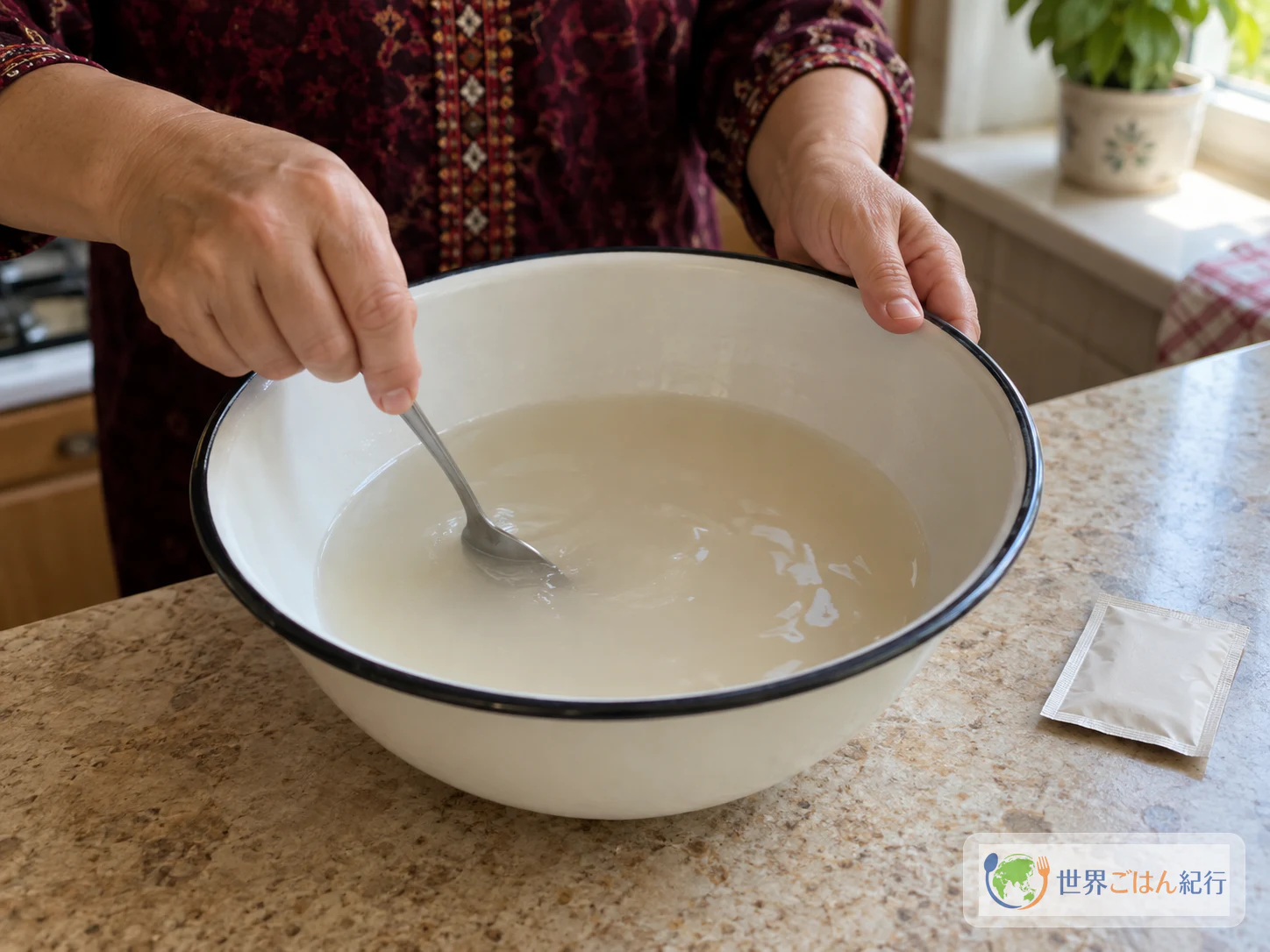
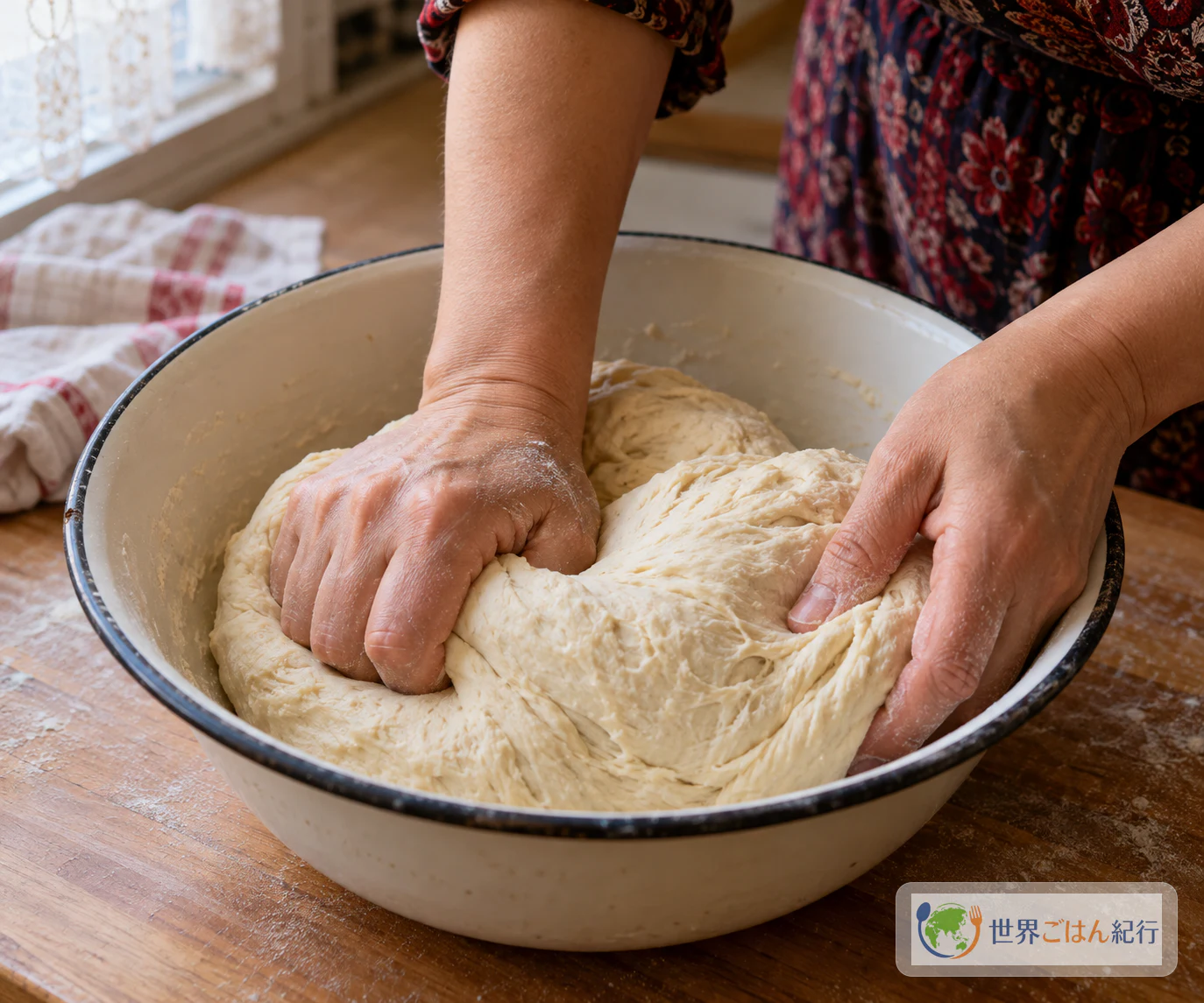
Use four ingredients: flour, salt, yeast and warm water. Press the dough by hand into two wide, flat rounds, prick them all over with a fork, brush them with water and bake them hot.
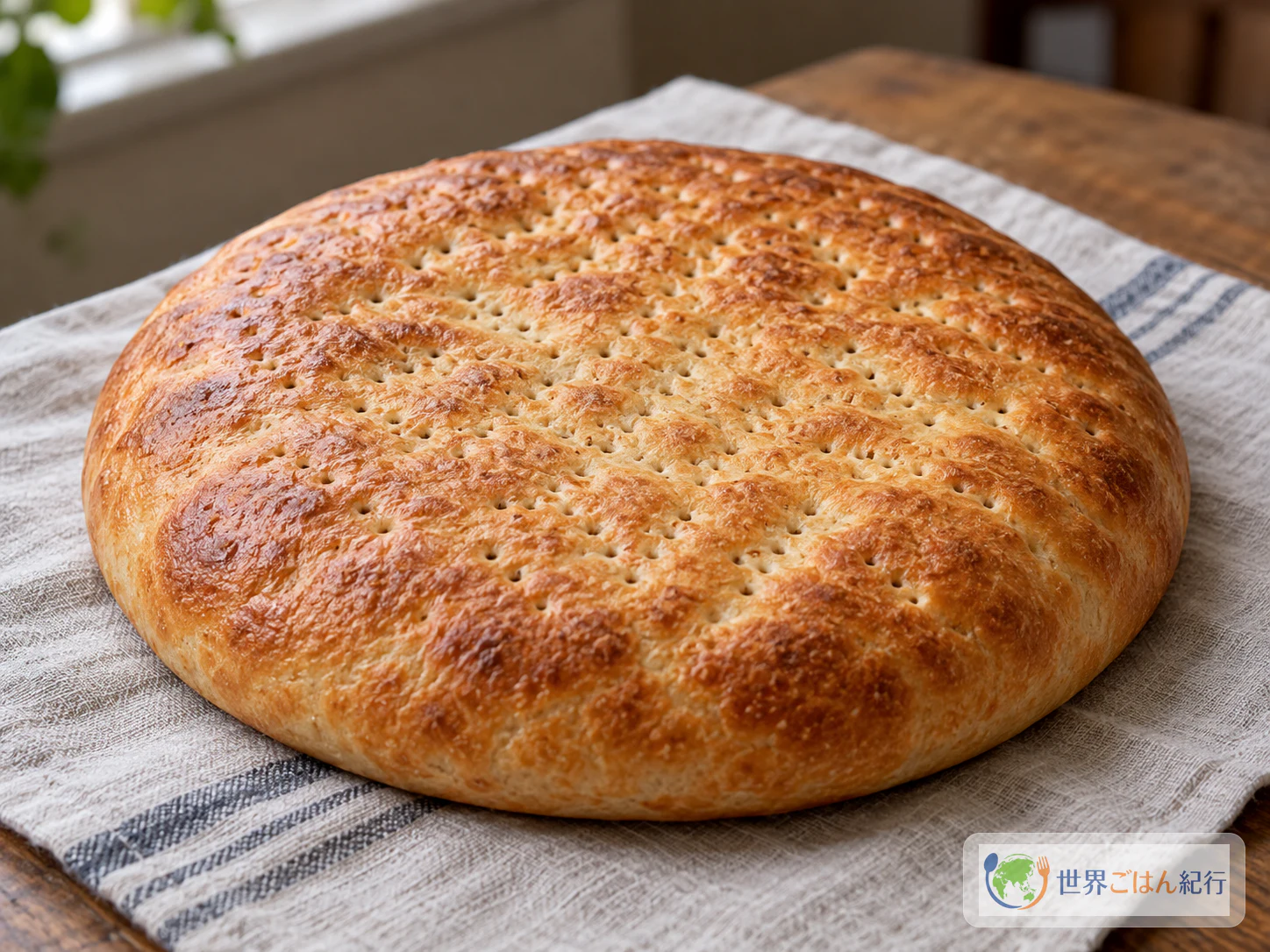
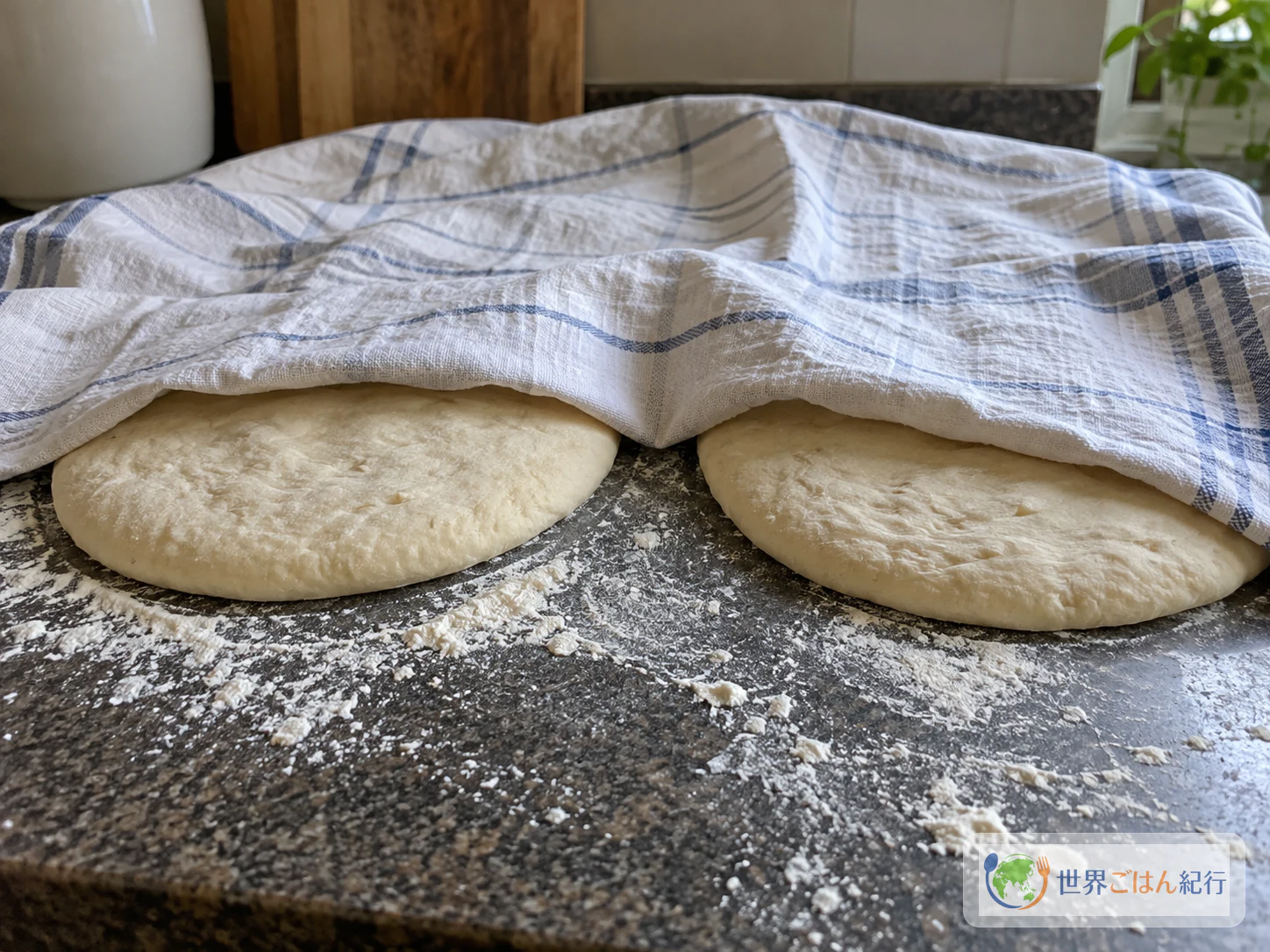
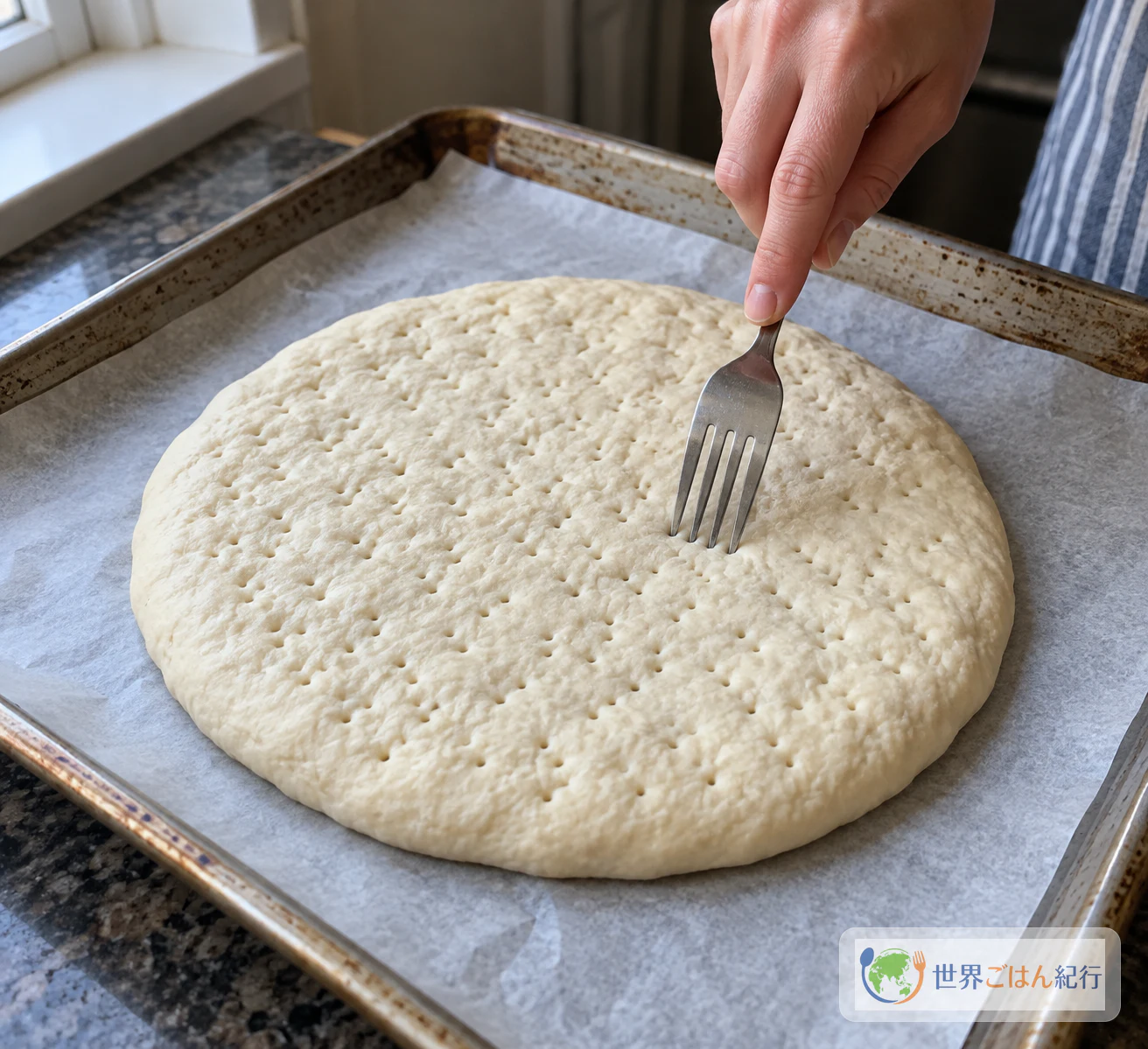
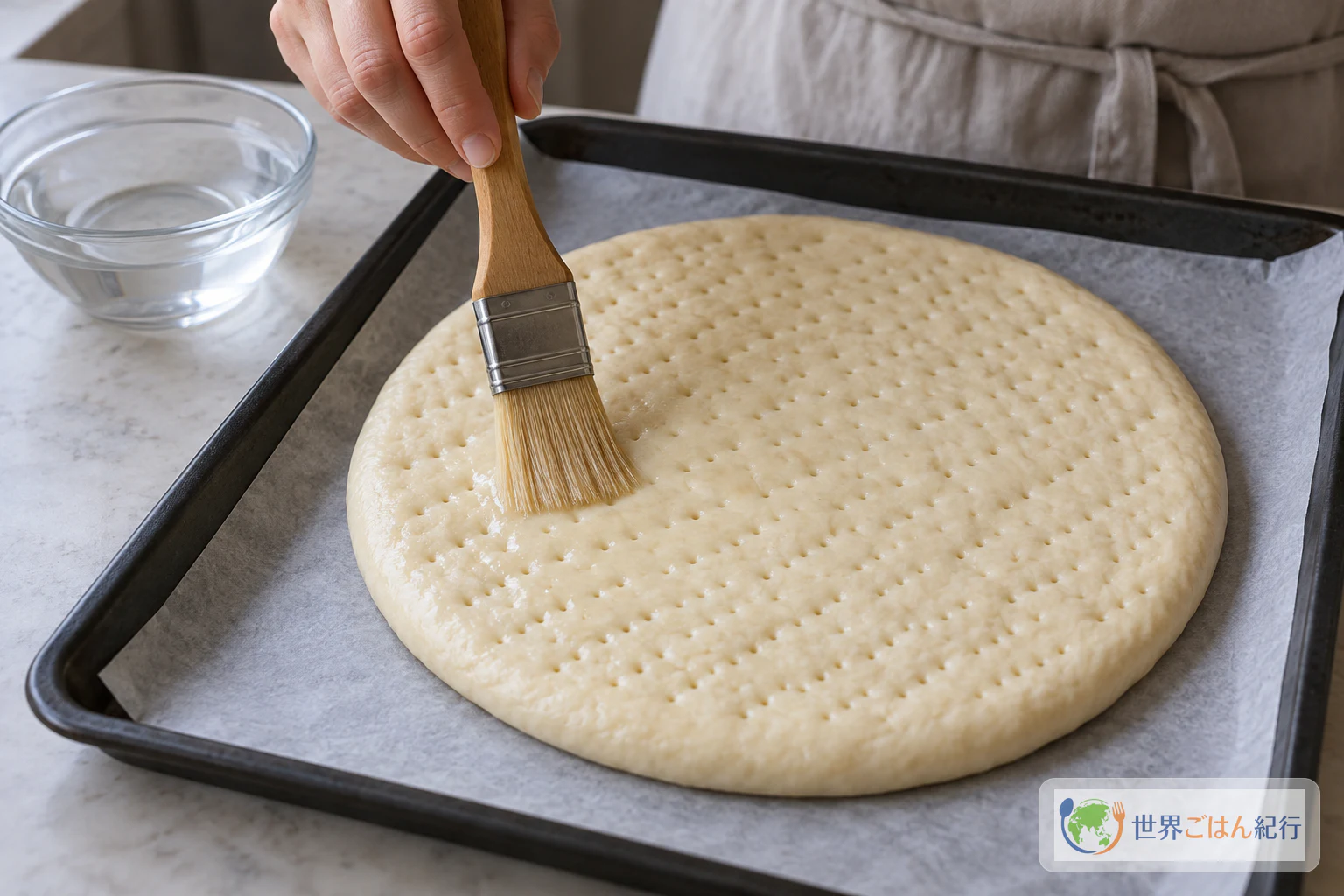
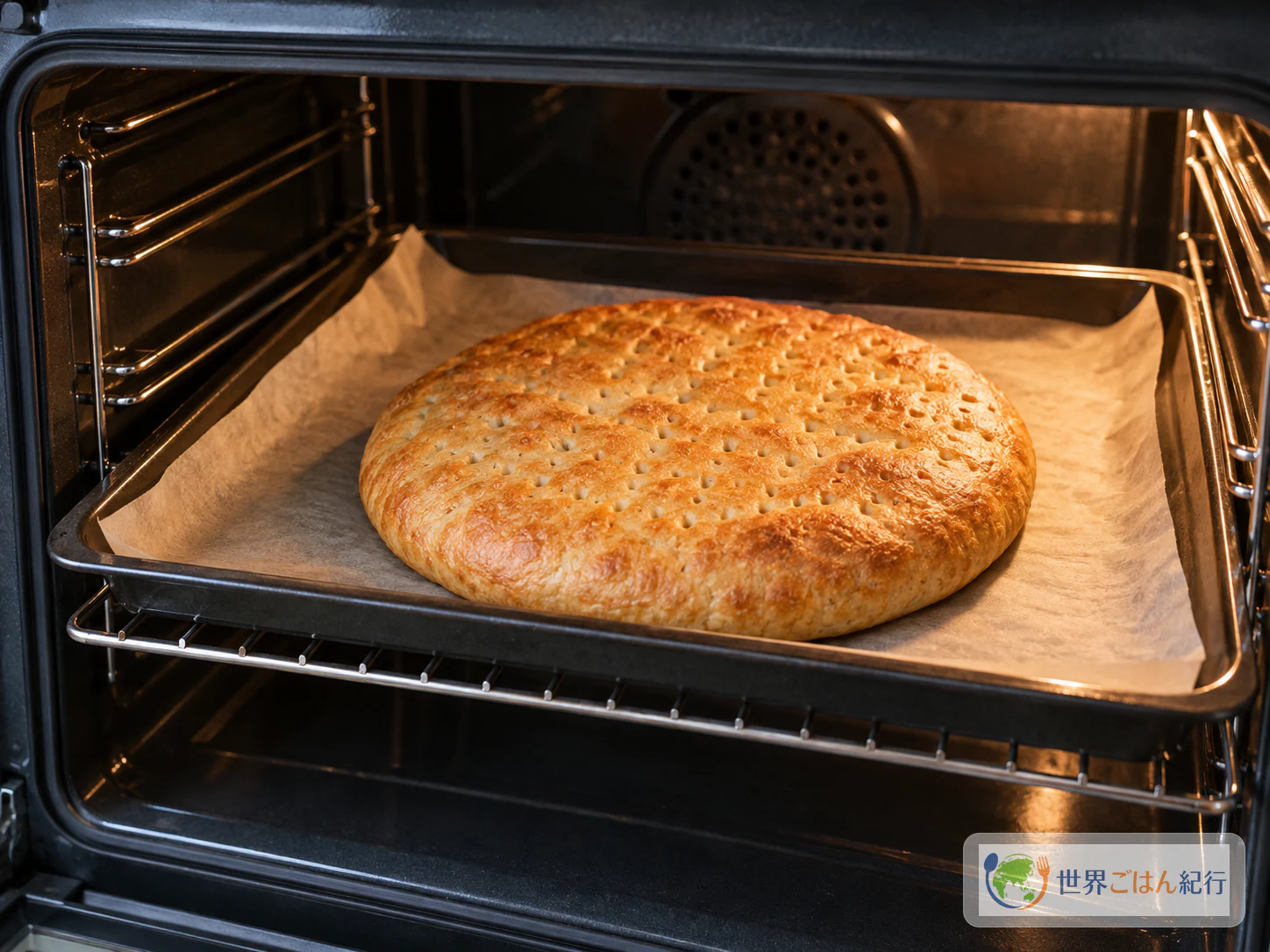
Two balls of dough are pressed out by hand on a lightly floured counter until each one is a wide disc. A fork goes over the whole surface, a brush of plain water follows, and the tray goes onto the middle rack of a very hot oven. This is how the home recipe "Turkmen Bread (Çörek)" from One Turkmen Kitchen builds chorek, the everyday round bread of Turkmenistan.
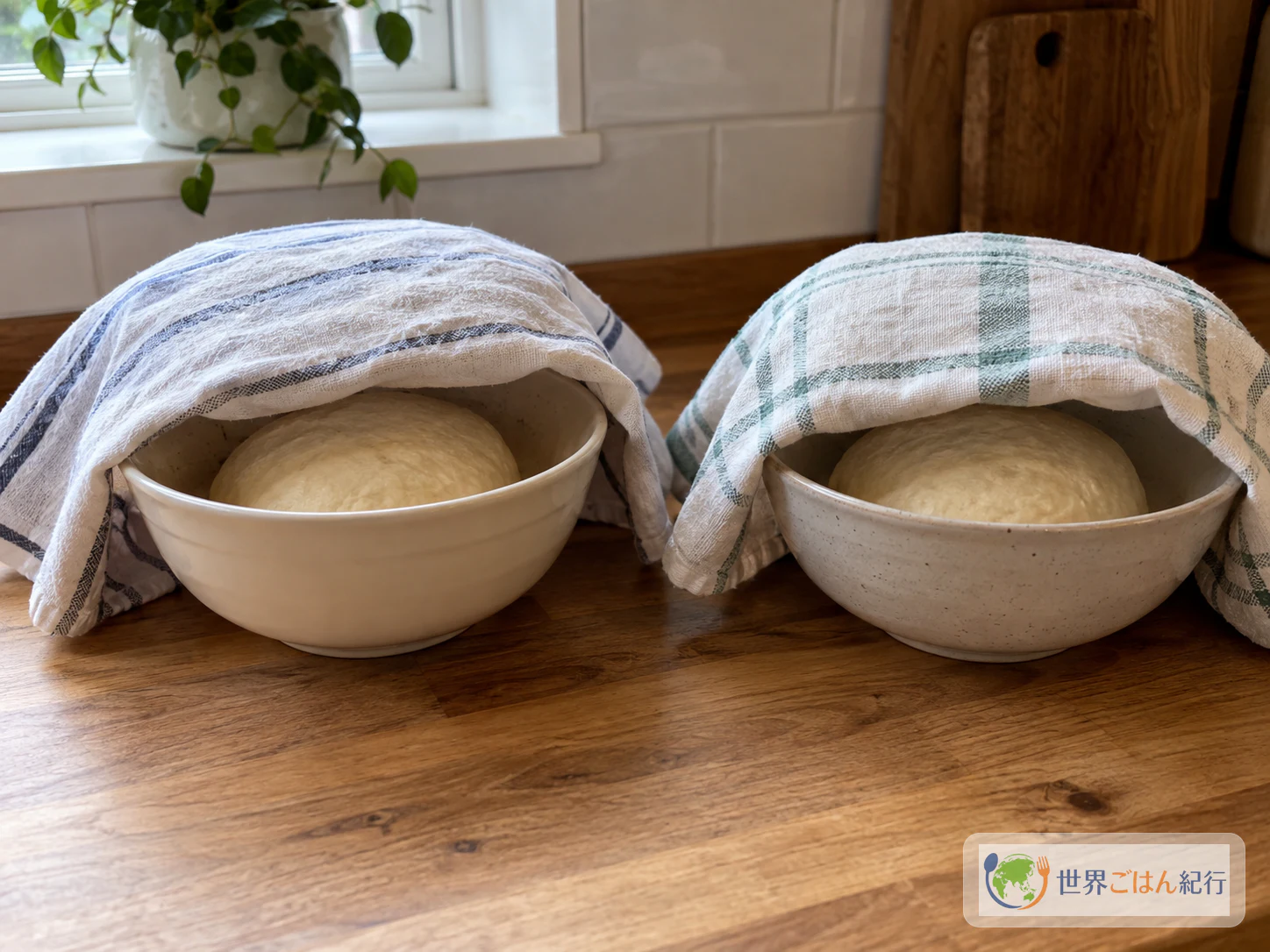
The ingredient list is short: flour, salt, yeast and warm water. There is no sugar, oil, egg, milk or seed topping. The recipe makes two breads. That is two loaves, not two servings. Neither rise has a set time. You watch for the dough to begin rising, and then for the divided balls to rise. The only clock times are a 20-minute rest after shaping and a bake of about 15 minutes.
This article follows that one published home recipe, which we have not kitchen-tested ourselves. Where the recipe leaves something open, such as the type of flour, the form of the yeast or the exact water temperature, we say so in the notes and FAQ below. We don't fill those gaps with guesses.
What Chorek Is: Turkmenistan's Round Wheat Bread
Chorek is the catalog spelling. In Turkmen the word is çörek, which means bread. A Turkmenistan government culture feature also treats chorek as the Turkmen-language name for bread. Breads with similar-sounding names exist elsewhere, including sweet buns in Turkish kitchens and sweet braided breads in Armenian-speaking communities. This article is not about those. It covers the plain round wheat bread of Turkmenistan.
The recipe comes from One Turkmen Kitchen, a site run by a mother and daughter, Baýramgül and Mähri. They started it in 2011 to collect Turkmen recipes and share their food experiences. According to their About page, Baýramgül cooks the dishes and Mähri photographs them. The English page "Turkmen Bread (Çörek)" is dated January 16, 2012. It is one family's published recipe, not a single national standard.
The same site has a Turkmen-language page, "Çörek", with the same date. It gives the same yield of two breads and the same four quantities. The wording and order differ in places, though. In the Turkmen version, the salt and yeast go into the water together before the flour. It also gives the oven as "250" with no scale, and it offers scoring with a plastic lid. This article follows the English page from start to finish and does not mix the two versions.
The Clay-Oven Tradition, and Where This Recipe Sits
A 2021 feature on Turkmenistan.gov.tm, "Tamdyr: National bakery traditions", links chorek to the tamdyr, a traditional clay oven for bread. In that method, the flat raw dough is slapped onto the hot inner wall of a prepared oven and comes out after a short bake. A 2016 Russian-language feature on the same government site also calls chorek a prominent Turkmen flour product traditionally baked in a tamdyr.
The recipe here is a different method. One Turkmen Kitchen's English page bakes in a home oven at 250°C (482°F), on a tray lined with baking paper, on the middle rack. It bakes for about 15 minutes or until golden brown. Keep the two methods apart: the oven steps below are not a stand-in for clay-oven baking, and the clay-oven timing does not apply to a home oven.
Ingredients (Makes 2 Breads)
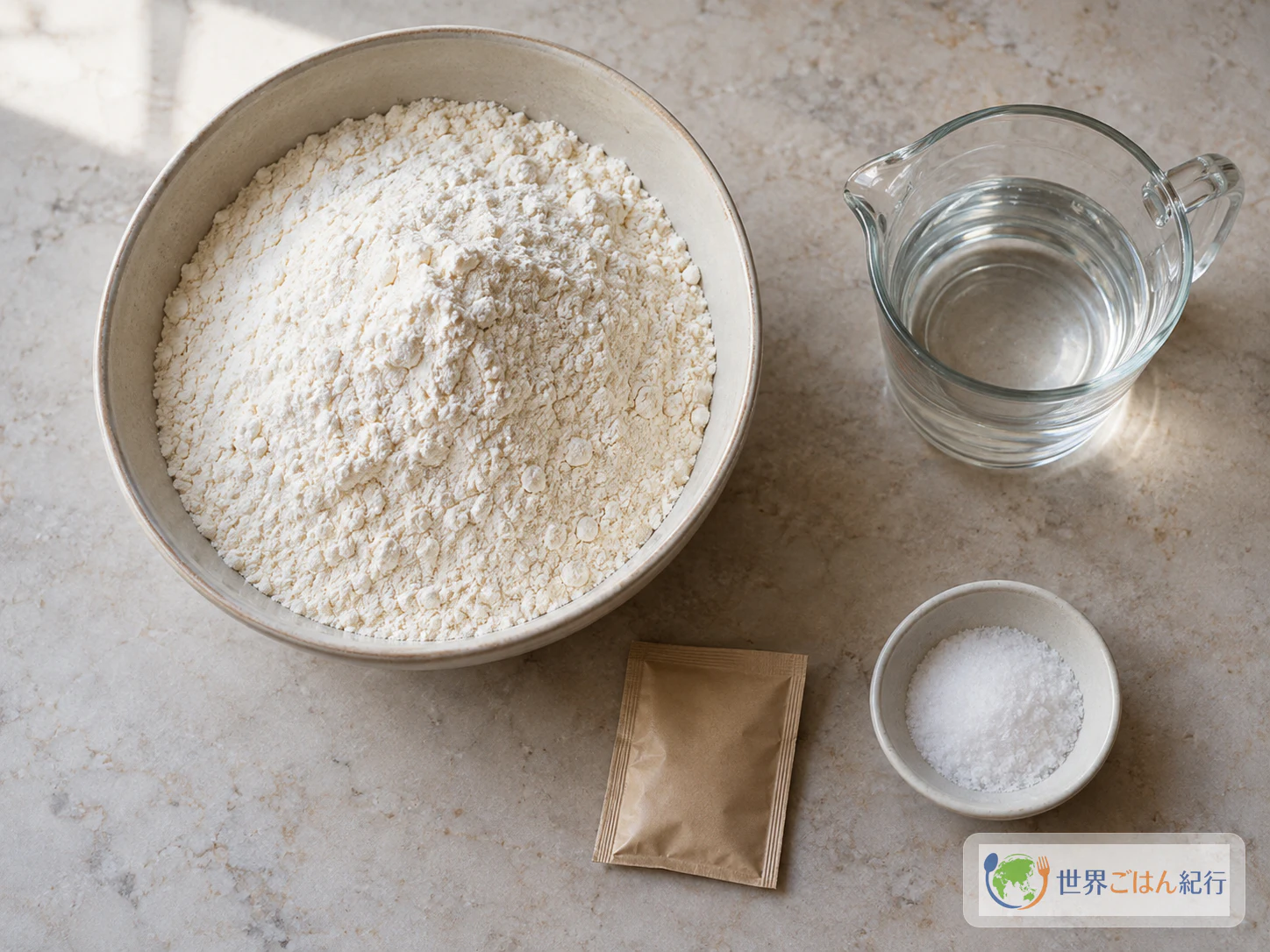
This makes 2 round breads, not 2 servings.
Chorek is made with wheat flour and contains gluten.
Equipment
- A large bowl
- Clean tea towels (enough to cover the bowl, then each dough ball separately, then the shaped breads)
- A lightly floured work surface
- A baking tray lined with baking paper
- A fork
- A brush for the water
- An oven that reaches 250°C (482°F)
Choosing Flour and Yeast
Use wheat flour; no particular type is required, and no one flour is the "correct" choice. Use the full 1 kg. Don't change the ratio, and don't add sugar, oil, milk, egg or seeds.
Use 20 g yeast and don't convert it to another type of yeast. Keep the salt at 1 tablespoon by the spoon. The water only needs to be warm.
Method: Two Rises Judged by Eye, Then a Hot Oven
Only two steps have a clock time: the 20-minute rest after shaping, and a bake of about 15 minutes or until golden brown. You judge both rises by how the dough looks. The 15 minutes is the bake alone, not the total time for the bread.
Reading the Dough: What to Watch for at Each Stage
Because the recipe gives so few clock times, success depends on watching the dough. This table only restates the cues the recipe itself gives.
| What you see | What it means | What to do |
|---|---|---|
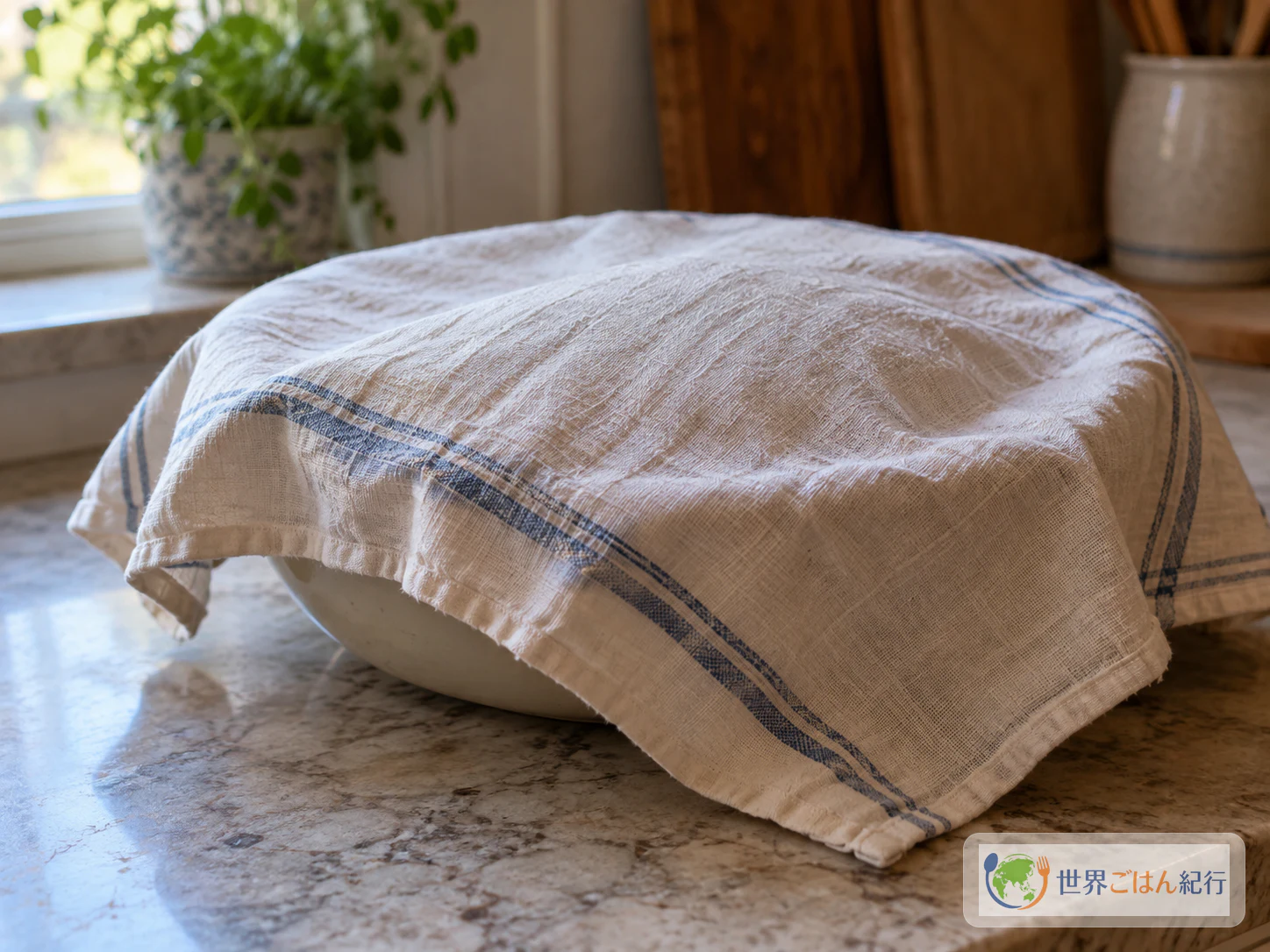
| The covered dough hasn't started to rise yet | The first rise isn't finished | Keep it covered in a warm spot until it begins to rise. There is no set time |
| The divided balls haven't risen yet | They aren't ready to shape | Leave each one covered until it has risen, then shape |
| You aren't sure how large to press the rounds | The target is a size, not a weight | Press by hand to about 2 cm thick and about 30 cm across. These are approximate |
| The bread isn't golden at 15 minutes | The bake time is approximate | The cue is "about 15 minutes or until golden brown", so watch the color |
| You're tempted to add up the timings | Only the rest and the bake are timed | Don't treat the 15-minute bake as the time for the whole recipe |
Variations: Surface Marks and Other Branches
Crosshatch instead of fork holes. One Turkmen Kitchen's English page offers two ways to finish the surface. You can poke it all over with a fork, or press a deep crosshatch into it with a plastic cutting board. This article uses the fork. The page doesn't say what either mark is for, so we don't assign a meaning to them.
The Turkmen-language version. The same site's Turkmen page has the same four quantities and the same yield. For the surface it offers scoring lines with a plastic lid. Its mixing order differs slightly, and it gives the oven as "250" without a scale. It is a parallel version, so follow one page or the other, not a mix of both.
Dograma and its bread. Dograma is a separate Turkmen dish in which bread is combined with lamb and onion. A 2016 Turkmenistan government feature describes Turkmen flour products made from both fermented and unleavened dough. It also mentions a special bread called petir, made for dograma. One Turkmen Kitchen's own Dograma page lists a different bread formula with dry yeast. Because the two sources describe that bread differently, we don't classify petir here. We also don't treat the Dograma bread as interchangeable with this chorek.
Chorek at the Table
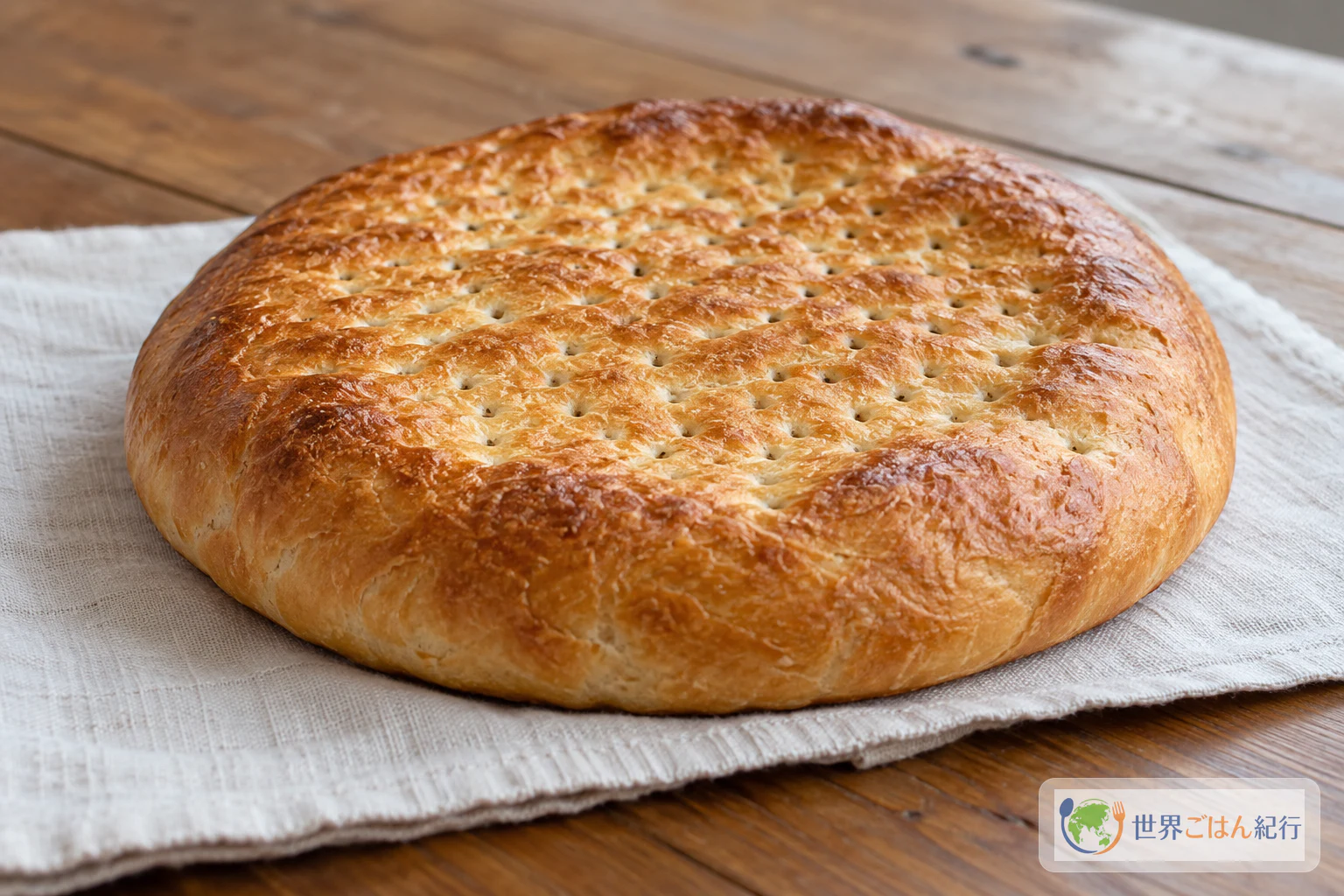
Out of the oven, each chorek is a wide, golden round with the fork holes still visible across the top. A CultureGrams country guide on Turkmenistan, hosted by CIEE, describes chorek as a bread that accompanies meals. It also says bread is broken by hand rather than cut with a knife. That is one general guide, and no publication date is visible on the copy, so read it as one description rather than a rule for every household. The recipe itself doesn't cover any particular way of serving or sharing the bread.
Frequently Asked Questions
How many does this recipe make?
It makes two breads, each pressed to about 30 cm across before baking. One Turkmen Kitchen's page says "Makes 2". It gives no serving count and no weight per bread.
How long are the rises?
The recipe gives no times for either rise. First you wait until the dough begins to rise. After dividing, you wait until each ball has risen. The only timed stages are the 20-minute rest after shaping and the bake of about 15 minutes or until golden brown.
Which yeast should I use? Fresh, active dry or instant?
The English recipe page says only "20 g yeast". It doesn't name a type or form, so we don't label it or convert it. One Turkmen Kitchen's separate Dograma page lists a teaspoon of dry yeast for its own bread. That is a different recipe, though, and its yeast amount shouldn't replace the 20 g here.
What kind of flour, and how warm should the water be?
The page says "flour" and "warm water" without naming a flour type or a water temperature. We don't fill in a protein level or a temperature that the recipe doesn't give.
Why prick the bread with a fork?
The English page offers fork holes or a deep crosshatch as surface options. It doesn't explain why. We chose the fork option and make no claim about what it does.
Is this a tamdyr (clay-oven) recipe?
No. A Turkmenistan government culture feature describes the traditional clay oven, where the dough bakes against the hot inner wall. One Turkmen Kitchen's English recipe uses a home oven: 250°C (482°F), a tray lined with baking paper, the middle rack, and about 15 minutes or until golden brown.
Is chorek the same as the bread used for dograma?
We don't treat them as the same. A government feature names a special bread, petir, for dograma. One Turkmen Kitchen's Dograma page gives its own separate bread formula. Those descriptions don't fully agree, so this article keeps chorek and the dograma bread apart.
Sources
- One Turkmen Kitchen, "Turkmen Bread (Çörek)," English-language recipe page, dated 2012-01-16. This is the recipe followed here: the yield of 2 breads, the four ingredients and amounts, the method order, the shaping size and 20-minute rest, the fork option and the oven bake. https://turkmenkitchen.com/en/recipe/turkmen-bread
- One Turkmen Kitchen, "Biz barada (About us)." The site is run by Baýramgül and Mähri and was started in 2011. Baýramgül cooks the dishes and Mähri photographs them. https://turkmenkitchen.com/tm/biz-barada
- One Turkmen Kitchen, "Çörek," Turkmen-language recipe page, dated 2012-01-16. This parallel version has the same yield and quantities, a slightly different order, a "250" oven line without a scale, and a lid-scoring option. https://turkmenkitchen.com/tm/recipe/corek
- Turkmenistan.gov.tm, "Tamdyr: National bakery traditions," 2021-05-29. Chorek as the Turkmen-language bread, and the tamdyr clay oven with dough attached to its hot inner wall. https://turkmenistan.gov.tm/en/post/54809/tamdyr-national-bakery-traditions
- Turkmenistan.gov.tm, "Важнейшую роль в системе питания туркмен играет пшеница, составляя базовую часть национальной кухни," 2016-02-12. Chorek as a prominent flour product traditionally baked in a tamdyr; fermented and unleavened doughs; petir bread for dograma. https://www.turkmenistan.gov.tm/index.php/ru/post/25696/vazhneishuyu-rol-v-sisteme-pitaniya-turkmen-igraet-pshenitsa-sostavlyaya-bazovuyu-chast-natsionalnoi-kukhni
- One Turkmen Kitchen, "Dograma," Turkmen-language recipe page, dated 2011-11-06. Used only for comparison, as a separate dish with its own bread formula. https://turkmenkitchen.com/tm/recipe/dograma
- CultureGrams, "Turkmenistan," country orientation PDF hosted by CIEE. Chorek as a bread that accompanies meals, broken by hand rather than cut with a knife. No publication date is visible on the copy. https://www.ciee.org/sites/default/files/documents/hsib-orientation/turkmenistan.pdf