Chicken Kyiv: A Crisp Coat Around Hot Herb Butter
Keep the butter sealed inside the chicken, the parsley and garlic fragrant, and the crumb coat thin and crisp. Judge doneness by the temperature at the center of the meat, not by the color of the crust.
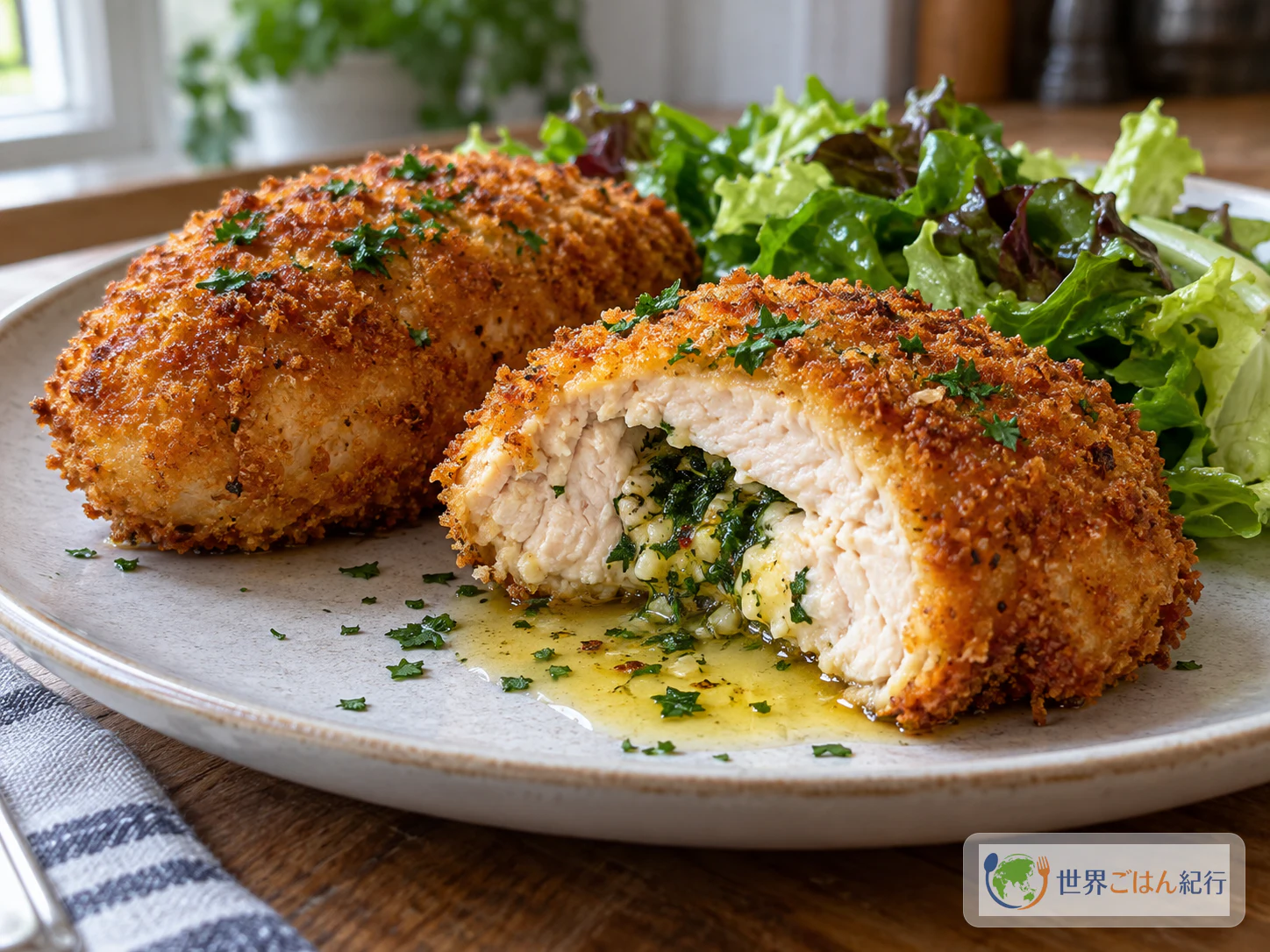
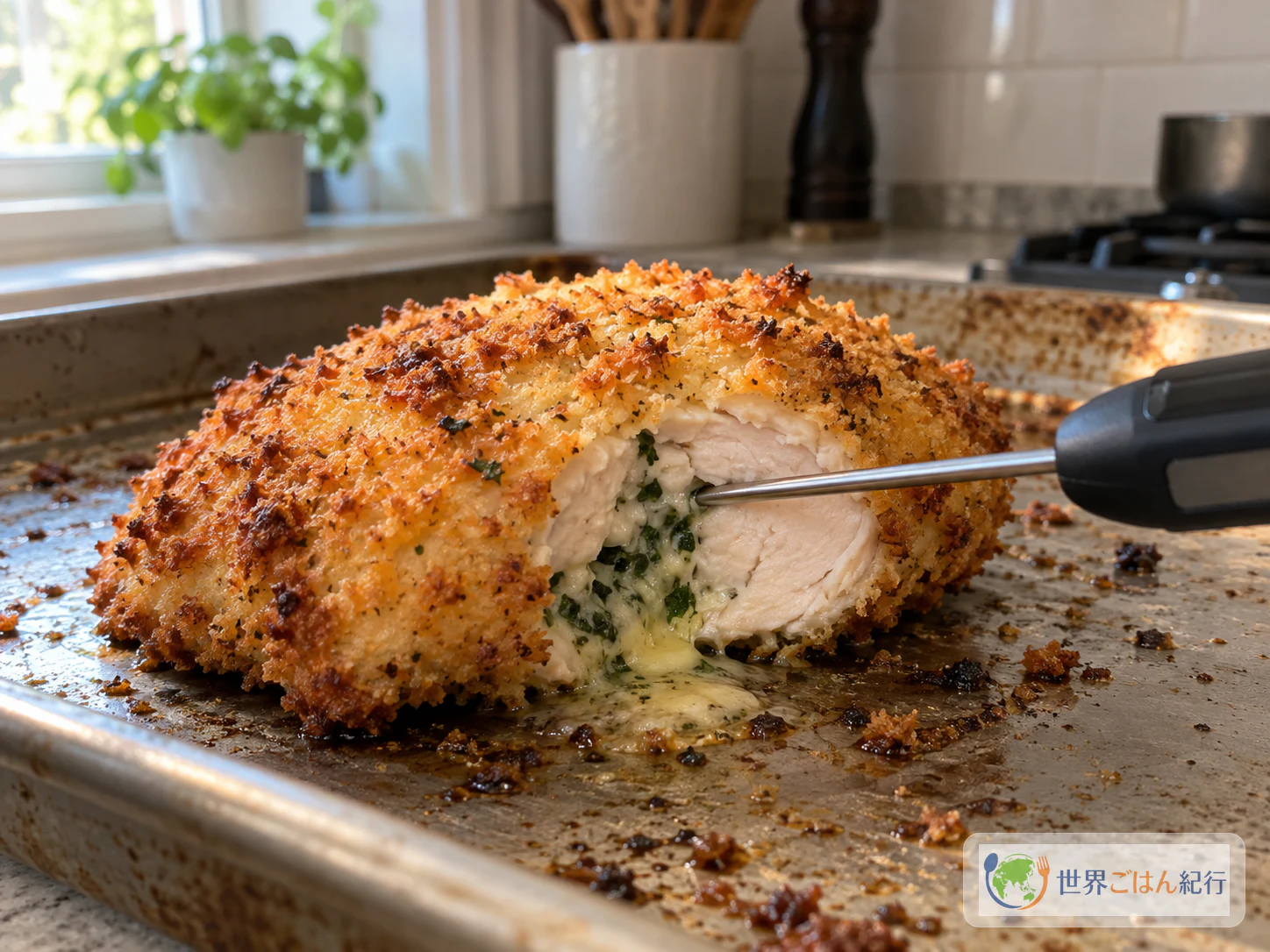
A golden, breadcrumbed chicken breast sits on the plate. When the knife goes in, butter flecked with green parsley runs out from the middle. Visit Kyiv, the city's tourism guide, describes Chicken Kyiv in exactly these terms: a breaded chicken fillet filled with butter and herbs, and a dish closely associated with Ukrainian cuisine.
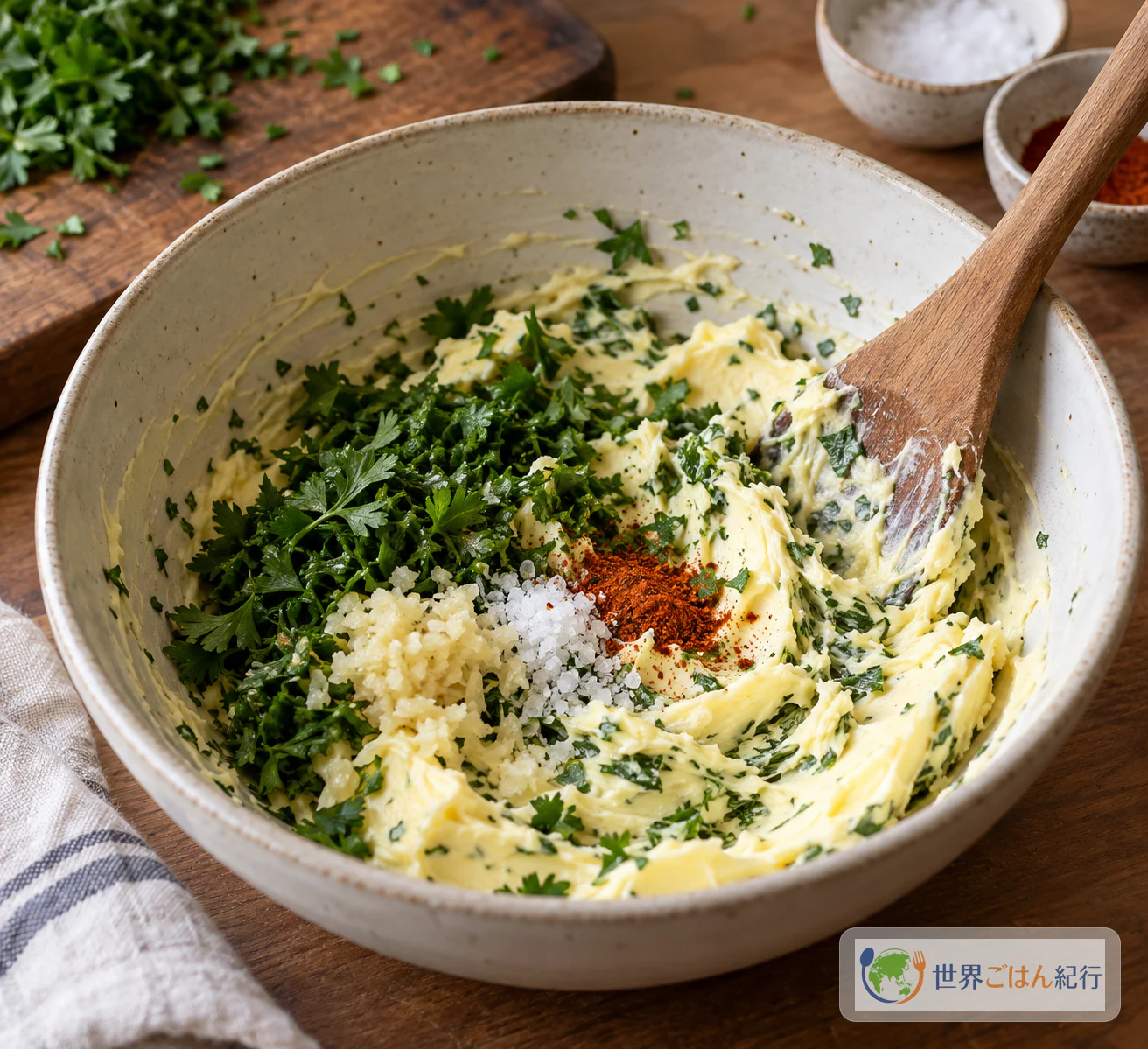
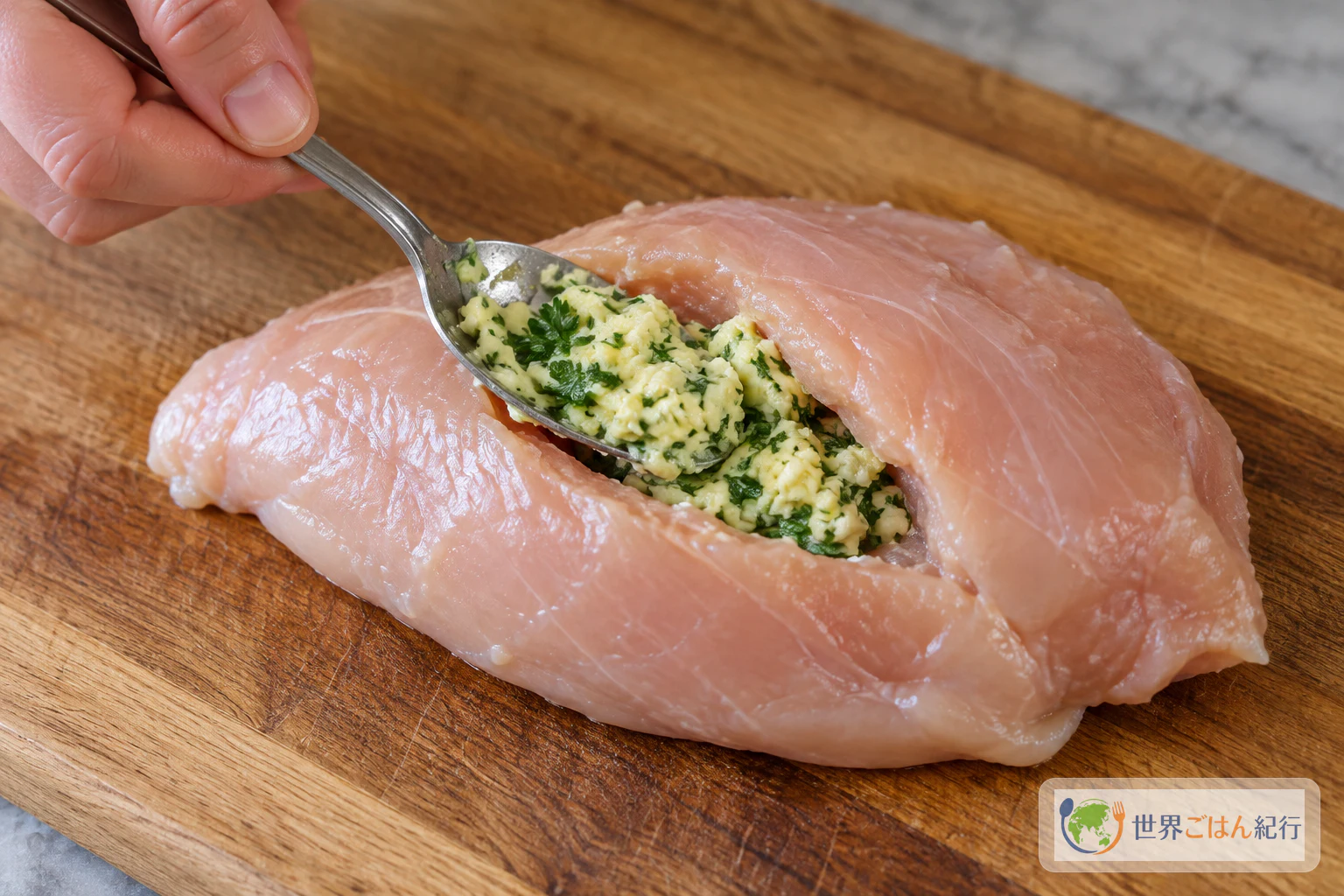
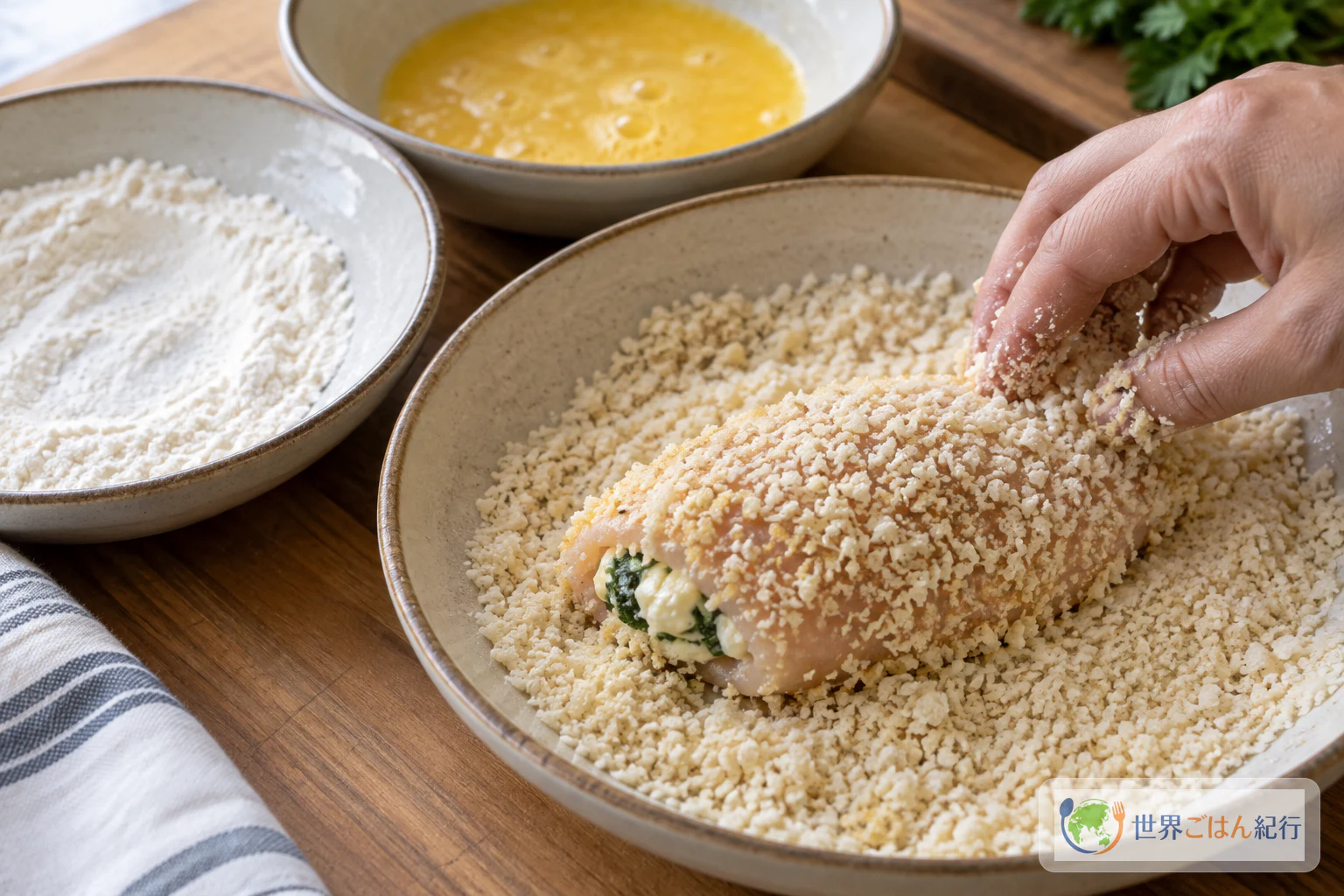
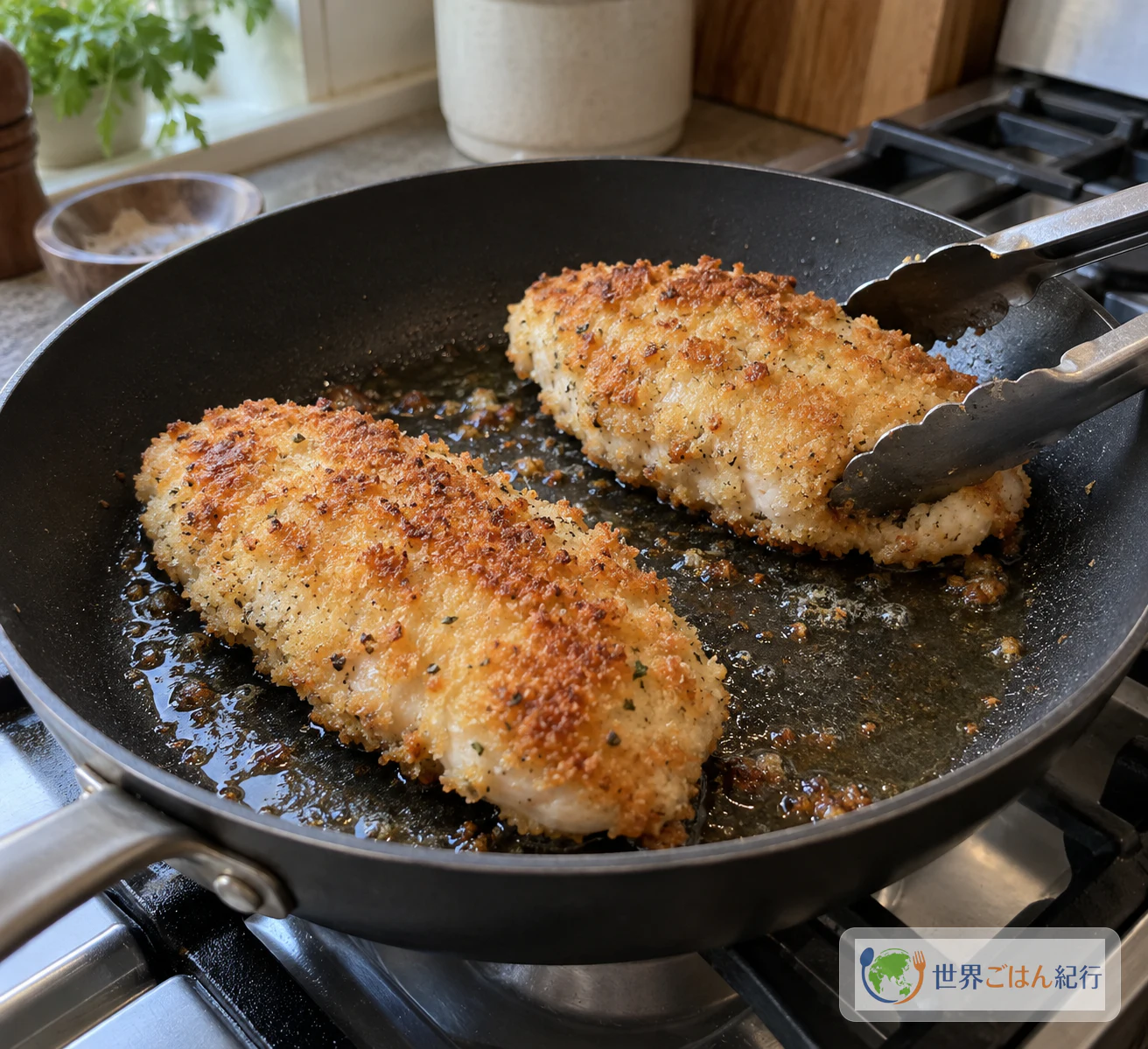
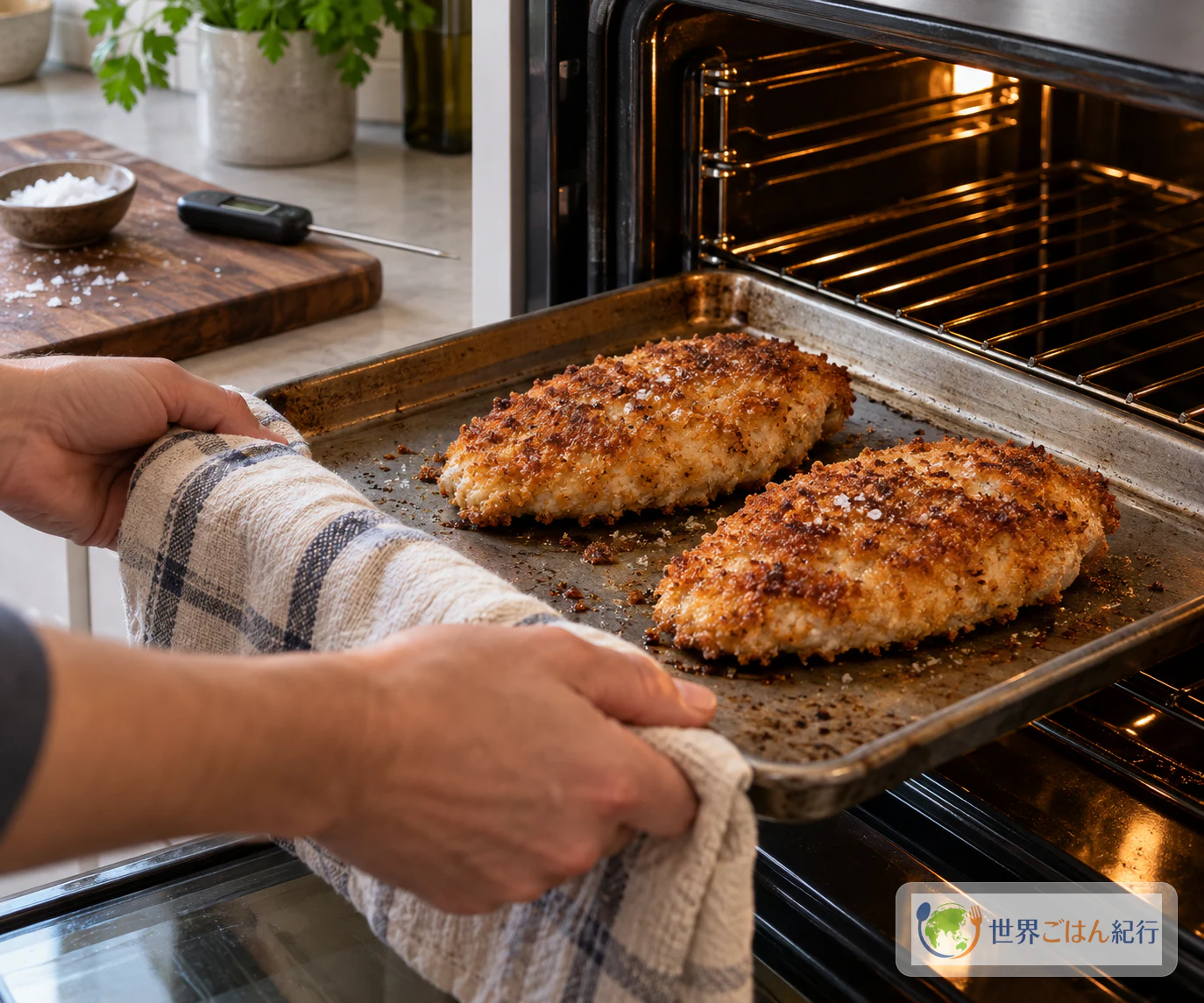
That flowing center is what makes the dish fun to eat, and it is also what makes it worth cooking with care. The butter stays hidden behind the crust, so neither the clock nor the color of the coating can tell you whether the chicken itself is cooked through. This recipe follows chef Tom Kerridge's "Classic Chicken Kyiv" for two: soft herb butter spooned into a pocket cut into each breast, one coat of flour, egg and fine panko, a gentle browning in the pan, then the oven. A thermometer in the thickest part of the meat makes the final call.
For more dishes from the same country, see our Ukraine page.
Ingredients for 2: Soft Butter Filling and a Single Crumb Coat
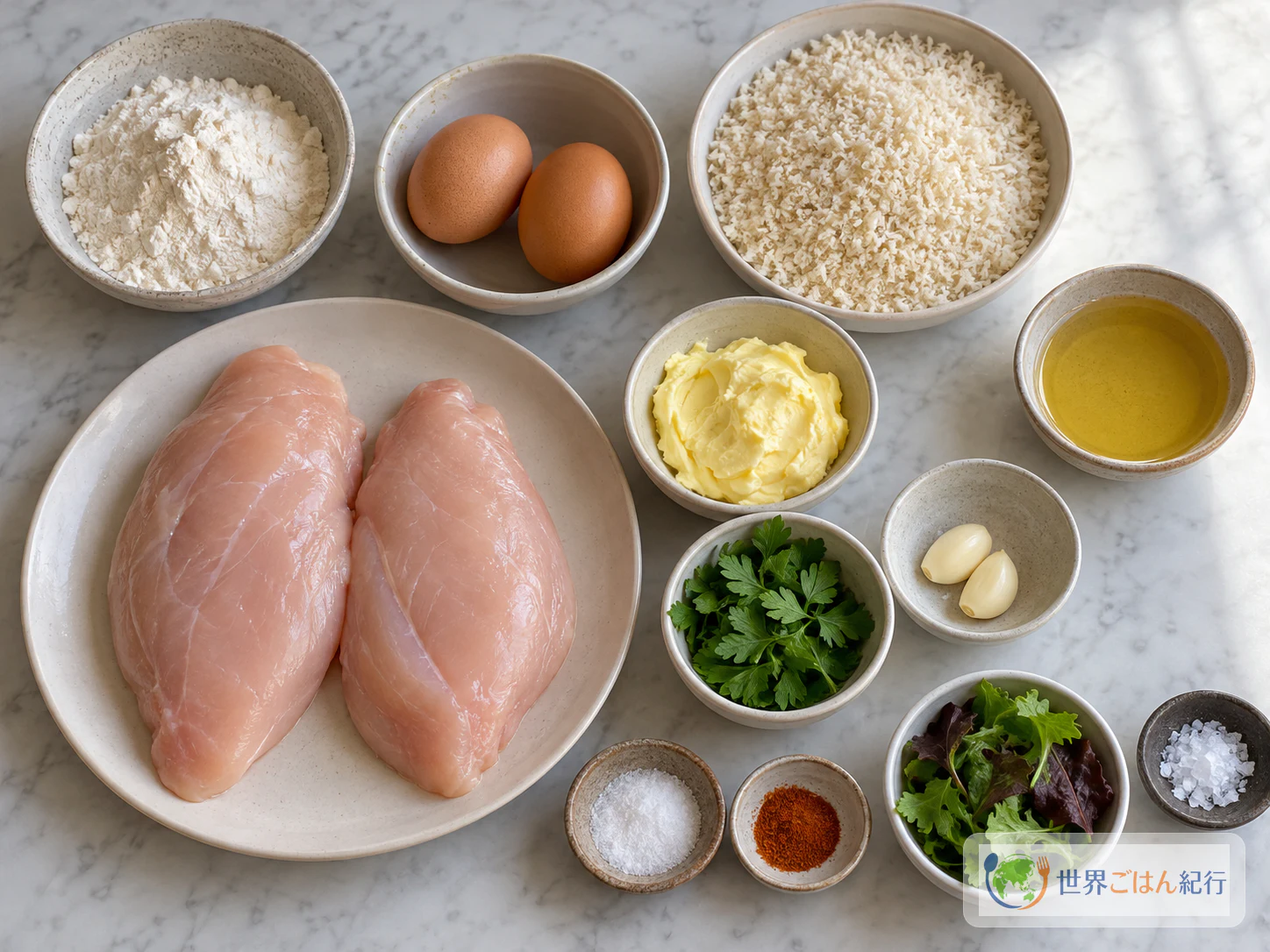
These amounts are for two. The butter mixture, flour, eggs and panko are preparation amounts. You fill each breast with as much butter as its pocket comfortably holds, so not all of the butter necessarily goes in, and some of the coating will be left over. This version uses unsalted butter, with 1 tsp of salt in the filling.
This dish contains chicken, milk (butter), wheat (flour and panko) and egg. If you choose groundnut oil, it also contains peanut. Check the labels on packaged breadcrumbs. Leftover flour, egg and panko that have touched raw chicken should be thrown away. Do not reuse them in anything that will not be cooked, and keep the salad and finishing salt away from the raw meat and its dishes.
Equipment
- Mixing bowl and wooden spoon for the butter
- Thin, sharp knife for making the pocket
- Teaspoon for filling the pocket
- Three shallow dishes for flour, beaten egg and panko
- A board used only for raw chicken
- Plate and cover for chilling
- Nonstick frying pan and tongs
- Oven tray
- Clean, thin-probe instant-read thermometer
- Measuring spoons for the salt and cayenne
Choosing and Substituting
Butter. The original does not specify salted or unsalted. Unsalted butter plus the recipe's 1 tsp salt is the version described here. If you use salted butter, the filling will taste saltier. That is a change from this recipe, not an equivalent swap.
Parsley. Flat-leaf parsley is what the recipe calls for. Curly parsley can be used, but the aroma is different, and it chops differently.
Cayenne. Cayenne gives a gentle heat. Other ground chilies have different flavor and heat, so using one changes the recipe.
Breadcrumbs. Fine panko gives an even, close-textured coat. Coarser breadcrumbs make a rougher coat, and they may also stick and brown differently.
Chicken. The recipe uses large skinless breasts. Other cuts are not part of it, and these times and methods should not be assumed to carry over.
Method: Fill, Coat, Brown, Then Finish in the Oven
The pan and oven times depend on the thickness of the chicken and on your equipment. The thermometer reading at the center of the thickest part of the meat tells you when it is done.
Serving: A Crisp Salad and a Careful First Cut
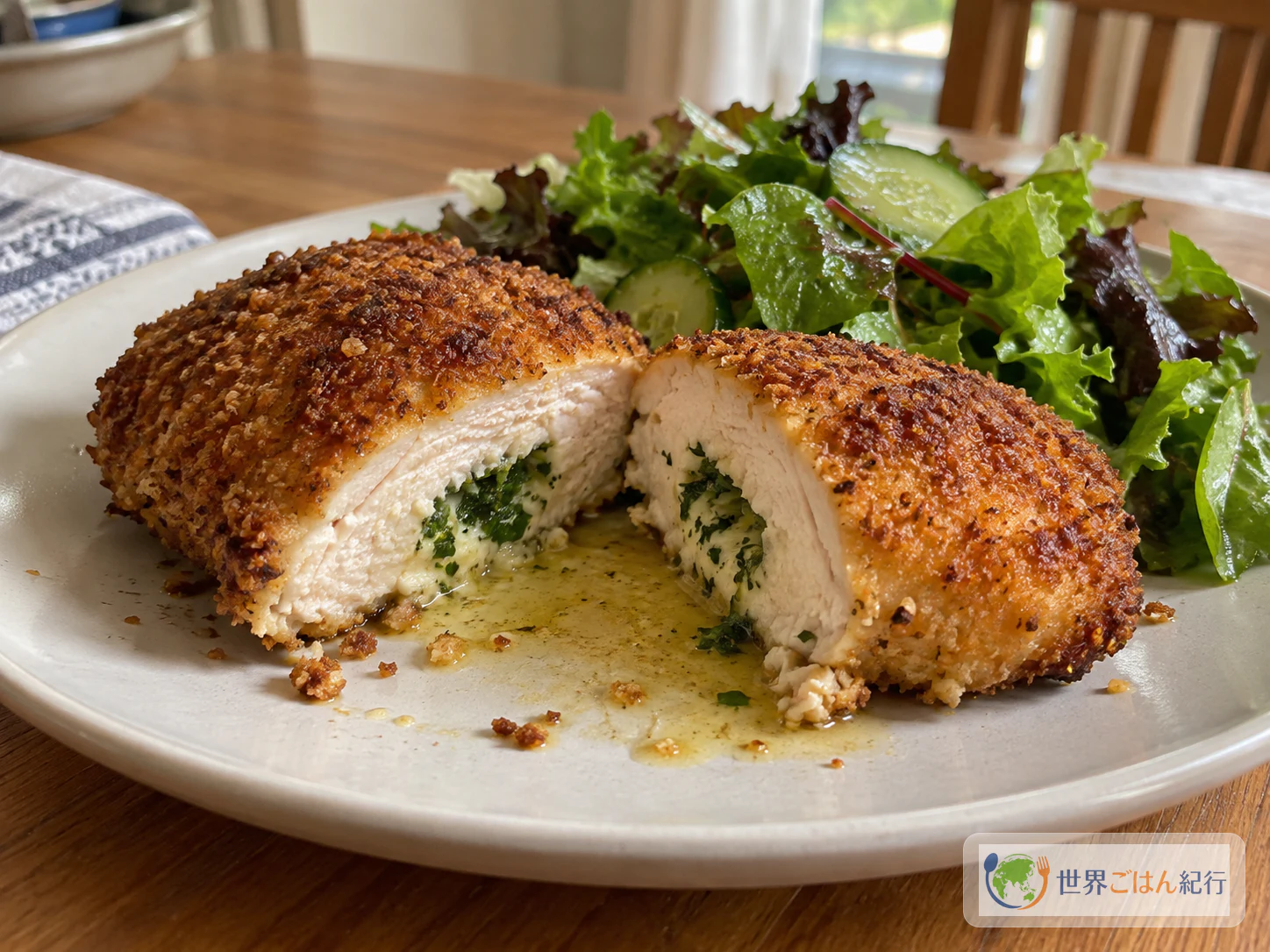
Tom Kerridge serves his Chicken Kyiv with a crisp green salad and leaves the choice of leaves and the amount to you. Something fresh and simple sits well beside the rich butter and fried crumb.
If you have leftovers, divide them into shallow containers and cool them quickly. When you eat them, reheat them thoroughly, following the general household advice from Japan's Ministry of Health, Labour and Welfare. The sources used here don't give a safe storage period or a specific reheating method for this dish, so none is suggested.
When Things Go Wrong
| Problem | Possible cause | What to do |
|---|---|---|
| Butter leaks out during cooking | The pocket was pierced through to the outside, or the coat did not cover the ends | Next time, cut only from the thick end and keep the knife inside the meat. Coat flour, egg and panko right to the ends, and don't turn the heat up high in a hurry |
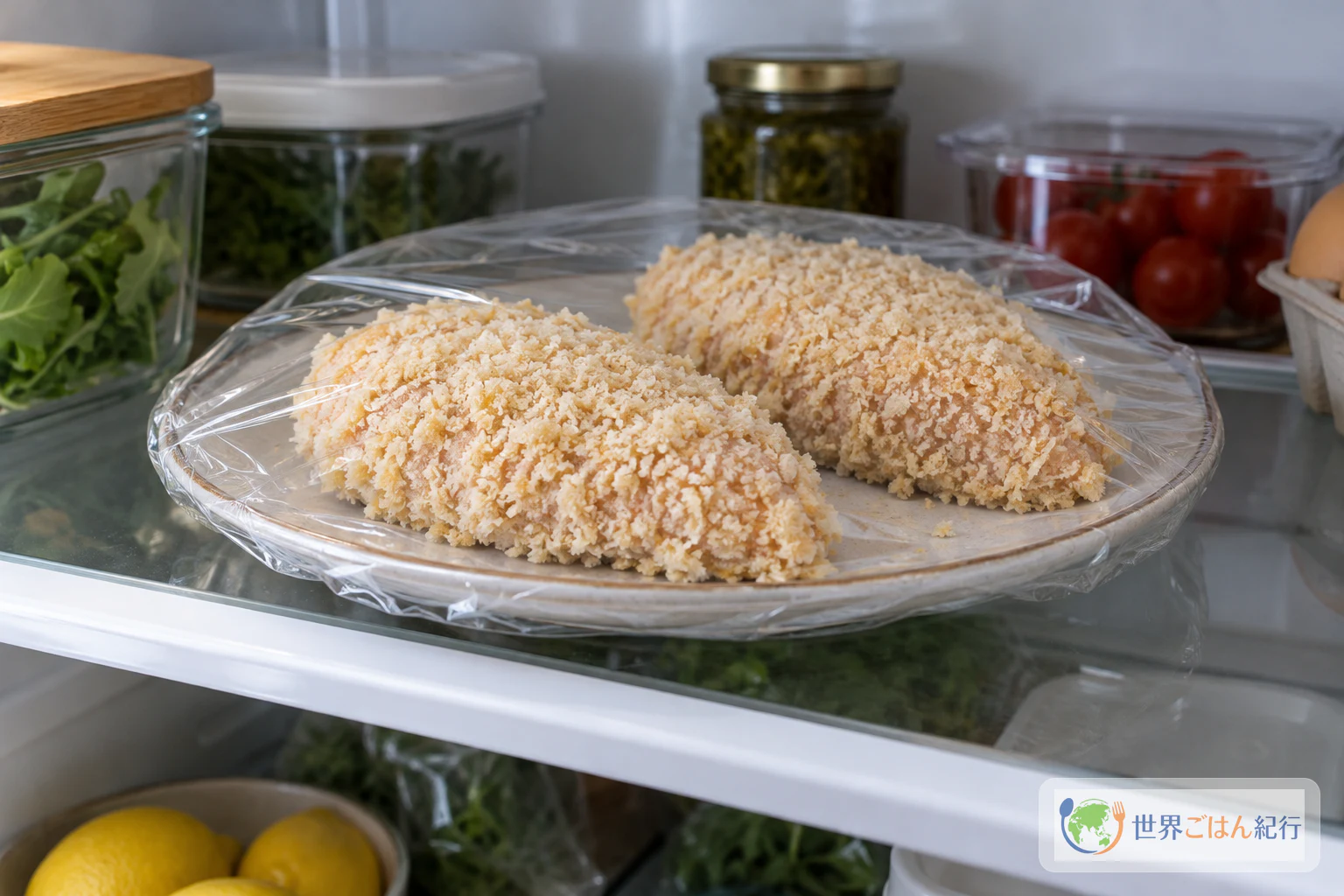
| The coating falls away | Flour was uneven or too thick, or the chicken was not chilled | Dust the flour thinly and evenly and shake off the excess before the egg and panko. Chill, covered, for at least 20 minutes |
| The crust is dark but the center is not at temperature | Pan heat too high | Keep the pan at low to medium heat. In the oven, go by the thermometer rather than the timer, and keep cooking until the center of the thickest part of the meat reaches 75°C for at least 1 minute |
| The thermometer reads hot, but you are not sure it is in the meat | The probe tip may be sitting in the butter pocket | Move the probe into the thick flesh beside the pocket and read again |
| Little butter runs out when cut | Several things can affect this | The recipe uses softened butter and serves the chicken straight from the oven. Serving it promptly after the temperature check is the simplest thing to try |
Variations Worth Considering
Each of these moves away from the original recipe.
- Less heat. For anyone who finds cayenne too hot, use less than the 1/2 tsp in the recipe. The filling will taste milder, with less of a kick.
- More herb. If you want a stronger parsley aroma, you can add more parsley. Make the base recipe first, so you know what you are changing from.
- A different crumb. Coarser breadcrumbs give a rougher, crunchier-looking coat than fine panko. They may also stick and brown differently, so watch the color in the pan.
- Bone-in supreme. The Guardian's Felicity Cloake describes the chicken supreme, a breast with half the wing attached, as a traditional form. Her recipe is a different method entirely: butterflied and flattened breast rolled around butter, frozen, double-coated and deep-fried. The pan and oven times above are for this boneless version only and should not be applied to a supreme.
- Mashed potato instead of salad. Visit Kyiv mentions mashed potato as an accompaniment. Serve it on the side if you like. The recipe itself stays the same.
Kyiv or Kiev: A Dish With More Than One Story
In Ukrainian the dish is called Котлета по-київськи (kotleta po-kyivsky). Chicken Kyiv uses the modern spelling of the city's name, while the older English spelling, Chicken Kiev, is still widely used. The Guardian's recipe title, for example, uses "kiev". Both names refer to the same dish.
Where it began is not settled. Visit Kyiv says the exact origin is uncertain and that several theories exist. The guide also notes a resemblance to the French côtelette de volaille, while pointing out that the recipe and filling differ. A resemblance like that does not prove a common origin. The Guardian frames Chicken Kyiv as a Soviet-era classic. That is journalistic context, not proof of who invented it.
According to Visit Kyiv, the dish became widely served in Kyiv in the 1950s. The guide also describes a bone-in presentation, with a paper frill on the bone, and mashed potato on the side. These are some of the ways the dish appears in the city. The recipe in this article is the boneless, salad-served home version.
Frequently Asked Questions
Are Chicken Kiev and Chicken Kyiv the same dish?
Yes. They are two spellings of the same name. This article uses Kyiv, the modern spelling.
Can I trust the oven time alone?
No. The 10–15 minutes in the oven is the original recipe's guide, and thickness and ovens vary. Check that the center of the thickest part of the meat reaches 75°C for at least 1 minute, measuring the meat rather than the butter. UK Food Standards Agency guidance lists other time and temperature combinations, including 75°C for 30 seconds, as a separate UK standard. This recipe uses the Japanese guideline described in step 6.
Why did my butter escape?
The most likely reasons are a pocket that broke through to the outside, or a coat that did not seal the ends. Cutting only from the thick end and coating all the way to the edges helps.
Can I use salted butter?
You can, but the filling will be saltier, because the recipe already adds 1 tsp salt. The original doesn't specify the butter, so this version uses unsalted.
Can I make it ahead or freeze it?
The recipe says to chill the coated chicken for at least 20 minutes, or until needed, but gives no upper limit or freezing guidance. The sources here don't support a storage period or freezing method, so none is given.
Sources
- Visit Kyiv, "The 10 most popular Ukrainian dishes: what to try in Kyiv." A local tourism guide, not an archival history. Describes Chicken Kyiv as a breaded chicken fillet filled with butter and herbs, says its exact origin is uncertain with several theories, and reports that it became widely served in Kyiv in the 1950s. Also mentions bone-in presentation and mashed potato. https://visitkyiv.com/food-and-drinks/guide-to-ukrainian-cuisine/
- Tom Kerridge, "Classic Chicken Kyiv Recipe." The recipe used here: serves two, soft butter filling, single flour-egg-panko coat, chilling for at least 20 minutes, browning for 3–4 minutes per side, then roasting at 200°C for 10–15 minutes. Gives no chicken weight, oil quantity, internal-temperature endpoint or storage guidance. https://tomkerridge.com/recipes/classic-chicken-kyiv/
- Felicity Cloake, "How to make chicken kiev – recipe," The Guardian, 2023. A separate method used for comparison only (supreme cut, rolled and frozen butter, double coat, deep-frying), and the Soviet-era-classic framing. https://www.theguardian.com/food/2023/oct/18/how-to-make-chicken-kyiv-recipe-felicity-cloake
- UK Food Standards Agency, "Cooking your food." UK time and temperature combinations, including 75°C for 30 seconds, measuring the center or thickest part with a clean probe, and cooking poultry thoroughly. https://www.gov.uk/government/publications/cooking-your-food/cooking-your-food
- Ministry of Health, Labour and Welfare (Japan), "Preventing food poisoning at home" (家庭での食中毒予防). The household guideline of heating to 75°C at the center for at least 1 minute, preventing cross-contamination from raw meat, and portioning leftovers into shallow containers, cooling them quickly and reheating thoroughly. https://www.mhlw.go.jp/stf/seisakunitsuite/bunya/kenkou_iryou/shokuhin/syokuchu/01_00008.html