One Cabbage Leaf, One Small Parcel
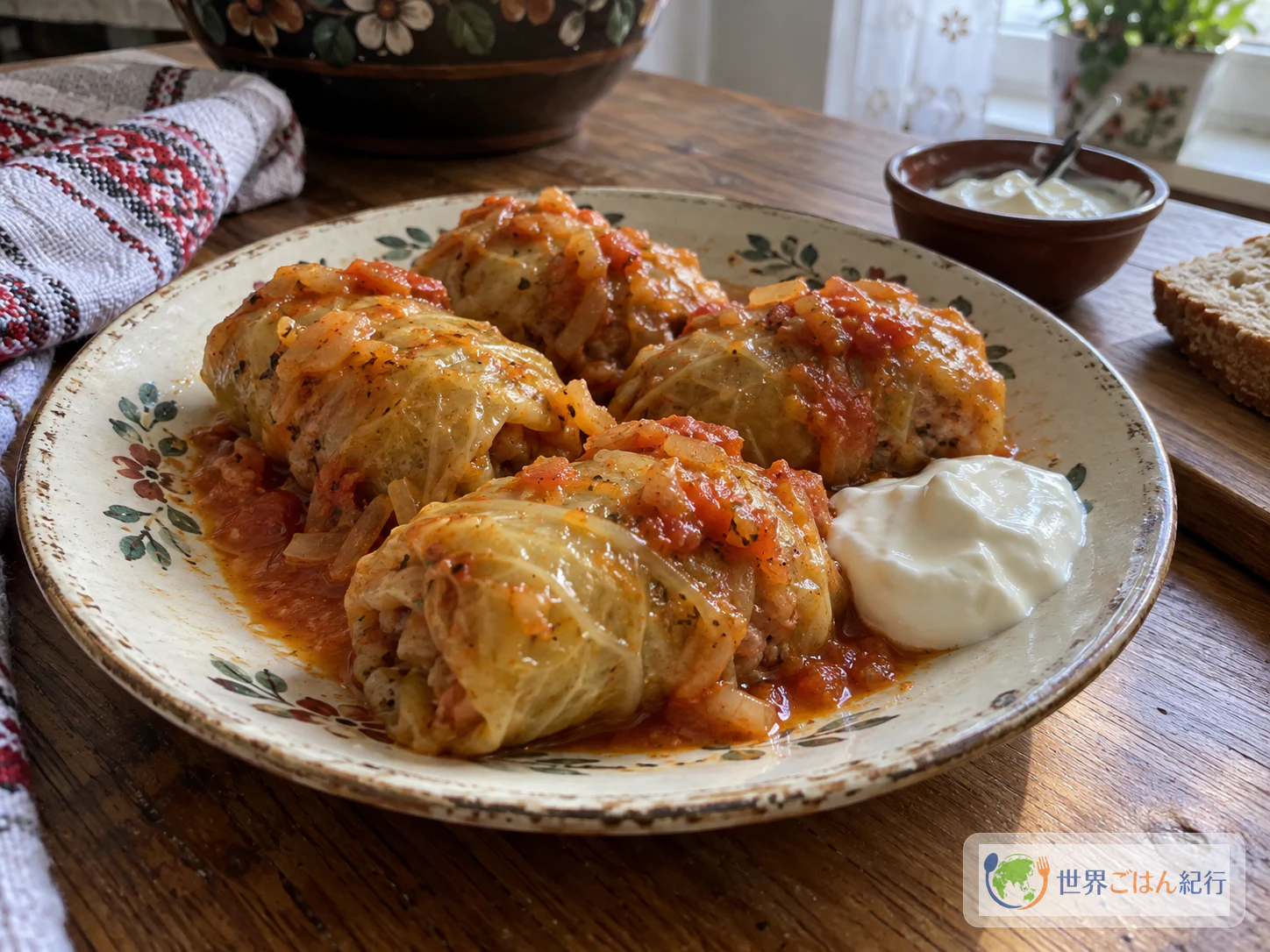
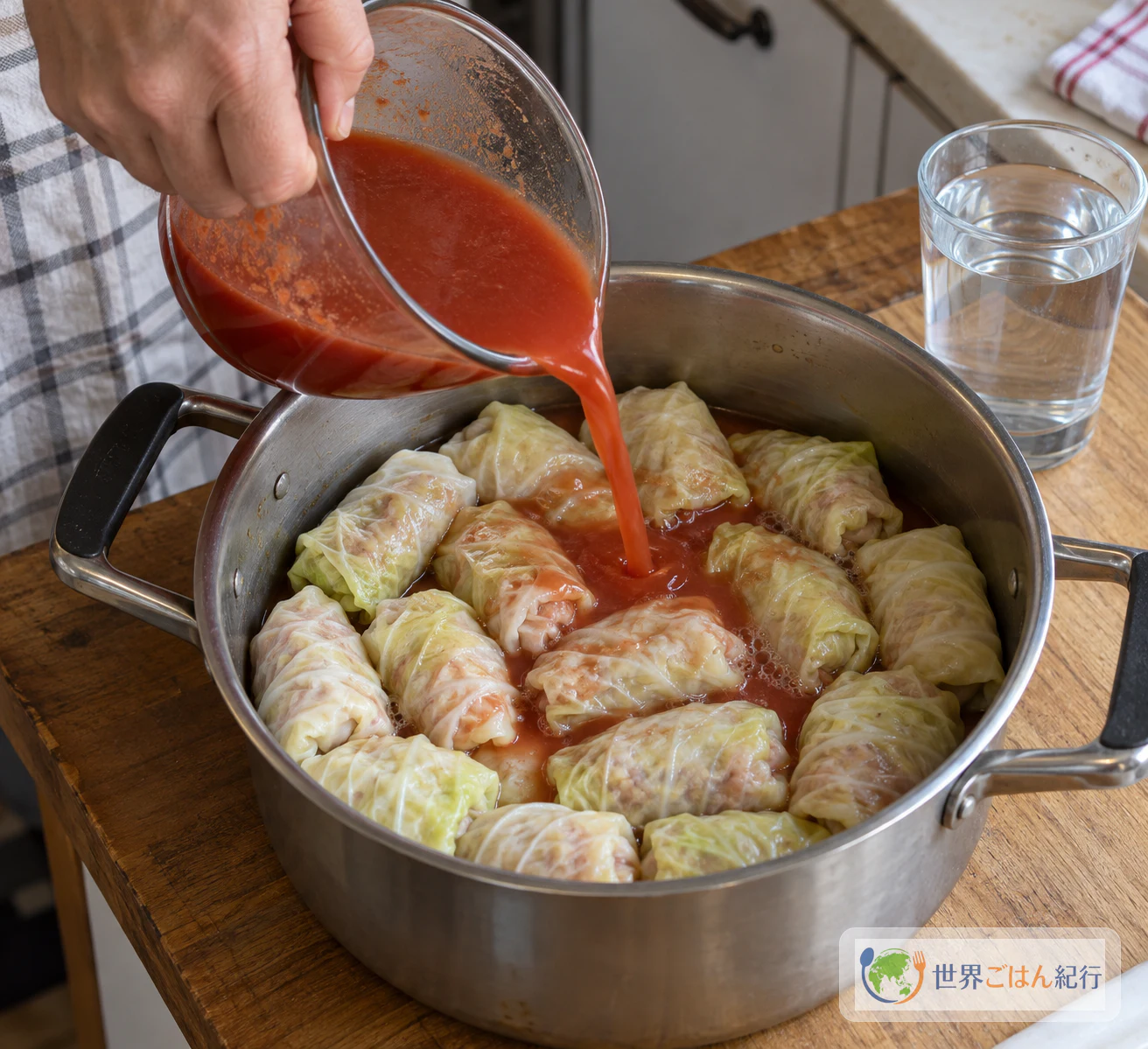
Small leaves, a modest spoonful of filling each, and rice that goes in raw and cooks inside the roll. The cooking liquid stays a light tomato water, and sour cream waits on the side.
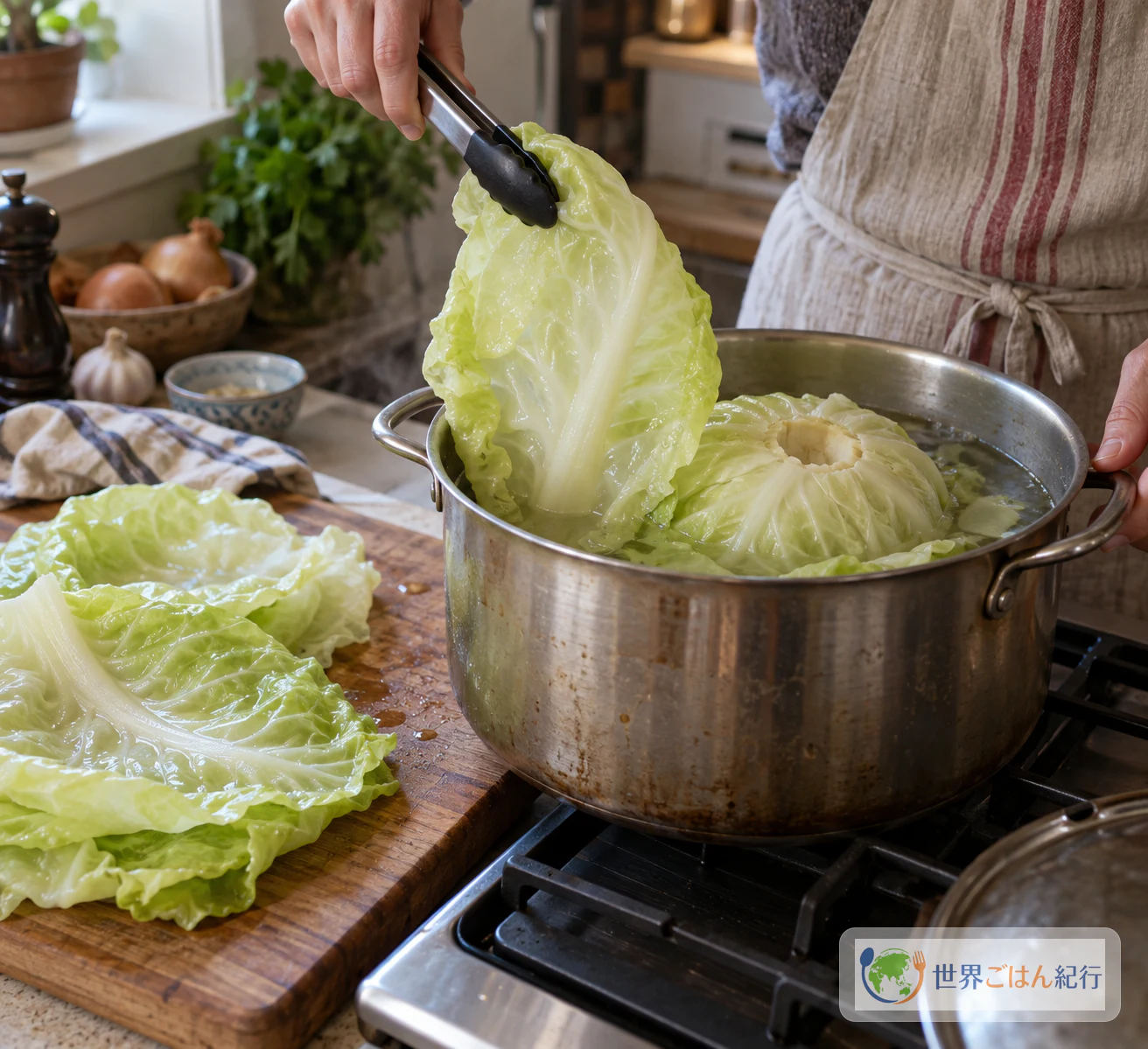
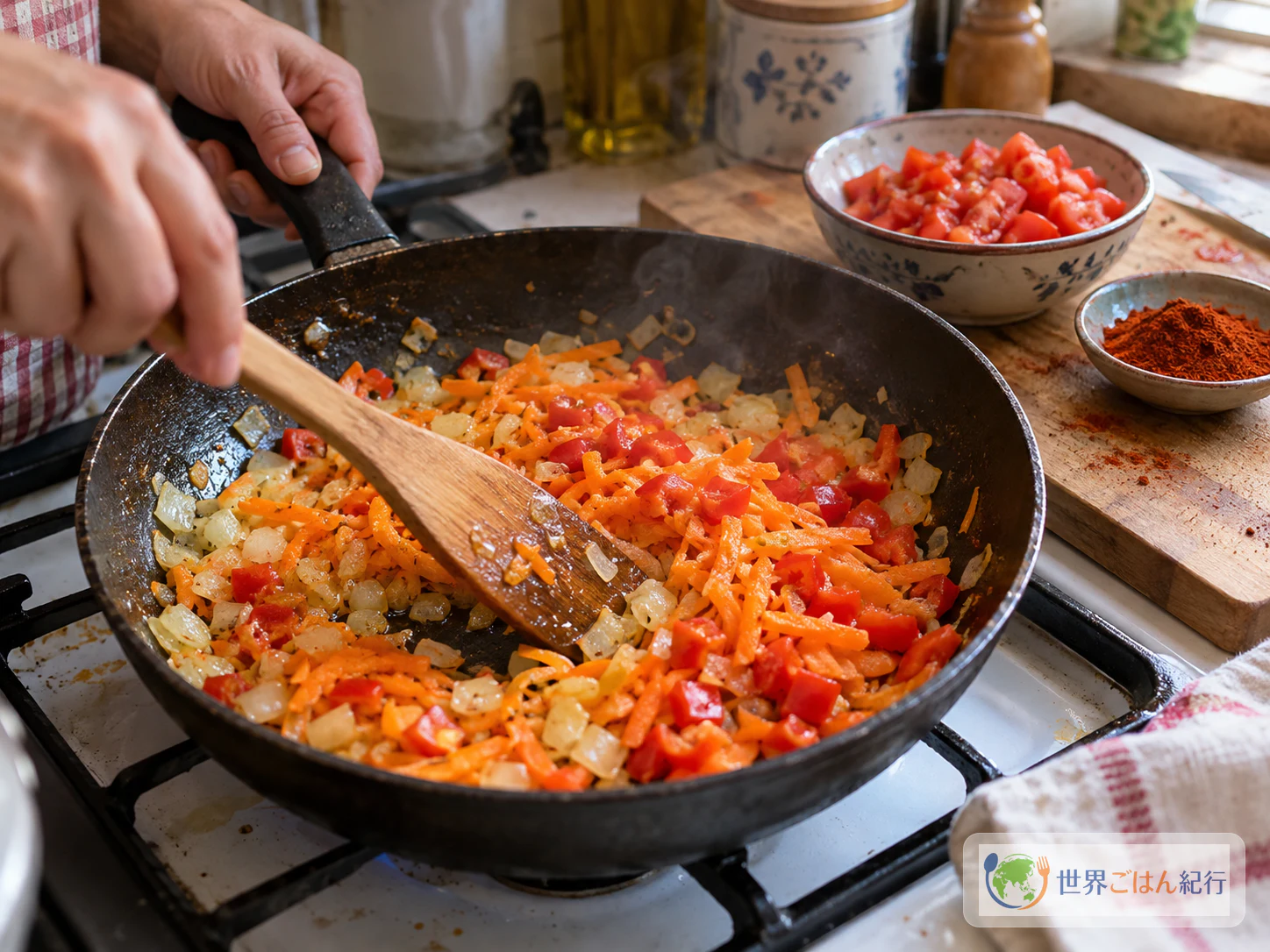
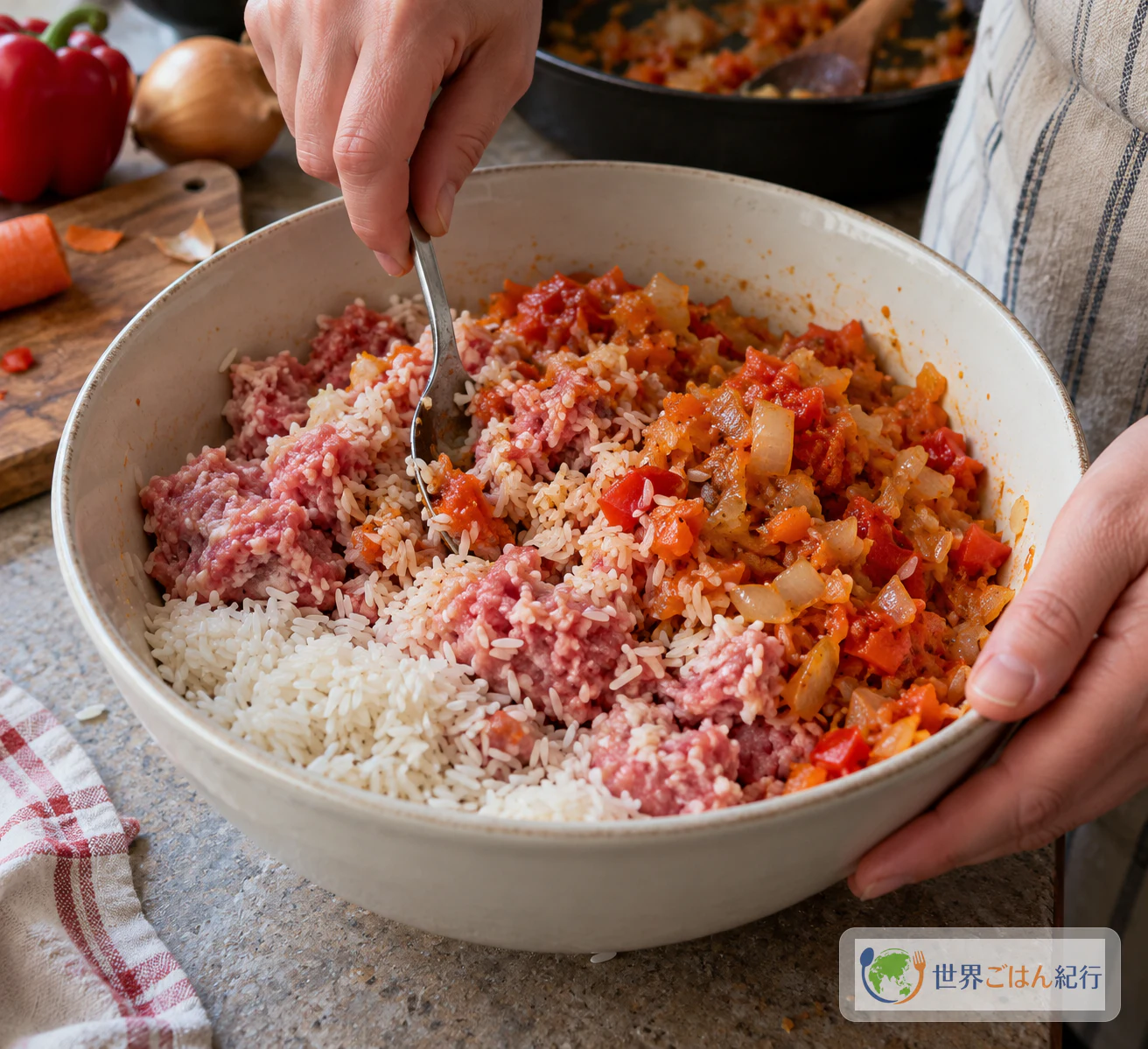
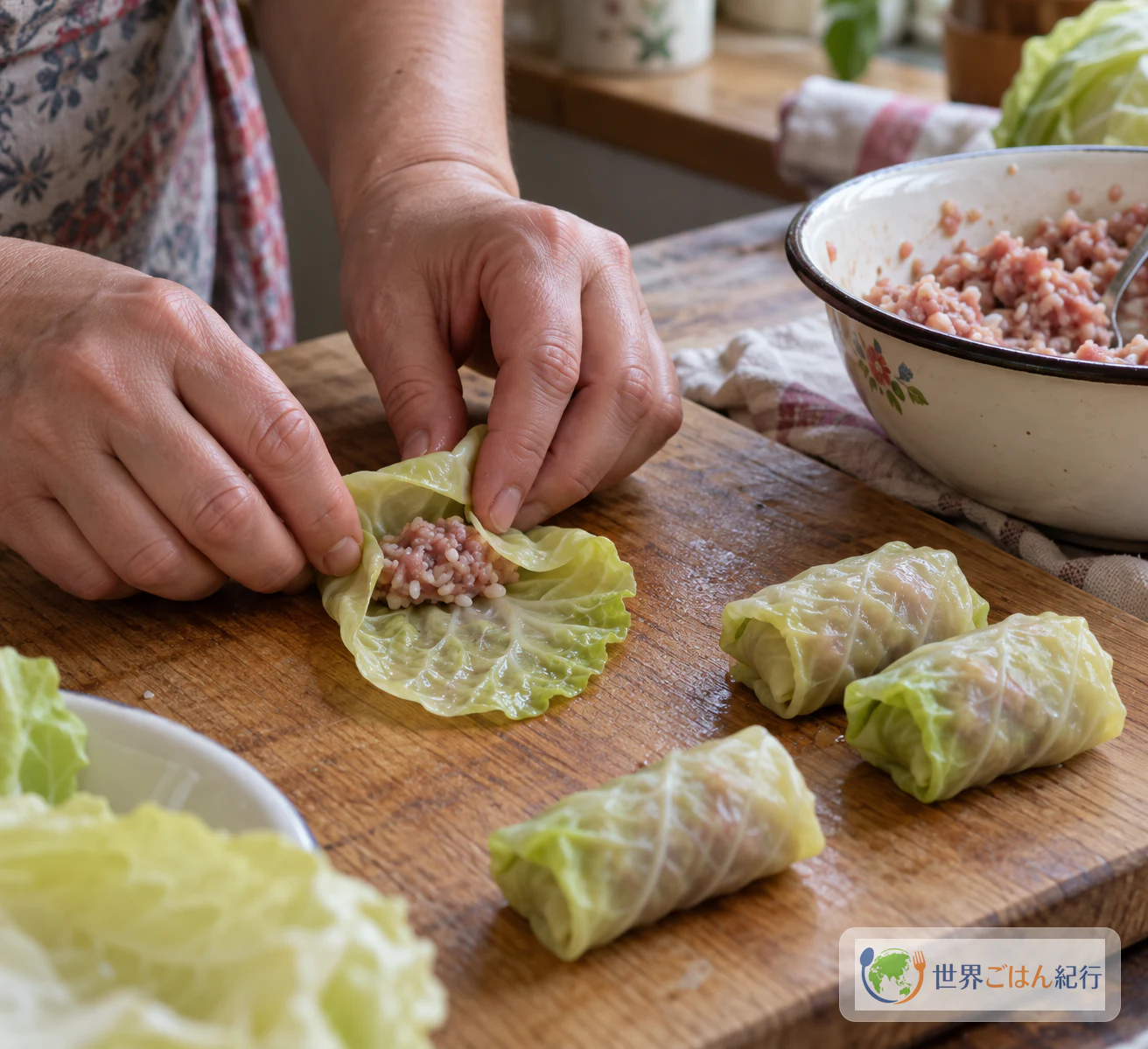
A small white cabbage, cored, sits in a pot of hot water until its outer leaves loosen and turn supple. One by one they come away, the thick ribs are trimmed, and each leaf is cut down to a little piece about the size of a palm. Onto each goes no more than a teaspoon or so of filling: raw rice, raw ground pork and vegetables sautéed in lard with paprika. Rolled up, the leaf becomes a parcel small enough to eat in a bite or two.
Holubtsi (голубці) are Ukrainian cabbage rolls: a filling wrapped in cabbage leaves and cooked in a pot. Across Ukraine, the filling, the leaves, the sauce and the size all vary. This article follows one specific regional style, the small holubtsi of Zakarpattia, as published by the Ukrainian chef Yevhen Klopotenko. He describes the small size and the paprika as what sets this version apart. It is one regional style among many, not a single national standard.
Klopotenko's recipe lists 8 servings and 1 hour 30 minutes, but gives no count of rolls and no breakdown of that time. How many parcels you end up with depends on your cabbage and how you cut the leaves.
This recipe has not been kitchen-tested by Sekai Gohan. The amounts and steps below follow the published recipe. The food-safety temperature check in step 6 comes from separate food-safety guidance, not from the recipe itself.
Ingredients for Small Zakarpattian Holubtsi
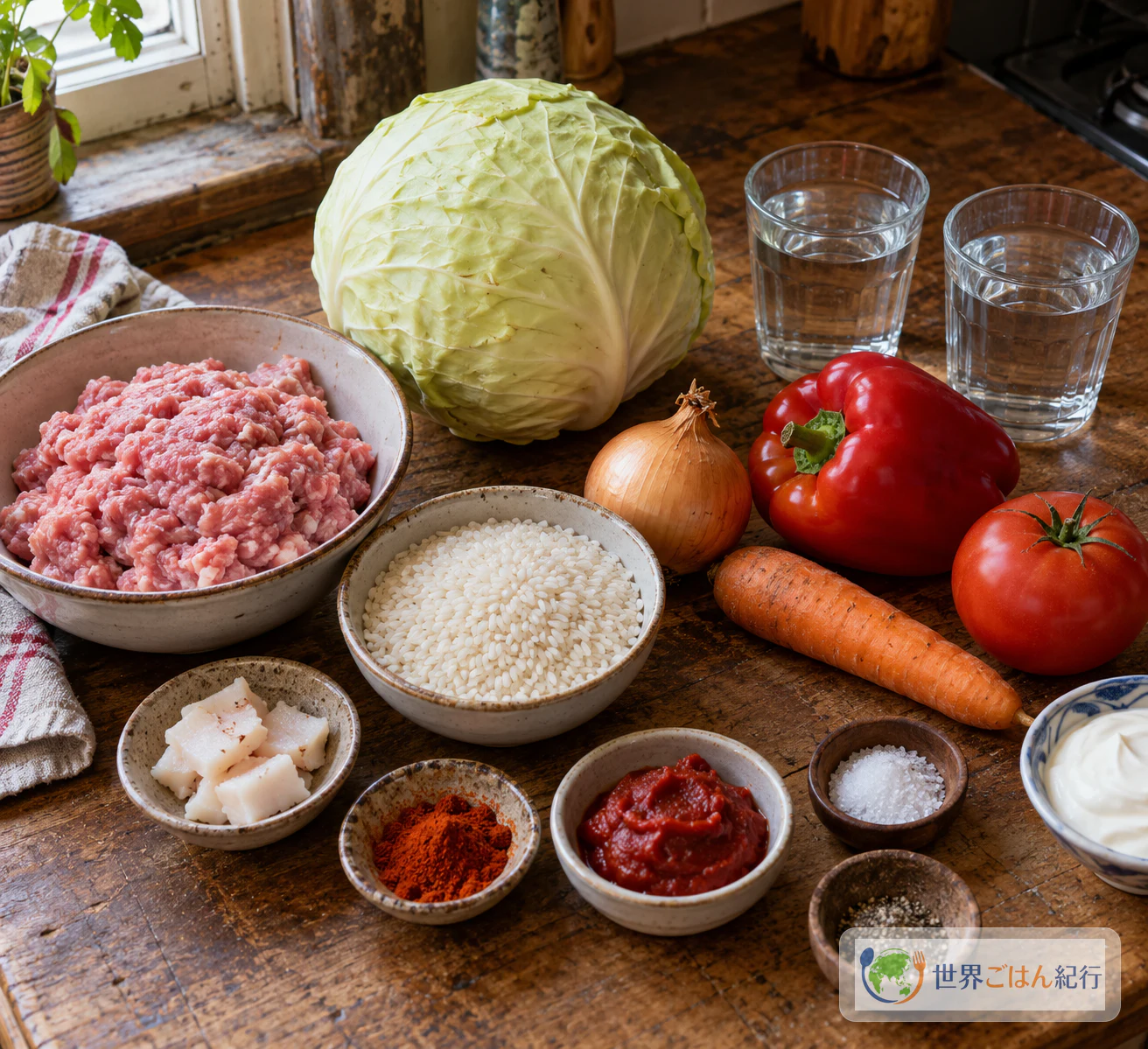
Use the rice raw. Rinse it, but don't boil or steam it before mixing; it cooks in the pot along with the pork.
Choosing and Swapping Ingredients
- Cabbage: Use white cabbage. Napa cabbage and savoy cabbage are different ingredients; the texture of the leaves and the way they cook will change.
- Sweet pepper: A thick-walled red or yellow bell pepper works well. Avoid hot chilies.
- Lard: Sunflower oil or olive oil can replace it. The aroma of the filling becomes lighter.
- Paprika: Use ordinary paprika for this recipe. Smoked paprika is an optional variation (see below) and changes the aroma.
- Labels: This dish contains pork, and the sour cream contains milk. Check the labels of tomato paste, paprika and lard for allergens; don't assume any product is free of them.
Equipment
- A large pot for softening the cabbage
- Tongs for lifting out the leaves
- A frying pan for the vegetables
- A mixing bowl
- A saucepan for cooking the rolls
- A heat-safe plate that fits inside the saucepan
- A thin instant-read thermometer
Method: From Soft Leaves to Small Simmered Rolls
These rolls start with raw ground pork and raw rice, so time alone doesn't tell you they are done. At the end, check that the rice is soft and use a thermometer to confirm the center of a roll has reached at least 71.1°C (160°F).
Troubleshooting: Leaves, Rice and the Center of the Roll
| Problem | Likely cause | What to do |
|---|---|---|
| Leaves tear when you pull them off | Not softened enough yet | Return the cabbage to the hot water and take off only the outer leaves that have loosened. Work inward as each layer softens |
| Leaves split while rolling | Thick rib left in, or too much filling | Shave the rib thinner. Keep to 1–1.5 tsp filling per leaf |
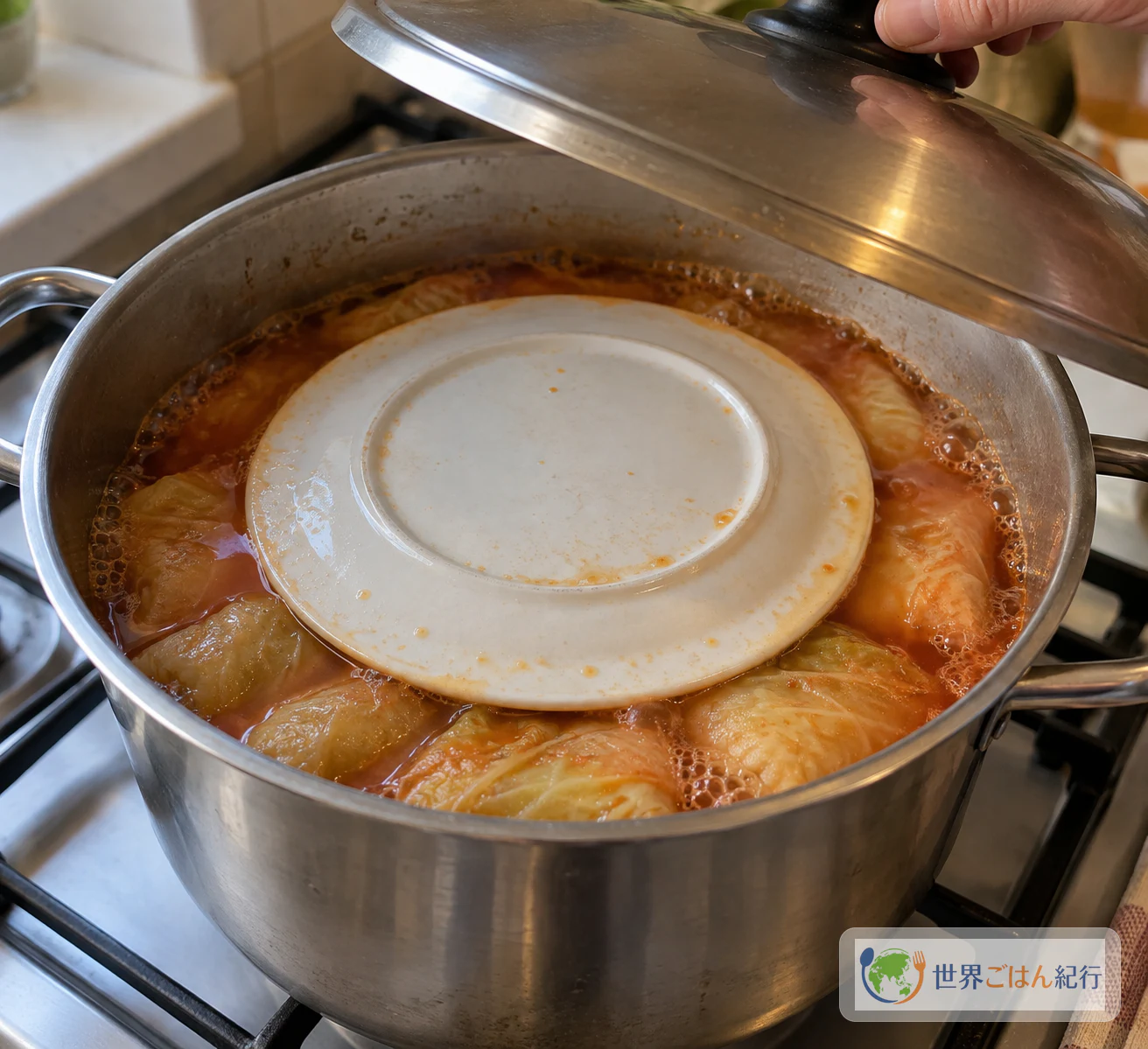
| Rolls open in the pot | Rolled too loosely, or not held down | Pack the rolls snugly in the pot and keep the plate on top while simmering |
| Rice still hard after 25–30 minutes | Larger rolls, or the pot needs more time | Keep simmering and check again. Judge by the rice and the center temperature, not the clock |
| Center below 71.1°C (160°F) | Not cooked through yet | Keep cooking until the thermometer reads at least 71.1°C (160°F) in the center of a roll |
| Cooking liquid seems thin | This is a light tomato water by design | Use both 300 ml portions of water as listed. The sour cream at the table adds richness |
Variations
These change the dish. Treat them as alternatives to the main recipe, not additions to it.
- Oil instead of lard: Use sunflower oil or olive oil for sautéing. The filling tastes lighter.
- Smoked paprika: Replace the ordinary paprika with smoked paprika for a smoky aroma.
- Beef or chicken instead of pork: Possible, but the flavor changes, and you still need to confirm the meat is fully cooked. Check the safe internal temperature for the meat you use; the 71.1°C (160°F) figure here is for ground pork.
- Potato-filled Lenten holubtsi: A separate regional tradition with its own filling (see below). Don't add potato to this recipe; it belongs to a different dish.
Holubtsi Across Ukraine: One Name, Many Pots
Holubtsi are cooked throughout Ukraine, and they take different forms from region to region and home to home. The Visit Kyiv guide to Ukrainian cuisine describes holubtsi as traditional cabbage rolls, commonly filled with minced meat and rice and cooked in a tomato- or sour-cream-based sauce, and notes that the filling, the leaves and the size differ by region. That is an overview from a travel guide, not a fixed national recipe.
The small Zakarpattian rolls in this article come from Klopotenko's published recipe. He presents bite-size parcels and paprika as features of this regional style, with pork, rice and vegetables sautéed in lard. Making each roll from a leaf about 7 × 7 × 11 cm with just 1–1.5 tsp of filling takes more handwork than large rolls, but gives small parcels that are easy to eat.
In 2023, Ukraine's Ministry of Culture and Information Policy entered "Preparation of the Ukrainian traditional dish Holubtsi" in the National List of Elements of Intangible Cultural Heritage as No. 066н.к.с. The entry records that the dish is made throughout modern Ukraine and in other countries too, and its safeguarding proposals mention traditional meals, vegetable growing, the role of millet and ritual aspects. It documents a cooking tradition kept by communities; it does not certify a single origin or one correct recipe.
A different tradition was registered separately. According to an announcement on the Cabinet of Ministers of Ukraine site, the preparation and eating of Lenten holubtsi filled with potato was added to the list in 2023. The announcement connects this tradition to the village of Sonyachne and to other places, in Ukraine and abroad, where Lemko communities live, and it mentions the forced resettlement of Boyko and Lemko people in 1951 that accompanied a territory exchange. That history belongs to the potato-filled Lenten tradition, not to the Zakarpattian pork rolls here.
For more dishes from the country, see our Ukraine page.
Frequently Asked Questions
Should I cook the rice before filling the leaves?
Not for this style. Klopotenko's Zakarpattian recipe has you rinse the rice and mix it in raw with the raw pork and sautéed vegetables, so it cooks inside the rolls. Other holubtsi recipes may treat the rice differently, but don't mix approaches in this one: the amounts of water and filling assume raw rice.
Why is the water added in two 300 ml portions?
The ingredient list in the published recipe shows 300 ml water on two lines, and the method also adds water twice: first 300 ml mixed with the tomato paste, then another 300 ml. Because the steps confirm both additions, this article keeps both rather than treating the second line as a duplicate.
How many rolls does this make?
The recipe lists 8 servings but gives no count of rolls. The number depends on the size of your cabbage and how many leaves you can cut to about 7 × 7 × 11 cm.
Why use a thermometer if the recipe gives a simmering time?
The rolls contain raw ground pork, and a cooking time alone can't guarantee that the center is done; pot size and roll size both play a part. The USDA Food Safety and Inspection Service advises cooking ground meats, including pork, to at least 71.1°C (160°F), checked with a food thermometer. This is added food-safety guidance, not part of Klopotenko's recipe.
Can I use beef or chicken?
Klopotenko's recipe page mentions other meats as options, but the main recipe here uses 400 g ground pork. If you switch, the flavor changes, and you should check the safe internal temperature for that meat rather than relying on the pork figure.
Is there a meat-free version?
Yes, but it is a different tradition. Potato-filled Lenten holubtsi are a regional tradition registered in Ukraine in 2023, linked to Lemko communities. They are best treated as their own dish rather than adapted from this pork recipe.
How long do leftovers keep?
The sources used for this article give no storage times or reheating guidance, so we don't list any here.
Sources
- Yevhen Klopotenko / klopotenko.com, "Зі свининою та паприкою. Голубці по-закарпатськи від Євгена Клопотенка." The Zakarpattian-style recipe: ingredients and amounts, leaf size and filling per leaf, simmering time after boiling, 8 servings and 1 hour 30 minutes as listed, sour cream for serving, and the notes on replacing lard and changing the meat. https://klopotenko.com/zi-svynynoyu-ta-paprykoyu-golubczi-po-zakarpatsky-vid-yevgena-klopotenka/
- Visit Kyiv, "Traditional Ukrainian Food - Top Dishes to Try In Ukraine." Holubtsi as traditional Ukrainian cabbage rolls, the common meat-and-rice filling, tomato or sour-cream sauces, and regional differences in filling, leaves and size. https://visitkyiv.com/food-and-drinks/guide-to-ukrainian-cuisine/
- Ministry of Culture and Information Policy of Ukraine, order on the National List of Elements of Intangible Cultural Heritage (2023). Entry No. 066н.к.с., "Preparation of the Ukrainian traditional dish Holubtsi," and its description of the dish as practiced throughout Ukraine and in other countries. https://mcsc.gov.ua/wp-content/uploads/2023/05/Nakaz-2-1.pdf
- Cabinet of Ministers of Ukraine / Ministry of Culture and Information Policy of Ukraine, "МКІП внесло пісні голубці з картоплею до переліку елементів нематеріальної культурної спадщини України." The 2023 registration of potato-filled Lenten holubtsi, Sonyachne and Lemko communities, and the 1951 forced resettlement. https://www.kmu.gov.ua/news/mkip-vneslo-pisni-holubtsi-z-kartopleiu-do-pereliku-elementiv-nematerialnoi-kulturnoi-spadshchyny-ukrainy
- USDA Food Safety and Inspection Service, "Safe Minimum Internal Temperature Chart." Ground meats including pork cooked to at least 71.1°C (160°F), checked with a food thermometer. https://www.fsis.usda.gov/food-safety/safe-food-handling-and-preparation/food-safety-basics/safe-temperature-chart