A morning when the kitchen smells of lentils and mint
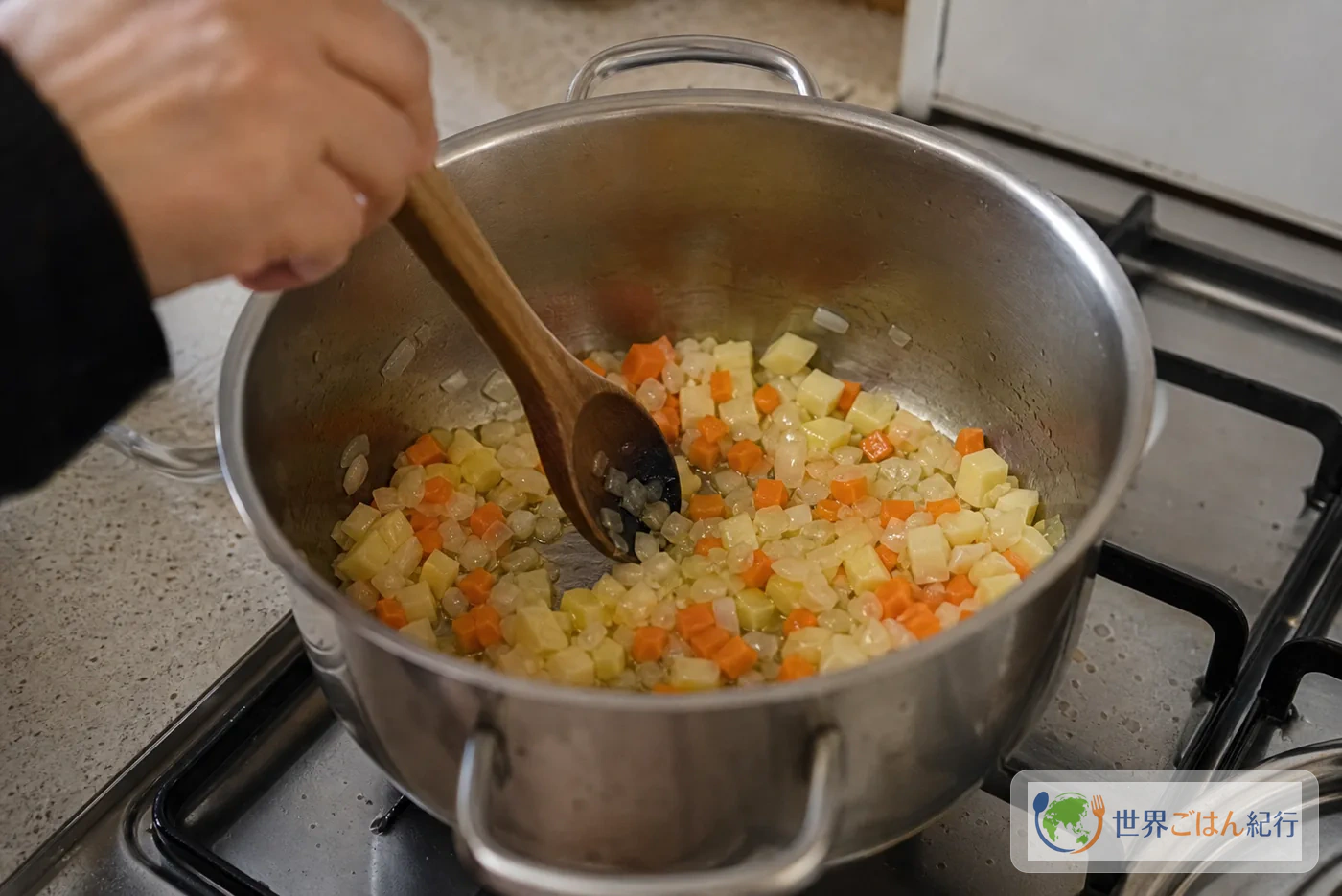
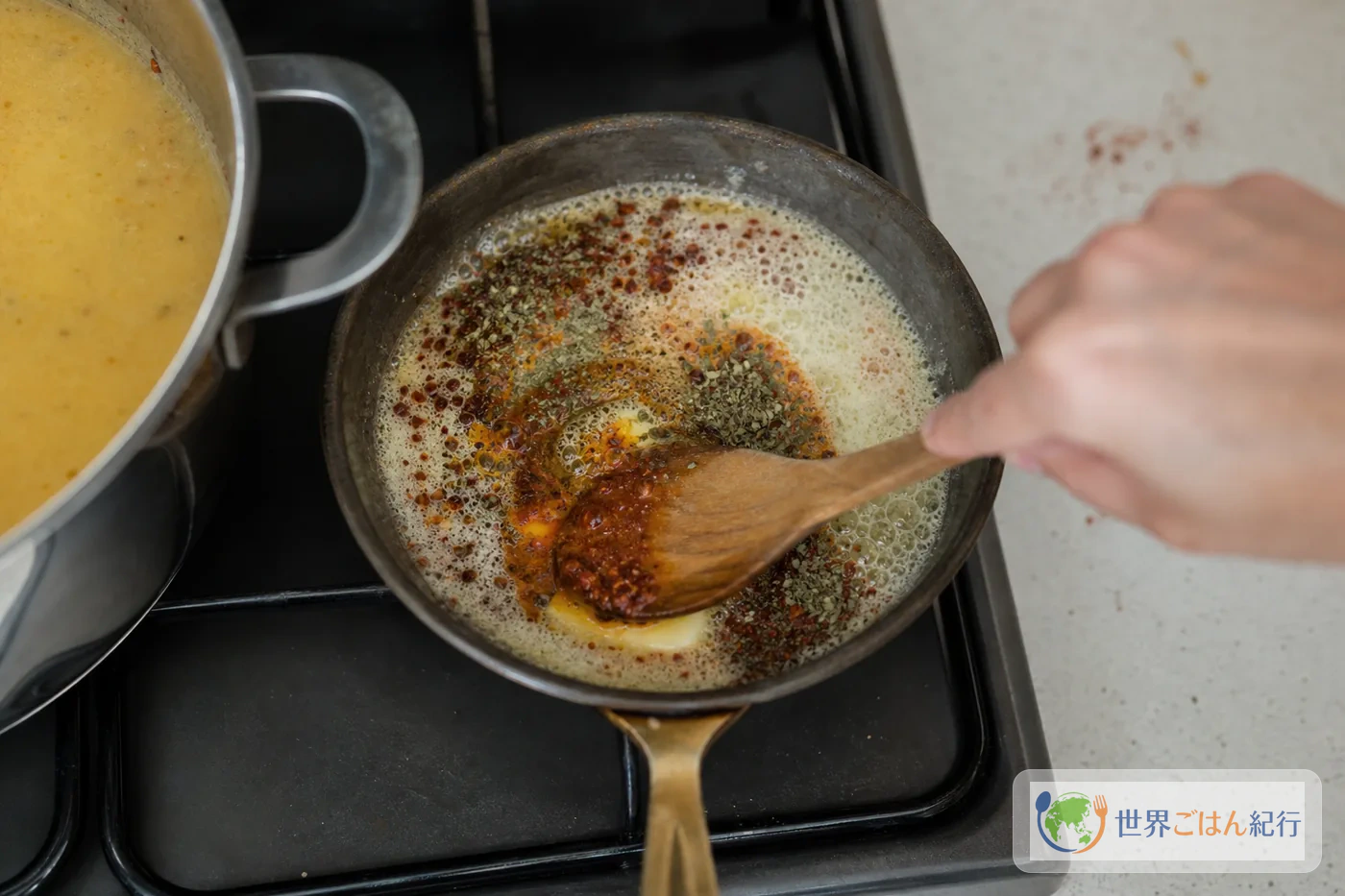
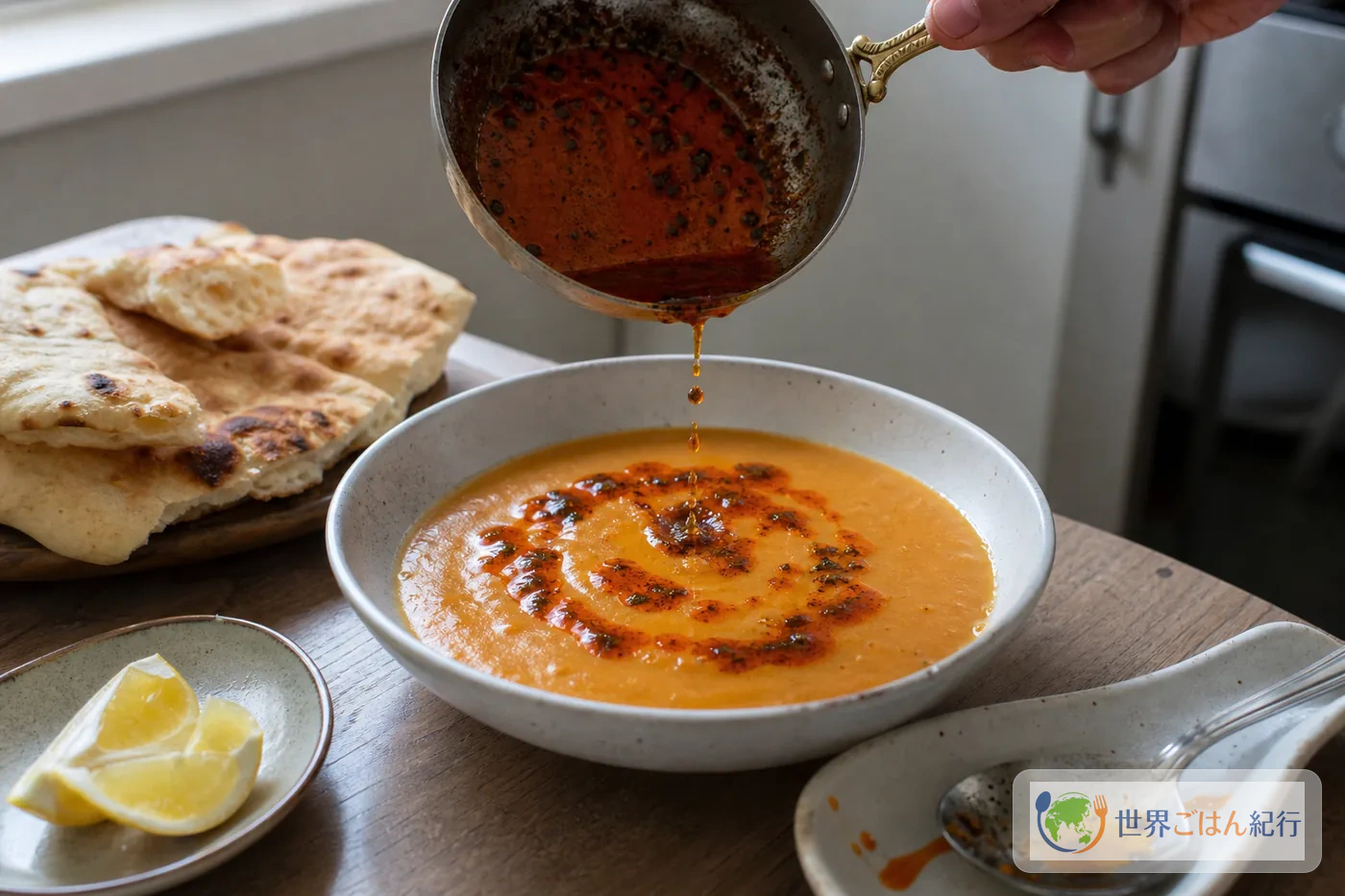
The red lentils fall apart in the pot, and the sweet smell of onion and carrot slowly melts into the soup. Finally you warm butter in a small pan, add dried mint and red chili, and the air in the kitchen turns at once into that of a Turkish lunch spot. One mouthful with a squeeze of lemon brings the gentleness of the lentils and the sharpness of the acid together, a flavor that suits morning as well as night.
Mercimek çorbası is a red lentil soup that is loved all over Turkey. You meet it in the everyday restaurants called lokanta, at lunch at home, and as a light bowl at the end of the day during Ramadan. A bean soup sounds heavy, but red lentils break down fast, and blended they become a smooth, velvety soup. It is satisfying without any meat, and works as a starter before kofte (in Japanese) or dolma (in Japanese), or as a soup beside lahmacun (in Japanese).
The questions in a home kitchen are how thoroughly to rinse the red lentils, whether to add potato, and how far to take the mint butter without scorching it. This article is based on the form you often see locally: red lentils, onion, carrot, a little tomato paste and a red oil to finish. If you have no pul biber, a little paprika with a pinch of chili flakes is enough. What to protect is cooking the lentils until soft, not deciding the thickness in a hurry, and squeezing the lemon just before eating.
To stay close to the local version: use red lentils, sauté the aromatics in oil before simmering, and blend until smooth, then spoon over the mint and red-chili oil. Whether to use potato, carrot or stock varies a lot from home to home, so adjust to the people eating and what you can buy.
Ingredients (serves 4)
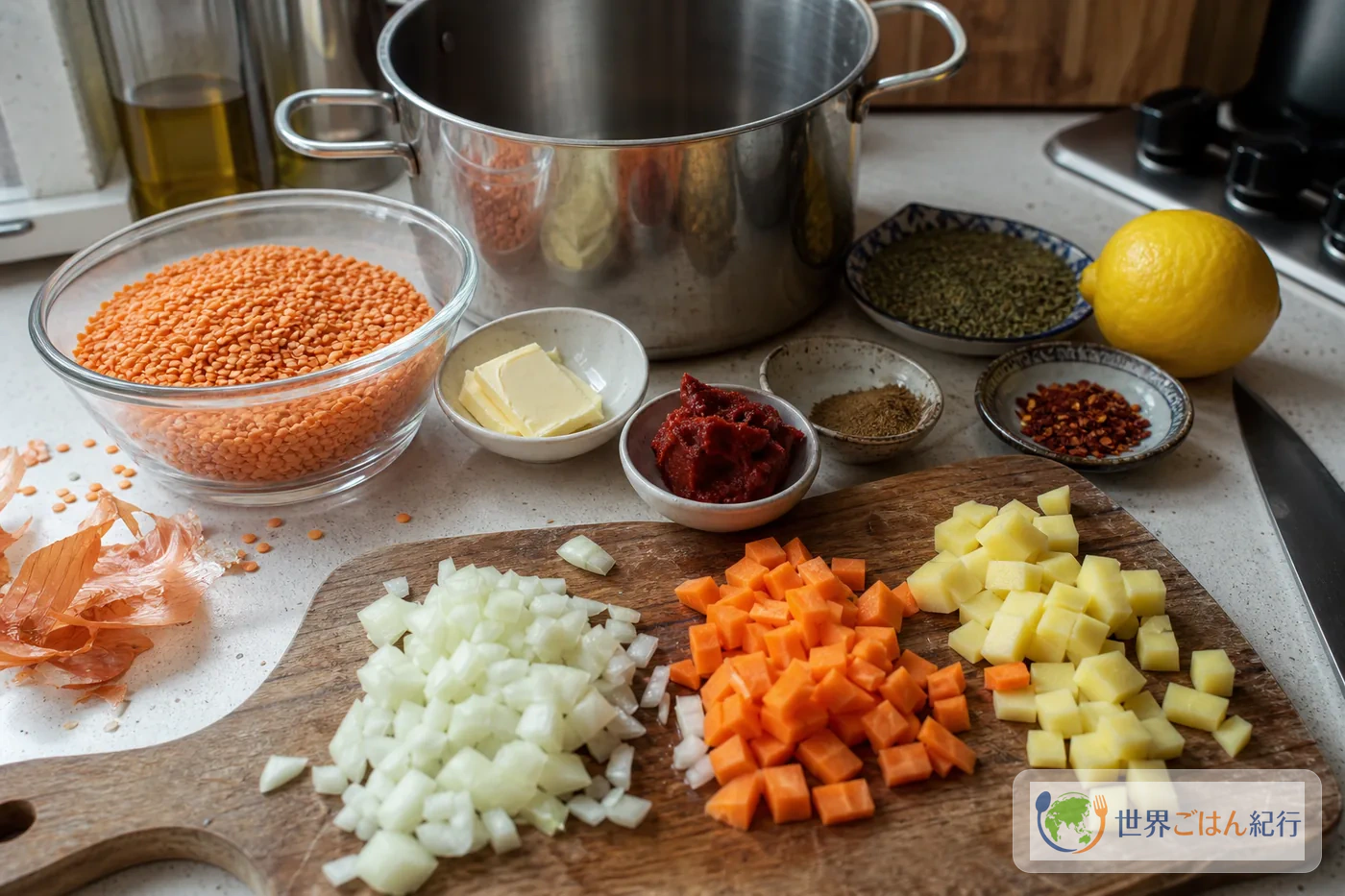
This recipe contains dairy (butter) and legumes (lentils). If you avoid dairy, make the mint butter with olive oil only. Some store-bought bouillons and tomato pastes contain wheat, dairy or soy, so check the ingredient labels.
Ingredients and tools worth thinking about
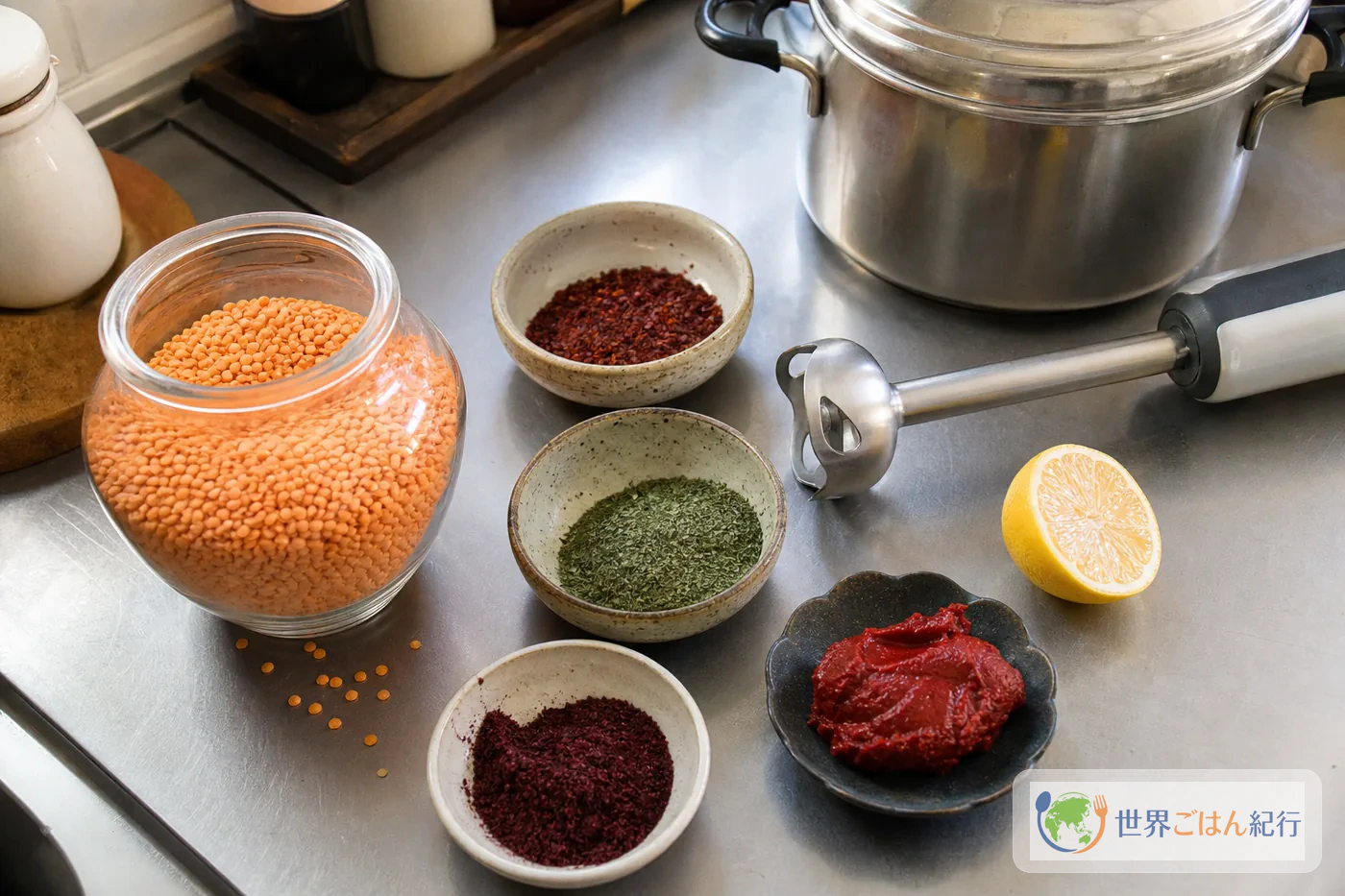
Red lentils are found more reliably at import or specialty grocers, or online, than in an ordinary supermarket bean aisle. The hulled kind needs no soaking and breaks down in about 20 minutes, which makes it far easier to handle than chickpeas or white beans. Pul biber is Turkish coarsely ground chili, adding red color and a mild heat. If you have none, base it on mild paprika and start with a tiny pinch of chili flakes.
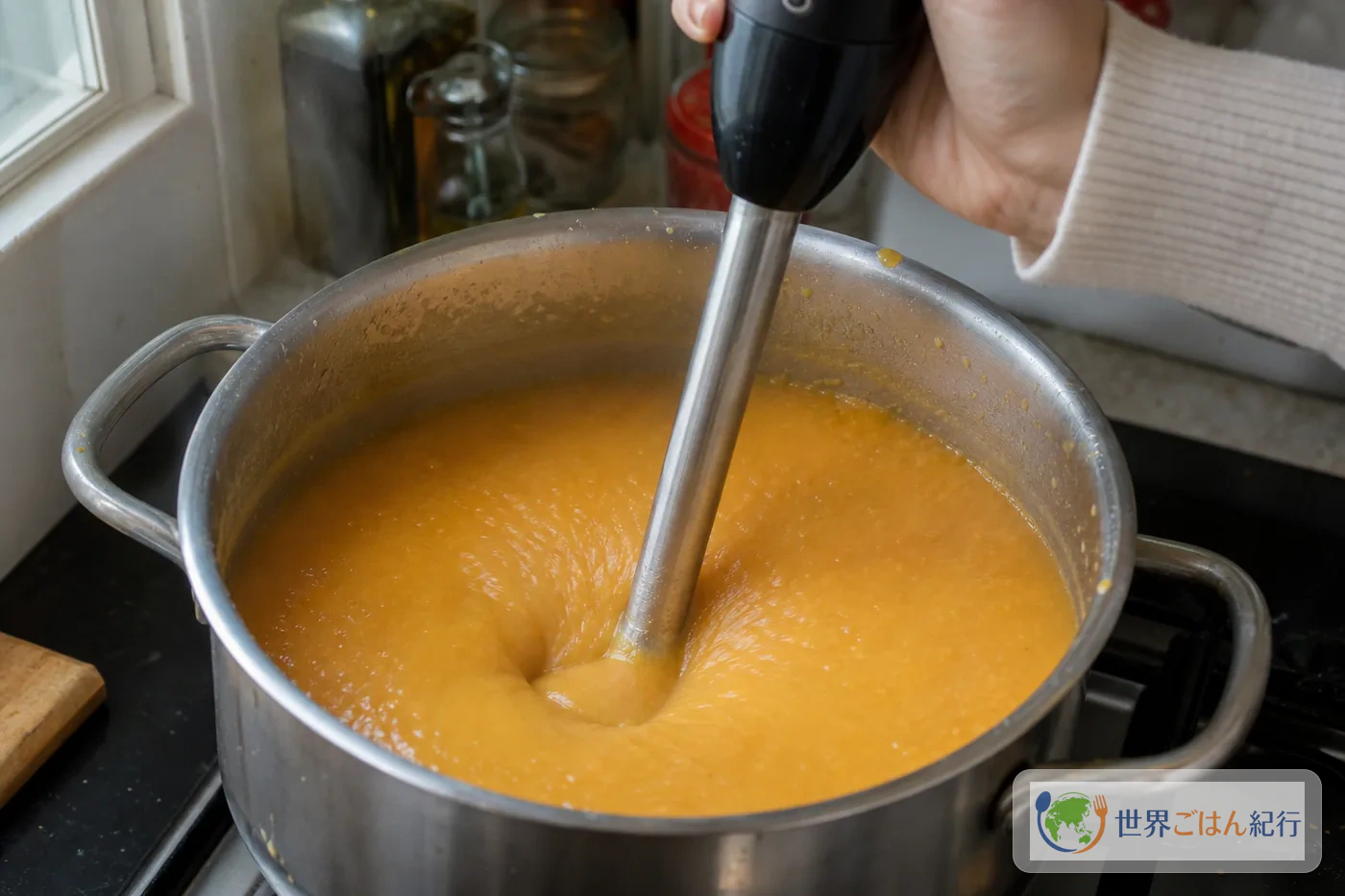
Sumac is not essential to this soup. But it is a powdered spice with a lemon-like sourness, so if you want to broaden your Turkish table a little, it can also go on an onion salad or serve as a palate cleanser after baklava (in Japanese). An immersion blender lets you smooth the soup right in the pot, and it earns its place if you often make bean soups.
Red lentils are the star of this dish; swap in brown or green lentils and they hold their shape and become a different soup. They keep well as a dry staple and also work in dal, so they are worth buying first.
If you want the soup smooth, an immersion blender is worth a lot. There is no need to transfer to a blender, and it is less likely to spill hot soup, which makes bean soup easier to fit into a weekday menu.
Method
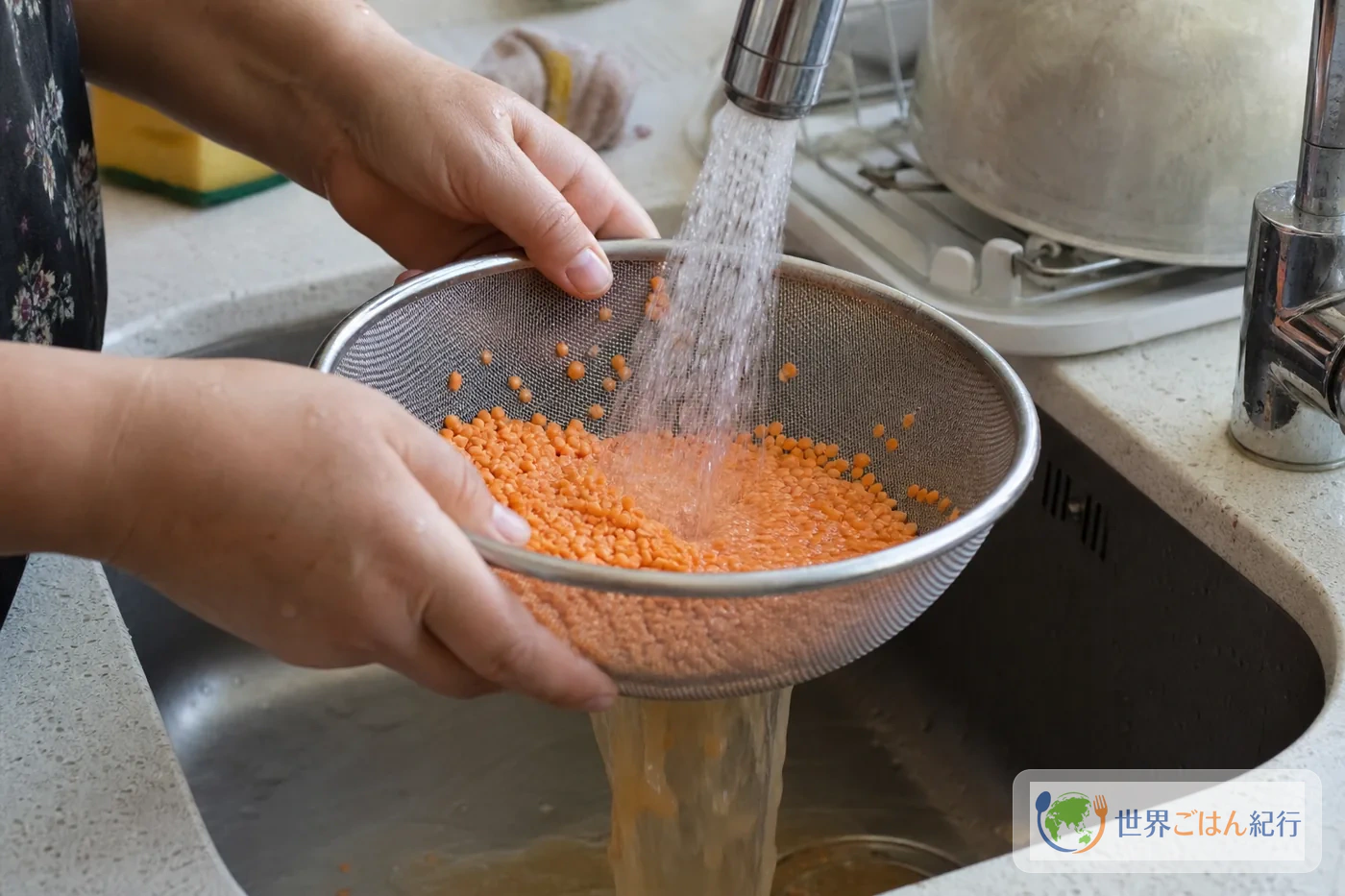
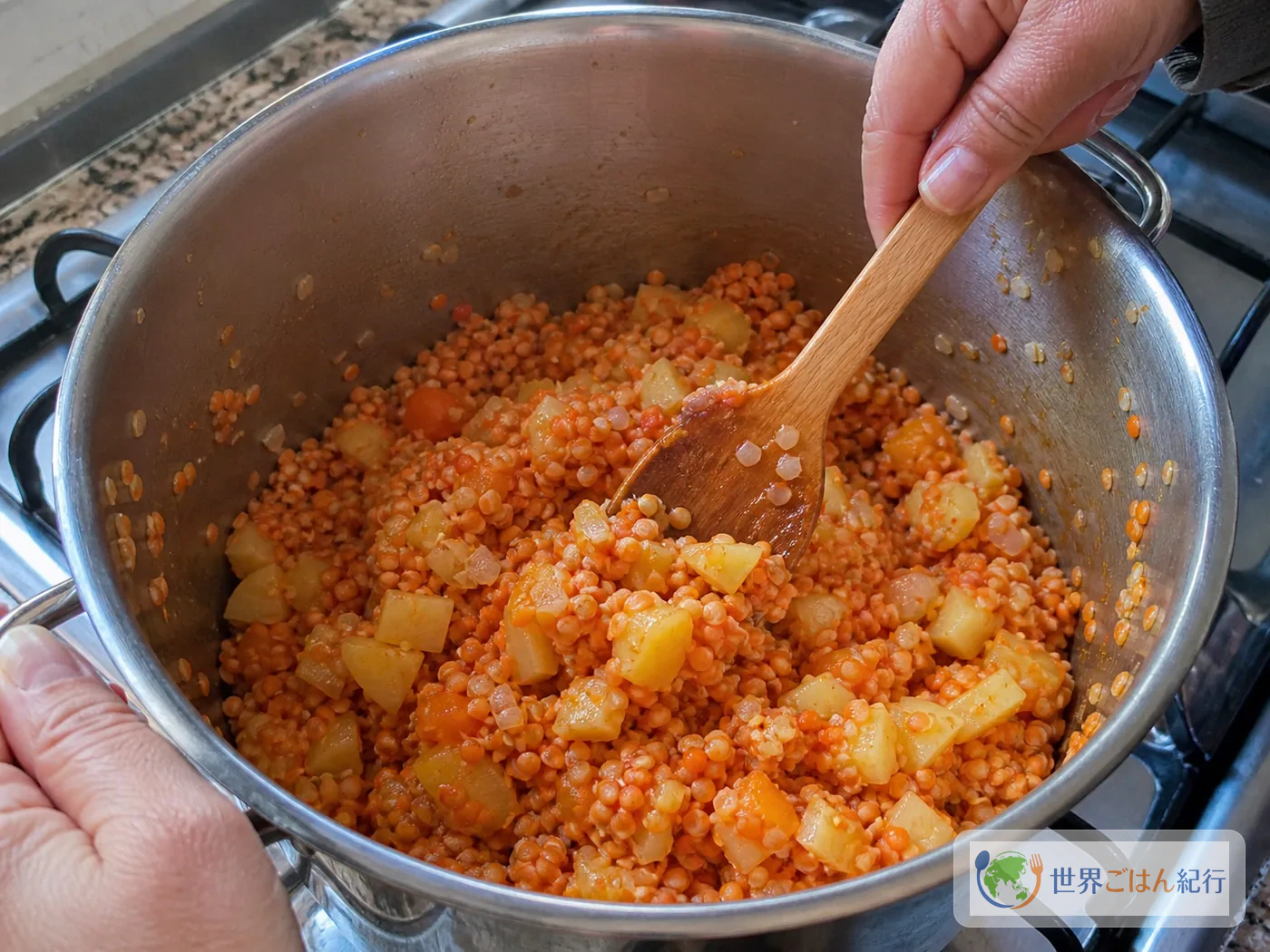
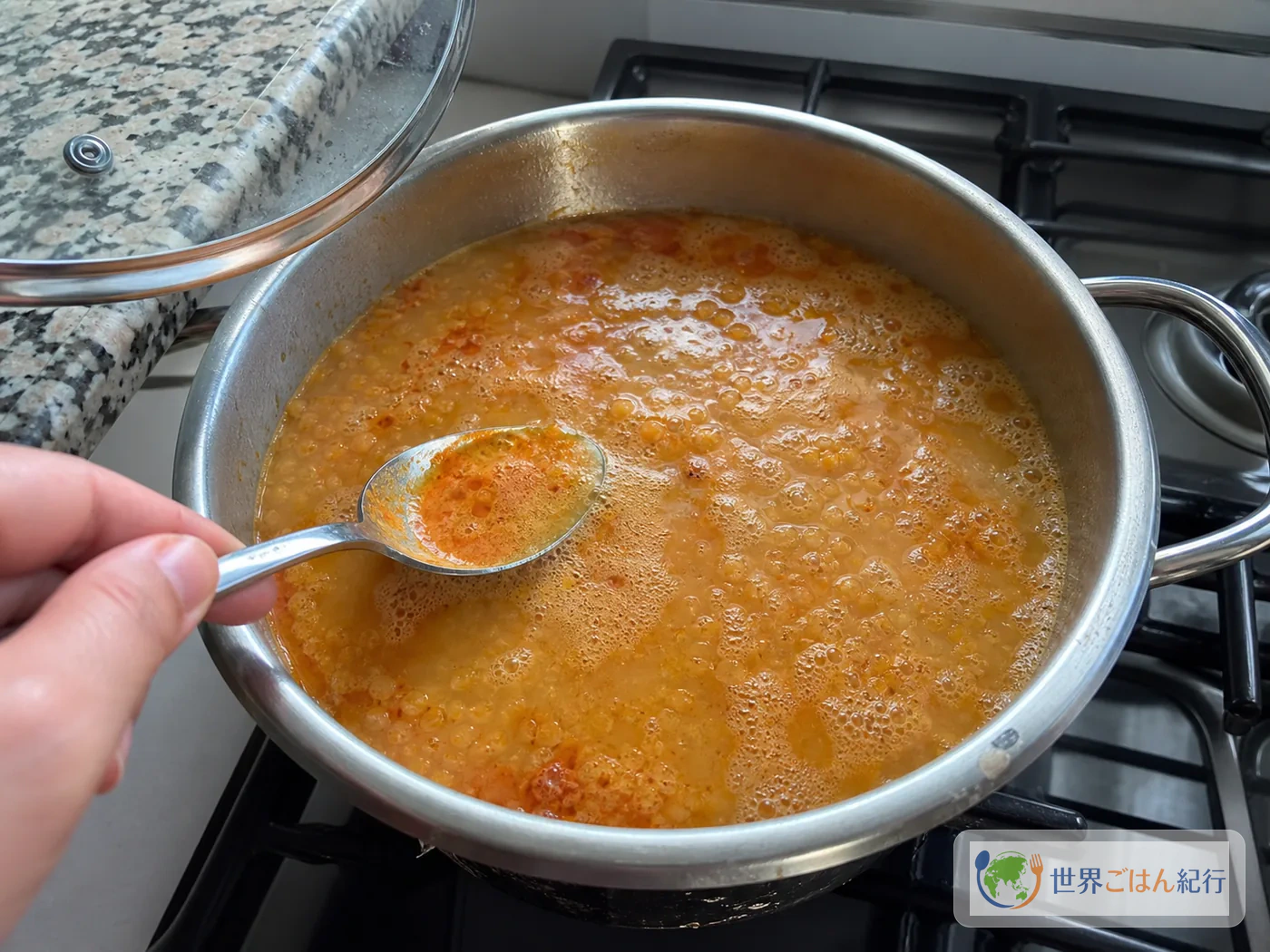
Mercimek çorbası has the ease of not needing to soak the lentils. But rinse them too little and an earthy taste remains; cook them too little and the soup is gritty. If you decide at each step what to look for, you can match the thickness even on a first try.
Red lentil soup thickens bit by bit even after the heat is off. Instead of trying to finish it perfectly in the pot, adjust just before it goes into the bowl by adding 2 tbsp water or light stock at a time. It feels heavier as it cools, so stopping at "a little loose" while it is warm makes it easier to eat.
A branch table for getting close to the local version at home
Mercimek çorbası varies a good deal from home to home. Some households add potato, some add a little rice for body. When you make it outside Turkey, rather than anchoring everything to imported ingredients, it is easier to keep going if you protect only the key points of aroma and thickness.
| Ingredient or tool in question | Close to local | Substitute | What changes with the substitute |
|---|---|---|---|
| Lentils | Hulled red lentils | Brown or green lentils are unsuitable | They hold their shape, and color and texture become different |
| Chili | Pul biber | 1/2 tsp paprika plus a little chili flakes | The heat gets close, but the fruity note weakens |
| Dried mint | Turkish dried mint | Any dried mint you can get | The green note shifts slightly but it still goes well |
| Acidity | Lemon | From 2 tsp lemon juice | The aroma of fresh lemon zest is harder to get |
| Smoothness | Immersion blender | Coarsely mash with a masher | Leaves a homey grain and is more rustic |
| Richness | Butter's red oil | Olive oil only | For vegans. The aroma is lighter |
What most decides the Turkish character is the red lentils and the lemon. They have a higher priority than pul biber or sumac, so if you are unsure what to buy, first secure red lentils and fresh lemons. Dried mint is strongly aromatic even in a small amount, and any left over can go into yogurt sauce, roasted eggplant and cucumber salad.
There is no need to entrust all of the "authentic" feel to imported ingredients. Once the way the red lentils break down, the acidity of the lemon and the aroma of the finishing oil are right, whether to add potato, use chicken stock or go fully plant-based can follow the table. Separating what to protect from what to move makes this a staple soup for cold days rather than a one-time rarity.
| Situation on the day | Adjustment to prioritize | Adjustment to avoid |
|---|---|---|
| Breakfast or a light lunch | Make it light with water or vegetable stock and strengthen the lemon | Adding more butter and making it heavy |
| Starter before a meat dish | Go slightly lighter on salt and use 1 tsp of mint butter each | Too much garlic or cumin |
| Dinner with bread | Add potato for body and spoon on plenty of red oil | Reducing the liquid too far into a dip |
| Making ahead | Keep the soup and the finishing oil separate | Storing with the lemon mixed in |
Why it goes wrong: fixing gritty, heavy and thin
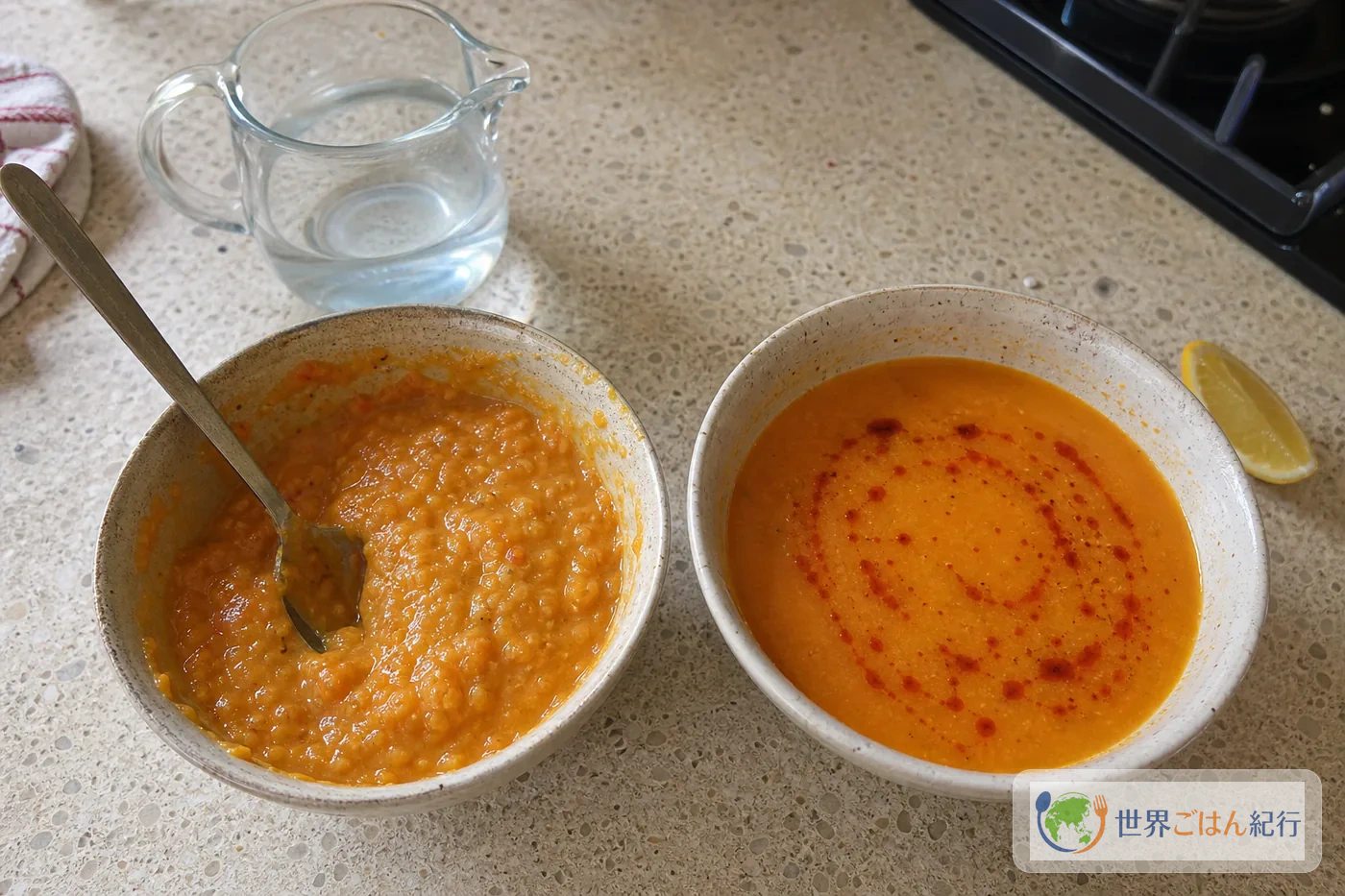
| Symptom | Cause | Fix |
|---|---|---|
| Gritty | Lentils or vegetables undercooked | Add 100 ml water, simmer 10 more minutes over low heat, then blend again |
| Too heavy | Too much potato, or reduced too far | Add 2 tbsp water or light chicken stock at a time and strengthen the lemon |
| Thin | Not enough salt or tomato paste | Add a pinch of salt and 1 tsp tomato paste and simmer 2 minutes over low heat |
| Bitter | The mint butter scorched | Remove the oil and remake it in a separate pan over low heat for just 30 seconds |
| Beany smell | Not rinsed enough or not sautéed enough | Next time rinse 3 times and sauté the lentils and tomato paste for 3 minutes |
| Dull color | Brown lentils were used | Switch to red lentils. Making up color with paprika does not restore the texture |
Before adding seasoning, first see whether the lentils have broken down. If red lentils remain hard and whole, adding salt or spices will not improve the texture. Run a wooden spoon along the bottom of the pot and check whether the lentils crush easily. If they do not, stop seasoning, add water and simmer 10 more minutes; that is the shortcut.
Another failure is scorching the finishing red oil. Dried mint is light and blackens in an instant over high heat. When fine bubbles appear and the red color moves into the oil, you are done. The longer you fry to draw out aroma, the more bitterness goes into the soup.
How to eat, menus and storage
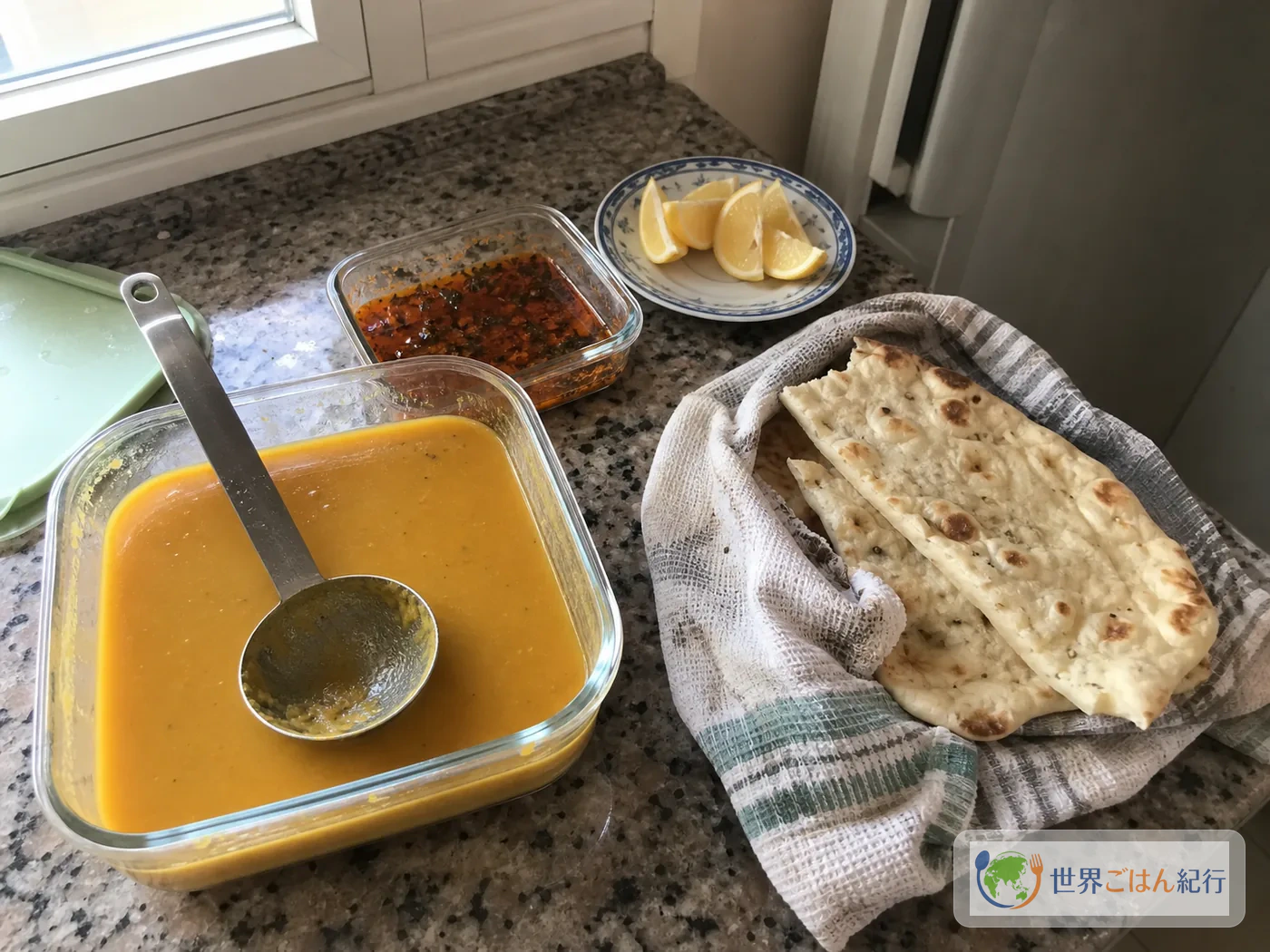
In Turkey it is common to serve mercimek çorbası with lemon. It is good as a light lunch with bread, and a small bowl before a meat dish settles the table with the gentle sweetness of the lentils. As a home menu, soup, bread, an onion and parsley salad and yogurt are enough. On a weekend, pairing it with lahmacun (in Japanese) or kofte (in Japanese) makes it feel like a Turkish table.
Once the soup is in the bowls, rather than squeezing the same amount of lemon for everyone, start by giving each person about 1/8 lemon and let them adjust. Those who like more acidity add more; children and people who dislike sourness eat it with just the mint butter. That way, even when one pot is shared by the family, it is less likely to be "too sour" or "too spicy."
| Dish to pair | How to set the table | Good for |
|---|---|---|
| Lahmacun | Pour a smaller bowl of soup and make the thin flatbread the star | A light weekend lunch |
| Kofte | Serve the soup before the meat and add acidity with an onion salad | Dinner or guests |
| Dolma | Pair a smooth bean soup with the rice-stuffed dish | A vegetable-centered menu |
| Bread and yogurt | Keep it to soup, bread, yogurt and olives | A weekday brunch |
Storage is about 3 days in the refrigerator. It can be stored with the mint butter mixed in, but the aroma fades. If you are making it ahead, put the soup in a storage container and keep the mint butter in a separate small container. The next day, return the soup to the pot, add 3 to 4 tbsp water or light stock and warm over low heat. When it bubbles, stir from the bottom to restore the thickness before pouring into bowls.
If freezing, portion it before adding the mint butter and lemon. About 3 weeks is the guide for taste, and thaw overnight in the refrigerator. After thawing it may look separated, but warming over low heat while stirring brings it back. Squeezing the lemon after reheating gives a cleaner outline to the lentils' sweetness and the acidity.
Frequently asked questions
Can I use other legumes if I have no red lentils?
Brown or green lentils also make a lentil soup, but they stray from the color and smoothness typical of mercimek çorbası. Hulled red lentils break down fast and become a purée-like soup in 20 minutes, which is their strength. If you are going to substitute, getting red lentils online or at a specialty grocer gives more reliable results than using brown lentils.
Can I make it without an immersion blender?
Yes. Extend the simmering to 25 minutes, and when the lentils and vegetables are completely soft, mash them against the bottom of the pot with a masher or wooden spoon. It is less smooth, but it is delicious as a rustic Turkish home-style soup. If you want a fully smooth purée, cool it a little and use a countertop blender.
What can I use in place of pul biber?
Combine 1/2 tsp mild paprika with a pinch of chili flakes. Too many chili flakes make only the heat stand out, so leave the red color to the paprika. Korean coarse chili flakes give a similar feel, with a slightly different sweetness and aroma.
What do I change to make it vegan?
Use water or vegetable stock and replace the butter in the mint butter with 2 tbsp olive oil. Because the richness is lighter, sauté the onion a full 8 minutes and add 1 tsp more tomato paste for satisfaction. Always squeeze the lemon just before eating.
How do I adjust it for children or family members who dislike heat?
Leave heat out of the soup itself and serve the finishing red oil on the side. Make the mint butter with paprika alone, and add the pul biber and chili flakes in small amounts to the adults' bowls afterward. Starting with 1 tsp of lemon also makes it easier for people who dislike sourness.
Is it good if made the day before?
Yes. But it gets quite thick when cold, so the next day add water or light stock and warm it over low heat. Finish the mint butter and lemon on the day so the aroma does not blur. For making ahead, ideally refrigerate only the soup and make the finishing oil just before eating.
Sources consulted from abroad
Mercimek çorbası varies a great deal from home to home, so rather than rely on one recipe, I compared Turkish cuisine sites with English-language recipes. What they share is cooking red lentils soft and blending them smooth, and finishing with lemon, mint and red chili oil.
- Turkish Cuisine Portal, Mercimek Çorbası / Red Lentil Soup
- Lentils.org, Mercimek Çorbasi - Turkish Lentil Soup
- 196 flavors, Mercimek Çorbası
- Özlem's Turkish Table, Turkish red lentil soup