The skin crackles: Vancouver's B.C. roll
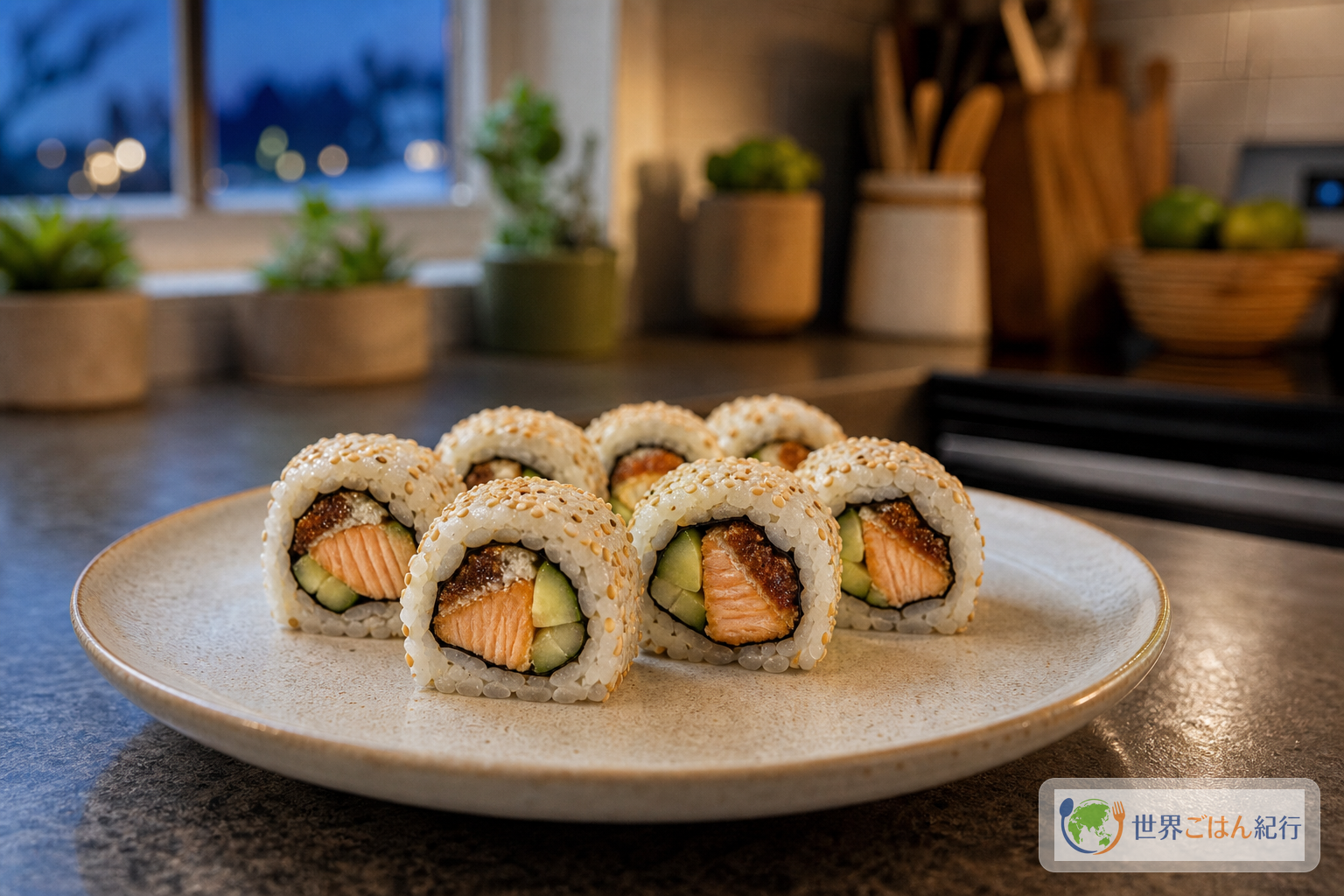
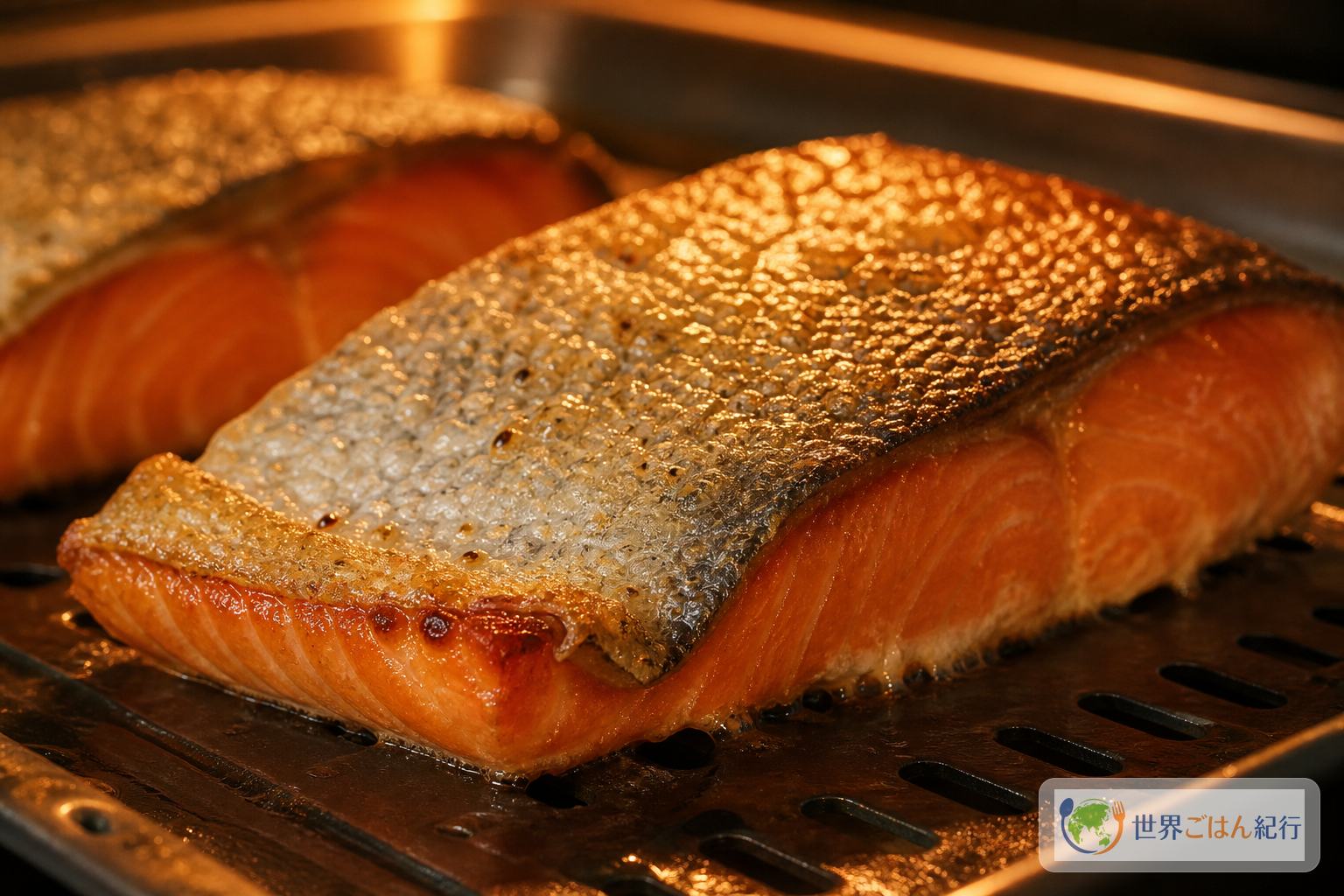
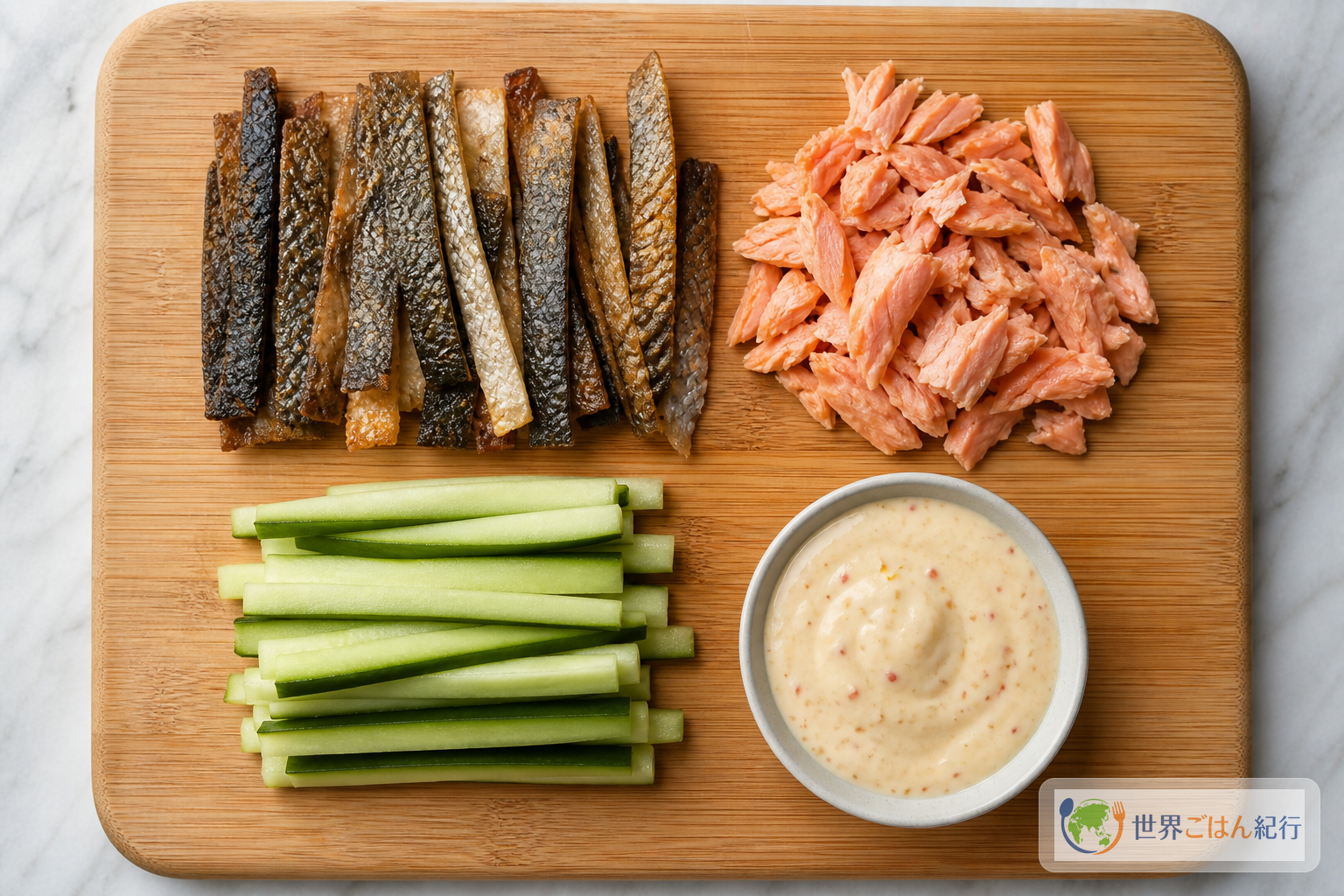
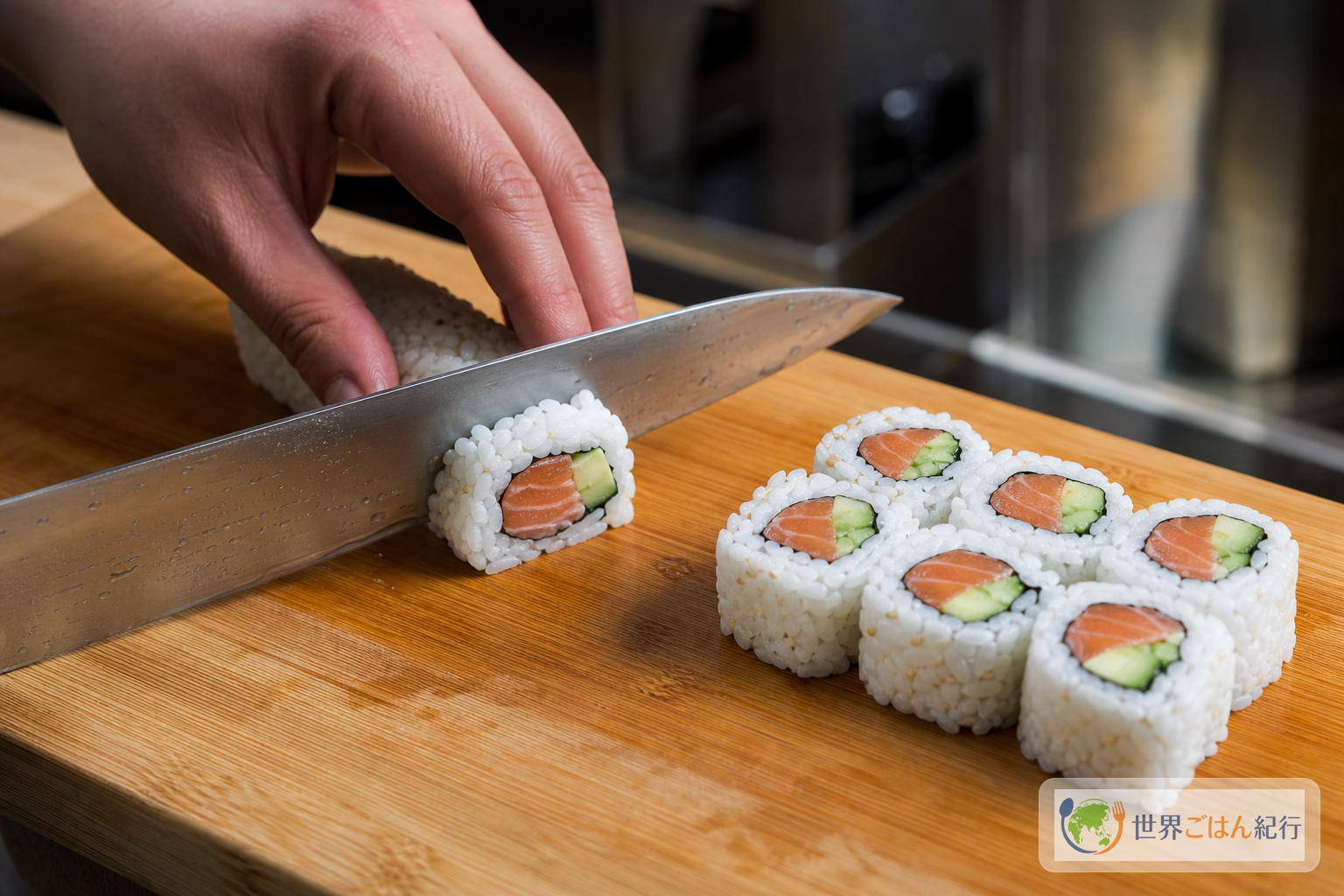
Imagine opening the broiler and hearing the skin of a salmon, its fat rendered off, crackling finely. The rice is fluffy, the cucumber cold. When the knife goes through, the cross-section shows rice on the outside, nori inside, and the grilled skin at the center. It is a familiar sushi roll, yet the star of the filling is a little unexpected.
The B.C. roll is a sushi roll born from the Japanese food culture of British Columbia in western Canada, especially Vancouver. Tojo's Restaurant's official introduction describes it as a roll that uses grilled salmon skin. If you bought skin-on fillets and were about to peel off the skin and throw it away, stop right here. In this dish, that is the part you grill until crisp and use.
What is hard in a home kitchen is not an unusual seasoning. It is not making the sushi rice too thick, not leaving moisture in the cucumber, and grilling the skin rather than steaming it. Miss any one, and even if it rolls, the taste and texture blur.
This article is a home version that uses no raw fish, cooking skin-on salmon thoroughly. Taking Tojo's "grilled salmon skin" as the axis of flavor, a small amount of the flesh is added for ease of eating and to reduce food waste. Think of it as separate from raw-fish nigiri and from rolls wrapped around eel.
Beyond the name: why the nori is inside
B.C. stands for British Columbia. From the name alone it can look like a regional dish eaten somewhere in Canada since long ago, but in fact it is a dish in which the Japanese sushi roll was rearranged for Vancouver's ingredients and clientele.
According to the record of the B.C. Food History Network, Hidekazu Tojo, a chef born in Kagoshima, moved to Vancouver in 1971, worked at local sushi restaurants, and opened his own restaurant in 1988. The network describes his B.C. roll as one using grilled salmon skin in place of the traditional conger eel (anago). Tojo's itself also states that he moved to Vancouver in 1971 and that the B.C. roll is one of his creations.
What is interesting here is that the skin is not a mere substitute. On the Pacific side, in British Columbia, salmon was a familiar ingredient. Grill the skin and fat comes out, and a toastiness stronger than the flesh rises. Pair it with cucumber, put the nori inside and bring the rice outside. It is a design that hides the unfamiliar-looking nori, so that people first notice the aroma of grilled fish and the sweet-sourness of the rice.
Vancouver's sushi is not a Japanese pattern imported as is. A food-culture article from UBC describes how stores and restaurants run by Japanese Canadians became places where Japanese and local ingredients moved back and forth. The British Columbia government's historical materials also record how Japanese-Canadian restaurants and cafés came to be woven into life in the province's cities and small towns.
So there is no need to judge whether the B.C. roll is "authentic Japanese sushi." It is a Canadian sushi roll, easy to overlook from a Japanese viewpoint, that took Japanese rice, nori and sushi-rice technique and was shaped to local salmon and the senses of those eating it. What to keep at home is not decorating the story of the dish's name, but the aroma of the grilled skin and the texture of the inside-out roll.
Both are inside-out rolls with rice on the outside, but the California roll is built on crab, avocado and cucumber. The B.C. roll makes grilled salmon skin the star. You can make a home version with avocado added, but a basic B.C. roll doesn't need it from the start.
Ingredients: first, make the salmon skin the star
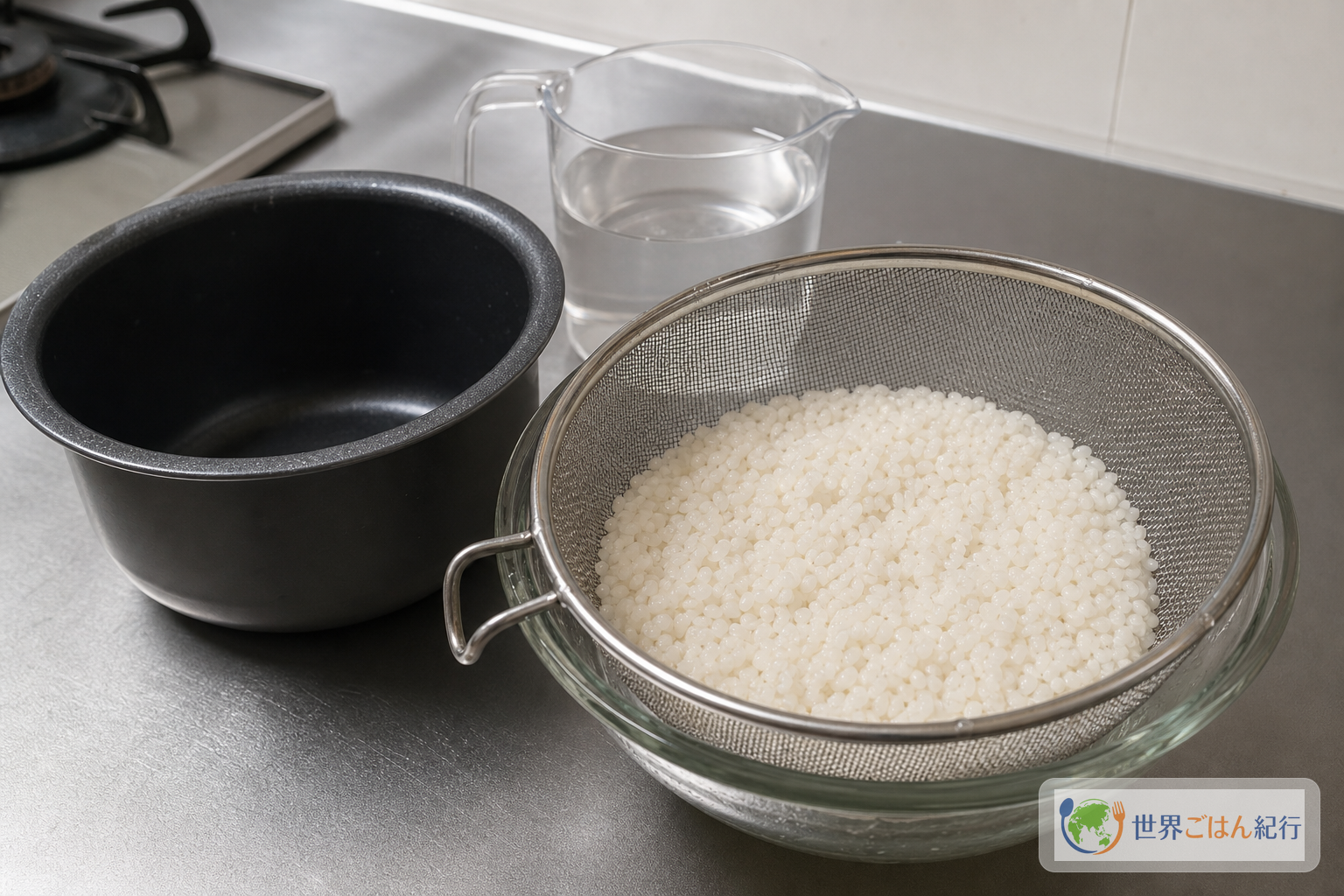
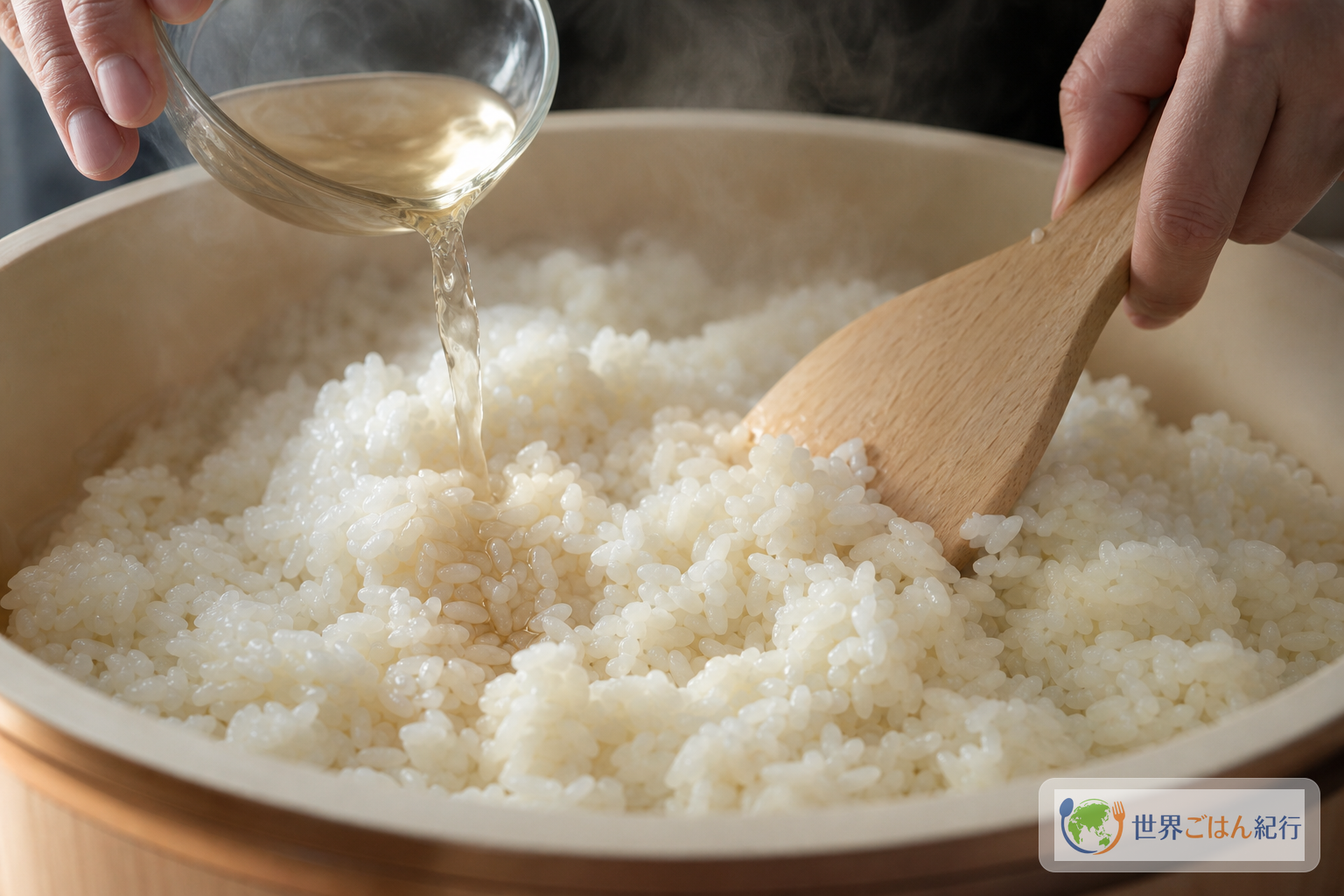
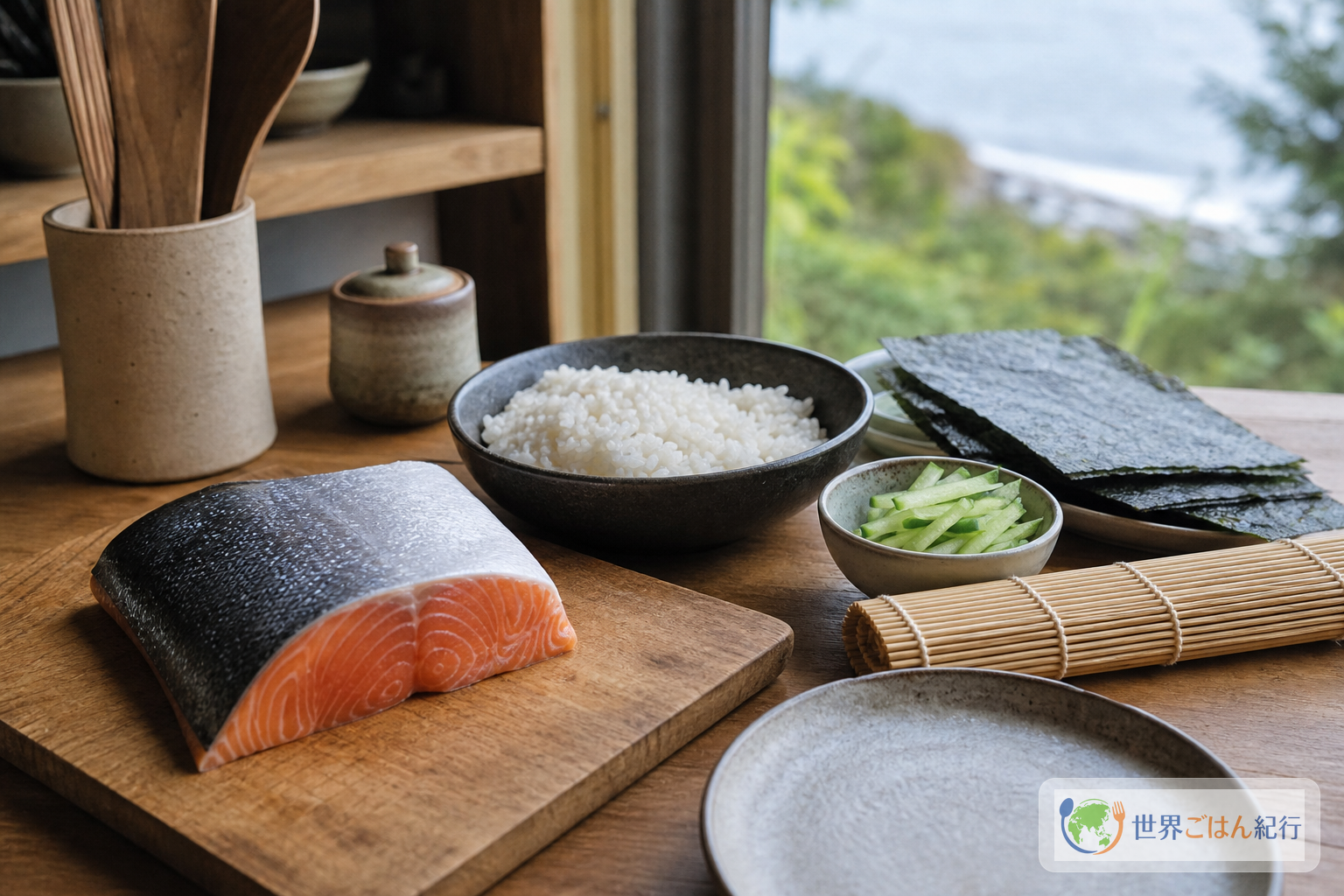
This makes 4 rolls, each cut into 8 pieces, shared among 4 people. Cook the sushi rice a little firm, and mix in the seasoned vinegar while it is still hot. Kikkoman's sushi-rice basics follow the same flow: soak the rice, cook it, pour the seasoned vinegar over the hot rice, and mix with a rice paddle using cutting motions.
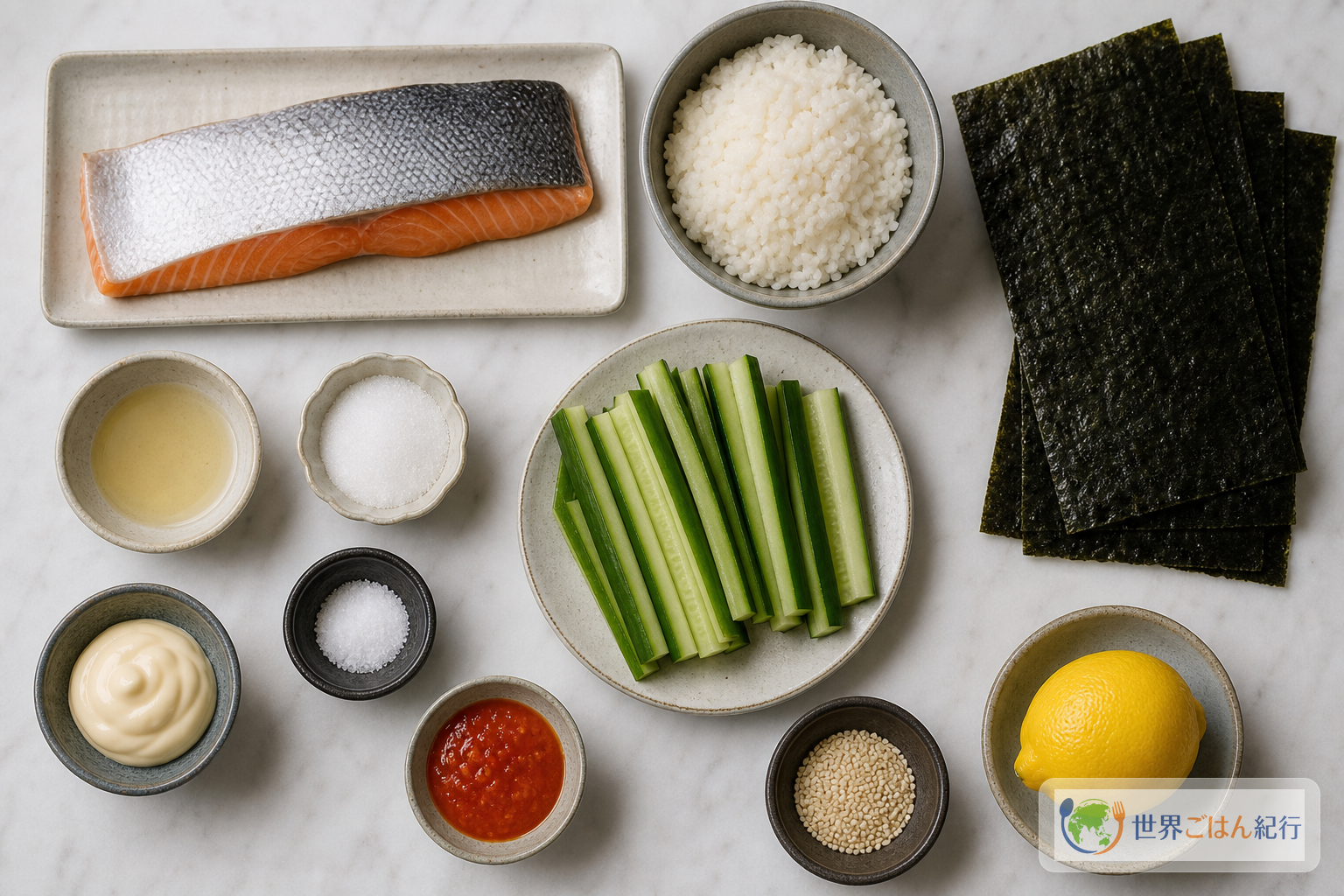
Cook the salmon to the center of the flesh, not only the skin. The FDA advises cooking fish to a core temperature of 145°F, about 63°C. If you want to use raw fish, that falls outside the scope of this home recipe. Pregnant women, the elderly, children and people with weakened immune systems should also check Health Canada's guidance on avoiding raw fish.
If you want to compare it with a dish in which fish is "cooked" by acid rather than heat, Peru's ceviche (in Japanese) is another doorway. But because the B.C. roll uses the toastiness of cooked salmon skin, think of the safety design and texture as separate even though both are fish dishes.
Shopping: nori nearby, and extra aromatics only if you'll use them up
For the salmon, cucumber, rice, nori and rice vinegar, first look at a grocery nearby. You don't need to order expensive fish just for the B.C. roll. If you find skin-on fillets, that is enough. If you can only find skinless fillets, move on to the "conditions to skip" below, and deciding to make it another day is also the right call.
Candidates for extra purchases are sesame oil and white sesame seeds. Neither is a condition for the B.C. roll, but they supplement the toastiness of the skin and put the aroma of toasted seeds on the outside of the sushi rice. They can also go into Korean gimbap (in Japanese), so choose them only if you'll have a use for them after making sushi rolls once.
To read widely across Canadian food, in contrast to the Pacific-side B.C. roll, fricot of Acadia in the east is a pot dish for when people gather. The direction differs between the toastiness of salmon and chicken broth, but both can be compared as dishes that took shape at the tables of people who had moved.
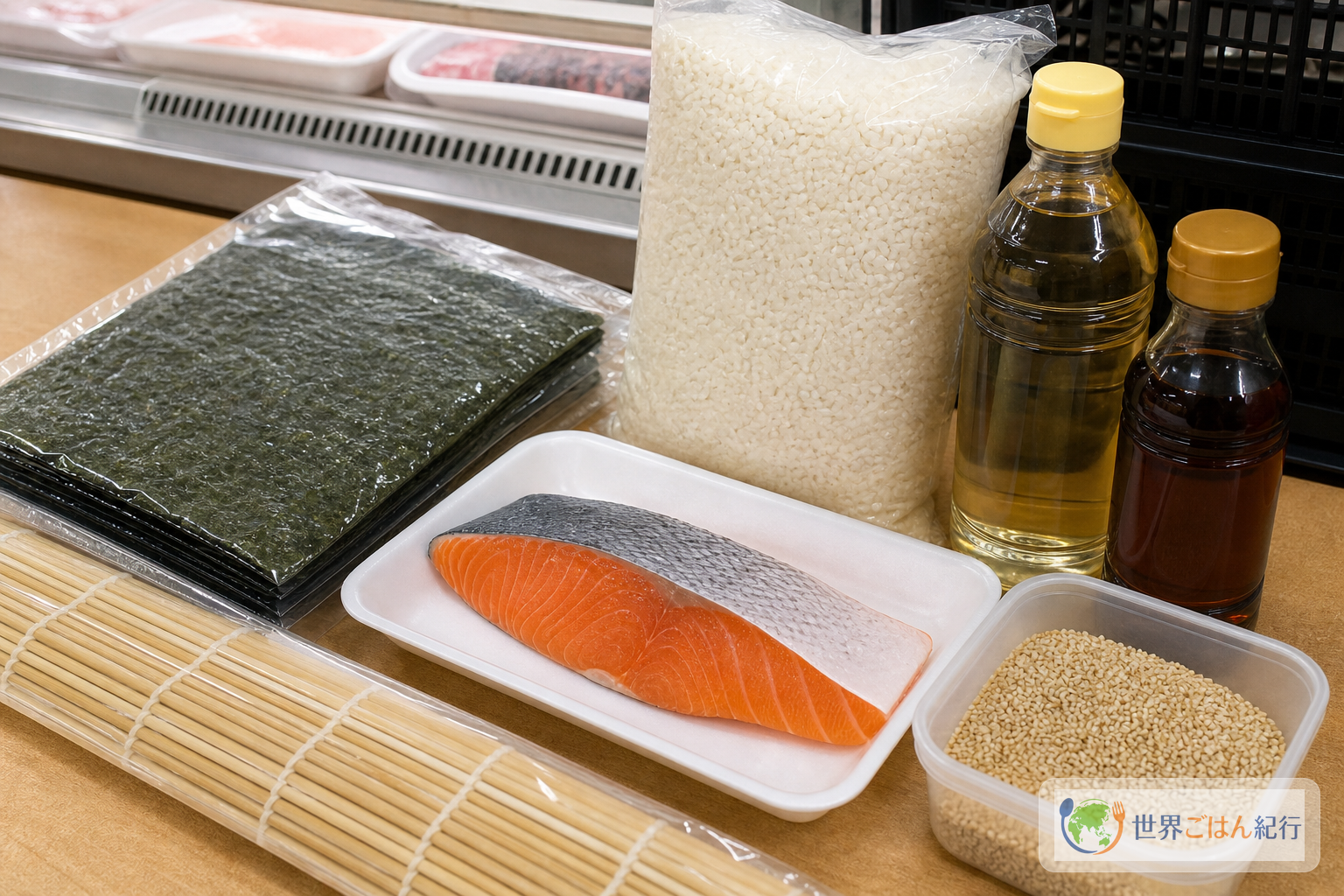
The condition for buying sesame oil is that you want to make the salmon skin more toasty, or use it in gimbap and stir-fries too. The condition to skip is that you are making just these 4 rolls and the oil you have is enough. What to check is whether the ingredients are mainly sesame oil, the volume and the best-by date.
White sesame seeds add toastiness at the end of rolling. If you have a small bag of toasted sesame, use it. The condition for buying a large amount online is that you'll use it in gimbap, dandan noodles or dressed dishes too. For 4 rolls alone, choose a small bag nearby. Check the volume and whether it is toasted or raw sesame.
You can make the basic B.C. roll without buying anything extra.
Method: don't over-cool the rice, but do cool the skin
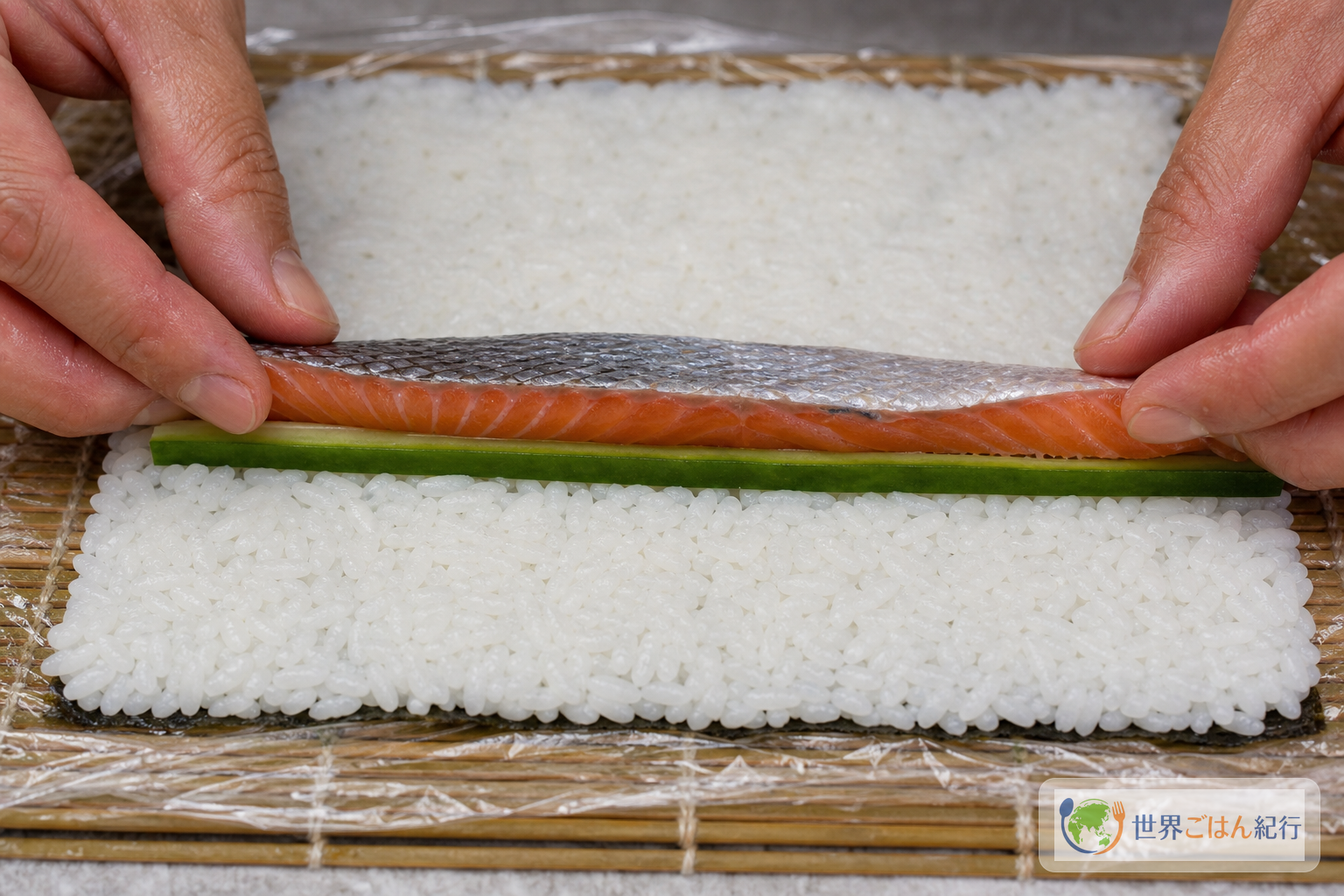
Season the sushi rice while it is hot, and cool it until you can touch it by hand at the rolling stage. The salmon skin is the opposite: let it cool a little after grilling before cutting. Used hot as a filling, fat seeps from the skin and the nori turns damp.
Tips for rolling: failure shows up in moisture, not taste
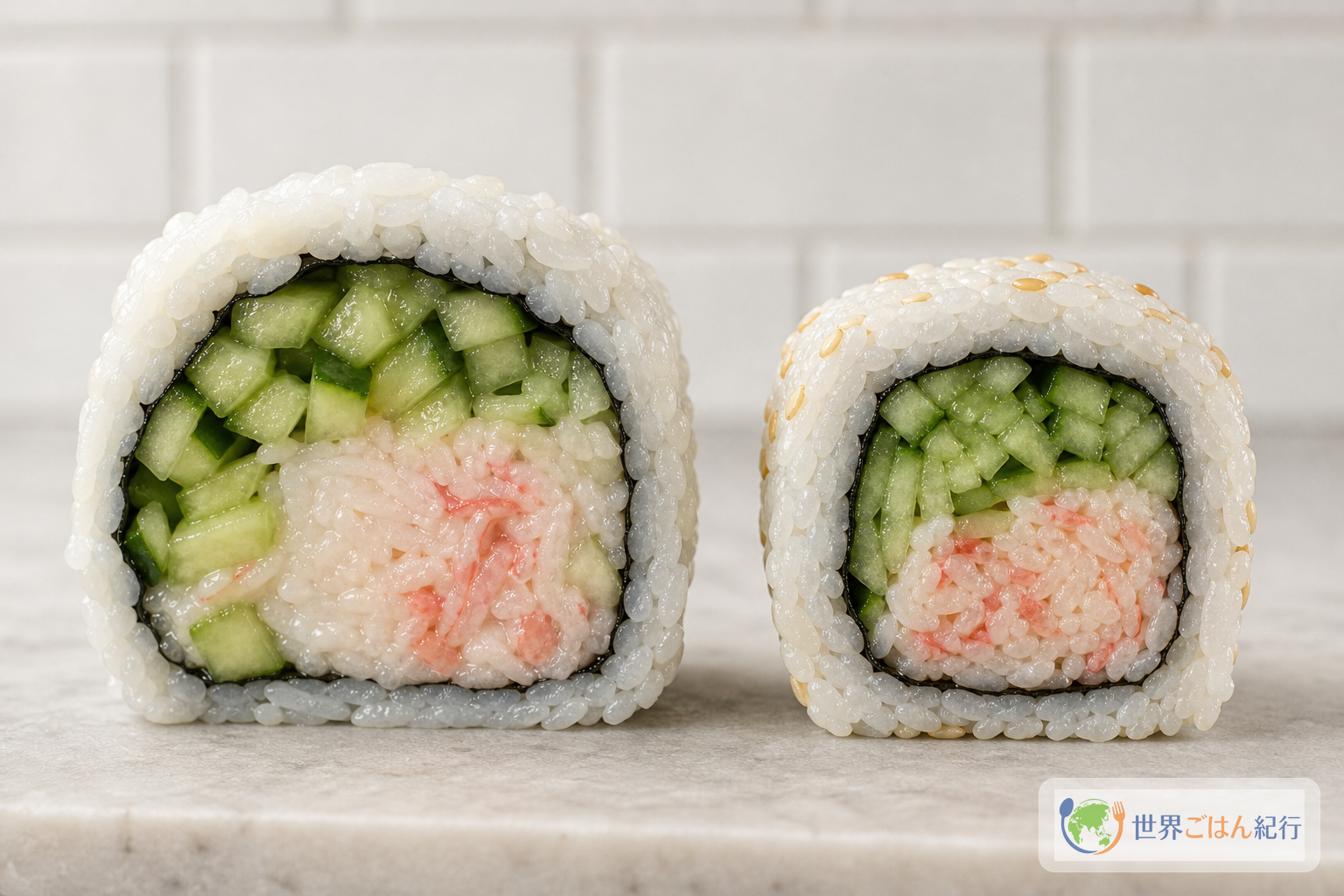
Failures with the B.C. roll aren't fixed by adding more seasoning to the filling. Matching moisture and temperature before rolling works better.
| Problem | Likely cause | Fix |
|---|---|---|
| The nori tears | The rice is too hot, or the cucumber is wet | Cool the rice until you can touch it, and press the cucumber with paper |
| The seam opens | The rice was spread to the top edge, or the first turn was weak | Leave 2 cm at the top edge and tighten once at the front |
| The skin is hard and hard to bite | Overgrilled, or the strips are too wide | Cut the skin 8 mm wide and add heat 1 minute at a time |
| The cross-section is crushed | The knife was pressed down, or rice stuck to the blade | Cut by drawing, and wipe the blade each time |
| The taste is faint | Relying too much on the dipping sauce | Add just 1 g more salt to the sushi rice, or serve soy sauce in a small dish |
For the sauce, just mixing 40 g mayonnaise, 8 g chili sauce and 10 ml lemon juice is enough. For about 4 rolls at once, 30 seconds with a spoon suffices. If you often make sushi rolls and prepare sauce and fillings in batches, a small food processor saves time.
The condition for buying one is that you make salmon sauces, avocado sauce or vegetable dips in batches several times over. The condition to skip is that you only want this 40 g of sauce and don't want more to wash. Check the capacity, how easily the blade comes off and whether it is dishwasher-safe.
Variations, storage and FAQ
The range you can change while keeping the name B.C. roll is surprisingly not narrow. But when you change the filling, there is also a boundary where it becomes a different sushi roll.
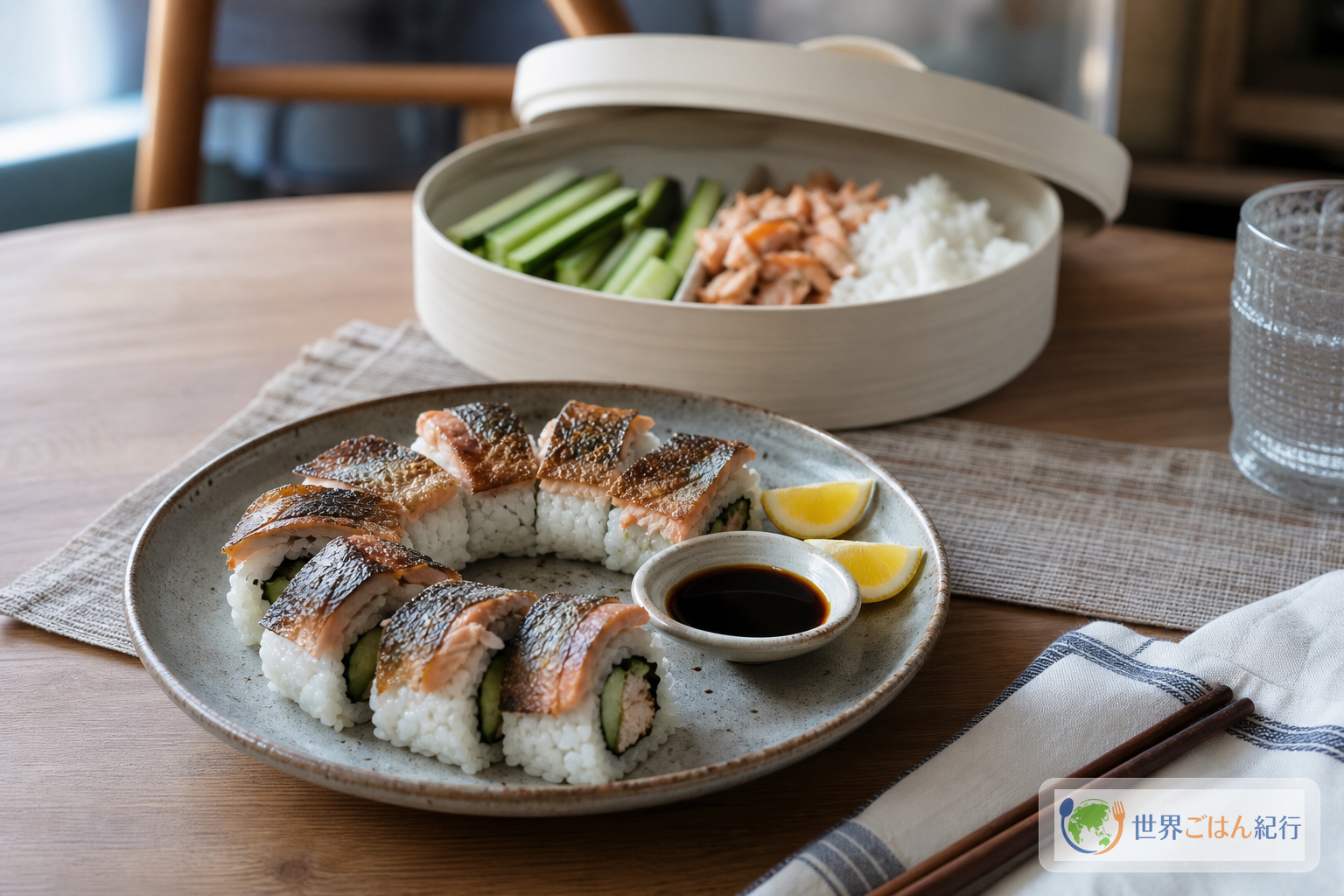
Basically the skin goes in the core, but when you want to show the aroma at the table, you can also plate it with a little grilled skin laid on top. This is a change of appearance, so the judgments on rolling and storage don't change.
Closer to the origin: only the skin in the core
To get closer to Tojo's description, make the skin the star and put in no flesh. Cut the skin 8 mm wide and match its length to the cucumber. The aroma is stronger, and the textural contrast is clearer. With a fillet that has little skin, reducing from 4 rolls to 2, and not making the core too thick, makes rolling easier.
For home: use skin and flesh together
This is today's recipe. For people who find skin alone hard to eat, adding a small amount of flesh rounds the salmon flavor. Too much flesh approaches an ordinary salmon roll, so place the flesh only as a thin layer between the skin and the cucumber.
May I add avocado?
You can. But if avocado and salmon become the stars, it is a Canadian-style salmon roll rather than a B.C. roll. Cut the avocado 8 mm square and 8 cm long, and add it with the cucumber halved. Because the creamy fat increases, it matters not to overgrill the salmon skin.
Can I make it with raw or sashimi-grade salmon?
This article doesn't recommend it. Raw fish isn't required by the origin of the B.C. roll; the grilled skin is the axis of flavor. Even if you buy sashimi-grade salmon, without the skin you won't reach the texture of this article. Fish for raw eating has separate storage and hygiene conditions, so the home version cooks skin-on fillets for cooking through to the center.
Can I substitute grilled eel (kabayaki)?
You can roll it, but it becomes an eel roll. The interest of the B.C. roll lies in using local salmon skin rather than anago. Adding eel's sweet sauce brings it together with the sushi rice, but it is kinder to the reader not to replace the dish's name as well.
Can I make it ahead?
The best time to eat a rolled roll is the same day. Water comes out of the cucumber and the rice tightens, and in the refrigerator the sushi rice turns hard. If any remains, move it to a shallow container within 2 hours, refrigerate, and aim to finish by the next day. Keep the dish and knife used for grilling the salmon separate from tools that handled raw fish, or wash them with detergent before use. Health Canada advises not using the same plates or utensils for raw seafood and cooked food, and refrigerating leftovers within 2 hours.
This uses white sesame, fish, nori, egg-containing mayonnaise, and soy sauce containing soy. Ingredients and production lines vary by product, so if you have a food allergy, check the labels including the nori, chili sauce and mayonnaise.
Should you make this dish, or skip it?
If you can find skin-on salmon nearby and can prepare nori and sushi rice on the day, it is worth making without special equipment. It suits people who want to enjoy the toastiness of the skin.
On the other hand, if you only have skinless fillets and want to try a sushi roll just once, you don't have to force it by ordering more ingredients online. Switching to an ordinary salmon roll, hand rolls, or a rice bowl topped with grilled salmon means less shopping and less washing. Not buying is also a choice that helps you make this dish well.
Sources
- Tojo's Restaurant, "About Chef Tojo" (explanation of the B.C. roll, grilled salmon skin and the move to Vancouver. Referenced July 2026)
- British Columbia Food History Network, "Sushi in British Columbia" (origin of the B.C. roll, inside-out rolls, Japanese-Canadian food culture. Referenced July 2026)
- University of British Columbia, "Japanese Foodscape in Vancouver" (background of Vancouver's Japanese restaurants and immigrant markets. Referenced July 2026)
- Government of British Columbia, "Japanese Canadian Historic Places" (history of Japanese-Canadian restaurants and cafés in B.C. Referenced July 2026)
- Kikkoman, "How to make sushi rice" (in Japanese) (soaking rice, seasoned vinegar, the cutting-in method. Referenced July 2026)
- FDA, "Selecting and Serving Fresh and Frozen Seafood Safely" (cooking temperature for fish. Referenced July 2026)
- Health Canada, "Safe food handling in the home" (cross-contamination, refrigeration, avoiding raw fish for people at risk. Referenced July 2026)
Nutrition information is an estimate for dividing the above amounts among 4 people. It varies with the products and the fat content of the salmon.