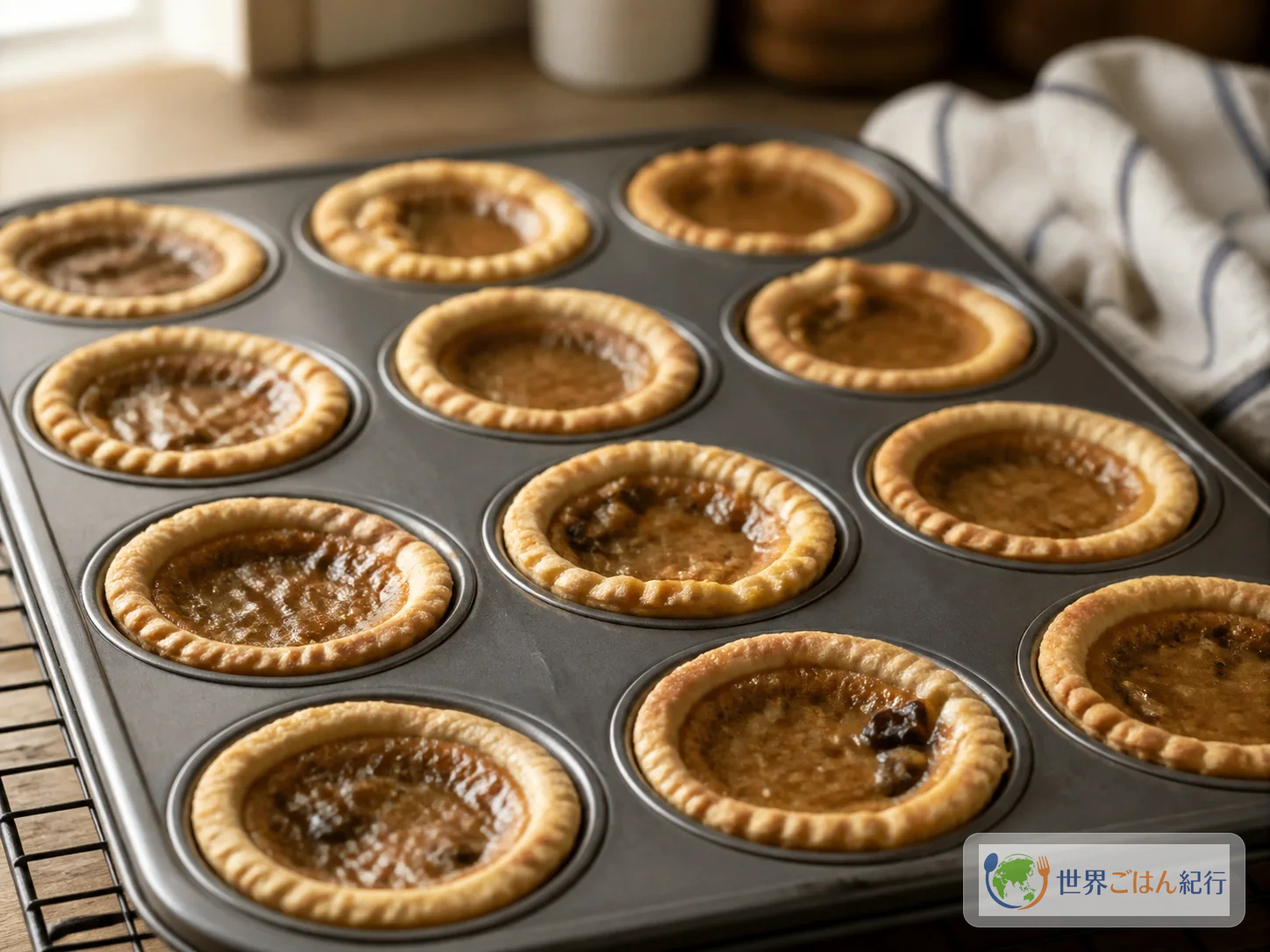
Ontario's home sweet even includes whether it has a filling in its name
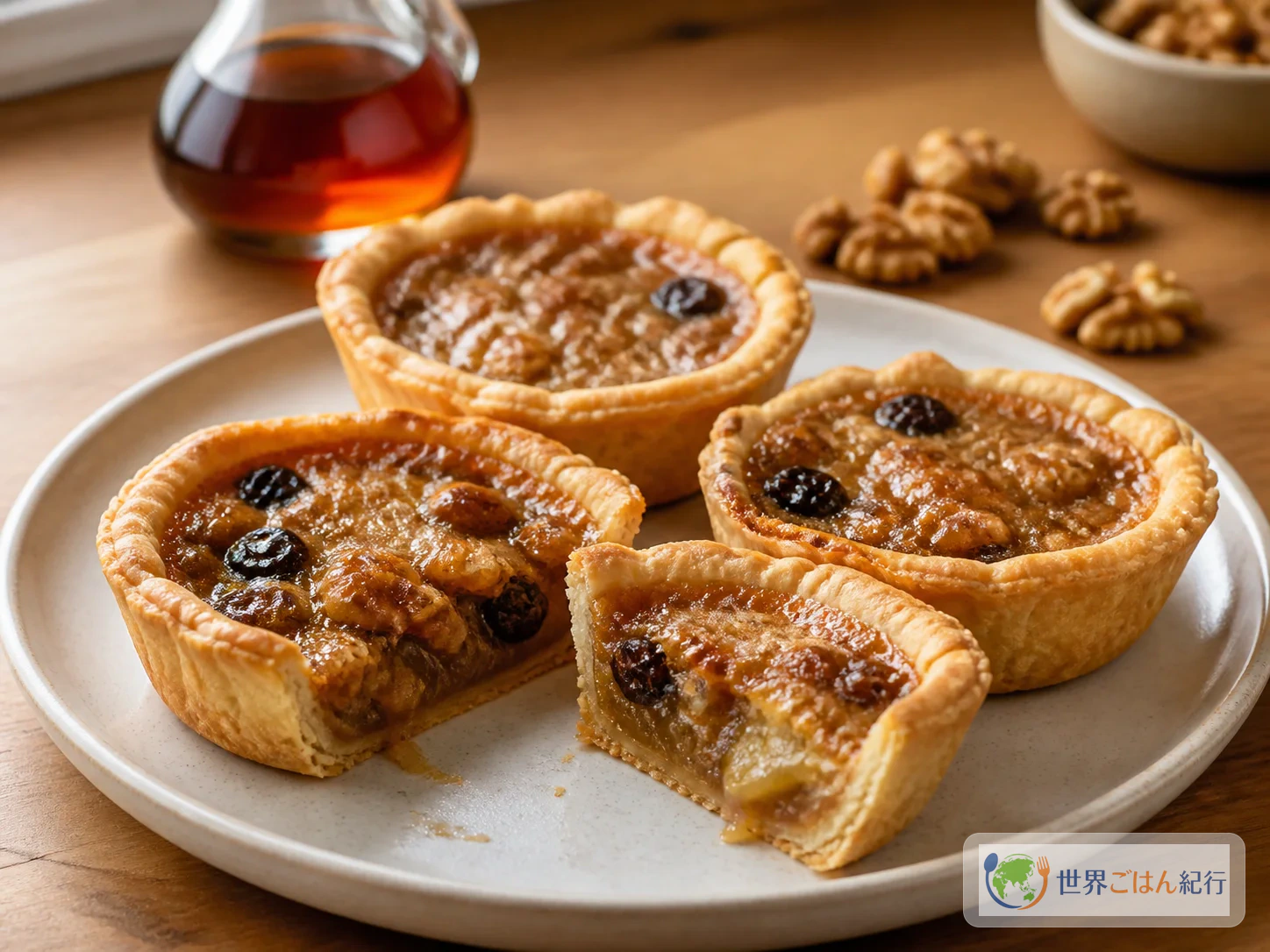
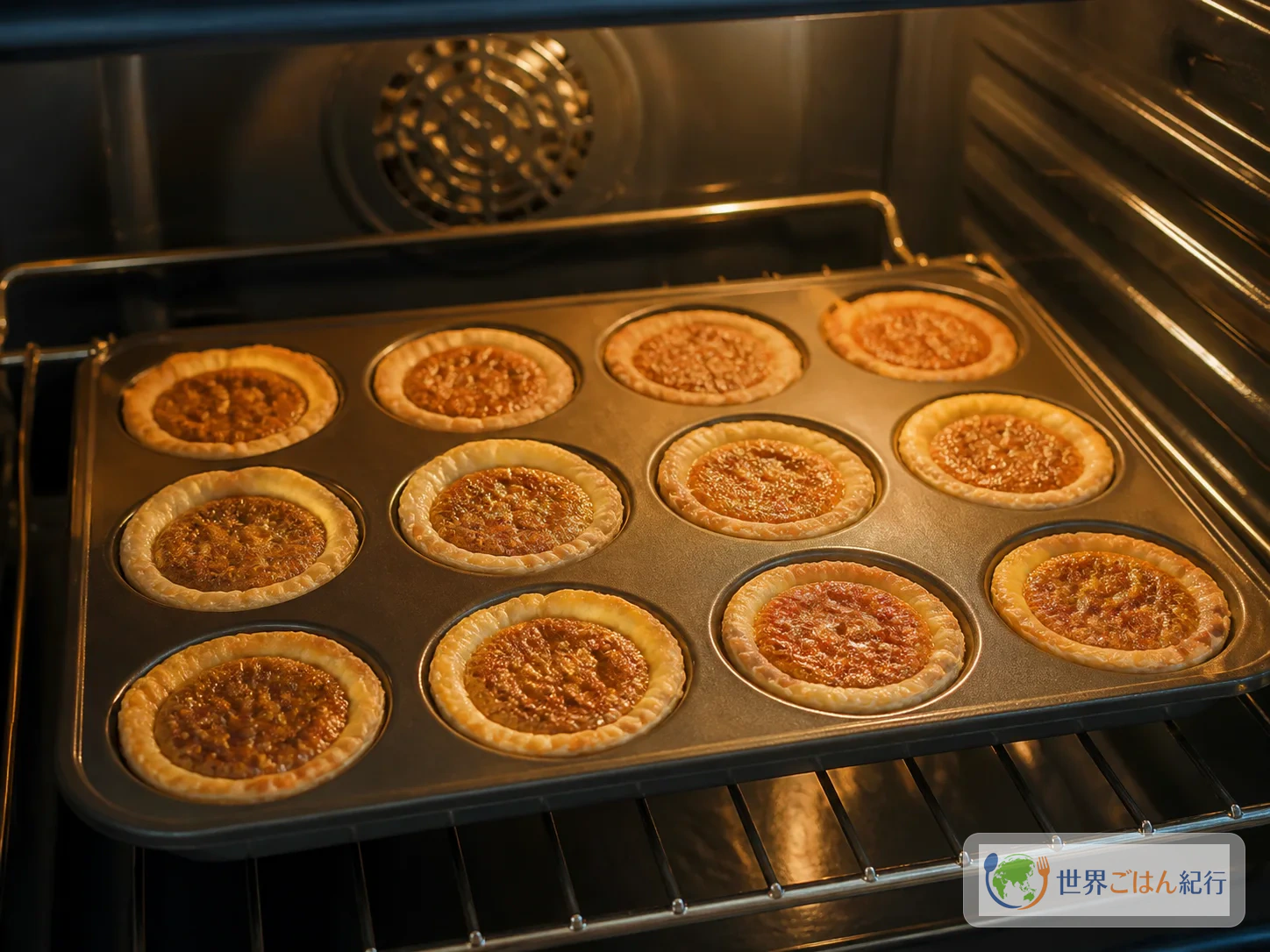
A butter tart fresh from the oven still trembles quietly at the center alone. Even if it looks liquid, don't rush to bake it more; let it rest 20 minutes in the pan. When the egg-and-butter filling settles, the edge is crumbly and the center has the texture of a thick, custard-like cream.
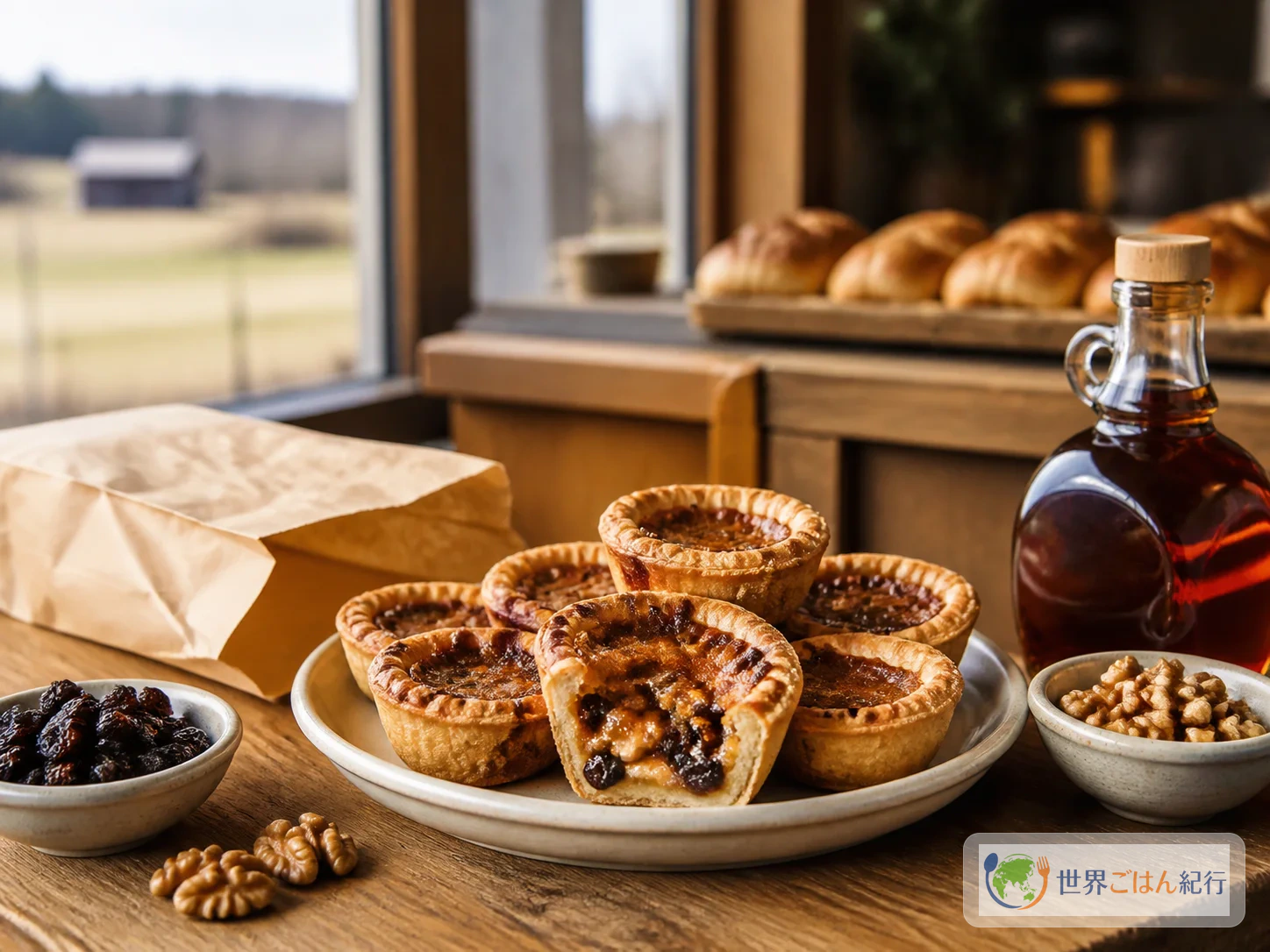
A butter tart is a Canadian sweet in which butter, eggs, sugar and syrup are poured into a small pastry shell and baked. The version with raisins or currants and walnuts is well known, but whether to add fruit, whether to add nuts, and how much of a runny center to leave vary from home to home and shop to shop.
What people tend to hesitate over when making it at home is less whether to use maple syrup than how far to bake the filling. Overbake it and the firmness of the egg comes forward; take it out early and it can't be removed from the pan. Roll the pastry thin, don't overfill, and stop where the center wobbles like jelly, and you can approach the "custardy" mouthfeel described in Canadian recipes.
This formula is a home version baked in a 12-cup muffin pan. Rather than the lard seen in historical recipes, the pastry is made with easy-to-find butter alone, and the filling is built from maple syrup, raisins, currants and walnuts. If you prioritize aroma, use maple; for a plainer, lighter sweetness, you can swap in golden syrup or corn syrup.
Unlike a savory pie such as tourtière, a festive dish, the butter tart is a small baked sweet to set beside coffee or tea. The home-snack character lies in making each one a size where everyone can bring their own sweet center, rather than making the baked-sweet plate bigger.
The origin of the butter tart can't easily be traced back to a single inventor. UBC's Dictionary of Canadianisms on Historical Principles notes that a 1900 cookbook compiled by the Women's Auxiliary of the Royal Victoria Hospital in Barrie includes a "Filling for Tarts" using sugar, butter, eggs and currants. At the same time, because recipes passed on through family oral tradition and handwritten cards may be older than print, it treats this not as the "origin" in Canada but as a history of record and preservation.
Food Day Canada's introduction to the history also mentions the 1900 Barrie cookbook, the 1908 Vogue Cook Book and a 1911 cookbook for Canadian farm households. The 1908 record uses sugar, butter, eggs, currants and salt, and in 1911 several formulas were collected from around Ontario. That it could be made with the ingredients on hand in a farm household, butter, eggs, sugar, flour and pastry lard, is one reason the differences between households remained.
The name is understood across Canada, but is especially tied to Ontario, and the DCHP-3 explains that there are also uses in Manitoba, Nova Scotia, the Yukon and elsewhere. A relationship with sweet tarts similar to French-Canadian tarte au sucre has also been pointed out, but those often use no eggs, and it is not so simple as to decide they are the same sweet.
Regional differences show up on the counter rather than on the map's borders. An Ontario introduction lists options such as classic, raisin, pecan and maple walnut, and in Kawarthas Northumberland, a butter tart tour visiting more than 50 bakeries, cafés and restaurants is advertised. The tour has run since 2011, and the home sweet has grown into a food culture of visiting town bakeries.
So rather than splitting it into "raisins are the real thing" and "nuts are heresy," choosing by texture is more practical. Raisins and currants scatter a soft sweet-sourness, and walnuts place a small bitterness and bite in the liquid center. With nothing added the smoothness of egg and syrup comes forward, and swapping in pecans strengthens the toasty aroma. The butter tart is a sweet in which even whether it has a filling becomes a household's memory.
The axis to keep in a home kitchen is not to copy exactly the origin of the maple or the shape of the pan. It is to keep the roughly 3 mm pastry cold, to let the egg set against the sweetness of the syrup, and to preserve the softness while it cools. To make Canadian food more as a meal, putting a chicken-and-potato soup from the same east, like fricot, alongside makes clearer what it means to put a sweet little plate at the end of the table.
Rather than reproducing an early historical recipe as is, it recomposes for home use the flow confirmed in official recipes: "12 tarts, 10 cm pastry, 20 to 25 minutes at 180°C, removed after cooling." The pastry uses no lard, and the filling combines maple syrup with raisins, currants and walnuts.
Ingredients: 12 to take up the liquid's sweetness
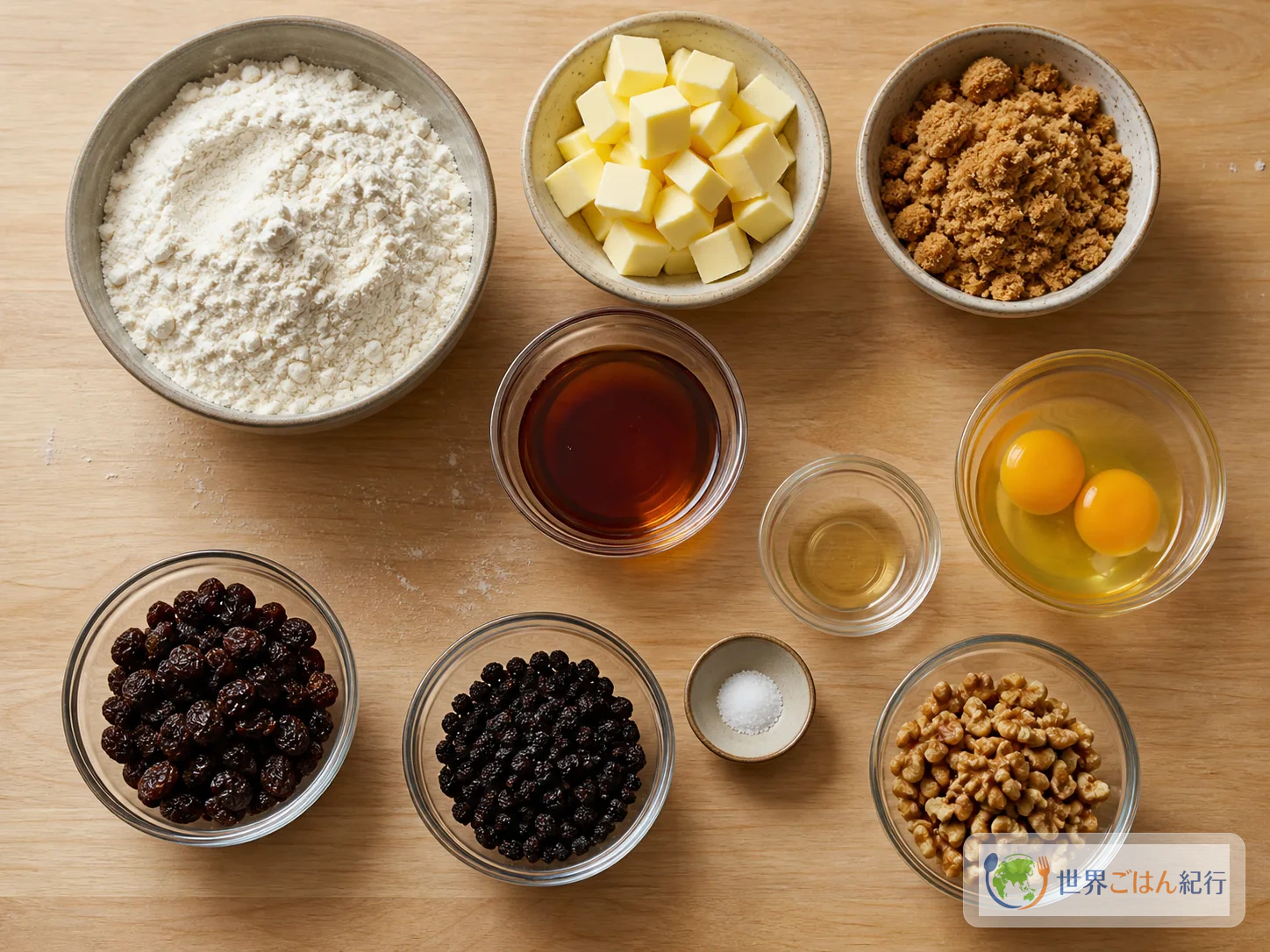
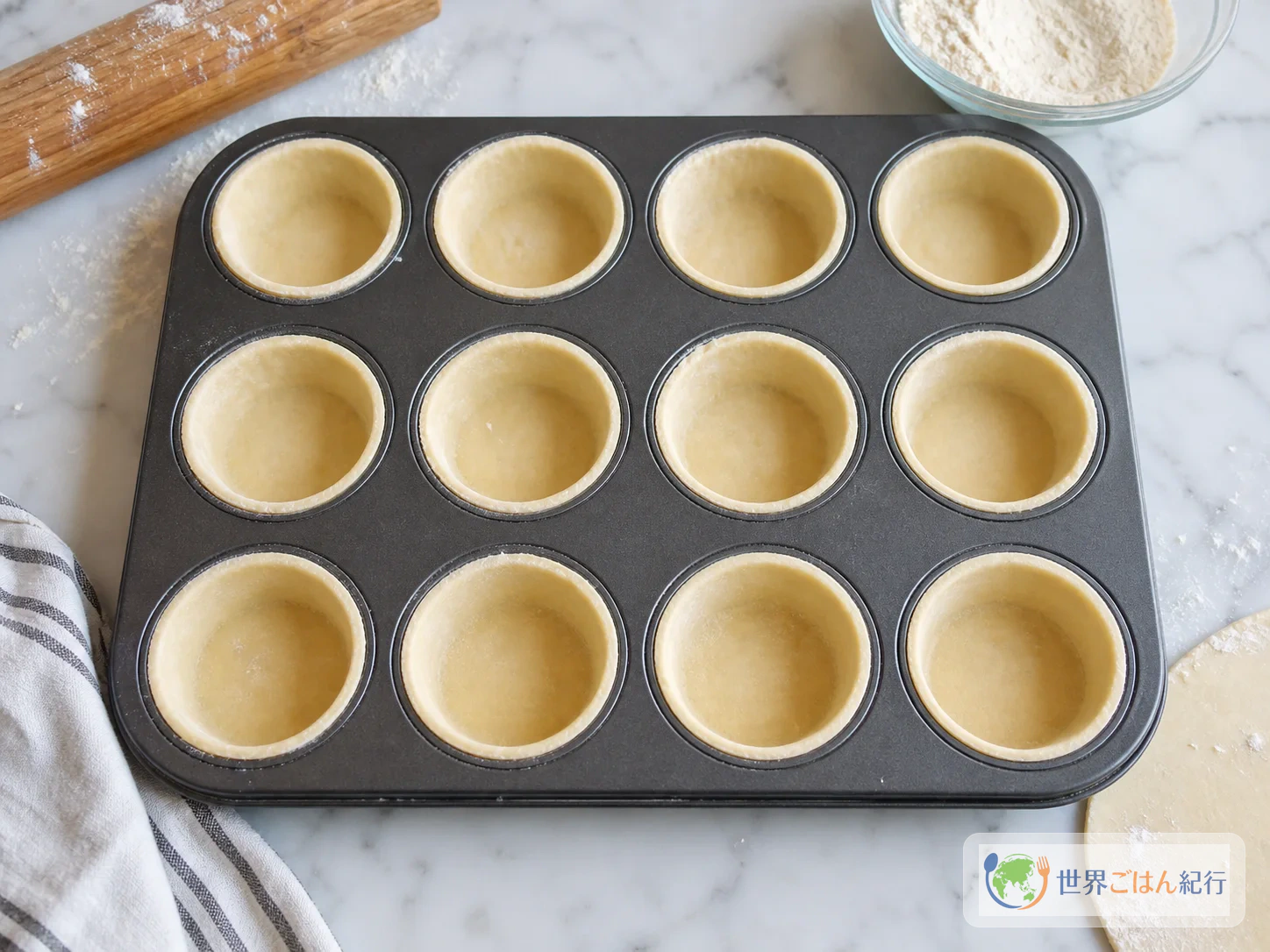
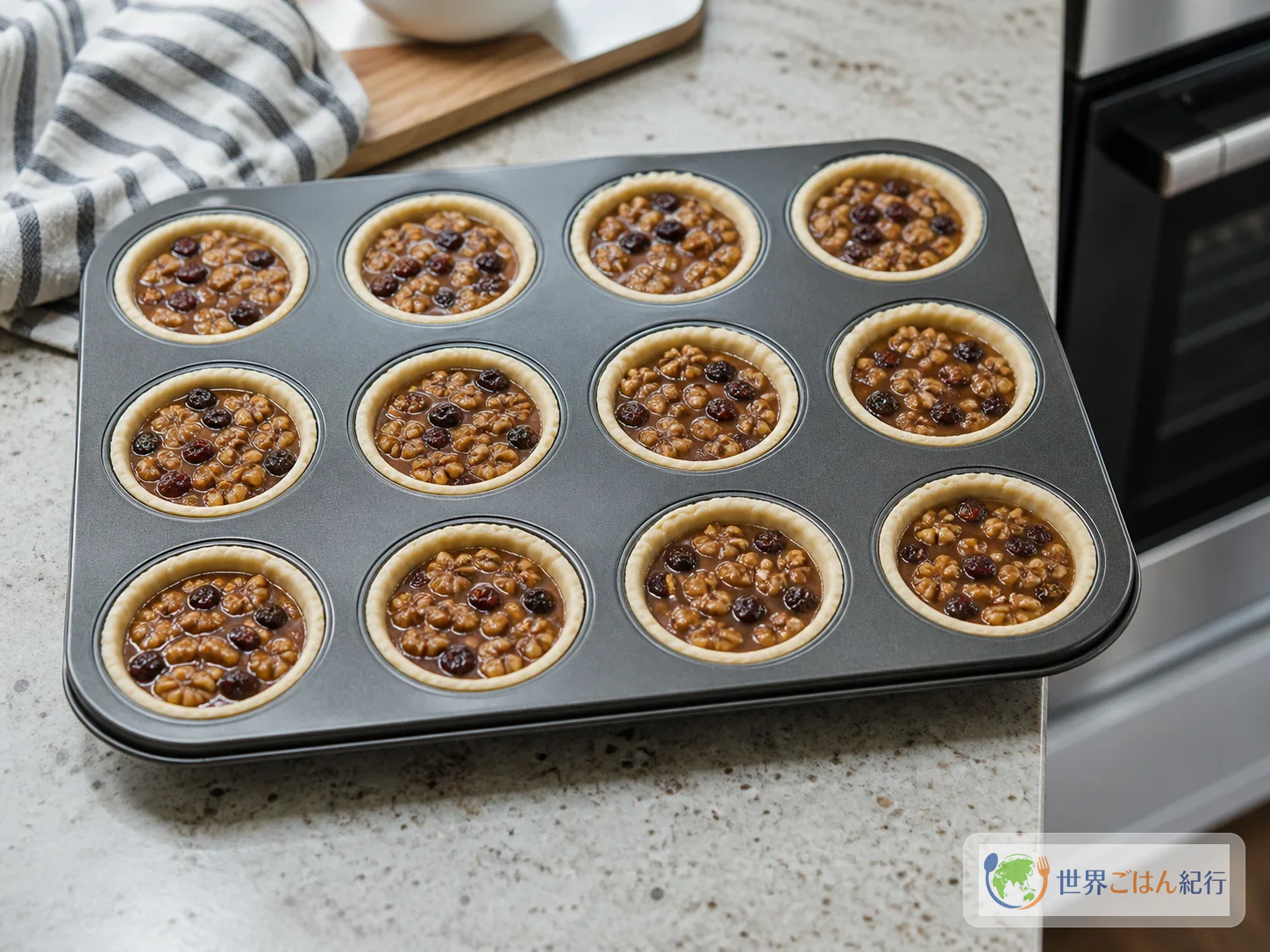
Use a 12-cup muffin pan with 7.5 to 8 cm cups. If the pan is shallow, some filling will be left over, so don't force it all in, and don't bake it in an empty ovenproof dish. If egg-containing liquid spills outside the pan, it scorches easily before the bottom of the pastry sets.
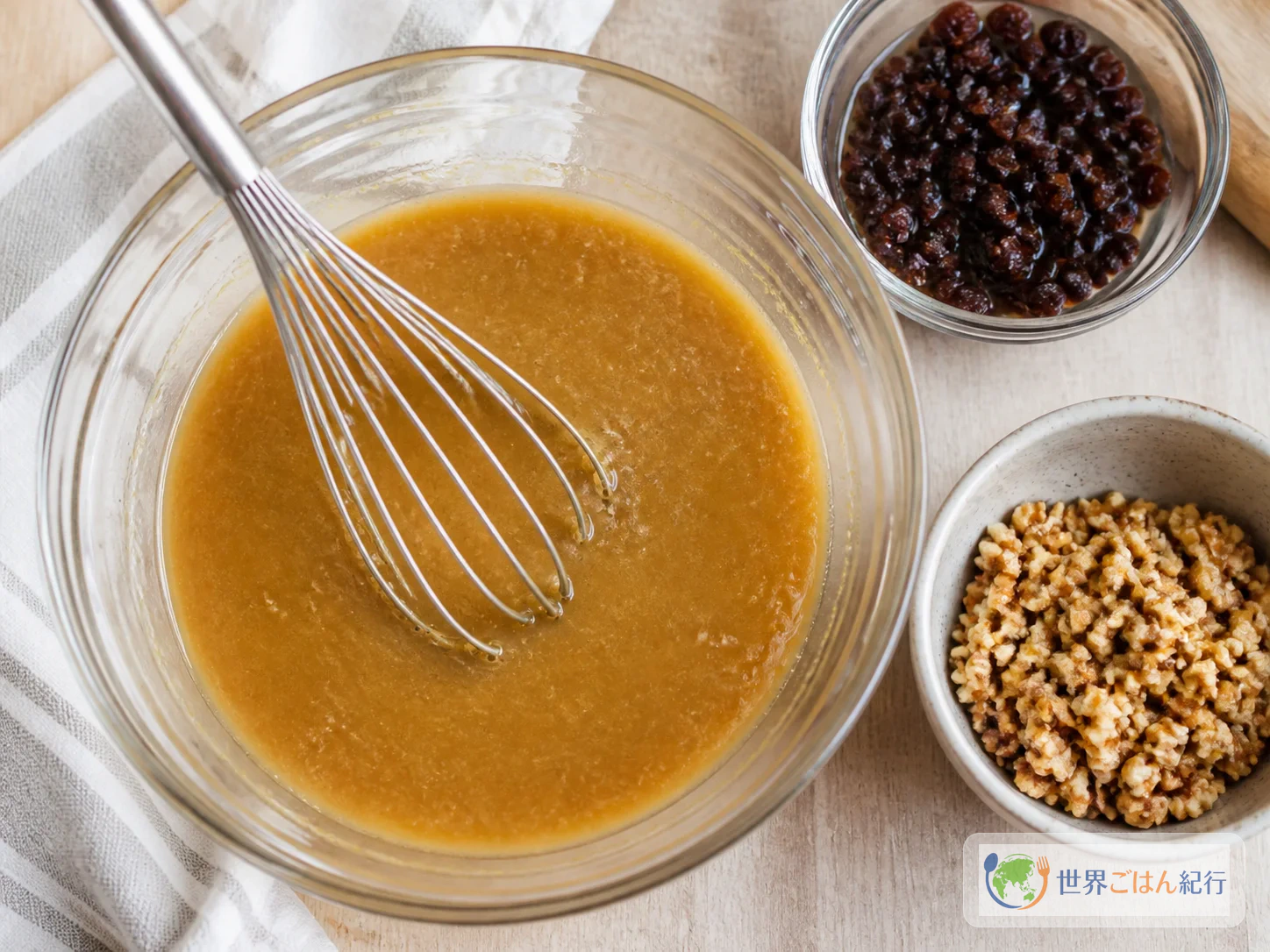
Putting in 100 g of raisins and currants in total scatters the sourness of fruit through the sweet liquid. Canadian recipes include formulas combining currants, golden raisins and walnuts, and the home recipe at Food Day Canada uses raisins with walnuts or pecans. Prioritizing what is easy to find, swapping currants for raisins does not change the name of the sweet.
For maple syrup, use not a flavored pancake syrup but one that lists maple syrup as the main ingredient. When you want to keep the aroma, use pure maple syrup; when you want a stable sweetness and stickiness, golden syrup or corn syrup. Swapping to the latter gives the milder syrup taste also seen in modern Canadian home recipes.
It uses wheat, milk, egg and walnuts. Even if you swap walnuts for pecans or seeds, with a nut allergy watch for contamination from the same equipment. Check that commercial syrup and dried fruit do not contain milk or wheat on their ingredient labels.
Whether to buy extra walnuts
For a raisin-only butter tart, it works without walnuts. When making a walnut version, choose unsalted ones with no old-oil smell when opened as your basis. If you need only 60 g, buying a small bag nearby wastes less, and if you will also use them in other baked sweets or salads, choosing about 200 g online makes sense. On the product page, check for an "unsalted" label and the quantity.
If you bake the plain version without walnuts, or want to finish buying with just these 12, you can make it with what you have on hand.
Method: 6 steps that leave the wobble in the center
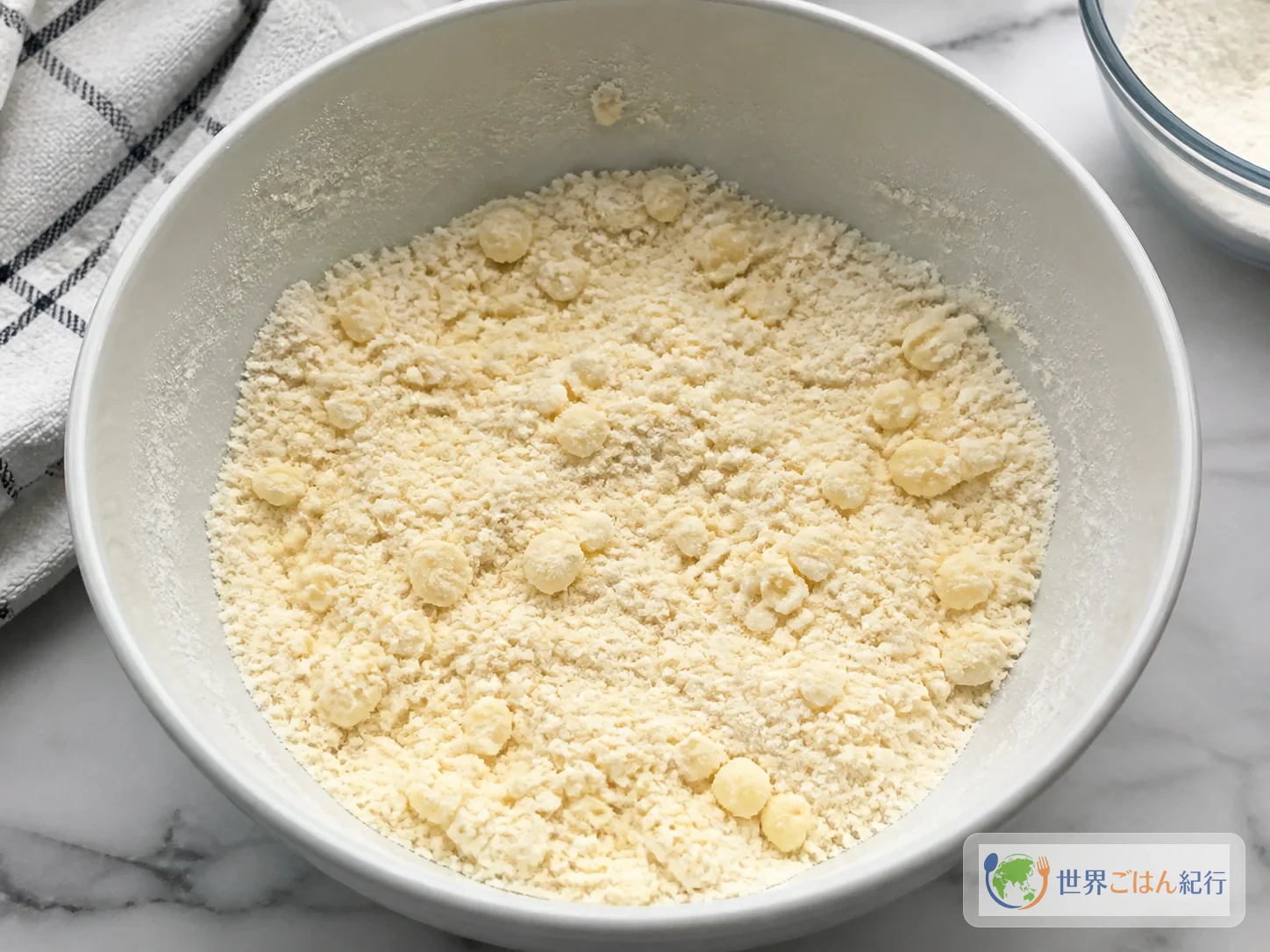
Do not boil the filling. Don't whip the eggs too much, keep the pastry cold, and let the liquid set slowly in a 180°C oven. Judging by browning alone can leave the center runny though the edges are done, so look at the state at each step.
Adjustments and storage so the bake doesn't go wrong
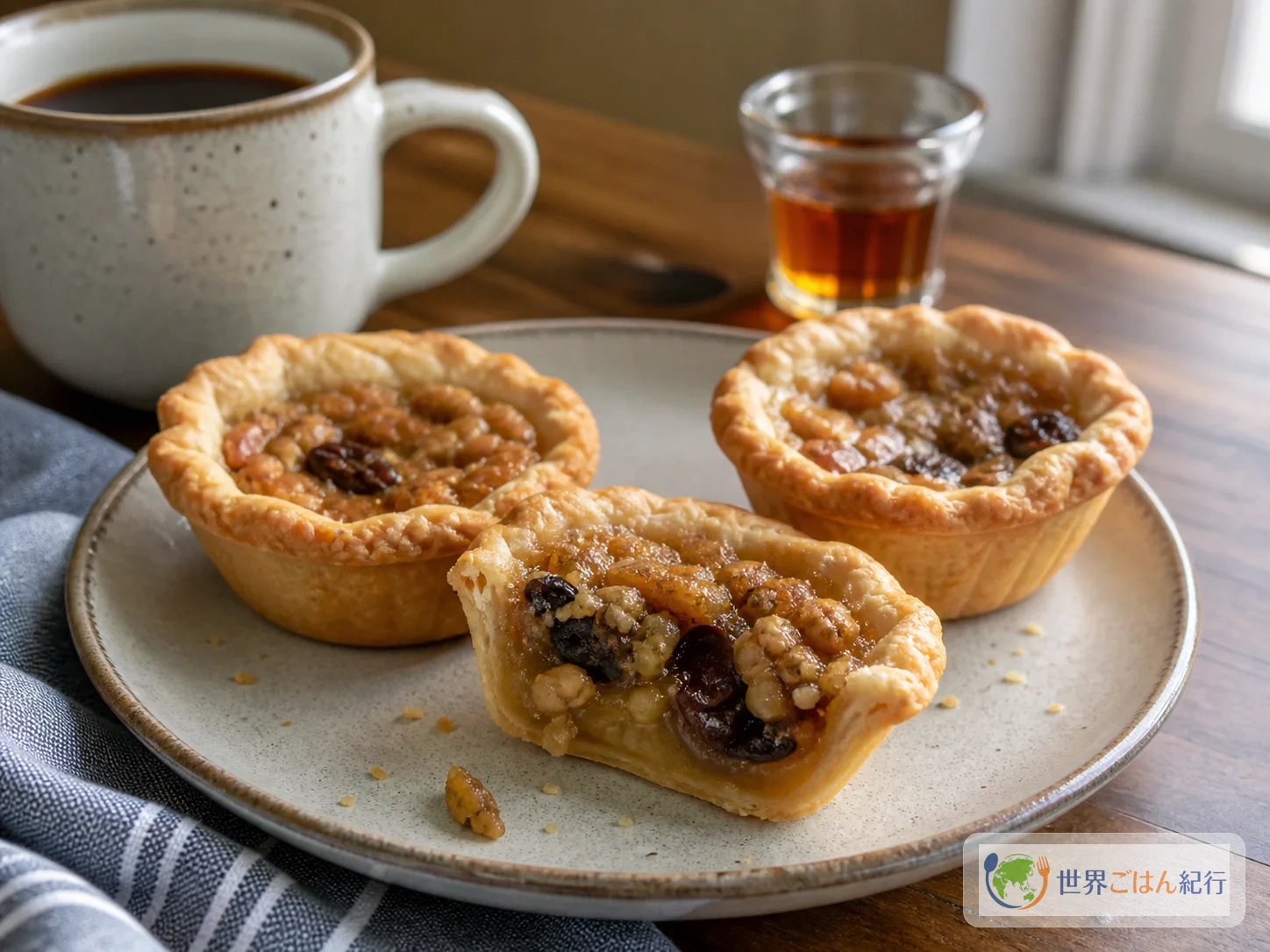
When the filling runs
If the center runs onto the plate even after it has cooled completely, first suspect insufficient cooling. Wait 30 minutes at room temperature, and if the liquid still comes back, return the tarts to the pan and bake for just 5 to 8 minutes more at 160°C. If the color of the surface is already enough, cover with foil. If the egg is still weak after reheating, next time reduce the amount poured per tart to 40 g, and rather than stopping the bake at 20 minutes, check the movement of the center.
When the filling gets hard
If you baked it to a state where the center no longer moves, the firmness of the egg gets stronger as it cools. It isn't a failure you can't eat, but it moves away from the thick aftertaste of a butter tart. Next time, rather than taking it out by color, stop at the stage where only the central 5 cm trembles when you shake the pan.
When the pastry shrinks or the bottom is damp
The main causes are one of these: you pulled the dough when pressing it into the pan, you skipped the chilling time, the amount of filling was large, or you didn't wipe the moisture from the soaked dried fruit. If you have extra dough, don't roll it out; use it to thicken the sides. Dry the surface of moist fruit before putting it in the filling, and divide the fruit first before pouring so liquid doesn't pool at the bottom.
Changing the syrup and fillings
| Change | Result | Judgment |
|---|---|---|
| Maple syrup | A woody aroma with a slight bitterness | Choose it when you want the aroma to be the star |
| Golden syrup or corn syrup | Rounder sweetness and a milder syrup aroma | Replace in the same amount if you don't keep maple on hand |
| Raisins only | Soft fruitiness with no walnut bitterness | Use for nut allergies or adjusting for children |
| Walnuts only | Toastiness and bite come forward | Choose when you don't want to add fruity sweet-sourness |
| Change to pecans | A stronger aroma and more of the richness of baked sweets | Same amount as walnuts. Enjoy it as a different nut |
| No filling added | The smoothness of egg and butter is the center | Good when you first want to check how the filling sets |
Swapping maple syrup for honey changes not only the amount of sweetness but the direction of the aroma. Honey often has a strong floral aroma, so if you want to get closer to the Canadian butter tart, golden syrup keeps the axis of taste better. You can also make modern variations that add chocolate or coconut, but for a first batch, give priority to how sugar, egg and syrup set.
Storage and when to eat
Canadian recipes advise storing baked tarts in a single layer in an airtight container at room temperature for up to 24 hours. If you will finish them by the next day, put them in a container after cooling completely, and in a hot room or on a long trip, switch to refrigeration. For refrigerated ones, leaving them out at room temperature 15 to 20 minutes before eating brings back the butter aroma and the softness of the center.
If you baked many and have leftovers, cool them completely, wrap each one, and put them in the freezer. Thaw in the refrigerator and then move to room temperature, sealed so the surface doesn't dry. Because this is a sweet made with egg and dairy, if you are concerned about odor transfer or temperature changes, finish them soon whether refrigerated or frozen.
FAQ
Can't I make it without maple syrup?
You can use golden syrup or corn syrup in the same amount. The sweetness and thickness come close, but the woody aroma is weaker. Swapping to sugar alone changes the amount and thickness of the liquid and it won't bake the same, so first choose a syrup-like substitute.
Is it still a butter tart without raisins?
Raisins, currants and nuts are commonly used fillings, but they are not necessarily required by the definition of the name. The DCHP-3 definition also says "often with raisins or nuts added," and there are home versions with no filling and shops with nuts alone. If you leave out the fillings, the liquid doesn't gather unevenly, so pour about 40 g per tart as a guide.
May I remove them right after baking?
Avoid it. If you remove them before the filling sets, the thin pastry tears and the center runs. Aim for 20 minutes in the pan and 10 more on a rack. The cooling time is part of the cooking.
What if I have only tart pans, not a muffin pan?
Use twelve shallow tart pans of about 10 cm, or make one in a shallow 20 cm pan. But combining into one makes the center thicker, which changes the baking time and the wobble. The 12-cup pan lets you use this article's amounts and the 20 to 25 minute guide as they are.
What can I use in place of walnuts?
You can use pecans, almonds or pumpkin seeds in the same amount. But nuts and seeds differ in aroma, oiliness and allergen labeling, so it is not a reproduction of the walnut version. If you avoid nuts, omit the filling or use seeds whose allergen labels you have checked, and wash the equipment again.
Sources
- Food Day Canada: Recipe for Butter Tarts (history and a home recipe; accessed and checked 2026-08-14)
- DCHP-3, University of British Columbia: butter tart (distribution of the word, the 1900 printed record, treatment of origins; accessed and checked 2026-08-14)
- Destination Ontario: Popular Canadian food to try in Ontario (Ontario food culture, filling variations, an introduction to a tour of more than 50 places; accessed and checked 2026-08-14)
- Destination Ontario: Kawarthas Northumberland Butter Tart Tour (the tour's region, participating shops, history since 2011; accessed and checked 2026-08-14)
- Canadian Living: Best Maple Butter Tarts (a 12-tart formula, 20 to 25 minutes at 180°C, cooling, storage, the basis for the nutrition values; accessed and checked 2026-08-14)
- Canadian Living: The anatomy of a perfect butter tart (regional differences in pastry and filling; accessed and checked 2026-08-14)
- Five Roses: Butter Tarts (a 12-tart formula using maple syrup, walnuts, currants and raisins; accessed and checked 2026-08-14)
Note: the nutrition values are an estimate converted to the whole batch from the per-tart values in Canadian Living's 12-tart formula. They vary with the products used for sugar, butter, syrup, dried fruit and nuts.