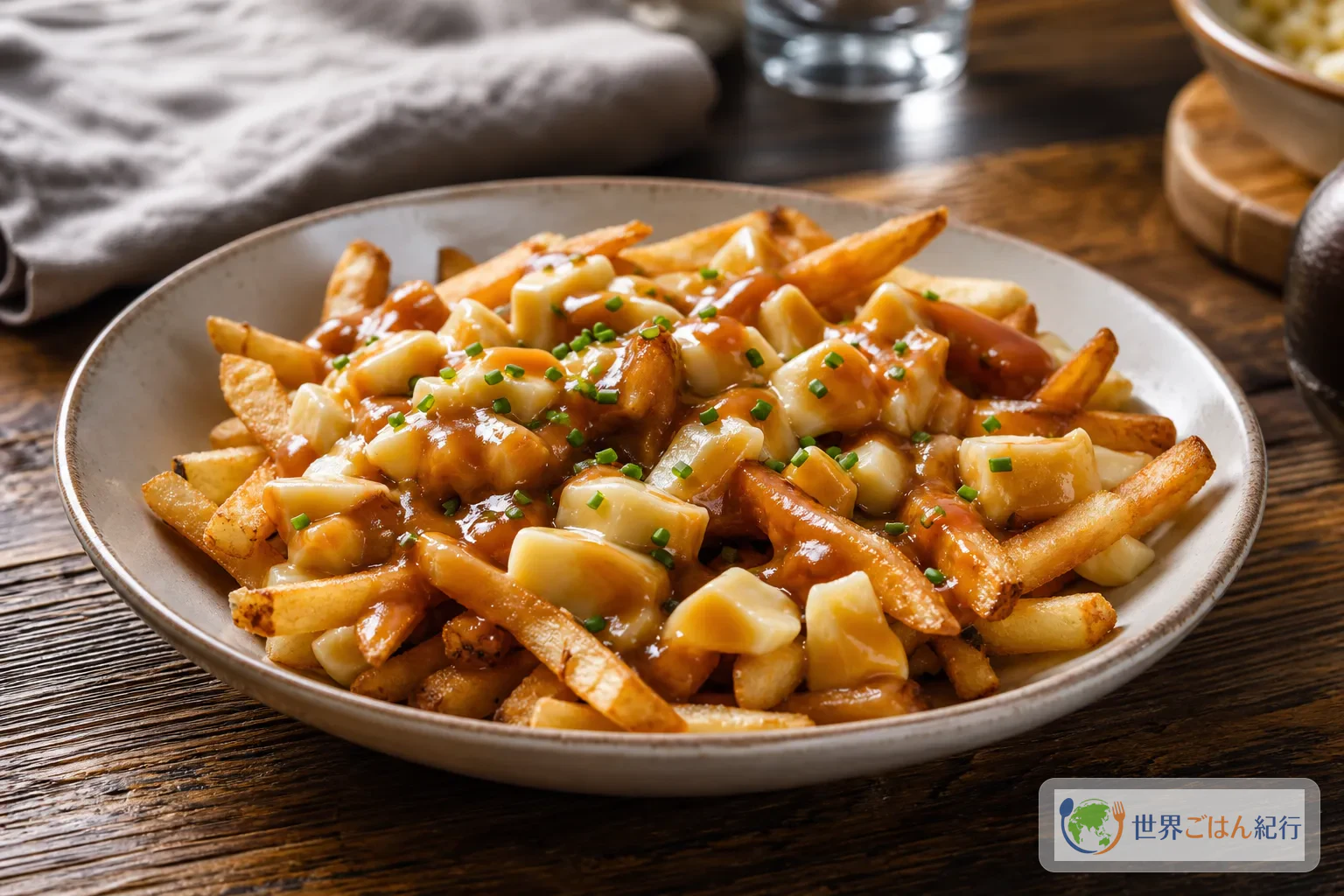
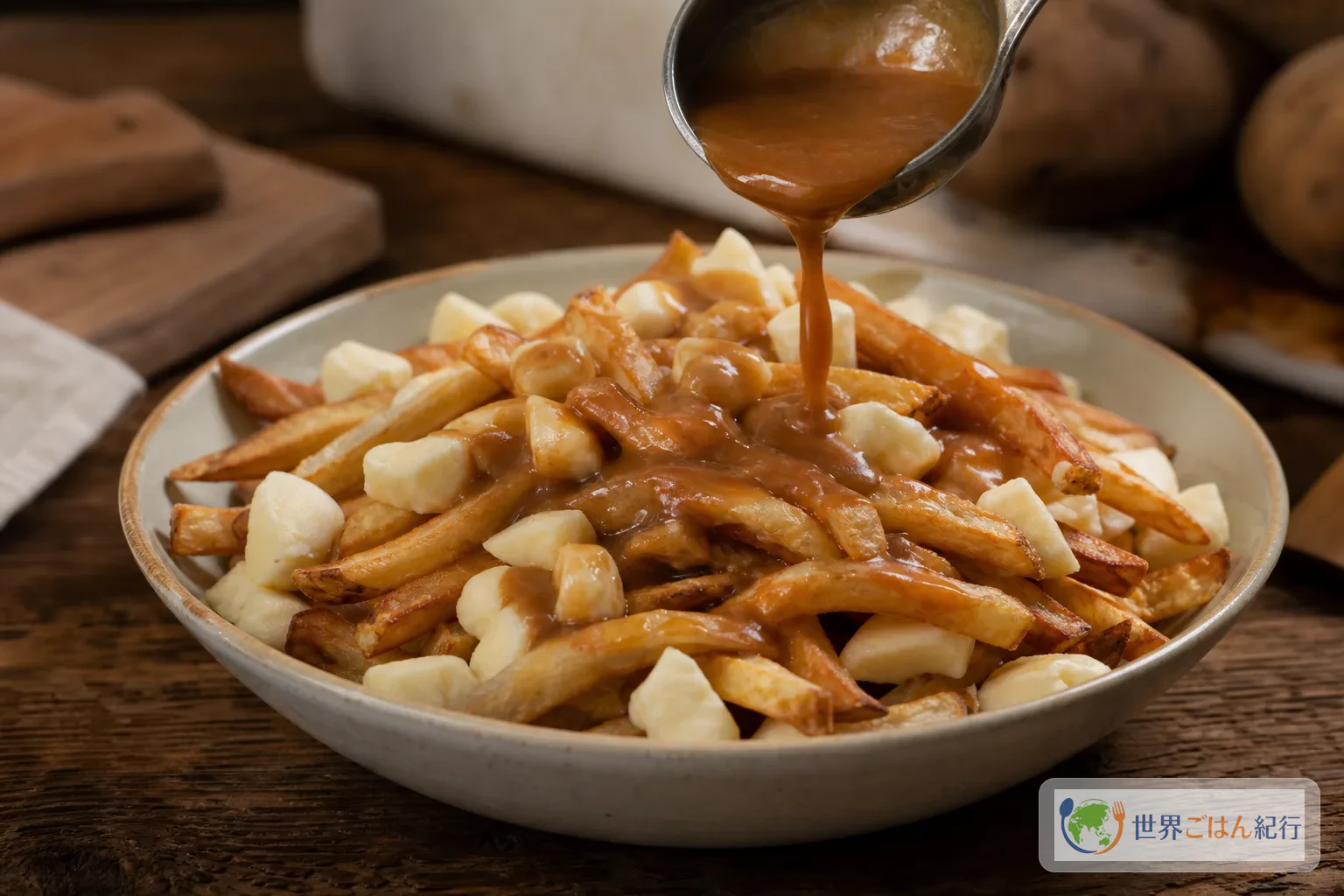
On the plate, what you hear first is the sound of frying oil. Then you set down cheese curds fresh from the refrigerator, and finally pour hot gravy over in a thin stream. There is a sizzle, and the cornered curds soften just a little. Pick up one fry: the outside cracks thinly, and the inside still holds steam.
This is poutine, loved in Quebec, Canada. French fries, cheese curds, brown gravy. The ingredients look simple, but the heart of the dish is that you finish the three parts separately and stack them just before eating.
If you put the sauce on first, do the fries go soggy? Is shredded cheese acceptable? When you make it in a home kitchen, how close do you need to get to have "a poutine-like plate"? The answer lies in the shape and temperature of the cheese, and the thickness of the gravy.
Poutine completes three parts on one plate
The French spelling of poutine is poutine. In the snack bars of Quebec, it is served as french fries topped with cheese curds and gravy. Cheese curds are the small lumps formed in the course of setting the cheese. They don't melt thin like ordinary sliced cheese; when you bite them, they squeak and keep their spring.
Because of this texture, even when hot sauce is poured on, the plate doesn't become just cheese-sauce flavor. The saltiness of the potato, the savor of the gravy and the dairy aroma appear one after another in a single bite.
It is a dish whose birthplace is hard to pin to one place. There is a story that around 1957 in Warwick, Quebec, french fries and cheese curds were mixed, while there is also a record that a snack bar in Drummondville popularized the form with thick sauce poured over. There are several accounts of the word's origin and of the first restaurant, and even now one cannot say "this is the only origin."
What is certain is that it grew up in Quebec's snack-bar culture and spread through food trucks and local snack shops. When it came to homes, too, it was a dish people tried by looking at how a shop plated it, using their own sauce, and adjusting it to a form easy to eat, rather than from a fixed pattern in a cookbook. That is why, even with many variations that add toppings, the axis of combining three parts just before eating remains.
To make it at home, put the cheese curds first. You can choose the variety of potato, but gravy can be built from store-bought bouillon. Conversely, made with shredded cheese alone it can taste good, but the feel of biting a curd can't be reproduced. Deciding the order of what to get close to saves you from hesitating while shopping.
This article writes the Quebec dish as "poutine" and the lumps of cheese as "cheese curds." Cheese curds are labeled "fresh cheese curds" or simply "cheese curds" depending on the product and region. When buying, rather than the name, check that they come in lumps before cooking, and check the ingredients and storage method.
Ingredients (serves 4): prepare potatoes, curds and sauce separately
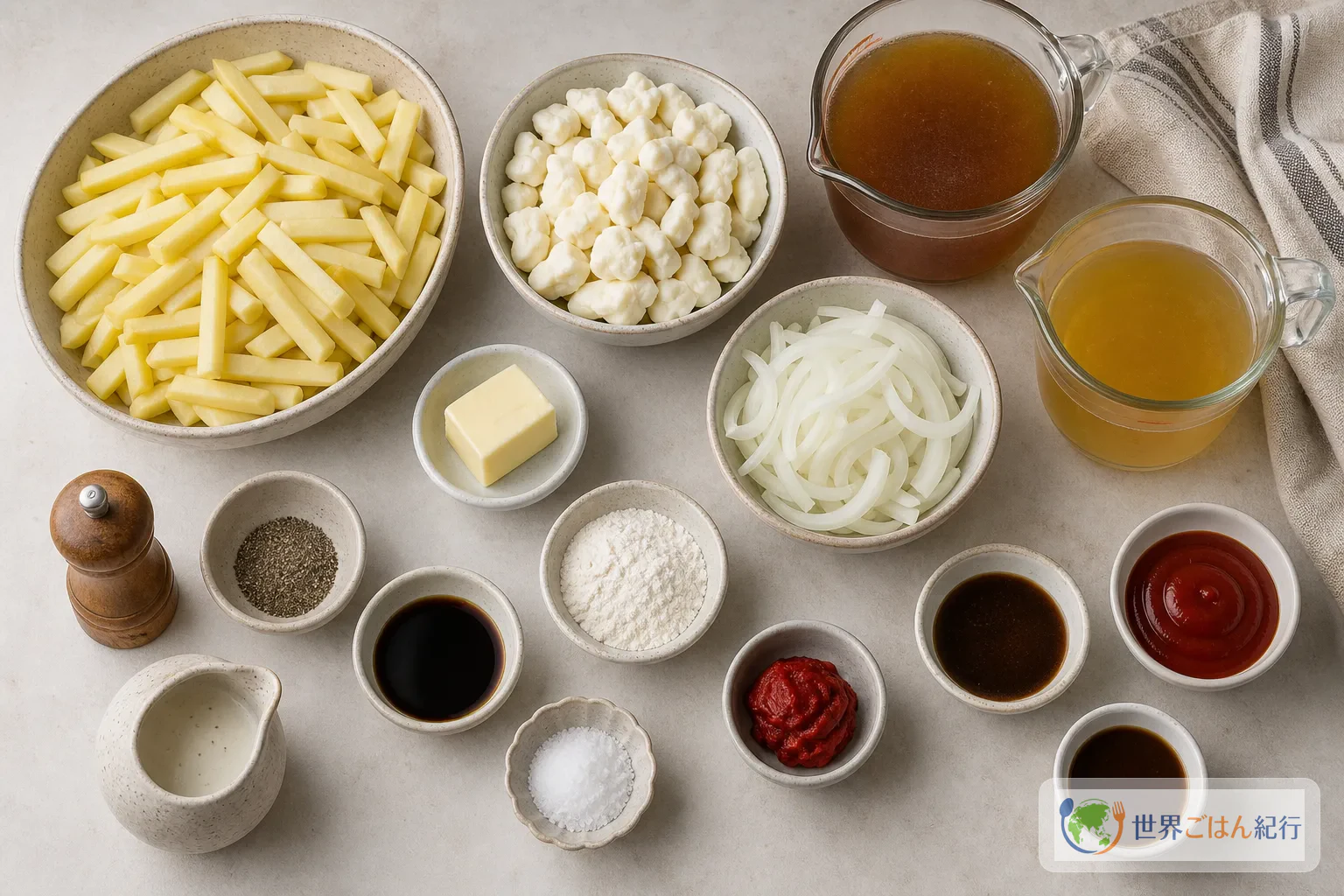
The nutrition label is a per-serving estimate including the cheese curds and the gravy. It varies greatly with the saltiness of the broth and cheese and the amount of frying oil absorbed, so for sodium especially, give priority to the product labels.
Cheese curds contain milk. Broth, HP sauce, Worcestershire sauce and soy sauce may contain wheat, soy, fish or shellfish, or celery. Check the ingredient labels, and if you avoid dairy, the texture that is the core of this dish changes, so build it as a different dish. If you share frying oil, also watch for allergen contamination.
Where shopping gets confusing: buy the curds, and make only as much sauce as you can use
The first thing to look for is the cheese curds. Ones that are white to pale yellow lumps and spring back a little when pressed hold their shape even under hot gravy. If you use them straight from the refrigerator, the center is cold and the temperature gap with the potatoes is large. Open the bag 20 to 25 minutes before eating, and set them out so they don't dry.
If you can't find curds nearby, you can cut fresh mozzarella into 1 to 2 cm cubes. But they melt and bite differently, so this is a substitute. Shredded cheese melts even faster and becomes one with the gravy, leaving none of poutine's spring. It works as a plate to enjoy the direction of flavor, but if you aim for the texture of curds, it is worth looking for refrigerated ones at a specialty cheese shop or an import grocer.
Broth is the ingredient that sets the taste of the gravy in a short time. If you use concentrated bouillon, check that diluted as directed it makes 800 ml for 4 servings. If you can't use up a whole package at once or are cooking just once from what you have, you don't need to buy a special product. You can also prioritize the texture of the curds and build the sauce from the broth you already have.
If you only slice 100 g of onion thinly with a knife, no food processor is needed. People who often make gravy, or who want to chop onion evenly fine so the sautéing time matches, can shorten the chopping step. But for a single batch of poutine, a knife is enough. Rather than adding special equipment, the time spent looking for cheese curds makes a bigger difference in texture.
Method: finish the cold potatoes and the hot sauce separately
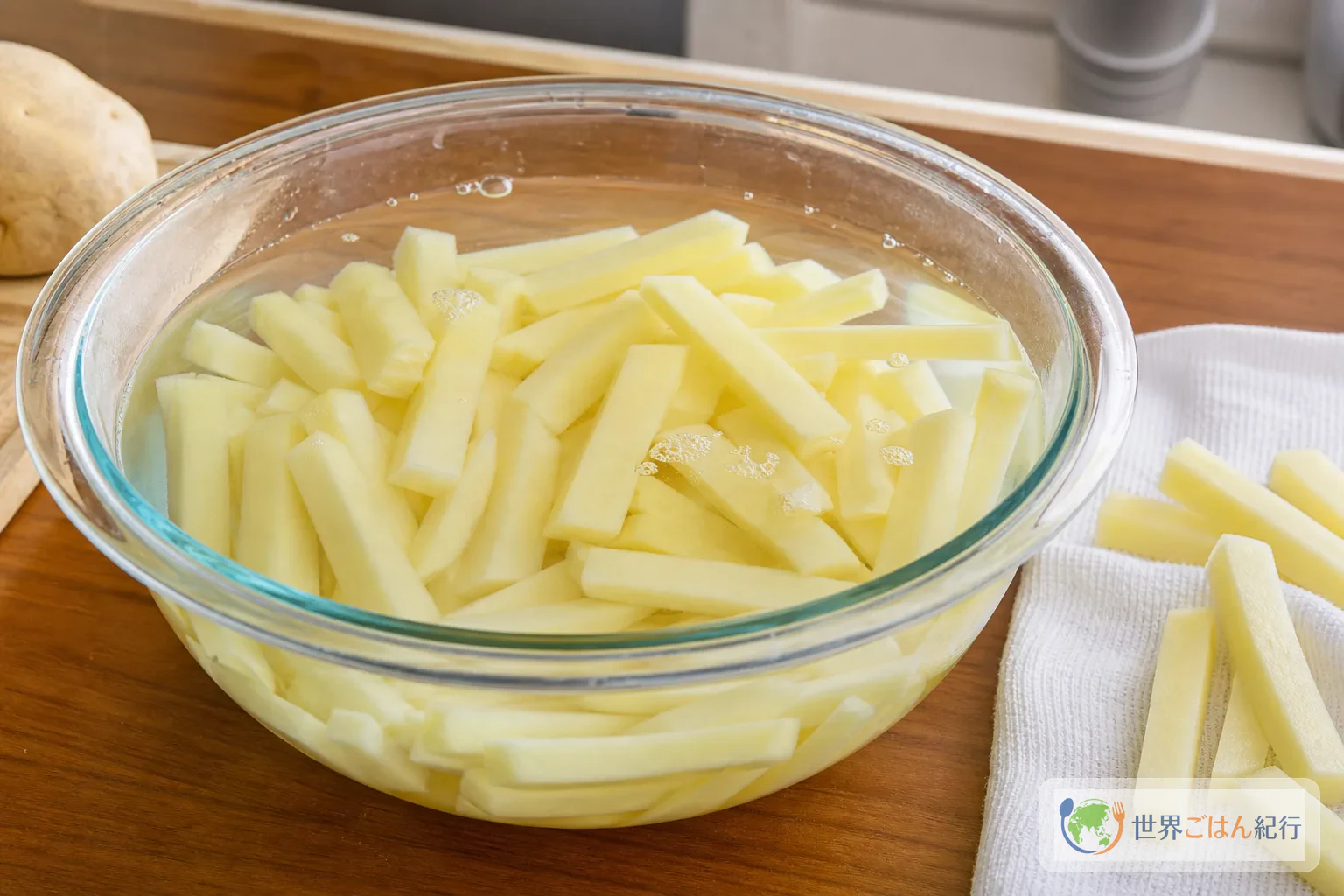
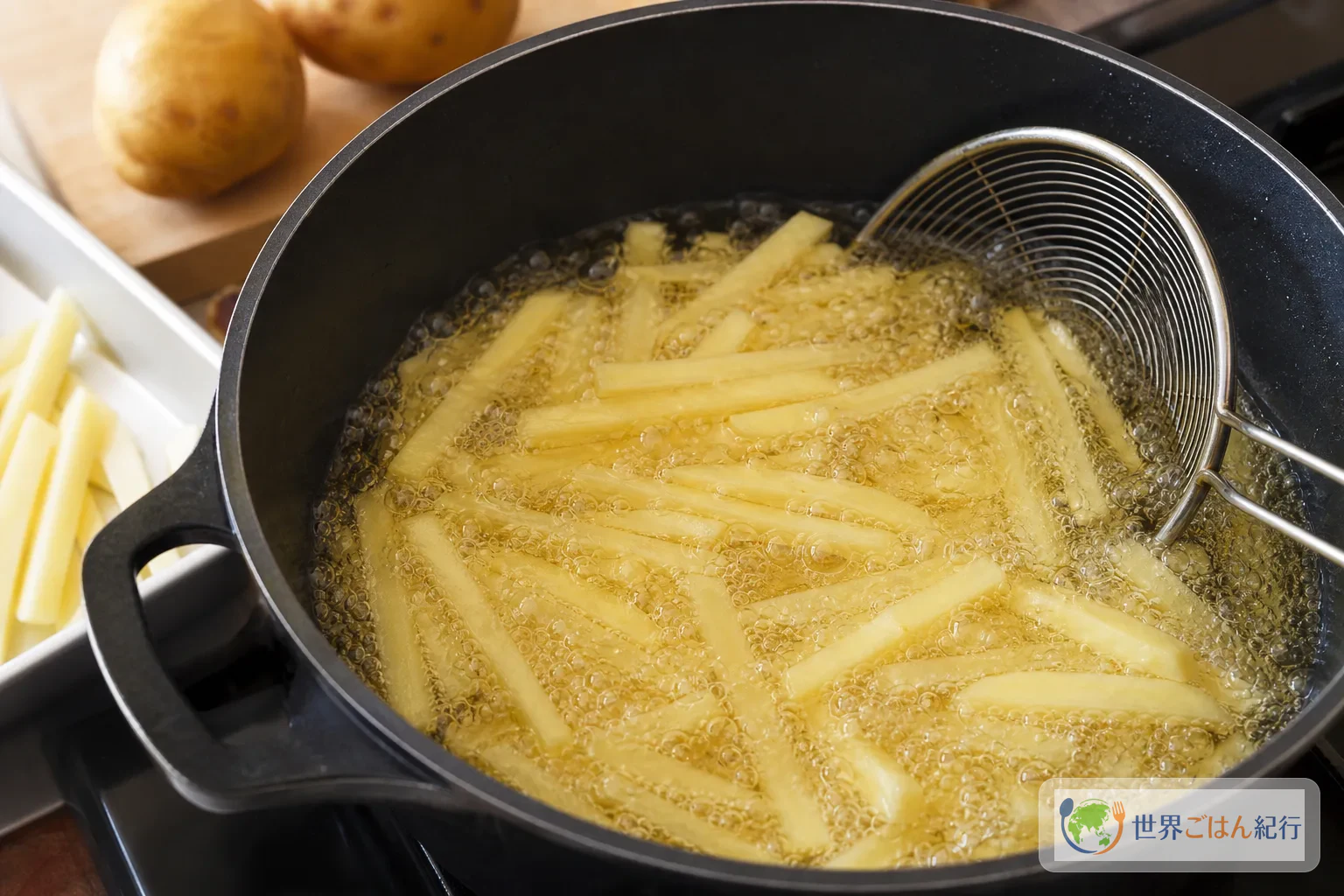
Because you use oil, choose a deep pot. Keep the oil to no more than half the pot, and don't put in wet potatoes as they are. You may make the gravy first, but keep it somewhere you can rewarm it over low heat so it is hot again at plating.
If you pour the gravy first and then set the table, the surface of the potatoes keeps absorbing the sauce. Concentrating the plating into the last 3 minutes makes the difference in taste in this dish. If you warm the plates, fill them with hot water and wipe them dry, and prepare them just before putting down the potatoes.
For the pot to simmer the gravy in, one with a thick bottom, where the temperature doesn't rise suddenly over low heat, is easier to handle. But for a single batch for 4, a deep saucepan you already have is enough. Keep the deep pot for frying the potatoes separate from the gravy pot, so you can rewarm the sauce before plating.
Tips: look at sound, color and thickness one by one
When the potatoes are greasy
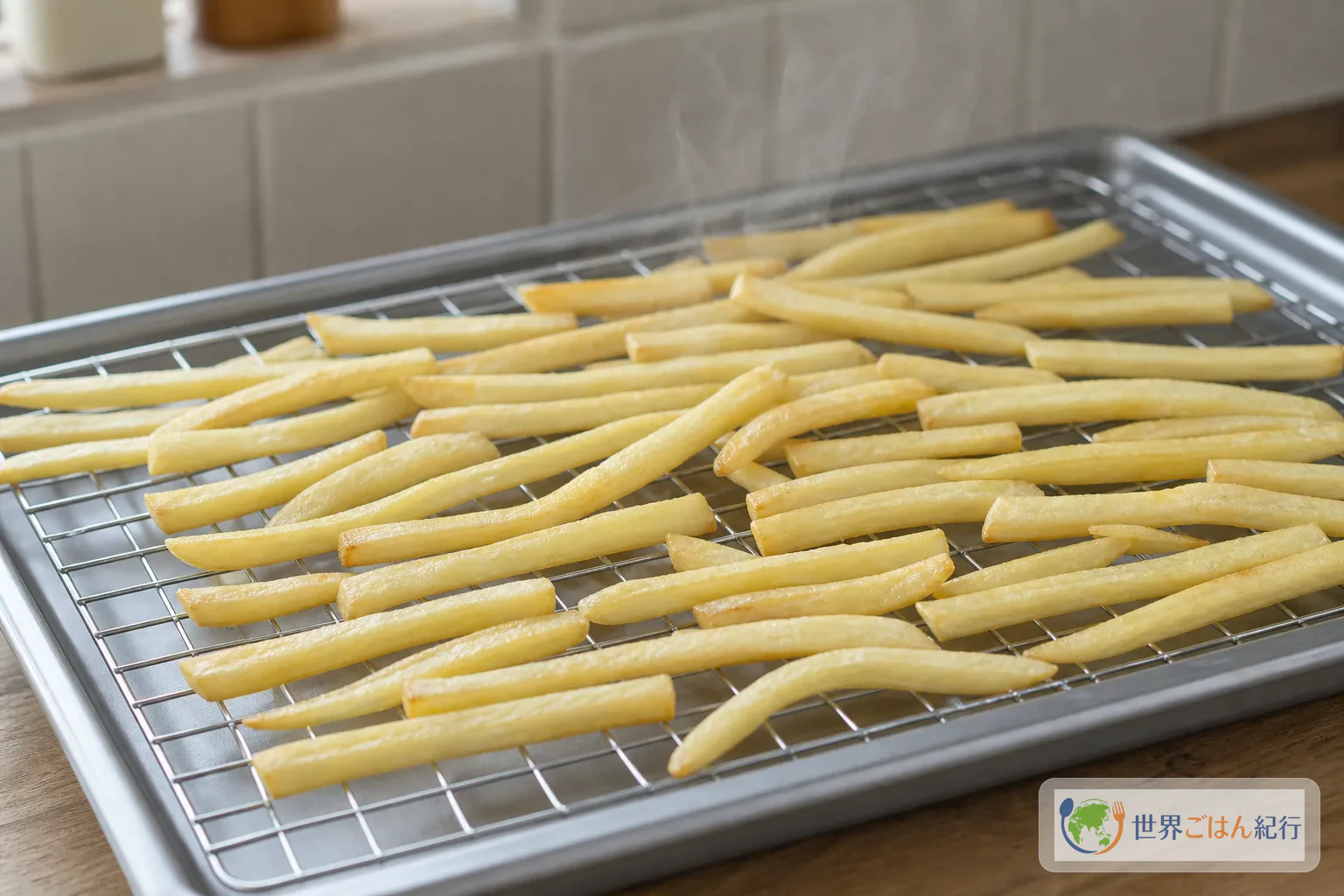
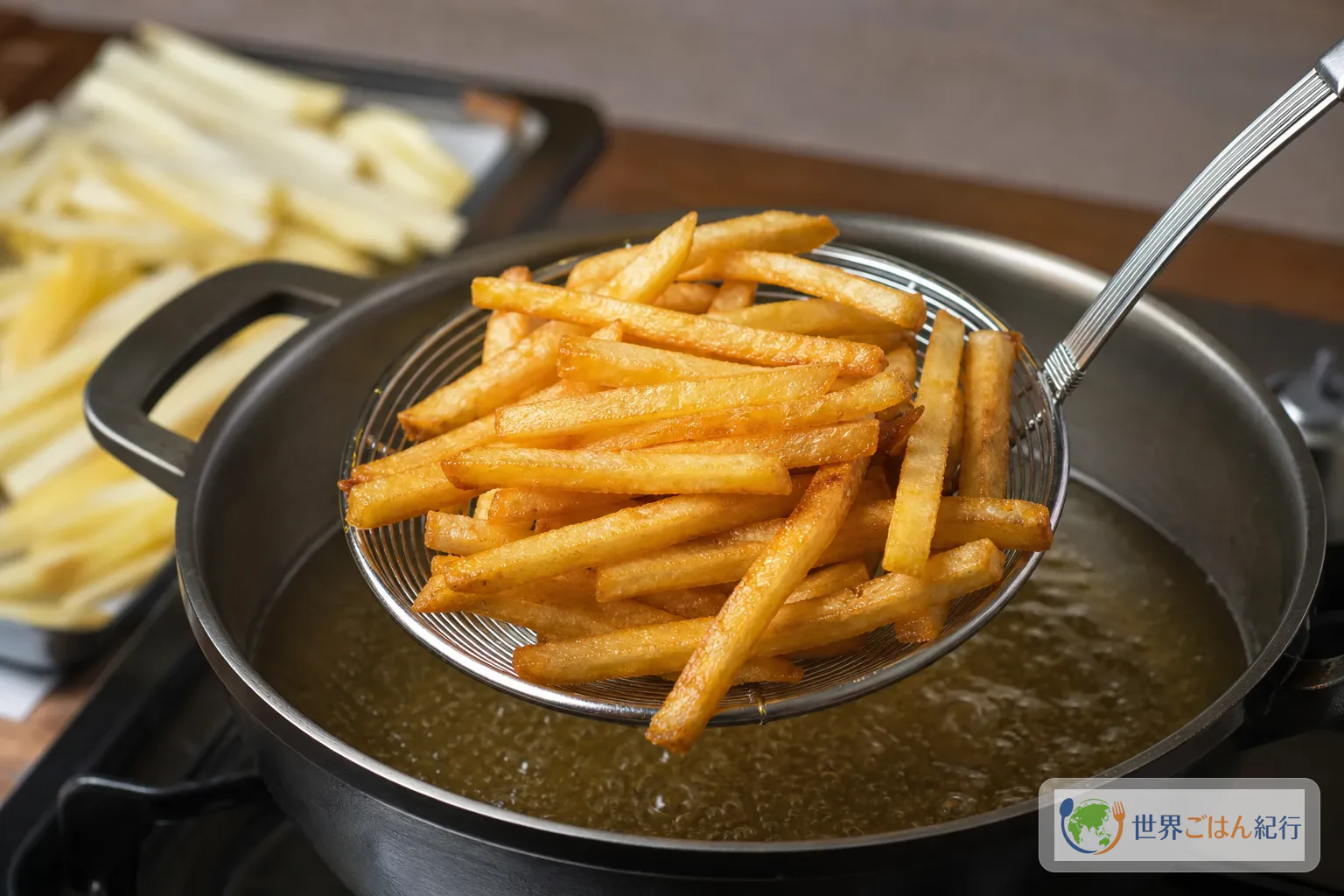
If you add the next batch to the first fry without the oil temperature recovering, the surface doesn't set and takes up oil. Rest them on the rack, and then fry briefly in higher-temperature oil the second time; that is how to fix it. Never pour water on fried potatoes. Adding water makes the oil spatter.
When the gravy is thin
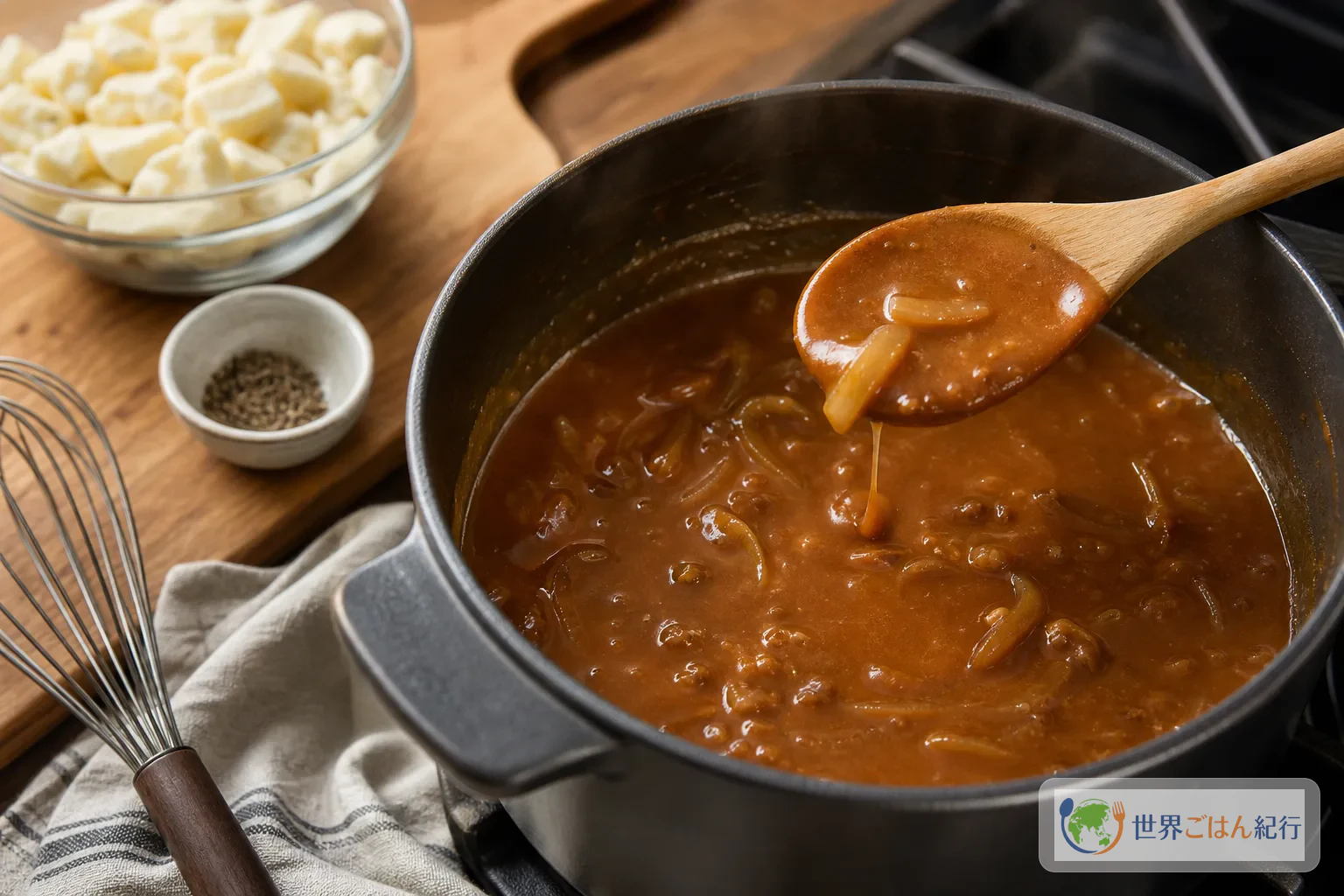
If it only runs off the back of the spoon, reduce it 2 minutes at a time over low heat. Dissolving potato starch in water and adding it suddenly tends to produce a different, translucent kind of sauce, so first adjust with the flour roux and reduction. Adding salt comes last.
When the gravy has set
A skin forming as it cools is natural. Put it over low heat, add broth or water 1 tbsp at a time and bring it back with a whisk. If lumps remain, strain it once through a fine strainer while warming.
When the cheese curds are firm
If they were just taken from the refrigerator, first take time to let them come to room temperature. Pour just a little hot gravy over the curds, leave for 30 seconds, and put the rest over the potatoes, and the outside stays soft while the center keeps its bite. They don't need to melt completely.
Avoiding burns
Don't leave the pot while heating oil, and don't put in wet potatoes. If the oil smokes, turn off the heat and let it cool without moving the pot. Avoid pouring water on it, pouring hot oil down the sink, or carrying the pot in your arms.
Regional differences and how to eat it: from the snack-bar form to a plate at home
When thinking about Quebec's poutine, it helps to remember before adding toppings that it was a dish eaten at snack bars. The fries were fried after the order, the curds set out cold in lumps, the sauce ladled from a big pot. Because the three differ a little in temperature and texture, the faster you eat, the more outline remains.
At the shop in Drummondville, the thick sauce clinging to the potatoes is told as its feature. In contrast, the Warwick paper-bag story is a different memory, born from an order asking for the curds and potatoes to be mixed. Making one the winner spills the variations each home and shop had. The process of the dish's name spreading is itself poutine's background.
In modern Quebec, there are also variations that add meat or mushrooms to the gravy or layer smoked meat on top. But the more you add, the more you need to adjust the moisture of the fries and the amount of sauce. On a first plate, keeping to the three, curds, potatoes and gravy, lets you see where changing something moves the taste.
It is a dish that became known abroad as Canadian food, but it is more natural to see it as one that spread from Quebec's eateries and gained ways of eating in various places, than as one monolithic national dish. If you want to learn about French-speaking food culture, it helps to read it alongside the pasty (in Japanese), which traces the history of a portable wrapped dish, and see the relationship between eateries and movement.
Substitutes and judgment: decide first what you want to keep close
| Element | If you want to get close | If making without buying extra | Difference in the result |
|---|---|---|---|
| Cheese curds | 450 g refrigerated fresh curds | Cubed fresh mozzarella | Less spring, melts faster |
| Potatoes | Raw starchy potatoes, double-fried | Frozen french fries cooked as directed | Easier than double-frying, but harder to adjust thickness and saltiness |
| Gravy | Beef and chicken broth combined | Store-bought brown gravy, diluted | Harder to adjust the depth of aromatics and the saltiness |
| Frying | Double fry from 160°C to over 180°C | Oven or air fryer | The toasty smell of oil and the cracking of the surface change |
| Toppings | Eat with the three elements only | Add bacon, egg, mushrooms and the like | Becomes a plate to enjoy as a derivative dish |
Rather than deciding once whether it's "authentic," it is easier to judge by choosing what you want to keep. If you prioritize texture, look for the curds; if you prioritize time, use frozen potatoes. If you want to avoid oil, serve oven-baked potatoes with hot gravy. In that case, too, rather than strictly keeping the name, explain it as an assembly borrowed from poutine, and you don't hide the substitution.
Having curds available and finishing only the gravy with a pouch is perfectly reasonable. Conversely, even if you make the sauce by hand, if at the end you melt shredded cheese completely, it heads in a different direction from a dish aiming for the texture of curds. The order of what to buy is curds, broth, and cookware that isn't special.
For making an oven version for 6 or more, one option is a shallow 30 cm pan that lets you spread the potatoes out without overlapping. This is not a pan for deep-frying raw potatoes, but a tool for using a wide surface in oven versions and reheating. For a double fry for 4, a baking sheet is enough. If you often make a potluck or large oven version, a wide base is a reason to buy it. If you don't want more storage, or mostly make fried food, you can skip this pan.
Storage and reheating: keep the three separate
Poutine is best right after plating. To make ahead, keep the potatoes, gravy and cheese curds separate. Cool the potatoes completely before sealing, let the gravy cool a little before refrigerating, and chill the curds as the storage label at purchase says.
To eat the next day, arrange the potatoes on a baking sheet without overlapping and warm them 5 to 8 minutes in a 200°C oven. Put the gravy in a small pot over low heat and add water or broth 1 tbsp at a time to restore its thickness. Take the curds out of the refrigerator and leave them about 20 minutes, and layer them last.
Reheating refrigerated potatoes only in the microwave tends to bring the surface moisture back. If you must use a microwave, warm only the center briefly and finish by crisping the surface in a skillet. Reheating after the gravy has gone on can restore neither the potatoes nor the curds, so it is safest not to store it as a single plate.
Variations: change them while keeping the three cores
Make it in the oven
Coat 1 cm square potato sticks lightly with oil and bake 25 to 30 minutes in a 220°C oven. Turn once partway, and bake until the surface is a deep gold. The surface doesn't crack as much as fried potatoes, but serving the gravy on the side lets you control the moisture.
A quick version with frozen potatoes
If using frozen shoestring or steak-cut potatoes, heat them as the bag directs. Don't add salt first; taste after layering on the gravy and curds. It is a different snack from double-fried raw potatoes, but a manageable method for a weeknight plate.
Mushroom gravy
Replace the beef broth with vegetable broth and sauté 150 g thinly sliced mushrooms with the onion. Add the flour after the mushroom moisture has cooked off. Even a gravy without meat doesn't make this a dairy-free dish. Always check the ingredients of the cheese curds.
A breakfast plate
Top with one soft-fried egg at the end and add black pepper. The yolk mixes into the gravy, so make the sauce a little thinner from the start. This is a home variation that departs from the classic form made of Quebec's three elements alone.
Adding smoked meat
Putting 50 g to 80 g of pulled pork or smoked meat on each plate strengthens the savor of meat. Reduce the salt and soy sauce in the gravy by half to compensate. If you only add seasoning when ingredients increase, it gets salty, so check the saltiness of the meat first.
FAQ
Can I substitute shredded cheese for cheese curds?
You can, but the texture is not the same. Curds warm while keeping their lump shape and keep their spring when bitten. Shredded cheese blends quickly into the hot gravy, so think of it as a substitute for enjoying a cheese flavor that has become one with the sauce.
What should I choose if I can't find cheese curds?
Cutting fresh mozzarella into 1 to 2 cm cubes is the easiest to handle. For high-moisture products, press lightly with paper, and for salty ones, reduce the finishing salt. Processed cheese and sliced cheese melt very differently, so I don't prioritize them as a stand-in for curds.
The gravy is runny. Can I add potato starch?
First reduce it over low heat 2 minutes at a time and check that it thinly coats the back of a spoon. If that's still not enough, separately sauté 5 g flour in 5 g butter, dissolve it with a little of the gravy, and return it to the pot. Potato starch is a method that tends to give translucency and a mouthfeel different from a classic brown gravy.
If I don't fry it, is it no longer poutine?
If you prioritize strictness of the dish's name, the double fry is the basis. But if you layer oven-baked potatoes, curds and gravy right before eating, you can still enjoy how the three parts combine. Decide the method according to the amount of oil, kitchen ventilation and the number of people.
Can I make it vegetarian?
You can make the gravy with vegetable broth and mushrooms, without beef broth. But whether chicken broth, Worcestershire sauce, the coagulant in cheese and so on fit your dietary policy differs by product. If you avoid animal ingredients, check each product's label, including substitute cheese for the curds.
Is it all right to leave it after making it?
If you keep the three separate, you can assemble it just before eating. If you leave it with the gravy poured on the potatoes, the surface absorbs the sauce and the curds keep melting. For a potluck, carry warmed gravy in an insulated container and the potatoes and curds in separate containers.
Sources
- Dairy Farmers of Canada: Traditional poutine (recipe ingredients, steps and nutrition values. accessed and checked 2026-07-28)
- Dairy Farmers of Canada: Step Up Your Poutine Game With Our Canadian Cheese Ambassador (curd temperature, double-frying potatoes, plating. accessed and checked 2026-07-28)
- Université Laval IREPI: La poutine (spread in Quebec, origin accounts, snack-bar culture. accessed and checked 2026-07-28)
- Dictionary of Canadianisms on Historical Principles: poutine (usage of the word and several accounts of when it originated. accessed and checked 2026-07-28)
- Statistics Canada: Fries in Canada (its position as a dish originating in Quebec. accessed and checked 2026-07-28)
- CARTV Québec: Fromage à poutine du Québec (the nature of poutine curds and the status of the certification application as of 2026. accessed and checked 2026-07-28)