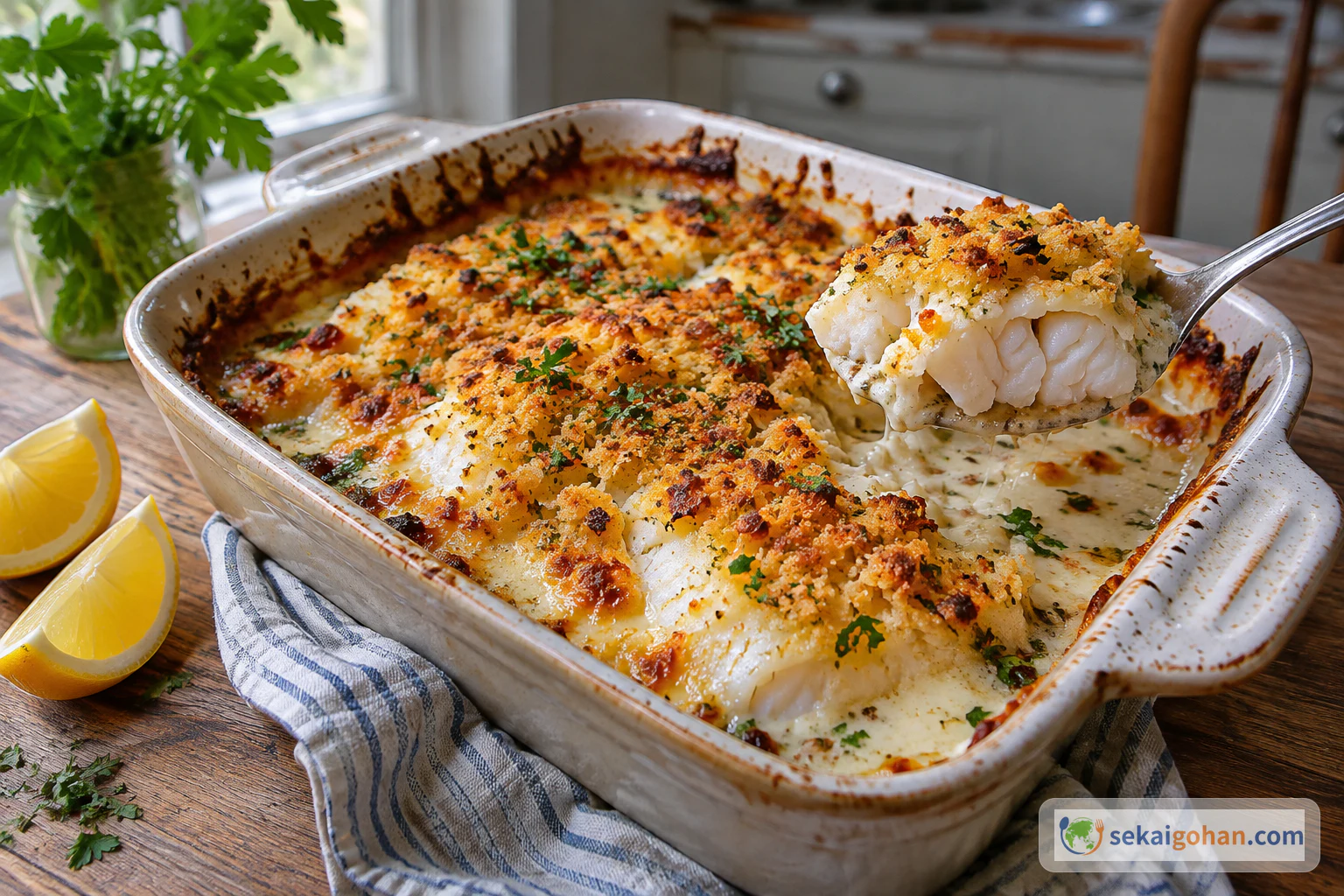
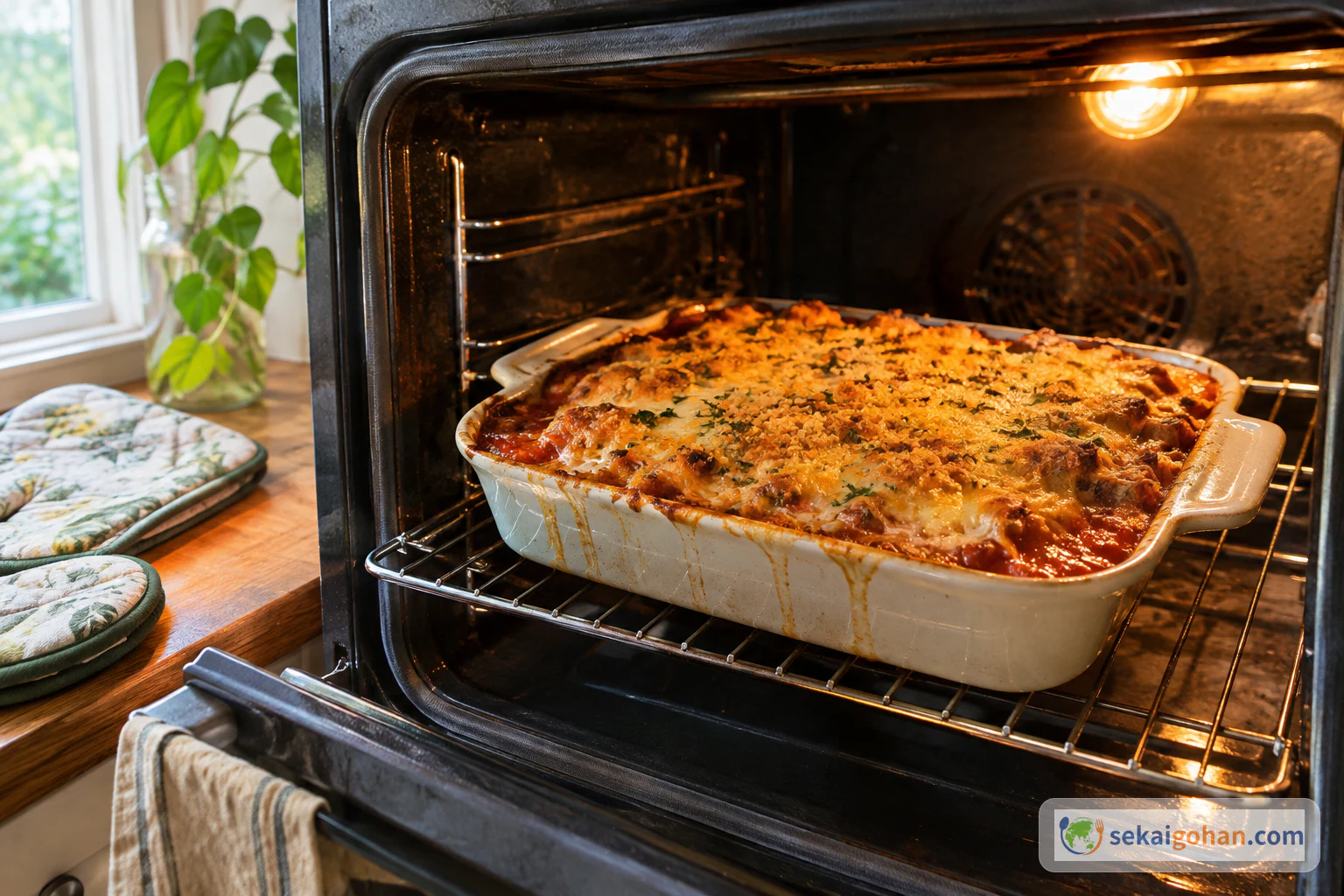
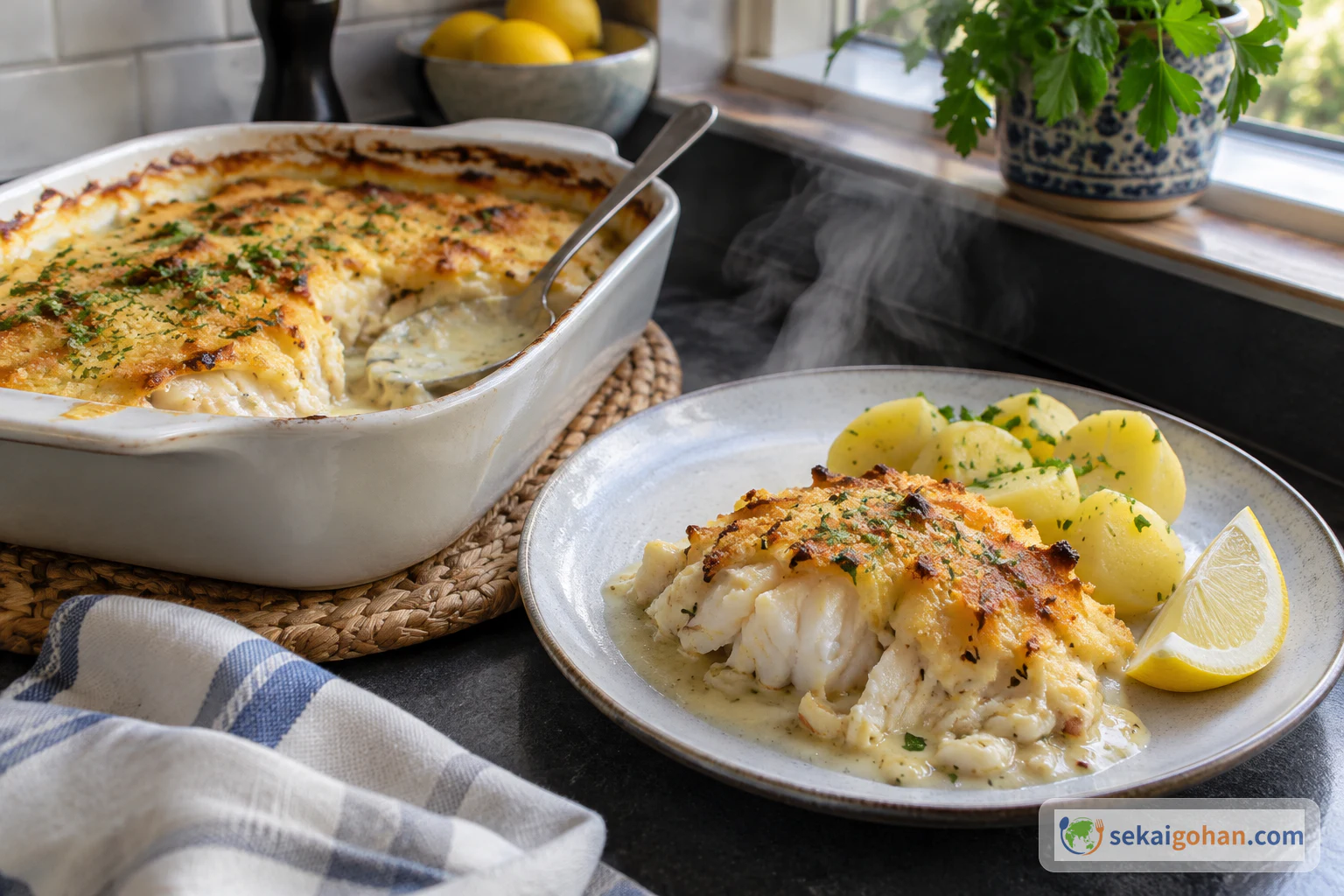
The casserole comes out of the oven with the crumbs gone golden and the sauce bubbling up at the corners. Then it has to sit on the counter, steaming and smelling of butter, lemon and toasted cheese, while everyone waits. Once the waiting is over, a spoon goes in and comes up with big white flakes of cod in a thick, creamy sauce under a crisp, cheesy crust. Cod au gratin is a home dish from Newfoundland and Labrador on Canada's Atlantic coast. It tastes mild and rich at once: sweet onion and milk, a sharp edge from cheddar and Parmesan, and lemon zest to lift it.
A Casserole From the Place Where "Fish" Means Cod
In Newfoundland and Labrador, when someone says "fish," they usually mean cod. Cod sits at the centre of the province's food and its history, and it kept that place even after the 1992 cod moratorium. So a casserole built on cod is about as local as a plate gets. You find cod au gratin in restaurants and in home kitchens, all year round, and especially at Christmas, when a dish of it goes on the holiday table next to everything else.
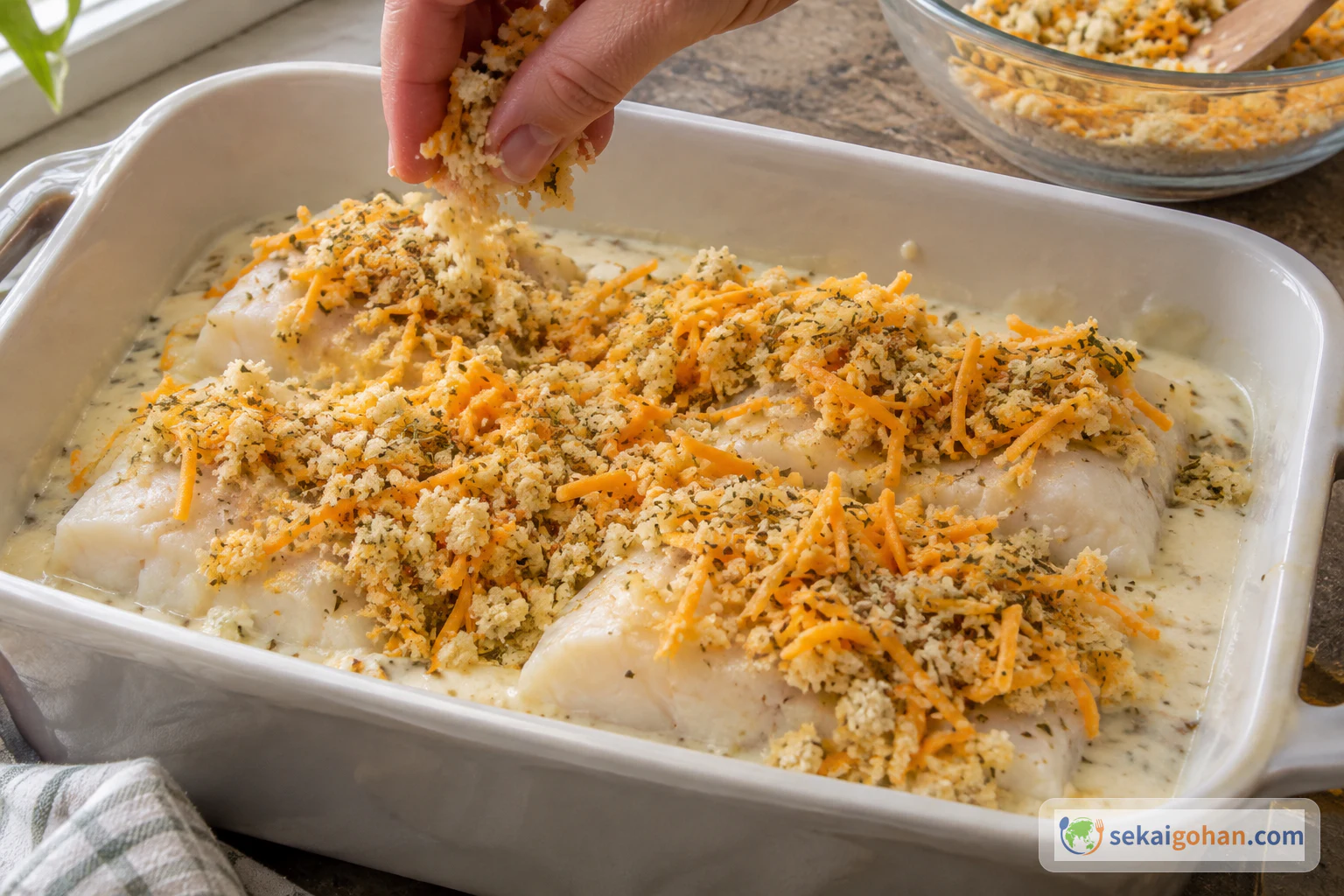
The dish itself is simple. Pieces of cod are covered in a white sauce with cheese, then topped with buttered breadcrumbs and more cheese and baked until browned. Cod, cheese, milk, onion and breadcrumbs are the ingredients that come back in almost every version. Households change the rest. Some keep it plain with a little dried oregano and lemon, as here. Others add garlic, Dijon mustard, tarragon or chives, and lighten the cheese.
Where it was first made and first written down is not settled. A codfish au gratin casserole was already in print in Newfoundland by the late 1950s, and other dates get passed around as well. What is clear is the role it plays: a year-round home dish built on cod, and a holiday dish. It sits with the rest of the country's home cooking on our Canada page.
"Au gratin" is a French cooking term for a dish whose surface is browned in the oven, usually under cheese or breadcrumbs. The name tells you how the dish is finished. It does not say where the dish was first made.
Ingredients (serves 4)
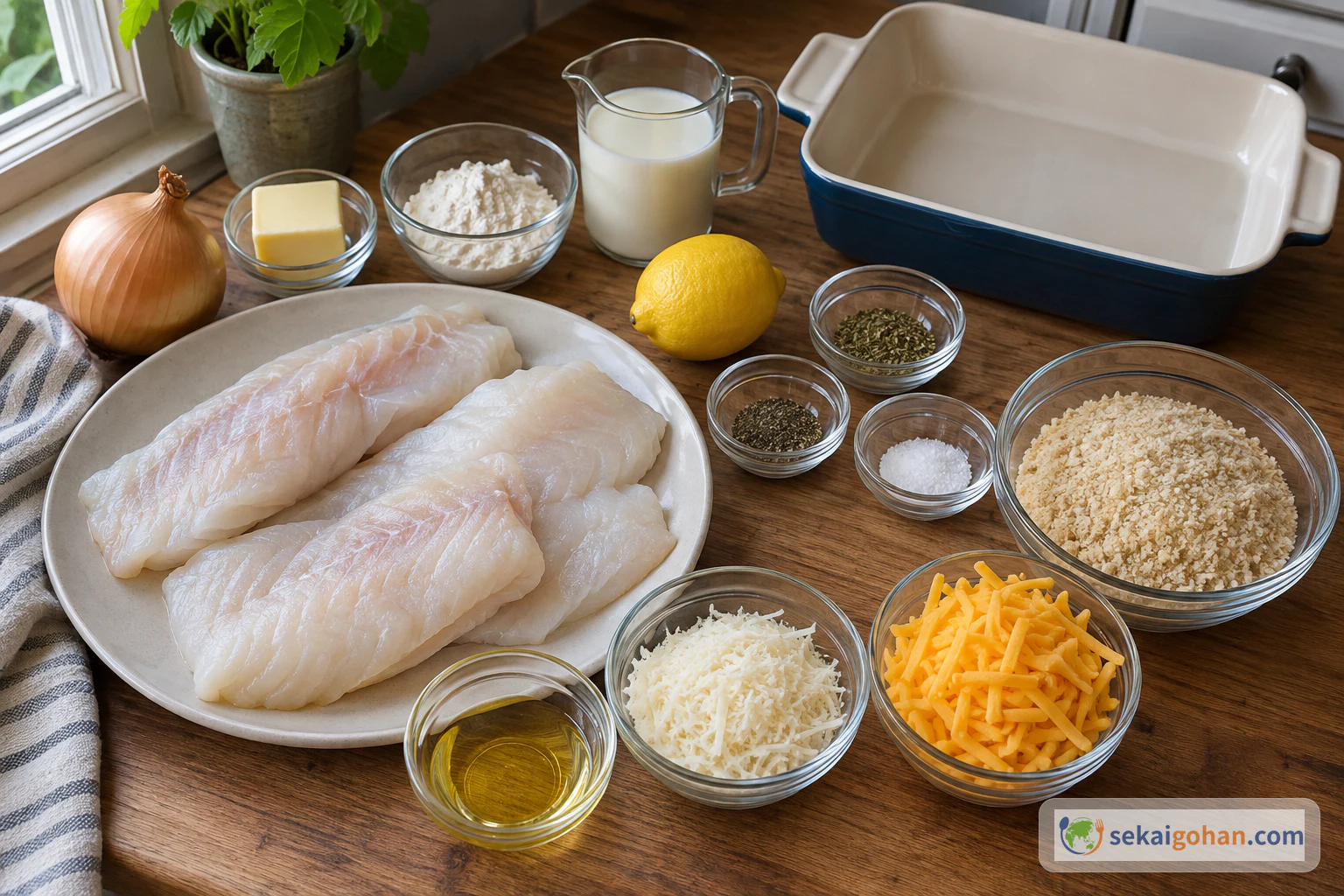
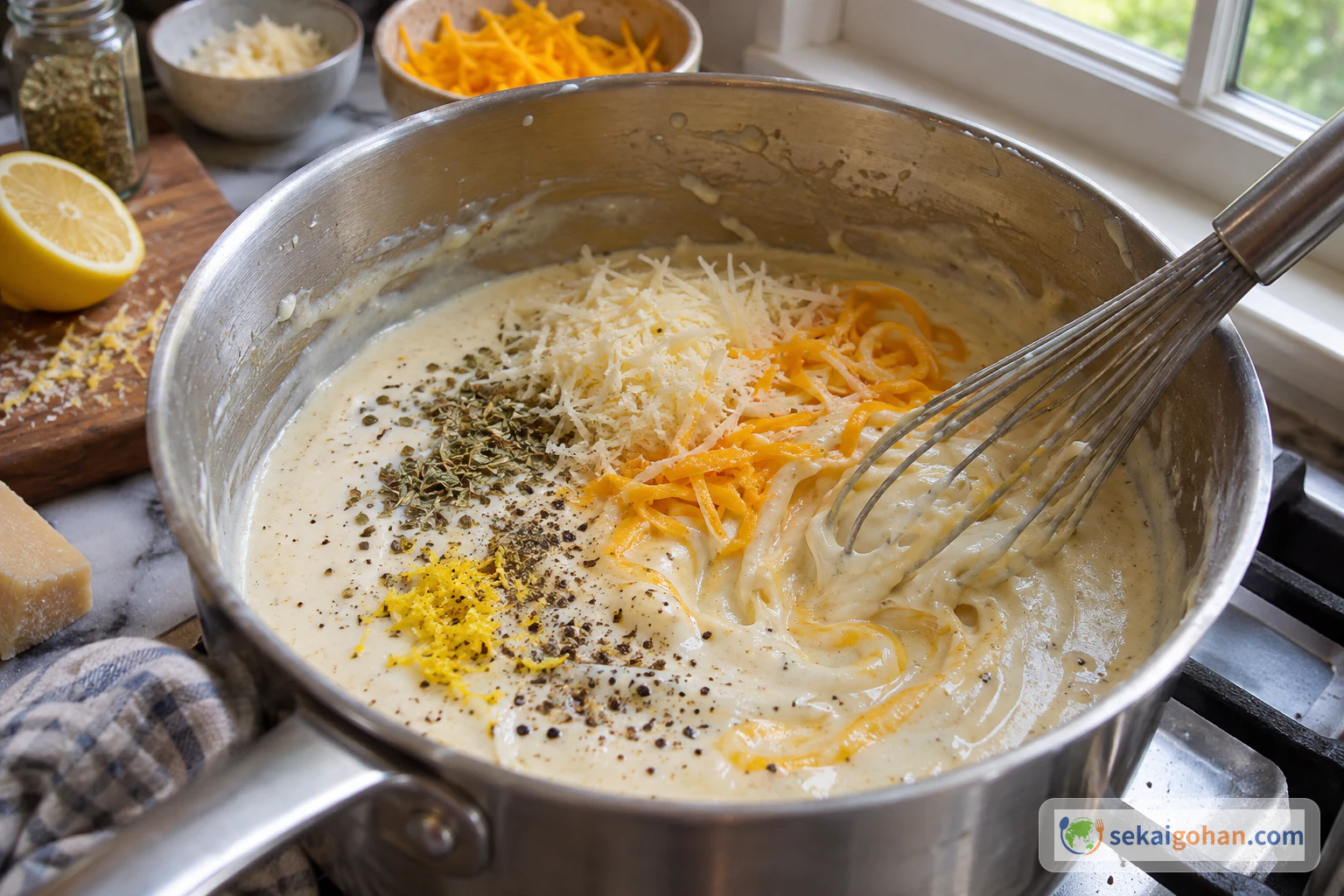
The cheese gets used twice, so read the split before you start. Half a cup each of Parmesan and cheddar goes into the sauce. From what is left, about 1 cup is mixed into the breadcrumbs and the rest is scattered straight over the fish.
This dish contains fish (cod), milk (milk, butter, Parmesan, cheddar) and wheat (flour, breadcrumbs). Check the labels on breadcrumbs and grated cheese for any other allergens.
Equipment
- Casserole dish (ovenproof, large enough to hold the cod in a single layer)
- Cutting board and sharp knife
- Small saucepan
- Wooden spoon and whisk
- Microwave-safe bowl for melting butter
- Zester or fine grater for the lemon
- Instant-read thermometer
Choosing and Substituting
Everything here is at a regular supermarket. What makes it taste like Newfoundland is how three things sit together: mild, flaky cod, a milky onion sauce, and a cheese-and-crumb crust. Keep those and the dish keeps its character.
| Ingredient | What to buy | What a swap changes |
|---|---|---|
| Cod | Fresh or frozen boneless, skinless fillets. Thaw frozen cod completely and pat it dry | Wet fish lets water into the sauce and thins it |
| Cheddar | A block you grate yourself, or pre-shredded cheddar | A mild melting-cheese blend melts well but tastes softer and less sharp |
| Parmesan | Grated from a wedge, or grated Parmesan from a tub | Wedge Parmesan tastes deeper. The tub kind is drier and saltier |
| Butter | Salted or unsalted | With salted butter, go lighter on the salt in the sauce |
| Breadcrumbs | Plain dry breadcrumbs | Coarser crumbs give a rougher, crunchier top |
| Lemon | A fresh lemon, scrubbed well before zesting | Bottled juice does not replace the zest's aroma |
| Flour | All-purpose wheat flour | Cornstarch thickens differently and does not make a roux |
Salt cod is a different dish. Soaked salt fish has its own texture and saltiness, and this recipe is built for fresh or frozen cod.
Method
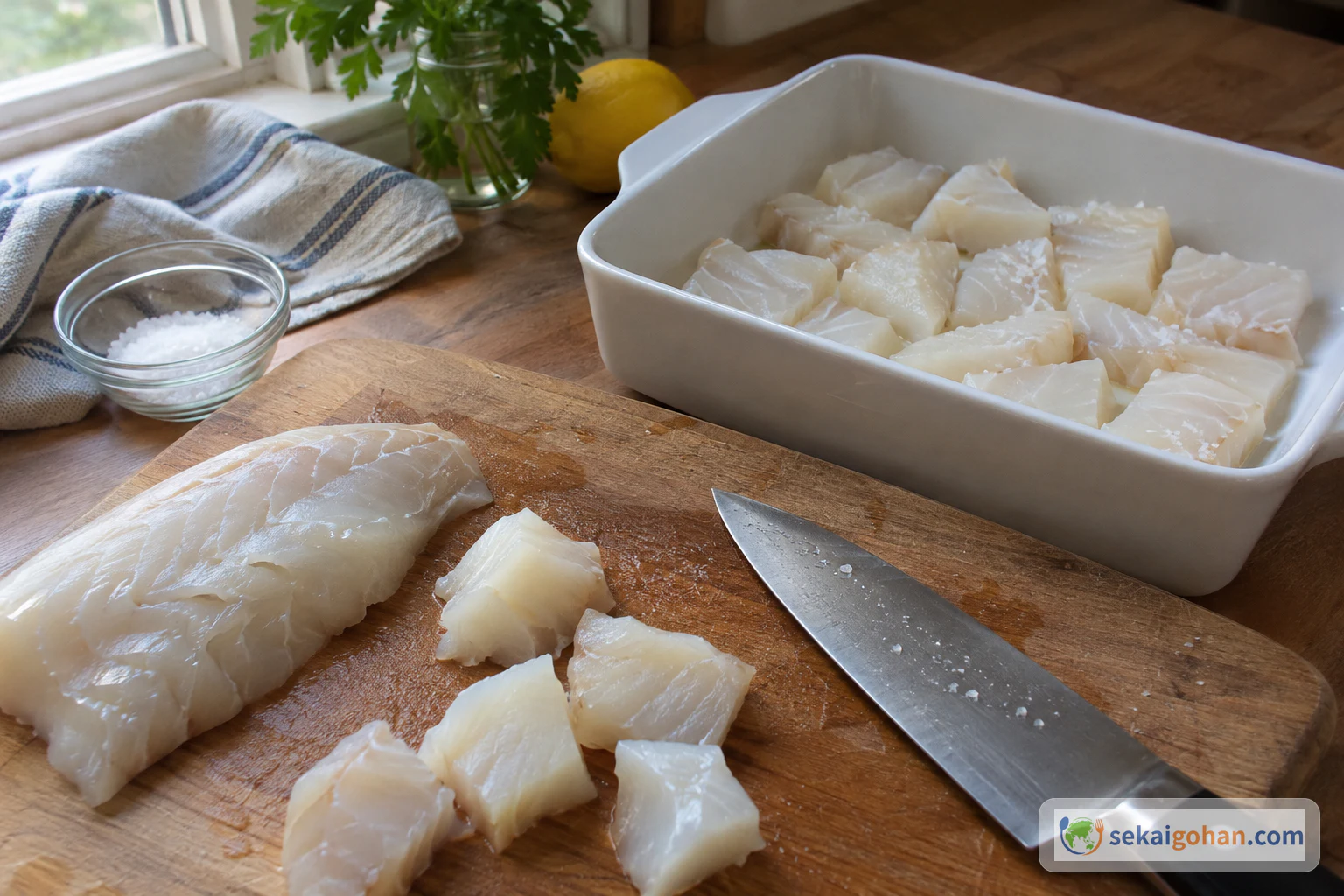
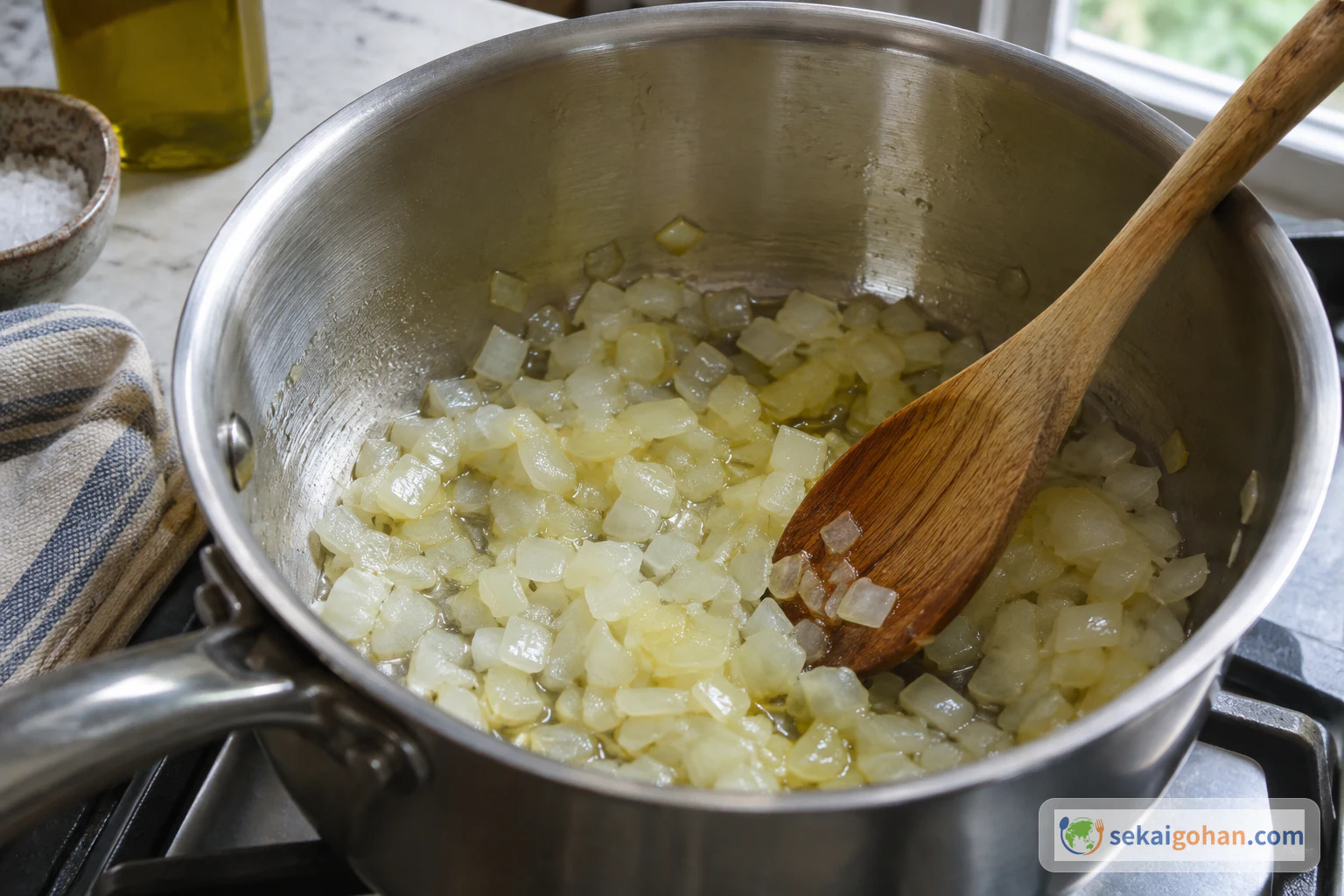
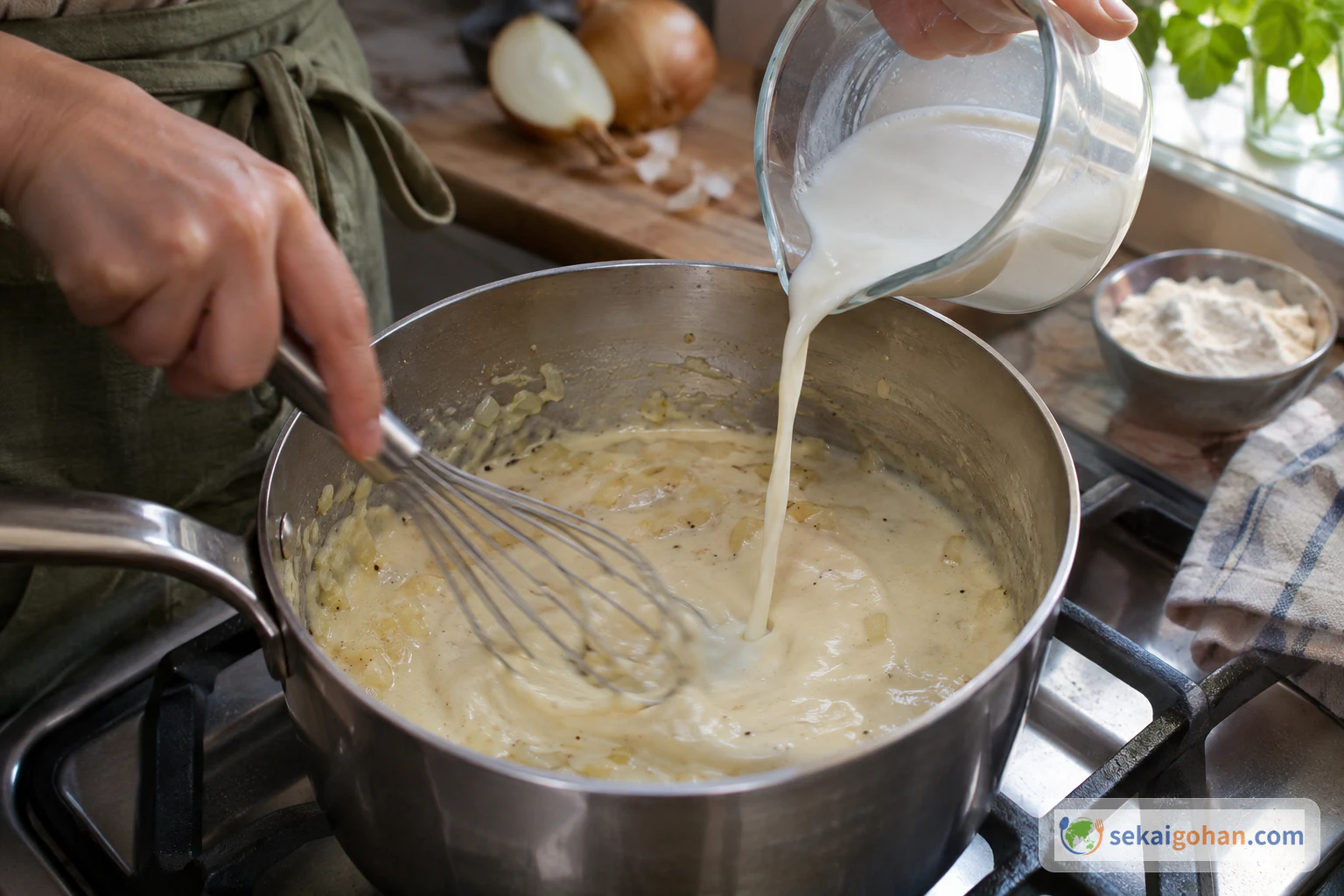
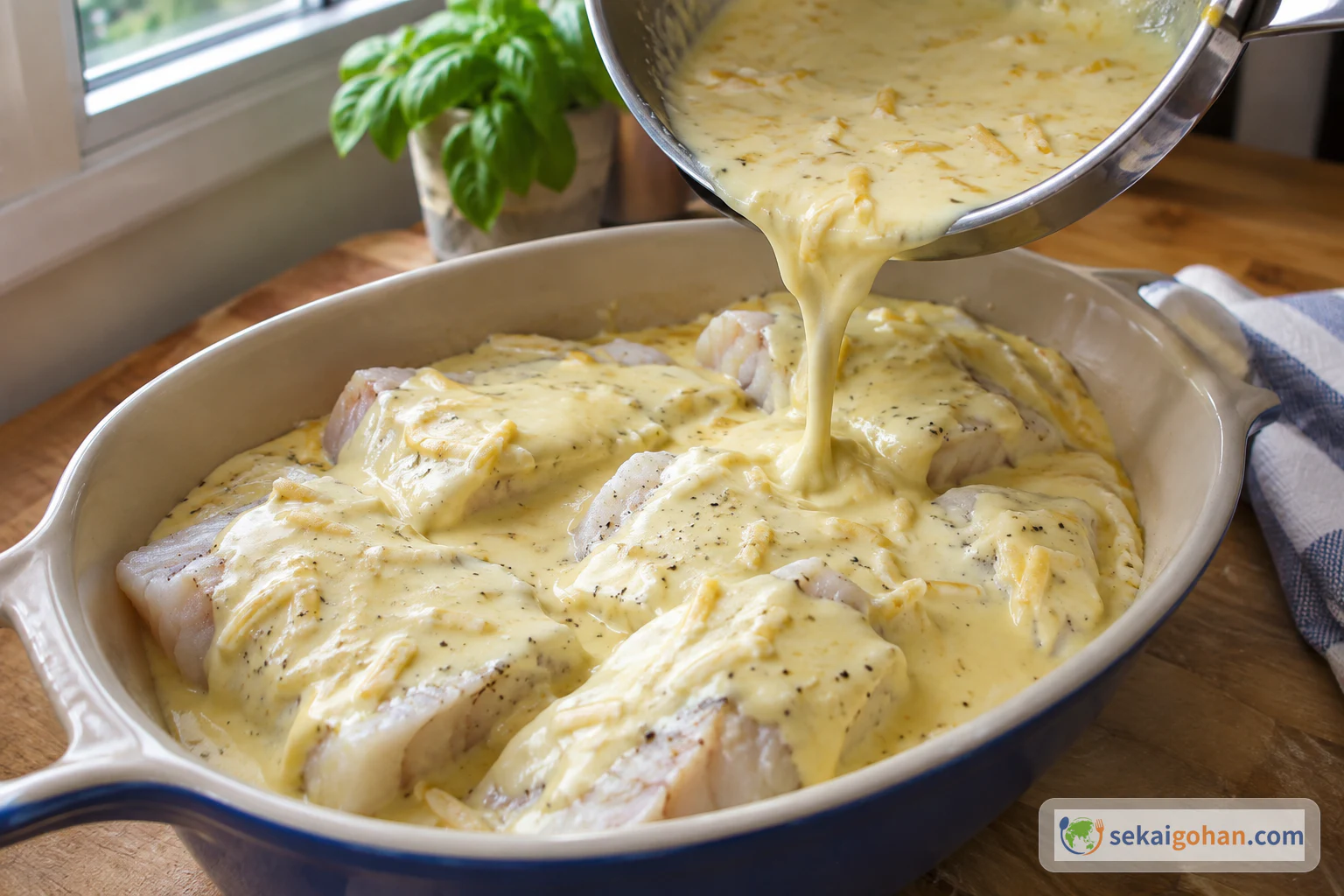
The sauce is made while the cod waits raw in the dish, so cut the fish first, then let one small saucepan carry you from onion to roux to cheese sauce. Once the topping is on, the oven does the work for 40 minutes. After that comes the rest, which is part of the recipe. Plan for the 20 minutes of resting before you serve.
Served straight from the oven, the sauce is loose and very hot, and it floods the plate. After 20 minutes it sets to a thick cream around the flakes, and the crust stays crisp.
When It Goes Wrong
| What you see | Why | What to do |
|---|---|---|
| Thin, watery sauce around the fish | Frozen cod was not fully thawed or was not dried | Thaw completely and pat dry before cutting. Rest the baked dish the full 20 minutes |
| Lumpy sauce | Milk went in too fast | Whisk hard off the heat. Next time add the milk a little at a time |
| Dry, tough pieces of cod | Some pieces were not covered by sauce | Spoon the sauce over every piece before the topping goes on |
| Pale, soft topping | Crumbs were not coated in butter, or the dish came out early | Mix the melted butter through all the crumbs and bake until golden |
| Centre of the fish below 158°F (70°C) | Thick pieces or a crowded dish | Return to the oven and check again until it reaches temperature |
| Sauce runs across the plate | Served without resting | Let it stand at least 20 minutes |
The dish and the bubbling sauce are very hot when they come out of the oven. Use oven mitts, put the dish on a trivet, and keep it out of reach of children while it rests.
Serving, Variations and Leftovers
On the table
Cod au gratin is a full main course. Spoon it over boiled potatoes so they soak up the sauce, or over rice, and put lemon wedges out so everyone can squeeze some over their own portion. A squeeze of lemon cuts through the cheese. In Newfoundland it is eaten all year round and especially at Christmas.
Variations
- Dijon and tarragon. Whisk a little Dijon mustard and tarragon into the sauce. The mustard adds a gentle bite and the tarragon a sweet, aniseed note, and the dish tastes less cheese-forward.
- Chives on top. Scatter chopped chives over the top. They add fresh green colour and a mild onion flavour against the browned crust.
- Garlic in the sauce. Cook a little minced garlic with the onion. It makes the sauce deeper and more savoury.
- Individual dishes. Divide the cod, sauce and topping among small ovenproof dishes. Each person gets a share of the crust. Judge doneness by the golden top, the bubbling edges and the 158°F (70°C) centre.
Leftovers
Cool leftovers, then cover and refrigerate promptly. Reheat only what you will eat, until it is steaming hot all the way through.
Frequently Asked Questions
Can I use frozen cod?
Yes. Thaw it completely first, then pat every fillet dry with paper towels before cutting. Frozen fish that goes into the dish wet releases water as it bakes and thins the sauce.
Can I make this with salt cod?
Salt cod makes a different dish. It has to be soaked first, and both its saltiness and its texture change the result. Use fresh or thawed frozen cod for this casserole.
How do I know the fish is cooked under all that topping?
Look for a golden top and sauce bubbling at the edges, then check with a thermometer. Push it into the thickest piece of cod near the centre of the dish. It should read at least 158°F (70°C).