Charred Breadfruit, Golden Fish: Two Simple Cooks on One Plate
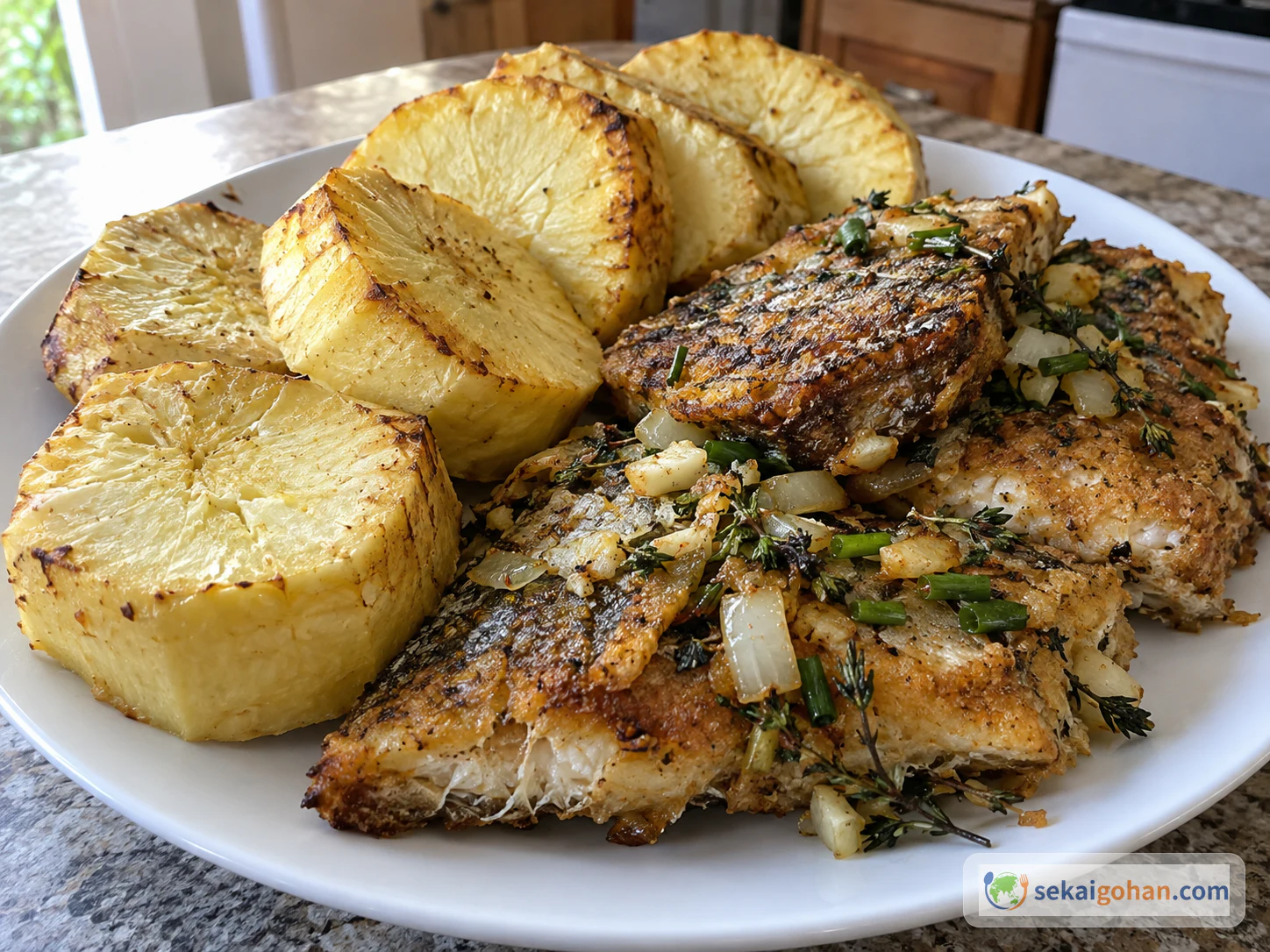
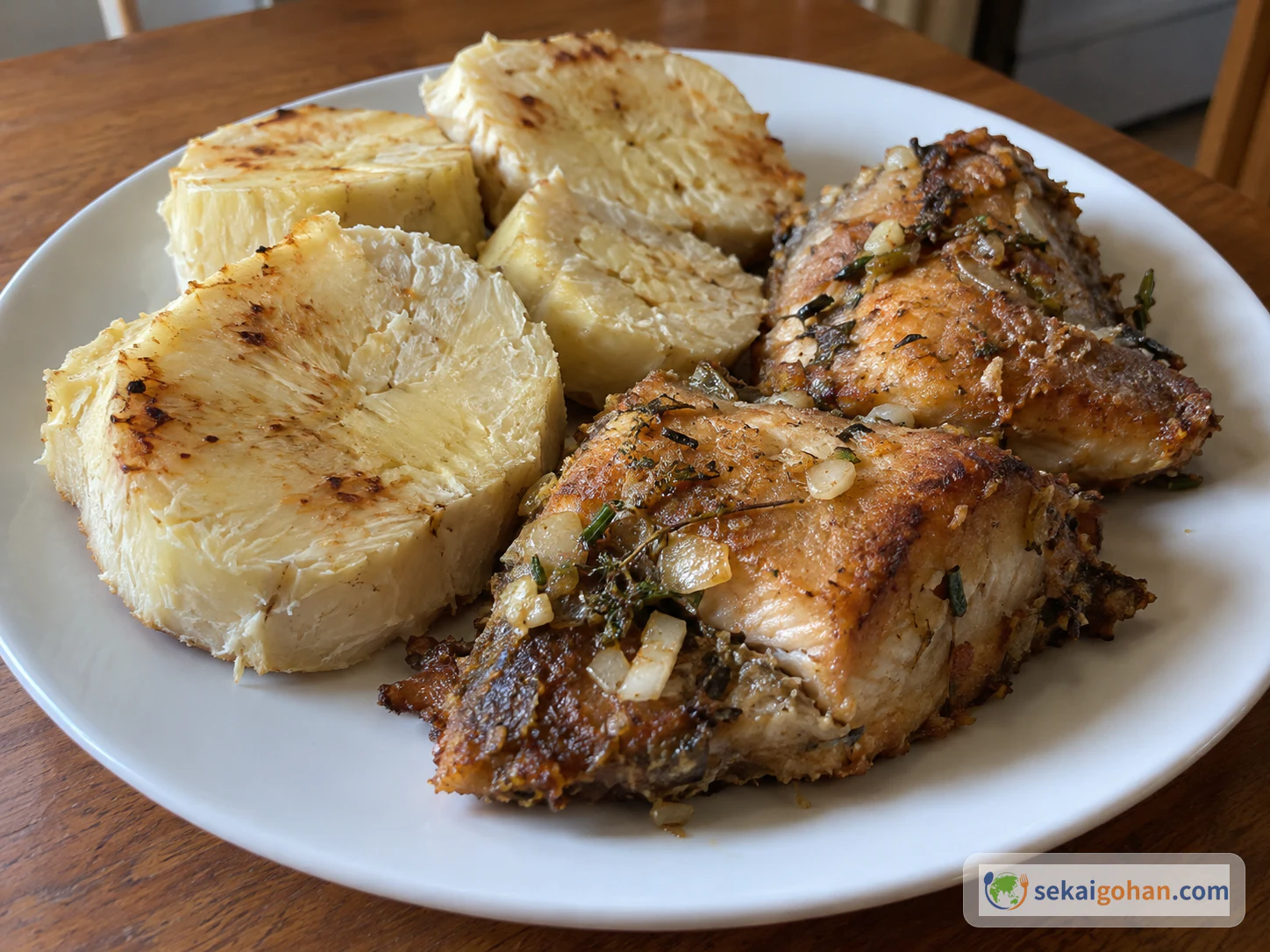
Roast the breadfruit whole, season and fry the fish separately, and bring them together only at the end. That pairing is the heart of the dish.
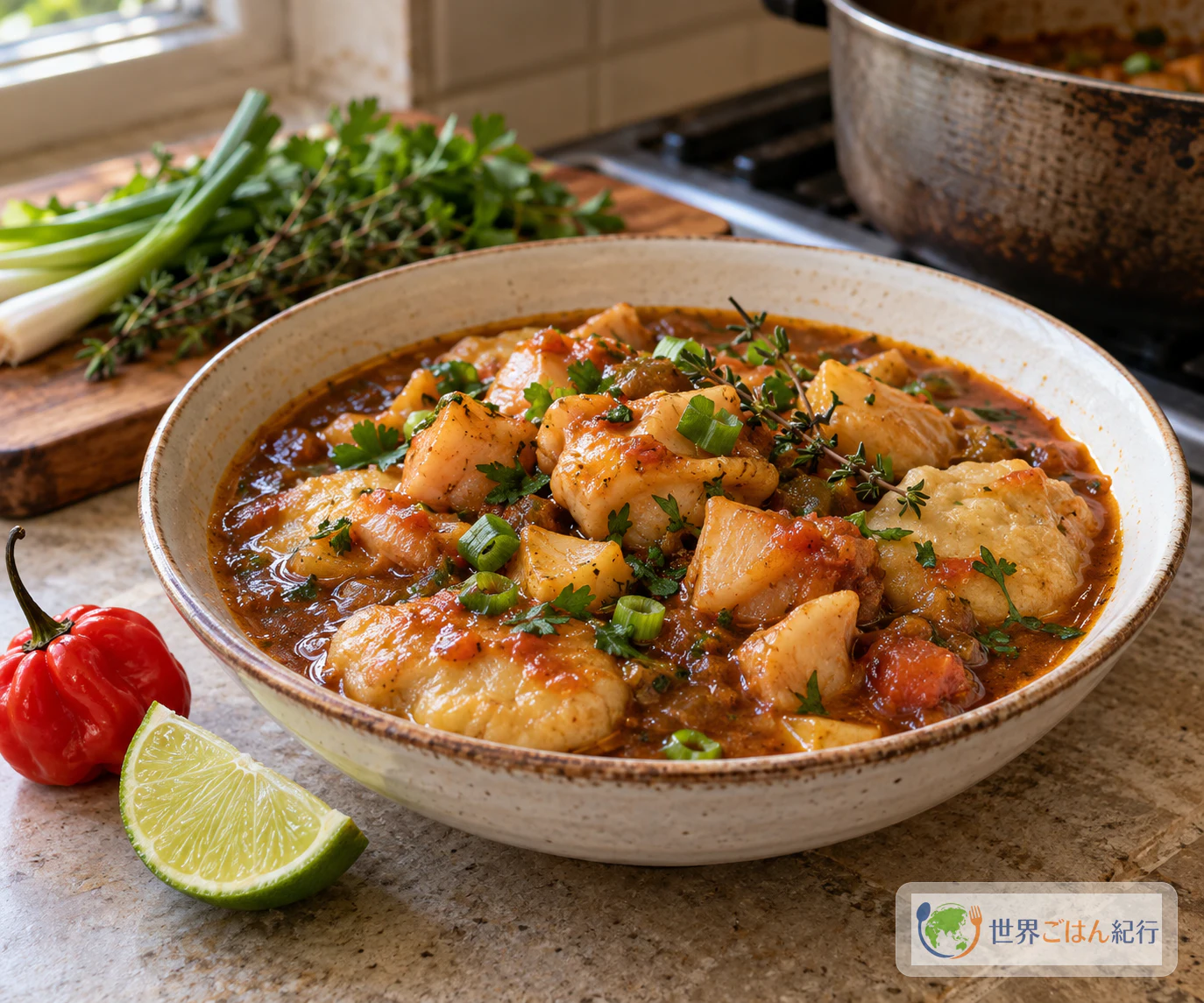
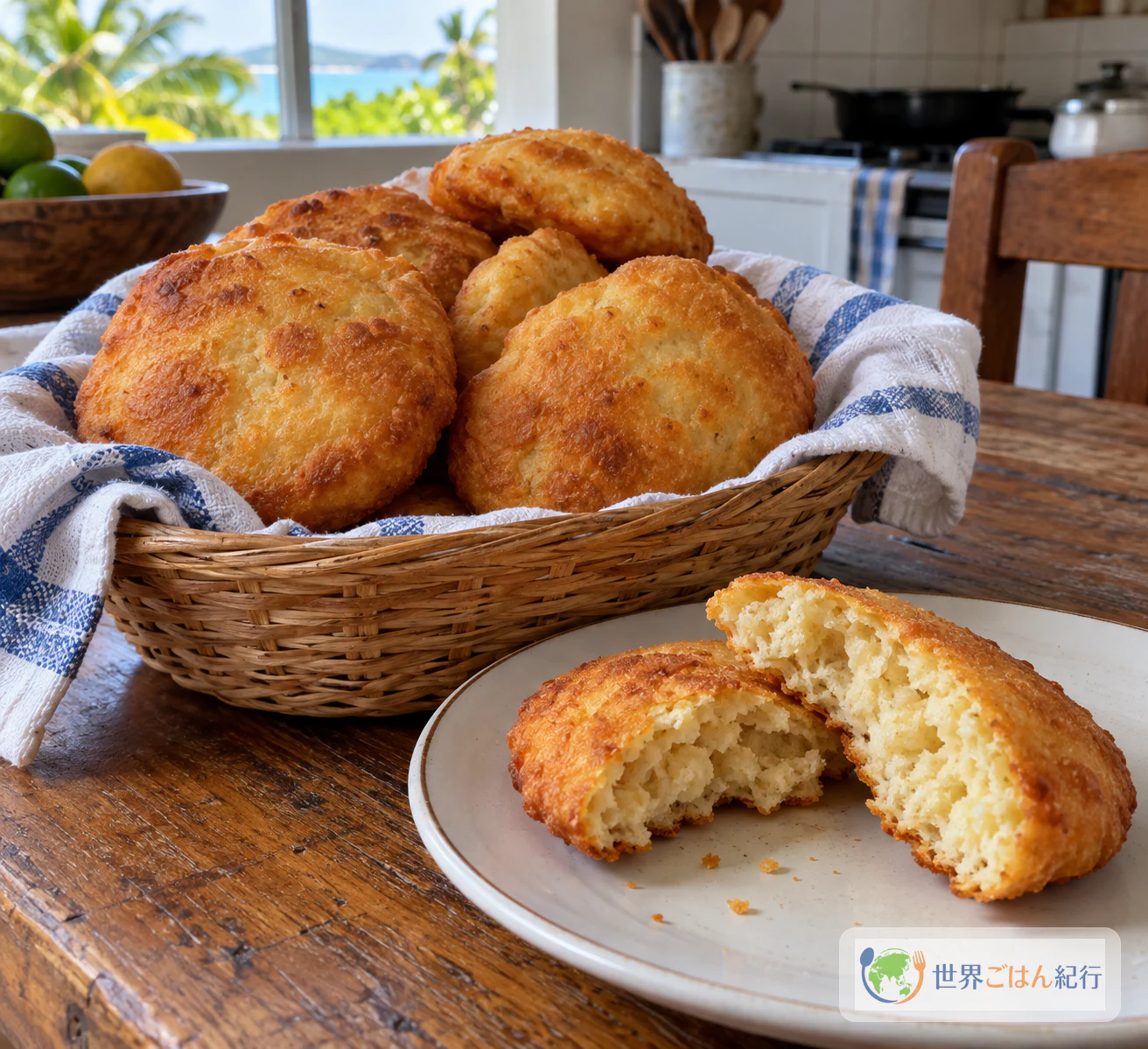
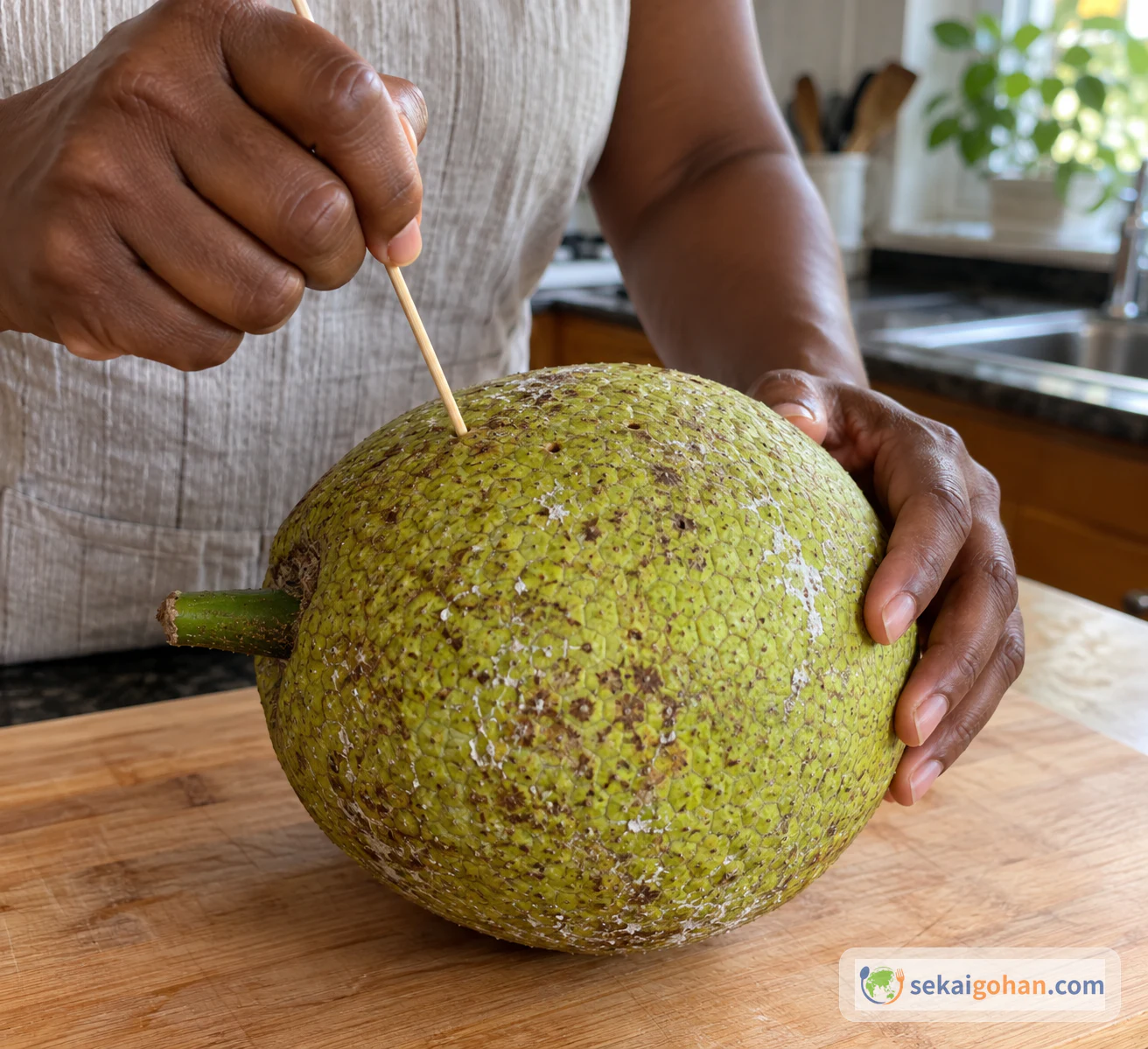
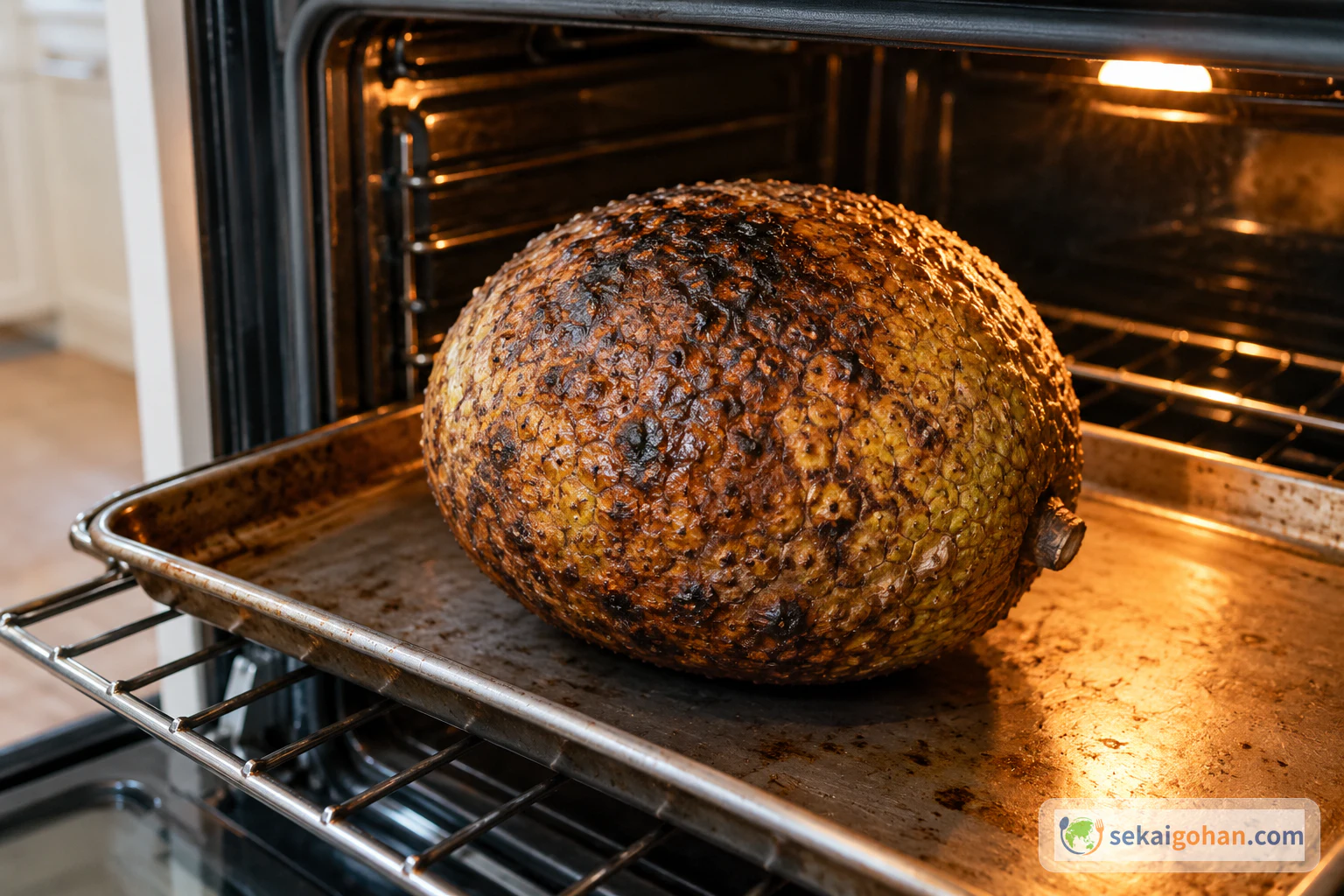
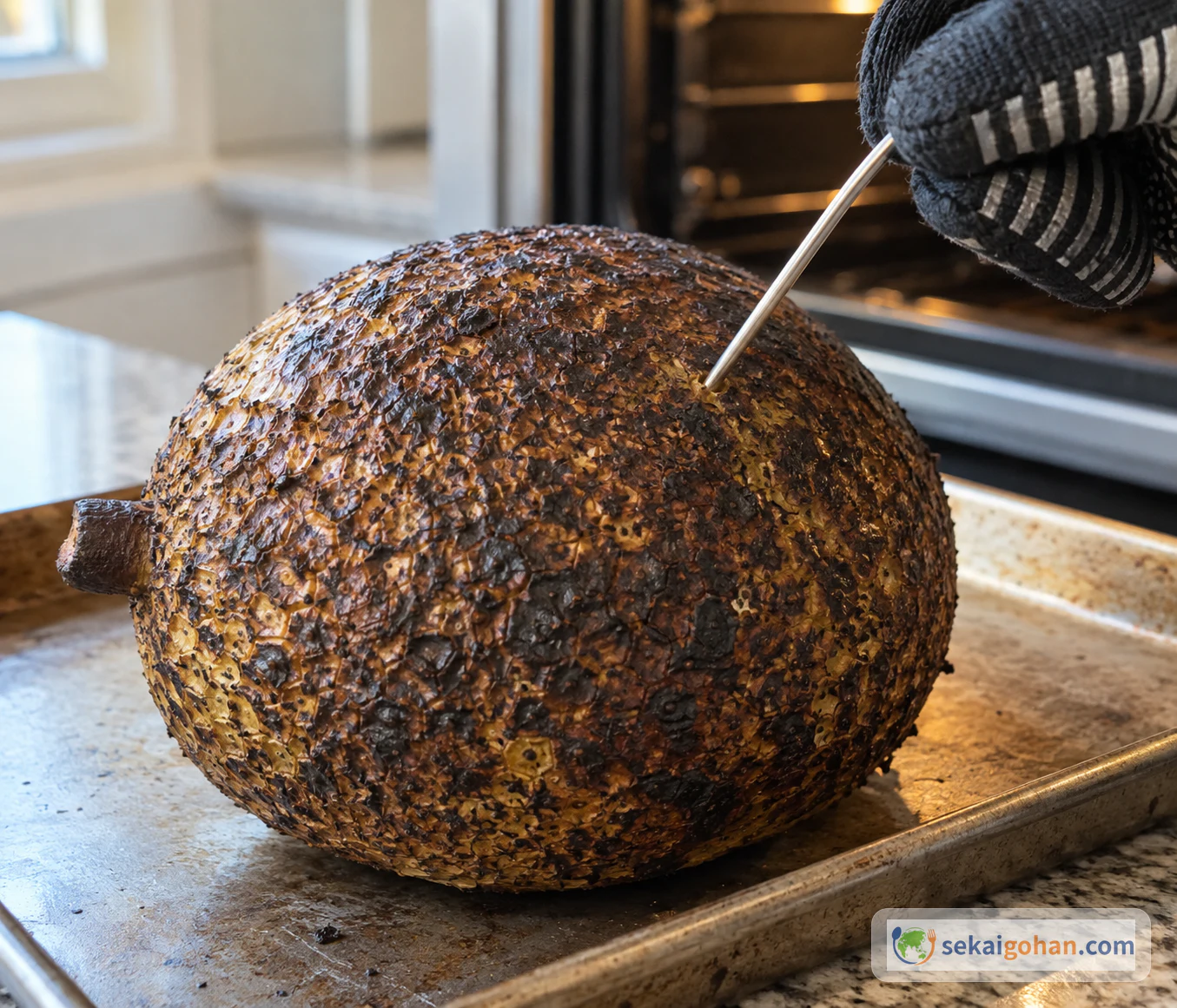
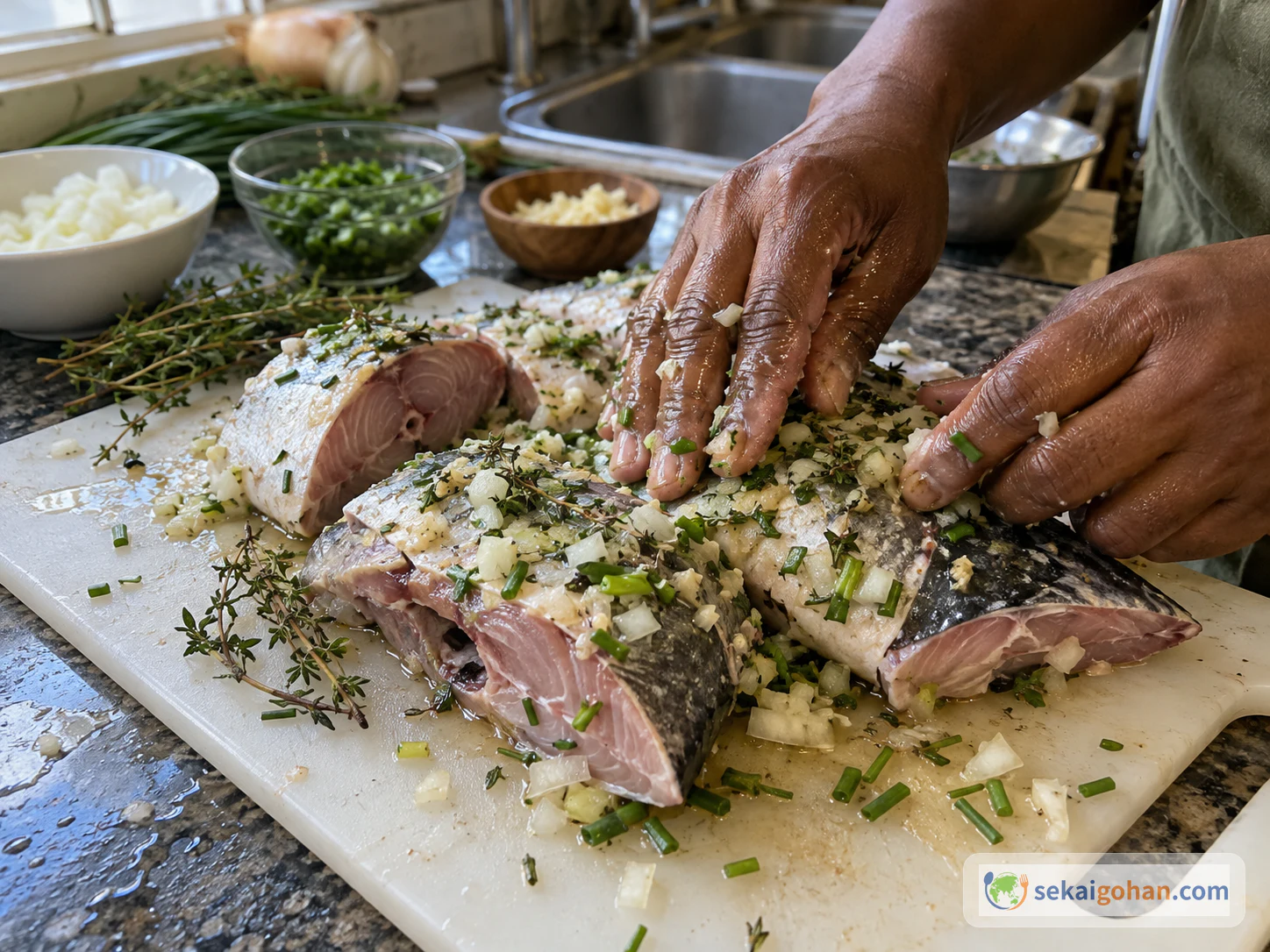
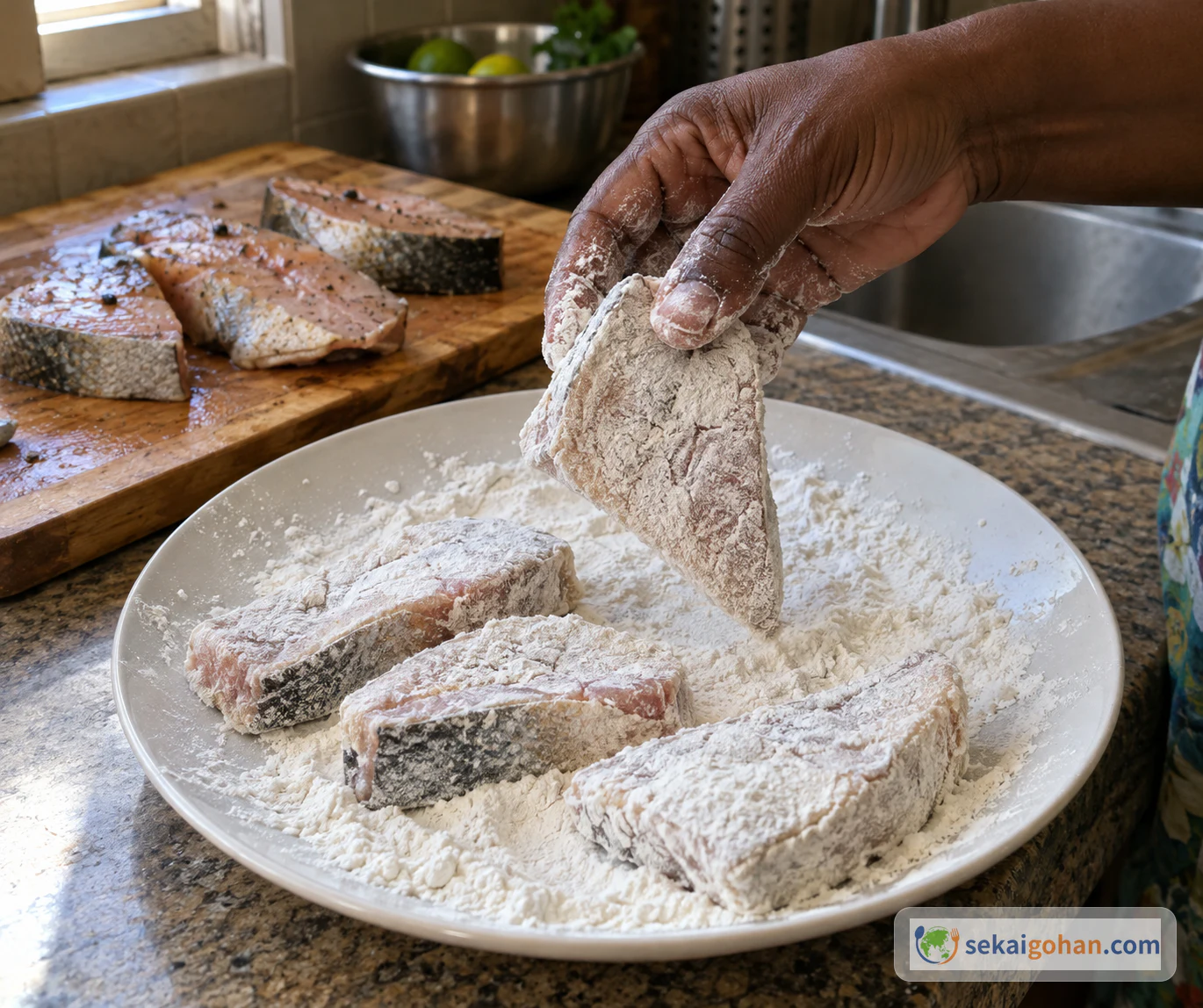
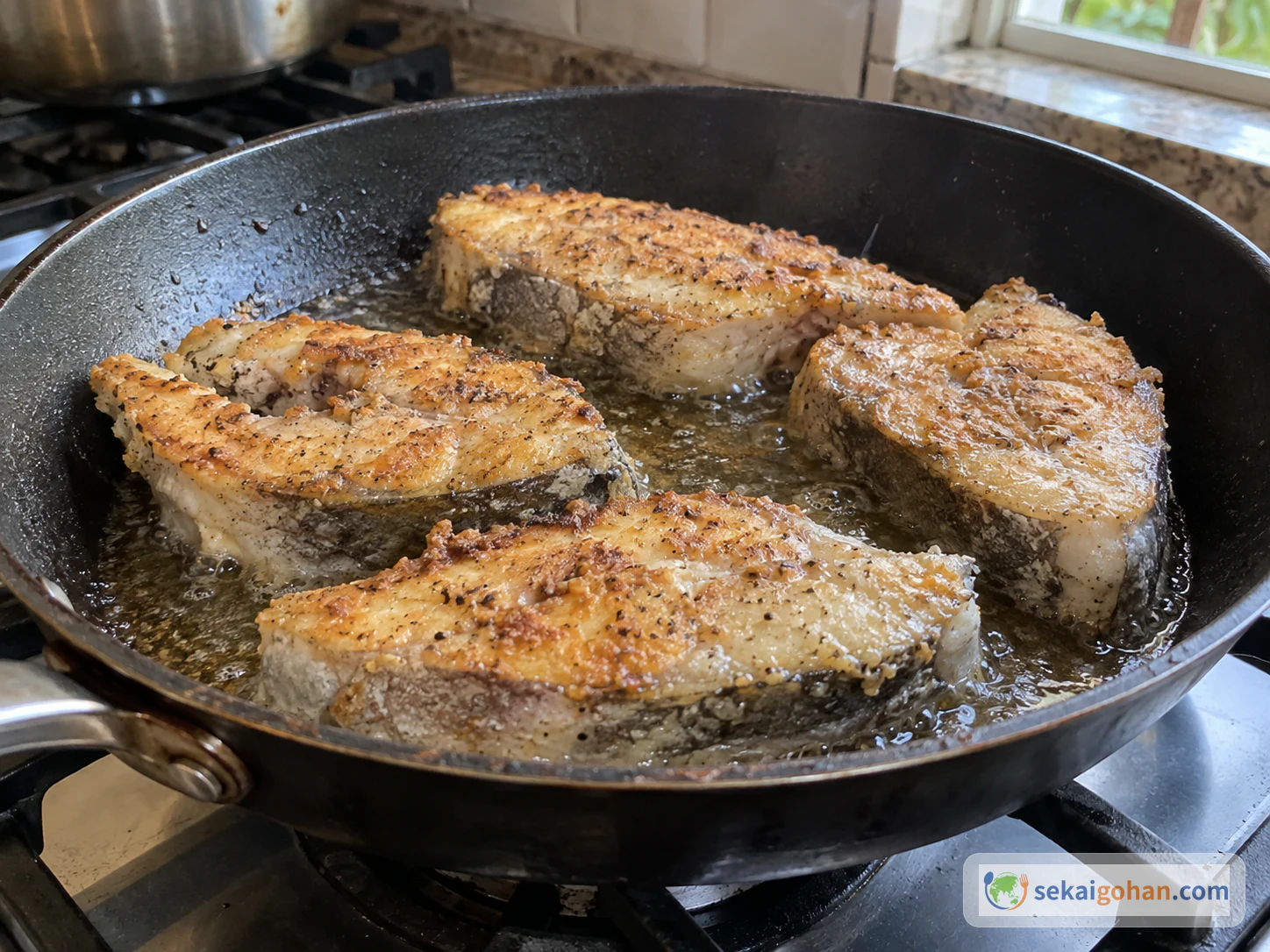
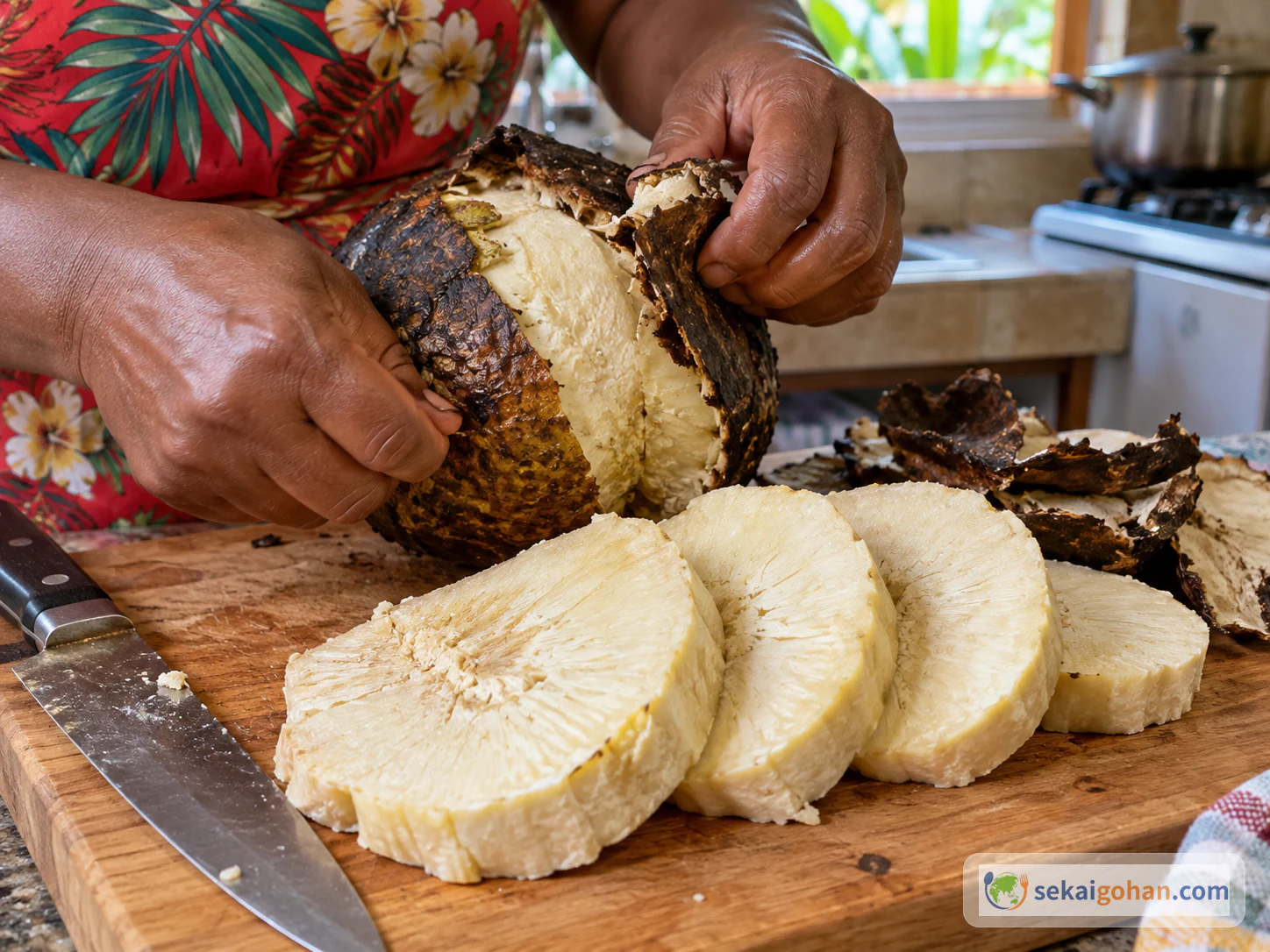
A whole breadfruit sits over an outdoor charcoal or wood fire and is turned from time to time until its skin is charred all over. A skewer then goes in. If it passes cleanly from top to bottom, or the fruit gives under a gentle press of a gloved hand, the breadfruit is ready to peel. Elsewhere, fish rubbed with onion, chive, garlic, thyme and salt goes into hot oil in a light coating of flour.
This scene comes from a recipe booklet compiled by the St. Vincent and the Grenadines Association of Toronto, which describes the fire method as the most common local way to roast breadfruit. The same booklet offers an oven method, and that is the one used below, so you can follow along in a home kitchen.
Reading the Amounts: What Is Recorded and What Is Not
The amounts below are guide quantities taken from published recipes. Our editors have not kitchen-tested them, so use your own judgment on seasoning and let doneness, not the clock, decide when each part is ready.
The main recipe is the Toronto association's booklet. It lists one large breadfruit, 1 lb of jackfish, lime or lemon juice, 1/4 cup of minced onion, chive, garlic and thyme, 1 tbsp of salt, flour for coating, and oil for frying. It gives no measure for the flour, oil or citrus juice.
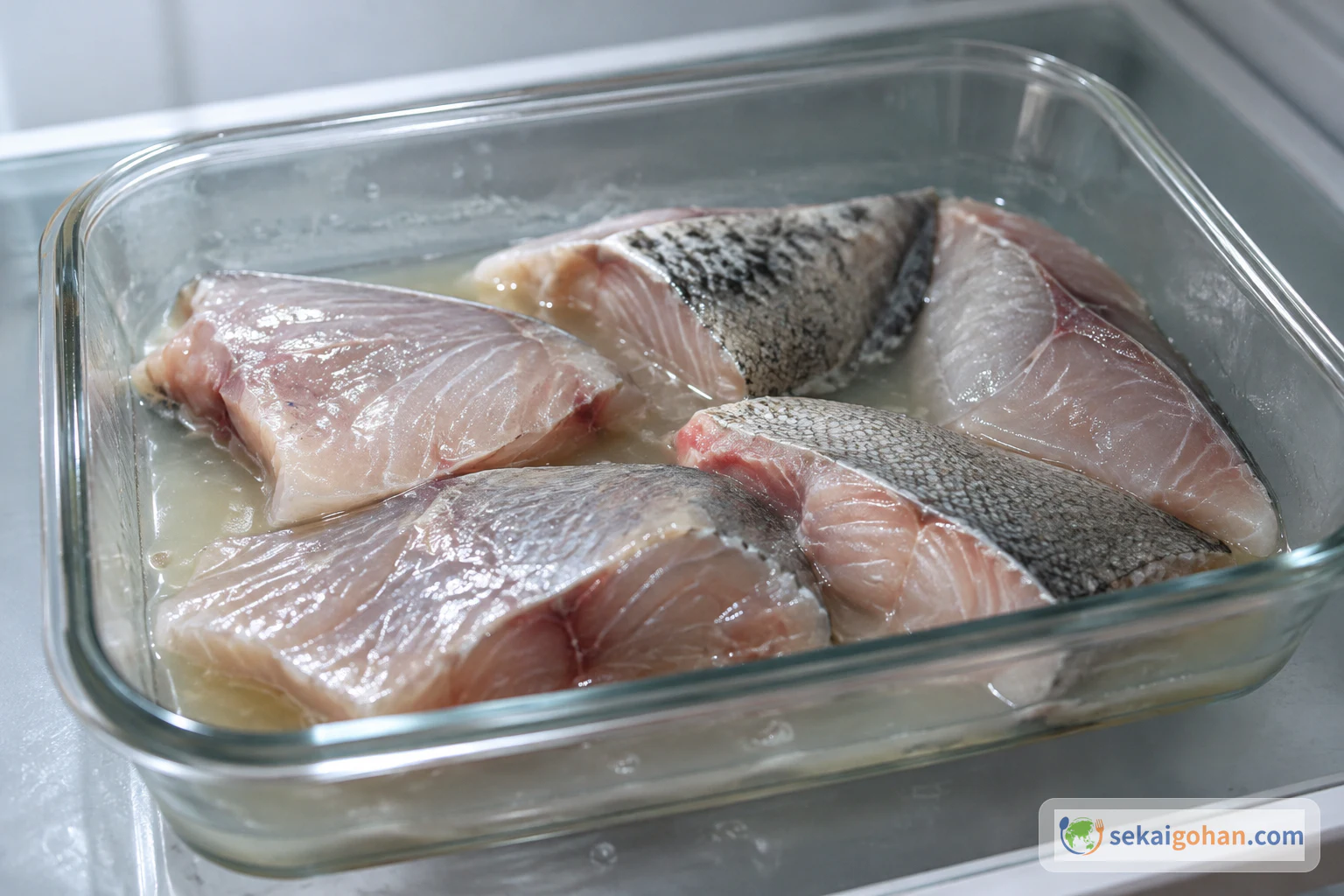
A separate guest recipe published by The Daughters of the British Empire in the USA matches the booklet on the seasoning and salt, and it gives about 1 cup of flour (adjusted to preference) and about 1/4 cup of oil. Those two amounts are borrowed from that recipe to make the method workable; they are not the booklet's figures. Neither recipe gives a quantity of citrus juice, so we simply call for enough to cover the fish for 15 minutes.
For the oven, we follow the booklet's 350°F; about 180°C is a rounded conversion. The guest recipe gives a wider range of 250–350°F, which we do not use as a working temperature.
Some things remain unknown, and we have not filled them in with guesses:
- The fish. Neither recipe says which species "jackfish" means, and we have not found a reference that identifies it, so we do not name one.
- Servings. Neither recipe states a yield, and the fruit and fish sizes vary.
- The seasoning breakdown. Only the 1/4 cup total is given, not the share of each aromatic.
- The weight of the fish. The 1 lb could mean before or after cleaning.
The 63°C (145°F) target, the refrigerated marinating and the raw-fish hygiene notes are safety additions based on US Food and Drug Administration (FDA) guidance. They do not come from the local recipe tradition.
Ingredients: One Whole Breadfruit and 1 lb of Fish
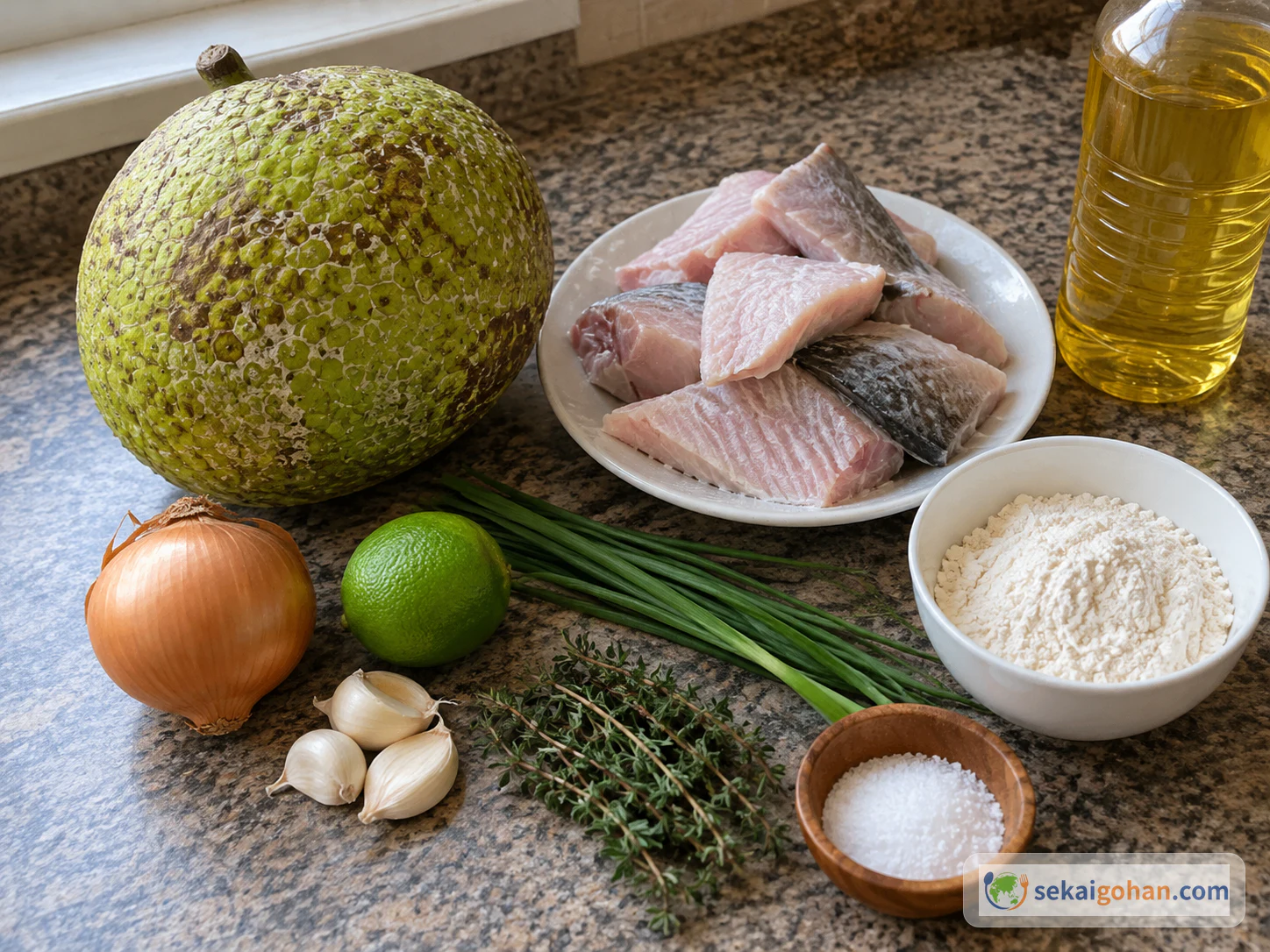
One tablespoon of salt can taste strong on 1 lb of fish, so use less if you prefer a milder result. This dish contains fish and wheat.
Equipment
- Oven and baking tray
- Sturdy skewer or fork
- Heat-resistant gloves
- Shallow dish with a cover, for the citrus soak
- One cutting board and set of tools for raw fish, and a separate set for everything else
- Plate or sheet of paper for the flour
- Paper towels
- Skillet
- Food thermometer
Choosing and Swapping: Breadfruit, Fish and Flour
Breadfruit. No substitute will give the same aroma and texture. Choose a large breadfruit, and tell your produce seller or specialty grocer that you plan to roast it whole and ask for advice. You can also ask whether they carry frozen or processed breadfruit, but we have not confirmed how these behave in this recipe.
Fish. Ask a fishmonger whether they sell jackfish and what species they mean by the name. If it is unavailable, ask for a fish suited to flour-coating and pan-frying. This is our editorial suggestion rather than a traditional substitution, and the flavor, fat, bones and appearance will change.
Choose fresh fish that is refrigerated or displayed on ice, with firm flesh and no strong fishy, sour or ammonia smell. Refrigerate it right after buying, and if you will use it within 2 days, keep it at 40°F or below.
Flour. Use flour for the coating. Rice flour is an editorial option for anyone avoiding wheat, and the texture will differ. Check labels if you are cooking for someone with an allergy.
Method: Breadfruit in the Oven, Fish in the Pan
The breadfruit takes the longest, so start it first and work on the fish while it roasts. Each part has its own doneness check, so use those to decide when it is ready.
When Things Go Off Course
| What you notice | Likely cause | What to do |
|---|---|---|
| The skewer will not pass through after about 1 1/2 hours | A larger fruit or a different oven | Keep roasting and test again; go by tenderness |
| The fruit is already in the oven and was not pierced | The piercing step was missed | Turn off the oven and use heat-resistant gloves to take it out with care, then pierce it once it is safe to handle |
| The coating is thick or slips off | The fish was still wet, or excess flour stayed on | Pat the fish dry before seasoning and shake off the flour well |
| The oil is smoking | The heat is too high | Lower the heat and wait for the smoke to stop before adding fish |
| The fish is brown after 4 minutes per side but the center is under 63°C (145°F) | Thick fish, since the time is only a guide | Keep cooking until it reaches temperature, lowering the heat if the coating is darkening too fast |
| The fish tastes too salty | 1 tbsp of salt can be a lot for this amount of fish | Serve it with plenty of breadfruit, and use less salt next time |
Do not let raw fish or its juices touch cooked food. Keep boards and tools for raw fish separate from those used for cooked food, and wash your hands and tools after handling raw fish.
Variations Worth Trying
All of these are editorial suggestions except the fire method and the choice of lime or lemon, which come from the booklet. Each changes the plate, so treat them as new versions rather than exact matches.
| Change | How to do it | What changes |
|---|---|---|
| Roast over charcoal or wood | Pierce the fruit, then turn it at intervals over the fire until the skin is charred all over. Test with a skewer or a gloved press | This is the method the booklet calls most common locally |
| Lemon instead of lime | Use whichever you have for the citrus soak | The booklet allows either, though the aroma is not identical |
| Green onion instead of chive | Use it in the same aromatic mix | Easier to find in some places, but the aroma changes |
| A different fish | Ask a fishmonger for a fish suited to flour-frying, and cook it to 63°C (145°F) | Flavor, fat, bones and appearance change |
| Rice flour instead of wheat flour | Coat the fish the same way and shake off the excess | Avoids wheat flour, but the texture differs |
The Dish at Home: Sea, Fishing and a Booklet's Record
The Government of Saint Vincent and the Grenadines' visitor page on culture connects the country's food to the sea, to fishing, and to the movement of produce between islands. The same page lists fried jackfish and roasted breadfruit as the national dish. It is a general overview for visitors, so it tells us how the dish is presented, not how every household cooks it.
The fullest recipe record we have comes from the diaspora. The Education Committee of the St. Vincent and the Grenadines Association of Toronto compiled the breadfruit booklet, also naming the dish as national. It explains that its breadfruit material was adapted and compiled from a 2004 Ministry of Agriculture and Fisheries publication, The Breadfruit Plant of St. Vincent and the Grenadines, and that the jackfish information came from Vincentian contributors.
The booklet also shows how wide the table can be. It says the dish is often eaten with Golden Apple Drink, and it records roasted breadfruit served with saltfish buljol or seasonal tri tri instead. It lists both fire and oven roasting, so no single version is presented here as the only correct one. Our materials do not establish the dish's origin or the history of breadfruit on the islands, so we leave those stories out.
To compare this plate with others in the Caribbean, try cou-cou and flying fish from Barbados for another pairing of fish and a staple, oil down from Grenada for breadfruit stewed rather than roasted, or green fig and saltfish from Saint Lucia for a staple fruit with salted fish.
Frequently Asked Questions
What kind of fish is jackfish?
The recipes we use do not name a species, and we have not found a reference that settles it. For that reason we do not equate it with any particular fish. Ask your fishmonger what they sell under that name.
What if I can't find fresh breadfruit?
We know of no substitute that promises the same texture and aroma. You can ask a specialty grocer about frozen or processed breadfruit, but we have not confirmed how those work here. If you use another starch, you will be making a different plate.
Can I roast breadfruit in a home oven?
Yes. The booklet gives an oven method: pierce the fruit, then roast at 350°F (about 180°C) for about 1 1/2 hours, until tender. The skewer test and gloved press work the same way as for the fire method.
Is 4 minutes per side enough for the fish?
Treat it as a guide. The booklet says about 4 minutes per side or until browned, but thickness changes the time. FDA guidance is to cook fish to an internal 63°C (145°F), or until the flesh is opaque and separates with a fork.
Is tomato sauce required?
No. The booklet lists an optional tomato sauce as a separate recipe with its own ingredients and steps. This article keeps to the basic fish and breadfruit.
How many people does this feed?
Neither recipe states a yield, and we have not tested one. The result depends on the size of your breadfruit and how you portion the fish.
What should I do with leftovers?
The recipes give no storage instructions, and we do not add a storage period of our own. Don't leave leftovers out at room temperature; cool them, then refrigerate them right away in a covered container.
Sources
- Government of Saint Vincent and the Grenadines (GOV.VC), "Culture & Festivals: Culture and Food and drink in Saint Vincent and the Grenadines." Used for the link between food culture, the sea, fishing and inter-island produce, and for the dish's listing as the national dish. https://www.gov.vc/index.php/visitors/culture-festivals
- St. Vincent and the Grenadines Association of Toronto (SVGAT), Education Committee, "Breadfruit Recipes: Roasted Breadfruit and Fried Jackfish." Used for the main ingredients and method, fire and oven roasting, doneness checks, accompaniments, the optional sauce and the booklet's compilation history. https://vincytoronto.com/members/content/2341/documents/SVGAT_BreadfruitRecipes.pdf
- The Daughters of the British Empire in the USA (DBE National), "Roasted Breadfruit and Fried Jackfish Recipe." Guest recipe used for the flour and oil amounts and to compare the salt, seasoning and method. https://www.dbenational.org/recipes/roasted-breadfruit-and-fried-jackfish
- U.S. Food and Drug Administration (FDA), "Selecting and Serving Fresh and Frozen Seafood Safely." Used for the safe internal temperature, doneness signs, choosing and refrigerating fish, and separating raw fish from cooked food. https://www.fda.gov/food/buy-store-serve-safe-food/selecting-and-serving-fresh-and-frozen-seafood-safely