Saturday in Rio, when the smell of beans fills the noon air
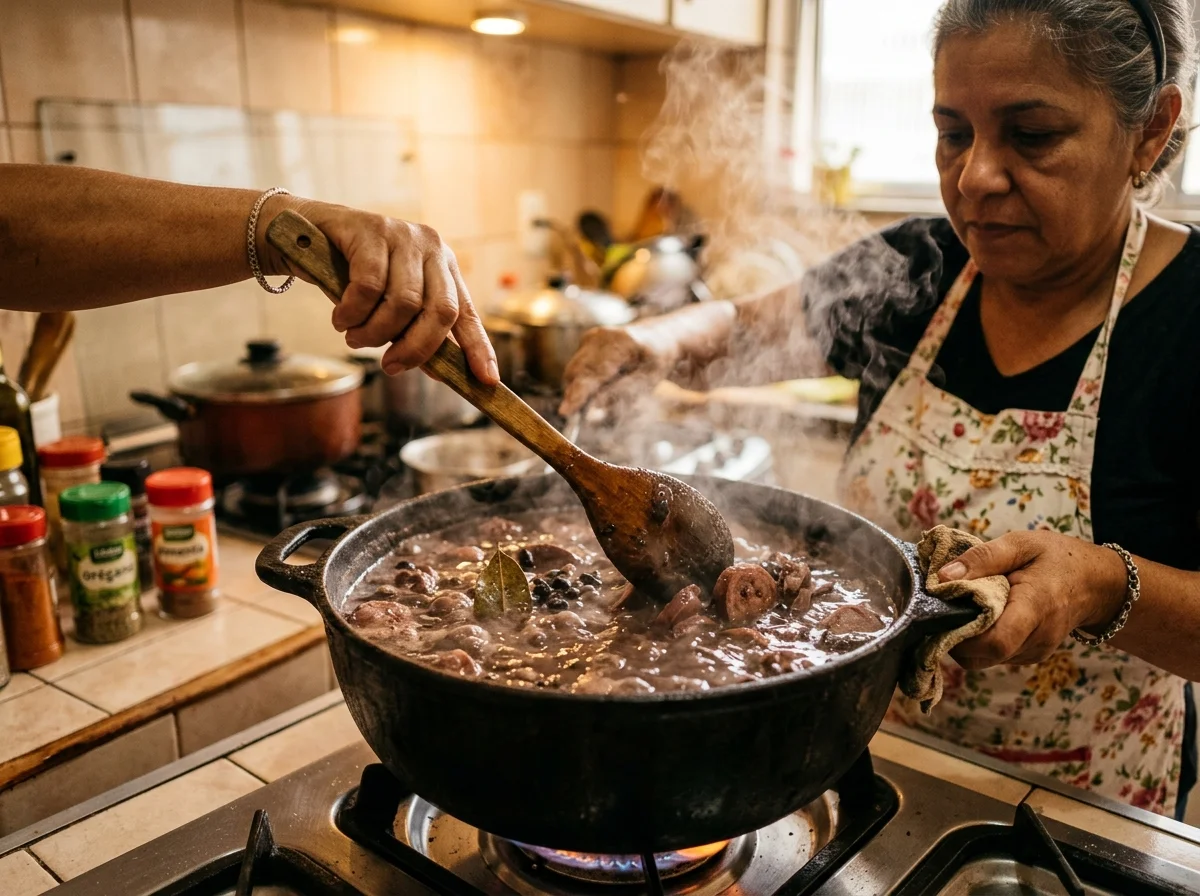
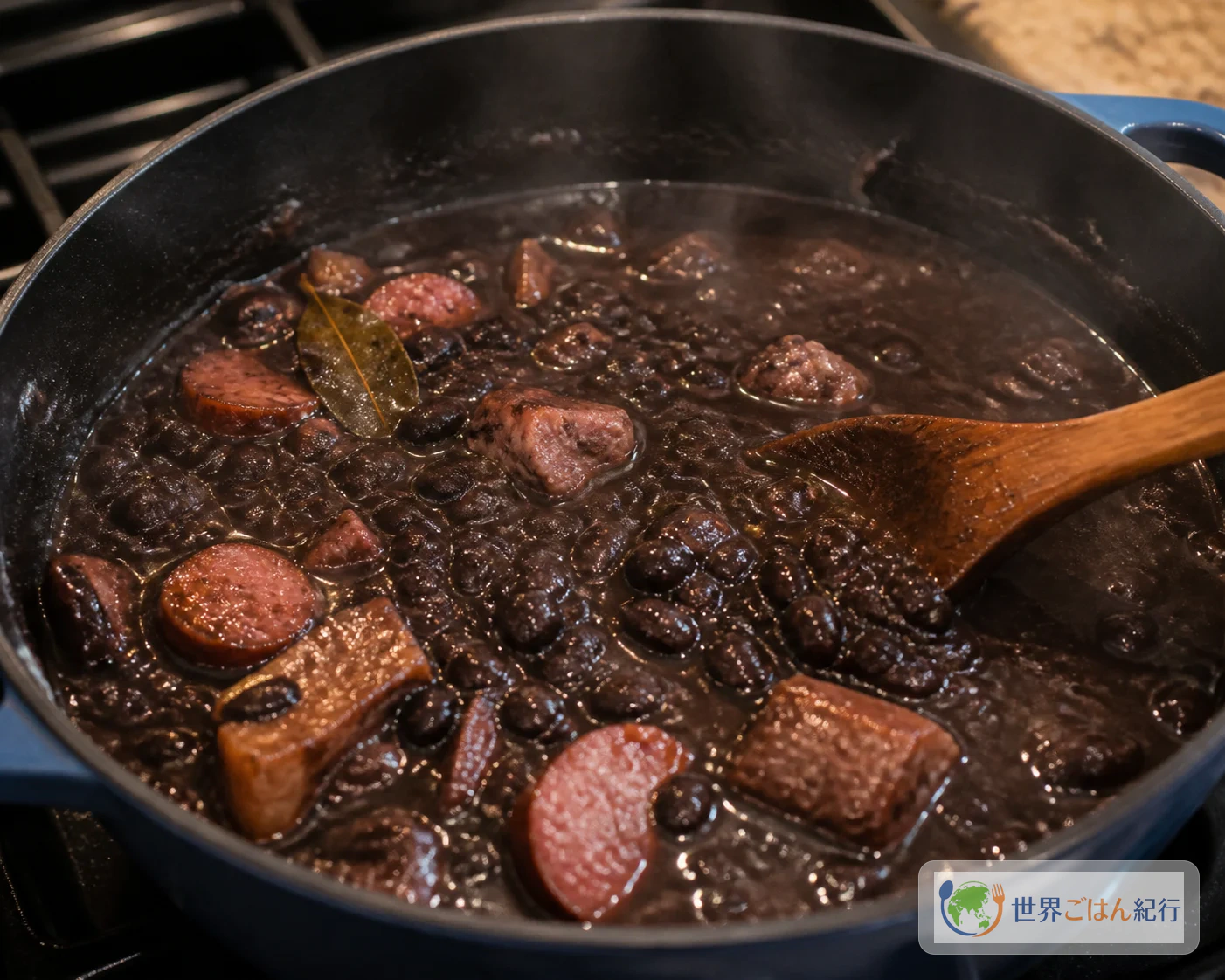
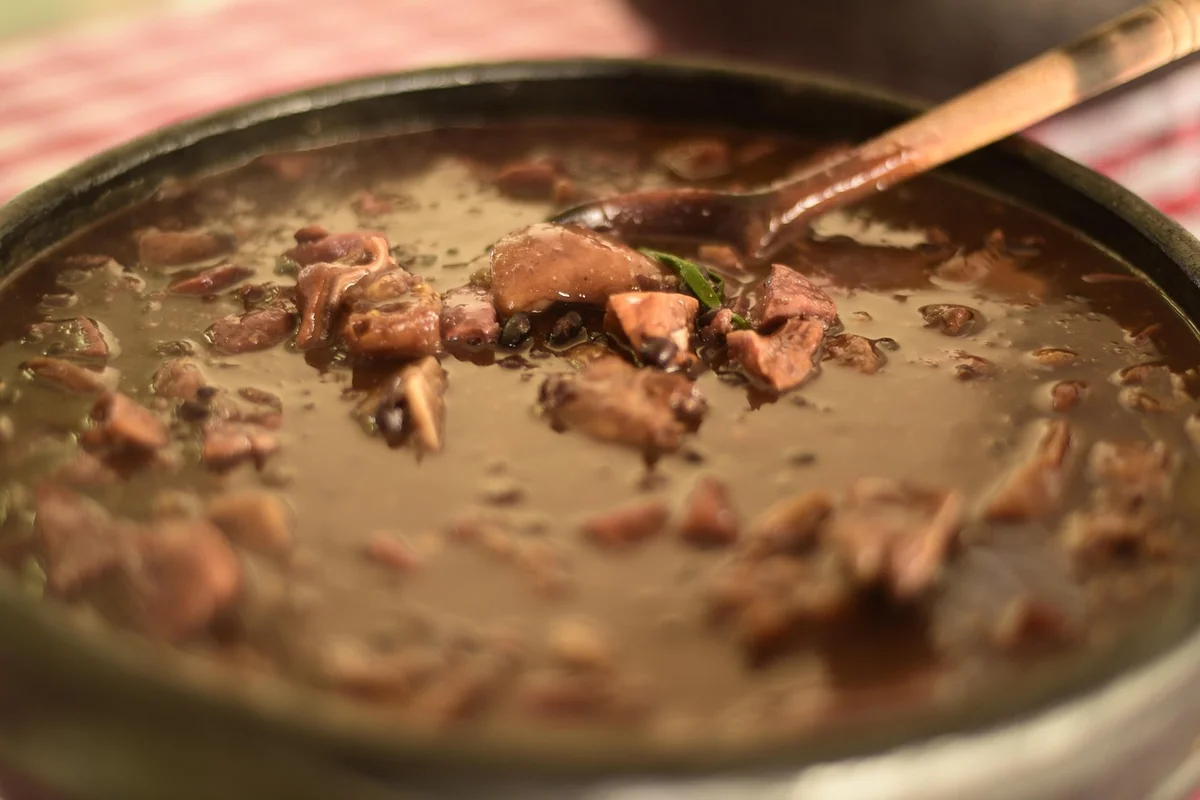
Saturday in Rio de Janeiro. Once it's past 10 in the morning, the sweet smell of black beans and the smoky aroma of pork start drifting out of restaurants and homes all over the city. It's the smell of feijoada on the stove.
In Brazil, feijoada is widely known as a dish for a long, unhurried weekend lunch. Family and friends gather around a big pot, add rice, farofa, sautéed greens and orange slices, and take their time eating.
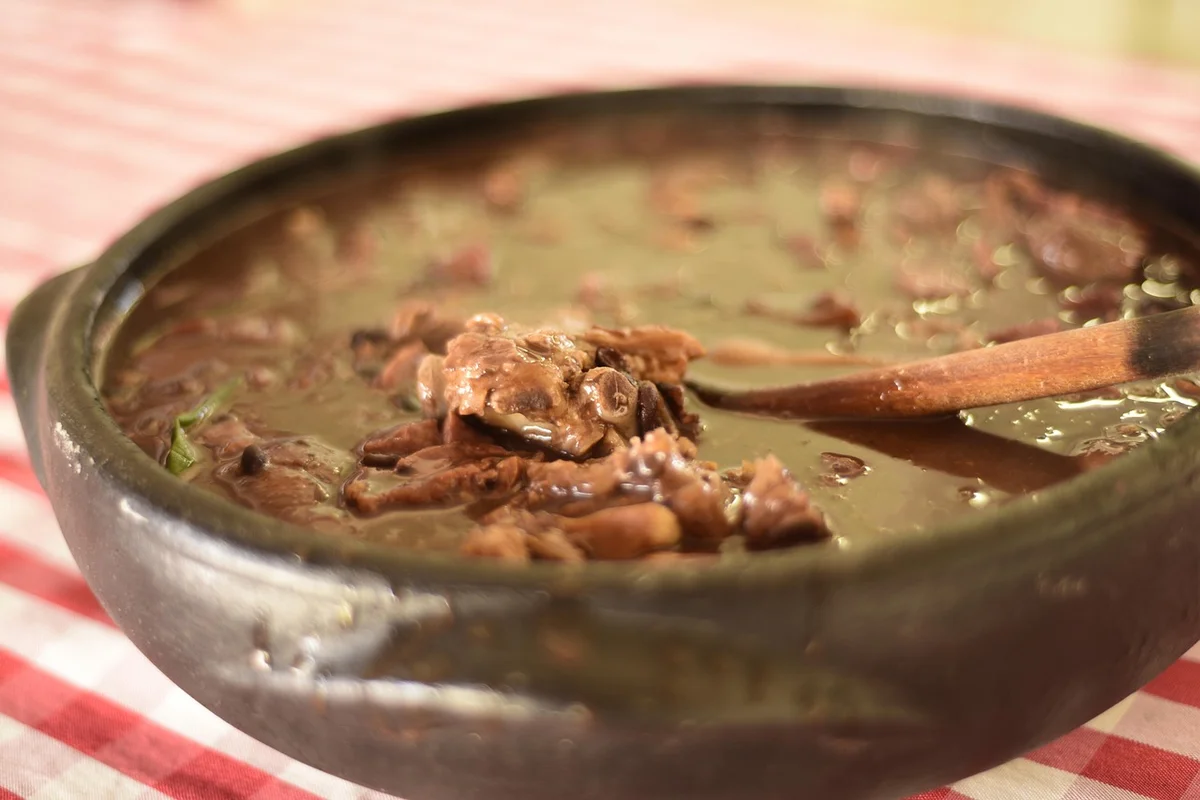
The name comes from the Portuguese feijão (beans). Black beans are slowly stewed with several cuts of pork and smoked sausage, and the result is loved as Brazil's national dish.
Part of its appeal is that it's made in a big pot and shared, everyone serving themselves. It's a dish built around gathering at the table.
This recipe uses easy-to-find ingredients and sensible substitutes to recreate the depth of the original. As a first dish for exploring the variety of South American cooking covered in our guide to South American food (in Japanese), feijoada is ideal. After a Saturday lunch of black beans and meat, if you want to head to the Bahian coast in the same country, try bobó de camarão (in Japanese), made with cassava and shrimp, where coconut and dendê oil take over from the weight of the beans.
For another South American pot of meat and beans, Guyana's cook-up rice (in Japanese) makes a good contrast. Where feijoada is a dark, rich pot of black beans and pork, cook-up rice is a one-pot dish in which the rice soaks up black-eyed peas and coconut milk. Cross a border, and the way beans take center stage changes too.
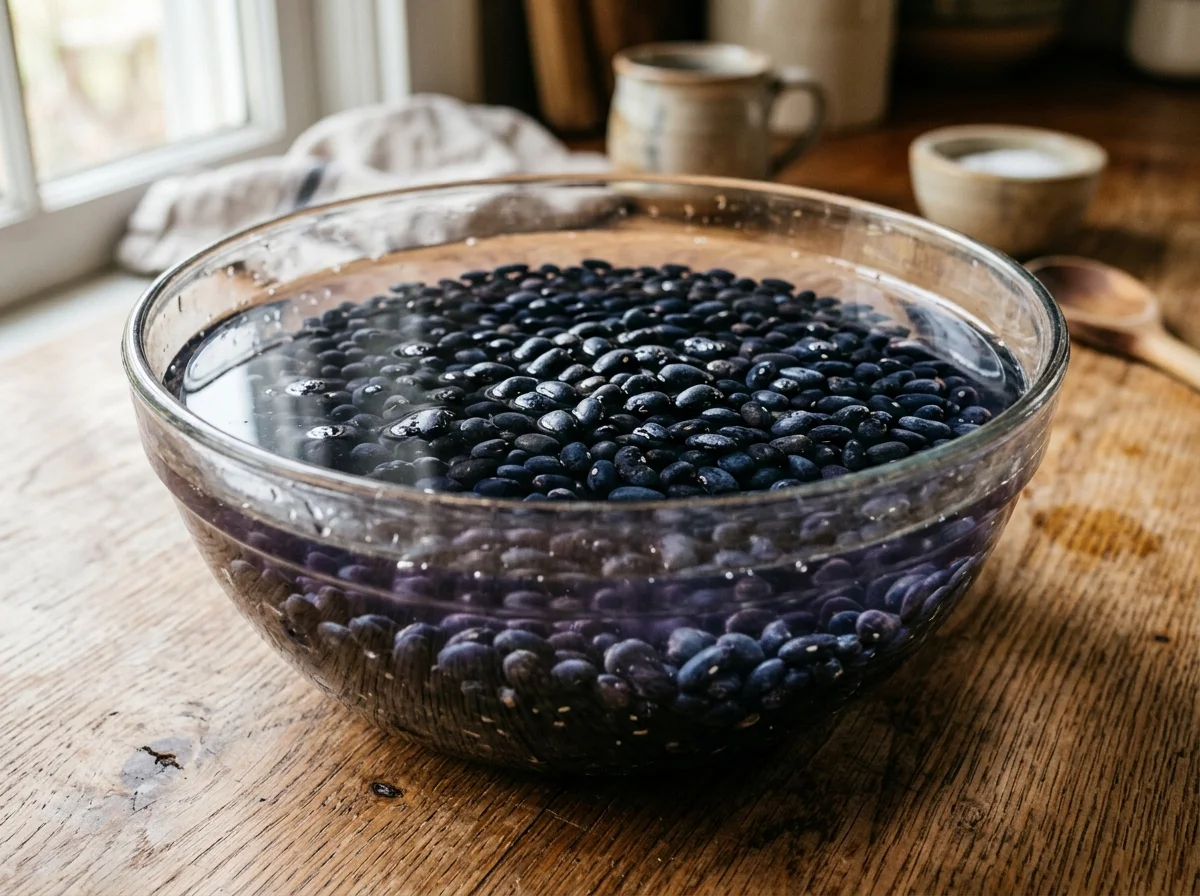
Feijoada needs to be started the day before. The black beans soak overnight, and salt-cured meats take about 8 hours to desalt. On the day itself, plan on about 4 hours of cooking. Starting the night before a relaxed day off works best.
Ingredients (serves 4)
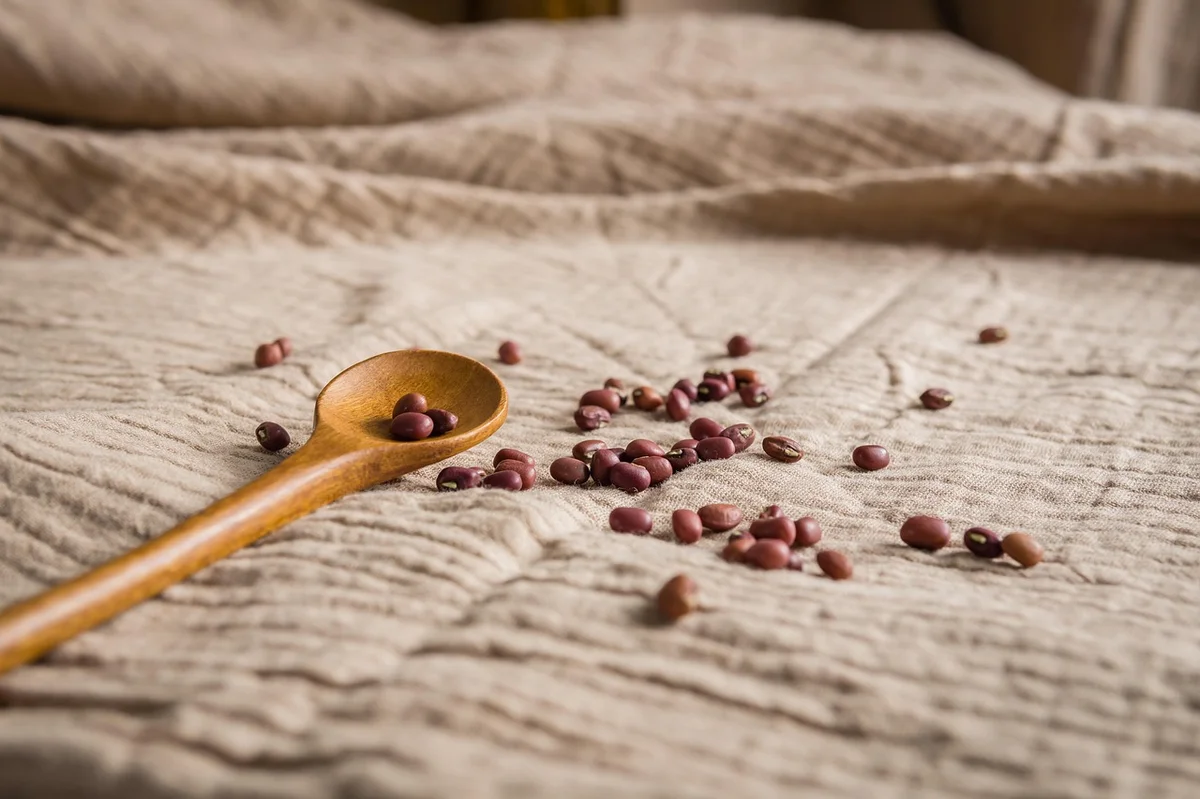
Black soybeans won't work for feijoada. Look for "black beans," "black turtle beans" or dried black kidney beans at Latin American or international grocers, in supermarkets or online. Dried beans keep for more than a year at room temperature, so it's worth buying in bulk.
Method
Prep the day before (time: 10 minutes + overnight)
Make sure this is done before the day you cook.
Cooking on the day (time: about 4 hours)
Serving
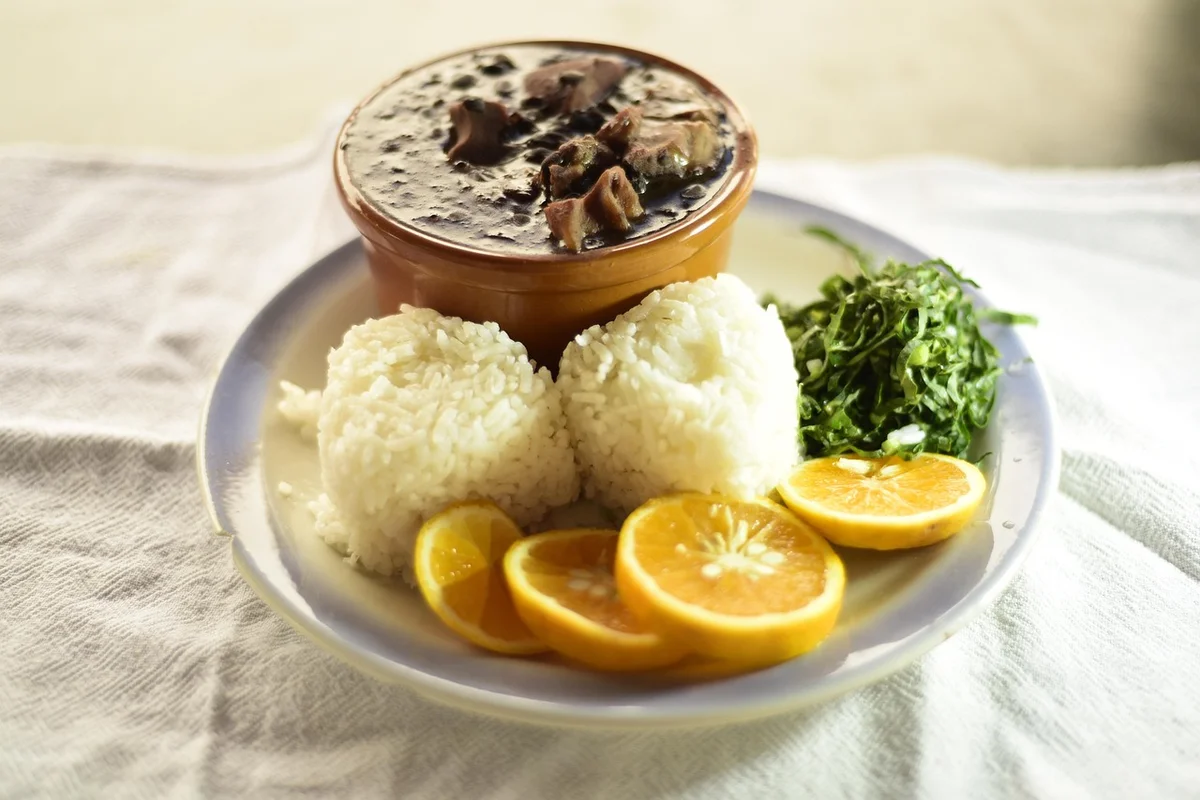
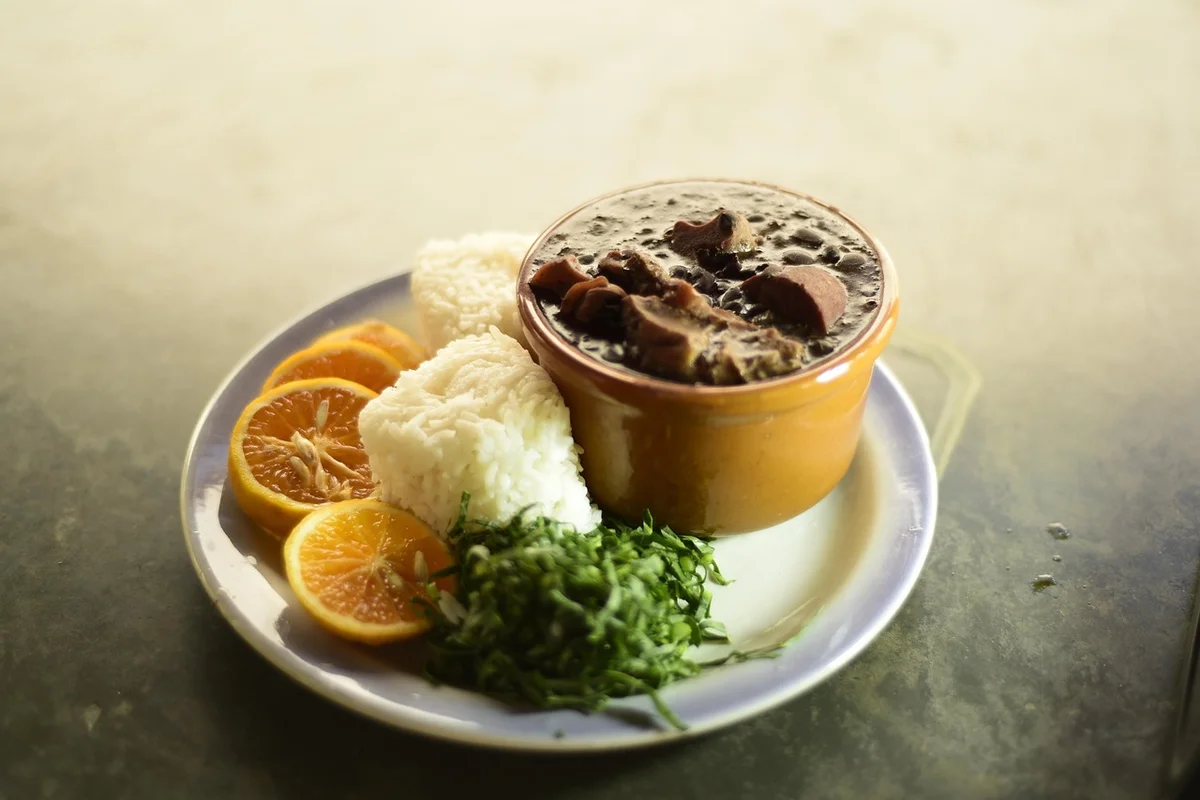
Put white rice in deep plates and ladle plenty of feijoada over it, broth and all. Arrange the meat over the rice and pile on the farofa. Finish with the sautéed kale and orange slices.
Cut the kale (or spring cabbage) into 5 mm (1/4 in) ribbons and sauté with 1 tbsp olive oil and 1 clove garlic, minced, over high heat for 2 minutes, turning off the heat just before it wilts. The point is to keep some crunch. Overcooking makes it bitter.
Cooking tips
Soaking times vary from recipe to recipe, but for home cooking 8 to 12 hours is fine. What matters is that you always discard the soaking water. It contains the beans' oligosaccharides (which cause gas) and some astringency, so pouring it off makes the beans easier to digest and gives a cleaner flavor.
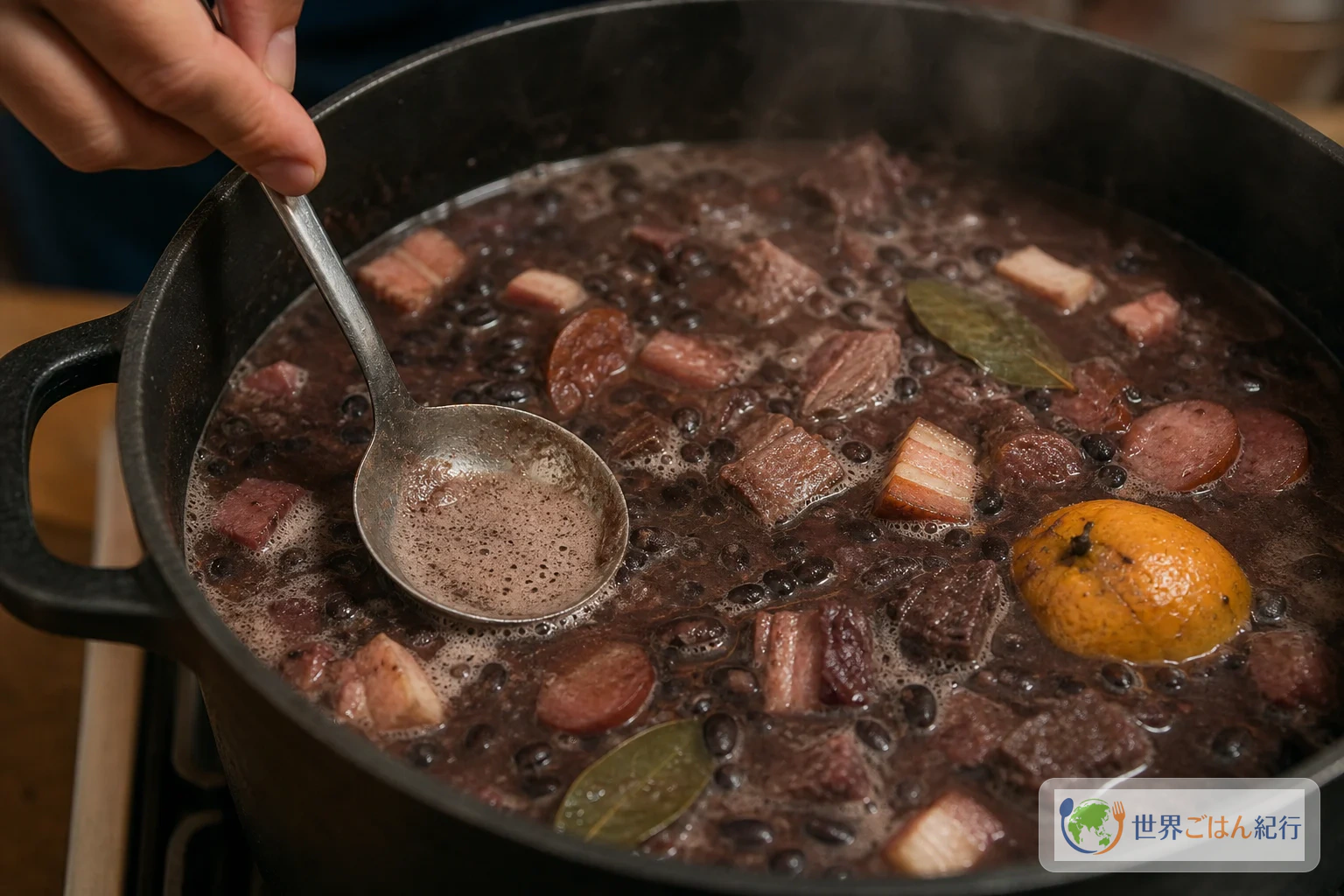
If the smoked sausage goes in at the start, the long simmer drives off too much of its flavor and dulls its texture. Add it for the last 1 to 1.5 hours and it keeps just the right amount of smokiness and a snappy casing. The pork belly, on the other hand, goes in from the start and simmers until its fibers fall apart.
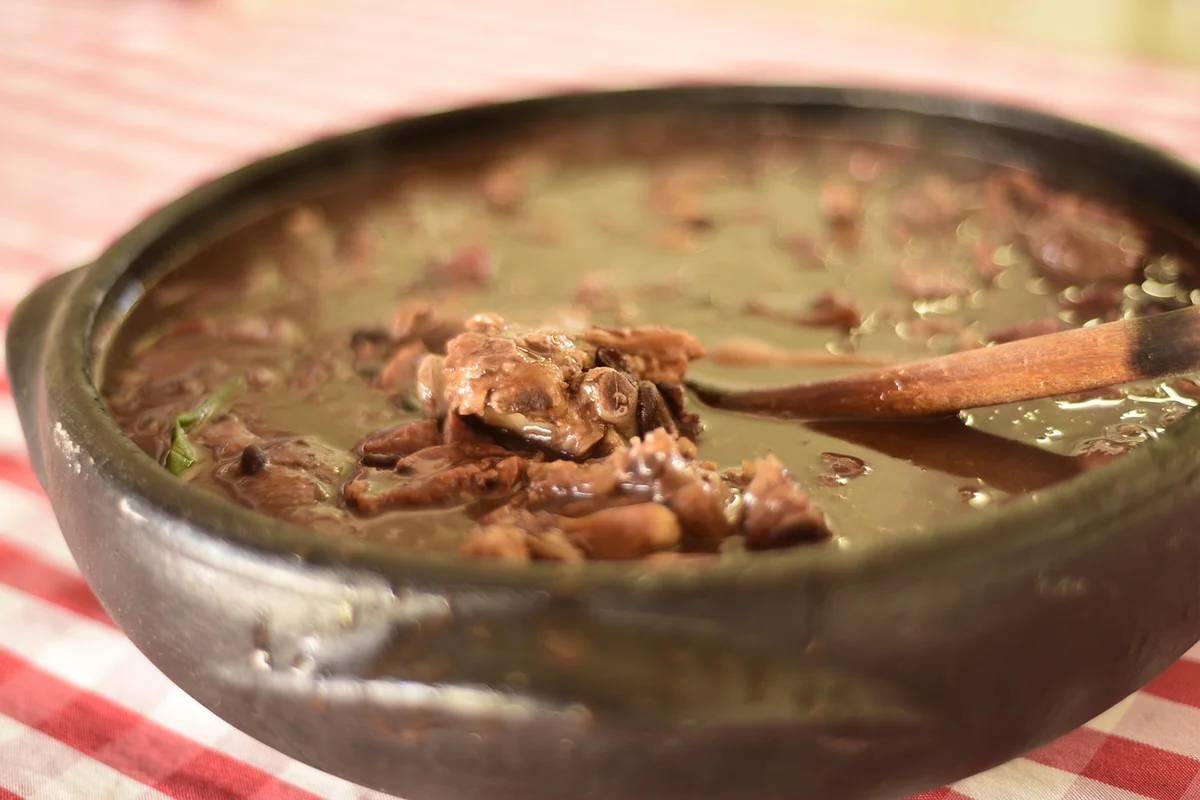
To give the broth body and thickness, roughly mash about 1/4 of the beans near the end of cooking. You can crush them directly in the pot with a wooden spoon, or scoop out a little, combine it with sofrito (sautéed onion and garlic) in a skillet, and return it to the pot. The second method carries the sweetness of the onion and the aroma of the garlic into the bean paste, giving restaurant-level depth.
Adding half an orange to the simmering pot brings citrus aroma and acidity that ease the heaviness of the pork fat. If you add it with the peel on, take it out partway through so it doesn't turn too bitter. In Brazil, too, serving orange on the side to cut the richness is the classic way to eat feijoada.
People often say feijoada is at its best the day after. Overnight in the refrigerator, more starch from the beans dissolves into the broth and thickens it, and the savory flavor of the meat spreads through all the beans. Make extra and enjoy it on the second and third days.
Variations
Quick version (pressure cooker)
A pressure cooker cuts the total cooking time by more than half. Put the soaked beans, pork belly, beef and water in the pressure cooker and cook at pressure for 30–40 minutes. Let the pressure release naturally, open the lid, add the sausage and sofrito (sautéed onion and garlic) and simmer uncovered as you would in a regular pot for 15 minutes to reduce. A long simmer does give more complex flavor, so think of the quick version as a "weeknight feijoada."
Vegetarian version
Leave out all the meat and replace its savory depth with three things: (1) 1 tbsp smoked paprika (for smokiness), (2) one 10 cm (4 in) square of dried kombu (umami from glutamate), and (3) 3–4 dried shiitake mushrooms (guanylate, which boosts the umami further). The simmering time is the same as usual. Black beans contain 21 g protein per 100 g (dry) on their own, so it's nutritionally satisfying too. Sprinkle a little more smoked paprika on top to finish for extra smokiness.
Canned-bean version (same day, no soaking)
With canned black beans (two 400 g / 15 oz cans), there's no soaking. Drain the cans and rinse the beans in a colander before using. Put them in the pot with the meat and cut the simmering time to 45–60 minutes. The flavor is a little lighter than with dried beans, but still very good. A lifesaver on a busy weekend or when you simply want feijoada today.
Japanese-style twist
It may come as a surprise, but feijoada's slow-simmering method has a lot in common with Japanese tonjiru (pork and vegetable miso soup) and kakuni (braised pork belly). Stir in 2 tbsp miso at the end and the fermented savoriness goes remarkably well with the richness of the black beans. Serving it with grilled rice balls instead of plain rice, or topping it with chopped scallions, makes for a fun plate. Spooning it right over rice, like gapao rice (in Japanese), is an easy way to bring it to the everyday table.
Regional variations
Within Brazil, each region and household has its own style: the cuts of meat, the ratio of beans and the thickness of the broth all vary. There's no single "correct" version; every family has its own feijoada.
Turning leftovers into new dishes
Leftover feijoada can become all sorts of dishes over the following days. Reduce the liquid, mash the beans and use them as a filling for fritters, a popular snack in Brazil. Fill tortillas, top with cheese and bake for a quesadilla-style dish. Or stir-fry the leftovers with rice for a hearty skillet meal. Cook it once and you can enjoy it as something different for three days.
Black bean nutrition
For all its hearty look, feijoada is a well-balanced dish. The star, the black bean, is rich in notable nutrients.
Black beans (key nutrients per 100 g dried):
- Protein: 21.6 g
- Dietary fiber: 15.5 g
- Iron: 5.0 mg
- Folate: 444 μg
They're also rich in potassium, at 1483 mg (all figures from the USDA food composition database, per 100 g dried beans).
The black-purple color of the skins comes from pigments called anthocyanins, and they're why the cooking liquid turns black as they dissolve out. Because you eat feijoada broth and all, you lose very little of the beans' nutrition. Combining rice, beans, meat, greens and orange on one plate also makes for a balanced meal.
Watch out for the salt and fat from the sausage and bacon, though. If you're cutting back on sodium, you can parboil the sausage to draw out excess salt before using it, or halve the amount of bacon.
The story behind the dish: debates over a national dish's history
The "slave food" myth
There's one story told about feijoada more than any other: that it began when enslaved people on sugarcane plantations stewed the pig's ears, feet and snouts their masters threw away with cheap black beans.
It's a moving story, and the narrative of poor people creating a wonderful dish from discarded ingredients certainly sticks in the mind. Among historians, however, skepticism about this origin story has been growing.
According to English Wikipedia, an advertisement dated March 2, 1827, in the Recife newspaper Diário de Pernambuco announces that an eatery would serve "feijoada à brasileira" (Brazilian-style feijoada) on Thursdays. In other words, by the early 19th century at the latest, the dish was known by name as something served in restaurants.
Pig's ears and feet were traditional ingredients in Europe as well, so the very premise of "cuts the masters threw away" has also been questioned. There's also criticism that framing it as slave food turns the brutality of slavery into a pretty story.
A fusion of three cultures
Today, the common explanation is that feijoada took shape when African and Indigenous food cultures layered onto the northern Portuguese tradition of stewing beans with meat (Portuguese feijoada). Portuguese colonists brought the template of a meat-and-bean stew, and from Indigenous food culture came the practice of serving it with mandioca (cassava) flour.
The debate over feijoada's origins mirrors Brazil's whole history of colonization, slavery and cultural mixing. "Who made this dish?" overlaps with the question "What is Brazil?"
Its place as cultural heritage
Whatever its origins, feijoada's place in modern Brazil is secure. From the weekend family pot to the set lunch at a neighborhood restaurant, it's eaten widely as the dish that represents Brazil.
Like Peru's ceviche (in Japanese), many South American dishes go beyond simple meals to reflect the history and life of their land. Feijoada is one of them.
Feijoada outside Brazil
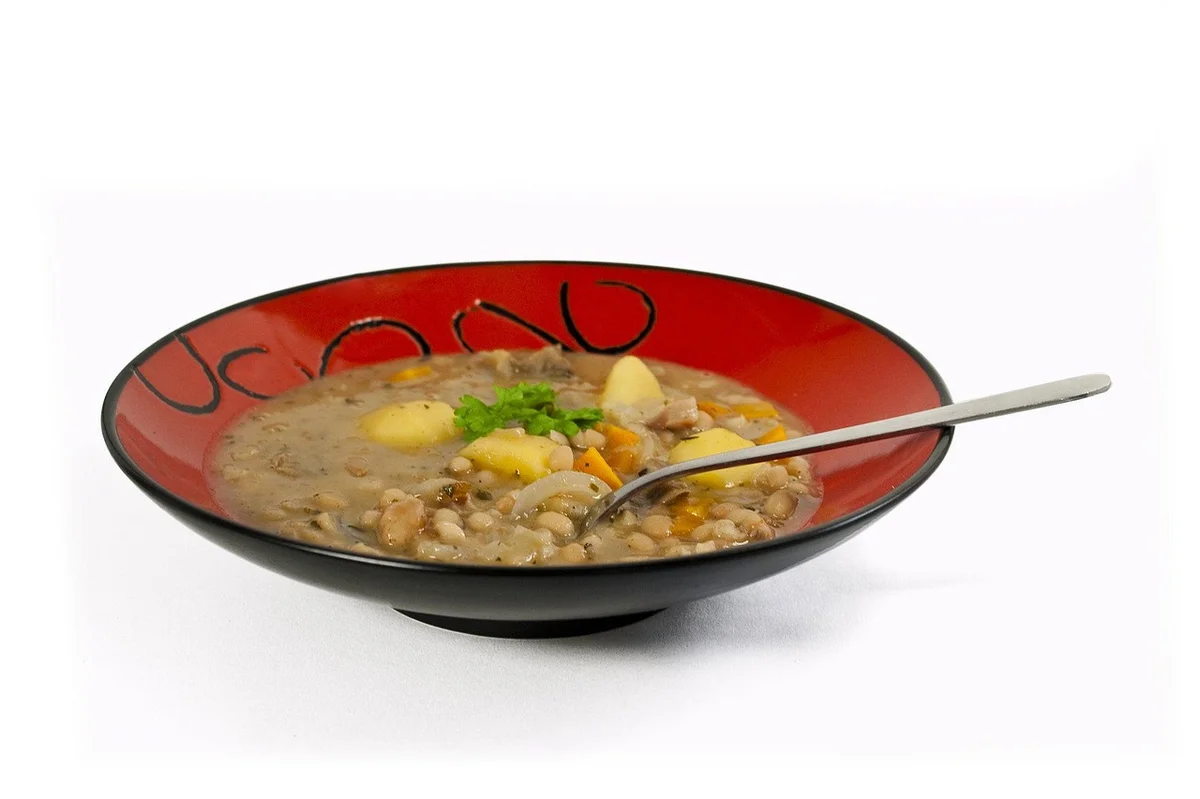
As a stew of beans and meat, feijoada isn't Brazil's alone. In Portugal, versions made with white beans are cooked in the northwest, and versions with red kidney beans in the northeastern Trás-os-Montes region. Dishes of the same name also exist across former Portuguese territories, including Angola, Mozambique, East Timor and Macau. Abroad, Brazilian restaurants in communities with large Brazilian populations are a good place to try an authentic feijoada.
How to plate it well
Plating in Brazil actually follows a few unspoken rules.
- Arrangement: Push the white rice to one side of the plate. Spoon the feijoada, broth and all, next to the rice. Sprinkle the farofa over the rice.
- Showing off the meat: Place the pork belly, sausage and beef in separate spots so each person can choose their own combinations.
- The kale: Make a small mound at the edge of the plate. It contrasts beautifully with the black broth.
- The orange: Set 2–3 slices on the rim of the plate. Squeezing the juice over partway through the meal resets your palate after all that richness.
Bringing the whole pot to the table and letting everyone help themselves is also popular. Gathering around and sharing is the right way to eat feijoada. As with borscht (in Japanese), stews somehow taste better when shared with a crowd. For a light bite before or after a heavy black bean stew, freshly baked pão de queijo works with coffee or as an early-evening snack.
FAQ
Feijoada contains the following allergens: pork and beef (the meats), wheat (the breadcrumbs in the farofa; it may also be in smoked sausage) and dairy (the butter in the farofa). Anyone with a legume allergy should take care with the black beans. If you use canned corned beef, check the product label.
Can I use black soybeans instead of black beans?
No. Black soybeans are Glycine max (a soybean variety), while the black beans used in feijoada are Phaseolus vulgaris (common beans), a different species. Their flavor, texture and cooking time are fundamentally different: soybeans don't break down easily, and their skins turn tough. Look for "black beans" or "black turtle beans." You can substitute red kidney beans, but the color and flavor change considerably.
Does canned corned beef really work as a substitute?
Yes, it's a practical substitute. Traditional carne seca is salt-cured, sun-dried beef and can be hard to find outside Brazil. Canned corned beef (100–180 g) is already cooked, so the trick is to add it in the last 30 minutes of simmering. Put it in at the start and it dissolves completely. The flavor differs from the original, but it adds plenty of beefy savoriness.
Can I make it all on the day, without prepping the day before?
With dried beans it's difficult, since they need 8 hours of soaking. However, a pressure cooker plus canned black beans lets you do it all on the day. Combine the rinsed canned beans with the other ingredients in a pressure cooker, cook at pressure for 30 minutes, let the pressure release naturally, then simmer uncovered in a regular pot for 30 minutes to reduce. You can have it on the table in about 1.5 hours total.
Can I skip the farofa?
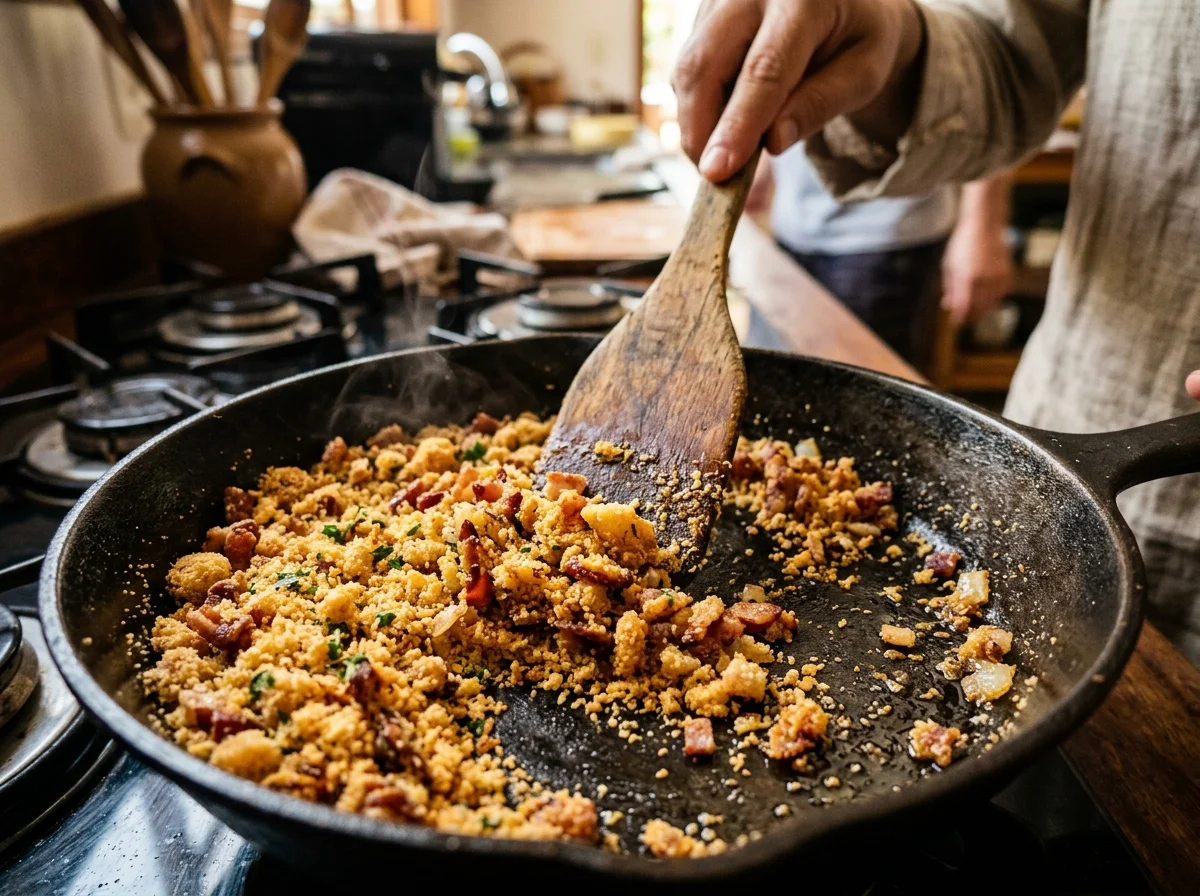
The dish still works without it. But farofa soaks up feijoada's rich broth and creates a contrast of crunchy and silky textures. For many Brazilians, feijoada without farofa feels like something is missing. The breadcrumb version takes only about 10 minutes, so do give it a try.
How long does it keep?
It keeps 3–4 days in the refrigerator and 2–3 months in the freezer. Feijoada is a classic example of a dish that's better the next day: overnight, the flavors of the beans and meat meld and the broth gets even richer. If freezing, portioning it into single servings makes thawing easier. After thawing, reheat in a pot and add a little water to adjust the thickness.
Can children eat it?
Yes. Feijoada itself contains nothing spicy, so it suits children. Some sausages are quite salty, though, so for kids, focus on the pork belly and black beans and use less sausage. If you mash the beans well into a paste, you can also try small amounts in the later stages of weaning (from about 1 year old). In Brazil, it's common to give children beans (feijão) from an early age as a nourishing food.
How is feijoada different from French cassoulet?
Both are stews of beans and meat, but their character is fundamentally different. French cassoulet uses white beans with duck, lamb and Toulouse sausage and is baked in the oven, forming a crisp crust on top. Feijoada uses black beans and is simmered on the stove until silky. If cassoulet is "baked," feijoada is "stewed." Cassoulet is served with bread, while feijoada comes with a whole range of sides: rice, farofa, kale and orange. Among the many bean-and-meat stews around the world, feijoada stands out for the contrast between the deep color of its black beans and the freshness of orange.
Sources
- Wikipedia contributors. "Feijoada (Brazilian dish)." Wikipedia. https://en.wikipedia.org/wiki/Feijoada_(Brazilian_dish) (checked October 22, 2026)
- Barbosa, Lívia. "Feijão com arroz e arroz com feijão: o Brasil no prato dos brasileiros." Horizontes Antropológicos, 13(28), 87–116, 2007. https://www.scielo.br/j/ha/a/3dBn939KJKHnfncbdTFjJPn/abstract/?lang=en (checked October 22, 2026)
- Olivia Mesquita. "Feijoada Recipe (Brazilian Black Bean Stew)." Olivia's Cuisine, 2024. https://www.oliviascuisine.com/feijoada-recipe/ (checked October 22, 2026)
- Amigo Foods. "Feijoada -- Brazilian Black Bean Food." Amigo Foods Blog, 2023. https://blog.amigofoods.com/index.php/brazilian-foods/feijoada-brazilian-black-bean-food/ (checked October 22, 2026)
Food culture and other:
- Foreign Fork. "Farofa: Toasted Cassava Flour." The Foreign Fork, 2024. https://foreignfork.com/farofa/ (checked October 22, 2026)
- Sauce and Bites. "Why Is Feijoada Important in Brazil?" Sauce and Bites, 2023. https://sauceandbites.com/why-is-feijoada-important-in-brazil/ (checked October 22, 2026)