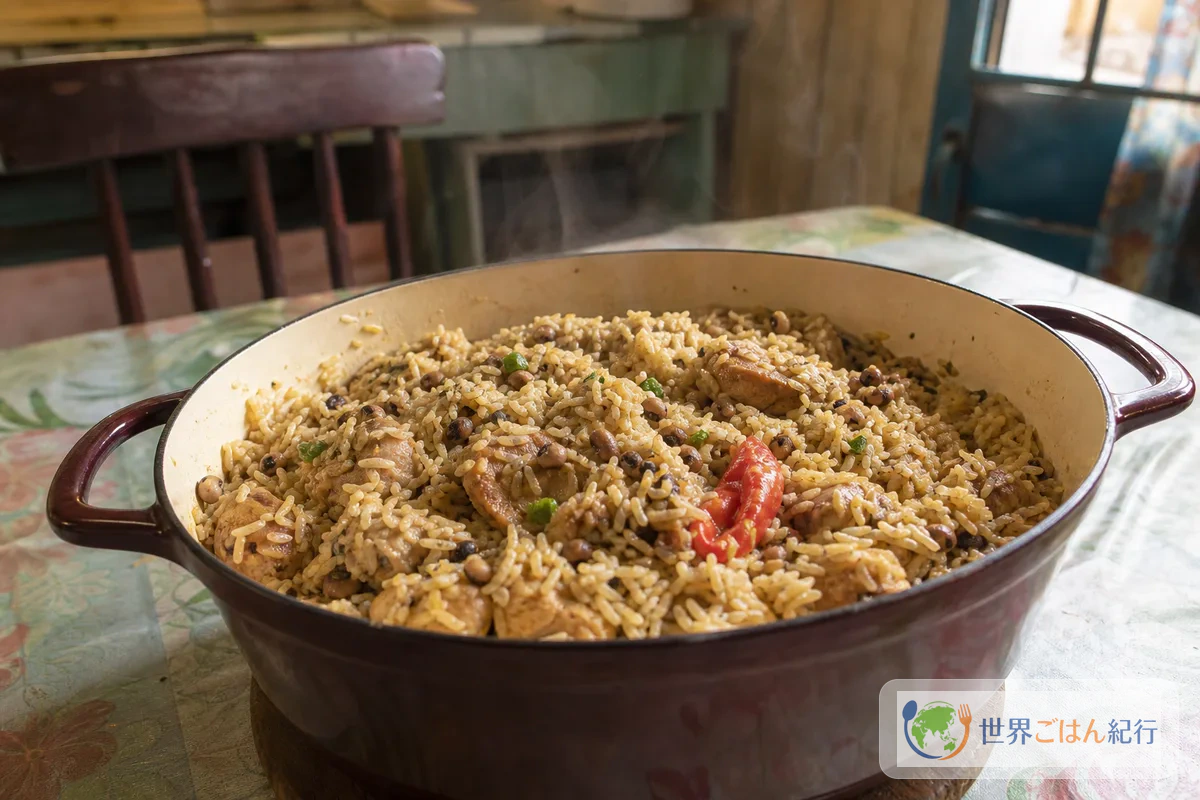
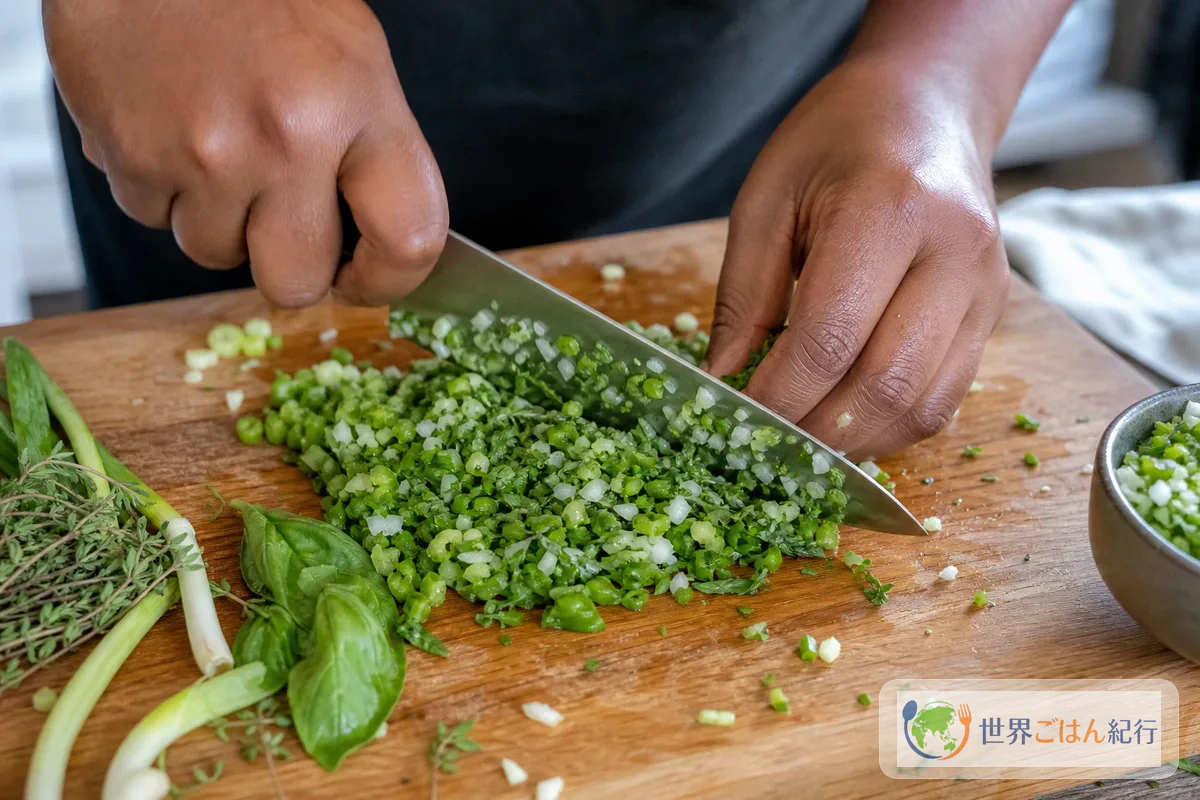
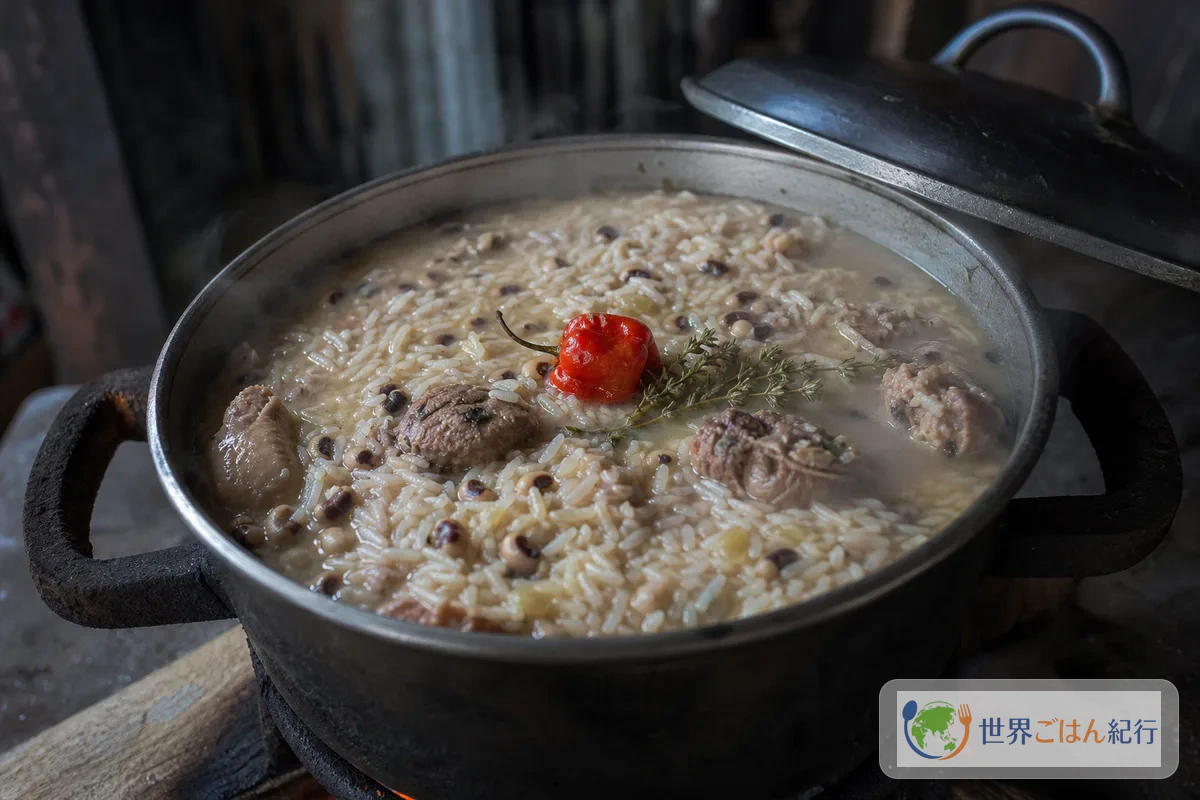
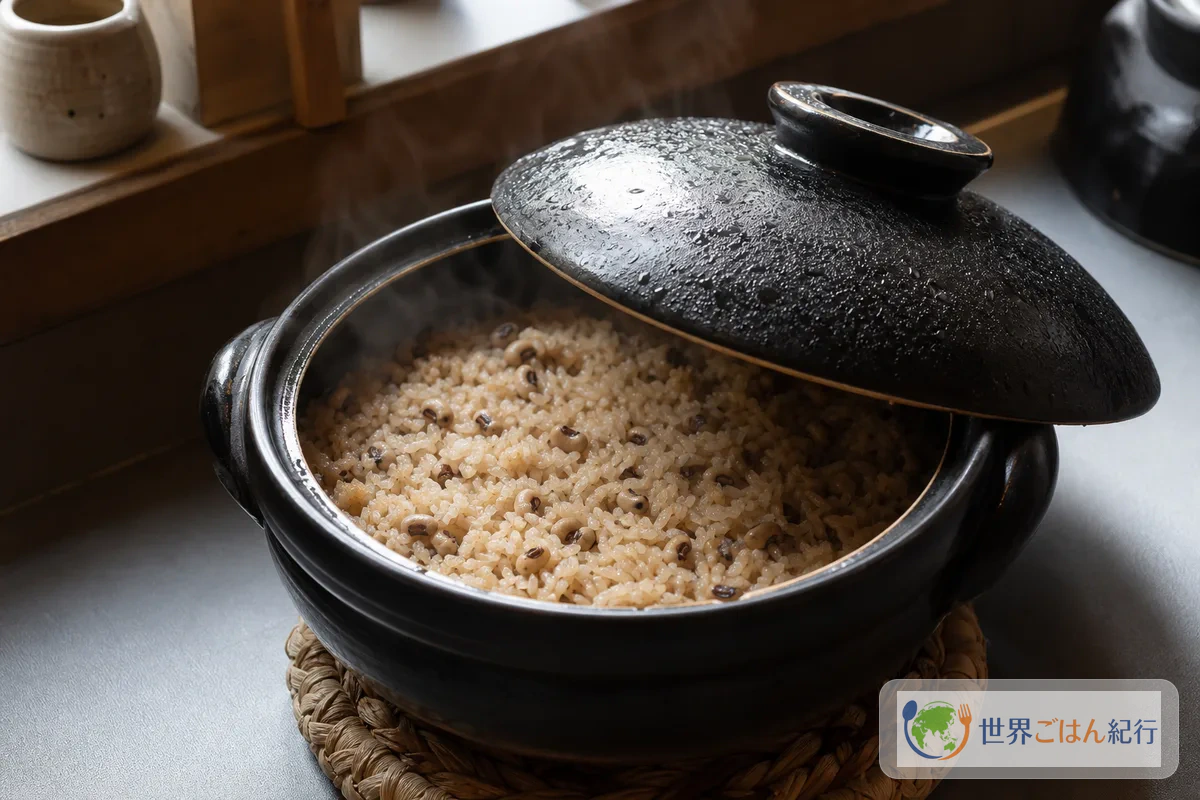
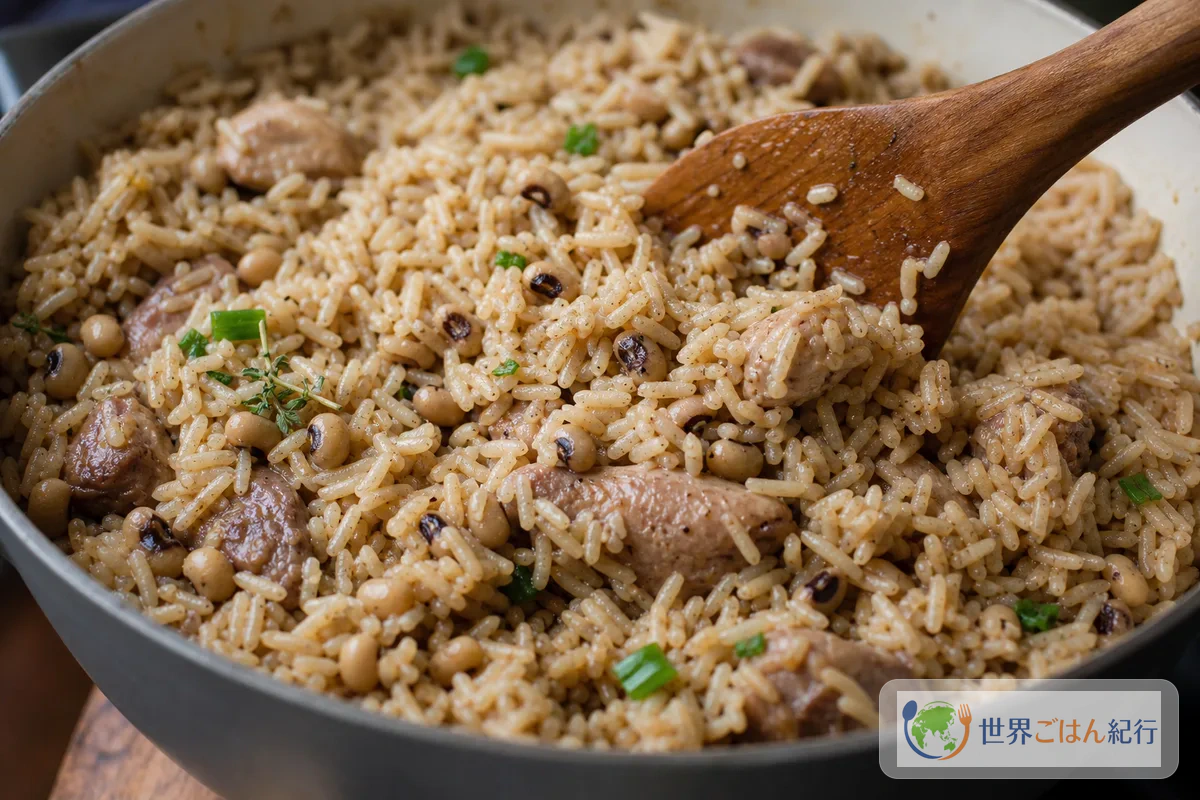
Slide the lid of the pot aside and the white steam of coconut mixes with the scent of thyme and scallion. Black-eyed peas show in dots across the surface, and the rice has taken up the liquid yet still moves grain by grain. This is not a dish where you stir hard looking for the chicken. It is a dish where you scoop beans, meat, aromatics, and rice all at once from the bottom of the pot.
Guyanese cook-up rice is a plate in which rice, beans or peas, meat, and herbs are cooked in the same pot. Depending on the household, the combination of black-eyed peas, pigeon peas, red kidney beans, and chickpeas changes, and there are versions without meat. As the name says, it is a dish that takes in whatever you have on hand into one pot.
However, the places where you can get lost when making it are clear. If you add hard beans, the rice breaks down first; if you reduce the liquid too much, only the bottom of the pot scorches. If you can't get parboiled rice you can get close with long-grain rice, but if you switch to short-grain rice the texture goes in a different direction.
Here it is built for four home cooks with canned black-eyed peas and chicken thighs. How to soak dried beans, how to drop in a hot chile whole to carry only its aroma, and how to recover when liquid is left over are all marked by what happens in the pot.
- For black-eyed peas, whether to take the original trouble of soaking dried beans or to use canned for a weeknight pot
- For rice, whether to look for parboiled rice, which resists breaking, or to make it with long-grain rice you can buy nearby
- For coconut milk, whether to buy canned to keep the richness consistent or substitute an unsweetened coconut product you already have
- For heat, whether to drop in a small chile such as wiri wiri whole, or to keep the aroma and serve the heat on the side
Why Cook-Up Rice Stays on the Guyanese Table
An article from the tourism authority introducing Guyanese food culture describes cook-up rice as a one-pot dish in which rice, meat, and herbs are cooked in coconut milk, and also touches on the custom of making a big pot at New Year's. This does not mean that every household makes it the same way every year, but you can see well the size of the dish and its character, in which the contents can be increased or decreased to match the number of people eating.
Althea Brown, the cook behind Metemgee, links New Year's Eve in Guyana with cook-up and also introduces "bush cook-up rice" made over an outdoor fire. Although it is a dish gathered around the same pot, the kind of meat, the firmness of the beans, and how much moisture is left differ from home to home. So rather than deciding "this is the only right way," pulling the pot together by watching how fast the rice takes up liquid gets closer to the local flexibility.
Tracing the background of the dish, Metemgee explains cook-up rice as a dish that crossed from West Africa to Guyana and touches on its closeness to waakye, which also pairs rice and beans. Compared with Ghana's waakye (in Japanese), you can see that the idea of putting beans and rice in one pot crossed the Atlantic and took root in the kitchens of another land. However, Guyanese cook-up layers coconut milk, green herbs, and chile, and becomes a moist staple and main dish in one.
Metemgee also notes that the method varies by region of Guyana and by household. Rather than fixing regional differences in a single formulation, keeping one kind of bean such as black-eyed peas and protecting the aroma of coconut milk and herbs makes it easier to reproduce the breadth of the Guyanese table at home.
This pot is not simply a mixture of ingredients. Black-eyed peas supply the fluffy core you feel when you bite, coconut milk supplies the fat that rounds the corners of the rice, and thyme and scallion supply the aroma that rises from deep in the pot. Even if the ingredients look numerous, their roles do not overlap.
Ingredients, and Substitutes to Decide on First
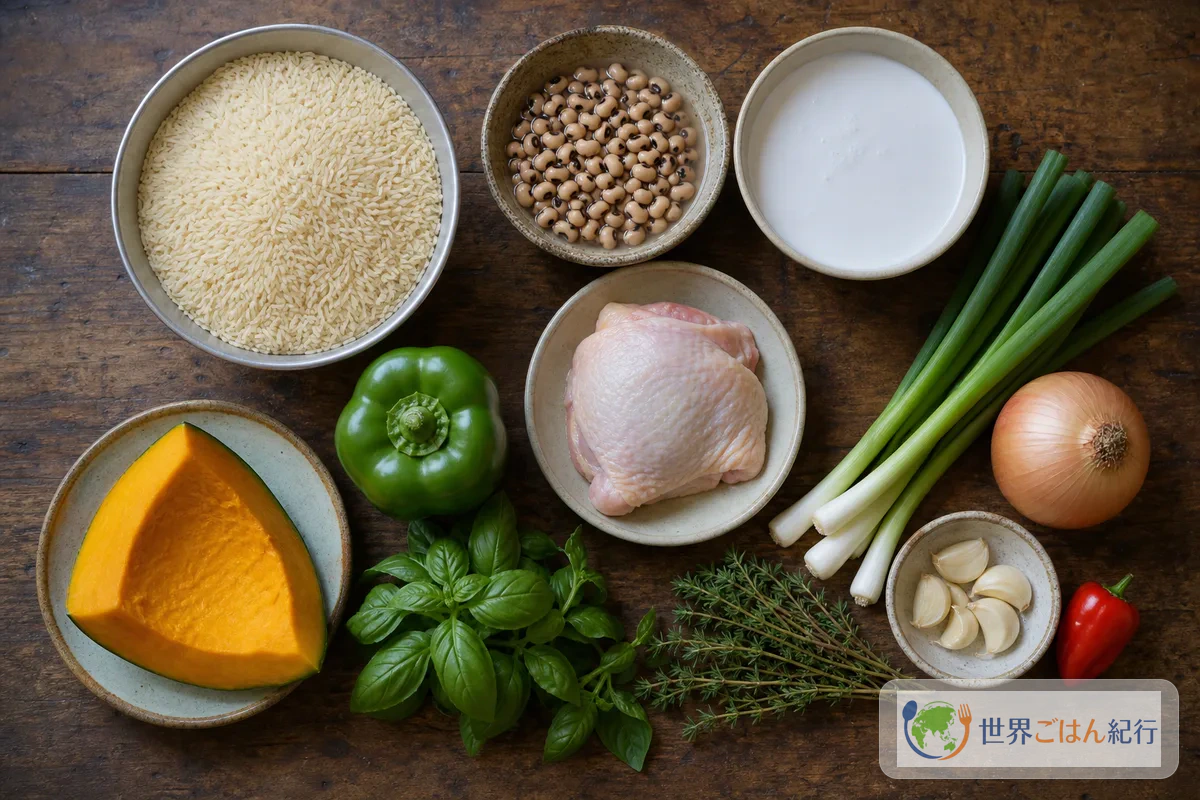
Serves 4. It is made a little generously, with eating the liquid-soaked rice the next day in mind. Use a heavy pot of about 24 cm in diameter with a tight-fitting lid.
The Guyana Ministry of Health's recipe collection includes cook-up rice using coconut milk, black-eyed peas, chickpeas, red kidney beans, basil, broadleaf thyme, wiri wiri pepper, okra, and pumpkin. Here the ingredients are narrowed, and the combination of black-eyed peas and chicken is used so that the state of the pot is easy to read.
This uses coconut, chicken, and legumes. Commercial chicken stock and bouillon may contain wheat, soy, or dairy, so check the label. Cutting a chile spreads its heat through the broth. The first time, use one chile whole, and add hot sauce or black pepper at the table for easier adjustment.
Buy Coconut Milk, or Substitute?
In cook-up rice, the coconut milk is not liquid for scenting; it supplies the fat and sweet aroma that cling to the rice. Cook with water alone and the beans and chicken still come together, but the mouthfeel is light and the herb aroma tends to turn sharp.
Conditions for buying: a canned, unsweetened product of around 400 ml, with no sugar in the ingredients, that you can use up entirely once opened. Cans vary in thickness. If it is the thin type, reduce the water by 20–30 ml; if it is a thick cream, add the same amount of water, so that the total liquid does not change greatly.
There are also conditions for skipping it. For people who dislike coconut aroma, or who want to make a small amount, it wastes less to try half the amount first than to thin unsweetened coconut cream with water. Replacing it with milk or soy milk changes the axis of acidity and aroma, so think of it as a different dish in the style of cook-up rice. When cooking black-eyed peas and rice in one pot, the thickness of the coconut milk decides the heaviness of the finished dish.
In a Home Kitchen, Keep the Order of Rice and Beans
With canned black-eyed peas, you can warm them in the same pot as the rice. If using dried beans, wash them the day before, soak them in plenty of water for at least 8 hours, and boil them in a separate pot until just before they can be crushed with your fingers. If you put raw dried beans in with the rice, the rice falls apart before the beans soften, so this step cannot be skipped in this dish.
Changing the beans changes the flavor. Pigeon peas tend to bring a green-bean aroma and a presence in each grain, and red kidney beans make the broth look a little darker. Chickpeas are fluffy and more filling, but take longer to cook than black-eyed peas. If you mix two or more kinds, add canned ones at the same time and boil dried ones separately by type.
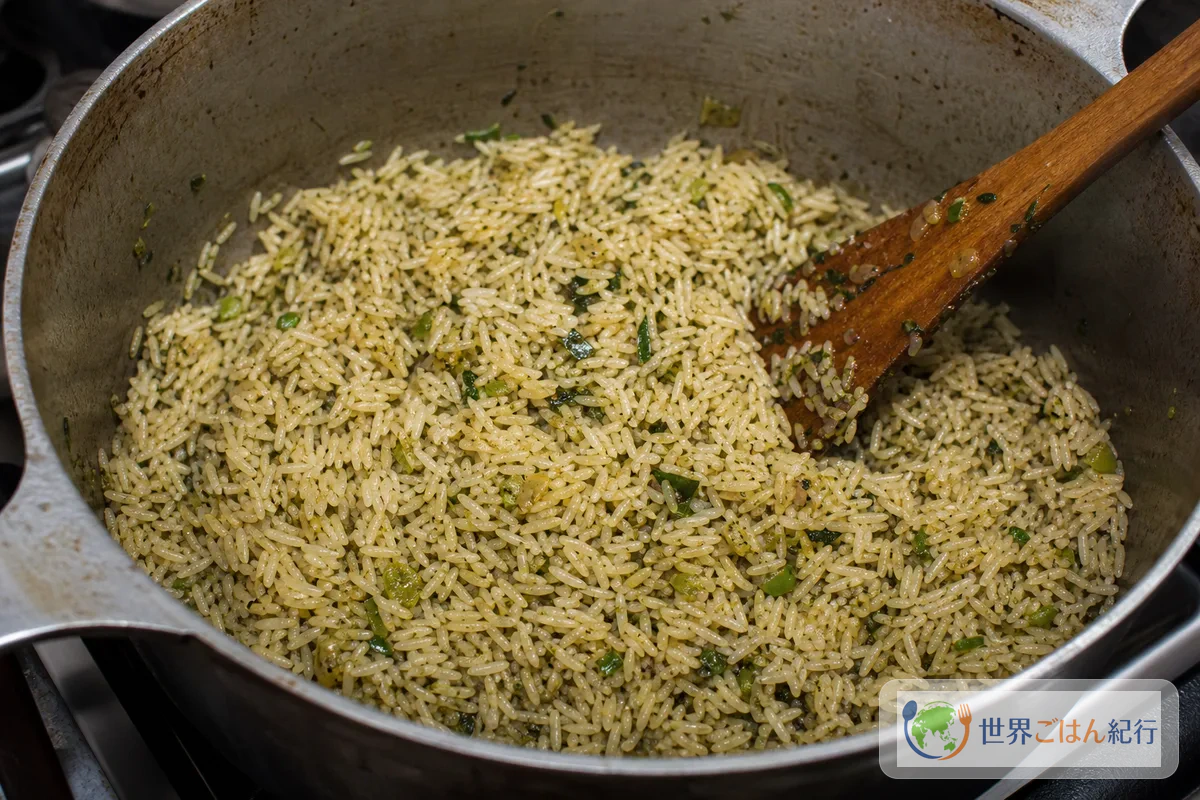
Parboiled rice is the easiest to handle. It is a type that has been steamed and then dried, so the grains resist breaking down in the liquid and are less sticky even when mixed with beans and chicken. If you can't get it, use washed long-grain rice, well drained. If you make it with short-grain rice, reduce the water by 50 ml and cut down the number of times you stir even further. It becomes a different texture, assuming stickiness.
If you are choosing long-grain rice, basmati is one candidate. It is not a one-to-one replacement for the rice used in Guyanese homes, but for people who want to put length of grain and fragrance first, it is an easy substitute to find. If you already have another long-grain rice, there is no need to buy anything special.
Judging the Result and Recovering from Mistakes
Cook-up rice is neither crumbly fried rice nor a soupy rice porridge. The signs Metemgee lists are the mellowness of the fat, beans that are soft but not crushed, and rice that is moist but not clumped. When the steam settles, moisture moves further into the rice, so at the point you take it from the pot, stop at "it feels slightly moist."
The rice is hard
If there is almost no liquid and only the center of the rice is white, add 50 ml of boiling water and return to low heat. Without stirring the bottom, cover and check every 5 minutes. Adding cold water stops the boil and tends to soften only the outside, so avoid it.
The rice is sticky
Turn off the heat, remove the lid, and turn from the bottom only two or three times with a paddle to let the steam out. You can also spread it thin on a wide plate, but do not leave the chicken and beans at room temperature long, so do this only with the amount you will serve. If you used short-grain rice it will not fully recover. Next time switch to long-grain rice and reduce the water by 50 ml.
The bottom scorched
As soon as you smell scorching, quietly move only the upper part to another pot. Scraping and stirring the bottom spreads the bitterness through everything. If the moved rice is hard, add a little boiling water and rest it. Don't try to save the scorched part; separate toasty browning from bitter char.
The chicken is not cooked through
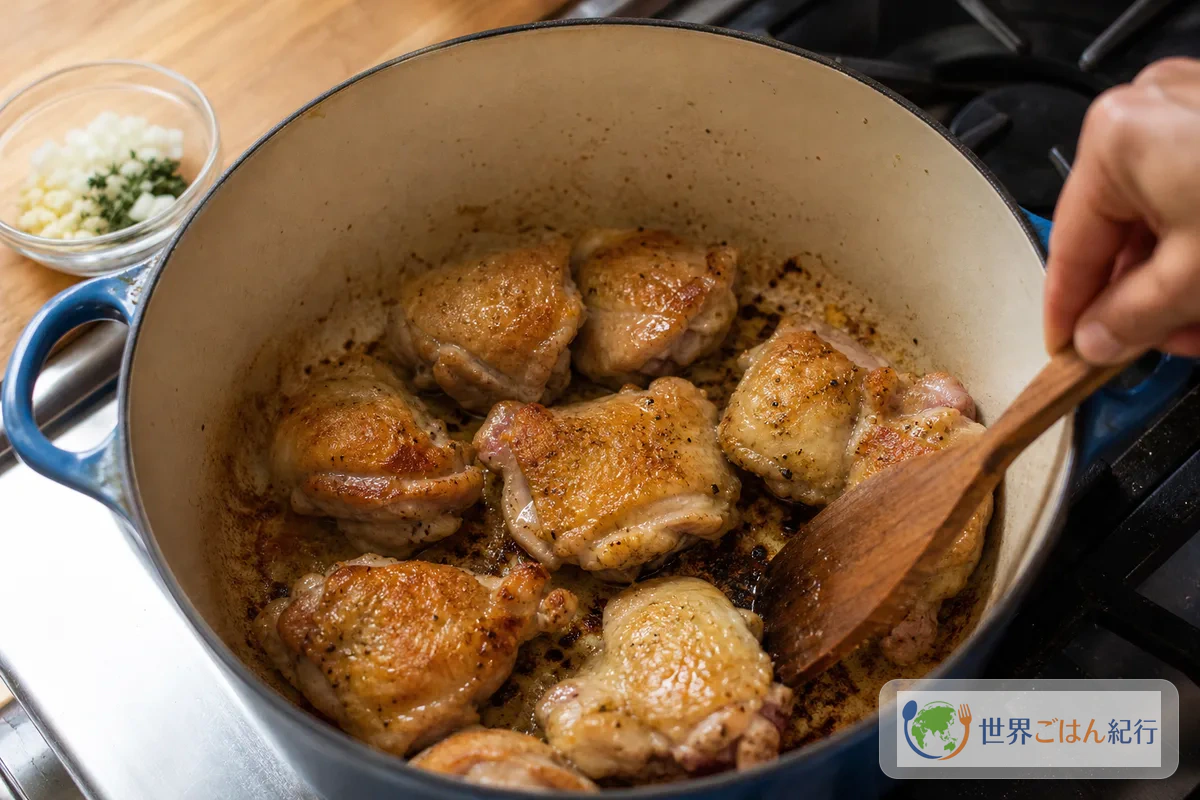
Do not judge by the browned surface alone; break open a thick piece to check that it is fully cooked through to the center. If the rice looks like it will be done first, take out only the chicken, cook it in another pot, and return it just before eating. Next time cut the chicken into 3 cm cubes to match the timing of the rice.
Change the Beans and the Liquid, and the Same Pot Shows a Different Face
The Guyana Ministry of Health recipe is a vegetable-leaning cook-up rice combining black-eyed peas, chickpeas, red kidney beans, okra, and pumpkin. You can also build it with the meat served on the side and the rice and beans as the stars. When you leave out the chicken, increase the oil to 1 1/2 tbsp and the beans to 350 g net, and the satisfaction does not drop easily.
With black-eyed peas alone, their light earthy aroma when you bite suits coconut. Switching to pigeon peas strengthens the greenness of the beans, and adding red kidney beans gives color and sweetness. If you make it from dried beans, don't use all of the bean cooking liquid; replace part of the water with it while watching the saltiness of the broth.
Besides chicken thighs, some households use beef, pork, or salted meat. When using salted meat, boil it first to remove salt and reduce the salt in the ingredient list. There are also versions with fish served on the side, but fish simmered long with rice breaks easily, so it is safer to pan-fry it separately at first.
Trinidad's pelau (in Japanese) is a one-pot rice dish that puts the color and toastiness of caramelized sugar in front. Compared with Jamaica's rice and peas, cook-up rice, as a staple and main dish that includes meat and several beans, varies even more from home to home. Setting similar pots side by side shows that Caribbean rice dishes are not divided just by country name, but change with fire, beans, and the circumstances of the table.
At the Table, Serve It from the Pot Without Over-Mixing
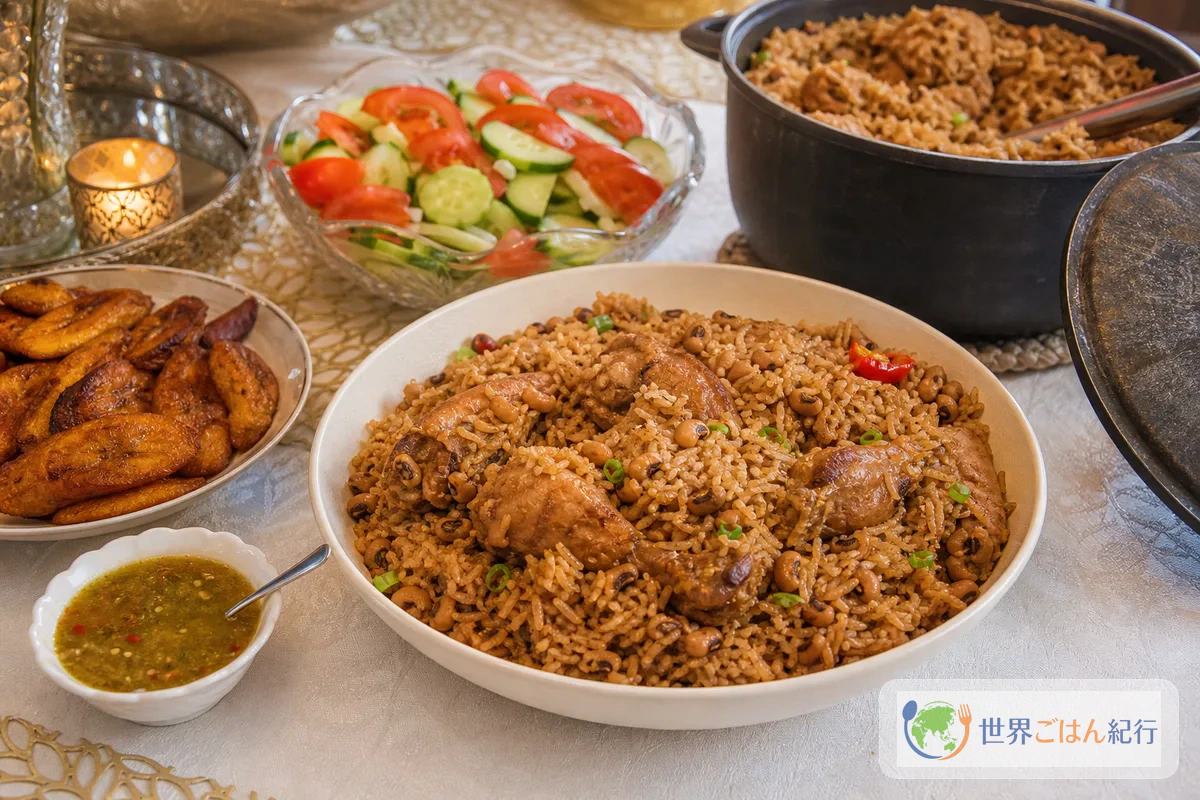
Cook-up rice has more atmosphere if you don't tidy it up too much when serving. Move it all at once to a large dish, scatter a little scallion, and put a cucumber and tomato salad, fried plantain, and hot sauce on separate plates. This is because between the sweet coconut and the fluffy texture of the beans, people can slip in sourness and heat themselves.
Even after it reaches the table, don't mix the whole thing from the start. Each person scoops from the pot where there is more chicken, where there are more beans, or where the squash is starting to fall apart. On the next day the broth settles further and the rice tightens a little, so for people who find the richness of the first day heavy, the second day can be easier to eat.
To store it, do not leave the pot at room temperature; divide it into shallow containers and cool. Seal what you refrigerate, and reheat only what you will eat thoroughly to the center. If you will keep it a long time, freeze it in single portions so you don't have to reheat the rice many times. On the day after, when moisture has decreased, add 1–2 tsp of water or coconut milk before warming, and the mouthfeel returns.
Frequently Asked Questions
Where can I buy black-eyed peas?
You can find them at international markets, bean specialty shops, and online. On days you can't find them, use canned black-eyed peas. You can also make it with pigeon peas or red kidney beans, but the aroma and color of the beans change compared with black-eyed peas. If you leave out the beans, the pillar of cook-up rice's texture disappears, so I recommend keeping at least one of chickpeas or mixed beans.
Can I make it with low-fat coconut milk?
You can, but the fat that wraps the rice decreases and the aroma is lighter. If you use a low-fat type, start with 250 ml of water rather than all 300 ml, and add more while watching the firmness of the rice. Adding sugar to make up for richness moves it toward a sweet dish, so avoid it.
What if I don't have wiri wiri pepper?
Small red chiles, habanero, or Scotch bonnet can stand in. If you want to keep the heat down, simmer it whole without cutting so that only the aroma transfers, and take it out before serving. The aroma will not be the same as the original chile, but if you serve hot sauce on the side, the whole pot does not become too hot.
Do I need a pressure cooker?
No. The Guyana Ministry of Health's recipe collection includes a method using a pressure cooker, but the same material also gives a method of simmering in a big pot until the rice is soft. With canned beans and long-grain rice, a heavy pot with a lid that closes is enough. If you use a pressure cooker to soften dried beans, cook the beans separately and then add them to the recipe.
Sources
- Guyana Ministry of Health, "Colourful Cooking for Healthy Living," Cook Up Rice (PDF) (ingredients for Cook Up Rice, pressure cooker and pot methods; checked 22 July 2026)
- Alica's Pepperpot, "Guyanese Style Cook-up Rice" (differences in beans and meat by household, parboiled rice, judging moisture; checked 22 July 2026)
- Metemgee, "Guyanese Cook-Up Rice" (the New Year's Eve table, bush cook-up, cooking the beans, judging moistness; checked 22 July 2026)
- Travel Guyana, "Old Year's Day and Night: A Vibrant Guyanese Tradition" (ingredients of cook-up rice and the New Year's Eve food culture; checked 22 July 2026)
Related Guyanese Dishes
- Guyanese pepperpot: a black holiday pot of meat stewed with the bitterness of cassareep and spices
- Guyanese pholourie (in Japanese): a snack of fried split-pea fritters eaten with tamarind sauce
- To widen your shopping for Guyanese cooking, Trinidad's pelau (in Japanese): another one-pot rice dish that uses caramelized sugar