
The Flavor Isn't Settled Until You Lift the Lid
Picture this.
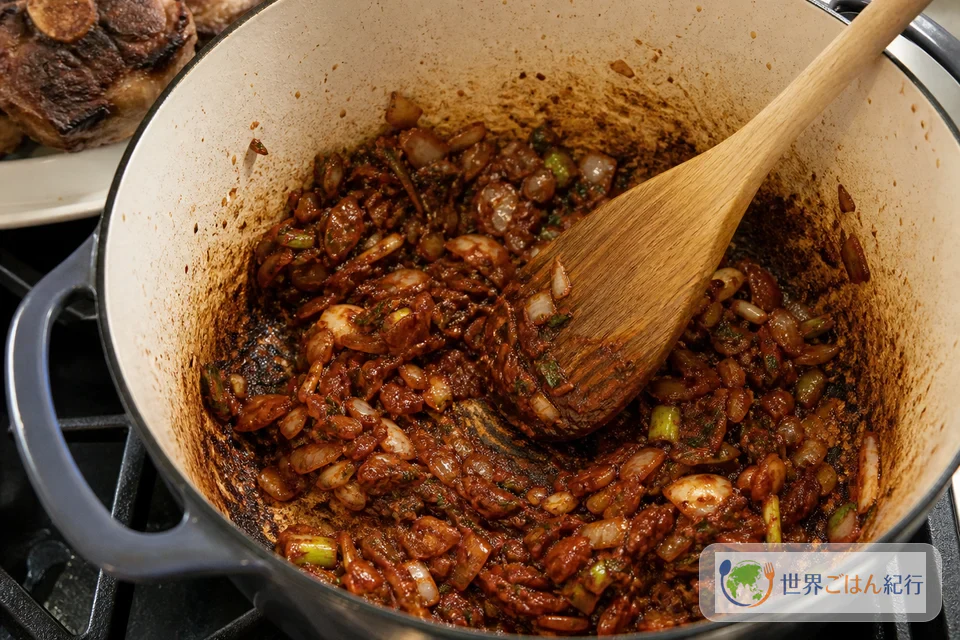
When the wooden spoon touches the bottom of the pot, it answers with a single dry sound.
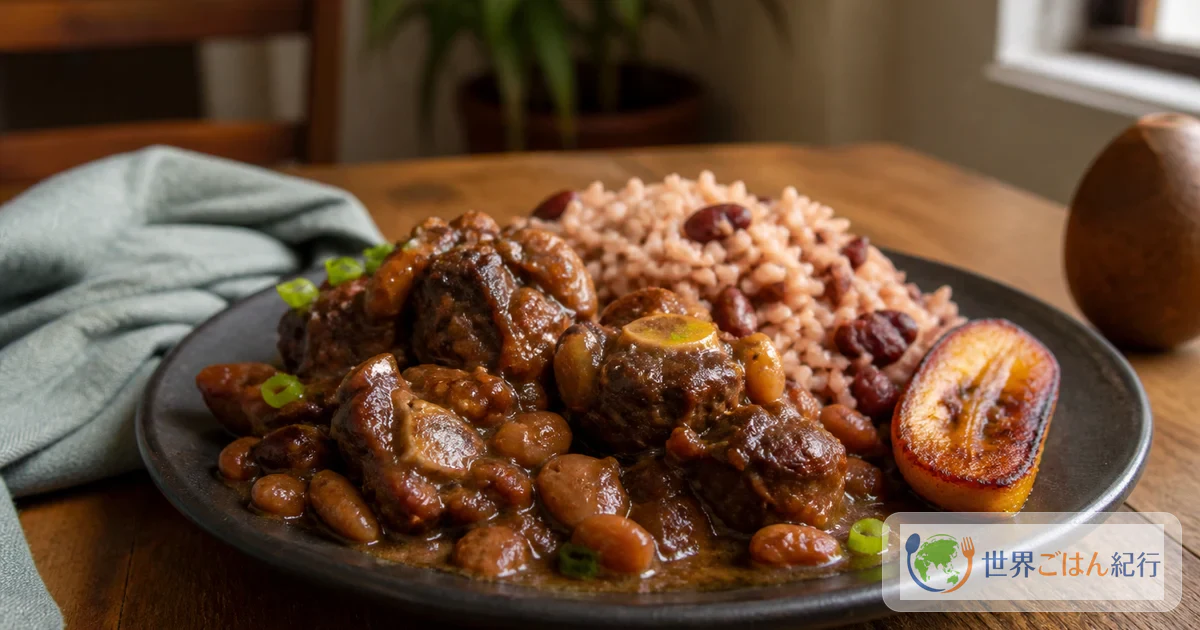
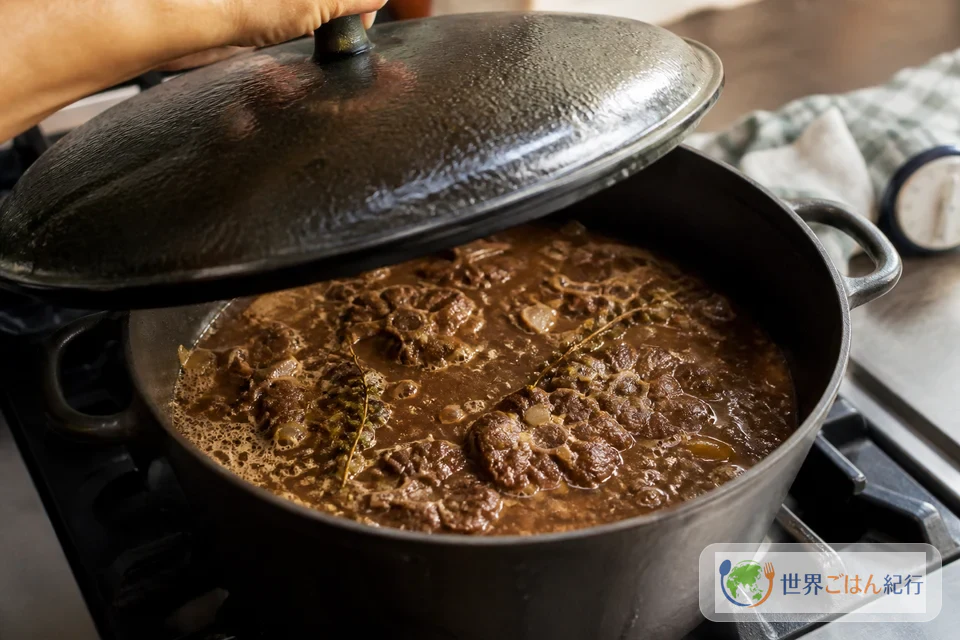
Right after that, the scent of onion and thyme settles over the browned oxtail, and the pot turns into a deep brown sauce.
Jamaican oxtail stew is a dish that loosens the meat around the bone with time.
It is not a dish where you start with a tender cut.
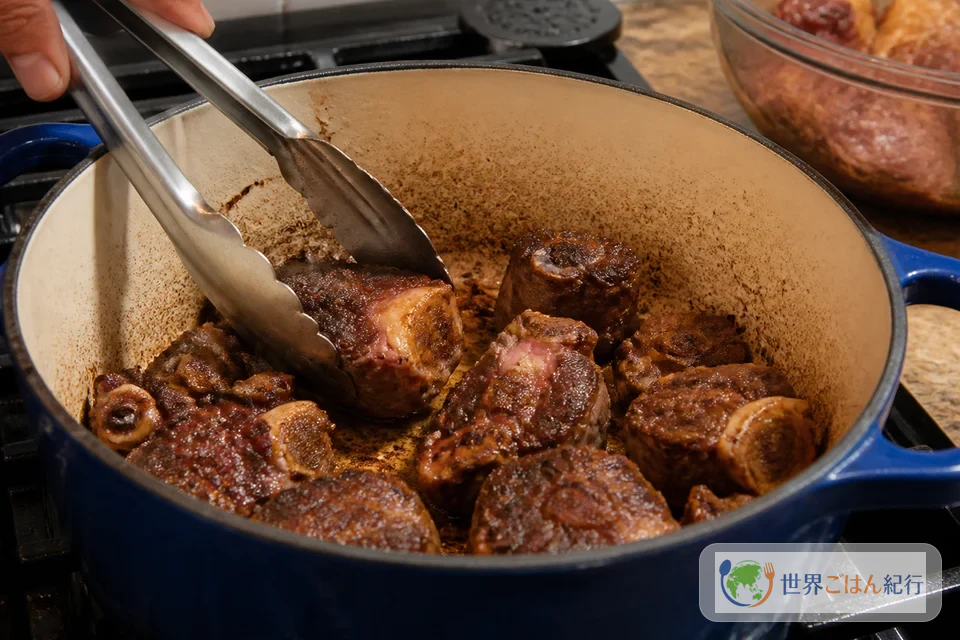
You brown the meat, fry the aromatics in the bottom of the pot, and simmer while keeping the bubbles weak.
Keep to this order and one pot gives you both meat that slips off the bone and a gravy that clings to rice and peas.
In the Jamaica Tourist Board's introduction to the island's food, oxtail is listed alongside stew peas, curry goat, and rice and peas.
It is not only a home dish put on a plate as it is; if you also think about the pairing, where the richness of the meat is met by rice cooked with beans, you can see why this stew is relied on at the table.
The hard part in a home kitchen is not making every ingredient identical to the local one.
It is not replacing pimento with a mixed spice, not letting the heat of the Scotch bonnet come first, and not rushing the oxtail with a boil.
The three things that must stay at the core of the flavor are the sweet aroma of pimento, the green freshness of thyme and scallion, and a dark, concentrated broth built on browning.
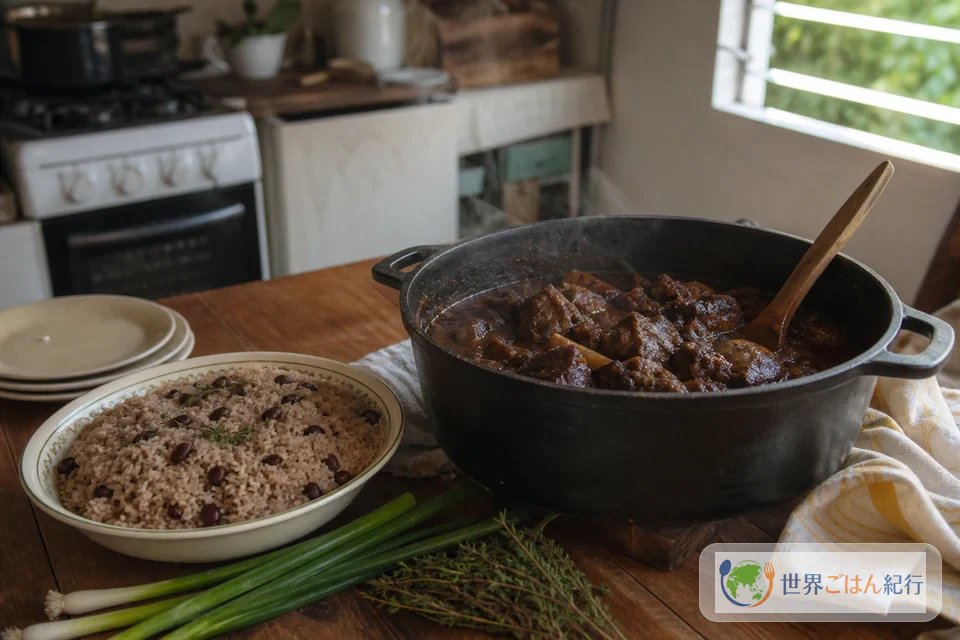
If you serve rice and peas, cook Jamaican rice and peas first.
While the meat loosens in the pot, the rice and beans wait quietly.
Oxtail is sold at butchers under names such as "beef tail" or "oxtail."
What Jamaicans call pimento is what is called allspice elsewhere.
Use allspice berries or ground allspice, not five-spice powder or a mixed cinnamon blend.
Gathering Ingredients: Think of Aroma and Heat Separately
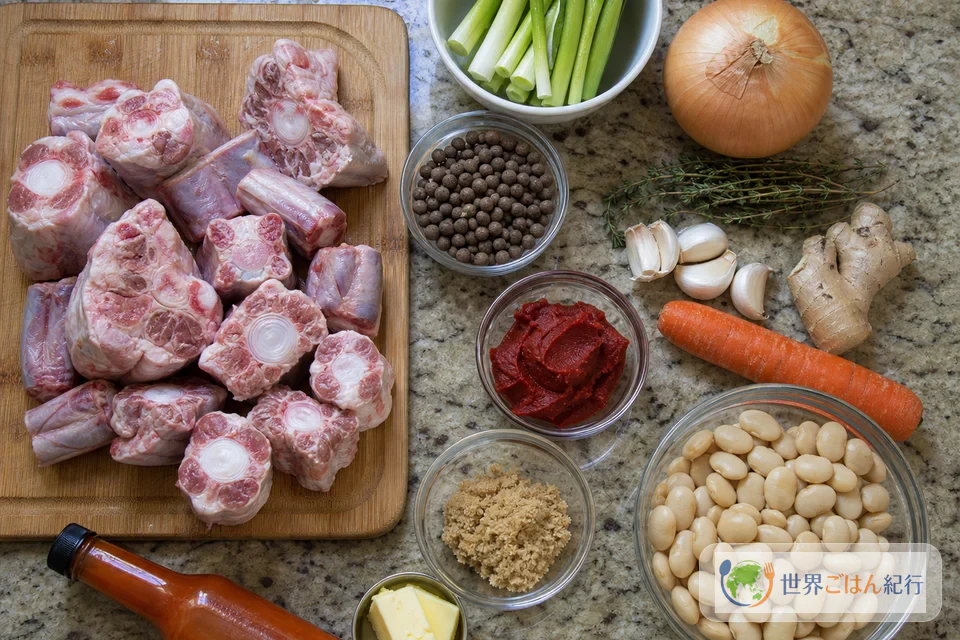
This makes 4 servings.
Oxtail has a lot of bone, so the edible portion looks small on paper.
On a day when you want more meat per person, raise it to 1.5 kg and add only 100 ml more liquid.
Allspice is not a ground blend of clove, nutmeg, and cinnamon.
A single berry gives a sweet aroma similar to those, so looking only at the ingredient list you may be tempted to add substitutes, but it will not smell the same.
Lightly crushing whole berries before use lets the aroma come out into the broth and leaves less powdery grit in the mouth when you eat.
If you are going to buy one thing for this dish first, make it whole allspice.
If you already have ground allspice, you do not need to buy more.
If you will cook Jamaican or Latin American food several more times, whole allspice in a larger package is easy to reuse.
If you are only crushing whole berries, the bottom of a heavy glass or the flat of a knife will do.
A mortar is worth buying if you want to leave some allspice whole and adjust the aroma, or if you want to pound garlic and ginger into a paste together.
If this is a one-time oxtail, skip it; if you will keep making dishes that grind spices, consider a stone mortar and pestle.
Because the Scotch bonnet passes on its fragrance and its heat, boil it uncut the first time.
If you do not have a fresh one, start with 5 ml of a hot sauce and add it at the very end of tasting.
The Jamaica Tourist Board also describes Scotch bonnet as a flavorful but hot chile, so splitting up when you add heat, rather than increasing the amount, makes it easier to adjust at the table.
Oxtail can be replaced with beef short ribs, but the shape of the bone and the gelatin change.
Ground allspice works, but if you substitute five-spice powder the direction of the dish changes.
Habanero can supply heat in place of Scotch bonnet, but it is safer to adjust with a small amount of sauce first.
Soy sauce contains soy.
If you use bottled hot sauce, beef stock, or ketchup, check the ingredient labels.
Do not wash raw beef with water; press the surface dry with paper towels.
Use separate cutting boards, bowls, and tongs for raw meat and for serving, and wash them with detergent after working.
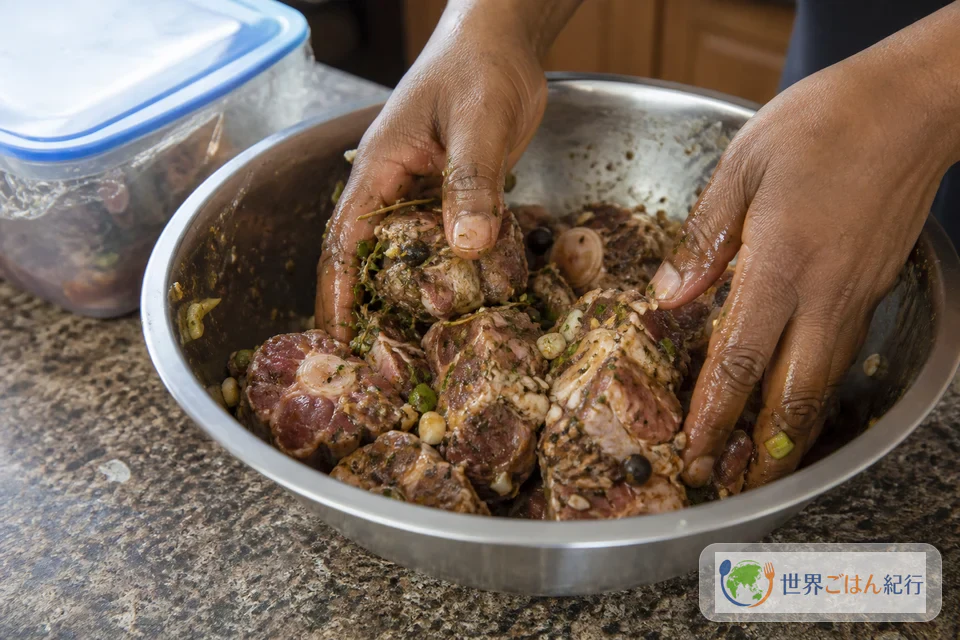
Method: Follow Five Changes in the Pot
Each step carries one judgment.
Do not stop the pot by time alone; watch the surface of the meat, the bubbles in the liquid, and how the meat shrinks around the bone.
Do not decide that the stew is done by time alone; cook until the meat comes away from the bone.
When storing leftovers, divide them into shallow containers and cool them quickly; when reheating, heat the whole dish to 74°C.
FoodSafety.gov gives guidelines of 3–4 days in the refrigerator and 2–3 months in the freezer for stews.
Four Tips for a Richer Gravy
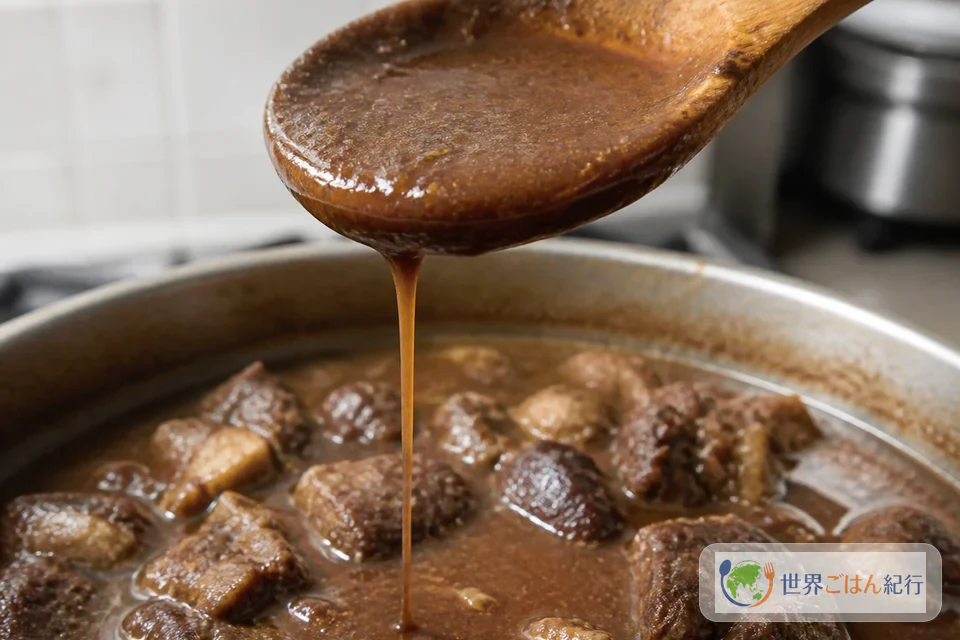
Don't let the bubbles get large
If you keep boiling, the liquid reduces quickly and the bottom of the pot is likely to scorch before the meat softens.
Leave the lid slightly ajar and set the heat so that small bubbles come up in one spot on the surface.
Shaking the pot and turning the meat once every 30 minutes is enough; do not stir often and break the flesh off the bone.
Browning doesn't mean making it black
A deep reddish brown builds aroma and color, but a blackened pot bottom turns bitter.
If scorched oil has spread over the bottom of the pot after browning the meat, take the meat out and leave only 1 tbsp of oil.
Wipe up the burned bits with paper towels before adding the aromatics.
You can let the heat out of the pot
If you simmer the Scotch bonnet whole, a fruity aroma passes into the broth and the heat is milder than if it had been chopped.
If you take it out after 20–30 minutes it is easier still to adjust.
For a table where not everyone eats spicy food, choose the method of serving sauce on the side after it is done.
Resting overnight lets you separate the fat
When you cool the pot and put it in the refrigerator, the fat on the surface solidifies white.
The next day, skim the fat and reheat, and you can lighten the dish while keeping the gravy's richness.
The broth setting firm is the oxtail's gelatin cooling, and it is not a failure.
The success of a stew comes from checking the tenderness of the meat and the thickness of the sauce separately.
If you reduce the liquid while the meat is still tough, it scorches.
After the meat has loosened, take off the lid and simmer for 10–15 minutes to reduce, and the two judgments stay separate.
What to Keep in a Home Kitchen, and What Can Change
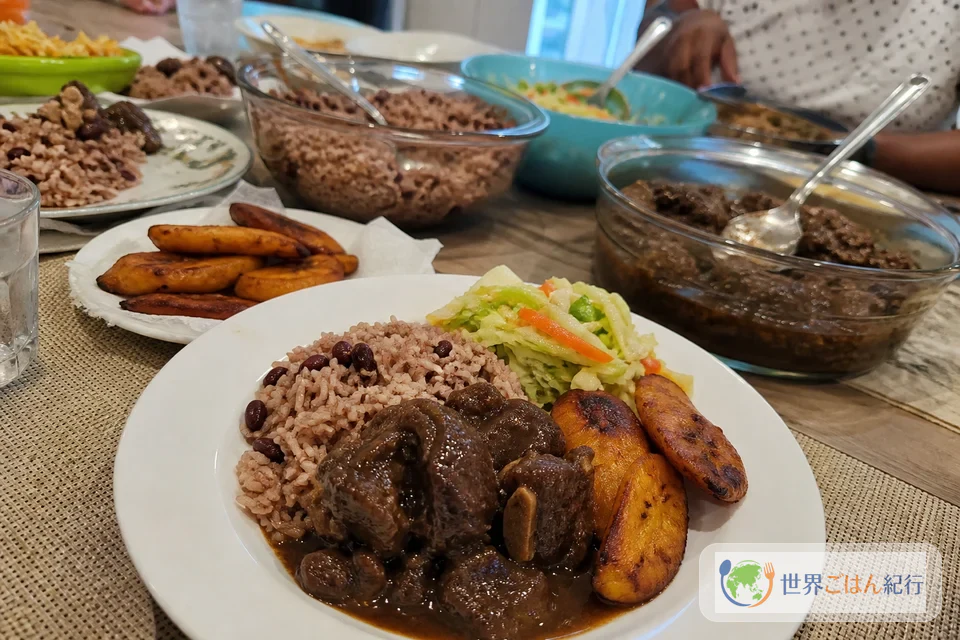
On a day you can't find oxtail, use short ribs
BBC Good Food's recipe also lists short ribs as a substitute when oxtail is not available.
With 1 kg of short ribs, insert a fork once at 90 minutes into the braise to check how much the meat has shrunk and how much fat there is.
Do not stop before the meat comes off the bone, but if you fix the time at 3 hours, as for oxtail, the flesh may fall apart and leave only the liquid.
Shorten the time with a pressure cooker
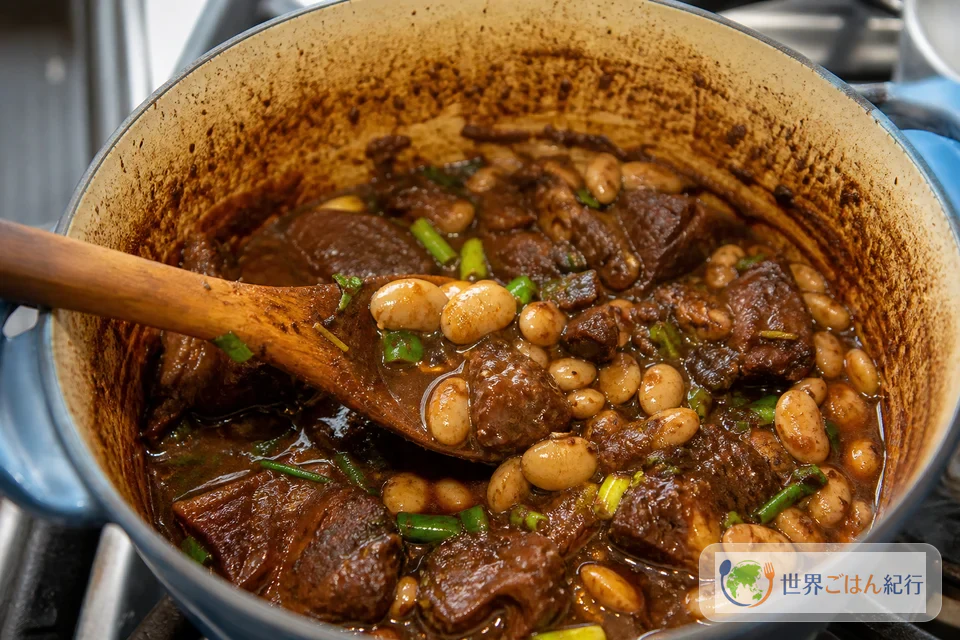
Grace Foods' recipe has a step in which browned oxtail is pressure-cooked with boiling water for 25–30 minutes, then finished by adding scallions, thyme, red bell pepper, butter beans, and tomato.
If you use a pressure cooker, follow your model's minimum liquid amount and natural-release instructions first.
Do not open the lid suddenly after pressure cooking; check the state of the meat before adding the beans.
Split the heat at the table
If you want a uniform heat level, simmer one Scotch bonnet whole and take it out at 20 minutes.
If only the adults want it hot, do not put it in the pot; add 5 ml of hot sauce to each plate.
Salt content and acidity differ from one sauce to another, so do not raise the salt all at once.
Let rice and peas take up the liquid
Rice with the aroma of beans and coconut is a good base for a rich gravy.
Serve rice and peas, scatter scallions, and place 2–3 slices of fried plantain on top.
You can make it with white rice, but you lose the texture of beans that holds up against the weight of the flavor.
The next day, use it as a pie filling
Take the meat off the bones and chill it with a little of the liquid.
Rather than sandwiching it between slices of bread, spread it under pie dough or mashed potato and bake, and the rich sauce does not run out.
A dish made with oxtail does not end after one meal; it turns into a different plate the next day.
The Food Culture Behind the Pot: Jamaica
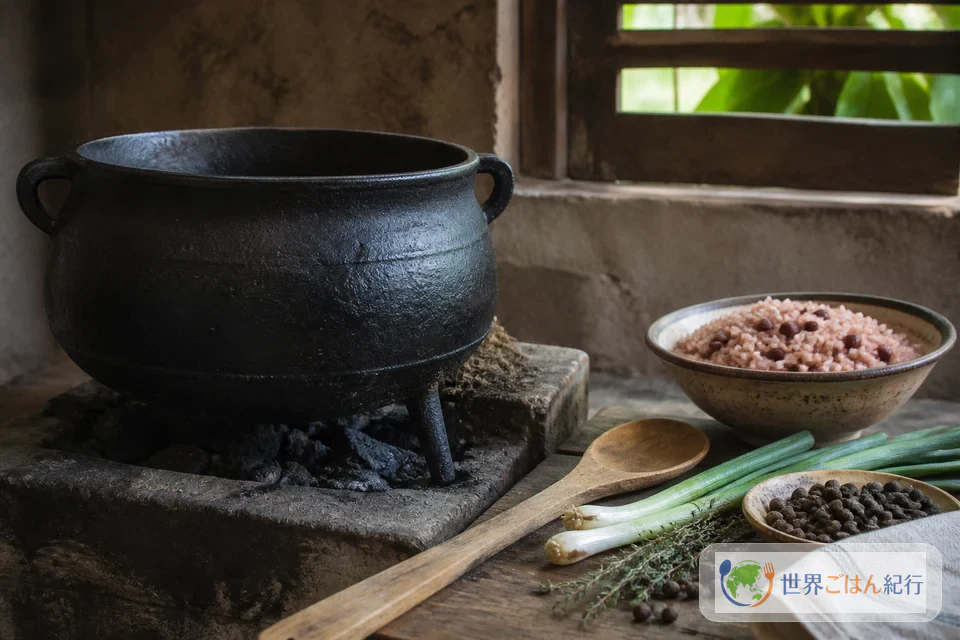
Jamaican cooking cannot be explained by a single lineage from a single country.
Jamaica 55's history of the island's food culture explains that today's dishes were formed from the ingredients and cooking methods that people from the Taíno, Africa, Europe, China, India, and other places brought to the island.
The tourist board also lists influences from the Taíno, Africa, Ireland, Britain, France, Portugal, Spain, India, China, and the Middle East.
The same source lists, as Spanish influence, bean dishes using salted meat, oxtail, cow foot, and fried foods.
This cannot be read as "the origin of oxtail is only Spain."
It is more accurate to read it this way: techniques for stewing beef tail were brought to the island, and onto them were layered one-pot cooking of African origin and flavors such as soy sauce and ginger used by later settlers, until it became today's dish.
Pimento is tied to both food culture and agriculture in Jamaica.
The Jamaica Information Service reports that pimento is called allspice internationally and that the berries are used to season jerk.
A NEPA document explains that Pimenta dioica is distributed across all 14 parishes of the island, with the fruit used for jerk seasoning and the wood used to flavor meat.
What this stew uses is the berry, not the wood.
Even in a pot that cannot add the smoke of the wood, simply crushing the berries lightly and putting them in the broth leaves a sweet, clove-like aroma as the base.
BBC Good Food presents oxtail as a dish rooted in the cooking of working people and the wisdom of using available resources.
That said, oxtail is not always cheap today.
If you switch to short ribs because they are hard to find or because of price, state honestly which dish and which cut you are using, and keep the design of the flavor: pimento, thyme, scallions, and a dark broth.
What you see when you open the pot is not just a brown stew.
There is no need to claim grandly that the island's history is compressed into one plate.
Aromas with different origins soften the bone-in meat and come together in a liquid that runs over the rice and peas.
That specificity is the reason to make this dish in a home kitchen.
Frequently Asked Questions
Where can I buy oxtail?
The surest way is to ask a butcher for oxtail cut in 3–4 cm rounds.
If you can't find it at a regular supermarket, look for a butcher who sells imported or frozen beef, or a wholesale meat counter.
If you switch to short ribs, choose bone-in pieces with a thick layer of fat and start checking the braise at 90 minutes.
Can I make it with ground allspice?
Yes.
Use 3 g of ground in place of 5 g whole, and add it when you pour in the liquid, not when you sauté the ingredients.
Ground allspice releases its aroma quickly, so if it seems strong, don't add more; adjust the whole dish with salt and vinegar at the end of the braise.
What if the Scotch bonnet is too hot?
Simmer it whole, take it out after 20–30 minutes, and check the heat.
Cutting into it or chopping the seeds spreads the heat suddenly, so leave it untouched the first time.
If you don't have a fresh one, add hot sauce 5 ml at a time to each plate.
How long should it take in a pressure cooker?
In Grace Foods' recipe, browned oxtail is pressure-cooked for 25–30 minutes, and after depressurizing, the vegetables and butter beans are added and simmered for 10–15 minutes.
Minimum liquid and release methods differ by model, so don't borrow the time alone; follow the upper limit in your manual.
If the meat does not come off the bone, adjust with additional pressure cooking or a low simmer in a pot, following your model's instructions.
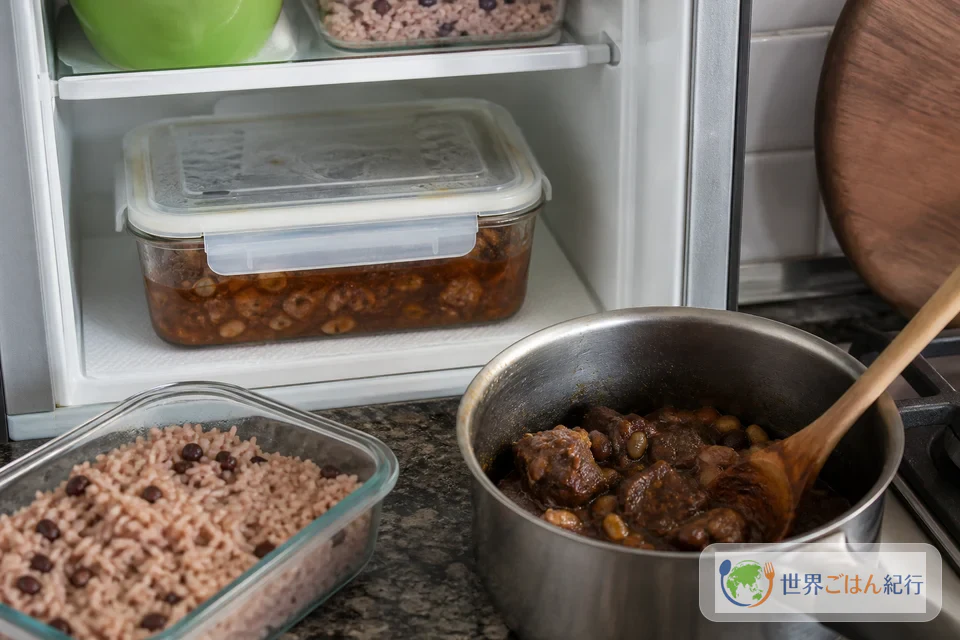
How long can leftovers be stored?
Don't leave the pot at room temperature; divide into shallow containers and cool.
Plan on 3–4 days in the refrigerator and 2–3 months in the freezer, and heat only what you will eat in a pot until it is hot in the center.
Under the FoodSafety.gov guidelines, stews and cooked meat keep for about 3–4 days in the refrigerator.
If there is a sour smell, sliminess, or any change in appearance, do not eat it, regardless of how many days have passed.
Sources
Cooking and the local table:
- Grace Foods UK. “Oxtail Stew.” https://www.gracefoods.co.uk/recipes/oxtail-stew (accessed and checked 5 August 2026, JST)
- BBC Good Food. “Jamaican oxtail.” https://www.bbcgoodfood.com/recipes/jamaican-oxtail (accessed and checked 5 August 2026, JST)
- Jamaica Tourist Board. “Jamaican Food | Explore Our Cuisine & Rich Culinary Traditions.” https://www.visitjamaica.com/discover-jamaica/cuisine/ (accessed and checked 5 August 2026, JST)
Culture and ingredients:
- Jamaica 55. “Culinary Heritage.” https://jamaica55.gov.jm/culinary/culinary-heritage/ (accessed and checked 5 August 2026, JST)
- Jamaica Information Service. “High Demand for Pimento.” https://jis.gov.jm/high-demand-for-pimento/ (accessed and checked 5 August 2026, JST)
- Jamaica Information Service. “NEPA Calls On Jamaicans To Protect Pimento And Bitterwood Trees.” https://jis.gov.jm/features/nepa-calls-on-jamaicans-to-protect-pimento-and-bitterwood-trees/ (accessed and checked 5 August 2026, JST)
Safety and storage:
- FoodSafety.gov. “Cook to a Safe Minimum Internal Temperature.” https://www.foodsafety.gov/food-safety-charts/safe-minimum-internal-temperatures (accessed and checked 5 August 2026, JST)
- FoodSafety.gov. “Cold Food Storage Chart.” https://www.foodsafety.gov/food-safety-charts/cold-food-storage-charts (accessed and checked 5 August 2026, JST)


