Lift the big parcels out of the steamer and the strings are still damp. Untie them and open the leaves one at a time: out comes orange-stained corn masa with tender pork, potato, and rice that's still a little firm at the center. The green smell of the banana leaf stays with the parcel even on the plate. Nacatamal is Nicaragua's big meat-filled tamal. The filling goes into corn masa, gets wrapped in banana leaf, and steams for a long time, so the dough soaks up the pork fat while the rice and potato cook beside it. Since everything finishes inside one parcel, it helps to understand the order things happen in the pot, not just the ingredient list.
Nacatamal's History and How It Is Eaten
The name and where it comes from
The name nacatamal was already in an 1874 dictionary of Nicaraguan speech, explained there as "tamal with meat" in Spanish. It comes from the Nahuatl nacatl (meat) and tamalli (tamal). But no document shows the nacatamal in its present form existing before the Spanish arrived, so the name alone doesn't make it a purely Indigenous dish.
The ingredients tell the same mixed story. Corn masa, annatto, chiltoma (a pepper-like aromatic vegetable), tomato, and chili are local, and they color the dough and filling. Soaked rice, onion, vinegar, yerbabuena (mint), pork, and potato overlap with ingredients and cooking methods the Spanish brought. Homes and shops that add olives, capers, or even celery push the European side further. The dish took its present form in the 19th century, when these ingredients came together.
A weekend breakfast
Nacatamal isn't saved for feasts. Families eat it at home from Friday to Sunday, and on Sunday mornings in Managua, cars and taxis line up outside the shops that sell it. Prep takes time, so the parcels get opened on a weekend morning when the family is together. For the cook that means shared work that starts the day before. For everyone else it's a breakfast that includes the slow business of untying the leaves.
A big gathering to eat nacatamal together is called a nacatamalada. It shows up at celebrations including Christmas, in wealthy households and modest ones alike. The pull isn't unusual spices. It's meat, grain, and vegetables arriving at the table in one parcel, plus the wait while it steams. Even if you're making just six at home, that wrapping and waiting is still the heart of it.
How the filling changes by region
On the Pacific side, nacatamal is a big parcel built around pork, and every cook fills it differently. Some use chicken or turkey, some add olives or raisins, some cut the potato thicker, and the heat runs from mild to heavy on chili. Some recipes use cooked rice. Others steam washed rice inside the parcel, where it soaks up the pork juices and the leaf's aroma, and the trick there is to use a small amount while it's still dry.
A 1948 description lists annatto, vinegar, chiltoma, garlic, mint, chili, pork or chicken, potato, olives, raisins, and more. Traditional large-pot cooking heated the parcels over strong heat for 5 to 6 hours, but parcel size, pot volume, and a wood fire are a long way from a home kitchen. One Nicaraguan-style method soaks rice and raisins for 2 hours, wraps the parcel in banana leaf and aluminum foil, and heats it for 2 hours.
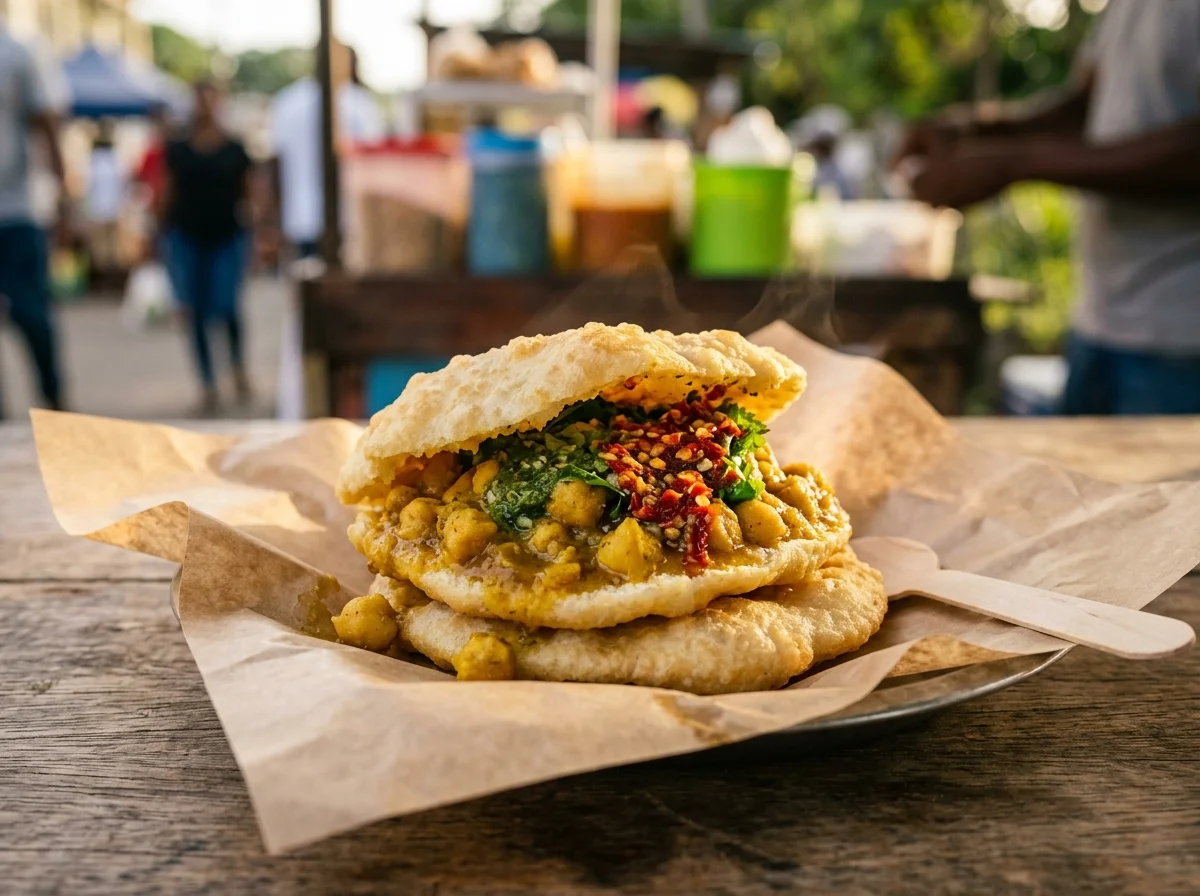
Nearby areas have their own versions. Nacatamal pindongo has no meat, and around Matagalpa a nacatamal uses potato in place of masa. Names and filling methods also change from one Central American country to the next. The Caribbean coast eats differently from the corn-and-pork cooking of the Pacific side and the center: rondón and patí, made with coconut milk, yuca, and banana, are Caribbean-side dishes. Adding coconut milk to a nacatamal doesn't make it a standard Caribbean-coast version, so if you go that way, call it a home version inspired by coastal ingredients.
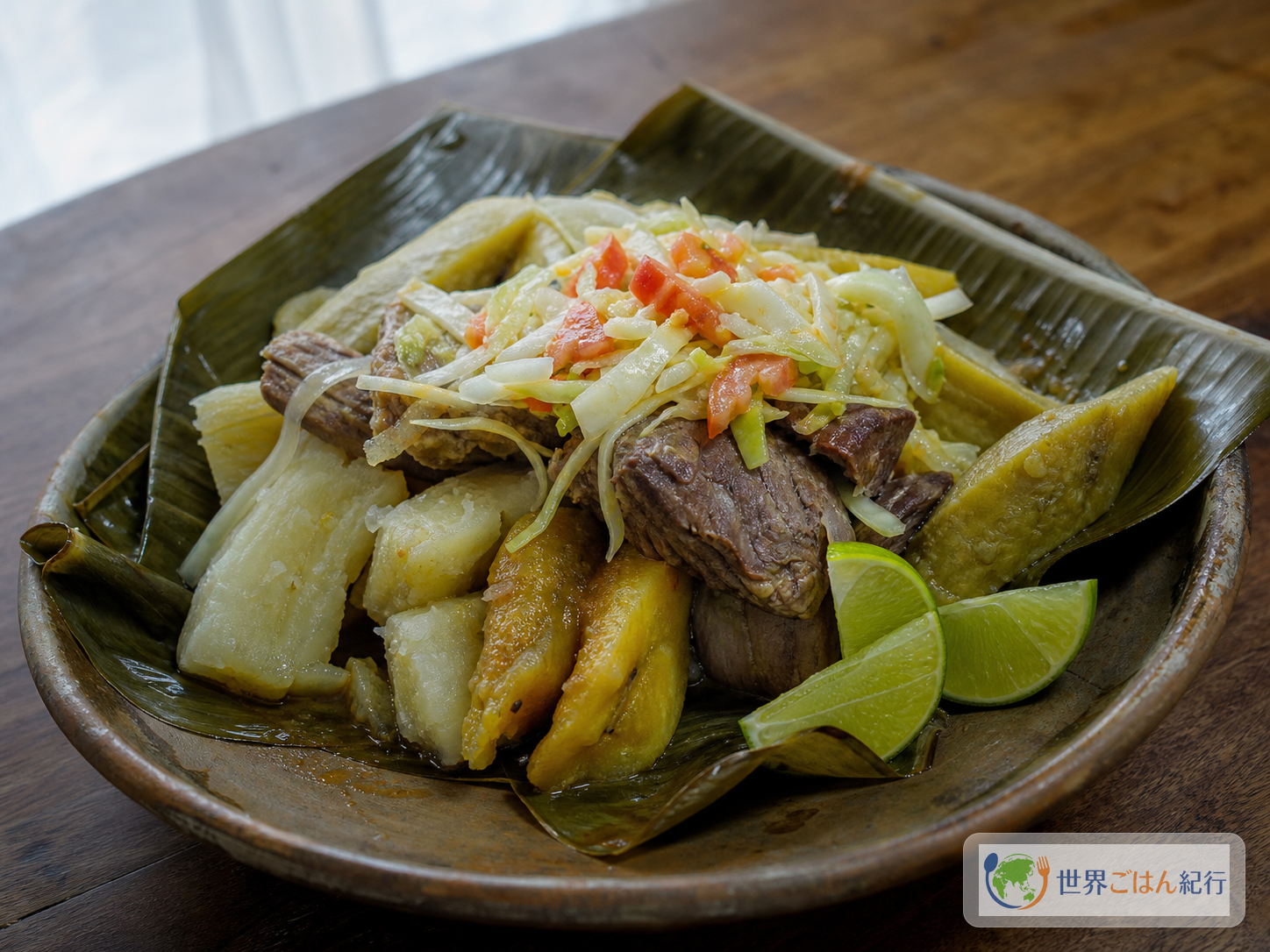
Among Nicaragua's other leaf dishes, Vaho layers beef, yuca, and green banana so the whole pot becomes one steamed dish. Nacatamal seals the filling into each parcel, so whoever opens one gets that combination exactly as it was wrapped. For another dish where corn dough holds a filling, El Salvador's Pupusas is an easy place to start.
Ingredients: Makes 6

Each parcel is large and swells slightly in the steamer, so prepare 12 or more leaves rather than exactly the number needed. Don't throw away torn leaves; lay them on the bottom of the steamer or use them for reinforcement.
With pork, rice, olives, and lard, this is a heavy dish, filling enough for breakfast in one parcel. No dairy is used, but commercial masa harina and stock ingredients differ by brand, so check the labels if you have an allergy.
Choosing Masa, Banana Leaves, and Seasonings for Nacatamal
Masa harina and cornmeal
Traditional dough is made from masa, corn that has been alkali-treated and boiled, not dry flour mixed with water. One method soaks corn in sour water, washes it, and leaves it for three days, changing the water and grinding it every day. At home it's hard to control temperature and hygiene, keep the grind even, and make enough for all the parcels. So this recipe kneads masa harina for tamales (alkali-treated corn that's been dried and ground) with chicken stock and heats it in a pot first. Setting the thickness this way, instead of steaming raw flour, keeps the dough from running inside the leaf.
If you can't get masa harina, fine cornmeal works. Swapped in at the same amount, though, it tends to leave grains and crumbles once it cools. Start with 14 oz (400 g) cornmeal mixed with 1 oz (30 g) cornstarch, add stock a little at a time, and aim for a polenta softer than an earlobe. It still won't match the aroma of masa harina or release from the leaf as cleanly. For a first batch closer to the real dough, pick a flour labeled both masa harina and tamales.
Banana leaves
Wash frozen banana leaves under running water and pass them briefly over heat so they don't crack at the folds. Parchment paper wrapped in aluminum foil holds in moisture as a substitute, but you lose the green aroma and the look of the leaf when it opens. To keep shopping simple, buy the pork and potatoes nearby and get only the leaves and masa harina from an import grocery or online.
Sourness and annatto
The bitter orange used in Nicaragua can be approximated by splitting the sourness among orange, lime, and rice vinegar. Orange alone is too sweet and lime alone too sharp, and a little vinegar takes it to the point where it cuts the pork fat. Meat, masa, and leaf carry the flavor. Olives and raisins can go up or down to taste.
Annatto seeds warmed over low heat in rice bran oil turn it red-orange and give it a mild, slightly earthy aroma that carries into the pork. Without annatto, 1 tsp paprika powder with rice bran oil makes up the color, but the flavor is milder and that round aroma fades when you open the parcel. Turmeric has strong color but pulls the aroma somewhere else, so paprika suits the filling better. Annatto is worth buying if you'll use it in other dishes, like Mexico's cochinita pibil or Central American stews. If you're only coloring one batch, try paprika first and the seeds next time.
Method | Prepare Dough, Filling, and Leaves Separately, Then Wrap
A wrapped dish can't be put back once everything has gone into the pot. If the dough is loose it runs inside the leaf, too much rice leaves a hard core at the center, and a leaf that stays dry lets steam escape from the folds. At each step, confirm "the state to move on" before wrapping.
Common Nacatamal Problems and Fixes
A finished nacatamal has dough soft enough to take a mark from a spoon, rice that has swelled, and pork cooked through to the center and tender enough to shred. Judge it by parcel size and the meat's internal temperature, not the clock alone.
Uneven cooking usually comes from crowding. The more parcels in the pot, the less heat reaches the center. Pack six into an ordinary saucepan and the outer ones finish first while the pork and rice in the middle lag behind. A steamer with a steaming surface of about 11 inches (28 cm), where the parcels sit side by side without stacking, leaves room for the steam to move. If you make six at once, or also steam leaf dishes and dim sum, a large 11 inches (28 cm) stainless steamer makes sense. If it's a once-a-year dish, a deep pot with a steaming rack, cooked in two rounds, works fine. Check the height with the lid closed, and make sure there's enough depth to keep water below the rack.
| Symptom | Likely cause | How to bring it back |
|---|---|---|
| Dough runs out of the leaf | Too much stock, or the masa wasn't kneaded long enough in the pot | Steam 15 more minutes without opening the parcel, and reduce the stock by 1 tbsp at a time from the next parcels |
| Rice has a hard core | Soaked too little, too much rice, or the parcel is large | Keep steam going and add 15 minutes at a time. Next time keep the soak at 1 hour |
| Pork is tough | Meat cubes are large, steam is weak, or time was short | Add boiling water and extend 15 to 30 minutes over medium heat. Also check the meat's internal temperature |
| Leaves scorched and bitter | Pot ran out of water, or the heat was too strong | Move only the unscorched parcels to another pot, add boiling water, and use medium-low heat |
| Flavor is blurred | Sourness and salt were spread across dough and filling | Add curtido and lime at the table. Go easy on salt over the opened parcel |
| Dough won't release from the leaf | Flour is coarse, rest was short, or the leaves are dry | Rest 10 minutes before opening. Next time use masa harina and soften the leaves |
A parcel that has taken in water can't be fully saved. Even with a fresh outer leaf and more steaming, a watery streak can stay at the edge of the dough. In that case, lift the meat and potatoes out and eat them with curtido rather than trying to force the dough back into shape. Tough meat, on the other hand, just needs more time.
Nacatamal Variations and Storage
Chicken
Replace the pork shoulder with the same amount of chicken thighs and steaming drops to around 2 hours 15 minutes. Cut the chicken a little larger than 1 inches (3 cm) and confirm an internal temperature of 165°F (74°C) or higher. If the dough feels dry without the pork fat, add just 10 g lard or 2 tbsp stock. Chicken breast dries out over a long steam, so thighs are the safer choice for a first batch.
Meatless pindongo
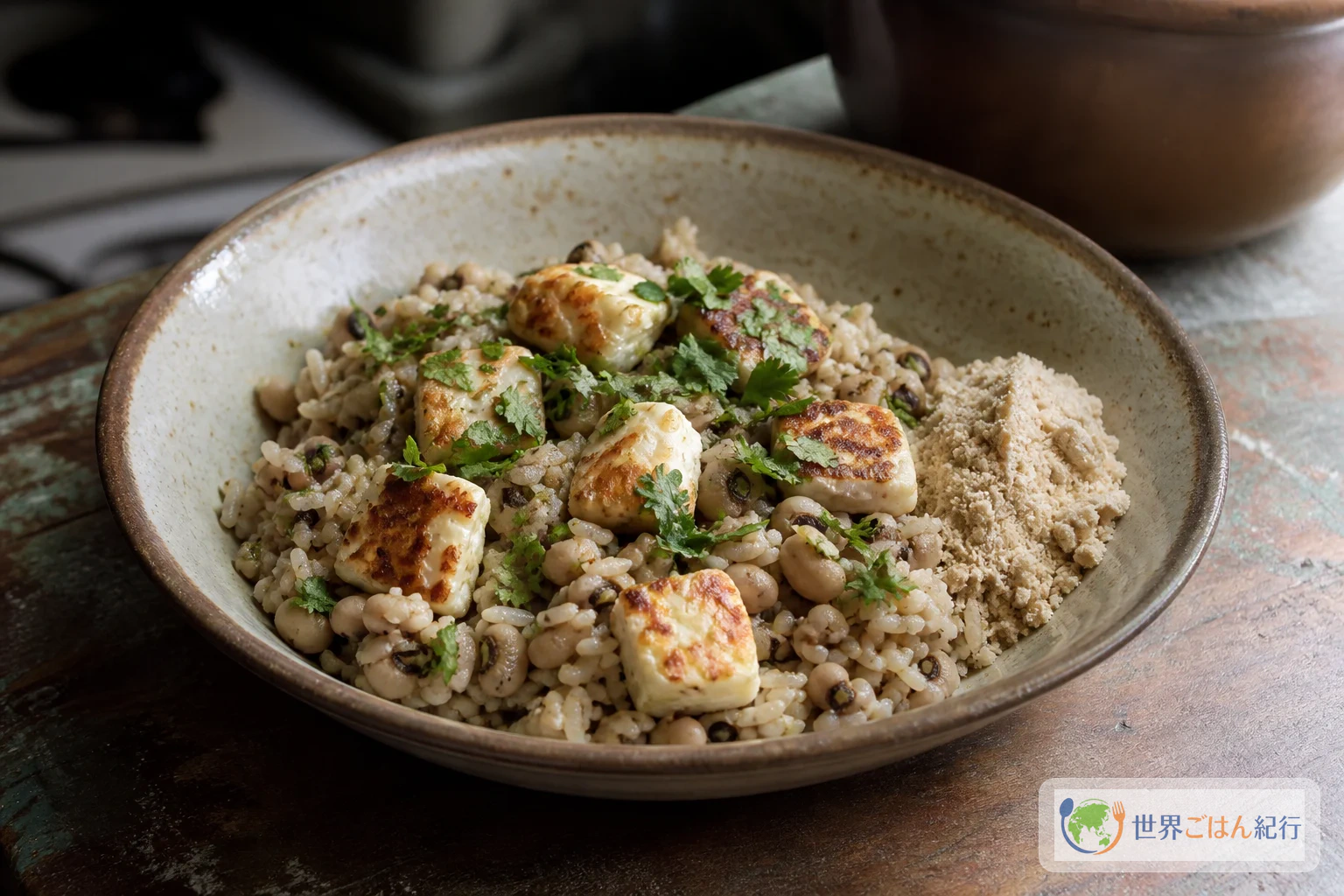
Leave out the meat but keep the potato, olives, raisins, and mint, and you get something close to a meatless nacatamal pindongo. Beans or cheese would move it toward a different home dish, so start this way to taste the dough and the aromatics. Without the meat juices, add 3.5 tbsp (50 ml) more stock and make the dough 7 oz (200 g) per parcel.
Potato dough
The potato nacatamal from around Matagalpa has a different texture from corn masa. Swapping 1.25 lb (600 g) steamed, mashed potato for 1 lb (450 g) masa leaves it short on moisture, so adjust the stock starting from ½ cup (150 ml) and hold the parcel together with 20 g cornstarch. Treat it as a dough of its own.
Coconut, inspired by the coast
Taking a cue from the coconut milk, yuca, and banana of Caribbean-side Nicaraguan cooking, replace ½ cup (100 ml) of the chicken stock with unsweetened coconut milk and 3.5 oz (100 g) of the potato with yuca. You get a sweeter aroma and a stickier texture. Keep the pork, annatto, and mint the same and it stays tied to the original.
Small nacatamalitos
Cut it down to 3.5 oz (100 g) dough and 1.75 oz (50 g) pork per parcel and steam for 1 hour 45 minutes for a size that's easy to pass around as an appetizer or at a gathering. In a smaller parcel the salty filling comes forward over the leaf's aroma, so cut the olives to one per parcel and serve plenty of curtido. It's no longer a big breakfast parcel, but untying the twine and opening the leaf is just as fun.
Storage and reheating
Don't leave steamed parcels at room temperature for long. Let any you won't eat cool in the leaf, then move them to a shallow container so they chill quickly. Refrigerate and finish within about 2 days. Cooked meat generally keeps 3 to 4 days in the fridge, but a parcel with rice and leaves depends on your utensils and how fast it cools, so stay at the short end. For longer storage, wrap each parcel in plastic wrap, put them in a freezer bag, and use within about 1 month.
Reheat in a steamer over medium heat: 15 to 20 minutes if refrigerated, or 25 to 30 minutes if frozen and thawed overnight in the refrigerator. A microwave alone tends to harden the outer dough while the center stays cold. If you use one, remove the leaf, set the parcel on a heatproof plate, cover with damp paper towels and a lid, heat at 600 W for 2 minutes, then turn it over and heat 1 minute more on each side. Make sure the center of the pork reaches 167°F (75°C) or higher, and don't refreeze a reheated parcel. Curtido gives off water, so keep it in a separate container and eat it the same day if you can.
FAQ
Q1. Can I put the rice in cooked?
You can, but cooked rice soaks up less of the meat juices and leaf aroma inside the parcel. Nicaraguan-style recipes often wrap soaked dry rice instead. Soak a small amount for 1 hour, drain it, and put 10 g in each parcel, and you'll have distinct grains after steaming. More rice slows the heat getting to the center, so don't change the amount at first.
Q2. I've also seen a recipe that steams for 30 minutes. Why does this take 3 hours?
Small parcels, or recipes where the filling is cooked first, can be done in 30 minutes. This recipe makes six large parcels with big pieces of pork and raw rice steamed inside. Time depends on the pot, the parcel, and the heat, so check that the pork's center has held 167°F (75°C) for 1 minute or more, the rice has swelled, and the dough is set.
Q3. Can I replace the pork with beef?
You can, but you'll lose some of the round, fatty richness pork gives a standard nacatamal. Cut beef chuck into 1 inches (3 cm) cubes, season it the same way, and add 15 to 30 minutes of steaming. Tenderness depends on the cut, so for a first batch, stick with pork shoulder while you get the wrapping and the dough's moisture down.