The Story of the Dish: Two Dancing in One Pot
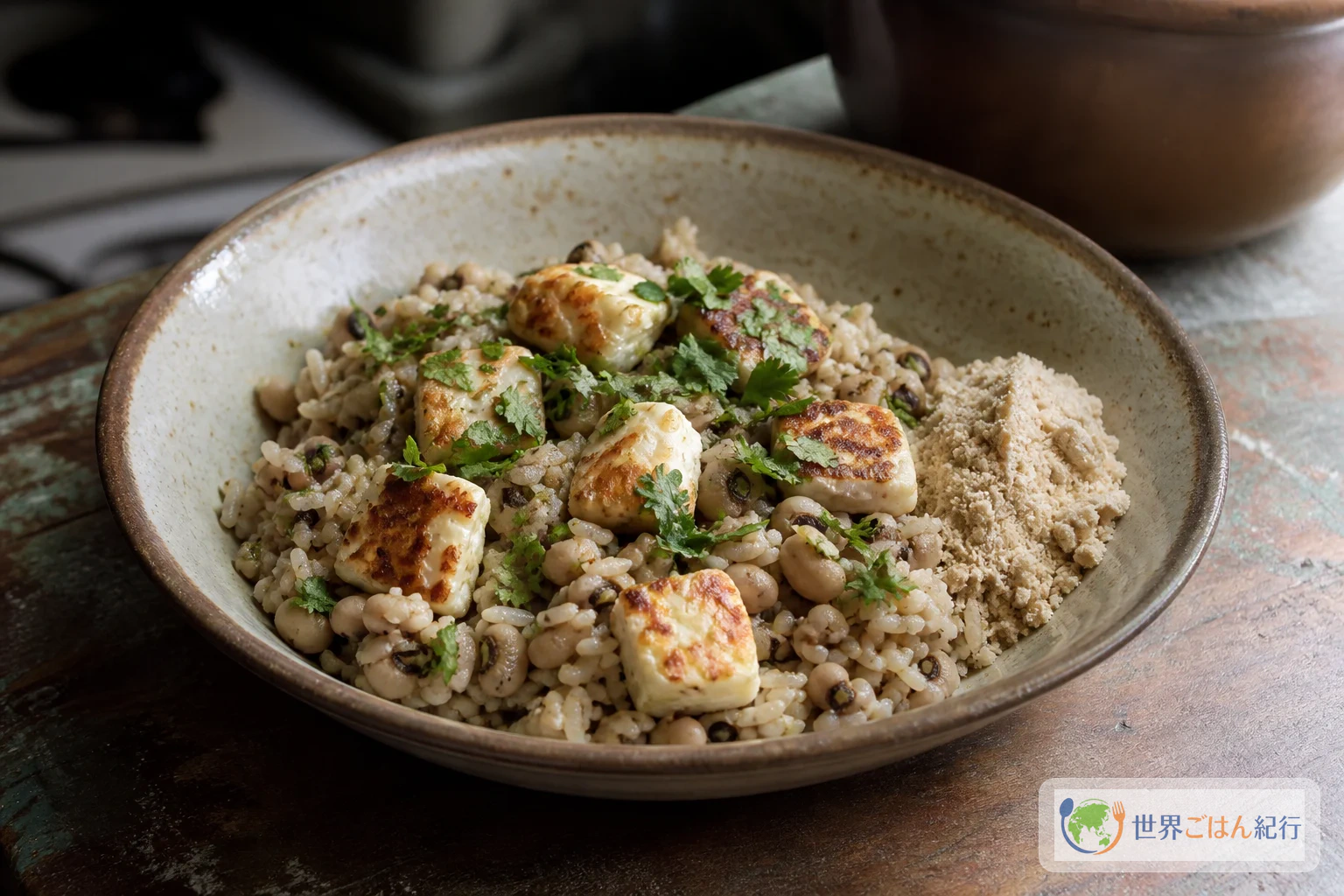
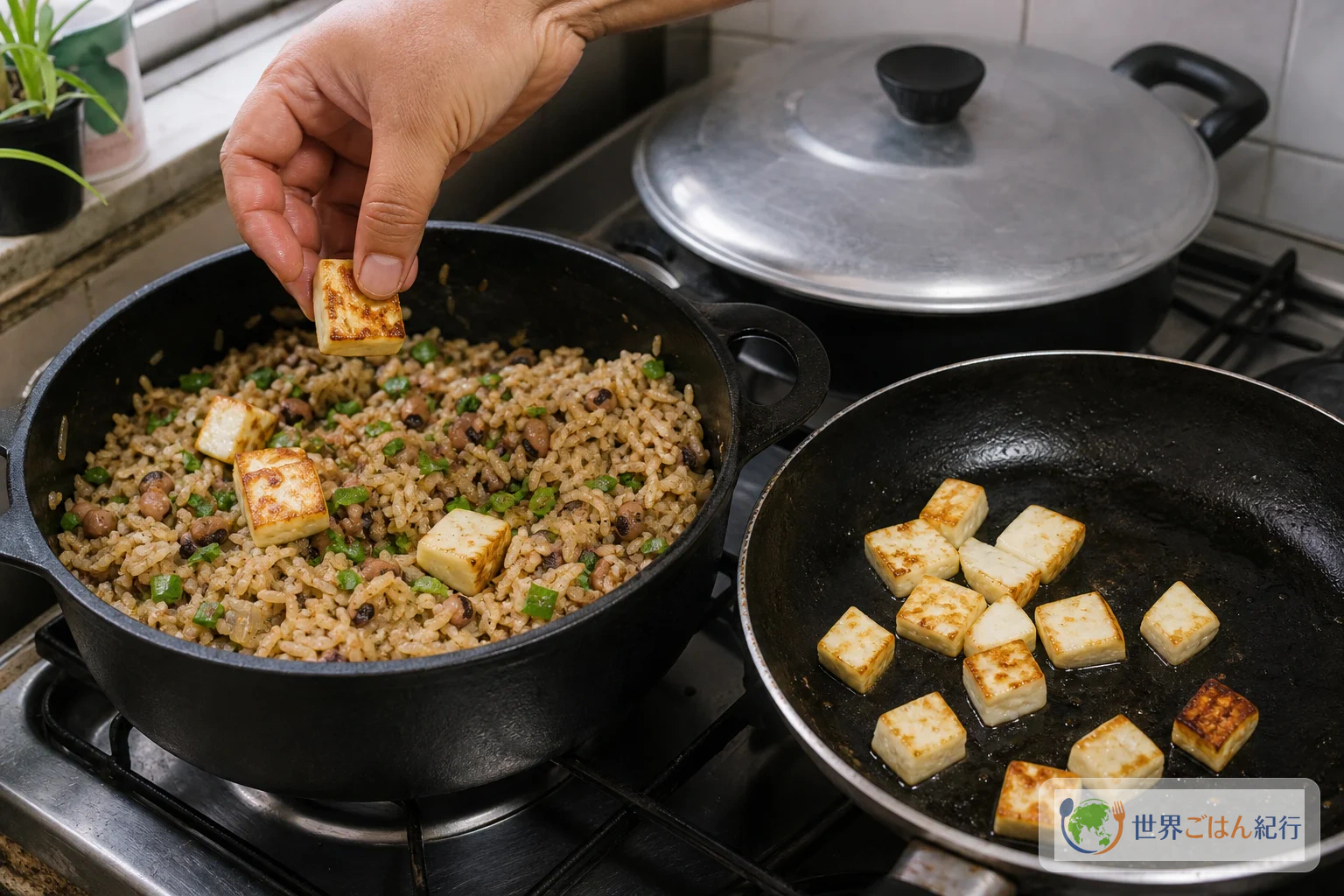
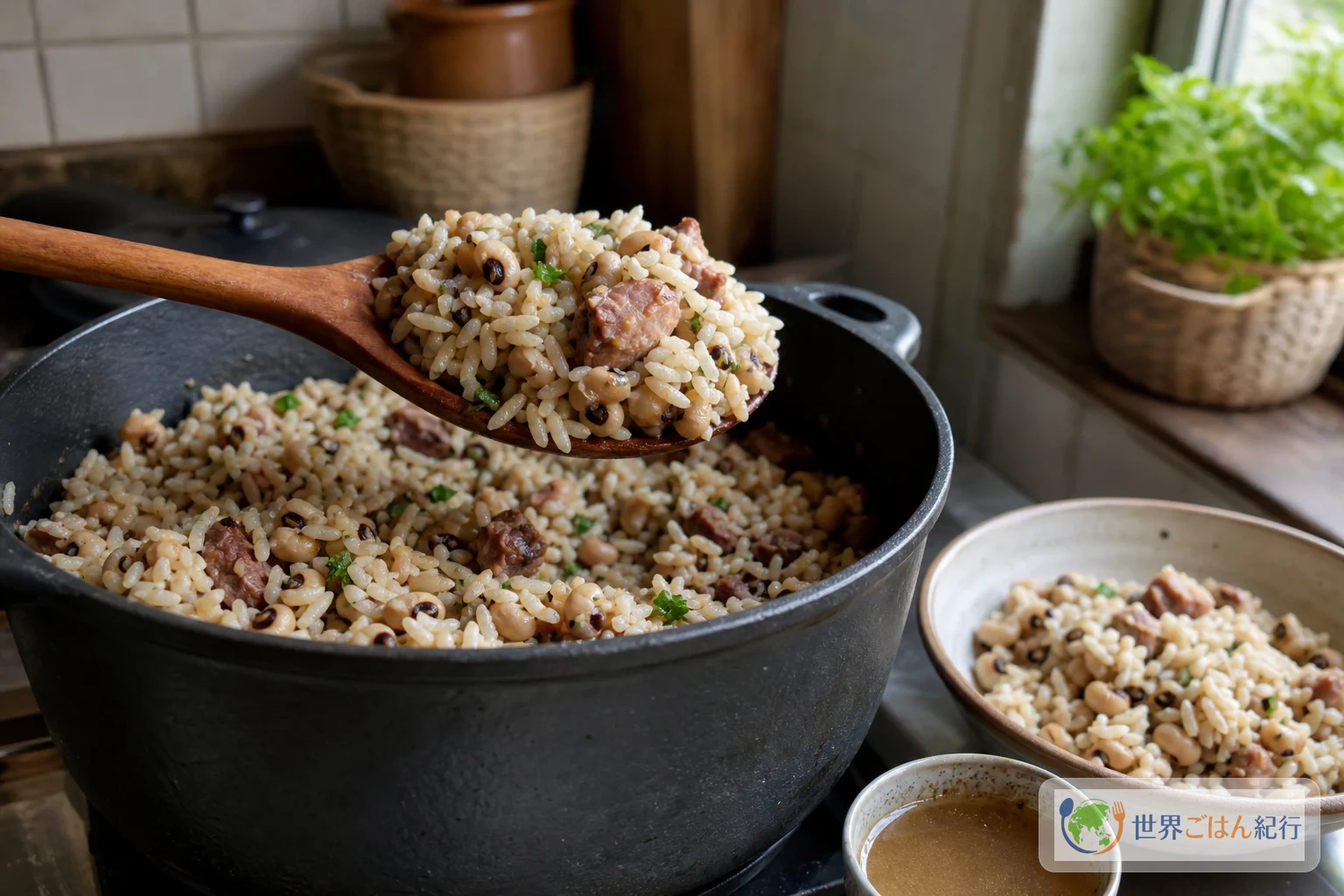
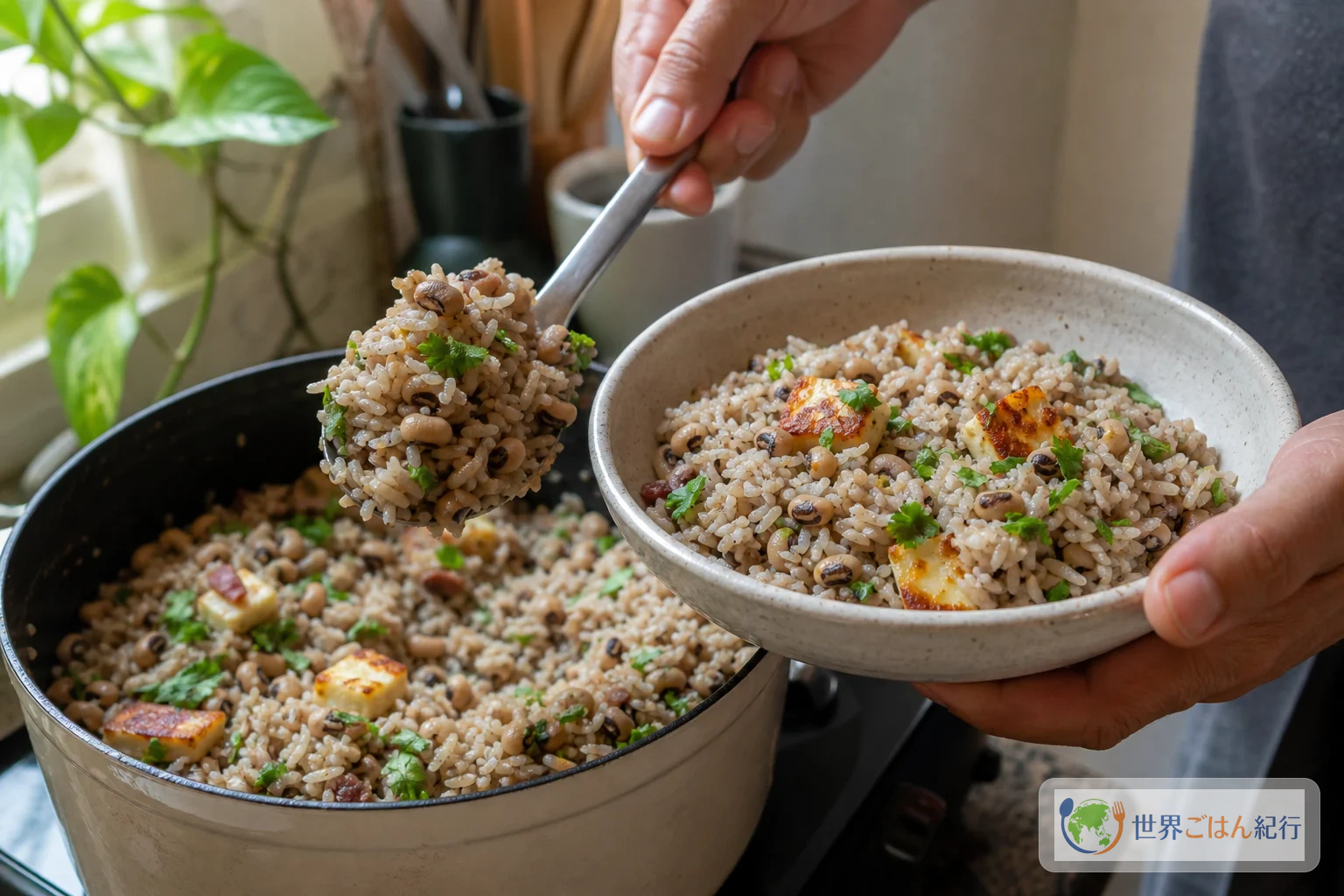
Picture it. In the kitchen at dusk, the sweet smell of beans drifts from a pot with its lid slightly open. Put in a wooden spatula and black-eyed peas tumble out between the grains of rice, while in another skillet the corners of white cheese sizzle. It feels like a feast, yet the center of the ingredients is rice and beans.
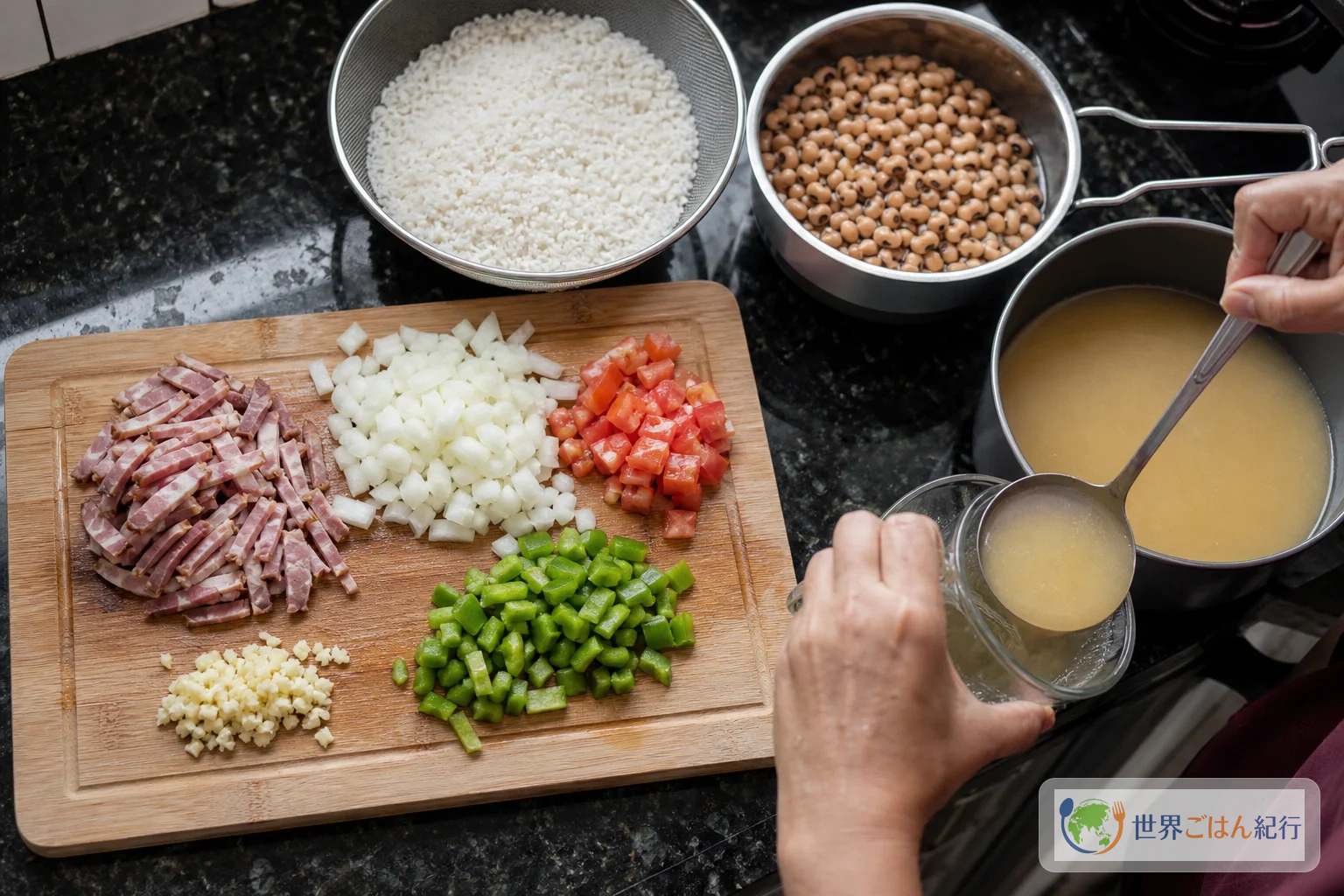
Baião de dois is a rice-and-bean dish tied to the tables of northeastern Brazil, especially the state of Ceará. Research materials describe the Ceará basic form as a dish combining rice, beans, oil, and aromatics in one pot, while explaining that there is a range in the kind of beans, the kind of rice, the meat, and the dairy. The ingredients listed in the review from the Federal University of Ceará alone include green beans, white beans, feijão-de-corda, fava beans, white rice, parboiled rice, dried meat, salted meat, bacon, linguiça, queijo coalho, and cream (nata).
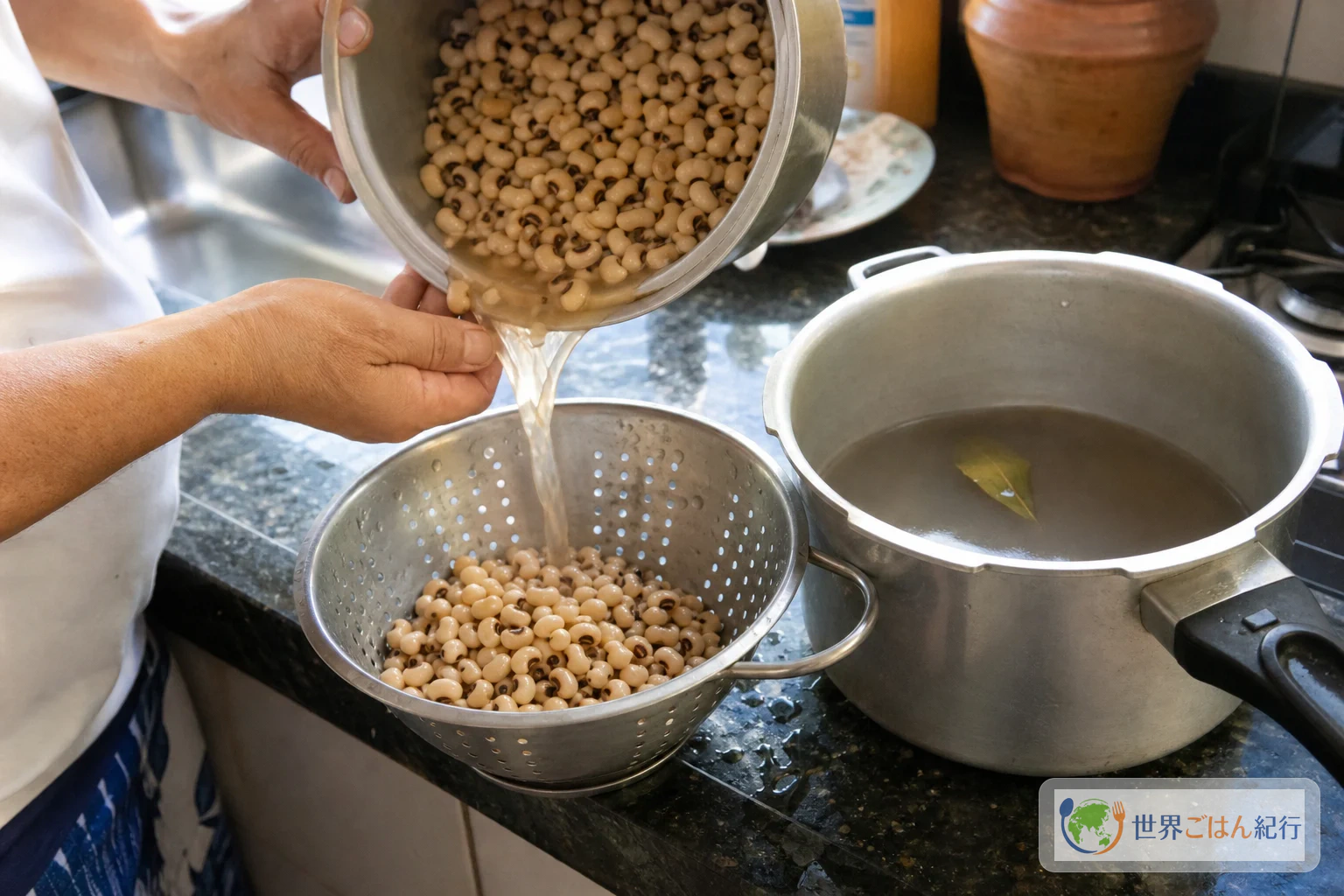
What trips people up in a kitchen outside Brazil is cooking the rice and beans for the same length of time from the start. If the beans stay hard, they are hard to eat even after the rice is done, and if you boil the beans first until they break down, the whole pot becomes heavy. Here, dried black-eyed peas are softened first, the cooking liquid is used for the rice, and the beans are joined in the second half. Just by splitting the steps a little, you can keep both the shape of the beans and the grains of rice.
The word baião in the dish's name is also the word for northeastern Brazilian music and dance. Brazil's research institution Fundação Joaquim Nabuco explains baião as a musical genre of the Northeast. Not every source asserts that the dish name was born directly from the music, but thinking of it as a dish where rice and beans keep step in the same pot makes the feel of the name a little easier to grasp.
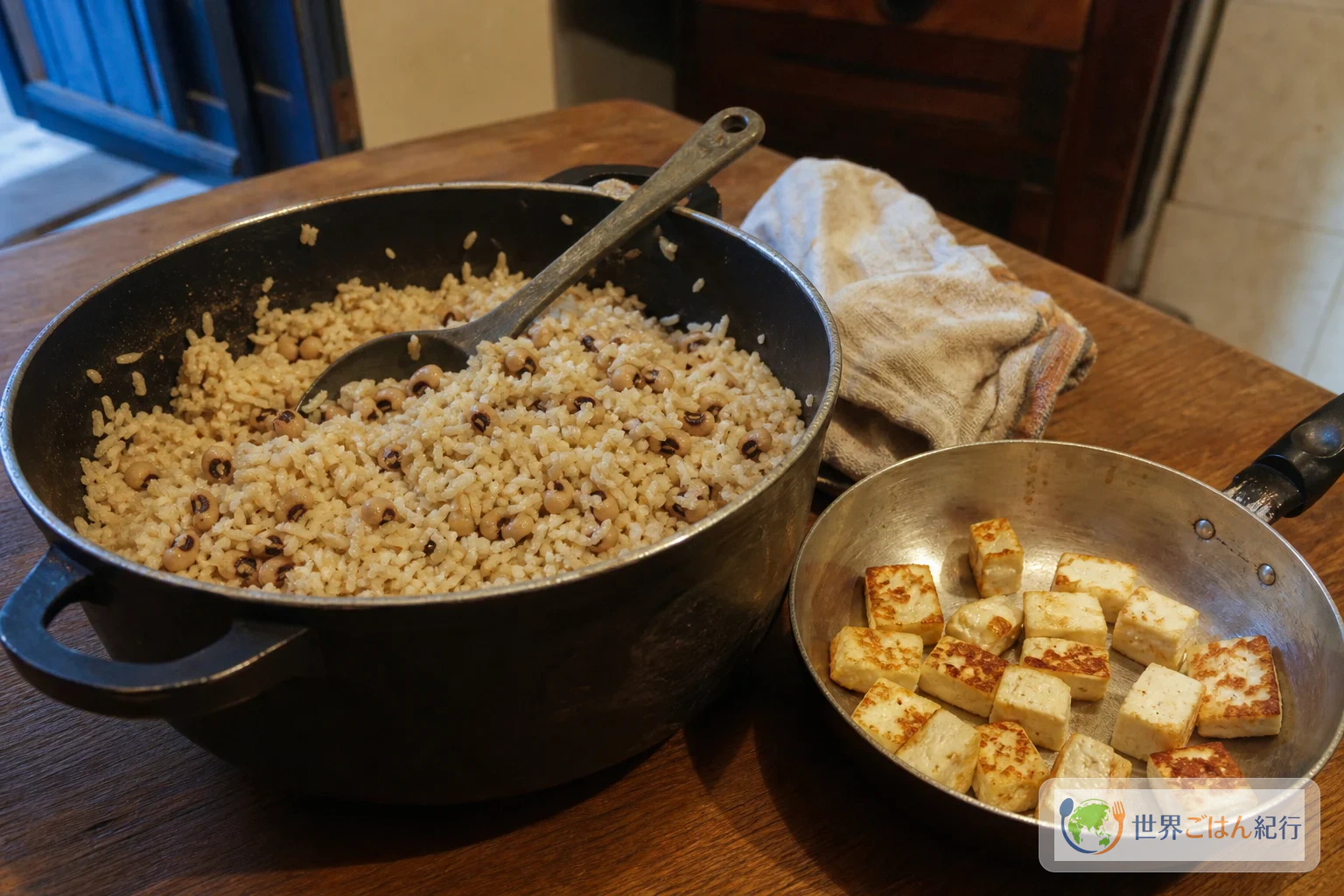
If you can get the feijão-de-corda or feijão-verde used in Brazil, that is best. Elsewhere, use dried black-eyed peas. The aroma of the beans and the texture of the skins change a little, but the flow of letting the rice absorb the broth and combining white cheese at the end is kept.
Four Axes of Flavor: Bean Broth, Rice Grains, Saltiness, Cheese
This dish is not the type that gets closer by adding more spices. The rounded flavor of the liquid the beans were cooked in, the moisture absorbed by the rice, the saltiness of meat and butter, and the cheese added at the end. If you get these four layers right, the direction of the plate holds even with black-eyed peas.
The finish differs between short-grain rice, which has some stickiness when cooked, and parboiled rice, whose grains separate easily. The UFC review also notes that white rice and agulhinha rice tend to develop viscosity and parboiled rice tends to keep its grains apart. For the first time, short-grain rice is fine. But do not stir the bottom of the pot too much. If the rice breaks, the thickness of the broth appears all at once.
Queijo coalho is a white cheese that in the Northeastern table is grilled or put into baião de dois. A Banco do Nordeste document also links queijo coalho with Northeastern dishes and food habits and presents it as an ingredient of baião de dois. The relevant passage of that document describes the Ceará baião as a mixed dish of green beans, rice, and aromatics.
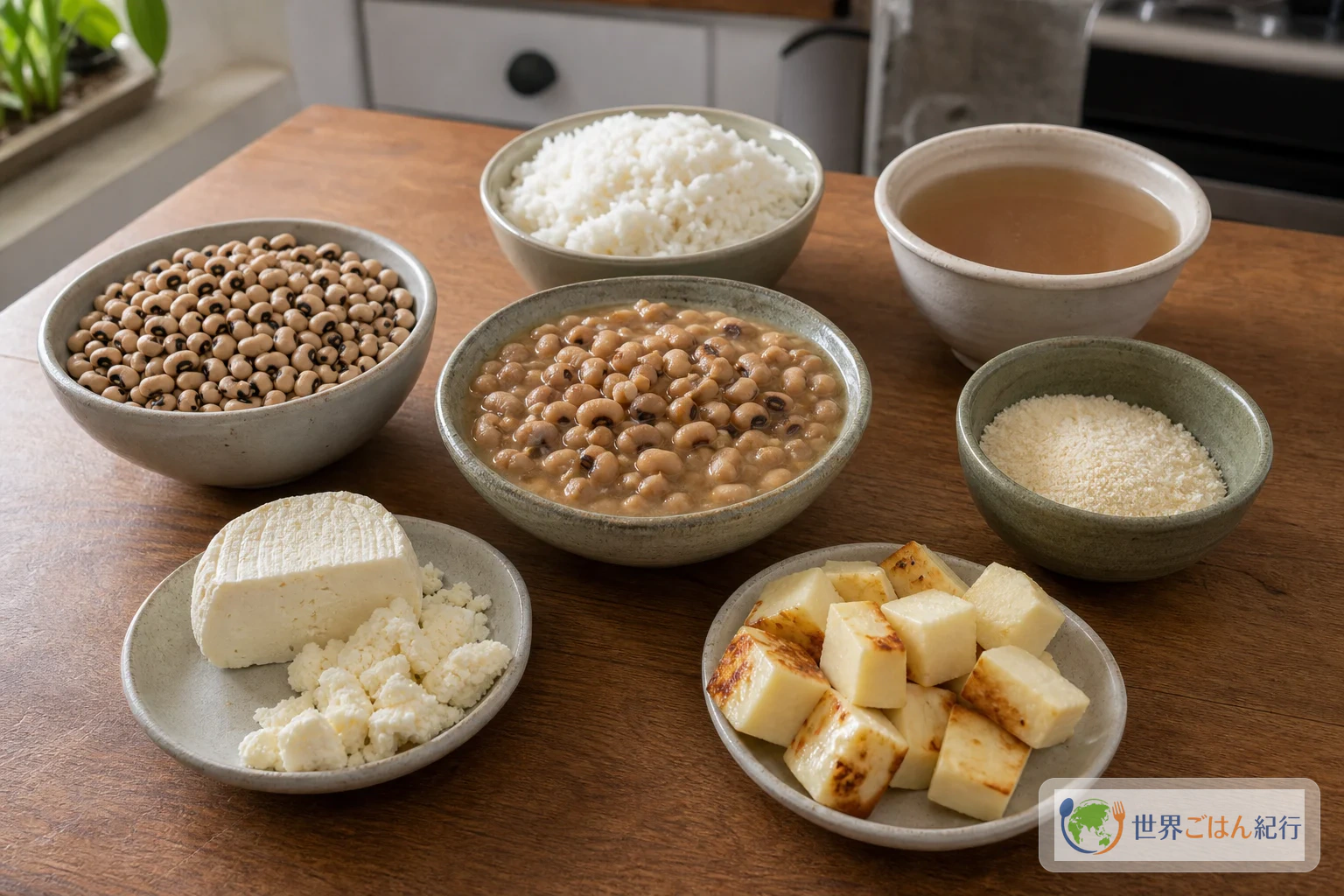
You do not need to hunt for exactly the same cheese elsewhere. Queijo coalho if you can find it; halloumi if you prioritize browning; a white fresh cheese if you crumble it into the pot. The texture changes with the cheese you choose.
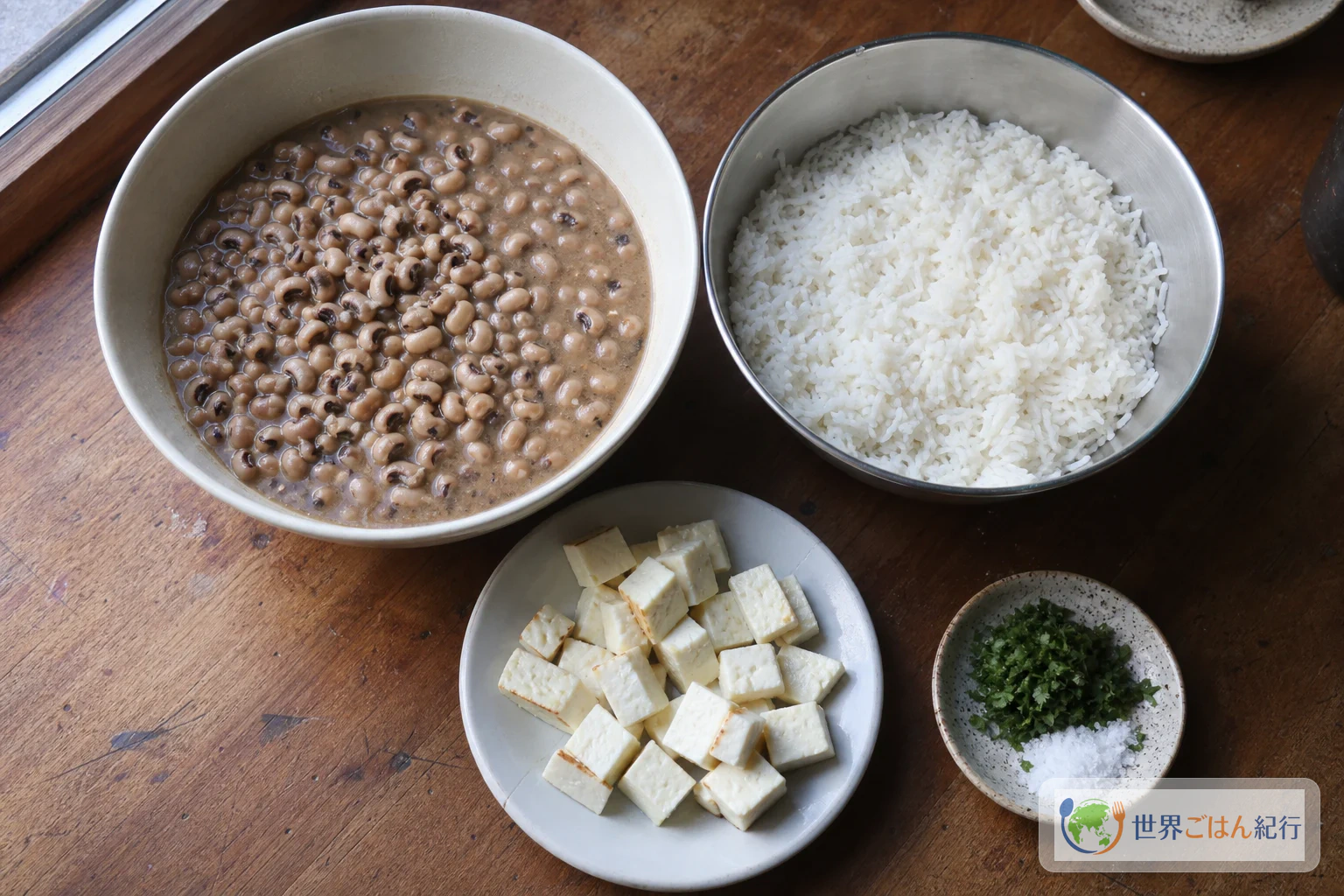
Ingredients (serves 4)
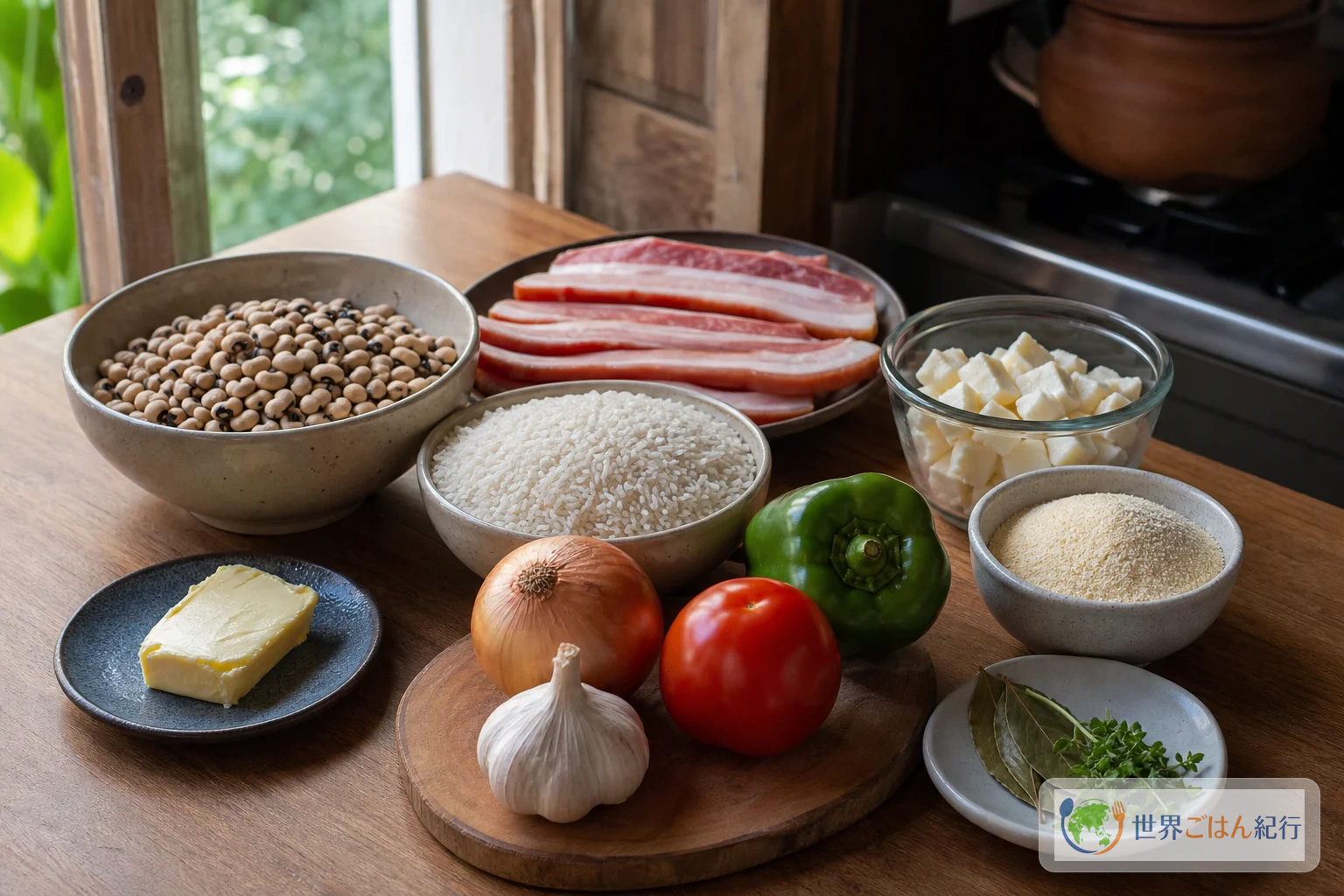
If you start from dried beans, wash them and soak them in the refrigerator for 6–8 hours. Do not leave them soaking in a hot room. If using canned beans, discard the liquid, rinse lightly under water, and combine water with an unsalted stock in place of the cooking liquid.
Because bacon and cheese are used, this contains pork and dairy. Depending on the product, wheat or soy may also be included, so check the labels on processed foods. If you avoid dairy, omit the cheese and replace the bacon with a plant-based ingredient. Rice and beans alone still make the pot hang together.
Narrow the Shopping to Three Things
For black-eyed peas, choose ones whose skins do not tear easily and that keep their shape when cooked. If you start with canned beans, there is no need to buy dried ones. Dried beans are worth buying only for someone who plans to make bean dishes several times and who can soak them the day before.
Queijo coalho is hard to find at an ordinary supermarket in many places. The white fresh cheese sold in its place is not queijo coalho itself. It is for those who want to try a white dairy product mixed into the pot. If you want to grill it and keep its shape, look separately for halloumi or queijo coalho, checking the product name and net weight. If you are making it just once, combining small amounts of feta and mozzarella you already have reduces extra purchases.
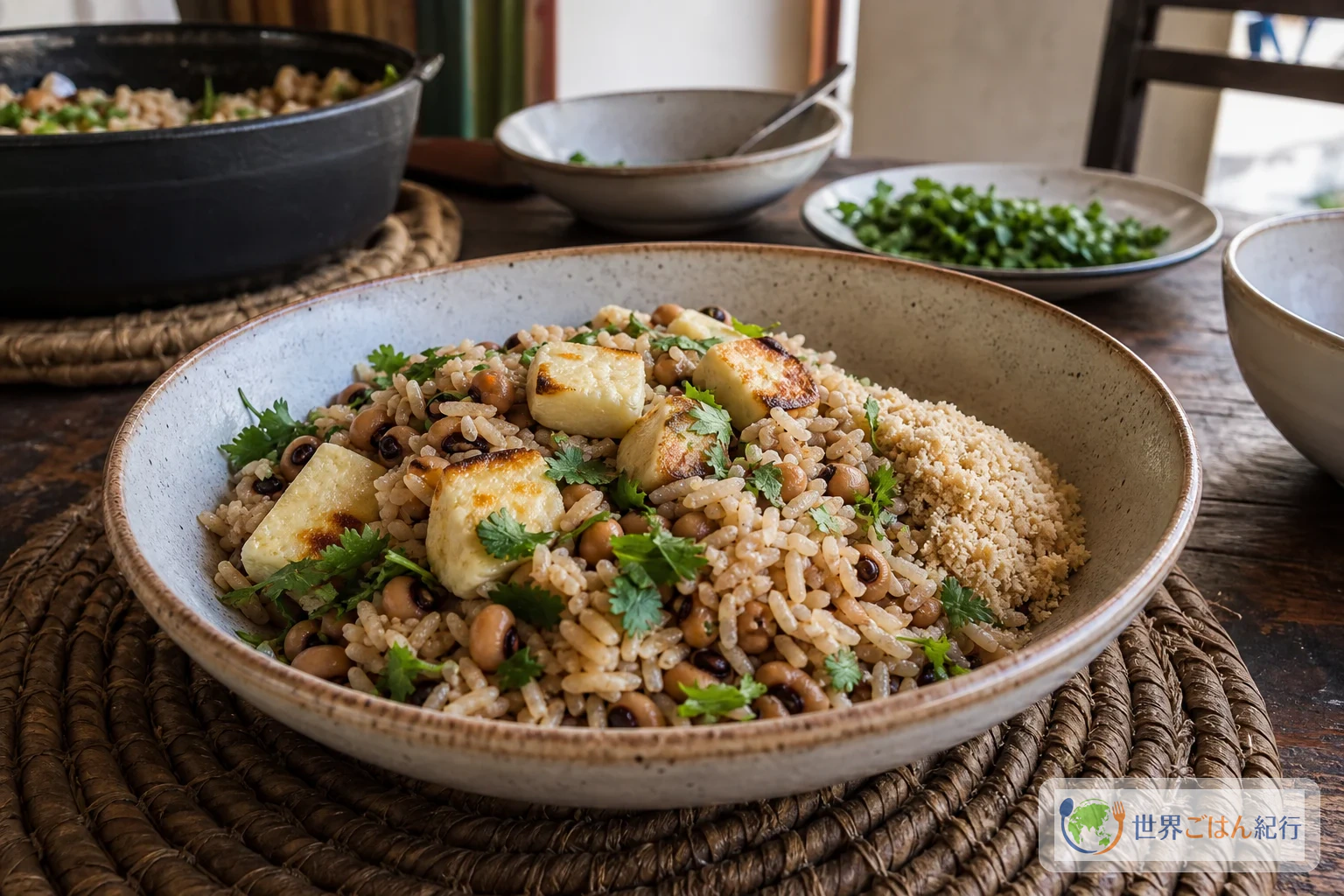
Farinha is a fine flour that sits beside the pot to catch the juices of meat and beans. It is not essential to the baião itself, but adding the toastiness of cassava gives a dry texture to a plate of only rice and beans. You will not be troubled if you skip it the first time. If you plan to keep cooking Brazilian food, it can also be reused for farofa (in Japanese).
Method: Beans First, Rice Later
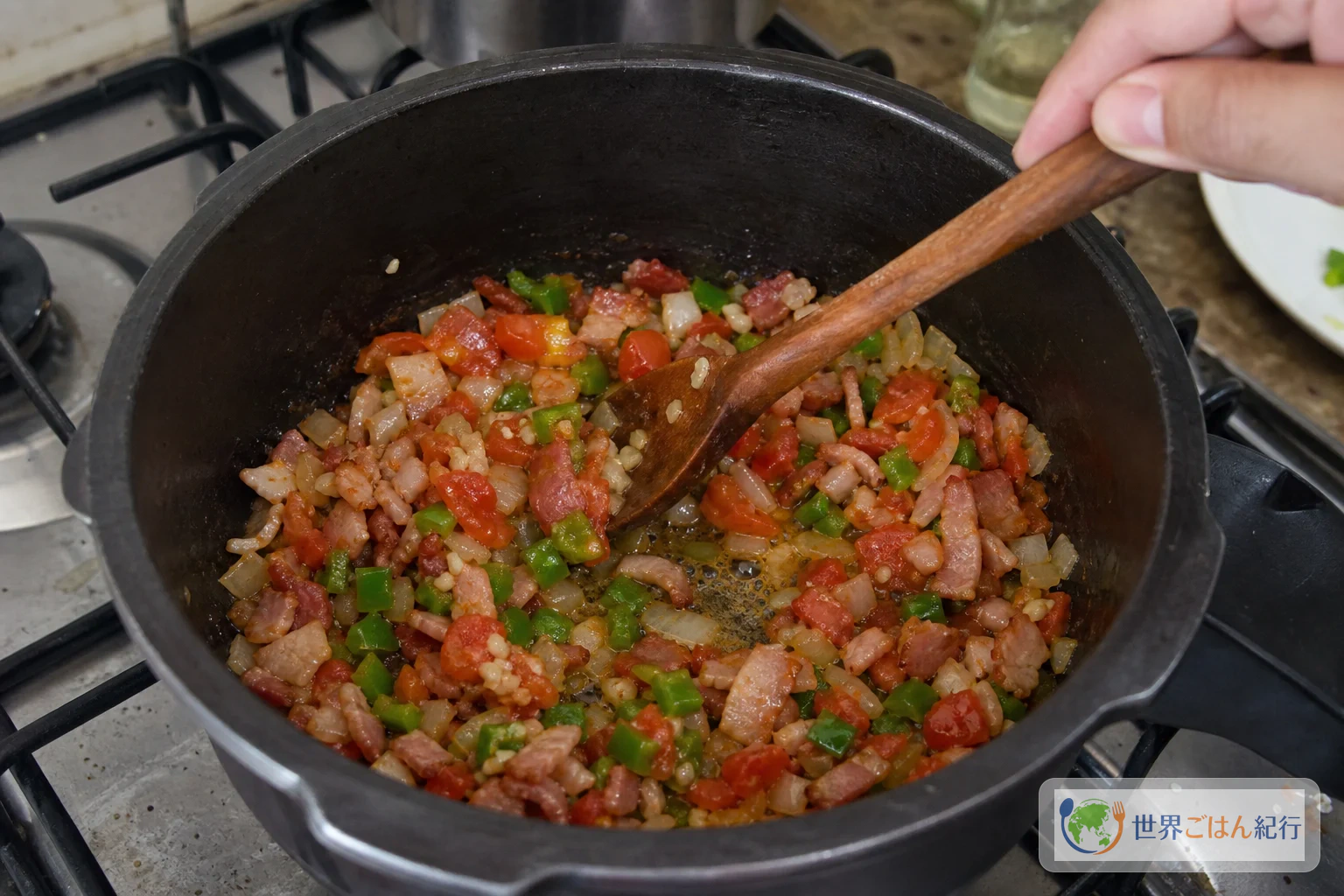
For baião de dois, you do not need to completely separate the pot for cooking the beans, the pot for sautéing the aromatics, and the pot for cooking the rice. Use one heavy pot, and parboil only the beans first in a separate small pot. This division of labor is to protect the grains of rice.
Cooking Tips for Fixing Failures
If you move on with the centers of the beans still hard because they will cook with the rice, they will not recover to the end. At the parboiling stage, split one bean and check that no white chalkiness remains at the center. A slight splitting of the skins is no problem. With canned beans, which break down easily, delay adding them to the cooking pot until 8 minutes remain.
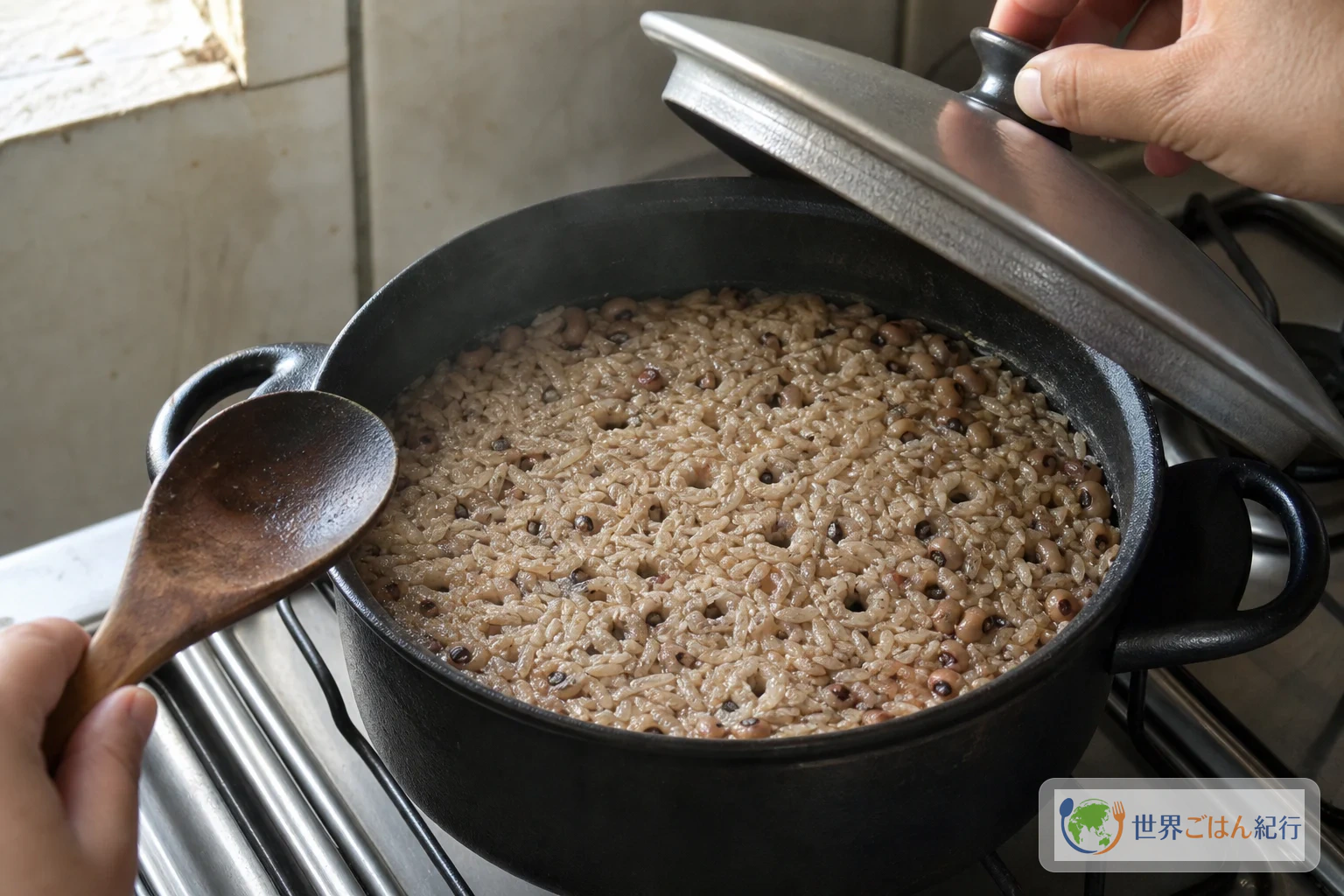
If you stir many times right after cooking, the rice breaks and stickiness increases. First take off the lid and leave it 2 minutes, then turn it once from the bottom with a wooden spatula. If moisture is still visible, give it 1–2 minutes over medium-low heat. If it has dried too much, add hot broth 2 tbsp at a time and turn it from the bottom without pressing.
The saltiness of bacon, bean broth, and cheese differs by product. Adding no salt when parboiling the beans, 2 g when cooking the rice, and the remaining 2 g after tasting at the end makes it easier to adjust. Adding salt after grilling the cheese tends to make only the surface salty.
On days you can use queijo coalho, grill cubes of it for toastiness. Halloumi browns easily and is rather salty. White fresh cheese is not grilled, and mixing it in after cooking lets you choose how it breaks up. None gives the same taste, but the pairing of beans and rice is kept.
How Far to Approximate in Your Own Kitchen
The UFC review that introduces the Ceará basic form explains that ingredients change at the coastal, sertão, and mountain tables. Whether to add meat, whether to add dairy, and which bean to use are differences of region and household, not failures of the dish.
Elsewhere, an easy order is to make beans and rice the stars first and add meat and cheese afterward. If you can get salted beef or carne de sol, desalt it, shred it fine, and use it in place of bacon. On days you cannot, there is no need to force it. Omit the bacon too and cook with only butter and aromatics, and the sweetness of the beans comes forward.
Bell pepper and tomato are ingredients that add aroma and acidity. To reproduce a Brazilian plate exactly, you don't have to gather all of them. Not throwing away the bean broth, not overcooking the rice, and using the final cheese to adjust the salt. Keep these three, and the flavor comes together even with the ingredients of your own kitchen.
Variations: Within the Range That Doesn't Change the Pot's Character
Version without meat
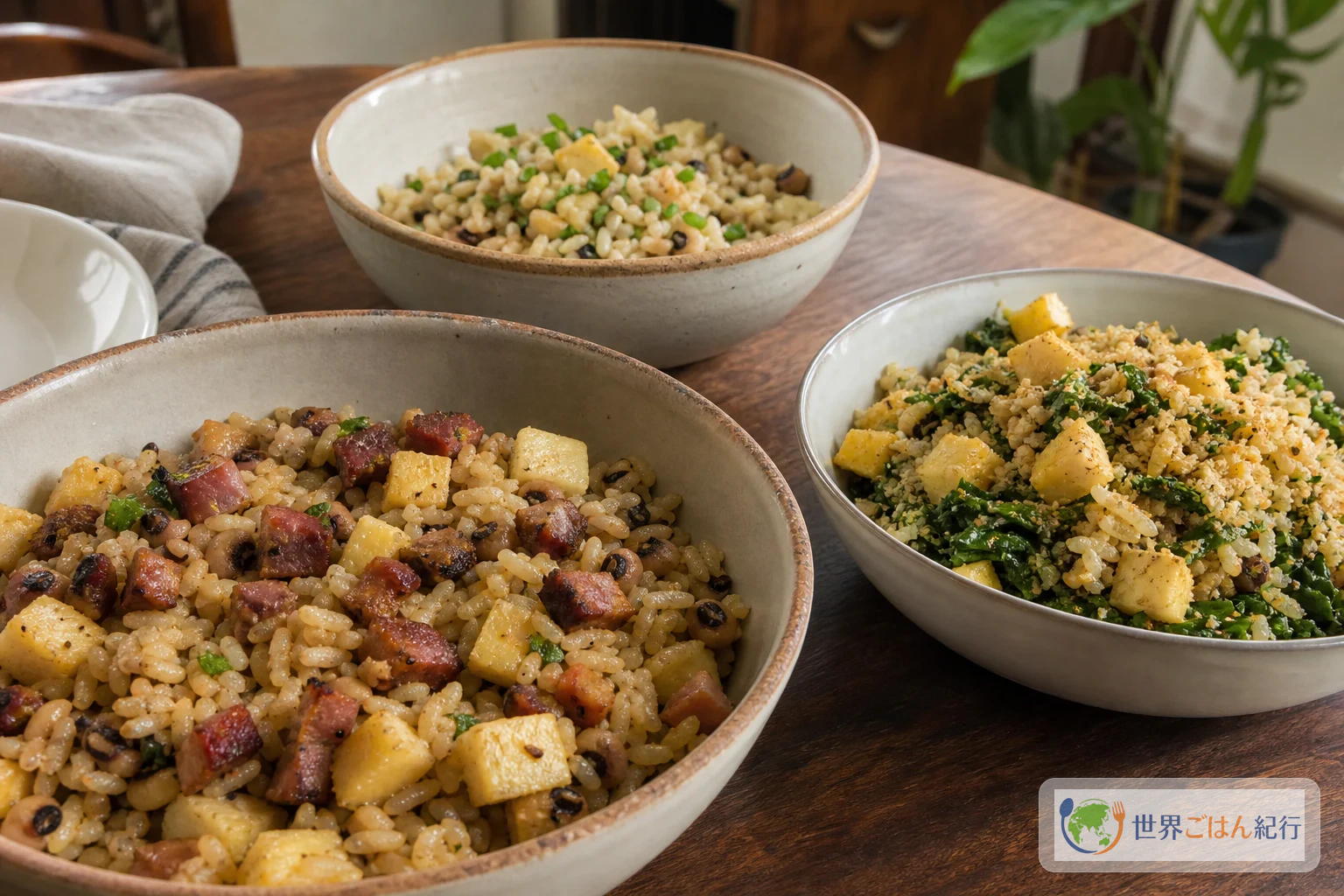
Remove the bacon and increase the butter to 40 g. Sauté the onion for 5 minutes over medium-low heat to bring out sweetness, and add the tomato 2 minutes later. If the bean broth feels thin, add black pepper and cilantro before salt. It suits a first attempt when you want to check the aroma of the beans and rice.
Version with dried meat
If you can get salted beef or dried beef, shred 150 g finely, desalt it, wipe off the moisture, and sauté it at the same timing as the bacon. Since the saltiness of the meat is hard to read, use half the salt when cooking the rice and adjust at the end.
Version with linguiça
Cut 120 g linguiça or a thick sausage into 5 mm widths. Put it in the first pot in place of the bacon and sauté over medium heat for 4 minutes until the fat comes out. Because saltiness and garlic strength differ by product, omitting the cumin may bring it together better.
Version with greens
At the finish, add 80 g shredded kale, garland chrysanthemum, or spinach leaves. Mix after turning off the heat and cover for 3 minutes, and they wilt in the residual heat. Adding a lot of watery leaves loosens the rice, so wipe the leaves well after washing.
Version with farinha
Melt 10 g butter in a small skillet and toast 60 g cassava flour over low heat for 4–5 minutes. When the flour turns the color of kinako and a dry toasted aroma rises, turn off the heat. Only 0.5 g salt. Do not mix it into the pot; set it at the edge of the plate so each person adds a little at a time.
Storage and Reheating
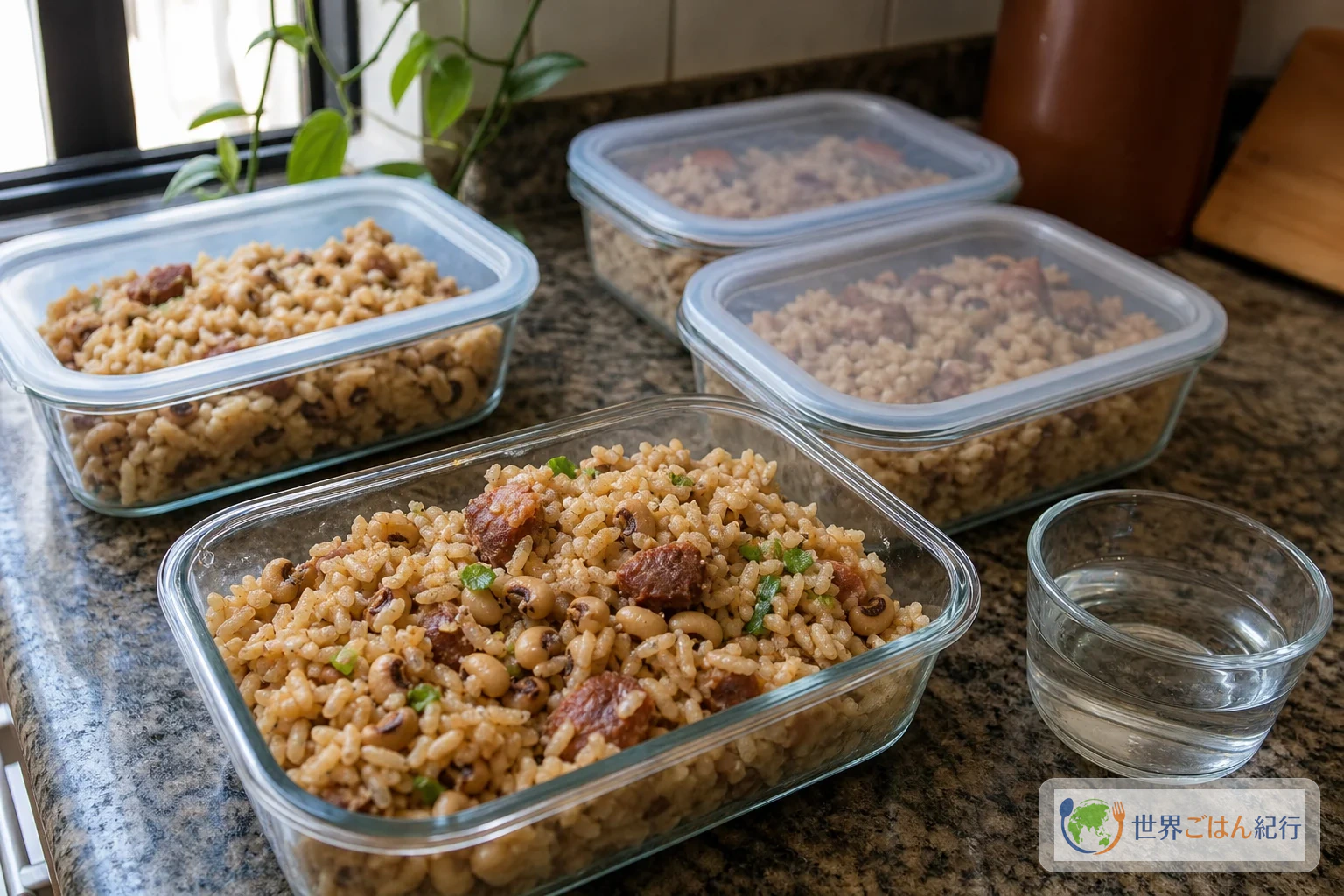
Do not leave rice-and-bean dishes at room temperature in the pot. Japan's Ministry of Health, Labour and Welfare explains that Bacillus cereus can cause illness from grain dishes such as fried rice, and that after cooking they should not be left long at room temperature but divided into portions and quickly refrigerated. Check the Ministry's explanation, and after serving what you will eat, move the rest to shallow storage containers.
Rather than leaving it a long time to cool, make the container shallow to let the steam out and refrigerate within 2 hours as a guide. Plan to finish refrigerated portions in about 2 days; if freezing, wrap one serving at a time before mixing in the cheese, which makes the texture less likely to break down after reheating.
For refrigerated portions, move to a heatproof container, add 1 tbsp water or bean broth, cover loosely with plastic wrap, and heat in the microwave. At 600 W, 2 minutes for one serving, then stir and add 30 seconds at a time, checking that it is hot at the center. If reheating in a pot, use low heat, and if the bottom seems about to scorch, add 1 tbsp water at a time.
For frozen portions, thaw in the refrigerator before heating, or cover frozen with a small amount of water. Dishes using white fresh cheese release water easily, so adding a little fresh cheese after reheating makes it easier to eat.
FAQ
Can I substitute adzuki or soybeans for black-eyed peas?
Adzuki beans have a strong sweetness and skin texture, and soybeans are large and change the character of the broth. For a close substitute, choose white kidney beans or cowpeas. However, if the bean changes, it finishes as a different dish. If you are using black-eyed peas just once, canned ones save the trouble of soaking.
What do I do if the rice turns sticky?
Take off the lid and cook off the moisture for 1–2 minutes over medium-low heat. Stirring hard from the bottom breaks the rice, so slide a wooden spatula in from the edge of the pot and turn it once with a lifting motion. If it is still soft, serve the grilled cheese and farinha on the side to create a contrast of texture.
I don't have queijo coalho. Can I make it without cheese?
Yes. Queijo coalho is an important element, but it is not an essential condition for the rice-and-bean body to work. Without cheese, cook with a little less salt and add aroma at the end with cilantro, green onion, and black pepper. Halloumi is easiest when you want to eat only grilled cheese, and white fresh cheese when you want to mix it into the pot.
Is it fine to cook the beans in a pressure cooker?
For soaked black-eyed peas, about 8–10 minutes after reaching pressure is the guide. It varies with how old the beans are and the model of the cooker, so after the pressure is released, split one bean and check for chalkiness in the center. If still hard, return to the pot and extend 5 minutes at a time. Cooking the rice too in a pressure cooker makes the water hard to adjust, so finishing the rice in a heavy pot is safer the first time.
Can I make it spicy?
Yes. Add 5 g green chili with the bell pepper, or serve a little chili sauce at the table. Making the whole pot hot from the start makes it hard for children and people who dislike heat. Using green onion instead of cilantro creates layers of aroma without adding heat.
Conclusion: Buy It, or Skip It?
Baião de dois is not a dish where you simply put rice and beans in the same pot. Soften the beans first and send their cooking liquid to the rice. Don't overcook the rice, and check the saltiness of the cheese at the end. Once you know this order, even with short-grain rice and black-eyed peas you can build layers of flavor in the pot.
For the first time, canned black-eyed peas and the bacon you already have are enough. On a day you find queijo coalho, enjoy the browning; on a day you don't, you can omit the cheese. Farinha is an ingredient only for those who want to carry on to the table of feijoada or churrasco (in Japanese).
If you want to widen your Northeastern Brazilian cooking a little, acarajé (in Japanese), made with fried black-eyed pea fritters, and chipa guasu (in Japanese), a sweet baked corn dish, will also change how you see beans and grains. Tonight, first check, when you open the lid of the pot, whether a bean remains whole and whether the flavor of the broth has entered the rice.
Sources
- Izakeline de Paiva Ribeiro et al., "Particularidades do prato baião de dois da cozinha regional cearense" | Encontros Universitários da UFC (2022, accessed July 2026)
- Suzana de Oliveira Mesquita, "Baião de ruma: o Baião de Dois além do prato" | Repository: Federal University of Ceará (2019, accessed July 2026)
- J. F. M. Cavalcante, "Queijo Coalho" | Banco do Nordeste do Brasil (2017, accessed July 2026)
- Lúcia Gaspar, "Baião" | Fundação Joaquim Nabuco (updated 2021, accessed July 2026)
- Ju Ferraz, "Baião de dois" | Receitas Globo (accessed July 2026)
- Ministry of Health, Labour and Welfare (Japan), "Dangers Lurking in Meals" (August 2024, accessed July 2026)
- FoodSafety.gov, "Food Safety and Eating Out" (checked 2025, accessed July 2026)