
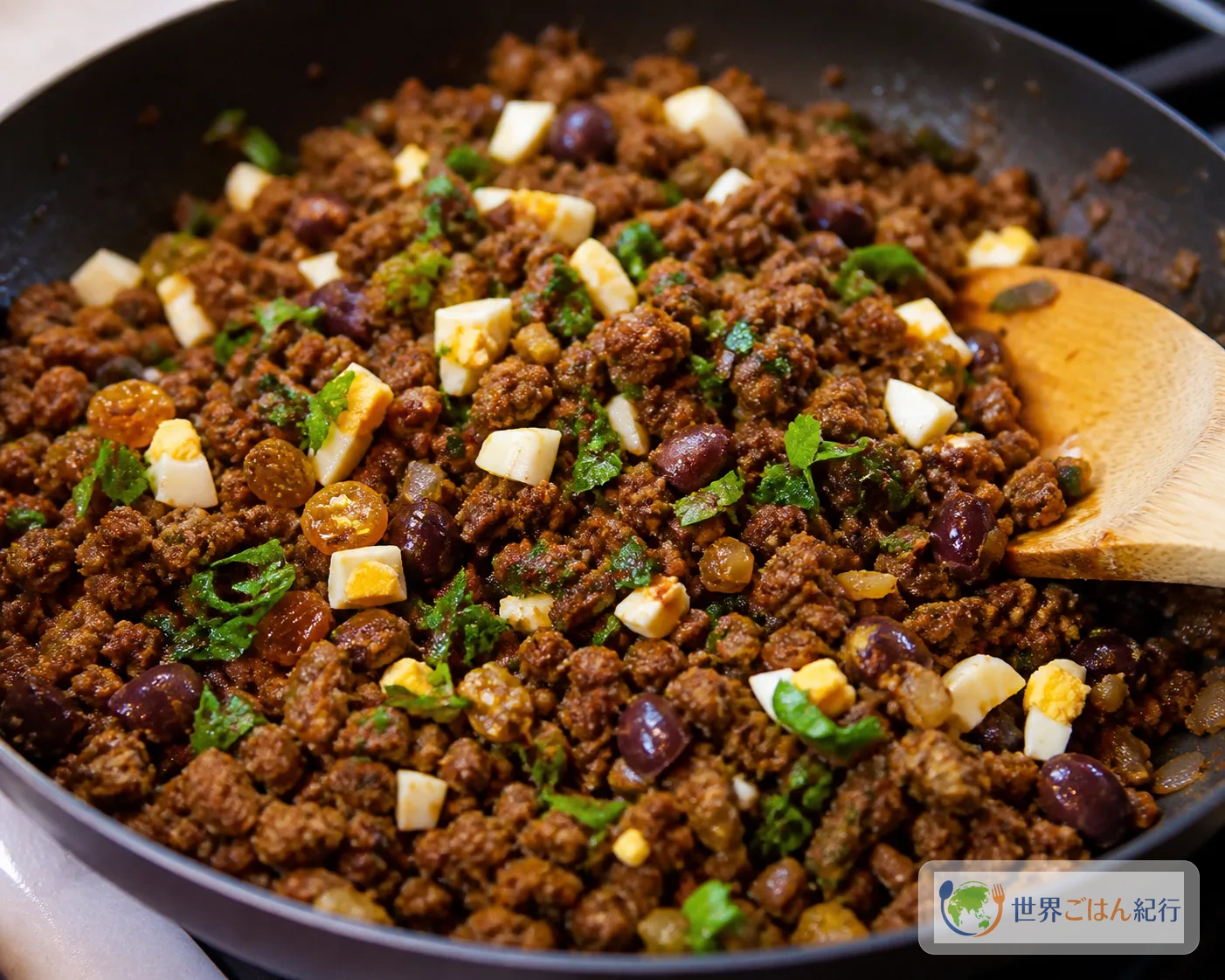
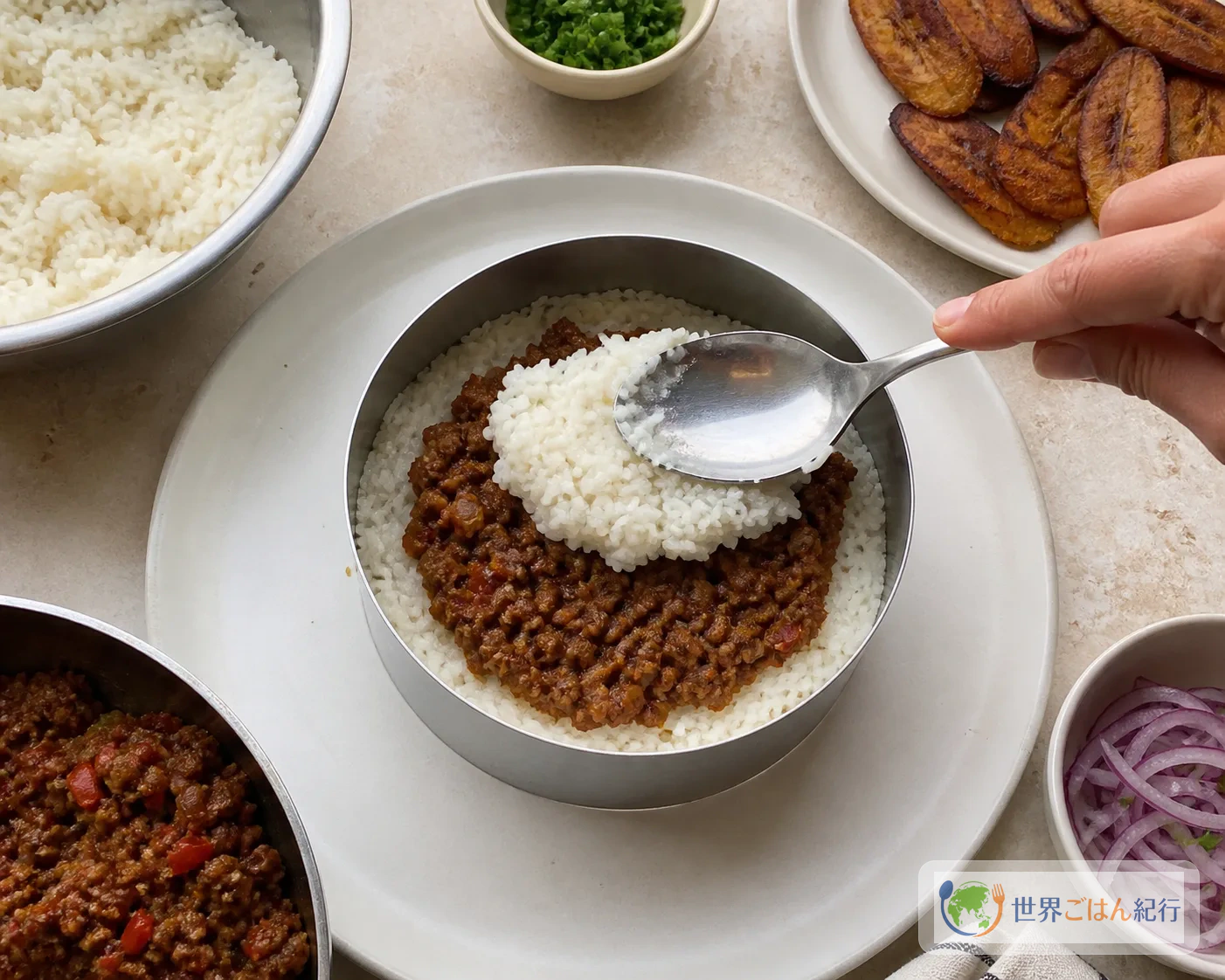
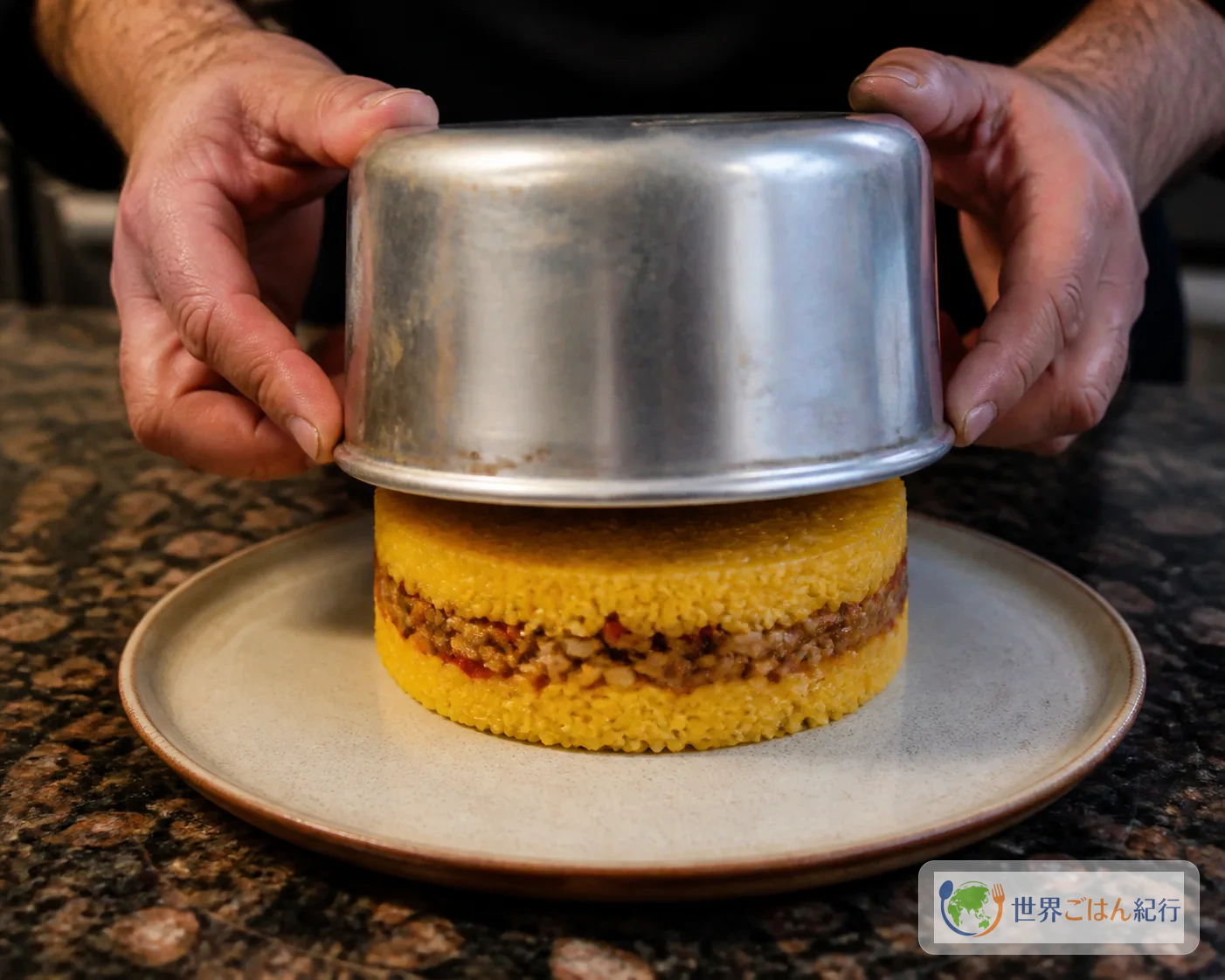
You can't see the filling until the spoon goes in
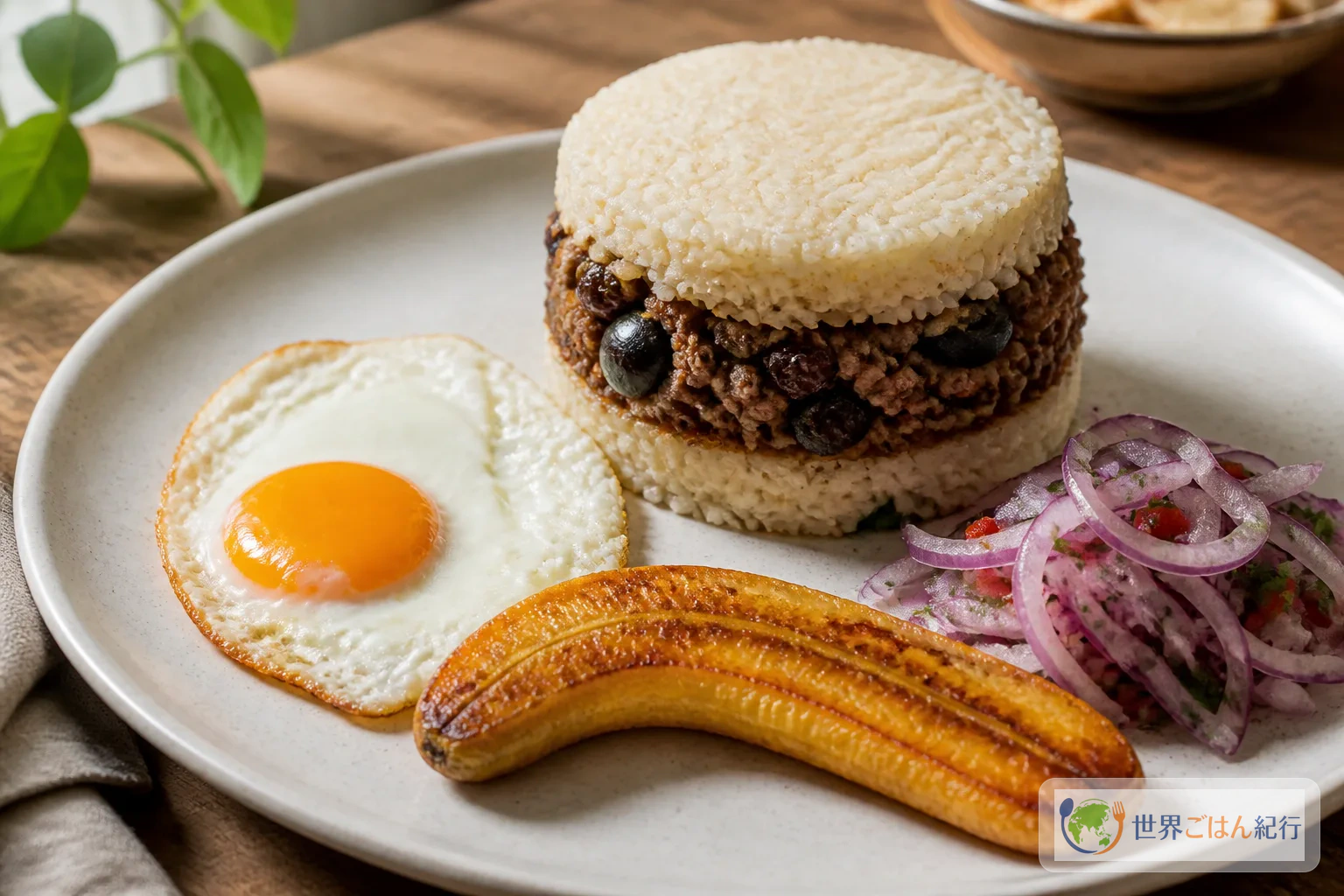
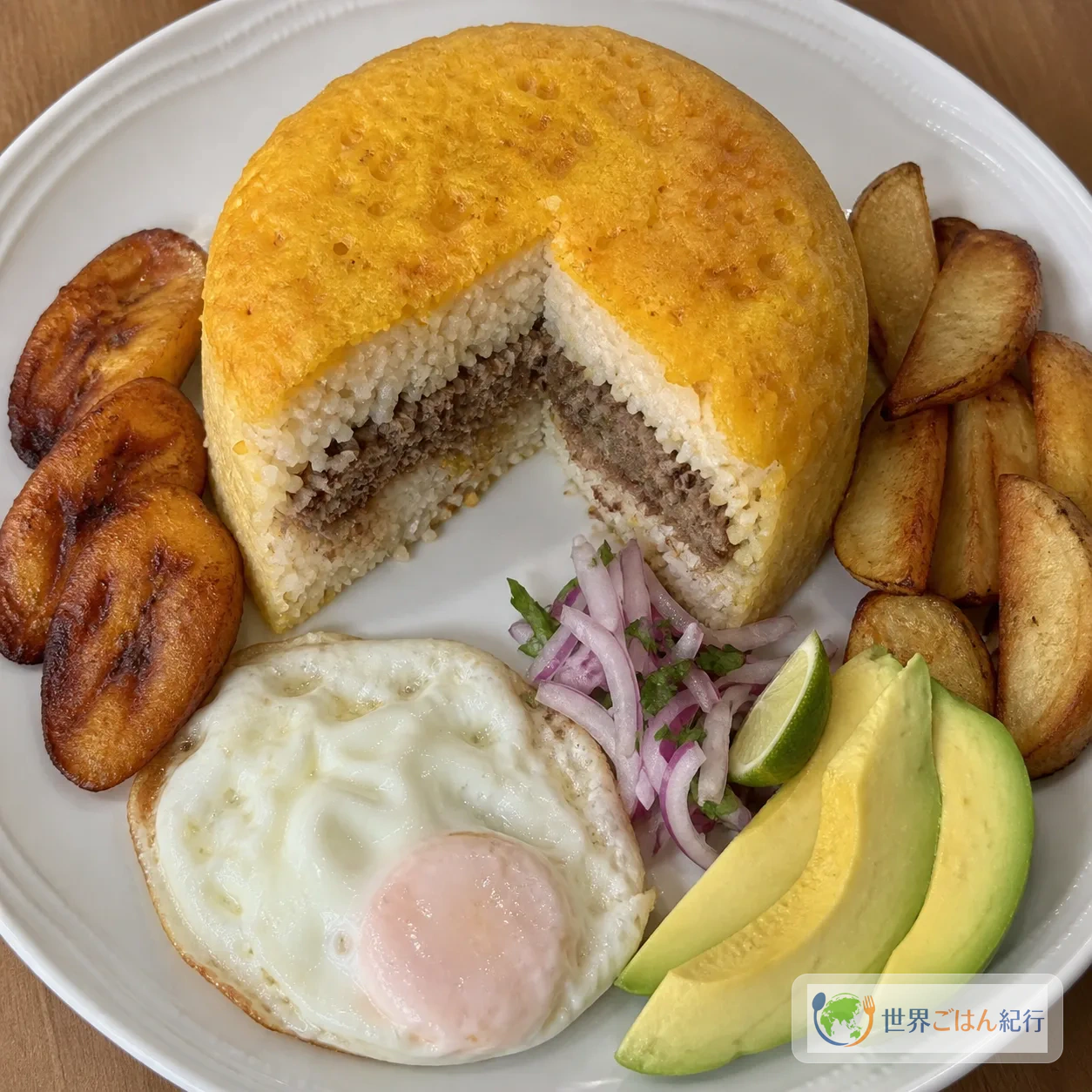
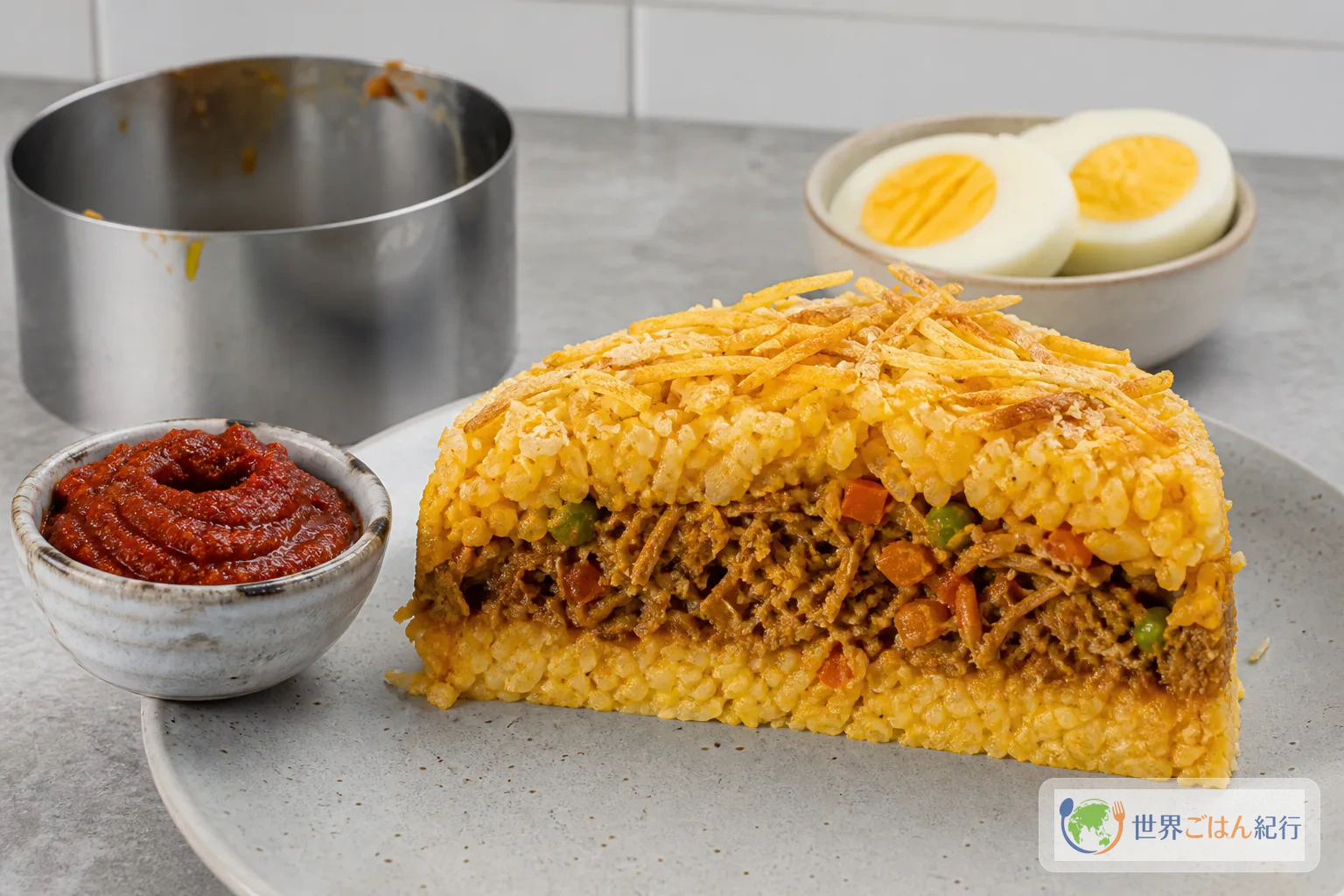
In the middle of the plate stands a round tower of pressed white rice. Cut into the surface and reddish-brown beef, black olives and yellow egg appear from inside the layers, while the sweet smell of fried ají panca mixes with the steam. This is not a dish where rice and meat are mixed in the same pot. With the filling hidden, you alternate within one plate between the mildness of the rice and the depth of the meat. That is what makes arroz tapado interesting.
In Spanish, arroz means rice and tapado means "covered". Peruvian food guides explain that the name comes from covering the meat filling above and below with rice and turning a cup or mold out into a cylinder. Cooking it at home, you don't need to think about appearance first. Don't let the cooked rice get watery, don't leave liquid in the filling, and pack it while it is still warm and sticky. With those three in place, it will turn out cleanly even from a small bowl.
This version for 4 is a home version combining ground beef with red ají panca, a little yellow ají amarillo, onion, tomato, raisins and black olives. Local recipes include some that add carrots or green peas to the rice side, some that chop the meat finely, and some that use pork or fish. Rather than fixing a single flavor, keep only the structure of separating the rice layer from the spiced filling, and choose where to land with the ingredients you can buy.
Arroz tapado is spelled arroz tapado in Spanish. Marca Perú, a Peruvian government-linked body, presents it as a dish of the north, but explains in the same article that its origin has not been established. This recipe does not treat the northern seafood version as the only right answer, but combines the way of serving with egg and fried plantain presented as a Lima rice dish with a beef filling that is easy to make at home.
Ingredients, and how to shop so the core of the flavor stays
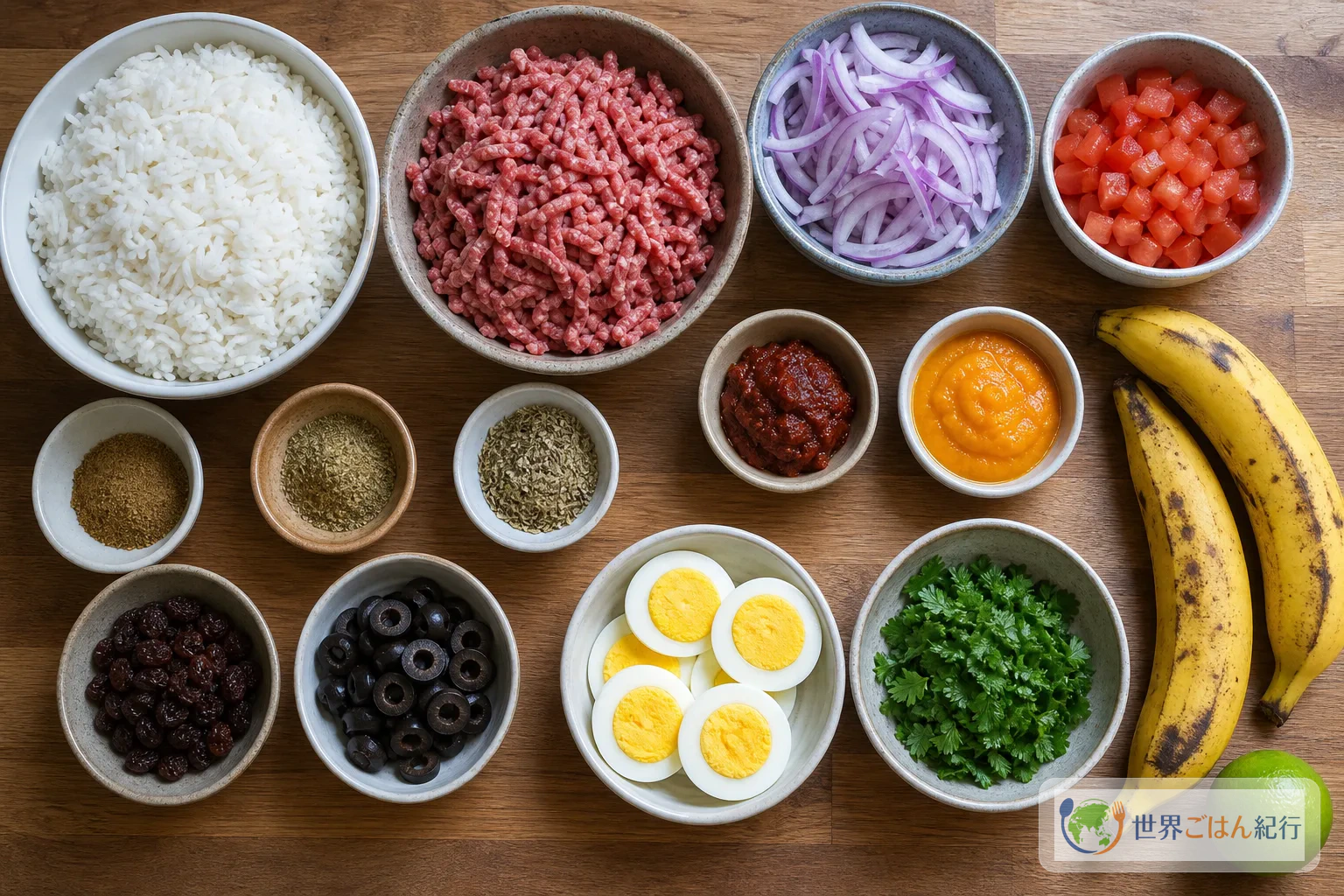
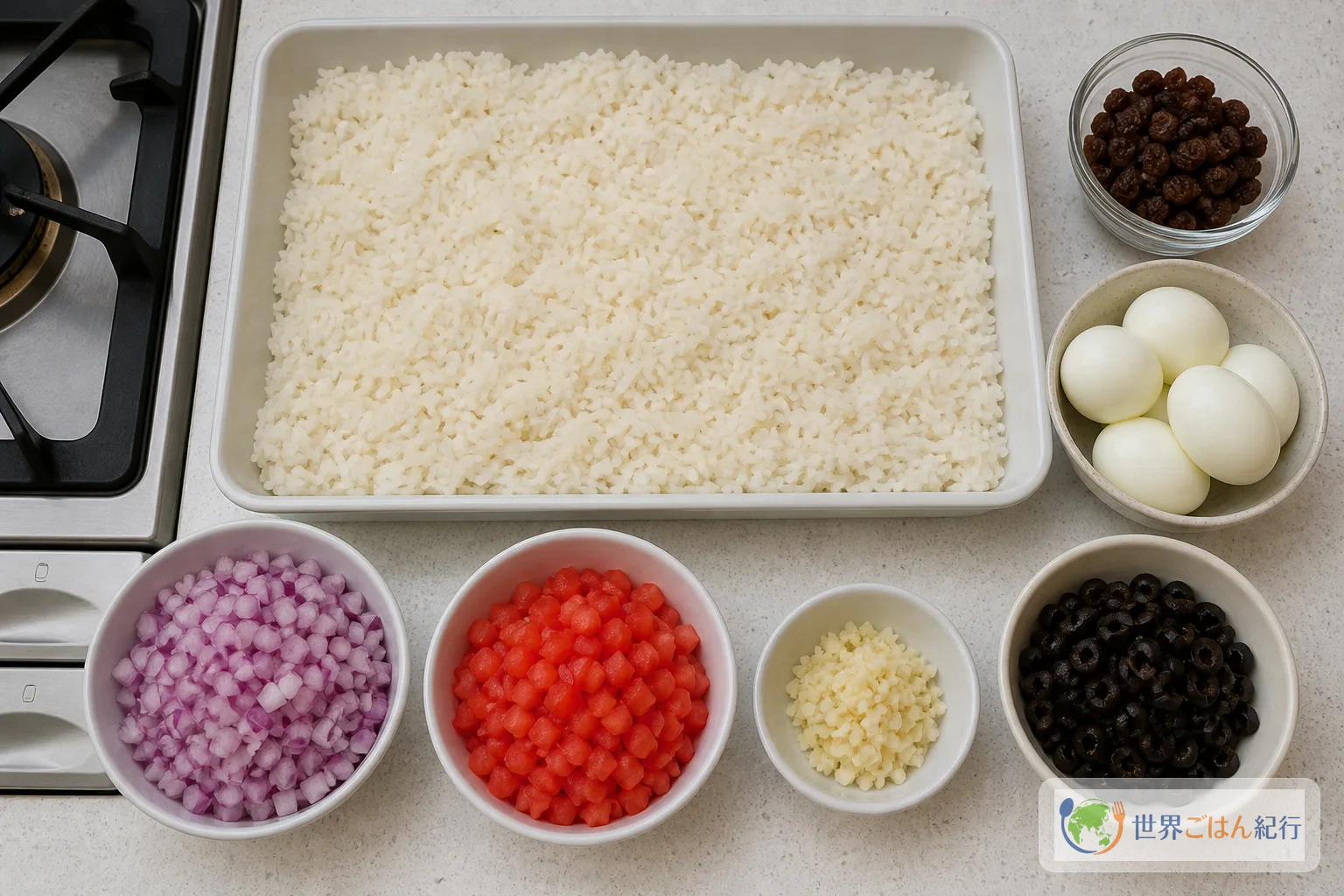
The amounts make 4 servings, shaped as 4 molds about 12 cm in diameter. Don't use the rice straight off the cooker; spread it in a shallow container to let the steam out. If you use fully cooled rice, warm it in the microwave 20–30 seconds per portion before packing, to bring it back to a state where the grains are not tightly set.
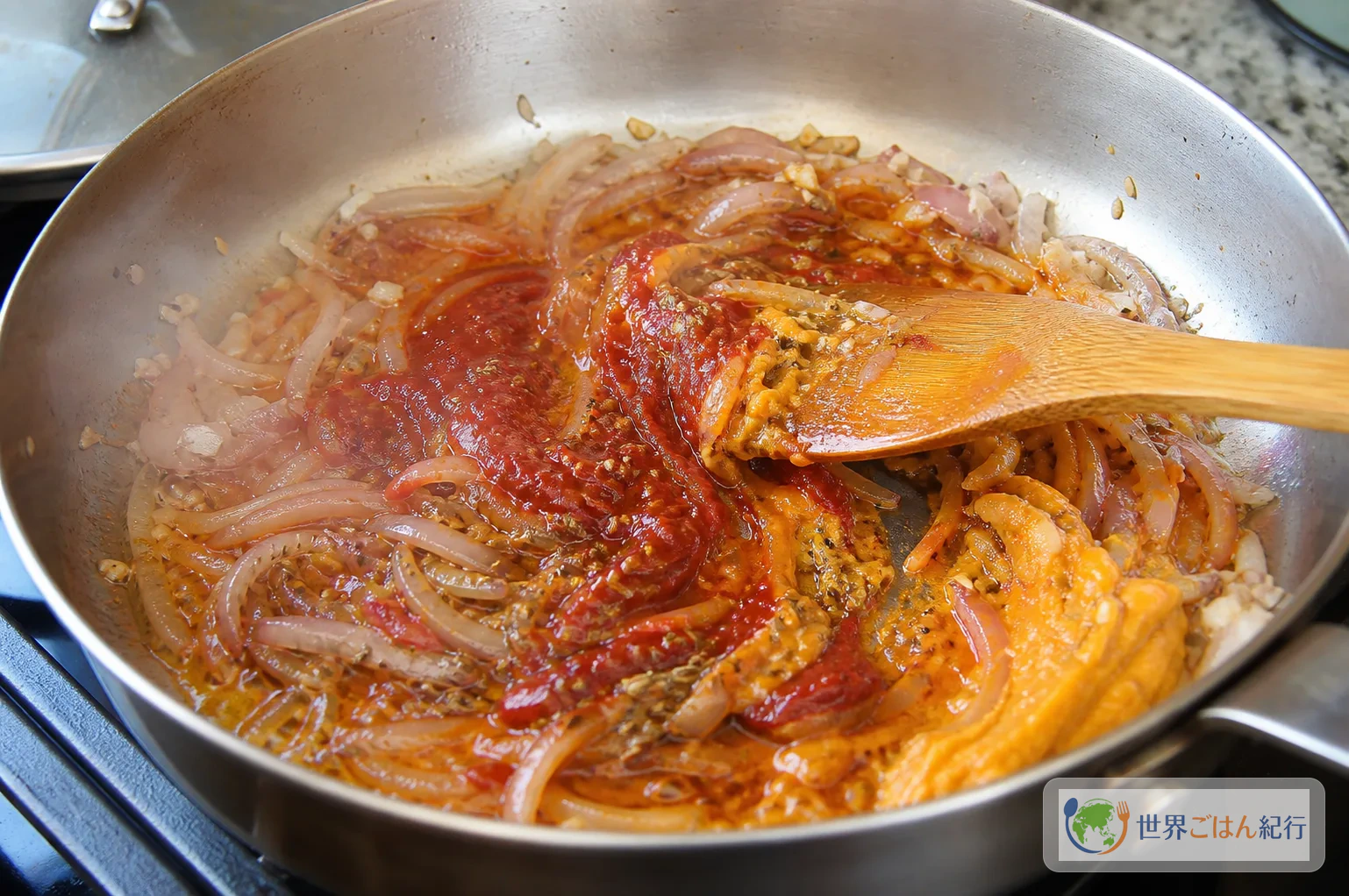
Ají panca is a Peruvian seasoning made from dried red chilies. Its role is less to make the dish hot than to add a red color and a round aroma to the stew. Ají amarillo is a yellow-to-orange chili that gives a fruity aroma and a mild heat even in small amounts. Peruvian export materials also describe the two pastes as seasonings of different colors used for the aderezo, the base of aromatics fried in oil, of dishes.
If you replace the two with a single kind of chili flakes, only the heat stands out, and the red depth and yellow aroma of the arroz tapado filling disappear. On days when you have no ají panca, make the red with the combination in the table and keep 20 g of ají amarillo. Conversely, on days when you have only ají amarillo, limit yourself to adding 2 g to the ají panca substitute. If you put in 30 g or more of the yellow paste, the meat filling turns bright yellow and gives the impression of a different dish.
Choose the onions, tomatoes, eggs and ground meat from your local shop by freshness and quantity; the one ingredient worth looking for farther afield is the Peruvian chili pastes. Because you use only 20 g of ají amarillo for 4 servings, if you would buy it for a single plate, the substitute in the table is enough. If you will also use it for Peruvian dishes like ají de gallina (in Japanese) or the cold appetizer causa limeña, it is an ingredient that is easy to find uses for after opening.
If you buy cumin as a powder you don't need a grinder. If you use cumin seeds and want to finish with freshly ground black pepper too, choose a small mill that can grind a little for each dish.
Ají amarillo differs in heat and saltiness by product, so don't add the whole amount at the start; taste the aderezo and add 5 g at a time. Chili paste, stock and olives all contain salt, so treat the 6 g of salt as an upper limit and adjust at the end of the filling. If you have an allergy to eggs, beef, olives or the seasonings, check the labels where you buy and on hand. Cilantro and parsley do not smell the same, so rather than filling in with a large amount of another herb because you dislike one, scattering a small amount at the finish keeps the flavor of the meat.
A dividing line that reduces waste: if you will use up the ají amarillo on this one plate, substitute instead of buying; if you will also use it for lomo saltado or ají de gallina, buy a jar. Check the contents and ingredients of whatever you buy, including whether it has hot spices or preservatives, product by product.
Method: reduce the red filling and keep the rice layers intact
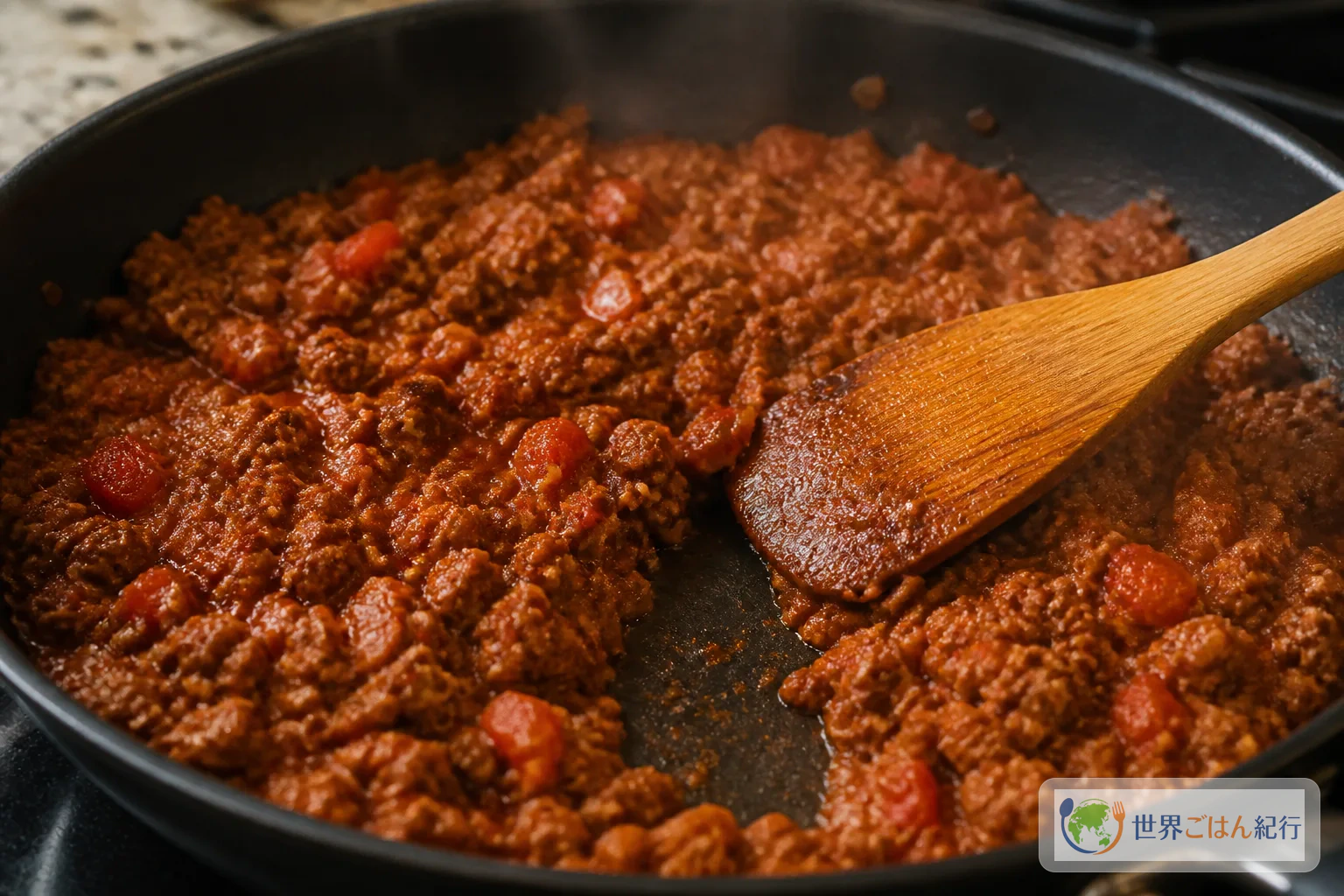
Cook the meat filling not until all the liquid is gone and it turns dry, but to a thickness at which drawing a path with a wooden spatula shows the bottom for just a moment. If liquid remains, it soaks into the rice and the tower collapses, and if you dry it too much, the filling loses the softness that stands up to the mildness of the rice. When the step of rewarming the rice and the step of not cooling the filling too much are matched, the layers stick together when you pack them.
Buy a mold, or turn it out from a small bowl
Shaping arroz tapado is less a special technique than work done at "the same diameter, with the same pressure." With a small bowl or ramen bowl, each one comes out slightly different, but the taste does not change. Only on days when you want to shape all 4 servings at once, or want to use the same tool for serving causa or cakes, is there a reason to shop for a bottomless cake ring.
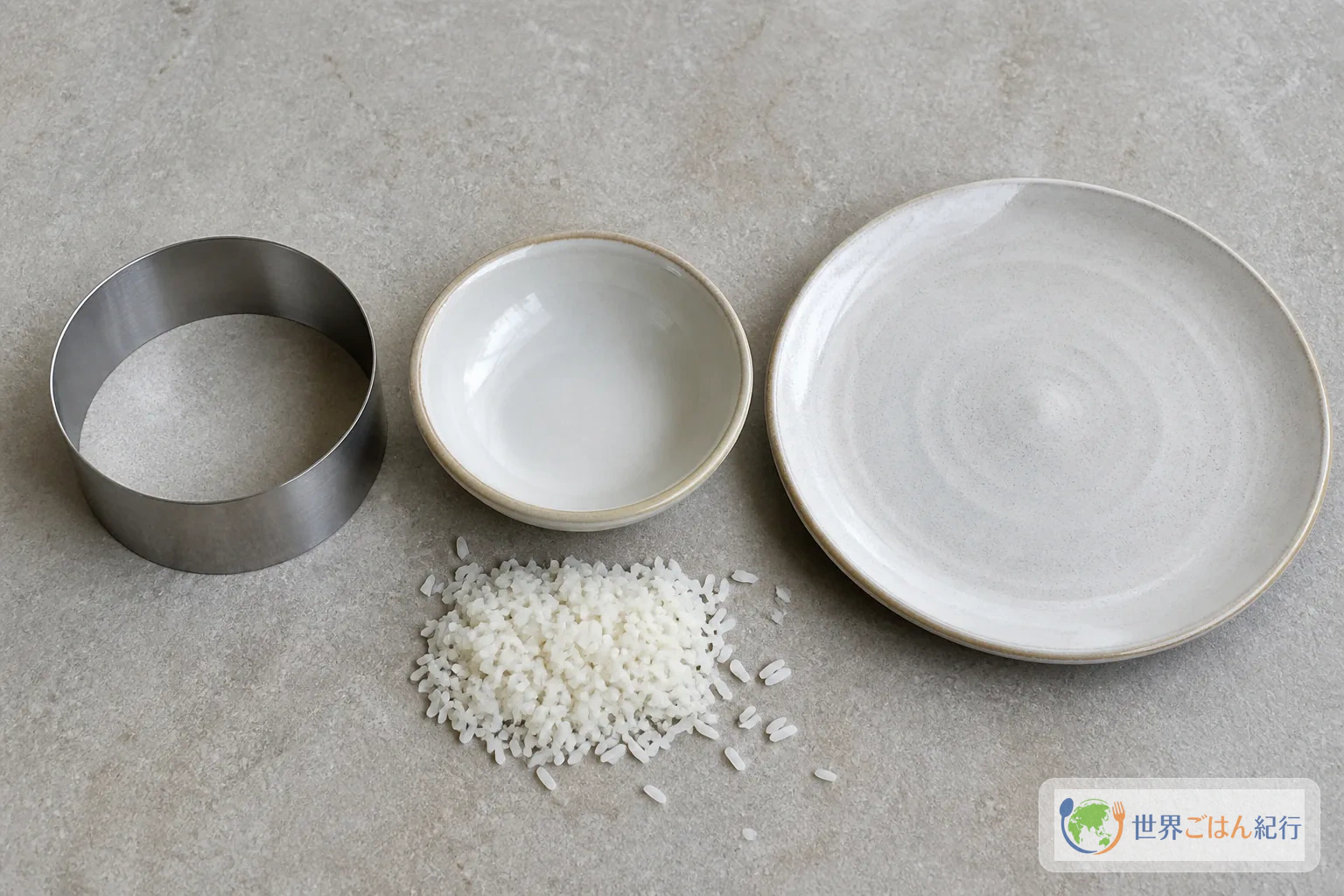
If you choose a cake ring of about 12 cm, check its diameter and height, whether it has a base plate, and an easy-to-wash material. The reason to buy is whether you want the rice layers the same thickness every time. If you are making it once, or can use bowls you already have, there is no need to buy. A mold with a base plate is easy to move, but force tends to reach the rice when you turn it over, so for this dish, where you catch it on a plate and lift straight up, a bottomless cylinder is easier to handle.
Even with a ring, it is not enough to just oil the mold. Don't press the rice hard from the start; check the moisture of the filling, then pack the top layer, and turn it over with the plate pressed tight against the rim of the mold.
When packing, make the rice lukewarm enough to touch, and the filling thick enough that the spatula leaves a trail. If these two match, the layers will not slide when you turn it out.
Why it remains a Lima home dish
"Perú +51," the Peruvian government-linked English guide, places arroz tapado among Lima's rice dishes, within a plate served with egg and fried plantain. The same paragraph describes Lima's rice dishes as a way of eating that catches the sauce left from a pot stew and wastes not a single drop. Arroz tapado is not a dish that demotes rice from lead to supporting role. By wrapping the filling in white rice, it stretches a rich aderezo to the number of people in the family and turns it into a form in which the flavor of the meat reaches each person evenly.
Its place as a home dish in Peru lies where a presentational cylinder and the practicality of using up what is on hand coexist. Marca Perú also presents an oral tradition that it was made with the rice and meat at home in front of unexpected guests, but this is a story about how the dish came to be, not an established origin. Rather than asserting an origin, reading it as a dish that rearranges rice, meat, aromatics and a little sweetness and saltiness attractively in one plate is closer to both the local table and the home kitchen.
In Lima restaurants and homes, people break the fried egg yolk a little into the rice, layer the sweetness of fried banana over the saltiness of the meat, and reset the mouth with the sourness of salsa criolla. For dinner at home, even if you don't gather every side, keeping just the red onion and lime adds a raw crunch to a plate of rice and meat. Conversely, mixing the salsa into the filling makes the inside of the layers watery, so put the sourness beside the plate.
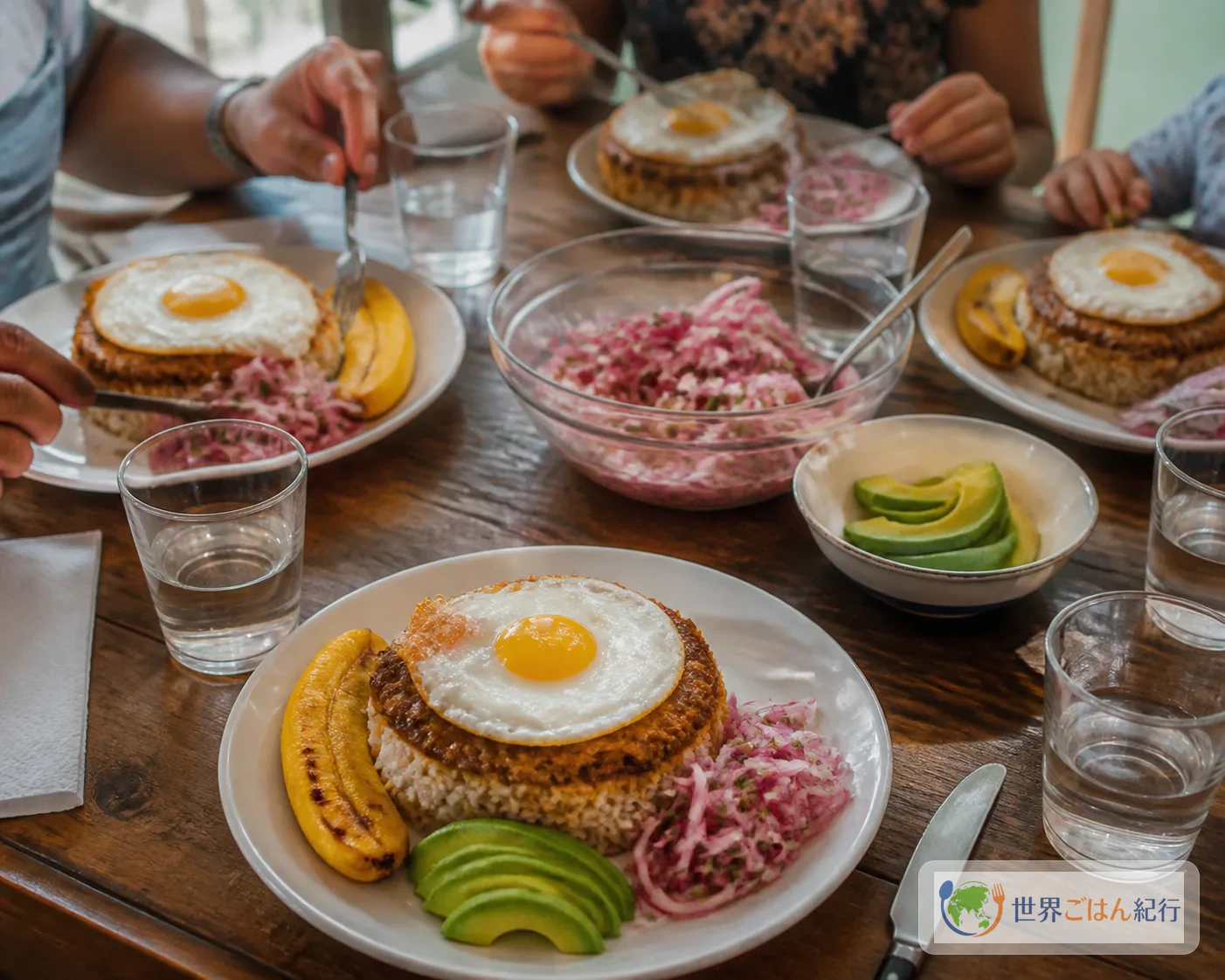
Translating arroz tapado only as "an easy dish" loses the filling's moisture, the firmness of the rice, and the judgment at the moment of turning out the mold. What local sources convey is not a rule of always using the same ingredients but a skeleton of a dish in which rice and filling are layered and that can extend to whatever meat, fish or vegetables are at home.
From the north to the coast: the range of fillings and sides
Marca Perú notes that arroz tapado, presented as a northern dish, has versions that use seafood as the filling. On the other hand, versions using beef or pork are widely known, and local food guides give a basic form of layering ground beef or pork with olives, egg and raisins. In other words, regional differences appear less in the rice tower itself than in the central filling, the sides and where the heat is placed.
If you use seafood in a coastal home, replace the 350 g with canned tuna or grilled white fish and add it after frying the ají panca, onion and tomato. Drain the tuna well and keep the cooking to 3 minutes or less. Moisture that remains moves into the rice, so the seafood version is easier to handle if you finish the filling a little firmer than the beef version. El Comercio's tuna version also has a flow of packing ají amarillo, ají panca, vegetables and rice into a mold, confirming that the dish extends beyond meat.
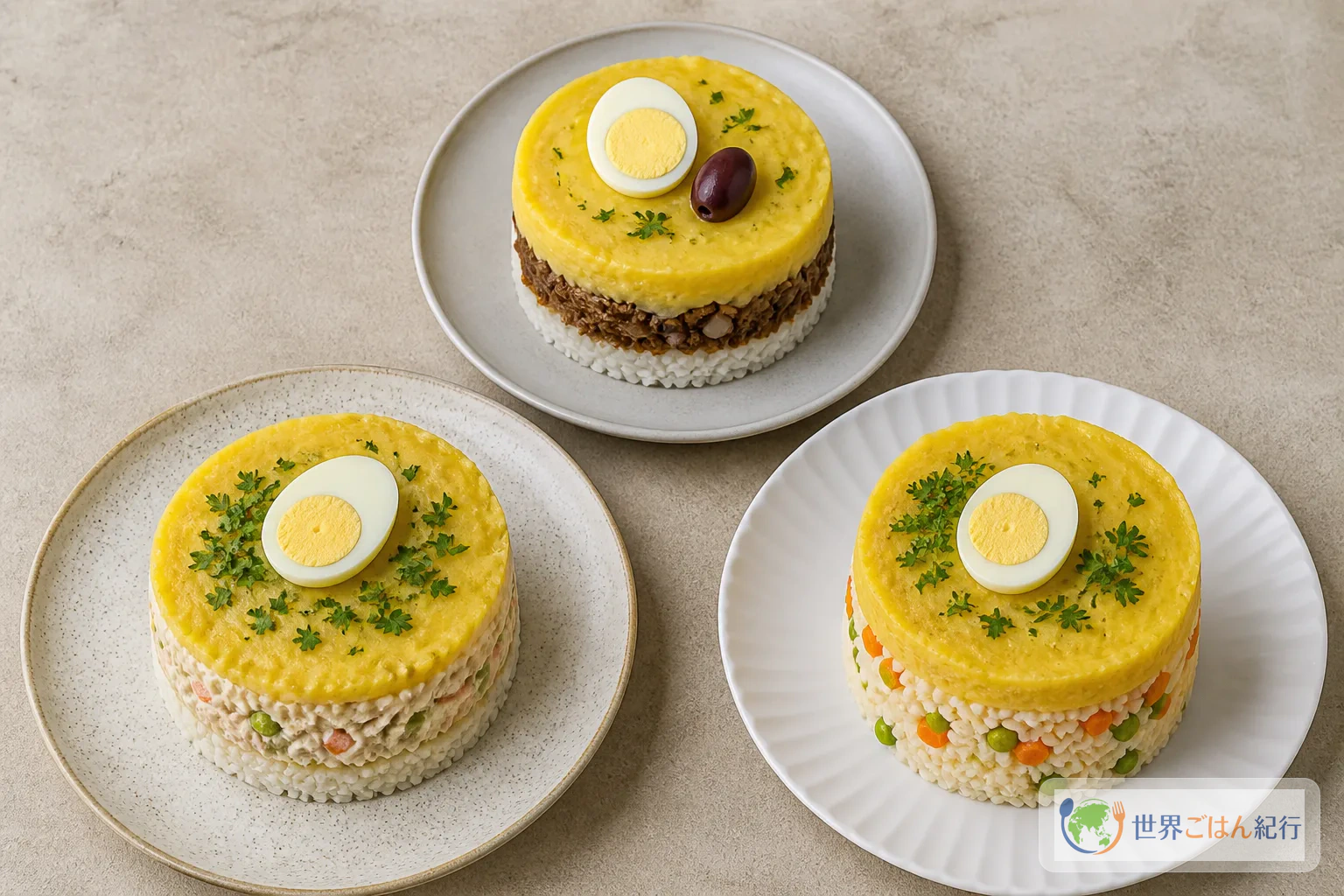
The combination of egg and fried banana seen in Lima is an arrangement that separates sweet, salty and sour elements on the plate. Some sources add potatoes, a radish salad or a seafood filling to northern home versions. There are also versions that mix carrots or green peas into the rice, and this recipe's use of white rice only is a choice made to "show the red of the filling." This difference is not right or wrong, but the result of building the ingredients at hand and the preferences of the people eating into the dish.
How close to get in a home kitchen
If you aim for a full reproduction, gather both ají panca and ají amarillo and cook long-grain rice on the firm side. But using short-grain rice does not make it a different dish. Short-grain rice is sticky and so easier to mold; cook it with less water and keep to the step of spreading it to let the steam out, and the rice layers turn out more easily.
The order that determines how faithful the flavor is: the kind of chili, the time you fry the onion, and the moisture of the filling. Rather than increasing the beef to make it richer, reducing the aderezo without scorching it keeps more of the Peruvian aroma. If you replace ají panca with paprika and tomato, the red color and sweetness are kept but the aroma reminiscent of dried chilies is weaker. If you make up ají amarillo with yellow bell pepper and chili flakes, the color and heat come closer but the fruity aroma does not return.
If you gather what you can from the supermarket, prioritize long-grain rice, red onion, ground beef, tomato, black olives and raisins. Avoid substituting the same amount of Korean chili powder or doubanjiang for ají panca because you have none. The former goes in a different direction of sweetness, and the latter has a strong fermented aroma and saltiness that tilts the filling toward Chinese flavors. If you need to add heat, start with 0.3 g of chili flakes and make the red aroma separately with paprika and tomato paste.
A method that works well is to make only the filling the day before, then warm the rice and shape it just before eating. However, if you pack refrigerated rice as it is, it tends to harden, so warm it a little at a time, do not combine it with hot filling, and bring it to a lukewarm temperature you can touch. If the filling is cold, return it to low heat in a frying pan and recover a thickness at which the spatula leaves a trail before packing.
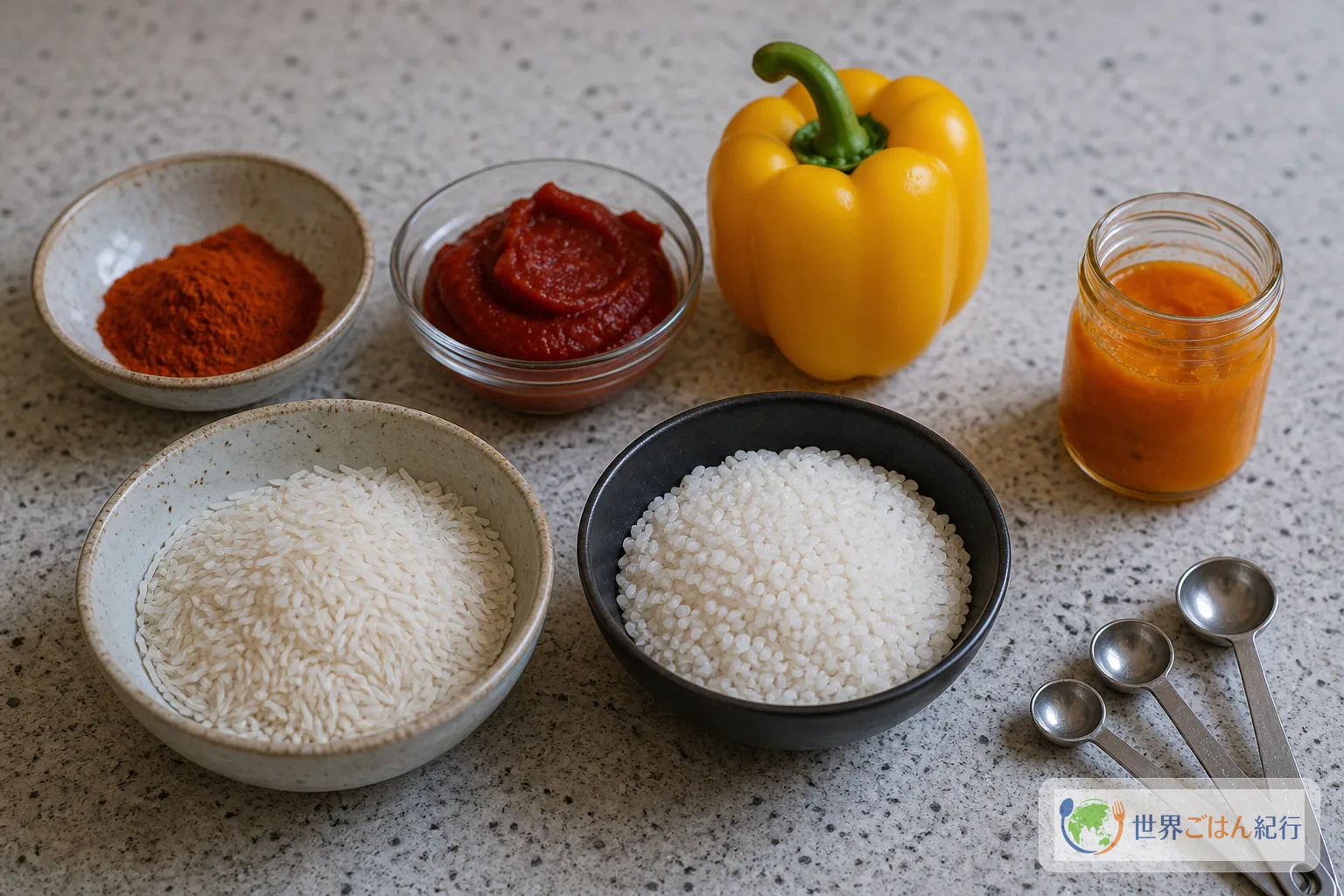
Make up the red color with paprika, the depth with tomato paste, the mild heat with ají amarillo or chili flakes, and the base of the aroma with cumin. Don't increase everything at once; taste at the stage when you have fried the aderezo, and adjust only the role that is lacking.
Serving at the table, and five variations
The basic plate is arroz tapado, fried egg, fried banana and salsa criolla. The sweet banana takes up the saltiness of the meat, and the red onion with lime cuts the weight of the rice. There are home versions that add avocado, but since it adds richness, on days when you use it together with the fried egg, make more salsa.
To suit leftover ingredients or the preferences of the people eating, you can change it as follows while keeping the shape of the layers.
- Seafood version: Replace the 350 g ground beef with 300 g canned tuna, drain it, and combine it with the aderezo for only 3 minutes. The filling breaks easily, so increase the bottom layer of rice to 160 g.
- Pork version: Use 350 g ground pork and replace the beef stock with water. If it is fatty, after reducing the filling wipe off only 1 tsp of the surface oil.
- Vegetable version: Without ground meat, dice 80 g carrot, 80 g green peas and 100 g mushrooms to 5 mm and sauté them. They release water, so start with 30 ml of stock.
- Milder version: Reduce the ají amarillo to 5 g and finely chop 25 g yellow bell pepper to sauté with the onion. The yellow aroma remains and only the mouthfeel is lighter.
- Next-day flat-plate version: Skip the molding and put the filling on warmed rice, with fried egg and salsa. Without the pressure needed for shaping, even refrigerated rice is easy to eat.
If you dislike the sweet-salty combination of raisins and olives, remove only half from the filling and serve them separately. Removing them completely narrows the range of flavor that makes arroz tapado what it is, so adjusting just one mold at first makes it easy to divide preferences within the family. It uses no dairy, so it can be made for a table that avoids dairy, but if you leave out the egg, add 10 ml of stock to the filling to make up for the lost moisture of the boiled egg.
Storage and reheating
Rather than leaving arroz tapado for a long time with the rice and meat layered, store the rice, filling, salsa and sides separately. Spread the filling in a shallow container to take the heat off, and move the rice to another shallow container before putting both in the refrigerator. Don't leave it at room temperature on the table; cool what you won't eat right away early. Japan's Ministry of Agriculture, Forestry and Fisheries advises not leaving cooked food at room temperature for long, dividing made-ahead food into portions to refrigerate or freeze, and reheating it.
Eat refrigerated food within 2 days starting the next day. If freezing, seal only the filling in single portions and use within 2 weeks. Rice can be frozen, but if molded it tends to have uneven moisture when thawed, so wrap it in its pre-molding state. When eating, heat the filling through to the center, and warm the rice after sprinkling a little water so it does not dry out. Salsa criolla uses raw onion, so eat it all on the day you make it and do not freeze it.
Wash the cutting boards, knives and molds that handled eggs and ground meat separately from the serving utensils. If there is any change in smell, color or stickiness, do not try to recover it by reheating; do not eat it. Storage times vary with the refrigerator temperature, the cleanliness of the container and the time it takes to cool after cooking, so the above is a conservative home guideline.
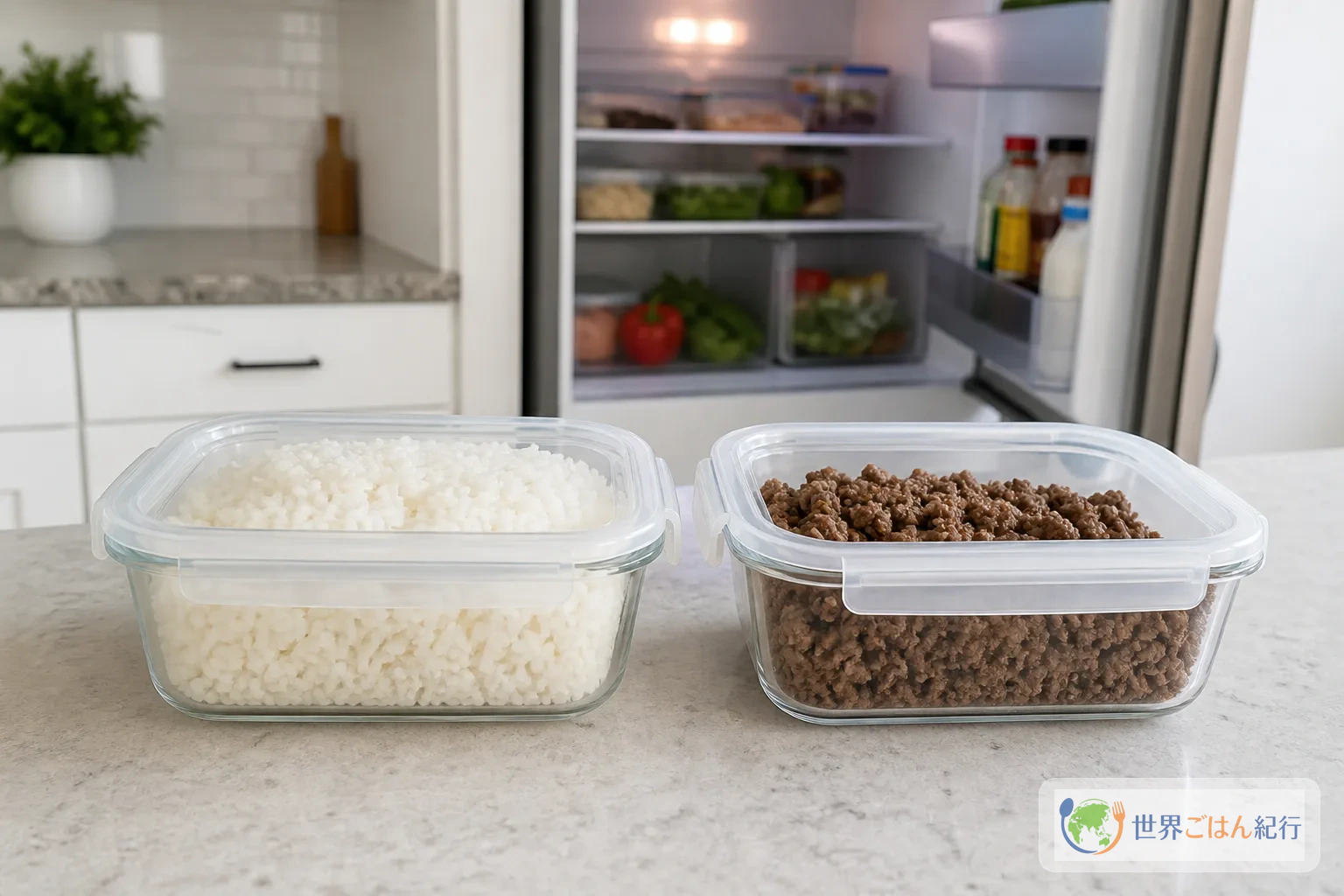
Don't leave cooked rice or the meat filling at room temperature; if you can't finish what you made, divide it into shallow containers and chill it. Avoid returning reheated food to room temperature for a long time again; warm only what you will eat.
Frequently asked questions
Q. Can I make it without ají panca?
Yes, but make up the red color and the aroma separately. Add 18 g paprika, 10 g tomato paste and 2 g ají amarillo to the aderezo and fry over medium-low heat for 2 minutes. If you increase chili flakes to match only the heat, the sharpness comes forward over the sweet chili aroma of Peruvian food.
Q. Can I turn it out with short-grain rice?
Yes. Cook it with less water, spread it in a shallow container to let the steam out, and bring it back to a lukewarm temperature before packing. Pressing hard on soft-cooked rice makes it set like mochi, so only flatten the upper and lower layers.
Q. What if I have no mold?
Lightly oil the inside of a small bowl, rice bowl or ramen bowl and use that. Put in rice at the bottom, the filling in the center, rice on top, then cover with a plate and turn it over. Deep bowls tend to take too much filling, so a shallower bowl of 11–14 cm in diameter and about 6 cm tall is easier to handle.
Q. I don't like raisins or olives.
At first, a method of removing them from just one of the 4 and keeping the amounts for the rest works well. Even when you leave out the raisin sweetness, don't shorten the time for frying the red onion, and keep the aroma of the ají panca and the saltiness of the olives, and the filling is less likely to turn flat. If you leave out the olives, don't add more salt; add sourness with the finishing salsa.
Q. Can I turn out something that has been frozen?
Don't mold it before freezing; freeze the rice and the filling separately. After thawing, sprinkle a little water on the rice, heat the filling to the center, and bring both to a lukewarm temperature before packing. Rice that has been frozen once tends to break at the grains, so serving it on a flat plate rather than insisting on turning it out can sometimes collapse less.
Sources
- Marca Perú, "Arroz tapado: el plato norteño infaltable en la cocina peruana": Consulted for its presentation as a northern dish, the oral tradition about its origin, fillings that range from seafood to meat, and the way of serving with rice covering the filling. Accessed and checked 27 August 2026.
- iPeru, "Arroz Tapado": Consulted for the local spelling, the basic form with meat, egg, olives and raisins, the steps of packing into a mold and turning out, and the sides. Accessed and checked 27 August 2026.
- RPP, "Receta de arroz tapado: Aprende a preparar este plato en casa": Consulted for a home-oriented build with ají panca, meat, tomato, egg and olives, and its suggestion of switching the meat to ground meat. Accessed and checked 27 August 2026.
- Eat Peru, "Arroz Tapado – Peruvian Rice with Beef, Peppers, and Tomato": Consulted as an English-language Peruvian food source for the aroma of ají panca, beef, rice, egg, raisins and olives, molding, and the pairing with plantain. Accessed and checked 27 August 2026.
- PROMPERÚ, "Perú +51" English PDF: Consulted for its explanation of Lima's rice dishes, arroz tapado with egg and fried plantain, and the food culture of catching the sauce of stewed dishes with rice. Accessed and checked 27 August 2026.
- PROMPERÚ, "Informe de mercado: Pasta de ají amarillo y ají panca": Consulted for the colors of ají amarillo and ají panca and their place as seasonings for a dish's aderezo. Accessed and checked 27 August 2026.
- El Comercio, "Arroz tapado de atún": Consulted for the seafood version using ají amarillo, ají panca, vegetables and tuna, and the steps of packing rice, filling and rice into a mold. Accessed and checked 27 August 2026.
- Instituto Nacional de Salud (Peru), "Tablas Peruanas de Alimentos: Arroz tapado": Consulted for the dish name, preparation code and location of nutrition data in Peru's food composition tables. The nutrition values in this article are approximations after rearranging the ingredients and amounts. Accessed and checked 27 August 2026.
- Ministry of Agriculture, Forestry and Fisheries (Japan), "Key points for preventing food poisoning": Consulted for not leaving cooked food at room temperature for long, and refrigerating made-ahead food and reheating it thoroughly. Accessed and checked 27 August 2026.


