A Half-Moon Morning That Begins with the Sound of Oil
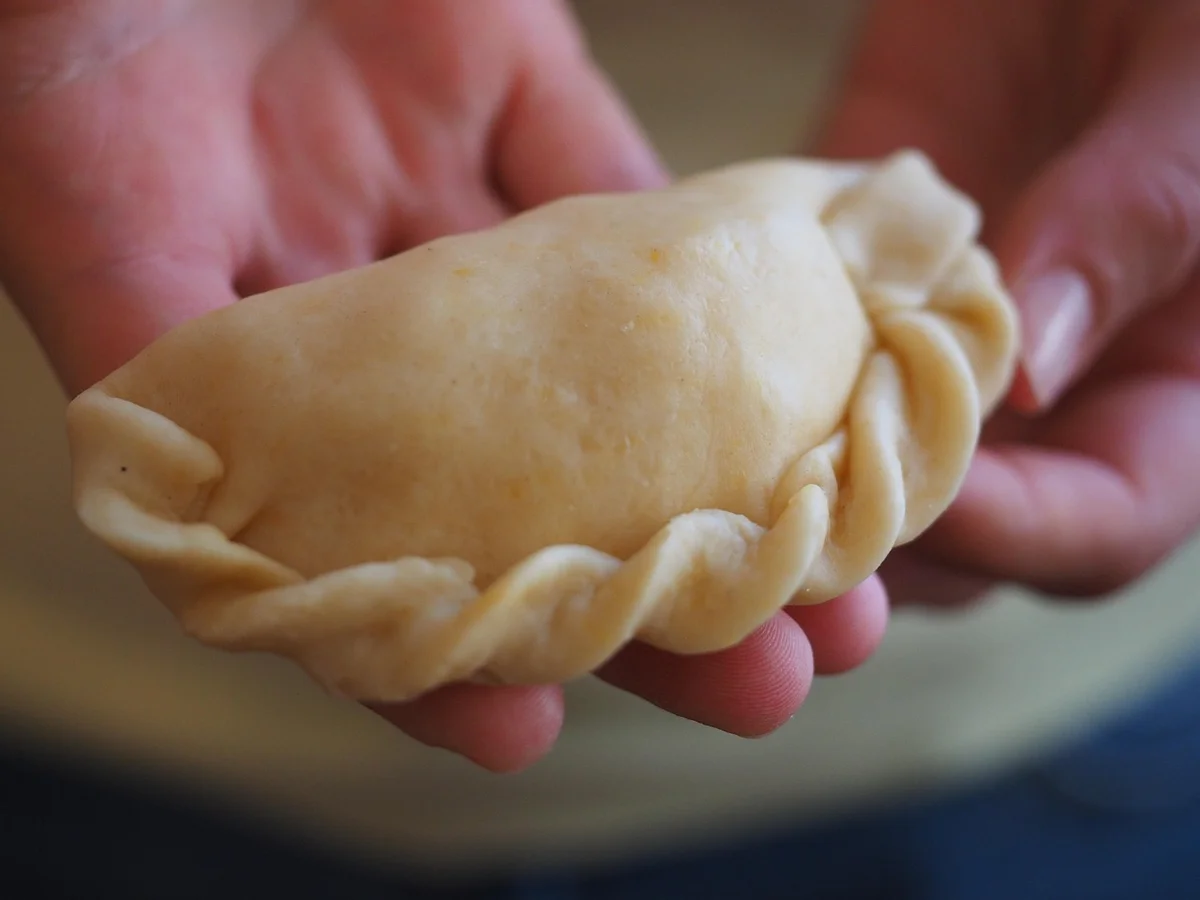
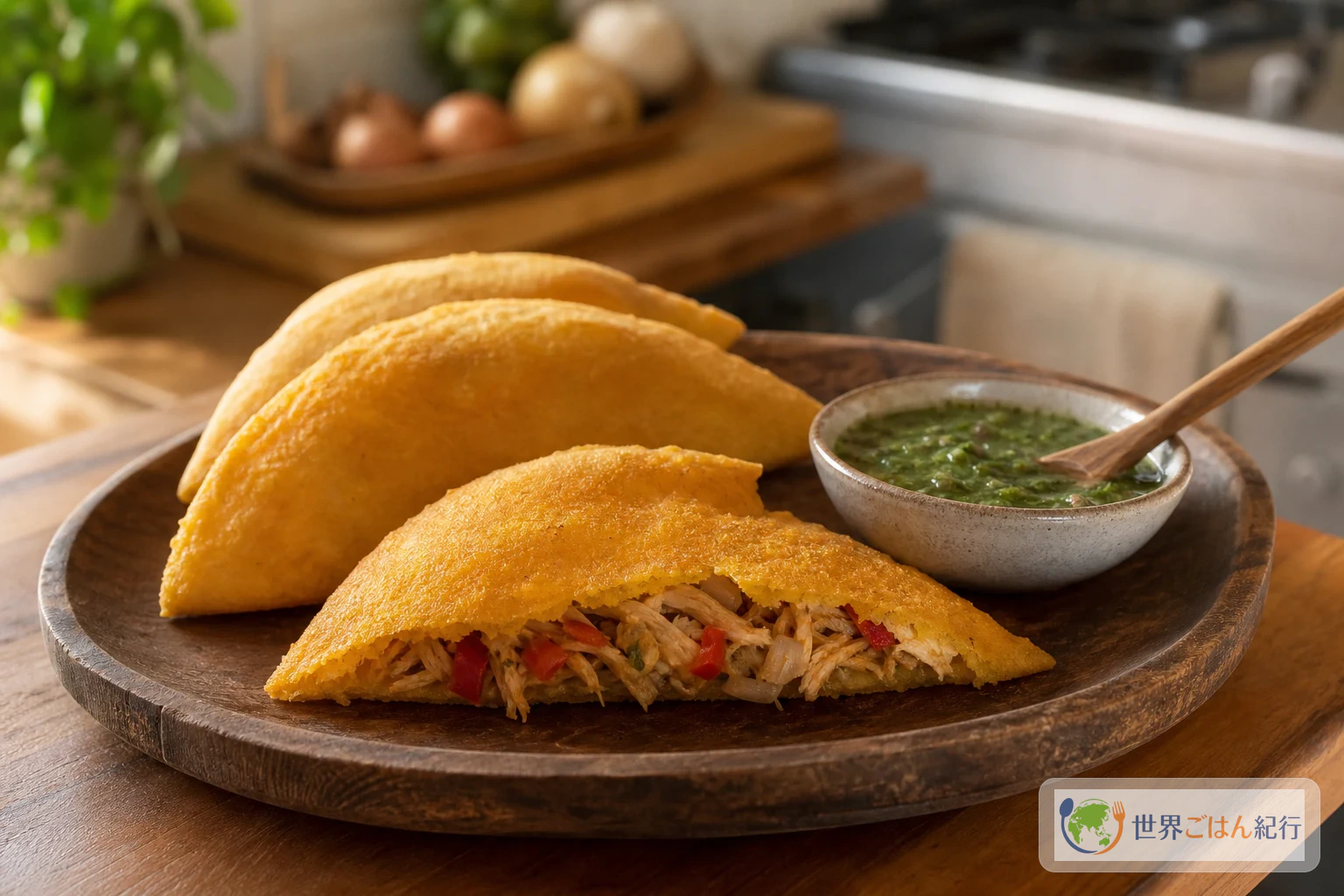
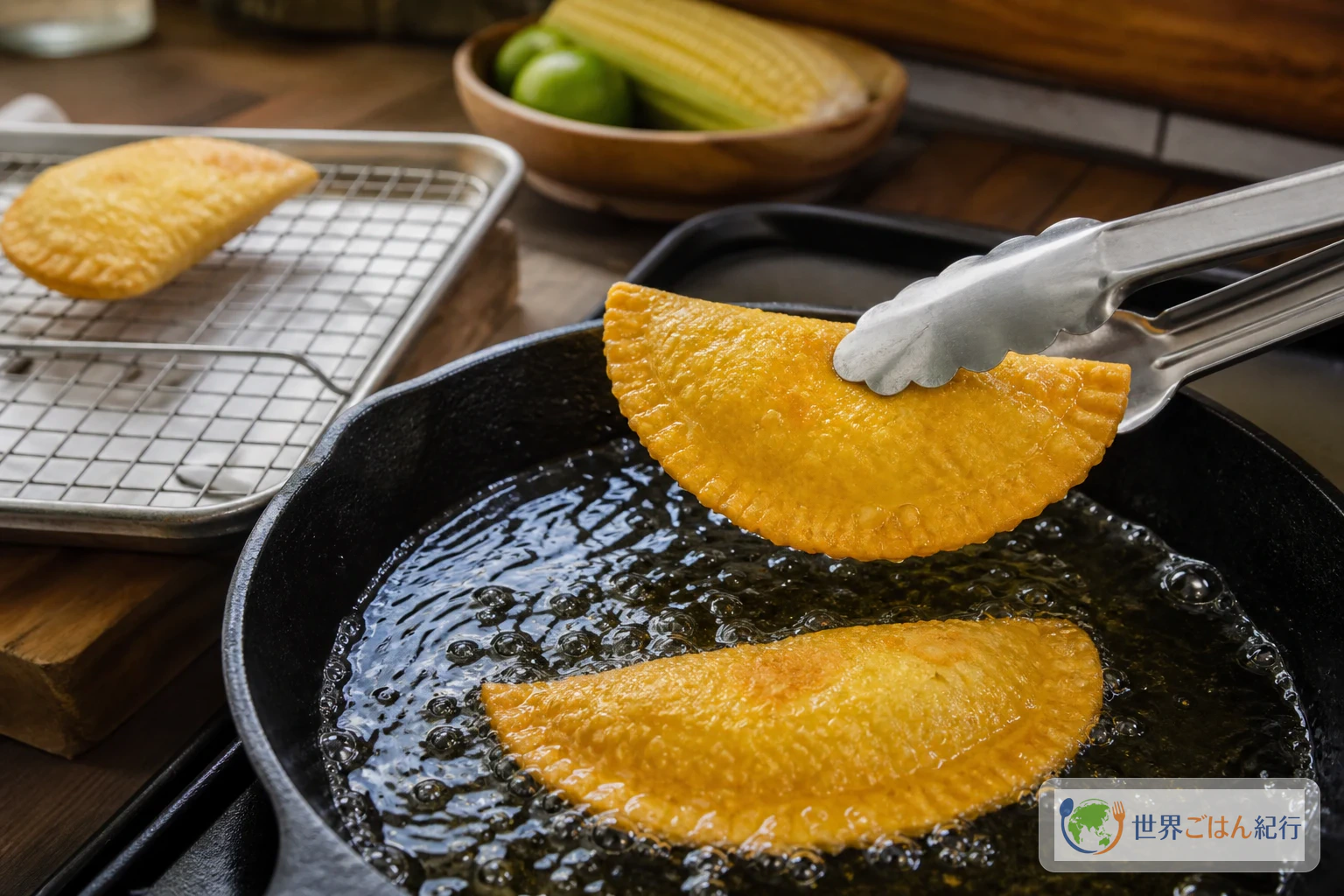
Picture it. In a kitchen before the sky has fully paled, you slide the dough gently onto the surface of the oil. It sizzles, and a white corn half-moon starts turning gold from the edge. Handed two in a paper bag, you break a corner open as you walk. The scent of chicken and onion rises, and the hot filling touches your tongue. Venezuelan empanadas are tied to scenes of breakfast and snacks like this.
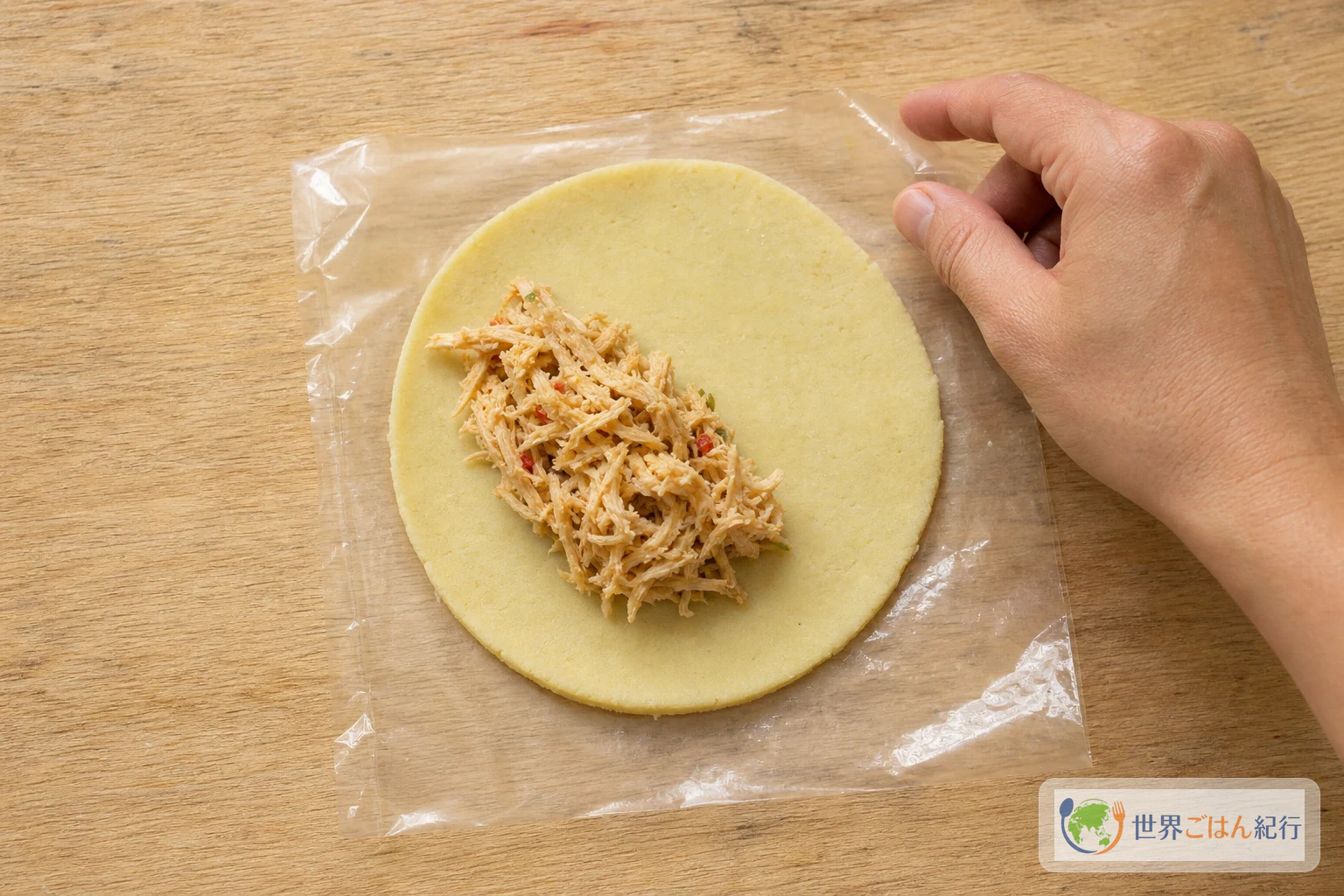
When you make them at home, the places you stumble are not the seasoning of the filling. They are using a dough of precooked corn flour rather than a wheat wrapper, getting the moisture out of the filling before wrapping, and getting the dough hydrated so it doesn't crack when rolled thin. Get these three right and the half-moon shell has a toasty texture thicker than a gyoza wrapper and thinner than an arepa.
This article takes chicken, 8 empanadas, as the basis. If you're buying for the first time, look for a flour whose bag says "pre-cooked corn meal," "harina precocida," or "masarepa." Substitute ordinary cornmeal or polenta and you can make something with a similar shape, but the pliability for wrapping and the light shell after frying are different. Later I also sort out decisions about switching the filling to coastal cazón (fish), caraota (black beans), and pabellón (beans, meat, and ripe plantain).
If you'd like to know Venezuela's round corn dishes first, see how to make arepas too. Setting a thick arepa that you bake and split next to an empanada wrapped thin and fried shows how the same flour turns into "bread" and "shell."
It tells you the conditions for the flour to buy, when the filling is ready to wrap, and when to lift the empanadas from the oil. It also covers what changes with substitutes, including the option of skipping the flour if you just want to try frying once.
Ingredients (makes 8): Don't Mix All the Flour and Water at the Start
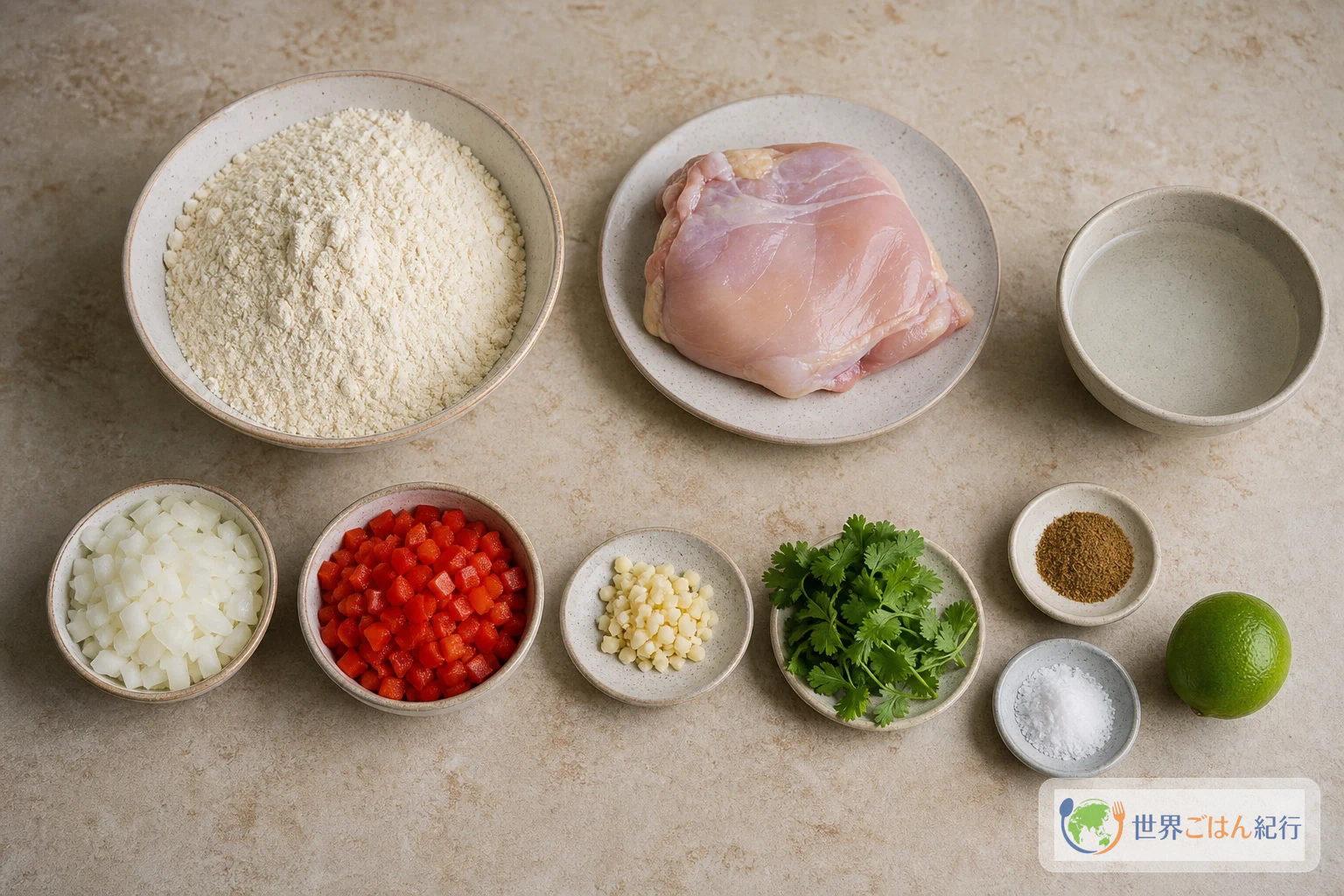
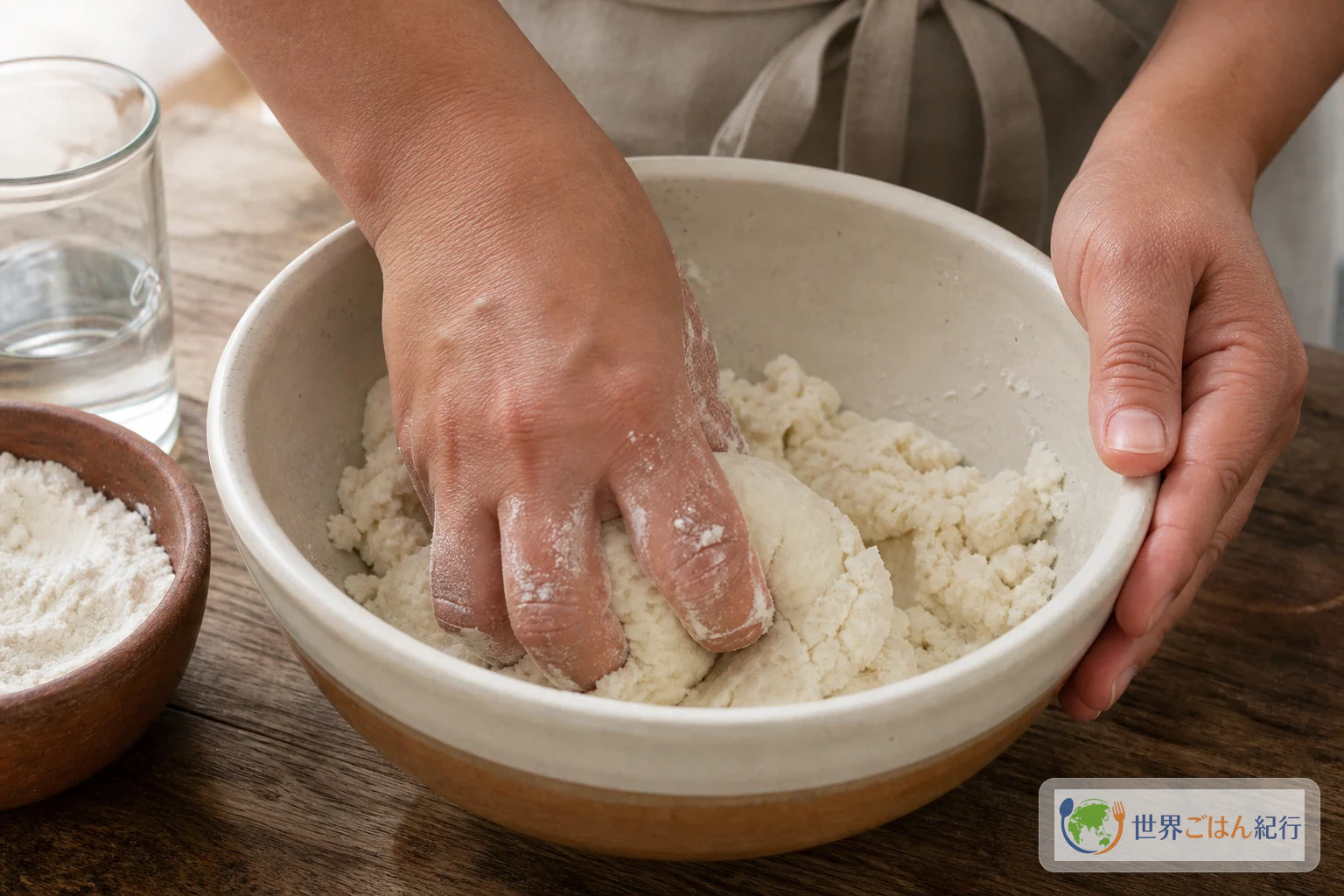
Make the filling first, and move on to the dough while it cools. The dough proportions adjust the combination found in local recipes, around 2 cups of precooked flour to 2–2.5 cups of water, for 8 thin shells. Here you prepare 300 g flour and 480 ml water, but start with 450 ml of the water and keep the rest for adjusting. Absorption changes with the flour brand and how it has been stored.
Sauce to serve alongside
Mash and mix 1/2 avocado, 10 g cilantro, 20 g onion, 1 tbsp lime juice, 1 tsp vinegar, and a pinch of salt and you have guasacaca, a green sauce similar to guacamole. A sour sauce cuts the oil of the fried shell and picks up the sweet aroma of the chicken. The empanada works without it.
Masarepa and the Fork in the Road for Similar Flours
Ordinary cornmeal is ground dried corn, polenta is a coarse-ground flour with large grains, and cornstarch is starch. None of them absorbs water like this dough. Mexican masa harina is also processed differently, by nixtamalization, so the aroma and the way it holds together change. SBS Food's recipe also sorts out that polenta, cornstarch, and masa harina are not substitutes for precooked cornmeal.
When looking for a bag, read the ingredient list before the product name. If it meets three points, "white corn," "precooked," and "becomes dough with water," it's a candidate. You can also make it with yellow precooked flour, but the color is deeper and the corn aroma comes forward. White first, yellow the second time, is an easy order to follow.
Look at the ingredients and net weight, not only the product name. Some bags in this range are blends with chia, sesame, and quinoa. If a smooth white shell is your first priority, choose plain precooked white corn meal. If you want to try the toasty taste of seeds or will also use the flour for arepas, a seeded blend is worth a try.
If you're buying flour, decide whether you can also use it for hallaca and arepas as well as for the atmosphere of the dish, and you'll waste less. Buy a small bag of around 16 oz for a first try, and confirm that white corn is the main ingredient. If you just want to taste fried food once or want to enjoy a smooth outline of the filling, a different dish may suit you better.
Method: Cool the Filling and Don't Break the 5 mm Shell
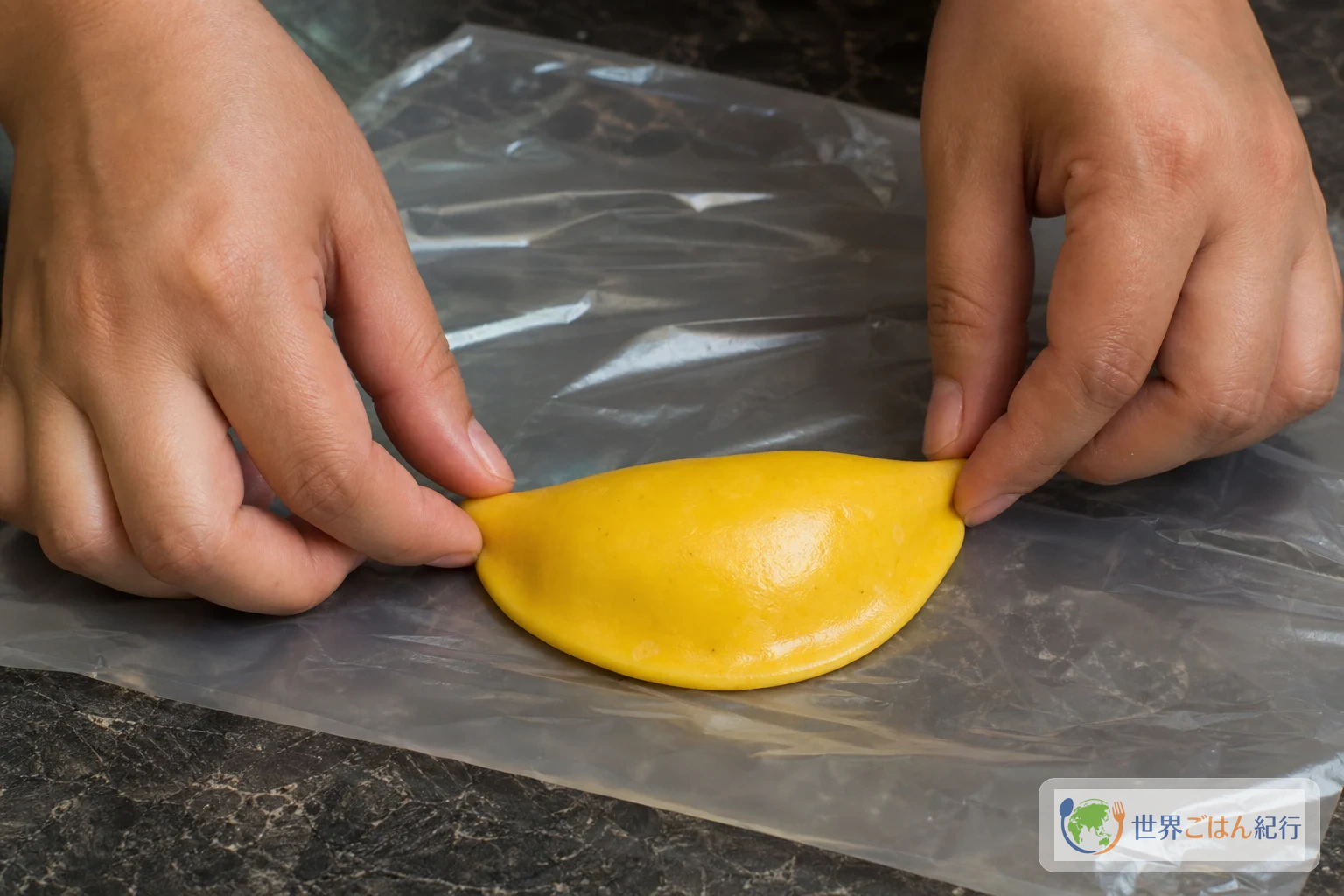
In the local recipes I used, the filling is made first, the flour and warm water are mixed and rested 5–10 minutes, and the dough is pressed into thin discs and fried. As AJC's recipe shows, using a cut-open storage bag as a base lets you fold the thin dough without lifting it. It's easier to judge cracking and leaking than when carrying the dough directly with a rolling pin.
Fresh from the oil, the surface feels firm when touched lightly, and the center of the dough isn't floury when you break it. They're ready to eat when the filling is hot and no droplets have collected inside the shell. Letting them rest 2 minutes on a rack to release steam from the bottom keeps the half-moon light to its edge, better than stacking them on paper after lifting them from the oil.
Criteria to Avoid Failure: Fixing Cracks, Leaks, and Stickiness
With the filling, check the liquid before the seasoning
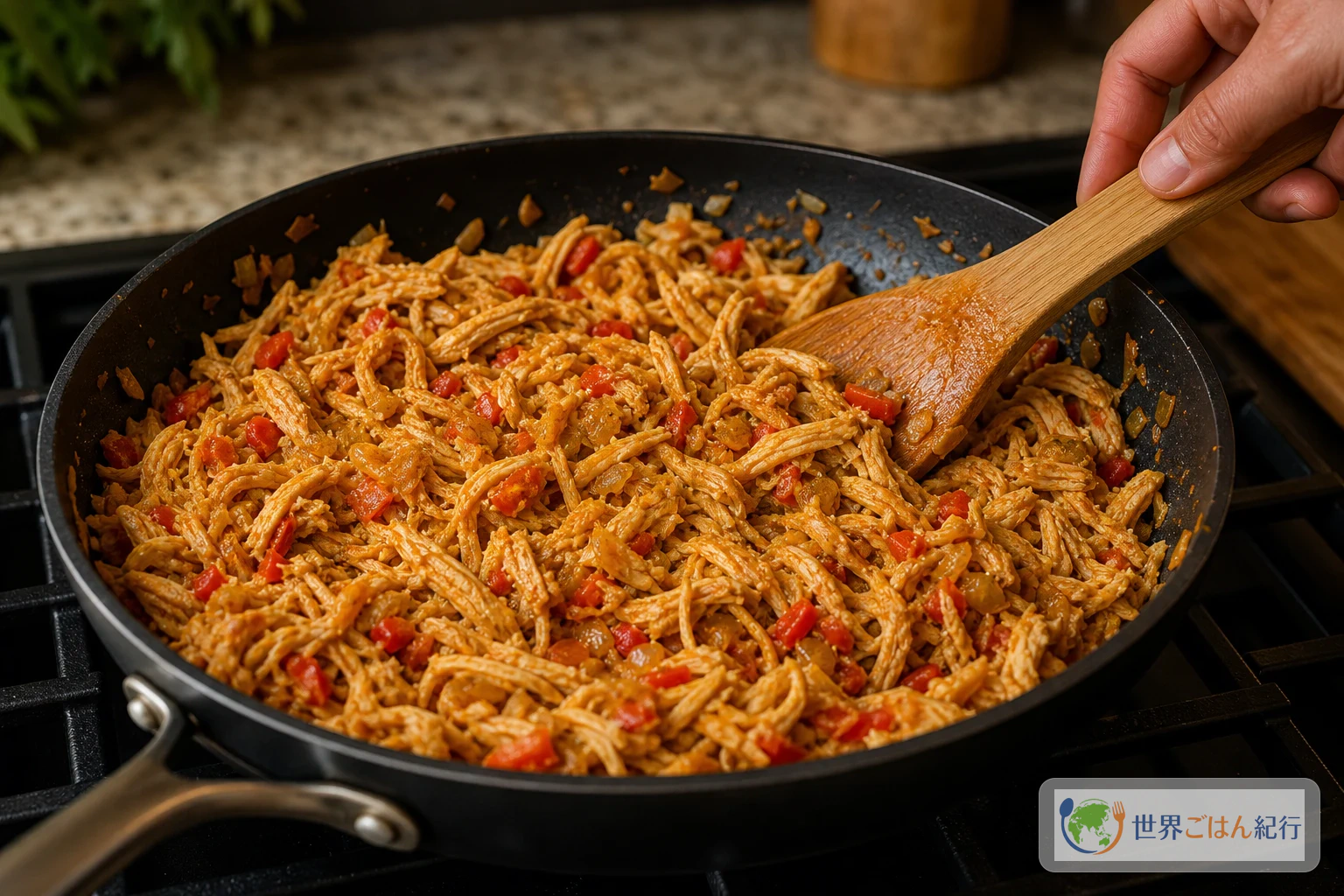
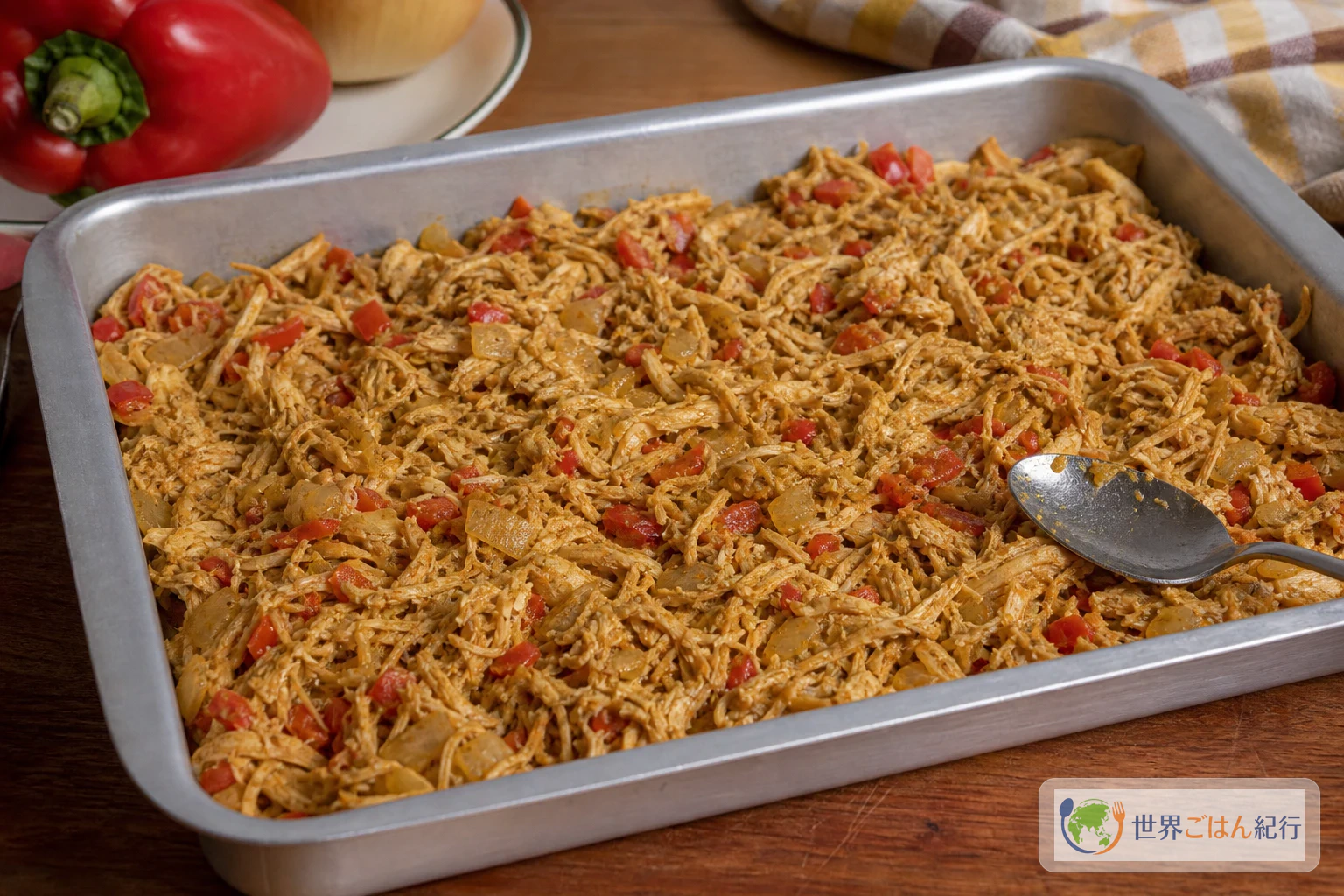
Even after the chicken filling cools, if liquid remains on the bottom of the tray, don't wrap yet. Return the liquid to the skillet and cook off the moisture over medium-low heat. If it gets dry from over-reducing, bring it back with 1 tsp stock at a time rather than water. There's no way to put moisture back after wrapping, so decide this point first.
Fix cracks in the dough in the right order of adding water
If the outer edge cracks badly while shaping, it needs water. Wet your hands and smooth the surface; if it still won't close, add 5 ml water to the whole dough, knead 1 minute, and rest 5 more minutes. If instead it sticks to the bag, don't add lots of flour right away; wait 5 minutes first. Only if it is still sticky after absorbing, add flour 1 tbsp at a time.
Use both temperature and appearance for the oil
In oil near 180 degrees C, fine bubbles rise right after adding and the half-moon floats slowly. At low temperature the shell absorbs oil and gets heavy, and at high temperature only the outside browns first and the inside of the seam doesn't warm up. Don't add many at once; keep half the surface of the pan clear. Even without a thermometer, observing color and how they float lets you correct the heat.
Storing on days you use chicken
Move the filling to a shallow container when made, cool it down, and refrigerate. Don't leave it at room temperature for long, and use it within 2 days refrigerated. Japan's Ministry of Health, Labour and Welfare gives heating the center of meat to 75 degrees C for at least 1 minute as a guideline against food poisoning. When reusing made filling, heat it through thoroughly, and rather than wrapping it hot into the dough, cool it again before shaping.
Fried empanadas are lightest the same day. If eating the next day, set them on a rack and reheat through in a toaster oven. If you keep dough and filling separate, you can wrap and fry just before eating, which keeps the texture of the shell.
The dough is corn flour, but labeling about wheat and other production lines differs by product. The filling uses chicken, and the sauce uses avocado, cilantro, and vinegar. Check the labels for the flour, chicken, and oil, and wash tools that touched raw meat before using them for dough. Frying oil gets very hot, so don't walk away from the pan, and never put out an oil fire with water.
Regional Differences in Filling: Same Half-Moon, a Different Face from the Sea or Beans
Venezuelan empanadas are not a dish with one fixed filling. The Fundación Empresas Polar food-culture material describes them as a thin white or yellow corn dough wrapped around a savory filling and eaten at breakfast, dinner, and as a festive snack. The filling changes with place and table: cazón or fish on the coast, caraota eaten nationwide, and pabellón combining beans, meat, and ripe plantain.
A coastal cazón version with white fish
Cazón is the name of a small shark, which appears in seaside empanadas. In places where its availability and sustainability labeling are hard to confirm, substitute a fish whose flesh flakes and drains well, such as cod or swordfish. This is not a substitute that tastes the same. Steam-simmer the fish about 15 minutes, flake it, sauté it with onion, bell pepper, garlic, and cumin, and cook off the liquid at the end, and you have another version that keeps the coastal direction. Remove all bones and skin from the fish.
For the fish filling, what you want is the red-orange of onoto (annatto). Put the seeds in 2 tbsp oil and heat over low for 3 minutes; when the oil turns orange, strain it and use it for sautéing. The aroma is earthy, and paprika alone gets the color close but not the aroma back. The purchase decision is whether you can use it beyond fish, in hallaca and bean stews.
If you buy, confirm that the bag says annatto, achiote, or onoto and that it comes as whole seeds. For a single chicken batch, you can color the dish with 1 tsp paprika and skip it. If you plan fish fillings at the coast or even hallaca, there's a reason to buy because it can carry its aroma into oil. Check three things: seeds or powder, net weight, and ingredients.
Caraota and cheese, black and white
Warm black beans without mashing them too much, with salt and a little cumin, and combine them with white cheese. The well-known Venezuelan pairing of black beans and white cheese gives a filling with depth even without meat. Try canned cooked black beans with mozzarella, feta, or cottage cheese, in that order, so the sweet corn aroma isn't hidden. The bean liquid must be drained too, and it's important not to wrap it warm.
Pabellón in a single half-moon
Pack in small amounts of shredded stewed beef, black beans, and fried ripe plantain, and you get a pabellón criollo style. If you pack all three too full the seam won't close, so reduce each filling to 2 tsp. It's not wrapping the plate as it is but a variation that shrinks the Venezuelan combination into one bite. Keeping the boundaries between fillings visible keeps the sweet banana aroma from being buried by the beef.
With cheese only, it's the first practice
A cheese empanada with just 40 g of white cheese makes the filling's moisture easy to manage and suits practice in wrapping. If the cheese is salty, reduce the amount, and with mozzarella, blot off the moisture. Even though the filling is dry, don't spread cheese all the way into the seal margin. Melted fat coming out of the seam makes the oil spatter more.
At the Venezuelan Table: How Corn Becomes a Half-Moon
Corn is a crop that connects the table by taking different forms in each region of Venezuela. The Fundación Empresas Polar material introduces how corn, a staple since indigenous times, becomes arepas, empanadas, hallacas, cachapas, drinks, and flour dishes. So rather than deciding "the empanada is this filling," it is closer to see it as a dish where everyday corn dough changes shape into breakfast, dinner, and festive snacks.
The form of the dough also changes by region and period. The Venezuelan empanada in the materials is a thin white or yellow corn dough wrapped around a savory filling, with cazón and fish popular on the coast. Inland, caraota and meat fillings are chosen, and the pabellón combination also appears. That sea, bean, and meat fillings all go into the same half-moon is because the dish is not a fixed souvenir but a vessel that takes in a place's ingredients.
According to P.A.N.'s official history, the brand was born in Venezuela in 1960 and came to market as a precooked flour that simplified laborious steps such as washing, milling, and drying corn. It was an invention that turned traditional corn dishes into something home cooks could keep up with. The fact that an empanada dough takes shape without waiting for fermentation, only absorbing water and salt and resting a few minutes, is also well matched to the properties of this flour.
Even though both are called "empanada," the starting point differs from the wheat-dough baked pastry well known in Argentina. The Venezuelan style presses the same family of precooked corn flour as arepas thin, wraps it, and fries it. Whether you split a thick arepa and stuff it or seal the filling inside a thin shell, the difference lies not only in wheat versus corn but also in when the filling goes in and how the hand moves to eat it.
FAQ
Can I substitute cornmeal or polenta?
You can try it for the shape alone, but I wouldn't use it as the standard for a first attempt. Precooked corn flour absorbs water and comes together like clay in a short time, but ordinary cornmeal and polenta differ in grain and absorption. Differences show up easily as cracked dough, hard grains after frying, and oil absorption, so if you can buy masarepa, choose it.
Can I bake the dough in the oven?
You can, but the result is different from the fried Venezuelan style. Brushing the surface thinly with oil and baking at high heat dries and hardens the shell, and the lightness of the rim from frying is weaker. You can choose it on days you don't want to use oil, but for the first time, frying makes it easier to grasp the outline of the dish.
Can I wrap the filling while it's hot?
Avoid it. Steam from a hot filling dampens the dough and pushes on the closed edge from inside. Spread it in a shallow container and wrap after it has cooled. If you're in a hurry, spread the filling in small amounts and chill briefly in the refrigerator. If the filling becomes hard from over-chilling, loosen it before wrapping.
Can I freeze them before frying?
Yes. Cool the filling completely, freeze the shaped half-moons without letting them overlap, then move them to a bag. On the day you eat them, thaw slowly in the refrigerator, wipe off surface frost and moisture, and then fry. If moisture is left when they go into hot oil they spatter, so handle small amounts and confirm that the center is hot.
What should I use on days without annatto?
For the basic chicken version you can skip it. If you only want to approach the red-orange color, dissolve a little paprika in the sautéing oil, but you can't reproduce the earthy aroma of annatto. If you don't plan to make the cazón-style fish version or hallaca, skipping it is fine, and prioritize the filling's dryness over color.
So who should buy the flour and who should skip it?
It is worth buying if you want to make 8 at once and use the flour in arepas and hallaca too, or want to distinguish the aroma of corn from a wheat wrapper. Confirm the type of flour on the bag, and if a smooth shell is your goal, look for plain precooked white corn flour. If you just want to eat fried food once or don't want to deal with the oil afterward, it may satisfy you more to find store-bought fried empanadas or to make a different dish with wheat dough. Weigh the balance of authenticity against effort and choose what suits your own kitchen.
Sources
- Fundación Empresas Polar, "Listos para llevar, productos alimenticios en Venezuela" pp.114-122 https://bibliofep.fundacionempresaspolar.org/media/17097/libro_listos_para_llevar_lw.pdf (accessed 2026-07-16)
- P.A.N. USA, "About us" https://us.allofpan.com/about-us/ (accessed 2026-07-16)
- P.A.N. USA, "Traditional Venezuelan Arepa" https://us.allofpan.com/recipes/traditional-venezuelan-arepa/ (accessed 2026-07-16)
- SBS Food, "Venezuelan empanadas" https://www.sbs.com.au/food/recipe/venezuelan-empanadas/aql226b2w (accessed 2026-07-16)
- Atlanta Journal-Constitution, "RECIPES: Savor the flavors of Venezuela at home" https://www.ajc.com/things-to-do/food-and-recipes/recipes-savor-the-flavors-of-venezuela-at-home/FZAWTIAZRZALZIFEXQ2USIGMMQ/ (accessed 2026-07-16)
- Food Network, "Venezuelan Empanadas Recipe" https://www.foodnetwork.com/recipes/food-network-kitchen/venezuelan-empanadas-recipe-1973018 (accessed 2026-07-16)
- Mommy's Home Cooking, "Venezuelan Cazón Empanadas" https://mommyshomecooking.com/venezuelan-cazon-empanadas/ (accessed 2026-07-16)
- Ministry of Health, Labour and Welfare (Japan), "Cook meat thoroughly before eating" (in Japanese) https://www.mhlw.go.jp/stf/seisakunitsuite/bunya/0000049964.html (accessed 2026-07-16)