


Lining Up the Venezuelan Flag on a Plate in Your Kitchen
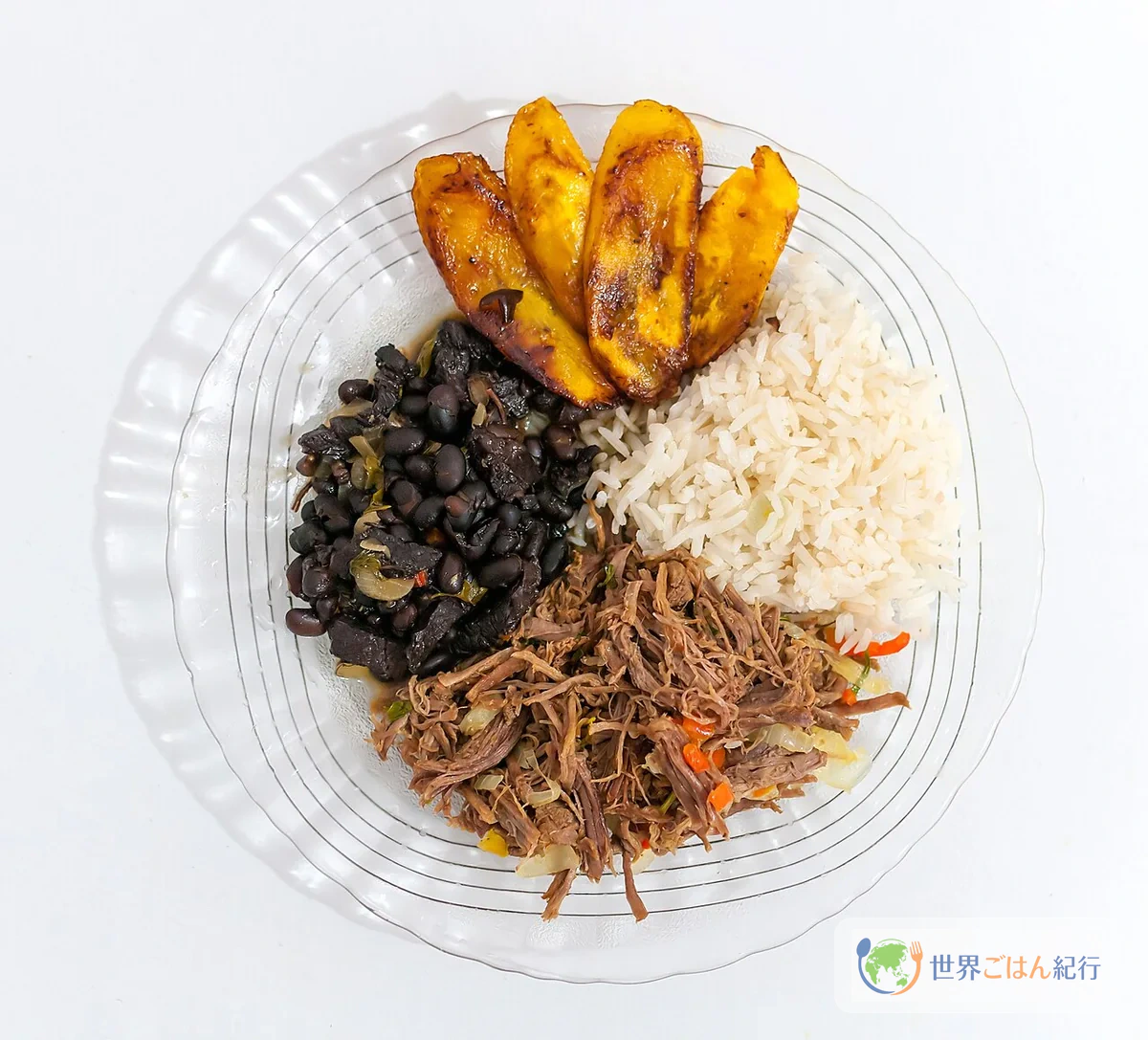
Freshly cooked white rice goes on one side of the plate, and black beans are slowly ladled onto the other. Shredded beef, glossy and red from tomato and bell pepper, goes on top, and finally sweet fried plantains. Every part is close to familiar home cooking, yet the moment they come together on one plate, it becomes a South American table. This is Venezuela's national dish, pabellón criollo.

"Pabellón" in Spanish means "flag" or "large banner." White rice, black beans, brown beef, and yellow tajadas (fried ripe plantain) sit sharply separate on the plate, which makes this a very visual dish name. English-language food sites introduce it as a plate that combines the Caribbean pairing of rice and beans with shredded beef, carne mechada, and sweet plantains.
The hard part at home is not the ingredient names but the order of work. Simmer the beef until tender, then shred it. For black beans, soak dried beans the day before, or re-season canned ones. And plantains can't be fully replaced with bananas. Blur those points and it turns into "beef bowl, bean rice, and banana." This article turns the limits of beef shank, chuck, or rump, canned black beans, frozen plantains, and fully ripe bananas into decisions you can make in a home kitchen.
If you've already made arepas or cachapa, you'll notice that even within Venezuelan cooking the roles differ. Arepas are the daily staple and cachapa is a sweet corn snack. Pabellón criollo is the "center of the table," taking in rice, beans, meat, and a sweet side all at once.
In Spanish it is written pabellon criollo or, with the accent, pabellón criollo. In Japanese there are mixed spellings. This article unifies on pabellón criollo for ease of reading.
Background: Why Rice, Beans, Beef, and Plantains Share One Plate

Pabellón criollo is too good to be dismissed as simply a "Venezuelan one-plate meal." 196 flavors presents the combination of white rice, beef, black beans, and plantains as the Venezuelan version of the rice-and-beans culture spreading across the Caribbean and Central America. Black beans come from the indigenous bean culture of Latin America, beef from ranching since the colonial era, and rice and plantains are ingredients that took root at the table through movement across the Atlantic world.
Locally, the shredded beef is called carne mechada, the black beans caraotas negras, and the fried ripe plantains tajadas. Knowing the names helps when reading recipes from abroad. Pabellón is a "single dish," but in fact it is a composition combining three or four dishes on one plate.
What's interesting is that when tajadas are placed along the side, it is called pabellón con barandas. "Barandas" means railings or fences; long strips of plantain placed at the edge of the plate look like they are guarding the food from spilling. There are variations by region and household: pabellón a caballo with a fried egg on top, and pabellón margariteño on the seaside island of Margarita, where seafood replaces the beef.
When you recreate it at home, keeping this structure of "separate, yet complete on one plate" brings it closer to the original. Don't mix the beef into the beans, don't soak the rice in sauce, and put the sweetness of the plantain in its own place. The diner combines rice, beans, meat, and sweet plantain a little at a time on the spoon, and that is what makes it pabellón.
Ingredients: What to Swap and What to Keep

Basic ingredients (serves 4)
Substitution guide
| Local ingredient | Realistic choice | Why protect it |
|---|---|---|
| Flank or skirt-type beef | Beef shank, chuck, rump in a block | Needs fibers that shred. Thin-sliced beef doesn't become carne mechada |
| Caraotas negras | Canned cooked black beans | Adzuki beans lean sweet and Japanese-style. Protect the aroma and color of black beans |
| Plantain | Frozen plantains, ripe plantains from an import produce shop | More starch than banana, so they hold their shape when fried |
| Ají dulce | A little red bell pepper, sweet long pepper | An ingredient for sweet aroma, not heat. Don't make it hot with chili |
This recipe uses beef. Depending on the product, Worcestershire sauce contains allergens such as wheat, soy, and apple. For canned black beans and frozen plantains, labeling about production lines differs by imported product, so always check when you buy.
Try not to over-substitute the plantain. Ripe plantain smells like banana but keeps a firm, starchy bite when cooked. If you use fully ripe banana, cut it thick, dust it lightly with potato starch, and sear it briefly so it is less likely to collapse. The flavor does lean considerably toward dessert, though.
If you're looking for canned black beans and plantains at the same time, a Latin American grocery or an online shop is quick. Beef is available at the supermarket, so limiting the specialty items to black beans and plantains lightens the shopping.
Method: Finish the Beef, Beans, Rice, and Plantains in Order
Pabellón criollo depends more on order than on difficult technique. While the beef simmers, prepare the black beans, cook the rice, and fry the plantains last. If you fry the plantains first they go cold and oily, so the sweet side comes last.
If you cut the beef simmer too short, it won't shred. On days when you want to save time, use canned beans instead of dried, and use a pressure cooker for the beef. Frozen plantains are fine, but adding color in a skillet at the end brings the aroma back.
Where It Goes Wrong: Tough Beef, Sweet Beans, Collapsing Bananas

If the fibers resist when you try to shred, it hasn't simmered enough. Rather than slicing it thin to hide the problem, add cooking liquid and simmer another 20–30 minutes. For carne mechada, the soft tenderness where the fibers separate naturally is everything.
If you add sugar the way you would for Japanese simmered black beans, the whole plate leans Japanese. Some regions do add sweetness to the beans, but for your first time, build the aroma with onion, garlic, salt, and a little cumin, and leave the sweetness to the plantains for an easy balance.
Ripe bananas have a lot of water and not as much starch as plantains. If you substitute, choose ones ripe enough to still hold their shape, cut them thick, and dust them lightly with potato starch. Long cooking melts them, so add color for just a short time over fairly high heat.
Pabellón is not a dish that unifies everything, like curry and rice. Rice stays rice, beans stay beans, meat stays meat, and each flavor stands, combined a little at a time on the spoon. The separation on the plate is not just for looks; it is the design of how to eat.
How to Eat It: Stuff It in an Arepa, Top with a Fried Egg, or Carry It Over to the Next Day

Top the basic plate with a fried egg and it becomes pabellón a caballo. "A caballo" means "on horseback," an expression used in Latin America for dishes with a fried egg on top. The yolk runs into the beef and rice, so it suits a weekend lunch better than dinner.
Stuffing it into an arepa is also recommended. Split a baked arepa from the side and put in a little beef, black beans, and plantain, and it comes close to arepa de pabellón. You can leave out the rice, and adding white cheese tightens the saltiness. If you're carrying leftover pabellón components over to the next day's lunch, this is the easiest way.
When serving alongside cachapa, bake the cachapa small. Pabellón already has rice and beans, so a large corn pancake as well would be quite heavy. Sweet corn and the sweetness of plantain overlap, so adding salad, tomato, avocado, and lime makes it easier to eat.
To widen it into a South American menu, ceviche (in Japanese) as an appetizer, Cuban ropa vieja (in Japanese) to compare meat dishes, and Brazil's feijoada to compare bean dishes show how, even within the same "meat, beans, and rice," each region builds its flavors differently.
Storage and Make-Ahead: Store by Part, Not as One Plate

Pabellón criollo is good for making ahead. However, if you store it already plated, the rice absorbs the bean liquid and the plantains soften from moisture. For storage, always separate the parts.
As a guide, shredded beef keeps 3 days in the refrigerator, 2–3 weeks in the freezer. When freezing, leave a little extra cooking liquid and portion it out. After thawing, warm in a skillet and, if needed, add 2–3 tbsp of cooking liquid or water to bring back the moisture.
Black beans keep 3 days refrigerated and 2 weeks frozen. Even if you used canned beans, you reheated them with onion and garlic, so cool them quickly in a clean container. Beans taste less salty when cold, so taste after reheating.
Cooked rice is treated like ordinary rice. To freeze, portion it fresh from the cooker. Plantains are ideally eaten the same day, as refrigerating loses their toasty flavor. If any is left, refry it the next day in a skillet and put it beside an arepa or fried egg so nothing is wasted.
Because pabellón takes time, making extra beef and black beans and carrying them over to the next day's arepas raises the value of your shopping.
FAQ
Can I make it with thinly sliced beef?
You can, but it loses the character of pabellón criollo. Carne mechada becomes thin, sauce-soaked meat by simmering a block and shredding along the fibers. If you use thin slices, accept that it is a braise-style stir-fry and that it is a different thing from the faithful recreation the title promises.
I can't buy plantains. Can I use bananas?
As a last resort, yes. But fully ripe bananas are sweet and soft and collapse easily when fried. Cut a banana that still has some firmness thick, dust lightly with potato starch, and sear briefly. If possible, getting frozen plantains online gets you closer to the original.
Can I substitute sweet Japanese simmered black soybeans for the black beans?
I don't recommend it. Sweet simmered kuromame overlaps with the sweetness of the plantains and leans toward a Japanese New Year dish. Use canned black beans, dried black beans, or unsweetened cooked beans, and season with onion, garlic, and salt for a meal.
Do they use fried eggs or cheese locally too?
They do. One topped with a fried egg is sometimes called pabellón a caballo. Some households serve white cheese or avocado alongside. Still, the four basic elements are beef, black beans, white rice, and plantains. Making these four properly the first time shows you the axis of the flavor.
Can I serve it with arepas or cachapa?
They go well. But pabellón itself is a heavy plate containing rice and beans. If you stuff it in an arepa, leave out the rice; if you pair it with cachapa, bake it small to make it easier to eat. On a day when you want to show off a Venezuelan table, lining up small portions of arepa, cachapa, and pabellón is fun.
Can I make it mild for kids?
This recipe is not spicy to begin with. It has the aroma of cumin and garlic, but since it isn't a dish made hot with chili, it is easy to serve to children and to people who don't like spicy food. If the aroma is too strong, reduce the cumin to 1/2 tsp.
Wrapping Up: One Plate Shows the Skeleton of Venezuelan Food

Pabellón criollo is not a quick dish. You simmer the beef, add aroma to the beans, cook the rice, and fry the plantains last. But each task is within the range of home cooking. Rather than a difficult sauce, what decides the flavor is making each part properly and separately.
For the first time, beef shank, canned black beans, and frozen plantains are enough. Simmer the beef until it shreds tenderly. Don't make the black beans sweet. Fry the plantains last. Just keeping to these three gets you quite close to the Venezuelan national dish in a home kitchen.
To continue with Venezuelan food, move on to how to make arepas, the staple, and how to make cachapa, the sweet corn dish. To widen the region, the South American cuisine overview (in Japanese) leads on to ropa vieja, feijoada, and lomo saltado, and you'll see how rice, beans, and meat change from country to country.
Sources
- Whats4eats, "Pabellon Criollo (Venezuelan shredded beef with beans, rice and plantains)" https://www.whats4eats.com/meats/pabellon-criollo-recipe (accessed 2026-05-07)
- 196 flavors, "Pabellon Criollo" https://www.196flavors.com/pabellon-criollo/ (accessed 2026-05-07)
- Goya Foods, "Venezuelan Shredded Beef (Pabellon Criollo)" https://www.goya.com/en/recipes/Venezuelan-Shredded-Beef/ (accessed 2026-05-07)
- Wikimedia Commons, Category "Pabellon criollo" https://commons.wikimedia.org/wiki/Category:Pabell%C3%B3n_criollo (accessed 2026-05-07)
- Wikimedia Commons, "Pabellon Criollo.jpg" by Clara Flores, CC BY-SA https://commons.wikimedia.org/wiki/File:Pabellon_Criollo.jpg
- Wikimedia Commons, "Pabellon criollo.jpg" by Odalisos, CC BY-SA 3.0 https://commons.wikimedia.org/wiki/File:Pabellon_criollo.jpg
- Wikimedia Commons, "Pabellon Criollo Margariteno.jpg" https://commons.wikimedia.org/wiki/File:Pabell%C3%B3n_Criollo_Margarite%C3%B1o.jpg
- Wikimedia Commons, "Plato Tipico Nacional PABELLON CRIOLLO.JPG" and other files in Category:Pabellon criollo; individual licenses are listed on each file page.


