Aloo Tikki: A Crisp Potato Shell Around Coarse, Spiced Peas
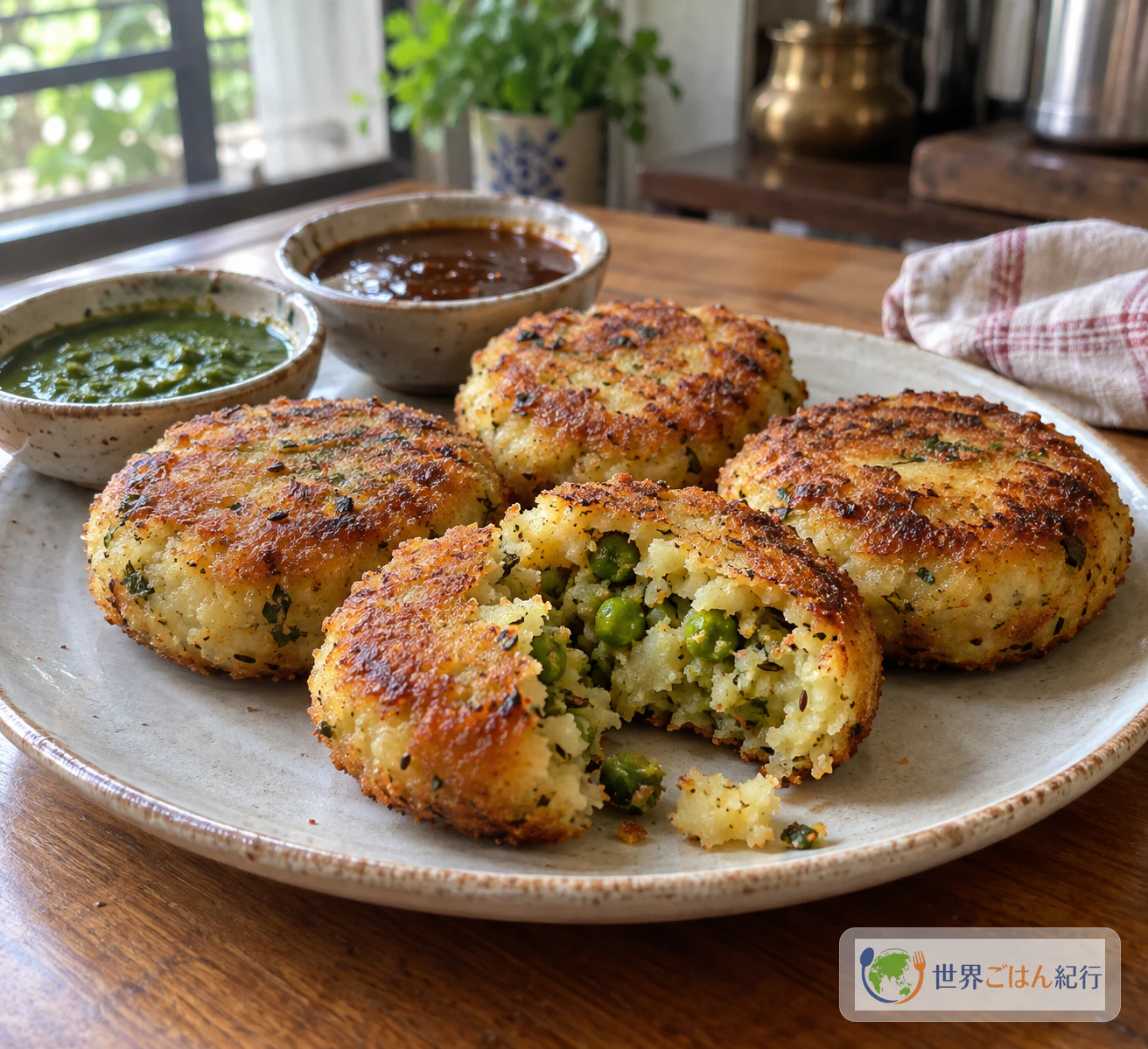
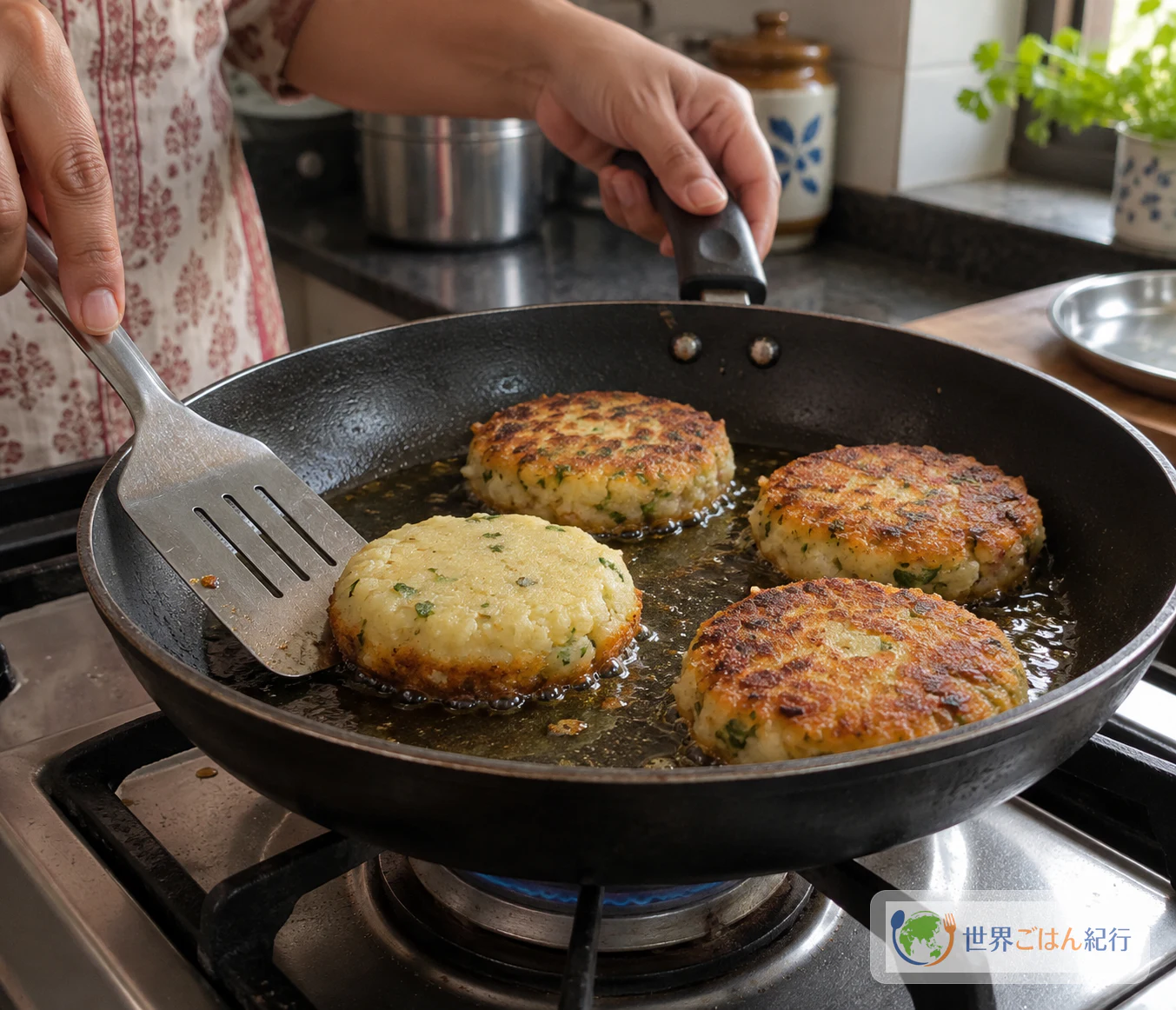
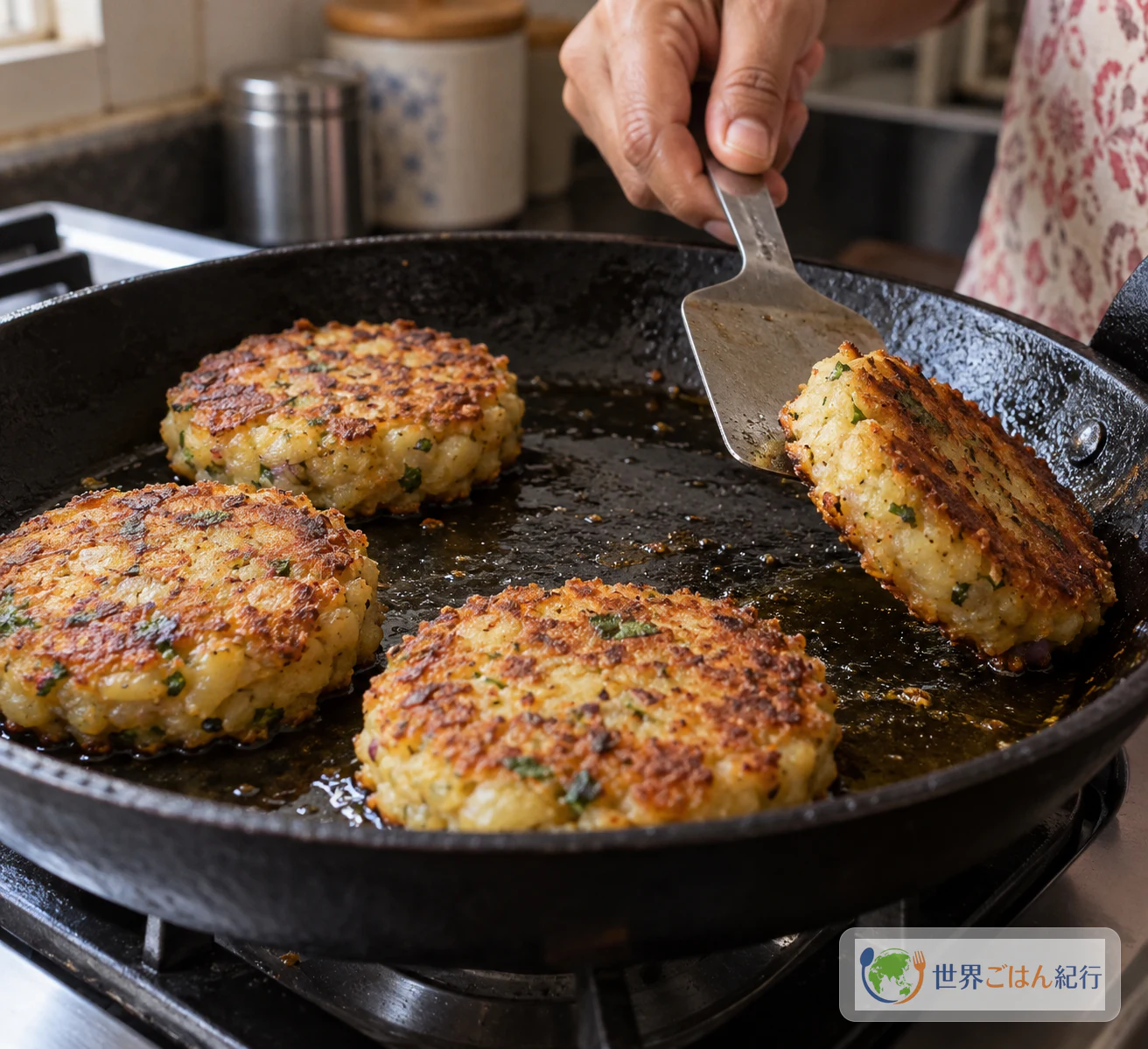
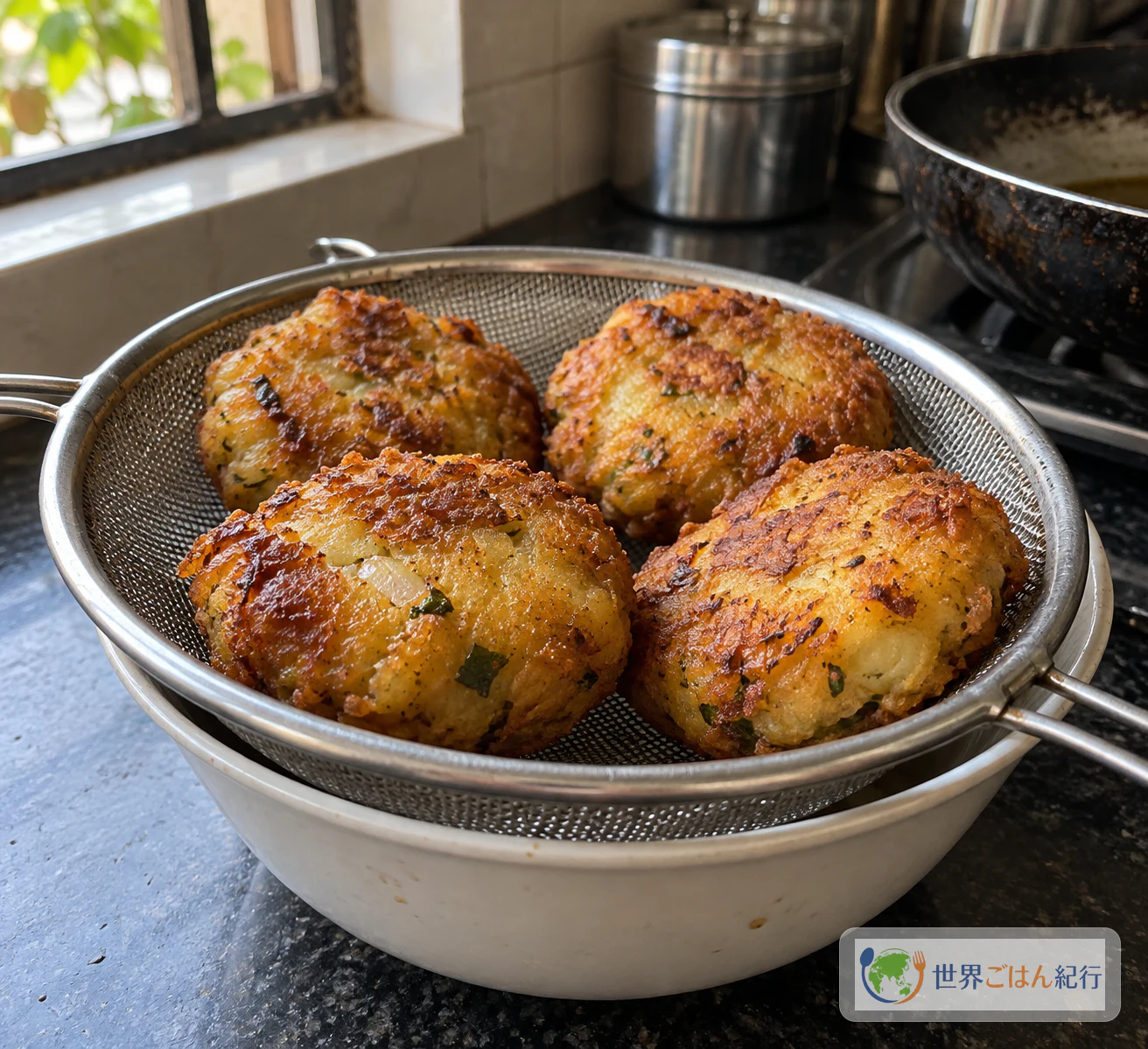
A golden, crisp crust on both sides, a soft spiced potato layer, and a filling of peas that are coarsely mashed rather than turned to paste. Cool the potatoes before the binders go in, and keep the filling dry.
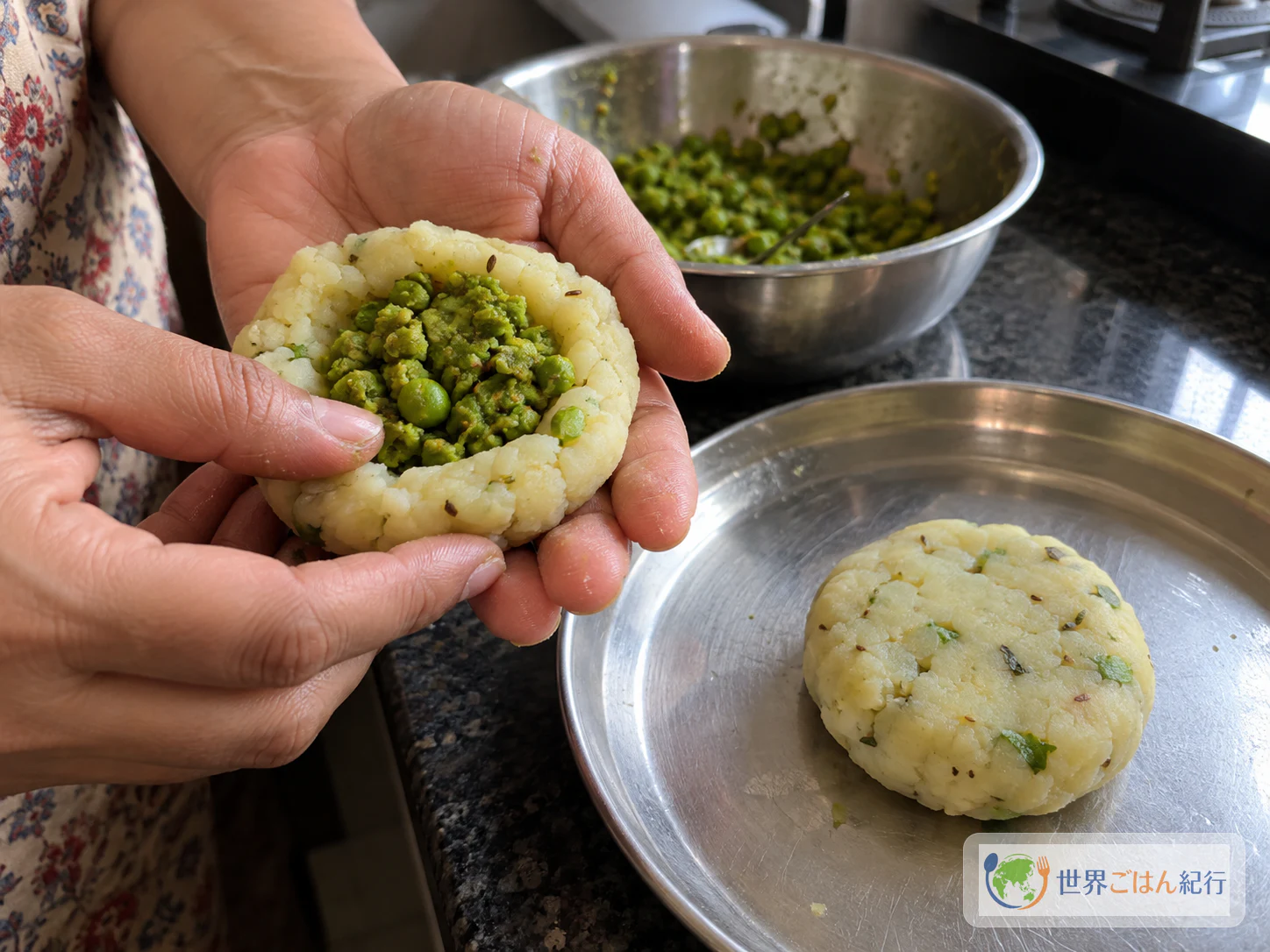
Break one open and the coarse, seasoned green peas tumble out of the center, while the outer potato layer carries a toasty, shallow-fried crust. Aloo tikki pairs aloo, potato, with tikki, a small patty, and this version is the North Indian style in which a spiced potato dough is wrapped around a pea filling and cooked in a thin layer of oil in a skillet.
Aloo tikki is eaten plainly, with chutneys, or built up into chaat with yogurt and onions, and it is also served alongside chickpea curry. This recipe chooses the stuffed version because the flavor is settled all the way to the center of each patty, so it holds up even when served simply with coriander chutney and tamarind chutney on the side.
What Aloo Tikki Is, and Why This Version
Aloo tikki is a potato patty snack known as North Indian street food. The recipe followed here, from Dassana's Veg Recipes, presents both plain and stuffed versions and lists street-style accompaniments such as chutneys, yogurt, onions and chickpea curry. NDTV Food likewise describes aloo tikki as a street snack commonly served with chutney or chickpeas. No single serving style is the one true form; the same patty moves between a snack eaten on its own and the base of a fuller plate.
The name is also shared with nearby dishes that should not be confused with it. The source recipe distinguishes western Indian aloo pattice and Mumbai's ragda patties as related ways of serving potato patties, each with its own composition. This article stays with the single stuffed patty.
Recipes for aloo tikki differ in ratio and method, so this article follows one formula from start to finish rather than mixing several. NDTV Food's recipe, for example, mashes potato and peas together, adds sautéed onion and roasted whole spices, and chills the shaped patties before shallow-frying. Pamela Timms's Delhi recipe in Scroll.in stuffs peas into the potato, with optional breadcrumbs, and starts the patties over high heat for color before lowering the heat until crisp. Both are good recipes in their own right, but their amounts belong to them. The recipe below uses only the Dassana's Veg Recipes formula, where the amounts, steps and binding advice all sit together.
Old Delhi and the patty as everyday food
Writing for Scroll.in, Pamela Timms places aloo tikki within the street-food life of Old Delhi and describes it, in her account, as sustaining comfort food for the workers who rely on inexpensive meals there. That is one writer's view of one part of the city, not a history of the dish's origin, but it helps explain why a patty of potatoes and peas carries so much weight: it is filling, cheap to make, and finished to order in a pan. For more dishes from the same country, see India.
Ingredients: Potato Dough, Pea Filling and Frying
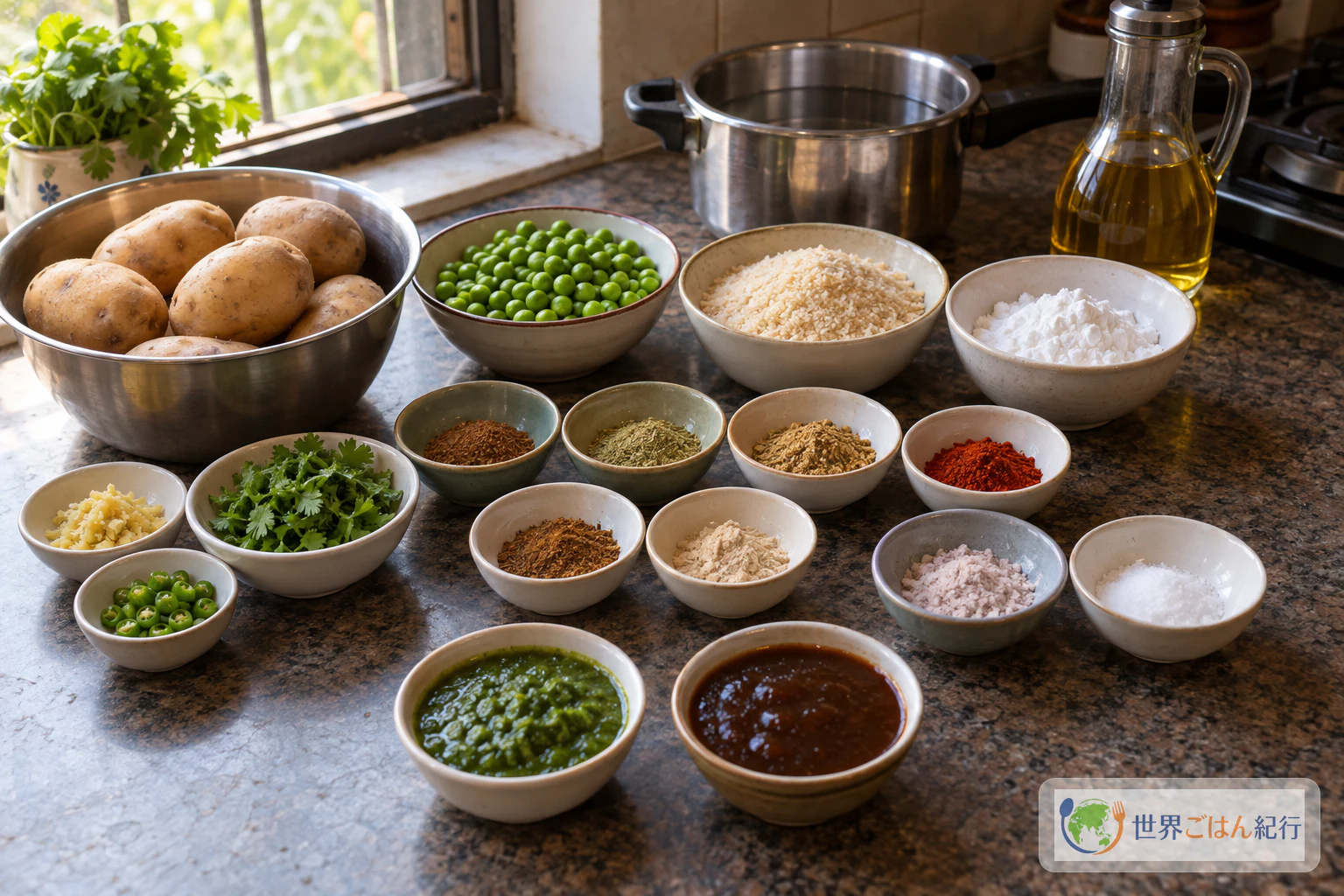
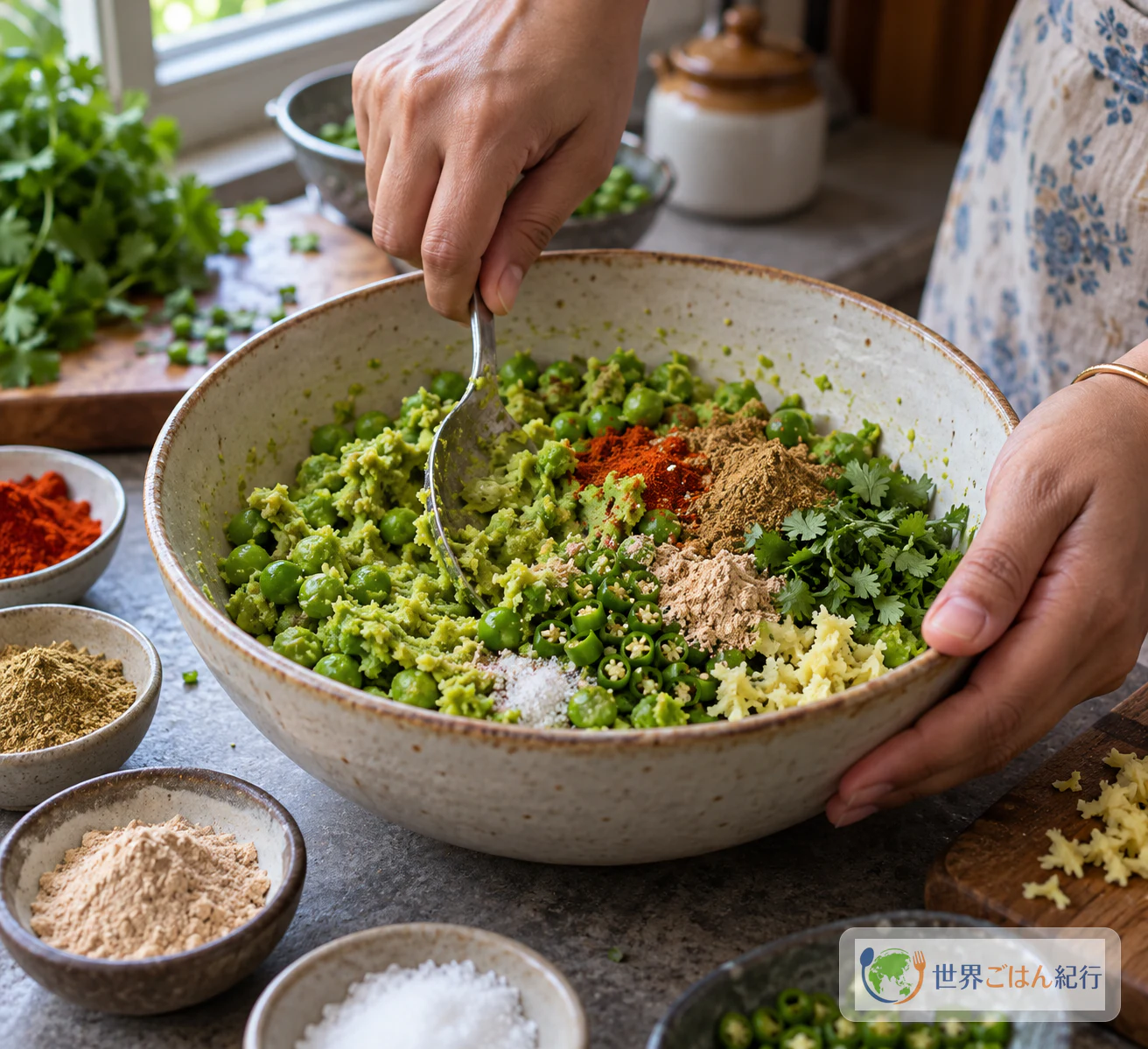
The source recipe makes six large tikki. That is a count of patties, not a number of servings. The spices, coriander leaves, black salt and regular salt appear in both the dough and the filling in different amounts, so measure them into two separate groups before you start; each group goes in only once, at its own step.
The potato amount is 500 g of whole potatoes, weighed raw before cooking. The source also describes this as 4–5 large potatoes; go by the weight. Where the source gives a salt amount as "as required," no number is given here either: add a little, taste, and adjust.
The chutneys are served ready-made on the side; making them is not part of this recipe. The milliliter equivalents use an editorial measuring convention of 1 cup = 240 ml, 1 tbsp = 15 ml and 1 tsp = 5 ml, not capacities specified by the source. The 60 ml measures for breadcrumbs and arrowroot are volumes, not weights.
Breadcrumbs may contain wheat. Check the ingredient labels of your breadcrumbs, prepared chutneys and spice products. Depending on the products you choose, this dish cannot be assumed to be vegan or free of any particular allergen.
Equipment
- Stovetop pressure cooker, 3–4 L, with a trivet (check your manual for the minimum water level and trivet placement)
- A small heatproof bowl that fits on the trivet, for the peas
- Coarse grater, or a potato masher
- A wide mixing bowl and a small bowl
- Skillet or tawa
- Thin spatula
- A strainer set over a bowl, or paper, for draining
Choosing and Substituting: What Changes When You Swap
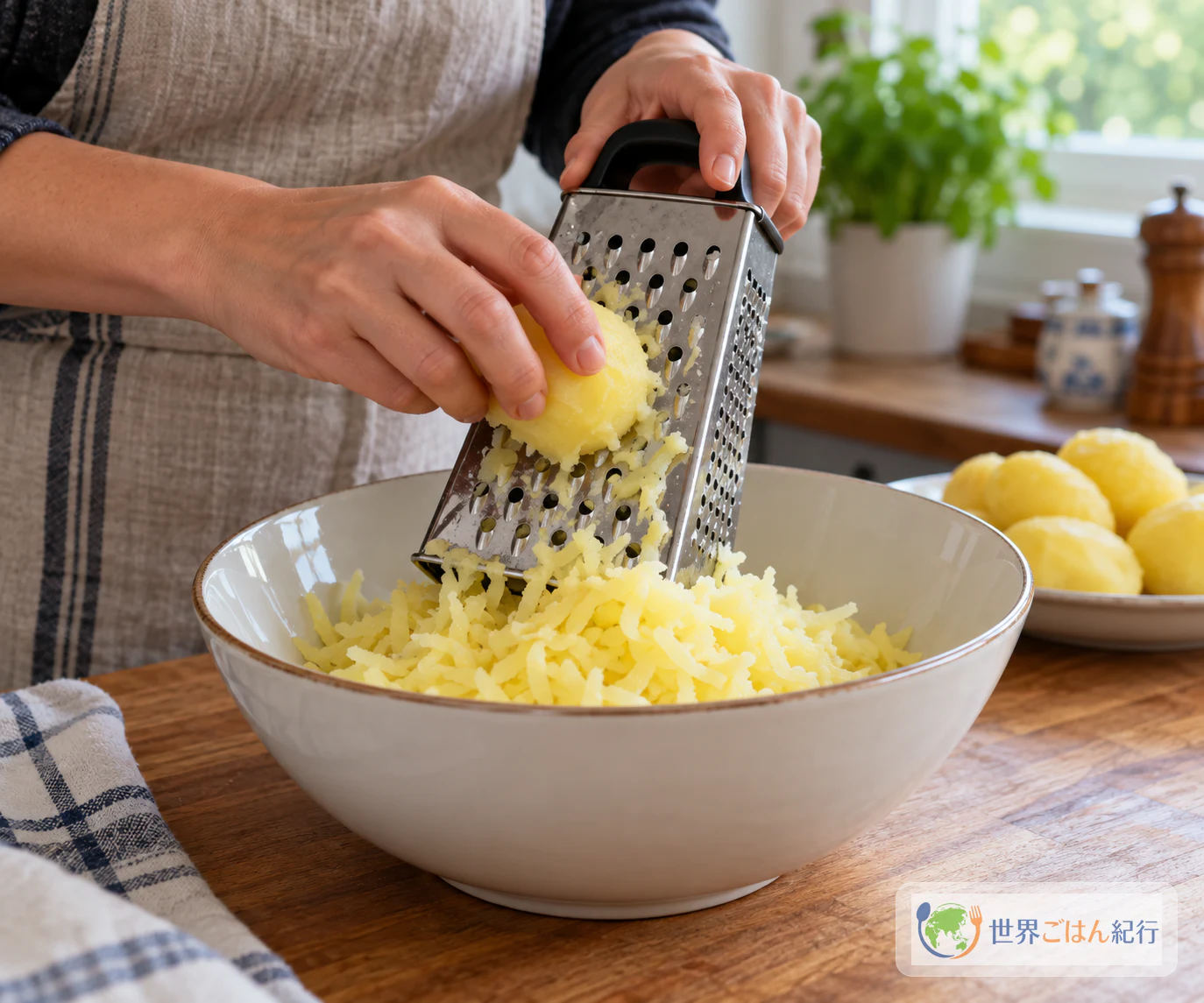
Potatoes. Starchy, floury potatoes give a dough that is less watery and holds together more easily. If yours feel sticky or wet after cooking, let the steam escape well and cool them completely before adding anything else.
Amchur. Dry mango powder gives sourness without moisture. The source lists lemon juice as an alternative: ½–1 tsp in the dough and ¼–½ tsp in the filling. Lemon juice adds liquid, so watch how the dough holds together. Use either amchur or lemon juice, not both.
Black salt. Kala namak tastes different from regular salt because of its sulfurous aroma. If you can't find it, regular salt will season the patties, but that characteristic aroma will be weaker.
Garam masala and chili. The source lists curry powder as an alternative to garam masala and cayenne as an alternative to red chili powder. The aroma shifts with curry powder, so choose one or the other rather than adding both.
Ginger. Use fresh, finely chopped ginger. The source also allows ¼ tsp ground ginger instead, but don't layer the two.
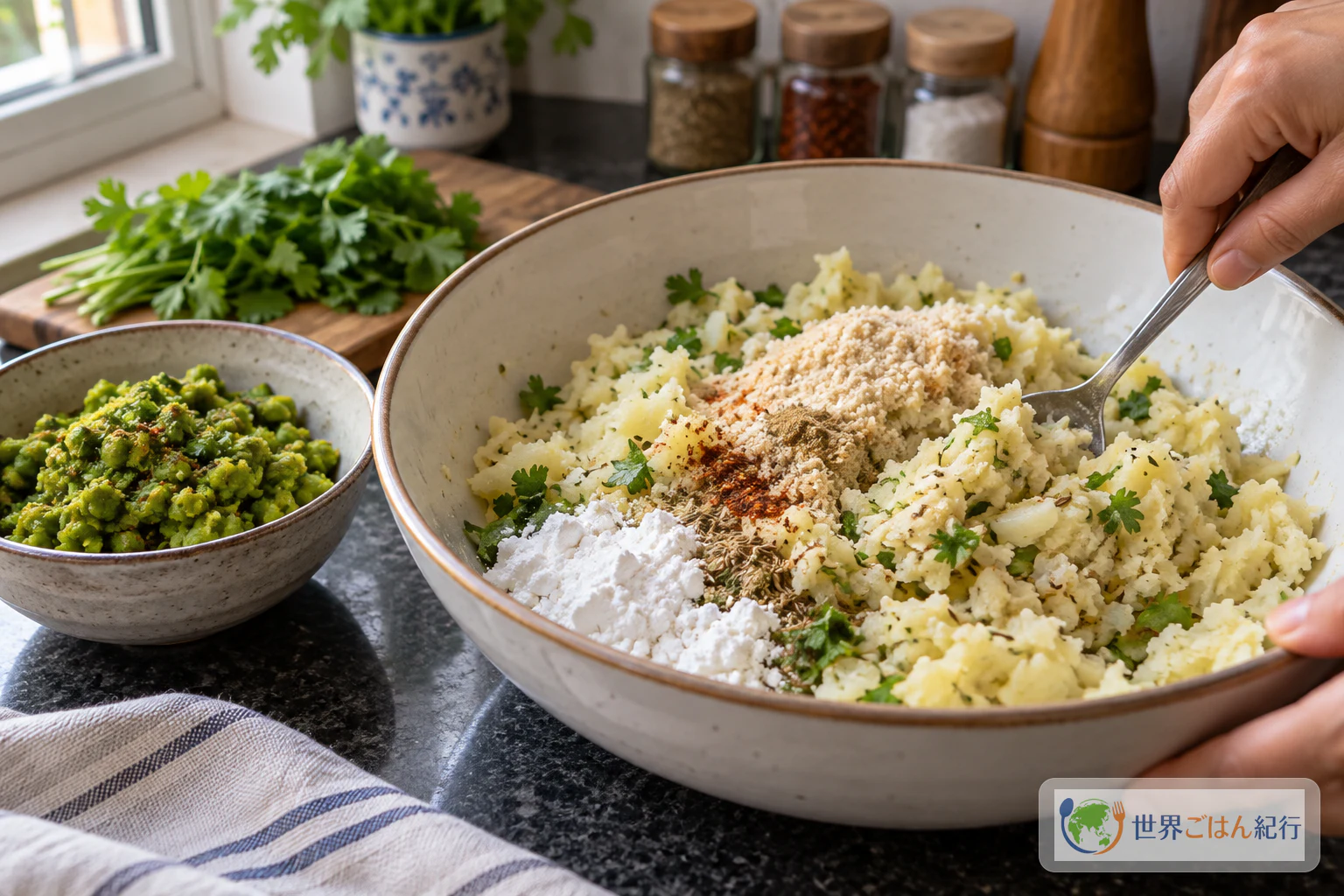
Arrowroot flour. The source pairs breadcrumbs with arrowroot flour and lists rice flour, corn flour or cornstarch, tapioca starch, potato starch and roasted besan (gram flour) as binder alternatives. Each gives a slightly different texture, and arrowroot is not the same starch as any of them. If you substitute, pick one and change only that one thing.
Peas. This recipe uses fresh shelled peas; the source also accepts frozen. Whichever you use, drain them well so the filling stays dry.
Method: Cook, Cool, Bind, Stuff, Fry
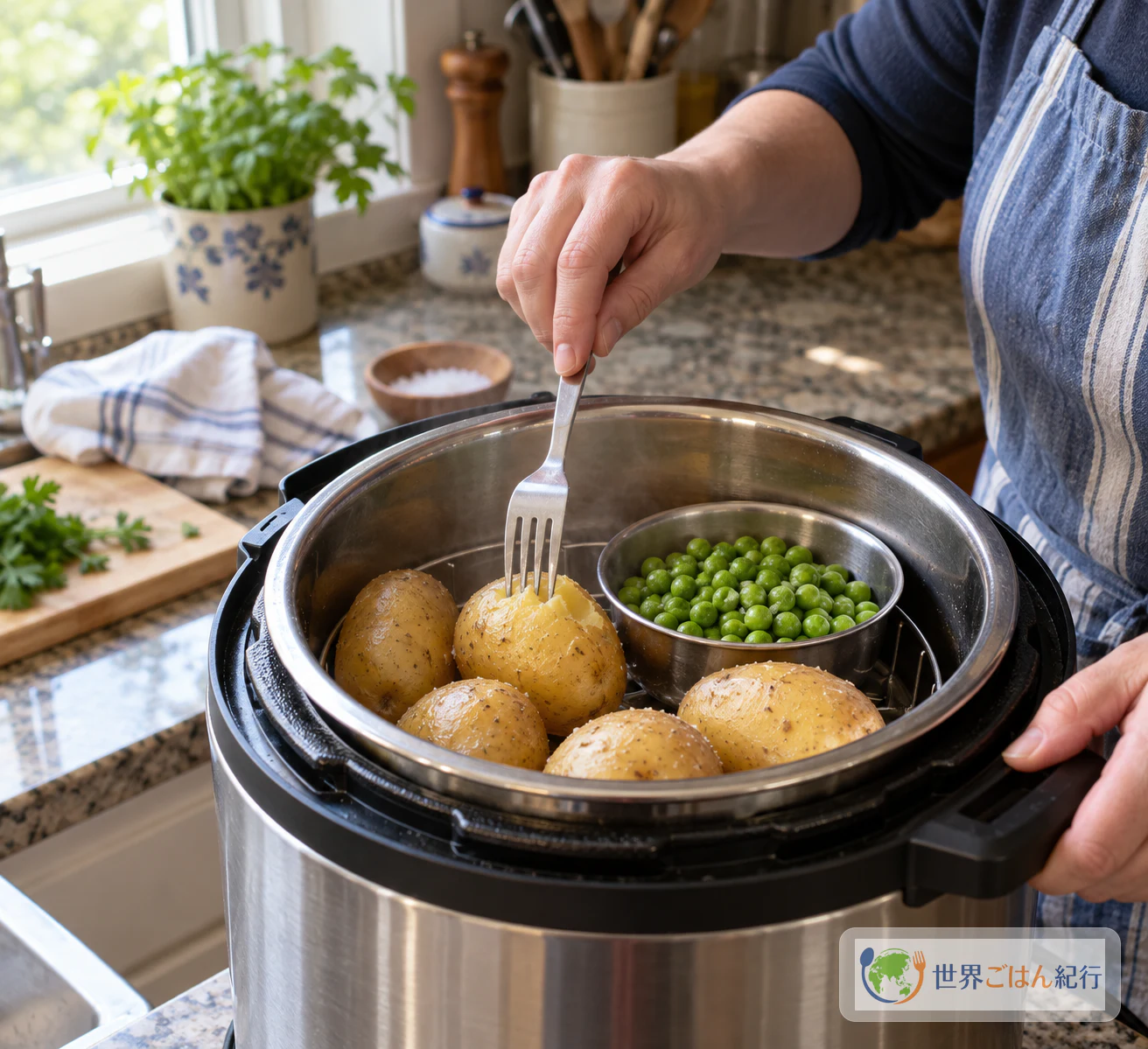
The pressure-cooker whistle count depends on the cooker, so judge doneness by how easily a knife or fork slides into the potatoes. The source recipe lists 40 minutes, but this is its stated duration, not a measured guarantee here; allow for cooling the potatoes and differences between cookers.
Sticky, Cracking, Scorching: Fixes for Common Problems
| Problem | Likely cause | What to do |
|---|---|---|
| The dough is sticky and won't shape | Binders went in while the potatoes were warm; the potatoes are moist | Make sure the potatoes are fully cooled before mixing. Add breadcrumbs or arrowroot a little at a time, not all at once |
| The patties crack while frying | Wet filling; an open seam; moving the patty too early | Drain the peas well and seal the seam completely. Let the underside set before you touch it |
| The outside darkens before the inside is hot | Heat too high | Lower the heat and keep turning the patties until both sides are evenly golden |
| The flavor feels flat | Not enough salt; black salt replaced with regular salt | Taste the cooked pea filling separately. For the dough containing uncooked binders, cook a small sample thoroughly before tasting and adjusting its salt |
| The texture changed after swapping the binder | Arrowroot replaced with a different starch or flour | Next time, change only one binder and adjust the amount little by little |
The advice to cool the potatoes before adding the binders, to use starchy potatoes and to fry until crisp comes from the source recipe. The advice on sealing the seam and waiting before you move the patty follows from the shape of a stuffed patty.
Ways to Serve and Vary It
For a first batch, serve the patties with just the two chutneys. You can see how the crust and filling turned out before building anything on top.
With chutneys. Coriander chutney and tamarind chutney are the basic pairing in the source recipe: one fresh and green, the other sweet and sour.
Without the filling. The source recipe notes that the pea filling can be left out. Make the dough the same way, skip steps 2 and 5's stuffing, and simply shape and fry plain patties.
As chaat. Top the fried patties with chutneys, yogurt and onions to turn them into a chaat plate. These toppings are added at serving time and are not part of the base recipe.
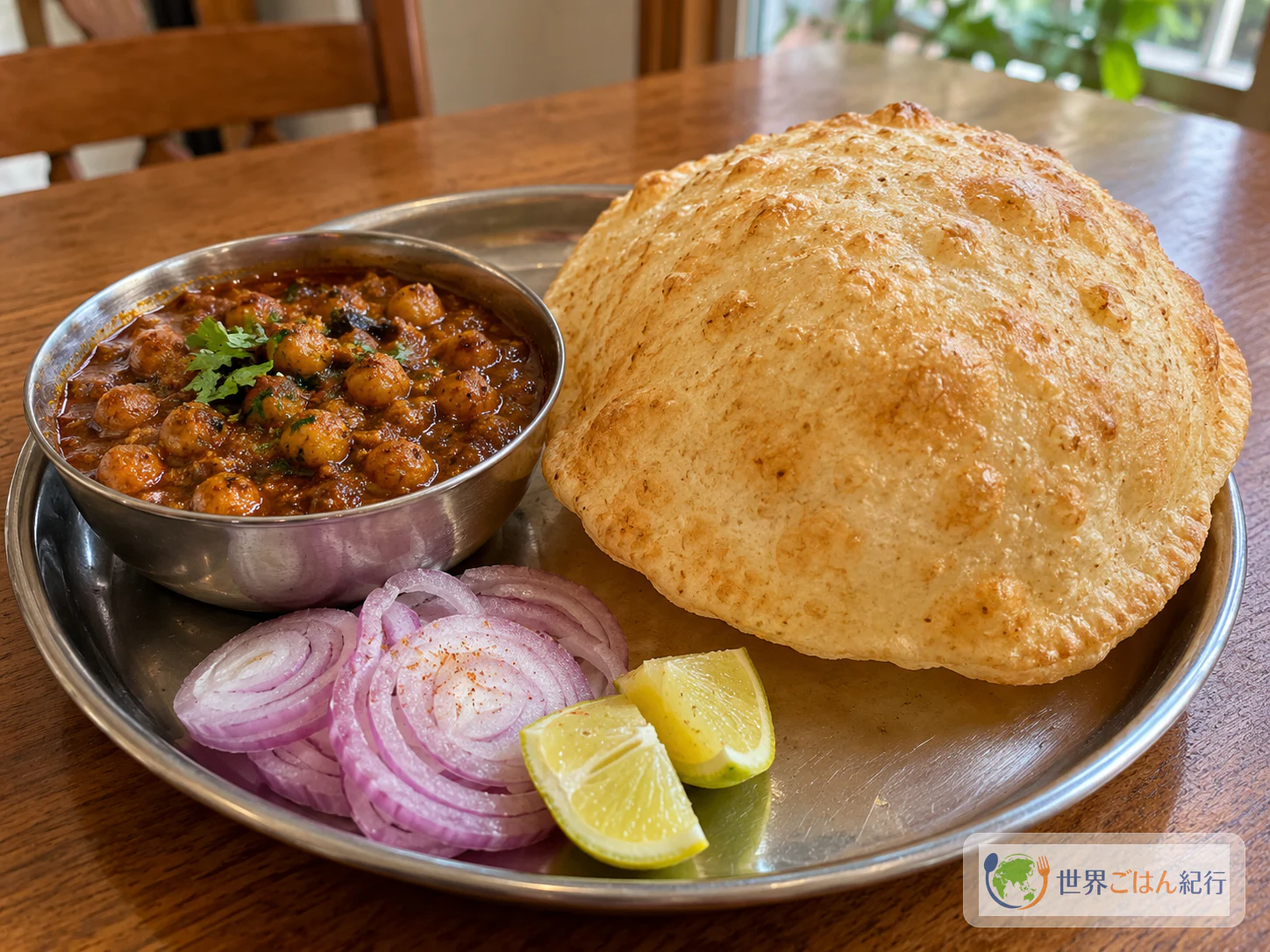
With chickpea curry. Serving the patties alongside a chickpea curry turns the snack into a fuller meal, as described in both the source recipe and NDTV Food.
Aloo pattice and ragda patties. In western India and Mumbai, potato patties are served in related ways under these names. They are worth exploring as separate dishes rather than as adjustments to this formula.
Frequently Asked Questions
Do I have to stuff the patties with peas?
No. The source recipe says the pea filling can be omitted. The dough and frying stay the same; the patties will simply be plain potato all the way through.
What can I use instead of amchur?
The source lists lemon juice: ½–1 tsp in the dough and ¼–½ tsp in the filling. It adds liquid, so check that the dough still holds before shaping, and add a little more binder only if needed.
Can I use cornstarch instead of arrowroot flour?
The source lists corn flour or cornstarch among its binder alternatives, along with rice flour, tapioca starch, potato starch and roasted besan. Each binds a little differently from arrowroot, so expect a slightly different texture. Swap only one thing at a time.
Which potatoes work best?
Starchy, floury potatoes, which the source recommends because they make a dough that is less watery. Whatever you use, weigh 500 g of whole raw potatoes and cool them completely after grating.
Can I make them ahead or store leftovers?
The source mentions freezing shaped patties and thawing them before frying, but no tested storage period or thawing method is given here, so no safe number of days is stated. As general household food-safety guidance, Japan's Ministry of Health, Labour and Welfare advises dividing leftovers into shallow portions to cool them quickly, refrigerating them, and reheating thoroughly, to around 75°C as a guide.
Sources
- Dassana's Veg Recipes, "Aloo Tikki Recipe (Crispy Potato Patties)." The recipe followed in this article: the stuffed green pea version, its ingredient amounts, pressure-cooker method, cooling and binding advice, shallow-frying, accompaniments, binder and spice alternatives, the distinction from aloo pattice and ragda patties, and the stated yield of six large patties. https://www.vegrecipesofindia.com/aloo-tikki-aloo-pattice-recipe-made-from-leftover-potatoes/
- NDTV Food, "Aloo Tikki Recipe." Used for aloo tikki as a street snack served with chutney or chickpeas, and as an example of a different recipe that mixes peas and sautéed onion into the potato. https://food.ndtv.com/recipe-aloo-tikki-231373
- Pamela Timms, "Aloo Tikki: Pamela Timms shares a recipe of Delhi street food classic," Scroll.in. Used for the author's account of aloo tikki in Old Delhi street-food life, and as an example of a separate Delhi stuffed recipe with a different ratio and frying method. https://scroll.in/food/943667/aloo-tikki
- Ministry of Health, Labour and Welfare (Japan), "家庭での食中毒予防" (Preventing food poisoning at home). Used for general household guidance on cooling food in shallow portions and reheating thoroughly; not a dish-specific storage test. https://www.mhlw.go.jp/stf/seisakunitsuite/bunya/kenkou_iryou/shokuhin/syokuchu/01_00008.html