Mambazha Pulissery: Sweet Mango Meets Sour Yogurt
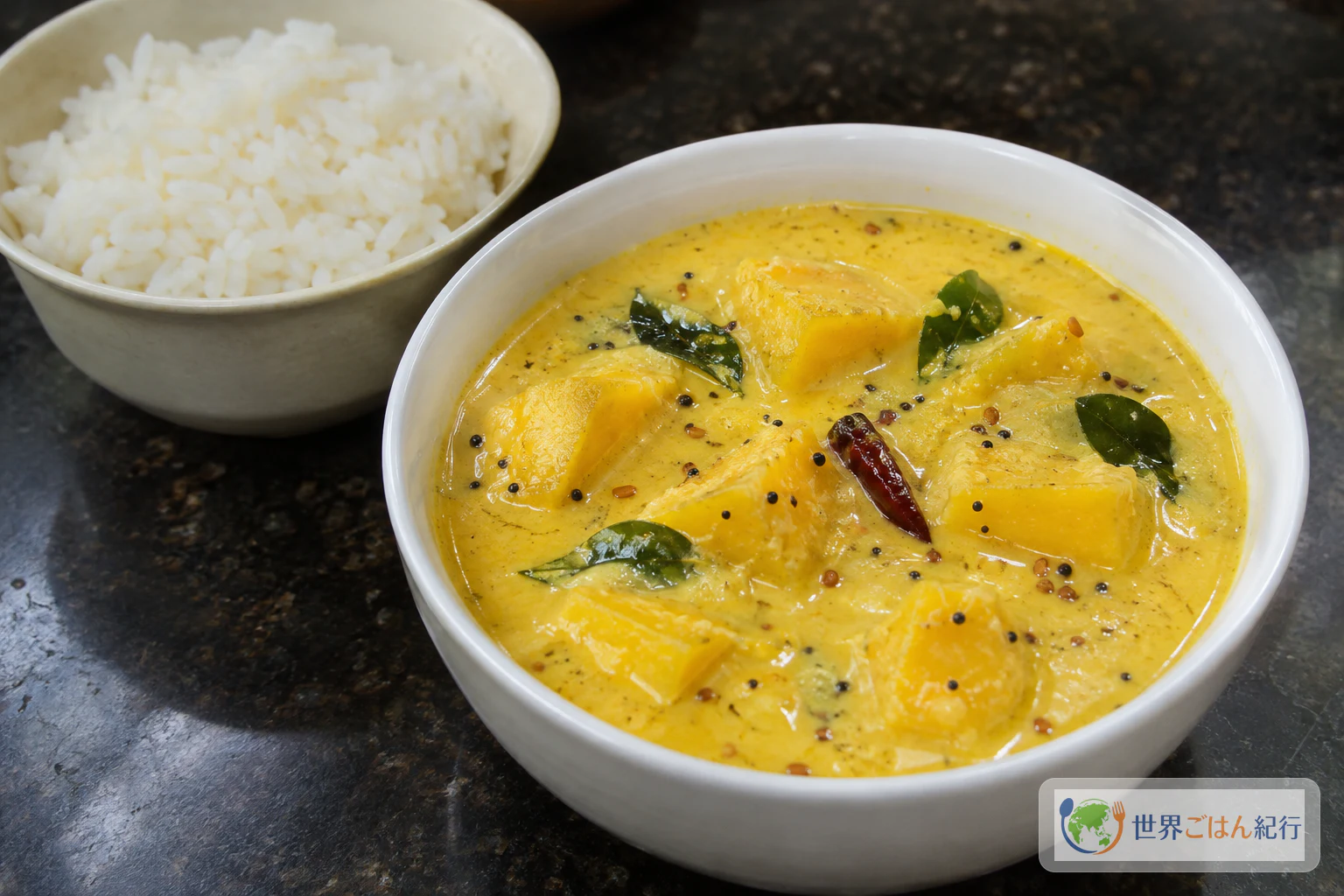
Soft mango cubes that still hold their shape, a coarse coconut paste with its raw smell cooked out, and yogurt stirred in only after the heat is off. The curry should end semi-thick, golden and gently sweet-sour.
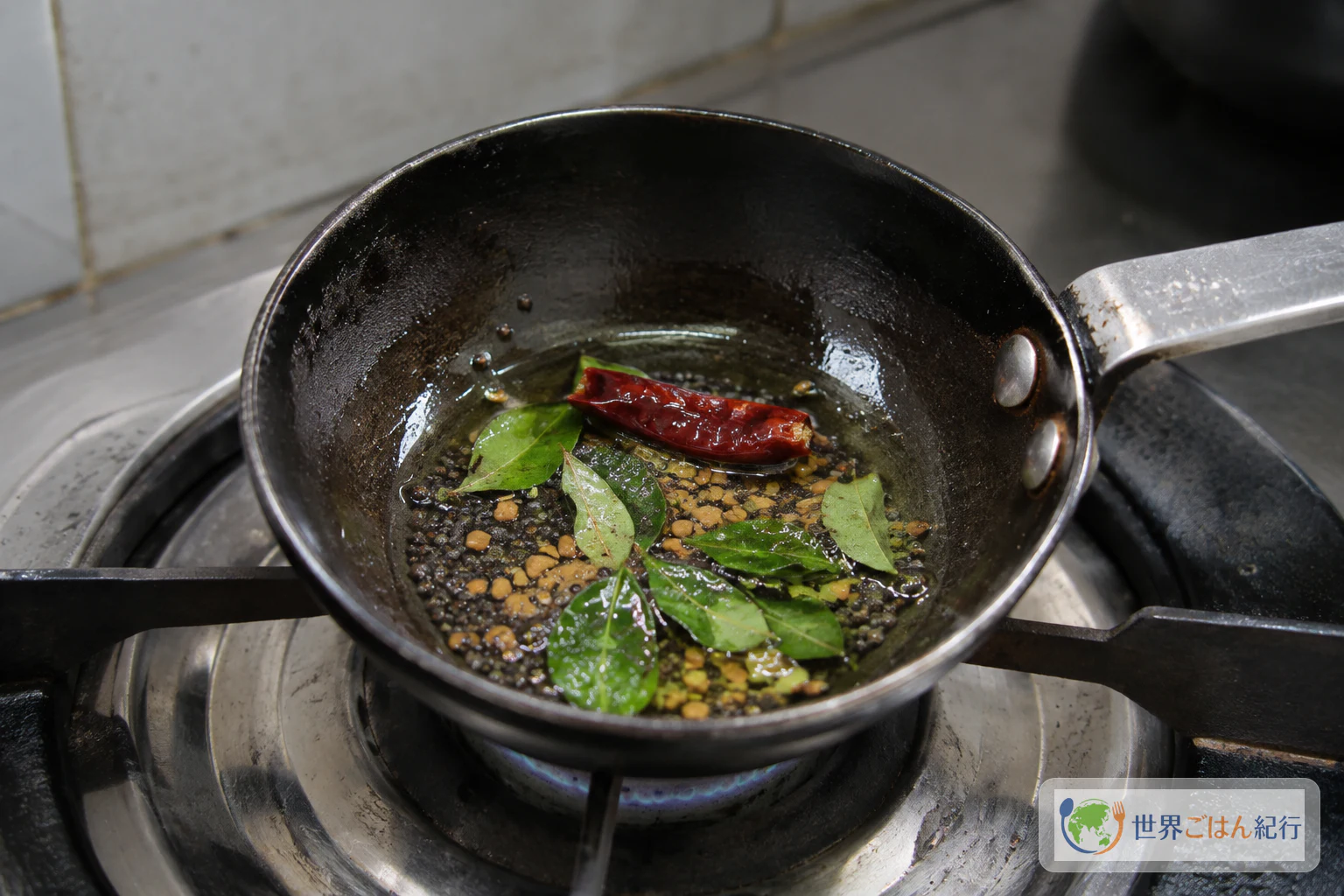
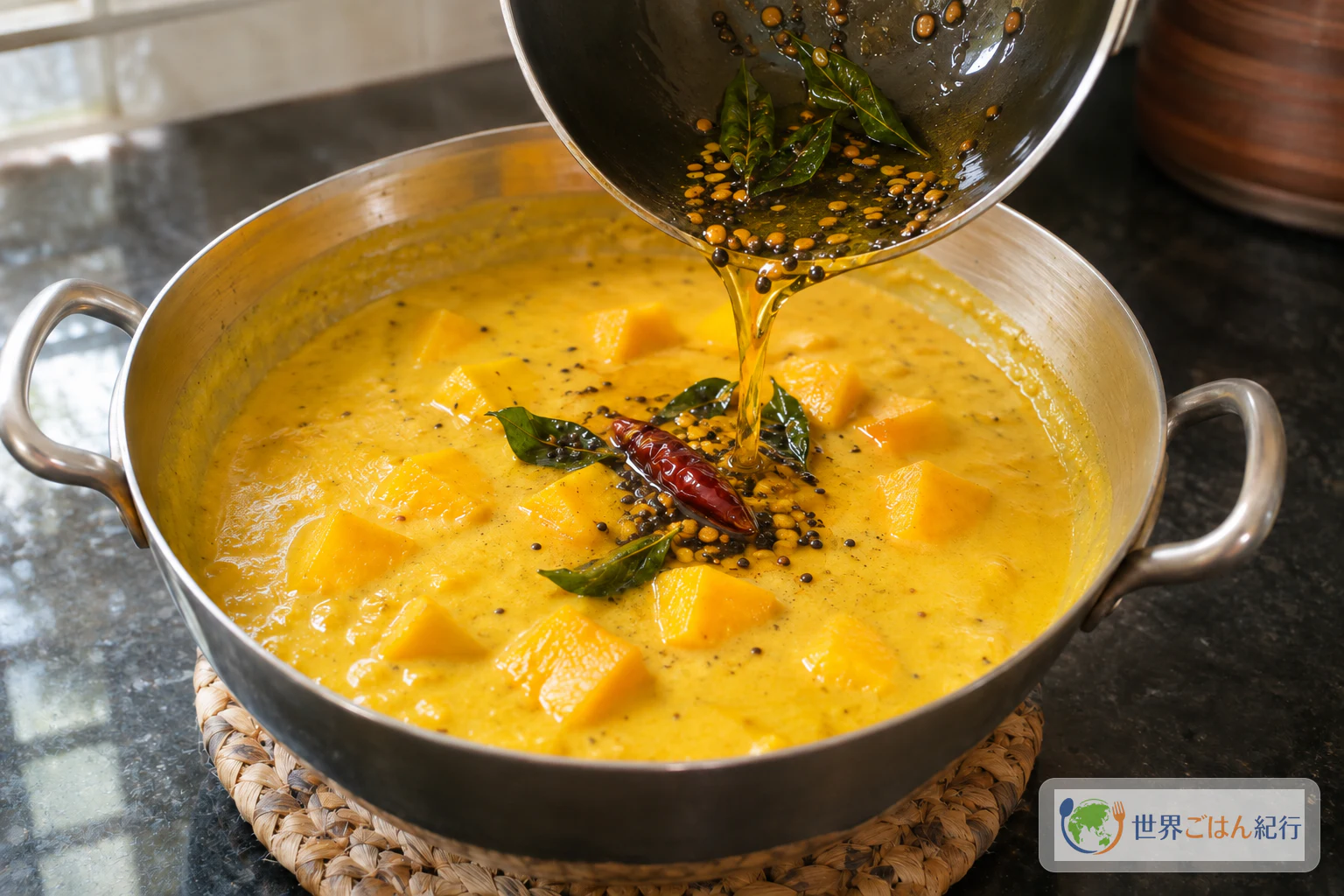
Ripe mango usually ends a meal. In Kerala it can also sit beside the rice. Cubes of ripe mango are simmered with turmeric and chili, thickened with a paste of fresh coconut, green chili and cumin, and then softened with thick curd. A last spoonful of coconut oil crackling with mustard seeds, fenugreek, curry leaves and a dried red chili goes over the top. The result is mambazha pulissery: fruit that tastes like fruit, inside a curry that tastes like a curry.
Sharmilee J of Sharmis Passions describes pulissery as a Kerala curry made with coconut and yogurt, cooked with a fruit or vegetable, and explains that mambazha means mango. The same page presents mambazha pulissery as a side dish for Onam Sadya or simply as a curry to eat with rice. In a separate recipe published by Scroll Food and attributed to chef Regi Mathew, the dish is described as a sweet-sour curry whose balance suits rice and the spicy side dishes of a Kerala meal.
This article follows one version only: Sharmis Passions' home recipe using a large ripe mango cut into cubes, written for 3 servings. Other published versions use whole small mangoes, shallots and ginger, or much larger amounts, and they are not mixed in here. This recipe has not been kitchen-tested by Sekai Gohan; the amounts and times are the ones given on the recipe page. For more dishes from the country, see our Indian recipes.
Why Mango Becomes a Curry: Kerala's Pulissery
Pulissery is a family of coconut-and-yogurt curries, and the mango version leans into the fruit's sweetness. Sharmis Passions describes the curry as one that can be made with fruit or vegetables, and in the mango version the fruit's sugar meets the sourness of curd and the heat of green chili, red chili powder and a dried red chili. On the table it is a curry for rice, not a dessert.
Its place on the plate is described by the recipes themselves rather than by any fixed rule. Sharmis Passions names it as an Onam Sadya side or an everyday rice curry. Scroll Food's recipe, credited to Regi Mathew, says the sweet-sour taste works with rice and the spicier dishes typical of a Kerala home. Neither page claims that every household or every Sadya serves it the same way, and this article does not either.
One dish, several published versions
| Version | What changes | Used here? |
|---|---|---|
| Sharmis Passions, cubed large mango | 2 cups chopped ripe mango, 4 tbsp coconut, 1/2 cup thick curd; curd added after the heat is off | Yes, this is the recipe below |
| Whole small Kerala mangoes | Sharmis Passions mentions the traditional practice of using small Kerala mangoes whole after peeling; the author's own recipe uses a large Neelam mango cut up instead | No |
| Scroll Food / Regi Mathew | 2 small mangoes with pulp and seed, a shallot-ginger paste, curd cooked on low heat for 3–4 minutes; serves 2 | No |
| Kerala.com | 2 mangoes, 2 cups thick curd, 1 cup coconut; part of the curd ground with the coconut, the rest added off the stove | No |
| Kerala Calling (Government of Kerala document portal) | 4 large or 8 small ripe mangoes, larger amounts of curd and coconut; curd added off the heat | No |
The common thread across the Sharmis Passions, Kerala.com and Kerala Calling versions is that the curd goes in after the pan comes off the heat. The Scroll Food version cooks the curd gently instead, so its method is kept separate.
One detail in the chosen recipe needs a note. The Sharmis Passions ingredient list does not include jaggery, but both method renderings on the page add 1/2 tsp of jaggery, and the introductory text says not to skip it. This article follows the method and includes 1/2 tsp jaggery, added off the heat with the yogurt.
Ingredients for 3 Servings
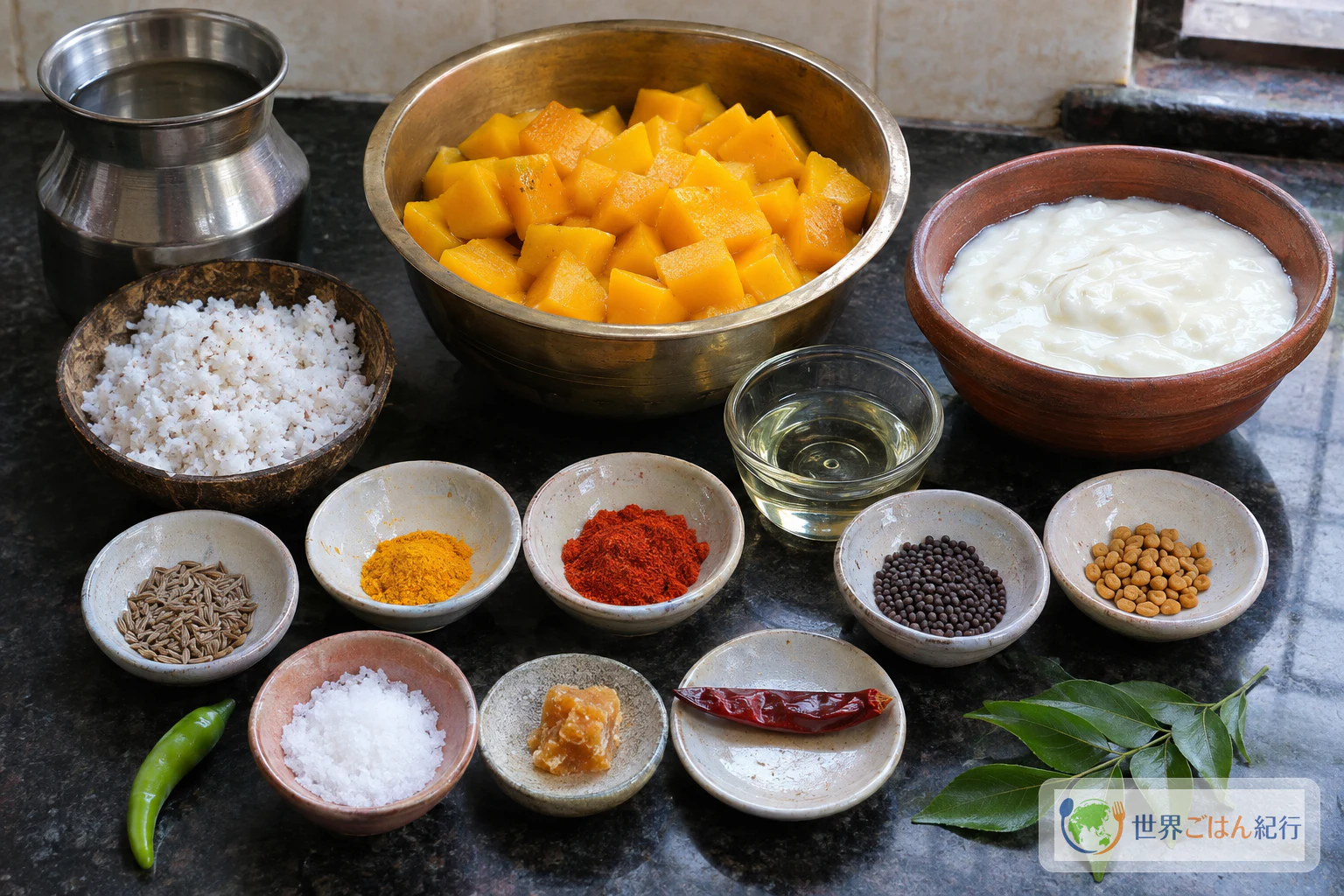
Choosing and Substituting Ingredients
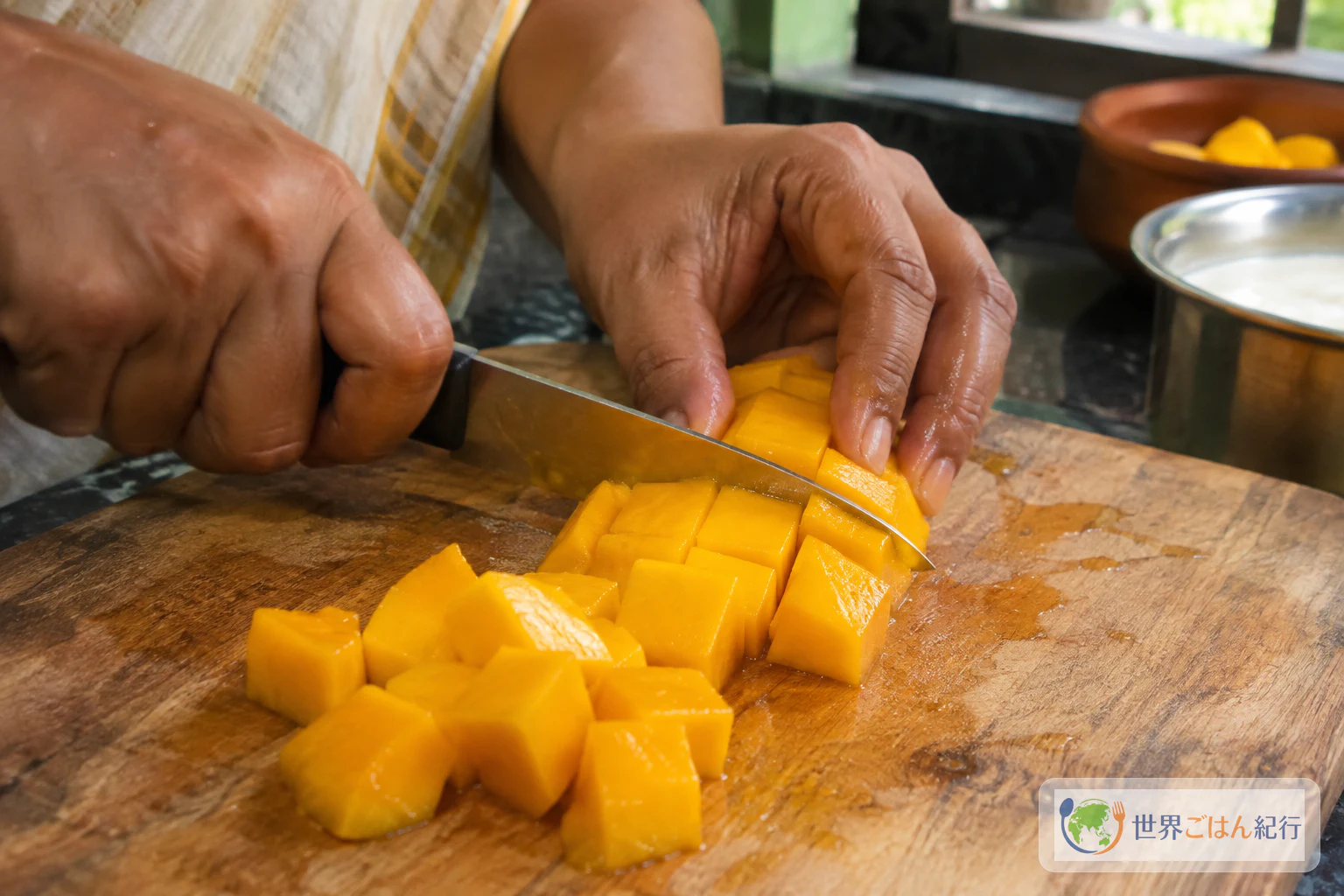
Mango. Measure the mango by the cut volume, 2 cups, rather than by counting fruit, since mango sizes vary a great deal by variety. Choose fruit that is fully ripe and sweet but still holds a cube when cut. Very soft, fibrous mango tends to fall apart in the pot and gives a thicker, puréed curry rather than one with pieces.
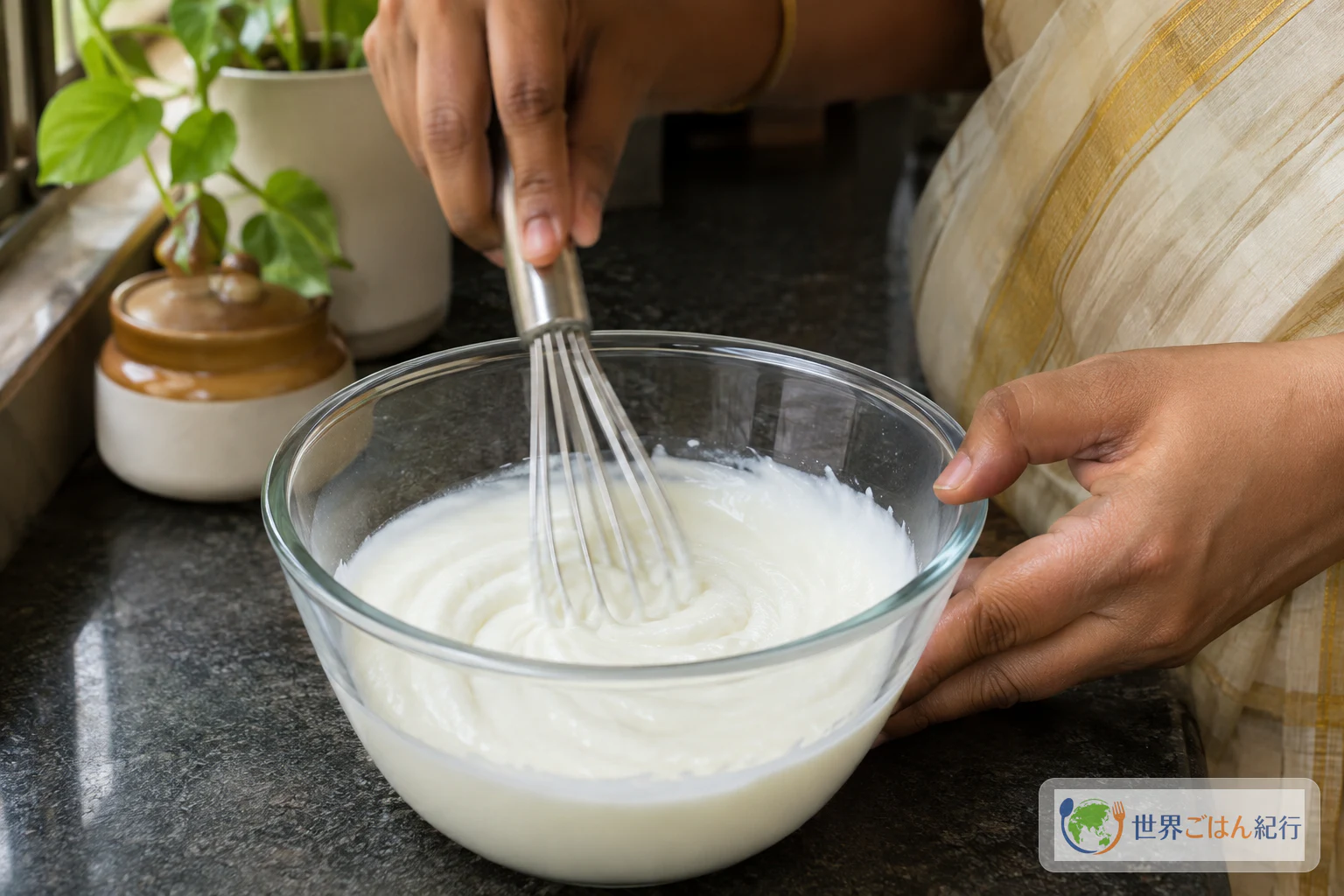
Yogurt. Use a ready-to-eat, unsweetened, plain thick yogurt from the store. It plays the part of curd here, though thickness and sourness differ between products, so it will not be exactly the same as curd made in a Kerala home. Avoid sweetened or flavored yogurt.
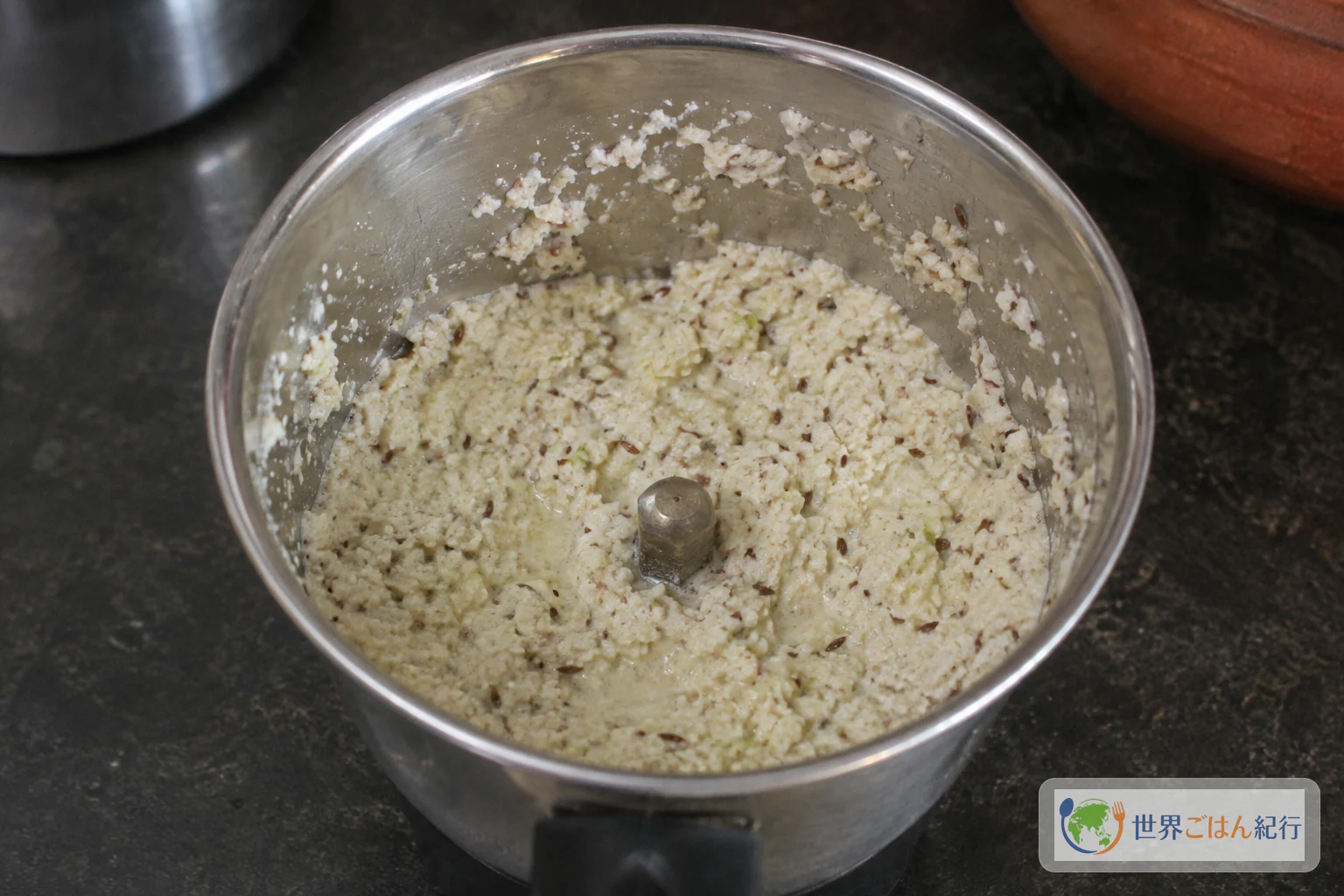
Coconut. Use fresh grated coconut for the paste. Other forms change the texture and aroma.
Cumin. Use whole cumin seeds in the paste. Don't swap in the same amount of ground cumin.
Coconut oil and curry leaves. Coconut oil is the center of the tempering's flavor. Another oil will work for cooking but changes the taste. Dried curry leaves give a weaker, different aroma from fresh ones.
This curry contains dairy (yogurt). It also uses coconut and mustard seeds. Check the labels of the yogurt, coconut, spices and jaggery for allergen information.
Equipment
- Knife and cutting board
- Small mixer jar or spice grinder, for a coarse paste
- Bowl and whisk or spoon, for beating the yogurt
- Saucepan, for the curry
- Small pan, for the tempering
- Heatproof trivet or board, to set the hot pan on
Method: Cook the Mango, Add the Paste, Finish Off the Heat
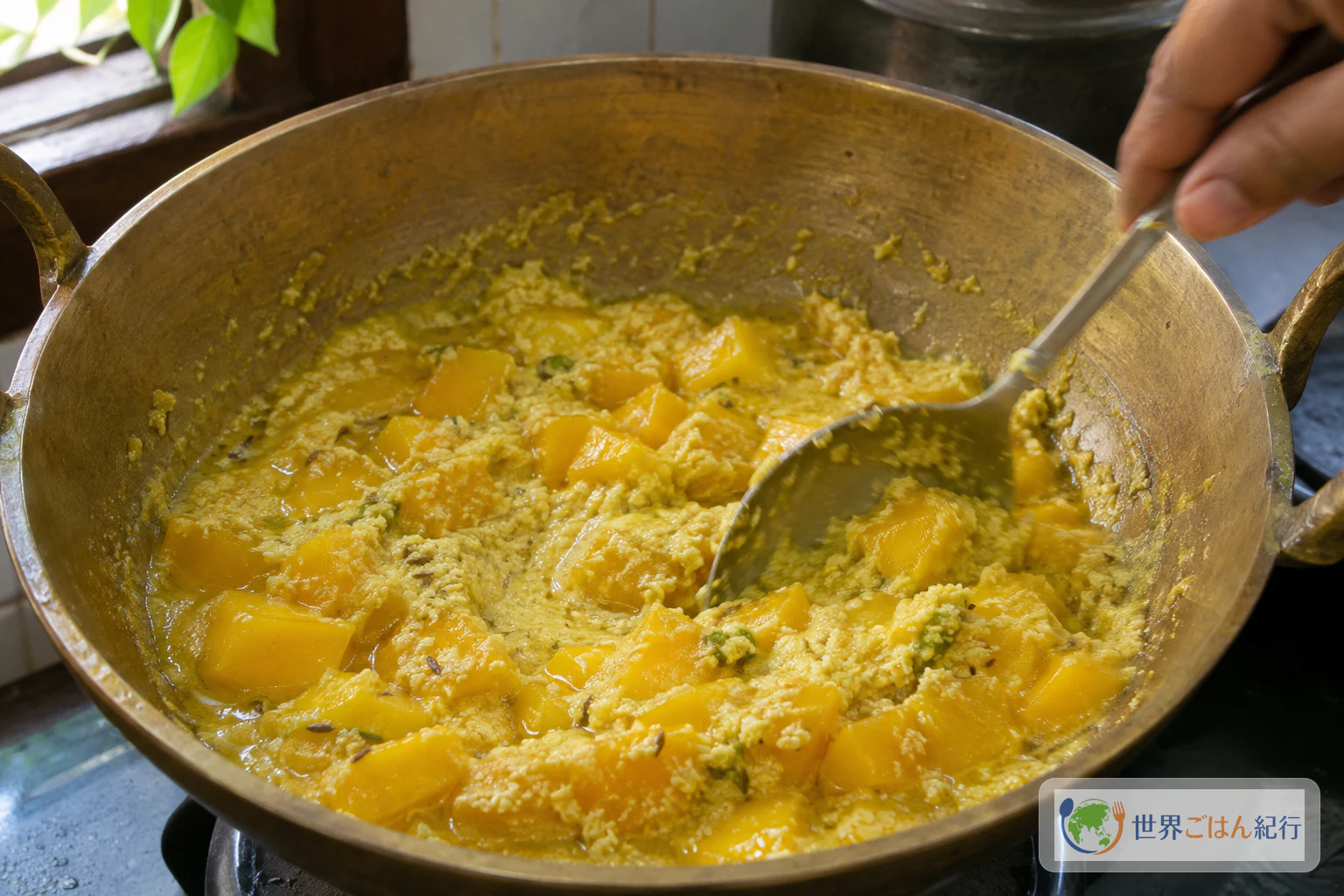
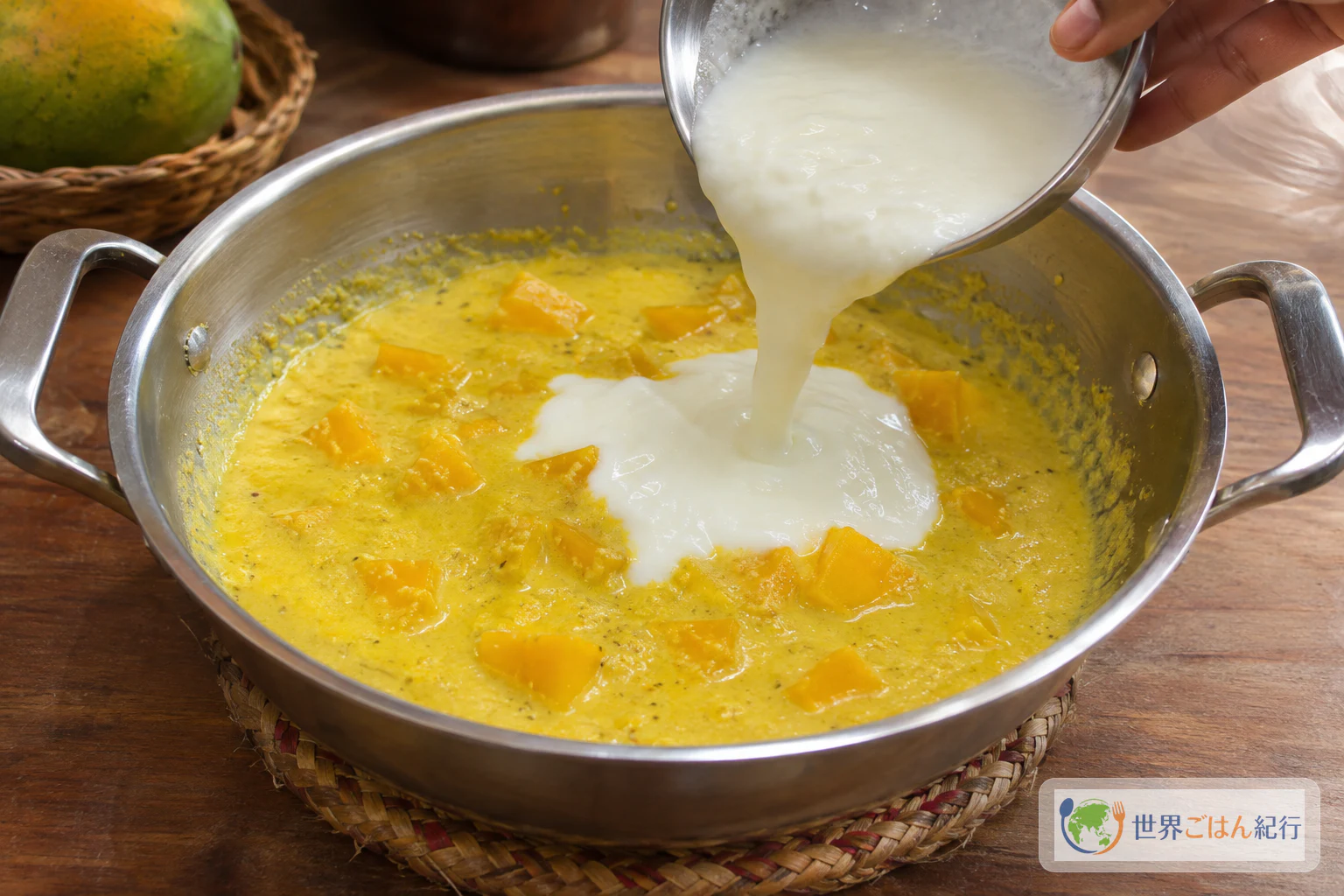
Everything that boils happens before the yogurt goes in. Once the yogurt is added, the curry is not brought back to a boil.
Get the paste and the beaten yogurt ready before the mango goes on the heat. The final stages move quickly, and the yogurt needs to be waiting when the heat goes off.
When Something Goes Wrong
| What you see | Likely cause | What to do |
|---|---|---|
| The yogurt looks grainy or split | The curry boiled after the yogurt went in, or the yogurt went in while still on the heat | Keep the heat off from step 6 onward. Adding the yogurt off the heat lowers the risk of curdling but does not rule it out completely |
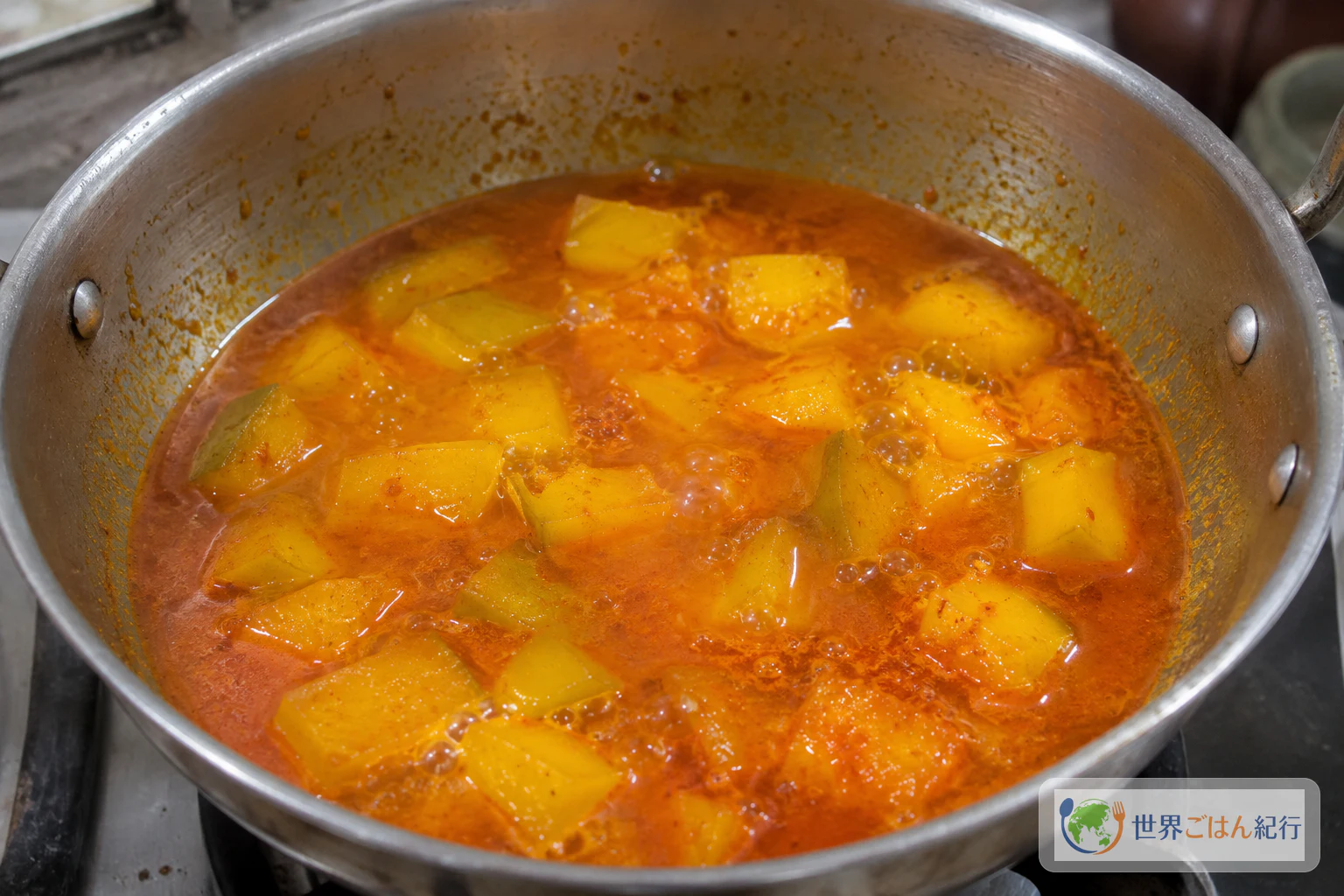
| The mango has turned to mush | The fruit was overripe or cooked too long in step 4 | It can't be undone; the curry will simply be thicker. Next time choose firmer fruit and stop as soon as the cubes are soft |
| A raw coconut taste remains | The paste was not cooked long enough in step 5 | Check before turning off the heat: the raw smell should be gone before the yogurt goes in |
| The tempering smells burnt | The fenugreek or curry leaves were fried too long or too hot | Add the fenugreek, leaves and chili only after the mustard pops, and take the pan off quickly |
| The curry has become very thick | It thickens as it stands | Stir in a little water at the table |
Variations
Keep these separate from the recipe above; they change the dish rather than reproduce it.
- Larger mango pieces. Cut the cubes a little bigger if your mango is very soft, so there are still pieces to bite into.
- Different ripeness. Riper or juicier mango brings more water and sweetness. Adjust the cooking water by eye, a little at a time.
- Milder heat. Reduce the red chili powder below 1/2 tsp. This makes a milder curry than the one described here.
- Sweetness. The recipe uses 1/2 tsp jaggery. Leaving it out or changing the amount is your own adjustment.
- Whole small mangoes. The version with small Kerala mangoes cooked whole is a different recipe with its own proportions, and is not covered here.
Leftovers
Cool any leftover curry and refrigerate it quickly. No storage period is given here. Sharmis Passions gives a refrigerator storage time, but without enough detail to adopt it as a safety guarantee.
Frequently Asked Questions
Which mango should I use?
Any ripe, sweet mango that still holds a cube when cut. Measure 2 cups of chopped flesh rather than counting fruit. Sharmis Passions uses one large Neelam mango and also mentions the traditional practice of using small Kerala mangoes whole. That whole-fruit version is a separate recipe.
When exactly does the yogurt go in?
After the coconut paste has cooked and the heat is turned off. Sharmis Passions notes that the curd may curdle if added while the curry is still on the heat, and it is not boiled afterward. Kerala.com and the Kerala Calling recipe also add the curd off the heat. The Scroll Food recipe credited to Regi Mathew cooks the curd on low heat for 3–4 minutes instead; that is a different method from the one used here.
How much water should I add?
There is no fixed amount. Water for cooking the mango should just cover the fruit, the paste needs only a little to grind, and a little more can loosen the finished curry if it gets too thick. None of the recipes consulted gives a measured amount.
Is the jaggery optional?
In this version it is part of the recipe. The Sharmis Passions ingredient list leaves it out, but both method versions on the page add 1/2 tsp and the introduction says not to skip it.
What should I serve it with?
Plain rice. Sharmis Passions presents it as a rice curry and an Onam Sadya side, and Scroll Food describes its sweet-sour taste as balancing rice and spicy side dishes. Other pairings are not covered by these recipes.
Sources
- Sharmilee J, "Pulissery Recipe | Mambazha Pulissery Recipe," Sharmis Passions. The recipe followed in this article: cubed ripe mango, coconut-cumin-green chili paste, thick curd added after the heat is off, coconut oil tempering, semi-thick consistency, 3 servings, jaggery in the method, and the dish's use with rice and at Onam Sadya. https://www.sharmispassions.com/mambazha-pulissery-recipe-kerala-moru/
- Regi Mathew, "Mambazha Pulissery," Scroll Food. The description of the sweet-sour curry served with rice and spicy sides, and a separate version with small mangoes, shallot-ginger paste and gently cooked curd, used for comparison only. https://scroll.in/food/971295/mambazha-pulissery
- "Kerala Recipe: Mambazha Pulissery," Kerala.com. A further version with different proportions that adds the remaining curd off the stove, used only as a cross-check. https://kerala.com/pages/kerala-recipe
- Indu Narayan, "Kerala Calling, Ethnic Food: Mango Pulisseri," Government of Kerala document portal. A larger-batch version with ripe-mango size options and curd added off the heat, used for comparison only. https://document.kerala.gov.in/Porteddata/extensionpdf/documents/10180/47e3b41d-81ac-47a1-951d-96a19f86123e.pdf