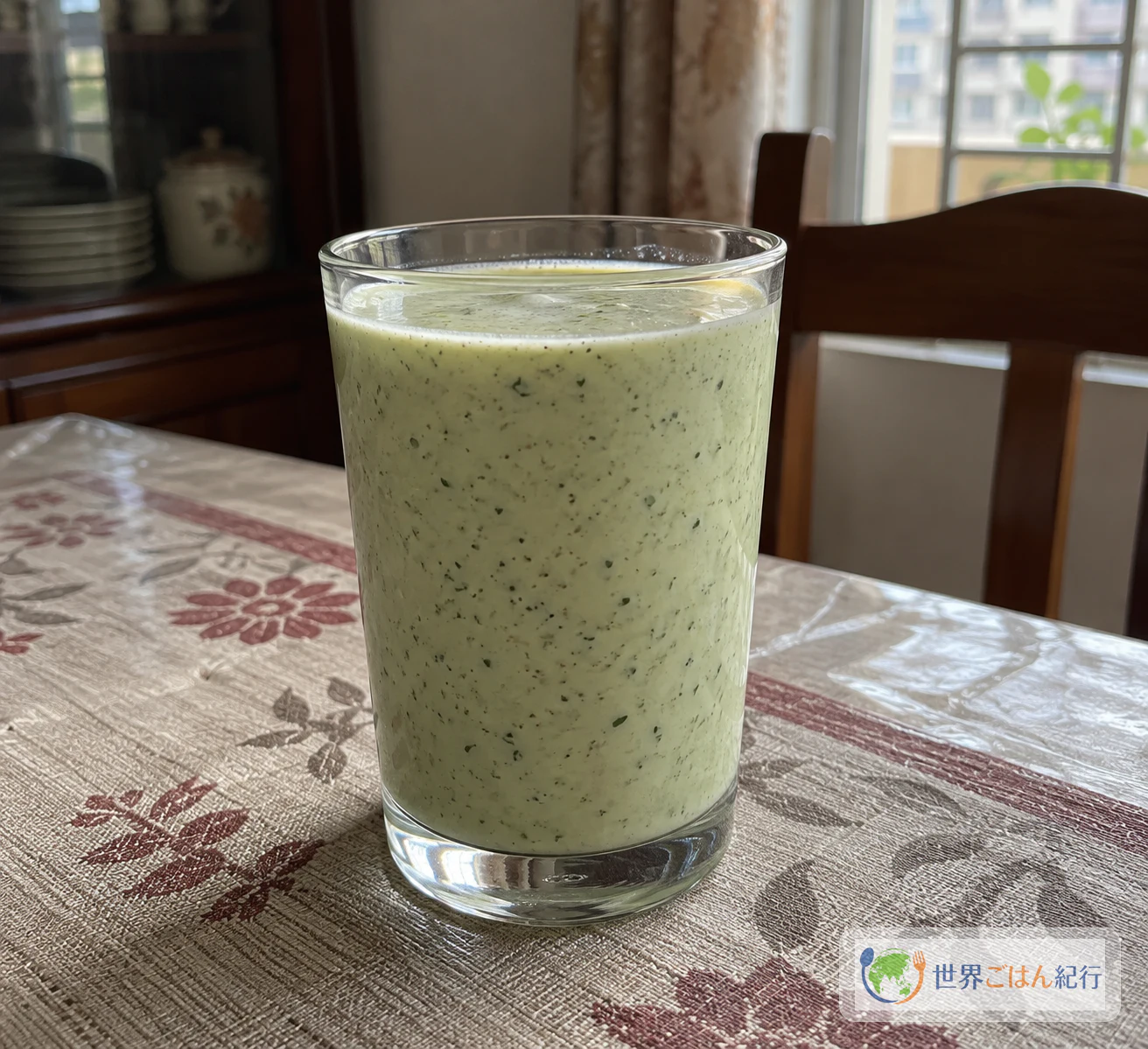
Borhani: A Cold, Savory Glass Beside the Feast
Keep the tang and body of strained yogurt, the toasty aroma of three dry-roasted seeds, fresh herbs, a little chile heat, and the distinctive savor of black salt. This version contains no sugar.
Picture a wedding or a large festive meal in Bangladesh, especially in a city like Dhaka. The table holds kacchi biryani, polao, roast and rezala, and beside them sits a cold, pale green drink. Dhaka Tribune describes borhani served at exactly these weddings, festivals and big feasts. In a student essay from the City College of New York, the writer remembers it as a chilled drink at family celebrations such as weddings, Eid and Ramadan iftar, poured alongside biryani or tehari.
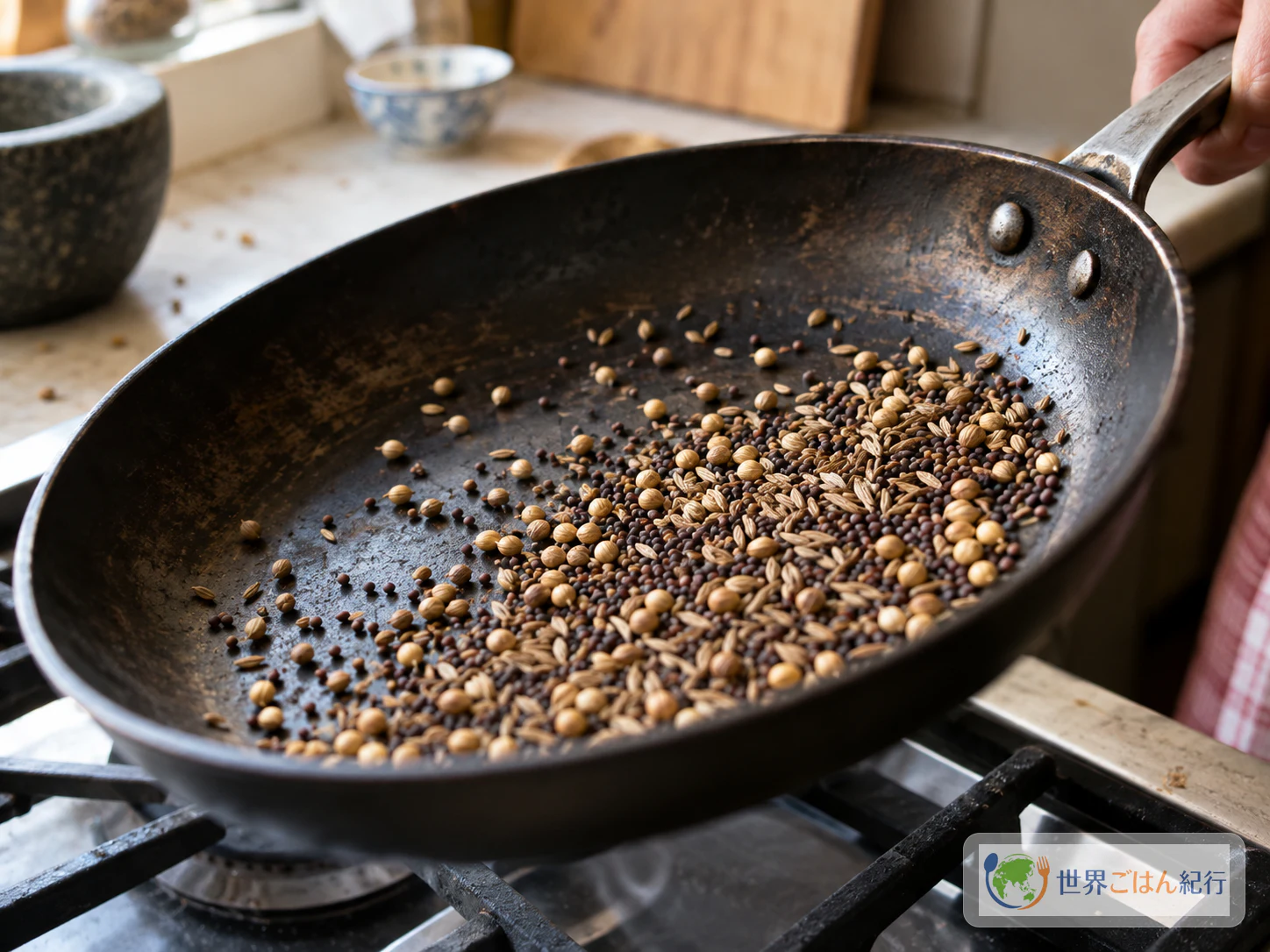
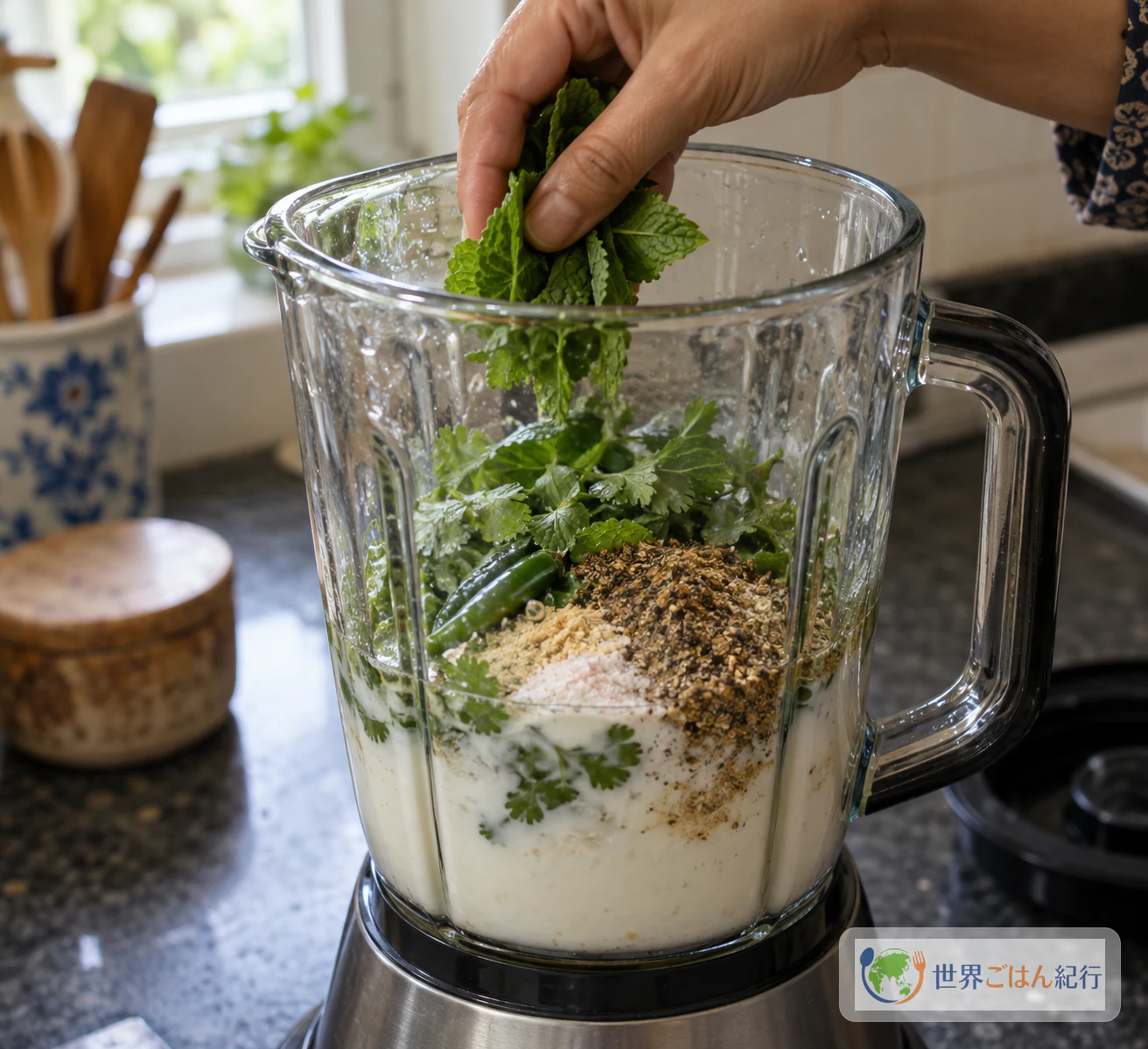
Borhani is not a sweet lassi taken before a meal. It is a tangy, savory yogurt drink meant to be sipped with richly spiced main dishes. This recipe follows the version by Tejal Rao published in Saveur: black mustard, coriander and cumin seeds are dry-toasted and ground, then blended with strained full-fat yogurt, mint, cilantro, black salt, ground ginger, white pepper, a green Thai chile and cold water.
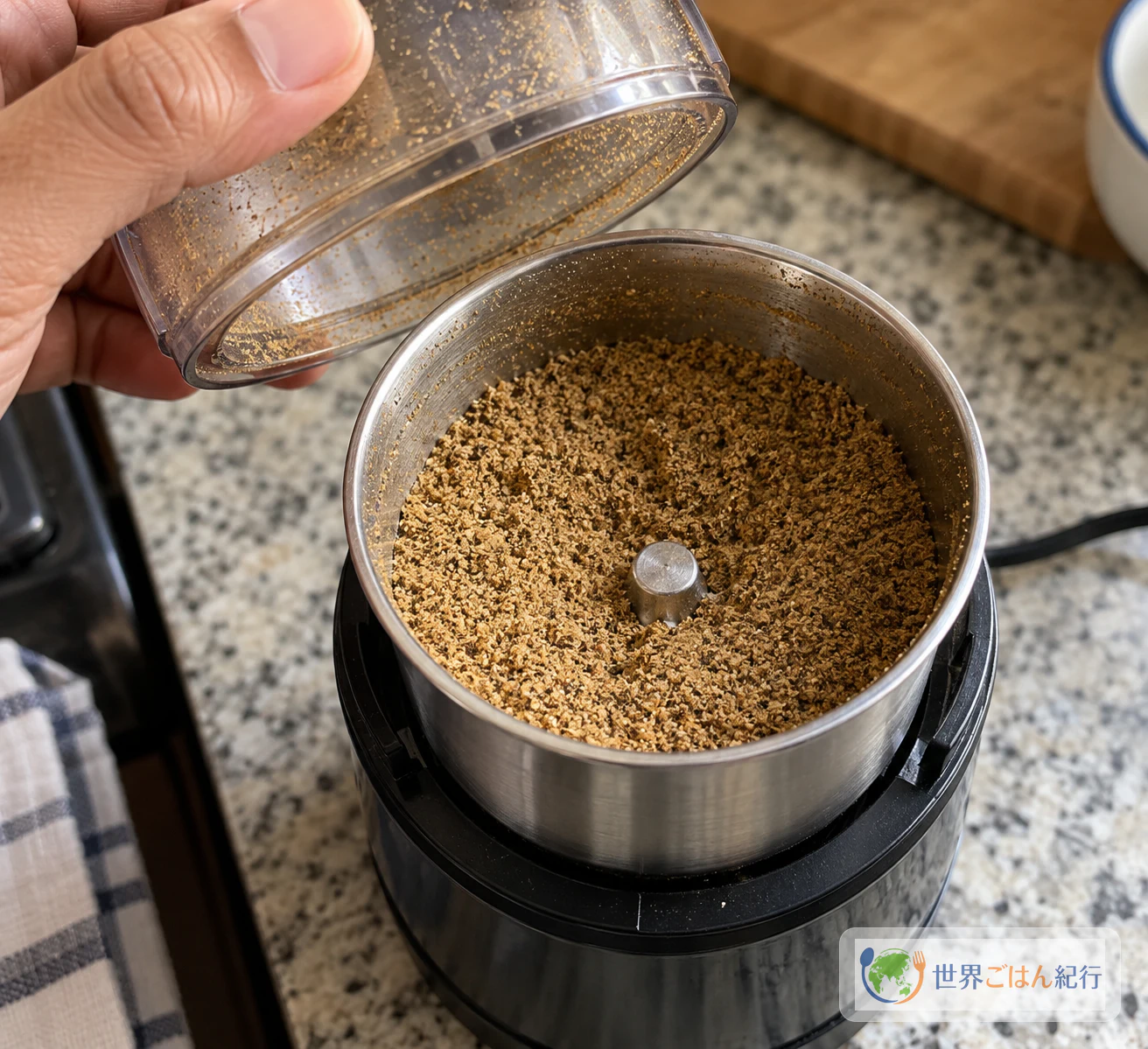
Two things shape the flavor more than anything else: the black salt and the toasted seeds. Toast the seeds until they just begin to pop, without burning them, and grind them finely so the drink stays smooth.
You will see both Borhani and Burhani in English; in Bengali it is written বোরহানী. It is a different dish from Borani, the yogurt-based salads of the Middle East and elsewhere.
Ingredients: The Saveur Recipe, Serves 2–4
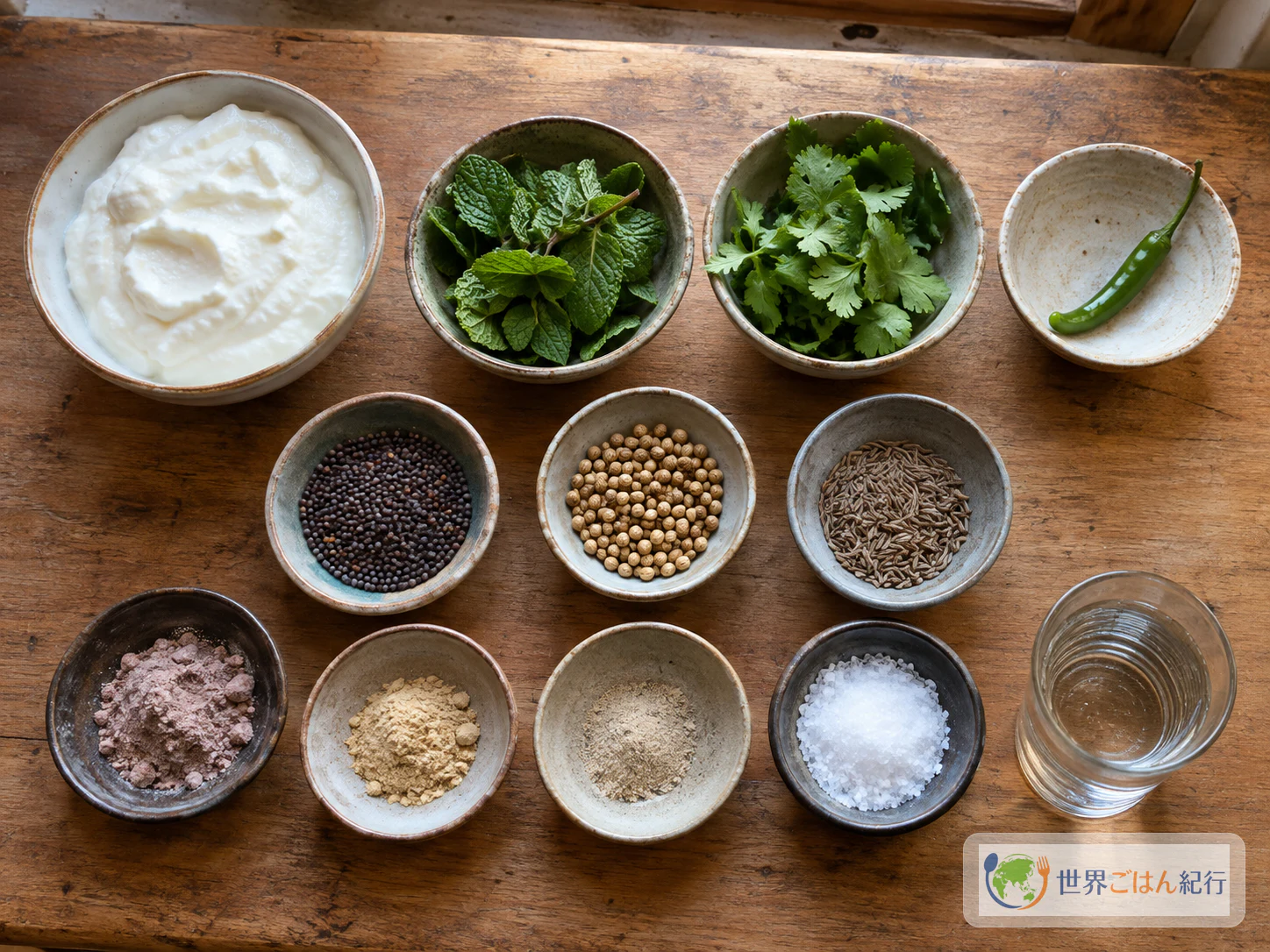
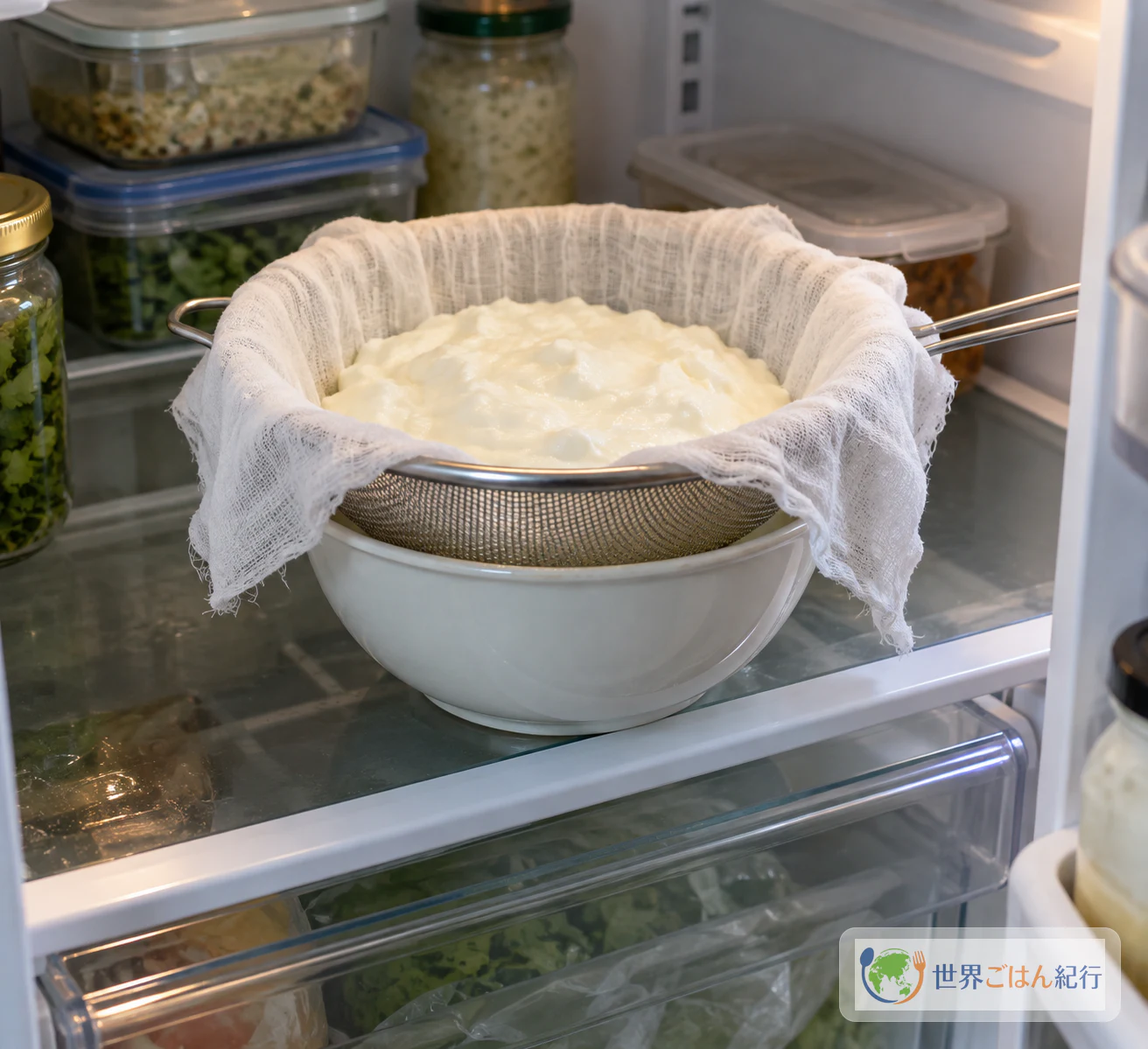
Sekai Gohan has not kitchen-tested this recipe. The amounts are in US units. This recipe makes 2–4 servings. The 2½ cups of yogurt is measured after straining overnight.
Choosing and Substituting
The recipe above is the base. We have not tested the options below, so expect the result to change.
- Black salt (kala namak): Regular table salt can stand in for the saltiness, but it will not reproduce black salt's distinctive aroma. Treat it as a fallback, not an equivalent.
- Black mustard seeds: If you cannot find them, yellow mustard seeds are an editorial option. The flavor will differ, so don't think of them as the same thing.
- Greek yogurt: Greek yogurt is already strained, so it can save the overnight step. Products vary in thickness, so treat it as a separate version from this recipe and judge how much water to add on its own terms.
- Green chile: The original uses one green Thai chile. With a different fresh green chile, heat varies, so taste as you go.
- Cilantro: Ordinary supermarket cilantro (coriander leaves) is what you need.
Equipment
- Fine sieve, a clean cloth (such as cheesecloth) and a bowl, for straining the yogurt
- Skillet, for dry-toasting the seeds
- Spice grinder
- Blender (a stand blender you already own is fine)
Method: Strain, Toast, Grind, Blend
Allow 15 minutes. That does not include straining the yogurt overnight, so start the day before.
Bitter, Gritty, Too Salty: Fixing Common Problems
| Problem | Likely cause | What to do |
|---|---|---|
| Burnt smell or bitter taste | Seeds scorched in the dry pan | Burnt seeds carry bitterness into the drink. Discard them and toast a fresh batch, stopping as soon as they begin to pop |
| Gritty texture | Seeds not ground finely enough, or too short a blend | Grind the seeds to a fine powder before blending. Leave room in the blender jar and blend until extremely smooth. The original recipe has no straining step after blending |
| Thinner than expected | Yogurt not strained long enough | The recipe calls for yogurt strained overnight. Measure the 2½ cups only after straining |
| Too salty | Kosher salt added all at once on top of the black salt | Black salt is already 1½ tsp. Add kosher salt only a little at a time, tasting between additions |
| Flat aroma | Seeds under-toasted, or black salt replaced with regular salt | Toast until the seeds pop. Without black salt, the drink loses its distinctive note |
| Too hot | The chile | The original uses one green Thai chile. A milder version would be your own untested change |
Borhani Varies by Household and Recipe
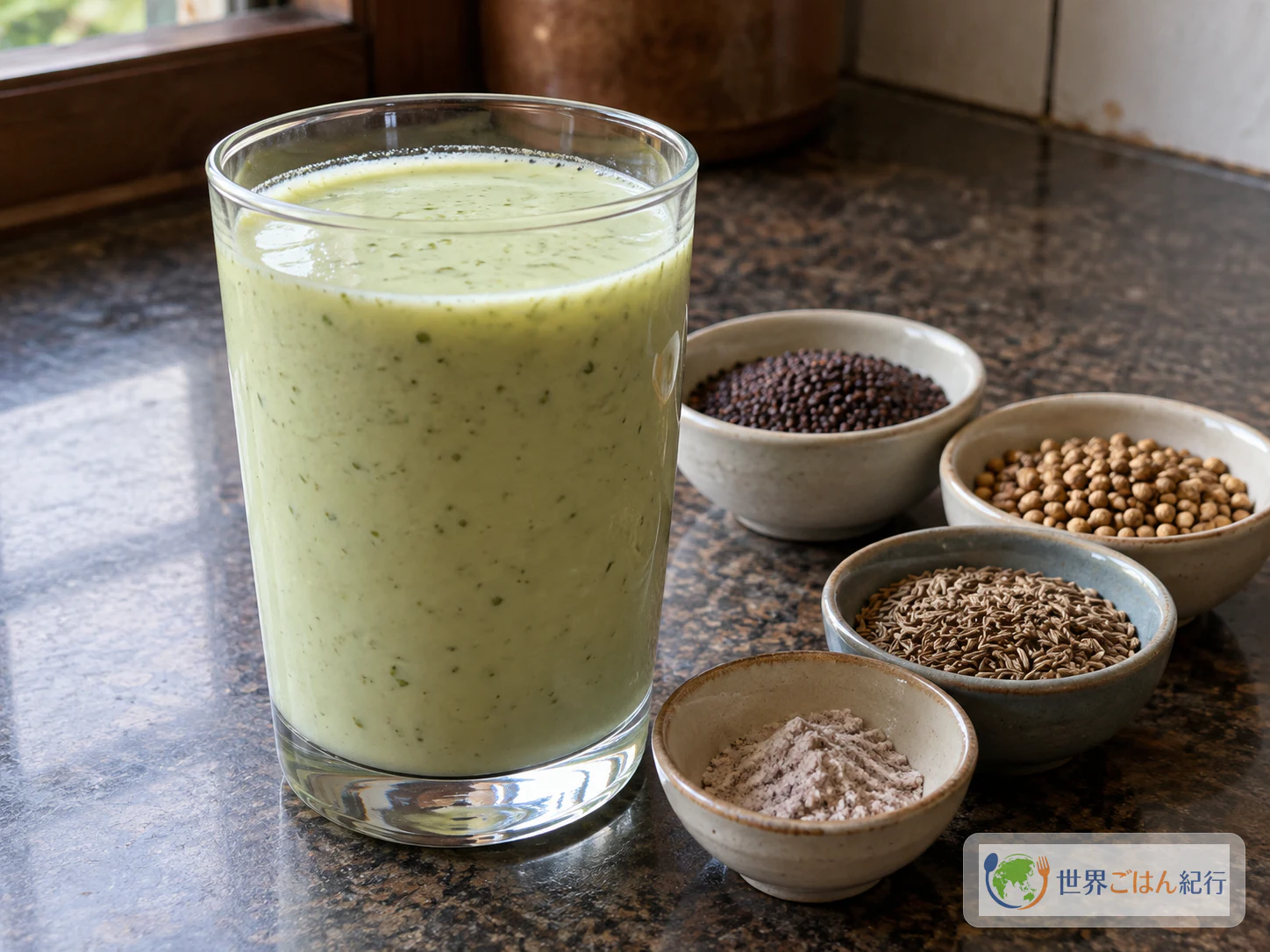
Borhani has no single fixed formula. Here is how two other published recipes differ from the Saveur version used here. They are separate recipes, so don't mix their amounts into this one.
| Recipe | Yogurt and water | Distinguishing points |
|---|---|---|
| Saveur (Tejal Rao), used here | 2½ cups strained full-fat yogurt, 1 cup cold water | No sugar. Toasted whole black mustard, coriander and cumin seeds, ground ginger, white pepper, black salt |
| Rownak's Kitchen | 2 cups Greek yogurt, 3 cups cold water | Mint, cilantro, roasted cumin, black pepper, green chile and sugar; black salt, with mustard powder optional |
| University of Alabama Coffee Hour Cookbook | 2 cups plain yogurt, ¾ cup water | Mustard powder, roasted coriander and cumin, 1 inch ginger, black salt, white pepper and ½ tbsp sugar. Herbs, chile and ginger are blended first, then the rest is added, whisked and chilled |
If you want to explore from here, these are editorial ideas, not tested recipes:
- A sweetened version: Two of the recipes above include sugar. If you try it, start by making a small batch, and keep it separate from the unsweetened base.
- A milder version: Use less chile than the original's one Thai chile.
- Without black mustard or black salt: See the substitution notes above. The flavor axis shifts.
- With Greek yogurt: Adjust the water and thickness on their own terms, as a different version from this recipe.
A Drink for Celebrations, and an Origin That Is Not Settled
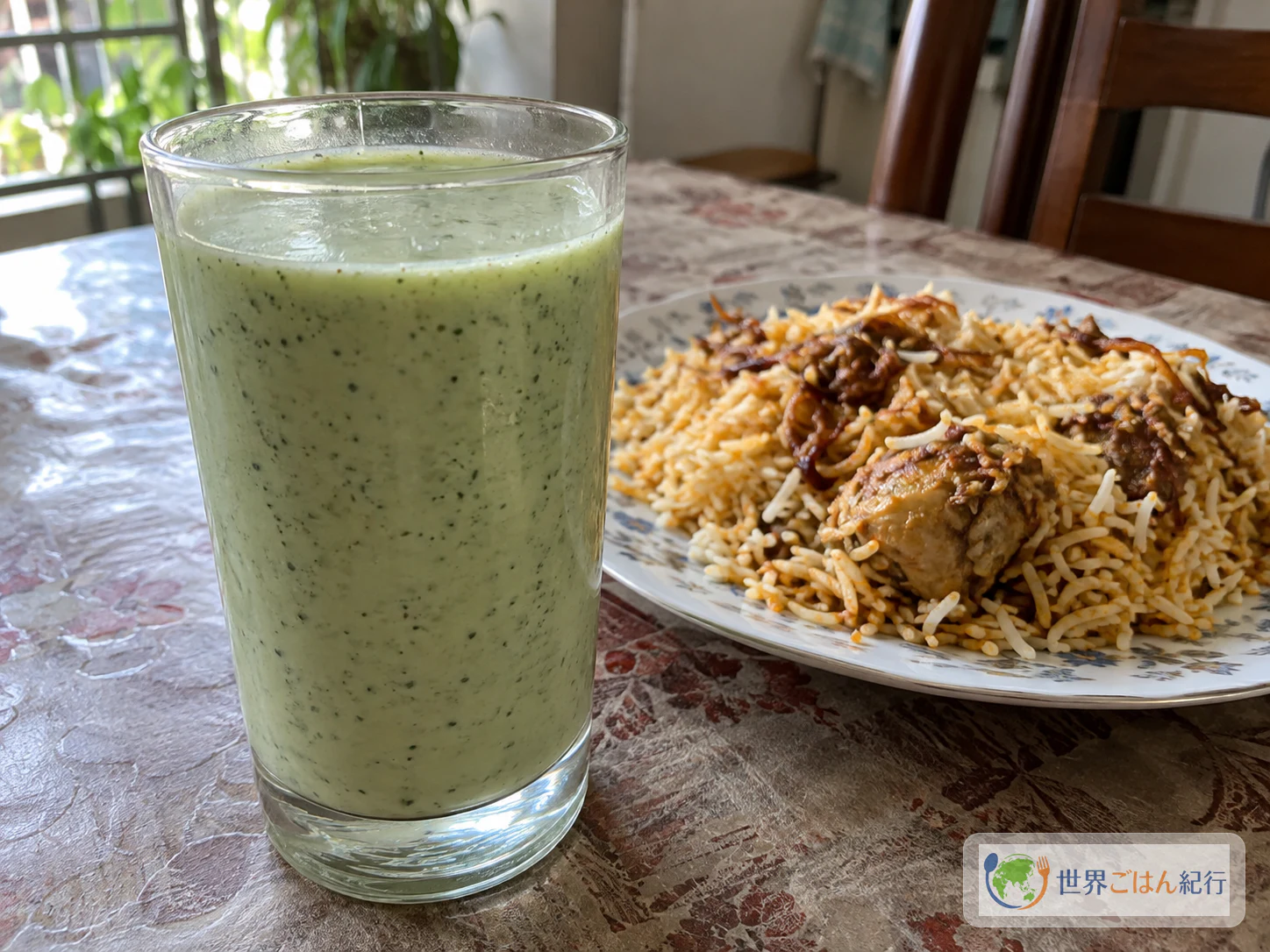
According to Dhaka Tribune, borhani is popular in Bangladesh, particularly in urban areas such as Dhaka. It appears at weddings, festivals and large feasts alongside kacchi biryani, polao, roast and rezala. The student essay from the City College of New York describes it from a family's perspective: a drink tied to weddings, Eid and Ramadan iftar, served chilled with biryani or tehari. The same essay also touches on finding ingredients and keeping family food memories after moving to the New York area. That is one writer's experience, not a description of every household. You can explore more of the country's food on our Bangladesh page.
As for origins, Dhaka Tribune notes that the exact history of borhani is not well documented. It then introduces the idea that Persian or Mughal yogurt drinks influenced it, and the student essay mentions the same view. Neither is a primary historical source, so treat Persian or Mughal influence as a theory that is often repeated, not an established fact. The essay also notes that borhani changes from family to family and from one caterer to another.
On the table, think of borhani as a savory companion to spiced rice and meat dishes, not as a dessert drink. This article makes no claims about health benefits.
Keeping It Cold: Storage and Hygiene
Borhani is a yogurt drink and contains milk. Check the labels on your yogurt, black salt and spices for allergens and cross-contact statements.
Strain the yogurt in the refrigerator, not at room temperature. Following general guidance from the U.S. Food and Drug Administration, refrigerate perishable food within 2 hours, or within 1 hour if the air temperature is above 90°F (32°C). Keep your refrigerator at 40°F (4°C) or below. If you carry borhani somewhere, use an insulated cooler with ice packs.
We have no confirmed guidance on how many days finished borhani keeps, so we don't give a storage period. Keep it refrigerated, watch its aroma and any separation, and drink it soon. Freezing and reheating are not recommended.
Frequently Asked Questions
Are Borhani and Burhani different drinks?
Both spellings appear in English for the Bangladeshi spiced yogurt drink; Saveur uses both. It is not the same as Borani, the yogurt salad.
Is borhani sweet?
The Saveur version used here has no sugar. Some other published recipes, such as the Rownak's Kitchen and University of Alabama versions, include sugar.
Can I use regular salt instead of black salt?
It will cover the saltiness, but not black salt's distinctive aroma. It is a fallback, not an equivalent.
Can I prepare it the day before?
The yogurt is meant to be strained overnight, so that part naturally happens the day before. We have no confirmed guidance on how long the finished drink keeps safely, so we don't recommend making it far in advance or keeping it long.
Can I use less chile?
Yes, if you prefer it milder, but that is your own change from the original, which uses one green Thai chile. We have not tested a reduced amount.
Sources
- Tejal Rao, "Borhani (Spiced Yogurt Drink)," Saveur. The recipe used in this article: ingredients, amounts, method, yield of 2–4 servings and listed time. https://www.saveur.com/article/recipes/burhani-bangladeshi-spiced-yogurt-drink/
- Rownak's Kitchen, "Borhani," Easy to Cook Bangladeshi Recipes. A different recipe with Greek yogurt, cold water and sugar, used only for comparison. https://banglarecipes.com.au/borhani/
- Dhaka Tribune, "Borhani: The traditional Bengali spiced yogurt drink." Popularity in urban Bangladesh, serving with kacchi biryani, polao, roast and rezala at weddings, festivals and feasts, and the note that its origin is not well documented, alongside the Persian/Mughal influence theory. https://www.dhakatribune.com/business/373889/borhani-the-traditional-bengali-spiced-yogurt
- Noshin Orala, "Borhani," Your Story, Our Story, Macaulay Honors College, City College of New York. One writer's family memories of borhani at celebrations, served chilled with biryani or tehari, and their view of its history and variations. https://openlab.macaulay.cuny.edu/your-story-our-story/2026/04/28/borhani/
- The University of Alabama Intercultural Diversity Center, "Coffee Hour Cookbook, Fall 2022 Edition — Burhani Drink." A different recipe with sugar and ginger, used only for comparison. https://international.ua.edu/wp-content/uploads/2023/06/Coffee-Hour-Cookbook-Fall-2022-Edition.pdf
- U.S. Food and Drug Administration, "Food Safety Quick Tips, Step 4: Chill." General guidance on refrigerating within 2 hours (1 hour above 90°F/32°C), refrigerator temperature at 40°F (4°C) or below, and using insulated coolers. https://www.fda.gov/media/115446/download