Bhuna Khichuri: Rice and Pulses That Meet the Oil Before the Water
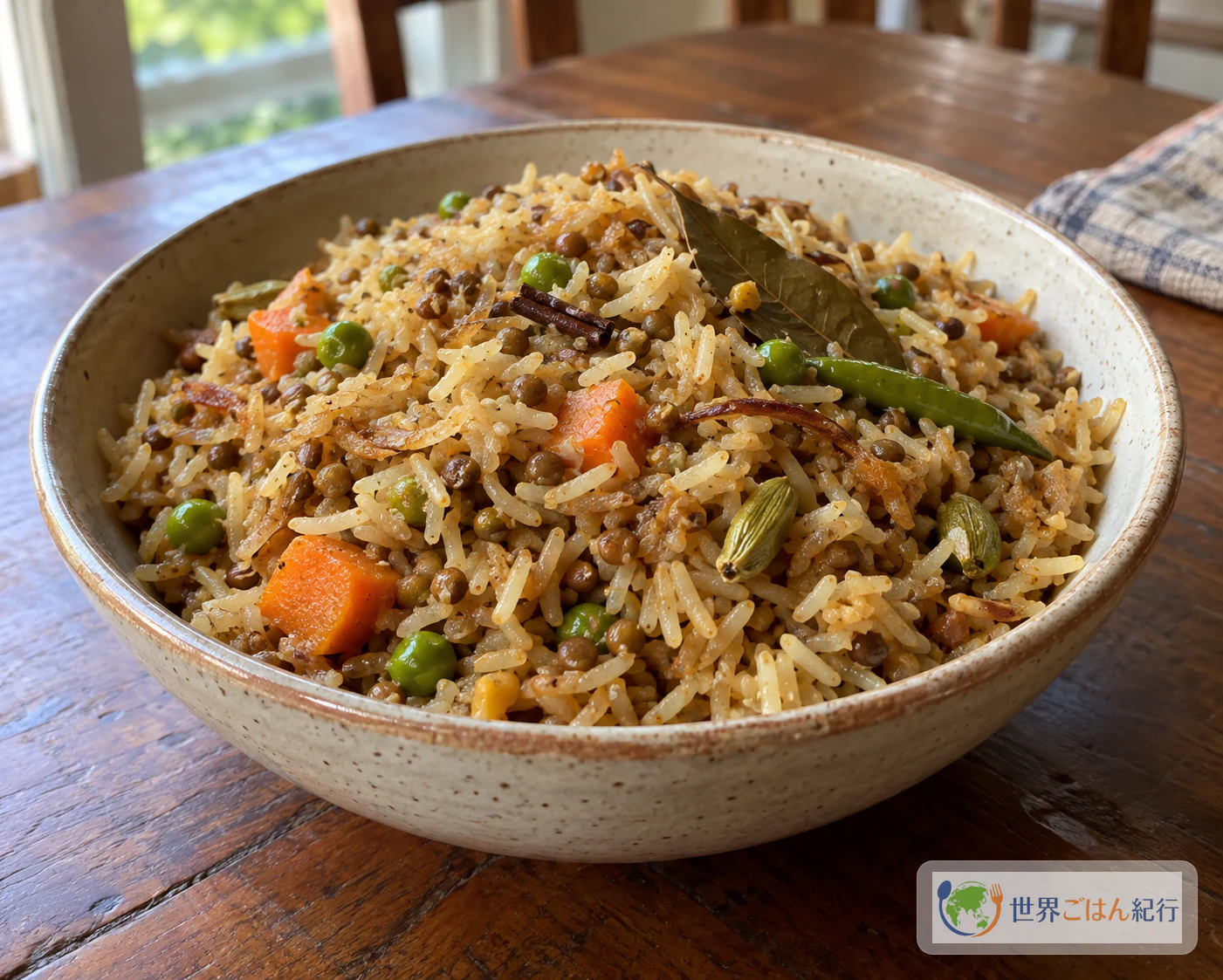
Fry the rice and roasted pulses in oil until every grain is glossy and fragrant, then let boiling water and a closed lid do the rest. The goal is separate, aromatic grains, not a soft porridge.
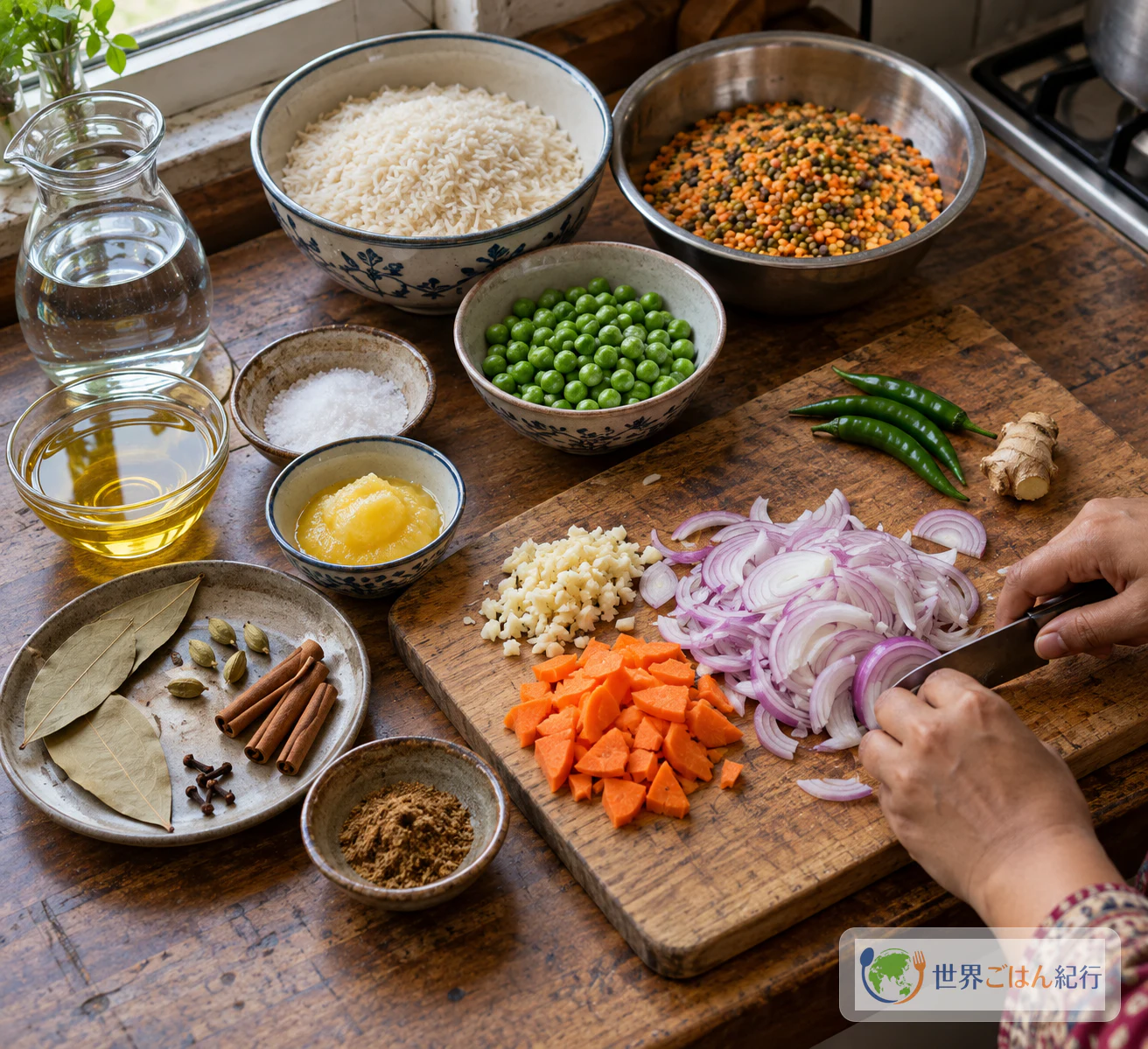
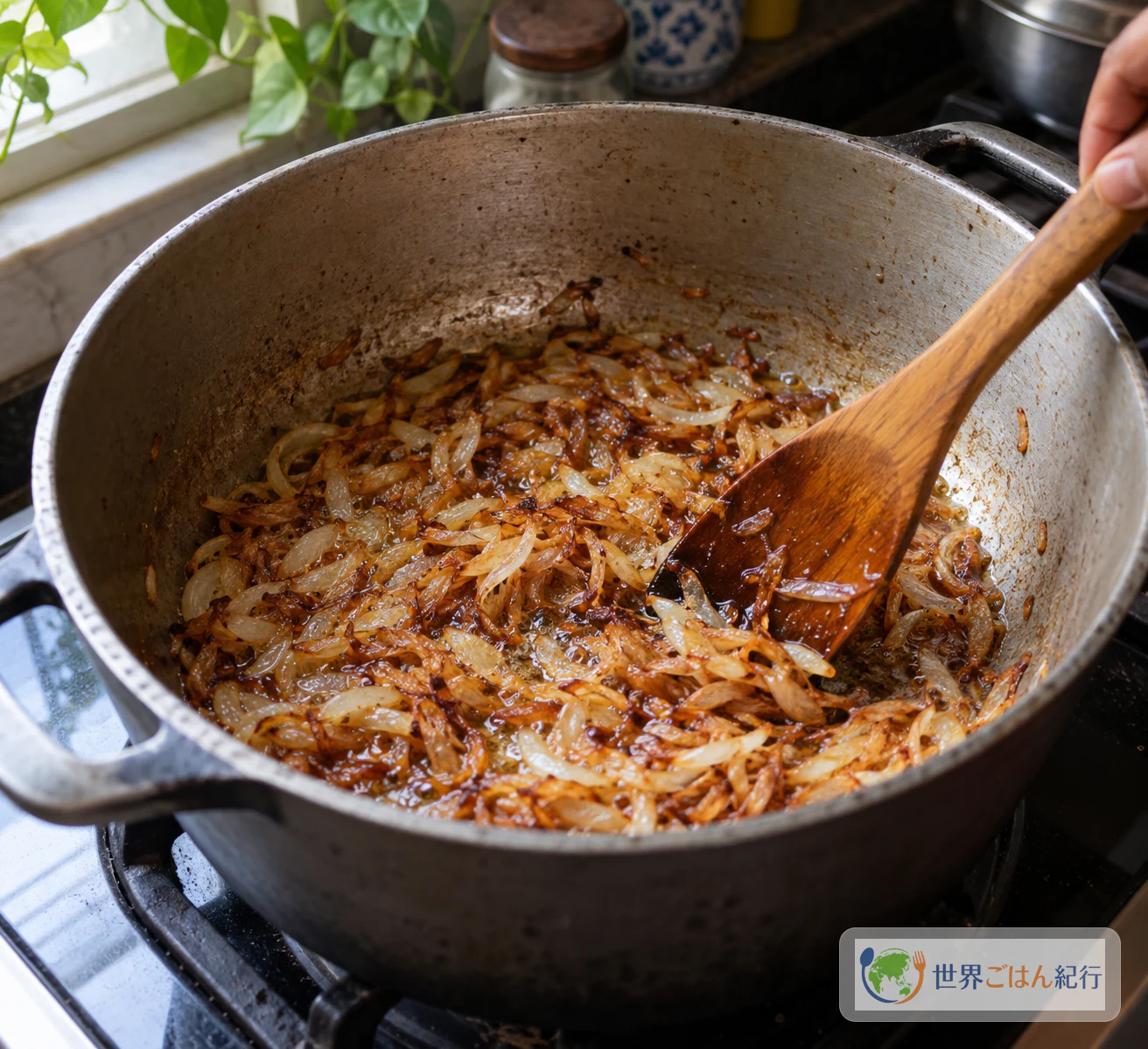
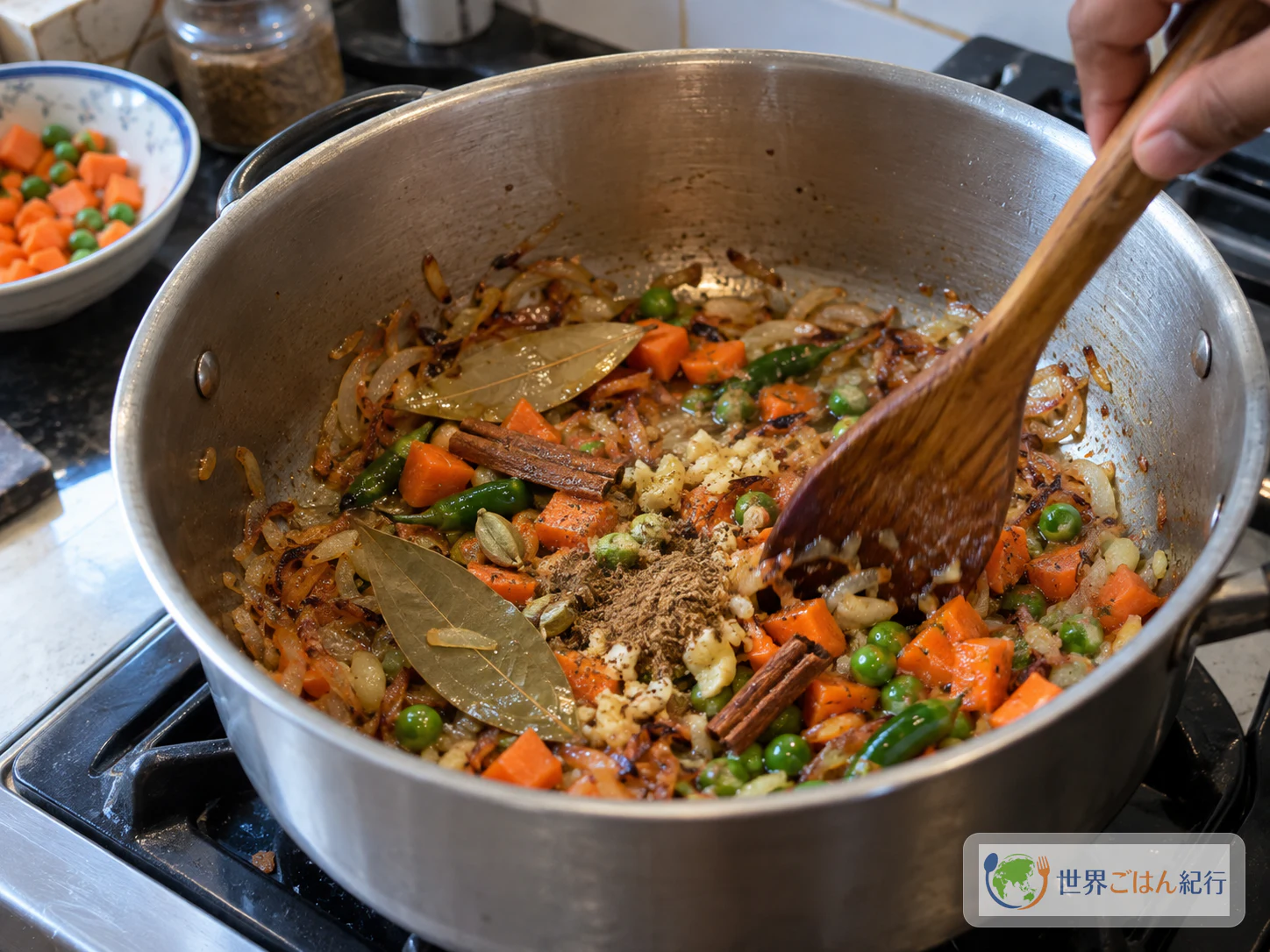
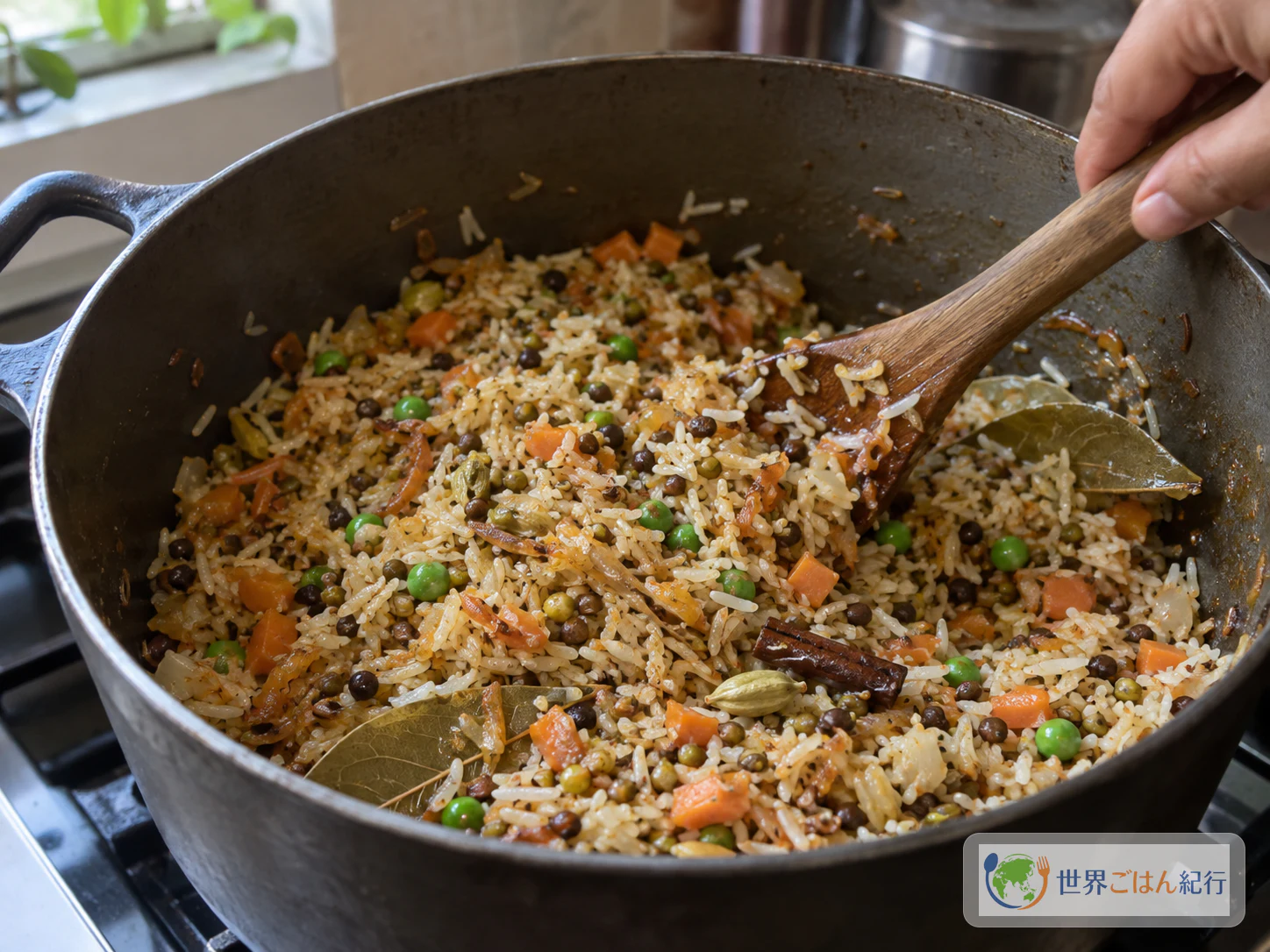
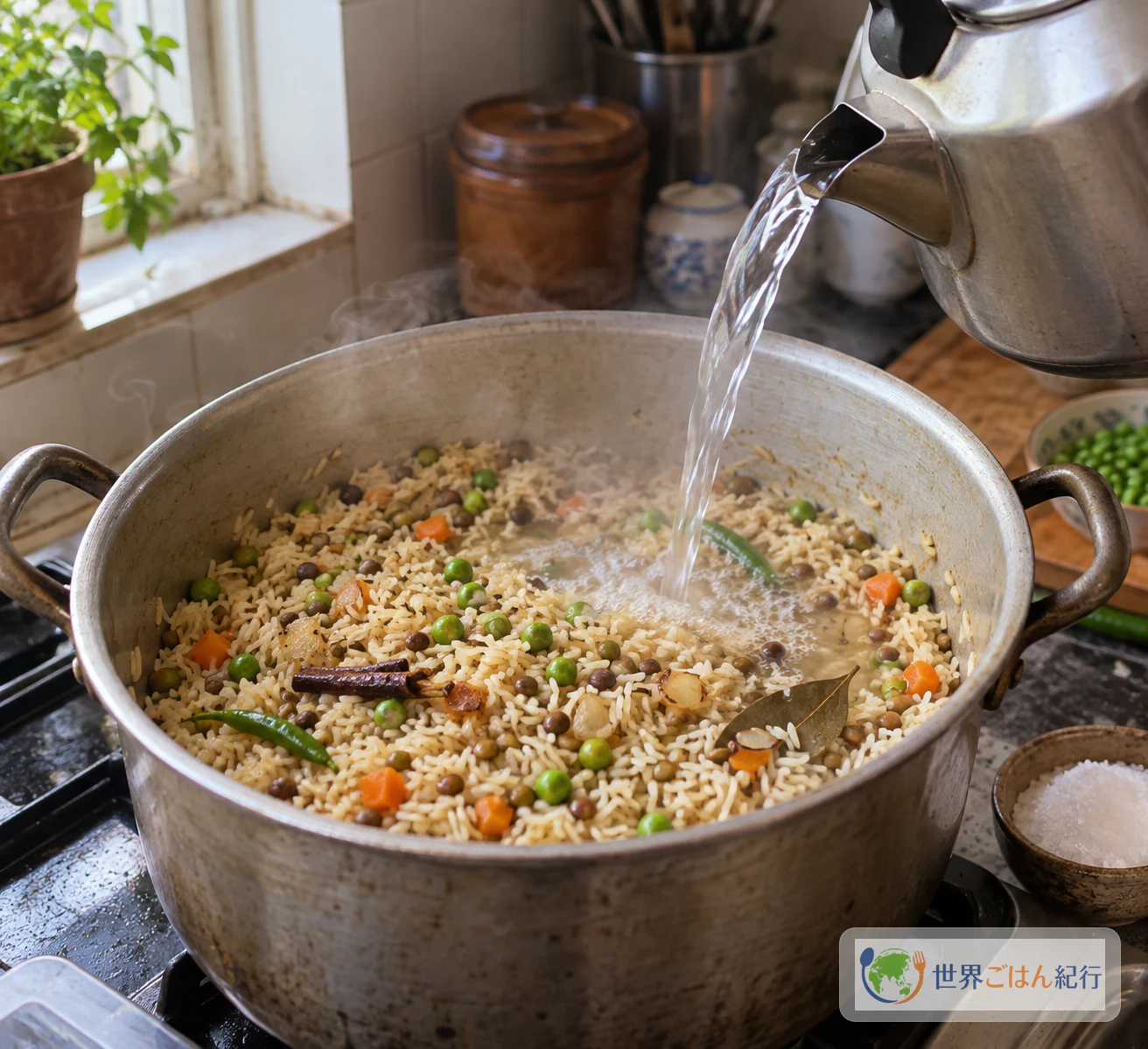
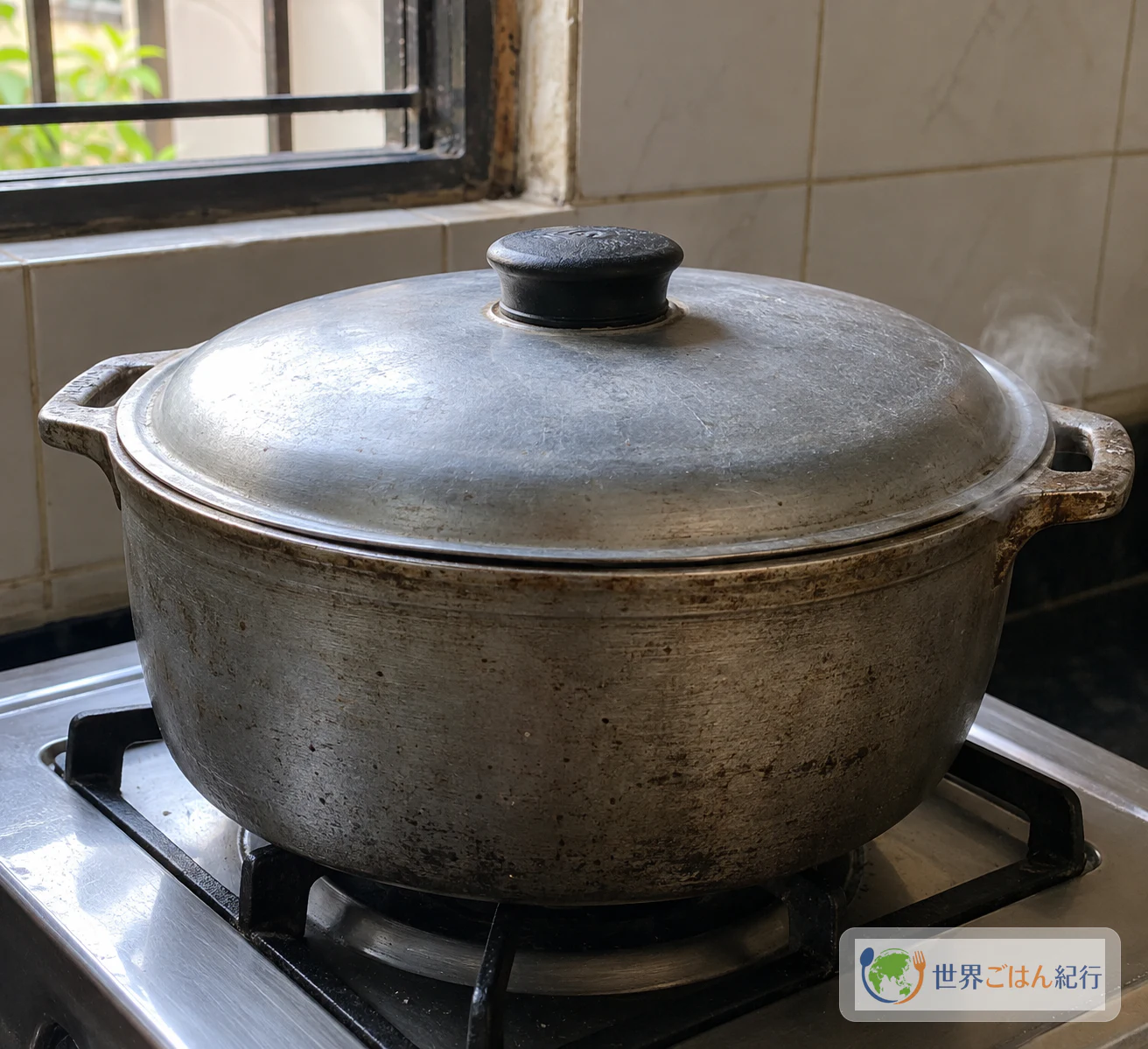
Thinly sliced onions turn deep brown in oil. Garlic, ginger, cumin, bay leaves, cinnamon, cardamom, green chilies, carrot and peas go in, and the pot fills with the scent of whole spices. Then the rice and roasted pulses join them, and for several minutes they are stirred until each grain shines with oil. Only after that does the boiling water rush in, raising a cloud of steam, before the lid goes on.
That sequence is the heart of bhuna khichuri (ভুনা খিচুড়ি). Rice Today, the magazine of the International Rice Research Institute (IRRI), presents it as a dish eaten in Bangladesh and parts of India, made with aromatic, slender rice and mixed roasted pulses. The Bangladesh Tourism Board features Bhuna Khichuri among the foods of Dhaka, describing it as a dish that brings rice and lentils together.
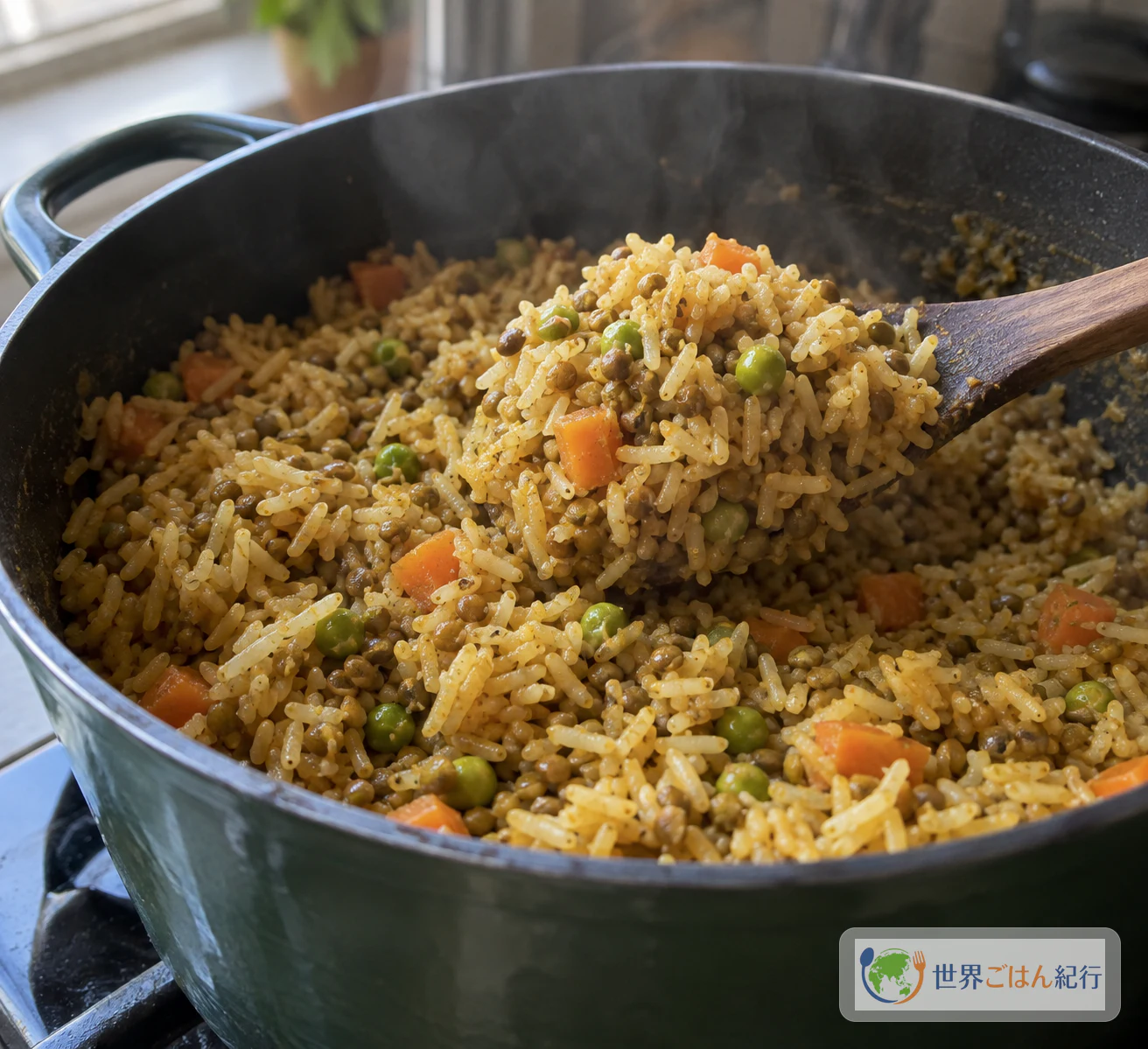
If you know khichdi as a soft, spoonable pot of rice and mung beans finished with a tempering of spiced oil, this is a different dish to aim for. Here the rice and pulses are fried first and then cooked, so the texture you want is grains that keep their shape, carrying the aroma of the spices and the oil.
This article follows the meat-free bhuna khichuri recipe published by IRRI's Rice Today, keeping its own amounts and times. It has not been kitchen-tested here. The published recipe does not give a number of servings, a heat level, or a definition of its cup, so none of those are added below.
Ingredients: The Published Amounts, Kept As Written
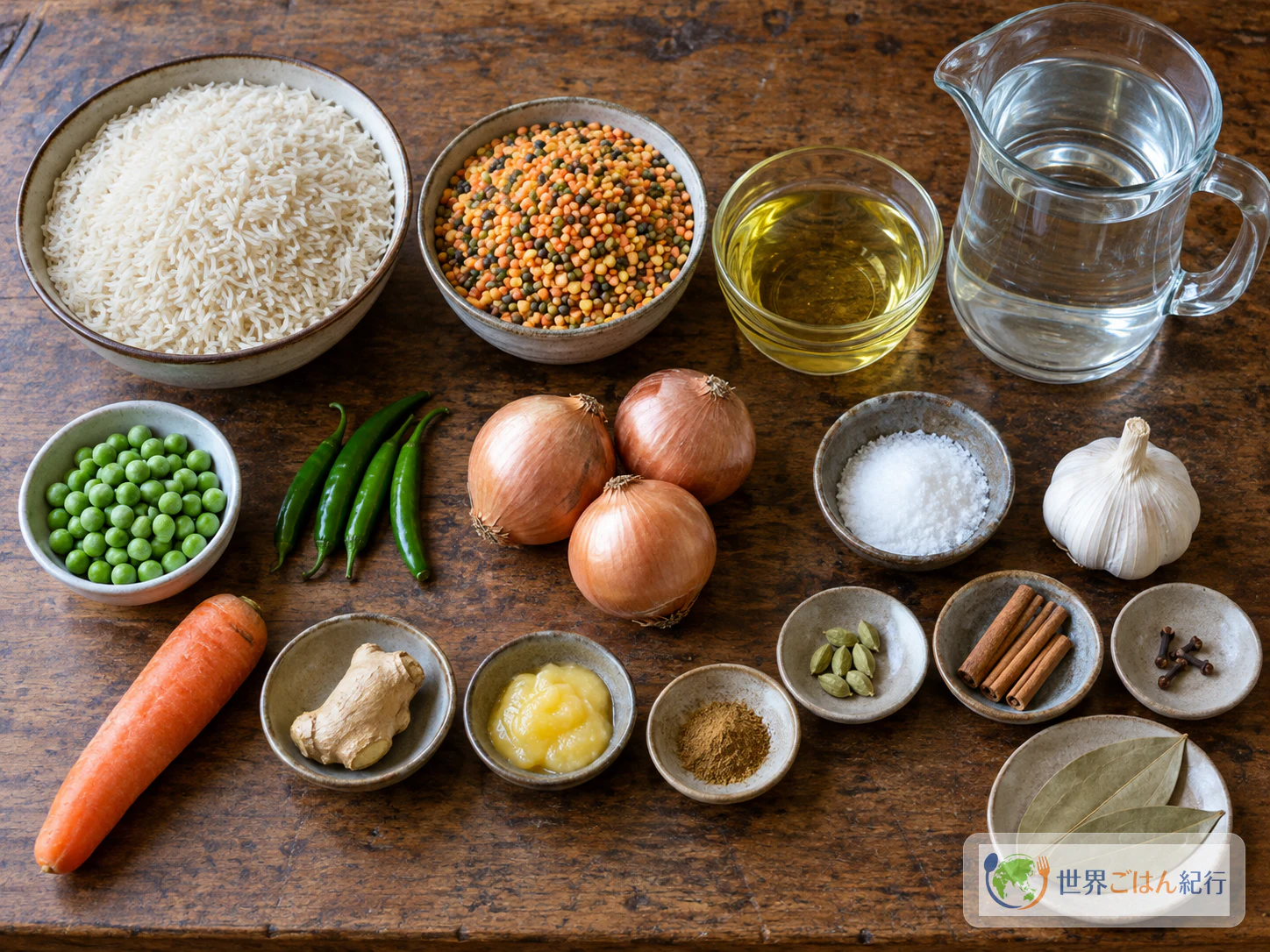
Whatever cup you use, use the same one for the rice, the pulses, the oil and the water, so the proportions stay as written.
Turmeric is not added to this recipe. Keep the oil at 1 cup and the salt at 2 tablespoons.
Choosing Rice, Pulses and Spices
Rice. Use an aromatic, slender rice such as the Bangladeshi varieties kalizira, chinigura, badsha bhog and katari bhog, or basmati and jasmine. Outside South Asia, basmati is the easiest of these to find. Plain long-grain rice will not necessarily give the same fragrance.
Pulses. The recipe calls for roasted pulses made from a mixture of lentil, black gram and mung bean. It does not say how much of each, or whether the black gram is whole, split or skinned, so choose what is available within those three. If you want to vary the pulses, stay with lentil, black gram and mung bean; pulses outside the recipe, such as chickpeas, belong to other versions of the dish. The recipe specifies pulses that are already roasted and does not describe how to roast them, so this article does not add a roasting step.
Spices and aromatics. Cardamom, cinnamon, cloves, bay leaves and cumin powder build the aroma, with onion, garlic, ginger and green chilies underneath. The recipe does not specify which kind of cardamom or how large the cinnamon sticks should be.
Short-grain rice. Using short-grain rice, such as Japanese rice, would change the texture. It can be a kitchen compromise, but it is not an equivalent of this dish.
Dietary note. The main recipe contains no meat, fish or egg, but it does include butter fat or ghee, so it is not vegan as written. For allergies, check the labels of the products you actually buy, including the pulses, spices and ghee.
Equipment
- A heavy pot with a tight-fitting lid, large enough for the rice, pulses and 8 cups of water
- A sharp knife and cutting board for slicing the onions very thinly
- One measuring cup, used for the rice, pulses, oil and water alike
- A kettle or second pot for bringing the water to a boil
- A wooden spoon or spatula for frying and for turning the finished rice
Method: Fry First, Then Cook Covered
The minutes below are guides, not guarantees. Pots, stoves and rice differ, so judge each stage by color, aroma and the state of the grains.
The order matters more than speed: onions first, then aromatics and spices, then the rice and pulses, then the ghee, and finally boiling water and salt. Have everything prepared and the water boiling before you start.
When the Pot Doesn't Behave: Troubleshooting
| What you see | Possible causes | What to do |
|---|---|---|
| Weak aroma, grains lack definition | Rice and pulses were not fried long enough before the water went in | Use the 6–8 minutes of frying as a guide and watch for glossy grains and a toasty smell, adjusting for your stove's strength |
| Rice is mushy or the pot is watery | Type of rice, pot diameter and heat level can all play a part | Check the rice you used and the size of your pot before changing anything. Don't recalculate the water ratio on your own; the 8 cups are part of the published proportions |
| Centers of the rice or pulses still hard after 8–10 minutes | The published time is not a guarantee; pot and heat differ | Keep the lid on and check again rather than serving by the clock |
| Onions bitter or blackened | Onions went past brown during step 2 | Aim for deep golden-brown and soft; bitterness from burnt onions carries into the whole dish |
| Wondering whether turmeric is missing | The published method mentions it, but the ingredient list does not | This recipe follows the ingredient list and leaves it out |
Serving and the Wider Table
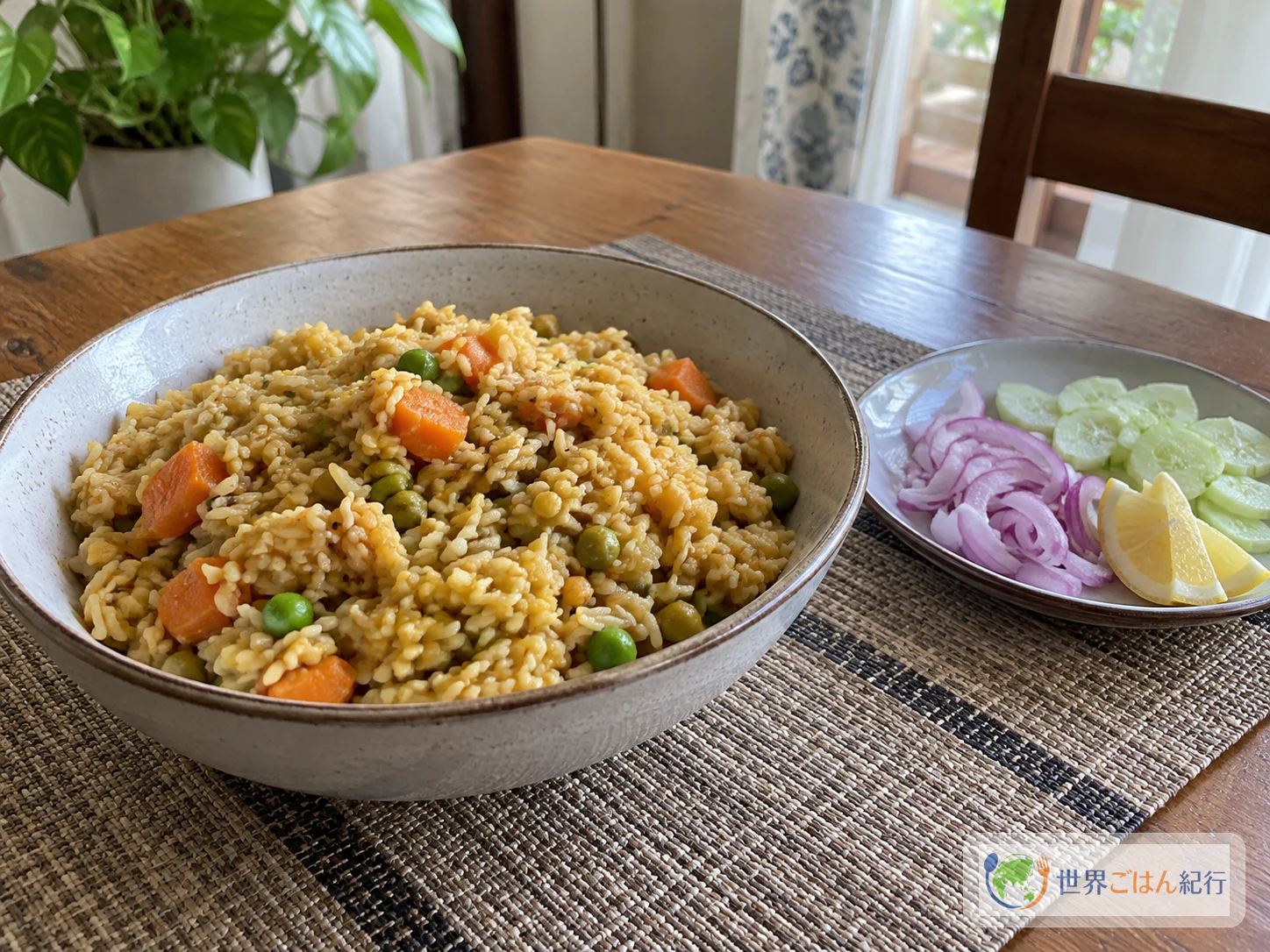
Rice Today introduces bhuna khichuri as a dish made on rainy days and for special occasions, and suggests serving it with fried ilish (hilsa), beef, chicken, egg or vegetables. The Bangladesh Tourism Board mentions salad, onion and lemon alongside it. In both cases these are things served with the khichuri, not ingredients mixed into the pot; the main recipe here stays meat-free, and any accompaniment belongs on its own plate.
The Tourism Board also notes versions of the dish made with chicken, beef or mutton. Recipes in the Bengali-language press show how different these can be: one mutton version uses polao rice with roasted mung beans, chickpeas and masoor lentils, and a beef version cooks the meat separately before combining it with rice and pulses that have been fried before cooking. These are separate recipes with their own proportions, not additions to the version above. What they share with it is the step that gives the dish its character: rice and pulses fried before the water goes in.
For more dishes from the same country, see Bangladesh.
Variations Worth Trying
- With vegetables on the side. Rice Today lists vegetables among the accompaniments. Serve them separately so the khichuri keeps its grain.
- With fried ilish. Rice Today names fried hilsa as an accompaniment. The fish is cooked as its own dish, outside this recipe.
- With meat. Chicken, beef and mutton versions exist, but they are independent recipes with different ingredients and steps. Treat them as different dishes rather than adding meat to this pot.
- Rice choice. Basmati is one of the rices the published recipe names, and the easiest to find outside South Asia.
- Spices. Keep the whole spices at the published amounts; increases or decreases have not been tested and are not part of this recipe.
Storage
The sources for this recipe give no guidance on storing or reheating bhuna khichuri, so no storage times or methods are given here.
Frequently Asked Questions
How is bhuna khichuri different from ordinary khichdi?
Khichdi is often cooked soft, with rice and mung beans simmered to a spoonable texture and a spiced oil added at the end. In bhuna khichuri, the rice and pulses are fried in oil with aromatics and whole spices first, and only then cooked in boiling water under a lid. The aim is separate grains and a toasted, spiced aroma.
Is bhuna khichuri a meat dish?
It can be. The Bangladesh Tourism Board mentions versions with chicken, beef or mutton, and recipes for meat versions are published separately. The recipe in this article, from Rice Today, contains no meat; meat, fish and egg are suggested only as accompaniments.
Can I use Japanese or other short-grain rice?
The published recipe calls for aromatic, slender rice. Short-grain rice will give a different texture, so it can work as a compromise but should not be considered the same dish. Basmati, which appears on the recipe's list, is the closest easy option.
How many people does this serve?
The published recipe does not say, and no serving count is given here. The amounts are the recipe's own, in its own cup measure.
Why are the cloves not in the method?
The published recipe lists 3 cloves among its ingredients but does not mention them in any step. This article keeps them in the ingredient list without inventing a point at which to add them.
Sources
- Rice Today / International Rice Research Institute (IRRI), "Bhuna khichuri." The main recipe: ingredient list and amounts, the order of frying the onions, aromatics, rice and pulses before adding boiling water, the frying and covered cooking times, the rice varieties named, the accompaniments, and the dish's introduction as eaten in Bangladesh and parts of India on rainy days and special occasions. https://ricetoday.irri.org/bhuna-khichuri/
- Bangladesh Tourism Board, Ministry of Civil Aviation and Tourism, "Bhuna Khichuri." Bhuna Khichuri featured as a food of Dhaka, described as rice combined with lentils, with versions using chicken, beef or mutton, and served with salad, onion and lemon. Used for background only, not for amounts or method. https://beautifulbangladesh.gov.bd/district-destination/dhaka/tasty-food/44
- bdnews24.com, "ভুনা খিচুড়ি" (recipe credited to Anisa Ali Meghla). A separate mutton version using polao rice, roasted mung beans, chickpeas and masoor lentils, with rice and pulses fried before boiling water is added. Used for comparison only; not combined with the main recipe. https://bangla.bdnews24.com/lifestyle/article1181927.bdnews
- bdnews24.com News Service, "ঝাল-মুখরোচক ভুনা খিচুড়ির রেসিপি" (recipe credited to Mita Khanam). A separate beef version in which rice and pulses are fried before cooking and the meat is cooked separately and combined. Used for comparison only; not combined with the main recipe. https://bangla.bdnews24.com/lifestyle/Aharebahare/a538306d835a