Bobor: A Cambodian Morning Rice Porridge Finished at Each Bowl
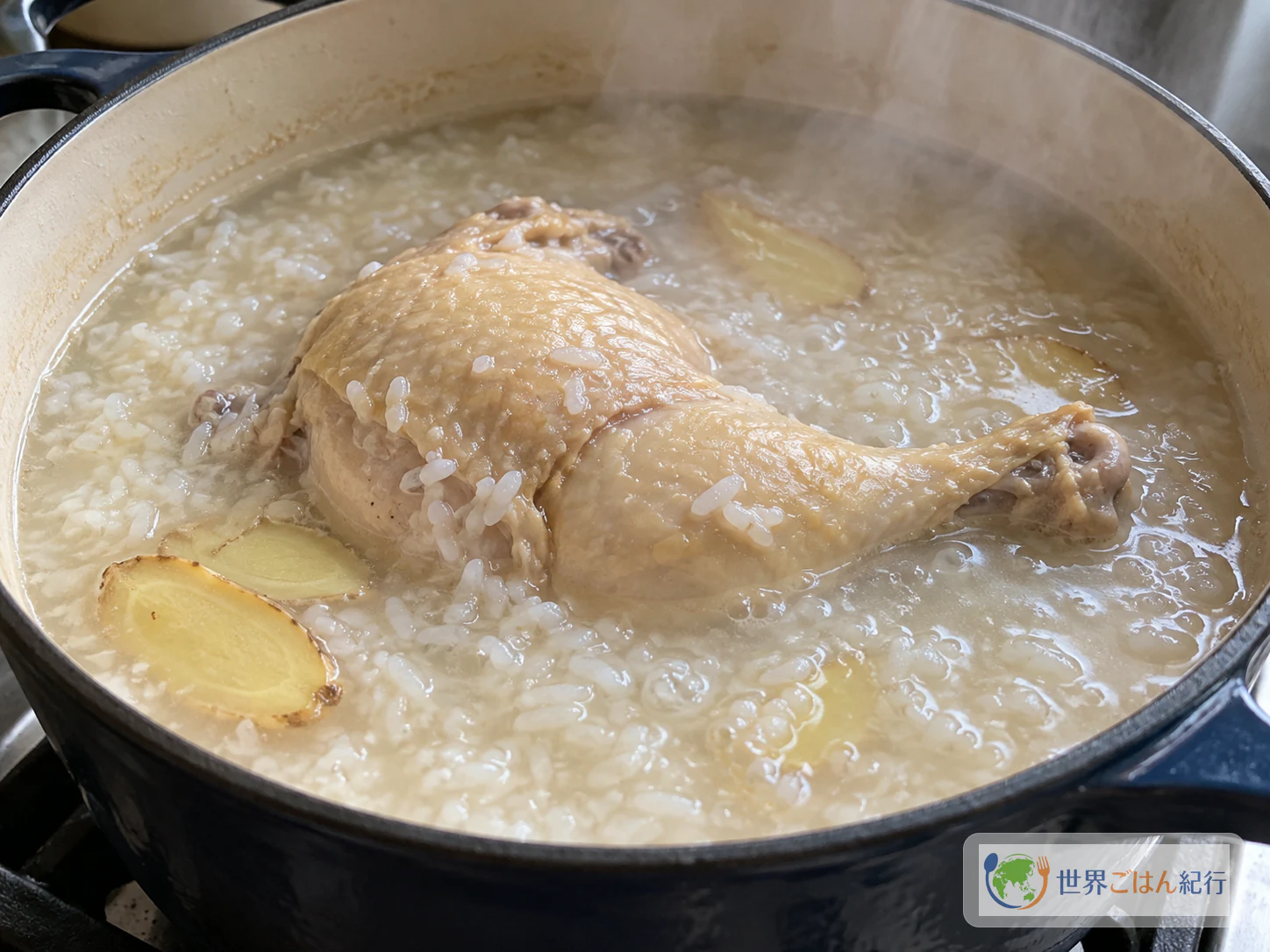
Simmer the rice until the grains open and the liquid turns milky and pearly, but stop while it still flows from a ladle. The pot stays gentle; the crunch, aroma and sourness are added afterward, bowl by bowl.
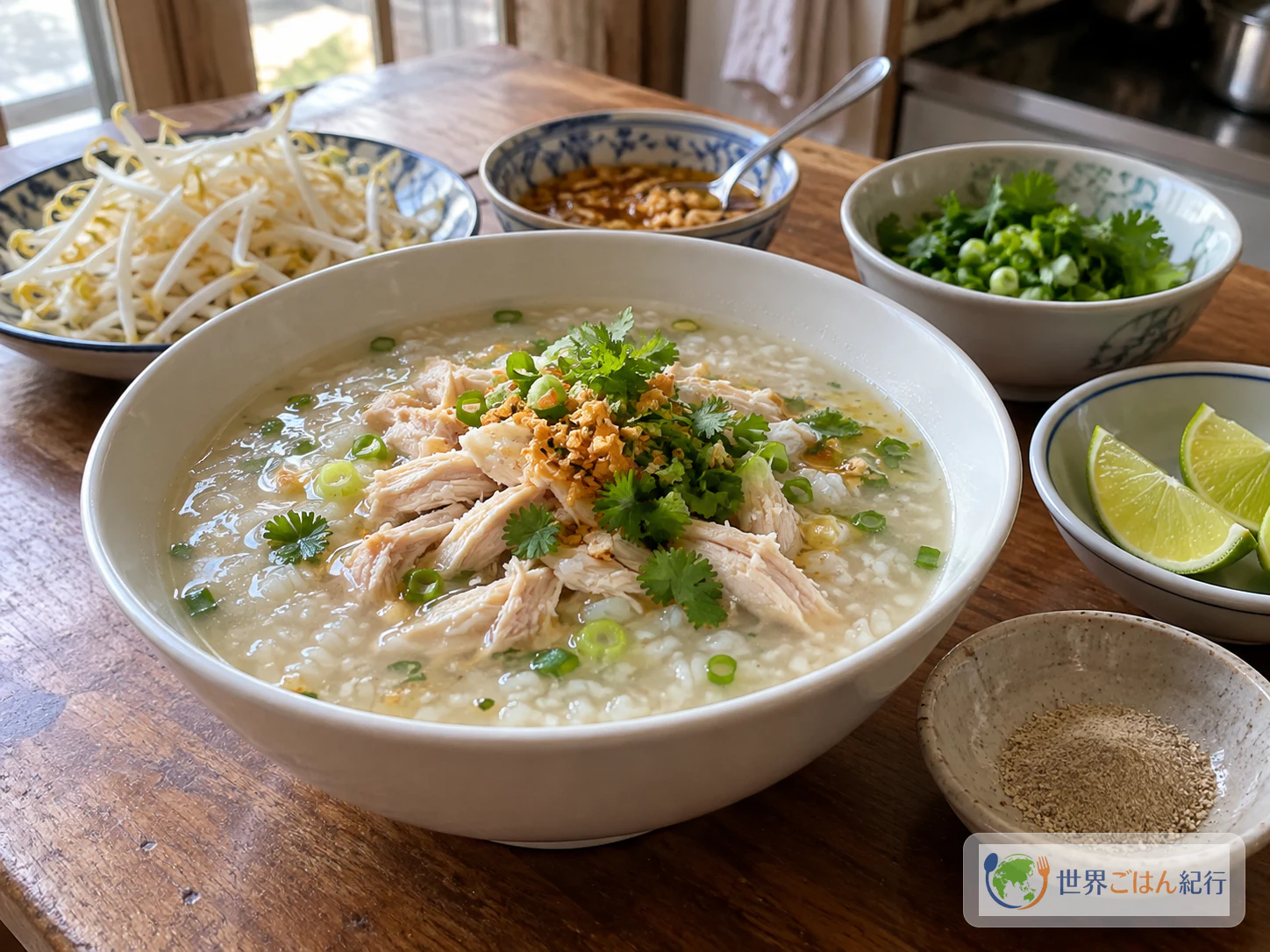
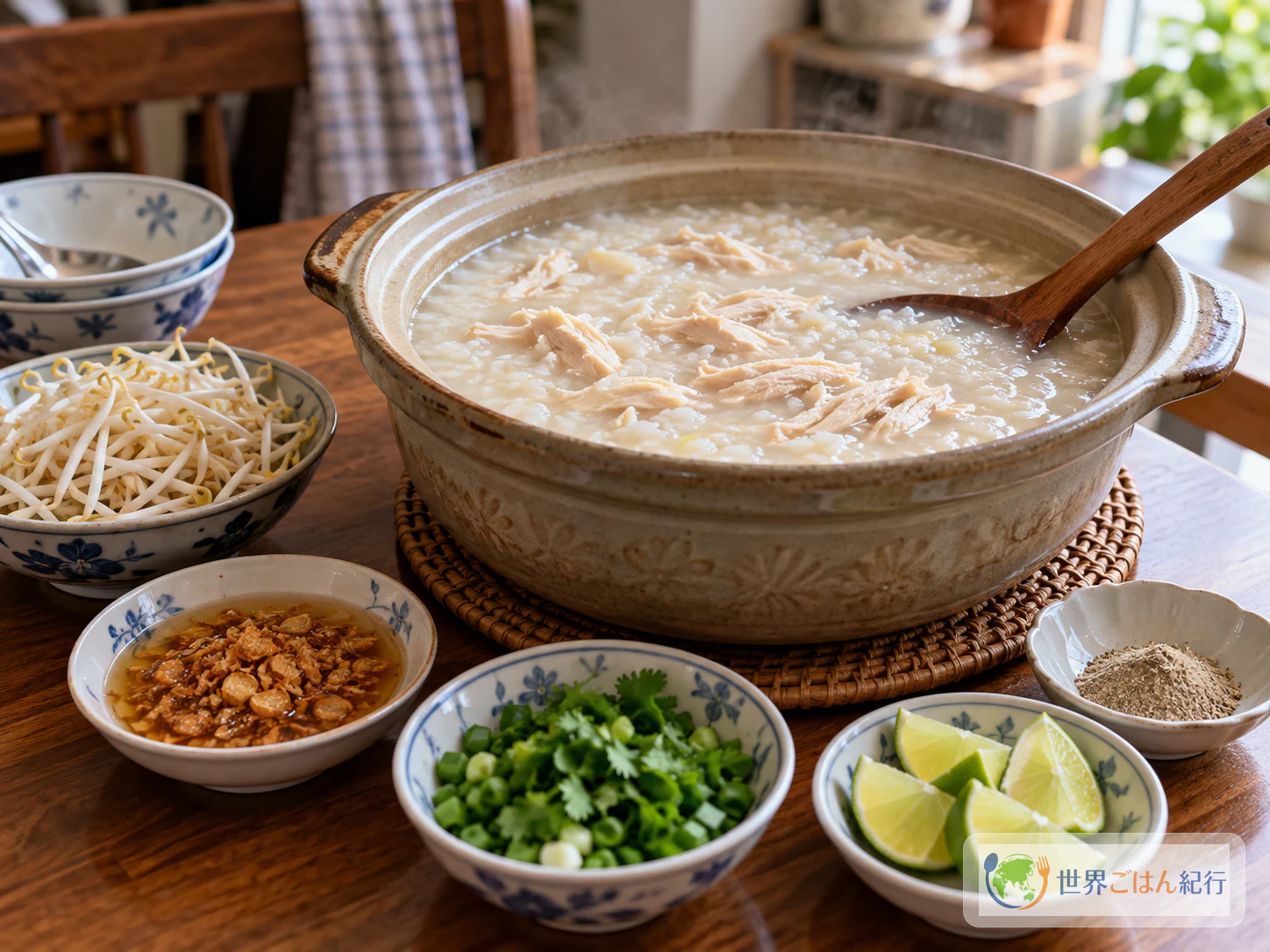
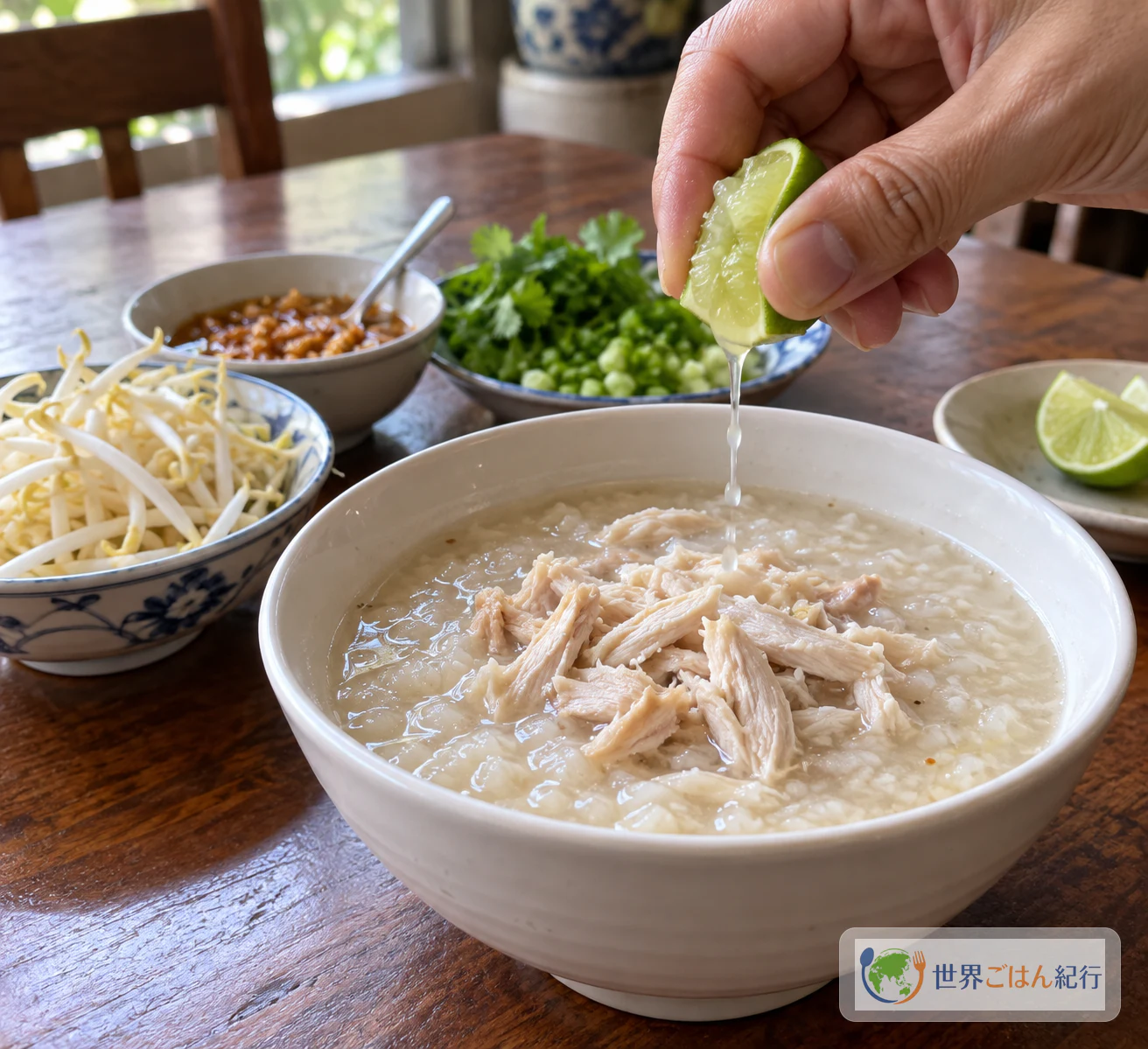
Picture a pot of white rice porridge sending up steam early in the morning. Each person ladles some into a bowl, then reaches for the small dishes around it: a spoonful of fried garlic with its oil, a handful of raw bean sprouts, chopped scallion and cilantro, a squeeze of lime, a pinch of white pepper. In one mouthful the soft rice gives way to the snap of a sprout, and the mild broth suddenly turns bright with lime.
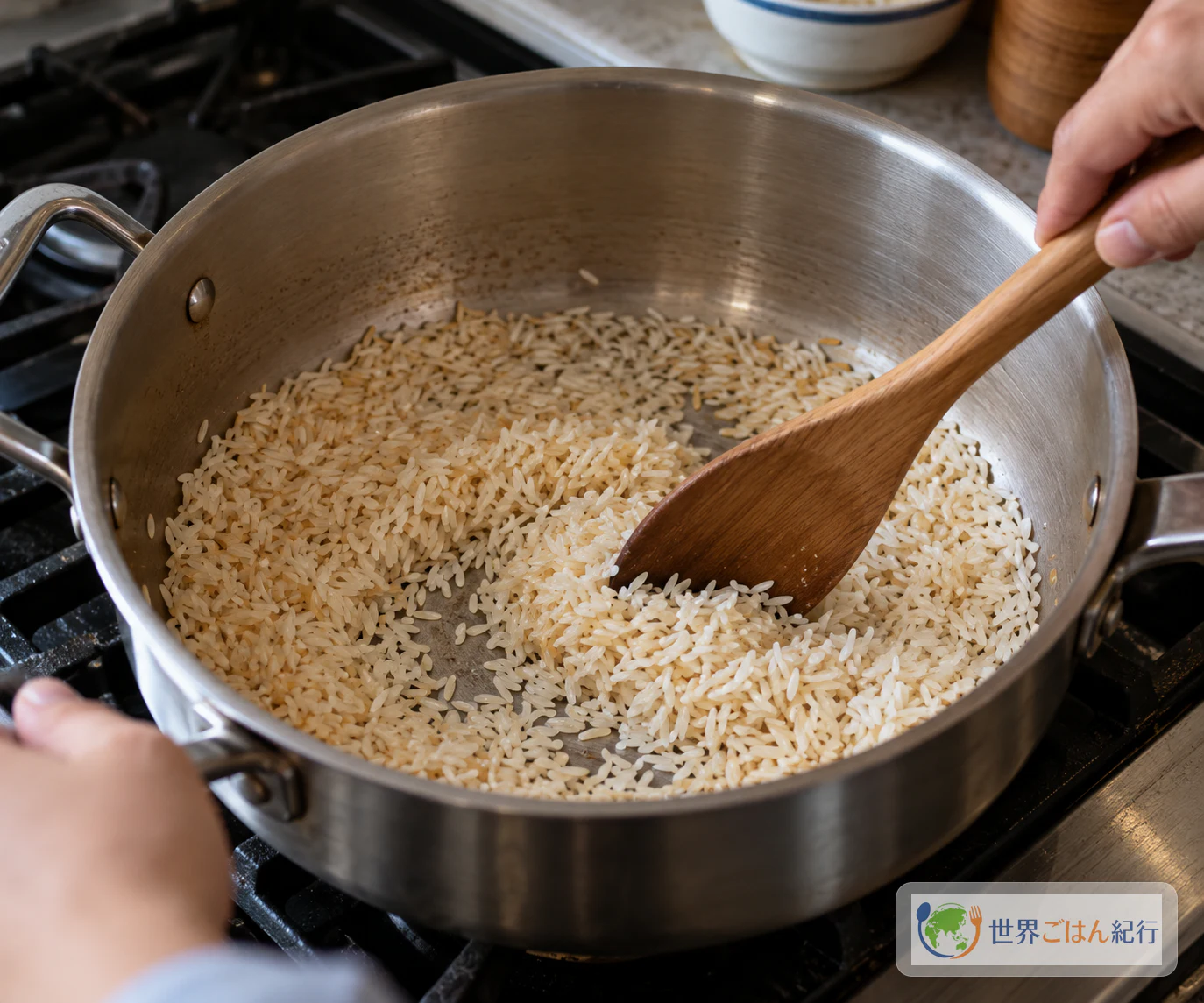
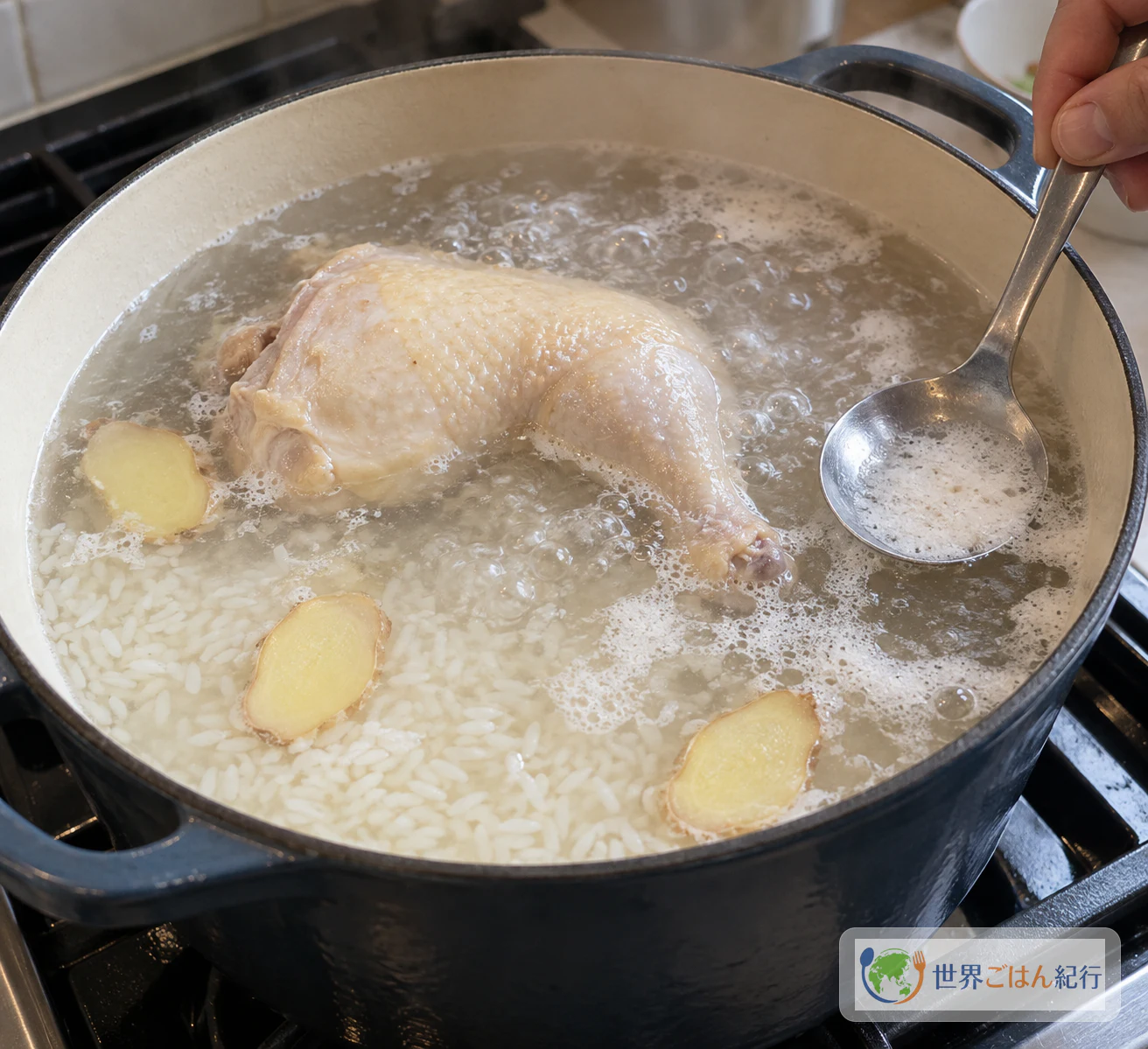
This is bobor (បបរ, also written Borbor), a Cambodian rice porridge. Travel and lifestyle writing from Cambodia describes it as a breakfast favorite that is also eaten as a late-night meal. The version here is bobor sach moan, bobor with chicken: jasmine rice toasted in a dry pot, simmered with a bone-in chicken leg quarter and ginger, then seasoned with fish sauce and salt once the chicken has been shredded and returned.
This recipe has not been kitchen-tested by Sekai Gohan. The amounts and steps follow one published recipe as closely as possible, without converting its units or adding times it does not give.
Chicken Bobor and Plain Bobor: What This Recipe Covers
Bobor is not a single fixed recipe. Published examples include versions with no filling at all, and versions made with pork or fish as well as chicken. A 2014 news feature about one eatery, republished by Tourism Cambodia from the Phnom Penh Post, describes bobor cooked in chicken or pork stock and served with minced pork, shrimp, bean sprouts, fried onion, boiled egg and fried rice paper. That is one shop's take at one moment, not a national standard, but it shows how far the toppings can travel.
This article reproduces a single version: "Bobor Sach Moan" from Cambodian Cookbook Kitchen, written for 4 servings. Its amounts are used as they are and are not mixed with other recipes. A few things that recipe leaves open are kept open here:
- The rice is measured as "1 cup" without saying which cup standard is meant, so it is not converted to grams or millilitres.
- The chicken is "1 leg quarter," with no weight given.
- The bean sprouts are "2 handfuls" and the herbs "1 bunch," again with no weights.
- No amount is given for the white pepper or the fish sauce added at the table.
- The recipe page lists a cook time of 75 minutes, while its steps describe about 2 minutes of toasting and about 1 hour on low heat. Because these do not line up, this article does not state a total time.
The same recipe also mentions adding a handful of sticky rice as an optional idea. It is not in its ingredient list, so it is left out of the base recipe here and covered only under variations.
No source consulted for this article establishes the dish's origin, the history of the name, or how it relates to the rice porridges of neighboring countries, so none of that is claimed here.
Ingredients (4 Servings): What Goes in the Pot and What Waits on the Table
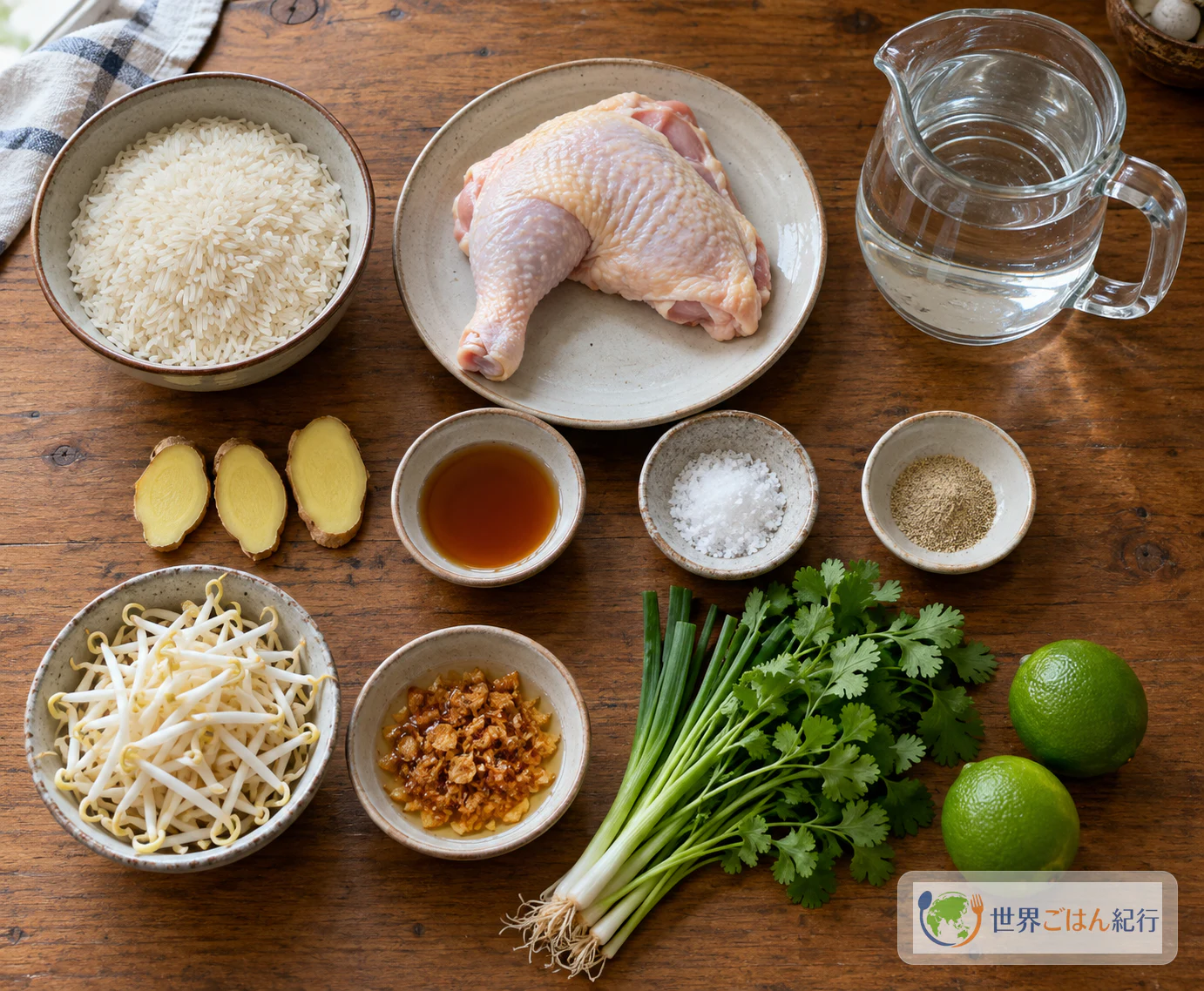
Six ingredients go into the pot. Everything else is set out at the table so each person can season their own bowl.
Serve the table toppings in separate small dishes rather than stirring them into the pot.
Bean sprouts are served raw here, so keep them, and every serving dish and utensil, away from the raw chicken and anything it has touched. Wash your hands and any boards, plates or tools after handling raw chicken. Cook the chicken until the center of the thickest part reaches 75°C and holds there for at least 1 minute.
Equipment
- Heavy-bottomed pot large enough for 2.5 L of water plus the rice and chicken
- Wooden spoon or spatula for toasting and stirring
- Spoon or ladle for skimming foam
- Clean plate for shredding the chicken, kept separate from the one that held it raw
- Food thermometer for checking the chicken
- Ladle, serving bowls and small dishes for the toppings
Choosing and Substituting: Rice, Fish Sauce and Fried Garlic
Rice. Jasmine rice brings a gentle fragrance and grains that open as they simmer. Japanese-style short-grain rice will still make a porridge, but its aroma and the way its grains break down are different, so expect a different texture rather than the same dish.
Fish sauce. Look for a plain fish sauce labeled as such; there is no need for a specific brand. Saltiness and fermented aroma vary between products, so start with the stated 2 tbsp and adjust at the table rather than adding more to the pot. If you want to avoid fish sauce, soy sauce can stand in, but it changes the saltiness and lacks the fermented-fish aroma. Treat it as a different version, not an equivalent.
Fried garlic. Store-bought fried garlic saves time. Whether or not it comes with its frying oil changes the aroma and how it feels in the mouth. If yours has no oil, its aroma and mouthfeel will differ.
White pepper. Its aroma is not the same as black pepper's. If you can, keep white pepper on the table for this dish.
How to Make Bobor
Start from raw rice toasted in a dry pot; this is not a quick version made from already-cooked rice. Judge the finish by the grains and the flow of the porridge, not only by the clock.
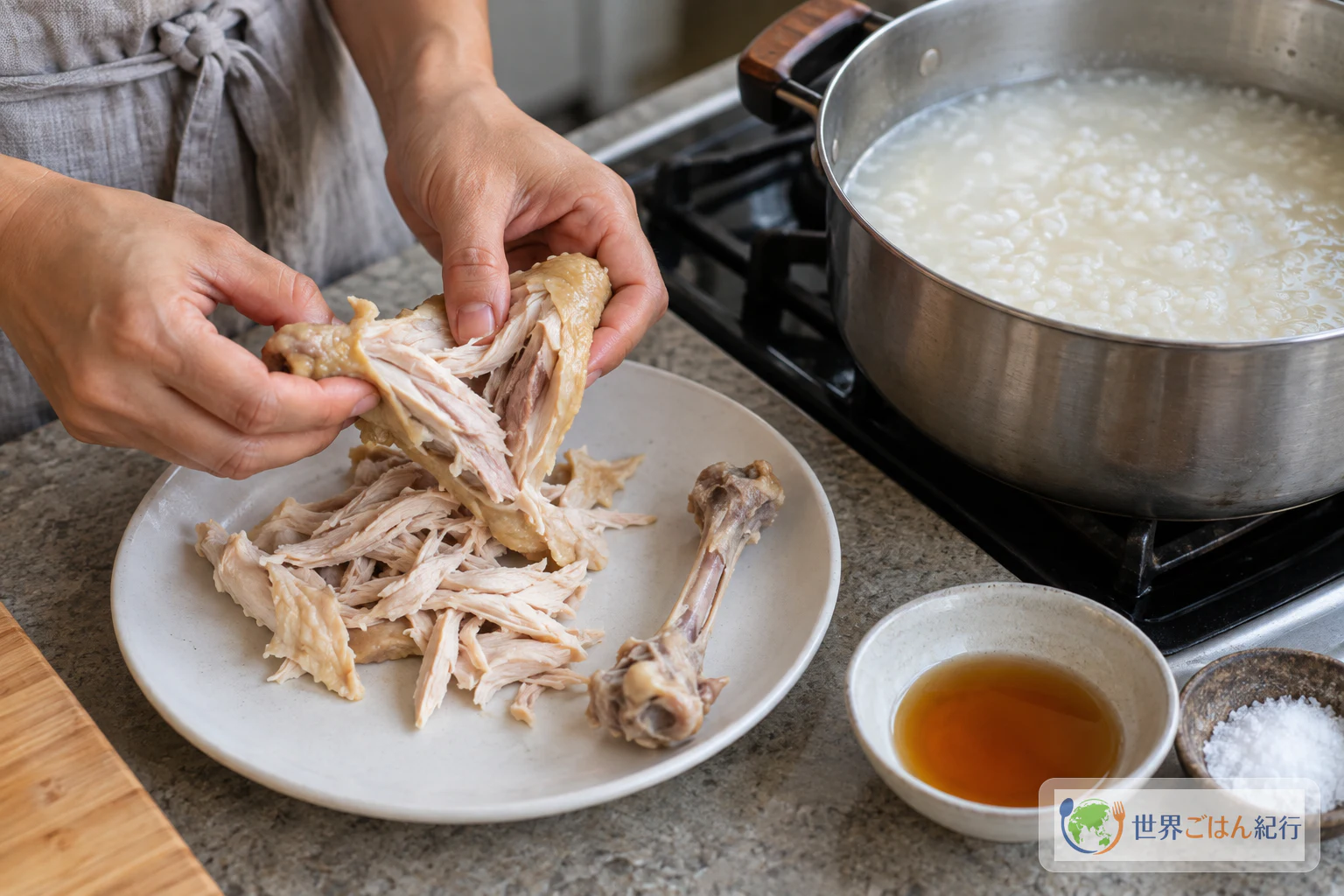
The rice and chicken cook together in one pot. The chicken comes out only near the end, to be shredded, and goes back in before seasoning.
Adding Toppings Bowl by Bowl
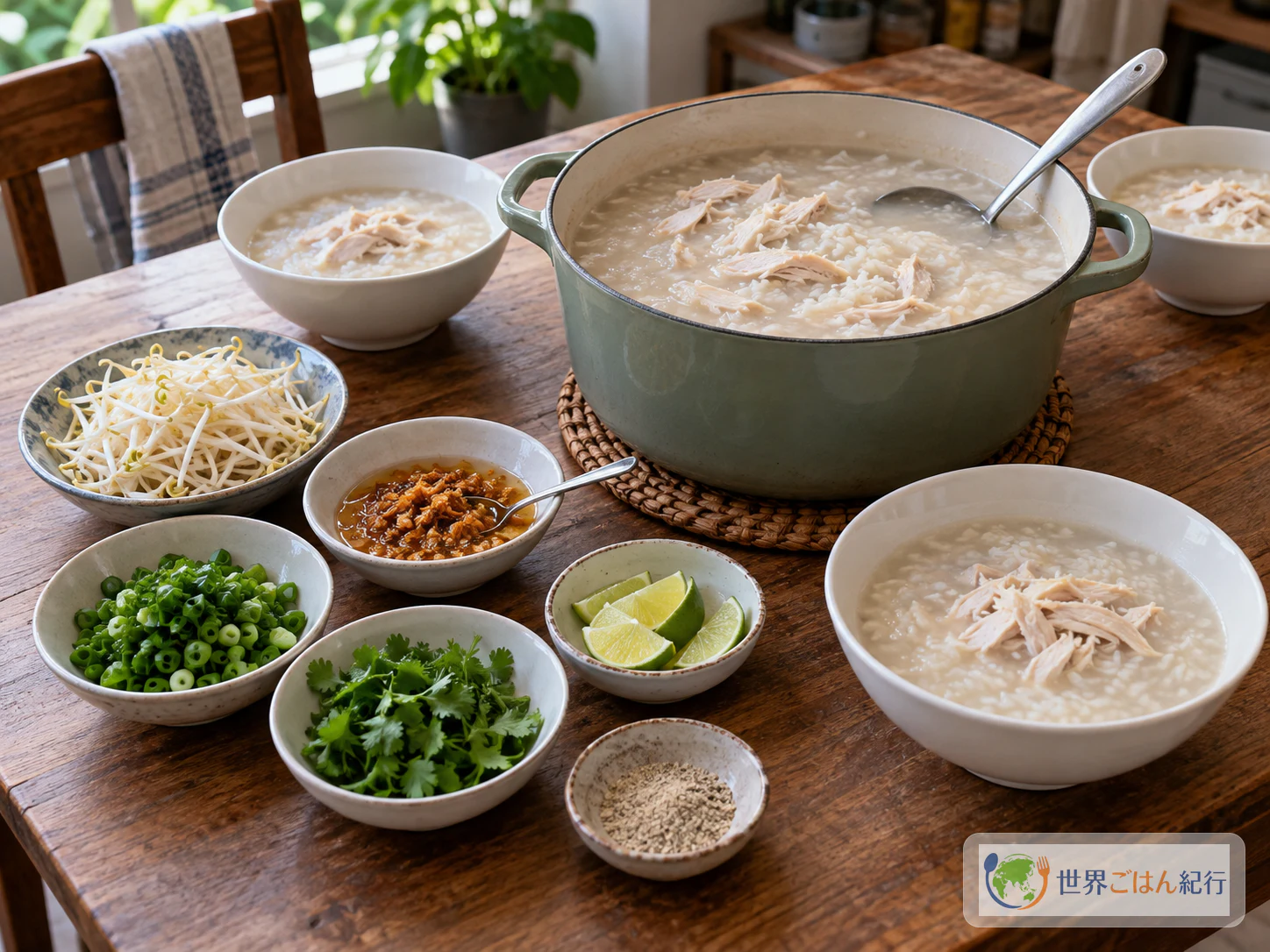
The heart of bobor is the contrast between a calm, mild porridge and the sharp, crunchy, fragrant things added to it at the last moment. Raw bean sprouts stay crisp against the soft rice, fried garlic brings a toasty richness, scallion and cilantro add freshness, lime cuts through with sourness, and white pepper adds a quiet warmth.
IPS Cambodia lists chicken, scallion, fried garlic, fish sauce, pepper, lime and chili among the things served with bobor. It also describes the porridge as being sold at street stalls in the morning and late at night, and eaten throughout the day at restaurants. These are examples rather than rules every household follows. In this recipe, the pot is seasoned with fish sauce and salt, and each person adds toppings at the bowl. If one person wants it sour and another wants it peppery, the same pot works for both.
Changing the Fillings and Texture
Other bobor recipes and restaurant examples differ from the chicken version here. If you try them, treat each as its own version rather than mixing their amounts into this recipe.
- Plain bobor. Versions with no filling exist. Leaving out the chicken changes the depth of the broth, so the table toppings carry more of the flavor.
- Pork or fish. Published examples include pork and fish versions. Their amounts and timing are not covered here, so follow a recipe written for them rather than swapping meat into this pot.
- Restaurant-style toppings. The 2014 eatery example adds minced pork, shrimp, boiled egg and fried rice paper. These move the bowl toward a fuller, more elaborate meal.
- A handful of sticky rice. The recipe followed here suggests this as an optional extra. It changes the texture, so it is not part of the base amounts.
- Store-bought fried garlic or other rice. Both work but change the aroma and texture, as described under substitutions above.
Troubleshooting: Thick, Scorched or Flat
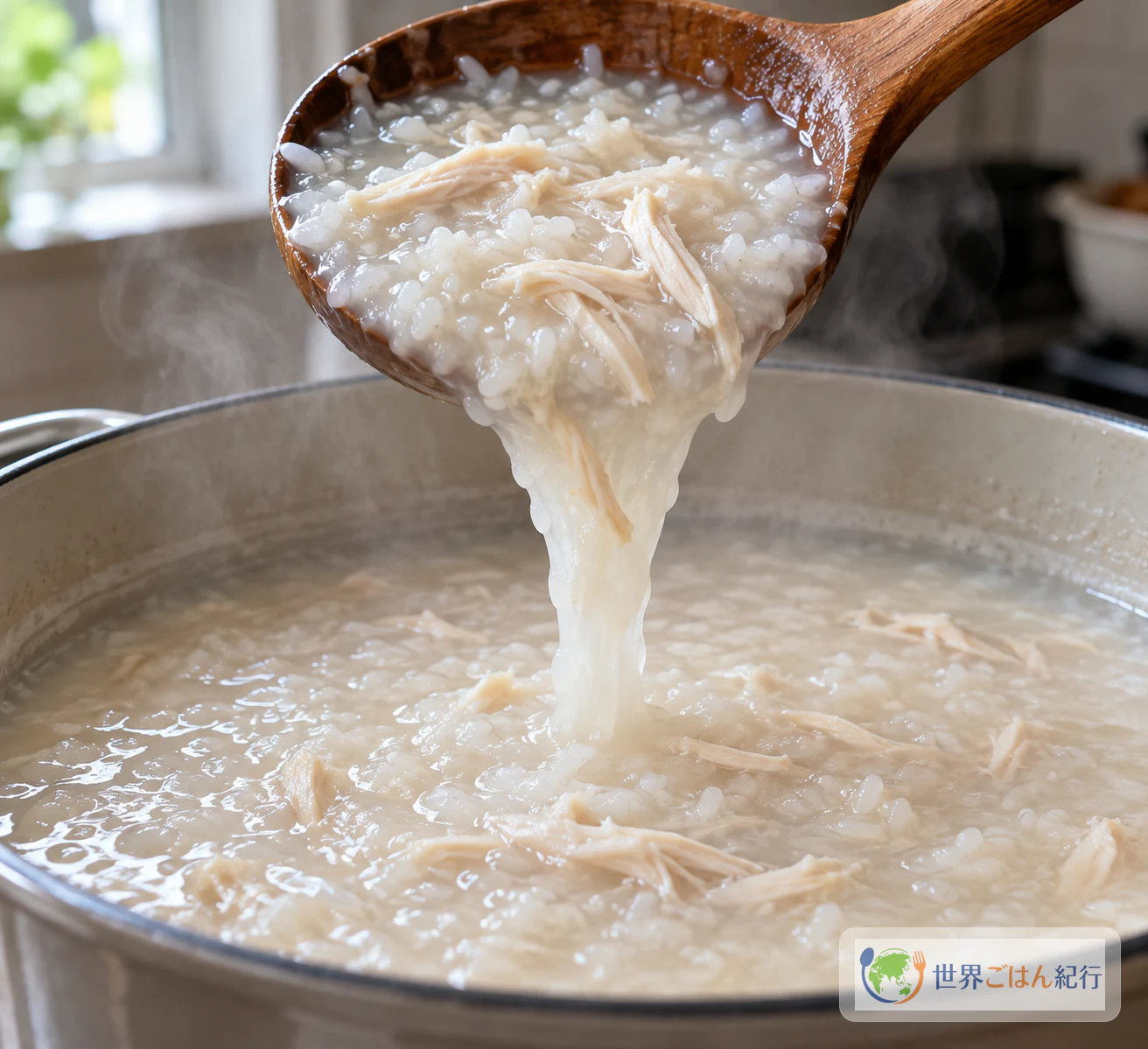
Most problems with bobor come from the porridge thickening more than expected, the bottom of the pot catching, or seasoning added all at once.
| Problem | Likely cause | What to do |
|---|---|---|
| The porridge has set into a thick mass | Rice keeps absorbing liquid as it sits and on the way to the bowl | Stop cooking while it is still loose. Before serving, stir in a little boiling water at a time. Don't thin it with cold water |
| The bottom scorched | Heat too high, or not stirred | Use a heavy pot, keep the heat low, and stir from the bottom regularly |
| The flavor seems flat | Seasoning kept light in the pot | Add fish sauce, lime, white pepper or fried garlic to each bowl a little at a time rather than adding a lot to the whole pot |
| The chicken is not hot enough at the center | Thick piece, or removed too early | Return it to the simmering pot until the thickest part reaches 75°C and holds for at least 1 minute |
| The grains still look whole and the liquid is clear | Not simmered long enough | Keep simmering on low, stirring from the bottom, until the grains open and the liquid turns milky |
Leftovers and Reheating
Rice porridge with chicken needs care once it has cooled. Divide leftovers into small, shallow containers so they cool quickly, and refrigerate them. Don't leave the pot standing at room temperature for a long time. When you eat it again, reheat it thoroughly until it is hot all the way through. It will have thickened, so loosen it with a little boiling water as you heat it. Add the bean sprouts, herbs and lime fresh at serving time rather than storing them in the porridge.
No storage period is given here, because none of the sources consulted supports a specific number of days.
Frequently Asked Questions
What kind of dish is bobor?
Bobor is a Cambodian rice porridge. IPS Cambodia describes it as a breakfast favorite that is also eaten as a late-night meal. It is commonly served with toppings that each person adds at the bowl, and it can be made plain or with chicken, pork or fish. This article covers the chicken version, bobor sach moan.
Do I have to use jasmine rice?
No, but it changes the result. The recipe followed here uses jasmine rice for its fragrance and the way its grains open. Japanese-style short-grain rice will make a porridge, but expect a different aroma and texture.
How big is "1 cup" of rice, and how heavy is the chicken?
The recipe followed here does not say which cup standard it uses or how much the leg quarter weighs, so this article keeps "1 cup" and "1 leg quarter" as written instead of guessing at grams. The same goes for the "2 handfuls" of sprouts and "1 bunch" of herbs.
How long does it take?
The recipe page lists a 75-minute cook time, but its steps describe about 2 minutes of toasting and about 1 hour of simmering on low. Since these don't match, no total time is given here. Go by the grains opening and the liquid turning milky, and by the chicken reaching 75°C at the center for at least 1 minute.
My porridge got too thick. How do I fix it?
Stir in a little boiling water at a time until it flows from a ladle again. It thickens as it cools, so it helps to stop cooking while it is still a little loose.
Can I make it without chicken?
Yes. Plain bobor is one of the versions that exist. It is a different dish from the chicken version here, with a lighter broth, so the table toppings matter more.
What should I do with leftover porridge?
Divide it into small, shallow containers, cool it quickly and refrigerate it. Don't leave it at room temperature for long, and reheat it thoroughly until hot throughout, loosening it with a little boiling water.
Sources
- Cambodian Cookbook Kitchen, "Bobor Sach Moan." The base recipe for this article: chicken bobor for 4 servings with 1 cup jasmine rice, 1 bone-in chicken leg quarter, 2.5 L water, 3 slices ginger, 2 tbsp fish sauce and 1 tsp salt; the table toppings; toasting the rice, skimming foam, simmering on low until the grains open, shredding and returning the chicken; and finishing loose because the porridge thickens. Also the source of the 75-minute versus about-1-hour time difference and the optional sticky rice idea. https://cambodiancookbook.com/recipes/bobor-sach-moan/
- IPS Cambodia, "IPS TV Episode 15 | Cambodians' Favorite Breakfasts." Bobor as a Cambodian rice porridge eaten for breakfast and late at night; toppings such as chicken, scallion, fried garlic, fish sauce, pepper, lime and chili; street stalls in the morning and late at night and restaurants through the day. https://ips-cambodia.com/ipstv-ep15-cambodians-favorite-breakfasts/
- Tourism Cambodia (republished from the Phnom Penh Post), "In search of better borbor, an eatery gives stylish twist to the humble snack," 2014. One eatery's bobor cooked in chicken or pork stock and served with minced pork, shrimp, bean sprouts, fried onion, boiled egg and fried rice paper. Used only as an example from that time, not as a current or national standard. https://www.tourismcambodia.com/news/localnews/12569/in-search-of-better-borbor-an-eatery-gives-stylish-twist-to-the-humble-snack.htm
- Baku Kitchen, "Bobor — Cambodia breakfast." Used only for comparison: plain, chicken, pork and fish versions, and a soy sauce alternative to fish sauce. Its amounts and method are not used in this recipe. https://bakukitchen.com/bobor/
- Ministry of Health, Labour and Welfare, Japan, "家庭での食中毒予防" (Preventing food poisoning at home). Avoiding cross-contamination between raw meat and foods eaten raw or already cooked; cooking to 75°C at the center for at least 1 minute; dividing leftovers into shallow containers to cool quickly, not leaving them at room temperature for long, and reheating thoroughly. https://www.mhlw.go.jp/stf/seisakunitsuite/bunya/kenkou_iryou/shokuhin/syokuchu/01_00008.html